
All custom GeForce RTX 2080 and 2080 Ti cards announced so far (Updated with prices)
Here's a look at all the custom NVIDIA GeForce RTX 2080 and 2080 Ti cards announced so far from the major brands.

Note: This article was first published on 4th September 2018 and it's now updated with prices.
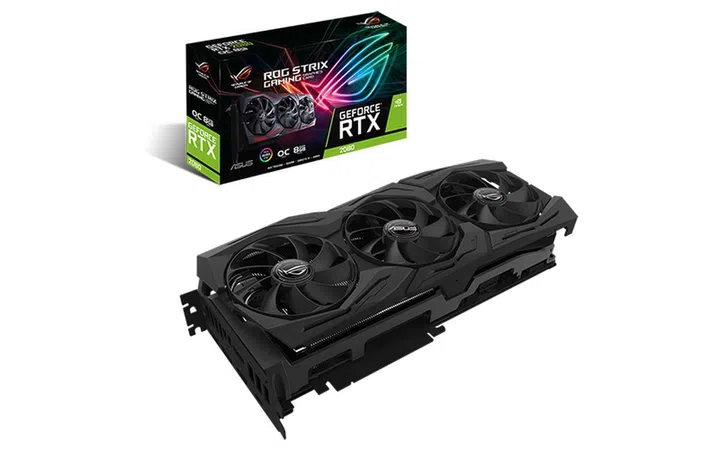
ASUS ROG Strix RTX 2080 O8G Gaming. (Image Source: ASUS)
NVIDIA’s board partners have been remarkably prompt in introducing their custom card offerings for the GeForce RTX 2080 and 2080 Ti. Right after the company introduced its latest GeForce RTX 20-series cards last week, partners were on hand with a selection of cards featuring a range of custom cooling solutions and designs.
In a bid to differentiate themselves from the Founders Edition models and improve performance, these cards usually implement larger, beefier coolers, higher factory overclocks, and additional bells and whistles.
Here’s a look at what’s been announced so far from the major manufacturers. Clock speed details are still mostly a question mark at this point, so we’ll be focusing more on individual designs.
ASUS
ASUS has readied a total of seven cards each for the GeForce RTX 2080 and 2080 Ti:
- ASUS ROG Strix RTX 2080/2080 Ti O8G/O11G Gaming - S$1,619 / S$2,329
- ASUS ROG Strix RTX 2080/2080 Ti A8G/A11G Gaming - S$1,599 / TBA
- ASUS ROG Strix RTX 2080/2080 Ti Gaming - TBA / TBA
- ASUS Dual RTX 2080/2080 Ti O8G/O11G - S$1,529 / S$2,159
- ASUS Dual RTX 2080/2080 Ti A8G/A11G - S$1,509 / S$2,139
- ASUS Dual RTX 2080/2080 Ti 8G/11G - TBA / TBA
- ASUS Turbo RTX 2080/2080 Ti 8G/11G - S$1,449 / S$2,079
There are really only three main variants here. If ASUS’ past naming patterns are anything to go by, the A11G and O11G modifier (or O8G in the case of the GeForce RTX 2080) simply indicates differences in clock speeds, with the O11G models clocked the highest.
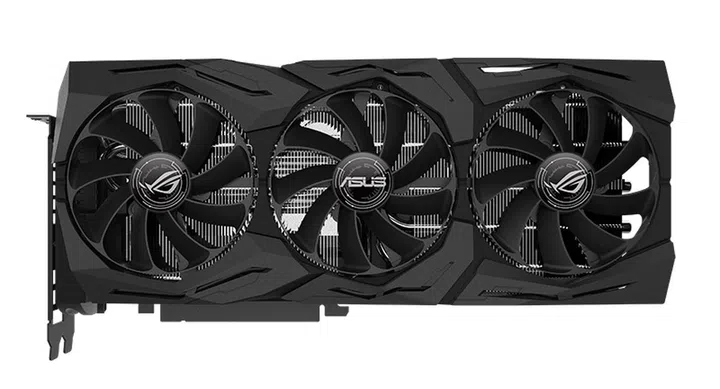
ASUS ROG Strix RTX 2080 O8G Gaming. (Image Source: ASUS)
The ROG Strix cards are equipped with a large triple-fan cooler that utilizes a new fan design. ASUS refers to these as “axial-tech” fans, and they supposedly feature a smaller fan hub that allows for longer blades. According to ASUS, the new design allows the fans to move more air without increasing overall noise levels.
They are also equipped with a barrier ring that increases structural integrity and static pressure, so the fans can push air through the heatsink array more effectively.
In addition, the ROG Strix cards are manufactured using ASUS’ Auto-Extreme Technology, a fully automated manufacturing process that allows all the soldering to be completed in a single pass instead of in separate stages. ASUS says this reduces thermal strain on the components and eliminates the need to use harsh cleaning chemicals, which results in a more environmentally friendly and reliable product.
On the other hand, the Dual cards use dual wing-blade fans, which ASUS says have also been optimized for higher air pressure and less noise.
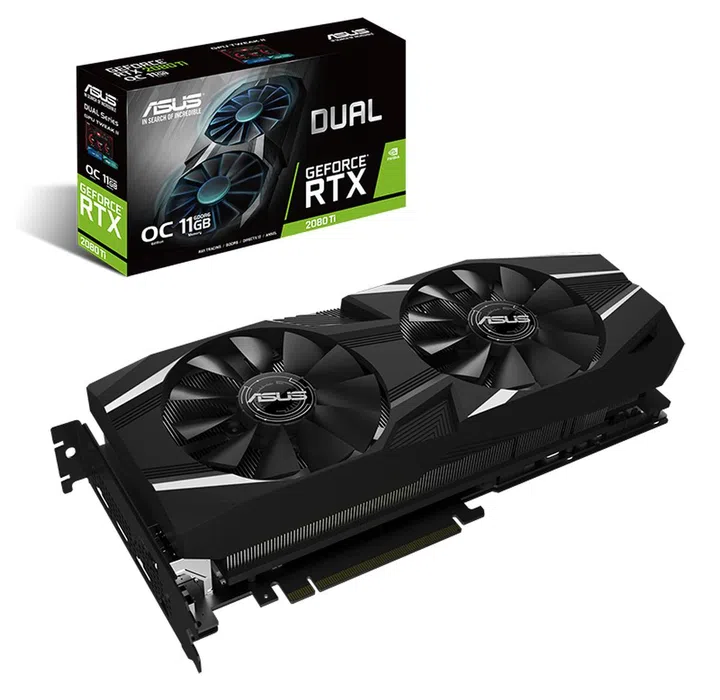
ASUS Dual RTX 2080 Ti O11G. (Image Source: ASUS)
You’ll need to make sure there’s space in your case though as both the ROG Strix and Dual cards are rather large and heavy cards, requiring a 2.7-slot allowance. The heatsink array has also been tweaked to provide a larger surface area for heat dissipation. The overall surface area is now 20 per cent larger for the ROG Strix cards and 50 per cent for the Dual models, according to ASUS.
Finally, the Turbo card employs an 90mm IP5X-rated blower-style fan. This design dumps hot air out the back of the case, so it’s best suited to small chassis where air flow is always a challenge.
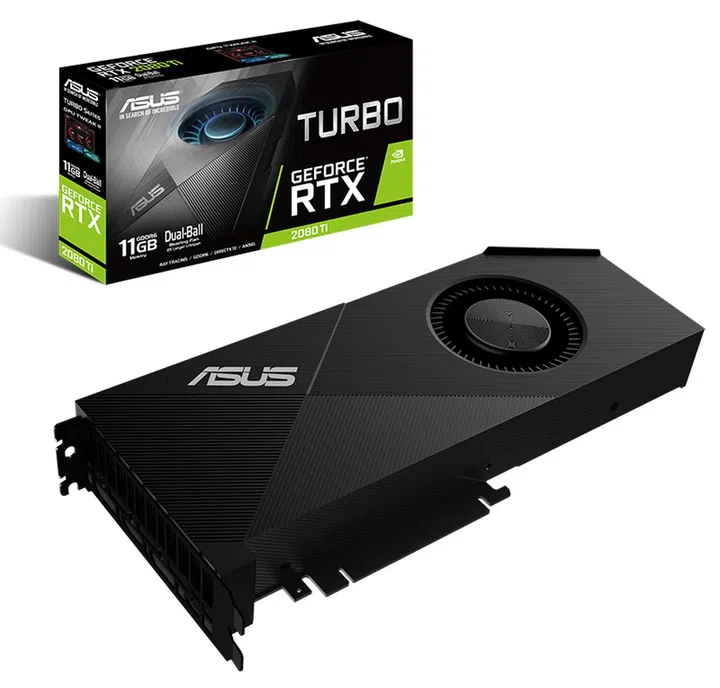
ASUS Turbo RTX 2080 Ti 11G. (Image Source: ASUS)
EVGA
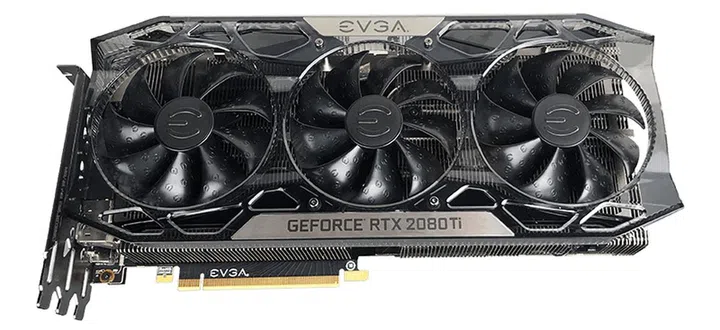
EVGA GeForce RTX 2080 Ti FTW3 Ultra. (Image Source: EVGA)
EVGA has announced a total of eight different flavors for the GeForce RTX 2080 and 2080 Ti:
- EVGA GeForce RTX 2080/2080 Ti XC
- EVGA GeForce RTX 2080/2080 Ti XC Ultra
- EVGA GeForce RTX 2080/2080 Ti FTW3
- EVGA GeForce RTX 2080/2080 Ti FTW3 Ultra
- EVGA GeForce RTX 2080/2080 Ti XC2
- EVGA GeForce RTX 2080/2080 Ti XC2 Ultra
- EVGA GeForce RTX 2080/2080 Ti Black
- EVGA GeForce RTX 2080
The company says it has redesigned its iCX2 coolers to be up to 14 per cent cooler than before. It's also upgraded its fans to hydro dynamic bearing (HDB) units that last longer and operate more quietly.
However, only the XC and XC Ultra cards are listed on EVGA’s website right now, with the main difference being the cooler design.
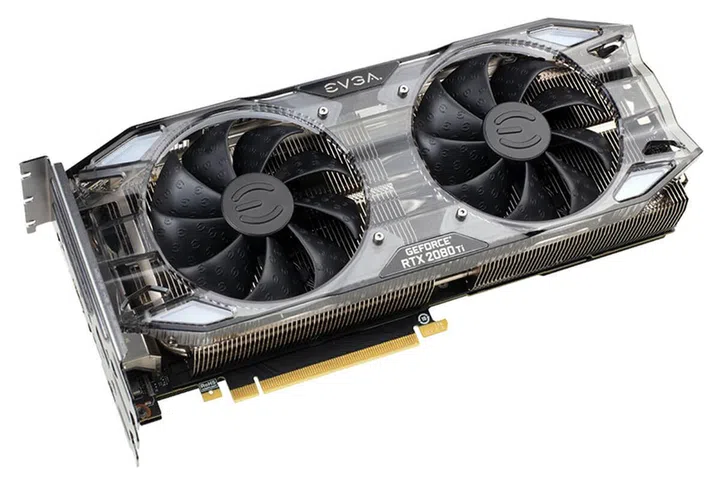
EVGA GeForce RTX 2080 Ti XC Ultra. (Image Source: EVGA)
The dual-fan cooler features customizable trim options in black, white, or red so you can subtly tweak the look of your card to match the rest of your system. However, the XC Ultra’s cooler is taller than that on the XC, featuring a taller fan hub and thicker heatsink.
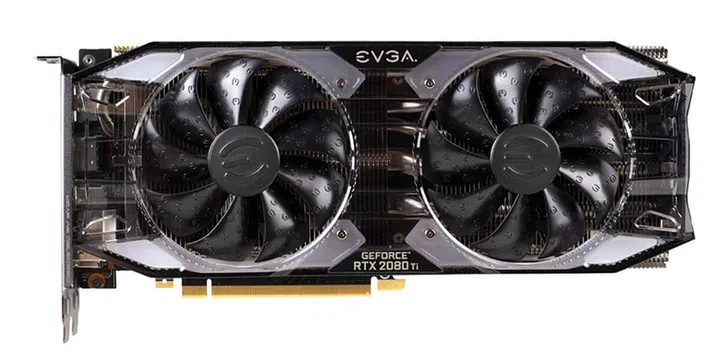
EVGA GeForce RTX 2080 Ti XC. (Image Source: EVGA)
In fact, the XC cards are more compact dual-slot models, and they make up for the smaller heatsinks by employing smaller fan hubs that make room for larger fan blades. The 2.75-slot XC Ultra cards are closer in size to the Founders Edition model, and you’ll need up to three slots to install them in your case.
GALAX
GALAX has four different variants of NVIDIA’s top-end Turing cards, ranging from blower fan models to higher-end triple-fan cards:
- GALAX GeForce RTX 2080/2080 Ti SG Edition
- GALAX GeForce RTX 2080/2080 Ti OC White
- GALAX GeForce RTX 2080/2080 Ti OC - S$1,259 / TBA
- GALAX GeForce RTX 2080/2080 Ti
The SG Edition cards – where SG stands for Serious Gaming – are targeted at gamers looking for performance and stability. They are outfitted with beefy 80mm triple-fan coolers, six heat pipes, and a copper base for connecting the radiator fins and GPU.
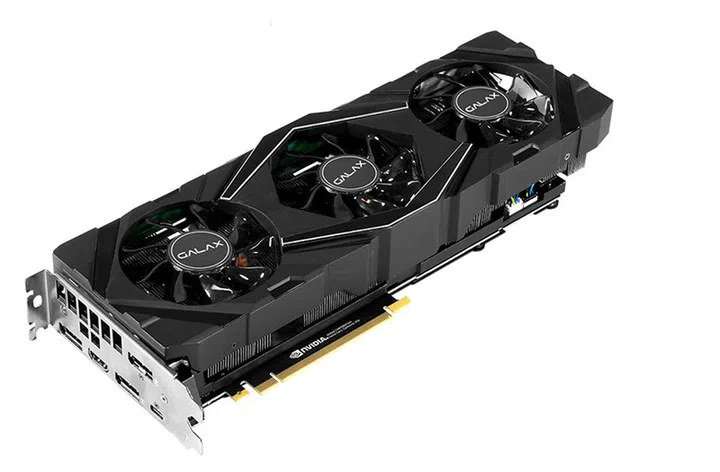
GALAX GeForce RTX 2080 Ti SG Edition. (Image Source: GALAX)
They also feature a die-cast aluminum front plate and stamped aluminum backplate that sandwich the PCB, an approach that GALAX says contributes to heat dissipation. At the same time, the PCB is protected from bending as well.
The OC White and OC cards look very similar, save for their color. They both employ a large vapor chamber that covers almost the entire PCB and quickly dissipates heat generated by the GPU to the entire heatsink.
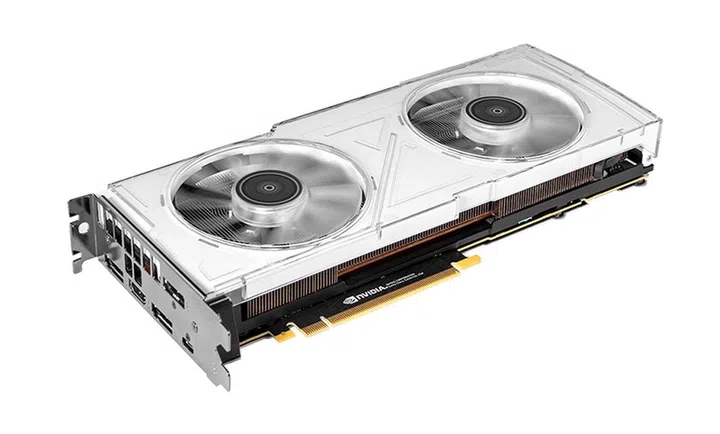
GALAX GeForce RTX 2080 Ti OC White. (Image Source: GALAX)
They are also equipped with twin 90mm fans that GALAX says have been engineered to reduce noise and vibrations while still providing better air pressure and energy efficiency.
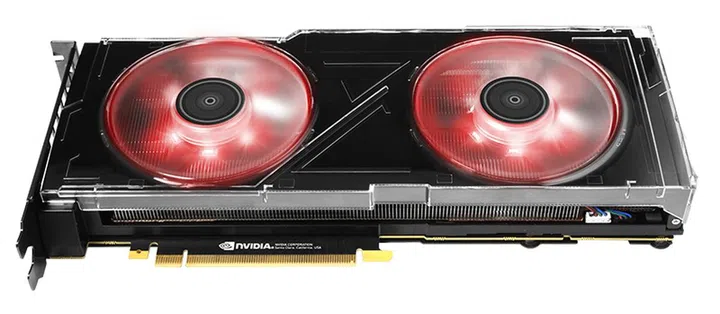
GALAX GeForce RTX 2080 Ti OC. (Image Source: GALAX)
Both cards only take up two slots, so they’re suitable if you’re looking for a more compact design.
Finally, the vanilla GeForce RTX 2080 and 2080 Ti models combine a vapor chamber heatsink with a blower-style fan. This exhausts heat out the back of the card, so it’ll appeal to those working with micro-ATX or mini-ITX cases.
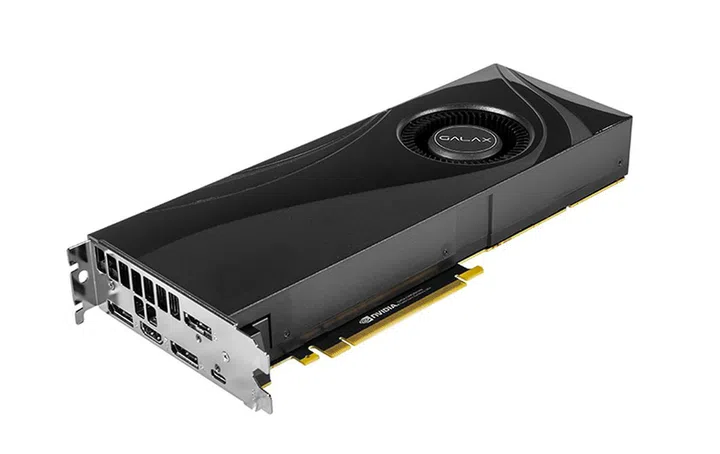
GALAX GeForce RTX 2080 Ti. (Image Source: GALAX)
Gigabyte
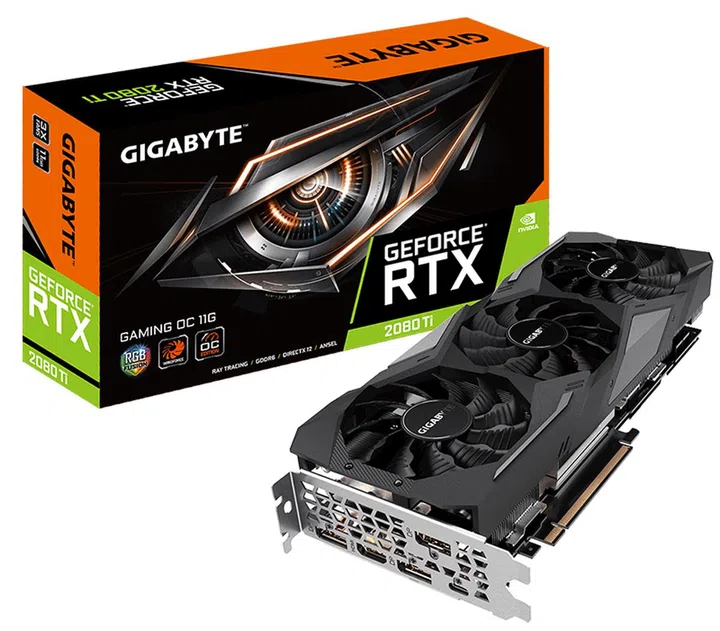
Gigabyte GeForce RTX 2080 Ti Gaming OC 11G. (Image Source: Gigabyte)
On Gigabyte’s end, it has shared just two models so far:
- Gigabyte GeForce RTX 2080/2080 Ti Gaming OC 11G - S$1,429 / S$2,099
- Gigabyte GeForce RTX 2080/2080 Ti WindForce OC 11G - S$1,369 / S$1,999
Once again, details are sparse here, and we’re treated to more cards with OC in their name with no mention of base and boost clocks anywhere.
They all use what looks to be the same triple-fan cooler, featuring three 80mm spinners and six composite copper heat pipes that come into direct contact with the GPU die. The middle fan spins in the opposite direction as the other two, and Gigabyte says this helps to better optimize airflow.
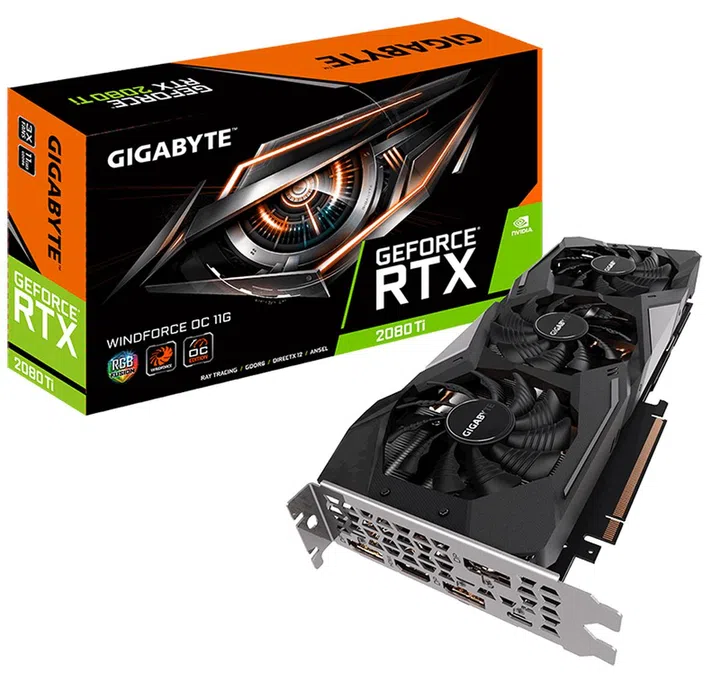
Gigabyte GeForce RTX 2080 Ti WindForce OC 11G. (Image Source: Gigabyte)
An exploded view of the card on Gigabyte’s website also shows a large metal contact plate for the VRAM and MOSFETs. This helps channel heat to one of the heat pipes, which is a nice inclusion. There’s also a metal backplate that protects the PCB and adds structural rigidity to the card.
Finally, the RGB lighting on the card can be customized using Gigabyte’s RGB Fusion software to match the rest of your rig.
MSI
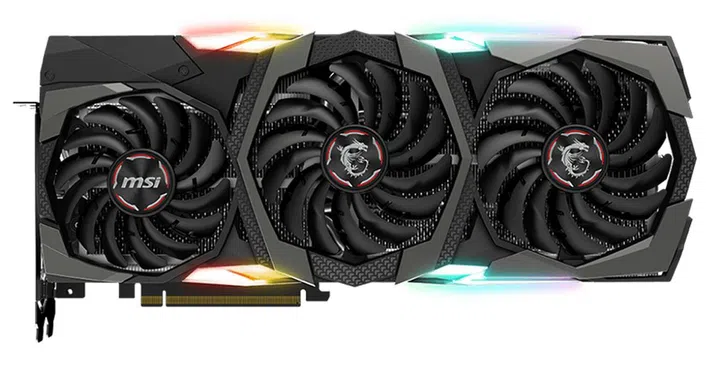
MSI GeForce RTX 2080 Gaming X Trio. (Image Source: MSI)
MSI has announced multiple variants of the GeForce RTX 2080 and 2080 Ti, including models cooled by a closed-loop cooler and one designed for custom liquid cooling solutions:
- MSI GeForce RTX 2080/2080 Ti Sea Hawk EK X
- MSI GeForce RTX 2080/2080 Ti Sea Hawk X
- MSI GeForce RTX 2080/2080 Ti Gaming X Trio - S$1,439 / S$2,199
- MSI GeForce RTX 2080/2080 Ti Gaming Trio
- MSI GeForce RTX 2080/2080 Ti Duke 8G/11G OC
- MSI GeForce RTX 2080/2080 Ti Duke 8G/11G
- MSI GeForce RTX 2080/2080 Ti Ventus 8G/11G OC
- MSI GeForce RTX 2080/2080 Ti Ventus 8G/11G
- MSI GeForce RTX 2080 Aero 8G
Both the Duke and Gaming X Trio cards are triple-fan monsters, but the Duke is the slightly more compact card, measuring 50mm thick to the Gaming X Trio’s 55.6mm. In addition, it’s also shorter and narrower than the Gaming X Trio, which is a decidedly gargantuan beast.
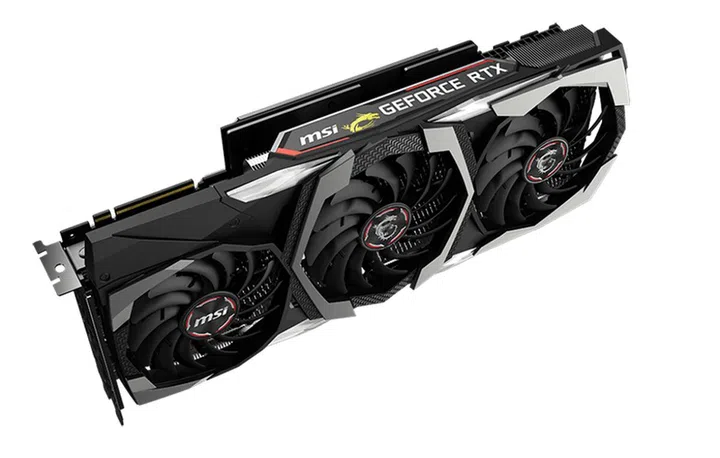
MSI GeForce RTX 2080 Gaming X Trio. (Image Source: MSI)
The Duke cards use MSI’s Torx 2.0 fans, which are double ball bearing spinners that use a mix of traditional and steeper, curved fan blades to improve airflow.
The silver and black cooling shroud is paired with a brushed metal backplate. That sounds subtle, but the backplate is also emblazoned with the Duke branding and MSI’s dragon logo. RGB LEDs can be found on the front and side of the card and are of course customizable using MSI’s Mystic Light software.
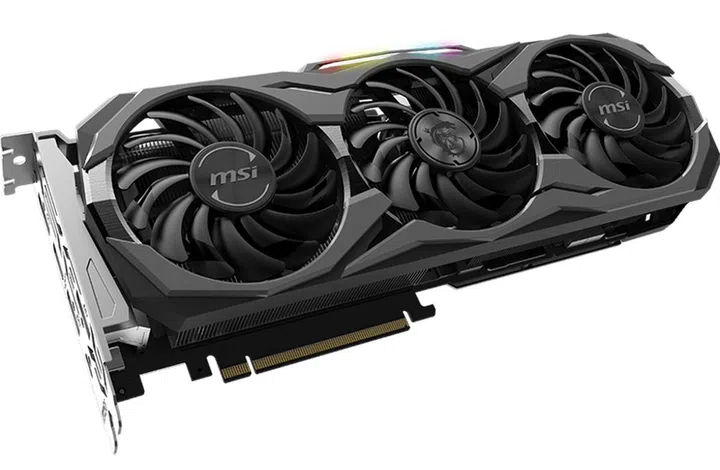
MSI GeForce RTX 2080 Duke OC. (Image Source: MSI)
The Gaming X Trio is MSI’s flagship Turing card. One quirk of the card is that the leftmost fan is smaller than the others, making for an asymmetrical triple-fan design. Compared to the Duke card however, the Gaming X Trio also uses newer Torx 3.0 fans.
MSI GeForce RTX 2080 Gaming X Trio. (Image Source: MSI)
The cooling shroud is a mix of black and gunmetal gray, while the backplate is a silvery brushed metal that should help the card stand out. RGB lights adorn the front and sides of the card, and you can also sync them with other compatible components using MSI’s Mystic Light software.
Once again, there’s no word on clock speeds, but it seems reasonable to expect the Gaming X Trio to be clocked higher.
Palit
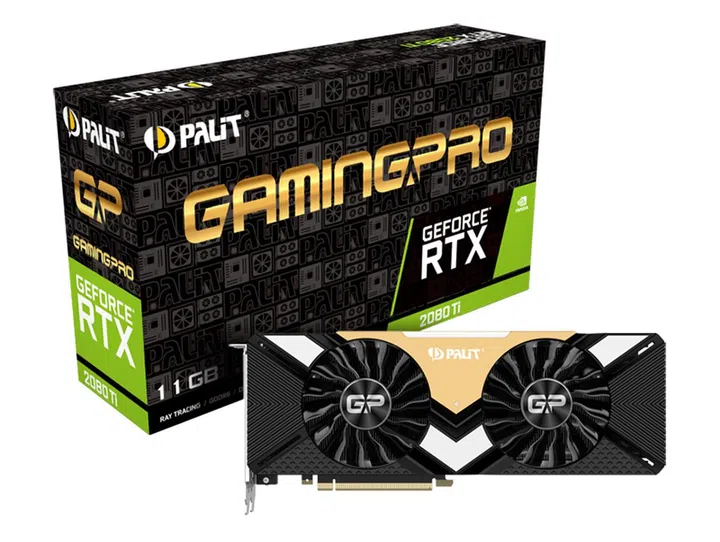
Palit GeForce RTX 2080 Ti GamingPro. (Image Source: Palit)
Palit has just two models for Turing as well:
- Palit GeForce RTX 2080/2080 Ti GamingPro OC - TBA / S$1,799
- Palit GeForce RTX 2080/2080 Ti GamingPro - TBA / TBA
The naming is pretty self-explanatory, and it seems like the OC cards will be clocked higher than their non-OC counterparts. Other than that, the cards look identical and there are more differences between the RTX 2080 and 2080 Ti models.
For starters, Palit has gone with a golden shroud for the latter and a pinkish-red color for the former. The fans also look slightly different, and the wavy fan blades on the RTX 2080 Ti models look like the TurboFan blades on Palit’s JetStream cards.
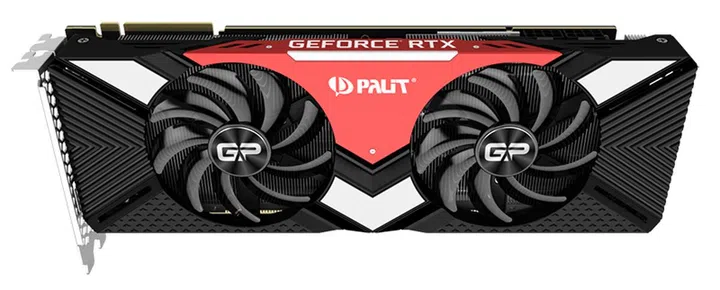
Palit GeForce RTX 2080 GamingPro OC. (Image Source: Palit)
Finally, the RTX 2080 Ti cards are thicker than their RTX 2080 counterparts, measuring 58mm thick to the RTX 2080’s 40mm. This means that they’ll need a 2.5-slot allowance, while the RTX 2080 will only require two slots.
Zotac
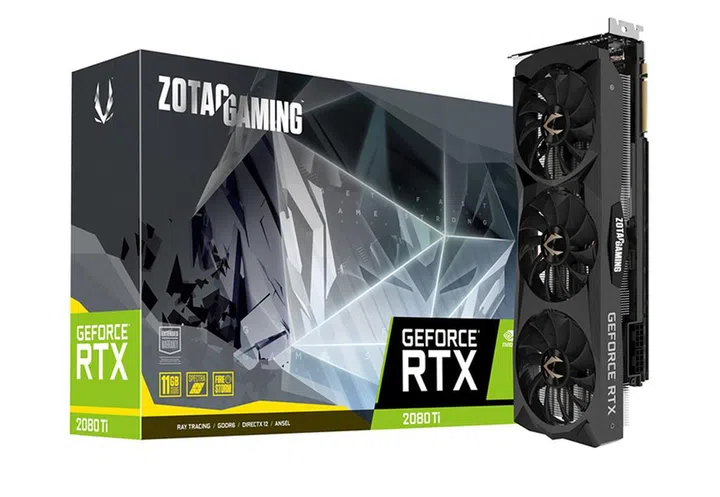
Zotac Gaming GeForce RTX 2080 Ti Triple Fan. (Image Source: Zotac)
Last but not least, Zotac has attempted to differentiate between its GeForce RTX 2080 and 2080 Ti offerings, with just one shared model between the two cards:
- Zotac Gaming GeForce RTX 2080 Ti Triple Fan - S$1,799
- Zotac Gaming GeForce RTX 2080 Ti AMP - S$1,859
- Zotac Gaming GeForce RTX 2080 AMP - S$1,299
- Zotac Gaming GeForce RTX 2080 Twin Fan - S$1,259
- Zotac Gaming GeForce RTX 2080 Blower - S$1,239
The RTX 2080 Ti Triple Fan is the first of a new series of Zotac cards. It features a larger and thicker aluminum fin stack array and five 8mm copper heat pipes that Zotac says can dissipate heat more effectively than previous-generation designs.
Zotac also added a die-cast metal jacket layer that covers the entire PCB. This provides additional structural reinforcement and serves as another outlet for heat dissipation.
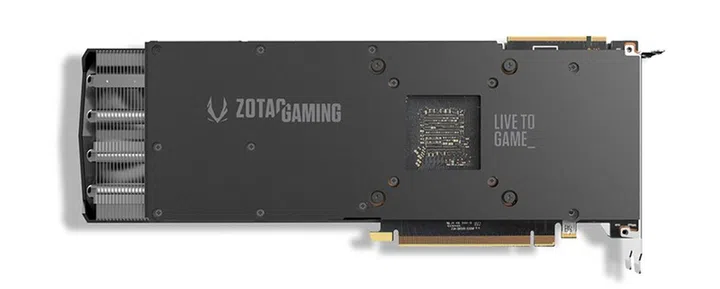
Zotac Gaming GeForce RTX 2080 Ti Triple Fan. (Image Source: Zotac)
The fans can also rotate independent of each other, which means that they don’t all have to operate at the same speed. This helps keep noise levels down, because some of the fans can run at lower speeds when the situation calls for.
On top of that, Zotac is using an updated fan design that has been optimized to direct airflow more effectively toward the heatsink.
The AMP card shares the same design and dimensions, and it seems like the main difference between it and the Triple Fan card is going to be their respective clock speeds.
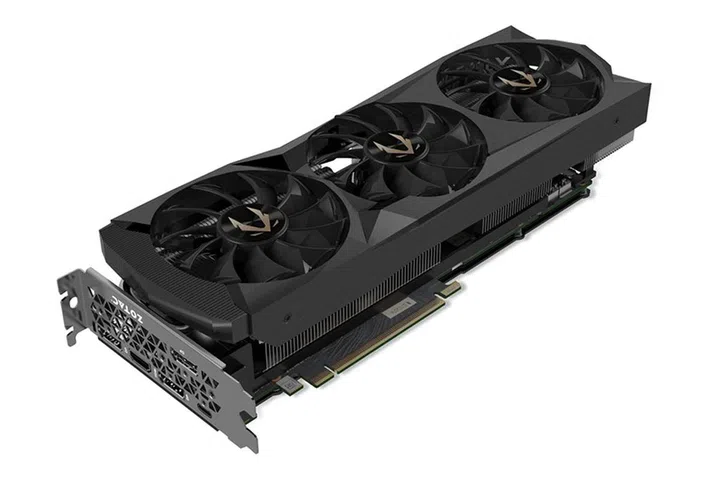
ZOTAC Gaming GeForce RTX 2080 Ti AMP. (Image Source: Zotac)
The GeForce RTX 2080 Blower will probably appeal more to those looking to build a powerful, small form factor system. It dumps heat out the back of the case, which is pretty useful when airflow is a concern.
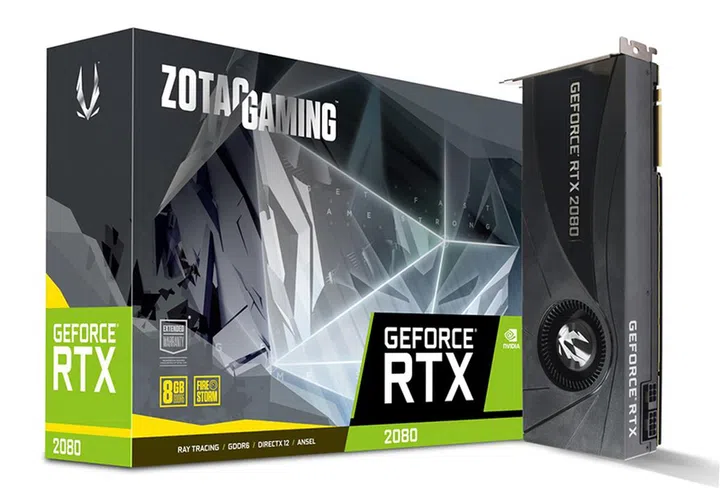
Zotac Gaming GeForce RTX 2080 Blower. (Image Source: Zotac)
In addition, it is more compact than the other cards, requiring just a 2-slot allowance compared to the 2.5 slots the other cards require.
Our articles may contain affiliate links. If you buy through these links, we may earn a small commission.