
The Tiny Giant - DFI LanParty MI P55-T36 (Intel P55)
Filling up our palm is the DFI LanParty MI P55-T36, a mini-ITX board that belies its dimensions by having Intel's mainstream P55 chipset onboard. It opens the way for mini-ITX systems powered by a quad-core processor. We check it out to see if it's as capable as its full-sized rivals.

DFI Shrinks the P55
As the mainstream chipset that Intel was pushing last year, we have seen our fair share of motherboards based on the Intel P55 Express chipset. From the high-end models that rival those using Intel's X58 chipset to the basic models that have minimal features, including some that use the micro-ATX form factor, we have seen and tested a decent number.
Still, despite our exposure to a range of P55 boards, we were nevertheless caught unawares when DFI sent us a very tiny board - the mini-ITX based LanParty MI P55-T36. Yes, you didn't read that wrongly; this new, squarish board measures 17cm (6.7 inches) on all sides and it's probably one of the more capable chipset that has been converted to this form factor. The last mini-ITX board we reviewed was based on NVIDIA's Ion platform, which should give you an idea of the type of chipsets that's typically found in these dimensions.
We're pretty sure that there are some compromises made to ensure that everything fits on this small board but there's a certain charm in such a small board. We'll soon find out how this mini board differs from its other counterparts besides reduced ports and connectors. As you can see below, with our usual test system components installed, the DFI LanParty MI P55-T36 is hardly to be seen.
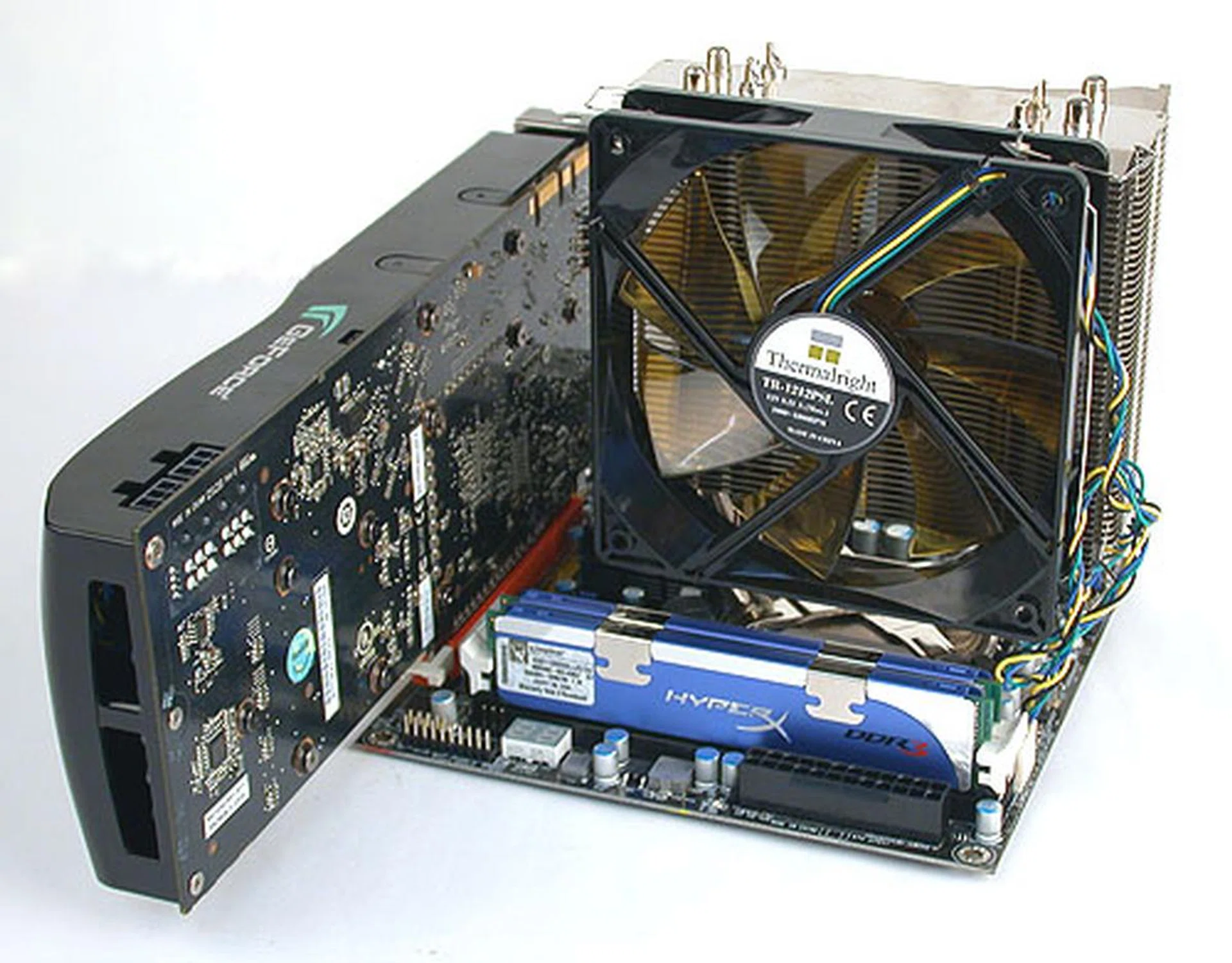
This DFI Mini-ITX board practically gets buried under all our installed test components.
The DFI LanParty MI P55-T36
This is undeniably a very small board. It's not like we haven't seen a mini-ITX motherboard before, but it's certainly not raining boards of this size capable of supporting Intel's latest Core i5 quad-core processors. This novelty factor may well wear off once we get to the heart of it so let's start with our inspection of the board.
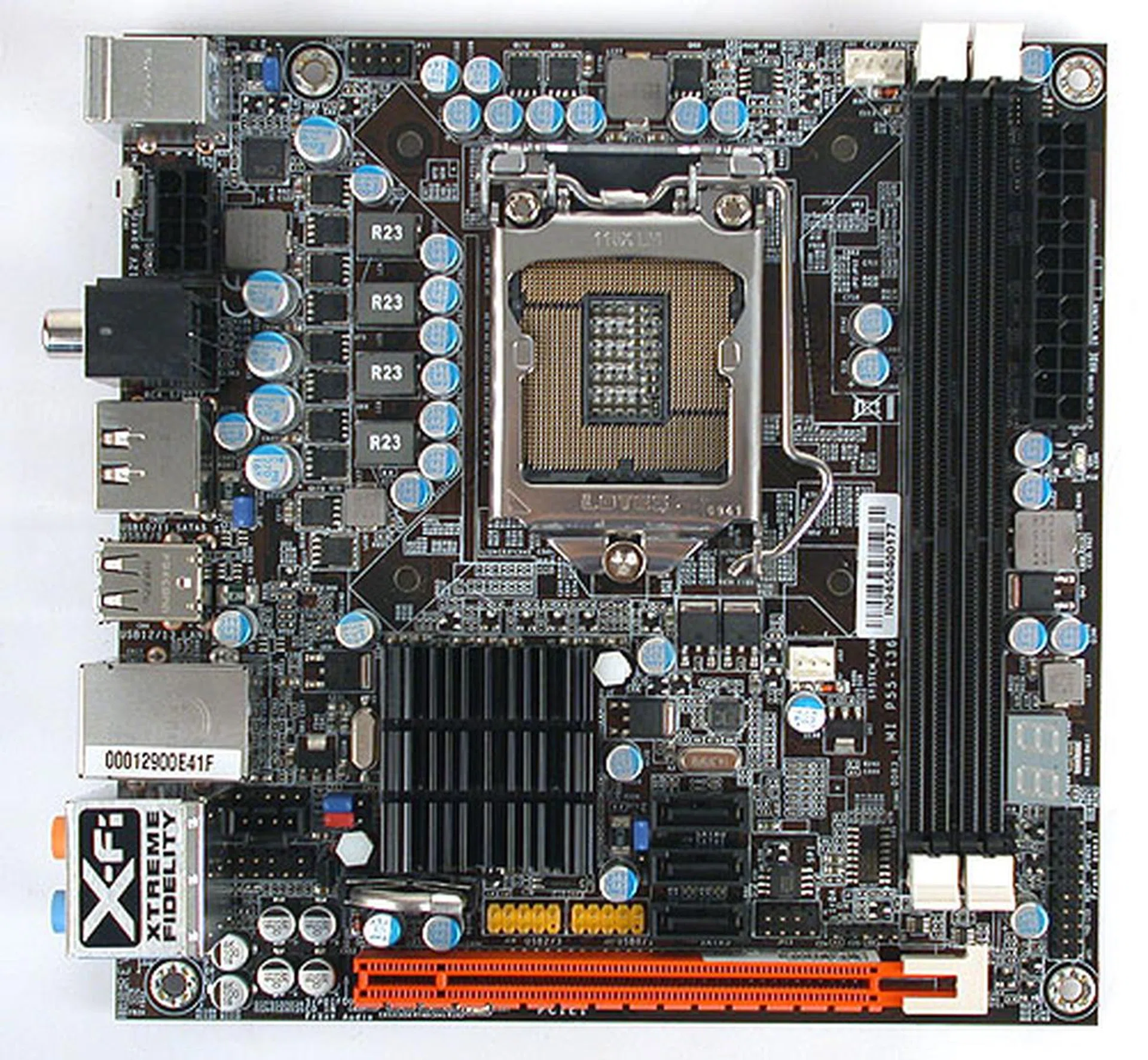
With a mini-ITX form factor, this board can only be described as compact, with cramped coming in a close second. As you can see, the PCB is packed with barely any free space.
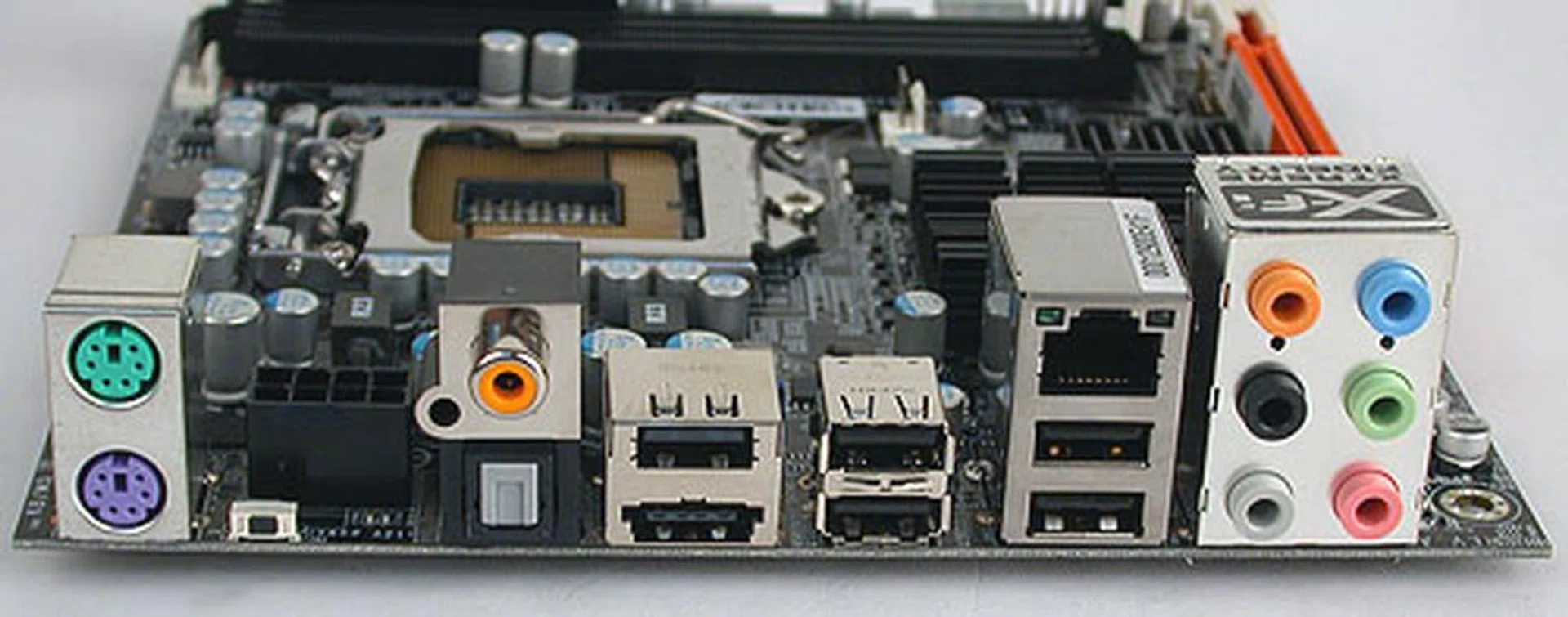
There's only so much space at the rear I/O panel, though one gets a decent number of ports, including both coaxial and optical S/PDIF and an eSATA port.

A very small Clear CMOS button at the rear I/O makes it convenient to reset the BIOS.
While the number of rear I/O connectors is almost comparable with a full ATX board, the rest of the usual board features are truncated. DFI has kept two DIMM slots, sufficient for a dual-channel configuration, but that means the maximum amount of memory supported is half of a full P55 board at 8GB.
There is no PCB space for extras like floppy or PATA connectors and three SATA ports are all you'll get for storage. The SATA ports are located just beside the PCIe slot and once you have installed a discrete graphics card and the processor, it's not the most convenient of locations. Fitting the USB 2.0 headers can also take some finger dexterity. To be fair, it would have been difficult to fit all these connectors at the edges of the board and only the front panel headers are given such a prime spot.
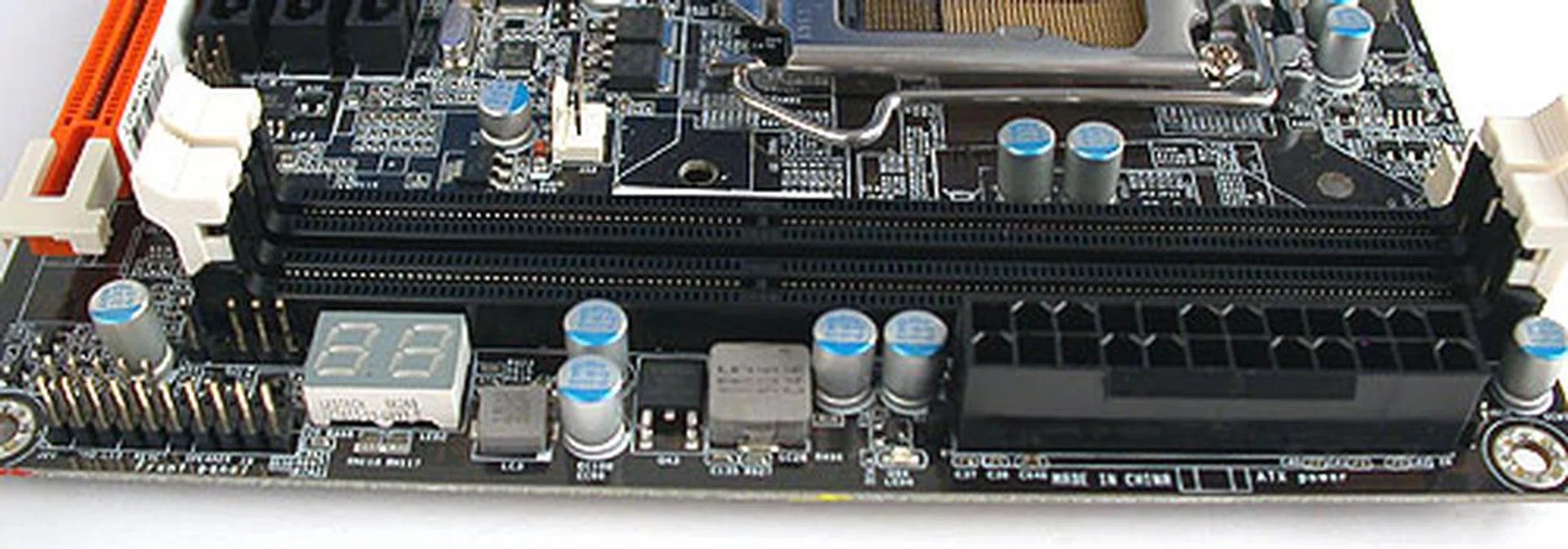
DFI manages to pack 2 DIMM slots such that one still gets the dual-channel memory architecture. There's even an LED indicator for troubleshooting.
As for the expansion slots, there's only one for the graphics card so you'll have to rely on the DFI board for your audio, RAID and Ethernet functionality. There won't be any chance of slotting in an add-on card for these features. At least one gets Gigabit LAN, while RAID is natively supported by the chipset. So the lack of expansion slots shouldn't be an issue for most users. Meanwhile, though DFI touts X-Fi support on the board, it's a Realtek audio CODEC doing the grunt work and that Creative audio feature is implemented in software.
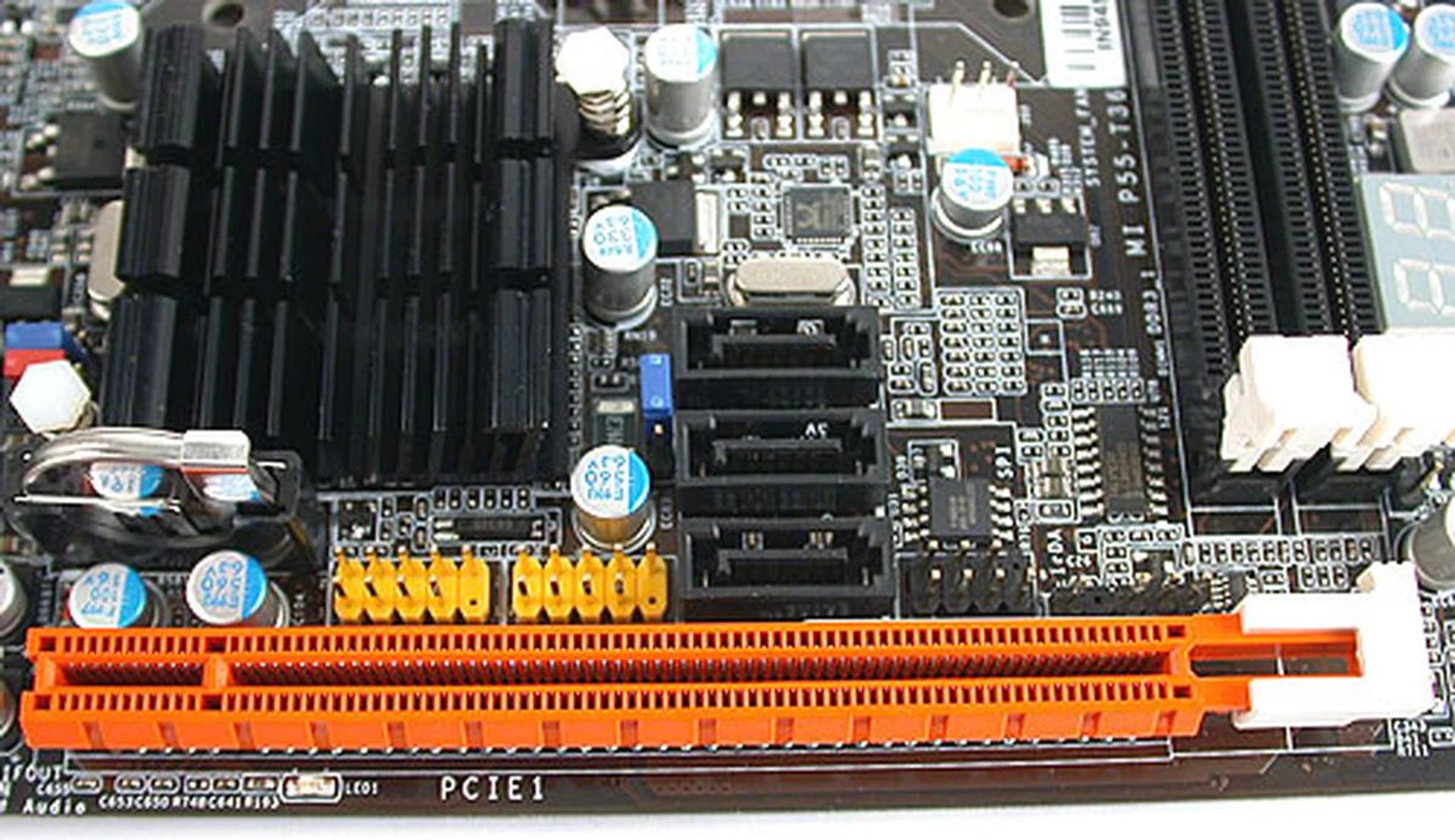
It can get really crowded here, with the three SATA ports very close to the USB headers and the single PCIe 2.0 x16 slot. The locking mechanism on the PCIe slot can also be quite stiff and it aggravates the situation when we were trying to remove our graphics card.
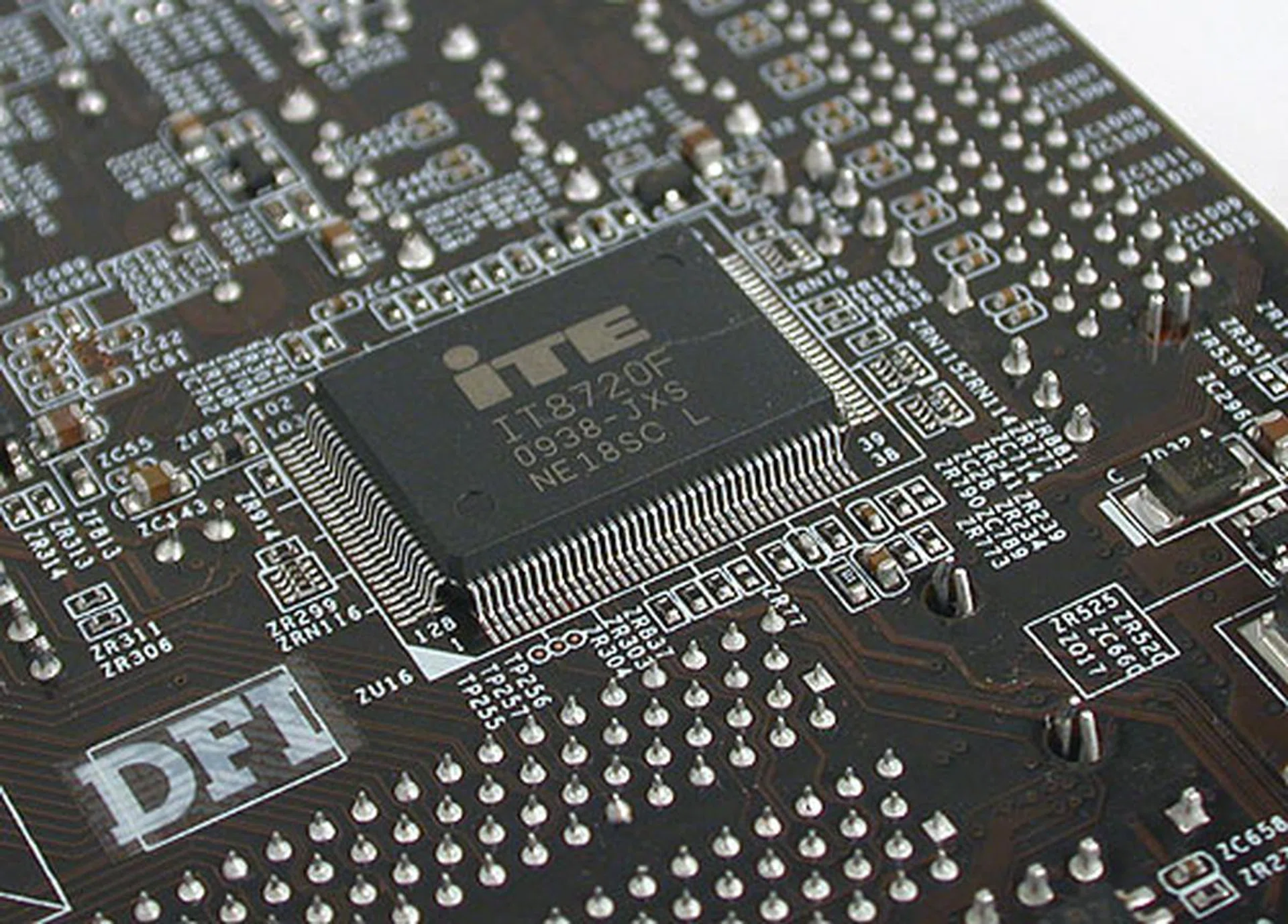
One way to maximize the limited PCB is to have some components underneath the board, like this chip responsible for hardware monitoring and fan control.
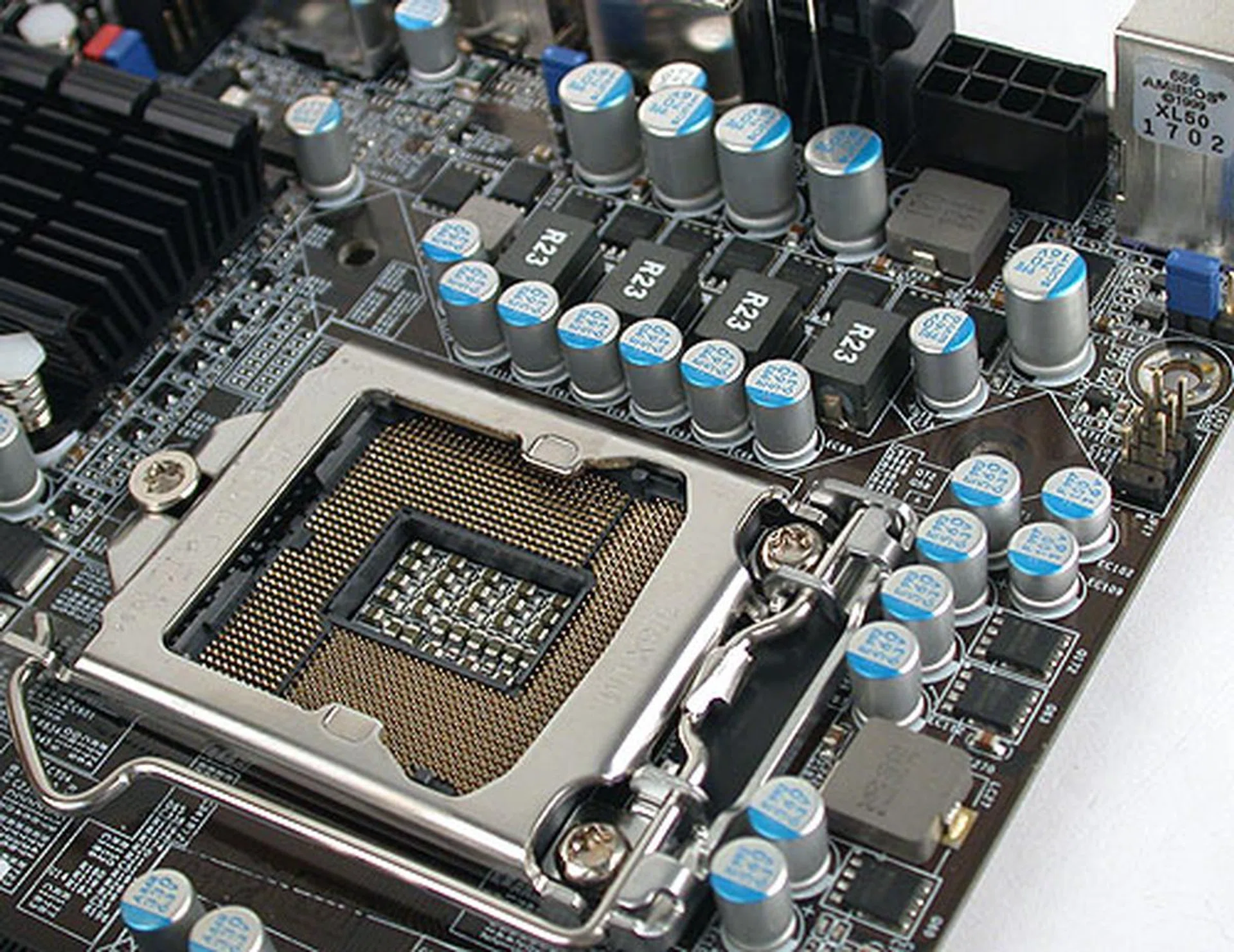
Solid capacitors surround the CPU socket (with six phase digital PWM) but there's no space for additional passive heatsinks for the nearby components.
It may be a small board but all the quality components that you'll find on a larger DFI board are present, from the solid capacitors to the six-phase digital PWM. Despite the small size of the board, from its DNA we've seen so far, one can expect to get a similar level of performance
as its larger counterparts.
BIOS Settings
DFI has injected its BIOS DNA into this board, which has some of the firm's usual features like saving your BIOS settings in profiles and allowing users to define two sets of base clock frequencies - one for system boot up and the other when the OS starts. This means one could test for higher clocks during overclocking without fear that your system will fail to boot up successfully (requiring you to reset the BIOS).
DFI's ABS II also helps to automatically overclock your processor by a decent if not exciting amount. At least it works rather well due to its conservative overclock and it's practically free overclocking without requiring any effort from the user.
In short, this DFI board may come in a mini-ITX form factor but it's about as capable as any of DFI's full-sized boards in terms of what's available in the BIOS. Besides those features, some of the more relevant BIOS settings are listed below:
- Base Clock: 133 to 500MHz
- CPU Ratio: 9 to 22x
- Memory Clock: Auto, 800, 1066, 1333, 1600MHz DDR
- CPU Voltage: 1.0 to 2.0V (0.025V steps)
- Memory Voltage: 1.2 to 2.6V (in 0.02V steps)
- CPU VTT: +0.00 to +0.697V (in 0.005V steps)
- PCH Voltage: 1.05V, 1.15V, 1.25V, 1.35V
The average Intel P55 board we tested for overclocking could reach 200MHz, with 210MHz quite common among the top vendors. The DFI here managed 200MHz, which puts it quite close. It certainly doesn't appear to be handicapped in any way by its form factor.
Test Setup
Our previous reviews and results were once again brought out for this review of the DFI LanParty MI P55-T36. There are some variations in memory timings, due to incompatibility, which resulted in the various different memory configurations below:
- Intel Core i7-870 (@2.93GHz, Intel Turbo Boost, HyperThreading enabled)
- 2 x 1GB Kingston HyperX DDR3-1333 @ 7-7-20 CAS 7.0 for the ASUS, DFI, Jetway MSI & Gigabyte boards.
- 2 x 1GB Kingston HyperX DDR3-1333 @ 8-8-24 CAS 8.0 for the ECS P55H-A
- Seagate Barracuda 7200.10 200GB SATA hard disk drive (one single NTFS partition)
- ASUS GeForce 9800 GTX 512MB with ForceWare 190.38 drivers
- Intel INF 9.1.0.1007 and Intel Matrix Storage manager 8.6.0.1007 driver set
- Microsoft Windows 7 Ultimate
The following benchmarks were used to determine the performance of the P55 motherboards:
- BAPco SYSmark 2007 (ver 1.05)
- Futuremark PCMark05 (ver 120)
- SPECviewperf 9.0
- Futuremark 3DMark Vantage
- AquaMark3
- Far Cry 2
Results - SYSmark 2007 Preview
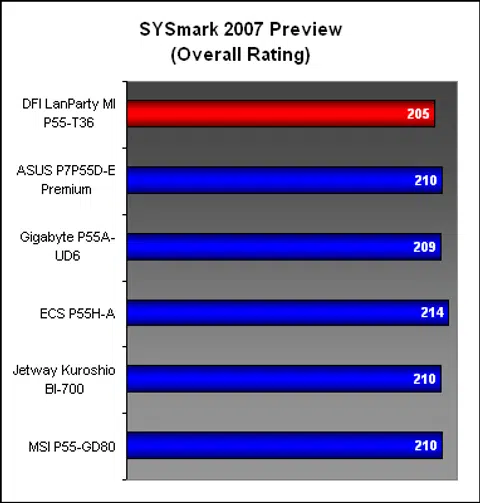
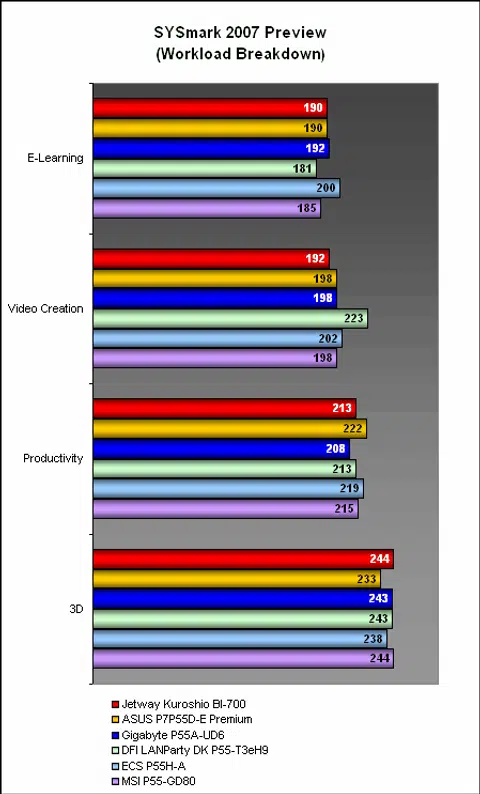
In SYSmark 2007, the DFI overall was just a tad off the pace from the other full-sized P55 motherboards. Glancing through the breakdown, one can see that while the DFI was mostly competitive, it was slightly weaker in Video Creation and Productivity.
Results - Futuremark PCMark05 Pro
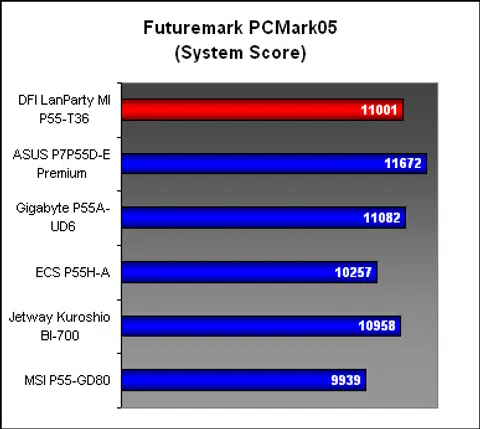
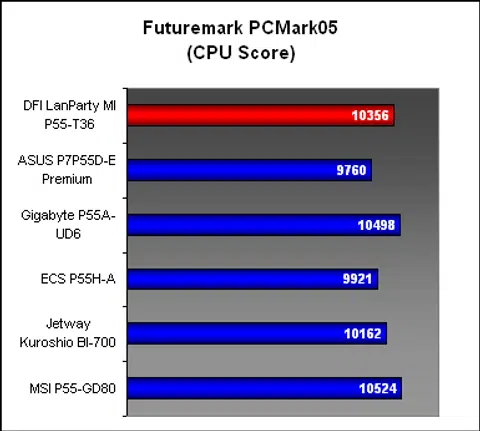
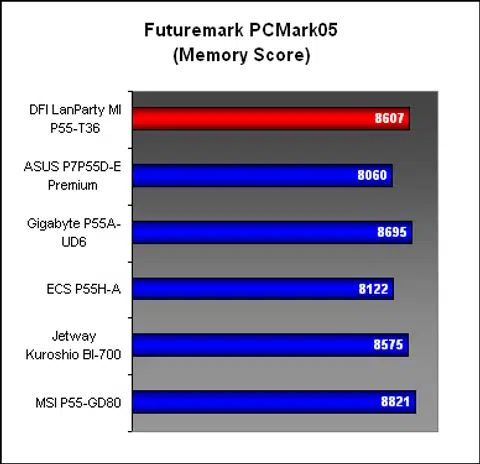
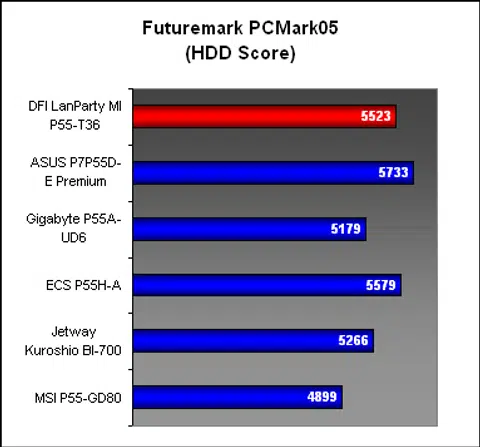
While the DFI's results for SYSmark 2007 were not the best, it fared better in PCMark05, where it was among the front runners for most of this benchmark. At its best, it was competing decently against some of the top P55 boards we have tested so far.
Results - SPECviewperf 9.0
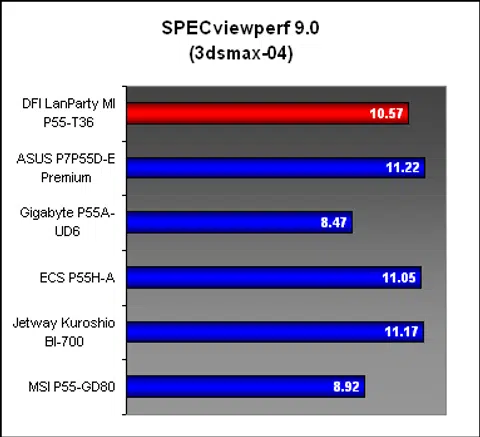
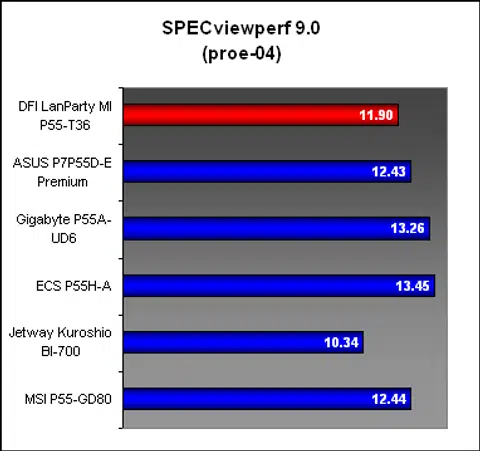
While our scores for this benchmark have quite the variance among them, the DFI was in the middle of the pack rather than lagging behind.
Gaming Benchmarks
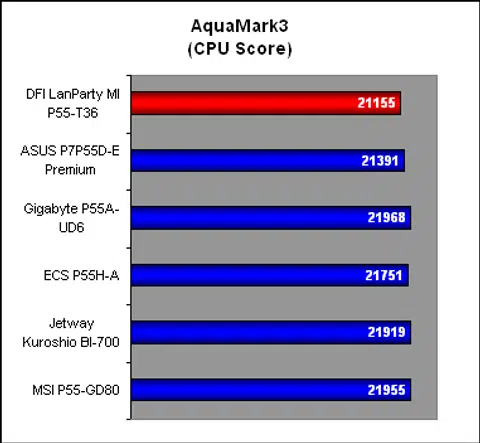
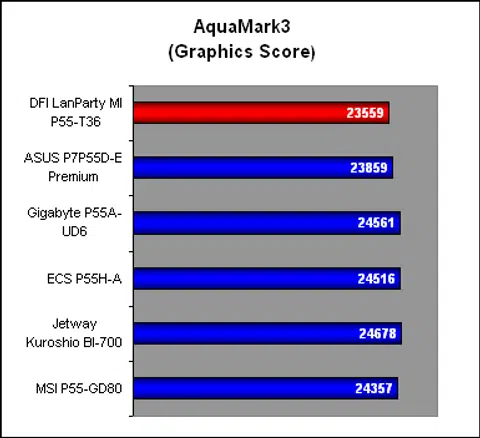
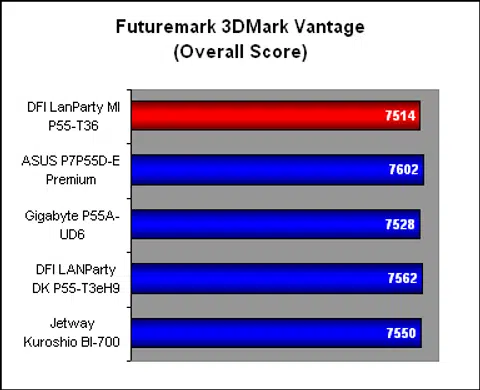
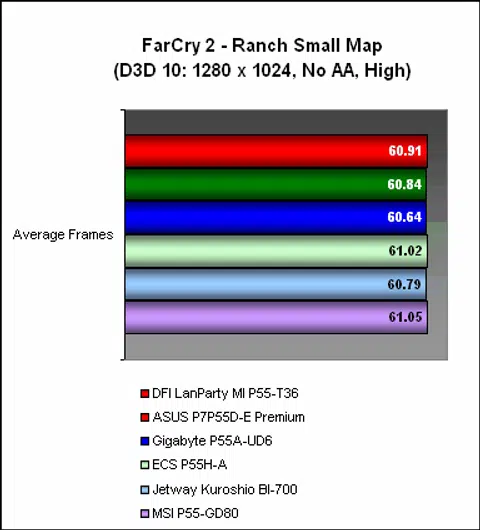
Finally, our mix of synthetic and real-world gaming benchmarks found that the DFI lagged slightly behind the rest in the synthetic benchmarks. As there was no significant difference in an actual game, FarCry 2, it should not cause undue worry.
Temperature
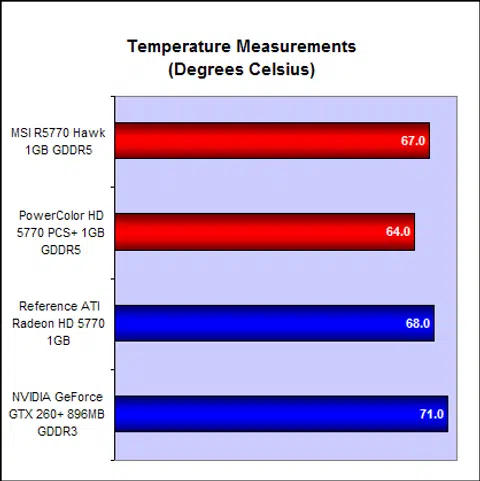
With the lack of space and separation between the onboard components, temperatures are bound to rise on this DFI mini-ITX board. That's more so since our graphics card and heatsink cooler are not in proportion to the board and probably affected the airflow negatively. Hence, the significantly higher temperature that we recorded for the chipset heatsink, which is squashed in between the graphics card and the CPU cooler.
Power Consumption
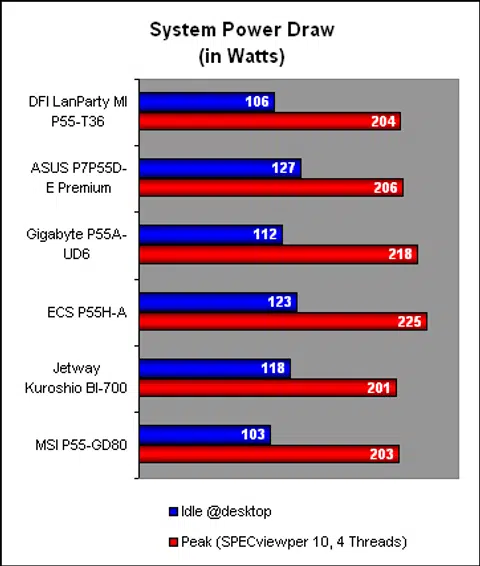
With fewer onboard components and features, power consumption should be slightly lower than the full-sized boards. Though this was true for the DFI at idle, its peak power draw was not as low as we had hoped. It's among the less power hungry boards but quite a few competitors had similar numbers too.
Conclusion
We have seen a few micro-ATX boards based on Intel's P55 chipset in the market but a mini-ITX board takes it to another new level of miniaturization. The chipset may have been targeted at the mainstream user but one can plug in a respectable quad-core Core i7-870 onto this mini-ITX board without any hassle. In effect, one can get a very good system on this form factor and hence ensuring it fits into those small, unobtrusive desktop chassis.
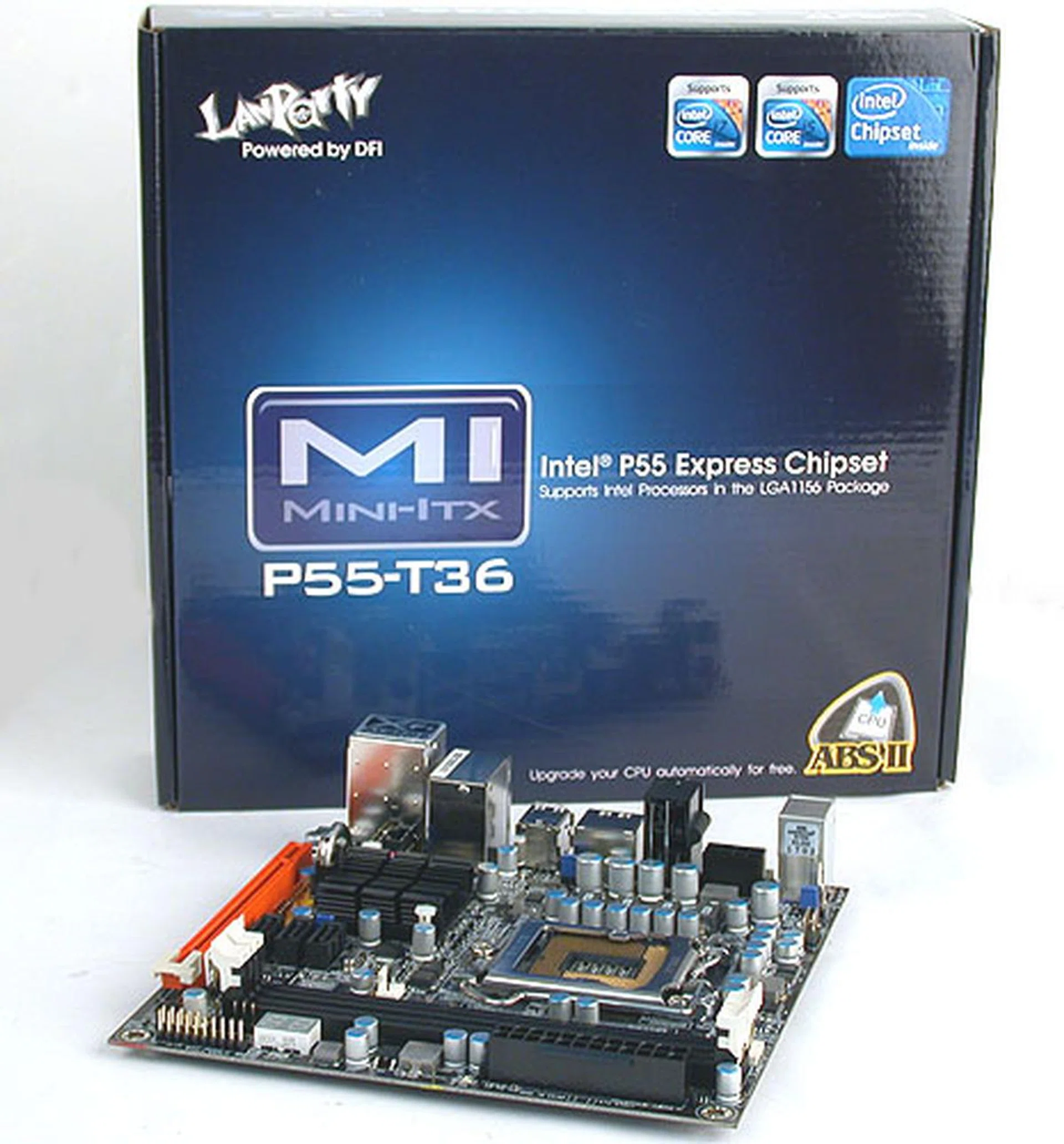
The little board that could. DFI's mini-ITX P55 board has definite novelty appeal and with the right system setup, can be a very competent gaming and media center system.
DFI has managed to shrink the P55 but not without making some compromises. That means no other expansion slots besides the necessary PCIe 2.0 x16 slot and the SATA ports are down to three. At least DFI squeezed in two DIMM slots supporting up to 8GB of DDR3 1600MHz memory. The compromises in features are understandable and there's no major loss in functionality.
There are downsides however to the small form factor. The lack of space means that installation and removal of components could be more difficult than usual, especially with the USB headers and SATA ports in close proximity. It also means a possible build-up of heat and we found the chipset's passive heatsink to be warmer than we liked. With no heatsink on the digital PWM, we recommend a CPU cooler that's able to generate some airflow via the exhaust to alleviate this situation.
As for its performance, though the DFI was generally competitive with the larger P55 boards, there were occasions where it was slightly behind. These instances are not apparent to the user when running applications; they require benchmarks to be distinguished.
These issues are relatively minor compared to this board's main advantage of size. Only the few micro-ATX versions available now can come close as competitors. We spotted the online price of the DFI LanParty MI P55-T36 at around US$140, which is quite affordable for a P55 motherboard. There are however micro-ATX boards that cost around the same with slightly more PCB and features. So unless you're already planning for a mini-ITX setup, there are other options in the market. If the mini-ITX dimensions are what you require to fit your dream system into a snug chassis, then there's no equivalent.
Our articles may contain affiliate links. If you buy through these links, we may earn a small commission.