
Preview: MSI P55-GD80 (Intel P55) Motherboard
Users waiting to upgrade to a P55 motherboard, it's time to rejoice as we'll be teasing you with a preview of the MSI P55-GD80. This new motherboard packs many useful features more commonly found on enthusiast-class motherboards and also introduces a few new technologies. Lap up the scoop inside.

Genie in a Bottle
Previously, we had a quick look at ASUS' latest P55 motherboard, the P7P55D Evo . Today, we are following up with MSI's P55 offering, the P55-GD80. The P55 chipset is of course a step down from Intel's range-topping X58 chipset, and will be paired with Intel's Lynnfield processors. Naturally, the P55 chipset is aimed at the slightly less demanding performance mainstream user segment, and has a slightly different feature set than the X58 chipset (a few new additions, but also some departures mostly due to processor differences). You can read up on these here.
However, despite Intel's positioning of the P55 chipset as one for 'mainstream' users, the MSI P55-GD80 motherboard that we have here is packed with numerous features that are more commonly seen on enthusiast-class motherboards. Apart from MSI's familiar DrMOS integrated Driver-MOSFET package, which helps improve power efficiency (you can read up more about it here ), there's also two new features that MSI are showing off for the first time: OC Genie and SuperPipe.
As its name suggests, OC Genie is a one-button overclocking solution. By pushing the OC Genie button, the onboard OC Genie chip will calculate the optimum settings of your system and overclock the CPU and memory accordingly, all in a single second. It sounds like magic and we can't wait to give it a go ourselves when the time for a full review comes.
On the other hand, there is SuperPipe, which are essentially thicker heatpipes. Just by looking, you can tell that these 8mm thick heatpipes are chunkier than those found on other motherboards, and MSI claims it can improve cooling efficiency by up to a massive 90%. Again this is something we're looking forward to check out in actual testing on the final board revision.
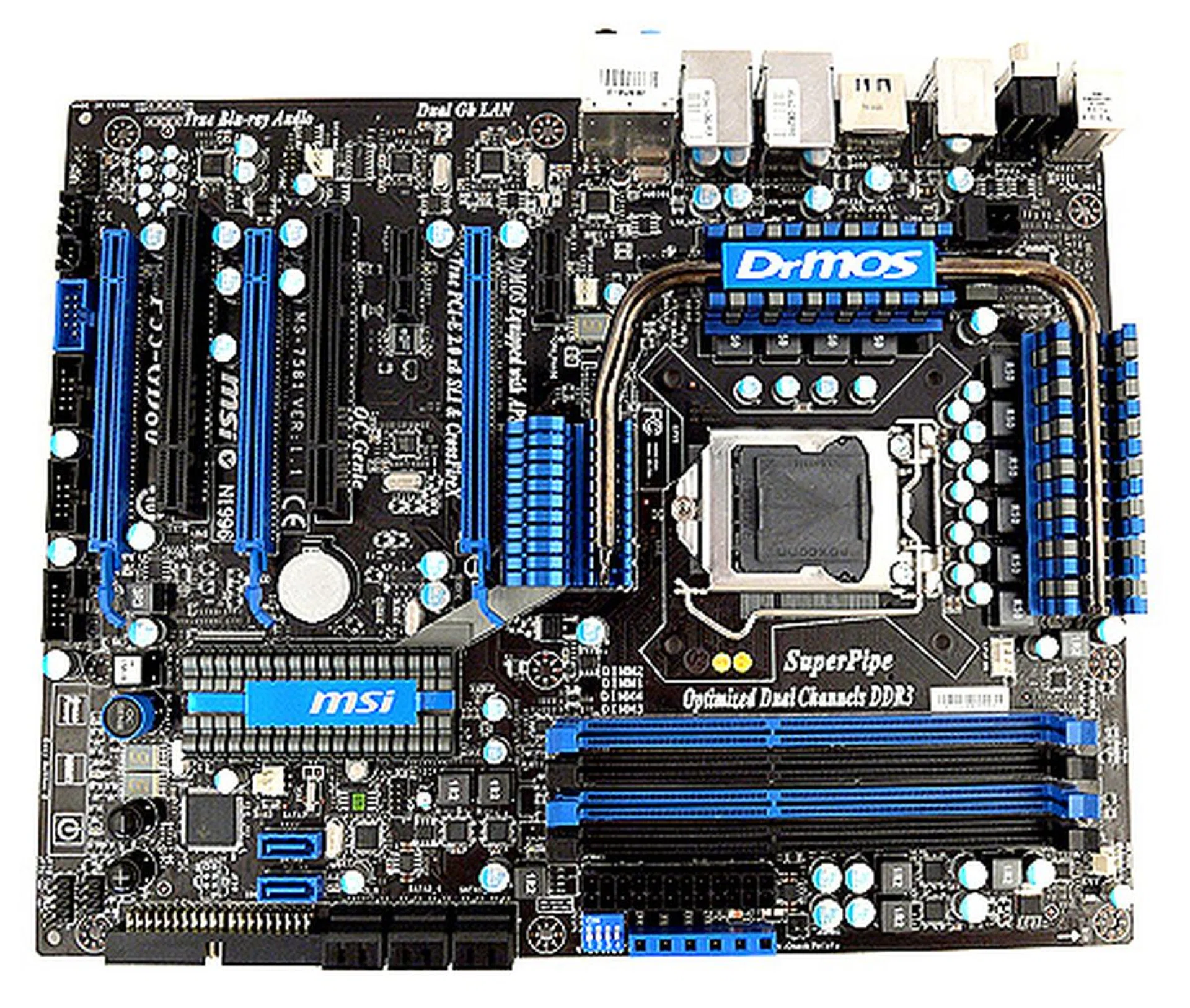
This is the MSI P55-GD80, it packs a lot for a board based on a mainstream chipset, and we'll be taking a closer look at what it offers in the following photos.
Apart from these features, the MSI P55-GD80 also has native support for CrossFireX and SLI, dual Gigabit LAN ports, a plethora of expansion ports and onboard control switches. So even if the P55-GD80 is based on a mainstream chipset, it has enough features to keep high-end users happy.
Here are close-up shots of the MSI P55-GD80.
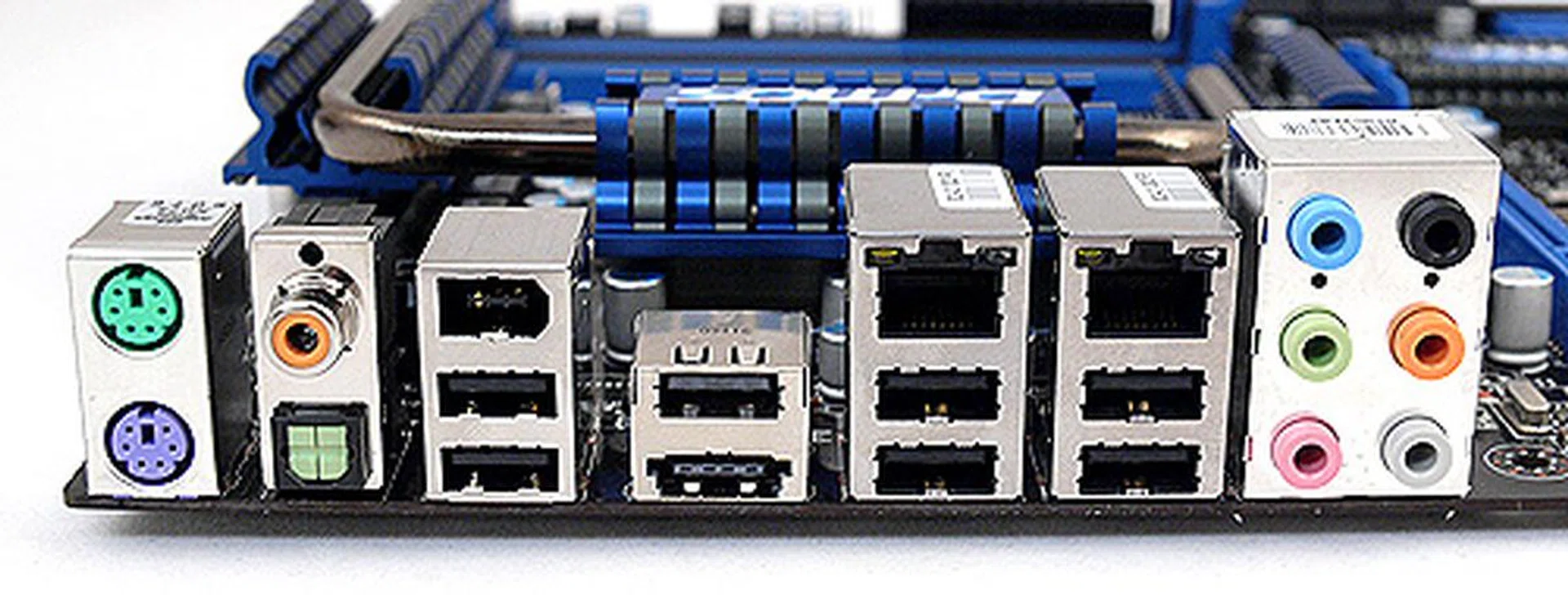
At the back, the MSI P55-GD80 has no less than seven USB 2.0 ports, an eSATA/USB combo port, an IEEE 1394 port, dual Gigabit RJ-45 LAN ports, coaxial and optical S/PDIF-out ports, analog audio jacks and PS/2 ports for both keyboard and mouse.
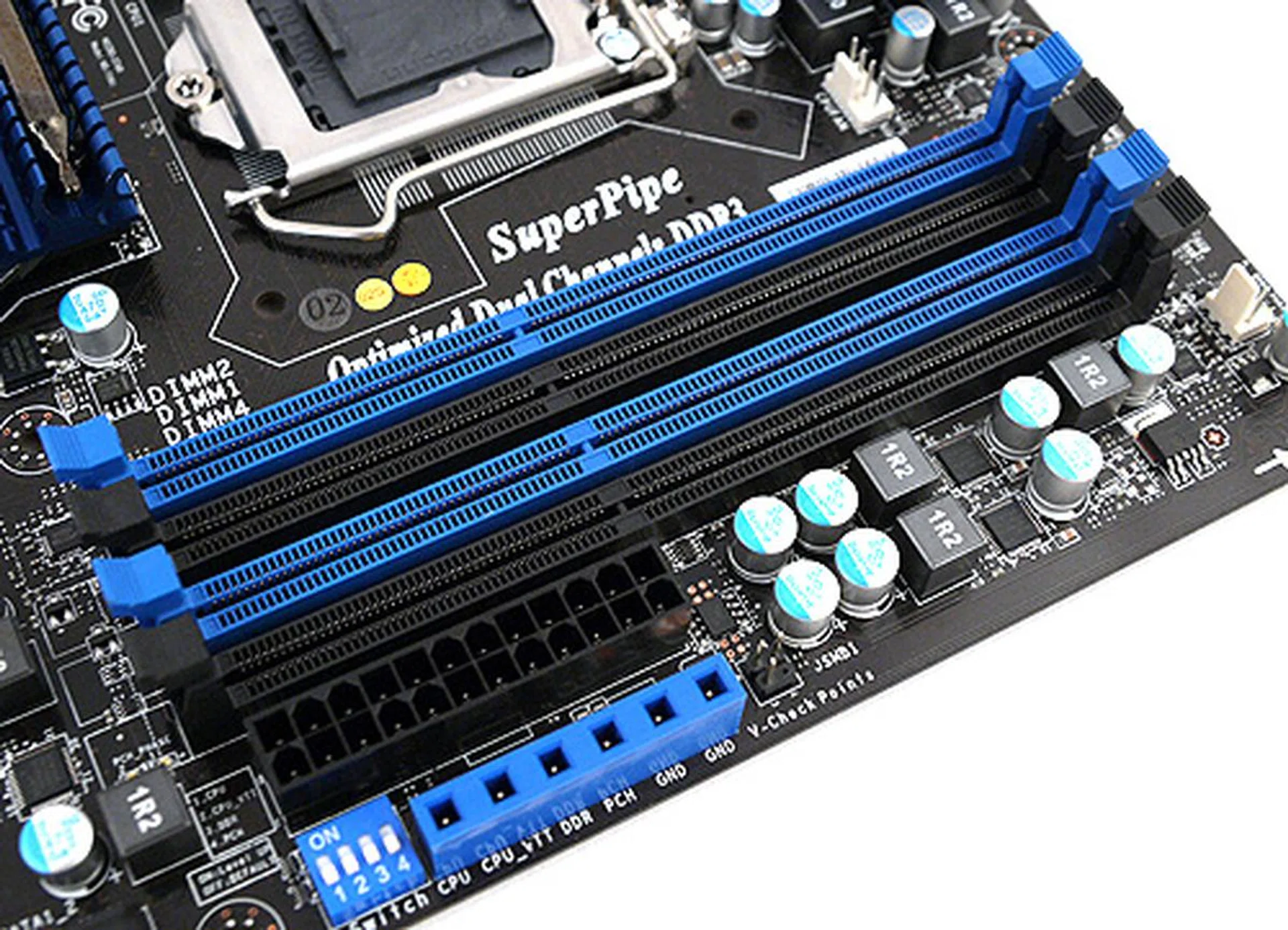
The Lynnfield processors' memory controllers will be of the dual-channel variety, hence the MSI P55-GD80 has four DIMM slots instead of three or six, which are found on X58 boards.
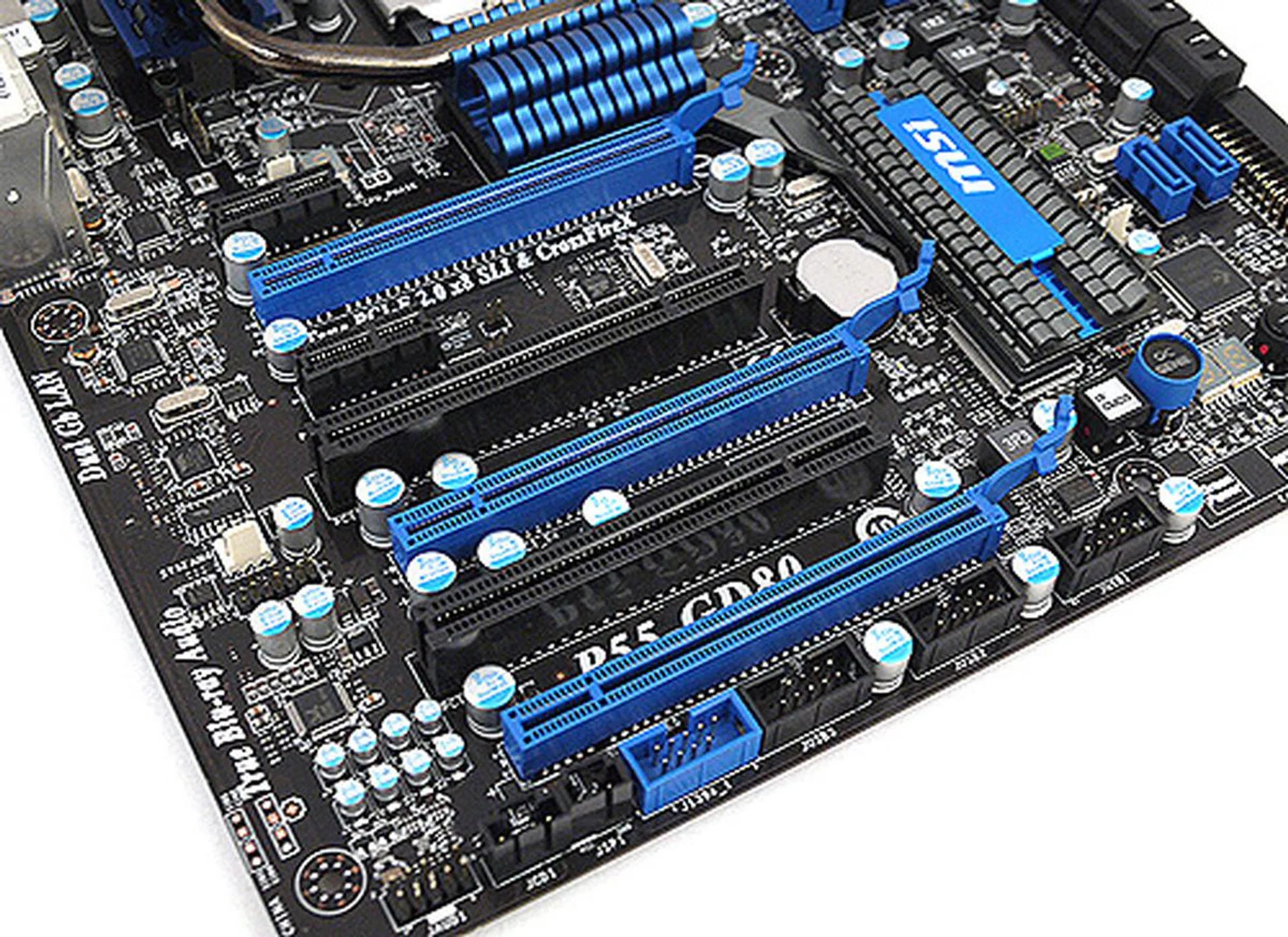
The MSI P55-GD80 might have three PCIe 2.0 x16 slots, but the P55 chipset is capable of supporting dual graphics cards in CrossFireX or SLI natively in x8 / x8 configuration. On this board, the third slot is able to run at an x4 configuration, but that would mean disabling all PCIe x1 slots. As such, tri-SLI configuration is possible on this board.
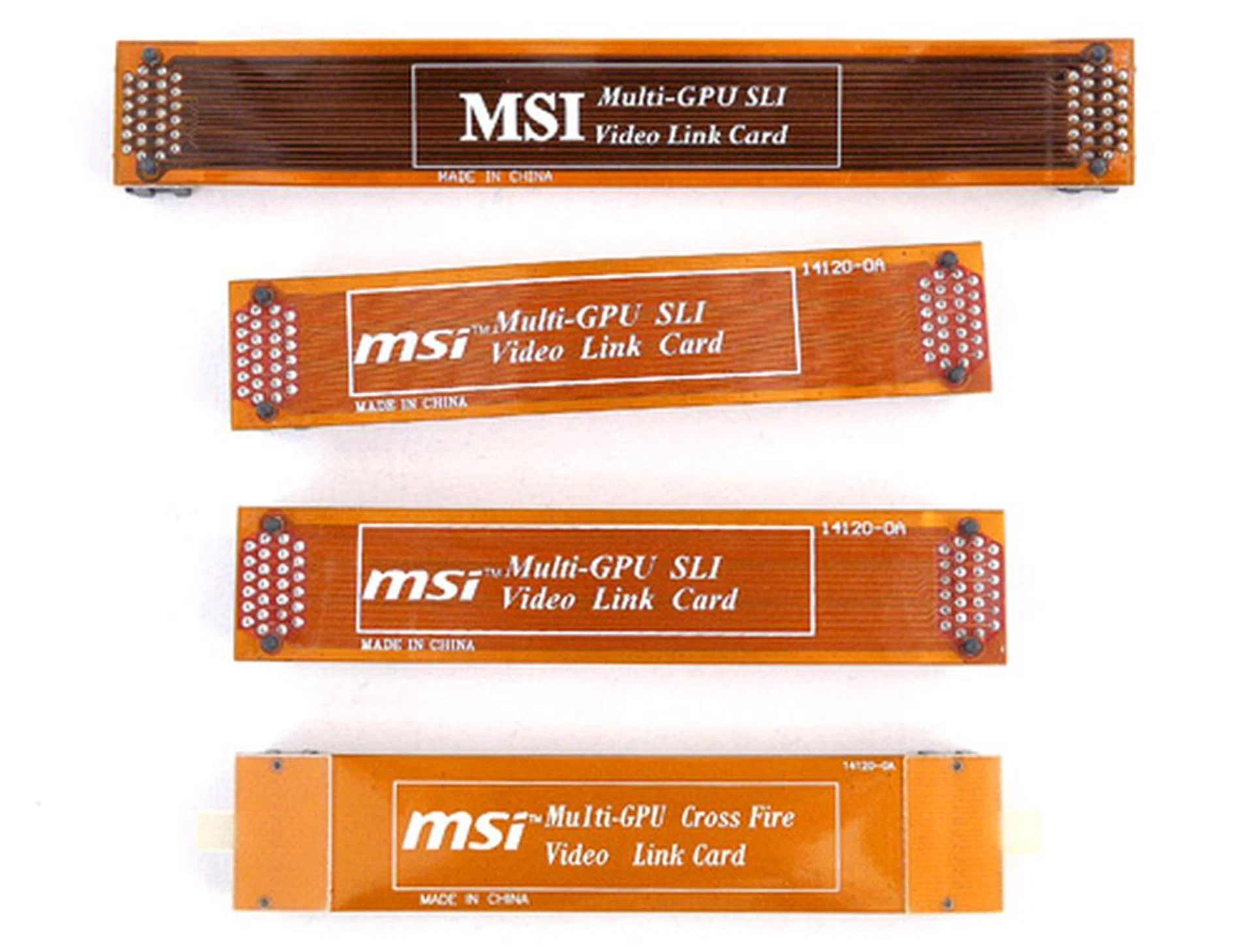
MSI has even thoughtfully provided a single CrossFire and three SLI ribbons.
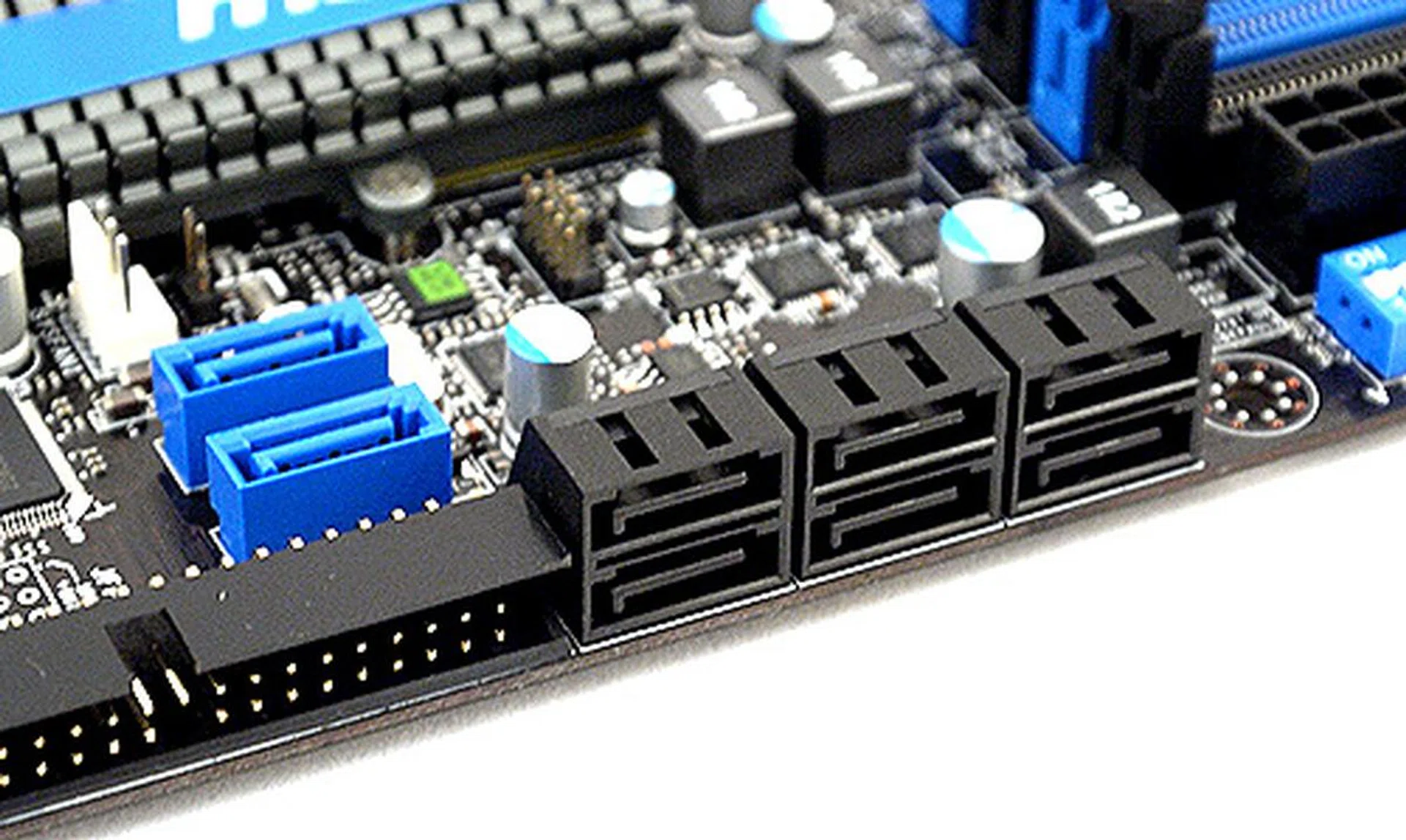
The MSI P55-GD80 has eight onboard 3Gbps SATA ports, six of which are nicely angled and are native to the Intel chipset. The other two which are in blue and face upwards are enabled by the onboard JMicron JMB363 IDE and SATA 3Gbps controller.
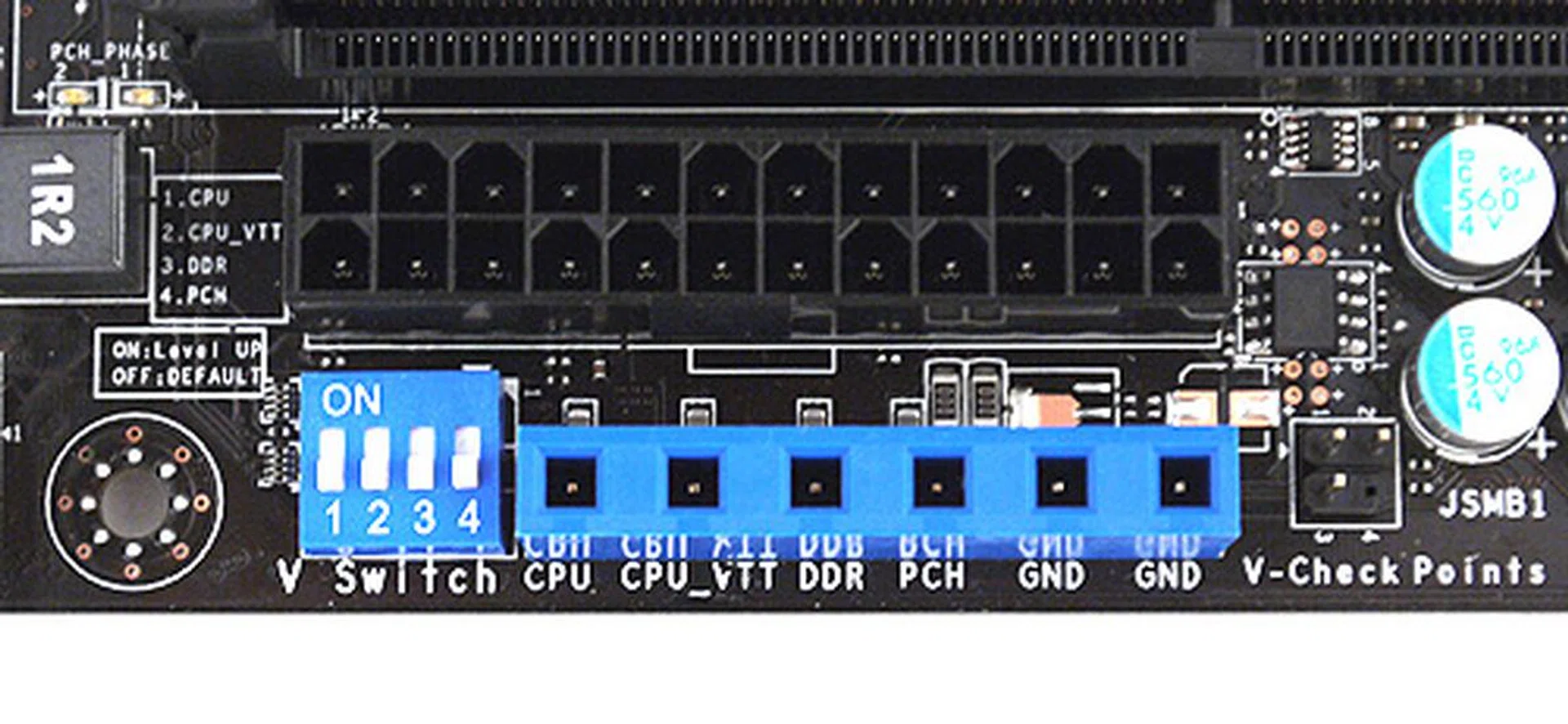
Slightly to the right of the SATA ports is the V Check Point, which allows more skilled users to accurately measure the CPU, memory and chipset voltages. The switch on the left allows for the convenient increase of overclocking voltages.
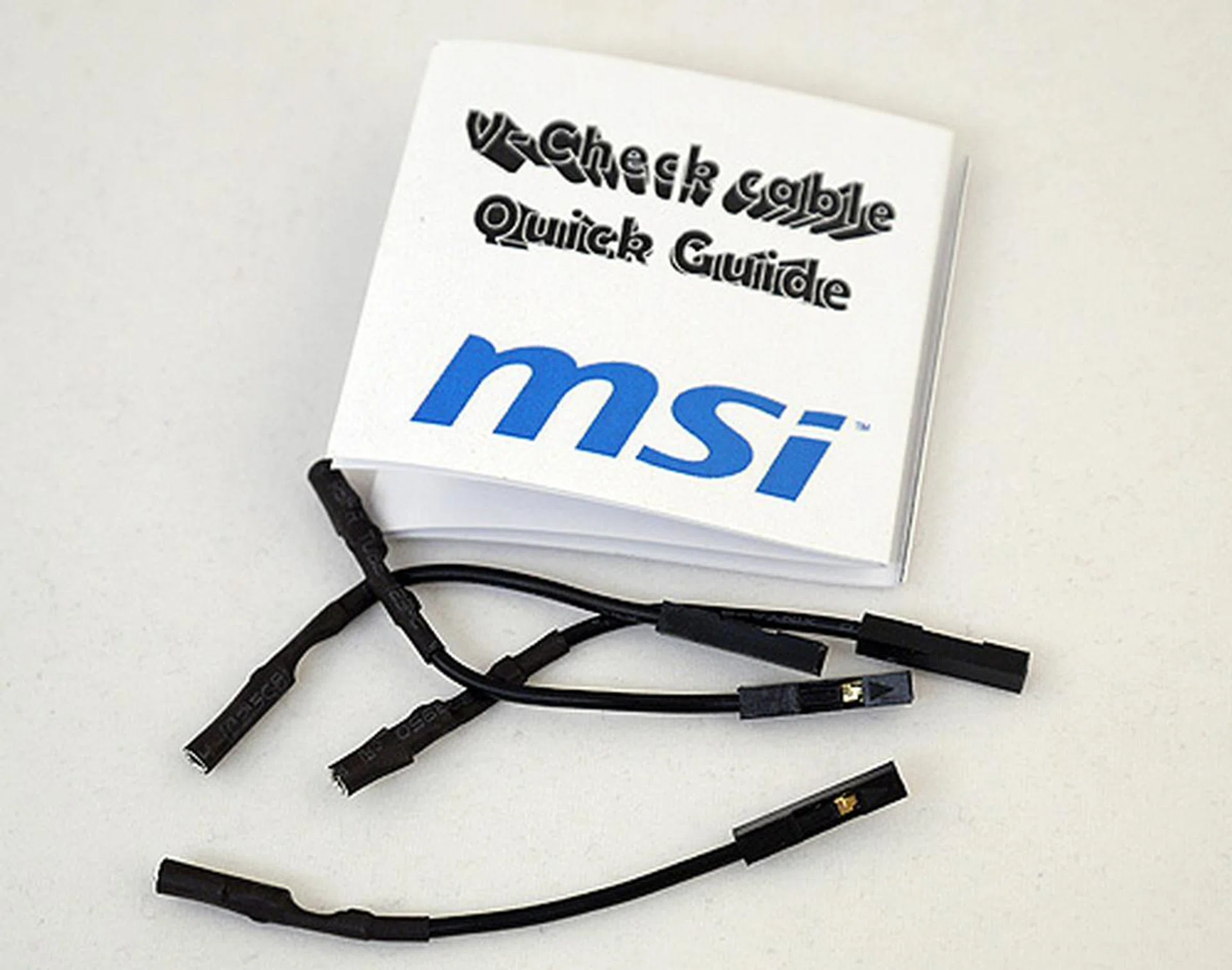
MSI has even provided a handy V-kit, which includes a quick guide and connecting cables.
The MSI P55-GD80 (contd.)
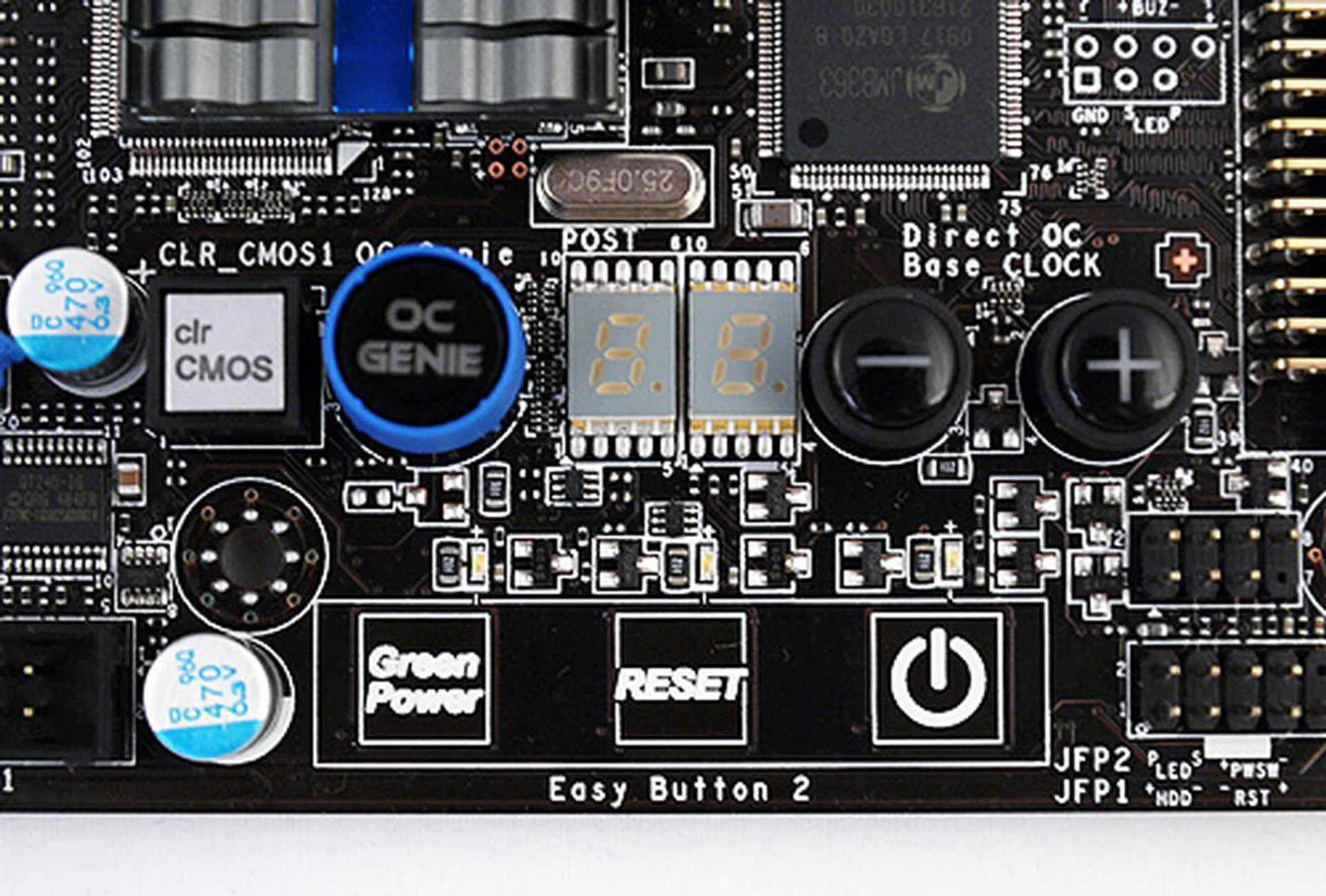
Here, we can see the OC Genie overclocking tools. A simple push of this button is all it takes to overclock the system. However, you can also overclock manually using the base clock control functions. Note the new Easy Button 2 feature which are no longer using physical control buttons, but are capacitive in nature.
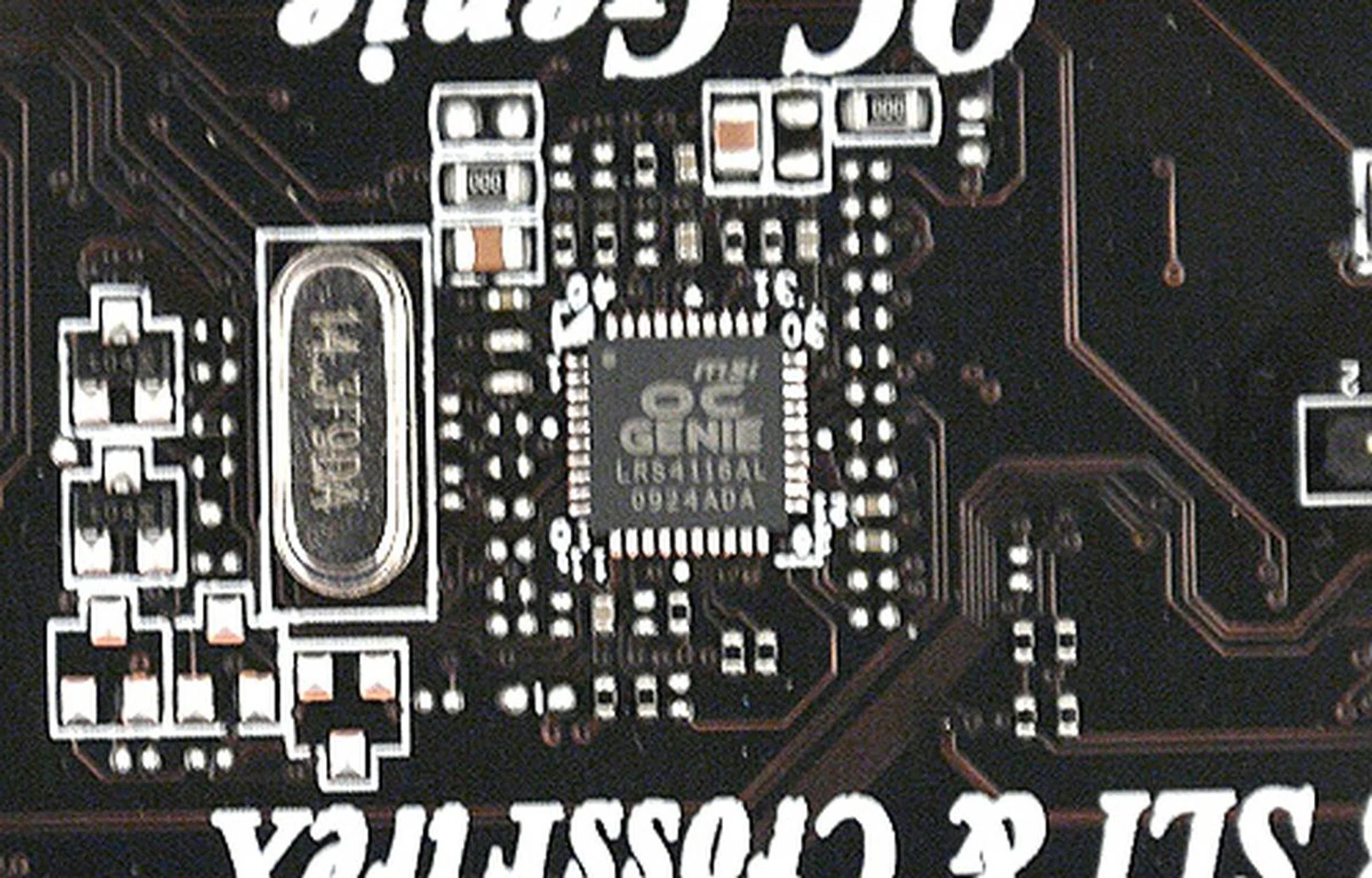
The magic of the OC Genie takes place here in this hardware controller IC dubbed as the OC Genie chip. It is located in-between the expansion slots, where the clock generators are normally found.
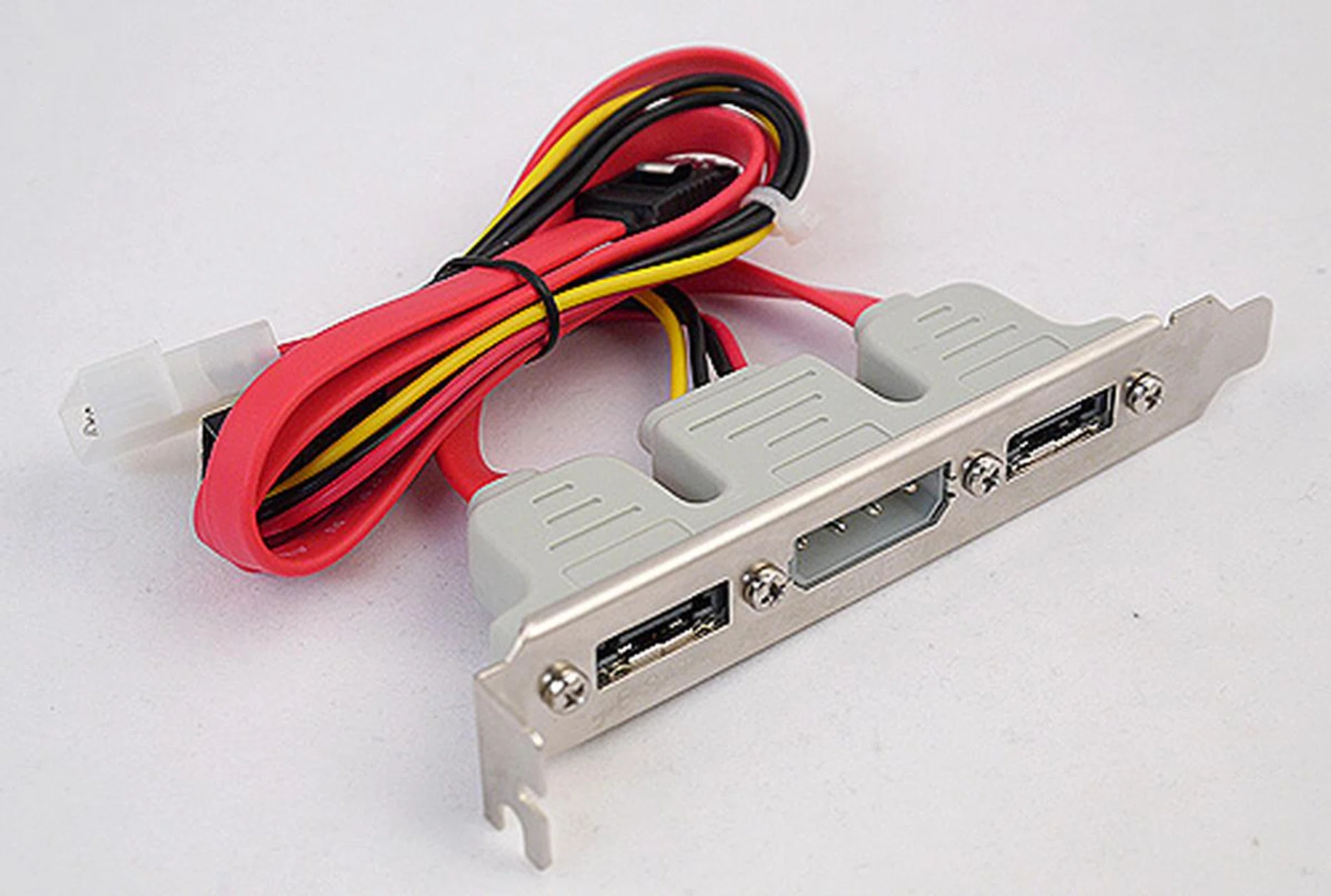
Provided with the motherboard is also an eSATA bracket, complete with the necessary power and data cables. This is a fairly new addition to MSI motherboards - one that's familiar to long time Gigabyte users.
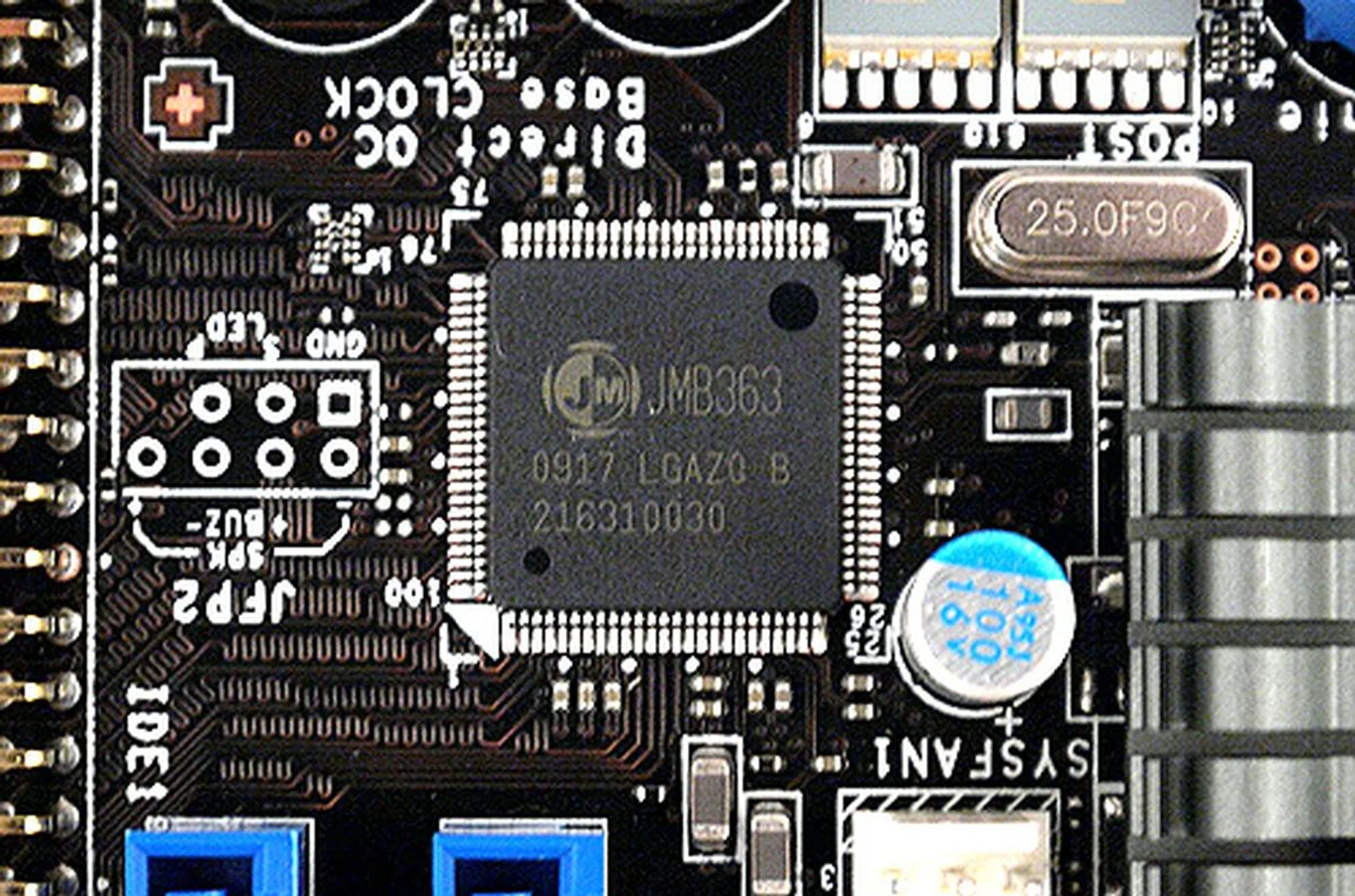
Some other important ICs of note is this JMicron 363 controller, which supports the IDE port and dual SATA 3Gbps ports (one of which is shared with the eSATA port at the rear of the board).
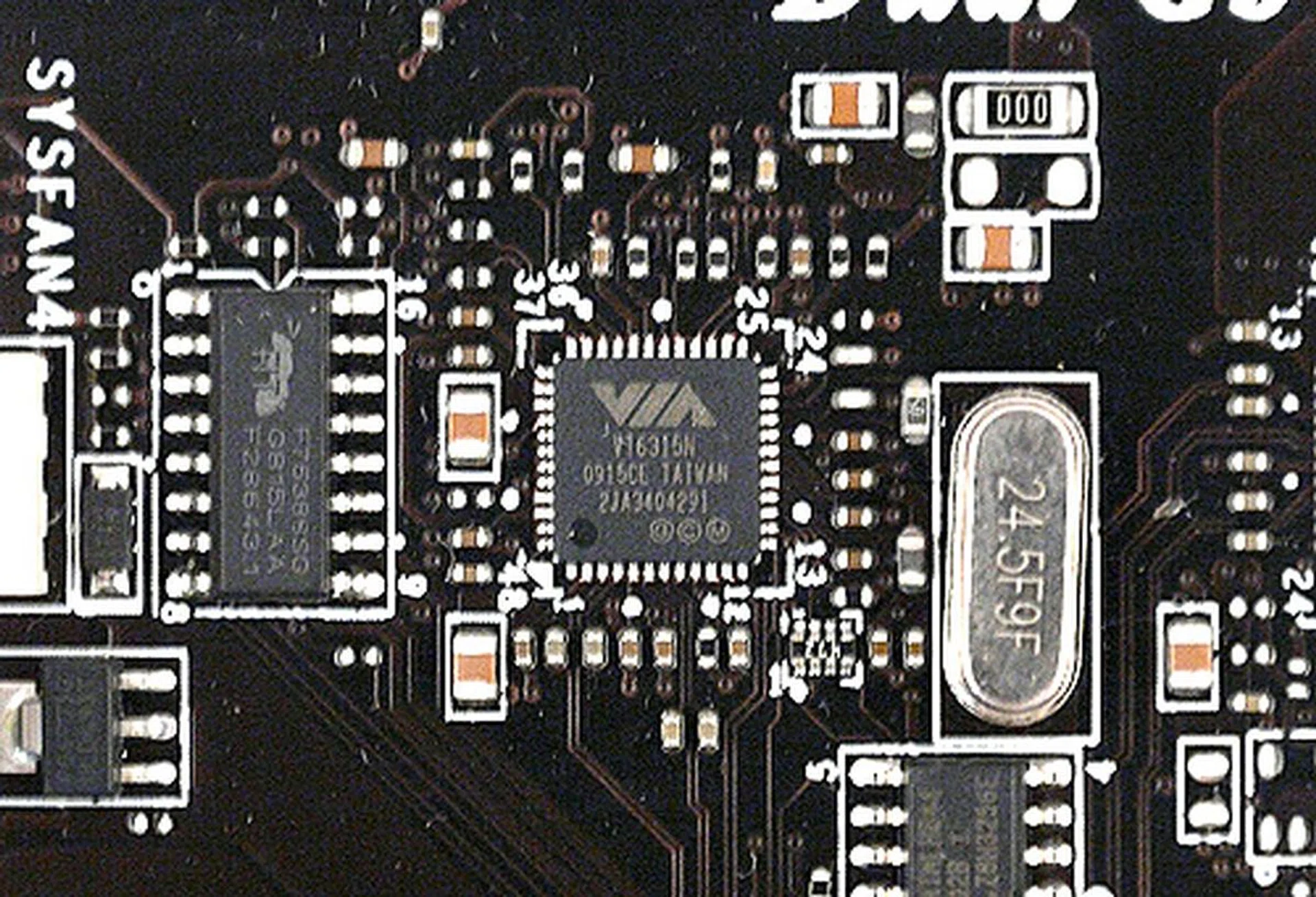
This VIA VT6315N chip supports the board's two IEEE 1394 ports, one at the rear and the other via an onboard header.
As the photos clearly show, the MSI P55-GD80 packs a meaty punch for a board based on what some have called a watered-down X58-call motherboard. It has a host of overclocking features that will surely appeal to enthusiasts, and we can't wait to give the P55-GD80 the full rundown and see how it performs in the final revision of the board. Till then, be sure to check back often for more previews of upcoming P55 motherboards.
Our articles may contain affiliate links. If you buy through these links, we may earn a small commission.