
NVIDIA GeForce RTX 3070 Ti Founders Edition Review: More evolutionary than revolutionary
The GeForce RTX 3070 Ti is priced at a premium for a modest performance bump.

Note: This review was first published on 9 June 2021.
A complete RTX 30-Series lineup
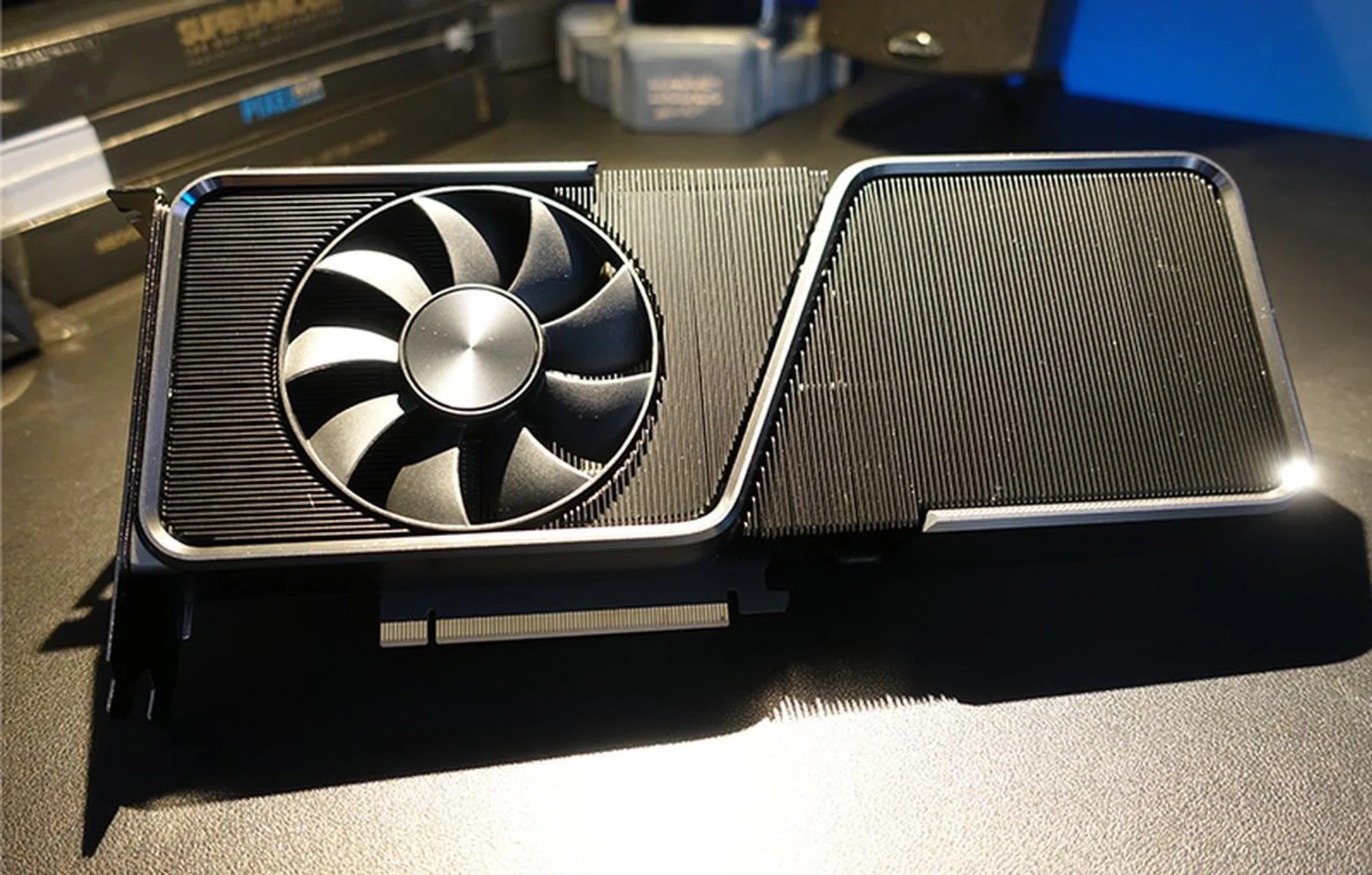
At their Computex keynote event, NVIDIA announced two new graphics cards to their RTX 30-Series line-up. The first was, of course, the company’s new gaming flagship and whose existence was often rumoured, the GeForce RTX 3080 Ti Founders Edition. The other however, caught us by surprise. Certainly, not many of us at HardwareZone were expecting NVIDIA to launch a video card that sits in between the RTX 3070 and RTX 3080. And so here we are, the GeForce RTX 3070 Ti Founders Edition.
The GeForce RTX 3070 Ti Founders Edition is NVIDIA’s seventh card based on an Ampere GPU but only its sixth Founders Edition card for this generation, because they never made one for their RTX 3060 GPU – leaving it directly to partners. And like all RTX 30-Series GPUs, the RTX 3070 Ti is also made using the 8nm Samsung node and comes with DLSS 2.0, Reflex and ray-tracing technologies. Let’s have a closer look at the key specifications:
RTX 3060 Ti | RTX 3070 | RTX 3070 Ti | RTX 3080 | RTX 3080 Ti | RTX 3090 | |
GPU | GA104-200 | GA104-300 | GA104-400 | GA102-200 | GA102-225 | GA102-300 |
SM | 38 | 46 | 48 | 68 | 80 | 82 |
CUDA Cores | 4864 | 5888 | 6144 | 8704 | 10240 | 10496 |
RT | 38 | 46 | 48 | 68 | 80 | 82 |
Tensor Cores | 152 | 184 | 192 | 272 | 320 | 328 |
ROPs | 80 | 96 | 96 | 96 | 112 | 112 |
GPU Base clock | 1410MHz | 1500MHz | 1575MHz | 1440MHz | 1370MHz | 1395MHz |
GPU Boost clock | 1665MHz | 1725MHz | 1770MHz | 1710MHz | 1670MHz | 1695MHz |
Memory | 8GB GDDR6 | 8GB GDDR6 | 8GB GDDR6X | 10GB GDDR6X | 12GB GDDR6X | 24GB GDDR6X |
Memory speed | 14Gbps | 14Gbps | 19Gbps | 19Gbps | 19Gbps | 19.5Gbps |
Bandwidth | 448GB/s | 448GB/s | 608.3GB/s | 760GB/s | 912GB/s | 936GB/s |
Memory bus | 256-bit | 256-bit | 256-bit | 320-bit | 384-bit | 384-bit |
TGP | 200W | 220W | 290W | 320W | 350W | 350W |
MSRP | US$399 | US$499 | US$599 | US$699 | US$1,199 | US$1,499 |
I’ve mentioned in my RTX 3080 Ti Founders Edition review of how that GPU is actually closer to the RTX 3090 than the RTX 3080 in specifications and performance, which also explains how narrow the price tags of both cards are. Compared to the RTX 3070, the new GeForce RTX 3070 Ti will feature just 4% more CUDA cores. This is combined with a base clock speed of 1,580MHz and 1,770MHz when overclocked.
The key difference between both cards is memory. Compared to the RTX 3070, the RTX 3070 Ti has faster GDDR6X video memory, and these runs hotter than the standard GDDR6. That also explains the higher TGP and NVIDIA having to go with a different cooler design than the one used on the RTX 3070 Founders Edition, which made it looks like an extended vanilla RTX 3070 in some way.
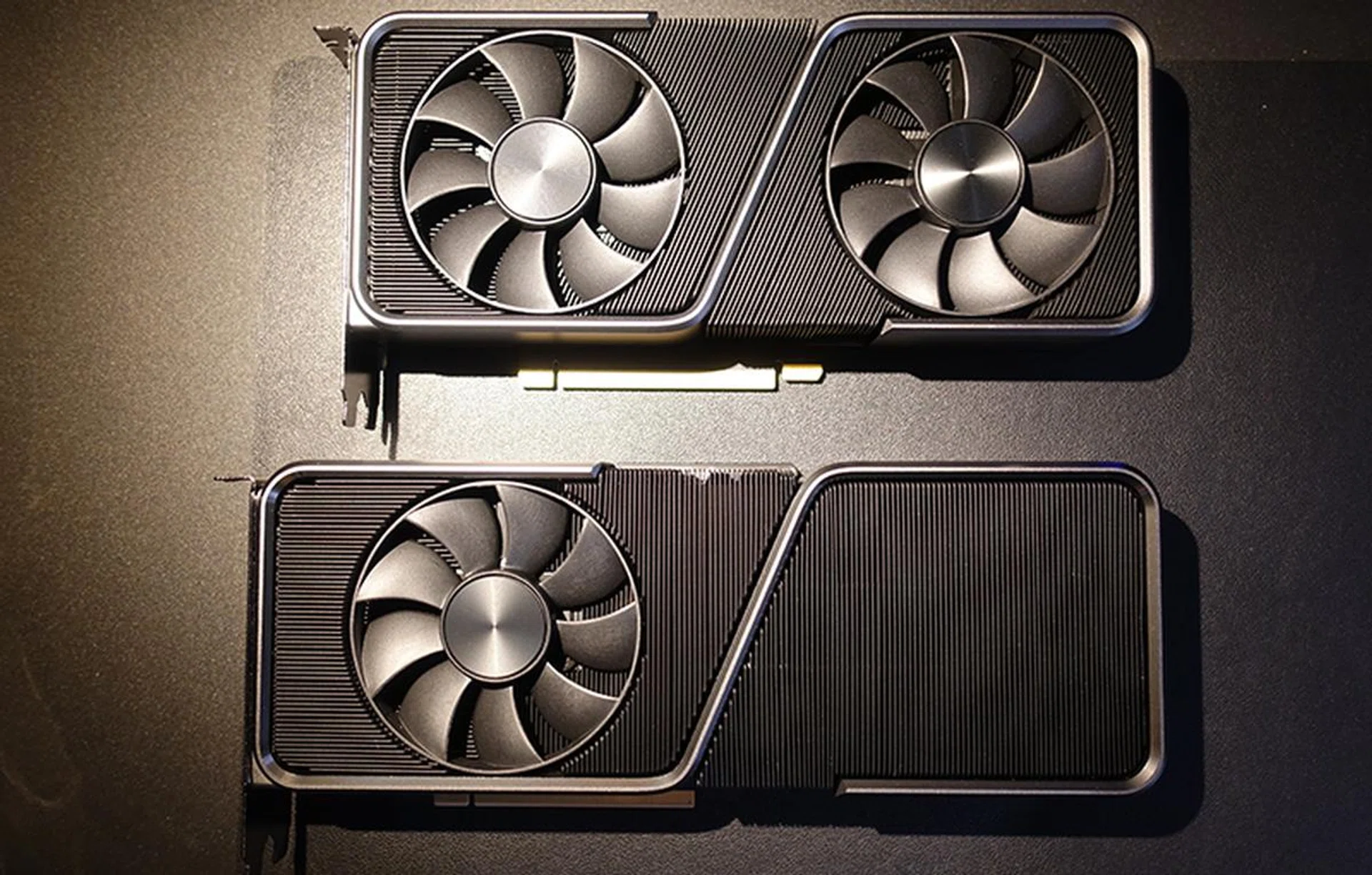
The RTX 3070 Ti Founders Edition sport a different, lengthier, cooler than the original RTX 3070 Founders Edition.
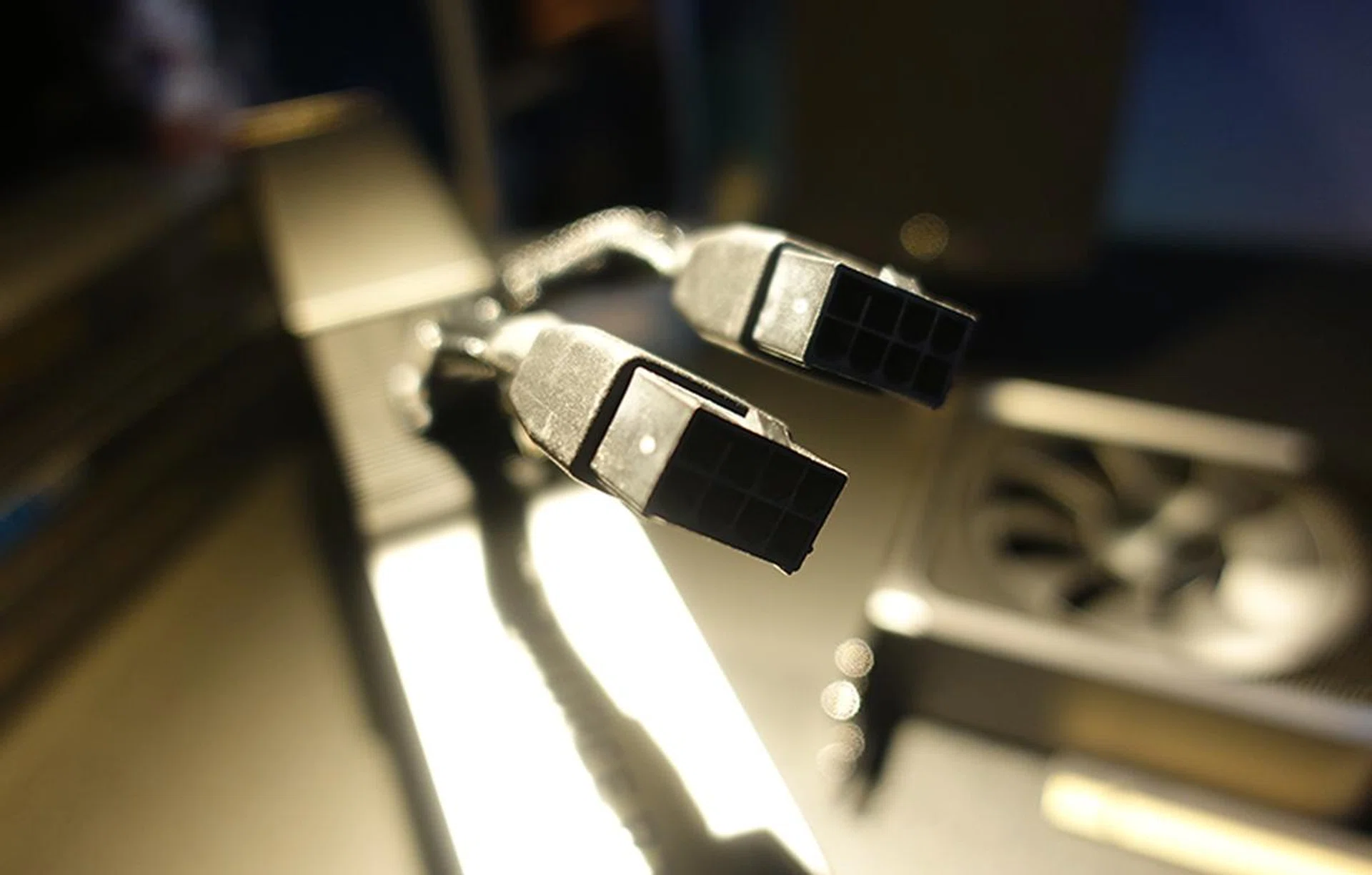
The RTX 3070 Ti Founders Edition also requires the use of two eight-pin connectors fed into the single 12-pin.
So, on paper at least, the RTX 3070 Ti has minimal improvements on the original RTX 3070 (unlike the substantial jump that the RTX 3080 Ti had over the vanilla RTX 3080), which certainly raises some questions why a “Ti” variant was created at all? The answer might lie in the card’s price. As we can see in the chart above, the RTX 3070 Ti fills up a market segment that was conspicuously missing in the RTX 30 Series until now - the US$599 bracket. With the new RTX 3070 Ti, NVIDIA essentially now covers all mainstream market segments; the RTX 3060 Ti (US$399), RTX 3070 (US$499), RTX 3070 Ti (US$599), RTX 3080 (US$699) and the RTX 3080 Ti (US$1,199).
So, whether you’re looking for a good performance card on a tighter budget, something balanced between price and performance, or a no-holds barred graphics card solution, you’ll never be short of options here.
With that said, let’s have a look at how the RTX 3070 Ti Founders Edition fare in our benchmarks.
Our Test Rig
Here's a quick look at our test rig's specifications, which has been unchanged so far for 2021:
- AMD Ryzen 9 5900X CPU
- MSI MEG X570 Godlike
- Samsung 980 Pro 1TB SSD
- Windows 10 Home 64-bit
- ASUS ROG Swift PG43UQ 4K Gaming Monitor
I'll be comparing the GeForce RTX 3070 Ti Founders Edition against the rest of its RTX 30 Series Founders Edition cards, so we can get an idea of where the card stands in the series line-up. The following modern AAA games were run, with the each chosen from a wide range of genres to give a better indication of performance across different segments. Our game game tests are also maxed out in graphical fidelity to push the cards to their limit.
- Shadow of the Tomb Raider
- Total War: Three Kingdoms (Battle)
- Deus Ex: Mankind Divided
- Metro: Exodus
- Watch Dogs: Legion
DX12-based Games in 1080p / 1440p / 4K - in fps
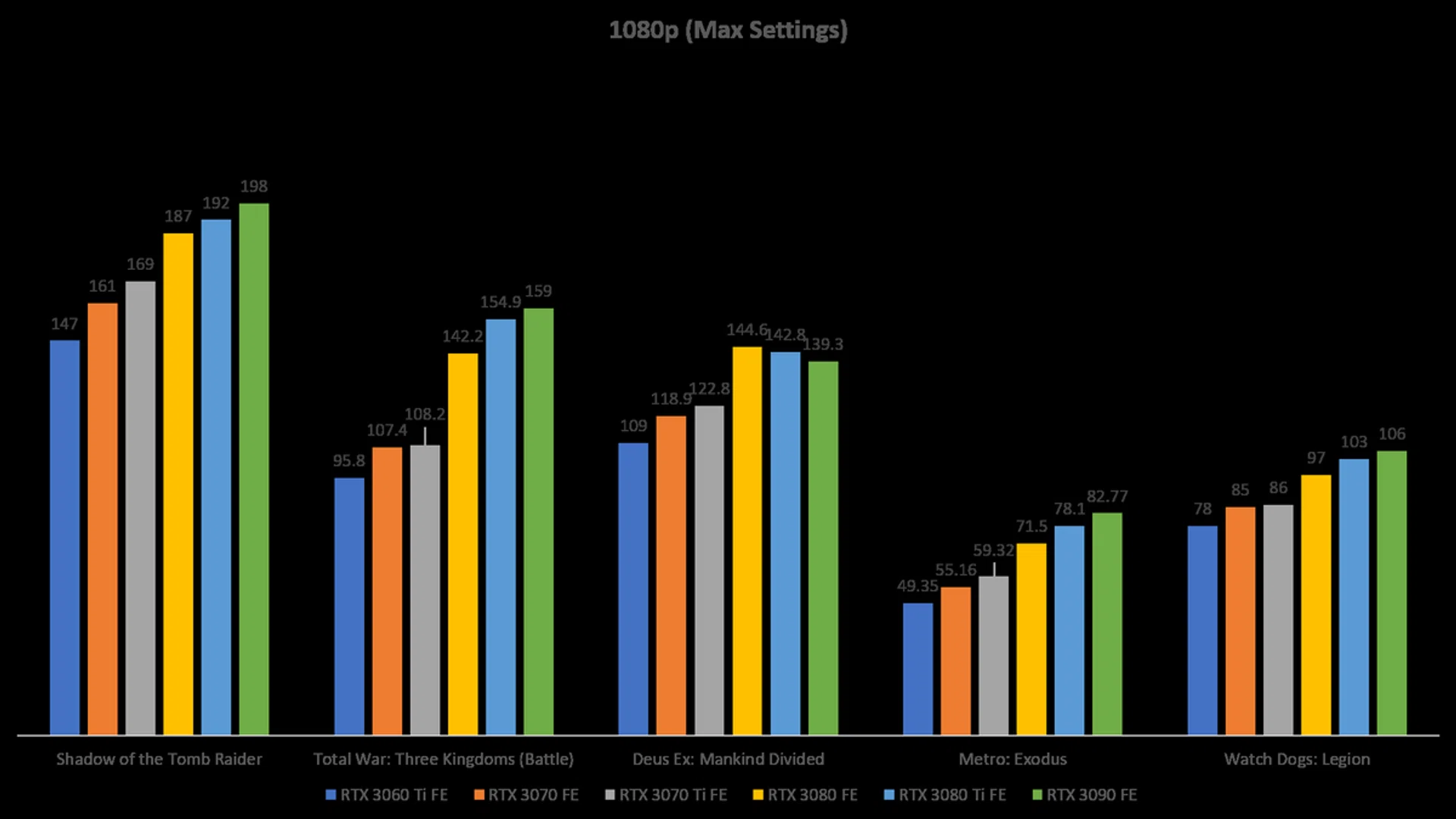
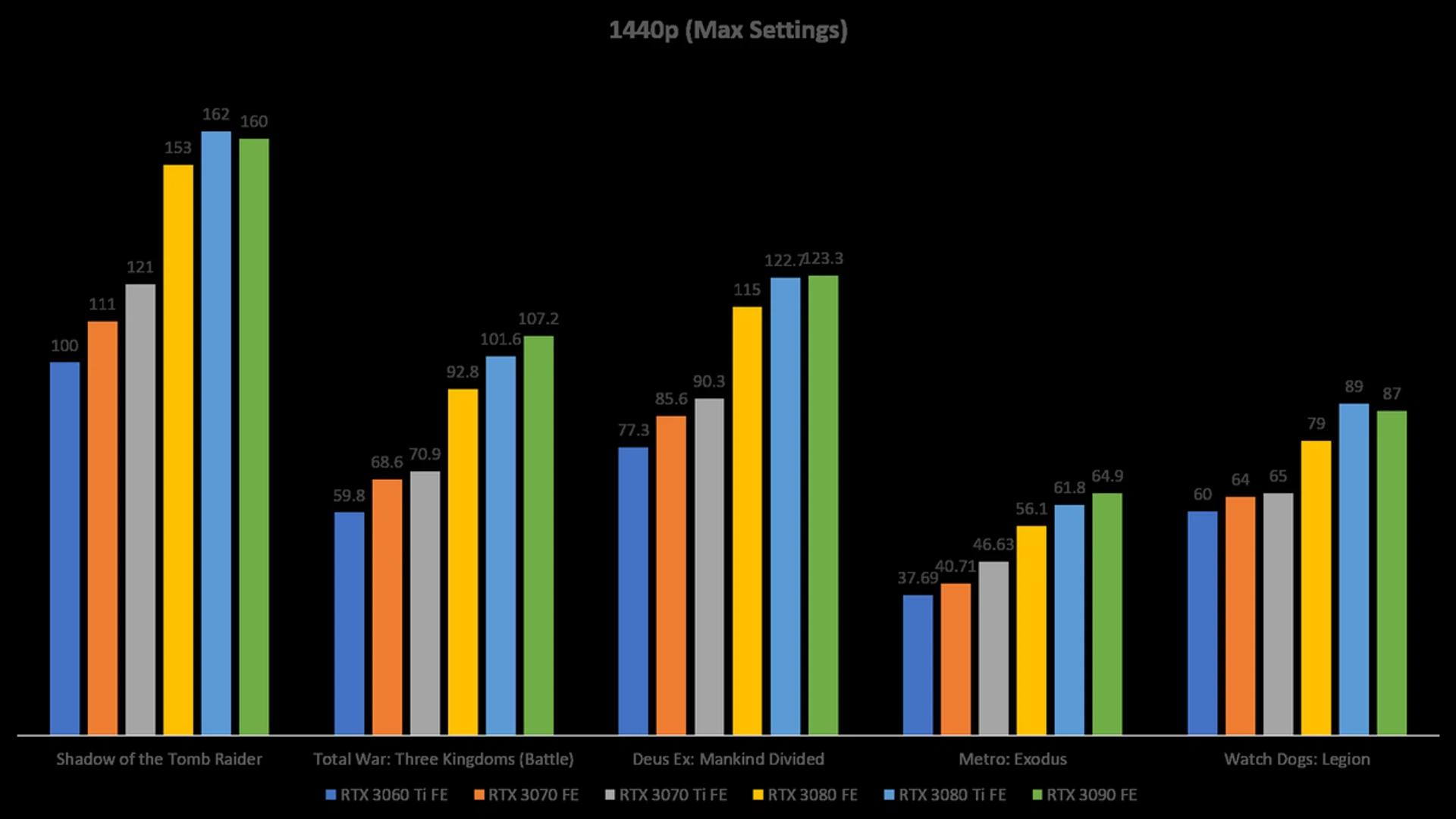
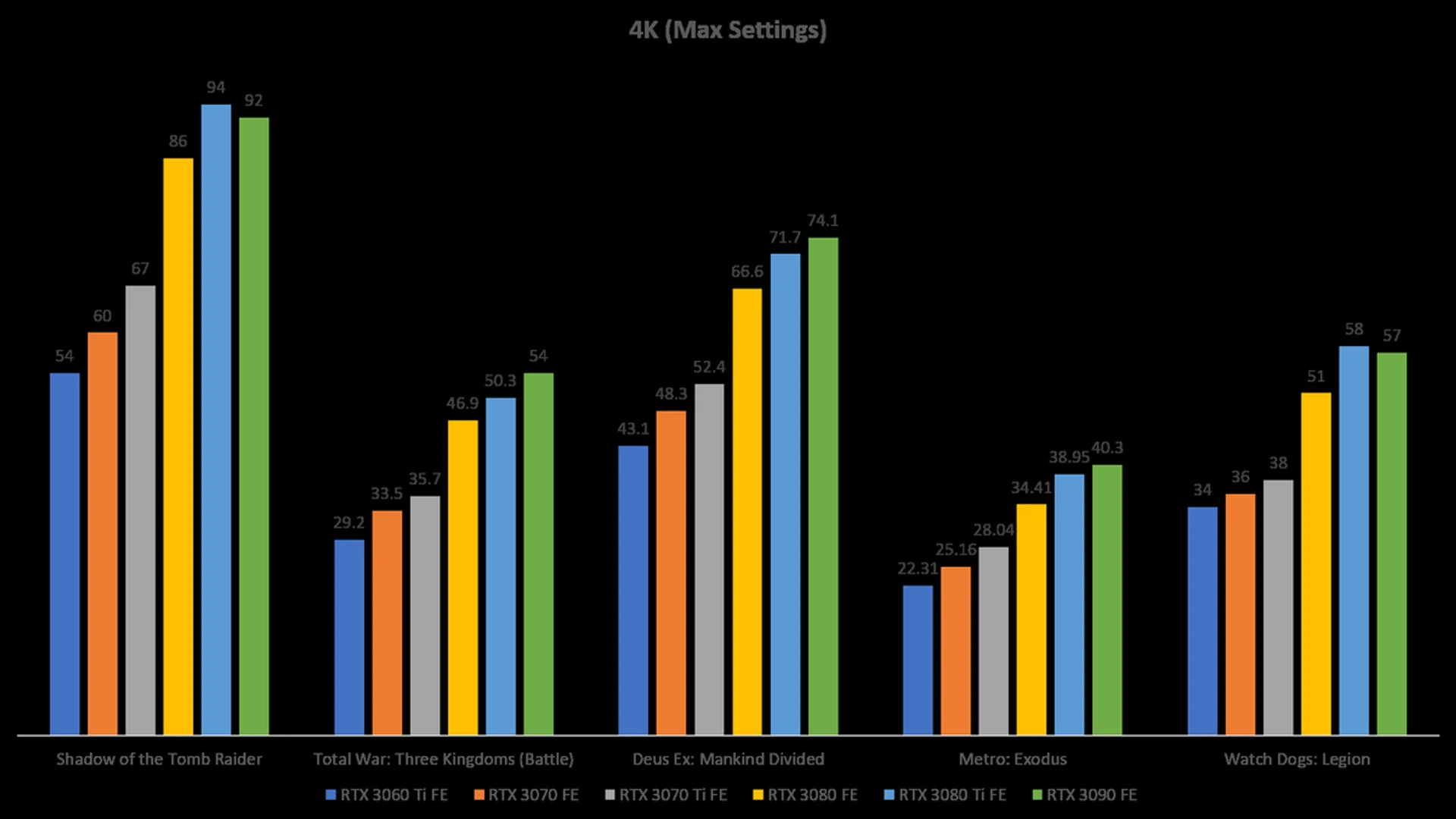
If you were hoping that the RTX 3070 Ti bridges the performance gap between the vanilla RTX 3070 and RTX 3080, then you will be disappointed. Be it 1080p, 1440p or 4K gaming, the RTX 3070 Ti gained only between 7-10% increased in framerates over its predecessor - the RTX 3070 - across all five games. It's not even close to the RTX 3080 at all. But then again, as we have seen in the specifications earlier, there's not much that sets the RTX 3070 and RTX 3070 Ti cards apart from the latter's faster VRAM. I mean, the RTX 3070 Ti is still faster than the RTX 3070 and the GDDR6X on it will come in handy in games that are reliant on memory bandwidth - such as Red Dead Redemption 2, which I didn't get the chance to test it in time for this review.
Ray Tracing & DLSS Performance
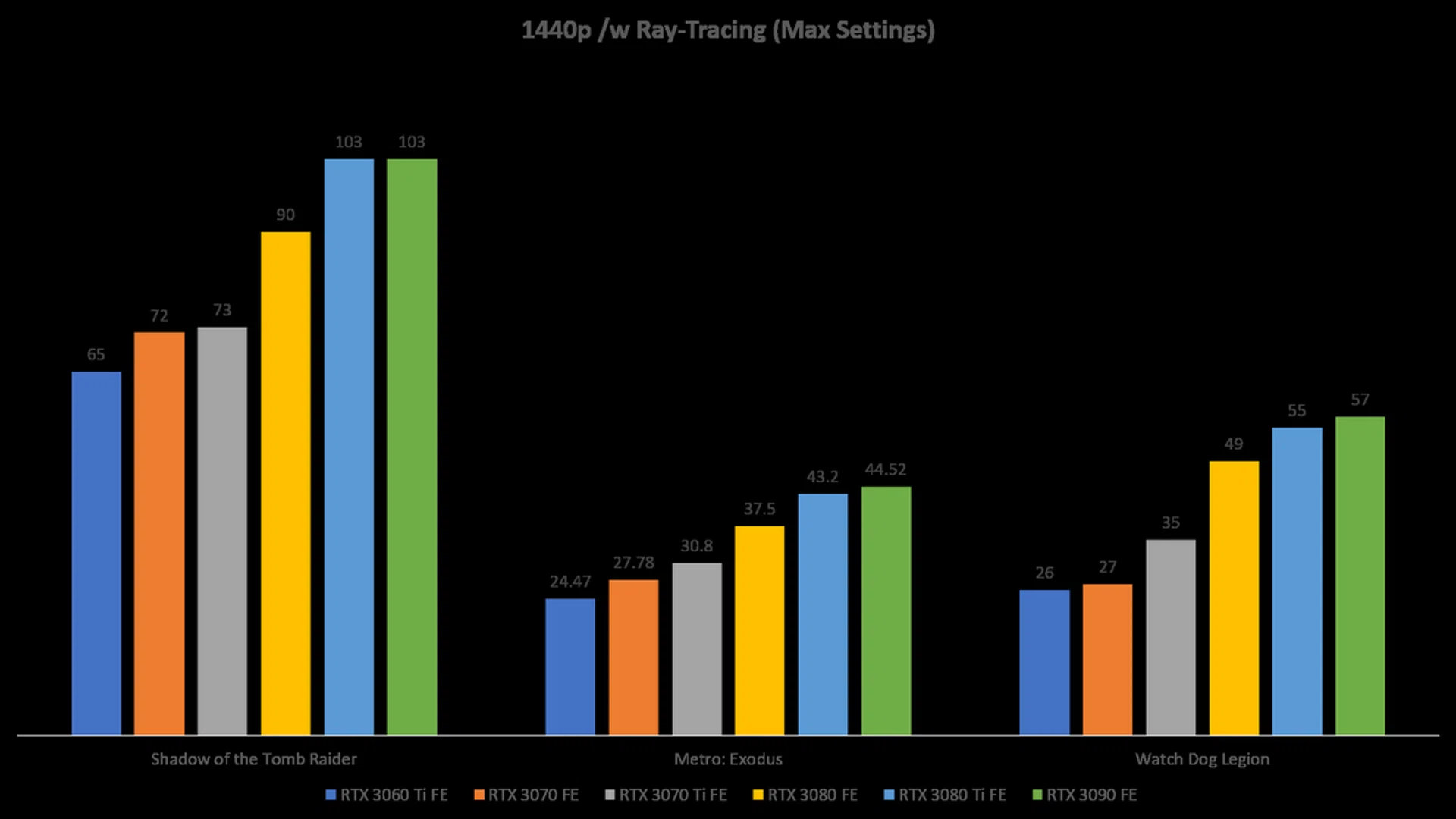
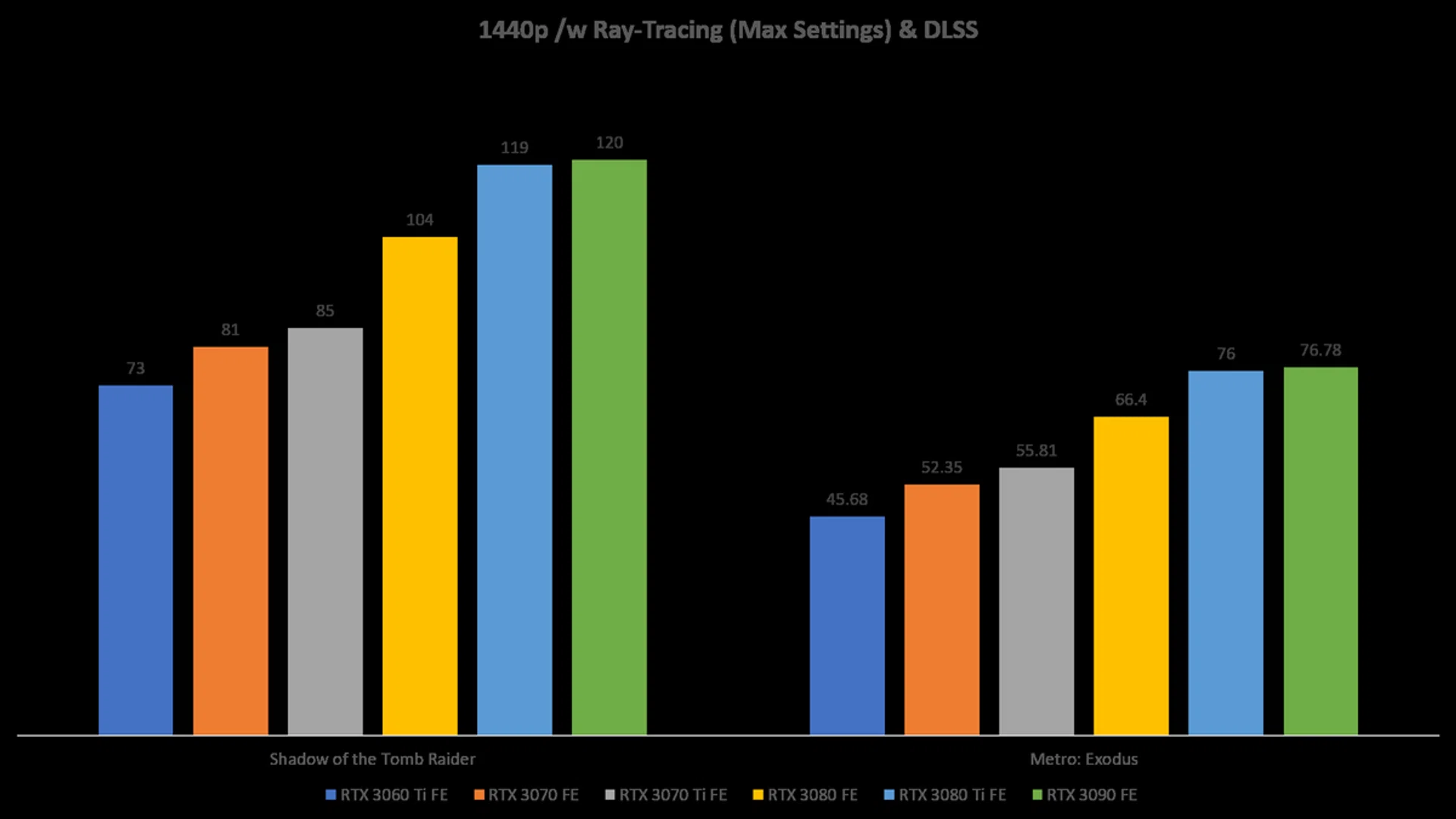
Ray-tracing is a fantastic technology and if you have an RTX 30 Series graphics card, there's no reason not to turn it on with games that support it. The problem, as we are all very aware, is that ray-tracing can absolutely crush your system even when it's paired with a top-of-the-line RTX 3090. Thankfully, most of today's games that support ray-tracing also support DLSS at the same time. I won't go into detail what DLSS does now (you can read about it here), but needless to say, having it switched on provides an improvement in framerates across all games. Sometimes, as much as a 50% increase, as we see with Metro: Exodus above.
But in any case, I have to admit that I had hoped the RTX 3070 Ti would outpace the RTX 3070 by a wider margin than what it achieved above, what with its faster memory bandwidth and higher CUDA, RT and Tensor Core counts - even if just slightly. Overall, there's nothing revolutionary happening with the GeForce RTX 3070 Ti.
Conclusion
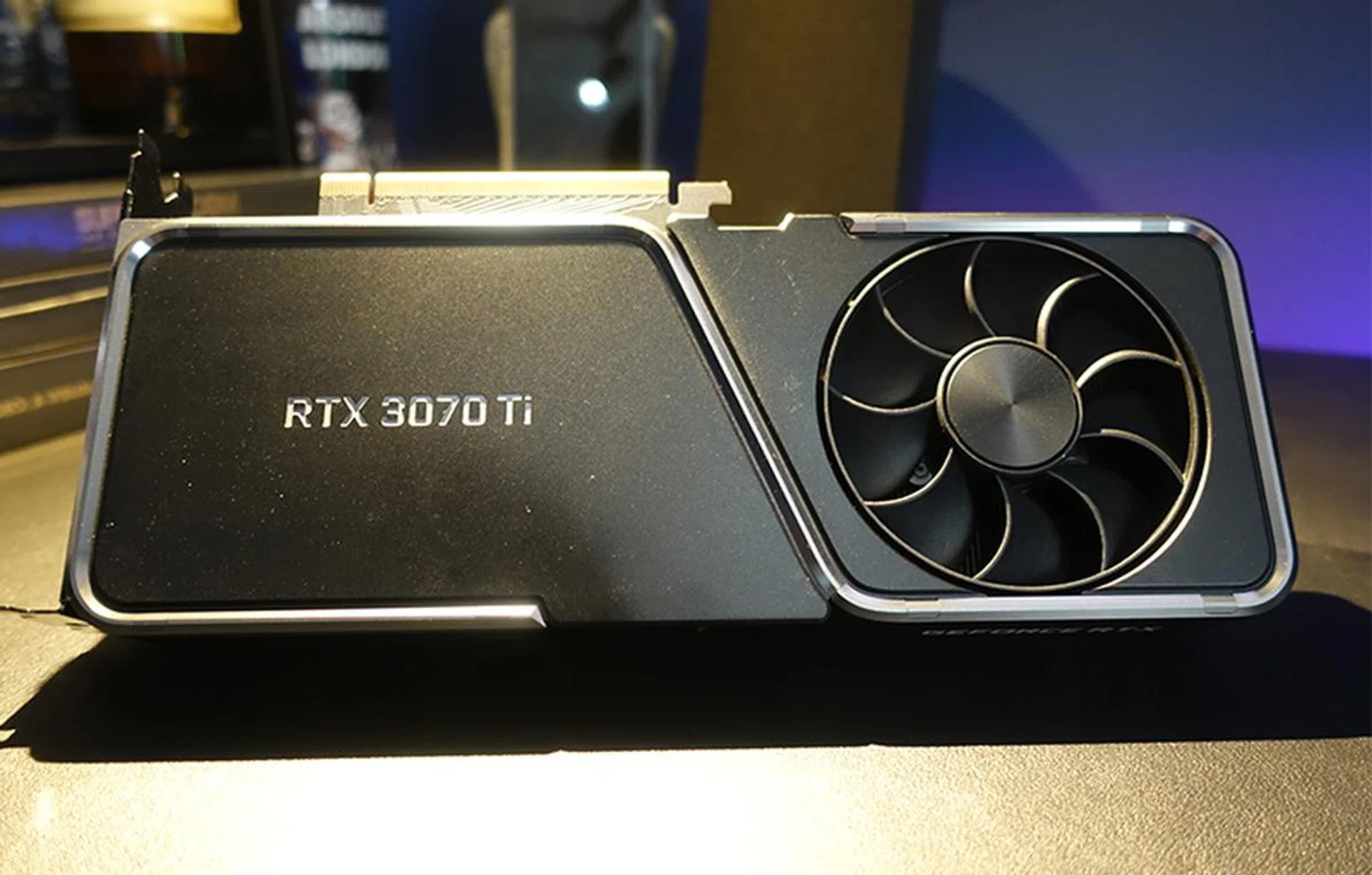
The GeForce RTX 3070 Ti Founders Edition, at US$599 is quite the oddity in the entire RTX 30 Series line-up as far as performance is concerned. Just purely based on the games benchmarks that I ran above, the card's performance gain over the older RTX 3070 is marginal at best. Considering that the RTX 3060 Ti isn't that far behind the vanilla RTX 3070 in rasterization and ray-tracing, and how the RTX 3080 Ti has not only performance advantages but also additional VRAM over the RTX 3080, the RTX 3070 Ti didn't quite give the "Ti" performance that I was expecting.
So for my money, what's my verdict? Now I know that the GPU market has gone wild wild west nuts. But in the context of the SRP set by NVIDIA for this review, I would think the RTX 3070 and the RTX 3080 simply offers better value than the RTX 3070 Ti. It just makes better sense to spend US$100 less for an RTX 3070 card that isn't all that much slower in 1440p gaming, or better yet, top up US$100 for the RTX 3080 that offers substantial 4K gaming boost. The Geforce RTX 3070 Ti's is hard to recommend for the premium price that it commands.
Our articles may contain affiliate links. If you buy through these links, we may earn a small commission.