
NVIDIA GeForce RTX 3070 Founders Edition review: The end of the 1080p gaming era
There's a lot of power in this petite-looking graphics card.

Note: This review was first published on 27 Oct 2020.
A petite-looking Ampere card
The NVIDIA GeForce RTX 30 Series trinity is finally complete with the launch of the RTX 3070 Founders Edition – the company’s most affordable Ampere GPU (rumours of a RTX 3060 / 3060 Ti notwithstanding). If 4K gaming with ray tracing isn’t a pursuit you are after, then there’s a lot going for the more accessible US$499 RTX 3070 Founders Edition card than its more powerful siblings, the GeForce RTX 3080 and RTX 3090.
Now I’m sure you’re very much curious about the RTX 3070’s performance. How fast is it and is it a worthy alternative to your existing RTX 20 Series cards?
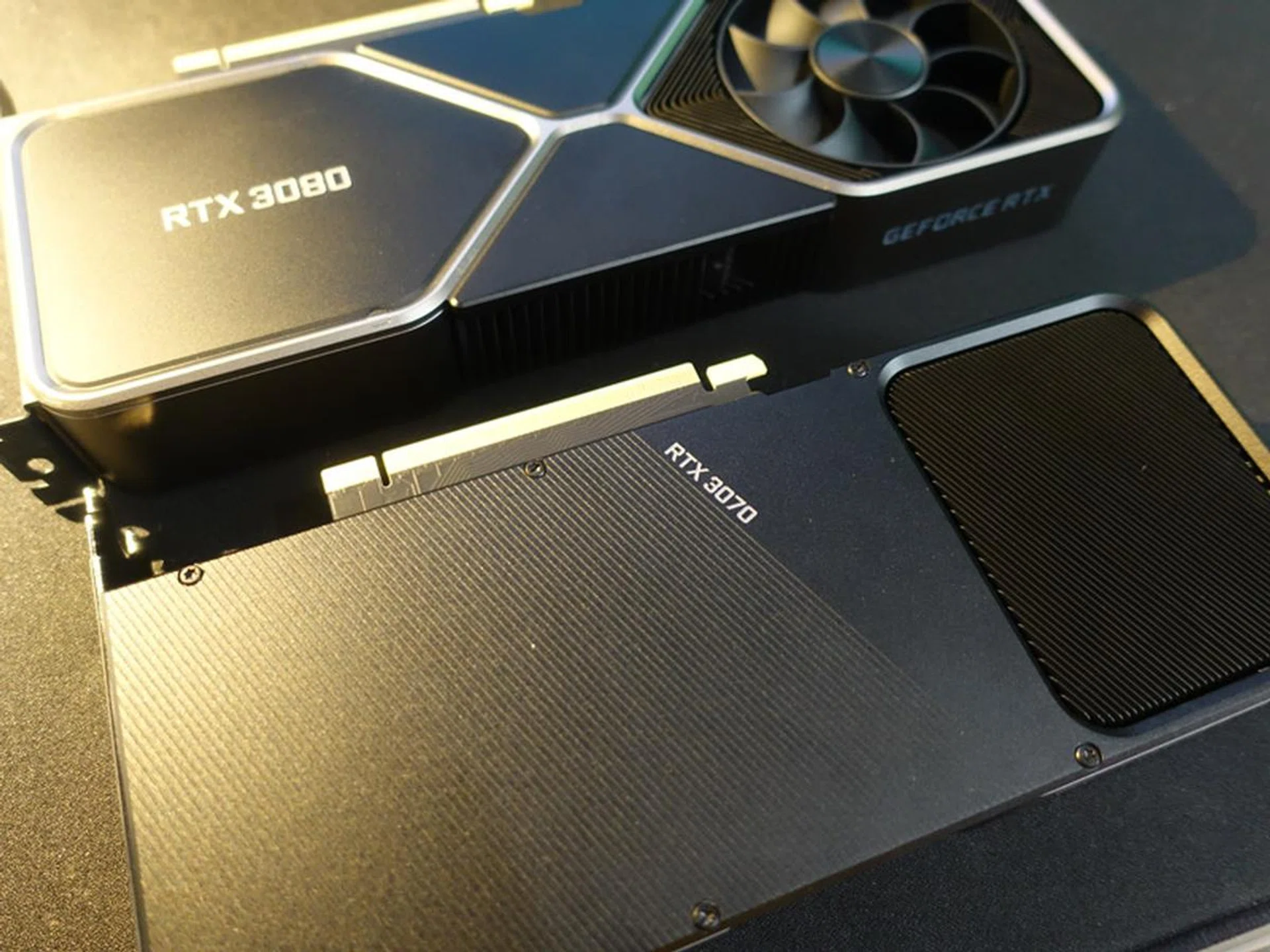
While sharing the same design DNA with the RTX 3080 Founders Edition, the RTX 3070 Founders Edition sports a slightly different cooling system.
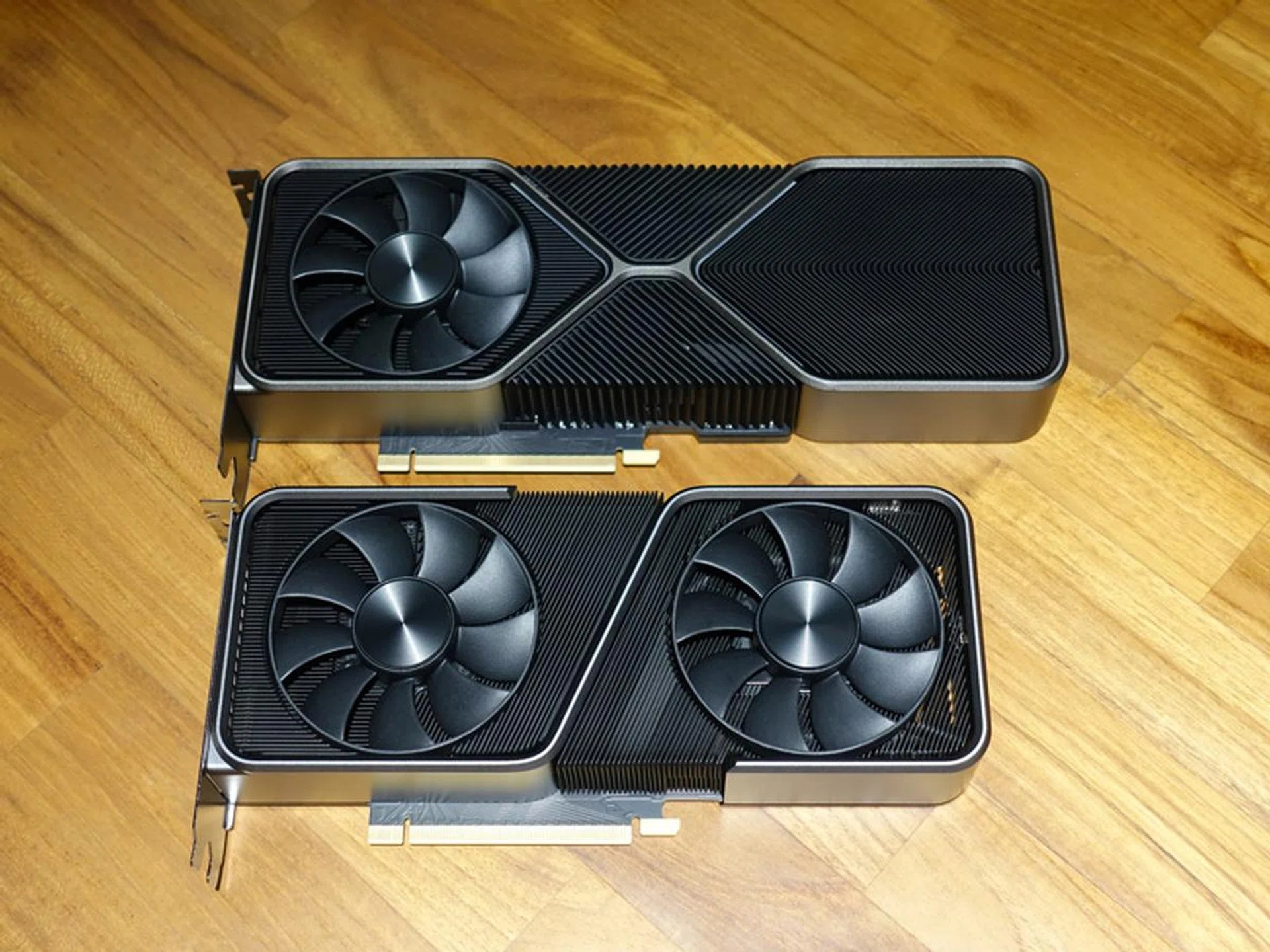
The RTX 3070 Founders Edition is a lot more petite compared to the RTX 3080 Founders Edition, but is actually still slightly longer than the previous RTX 2070 Founders Edition.
But first let’s talk about the card itself because while it sports the same design DNA as the RTX 3080 and RTX 3090 Founders Edition cards, the new card has some noticeable differences. For one, it sports a slightly different cooling design. Due to the shorter PCB on the card, it does not feature the same push-pull cooling system. Instead, the RTX 3070 Founders Edition adopts a more traditional cooling system where a dual-fan system cools the heatsinks (interestingly, the bottom fan blows cool air through that part of the heatsink).
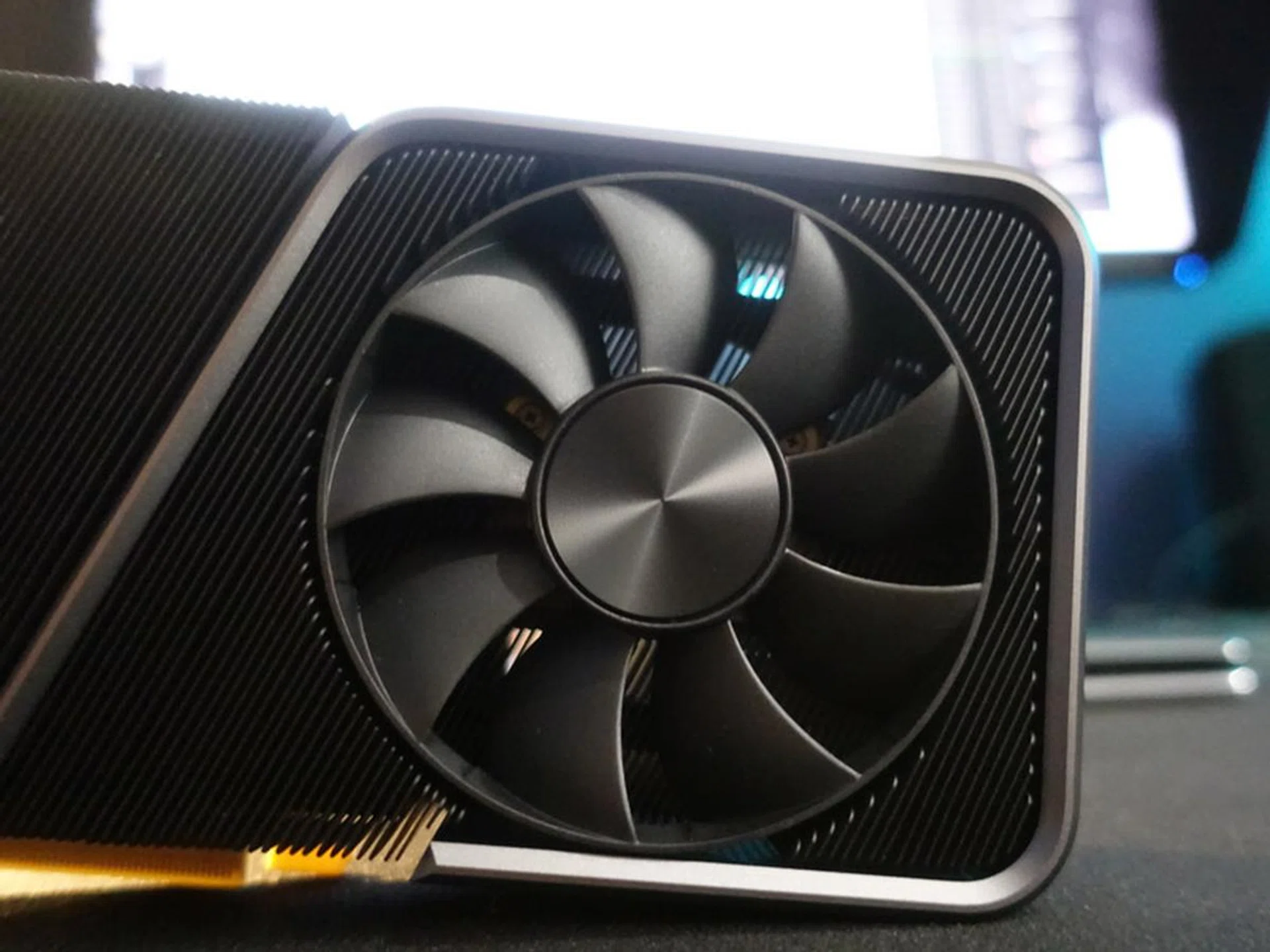
The RTX 3070 Founders Edition's bottom fan pushes air towards the heatsink, rather than 'pulling' it out like the RTX 3080 and RTX 3090 Founders Edition's.
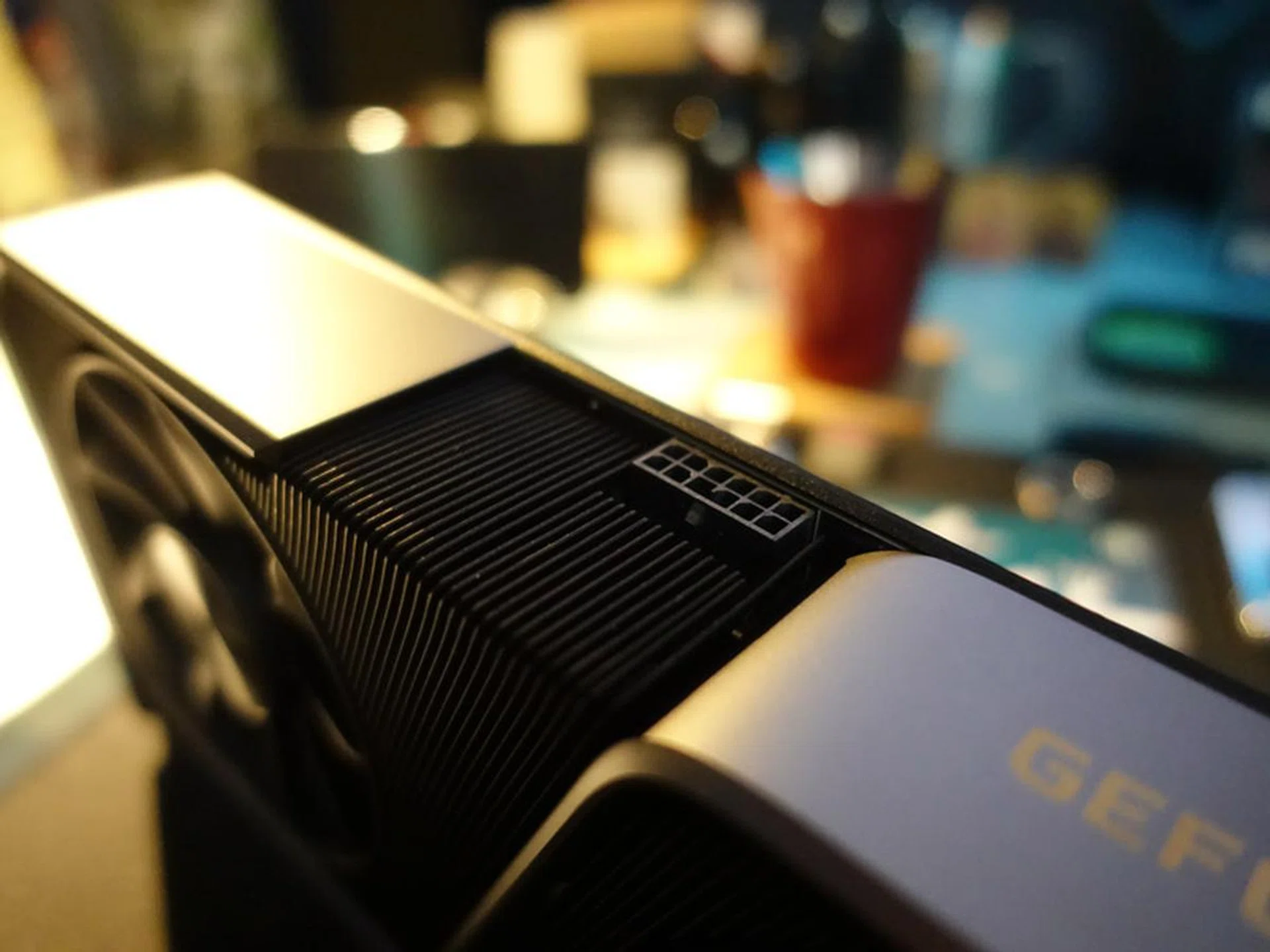
The unmistakable 12-pin power connector.
It also uses the same single 12-pin power connector but that is now placed in a typical top-facing position, unlike the angled position seen in its more powerful siblings. Apart from that, the RTX 3070 Founders Edition boasts the same impeccable build quality and the enclosed, one-piece block design really feels better made than most custom cards on the market.
Adding to that, the RTX 3070 Founders Edition’s relatively diminutive size makes it a great fit for a power and compact build. The 2-slot Founders Edition card is much more compact than its more powerful siblings, measuring just 242mm long. For display outputs, it features a single HDMI 2.1 and three DisplayPort 1.4a outputs.
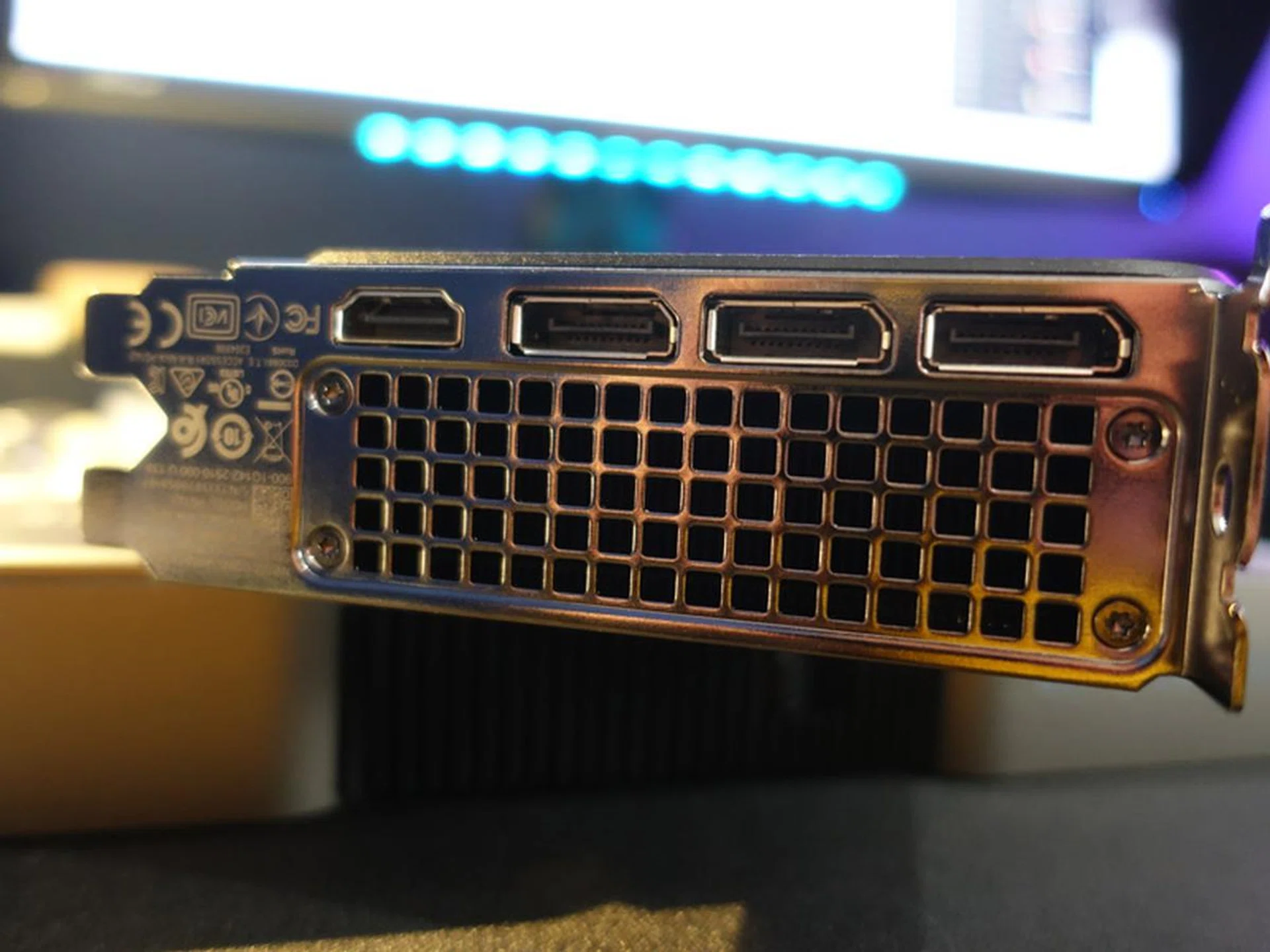
It will be interesting to see if partners' cards will add on an additional HDMI cable, like the ASUS TUF RTX 3080 card.
Finally, the GeForce RTX 3070 is based on the GA104 GPU, a scaled down version of the GA102 GPU used in the higher end 3080 and 3090 cards. The card itself features a 1,500MHz base clock and 1,730MHz boost clock, and is paired with 8GB of GDDR6 memory rather than the faster and more expensive GDDR6X.
Now let’s check out how the card performs, shall we?
Test Setup
I am using the same test rig as the one used to test previous RTX 3080 and RTX 3090 graphics cards, and comes with the following specifications:
- 10th Gen Intel Core i9-10900K (3.7GHz base clock, 20MB Intel Smart L3 cache)
- ASUS ROG Maximus XII Formula (Intel Z490)
- 32GB G.Skill DDR4 memory
- WD Black SN750 2TB SSD
- Windows 10 Home 64-bit
- Acer Predator X27
I'll be stacking the RTX 3070 Founders Edition not only against the more powerful RTX 3080 and RTX 3090 Founders Edition cards, but also the full suite of the RTX 2080 Founders Edition cards, including the original 2080, 2080 Super and RTX 2080 Ti. NVIDIA has claimed that the RTX 3070 offers similar performance to the RTX 2080 Ti, but at almost half the price. So let's pay extra attention to the comparisons between these two cards below.
[hwzcompare]
[products=687251,686120,687289,649099,669895,649102]
[width=200]
[caption=Test cards compared]
[/hwzcompare]
Benchmarks
As for benchmarks used, these are the following tools and games that I've drawn up to run the RTX 3070 Founders Edition on.
- 3DMark
- Horizon Zero Dawn
- Wolfenstein: Youngblood
- Deus Ex: Mankind Divided
- Shadow of the Tomb Raider
- Metro: Exodus
For temperature, I ran "Time Spy Extreme" in Stress Mode to measure the card's peak heat level.
3DMark
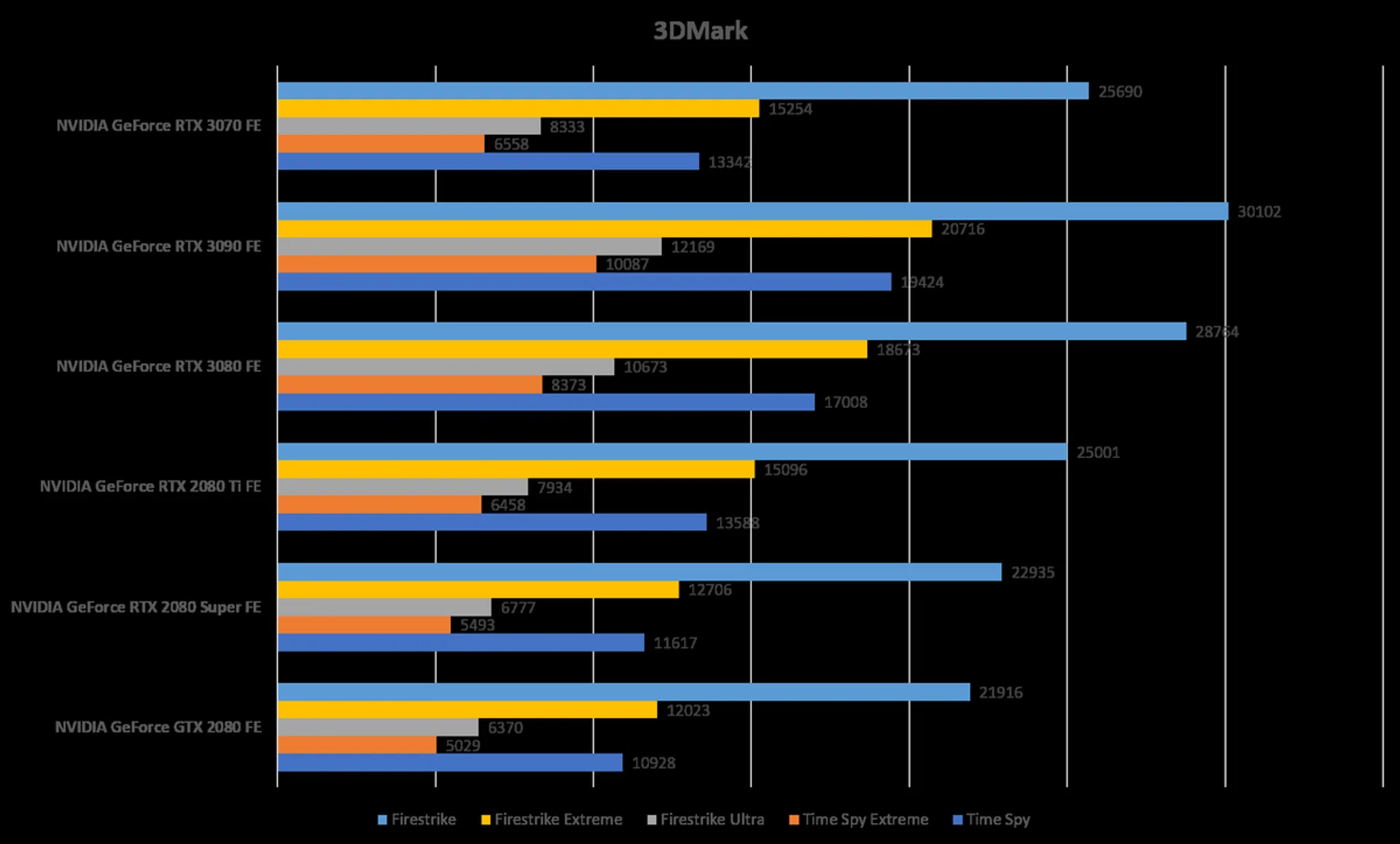
3DMark is a synthetic benchmark that tests graphics and computational performance at different resolutions, starting at 1080p and going all the way up to 4K. A series of two graphics test, one physics test, and then a combined test stresses the hardware in turn to assess its performance.
The chart above shows performance normalcy with the RTX 3070 performing behind the quicker RTX 3080 and RTX 3090 cards. It's when we compare it with the RTX 2080 Ti that's where we see the RTX 3070 matching and even slightly edging the latter. It looks like NVIDIA claiming that the RTX 3070 is capable of matching and in certain scenarios even outperforming the older RTX 2080 Ti holds some truth to it.
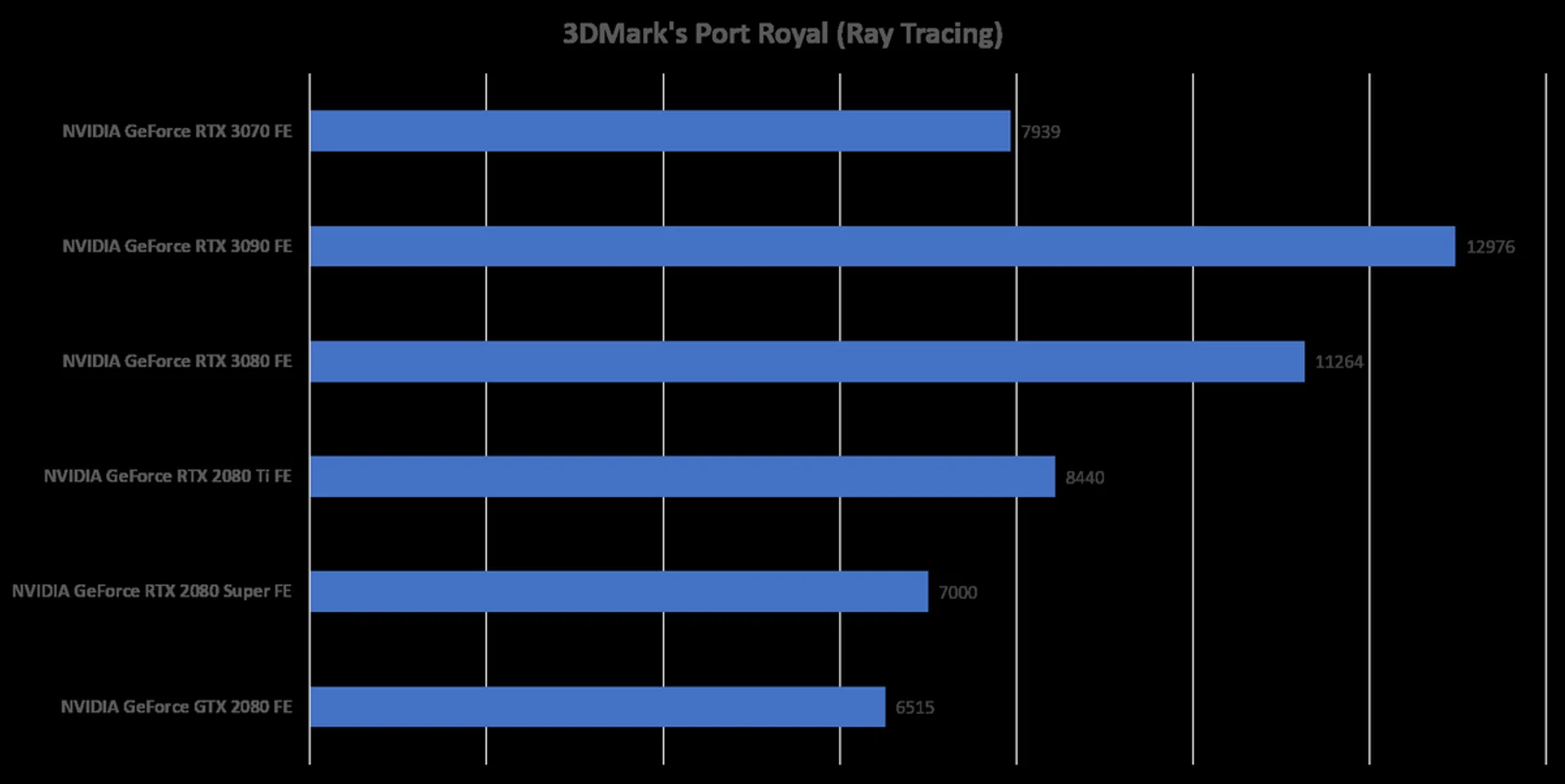
Since the RTX cards support hardware ray tracing through its RT Cores, I’ve also used 3DMark’s Port Royal Ray Tracing benchmark to size up each card’s ray-tracing capabilities. While it's no surprise that the RTX 3080 and RTX 3090 cards left everyone else in smokes, what's eye-catching is how far the RTX 3070 lags behind both cards - considering the performance difference between the RTX 3080 and RTX 3090 isn't that wide a gap.
You'd also notice that the RTX 3070 actually performed poorly in ray-tracing even against the RTX 2080 Ti, but that's really not surprising. You see, the RTX 2080 Ti still has a higher RT Core count (68) over the RTX 3070's RT Core count of 46. For the uninitiated, RT Cores process all the BVH traversal and ray-triangle intersection testing, aka ray tracing. The more RT Cores a card have, the better at ray tracing performance it is. Going by pure numbers, the RTX 3070 should actually rack up much lower performance figures, but it didn't because the RT cores in the Ampere GPUs have been beefed up considerably. So while it still loses to an RTX 2080 Ti, the beefed-up 46 RT cores on the RTX 3070 managed a closer standing. We’ll dive deeper into this with real-world games benchmarks next page. In the meantime, let’s look at how the cards fared with DLSS turned on.
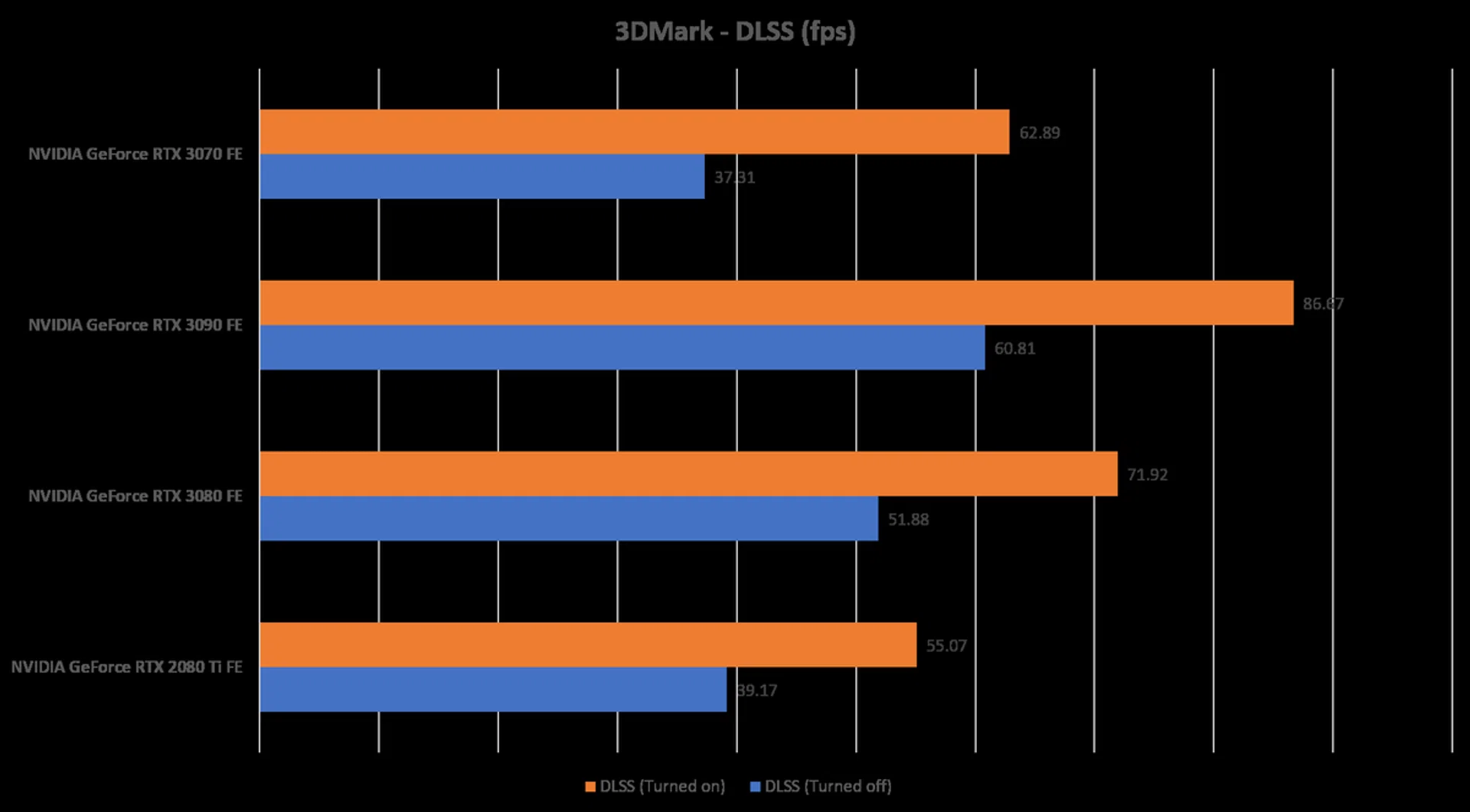
For the uninitiated, deep learning super sampling or DLSS uses artificial intelligence and machine learning to produce an image that looks like a higher-resolution image, without the rendering overhead. The idea is to make games rendered at 1440p look like they’re running at 4K resolution, or 1080p games to look like 1440p resolution. This is all possible thanks to NVIDIA’s Tensor cores, which are only available in RTX GPUs.
Although RTX 20 series GPUs have Tensor cores inside, the RTX 30 Series come with NVIDIA’s second-generation Tensor Cores, which offer greater per-core performance – and this makes for some interesting insights using the results above. You see, even though the RTX 3070 has a much lower Tensor Core count than the RTX 2080 Ti (184 versus 544), it actually performed better.
Now let’s look at how the card performs in games.
Games Benchmarks
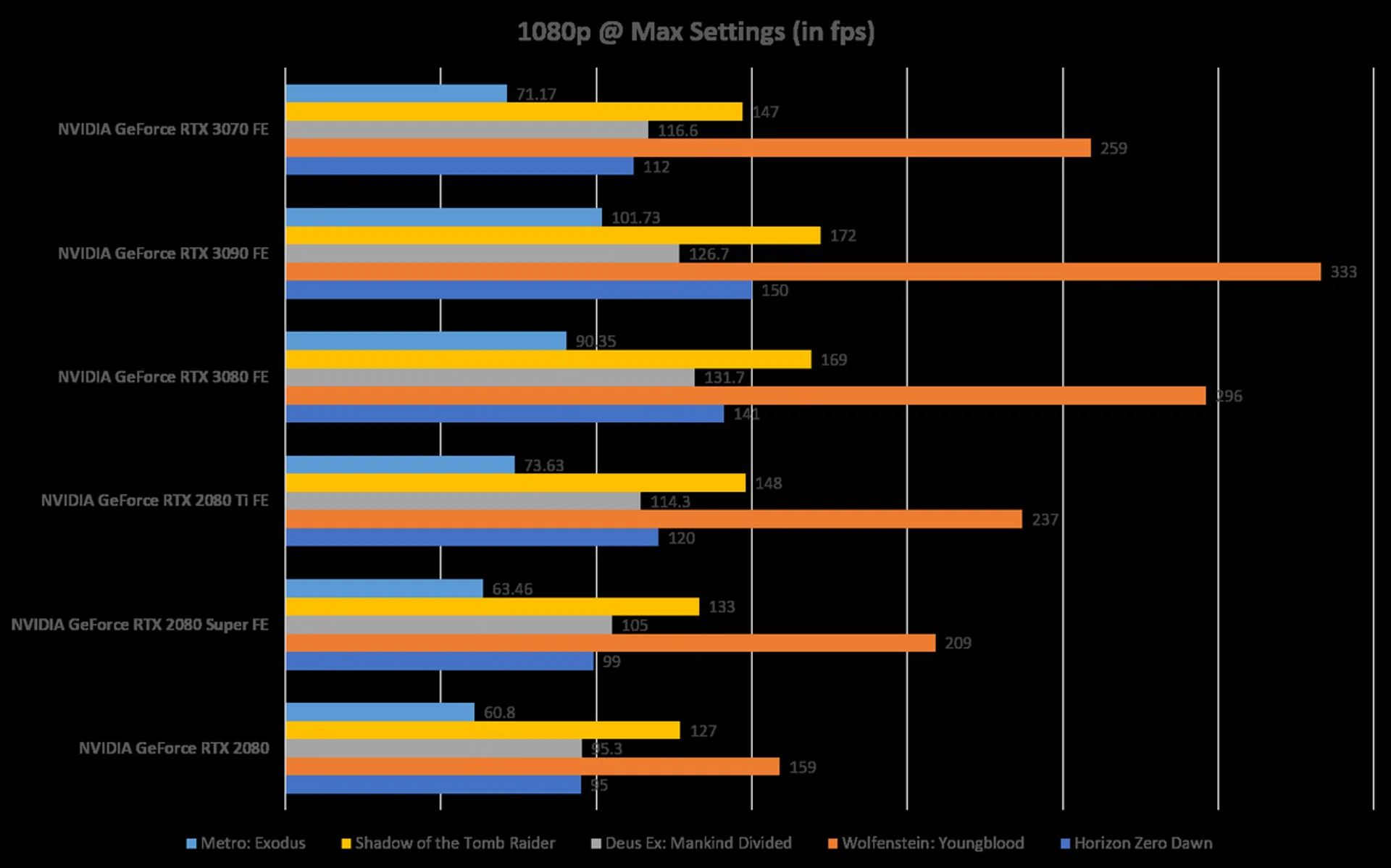
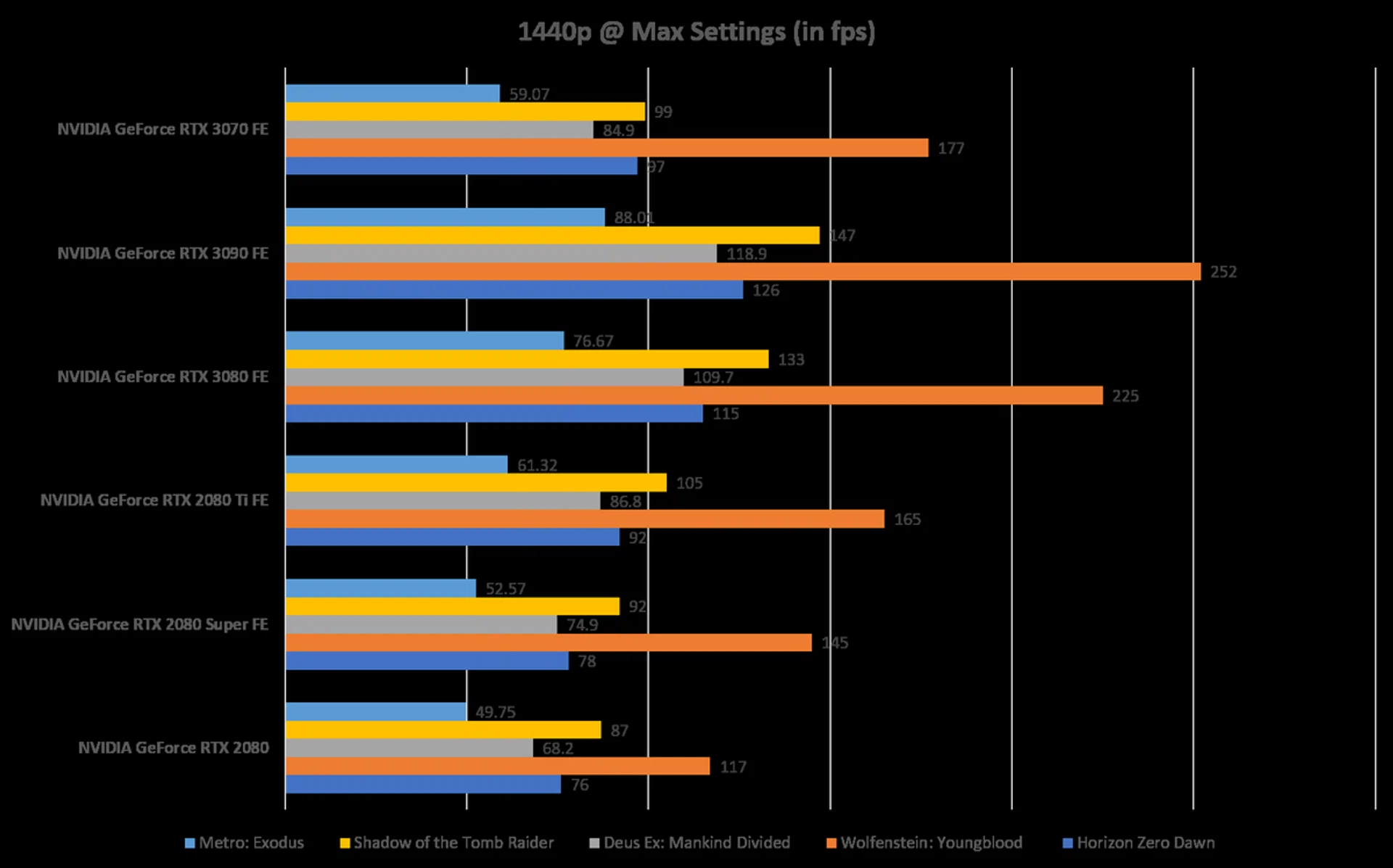
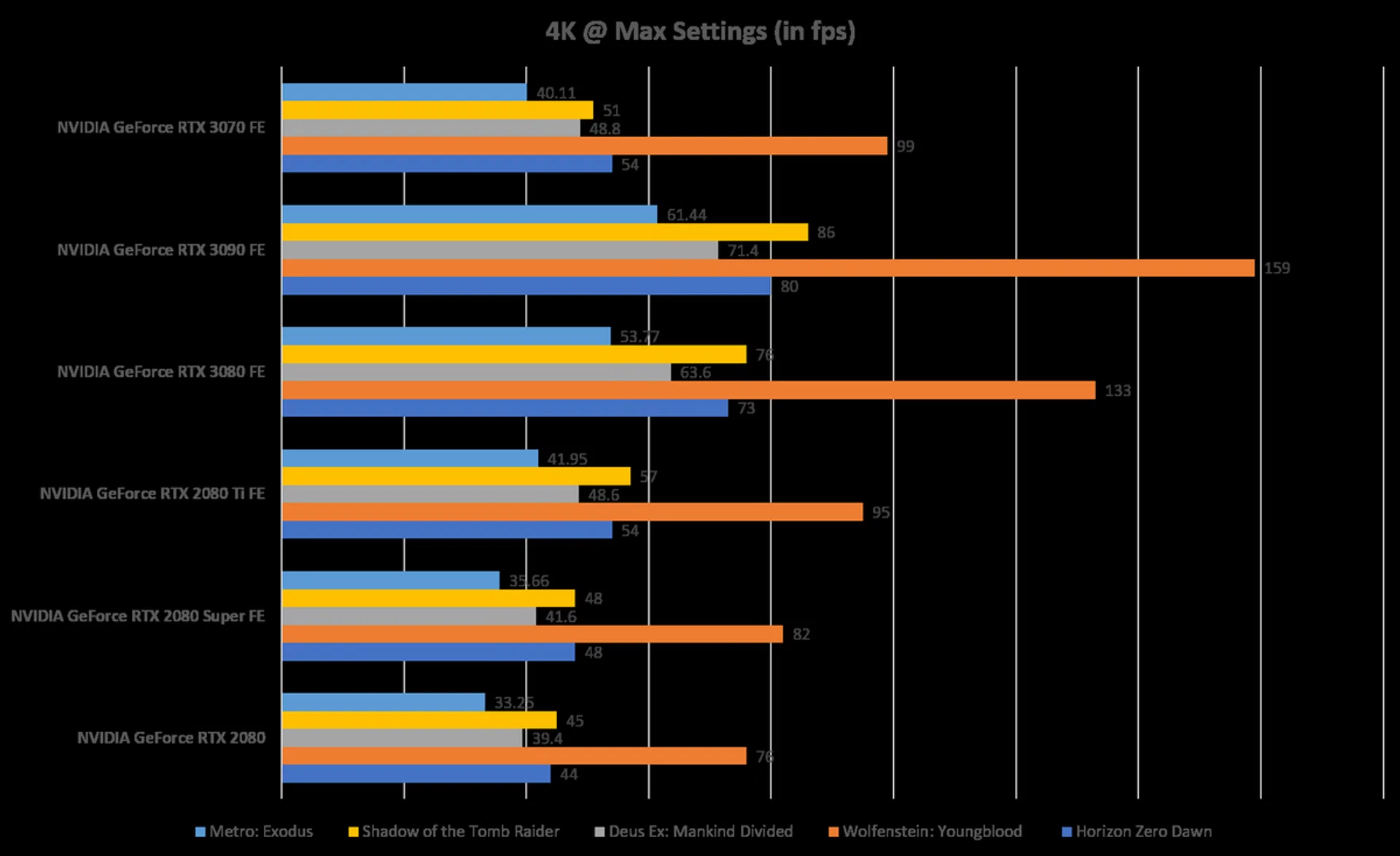
The RTX 3070 quite literally performed neck to neck with the RTX 2080 Ti here - in all three common resolutions as tested above. Even outperforming it in some games/resolutions. But there are interesting insights here.
For one, the RTX 3070 performs pretty poorly at 4K with maximum settings. So if you want to game at 4K, the RTX 3080 card is your best bet (or the RTX 3090 for that little ounce of extra frames if you're feeling extremely cash rich). Secondly, if you are an RTX 2080 Ti, or any RTX 2080 Series cards owner, the value of your card just plummeted even further. It just makes so much more economical sense to purchase a brand new RTX 3070 than a second-hand RTX 2080 Ti Series card now.
Ray Tracing & DLSS Performance
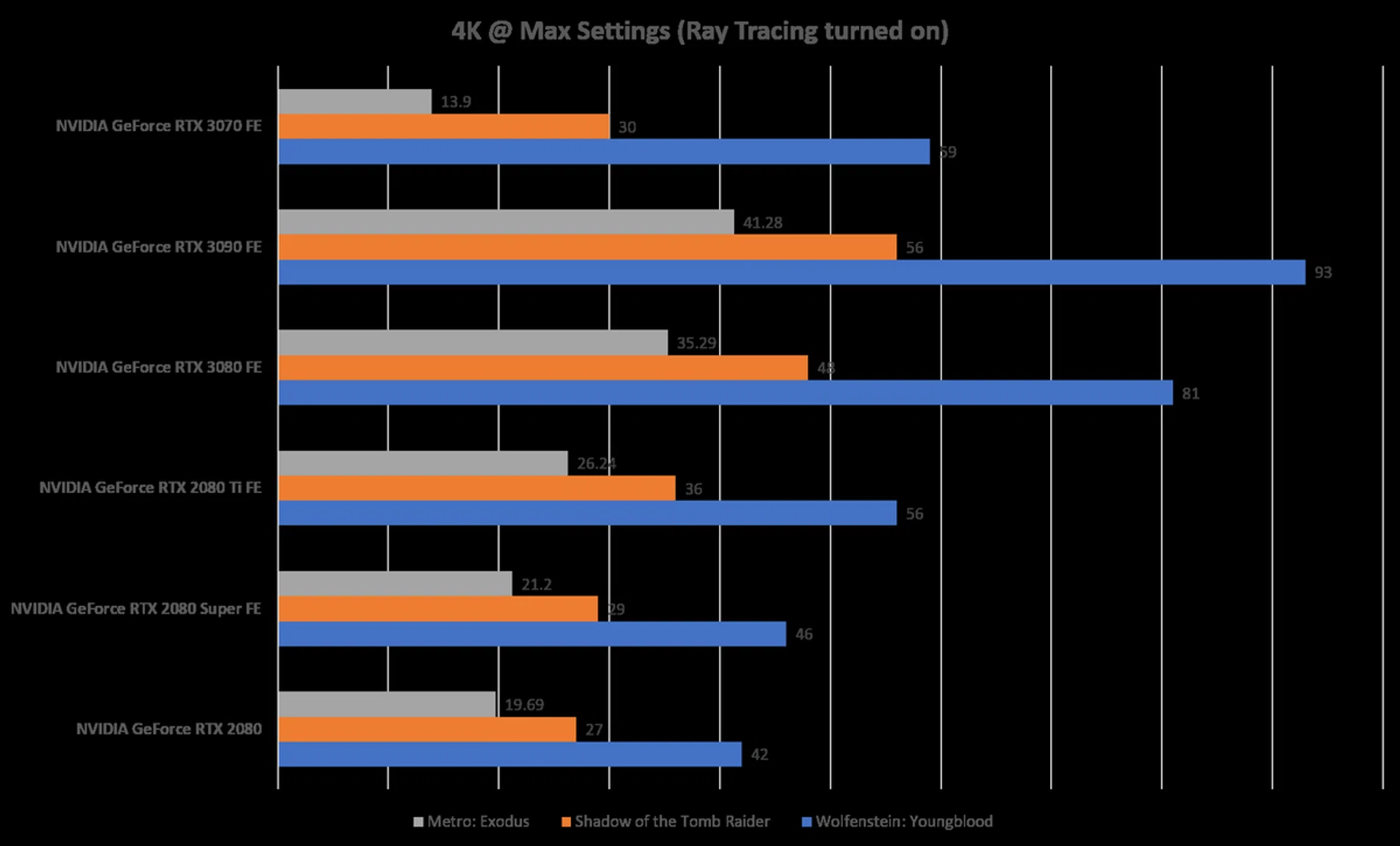
Perhaps the key weakness of the RTX 3070 is when it comes to ray tracing. With just 46 RT Cores (the RTX 3090 comes with 82 RT Cores), the card is simply never going to be able to run ray tracing at a high resolution like 4K, and with maximum settings to boot. Not to mention, its measly 8GB of graphics memory will quickly put a hard limit in what you can do as you can see the results above with RTX turned on. In comparison, the GeForce 2080 Ti ships with 11GB of memory and this is why it has more leeway to outperform the RTX 3070.
Simply put, to enjoy ray tracing on the RTX 3070 without impacting frame-rates too greatly, you will have to tweak your graphics settings and run games at 1440p or below. For many gamers, that's the most common default resolution used today anyway.
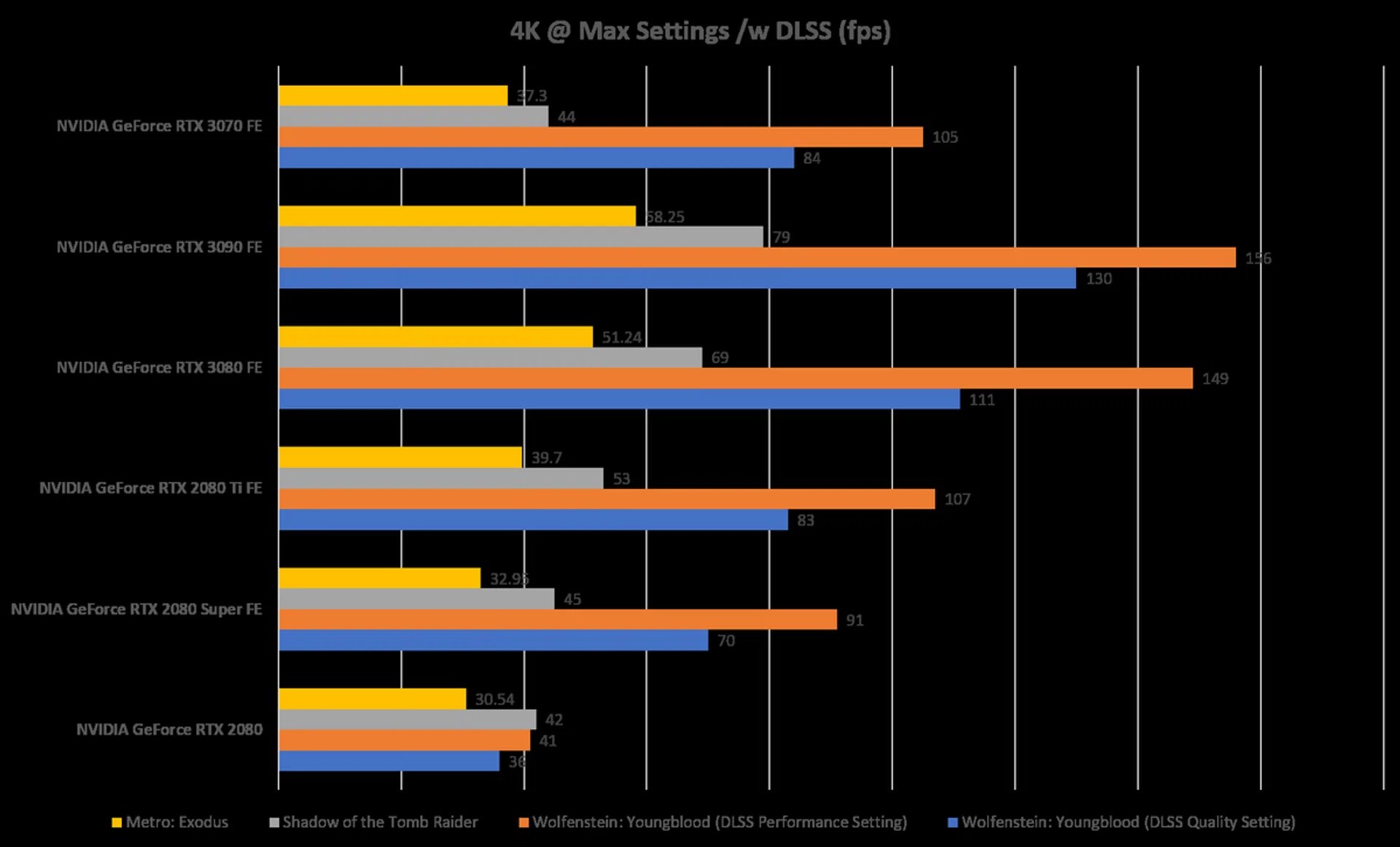
But let's say you have a 4K monitor, insists on playing on 4K, but yet don't have the budget for the higher end RTX 30 Series card, well, turning on NVIDIA's DLSS is your answer. Okay, partially because not all games will give you that optimum 60fps but as you can see above, frame-rates do improve tremendously. DLSS has come a long way since the RTX 20 Series days, and the RTX 30 Series now comes with more powerful Tensor Cores that gives gamers the performance headroom to maximize ray tracing settings and increase output resolutions.
Obliterating the value of your RTX 2080 Ti
In some ways, the GeForce RTX 3070 may be NVIDIA's most attractive Ampere card yet. It doesn't reside anywhere near the lofty heights of the GeForce RTX 3090, but it's also far more affordable at US$499 with performance that matches, and in some scenarios, even outpacing the RTX 2080 Ti.
I'd like to think that the GeForce RTX 3070 is a nice signifier of progress. My opinion is that cards like this are more interesting than the usual flagship models because you get to see how flagship levels of performance are trickling further down the product stack. Also, let this thought sink in; the RTX 20 Series equivalent of the RTX 3070, the RTX 2070 Founders Edition, had an SRP of US$529 at launch and the RTX 2080 Ti price tag was US$999.
The RTX 3080 might have been the well-deserved successor to the RTX 2080 Ti, but it's the RTX 3070 that effectively obliterated the RTX 2080 Ti's value in the market. I can't remember if there was ever a time when the entry-tier of a next-gen card could outpace the previous-gen top-tier card, and sell for nearly half the price. It's fantastic progress.

The RTX 3070 Founders Edition does not use a 12-pin splitter cable adapter - allowing for a slightly cleaner cable management.
Should you get the GeForce RTX 3070?
So now, let's answer the magic question. If you own a GeForce RTX 2080 card or lower and don't need 4K gaming resolution, the answer is a no brainer - you will see a nice performance boost especially with DLSS turned on. While the RTX 3080 ushers in a 4K gaming era for those with the budget to really go all out, the RTX 3070 offers a slightly more affordable option for moving from 1080p to 1440p. With more games supporting DLSS, and even ray tracing, I think it’s going to be the card that will be great at 1440p for years to come - and possibly retiring the outdated 1080p gaming resolution for good in the process.
For RTX 2080 Ti owners, the results seen in this review would have pricked at your heart but you should be looking at the RTX 3080 or the RTX 3090 for your next upgrade anyway. And I wouldn’t recommend the RTX 3070 for 4K gaming. If you’re willing to spend extra for 4K (including a suitable monitor and all), then the RTX 3080 is a far more capable option.
On that note, the GeForce RTX 3070 may not even be NVIDIA's entry-tier RTX 30 Series card for long. Cue the RTX 3060. NVIDIA has not mentioned anything about it yet, but you can bet your money that will be the RTX 30 Series true mainstream card. But for now, NVIDIA's GeForce RTX 3070 is a wonderful gaming card that will give 1440p gamers plenty of value for years to come.
Our articles may contain affiliate links. If you buy through these links, we may earn a small commission.