
NVIDIA GeForce GTX 470 - The Second Fermi Card
The GeForce GTX 470 was launched along side the GeForce GTX 480 and is positioned by NVIDIA as the high-end 'value' proposition buy. We put it through its paces to find out if it can really challenge ATI's established Radeon HD 5800 series.

A High-end 'Value' Proposition?
It's been a six months wait, but Fermi is finally here. We've reviewed the GeForce GTX 480 and found that while it is astonishingly fast, it suffered from heat and power consumption issues. This view was echoed by many who have had chance to test the card too.
In football, they say the best strikers hunt in pairs; it's the same with graphics cards too. When NVIDIA launched their new GTX 400 series of cards, the line-up consisted of the GeForce GTX 480 and GTX 470. Being bigger and more powerful, the GeForce GTX 480 naturally hogged the limelight. So today we are going to take a look at its overshadowed sibling and see what it has to offer.
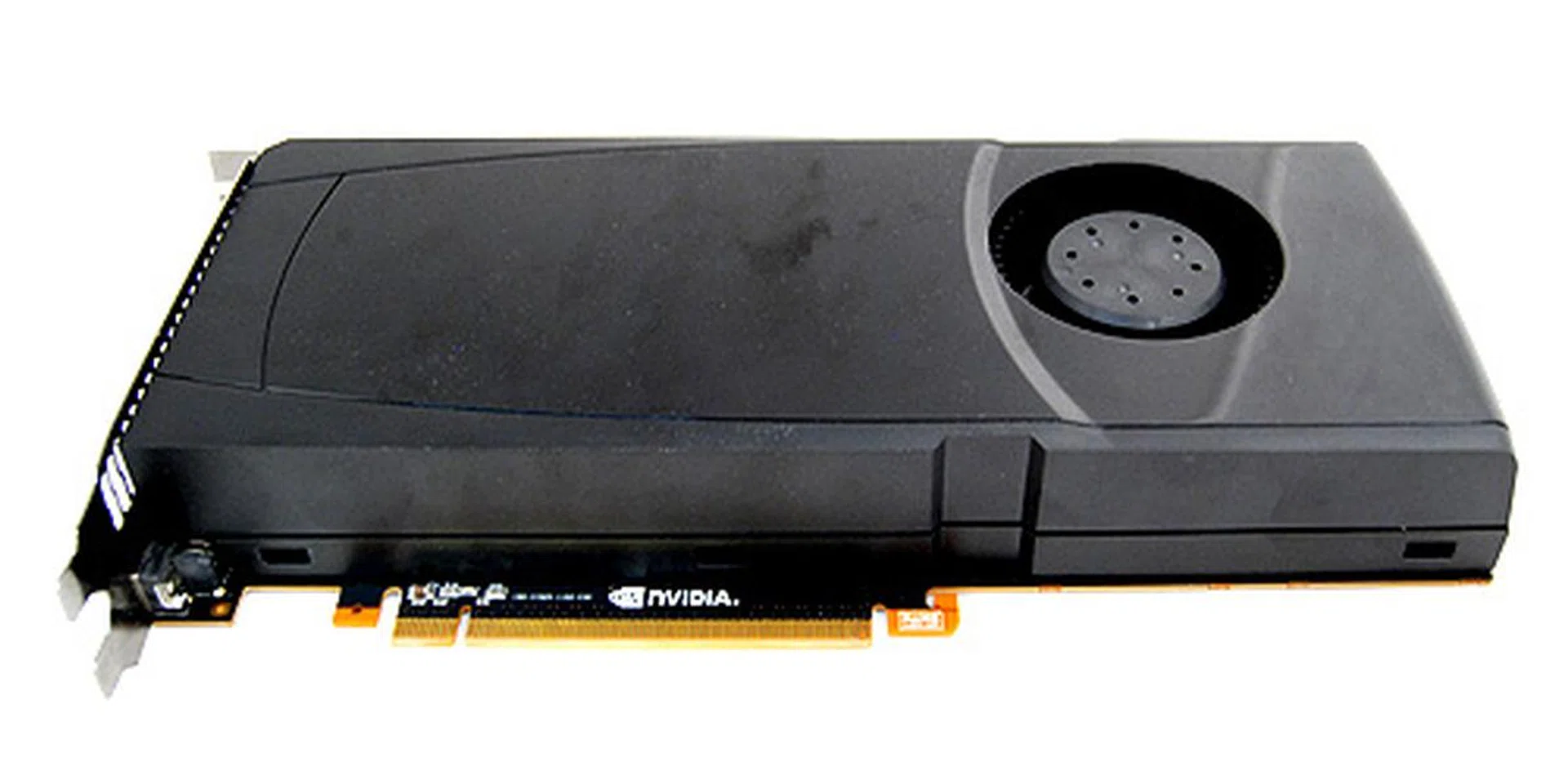
If the GeForce GTX 480 was a demonstration of what the Fermi architecture is capable of, then the GeForce GTX 470 is a calculated attempt at challenging ATI's Radeon 5800 series.
While the GeForce GTX 480 represents NVIDIA's flagship and the absolute pinnacle of graphics performance, the GeForce GTX 470 is a little humbler, positioned by NVIDIA as a slightly more affordable price/performance leader. To put it simply, it is an attempt to compel would-be Radeon HD 5870 and HD 5850 buyers to think twice.
To achieve that, NVIDIA is quick to associate the GeForce GTX 470 to the GeForce GTX 480 for they hope that some of the halo effect in regards to the GeForce GTX 480's blazing performance gets trickled down to the GeForce GTX 470, and in truth, the two SKUs do share much in common.
As a shrunken down GeForce GTX 480, the GeForce GTX 470 is mostly identical to its bigger sibling save for the reduced streaming multiprocessor (SM) count – while its big brother has 15, the GeForce GTX 470 has to make do with one less. Overall, this means it has 448 CUDA cores, 56 texture units, 40 raster operating units and a slightly narrower 320-bit wide memory interface (which also means a smaller frame buffer size too). It also gets lower clock speeds: 607MHz at the core, 1215MHz at the shaders and 3348MHz DDR for the memory. And as you can see from the graph below, this represents quite a big hit as far as paper specifications are concerned. Read on to see how this translates in our performance testing segment.
Here's how the GeForce GTX 470 measures against comparable SKUs.
Model | NVIDIAGeForce GTX 470 1320MBGDDR5 | NVIDIA GeForce GTX 480 1536MBGDDR5 | ATI Radeon HD 5870 1GB GDDR5 | ATI Radeon HD 5850 2GB | NVIDIAGeForce GTX 285 1GBGDDR3 | NVIDIA GeForce GTX 295 1729MBGDDR3 |
Core Code | GF100 | GF100 | Cypress XT | Cypress Pro | GT200 | GT200 |
Transistor Count | 3200 million | 3200 million | 2150 million | 2150 million | 1400 million | 2800 million |
Manufacturing Process | 40nm | 40nm | 40nm | 40nm | 55nm | 55nm |
Core Clock | 607MHz | 700MHz | 850MHz | 725MHz | 648MHz | 576MHz |
Stream Processors | 448 Stream Processors | 480 Stream Processors | 1600 Stream processing units | 1440 Stream processing units | 240 Stream Processors | 480 Stream Processors |
Stream Processor Clock | 1215MHz | 1401MHz | 850MHz | 725MHz | 1476MHz | 1242MHz |
Texture Mapping Units (TMU) or Texture Filtering (TF) units | 56 | 60 | 80 | 72 | 80 | 160 |
Raster Operator units (ROP) | 40 | 48 | 32 | 32 | 32 | 56 |
Memory Clock | 3348MHz GDDR3 | 3696MHz GDDR3 | 4800MHz GDDR5 | 4000MHz GDDR5 | 2484MHz GDDR3 | 1998MHz GDDR3 |
DDR Memory Bus | 320-bit | 384-bit | 256-bit | 256-bit | 512-bit | 448-bit |
Memory Bandwidth | 133.9GB/s | 177.4GB/s | 153.6GB/s | 128GB/s | 159.0GB/s | 223.8GB/s |
PCI Express Interface | PCIe ver 2.0 x16 | PCIe ver 2.0 x16 | PCIe ver 2.0 x16 | PCIe ver 2.0 x16 | PCIe ver 2.0 x16 | PCIe ver 2.0 x16 |
Molex Power Connectors | 2 x 6-pin | 1 x 6-pin, 1 x 8-pin | 2 x 6-pin | 2 x 6-pin | 2 x 6-pin | 1 x 6-pin, 1 x 8-pin |
Multi GPU Technology | SLI | SLI | CrossFireX | CrossFireX | SLI | SLI |
DVI Output Support | 2 x Dual-Link | 2 x Dual-Link | 2 x Dual-Link | 2 x Dual-Link | 2 x Dual-Link | 2 x Dual-Link |
HDCP Output Support | Yes | Yes | Yes | Yes | Yes | Yes |
Street Price | Launch Price:US$349 | Launch Price: US$499 | ~US$399 | ~US$259 | ~US$350 | ~US$500 |
The GeForce GTX 470
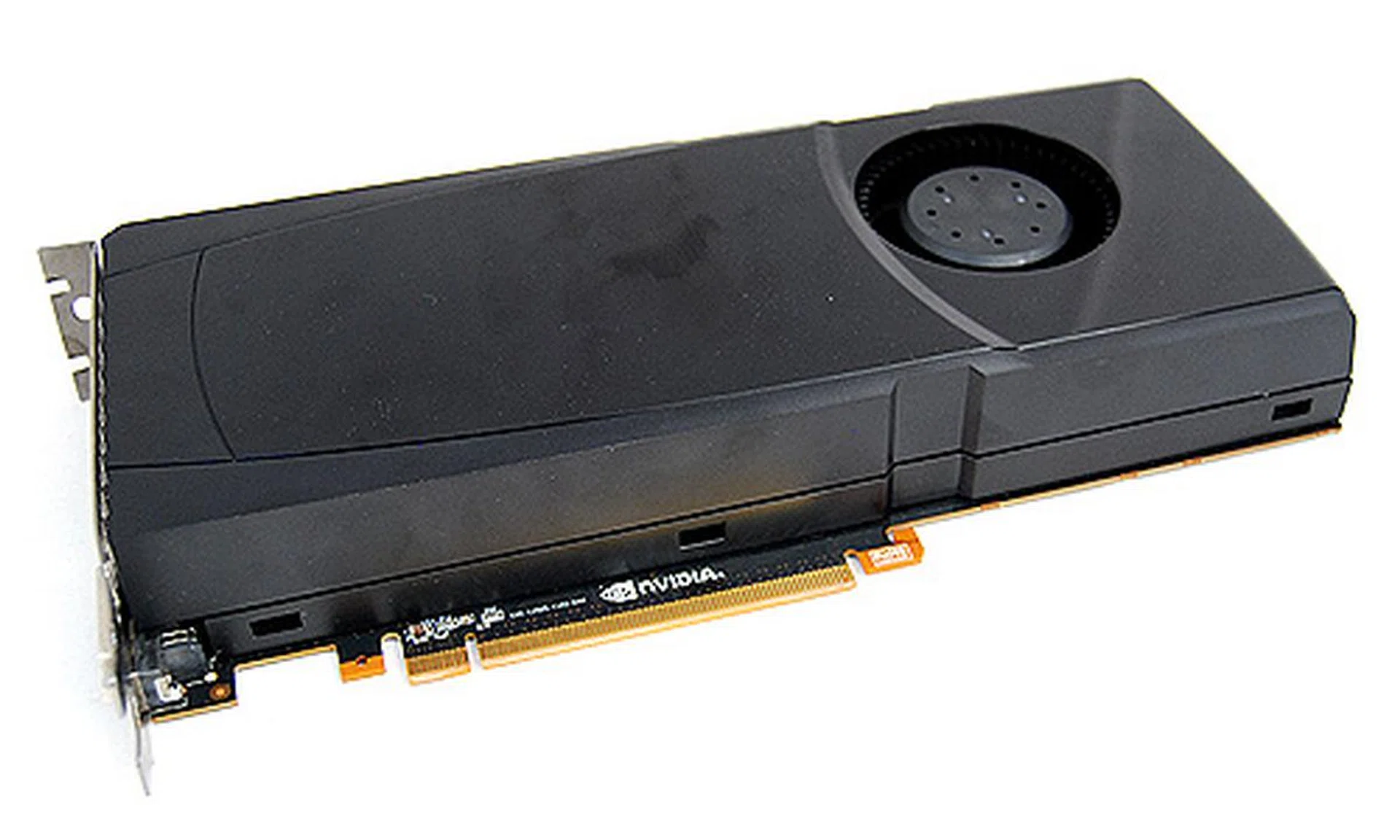
Unlike the GeForce GTX 480 which has exposed heat pipes and a large radiating heat plate, the reference GeForce GTX 470 is outfitted with a more traditional-looking cooler. However, once the cooler gets in its stride, it's almost just as noisy.
It is also markedly smaller compared to the GeForce GTX 480 and about the same size as ATI's Radeon HD 5850. This makes it smaller too than NVIDIA's previous flagship single GPU card, the GeForce GTX 285, which is good news for those with compact casings.
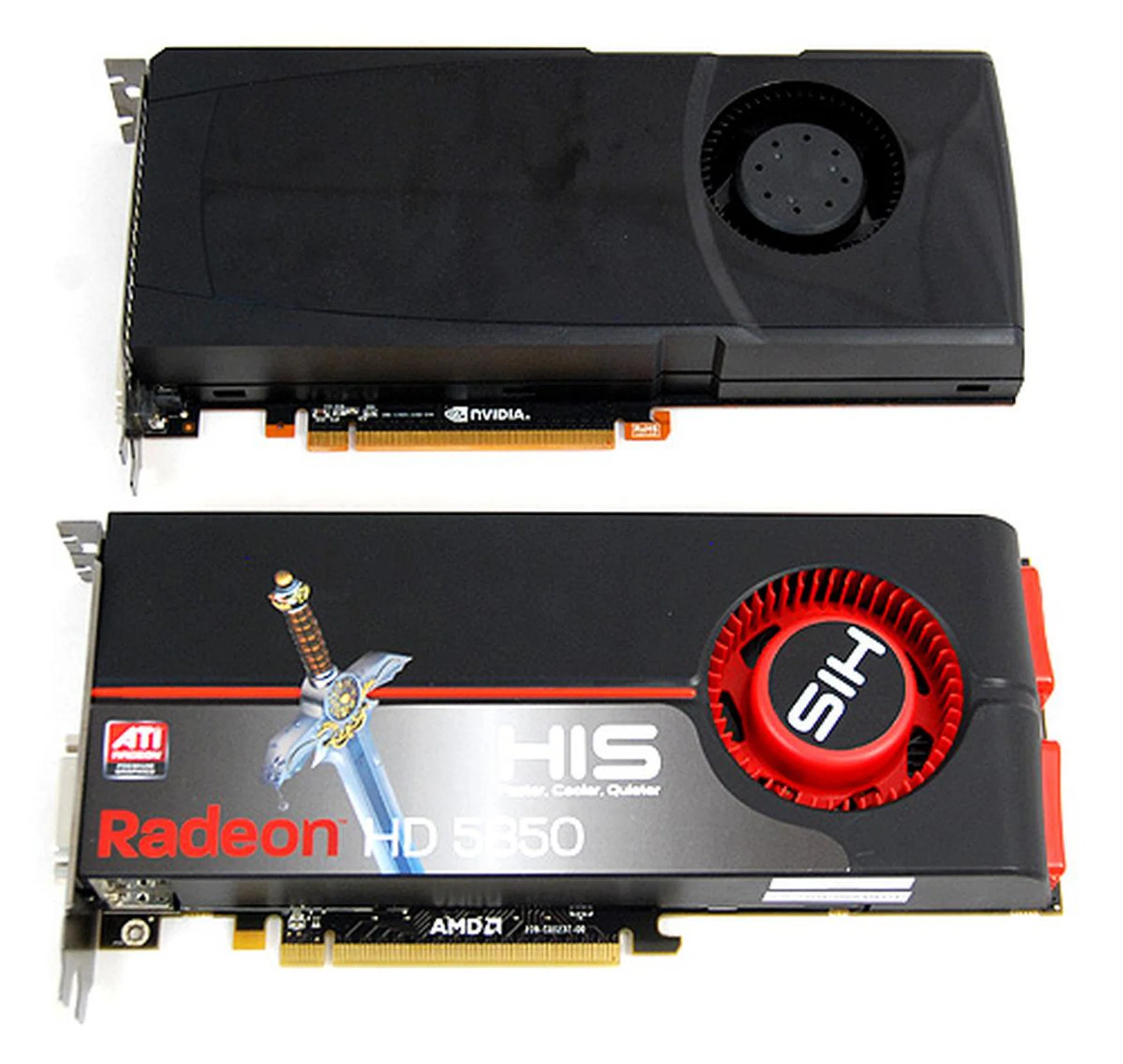
The GeForce GTX 470 measures around 9.5 inches in length, making it the same size as a Radeon HD 5850.
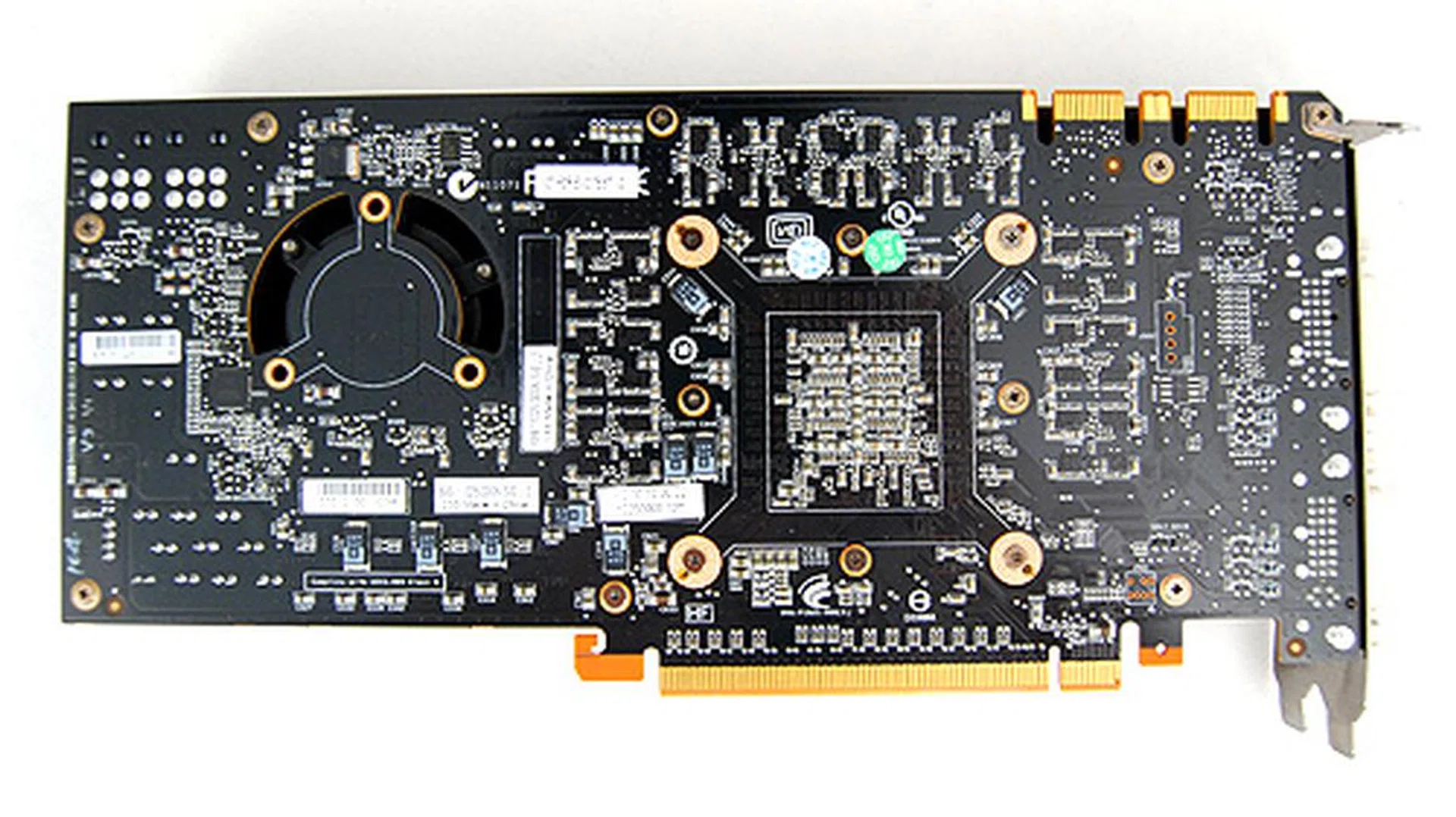
Cut outs in the back of the card allows the cooler to draw more fresh air from its surroundings.
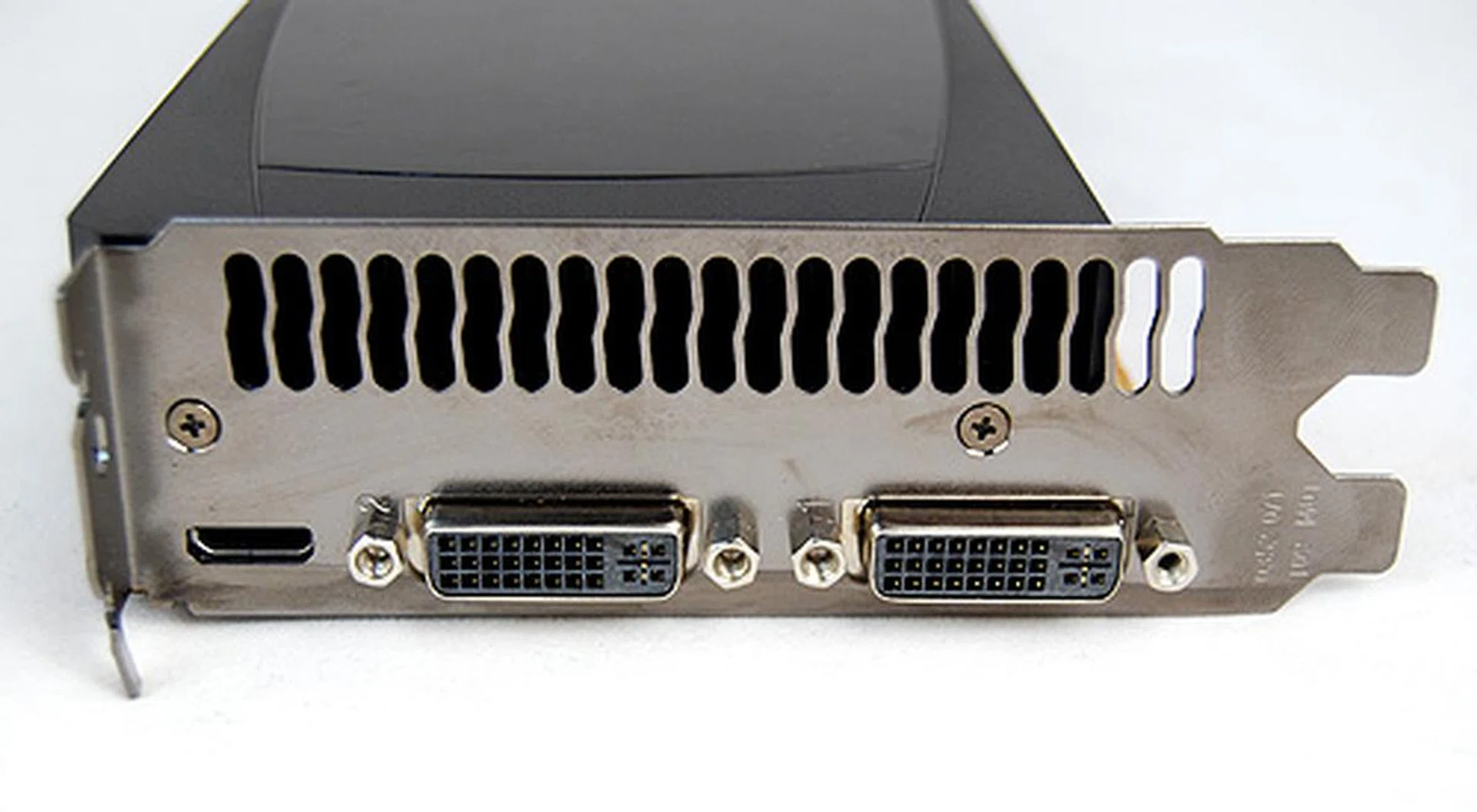
The reference GeForce GTX 470 sports the same dual DVI ports and single mini-HDMI port that are found on the GeForce GTX 480. Only any two digital outputs can be active since there are still only two DVO ports from the GPU. This is still a downside against its competitor which can power three displays on one card.
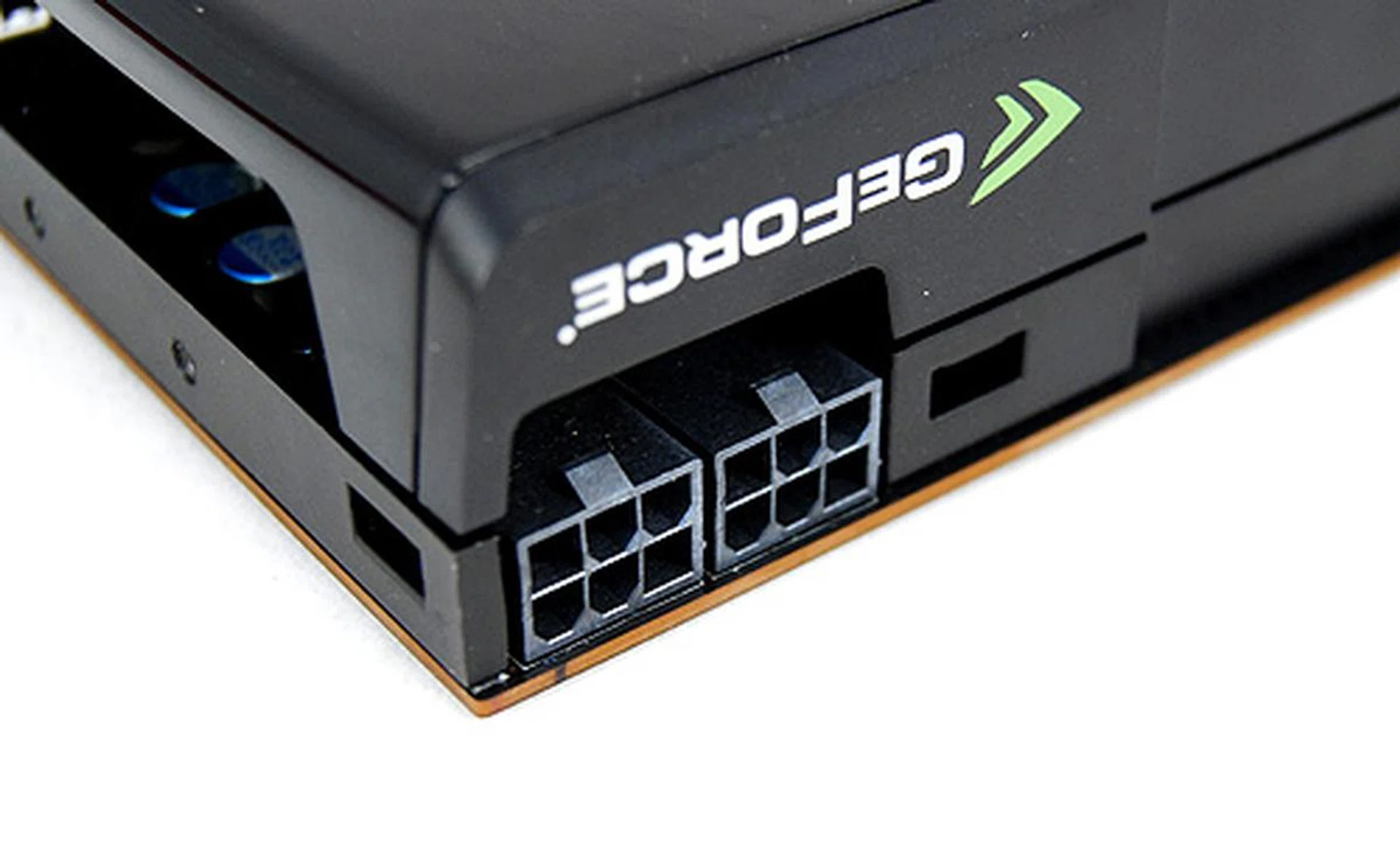
The card is powered via two 6-pin PCIe power connectors and NVIDIA recommends using a PSU that has a minimum rating of 550W.
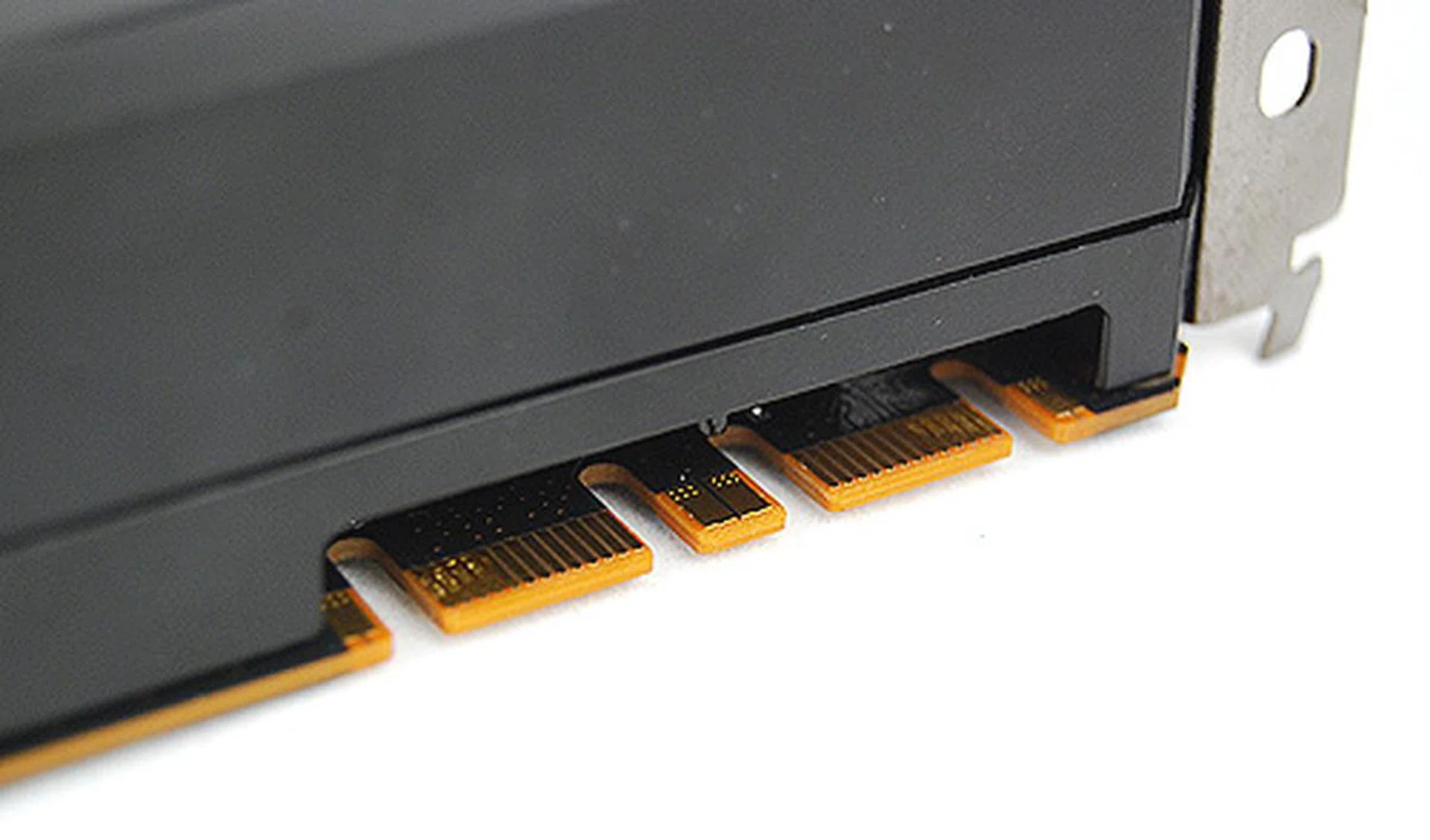
3-way SLI can be enabled via the two SLI connectors.
Test Setup
We'll be testing the GeForce GTX 470 using our new X58 system:
- Intel Core i7-975 (3.33GHz)
- Gigabyte GA-EX58-UD4P motherboard
- 3 x 1GB DDR3-1333 OCZ memory in triple channel mode
- Seagate 7200.10 200GB SATA hard drive
- Windows 7 Ultimate
On paper, it seems that the GeForce GTX 470 has taken quite a hit in terms of hardware specs against its larger GTX 480 brother such as losing one entire streaming multiprocessor, having a narrower 320-bit wide memory bus, reduced frame buffer size and not forgetting lower clock speeds. Hence, it'll be interesting to see how that translates to actual real world performance differential against the performance leading GTX 480.
Additionally, with a set launch price of US$349, the GeForce GTX 470 finds itself sandwiched between the Radeon HD 5870 and HD 5850, so it'll be intriguing to see how NVIDIA's latest matches up against the two Radeon 5800 series cards.
The full list of cards and the driver versions used:
- NVIDIA GeForce GTX 470 (ForceWare 197.17 Beta)
- NVIDIA GeForce GTX 480 (ForceWare 197.17 Beta)
- NVIDIA GeForce GTX 295 (ForceWare 196.21)
- NVIDIA GeForce GTX 285 (ForceWare 196.21)
- ATI Radeon HD 5870 (Catalyst 10.2)
- ATI Radeon HD 5850 (Catalyst 10.2)
- ATI Radeon HD 4890 (Catalyst 10.2)
The list of benchmark used are as follows:
- Futuremark 3DMark Vantage
- Crysis Warhead
- Far Cry 2
- Warhammer: Dawn of War 2
- Battlefield Bad Company 2
- "Heaven" from Unigine
- S.T.A.L.K.E.R.: Call of Pripyat
3DMark Vantage Results
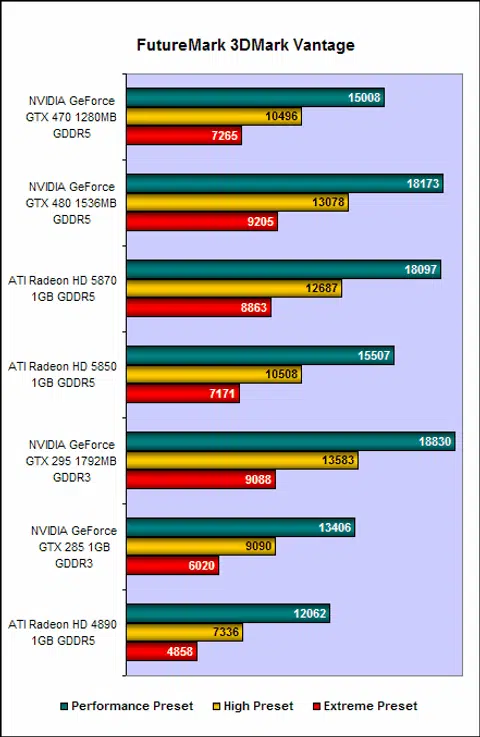
The GeForce GTX 470 got off to an unconvincing start on 3DMark Vantage, managing scores that are only comparable with the Radeon HD 5850. However, remember that the GeForce GTX 480 was also a poor performer on this benchmark, so it's too early to judge yet.
Crysis Warhead Results
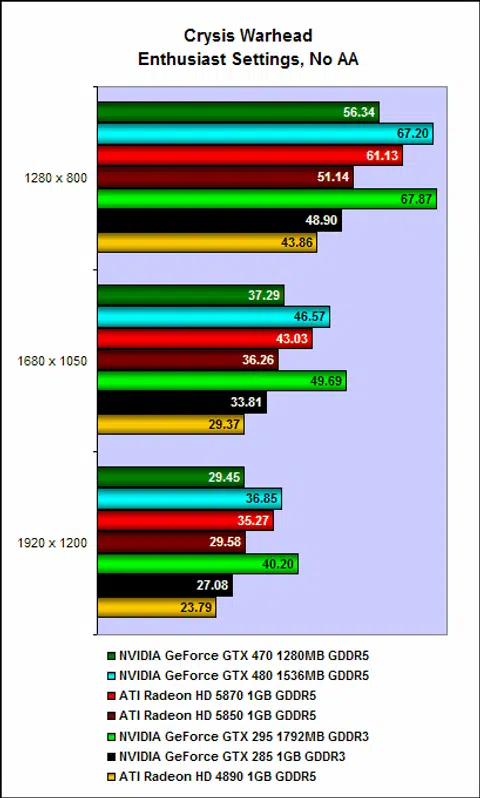
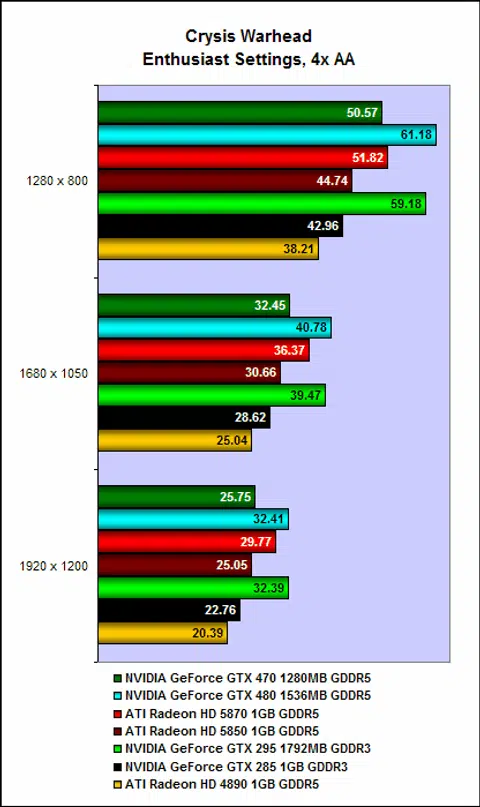
Although the GeForce GTX470 started brightly on Crysis Warhead, we noticed that performance dips considerably once we increased the resolution. At 1280 x 800, it was about 10% quicker than the Radeon HD 5850, but that margin diminishes as we increased the resolution. At 1680 x 1050 and 1920 x 1200, its performance was nearly identical with that of the Radeon HD 5850. Also, it was around 20% slower than a GeForce GTX 480.
Far Cry 2 Results
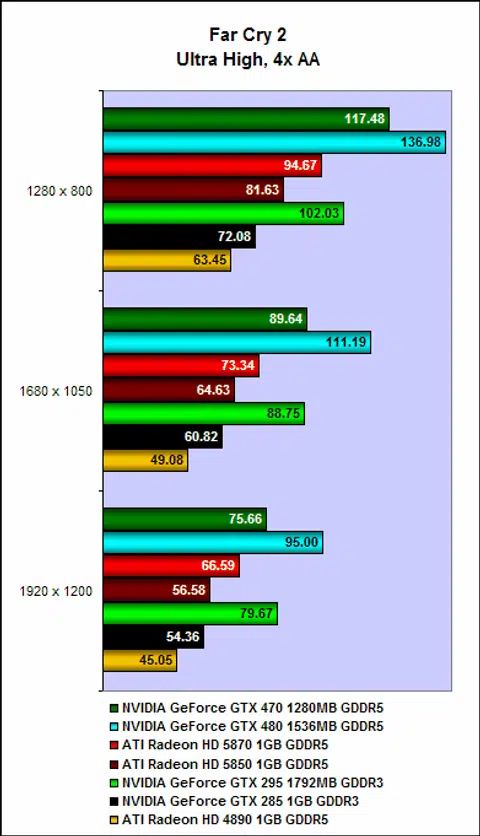
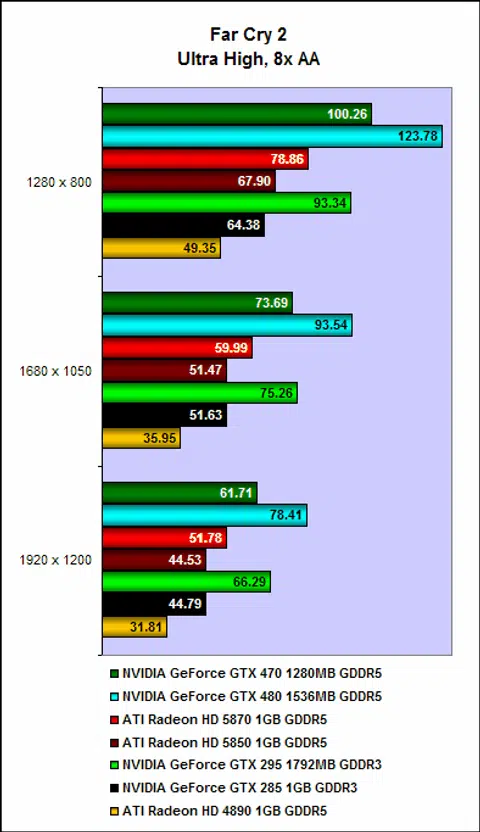
In our review of the GeForce GTX 480, we found that the new Fermi card was able to blitz the opposition on Far Cry 2 and the GeForce GTX 470 is no different. It comfortable beat both the Radeon HD 5870 and HD 5850 and by some margin too. Overall, it was around 20% quicker than Radeon HD 5870 and over 30% quicker than the Radeon HD 5850.
Dawn of War 2 Results
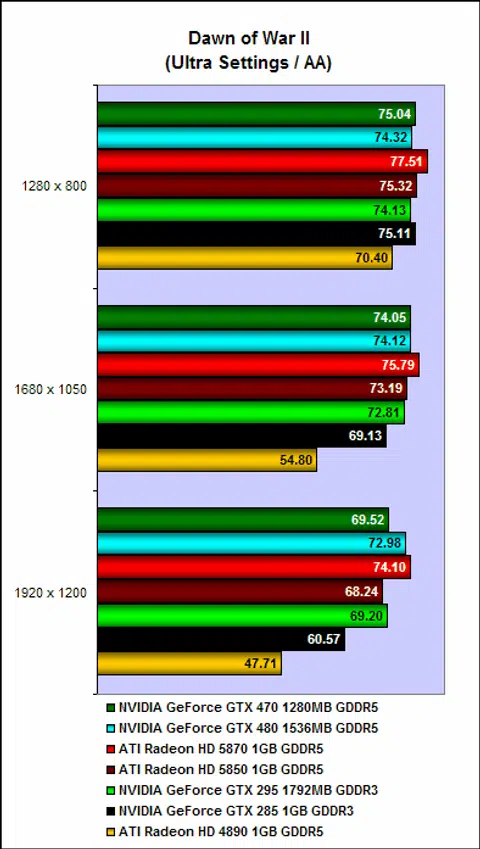
It's hard to pick a winner on Dawn of War 2 looking at the nearly identical performances of all cards. However, we did note that the GeForce GTX 470's scores were most comparable to that of the Radeon HD 5850.
Note: As we've noted in our review of the GeForce GTX 480, NVIDIA claims that when running Dawn of War 2, ATI cards by default demote the FP16 render targets to R11G11B10 render targets, which are half the size and less accurate. Admittedly, NVIDIA says that the change in quality is subtle, but it does have an affect on performance. We have verified this to be true, and found that performance does take a notable hit when Catalyst AI disabled, forcing the ATI cards to render FP16 render targets as they are. However, it must also be said that difference in graphics quality is negligible, so it does make sense for ATI to do so and offer better performance.
Battlefield Bad Company 2 Results
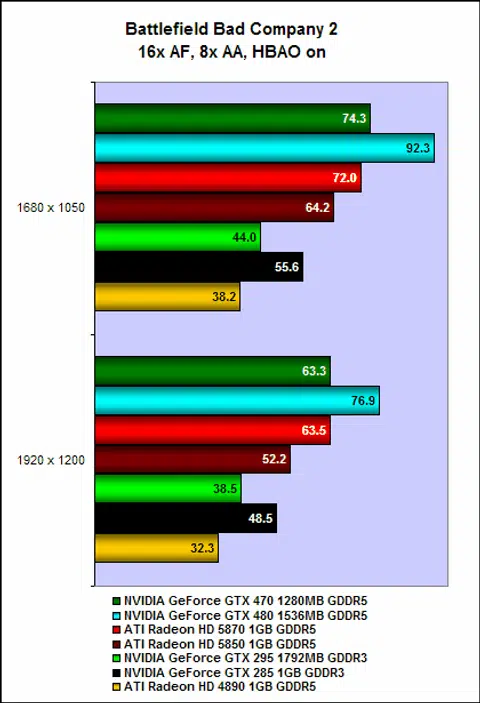
The GeForce GTX 470 performed commendably on Battlefield Bad Company 2, easily outpacing the Radeon HD 5850 by more than 10% on both runs and finding itself a match for the Radeon HD 5870. The results for both the new cards are swell on this benchmark and it could be because te game can take advantage of the DirectX 11 API, which NVIDIA has paintakingliy optimized them for. However, also noteworthy was its over 20% slower performance than its more powerful sibling.
Unigine "Heaven" Results
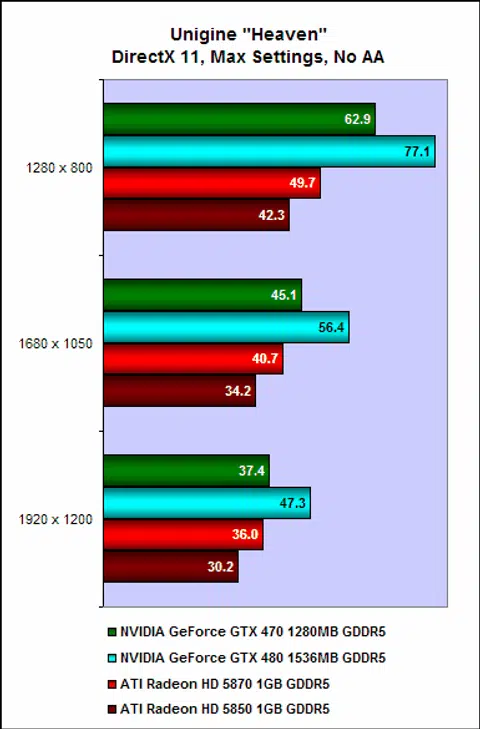
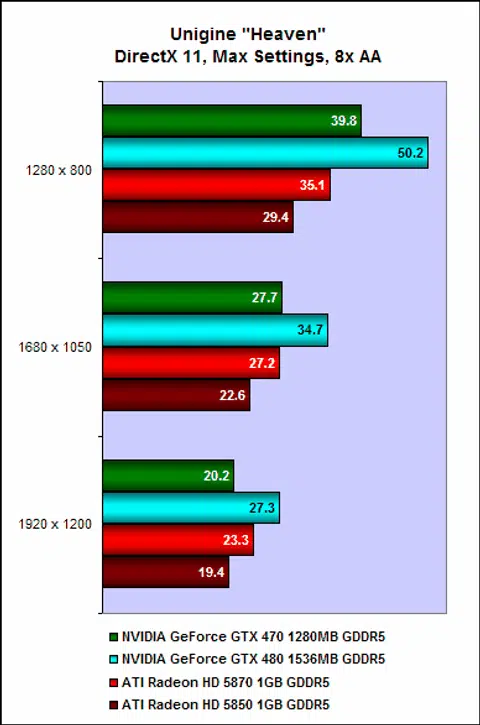
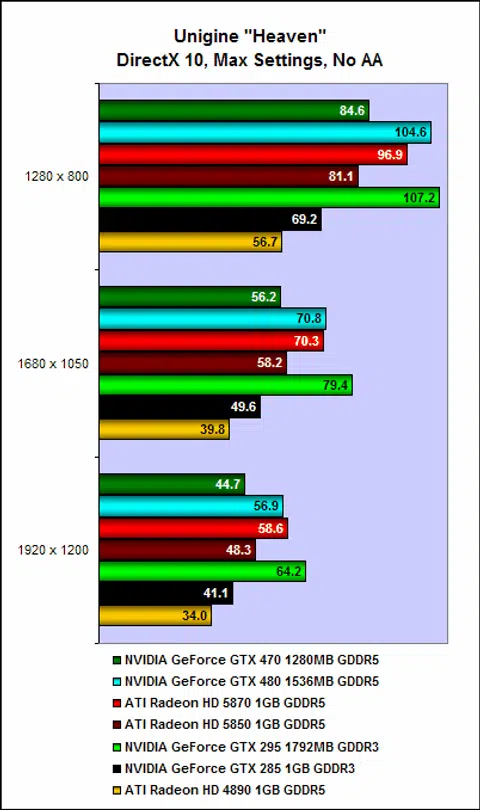
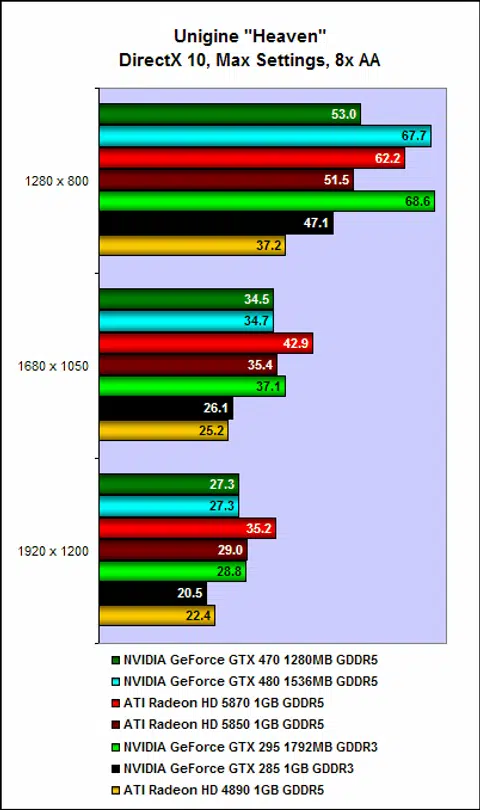
On Unigine's tessellation-heavy "Heaven" benchmark, we can see evidence of Fermi's tessellation-bias design flexing its muscles. With tessellation enabled, the GeForce GTX 470 could comfortably stand up against both Radeon 5800 series cards up until 8x anti-aliasing was enabled. However, once we turn tessellation off and ran the benchmarks using DirectX 10 API, the GeForce GTX 470 found itself on the back foot, matched by the Radeon HD 5850 and effortlessly outpaced by the Radeon HD 5870.
S.T.A.L.K.E.R.: Call of Pripyat Results
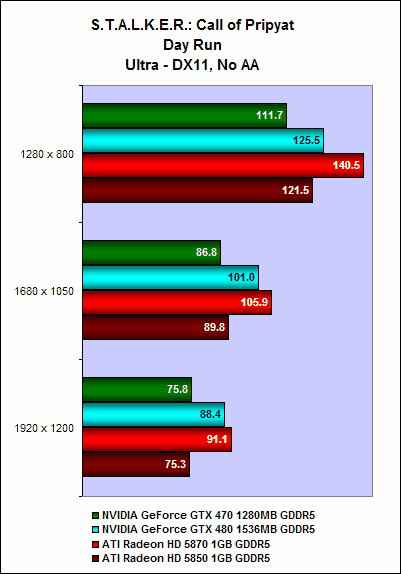
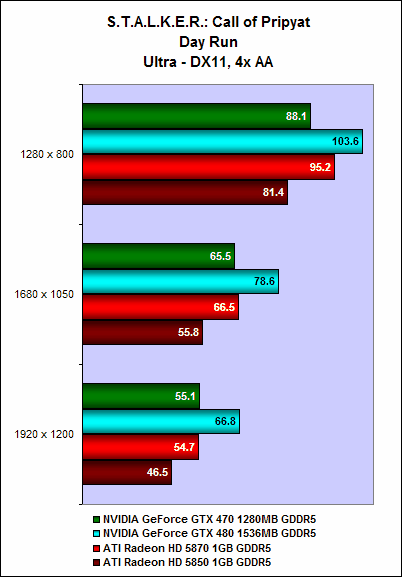
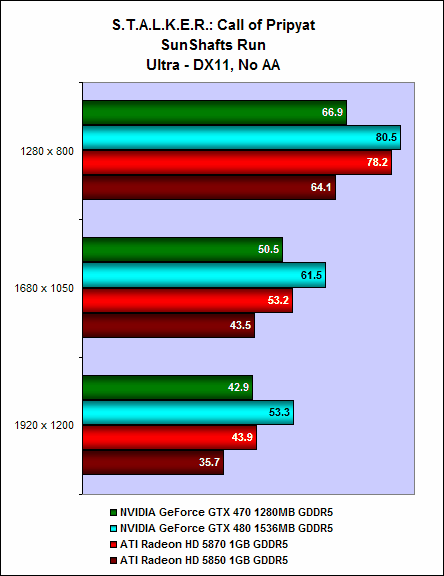
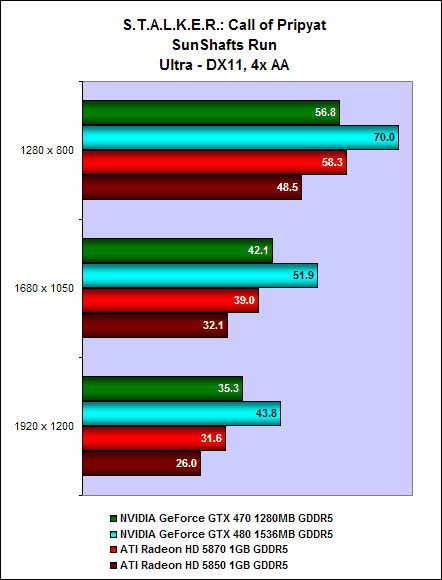
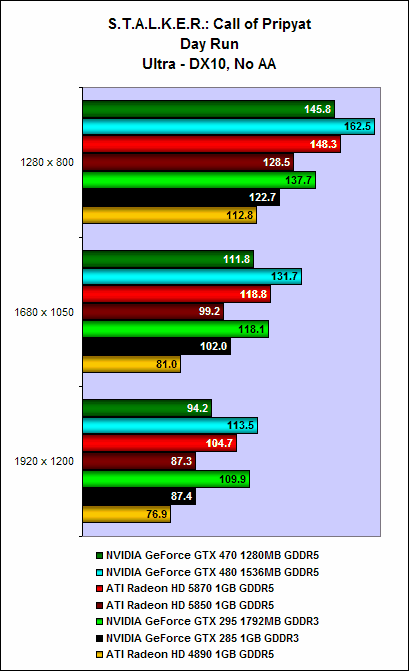
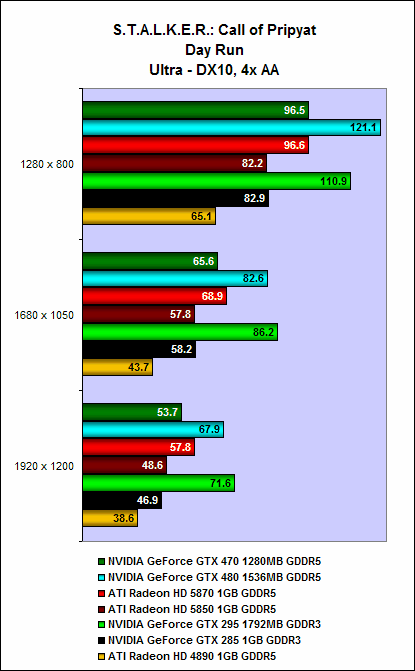
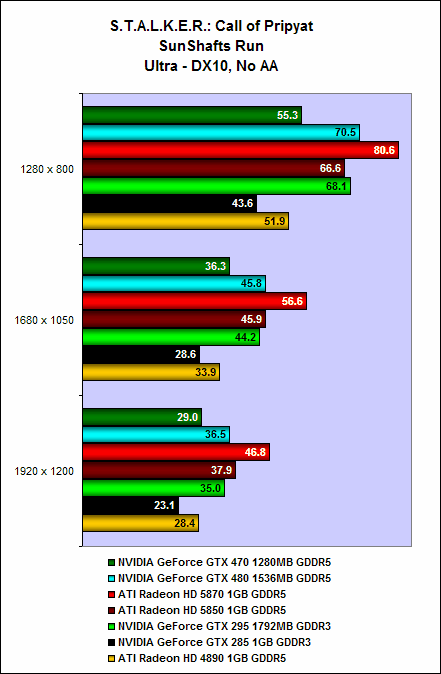
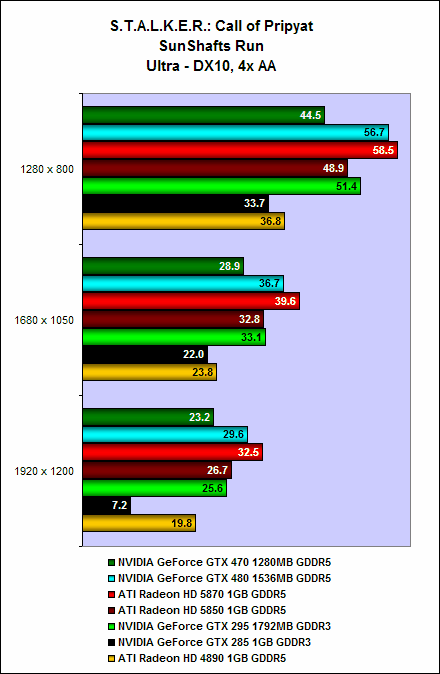
On S.T.A.L.K.E.R.: Call of Pripyat, we found that the GeForce GTX 470 was as erratic as the GeForce GTX 480. On the Sun Shafts run, we noticed that the GeForce GTX 470 was actually quicker when DirectX 11 and tessellation was enabled than on DirectX 10 mode. In general, we did note that overall performance was better with DirectX 11 enabled, once again showing how the Fermi architecture is more adept at handling tessellation operations as well as processing code from this API.
DirectX 11 Results
 |  |
 |  |
DirectX 10 Results
 |  |
 |  |
Temperature
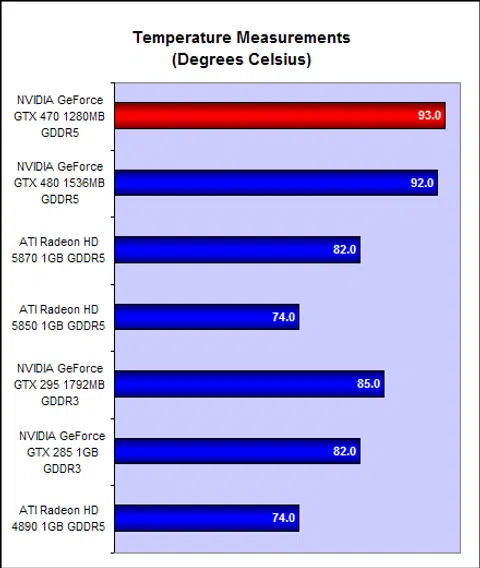
As the graph below shows, the GeForce GTX 470 is one hot card. A maximum sustained operating temperature of a staggering 93 degrees Celsius was recorded while running 3DMark Vantage, making it a smidge hotter than a GeForce GTX 480, and over 10 and 19 degrees Celsius warmer than a Radeon HD 5870 and Radeon HD 5850 respectively. Users with compact casings will certainly need to rethink and improve their casing's ventilation to ensure fitting a GeForce GTX 470 doesn't have unintended consequences.
Power Consumption
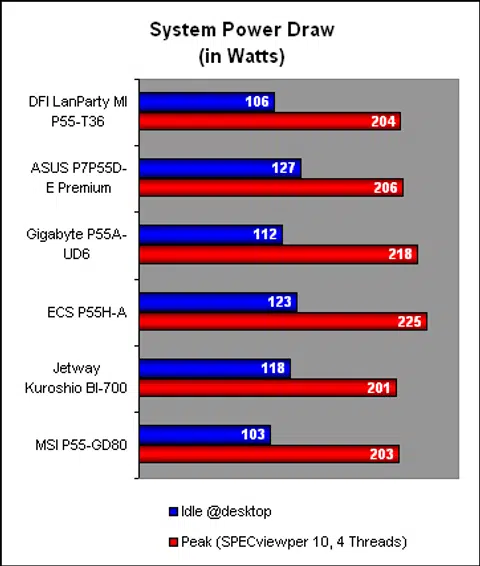
Power consumption figures are also in keeping with what's expected from the GF100 chip. The highest sustained reading we recorded was 284W. Now although this is a marked improvement over a GeForce GTX 480's 332W peak power reading, it is still some distance ahead of Radeon HD 5870 and HD 5850, which recorded 238W and 217W respectively.
To address concerns regarding the GF100 chip's high power consumption, NVIDIA has recently released a paper titled “A Perspective on Power”. In it, NVIDIA claims that the GF100 chip was designed to specifically tackle DirectX 11 applications and that if you were to run DirectX 11 games, you'll see that the new cards will be power efficient compared to ATI's Evergreen offerings. The paper also states that with DirectX 10 games, the performance to watt ratio will be comparable.
While we can't comment on performance to watt ratios on DirectX 11 games (since we take the readings when the system is running 3DMark Vantage), we can certainly comment on NVIDIA's claims that performance to watt ratio is identical on DirectX 10 applications. 3DMark Vantage is a DirectX 10 specific benchmark and if we look back at our result analysis earlier, you'll find that the new GeForce GTX 470 scored identically to the Radeon HD 5850, and if you look at the power consumption figures here, then it is evident that the Radeon HD 5850 is the more power efficient card. Of course, this is by no means a conclusive test, but it does show just how power hungry the GeForce GTX 470 is while running 3DMark Vantage, at least.
That said, it is worth investigating NVIDIA claims about power efficiency on DirectX 11 applications, and we are looking to address that in a future article.
Fast, But That Ain't Enough
In closing, we are not that impressed with the new GeForce GTX 470. With a launch price of US$349, it finds itself sandwiched between the Radeon HD 5870 and HD 5850, which cost around US$400 and US$280 respectively. And if you consider the performance it offers, it's a tad hard to justify the price-tag. Depending on which benchmark, it is roughly 10 - 20% quicker than a Radeon HD 5850, but at US$280, the HD 5850 costs a whopping US$70 less. Not only that, it is also much cooler and efficient to run. For those looking for a high-end, yet value-for-money card, our recommendation is to stick with the Radeon HD 5850, which also happens to be one of our “Most Value for Money” award winners.
Against the Radeon HD 5870, things are a little tricky. The Radeon HD 5870 is not a whole lot faster than the GeForce GTX 470, so at a cost of US$400, there is no good grounds for the US$60 premium. Nevertheless, it is significantly more power efficient and cheaper to run and these two reasons coupled with its superior performance might be reasons enough for some to turn to the Radeon HD 5870 instead of the cheaper GeForce GTX 470. Furthermore, the Radeon HD 5000 series are capable of handling three display outputs from a single card, but NVIDIA could only manage two till date.
NVIDIA might have been a little too enthusiastic in proclaiming the GeForce GTX 470 as the new price/performance leader. Perhaps a little too early because the card does excel in DirectX 11 based benchmarks.
Not all hope is lost though, because the GeForce GTX 470 is by no means a slow card, and if true stereoscopic 3D gaming is your thing, then there's still only NVIDIA to turn to for the time being at least - since we hear ATI is in the midst of enabling 3D gaming with the cards too. On top of that, for the wealthy and hardcore, there's also NVIDIA 3D Surround to look forward to.
On a closing note, we must say that we don't think the GeForce GTX 470 is priced competitively enough to give the two ATI Radeon 5800 series cards a run for their money. The Radeon HD 5850 remains to be the best value for money high-end card, while the Radeon HD 5870 retains its appeal for class-leading performance and efficiency. Perhaps those gunning for something in-between might find the GeForce GTX 470 a reasonable candidate, but it has its caveats as mentioned. Also with more DirectX 11 game titles later, the card might prove its worth.
So is the GeForce GTX 470 the new price/performance leader that NVIDIA claims it is? Let's just say it falls a little short. It certainly has decent performance, but that alone isn't enough.
Our articles may contain affiliate links. If you buy through these links, we may earn a small commission.