
MSI GeForce GTX 660 Ti Twin Frozr IV Power Edition - A New Titan Rises
Last week, we saw the first batch of custom overclocked GeForce GTX 660 Ti cards battle it out, but now MSI has entered the arena with its Twin Frozr IV Power Edition. Factory overclocked to 1020MHz at the core, and running MSI's proven cooling system, will it be the last card standing? Read on to find out!

Meet the MSI GeForce GTX 660 Ti Twin Frozr IV Power Edition 2GB GDDR5
Last week, NVIDIA released its much anticipated GeForce GTX 660 Ti upper mid-range graphics card. Running on the same GK104 core found in the GTX 670 and GTX 680, we were very impressed by its near-enthusiast level performance. We also had a look at custom overclocked variants from ASUS, Gigabyte and Palit. However, while all of our custom cards performed fairly well, none were really able separate themselves from the pack.
MSI is the latest to release its version of the GeForce GTX 660 Ti. The MSI GeForce GTX 660 Ti Twin Frozr IV Power Edition 2GB GDDR5 comes factory overclocked to1020MHz on the core, with memory remaining at the default 6008MHz DDR. Compared to our other custom cards, this puts it just below Gigabyte and ASUS, but above Palit in terms of default core clockspeeds.
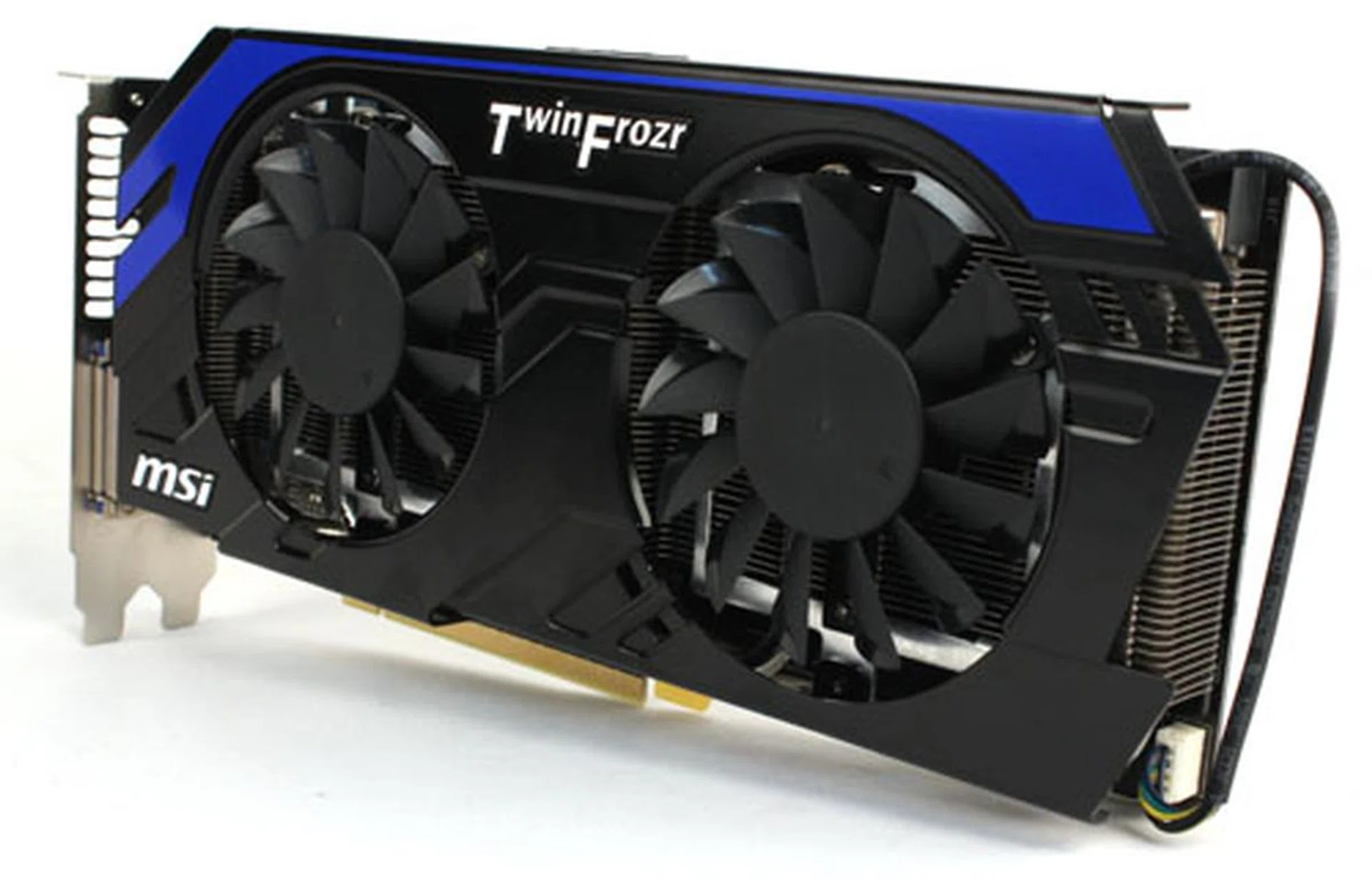
Will the Power Edition 'overpower' its competitors?

MSI's GTX 660 Ti is equipped with its popular Twin Frozr IV cooling system. This particular model consists of four large, nickel-plated, copper heatpipes and a large cooling fin array connected to two heatsinks, one heatsink directly over the GPU and another that covers the memory chip and voltage regulation circuitry. Two large fans keep everything ventilated.
The fans themselves have a tight blade array for stronger airflow. Like many of MSI's other Twin Frozr cards, this model features a unique dust removal technology that spins the fans in the opposite direction for a few seconds to blow any clogged dust in the cooling fins out and away from the card. MSI's N580GTX Lightning Xtreme Edition was probably the first card we've reviewed a year ago to feature this.
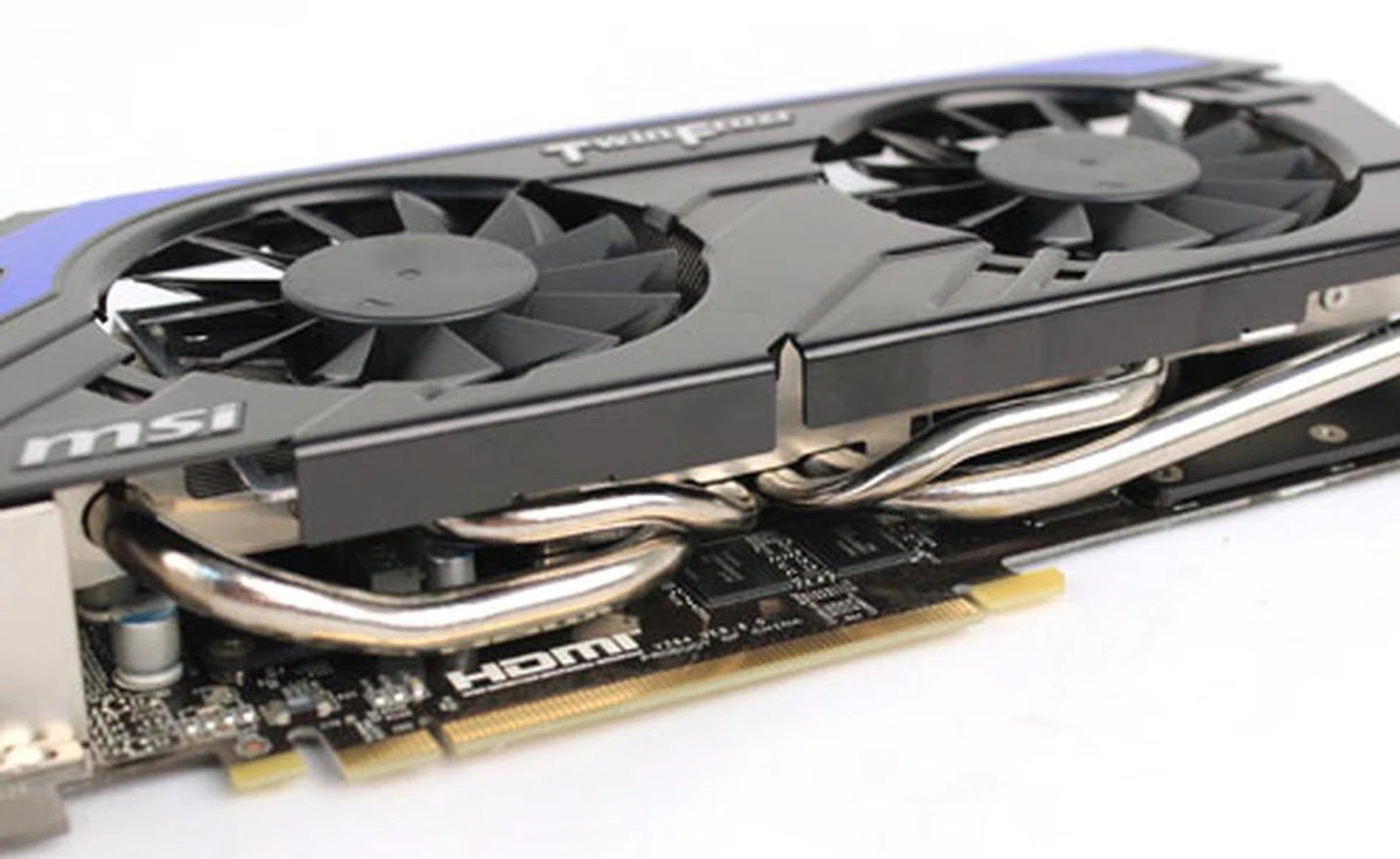
The Twin Frozr IV cooling system packs four nickel-plated copper heatpipes into a fairly slim form factor.
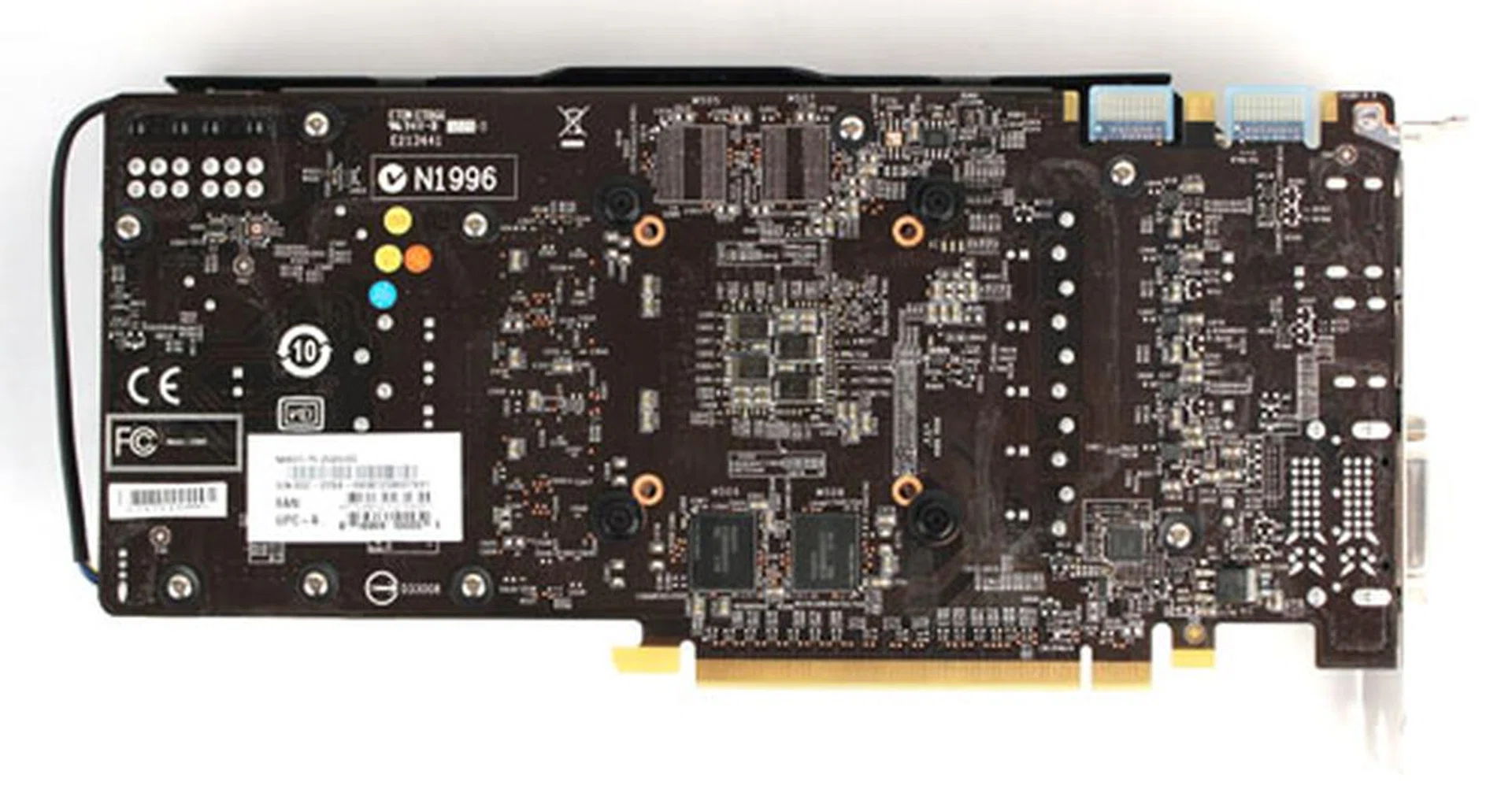
MSI's GTX 660 Ti uses a custom PCB and an enhanced PWM design, which is designed to allow for higher current and better stability for overclocking.
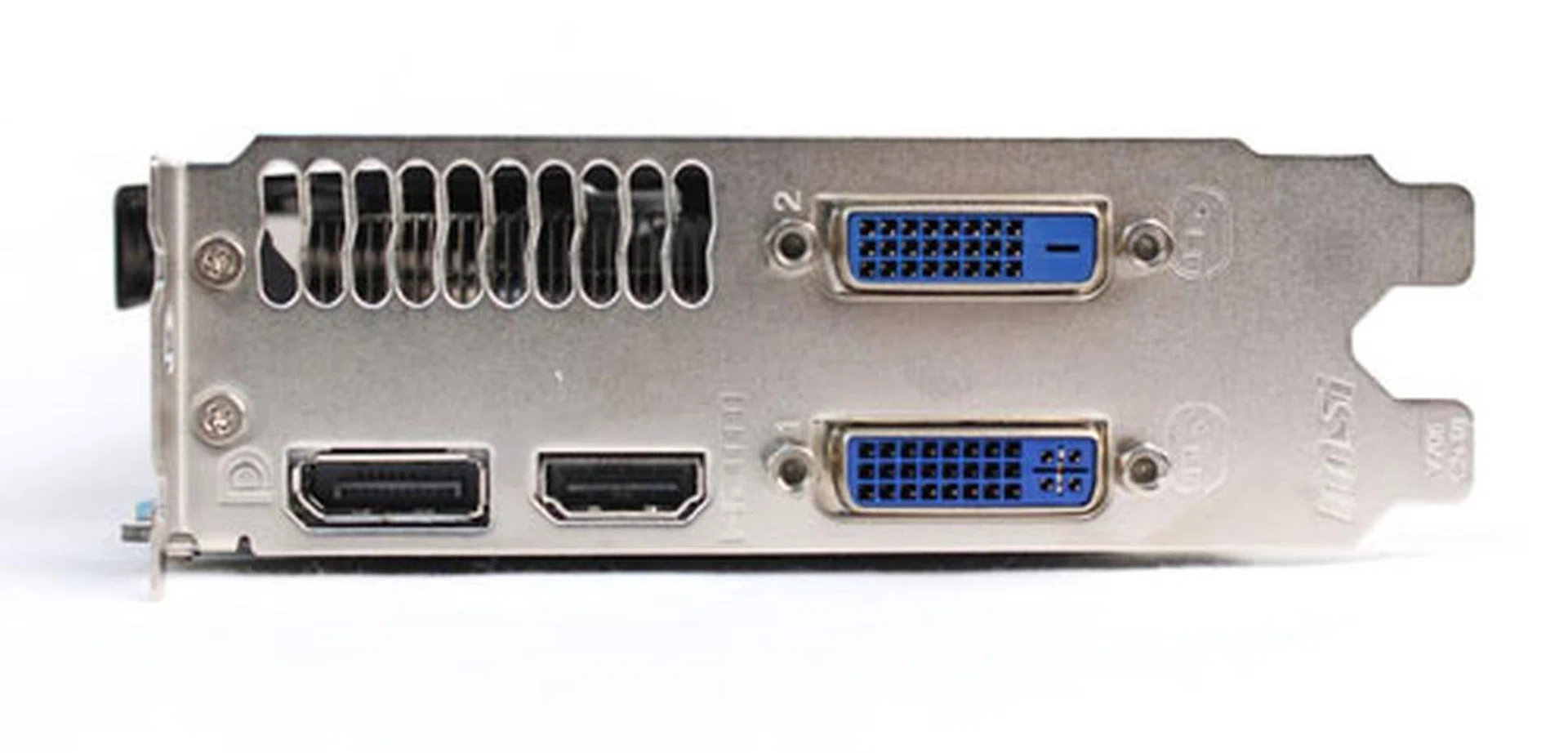
Port layout is the same as the reference card with one DVI-I port, one DVI-D port, one HDMI port, and one DisplayPort port. Like the reference card, it uses two six-pin Molex PCIe power connectors. It measures 265 x 115 x 39mm, which makes it one of the slimmer and more compact GTX 660 Ti cards available.
The MSI GeForce GTX 660 Ti Twin Frozr IV Power Edition retails for S$499 and comes with a three-year warranty. So read on and find out how it performed and if it's worth our recommendation.
Test Setup
As usual, the following are the specs of our trusty graphics card test bed system:
- Intel Core i7-975 (3.33GHz)
- Gigabyte GA-EX58-UD4P motherboard
- 3 x 1GB DDR3-1333 G.Skill memory in triple channel mode
- Seagate 7200.10 200GB SATA hard drive
- Windows 7 Ultimate 64-bit
The list of benchmarks used:
- Futuremark 3DMark 11
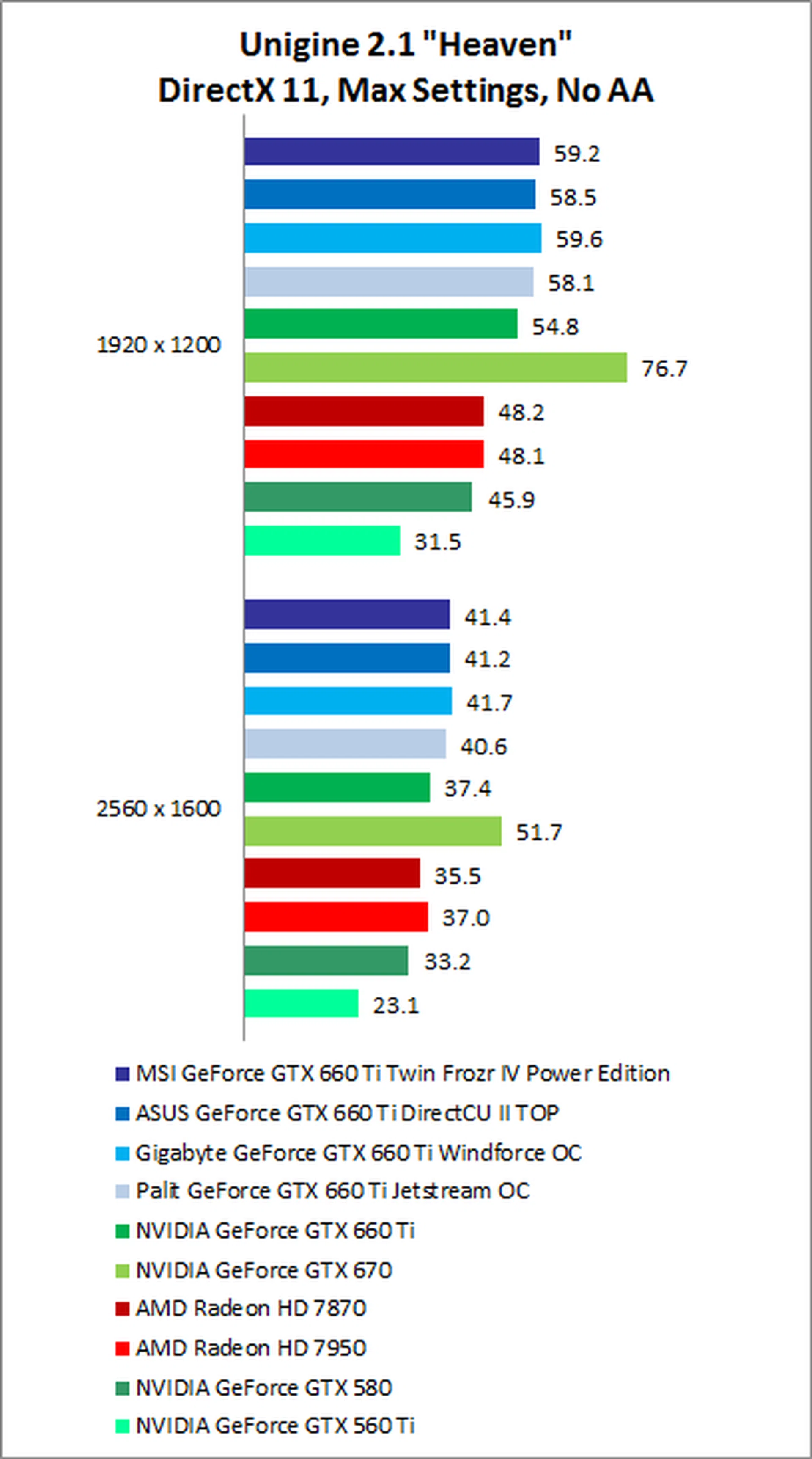
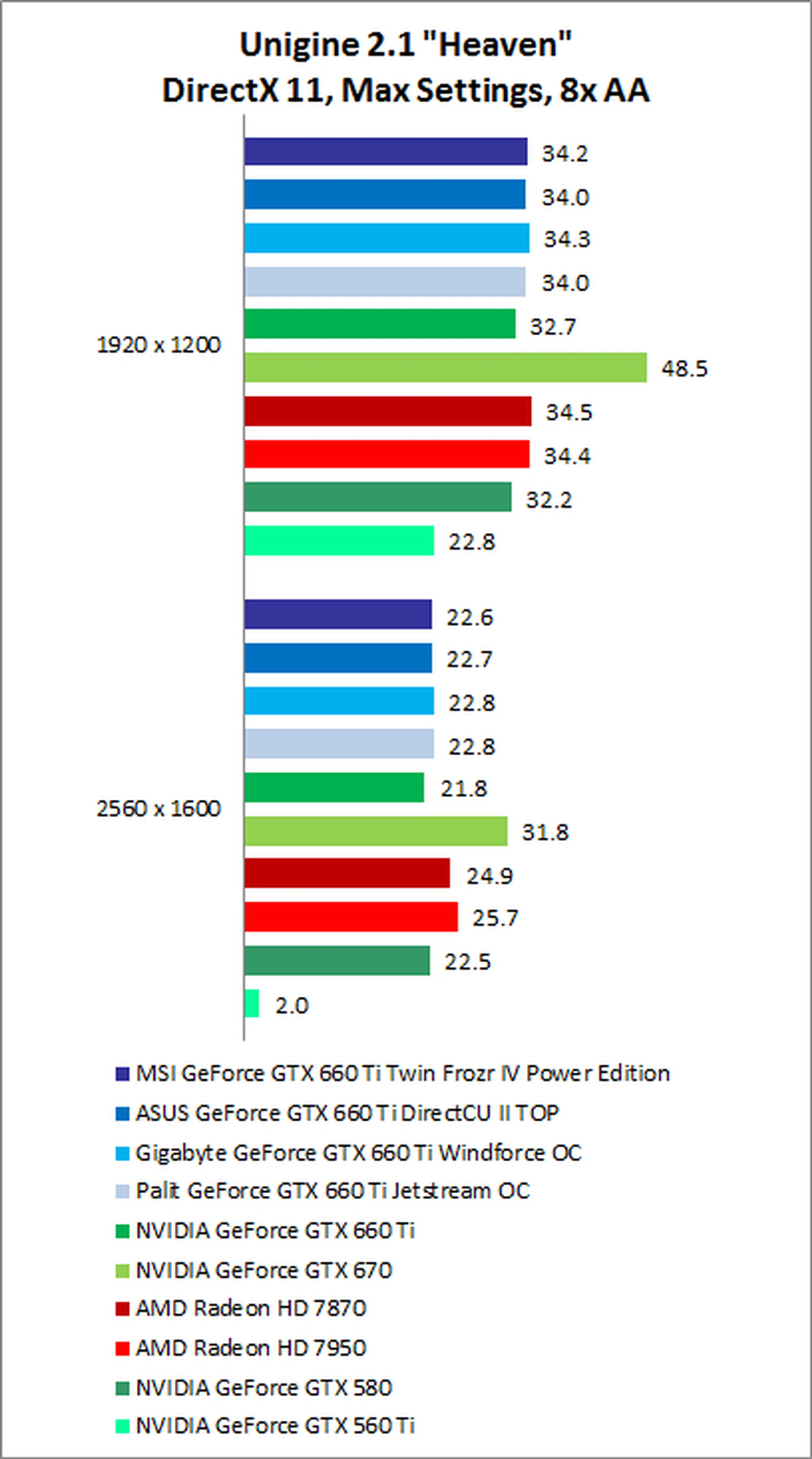
- Unigine v2.1 "Heaven"
- Battlefield: Bad Company 2
- Far Cry 2
- Crysis Warhead
- Crysis 2
- Batman: Arkham City
- Dirt 3
- S.T.A.L.K.E.R.: Call of Pripyat
As mentioned previously, we did not have the NVIDIA GeForce GTX 660 Ti reference card available for our actual test, but we were able to obtain the reference card's specs and downclock accordingly to give you an idea for how it would perform.
The list of cards tested and drivers used:
- MSI GeForce GTX 660 Ti Twin Frozr IV Power Edition 2GB GDDR5 (ForceWare 305.37)
- NVIDIA GeForce GTX 660 Ti 2GB GDDR5 (ForceWare 305.37)
- ASUS GeForce GTX 660 Ti DirectCU II TOP 2GB GDDR5 (ForceWare 305.37)
- Gigabyte GeForce GTX 660 Ti Windforce OC 2GB GDDR5 (ForceWare 305.37)
- Palit GeForce GTX 660 Ti JetStream 2GB GDDR5 (ForceWare 305.37)
- NVIDIA GeForce GTX 670 2GB GDDR5 (ForceWare 301.33)
- AMD Radeon HD 7870 2GB GDDR5 (AMD Catalyst 12.3)
- AMD Radeon HD 7950 2GB GDDR5 (AMD Catalyst 12.2 Preview Version)
- NVIDIA GeForce GTX 580 2GB GDDR5 (ForceWare 280.26)
- NVIDIA GeForce GTX 560 Ti 1GB GDDR5 (ForceWare 305.37)
For summary, here's a comparison of how the MSI GTX 660 Ti compares to the other GTX 660 Ti cards tested, showing core and memory clock speeds, as well as current pricing.
Graphics Card | Core Clock Speed | Memory Clock Speed | Price |
NVIDIA GeForce GTX 660 Ti 2GB GDDR5 | 915MHz | 6008MHz DDR | US$299 |
MSI GeForce GTX 660 Ti Twin Frozr IV Power Edition 2GB GDDR5 | 1020MHz | 6008MHz DDR | S$499 |
ASUS GeForce GTX 660 Ti DirectCU II TOP 2GB GDDR5 | 1059MHz | 6008MHz DDR | S$549 |
Gigabyte GeForce GTX 660 Ti Windforce OC 2GB GDDR5 | 1033MHz | 6008MHz DDR | S$509 |
Palit GeForce GTX 660 Ti JetStream 2GB GDDR5 | 1006MHz | 6108MHz DDR | S$469 |
Benchmark Results
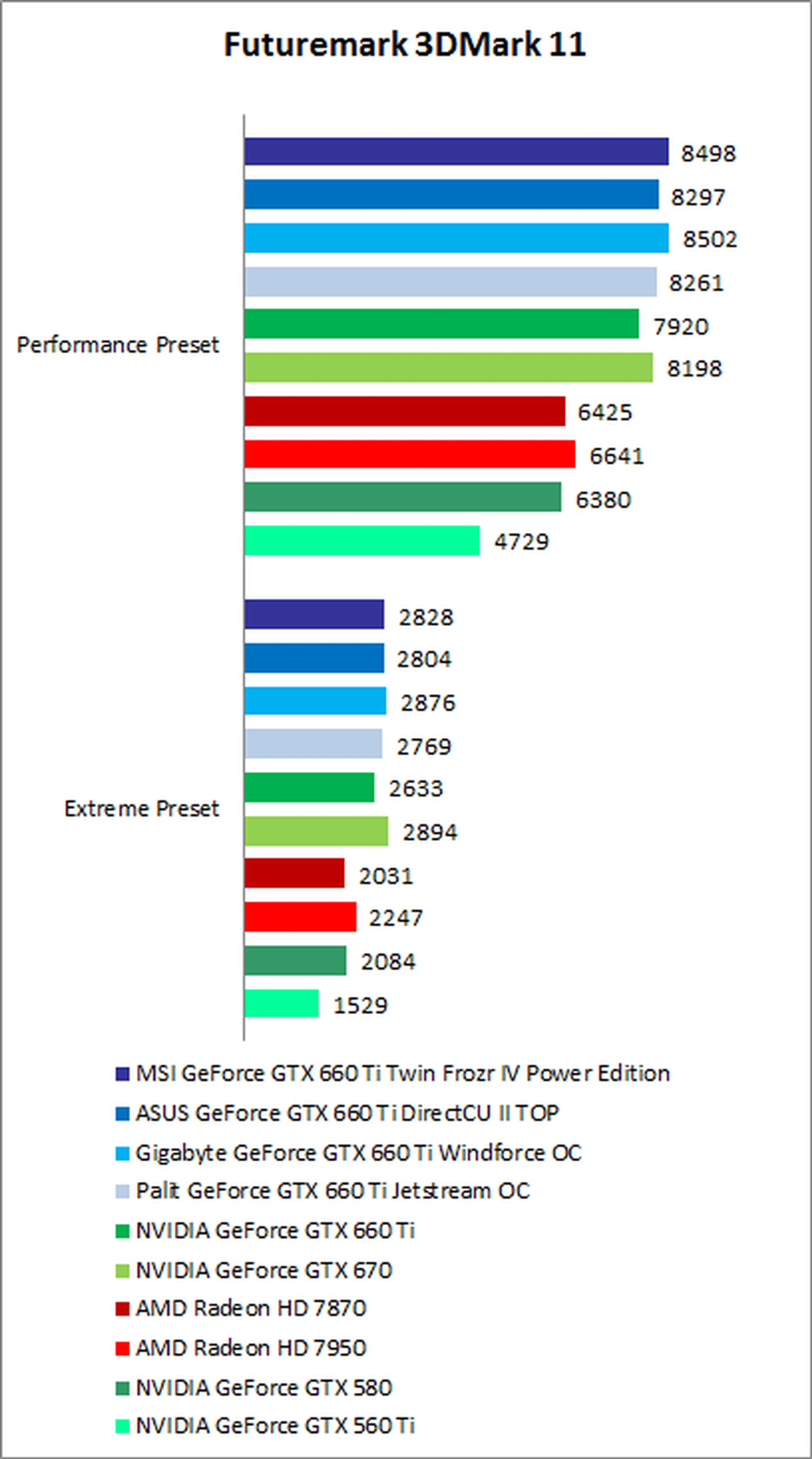
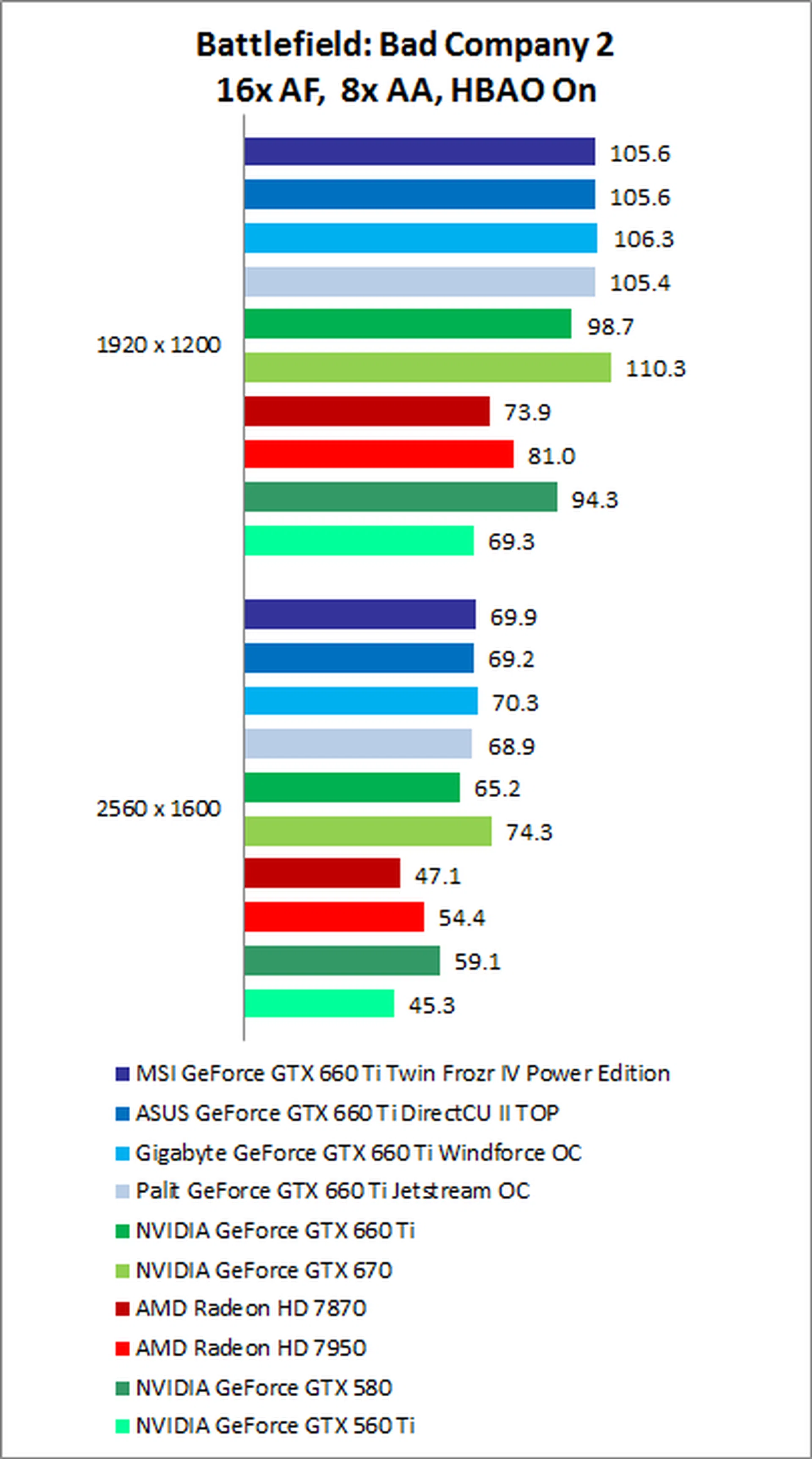
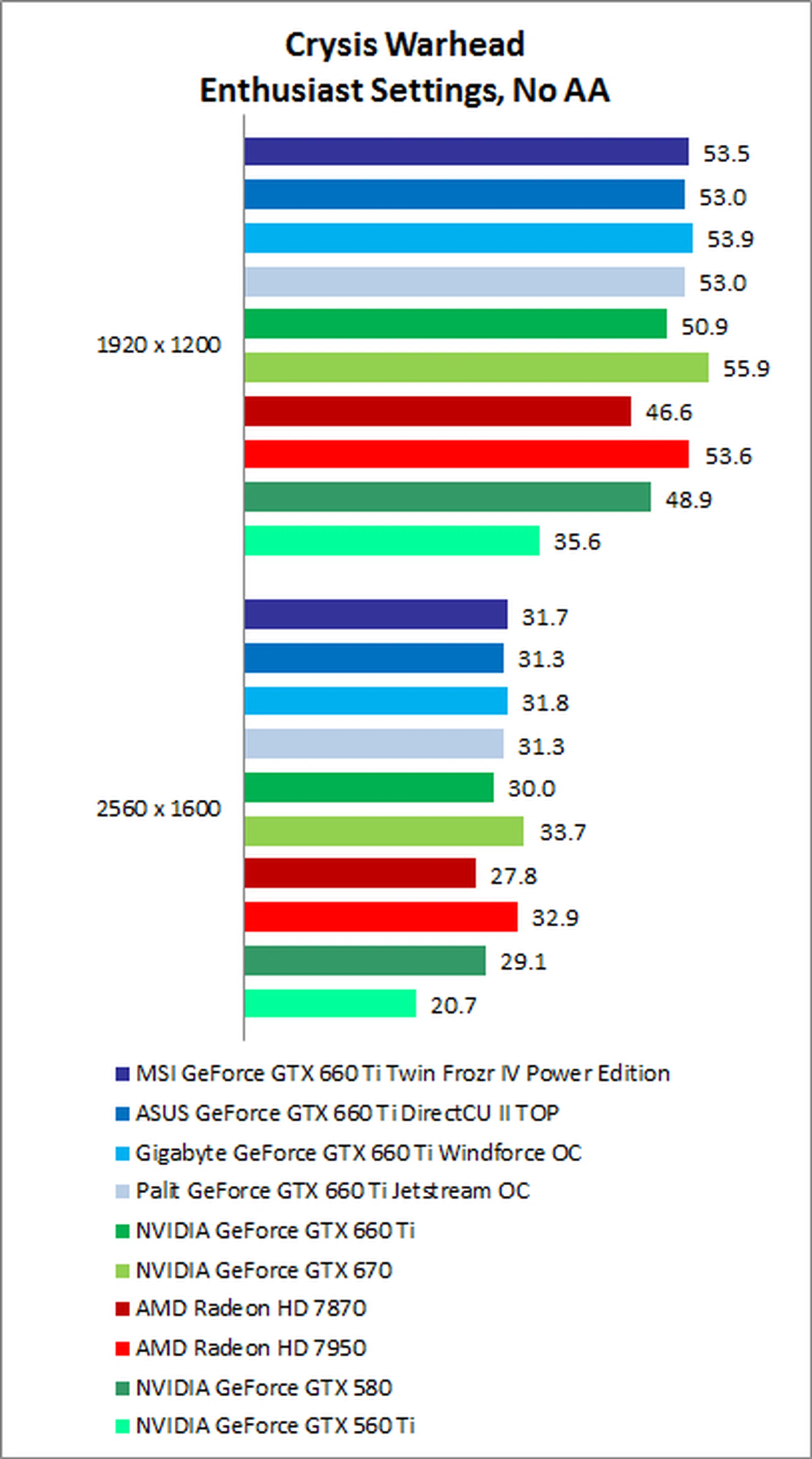
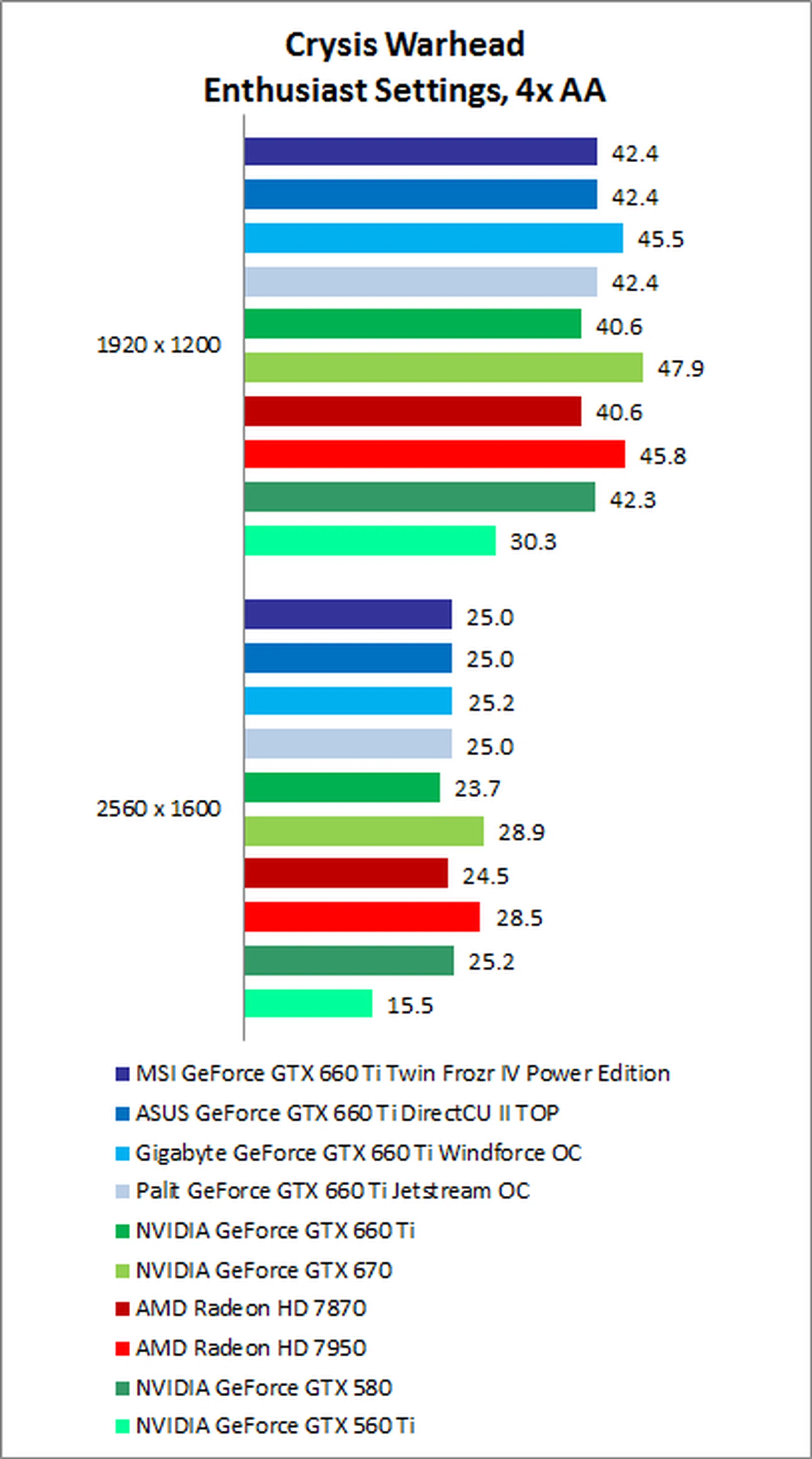
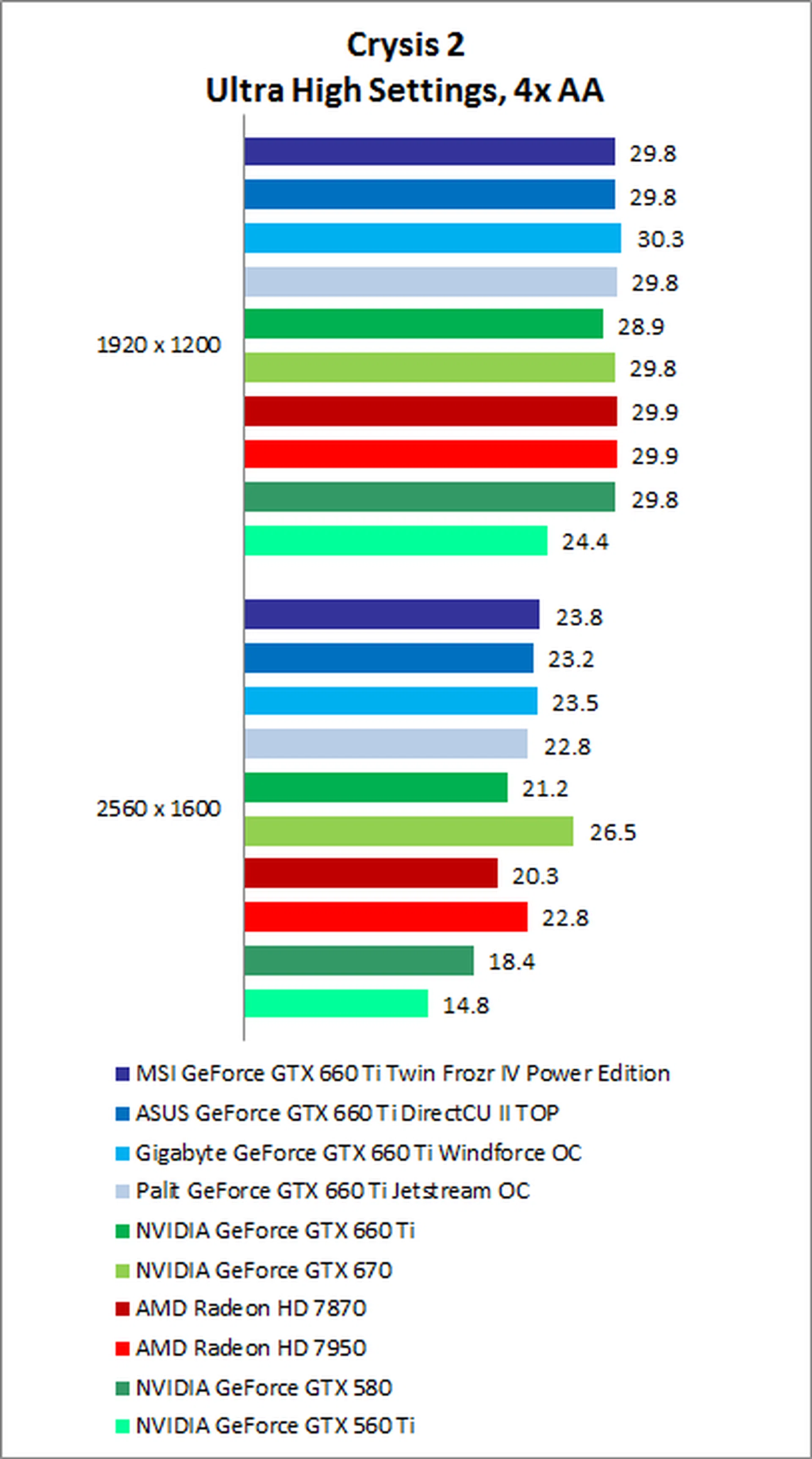
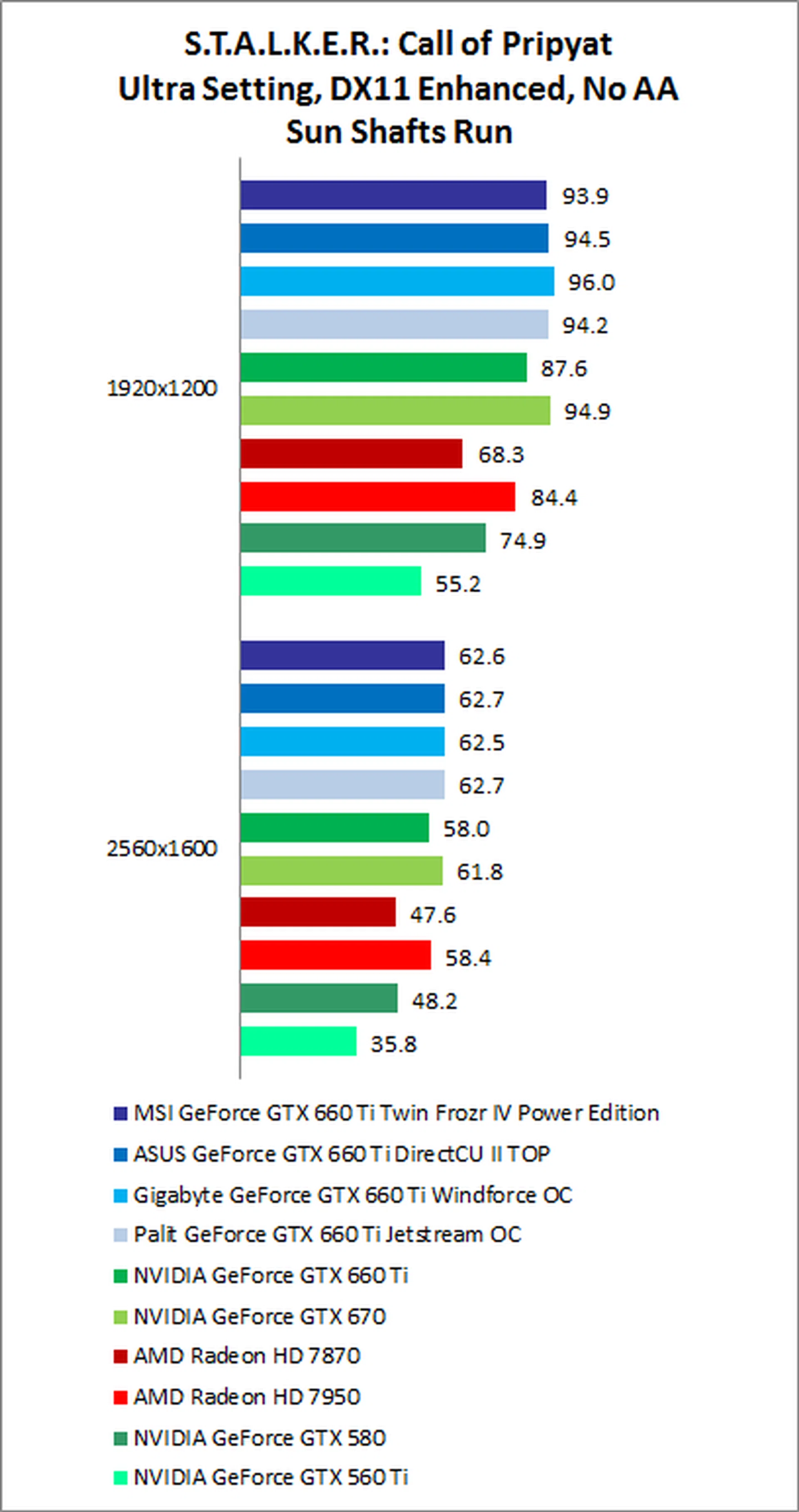
The MSI GeForce GTX 660 Ti Twin Frozr IV Power Edition performed fairly well in our benchmark tests, scoring on average about 8-10% better than the reference design. Surprisingly, it surpassed the higher-clocked ASUS GeForce GTX 660 Ti DirectCU II TOP in a few tests, but was generally about 0.5% or less behind both ASUS and Gigabyte in performance. Looking at its GPU Boost performance we can see that it maxed out at 1189MHz, which is slightly under the peaks recorded for ASUS (1202MHz) and Gigabyte (1215MHz).
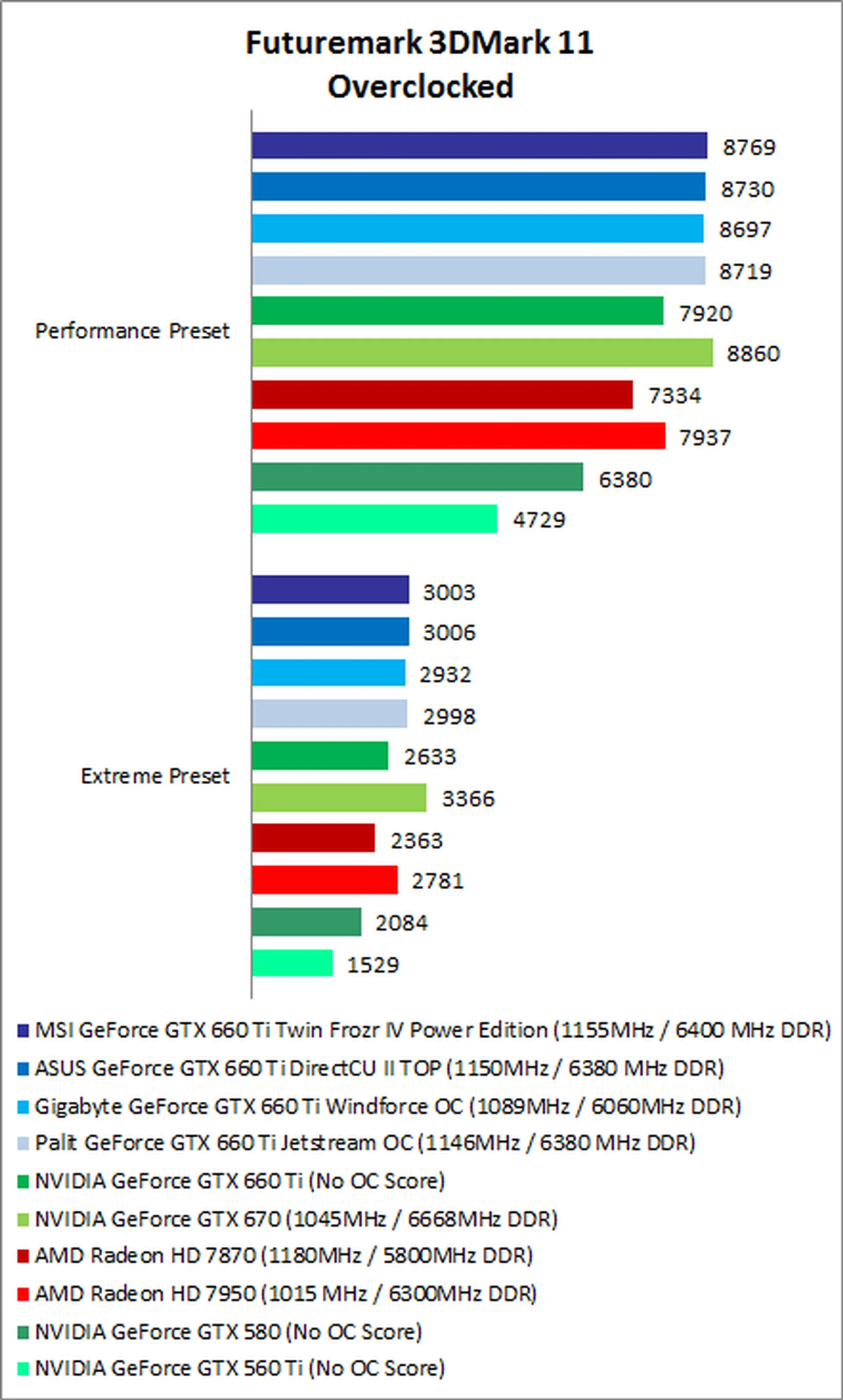
For our overclocking efforts, we were able to achieve marginally higher clockspeeds with MSI than with the other cards, however, the performance gain was not substantial, which further reinforces our previously stated belief that the GTX 660 Ti is already performing close to maximum potential.

3DMark 11 Extreme Preset


Benchmark Results (contd.)
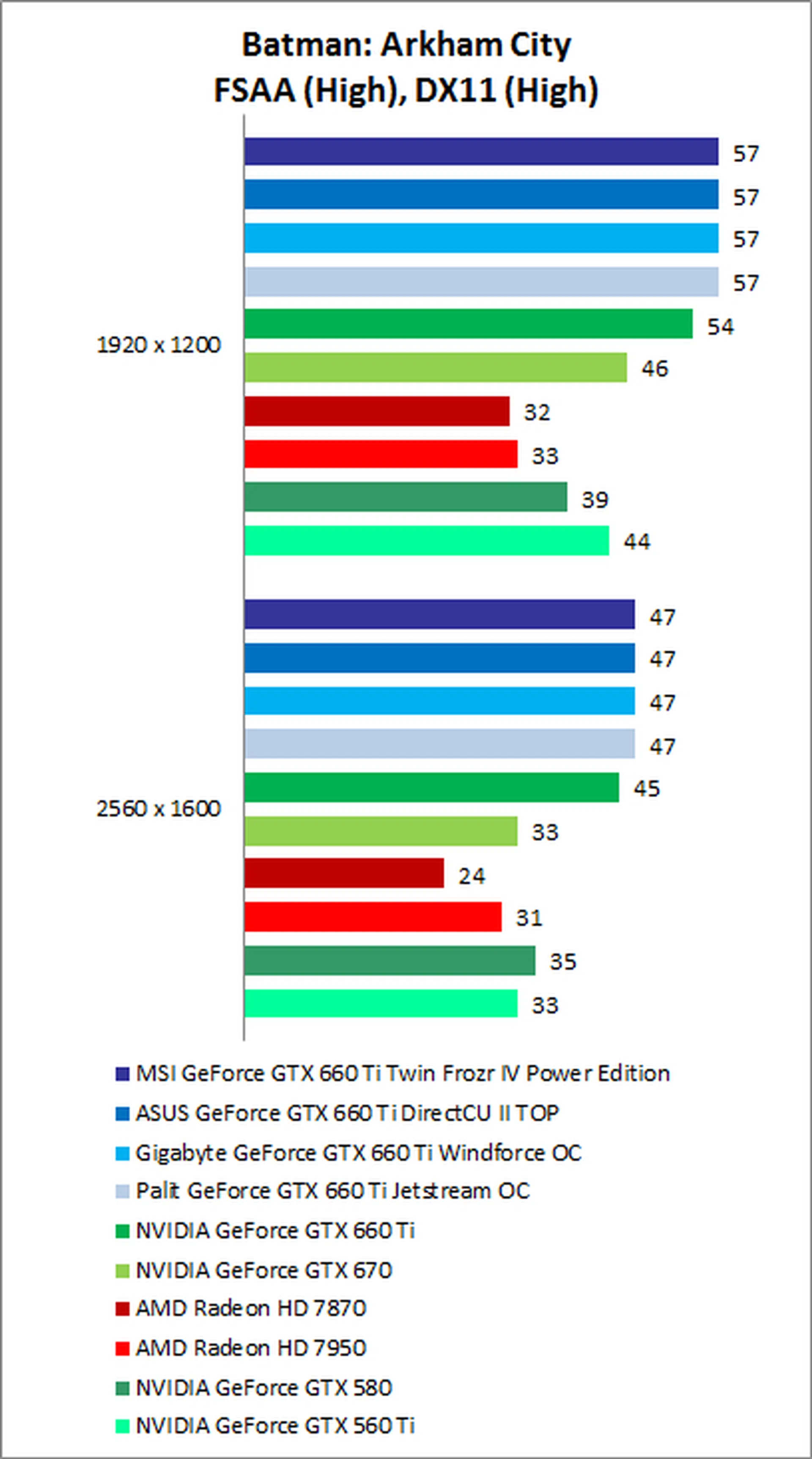
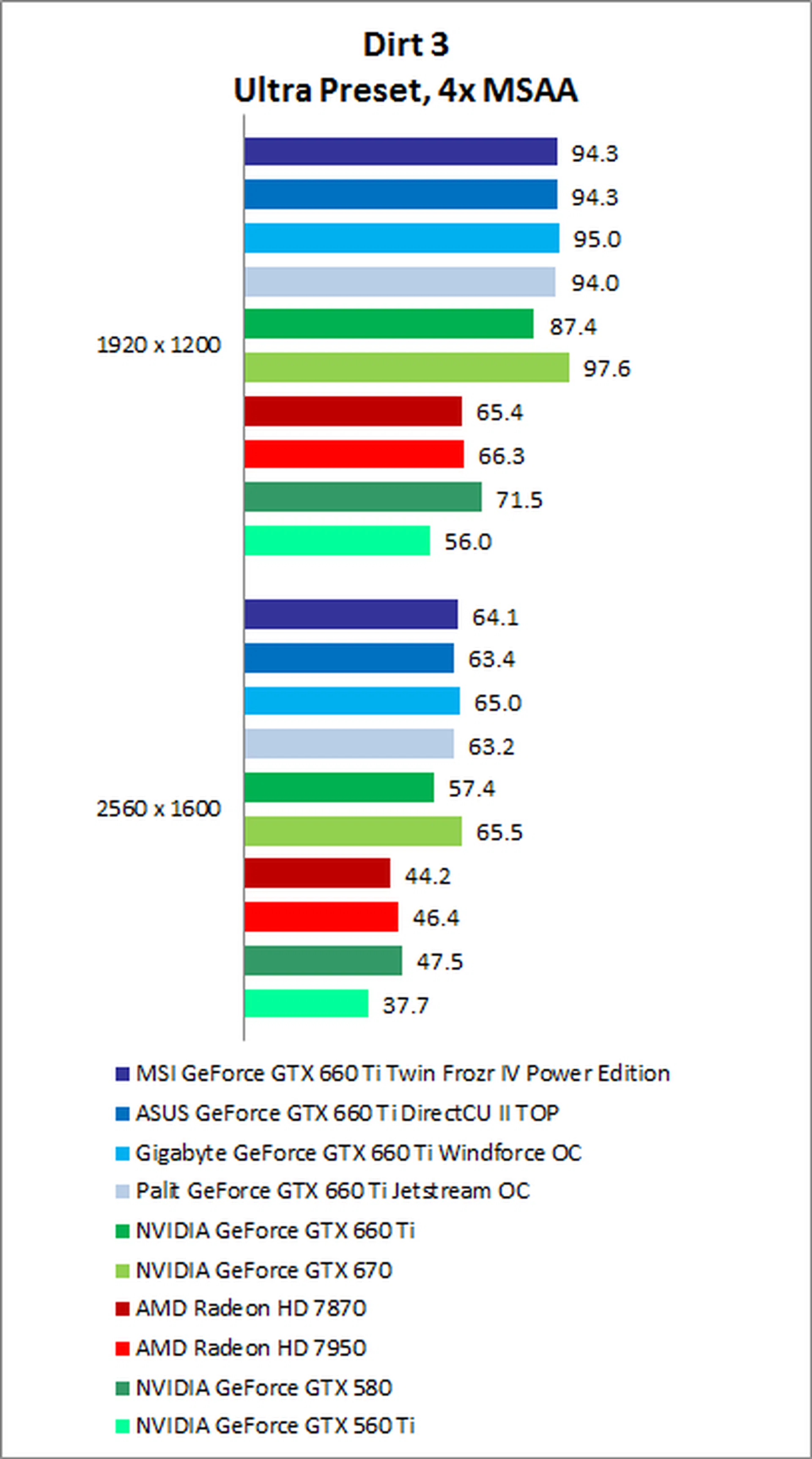
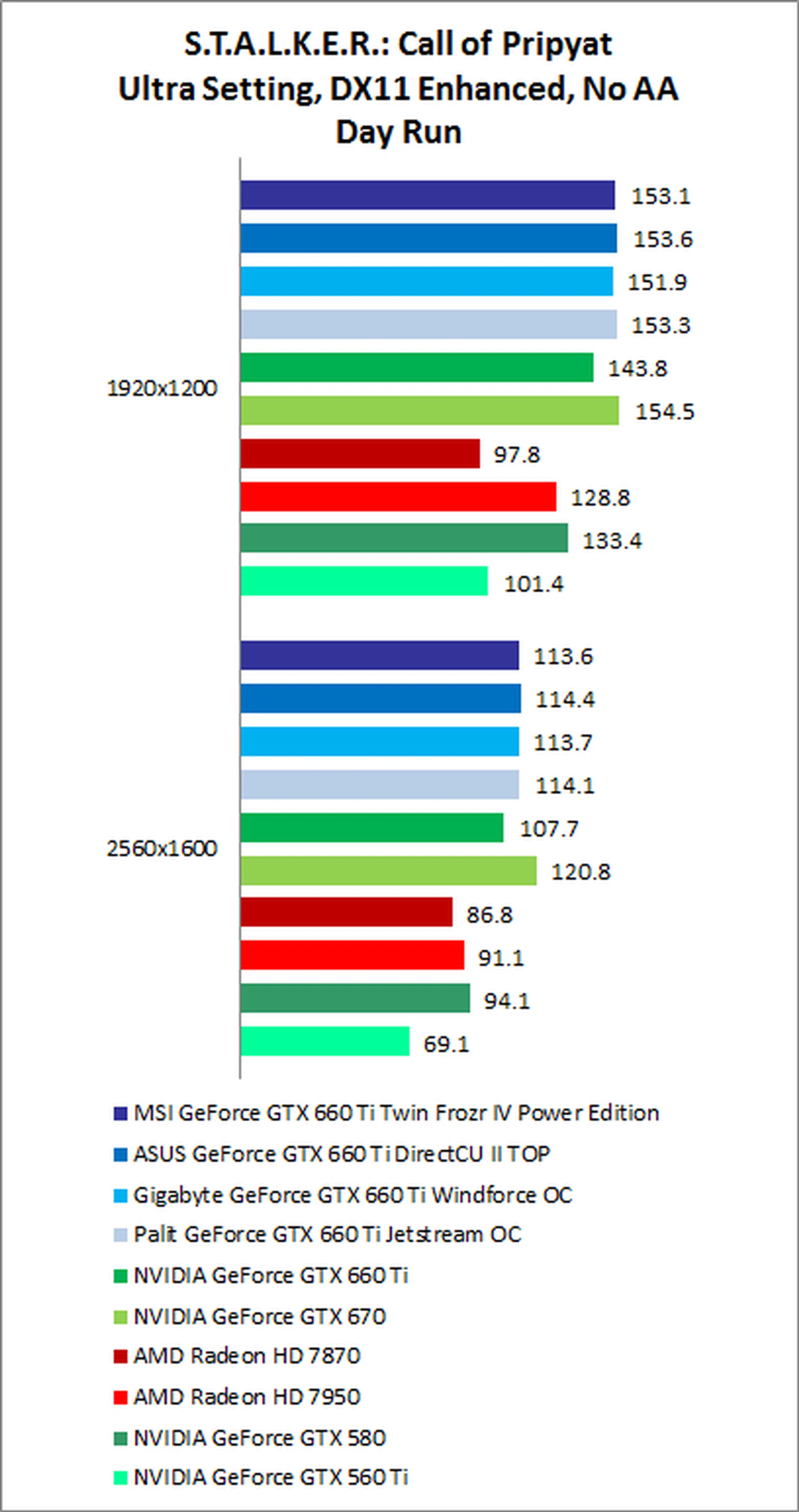
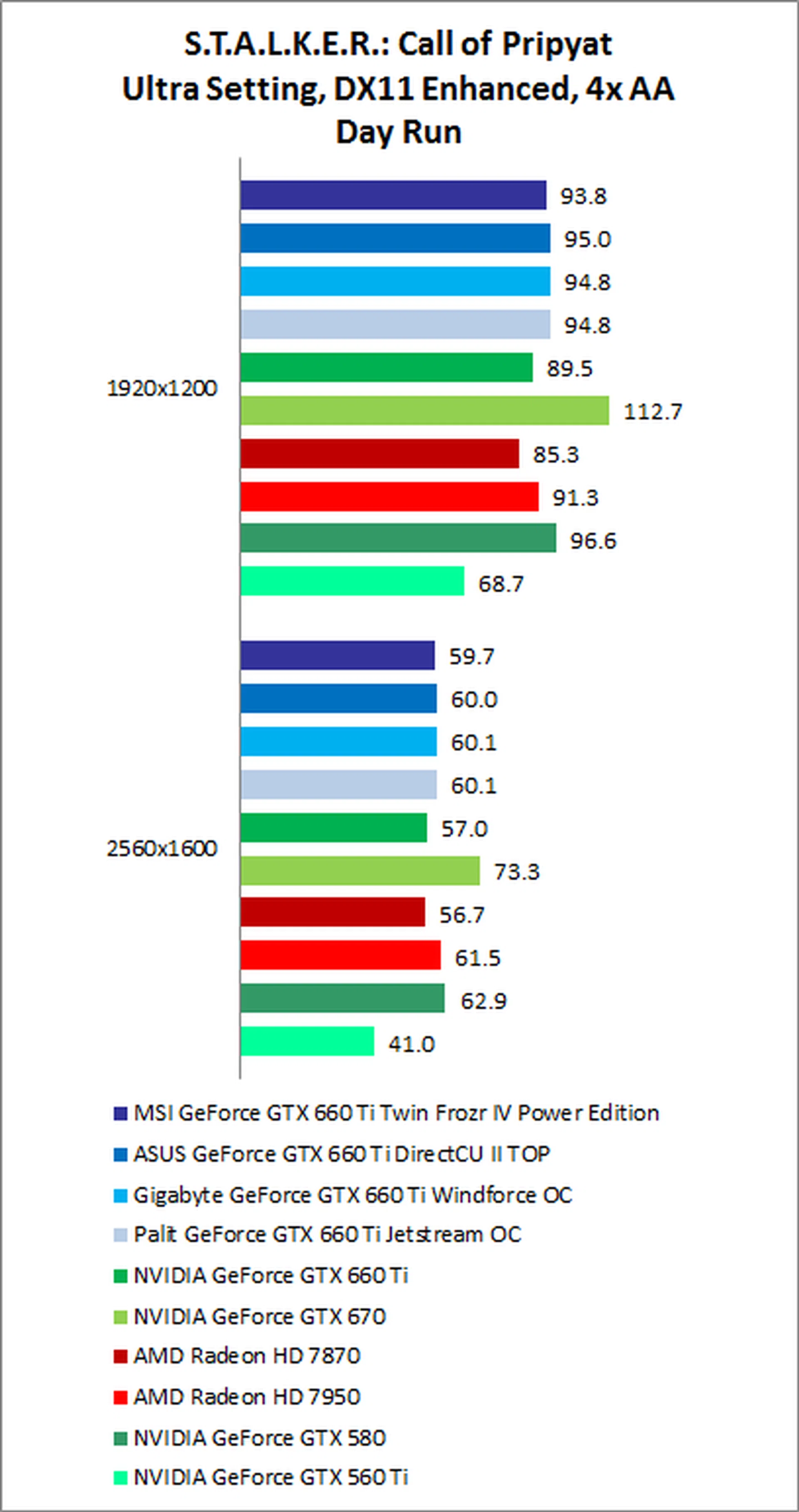

Temperature Results
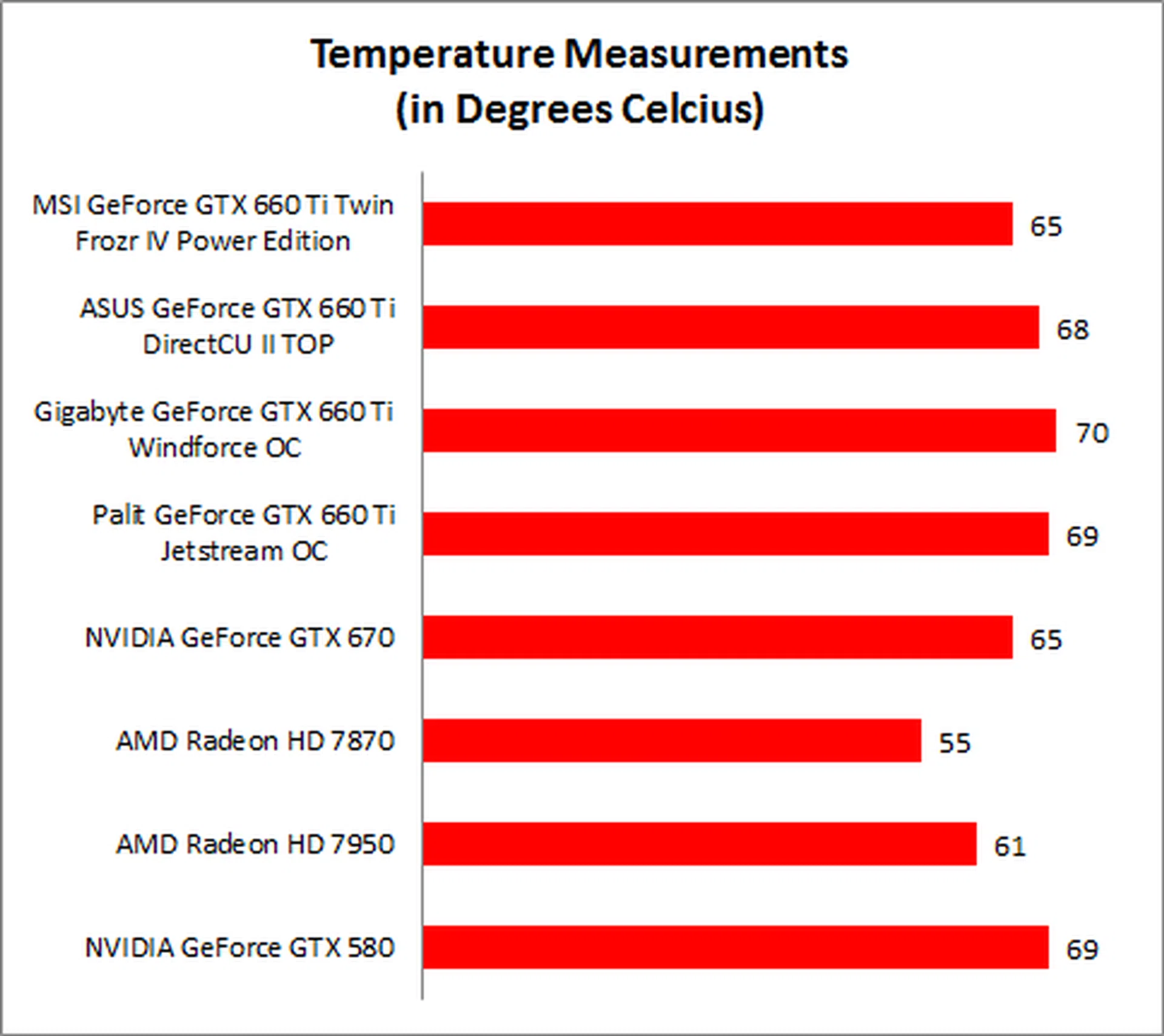
While it wasn't exactly ice cold, MSI's Twin Frozr IV was a few degrees cooler than the rest of our custom cards, reaching just 65 degrees in our load testing. Fans were also fairly quiet during operation, and even after raising output to 70%, they remained at acceptable volume levels.
Power Consumption
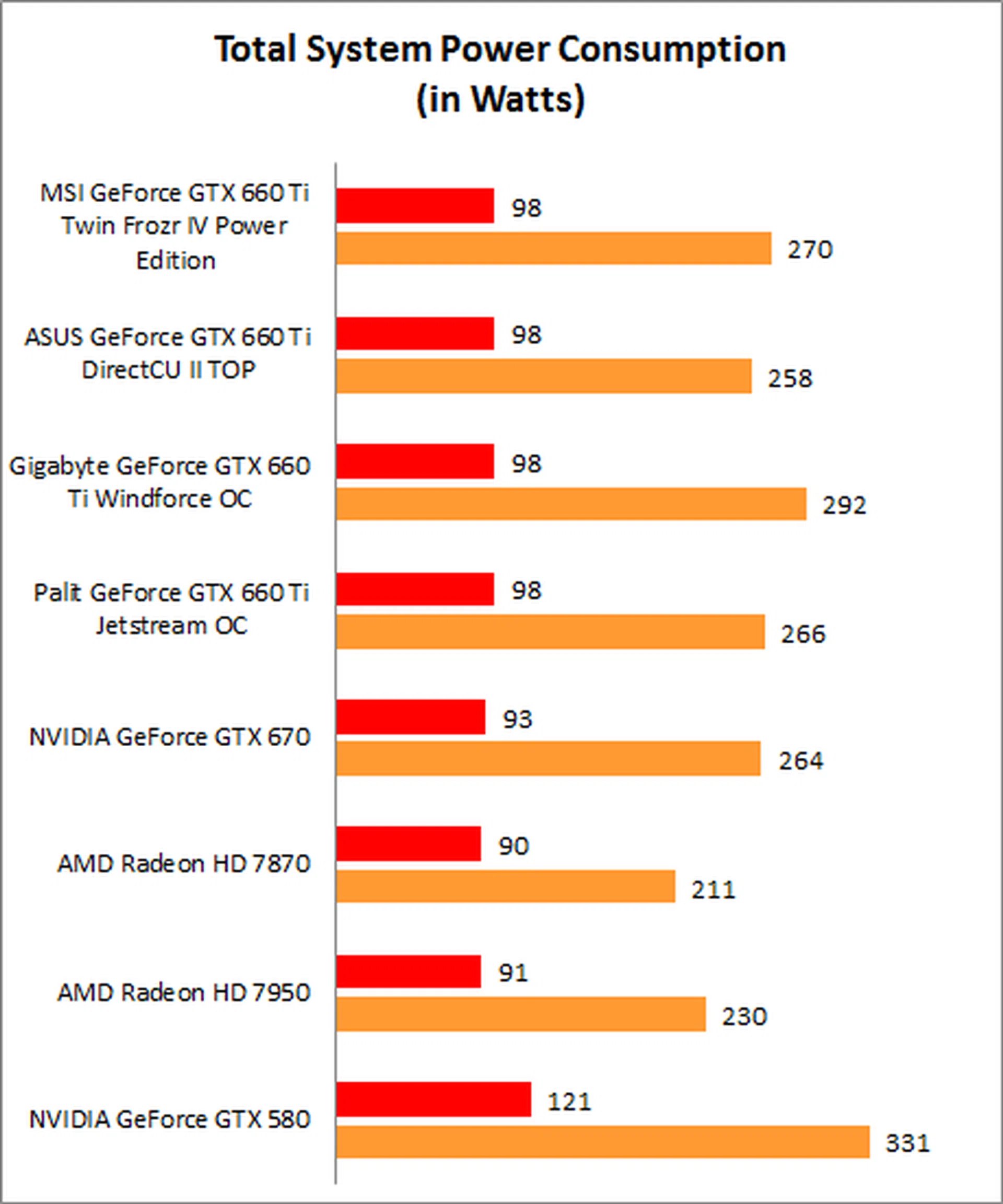
Power Consumption was slightly higher than average for our custom 660 Ti's, but generally remained within an acceptable range.
A New Titan Rises
Solid overall performance at a reasonable price point.
While MSI didn't blow us away with its custom GTX 660 Ti, we couldn't find any fault or weakness, and as such we feel that it's one of the stronger GTX 660 Ti cards released so far. In our benchmark testing, it performed as well as or better than all of our other custom edition GTX 660 Ti cards. It also has slightly more overclocking potential than the other cards. While it had only average power consumption, it did boast the lowest operating temperatures (if only by a few degrees).
It's also one of the slimmer and more compact GTX 660 Ti cards, with a flat profile that should help it fit in most people's cases. We also liked the quiet fan operation, and the dust removal technology is a nice extra.
It's priced well at S$499, which makes it cheaper than both ASUS and Gigabyte, and while Palit is cheaper still at S$469, MSI's GTX 660 Ti comes with a three-year warranty compared to Palit's two years. If you feel like you need peace of mind, the extra third year is definitely worth $30, especially when you consider that this is a slightly better product overall. Had we obtained the card before the GeForce GTX 660 Ti was officially launched, the MSI Twin Frozr IV Power Edition would have easily garnered our Winner award in our GeForce GTX 660 Ti Shootout.
Overall, if you're in the market for a custom edition GeForce GTX 660 Ti, you really can't go wrong with the MSI Twin Frozr IV Power Edition. It's probably not the cheapest and can't outgun certain special offers, but apart from those, MSI's GeForce GTX 660 Ti Twin Frozr IV Power Edition comes highly recommended.
Our articles may contain affiliate links. If you buy through these links, we may earn a small commission.