
Galax GeForce GTX 1070 Ti EX-SNPR White: The card you want for Christmas
Buying a new high-end graphics card this Christmas? You'll want to check out the new Galax GeForce GTX 1070 Ti EX-SNPR White first.

Just in time for Christmas

A white Christmas, anybody?
NVIDIA debuted its Pascal graphics architecture nearly one and a half years ago with the GeForce GTX 1080, but it seemed only just like yesterday doesn’t it?
Between now and then, a lot has happened. For NVIDIA, they expanded on the success of the GeForce GTX 1080 with a whole range of 10 series cards. For mainstream gamers, we have the excellent GeForce GTX 1050 Ti and GeForce GTX 1060. And for the truly power crazed, we have the Titan Xp and GeForce GTX 1080 Ti. There’s something for everyone.
However, things got interested in the past few months after AMD released its Vega cards. The Radeon RX Vega 64 finally offered NVIDIA’s high-end GPUs something to think about, while the Radeon RX Vega 56 gave the mid to high-end GeForce GTX 1070 some really serious competition.
The GeForce GTX 1070 Ti is therefore NVIDIA’s response to this competition. And based on specifications alone, it sure looks like it will the high-end graphics card to get this Christmas.
The first GeForce GTX 1070 Ti card to arrive in our labs is the Galax GeForce GTX 1070 Ti EX-SNPR White and it features a white custom dual-fan cooler that looks like it was made specially for the upcoming festive season. It also has a couple of notable upgrades over a reference GeForce GTX 1070 Ti so let's see how it performs. But first, a quick rundown on what makes a GeForce GTX 1070 Ti.
Introducing the GeForce GTX 1070 Ti
The GeForce GTX 1070 Ti slots in between the GeForce GTX 1080 and GTX 1070. However, it is closer to the former. It uses a new variant of the Pascal GP104 GPU called the GP104-300. This is basically the same GP104-400 GPU found in the GeForce GTX 1080 but with an SM (streaming multiprocessor) disabled.
This means the GeForce GTX 1070 Ti has 19 SM units, 2432 CUDA cores, 152 TMUs, and 64 ROPS. If you look at the table that I have complied below, you will see that it sits very closely to the GeForce GTX 1080.
GeForce GTX 1080 Ti | GeForce GTX 1080 | GeForce GTX 1070 Ti | GeForce GTX 1070 | |
GPU code | GP102 | GP104-400 | GP104-300 | GP104-200 |
Transistors | 12 billion | 7.2 billion | 7.2 billion | 7.2 billion |
CUDA cores | 3584 | 2560 | 2432 | 1920 |
Base clock | 1480 MHz | 1607 MHz | 1607 MHz | 1506 MHz |
Boost clock | 1582 MHz | 1733 MHz | 1683 MHz | 1683 MHz |
Memory | 11GB GDDR5X | 8GB GDDR5X | 8GB GDDR5 | 8GB GDDR5 |
Memory bandwidth | 484 GB/s | 352 GB/s | 256 GB/s | 256 GB/s |
TDP | 250W | 180W | 180W | 150W |
Launch price (USD) | US$699 | US$549 | US$499 | US$399 |
Pay close attention to the number of cores that the GeForce GTX 1070 Ti has. At 2432, it only has 128 cores (5%) less than the GeForce GTX 1080. Compared to the GeForce GTX 1070, the GeForce GTX 1070 Ti has 512 more cores, which is about 26% more! To ensure that the GeForce GTX 1070 Ti doesn't come to close to the GeForce GTX 1080, I suspect NVIDIA has purposefully held back its clock speeds.
To further differentiate the GeForce GTX 1070 Ti from the GeForce GTX 1080, the GeForce GTX 1070 Ti will also be equipped with slower GDDR5 memory. Theoretical memory bandwidth will be the same as the GeForce GTX 1070, which is 256GB/s or about 27% less than the GeForce GTX 1080.
While the GeForce GTX 1070 Ti ships with slightly stunted clock speeds and slower memory, NVIDIA says it would be immensely overclockable. To that end, the Founders Edition of the GeForce GTX 1070 Ti will ship with the same 5-phase dual-FET power supply that comes with the GeForce GTX 1080. Therefore, it will be interesting to see if an overclocked GeForce GTX 1070 Ti can come close or even surpass a stock GeForce GTX 1008.
The Galax GeForce GTX 1070 Ti EX-SNPR White
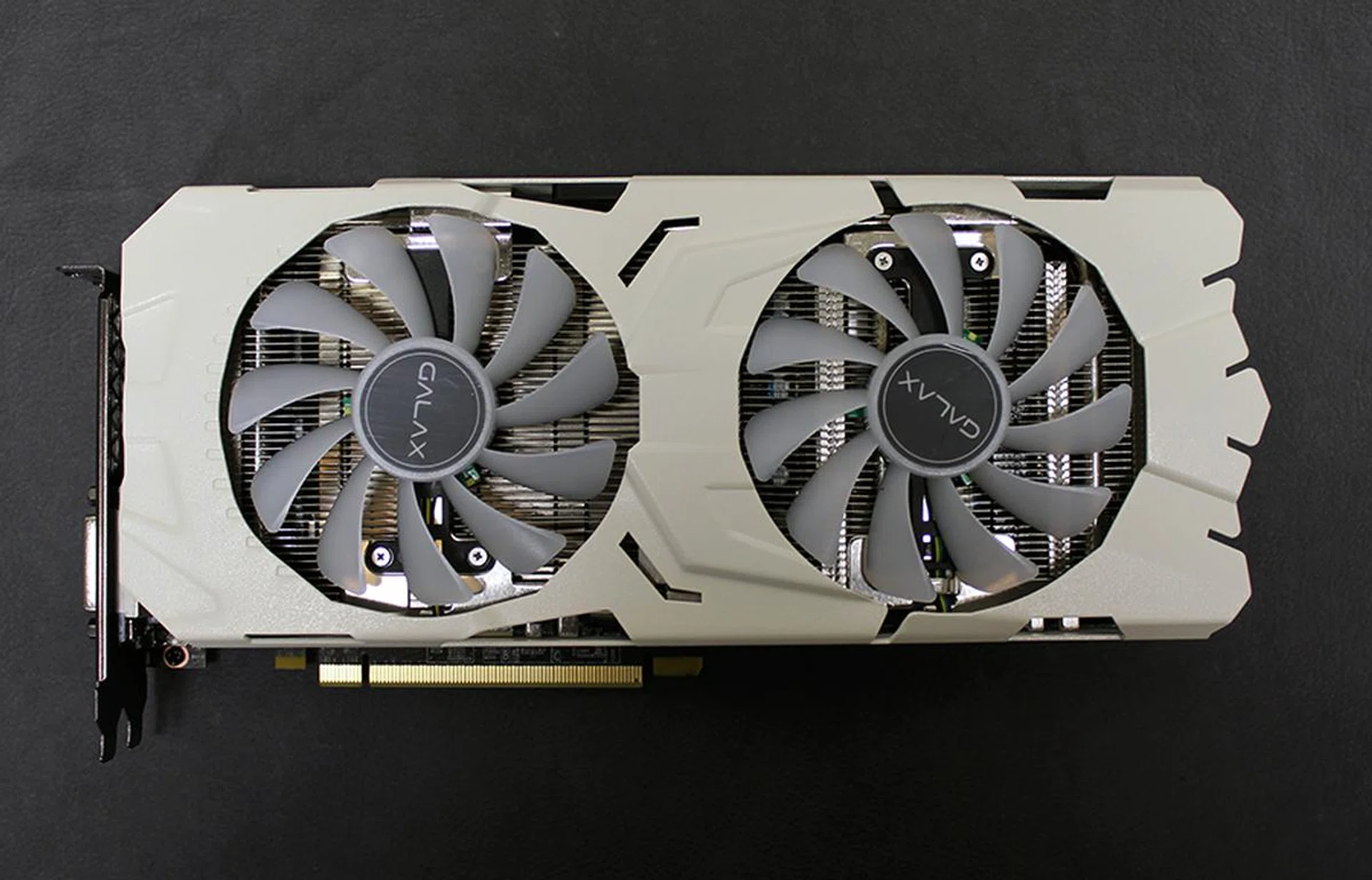
The Galax GeForce GTX 1070 Ti EX-SNPR White comes, predictably, with a large white custom cooler.
The test card I have is from Galax and it is the GeForce GTX 1070 Ti EX-SNPR White. It ships with NVIDIA’s default clock speeds, but it features a custom cooler and an upgraded power supply.
Galax calls it custom cooler “Silent Extreme Technology” and it features a thick aluminum cover and two large 100mm diameter fans. The fans channel cool air through a large and elaborate heatsink. The heatsink consists of a large radiator and four thick heat pipes that draw heat away from the GPU core.
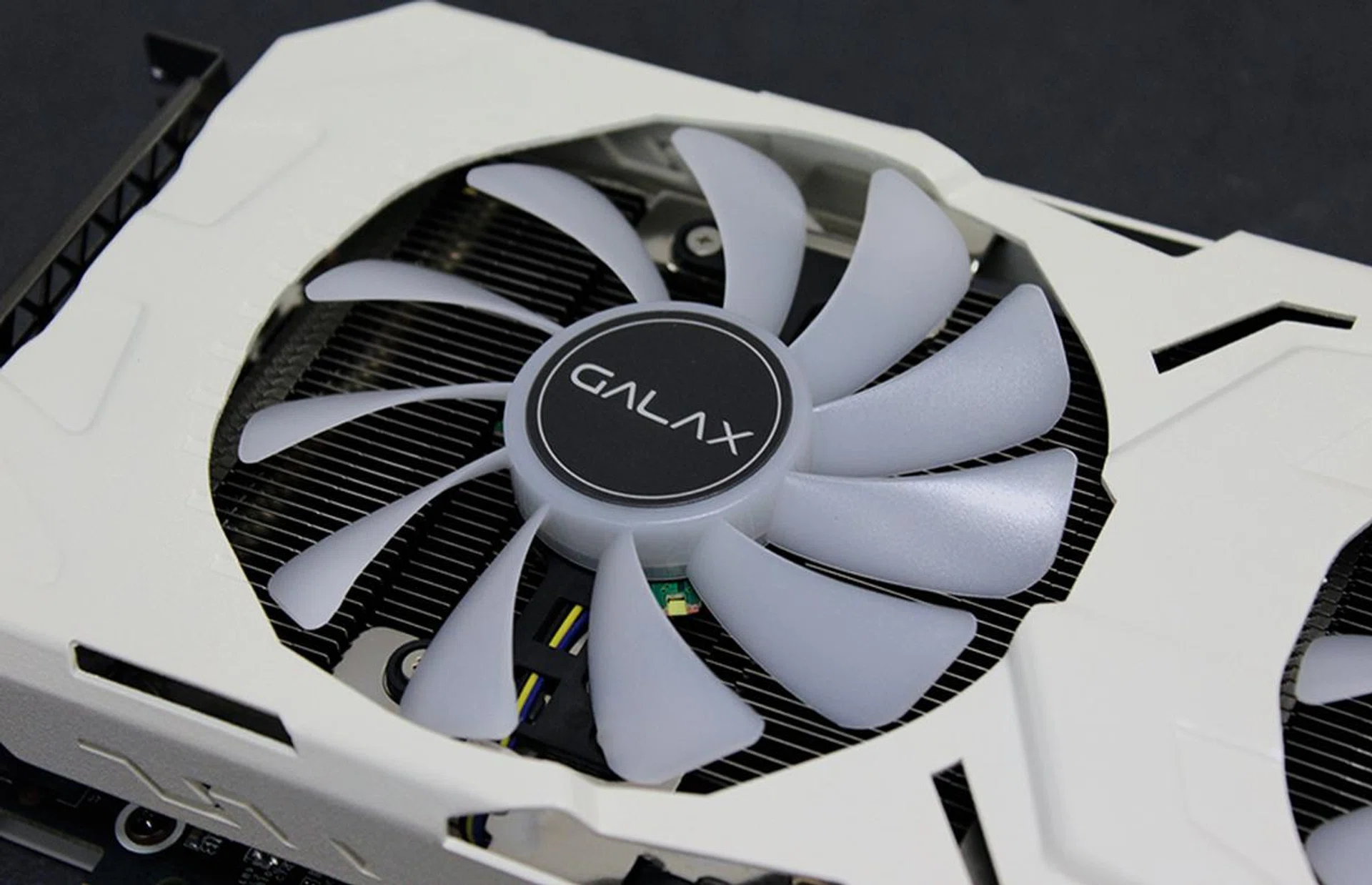
Large 100mm fans blow cool air across the large heatsink.
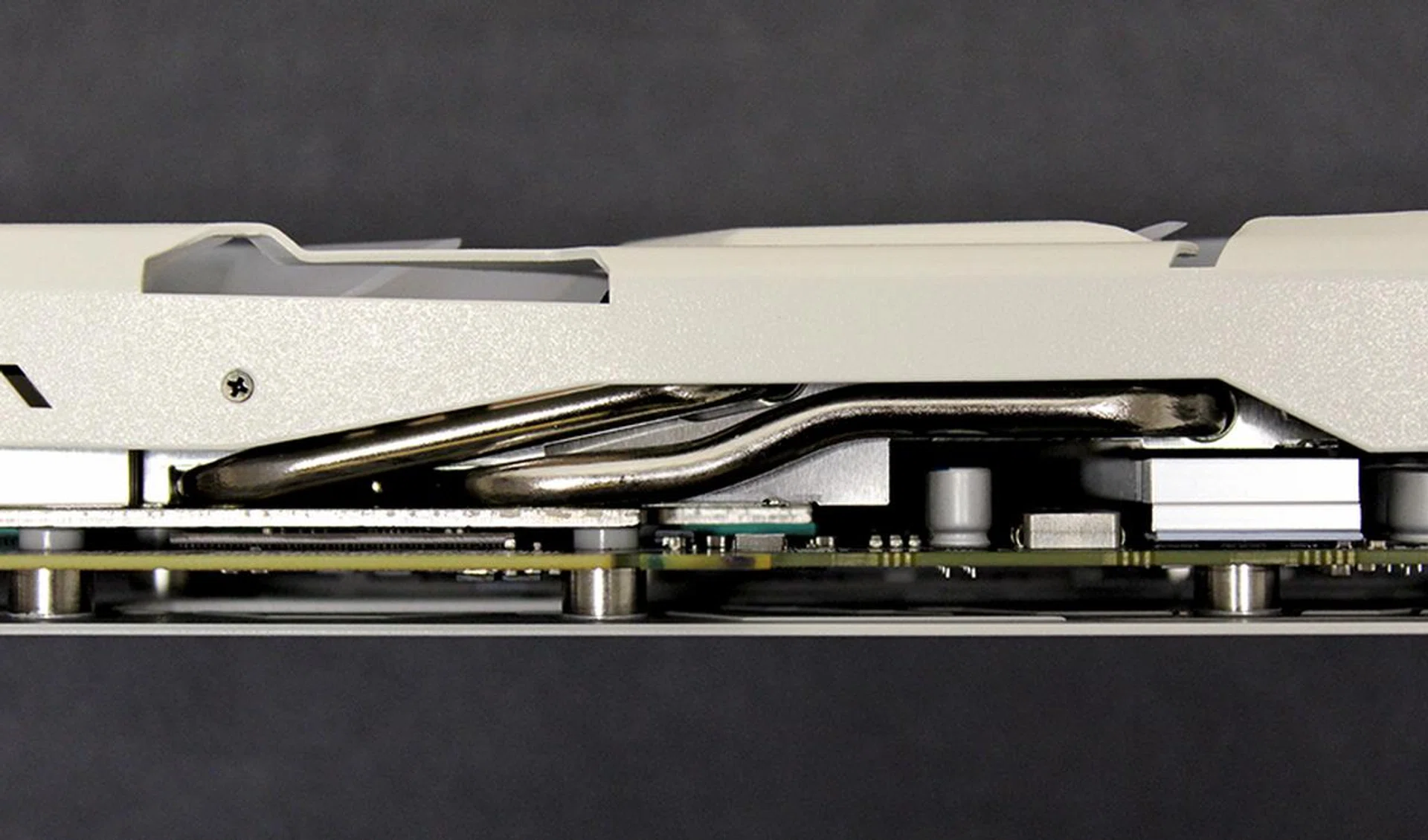
Chunky heat pipes draw heat away from the GPU core.
The card also comes with a thick aluminum backplate to improve rigidity. One thing worth noting is that the aluminum backplate adds a bit to the thickness of the card, and on some motherboards, it can interfere with the SO-DIMM slots for memory. The workaround is to install the card is another PCIe slot further away from the SO-DIMM slots.
Nestled with the custom cooler are LED lights for decorative purposes. The dual fans feature white LEDs, while the backplate features a large ring of RGB lights, which can be customized using the Galax's Xtreme Tuner Plus utility.

The card comes with three DisplayPort 1.4 ports, a single HDMI 2.0b port, and a single dual-link DVI port.
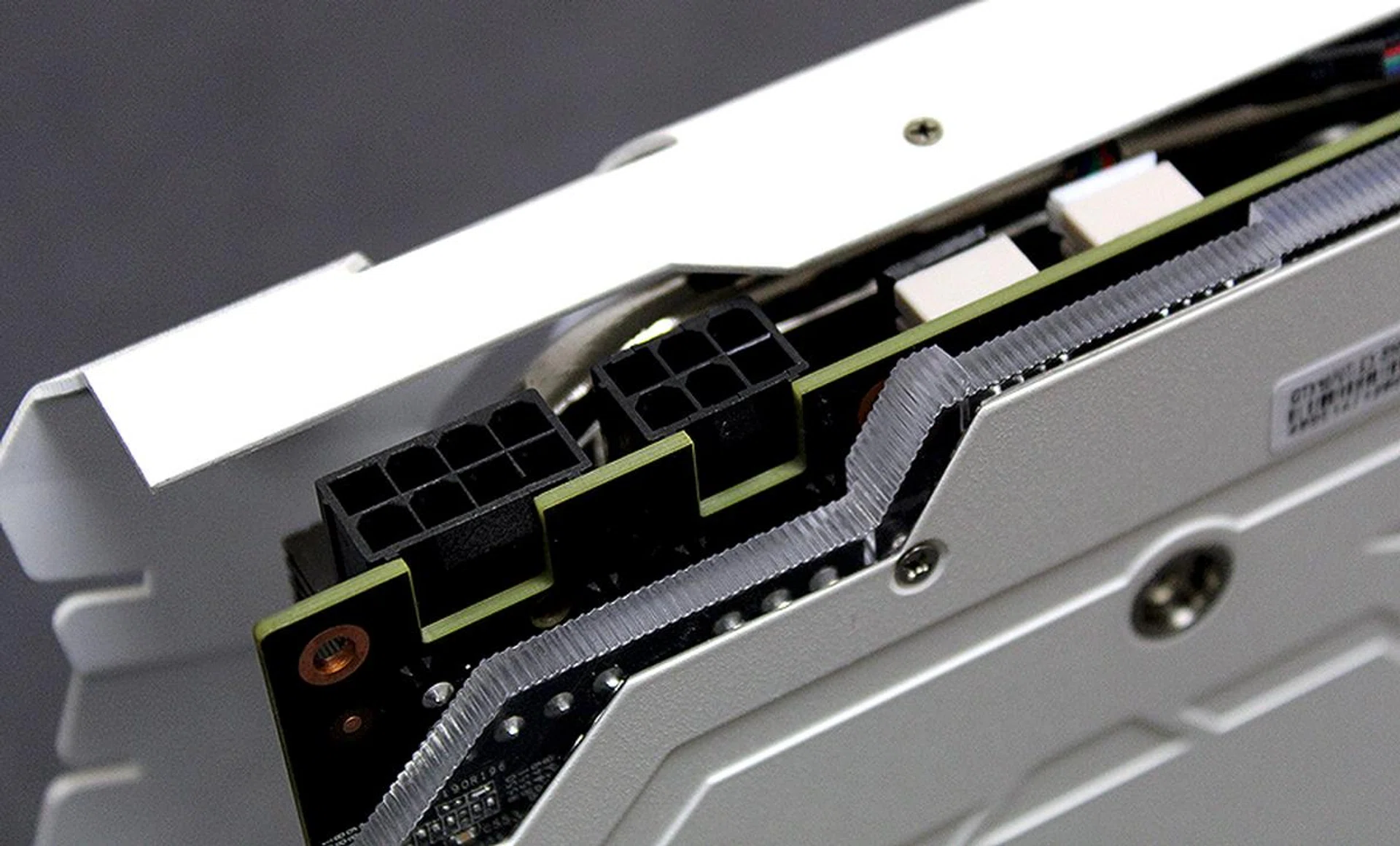
Power comes from 8-pin and 6-pin power connectors.
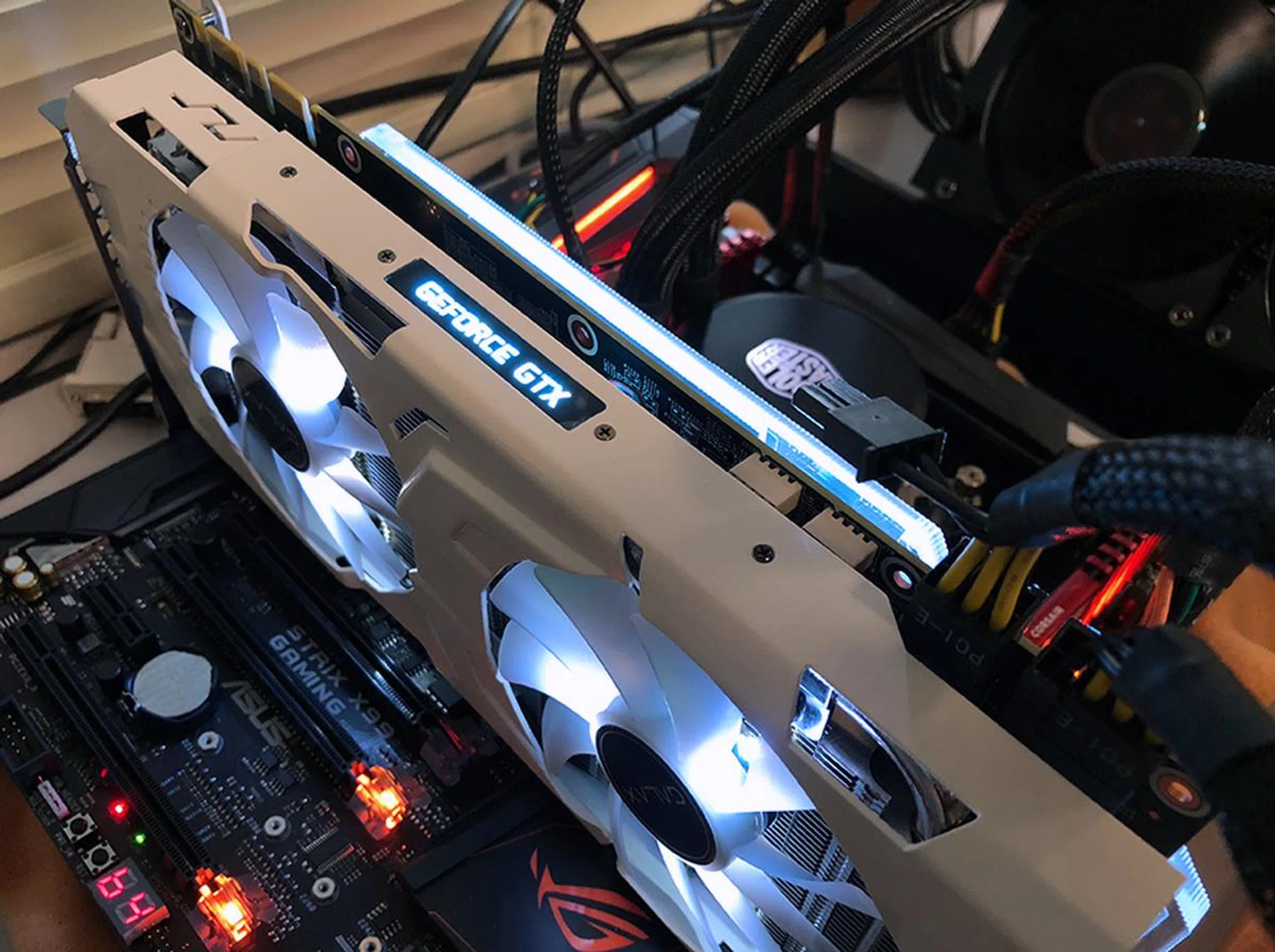
Want to show off your rig? The Galaxy GeForce GTX 1070 Ti EX-SNPR White comes with customizable RGB lighting effects.
The Galax GeForce GTX 1070 Ti EX-SNPR White comes with the usual video output ports. There’s a single HDMI 2.0B port, three DisplayPort 1.4 ports, and a single dual-link DVI port.
One unique thing about the Galax GeForce GTX 1070 Ti EX-SNPR White is its upgraded power supply phase. As I mentioned earlier, the GeForce GTX 1070 Ti comes with the same 5-phase dual-FET power supply as the GeForce GTX 1080. However, the Galax GeForce GTX 1070 Ti EX-SNPR White comes with a “5+2” phase power supply. The additional two phases are dedicated to the memory. In addition, it also comes with special SMD inductors that are said to minimize noise. The end result, according to Galax, is better overclocking performance.
Test Setup
The detailed specifications of our current graphics card testbed system is as follows:-
- Intel Core i7-6950X (3.0GHz, 25MB L3 cache)
- ASUS ROG Strix X99 Gaming
- 4 x 4GB Corsair Vengeance LPX DDR4-2133 (Auto timings: CAS 15-15-15-36)
- Samsung SSD 840 Pro 256GB SATA 6Gbps solid state drive (OS + benchmark + games)
- Windows 10 Pro 64-bit
- ASUS PB287Q, 4K monitor
We've also acquired a newer ASUS 4K monitor (as listed above) and thus we'll be exploring 1440p and 4K resolution gaming in proper moving forth. Previously we could only stretch to a resolution of 2,560 x 1,600 pixels in our previous Dell 30-inch monitor.
We will be comparing the Galax GeForce GTX 1070 Ti EX-SNPR White against its siblings from NVIDIA's GeForce GTX 10-Series, namely the GeForce GTX 1070, GeForce GTX 1080 and GeForce GTX 1080 Ti. Unfortunately, we never had the chance to run AMD's new Radeon RX Vega cards on our testbed, which explains their omission.
Here is the list of cards tested and driver versions used:
- Galax NVIDIA GeForce GTX 1070 Ti EX-SNPR White (Forceware 388.13)
- NVIDIA GeForce GTX 1080 (Forceware 378.66)
- NVIDIA GeForce GTX 1070 (Forceware 388.00)
- NVIDIA GeForce GTX 1080 Ti (Forceware 378.78)
[hwzcompare]
[products=619403,554644,556120,591211]
[width=200]
[caption=Test GPUs compared]
[showprices=1]
[/hwzcompare]
Benchmarks
Here’s a list of all the benchmarks used:
- 3DMark (2013)
- VRMark
- Middle-earth: Shadow of Mordor
- Deus Ex: Mankind Divided
- Ashes of the Singularity
- Hitman
We used the Fire Strike Extreme benchmark and stress test in 3DMark (2013) for our temperature and power consumption tests respectively.
3DMark (2013)
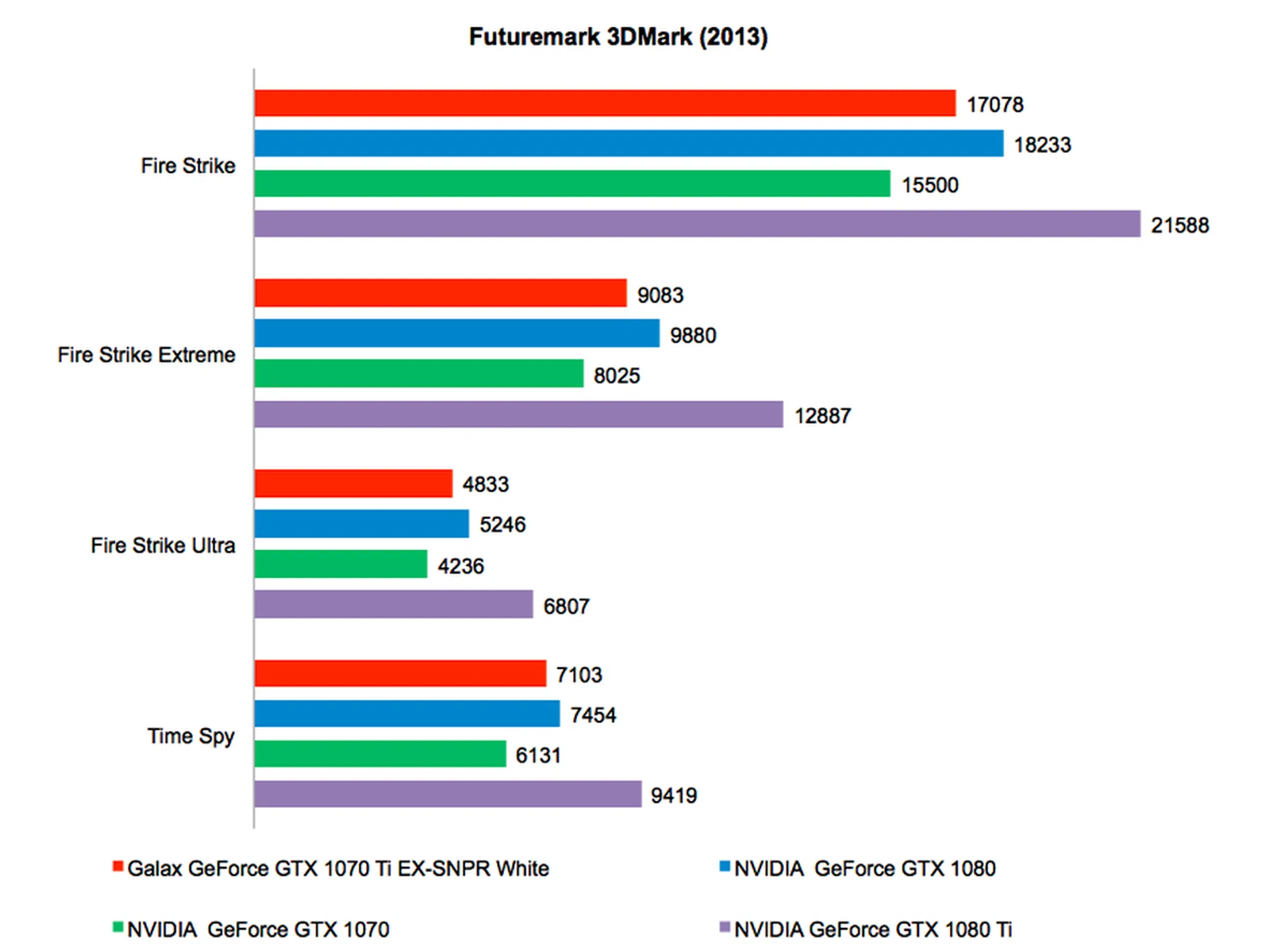
On 3DMark, the Galax NVIDIA GeForce GTX 1070 Ti EX-SNPR White recorded scores that were somewhere between the GeForce GTX 1080 and GTX 1070. However, its scores were closer to the GeForce GTX 1080 than the GTX 1070. On average, the GeForce GTX 1080 scored about 7% better than the GeForce GTX 1070 Ti. The Galax NVIDIA GeForce GTX 1070 Ti EX-SNPR White, on the other hand, was about 13% faster than GeForce GTX 1070.
VRMark
VRMark is a relatively new benchmark used to assess whether a certain hardware configuration is ready for high-end headsets like the Oculus Rift and HTC Vive.
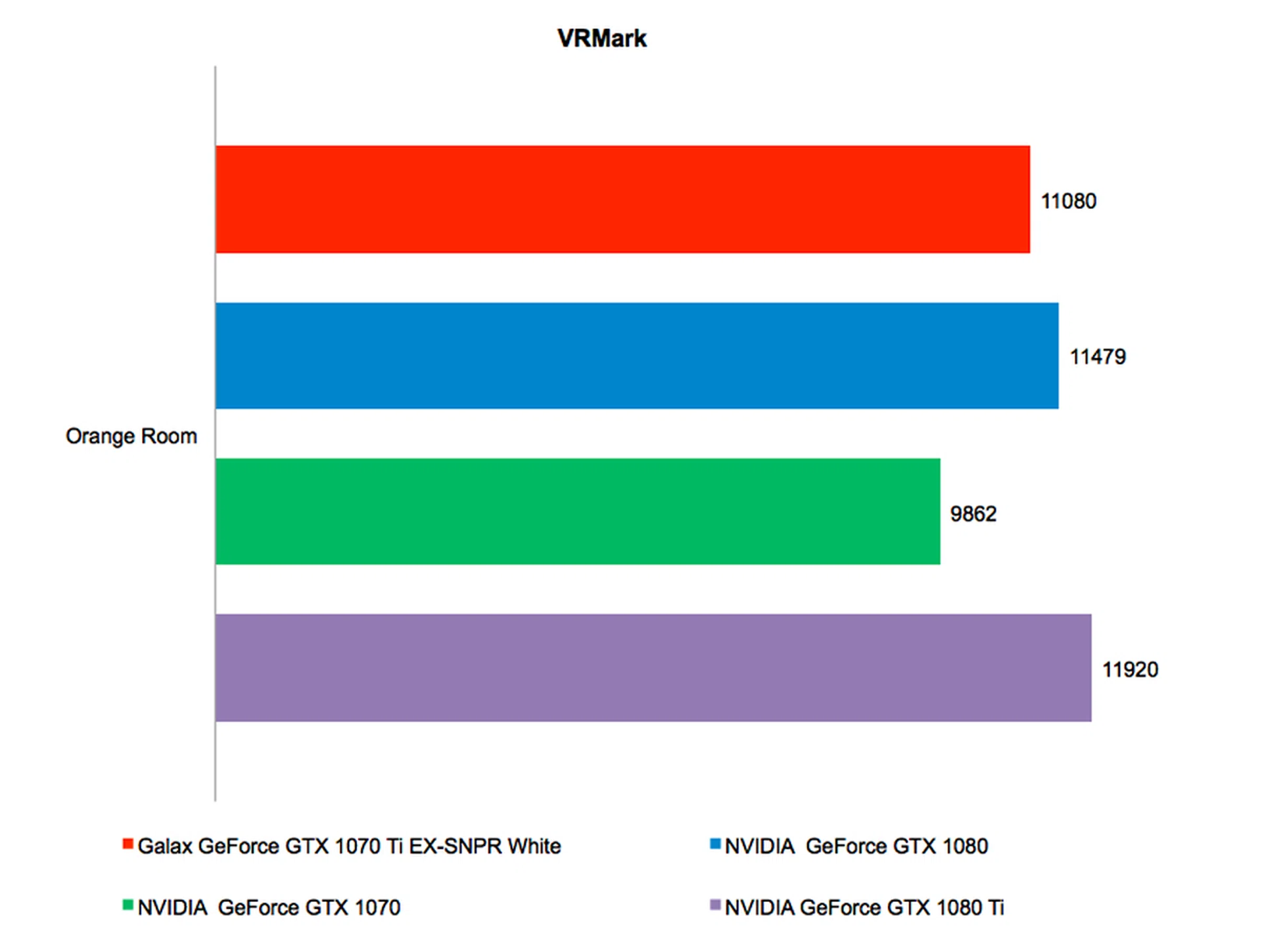
On VRMark, the Galax NVIDIA GeForce GTX 1070 Ti EX-SNPR White managed a score that was about 12% better than the GeForce GTX 1070. The GeForce 1070 Ti’s score was only about 3% less than the GeForce GTX 1080’s.
Middle-earth: Shadow of Mordor
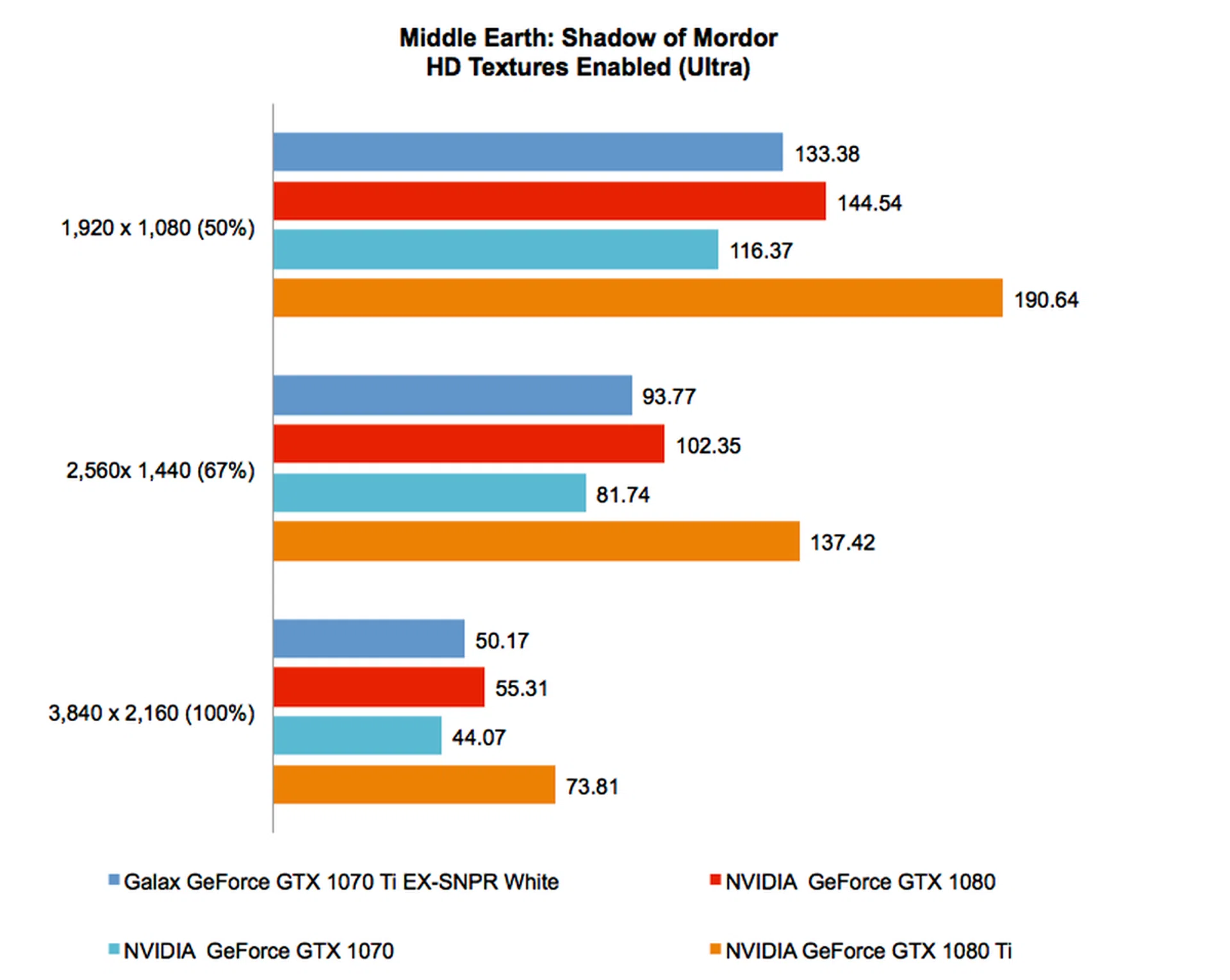
The Galax NVIDIA GeForce GTX 1070 Ti EX-SNPR White was a good performer on Middle Earth: Shadow of Mordor, only dropping below 60fps when we increased the resolution to 4K. Again, we can see that the Galax NVIDIA GeForce GTX 1070 Ti EX-SNPR White wasn’t that much slower than the GeForce GTX 1080. Generally, the Galax NVIDIA GeForce GTX 1070 Ti EX-SNPR White was only about 9% slower than the GeForce GTX 1080. Against the GeForce GTX 1070, the Galax NVIDIA GeForce GTX 1070 Ti EX-SNPR White was about 14% faster.
Deus Ex: Mankind Divided
The latest title in the Deus Ex franchise is probably one of the most demanding games you can run right now. Based on the Dawn engine, it features just about every trick to make your game look pretty, including things like volumetric and dynamic lighting, screenspace reflections, and cloth physics.
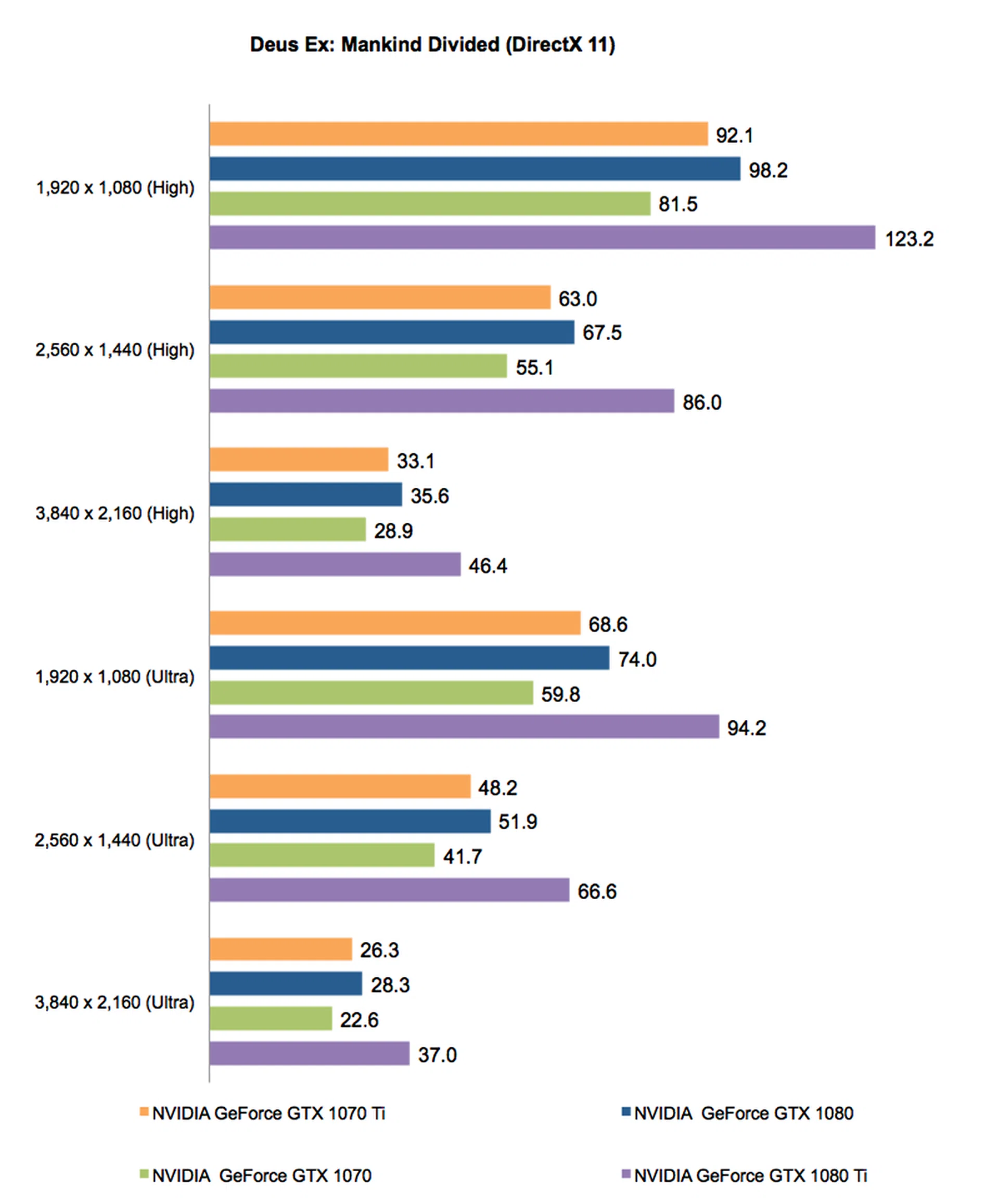
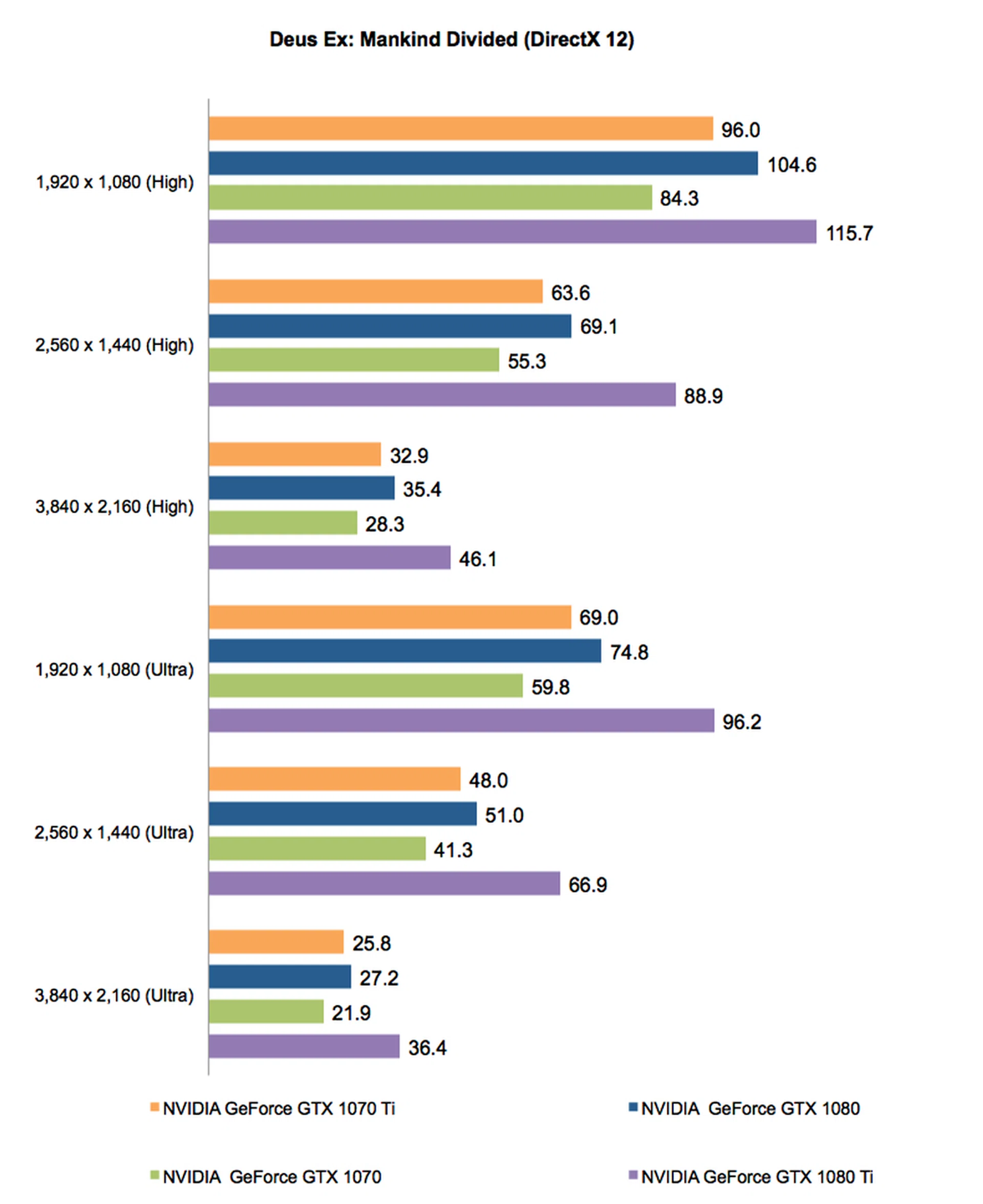
The Galax NVIDIA GeForce GTX 1070 Ti EX-SNPR White continued to keep pace with the GeForce GTX 1080. Overall, theGalax NVIDIA GeForce GTX 1070 Ti EX-SNPR White was less than 10% slower than the GeForce GTX 1080. Against the GeForce GTX 1070, the Galax NVIDIA GeForce GTX 1070 Ti EX-SNPR White maintained its advantage of around 15%.
Ashes of the Singularity
Ashes of the Singularity has long been the poster child for the performance benefits a low-level API like DirectX 12 can bring. It is based on the Nitrous engine and can be extremely punishing thanks to the huge number of onscreen units and the sheer level of detail accorded to each unit.
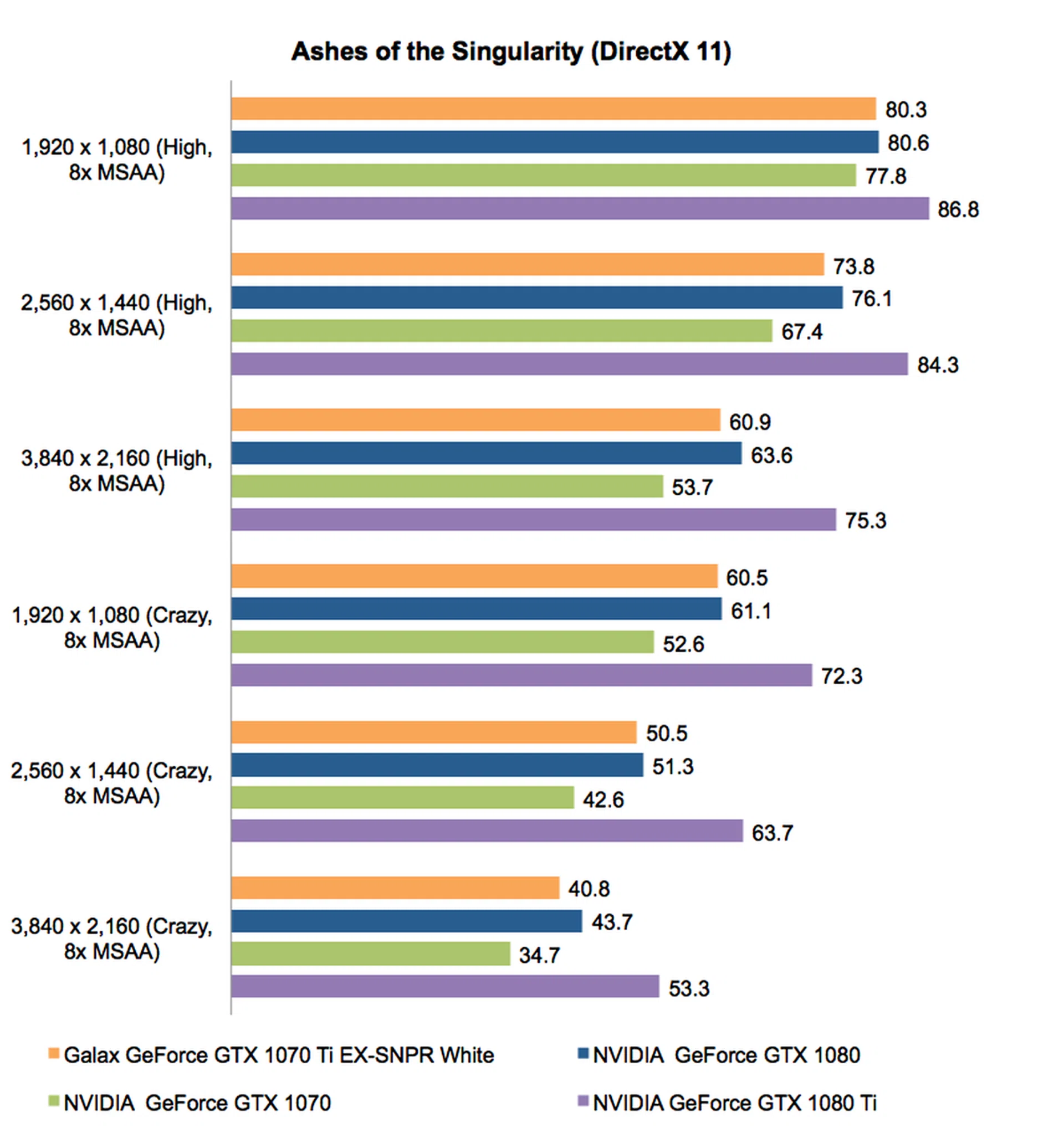
As a side note, we should point out that the CPU has a tendency to become the limiting factor at the lower settings, which is why you don’t see as much difference when changing the resolution.
With CPU being the bottleneck, we noticed that the Galax NVIDIA GeForce GTX 1070 Ti EX-SNPR White performed almost similarly to the pricier GeForce GTX 1080, especially when we ran the game in DirectX 12. On DirectX 12, the Galax NVIDIA GeForce GTX 1070 Ti EX-SNPR White even managed to outperform the GeForce GTX 1080 on certain runs.

Hitman
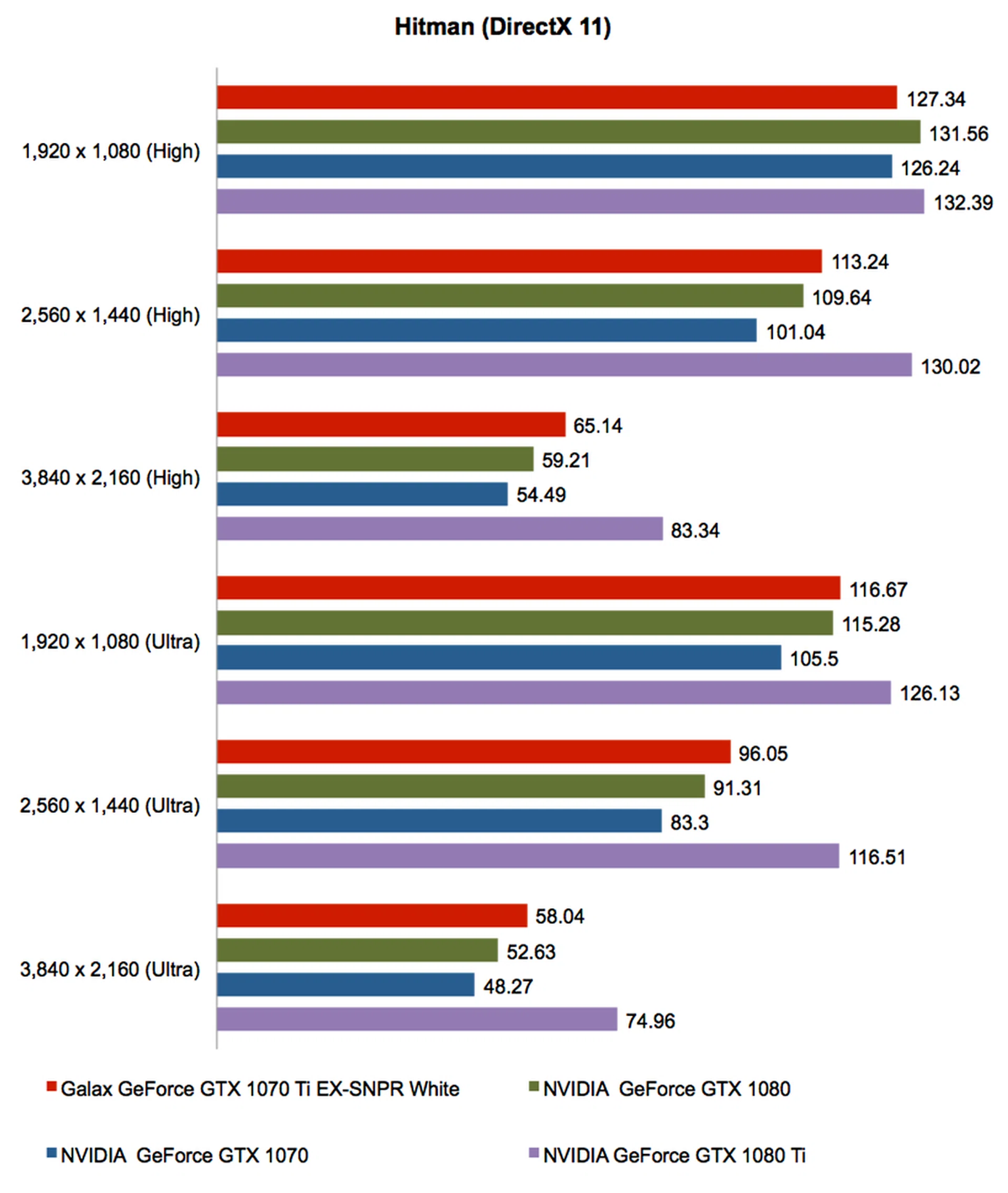
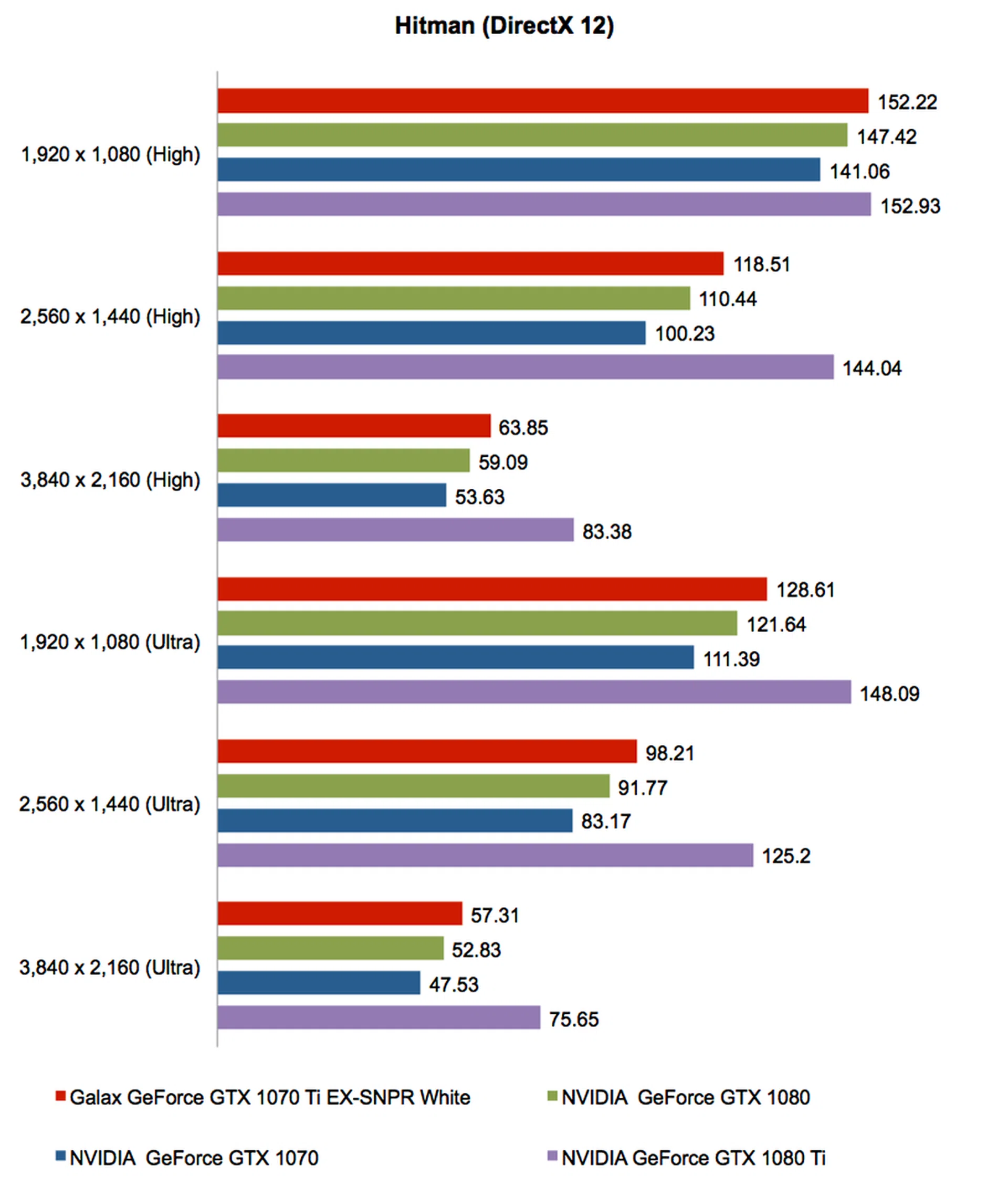
On Hitman, the Galax NVIDIA GeForce GTX 1070 Ti EX-SNPR White outperformed the GeForce GTX 1080 quite convincingly. However, this is probably due to its newer drivers than sheer outright performance. The GeForce GTX 1080 was tested using slightly older drivers.
Temperature
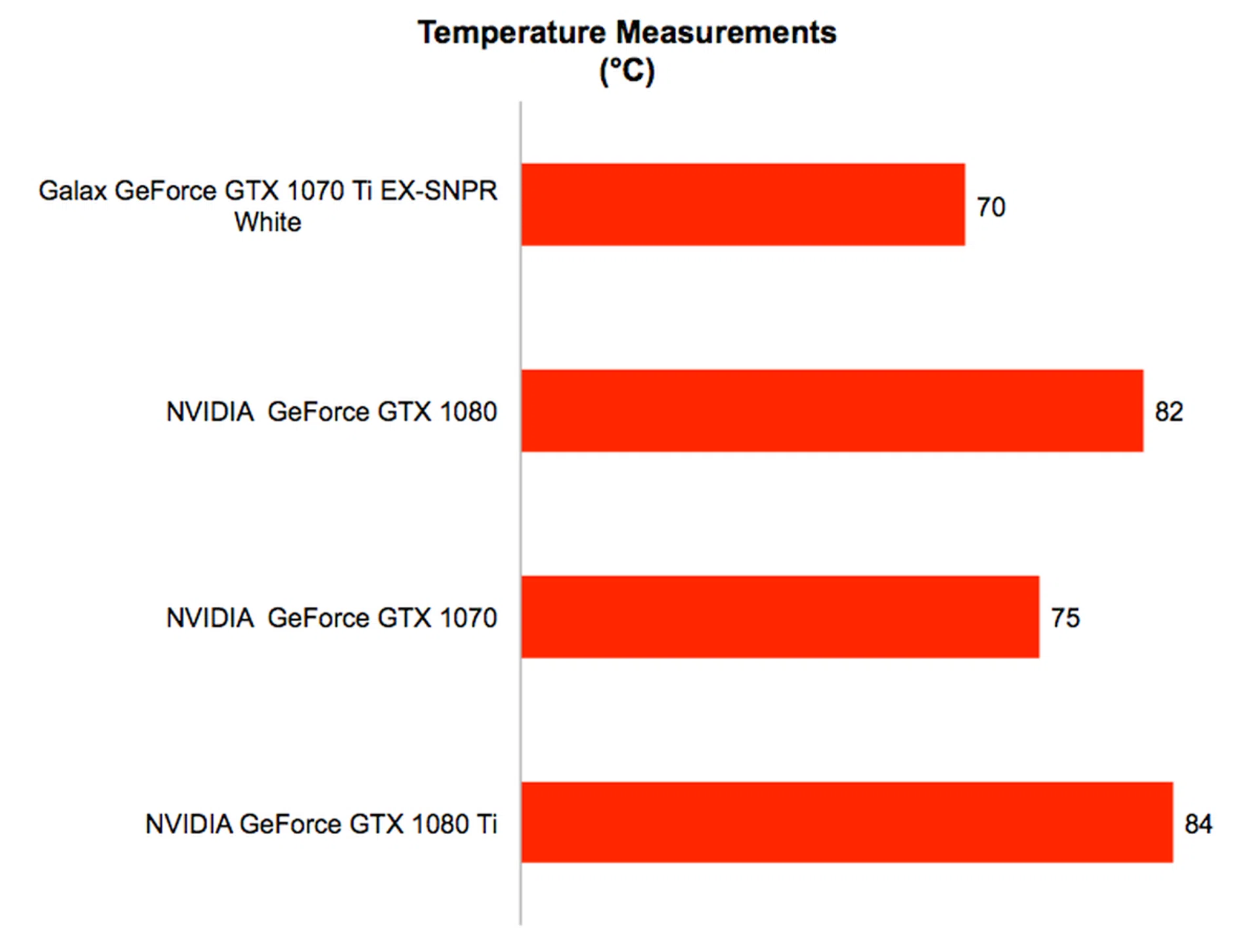
Thanks to its massive custom cooler, the Galax GeForce GTX 1070 Ti EX-SNPR White recorded a maximum sustained operating temperature of just 70 degrees Celsius even under load. In addition, the card was very quiet even when the fan was spinning madly under heavy load.
Power Consumption
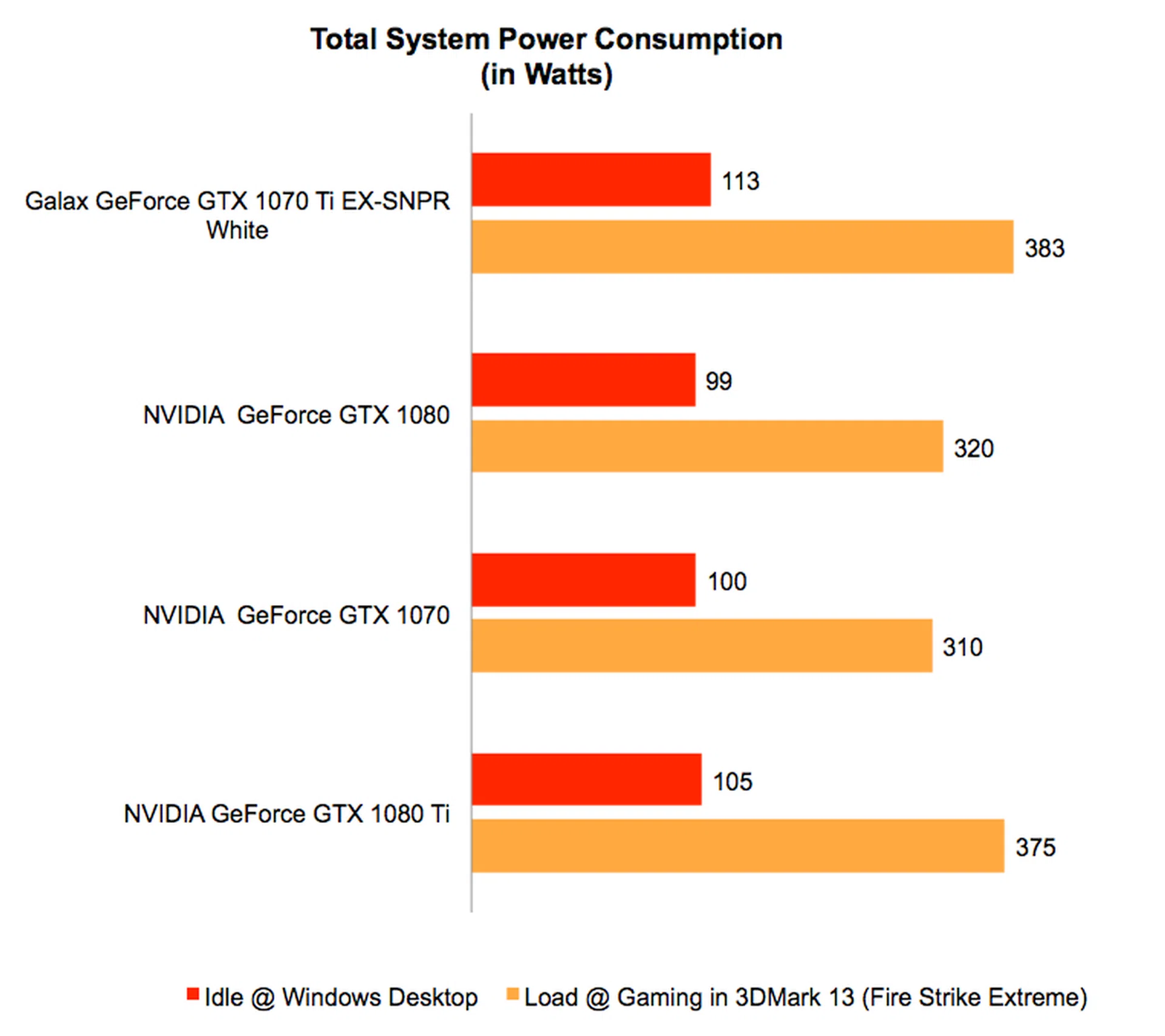
The Galax GeForce GTX 1070 Ti EX-SNPR White’s power consumption is on the high side, presumably due to its uprated power supply system and lighting system. At idle, it consumed about 10W more than a Founders Edition card. At load, the Galax card’s power consumption goes up to 383W, which even surpasses the more powerful GeForce GTX 1080 Ti.
Overclocking
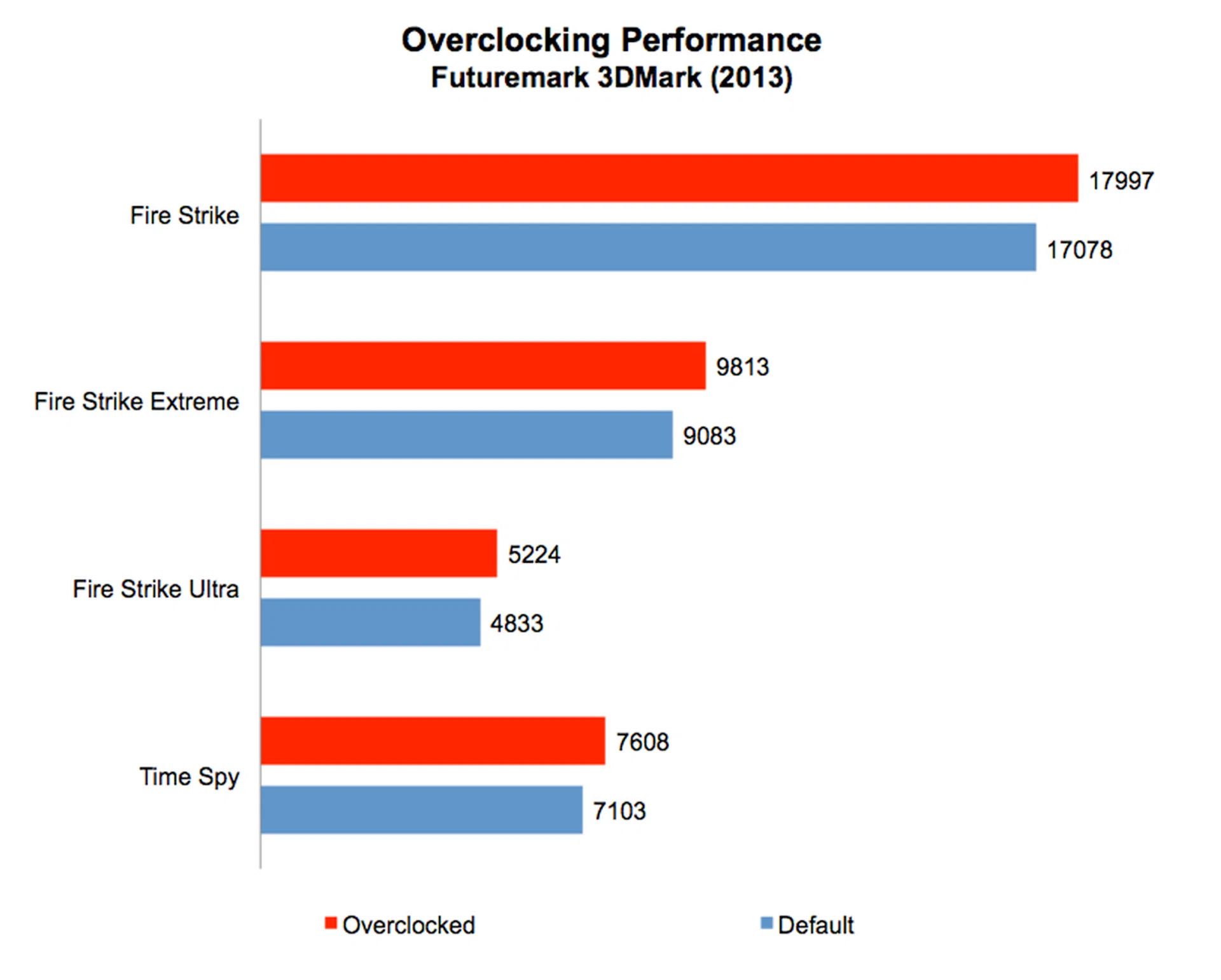
The Galax GeForce GTX 1070 Ti EX-SNPR White has decent overclocking potential. We managed to raise its base clock speed from 1607MHz to 1792MHz and its boost clock from 1683MHz to 1868MHz. We also managed to boost memory speeds from 8000MHz DDR to 8560MHz DDR. This gave us pretty significant increases in performance. Overall scores on 3DMark improved about 8% overall and were very close to that of the GeForce GTX 1080’s scores.
The card you want for Christmas
NVIDIA’s high-end GeForce GTX 10-Series graphics cards are some of the most dominating graphics cards and the release of the GeForce GTX 1070 Ti only strengthens what is already a very formidable lineup.
The Galax GeForce GTX 1070 Ti EX-SNPR White is a more than decent take on the GeForce GTX 1070 Ti. Let's begin with the bad things and I only really have only two gripes about the cards: its power consumption and its thickness.
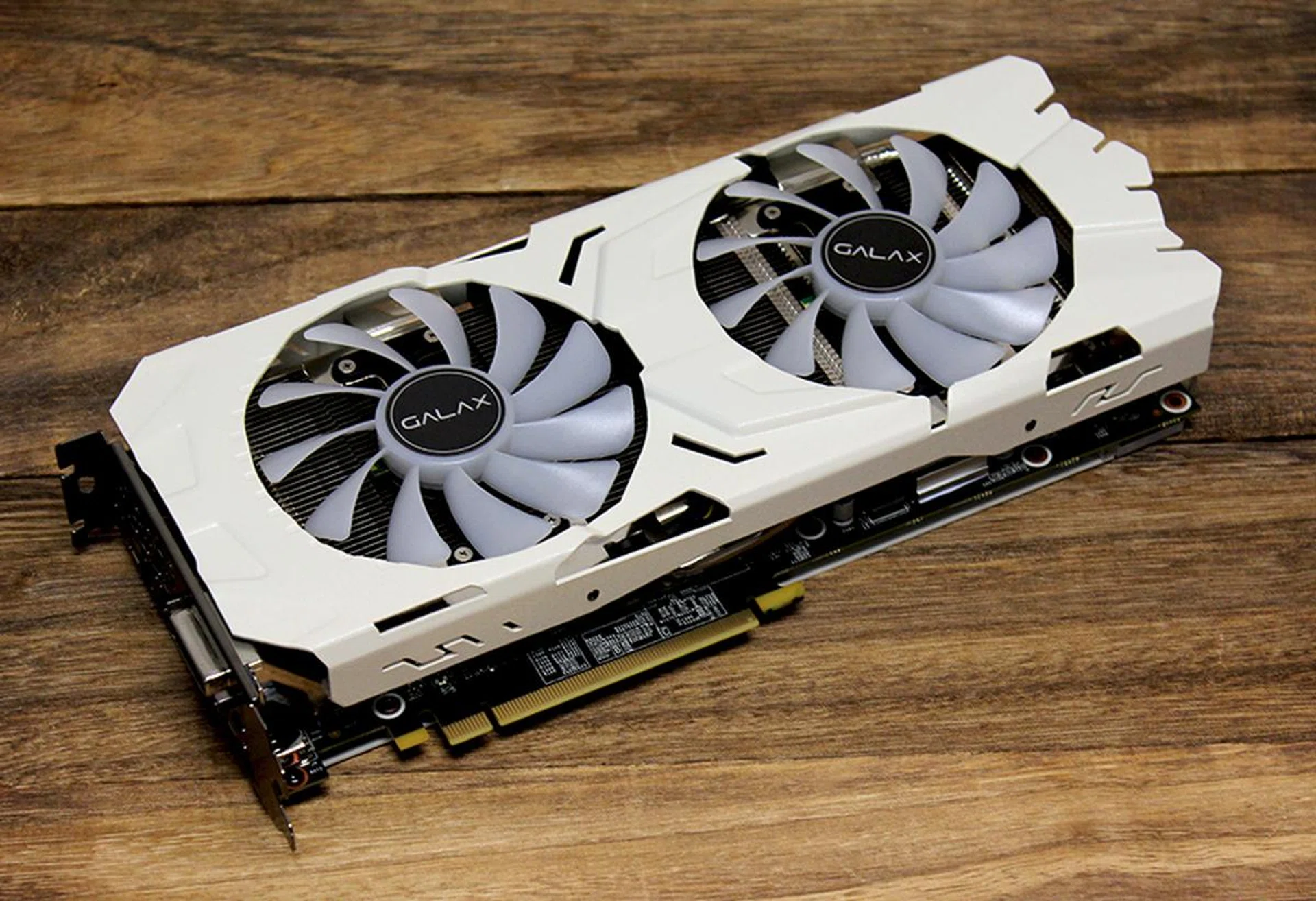
The white of the card makes it perfect for Christmas.
Its power consumption is significantly higher than the GeForce GTX 1080, which isn't a deal breaker in my books, but is something worth considering especially if you are trying to build an efficient system. With regards to thickness, the aluminum backplate improves structural rigidity but it could make installation tricky on some motherboards.
That said, there is a lot to praise about the card. For readers who are sticklers about noise, the Galax card is eerily quiet even when it is taxed. Performance is also good and its ability to overclock is quite decent. With a few simple tweaks, we were able to get an 8% boost in 3DMark scores, which should translate to real-world performances that are on a par with the GeForce GTX 1080. And finally, to satisfy gamers who love lighting effects, the Galax card also comes with customizable RGB lighting that is well implemented and not too over the top.
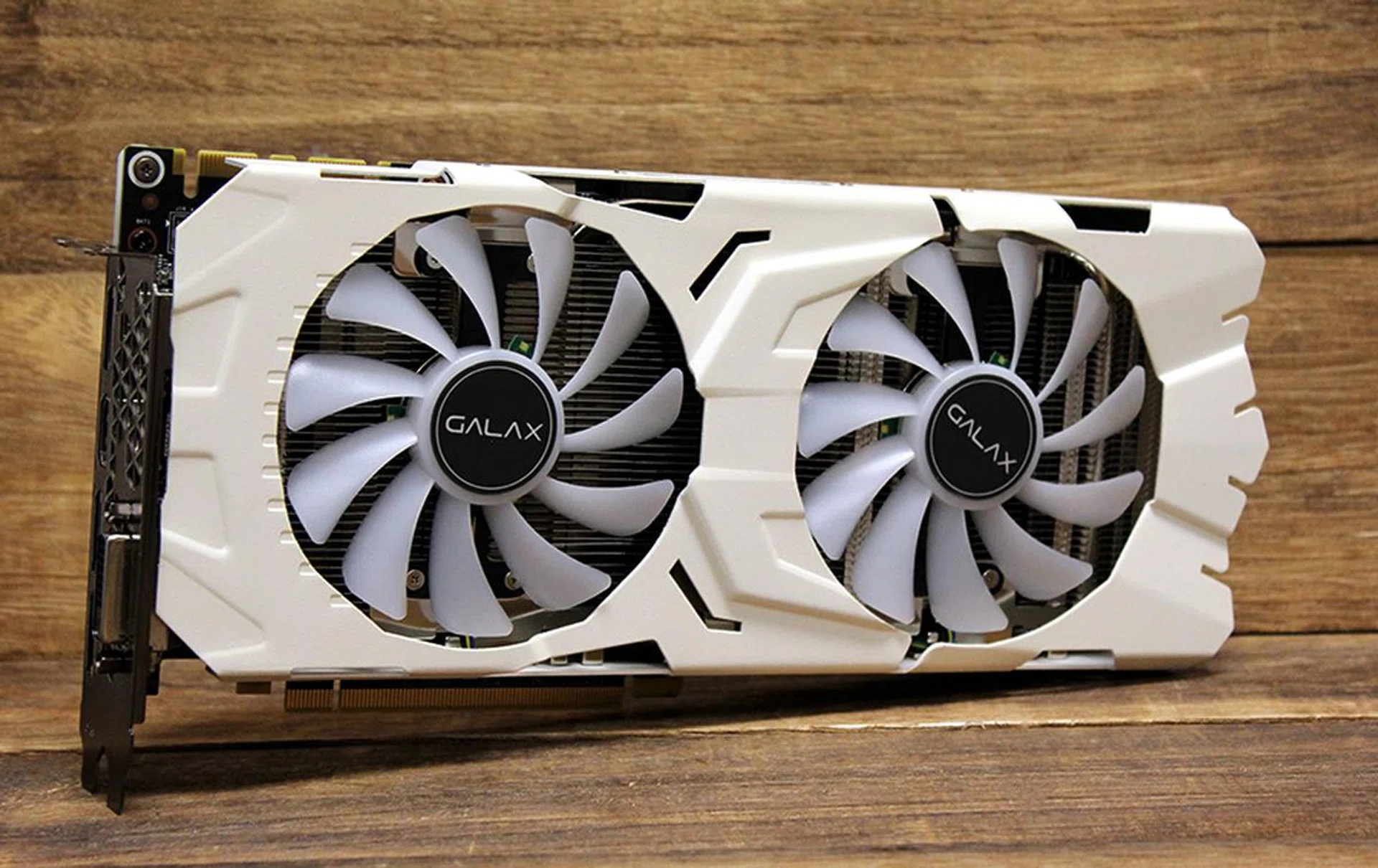
The Galax GeForce GTX 1070 Ti EX-SNPR White is eerily quiet even under heavy loads.
There has always been a mark up when graphics cards arrive on our island and the Galax GeForce GTX 1070 Ti EX-SNPR is no different. Nevertheless, at S$739, the Galax GeForce GTX 1070 Ti EX-SNPR White is attractively priced compared to the competition. It costs about the same or even less than some factory-overclocked GeForce GTX 1070 cards, and is substantially more affordable than a GeForce GTX 1080. Coupled with its performance, overclockability, and features, we think the Galax GeForce GTX 1070 Ti EX-SNPR White is a great example of a GeForce GTX 1070 Ti graphics card.
As for the GeForce GTX 1070 Ti, the timing of this release is opportune as it comes at a time when AMD has won some fans back with its new Radeon RX Vega graphics cards.
The Radeon RX Vega 56, in particular, gave NVIDIA something to think about as it was more than a match for the GeForce GTX 1070. The GeForce GTX 1070 is easily one of NVIDIA’s best sellers as it offered groundbreaking performance for the price. For US$399, gamers could get a graphics card that offered performance that rivaled a US$999 GeForce Titan X (Maxwell), which is incredible.
The GeForce GTX 1070 Ti is, therefore, the logical next step for NVIDIA and its GeForce GTX 1070. With a US launch price of US$449, gamers could now get a card that is only a smidge slower than the more costly US$549 GeForce GTX 1080. Based on US launch prices alone, the GeForce GTX 1070 Ti looks like remarkable value.
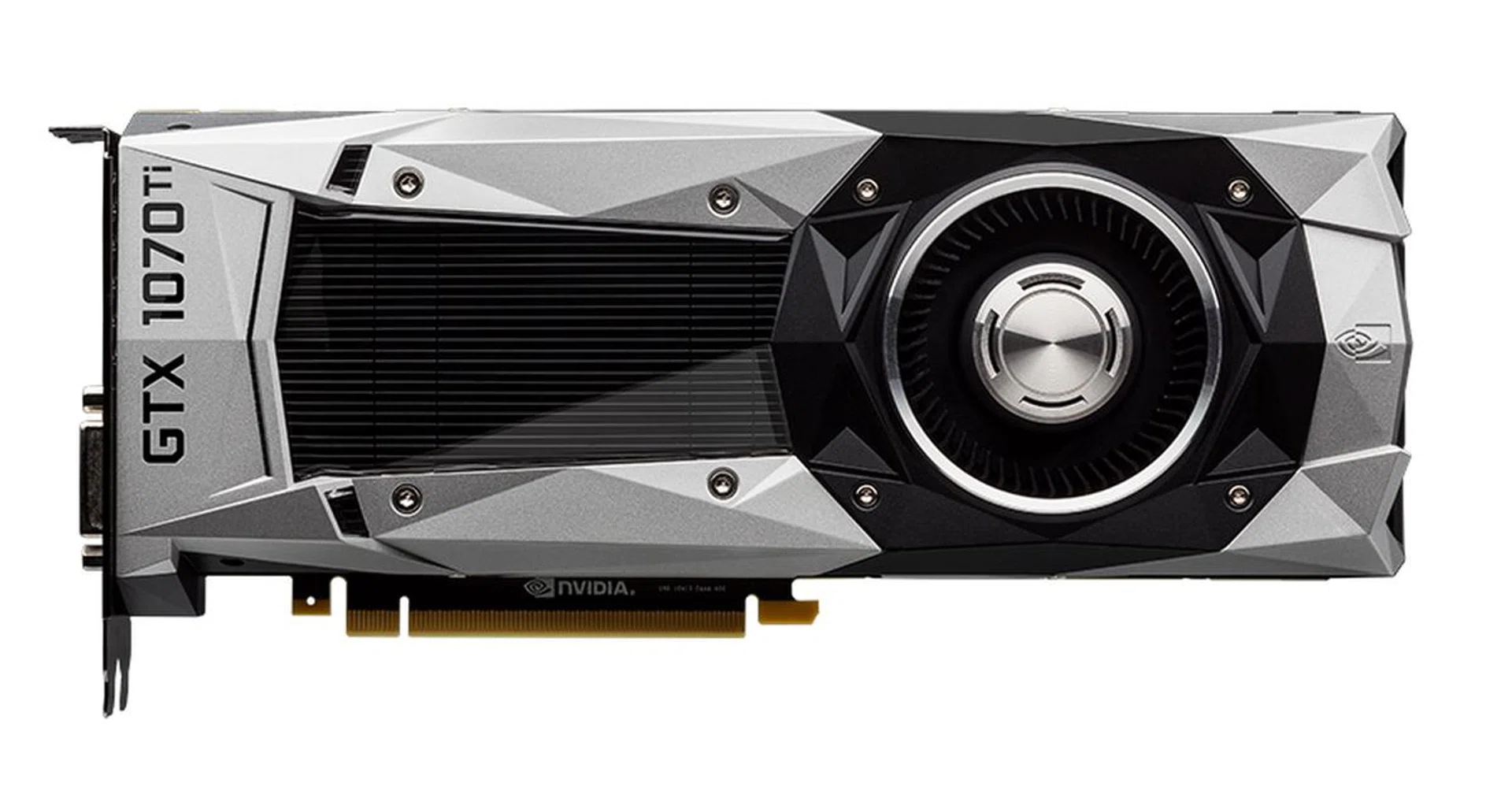
Even though the GeForce GTX 1070 Ti represents great value, it doesn't mean you should be rushing out to get it.
That said, existing GeForce GTX 1070 owners shouldn’t rush out to upgrade as the GeForce GTX 1070 Ti doesn’t really break any boundaries insofar as performance is concerned. Overall, it was about 10% to 15%, which is significant, but it won’t allow it run games at 4K comfortably unless you are willing to sacrifice on graphics fidelity. For the utmost 4K gaming experience, you are still going to need a GeForce GTX 1080 Ti or another GeForce GTX 1070 or GTX 1080 in SLI.
For anyone else looking to upgrade from something older, less powerful (GeForce GTX 1060 and below), or building a new system, the GeForce GTX 1070 Ti looks like the best value proposition for a high-end graphics card. This is a card that will comfortably crunch titles at 1440p and at extreme graphics settings, and will even run at 4K quite readily if you are willing to turn down the graphics settings. As a matter of fact, you will have to wonder who in the right mind would still want to get a GeForce GTX 1080.
Our articles may contain affiliate links. If you buy through these links, we may earn a small commission.