
Gainward GeForce GTX 560 Ti Phantom - Crouching Tiger, Hidden Fans
The Gainward GeForce GTX 560 Ti Phantom distinguishes itself from a horde of custom-designed GeForce GTX 560 Ti cards by sporting a unique cooler that has hidden fans. We find out if the design is a gimmick or if it has science to back it up.

Invisible Fans?
The graphics card market is a cutthroat one. When NVIDIA fired the first salvo of the year by launching the , an excellent card in our books, AMD responded almost immediately by cutting prices of their high-end so that it will compete with NVIDIA. This move illustrates just how competitive both AMD and NVIDIA are, and it is no different amongst the two companies’ many partners.
In a market flooded with many custom-designed GeForce GTX 560 Ti cards, Gainward is attempting a bold cooler design to get ahead. The Gainward GeForce GTX 560 Ti Phantom might be based on a regular GeForce GTX 560 Ti chip, however, its cooler is anything but ordinary. On first glance, you’ll notice two things: one, the cooler is massive; two, the fans are no where to be seen. That’s not right, you may think, because as cool as the new GF110 chips are, there’s no way Gainward could have developed a passive cooler capable of handling the GeForce GTX 560 Ti’s considerable 170W TDP.
True enough, there’s no way a passive cooler would suffice for a GeForce GTX 560 Ti (unless of course the passive cooler in question is a massive, massive one), and so it is no surprise that the Gainward card actually does have fans. The unique thing, however, is that the card’s dual fans are hidden beneath the heatsink. Traditionally, a cooler’s fans sit on top of the heatsink, drawing cool air in and blowing it across the heatsink; but in the case of the Gainward GeForce GTX 560 Ti Phantom, the fans are positioned underneath, between the heatsink and the GPU core, sucking cool air through the heatsink above and then blowing it directly onto the GPU core. It’s an interesting concept to be sure, and we are eager to find out if it really works.
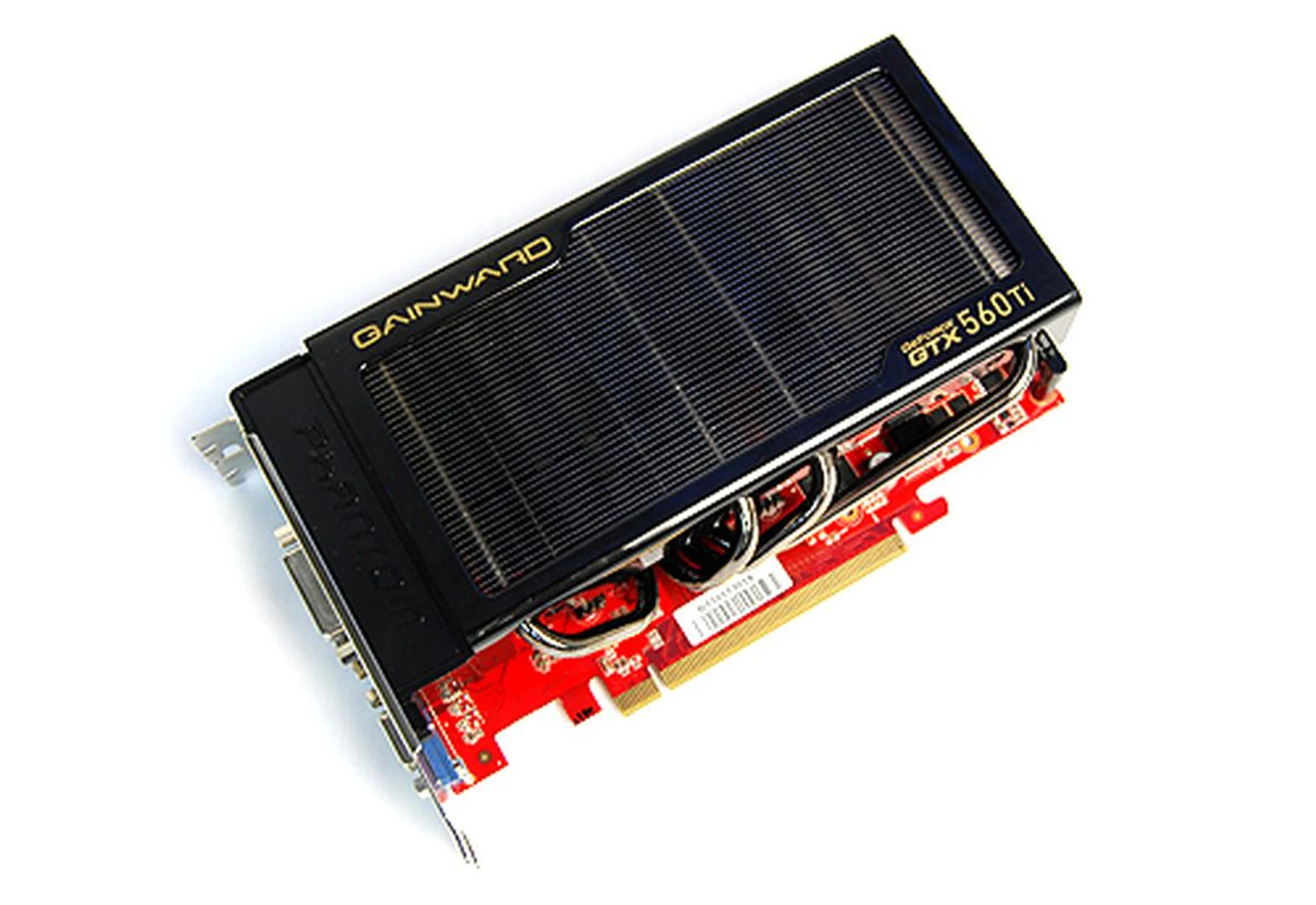
Look ma, no fans! The cooler on the Gainward GeForce GTX 560 Ti is indeed one of the more unique ones we've seen in recent times.
Gainward claims that their GeForce GTX 560 Ti Phantom is geared for quiet gaming and cooling efficiency, so the card is only mildy overclocked - 835MHz at the core, 1670MHz at the shaders and 4100MHz DDR at the memory. This means an increment of only 13MHz bump at the core, 26MHz at the shaders and 92MHz DDR at the memory, which is negligible to be honest and makes us wonder why Gainward even bothered in the first place.
Before we go on, here’s a quick look at the Gainward GeForce GTX 560 Ti Phantom and its unique custom cooler.
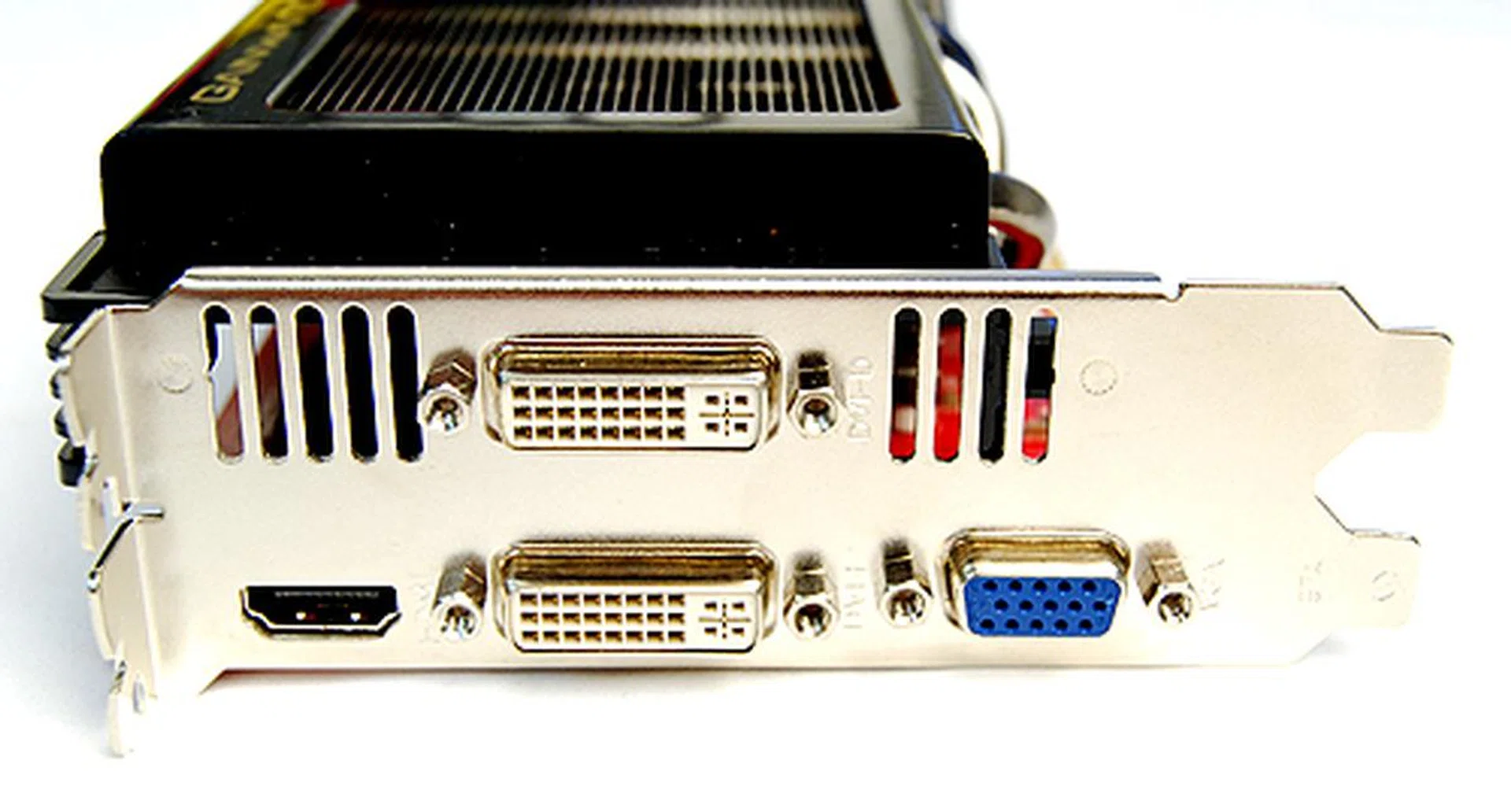
The Gainward card gets two DVI ports, a VGA port, and a full-size HDMI port.
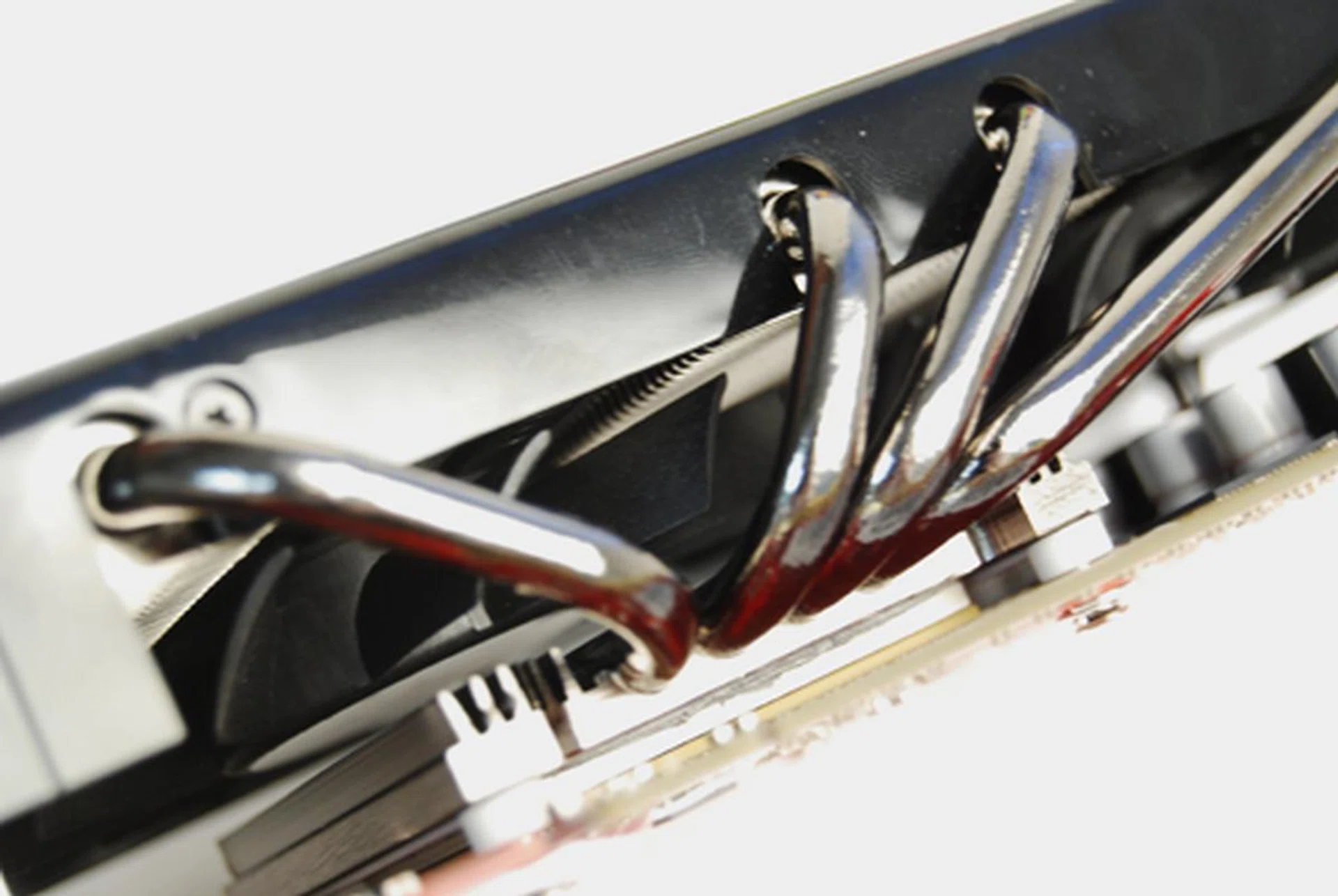
Taking a close peek, one can see the fans hidden underneath the heatsink array.
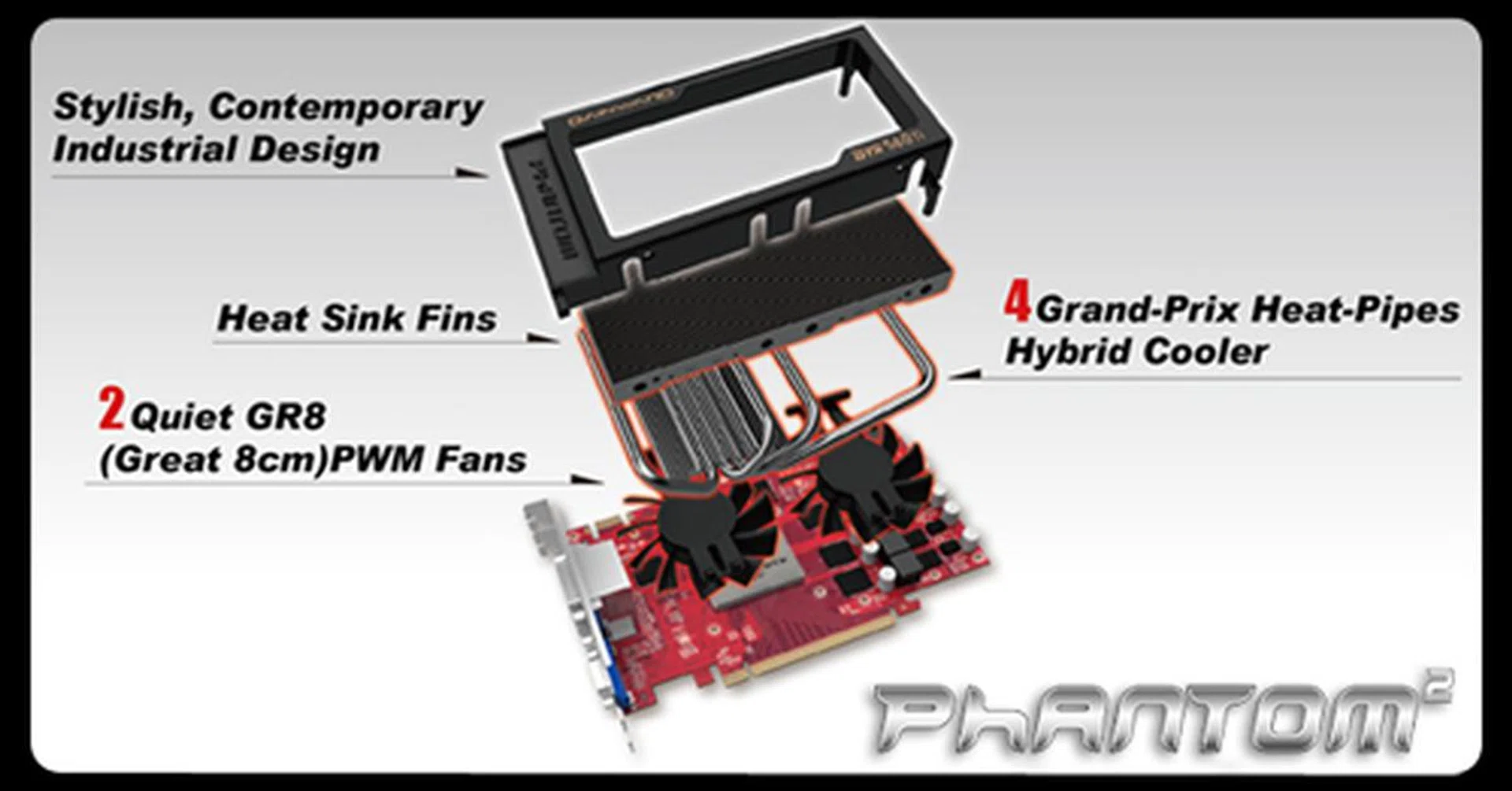
A diagram showing the key components of Gainward's unusual cooler design.
Test Setup
We will be evaluating the Gainward GeForce GTX 560 Ti Phantom using our X58 test system which has the following specifications:
- Intel Core i7-975 (3.33GHz)
- Gigabyte GA-EX58-UD4P motherboard
- 3 x 1GB DDR3-1333 OCZ memory in triple channel mode
- Seagate 7200.10 200GB SATA hard drive
- Windows 7 Ultimate
Since we’ve already established the performance of the GeForcE GTX 560 Ti in our along with a few other custom edition cards, we've decided to cutback on the number of tests for this card rather than running the usual suite of benchmarking tests. As such, we'll be testing only 3DMark Vantage, 3DMark 11, Crysis Warhead, Far Cry 2, Hawx 2 and Battlefield Bad Company 2. These games will give us a good idea of the card’s performance.
Key comparisons here will obviously be between the Gainward GeForce GTX 560 Ti Phantom and the reference card. We are not expecting the Gainward card to be much quicker, considering the mild increases in clock speeds, but we do hope to see substantial improvements in terms of cooling efficiency and also quietness of operation. We have also included results of the ASUS ENGTX560 Ti DCII TOP to see if the Gainward card can run cooler.
The full list of cards and driver versions tested:
- Gainward GeForce GTX 560 Ti Phantom (ForceWare 266.56)
- NVIDIA GeForce GTX 560 Ti (ForceWare 266.56 )
- ASUS ENGTX560 Ti DirectCU II TOP (ForceWare 266.56)
- NVIDIA GeForce GTX 460 (ForceWare 263.09)
- NVIDIA GeForce GTX 470 (ForceWare 263.09)
- NVIDIA GeForce GTX 570 (ForceWare 263.09)
- AMD Radeon HD 6870 (Catalyst 10.12)
- AMD Radeon HD 6850 (Catalyst 10.12)
- AMD Radeon HD 5850 (Catalyst 10.9)
The list of benchmarks used:
- Futuremark 3DMark Vantage
- Futuremark 3DMark 11
- Crysis Warhead
- Far Cry 2
- Battlefield Bad Company 2
- Hawx 2
Results
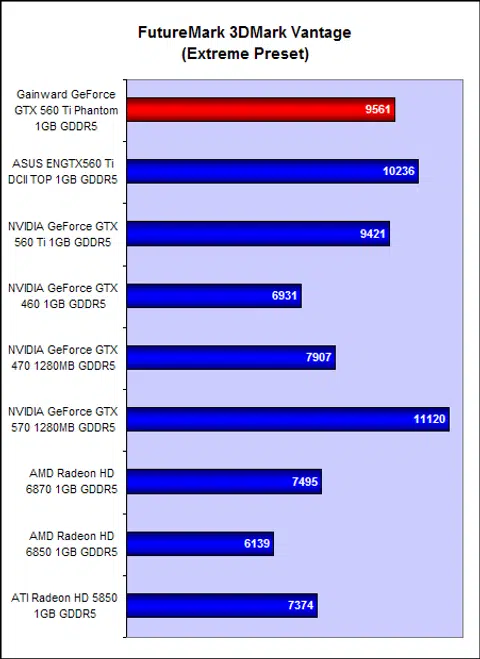
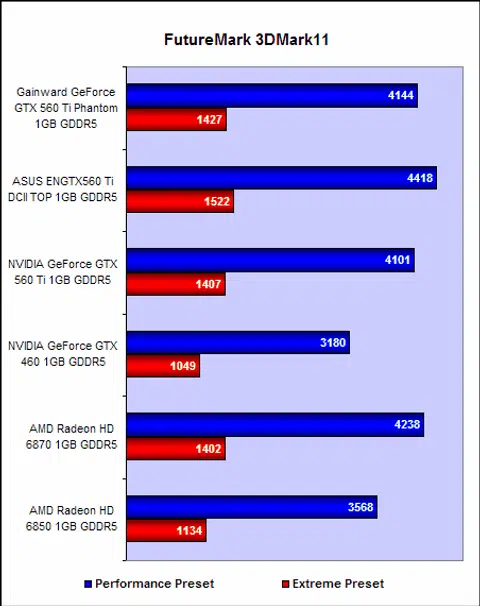
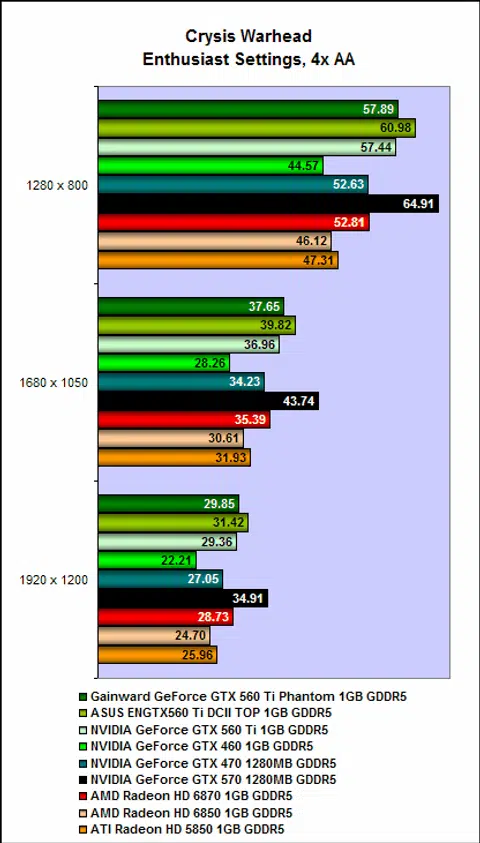
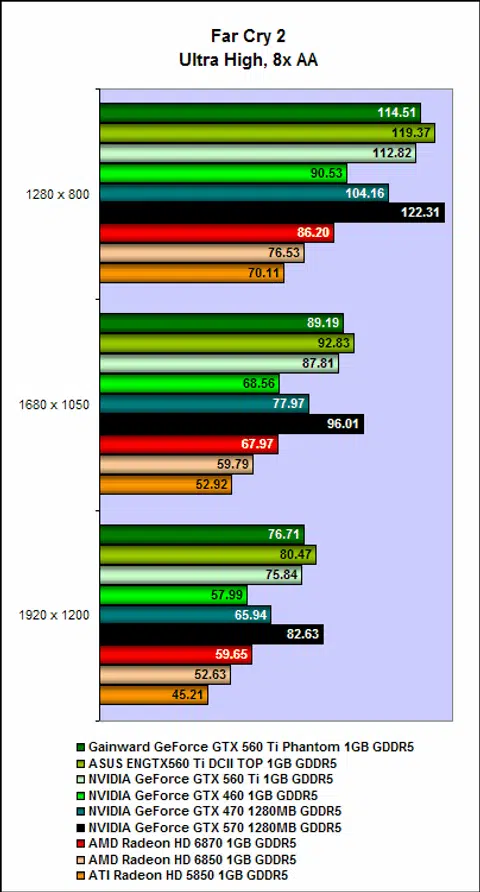
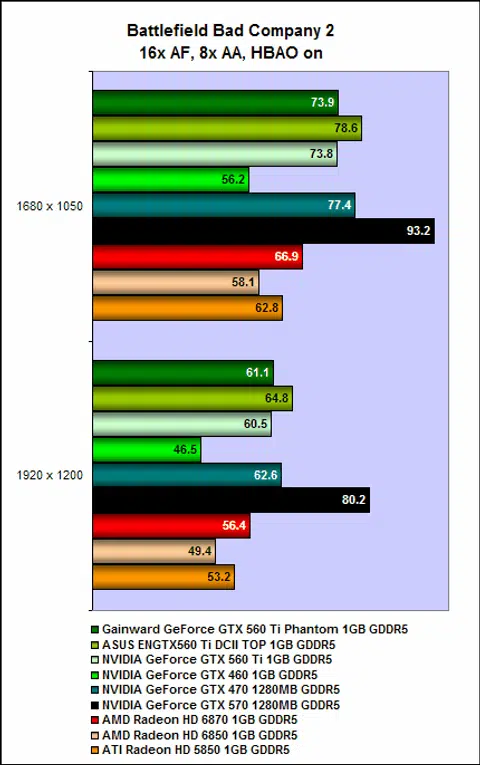
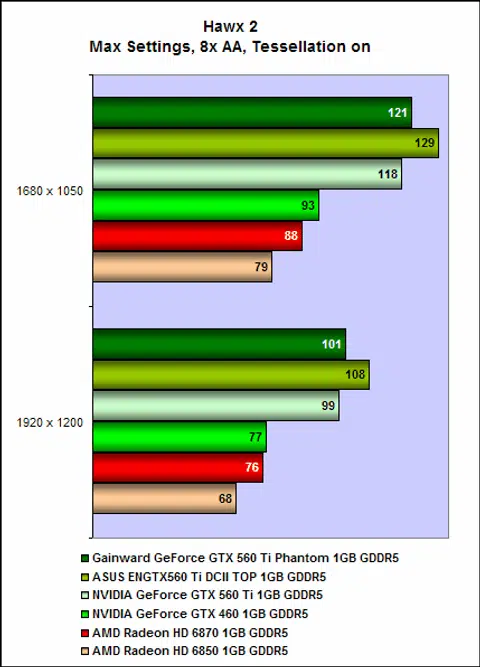
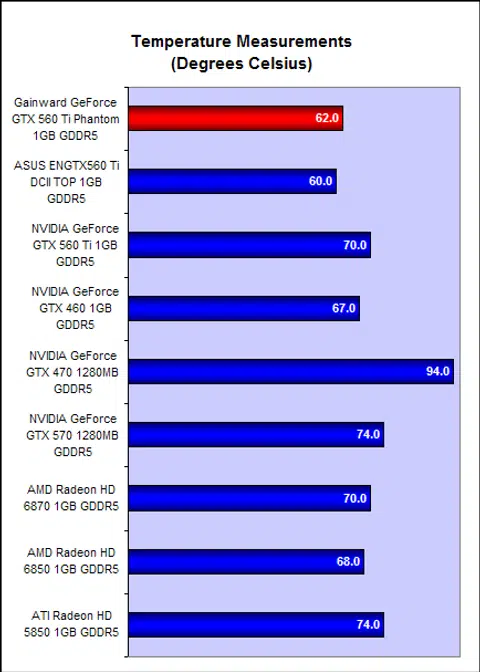
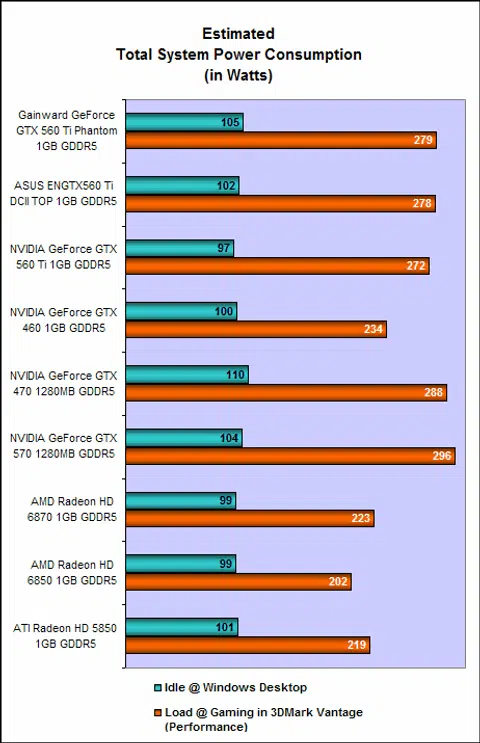
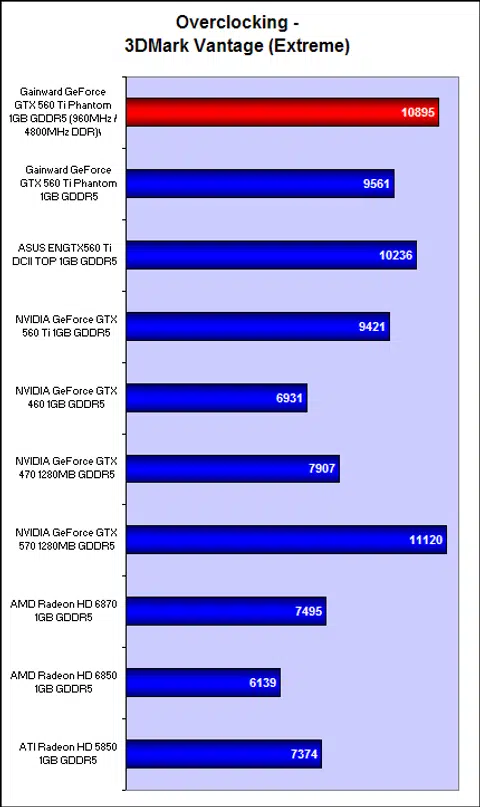
An Unconventional but Decent Take
On a whole, the Gainward GeForce GTX 560 Ti Phantom is an interesting and decent take on NVIDIA’s GeForce GTX 560 Ti SKU.
As we had predicted, because of its mildly higher clock speeds, it wasn’t that much faster than a reference card. However, we found its unconventional cooler to be pretty effective. Under load, the card recorded a maximum sustained temperature of 62 degrees Celsius, which is good, though it couldn't best the earlier tested ASUS ENGTX560 Ti DCII TOP. Another plus point is that it was also very quiet even when under load. Unfortunately, the unconventional cooler is also larger than most, taking up a good two and a half expansion slots, which, depending on the layout of your motherboard, might mean sacrificing either a PCI or PCIe slot.
Price-wise, the Gainward GeForce GTX 560 Ti Phantom comes in at US$260, which is about US$10 more than most other GeForce GTX 560 Ti cards. You could easily find cards with higher clock speeds for the same money, so whether the Gainward card deserves the premium depends very much on whether you think the cooler and its quiet operation is worth the extra dough. Personally, considering that the card is only mildly overclocked and that the cooler isn’t significantly better than other implementations from rivals, we think that the GeForce GTX 560 Ti Phantom would be better received if it didn’t have a premium pricing.
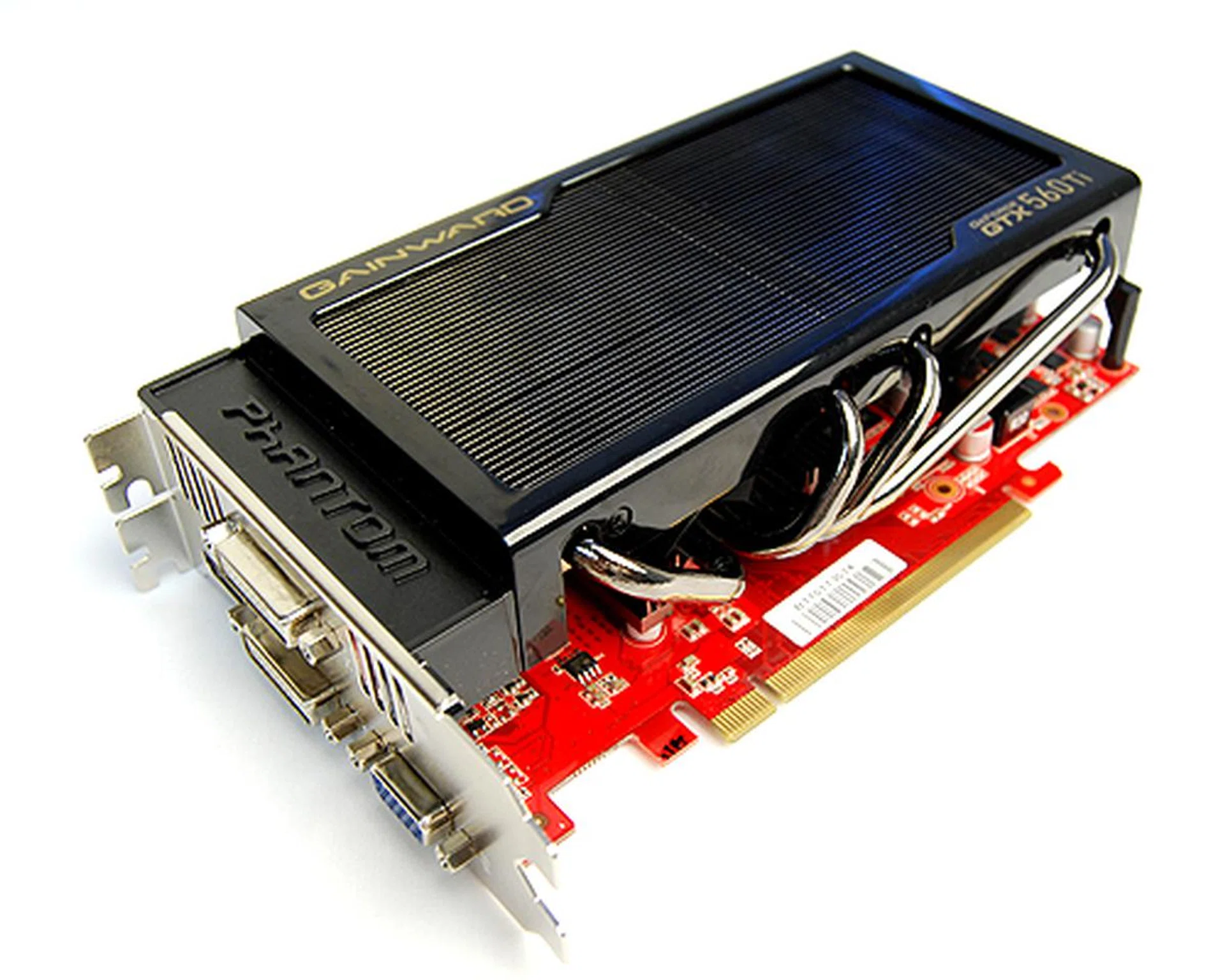
The Gainward GeForce GTX 560 Ti Phantom has an interesting-looking cooler that actually works, but it might find itself outpriced in this highly competitive segment of the market.
Taking everything into account, the Gainward GeForce GTX 560 Ti Phantom is a competent card. Performance is decent, although it could certainly have done with higher clock speeds; and we like that Gainward has improved the options for video output, offering a VGA port and proper, full-size HDMI port instead of a reference card’s mini-HDMI one. Additionally, the cooler offers improved levels of cooling performance, but its large size, means that it’s not for everyone. Crucially, its size might complicate multi-GPU setups and make upgrading via SLI in future a hassle.
So in a nutshell, the Gainward GeForce GTX 560 Ti Phantom might not be the best GeForce GTX 560 Ti card out there, but its unorthodox cooler distinguishes it from the crowd and overall performance isn’t half-bad either.
Our articles may contain affiliate links. If you buy through these links, we may earn a small commission.