
EVGA GeForce 7900 GS KO 256MB
Enthusiasts now have one more choice when it comes to graphics cards, as EVGA, a leading brand from the US makes its debut on our shores. We present to you the EVGA GeForce 7900 GS KO, an overclocked version that aims to knock out the competition.

The EVGA has Landed
Among one of the formerly unavailable brands, graphics specialist EVGA has recently found a local distributor and is already appearing on retail shelves. A popular and leading brand in the US, it has made waves in the industry for its service and support policies. A lifetime warranty for its graphics cards, a trade-in program to upgrade older EVGA products and a customer support hotline are just some of the pro-consumer policies honored by EVGA. Needless to say, these programs are much welcomed by consumers and could be a strong pull factor in the competitive retail graphics market. Whether all these programs will be brought over in its entirety along with the hardware remains to be seen. But before we delve into those details, a glimpse of the EVGA GeForce 7900 GS KO:
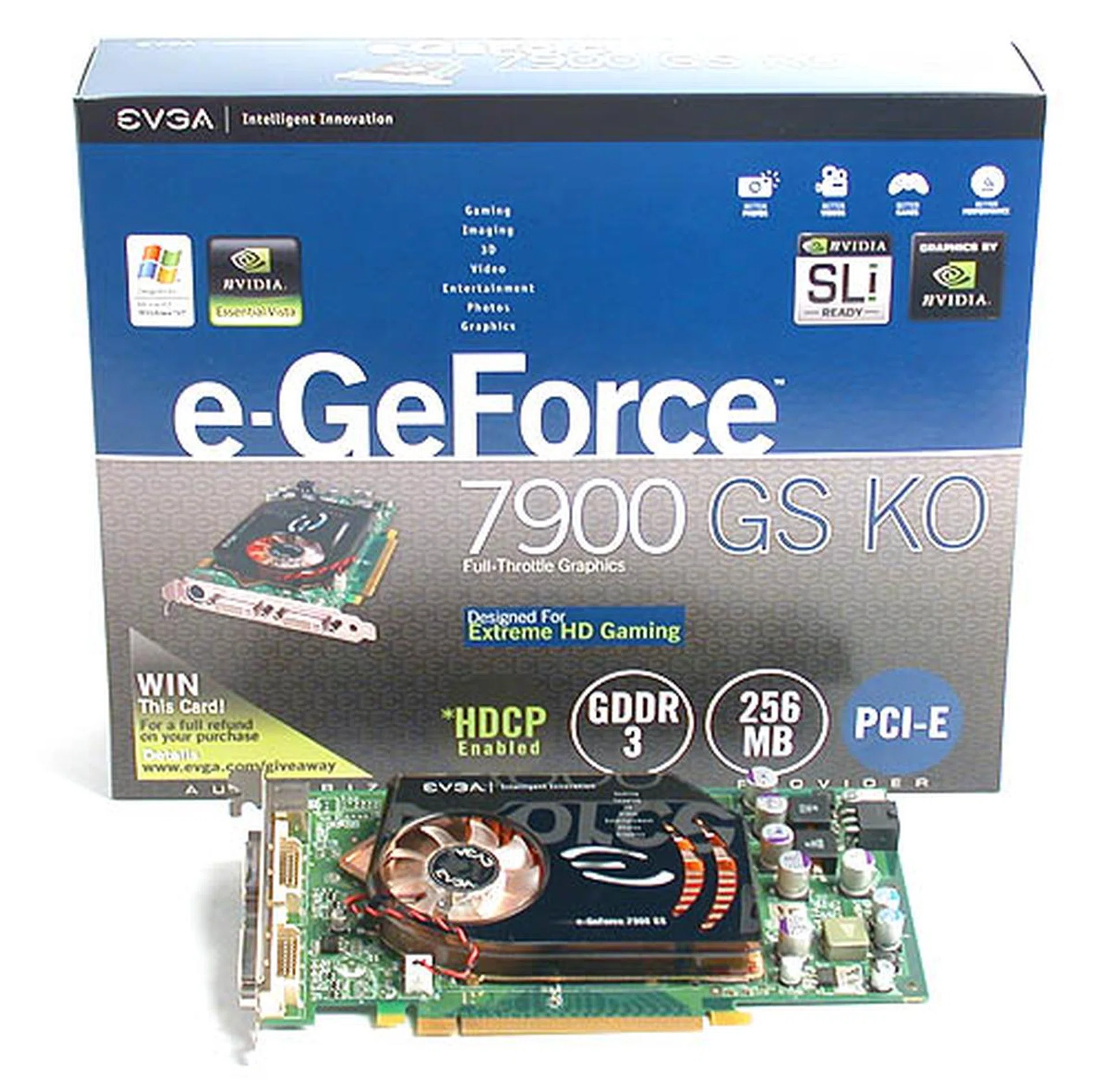
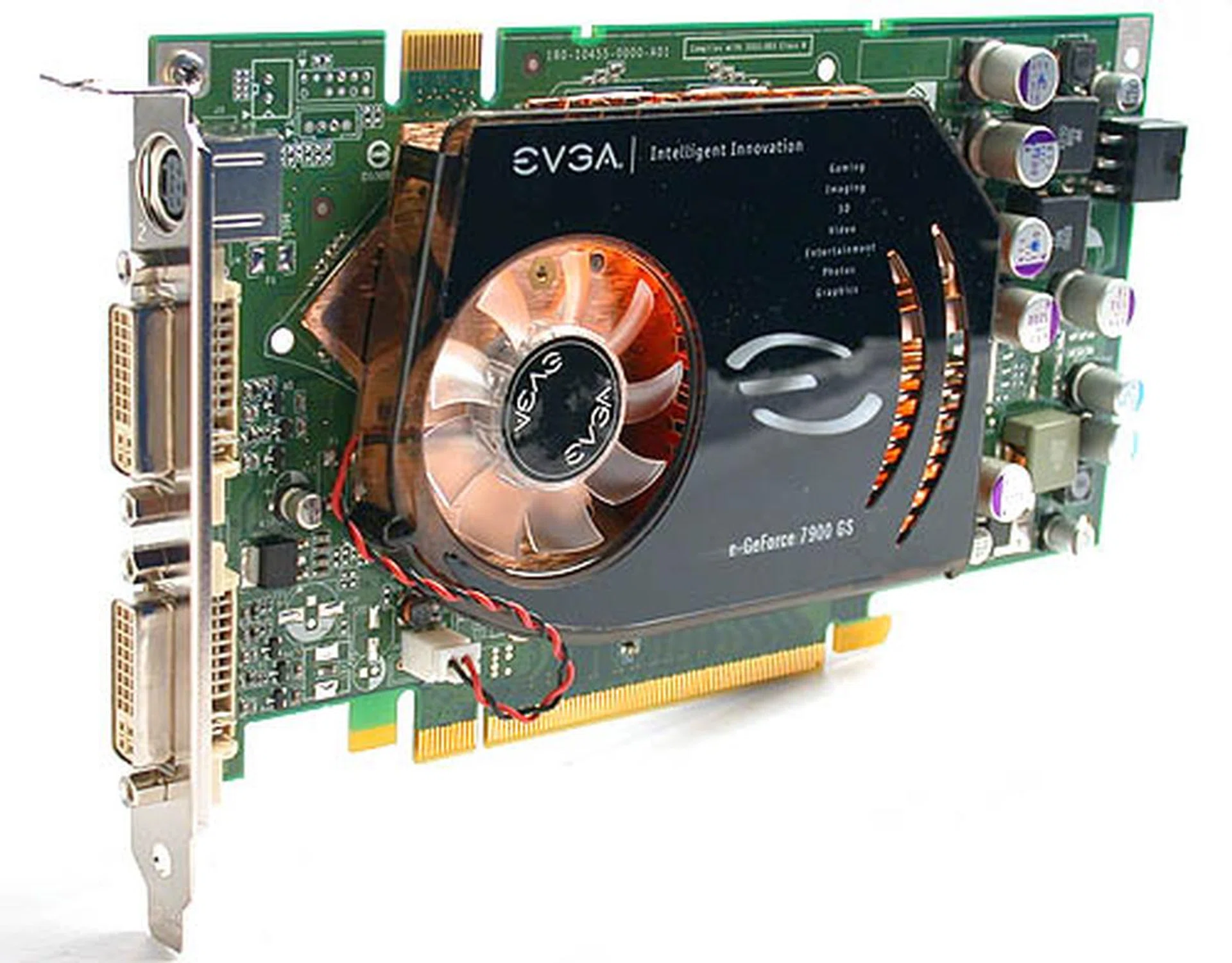
EVGA has finally landed on our shores. Here's a first look at the eVGA GeForce 7900 GS KO 256MB.
The EVGA GeForce 7900 GS KO
If you are expecting a 'Made in USA' logo on the EVGA GeForce 7900 GS KO by virtue of its American origins, you will be sorely disappointed. Like almost everything nowadays, the EVGA GeForce 7900 GS KO is manufactured in China. The green PCB is rather typical while the design looks to follow the reference board. The cooler is slightly larger than the default and it is similar to the one found on the MSI, cooling the memory modules along with the core. The fan itself, like most GeForce 7900 GS cards, was suitably quiet, as it didn't need to spin too fast.
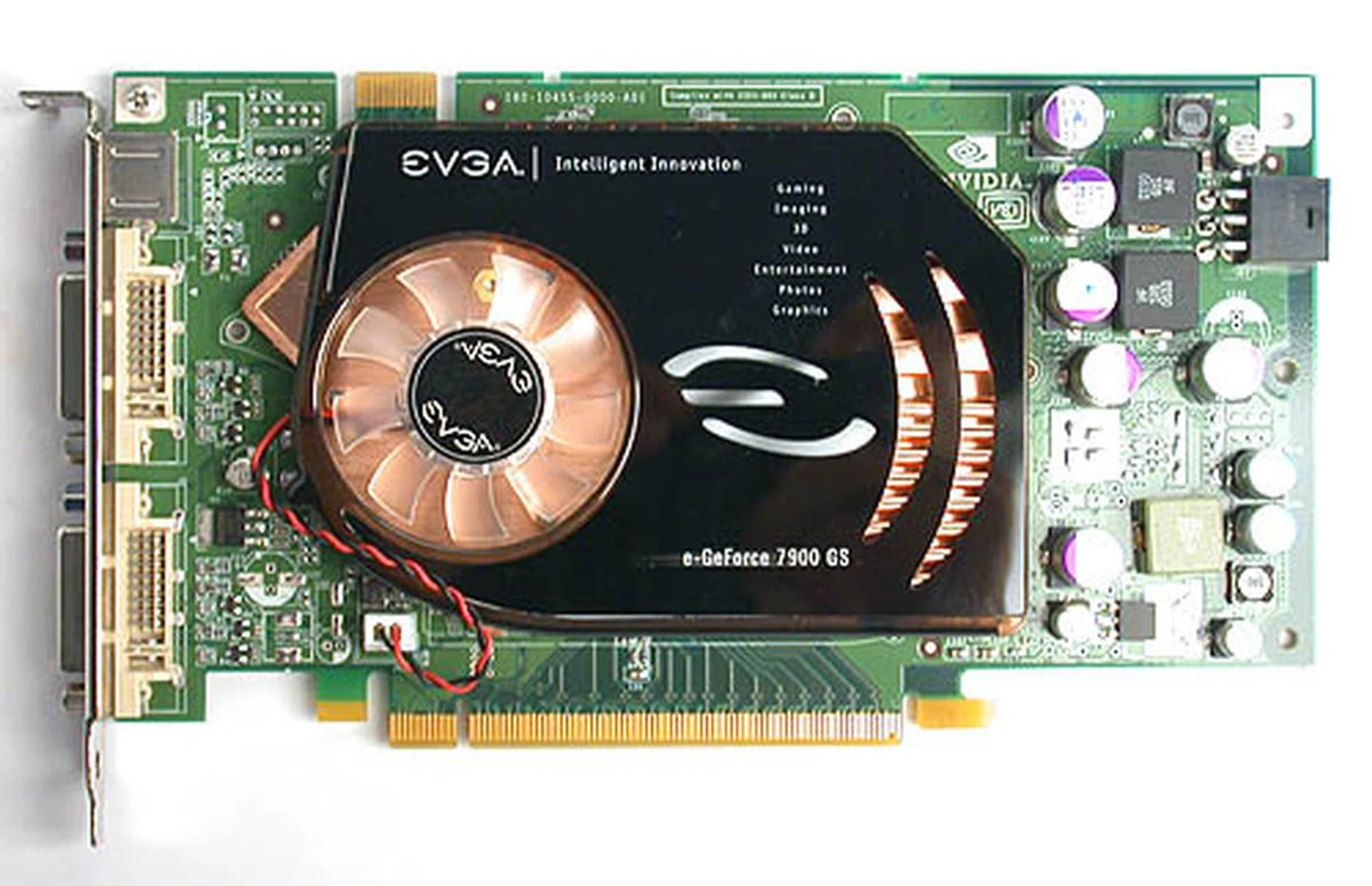
It's a conventional design that you will find on many GeForce 7900 GS cards. In fact, it looks almost like MSI's version.
With its orientation towards enthusiasts, it was not surprising that the EVGA comes overclocked by default. The core itself is at 500MHz, which is in line with other overclocked editions in the market. At 1380MHz DDR, the memory modules are also quite modestly overclocked so while one should get a significant leap in performance compared to the reference board, expect the margins to be less than 10%. However, with the prices of overclocked GeForce 7900 GS just a tad more expensive than the normal versions, getting that extra performance seems like the wiser choice.
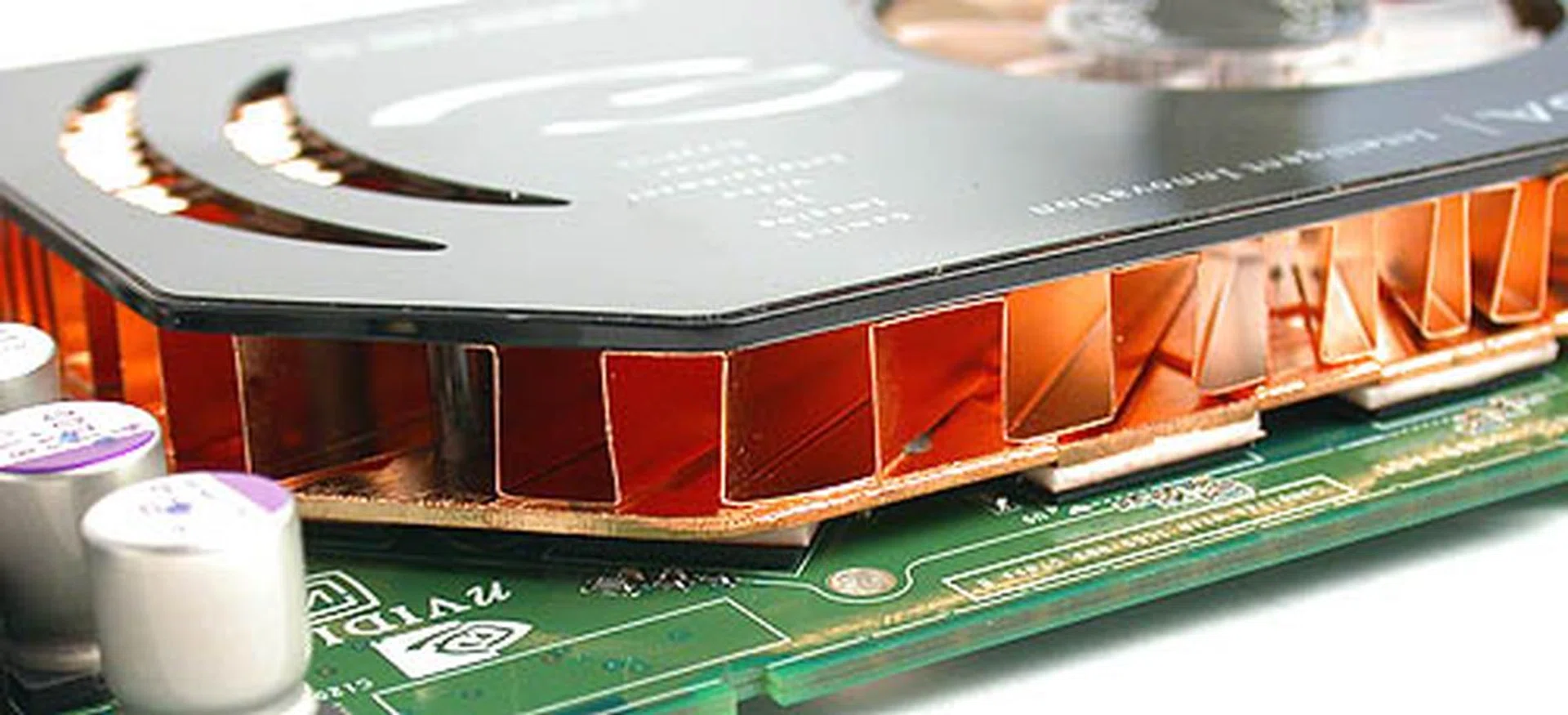
No worries about the memory modules for they are cooled using the same heatsink.
The EVGA GeForce 7900 GS KO also comes with HDCP support. Although this feature has not been mandated by NVIDIA on this GPU SKU, quite a few vendors have opted to include this for their GeForce 7900 GS cards, more so when they are special editions. With high definition content yet to take off in the region, HDCP support is something that is nice to have but it's not exactly a must. Many consumers will never use their computers to watch HD content and even if they intend to, many will be upgrading to a newer graphics card before that happens so that point may be moot.
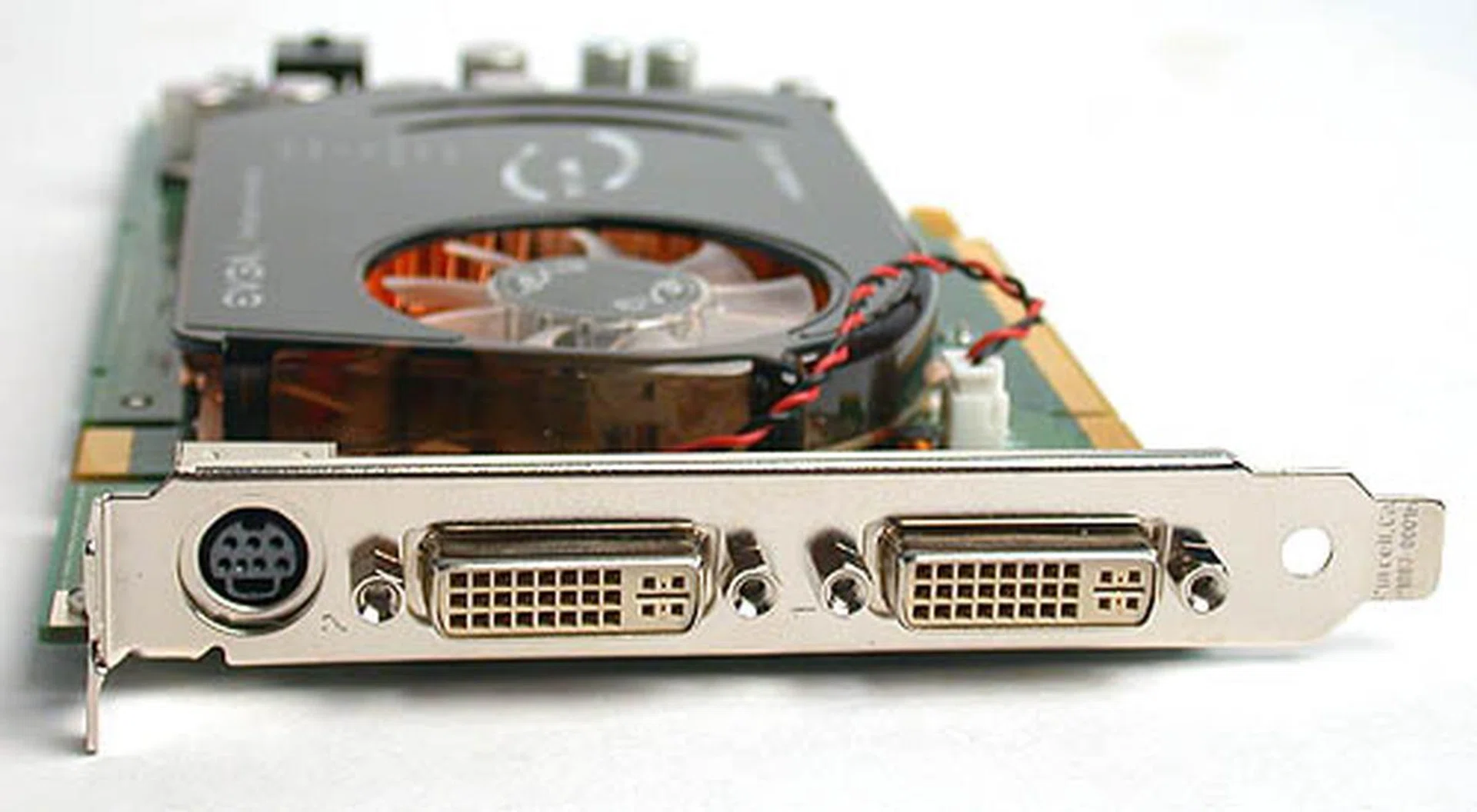
HDCP supported dual-link DVI outputs are probably the best you can find in any graphics card now.
Now, here's some background information about the various support and service policies from EVGA that made them their name. First, the lifetime warranty is not valid in Singapore; instead the distributor has replaced it with the more common local practice of a two-year warranty. This will certainly be disappointing news for most enthusiasts but with EVGA's confidence in its products, we are sure that the EVGA GeForce 7900 GS KO should last quite a while. Next, EVGA's Step-up program, which allows users to trade in their existing EVGA graphics card for a newer model within 3 months of the original purchase by topping up the price difference, also does not apply locally. We were also disappointed that the bundled game, Hitman: Blood Money is not included in the local version of the EVGA GeForce 7900 GS KO at the moment. However, we've been informed that later shipping batches would have the bundled game intact, so do check up with the distributor on that aspect. At least the accessories will present and they were a useful bunch along with a few demo applications, as shown in our list below:
- 2 x DVI-to-VGA adaptors
- 9-pin mini-DIN to Component dongle
- S-Video extension cable
- 6-pin PCIe to 4-pin Molex power plug converter
- Driver CD
- User Manual
- Beyond Media (Demo)
- Ulead DVD MovieFactory 3 Disc Creator (Demo)
- Hitman: Blood Money (full game - available on later batches)
Test Setup
The EVGA GeForce 7900 GS KO was tested with a system that had a MSI K8N Diamond Plus motherboard and an Athlon 64 FX-55 (2.6GHz) processor. Kingston low latency DDR400 memory was used, with 2 sticks of 512MB modules running in dual channel mode. As usual, we had Windows XP Professional installed on a Seagate 7200.7 SATA hard drive. This was later updated to Service Pack 2 and the latest version of DirectX 9.0c.
All the NVIDIA cards were using ForceWare 91.47 drivers while the sole ATI representative was on Catalyst 6.8. The clock speeds of the GeForce 7900 GS also differed as there were some overclocked editions, among them the ones from Leadtek (520/1400MHz), XpertVision (500/1400MHz) and of course, EVGA (500/1380MHz). Along with the reference version and other selected cards, these were all tested with the following benchmarks:
- Futuremark 3DMark05 (ver. 120)
- Futuremark 3DMark06 (ver. 102)
- Tom Clancy's Splinter Cell: Chaos Theory
- F.E.A.R
- Chronicles of Riddick: Escape from Butcher Bay
- Quake 4
Results - 3DMark05 Pro & 3DMark06
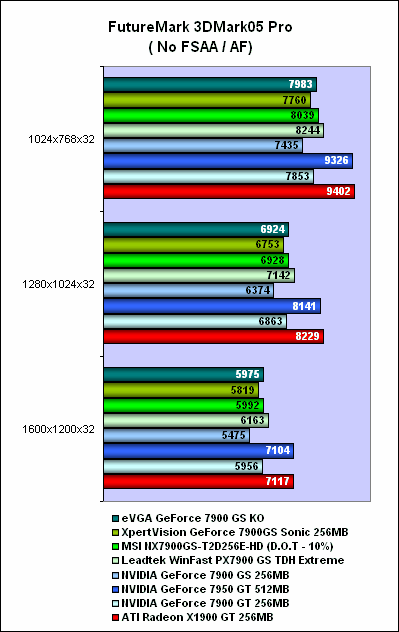
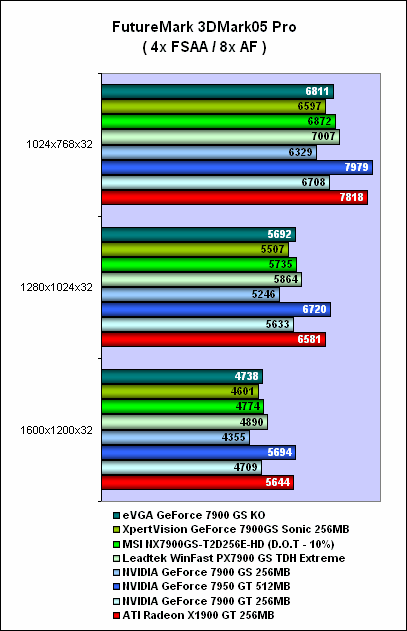
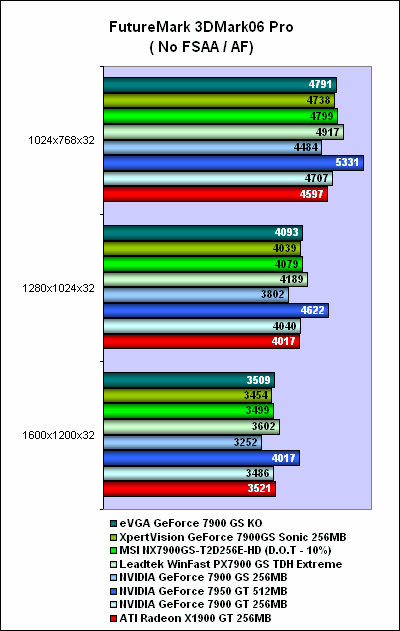
Despite clock speeds that are fractionally lower than the XpertVision, the EVGA actually recorded higher scores for all resolutions and settings in 3DMark. It could be that EVGA has done some tweaking to improve the performance because going by the clock speeds alone, we expected the XpertVision and the EVGA to score similarly. Instead, what we saw in 3DMark was a minor 2 - 3% lead for the EVGA against the XpertVision. It shouldn't make that much of a difference in the real world but it's a plus point for EVGA and certainly goes about cementing its reputation as a brand for enthusiasts. On the whole, it seemed to perform on par with MSI's version that's put on steroids (10% D.O.T).
Results - Splinter Cell: Chaos Theory & F.E.A.R (DirectX 9 Benchmarks)
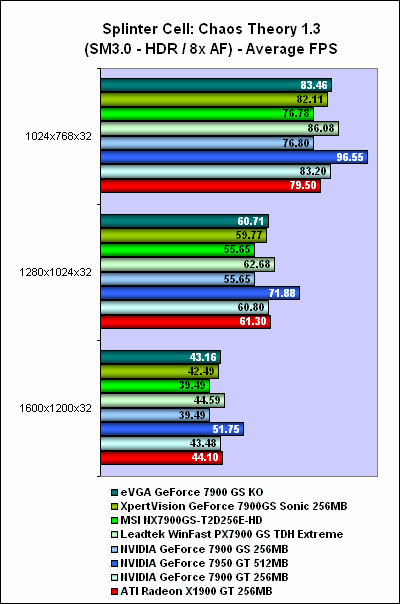
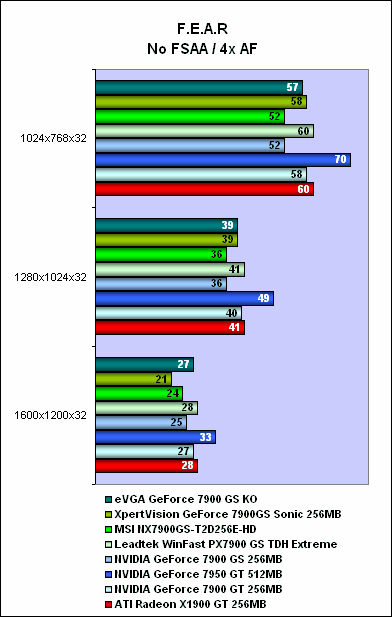
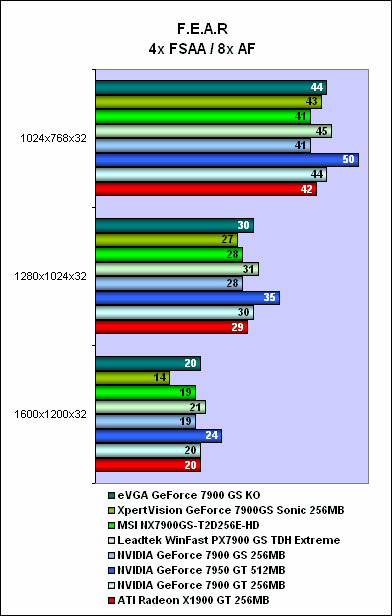
That slight edge from the EVGA over XpertVision in 3DMark was evident too in Splinter Cell, albeit probably too minor to be noticed in actual gameplay. Meanwhile, the Leadtek Extreme topped the table for GeForce 7900 GS cards in both games. However, the EVGA posed quite a challenge for the Leadtek in F.E.A.R, where it was only a frame or two behind. For this extremely taxing first person shooter, whether the cards are overclocked or not doesn't matter as much and for significantly better performance, we would recommend you get a more expensive graphics card than the GeForce 7900 GS.
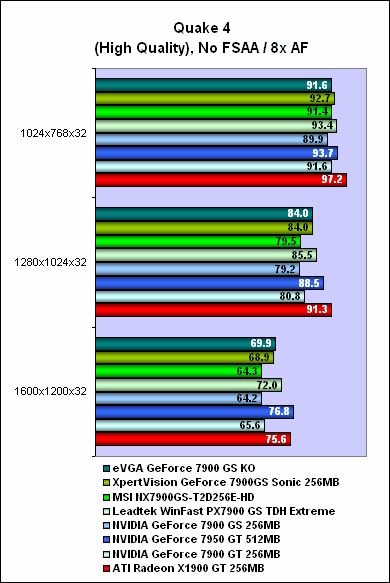
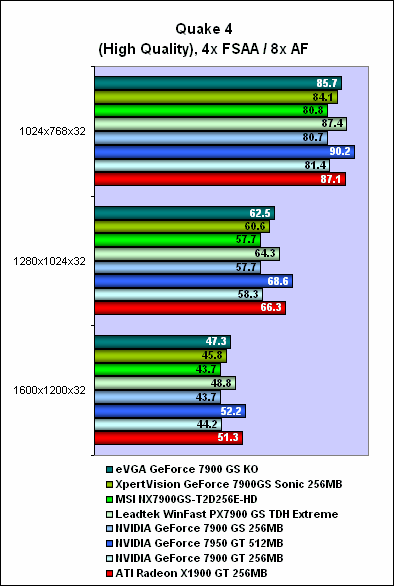
Results - Chronicles of Riddick & Quake 4 (OpenGL SM2.0+ Benchmarks)
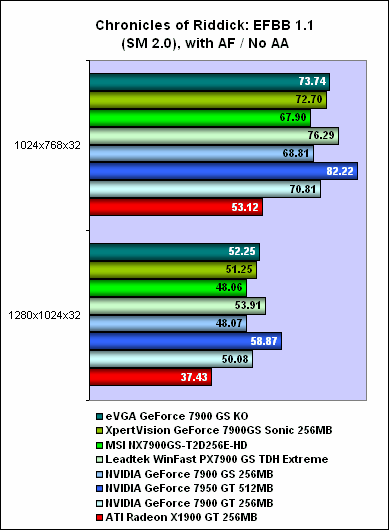
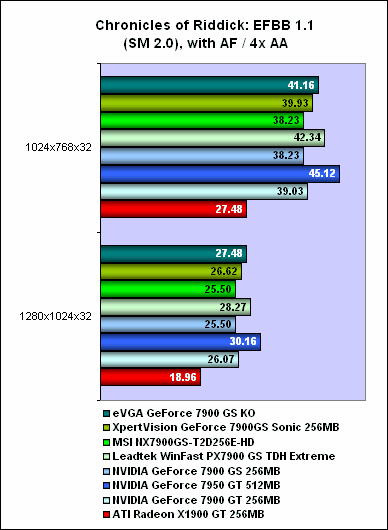
The EVGA continues to impress as it edged the XpertVision out to take the runner's up spot in these two OpenGL games. Again, the margins are hardly significant but they add to the trend of the EVGA consistently hitting above what its clock speeds suggest. That been said, we expect enthusiasts to be pleased by the performance of the EVGA so far. It may not be the fastest GeForce 7900 GS in the market but it does an excellent job for its specifications.
Temperature Testing
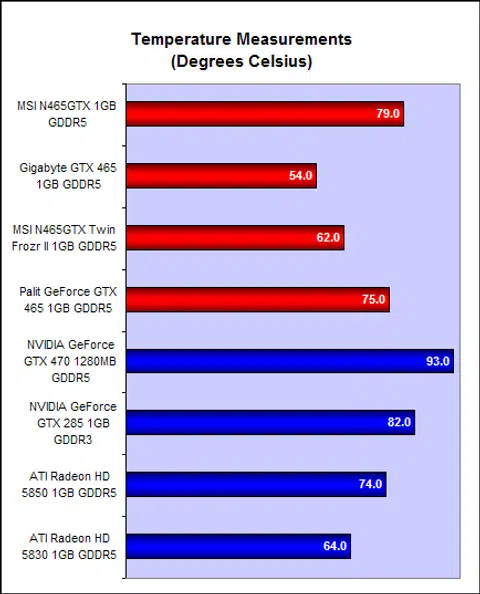
The out of the box overclocking for the EVGA did not seem to affect its temperature unduly, as it had one of the lowest temperatures in our comparison. The two-slot XpertVision was the best performer in our temperature testing but the EVGA certainly did very well with its more conventional cooler. You can expect the card to hover comfortably around the 50 degrees Celsius mark for the most part, unless you are overclocking it even further. Just note that all our testing takes place in our air-conditioned lab where the temperature hovers about 22 degrees on average.
Overclocking
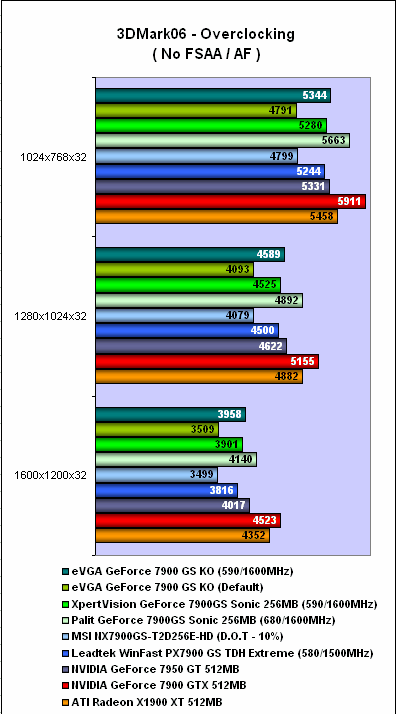
The EVGA also did rather well for overclocking. Although upstaged by the Palit and its extraordinary overclock, the EVGA was about equal with our XpertVision card in terms of overclocking leeway. This was a core clock of 590MHz, which was higher than the Leadtek Extreme but on par with MSI, and a memory clock of 1600MHz DDR. With these clocks, the EVGA scored second only to the Palit compared to its peers and almost matched the reference GeForce 7950 GT.
Conclusion
We have heard much about EVGA for a long time now, from actual reviews to forum posts. However, this is the first time we had the hardware to judge for ourselves at firsthand. The consensus, not surprisingly, is that all the good is for real. The quality of the hardware is undoubted and the performance reflects that, as the EVGA GeForce 7900 GS KO manages to edge out its similarly clocked rival from XpertVision. Overclocking was decent and it matched the other GeForce 7900 GS cards in our comparison. We also observed noise and temperatures to be on par with the competition. In short, the EVGA GeForce 7900 GS is a different class from the generic and more affordable variants out there and thoroughly deserves the 'elite' image it has acquired.
Consumers may find the local version a bit less palatable in terms of warranty and support as opposed to the service level offered back in USA. Otherwise, the EVGA GeForce 7900 GS KO is a fine contender.
However, what has become a hallmark of an EVGA product - the lifetime warranty - has been lost in translation as it made its way from USA to our shores. While there are still some uncertainties regarding how EVGA's policies will translate into the local context, it is very unfortunate that EVGA's excellent pro-consumer programs likely won't be implemented in its entirety here. It only serves to show the obstacles faced by local consumers when it comes to getting their hardware as it was meant to be. And it may even dilute the EVGA brand as enthusiasts may be disgruntled by the lack of differentiation that earned EVGA its claim to fame in the serious hardware community.
Considering that the EVGA GeForce 7900 GS KO can be found at online hardware retailers for around US$225 (S$357), the local recommended retail price of around S$379 may seem reasonable and competitive with other major brands. But that's only if a major oversight like the exclusion of the bundled game be rectified as soon as possible and one that the distributor has acknowledged to resolve. For now, the lack of EVGA's pro-consumer service in this region is the only downside, which doesn't embody the true EVGA spirit. Hardcore enthusiasts may feel shortchanged when comparing the US counterpart's full service offering, but one should also realize that it's only due to the fact that EVGA itself doesn't operate in this region to extend the same policies. Apart from that note, if a solid GeForce 7900 GS is what you're looking for, the EVGA KO-edition is definitely one to look out for.
Our articles may contain affiliate links. If you buy through these links, we may earn a small commission.