
Creating a Bang - MSI Trinergy P55 Motherboard Preview
The Big Bang is here! MSI's latest high-end motherboard has reached our lab but it's just not what we had been expecting. There's no Lucid Hydra 200 chip on this board, though it does support 3-way SLI. Check out our preview of the other Big Bang motherboard, the MSI Trinergy.

MSI Unleashes the Big Bang
Whatever you may have heard about MSI's Big Bang motherboard - 'Lucid' and 'Hydra' are the keywords that come to mind - is not what you're hoping for. Apparently, despite the initial optimism sparked by AnandTech's feature, the short answer is that this motherboard, Big Bang Fuzion is delayed till Q1 2010 due to a need to tweak the software and drivers for Windows 7. Or so they tell us. So unfortunately, you won't be mixing and matching your graphics cards for Christmas.
Instead, what got released recently is another motherboard. It seems that the Big Bang we have heard so much about is actually a new series, not a stand-alone product. This other, new product in the Big Bang series is known as Trinergy (we presume short for tri-energy) and it will be the new flagship P55 motherboard in MSI's lineup. In this industry, that means it's chock full of the greatest and latest technologies the vendor can add to give it that premium, luxurious feel.
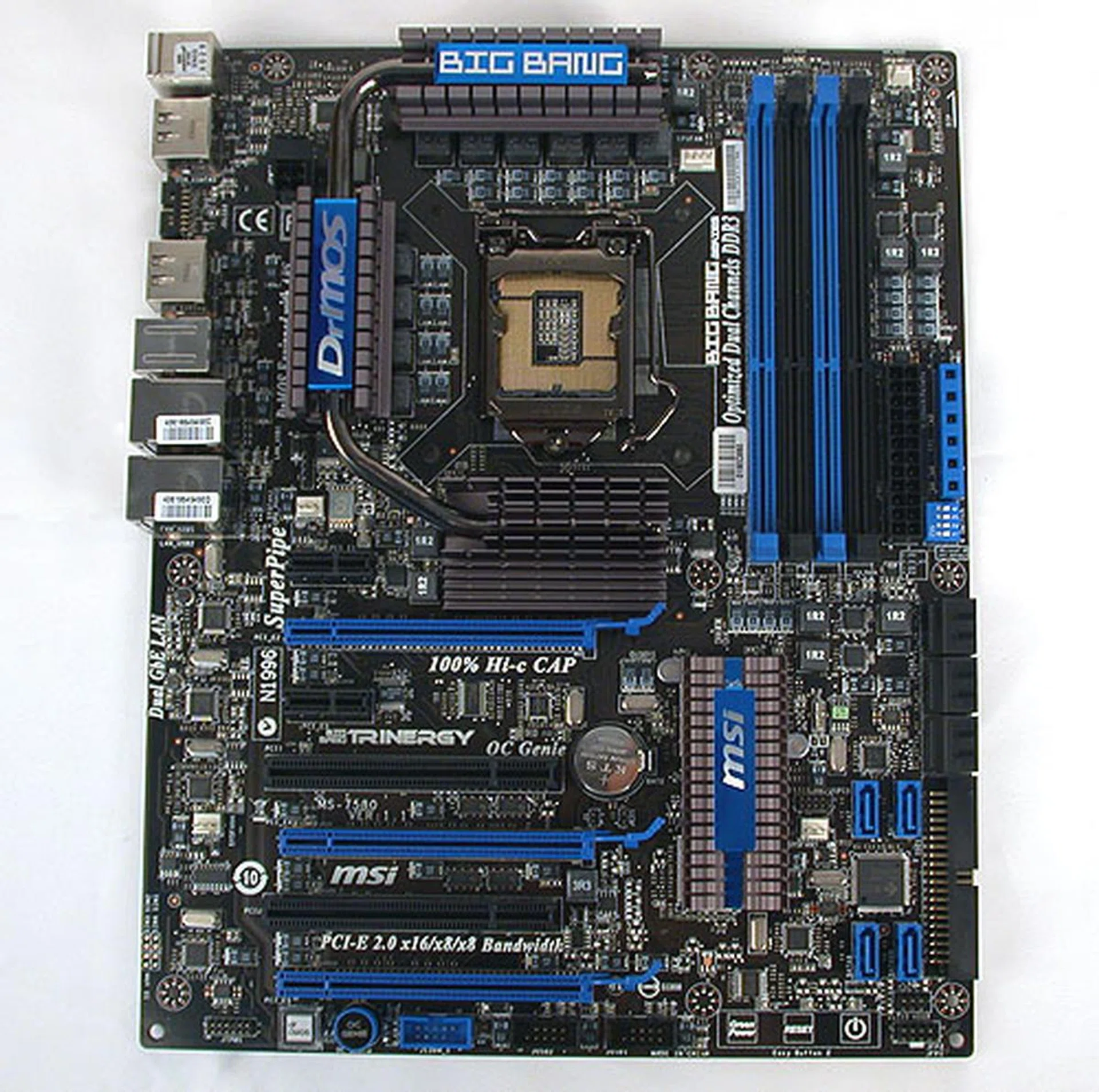
Keeping with a heavy use of black and dark blues, this new Big Bang Trinergy is recognizably a MSI motherboard of recent pedigree.
Well it definitely looks a lot like MSI's current P55-GD80 motherboard, which we felt was pretty good for its class. So what did MSI do to improve on its previous board?
What's New
Like we said earlier, there's nothing like adding the latest in-thing to add value and price to a motherboard and MSI has gone with the more expensive hi-c capacitors on the Trinergy. Now the technology itself isn't that new. It's just rather costly to have the entire board using these capacitors rather than saving them for more crucial components like the CPU PWM. MSI has chosen these capacitors for its longer lifespan, greater stability and better overclocking. All of which are characteristics overclockers look out for and which are likely to pay for this kind of board.
Add to that the 'Super Ferrite Chokes' used, which MSI says will lead to lower power consumption, sufficient to help the Trinergy satisfy the strict energy consumption standards for Europe that calls for less than 0.5W power draw during standby for electronics products.
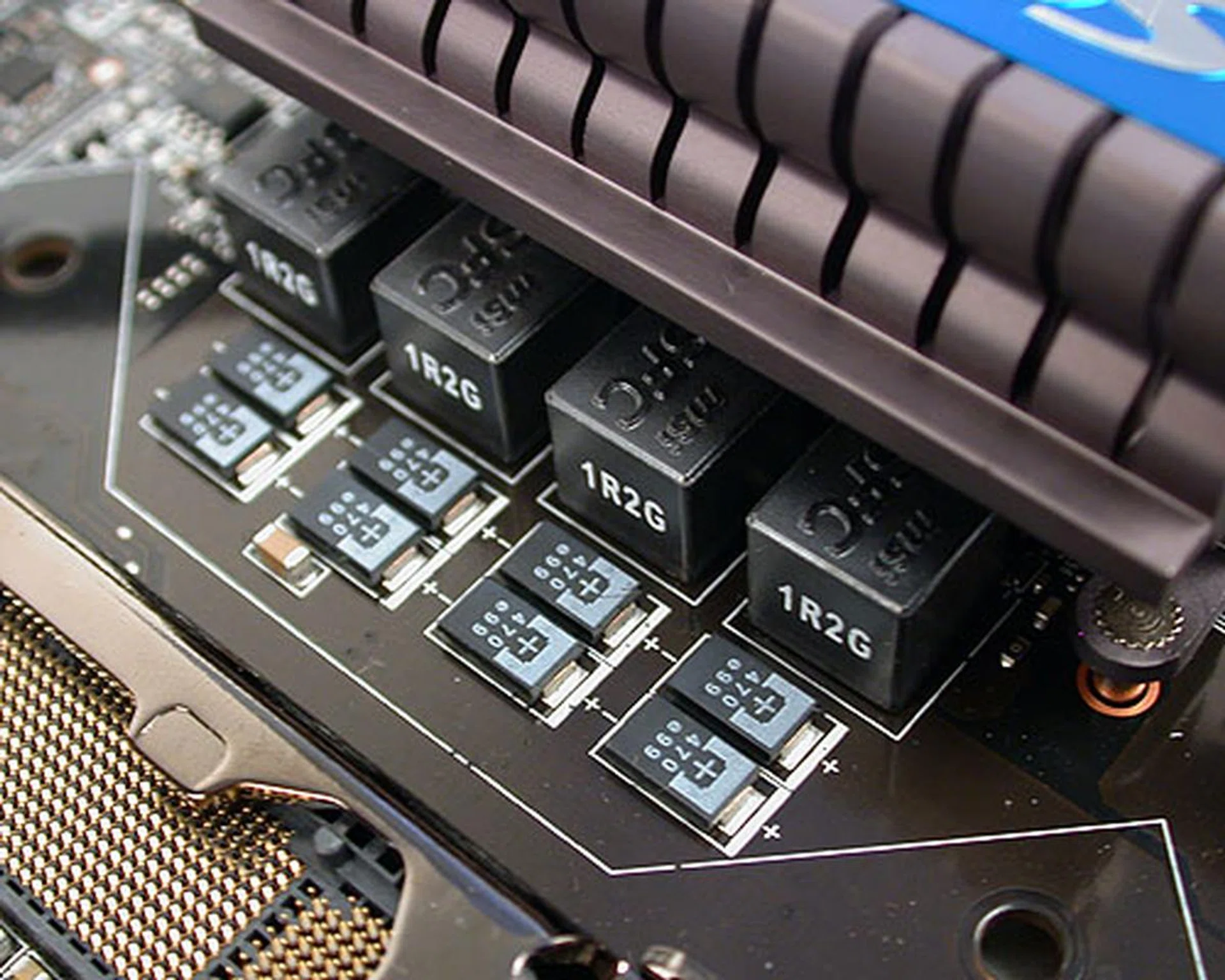
MSI claims that the Trinergy is the first motherboard to use these hi-c cap or highly-conductive polymerized capacitors. We'll admit that while we have seen such capacitors on other boards, it's the first time we're seeing it completely dotting the whole board. Next, the ferrite chokes used here are claimed to be 20% more power efficient than the normal ones while its extremely low impedance helps to keep temperatures low.
The other new addition is the OC Dashboard, which is an external module for overclockers to tweak and monitor their systems without going into the BIOS or even running the usual overclocking software application. It's not exactly revolutionary but coupled with MSI's OC Genie, it should make overclocking and troubleshooting even easier and more convenient.
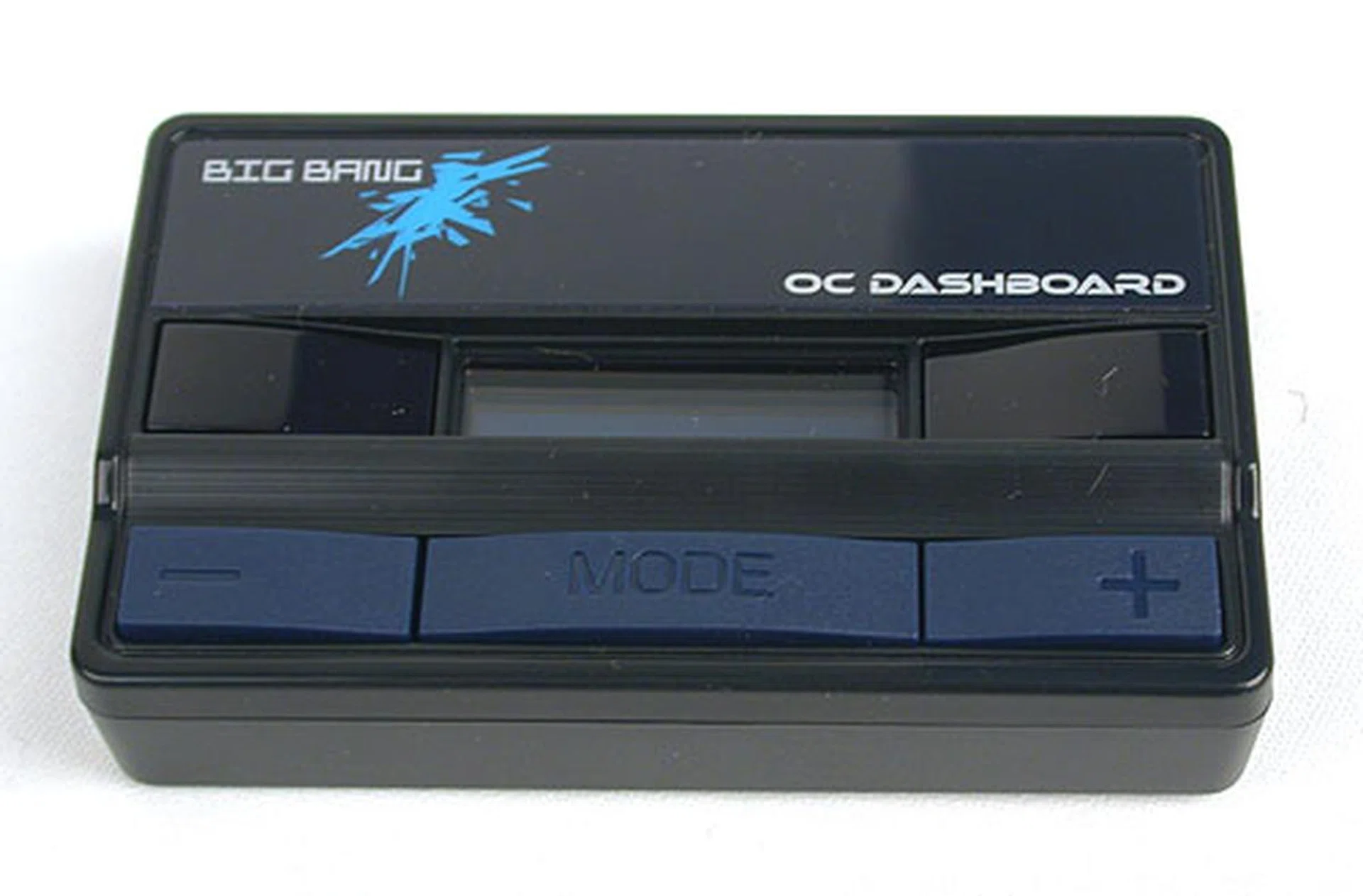
A new extension to its OC Genie technology, this OC Dashboard allows users to adjust their BIOS settings for overclocking purposes, as well as monitor settings like temperature and voltages in real time.
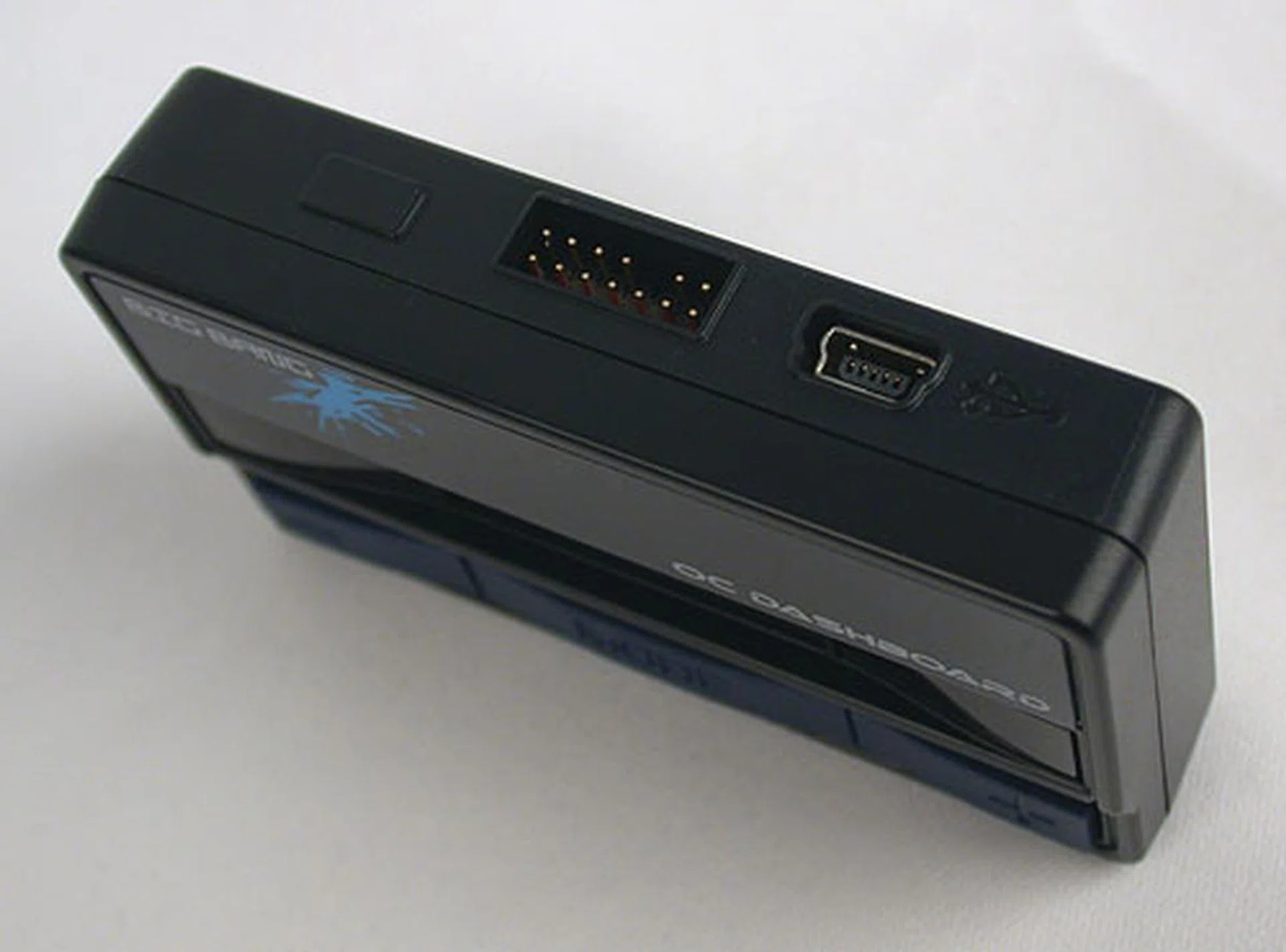
There are options to connect the Dashboard via the mini-USB cable or through a special OC Dashboard cable provided. You can connect the provided cable through the rear I/O or by plugging it directly onto the board.
Next, one of the major differences between this P55 motherboard and most of its peers is the Trinergy's ability to do 3-way SLI (in the form of x16/x8/x8). Thanks to a extra NVIDIA nForce 200 controller, this feature is now possible. Admittedly, this is something that only a small minority of enthusiasts will do, but currently, only eVGA has a similar board.
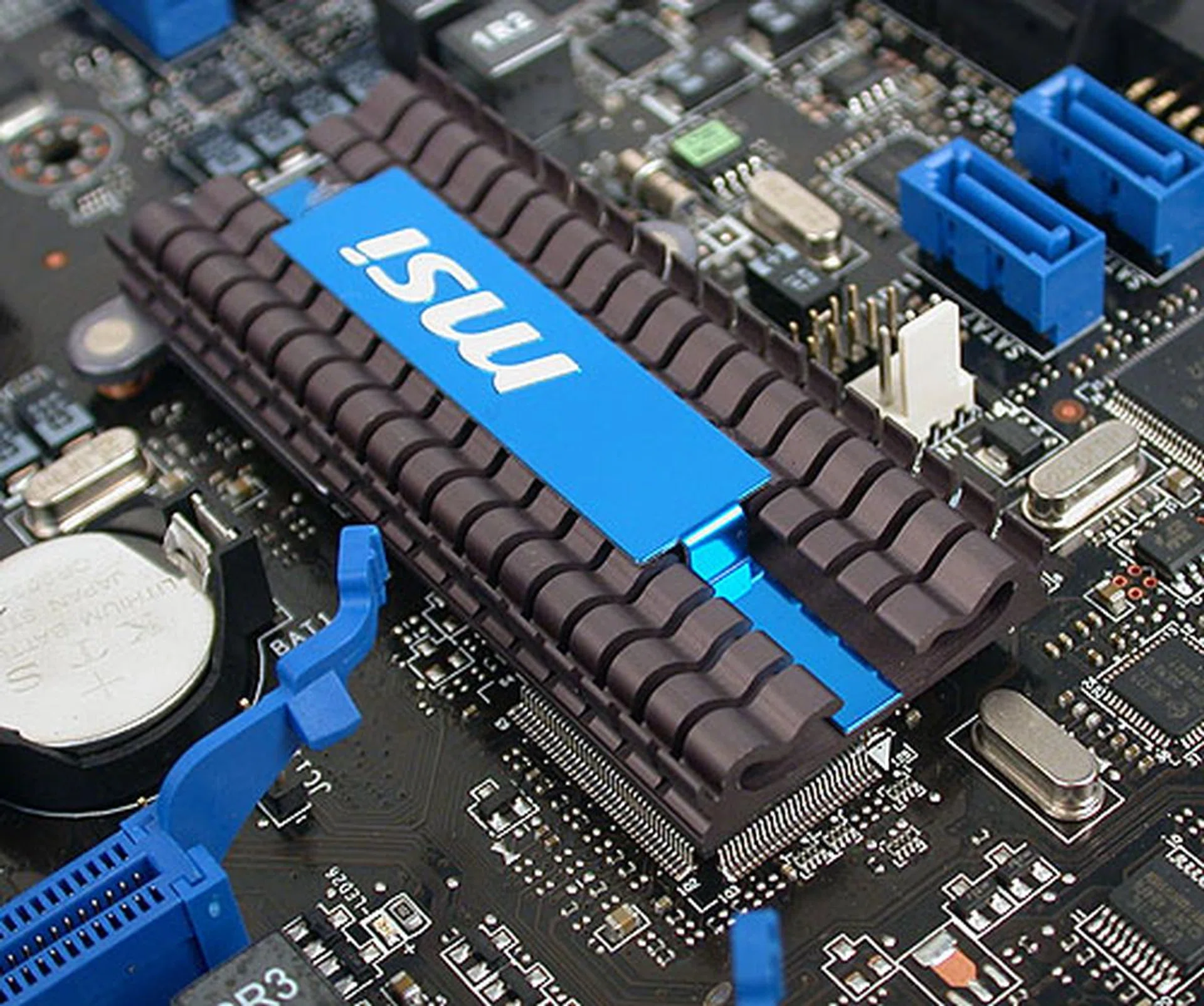
Now you may wonder why is the chipset heatsink larger than usual on this board. Well, the answer is that the Trinergy also has an NVIDIA NF200 controller beneath this heatsink that provides the extra PCIe lanes required for 3-way SLI.
Finally, with all that happening onboard, it's perhaps not surprising that MSI has to move its onboard audio CODEC to a separate module. While it comes with a fancy Quantum Wave name and supports EAX Advanced HD 5.0, this is not a true Creative product with the required audio hardware, but rather a Realtek HD audio CODEC solution that relies on your CPU for audio processing.
MSI has gone back to using an add-on card for audio. This audio module, dubbed Quantum Wave uses an Realtek ALC889 HD audio CODEC and supports THX TruStudio and EAX Advanced HD 5.0.
Exploring the Big Bang Trinergy
Besides those new features highlighted, the rest of the Trinergy is very similar to what you'll find on the MSI P55-GD80, with the same features and even a similar layout. The OC Genie feature, LED power phase indicator, the voltage check points and the thicker heat pipes used for the cooling system are exactly as they are in the P55-GD80. Considering that we have such praise for the GD80, it's probably a good thing. MSI has also boosted this Trinergy in terms of storage options, with more SATA and eSATA options than the P55-GD80.
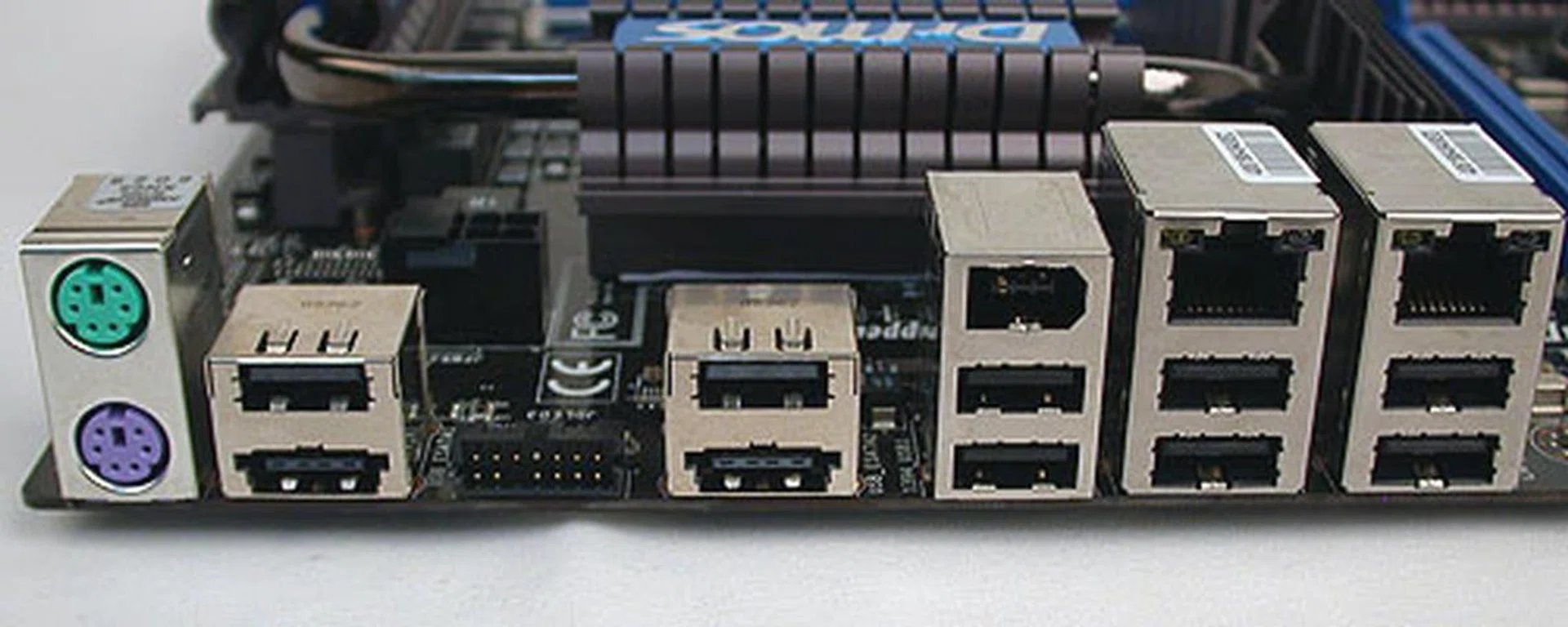
Dual Gigabit Ethernet ports, eSATA/USB 2.0 combo ports are some of the usual suspects on a higher end motherboard and this MSI board has plenty of those around. The strange port in between the eSATA/USB combo ports is for connecting to the OC Dashboard.
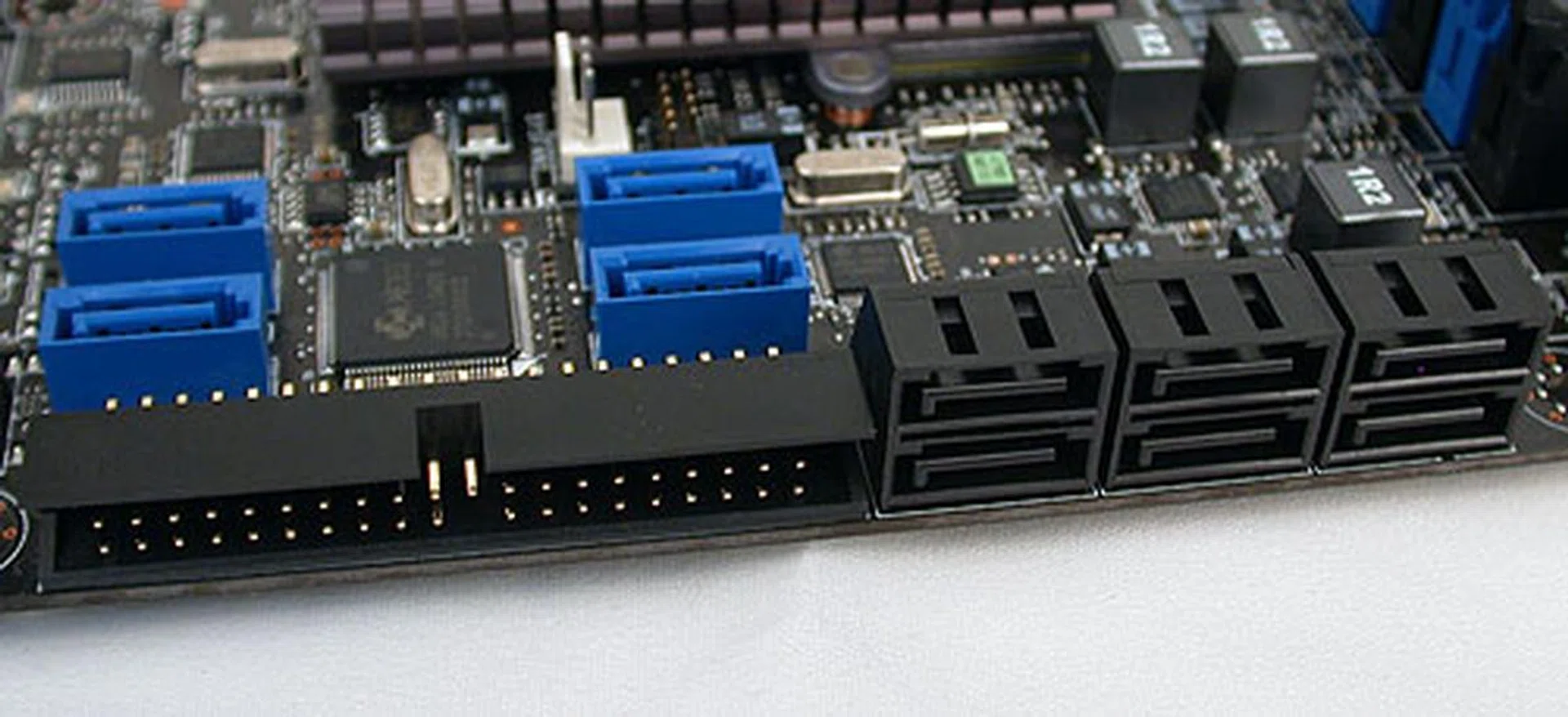
There are quite a large number of storage options on this board. First, the standard six SATA 3.0Gbps ports from the chipset. Then there are four more (in blue) SATA ports from a JMB322 controller and the IDE port from a JMB363 controller. Finally, the two eSATA/USB 2.0 combo ports at the rear panel due to a JMB362 controller.
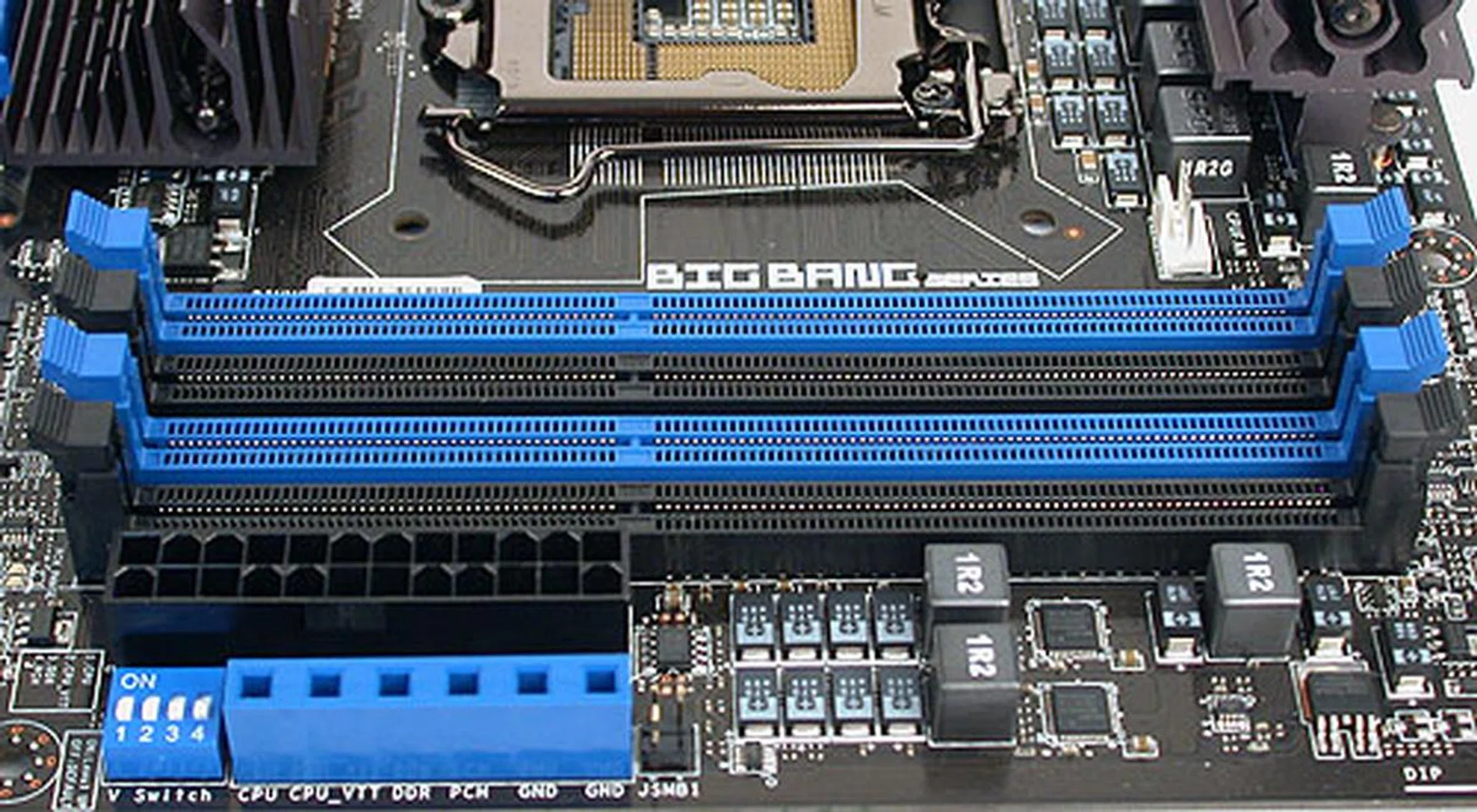
The board has four DDR3 DIMM slots supporting up to DDR3-2133 (O.C) in dual-channel mode.
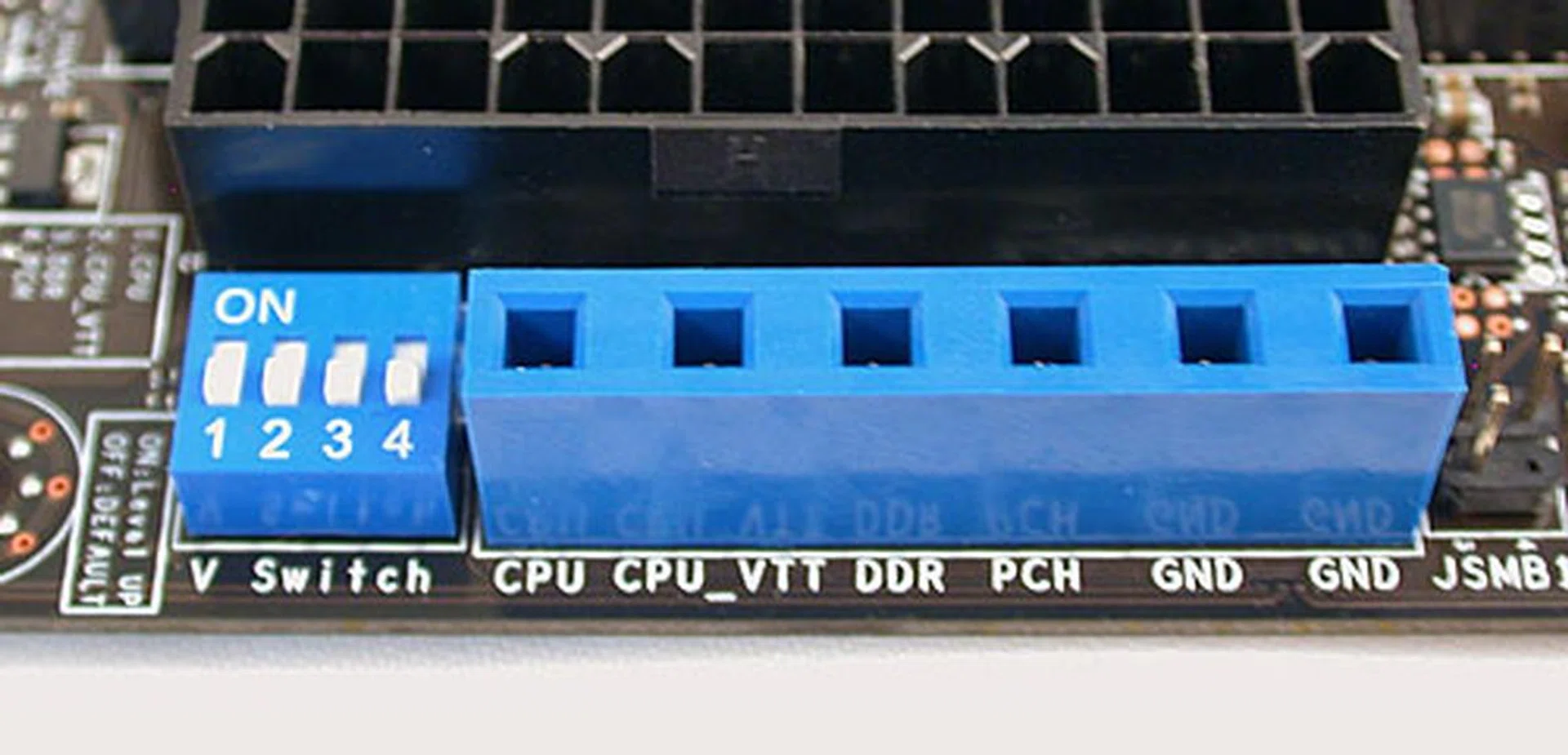
Voltage check points and a voltage switch for over-voltage options are some of the enthusiast oriented features that we saw in MSI's recent high-end boards, like the P55-GD80.
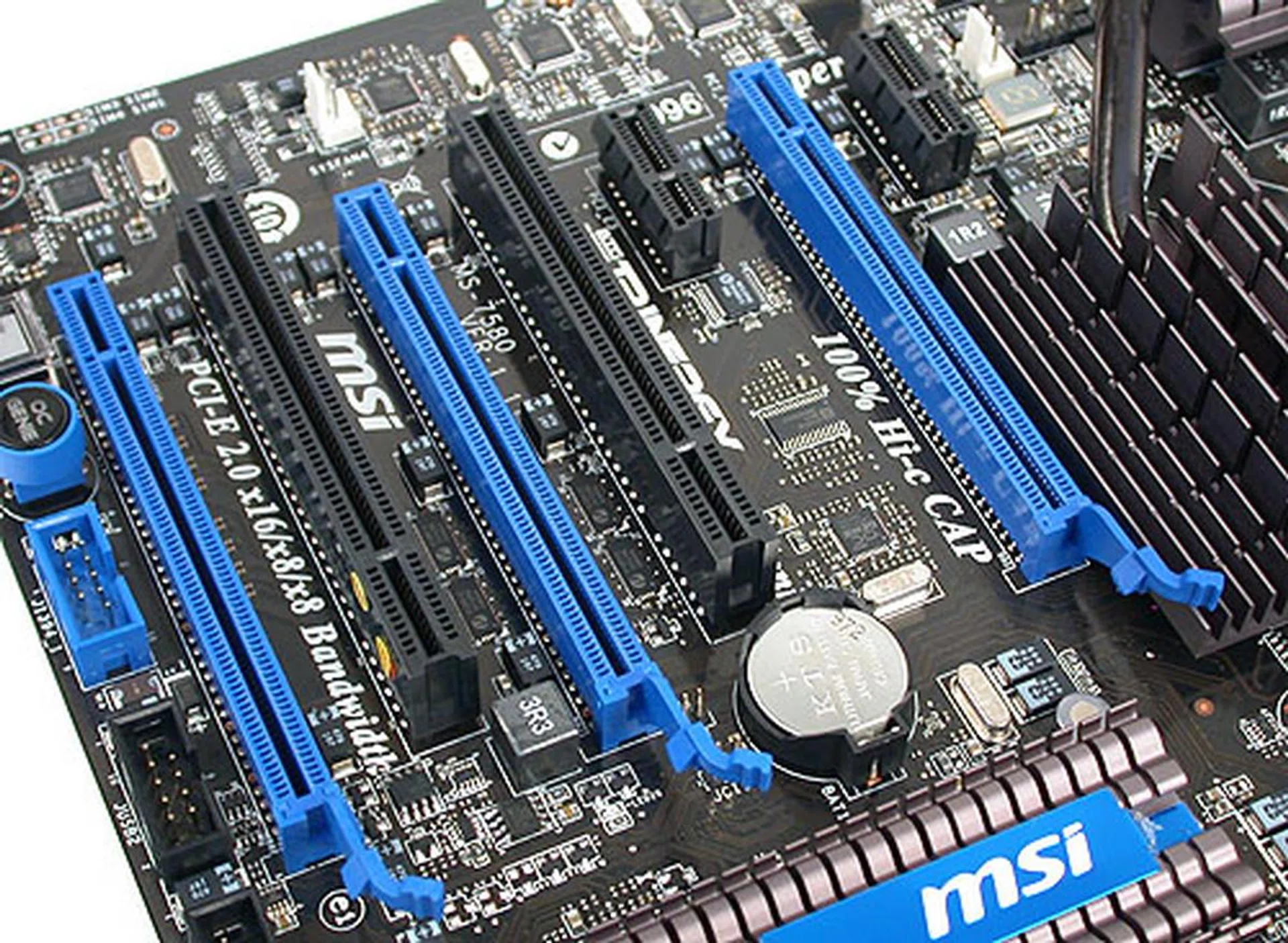
While some P55 motherboards have three, full length PCIe slots, only two could be linked via SLI or CrossFireX in most cases. Thanks to its NF200 controller however, the Trinergy allows for three-way graphics cards like what you can find on the X58 chipset.
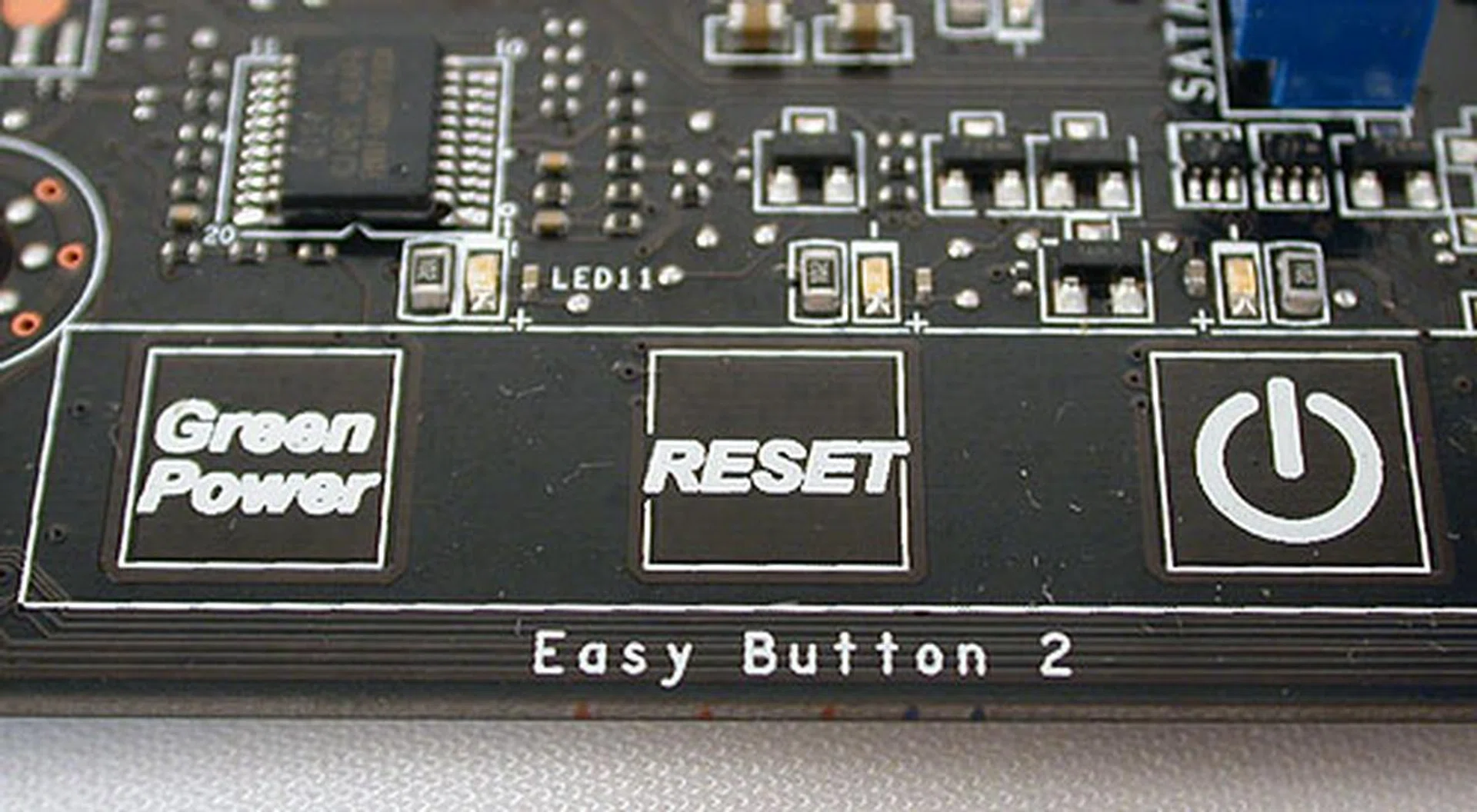
Another familiar feature for those who have seen the P55-GD80 is Easy Button 2, which are capacitive onboard buttons.
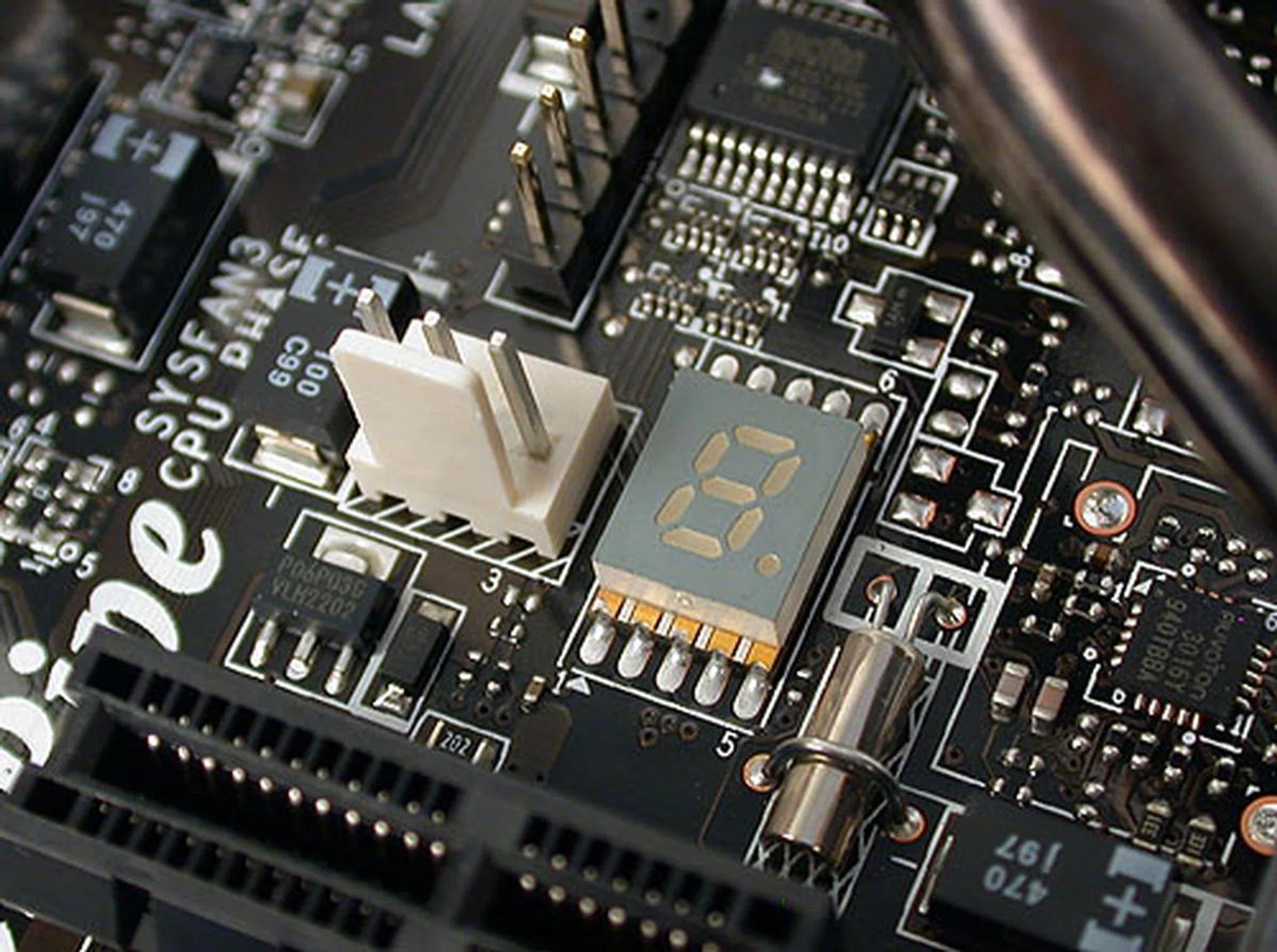
This LED indicator for the CPU power phase is another feature we last saw on the P55-GD80.
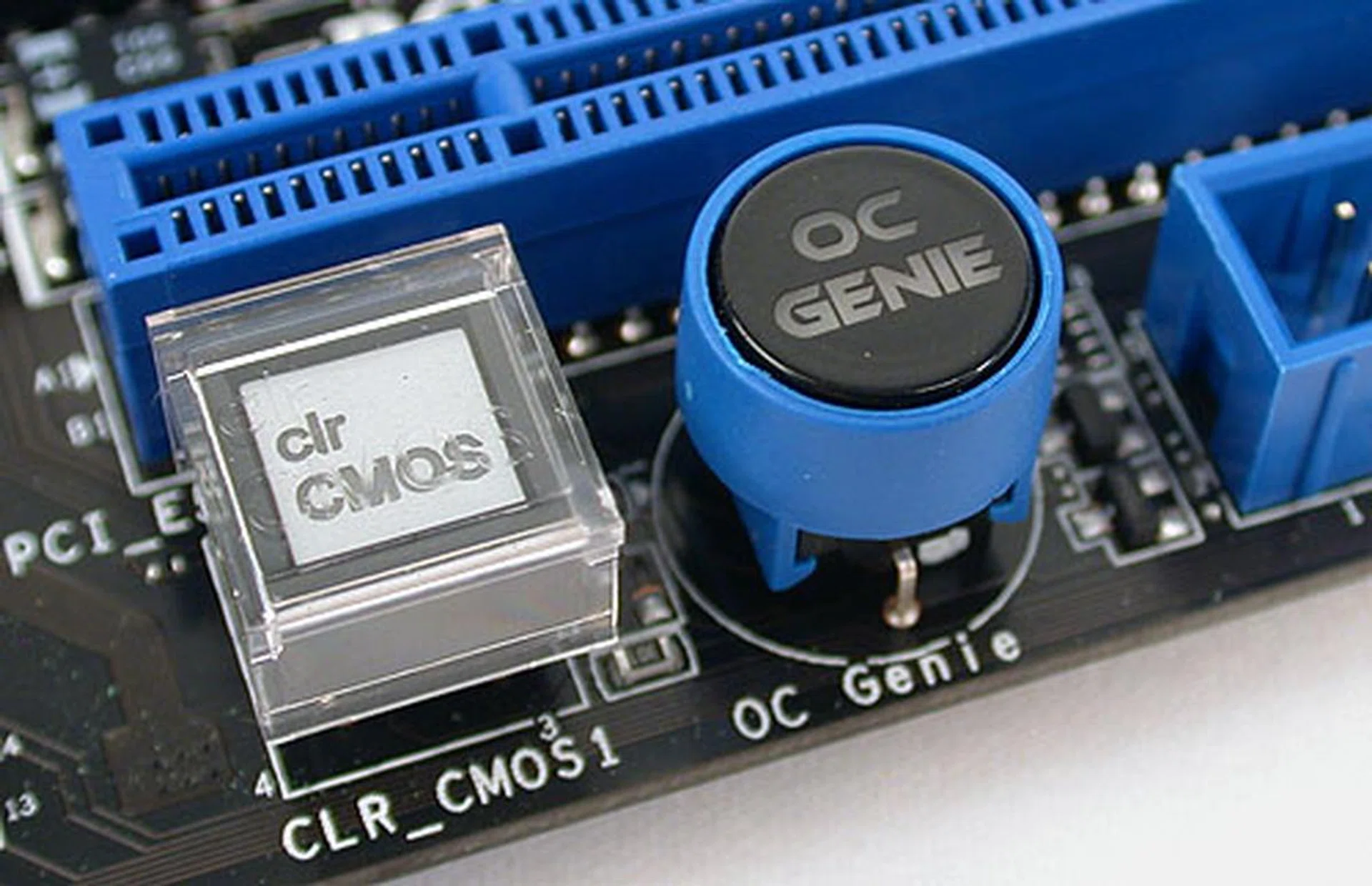
The one-button OC Genie auto-overclocking feature is central to this motherboard. We have seen how convenient and easy to use this tool is in our previous P55-GD80 review.
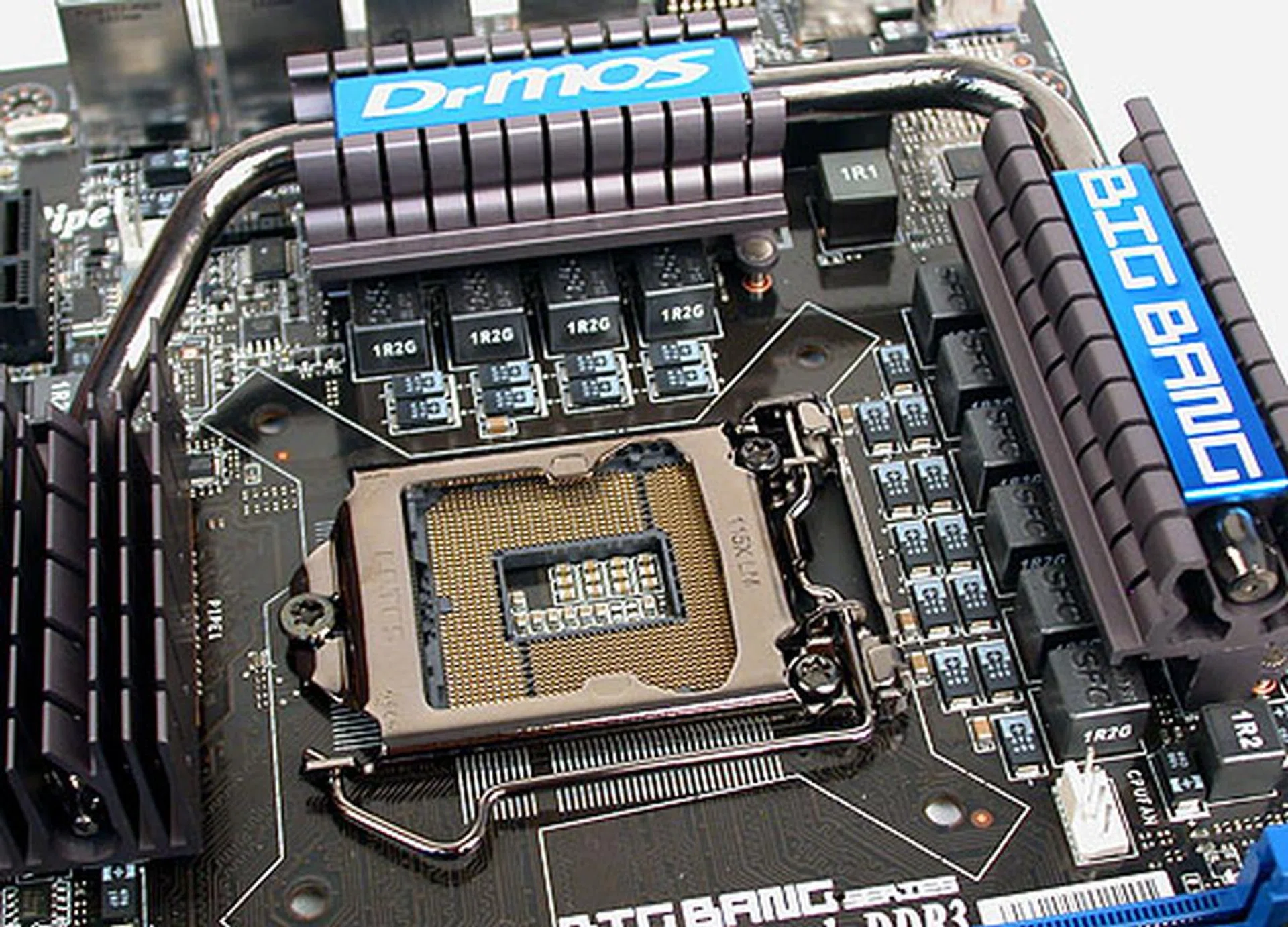
It's no mistake if you feel that the heatpipes seen here are thicker than usual. MSI's SuperPipe feature is basically the use of thicker 8mm heatpipes for better heat conduction. The CPU socket is from LOTES.
First Impressions
When we heard that MSI was sending us the Big Bang motherboard, we had high hopes that the Hydra powered Fuzion was on the way. Unfortunately, we got the Trinergy, which we had to admit had gone under our radar. It's looking like quite the luxury upgrade over MSI's own very competent P55-GD80 and brings it to the level of a high-end X58 motherboard (except for the processor socket support of course).
With MSI quoting a price tag of US$350, the Trinergy certainly belongs among the X58 boards and it is much more expensive than its P55 peers, with the closest being eVGA's similarly capable 3-way SLI board. The generous dose of extras on this board makes it more costly and at the same time brings both longer lifespan and greater power efficiency along with even more enthusiast friendly features. We just aren't too convinced yet that all this is worth more than US$100 premium over a typical P55 motherboard. In fact, at those prices, you can get a pretty powerful X58 class motherboard so it's really a matter of preference and needs.
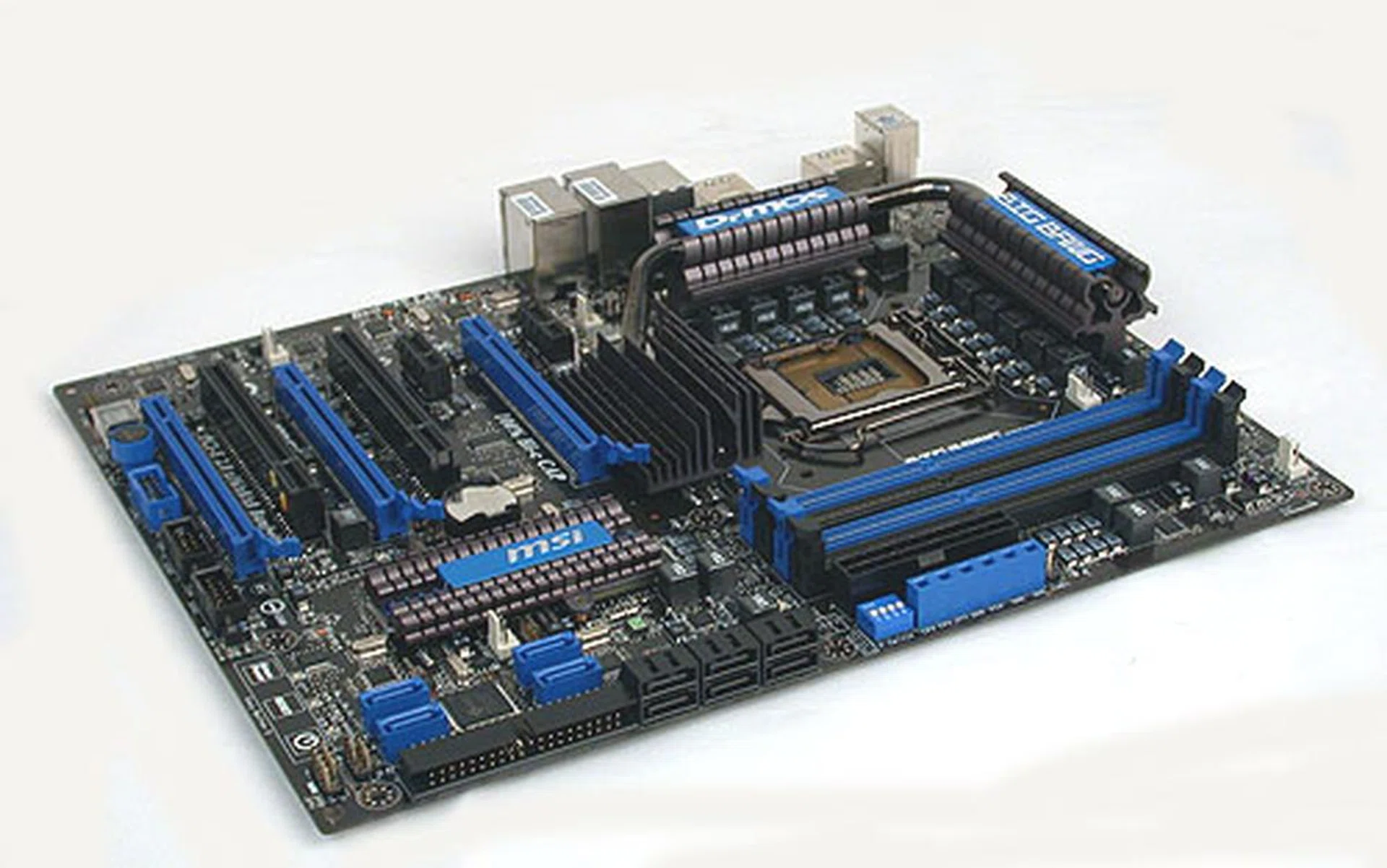
The MSI Trinergy is one of the most costly P55 motherboards in the market currently, but that's no surprise considering that MSI has brought along some heavy duty features to play.
Our articles may contain affiliate links. If you buy through these links, we may earn a small commission.