
ASUS Blitz Formula Special Edition (Intel P35)
ASUS plays the role of manufacturer and enthusiast modder with their new Blitz Formula Special Edition motherboard, featuring a hybrid water-cooled Northbridge and proper CrossFire support on an Intel P35 chipset. Throw in great overclocking and performance and you've got this year's best P35 motherboard.

Introduction
When ASUS created the Republic of Gamers (R.O.G.) series of motherboards, it was an avenue to enable ASUS to experiment with products outside of the norm. Besides creating a niche for hardcore gamers and enthusiasts, the R.O.G. boards showcase some of the innovative ideas behind the creative team there at ASUS. The first R.O.G. motherboards were based on NVIDIA nForce chipsets, which focused more on supplementing their already huge feature list with more. The ASUS Crosshair and Striker Extreme boards are examples. Then came Intel's P965 chipset and the ASUS Commando, which took overclocking potential to uncharted territories.
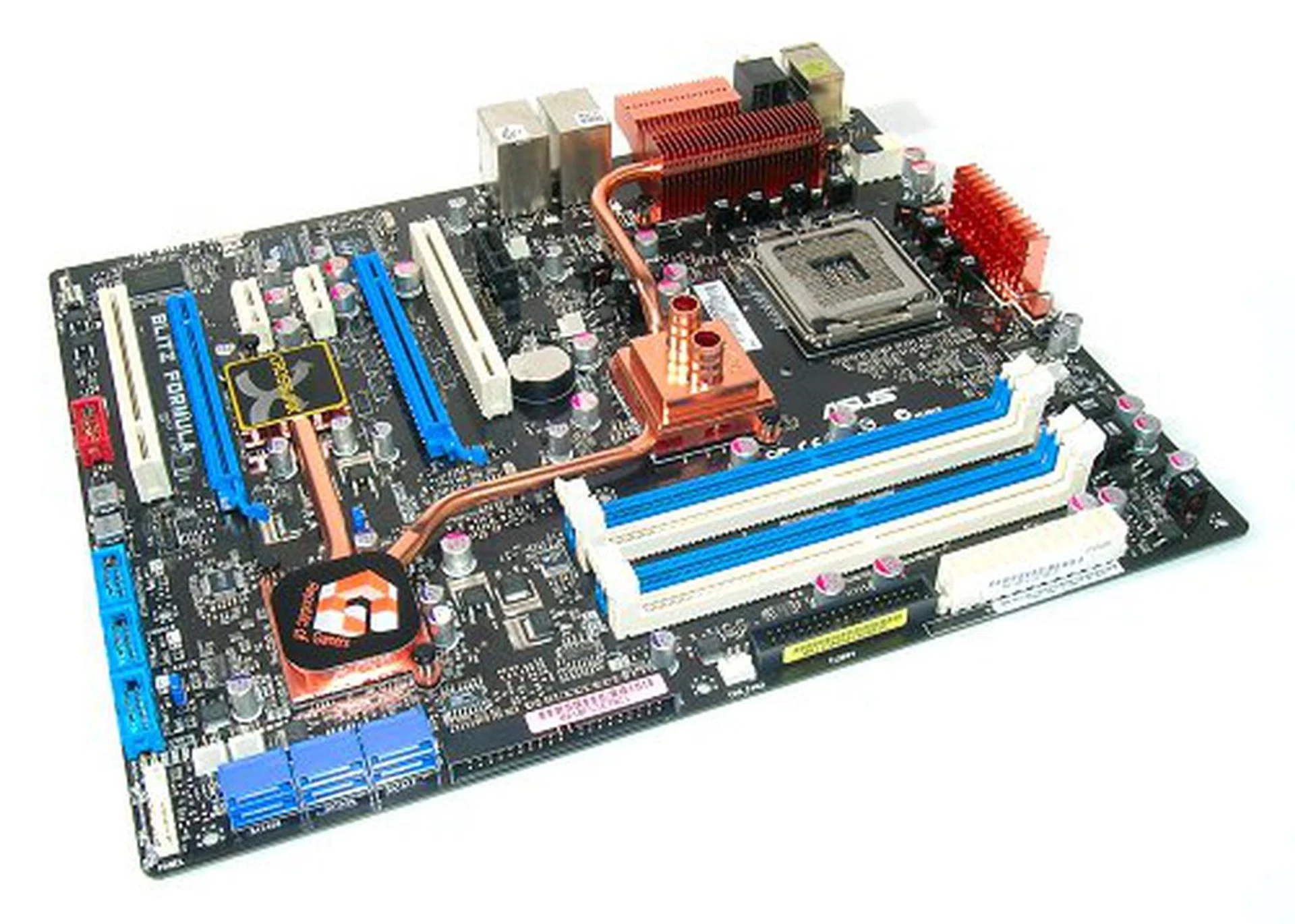
While some of the more extreme ideas like a motherboard with onboard memory have leaked beyond the R.O.G. series (ASUS P5K3 Premium Black Pearl Edition), ASUS has more tricks up their sleeves than you can shake a stick at. And their latest Republic of Gamers offerings are a testament to that. The ASUS Blitz Extreme and Blitz Formula Special Edition attempts to bring not one, but two very unique features to the table that one would usually only see from the hardcore modding community. These include hybrid cooling and a custom 'hacked' PCIe controller to force dual x8 PCIe operation from the Intel P35 chipset. In this review, we check out the Blitz Formula Special Edition motherboard.
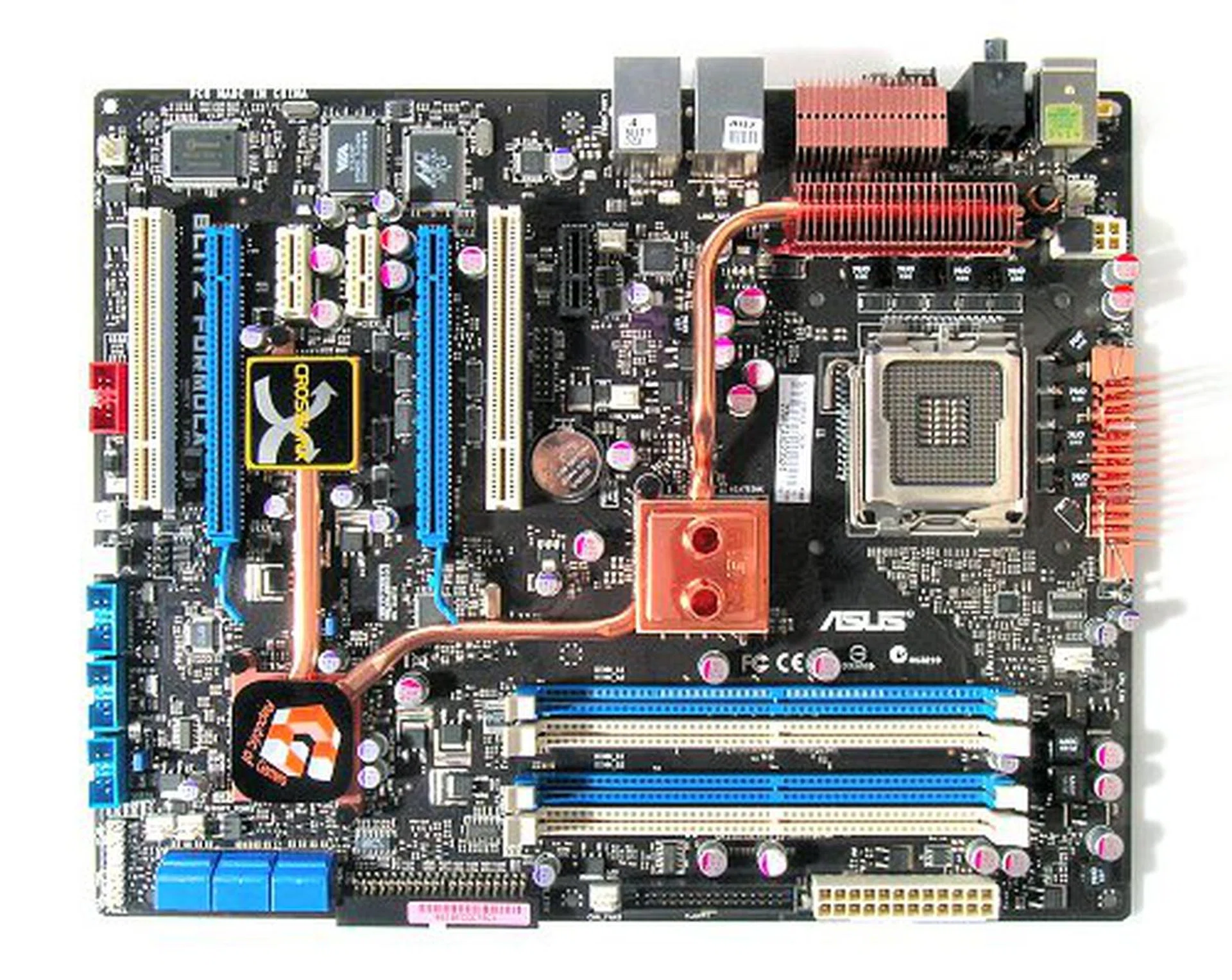
The ASUS Blitz Formula Special Edition motherboard.
Packaging and Specifications
The Blitz Formula comes with The most elaborate accessory bundle we've come across, even among ASUS boards. Besides the throng of cables and regular ASUS extras like the Q-connector kit and optional fan cooler, you get an accessory kit for the Fusion Block System, an external LCD Poster display, a sound card and the most unusual item in the package comes in the form of a set of self adhesive rubber tabs, which ASUS is passing off as DIY Pedestal stands. Basically, you can peel of each tab and arrange it so you can place the board on top to help with heat dissipation; that is of course, if you're used to setting up your system out in the open.
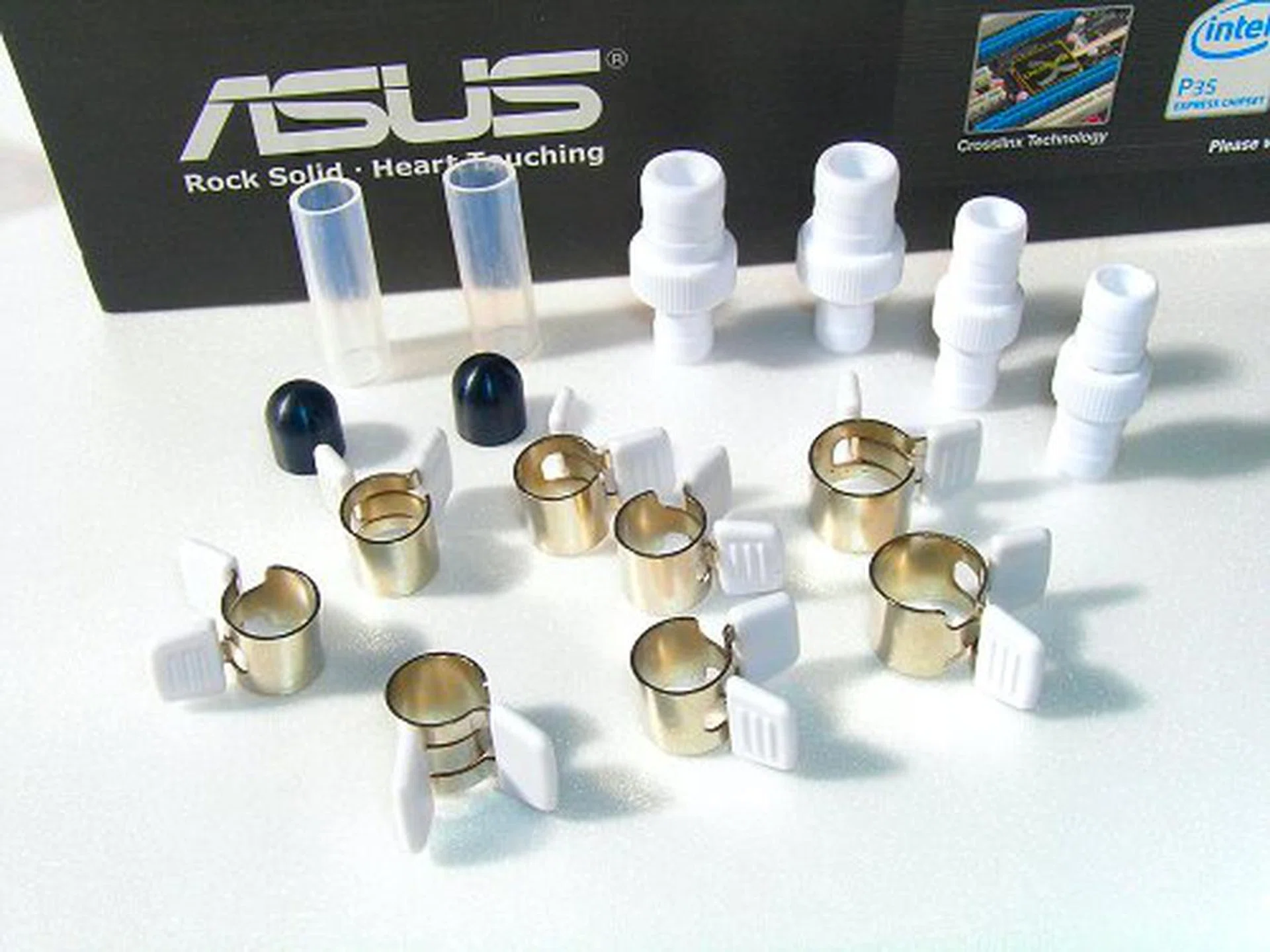
water-cooling accessories to cater to different pipe sizes.
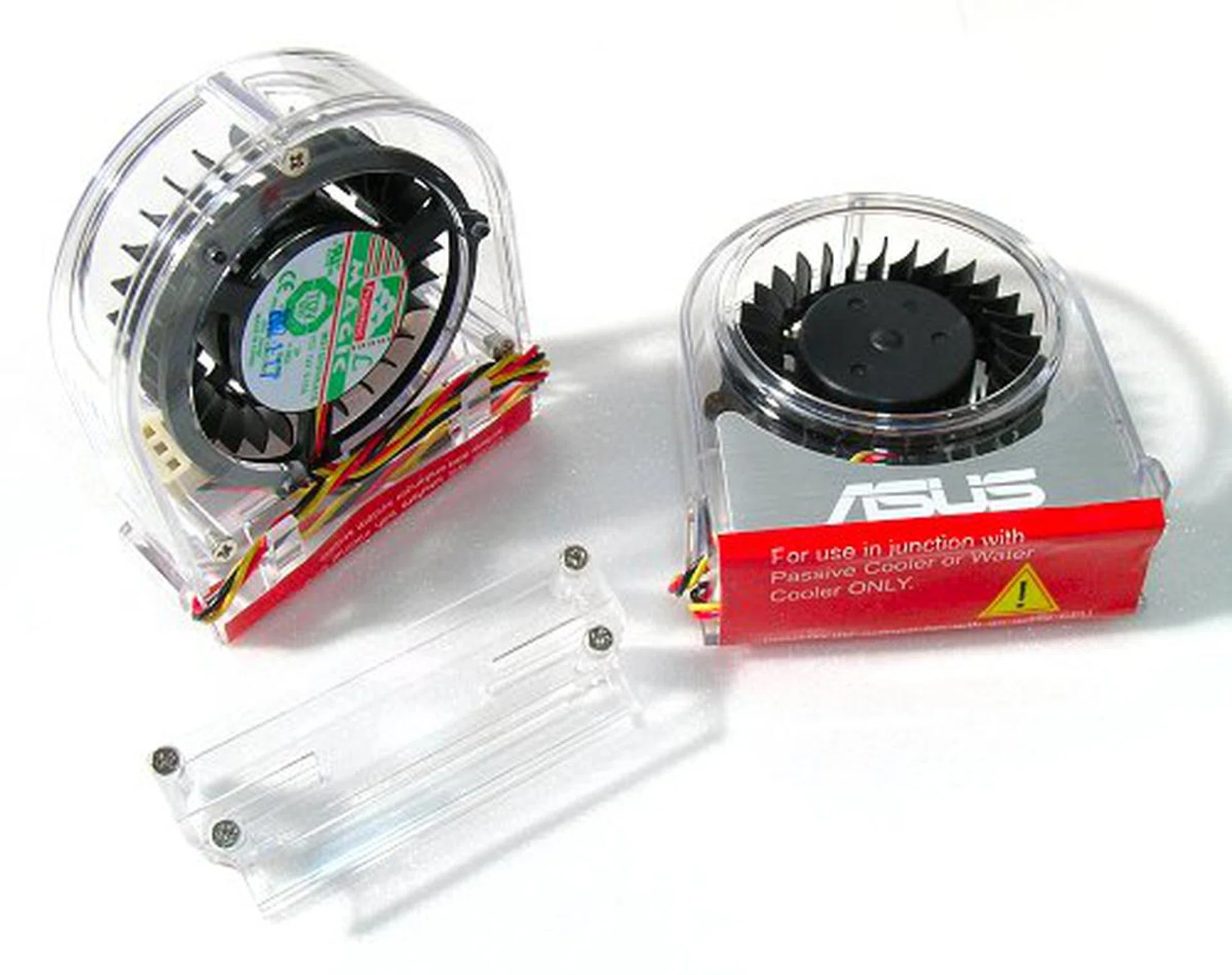
Bundled fans for optional active cooling. Even comes with a converter to fit into the smaller heatsinks.
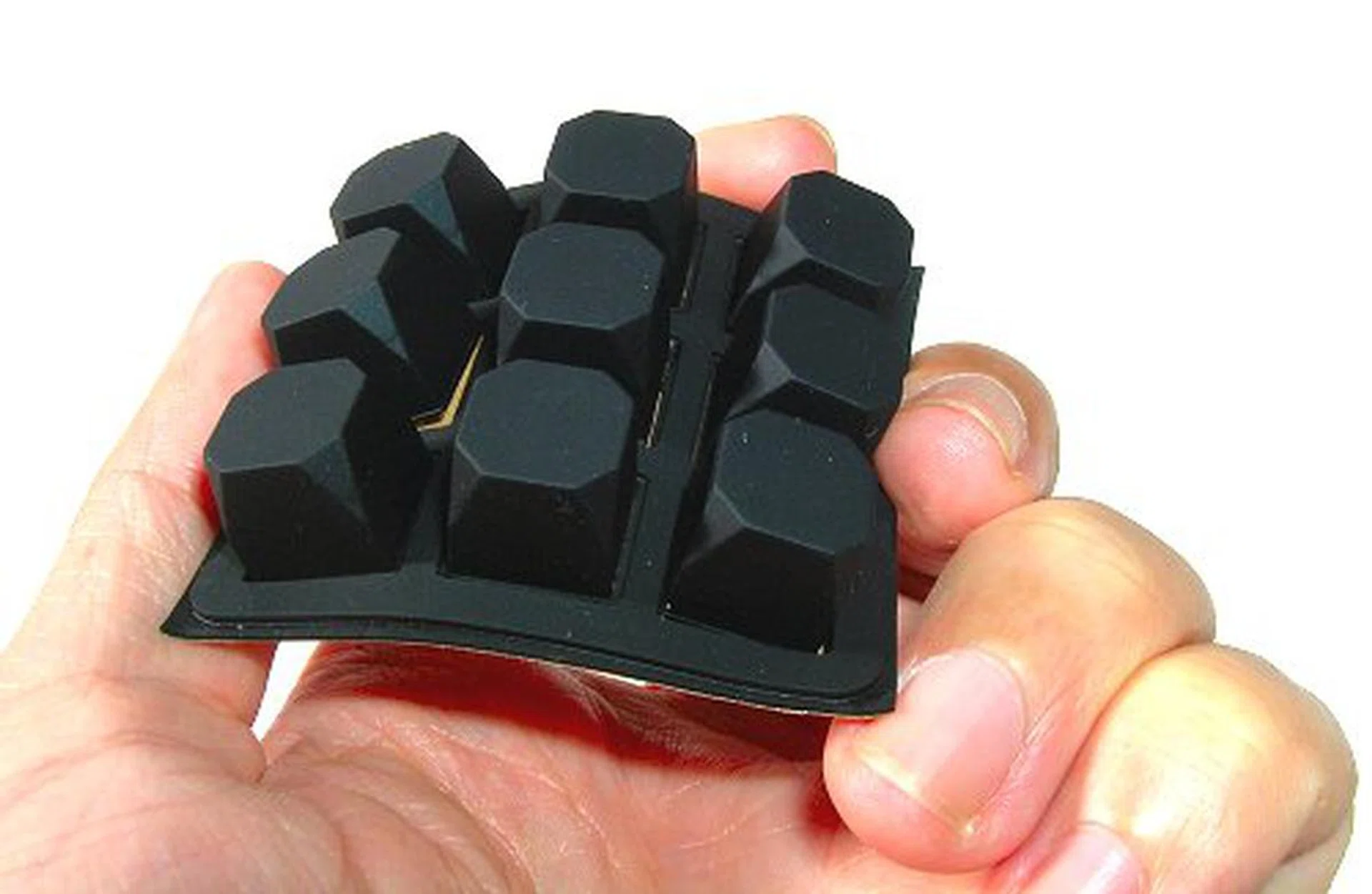
Rubber stands which you can use to elevate the board. Strictly for the hardcore users who place their boards in the open without a chassis.
Here's the full list of accessories accompanying the board:-
- 6 x SATA cables
- 2 x SATA power cables (dual plug)
- UltraDMA 133/100/66 cable
- Floppy disk drive cable
- SupremeFX II Audio Card
- Fusion Block System Accessories
- 2-port USB2.0 and IEEE 1394a bracket
- LCD Poster
- DIY Pedestal
- ASUS Optional Fan
- 3 in 1 ASUS Q-Connector Kit
- I/O Shield
- Cable Ties
- Driver DVD and user's manual
- S.T.A.L.K.E.R.: Shadow of Chernobyl full game
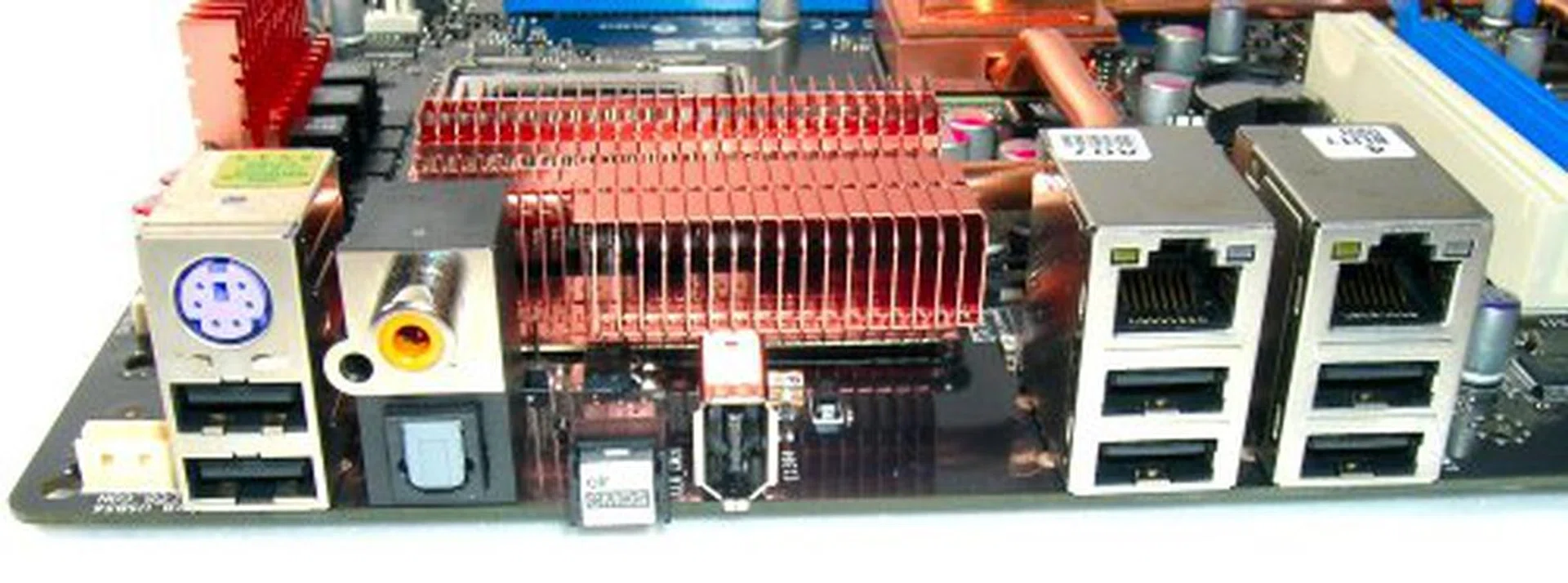
The rear I/O panel looks strangely empty due to the fact that the Blitz Extreme features a proper sound card. ASUS also does away with all legacy connectors except the one PS/2 keyboard. Here, there are six USB 2.0 ports, optical and coaxial S/PDIF, one FireWire, two LAN ports and the CMOS reset button.
Features
If you haven't already figured out, the ASUS Blitz Formula Special Edition motherboard is one incredibly souped up product, but the essential features are pretty straight forward. At the core of things, the Blitz Formula is based on the Intel P35/ICH9R chipset combination. This board will only feature DDR2, with native DDR2-1066 support. If you are looking for DDR3 support instead, you can check out the Blitz Formula's twin, the ASUS Blitz Extreme.
In terms of storage, the board has six SATA 3.0Gbps ports controlled by the ICH9R Southbridge. They all feature Intel's Matrix Storage Technology features including various RAID modes, AHCI and NCQ. A JMicron JMB368 controller provides the necessary IDE port, but eSATA support is missing from its repertoire. There are two Gigabit LAN controllers on the board, though the board mixes a PCI-based Marvell 88E8001 with a PCIe Marvell 88E8053 controller. FireWire-400 is also available through the commonly found 2-port VIA VT6308P controller and you can always count on the massive 12 USB 2.0 ports supported by the Southbridge, eight of which can be used right out of the box through the rear panel and bundled bracket.
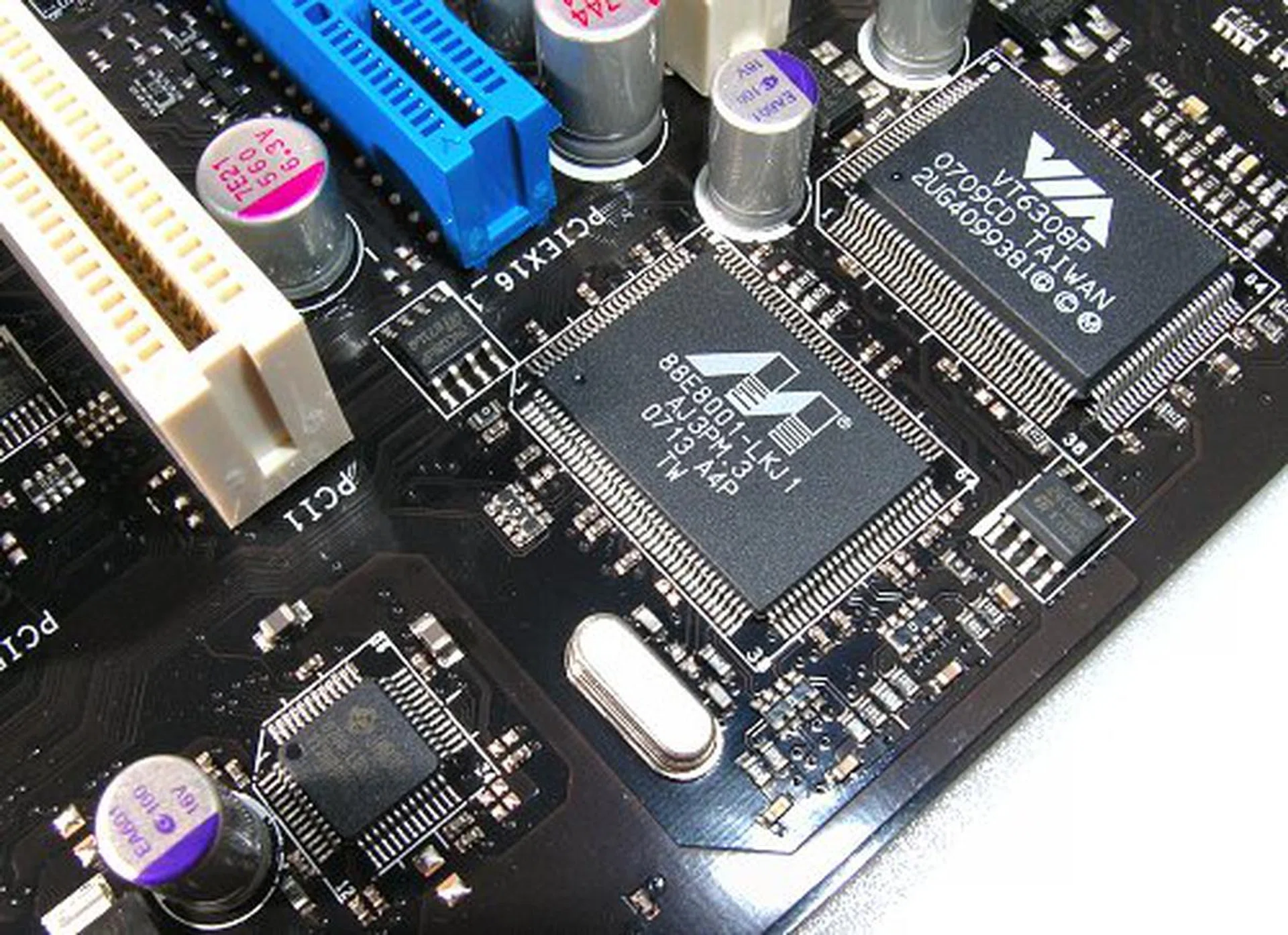
Most of the controller ASIC chipsets are located behind the expansion slots to leave enough room for the heat-pipe.
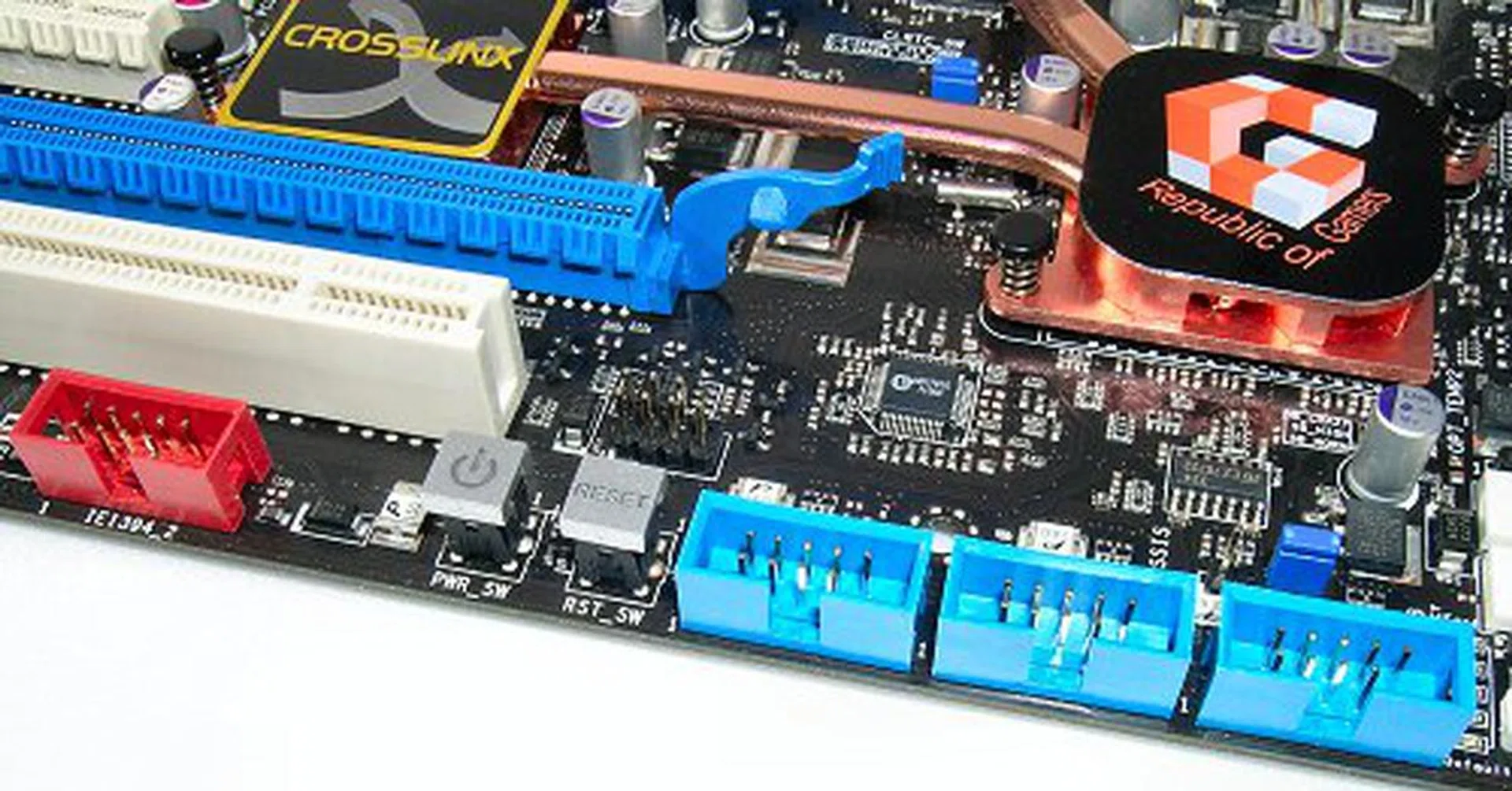
Extra USB and FireWire headers neatly line the bottom of the board. Seen here are the Reset and Powe switches as well.
Among the standard features, the one that really stands out is a new implementation of the SupremeFX audio card, aptly called SupremeFX II. Since this is a bundled product, there isn't any proper specifications for it, but looking at what is available, the SupremeFX II is still based on the same Analog Devices ADI 1988B HD Audio CODEC that is used for the first generation SupremeFX as well as most of the onboard audio solution for ASUS motherboards. What's interesting about this card is that it comes with a regular PCIe interface, but will only work when plugged into the special Black colored PCIe x1 slot. There are no BIOS options to toggle this and the card works just like any normal external sound card, but in our tests, Windows would only detect it when plugged in this special slot. ASUS also claims exclusive audio features like 3D position detection as well as voice amplification technology, but besides the regular SoundMAX driver package, we didn't find any other accompanying software for the sound card.
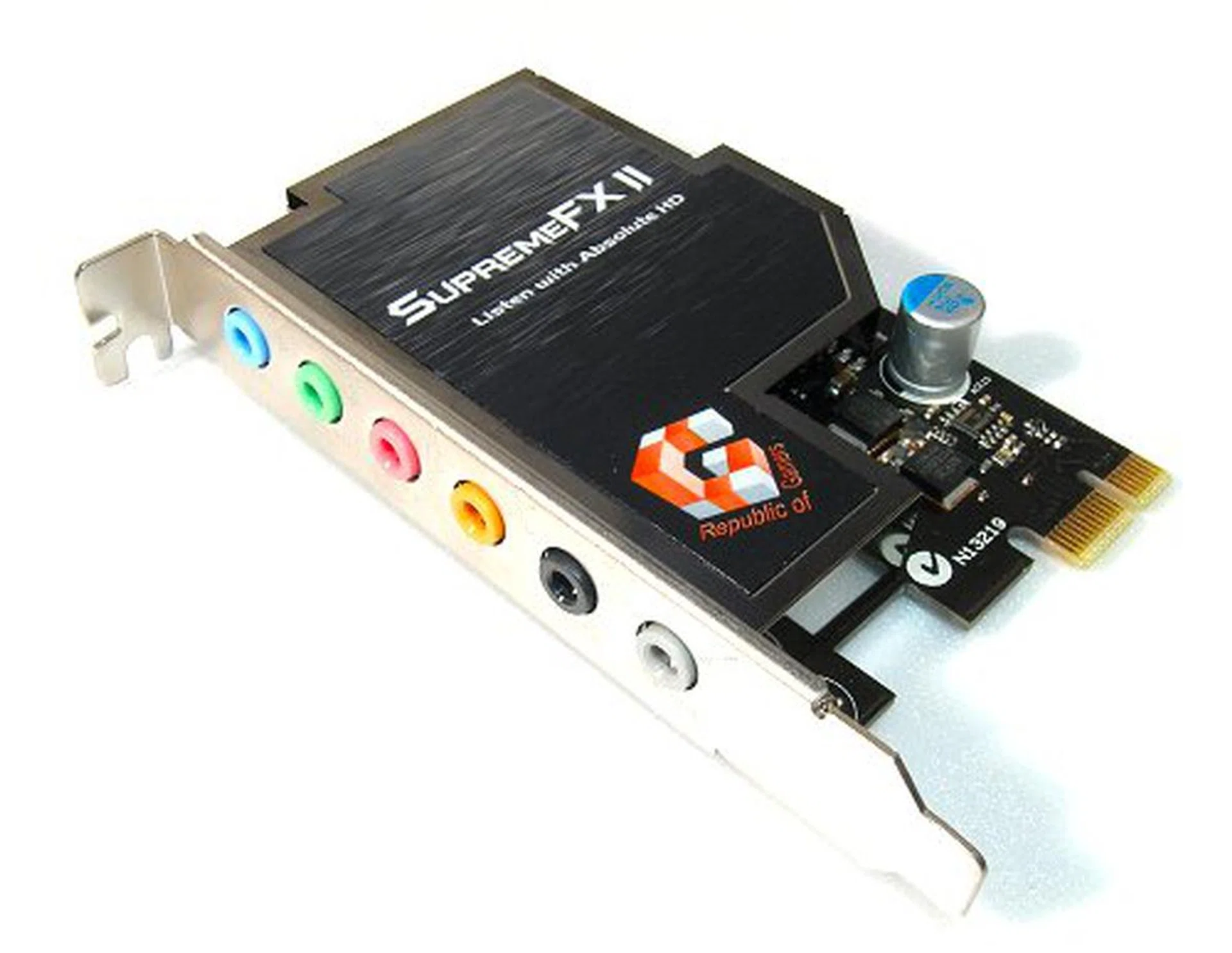
Repackaged ADI1988B audio card.
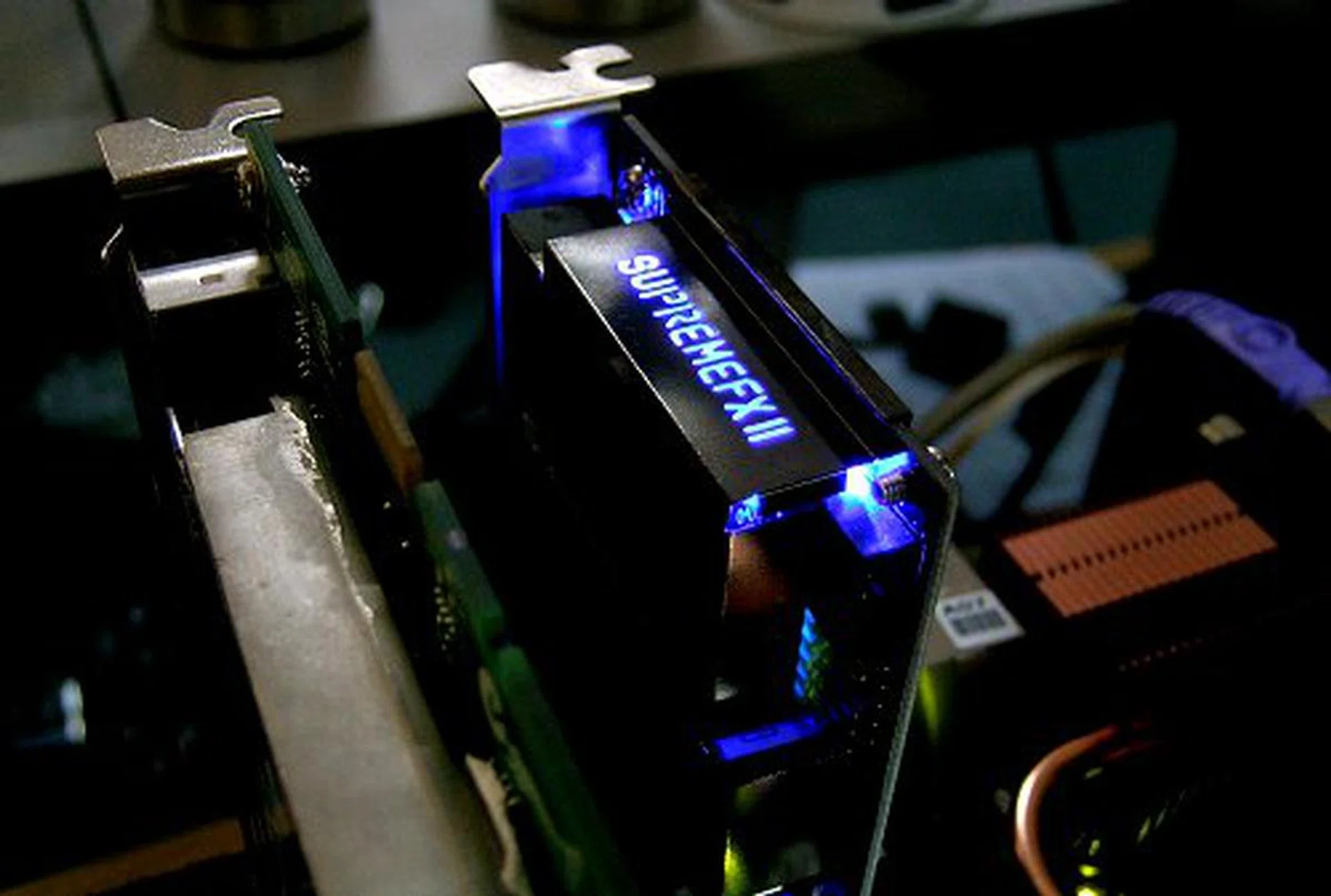
What's an enthusiast board without some cool lighting.
Layout
Try as we might, we couldn't find any fault with the layout and design of the Blitz Formula. The board comes close to being perfect in terms of component placement, user friendliness and spacing. The low profile heat-pipe system did not pose as an obstruction during installation, power connectors were easily reached and the angled storage ports (and bundled cables) ensure that users will not face cable issues even with large add-on cards and a cramped chassis. Component placement is impeccable, maximizing available space on a standard ATX PCB without crowding the board.
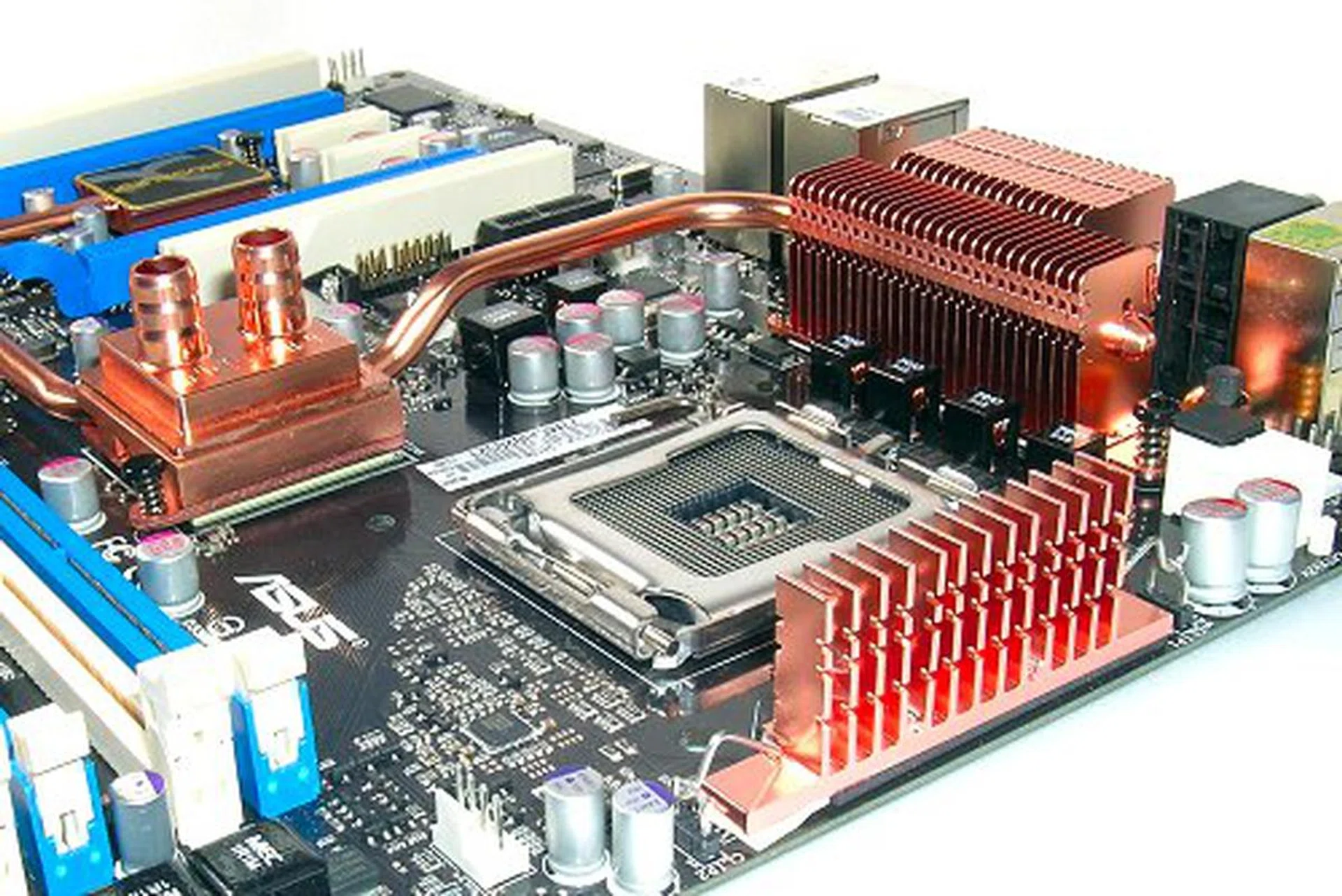
Low profile heat-pipe, thin heatsinks and the cap-less design gives the CPU socket pretty good headroom for third party coolers.
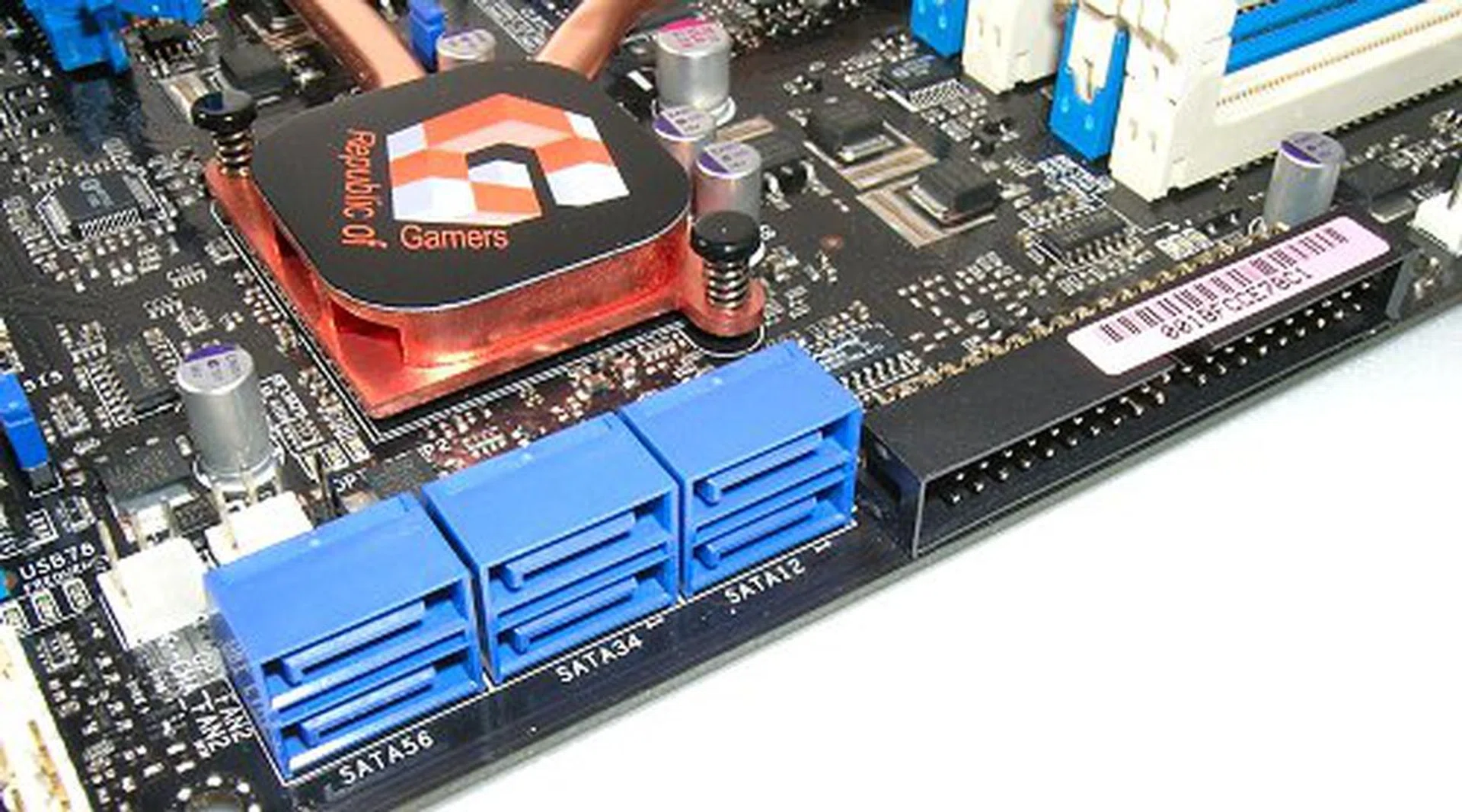
Angled storage ports to better facilitate installation.
New Republic of Gamers' Offerings
Now comes the real goodies. Almost every part of the Blitz Formula has been enhanced by some unique feature, some obvious, some subtle, but all of them look to be well thought out and will benefit its target audience, which are the hardcore enthusiasts and gamers. The two most prominent features are the Fusion Block System and CrossLinx Technology. Fusion Block is the name of the new hybrid chipset cooler on the motherboard. At a glance, it is a regular heat-pipe unit that is similar to what we see in every high-end board today, but the Northbridge block can actually accommodate water cooling. Basically, the bottom half of the cooler is a heat-pipe and the top portion is a water block. Just like OCZ's FlexXLC memory, you can choose to run the board sans water cooling, or enhance the cooling capacity through the water block.
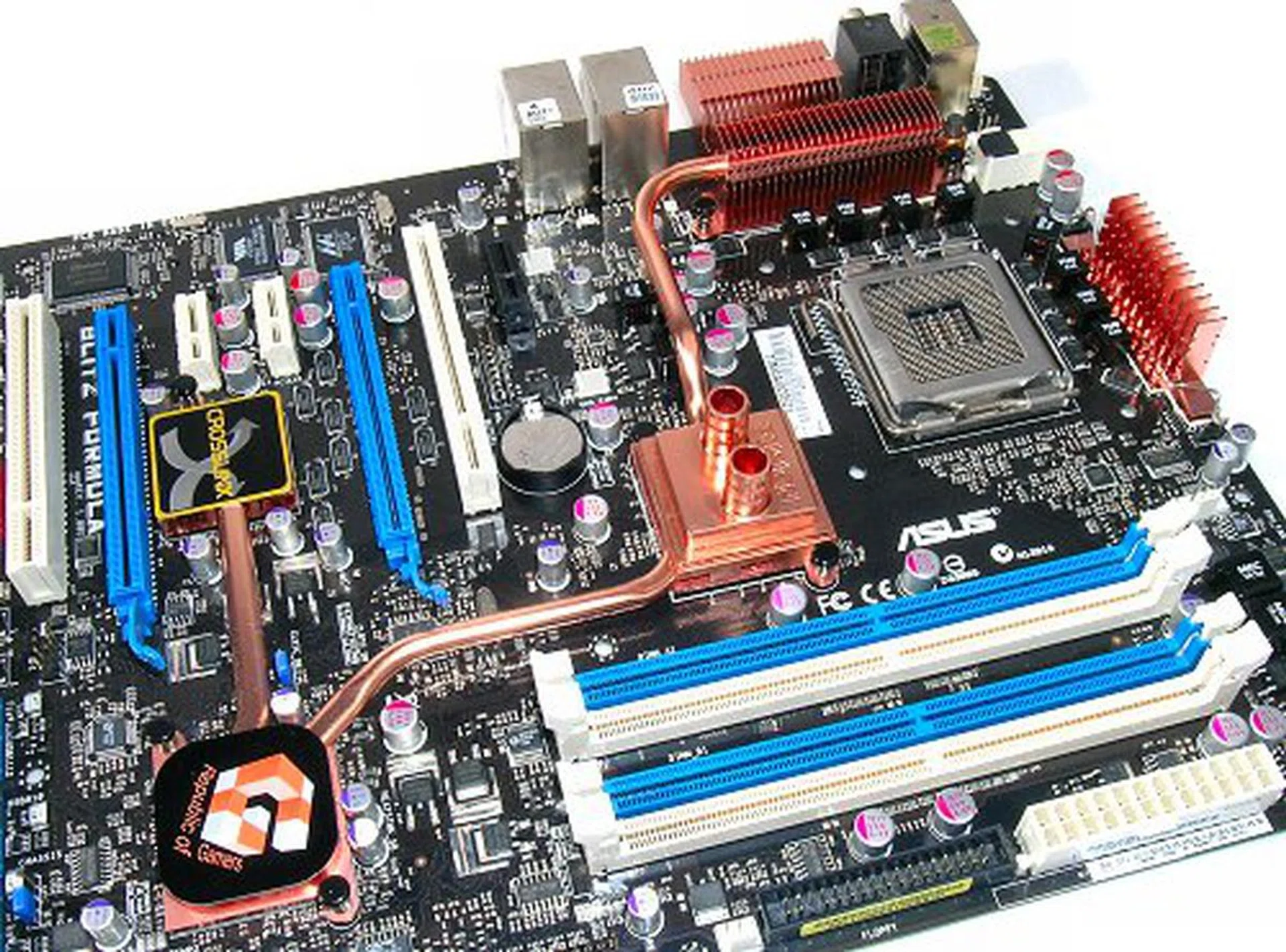
The Blitz Formula's Fusion Block cooling system.
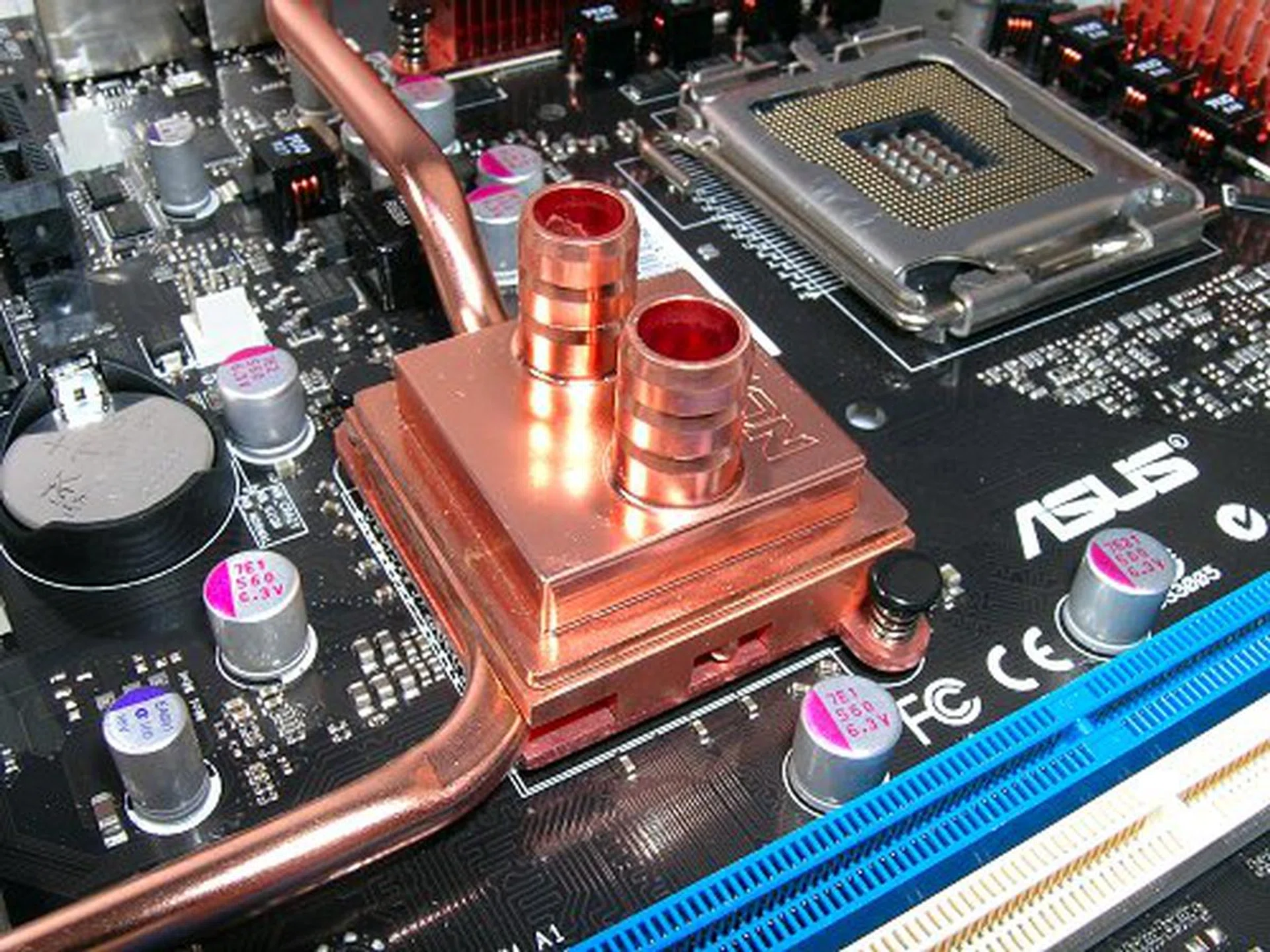
Regular heat-pipe cooling below and a small waterblock on top to facilitate optional water-cooling.
If you follow the heat-pipes on the board, you will notice that it extends to cool a third chip, labeled Crosslinx. Crosslinx Technology is essentially a third party PCI Express controller or switch that splits the fixed PCIe x16 lane into dual x8 lanes for the purpose of CrossFire GPU setups. Up till now, Intel's mainstream PCIe chipsets (945, 965 and P35 series) all support CrossFire multi-GPU technology, but they are essentially fixed single GPU chipsets forced to operate with an imbalanced x16/x4 configuration for CrossFire. The last chipset from Intel to feature proper CrossFire support is the aging 975X Express and the next is its upcoming successor, the X38. With Crosslinx, the ASUS Blitz series of boards will be the only ones to feature a manufacturer 'hack' for proper dual x8 functionality through the P35 chipset.
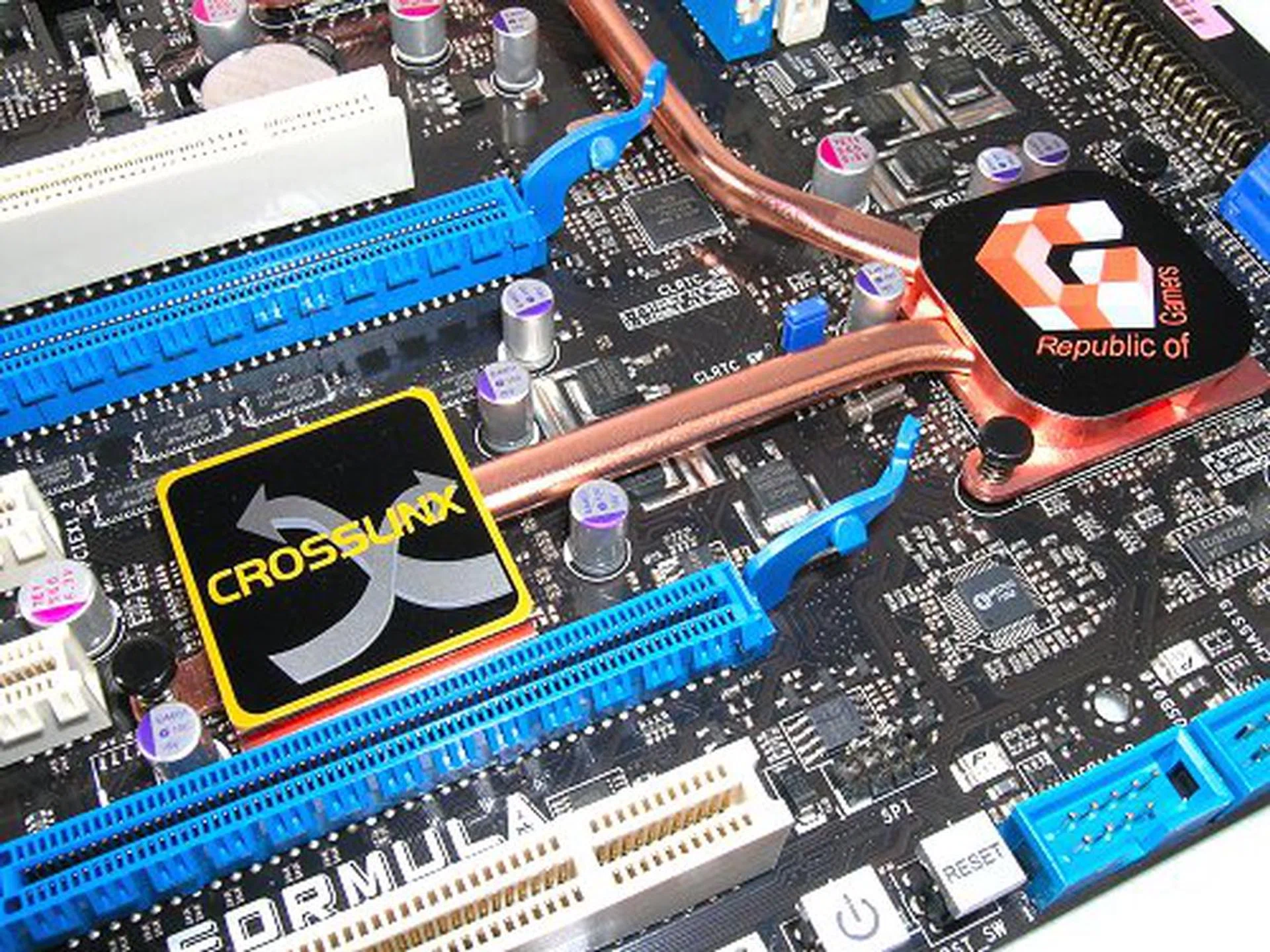
Crosslinx is an extra chipset used to override the primary PCIe x16 lanes and split them into dual x8 for CrossFire use.
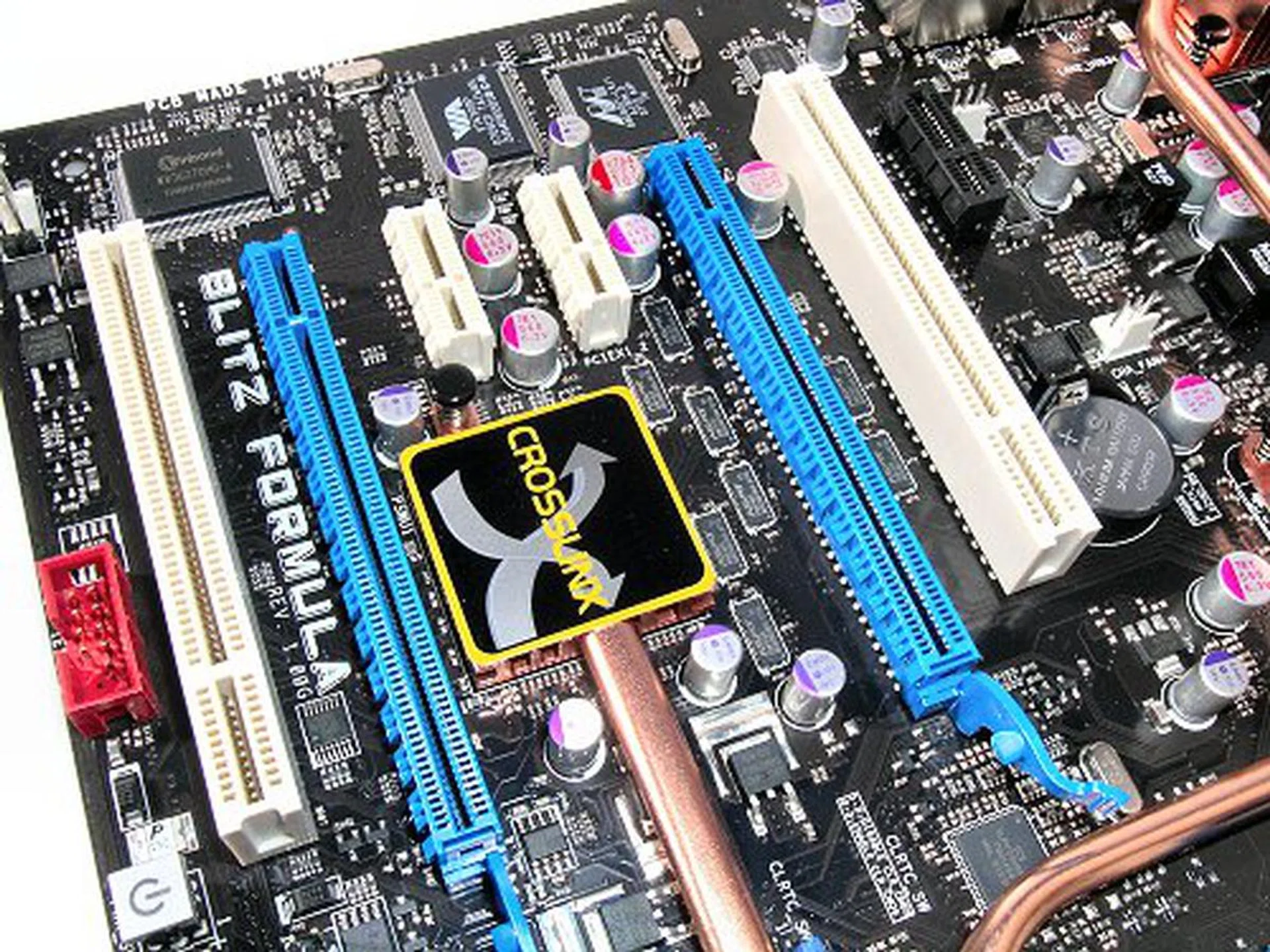
Not only proper CrossFire, but great slot layout as well.
Besides these two major features on the Blitz Formula, the board also has a smattering of smaller features that are catered towards overclockers. In previous R.O.G. motherboards, ASUS introduced a series of innovative reporting tools built onto the motherboard itself, such as LEDs and their proprietary LCD Poster debug mechanism. The Blitz Formula comes with enhanced versions of these tools. For one, the LCD Poster is now an external device instead of a fixed feature at the rear I/O panel, making it a much more practical tool than before. Then there is the series of 'Voltiminder' LEDs onboard, their intention to remind users of the conditions of the various components of the board. For instance, when the CPU LED is Green, this indicates normal voltage between 1.1-1.5V. If voltage rises above 1.7V, the Red LED lights up instead. There are similar LEDs for Memory, Northbridge, Southbridge, HDD and FSB reporting across the board.
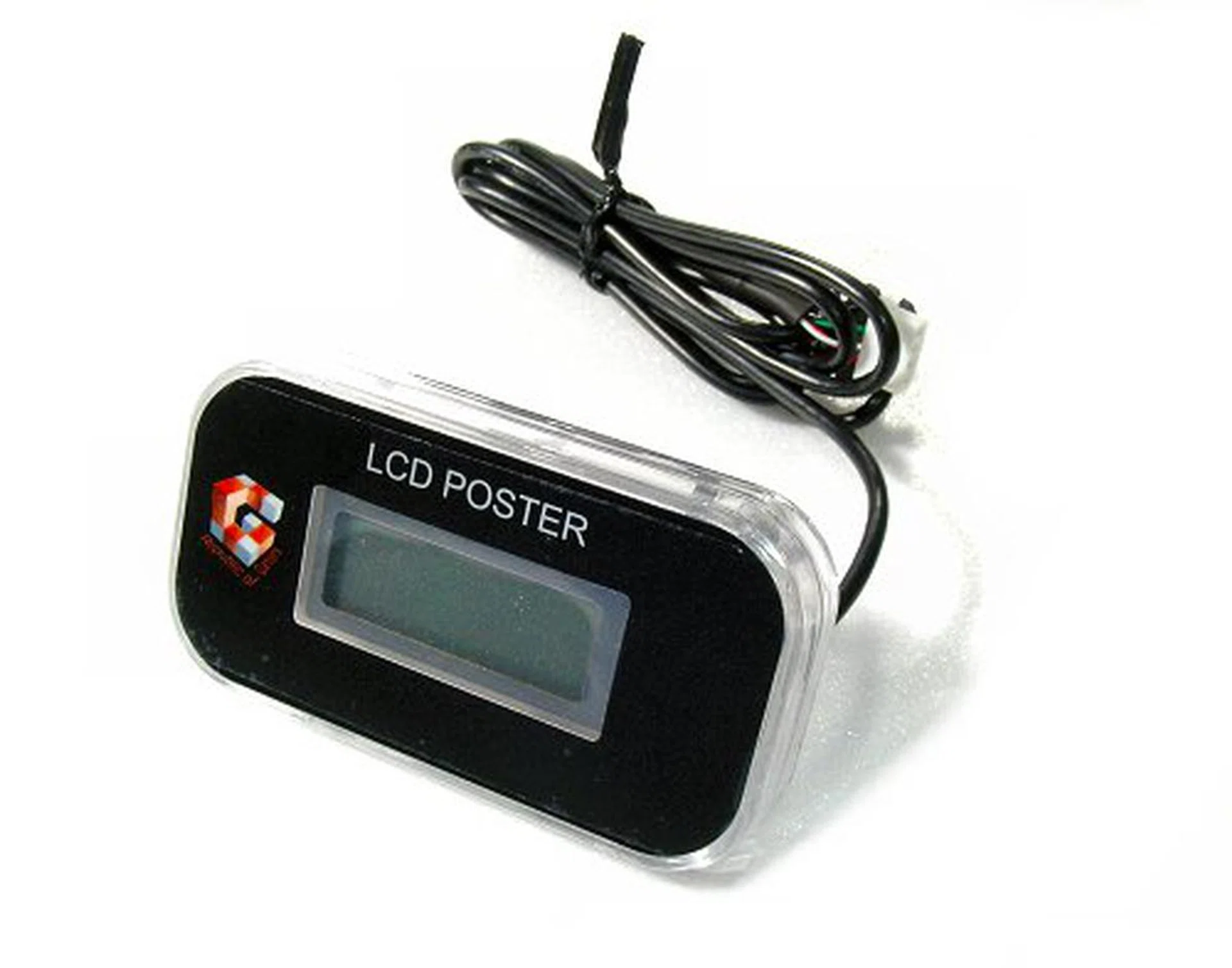
Finally, ASUS makes the LCD Poster as a external component instead of fixed on the board.
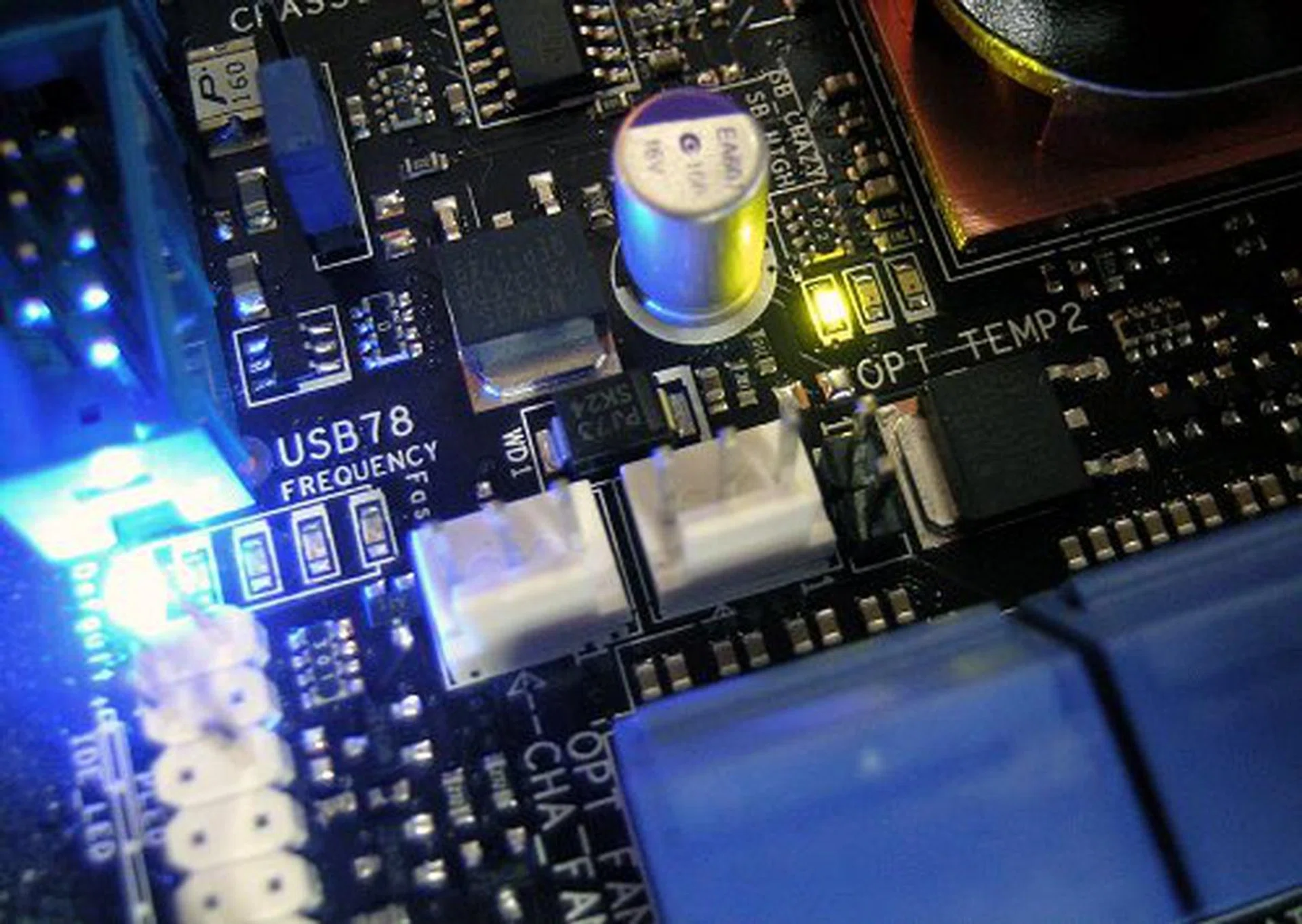
Voltiminder LEDs remind users of the voltage and FSB lvl that the motherboard is running without use of monitoring software.
On the power front, the board comes with a full solid capacitor design and an updated 8-phase cap-less PWM system like previous R.O.G. boards. This time, ASUS has even beefed up the power regulation for the DIMM slots, featuring a 2-phase DDR2 power supply, which translates into more stable and efficient power to the memory and ultimately higher overclocking capability. Overkill? These are features that overclockers will probably lap up. Combined, the Blitz Formula is an exceptionally engineered motherboard.
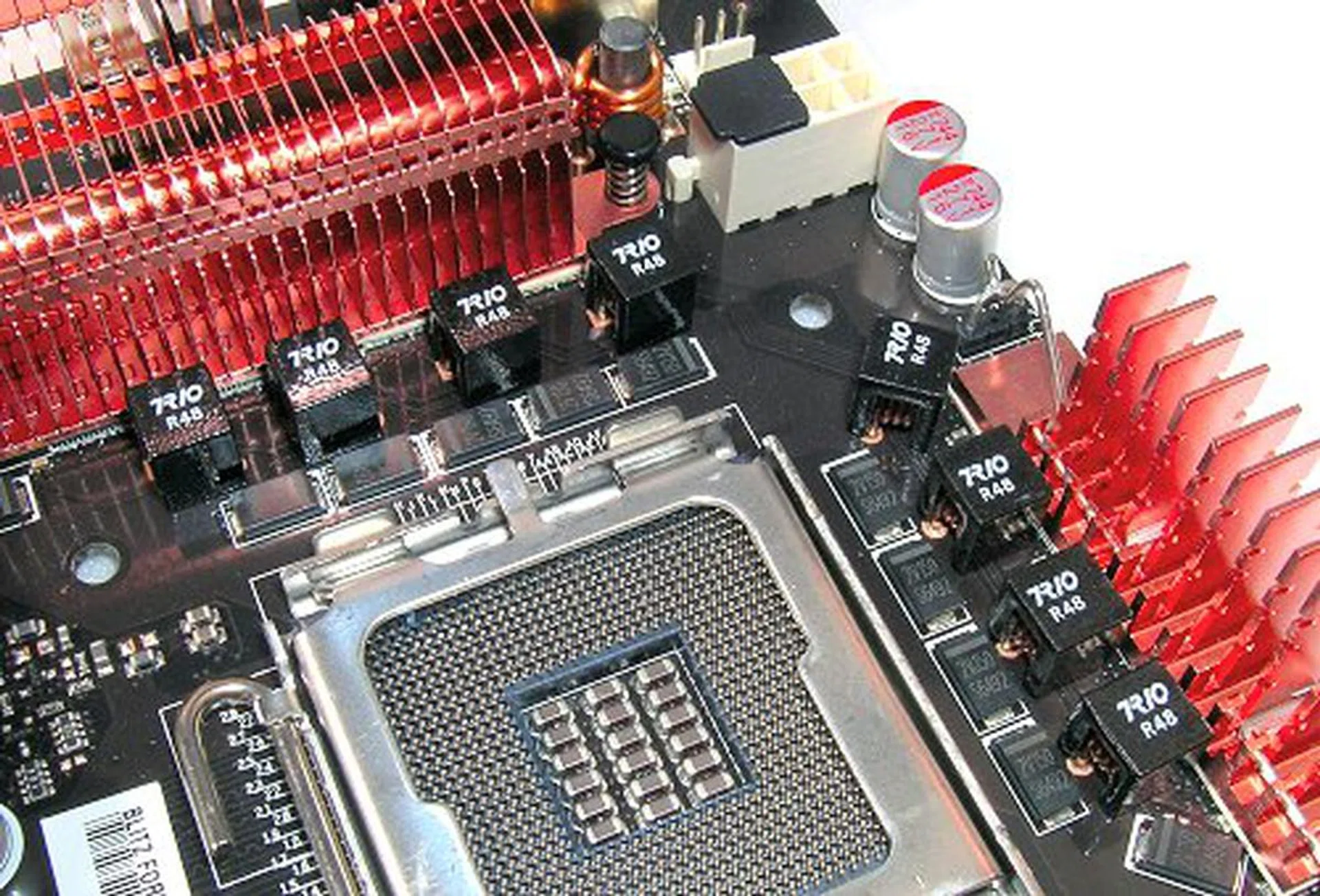
Similar to all R.O.G. motherboards in the past, the Blitz Formula sports a cap-less 8-phase PWM.
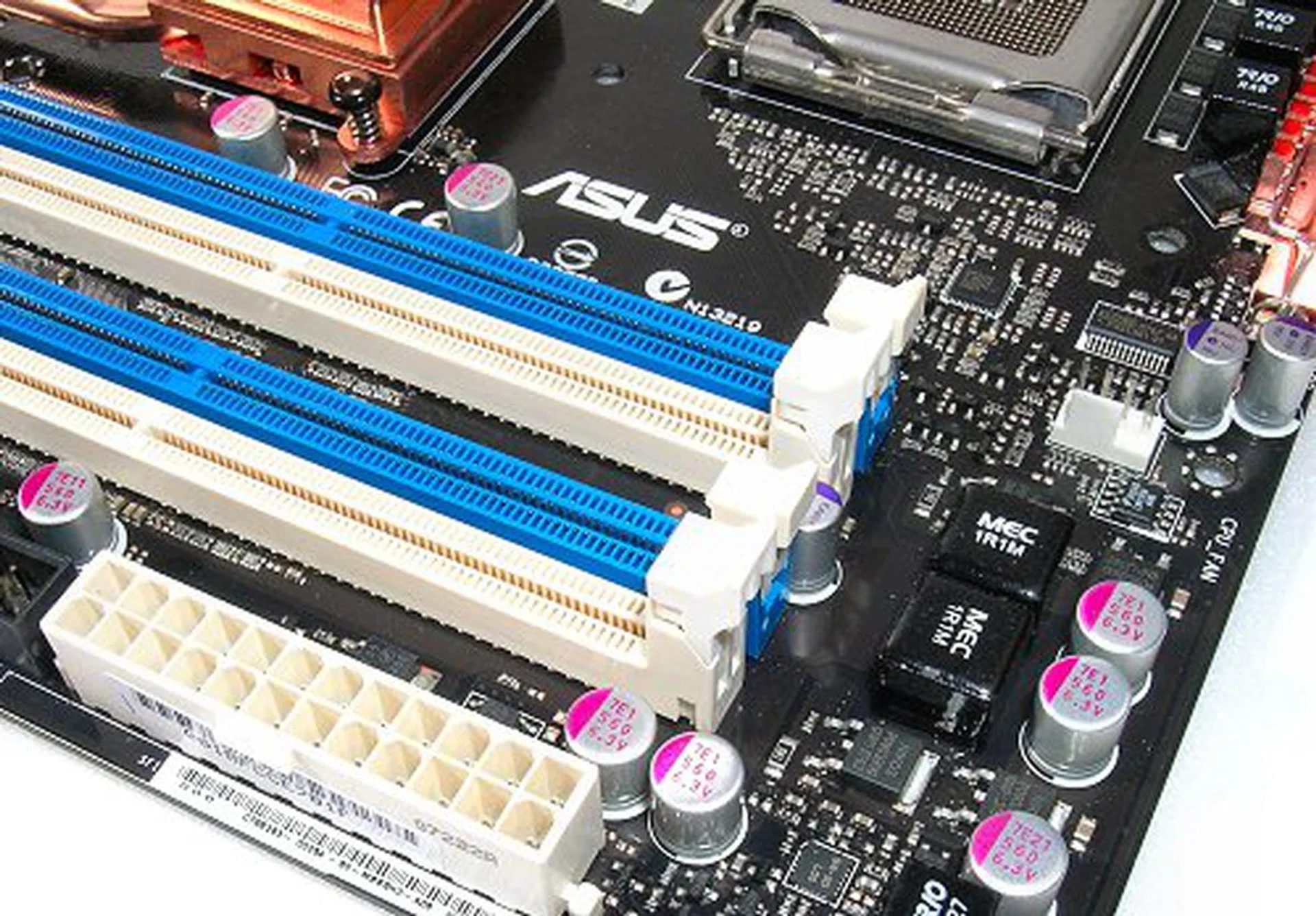
Even the DIMM slots have received a boost in power efficiency with 2-phase power.
Overclocking
- FSB Settings: 200MHz to 800MHz
- DDR2 Settings: 667/800/886/1067/1111/1333MHz
- PCIe Settings: 100MHz to 150MHz
- CPU Voltage Settings: 1.1000V to 1.9000V (in 0.00625V steps)
- Memory Voltage Settings: 1.80V to 3.40V (in 0.02V steps)
- PLL Voltage Settings: 1.50V to 2.00V (in 0.02V steps)
- FSB Termination Voltage Settings: 1.20V to 1.80V (in 0.02V steps)
- NB Voltage Settings: 1.25V to 2.03V (in 0.02V steps)
- SB Voltage Settings: 1.050V, 1.225V (in 0.025V)
- Loadline Calibration: Auto (default), Enabled, Disabled
- Multiplier Selection: Yes (unlocked CPUs only)
We were further impressed with the Blitz Formula when we poked around the BIOS of the board. In terms of voltage options, there aren't many new additions compared to other ASUS boards like the P5K Deluxe for example. However, this board features incredible granularity and range. For example, memory voltage goes up to 3.4V with a super fine 0.02V stepping all the way. Most boards give you 0.1V steps and you'd be lucky to find 0.05V. There is a special option in the Blitz Formula called Loadline Calibration, which you can either Enable, Disable or leave it at Auto. In theory, this option is supposed to help constantly moderate CPU voltage, though we didn't really see any impact on our final overclock. Your mileage may vary, but we see no harm having this option enabled, in event that it can help with power efficiency in the long run.
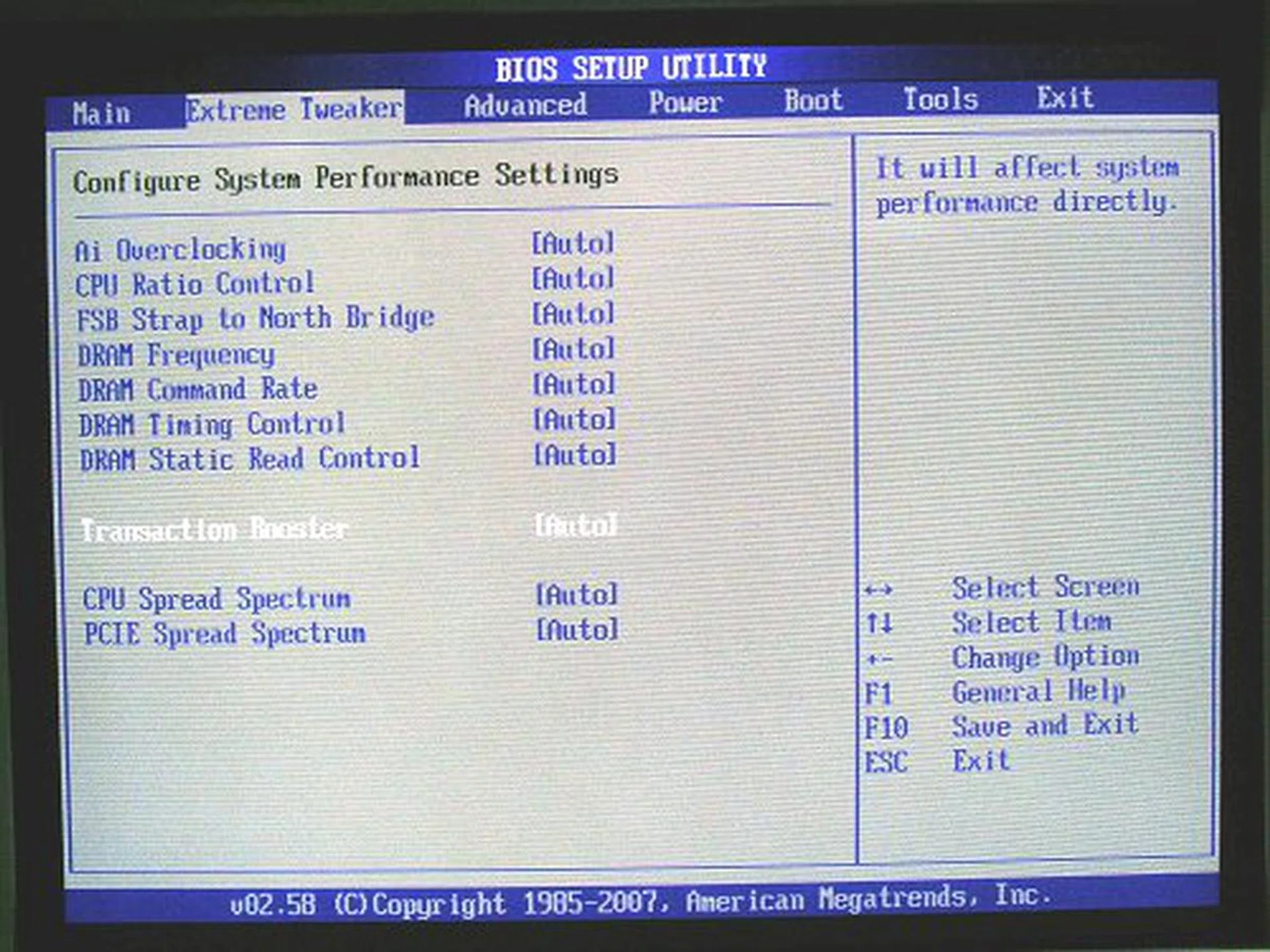
Standard tweaking features may look slim.
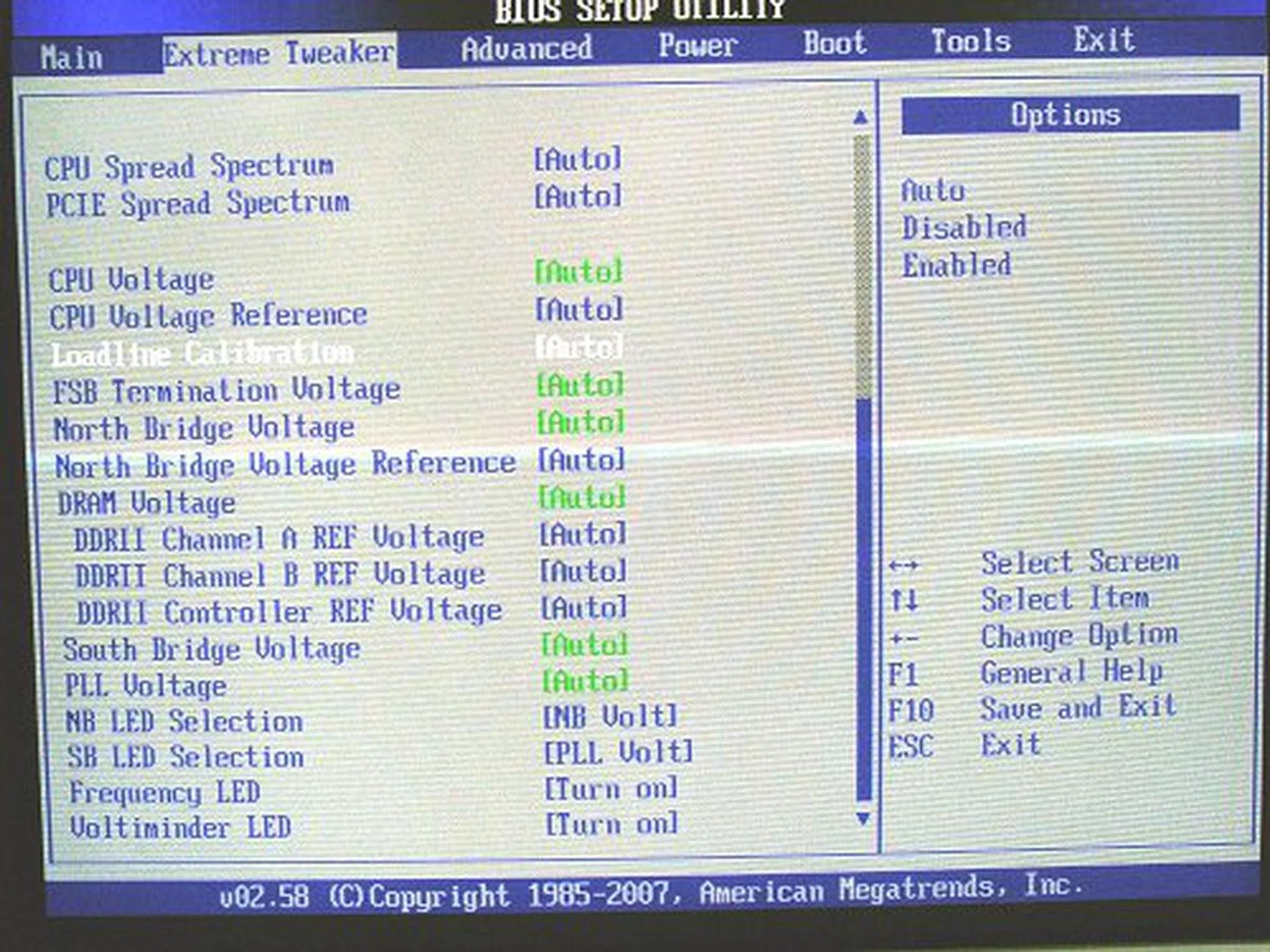
But in manual mode, you will have your hands full. Notice the various voltage options that are highlighted in green? These are the options that are monitored by the Voltiminder LEDs on the board and the color here corresponds to the LED colors as you change them.
In terms of actual overclocking, we managed to push the Blitz Formula to a maximum stable FSB overclock of 500MHz. This puts the Blitz Formula among some of the most overclockable P35 boards available. While Gigabyte still holds the crown for the highest FSB top-end, the Blitz Formula sets the bar for the most desirable overclocking platform. With all the features that ASUS has put into the board, hardware and software-wise, it is hard not to fall in love with it.
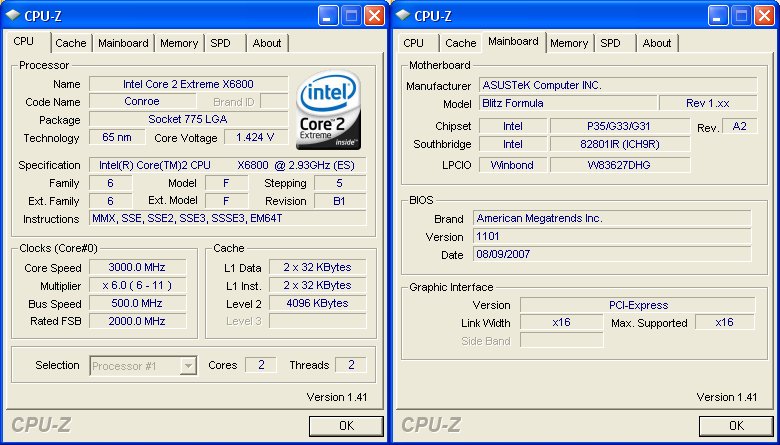
CPU-Z overclocking screenshot. Click for full-sized image.
Test Setup
As the Blitz Formula is a DDR2 motherboard, we will be using a selection of the top DDR2 based P35 boards as performance comparisons in our benchmarking segment of the review. These boards include the ASUS P5K Deluxe and the main competition, Gigabyte's GA-P35-DQ6 and MSI's P35 Platinum.
The standard benchmarking test bed configuration is listed below:-
- Intel Core 2 Extreme X6800 processor (2.93GHz)
- 2 x 1GB Kingston HyperX DDR2-800 @ 4-4-12 CAS 4.0
- Seagate Barracuda 7200.10 200GB SATA hard disk drive (one single NTFS partition)
- MSI GeForce 8600 GTS 256MB - with ForceWare 158.22 drivers
- Intel INF 8.3.1.1013 and AHCI 7.5.0.1017 driver set
- Microsoft Windows XP Professional with Service Pack 2 (and DirectX 9.0c)
Benchmarks
The following benchmarks will be run to determine the performance of the ASUS Blitz Formula:-
- BAPco SYSmark 2004
- Futuremark PCMark05
- SPECviewperf 9.0
- Futuremark 3DMark06
- AquaMark3
Results - BAPco SYSmark 2004
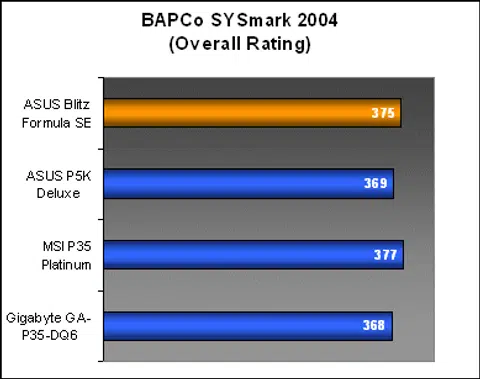
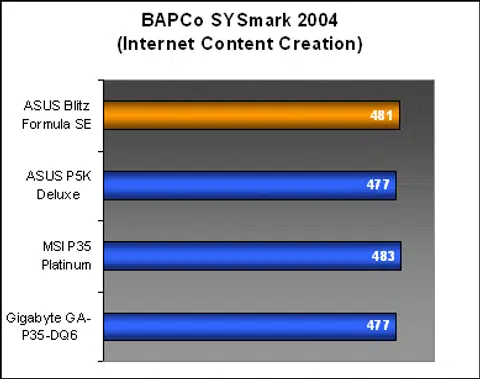
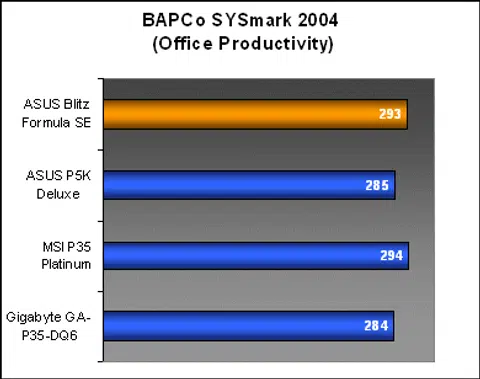
The Blitz Formula managed to perform quite a bit better than the P5K Deluxe in SYSmark 2004, mostly due to a very strong showing in the Office Productivity workloads, overall competing toe to toe with the MSI P35 Platinum.
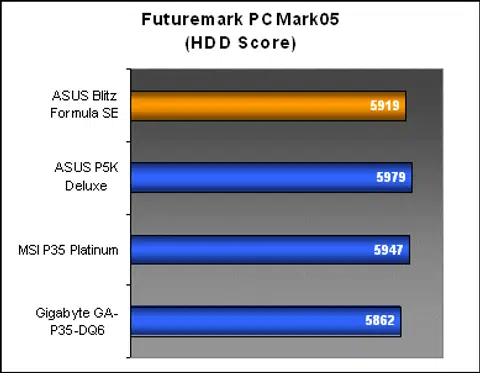
Results - Futuremark PCMark05
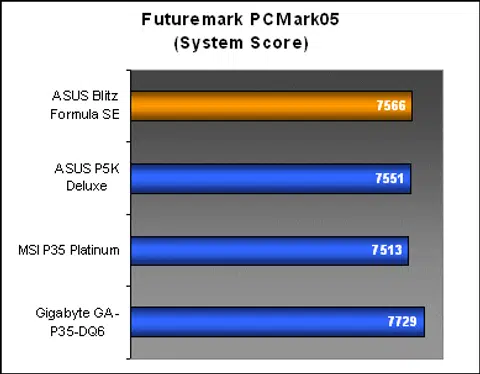
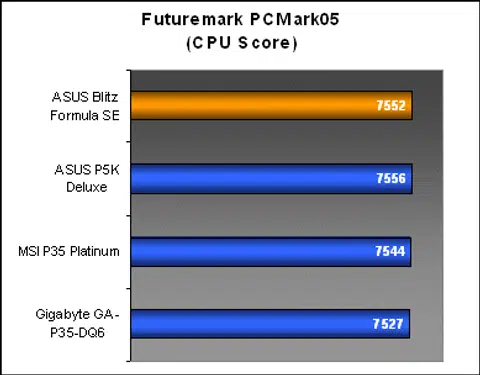
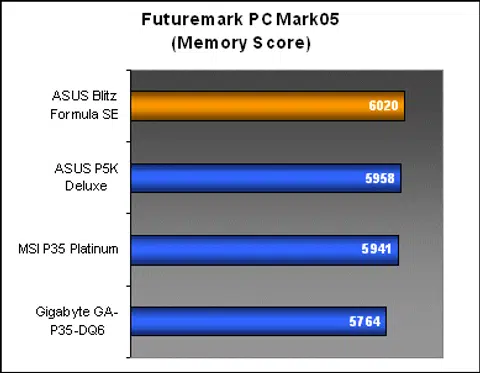
For the most part, the Blitz Formula performed similarly to the P5K Deluxe in PCMark05, which is expected. However, you if you look at the Memory workload scores, the Blitz Formula seems to have been tweaked to draw every last ounce of performance from the DDR2 controller. HDD scores seemed a tad on the low side though, when compared with the P5K Deluxe.
Results - SPECviewperf 9.0
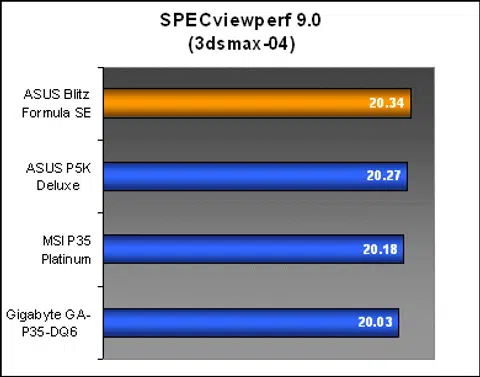
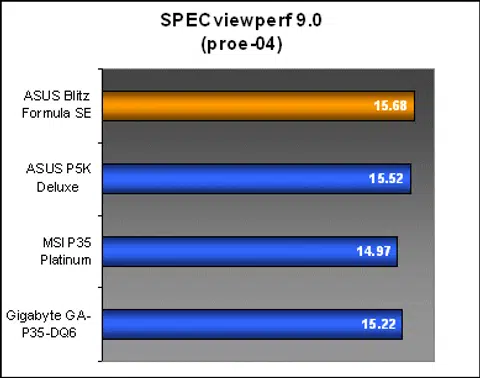
Results from SPECviewperf 9.0 was even more solid proof of the memory subsystem prowess of the Blitz Formula since the workloads here are based on actual professional OpenGL rendering tools. The P5K Deluxe is by no means a push over in this particular test, but ASUS has managed to push the Blitz even further.
Results - Futuremark 3DMark06
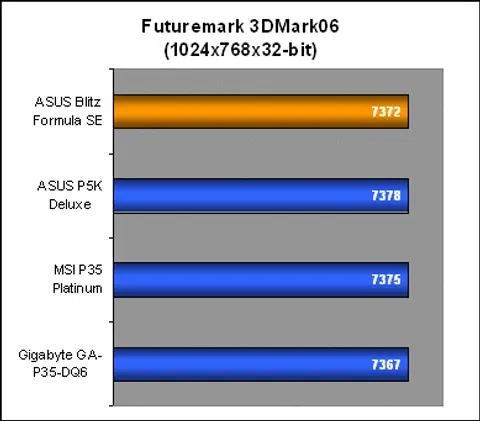
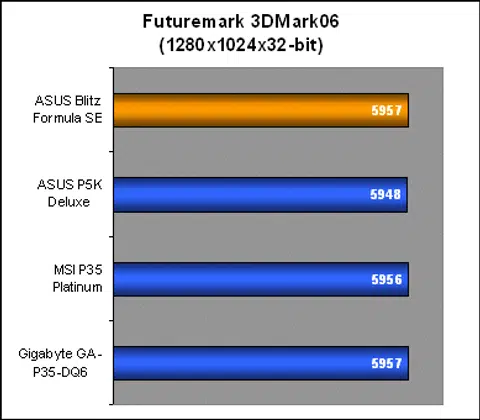
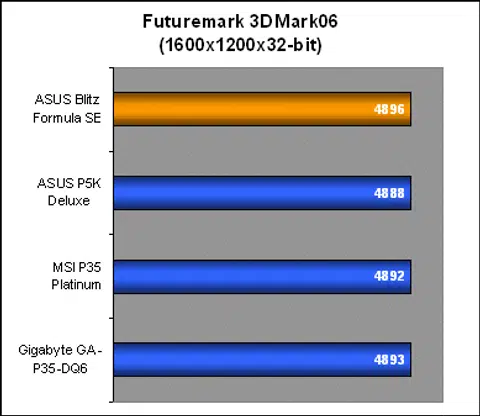
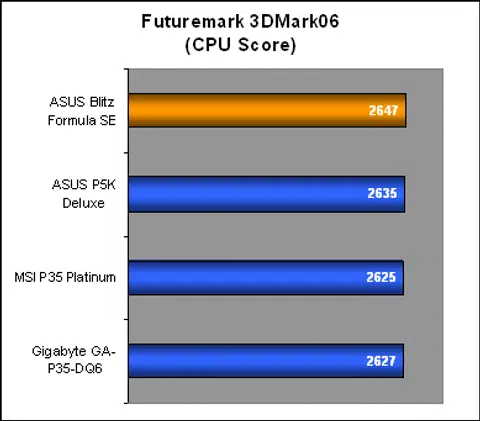
Gaming results from 3DMark06 do not usually change much from board to board since the important components like CPU and GPU remain the same. As such, the results were pretty much expected in the various resolutions. When you look at the CPU scores though, you will still be able to notice the extra advantage that the ASUS boards bring. Like the previous benchmarks, the P5K Deluxe already proved to be a serious contender, but the Blitz Formula manages to set the bar higher.
Results - AquaMark3
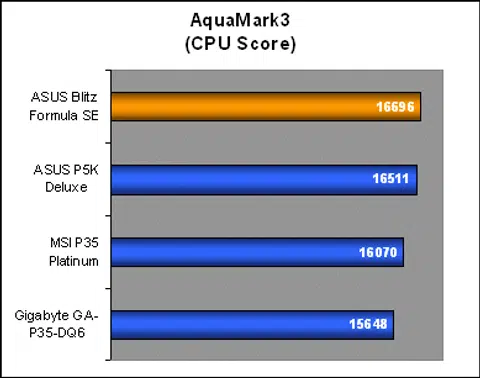
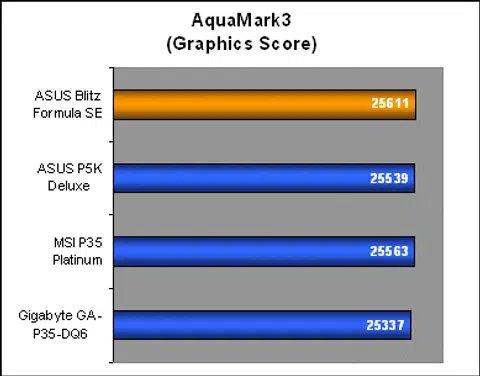
AquaMark3 is the last gaming benchmark we perform for our motherboard reviews and this clearly shows why. The subsystem score breakdown is very scalable and is able to show platform performance differences clearly. As you can see, the Blitz Formula is a very hard act to follow as its scores are really phenomenal. It is very rare that we see system based results with such a high variance from the same chipset. Compared to the Gigabyte GA-P35-DQ6, the Blitz Formula has a 1000 point lead in CPU scores, resulting in a real world performance average of around 5fps.
Conclusion
There are enthusiast motherboards and then there are Enthusiast motherboards. The ASUS Blitz Formula belongs to the latter. It is without a doubt the most advanced, well designed high-performance gaming motherboard in the market today. Even with all the features that ASUS introduced with its Blitz series, the Blitz Formula in no way feels like a bloated or over-engineered motherboard. Designed for a specific audience of hardcore gamers and overclockers, there is not one feature on the board that one will not find useful. Proper dual x8 Crossfire? Check. Northbridge water-cooling? Check. Cap-less PWM? Check. Overclocking BIOS? Check. Agreeably, the Voltiminder LEDs are probably useless to a regular PC setup where the motherboard is inside a closed chassis, but it does serve its purpose as a quick reminder system as we found out during our bout of overclocking tests.
There is the matter of the upcoming Intel X38 chipset though. By the time the Blitz Formula starts making its rounds, the X38 should already have arrived as well. And since the X38 will feature native full speed dual PCIe x16 support, it remains to be seen if the lifespan of the Blitz series will be short-lived.
The ASUS Blitz Formula is perhaps the best Intel P35 gaming motherboard of the year.
Besides the impressive hardware features that the board comes with, the Blitz Forumula also comes through oozing with performance as well. Even among the top enthusiast boards today, the Blitz Formula impressively won almost every benchmark that was run and proved to possess a superior memory subsystem where the board was consistently ahead of the competition and even trumped ASUS' own P5K Deluxe. The most telling performances were SPECviewperf 9.0 and AquaMark3.
In terms of overclocking, the Blitz Extreme handled itself really well too. With just a little Northbridge tweaking, we managed to get a stable 500MHz FSB, an exceptionally high result even if it isn't the best we've seen. Due to time constraints however, we were not able to fully test the benefits that the 2-phase DDR2 would confer. Since the memory controller on the Intel P35 chipset is still governed by set dividers, there just wasn't enough time to try different FSB and strap options required to extensively test memory overclocking.
Throughout our overclocking and benchmarking process, the board showed a high level of system stability without any signs of hardware incompatibility issues. The Blitz Formula is designed to take quite a bit of punishment, so hardcore tweakers will have a field day with this board
When you've been reviewing motherboard after motherboard as we have, one approaches a highly gimmicky motherboard with a jaded outlook. Take the ASUS P5K3 Premium Black Pearl Edition for example. As good as the board was (and it was an excellent board), there was a rather large downside to its onboard memory design since you can never change your memory ever again. The ASUS Blitz Formula however, didn't just stir our enthusiasm, it exceeded all our expectations. Innovative engineering, exceptional performance, excellent overclocking, solid stability and a great bundle to top everything off, there just isn't enough adjectives to describe the Blitz Formula. The only thing more that we would want from the ASUS Blitz Formula Special Edition is a less expensive price tag. At the moment, the board is going for around US$286, which is actually still cheaper than a Striker Extreme.
Our articles may contain affiliate links. If you buy through these links, we may earn a small commission.