
ASRock P67 Transformer - Small Boon for Upgraders
ASRock has done it again. The manufacturer known for its esoteric board designs has married the latest Intel P67 chipset with the older LGA1156 Lynnfield based Intel Core processor, bringing native SATA 6Gbps support along the way. Is this the board that some upgraders have been holding out for?

A Chipset Transplant
Let's preface this article by saying again - we are getting tired of the frequent socket changes by Intel. To use a gaming analogy, it's beginning to feel like grinding for gears in World of Warcraft. Currently, there are three Intel sockets out there in the market - LGA1156 for the first-gen Intel Core processors (Lynnfield and Clarkdale), LGA1366 for the enthusiast-class Core processors and the latest, LGA1155 for the second-gen, Sandy Bridge Core processors.
To upgraders, it's like navigating a minefield, with missteps potentially leading to costly platform upgrades rather than just a new processor or motherboard. Whether you agree or disagree with Intel's reasons for such changes, the company seems committed to this constant product churn. For instance, there's a new LGA2011 socket coming out later this year to replace the LGA1366.
With processing power rarely the bottleneck for the tasks that the average user engages in, the usual answer is to wait a few more years before upgrading the entire platform. There are however times when the motherboard and the chipset start to lack important updates such as the introduction of new technologies like USB 3.0 and SATA 6Gbps, not to mention the arrival of Intel's latest interface, Thunderbolt.
For those who are struggling to justify upgrading the whole platform despite having a decent processor that's good for another couple of years, ASRock has the answer. The motherboard manufacturer has made a name for itself with some unorthodox motherboard designs in the past and it continues this tradition with the ASRock P67 Transformer.
You would not be wrong to think that this ASRock board uses the Intel P67 chipset, but the twist lies in the fact that it actually supports older LGA1156, Lynnfield Core processors, not the newer LGA1155, Sandy Bridge processors that it should. ASRock has basically transplanted the Intel P67 chipset over to a board with the LGA1156 socket, bringing along the incremental upgrades that one gets from the newer chipset over its Intel P55 predecessor - native Intel SATA 6Gbps support and greater PCIe bandwidth on the chipset (a jump from 500MB/s on the Intel P55 to 5GB/s on the P67). The extra bandwidth ensures that there will always be 'true', full speed USB 3.0 and SATA 6Gbps on this ASRock hybrid.
In case you're not sure what's the fuss about the PCIe bandwidth on the Intel P55 chipset, check out our where you can find out how manufacturers compensate (or not) for this limitation. And if you need a reminder of what the Intel P67 chipset brings to the table, here's a .
So to sum up, the ASRock P67 Transformer supports solely Lynnfield Core processors despite its 'P67' moniker, which makes it suitable for those who have a moderately high-end processor, like the Core i7-870 and intend to retain it. 32nm Clarkdale Core processors however are not supported despite having the same LGA1156 socket due to chipset limitations (before you ask, we did try with a Clarkdale CPU and it failed to boot). This reduces the potential upgraders and buyers of this ASRock board to a relatively small group. Before we get to finding out if there's any real gains from using the P67 Transformer, here's a look at this seemingly nondescript board:
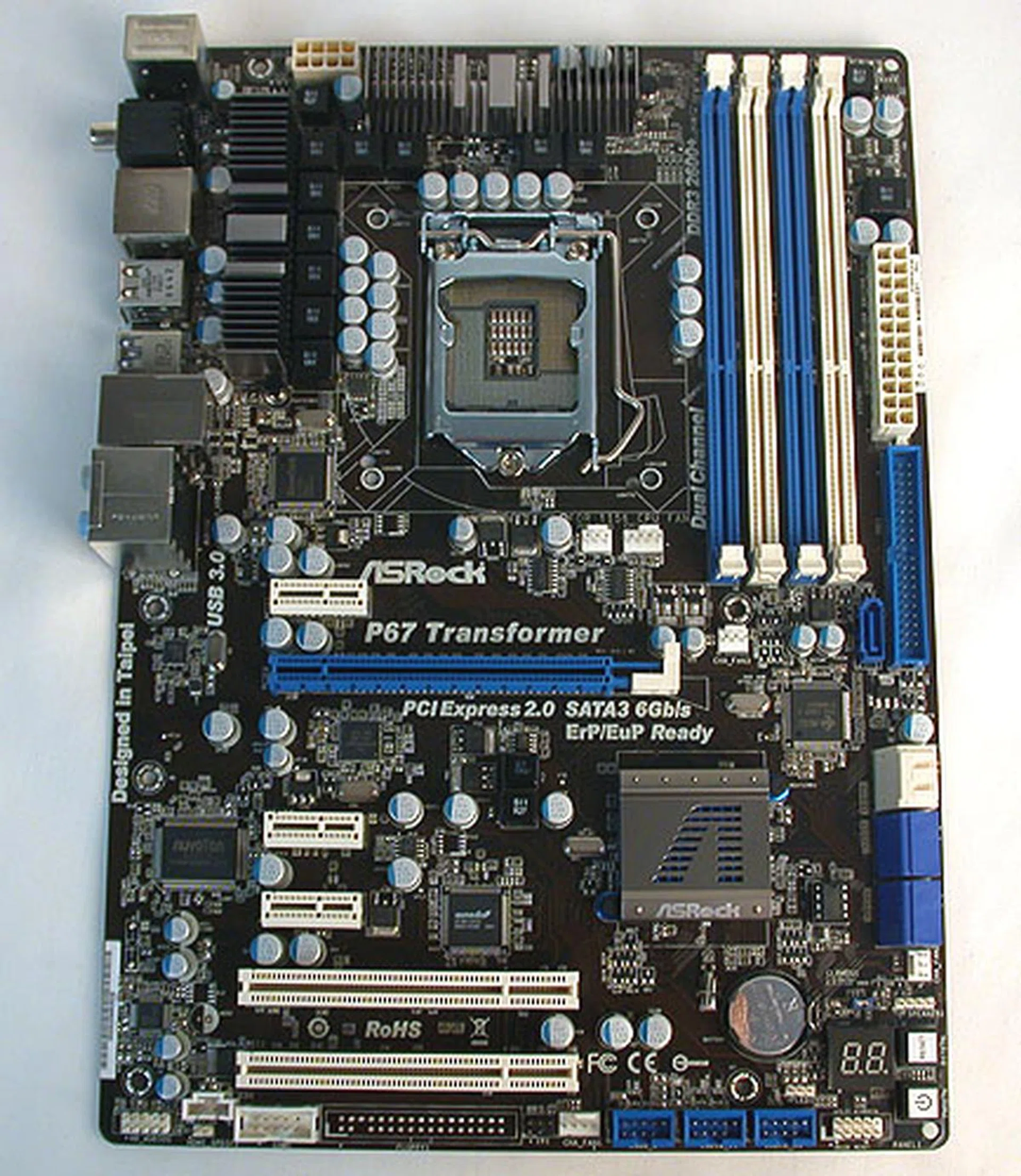
ASRock has once again stumped the industry by grafting the Intel P67 chipset onto a LGA1156 motherboard, making it possible for those with older, Lynnfield Core processors to upgrade to a 6-series chipset.
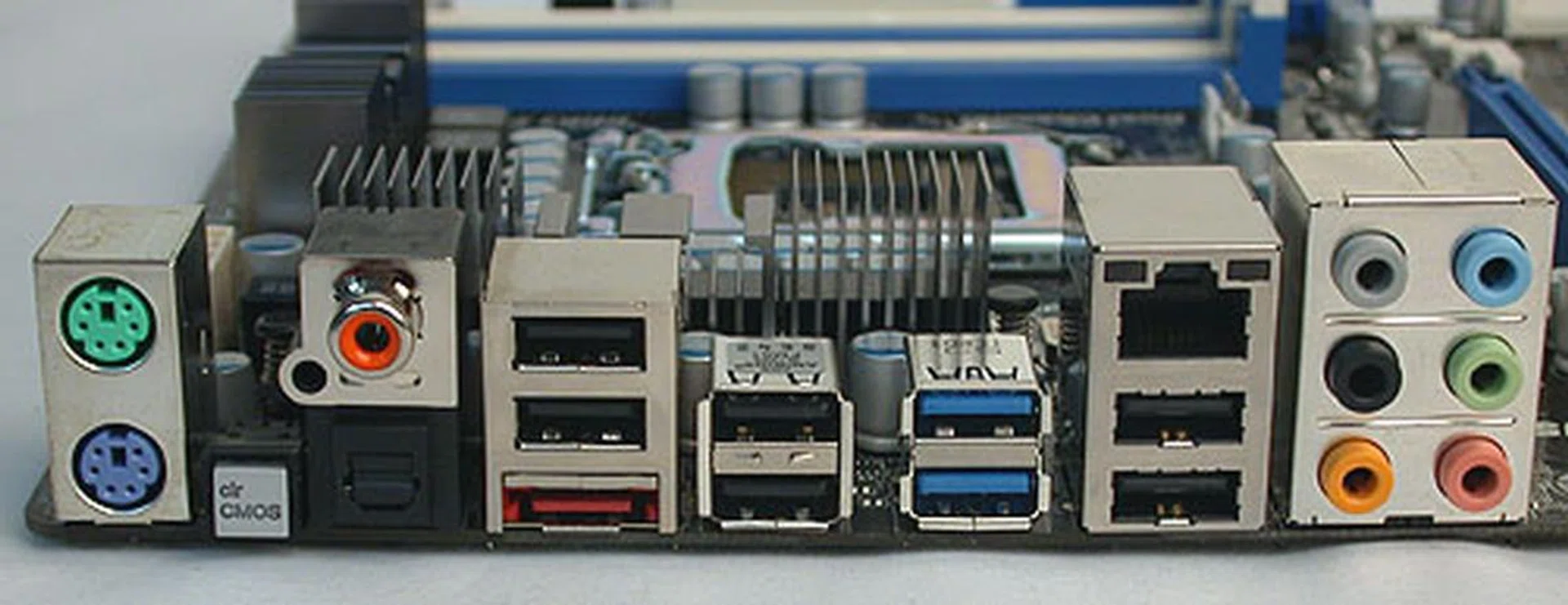
A fairly typical rear panel, including USB 3.0 ports, eSATA and even a Clear CMOS button.
ASRock P67 Transformer
Once the novelty of having the Intel P67 chipset paired with an older Lynnfield-class Core processor wore off, we got down to actually looking at the ASRock P67 Transformer in detail. Like many ASRock products, it's relatively affordable and seems designed for the mainstream market in mind. Compared to the standard P67 implementation, this board came with a JMicron JMB363 controller for the PATA support, along with one additional onboard SATA 3Gbps port and the eSATA port at the back. Perhaps ASRock felt that users who are retaining their older Core processor would also be keeping their PATA drives.
The result is that this board has a few more storage options (including three USB 2.0 headers) than the standard P67 board and we could even see an outline on the PCB where ASRock could have added a floppy connector if it was inclined to do so. Realtek was another familiar name that we noticed often on the board - both audio and the Gigabit LAN chips are from Realtek.
Unlike many P67 boards we have seen, there's only a single PCIe 2.0 graphics slot. Frankly, we don't think many users will care to have multiple graphics cards, especially anyone who may be interested in this ASRock board. It's a logical trade-off, with ASRock going for more PCI slots that are more likely to be utilized. Still, it would have been nice to have had a secondary PEG slot should the user intend to further push their graphics subsystem further.
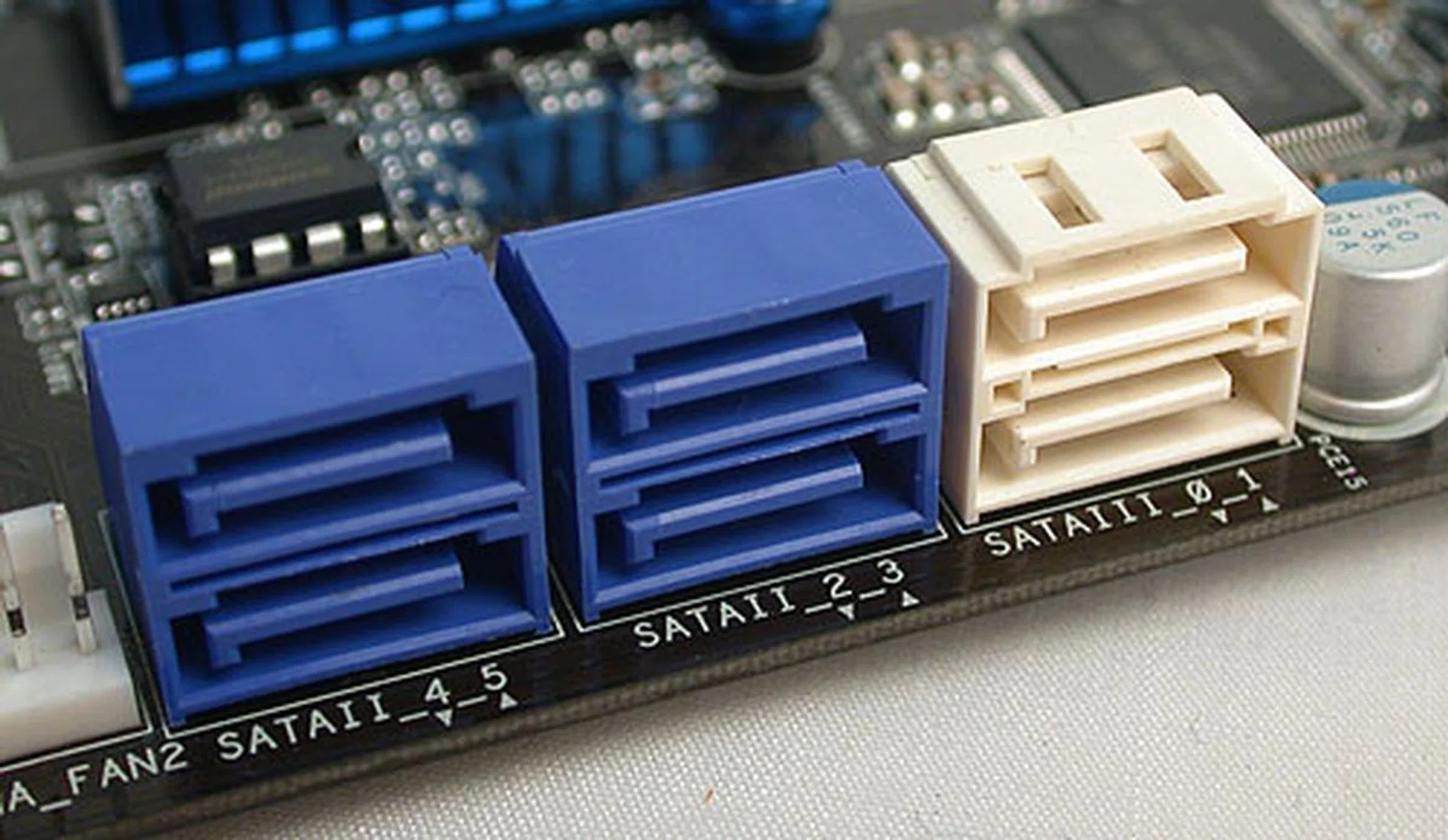
The P67 chipset comes with four SATA 3Gbps ports and two SATA 6Gbps and the ASRock P67 Transformer does this by the book.
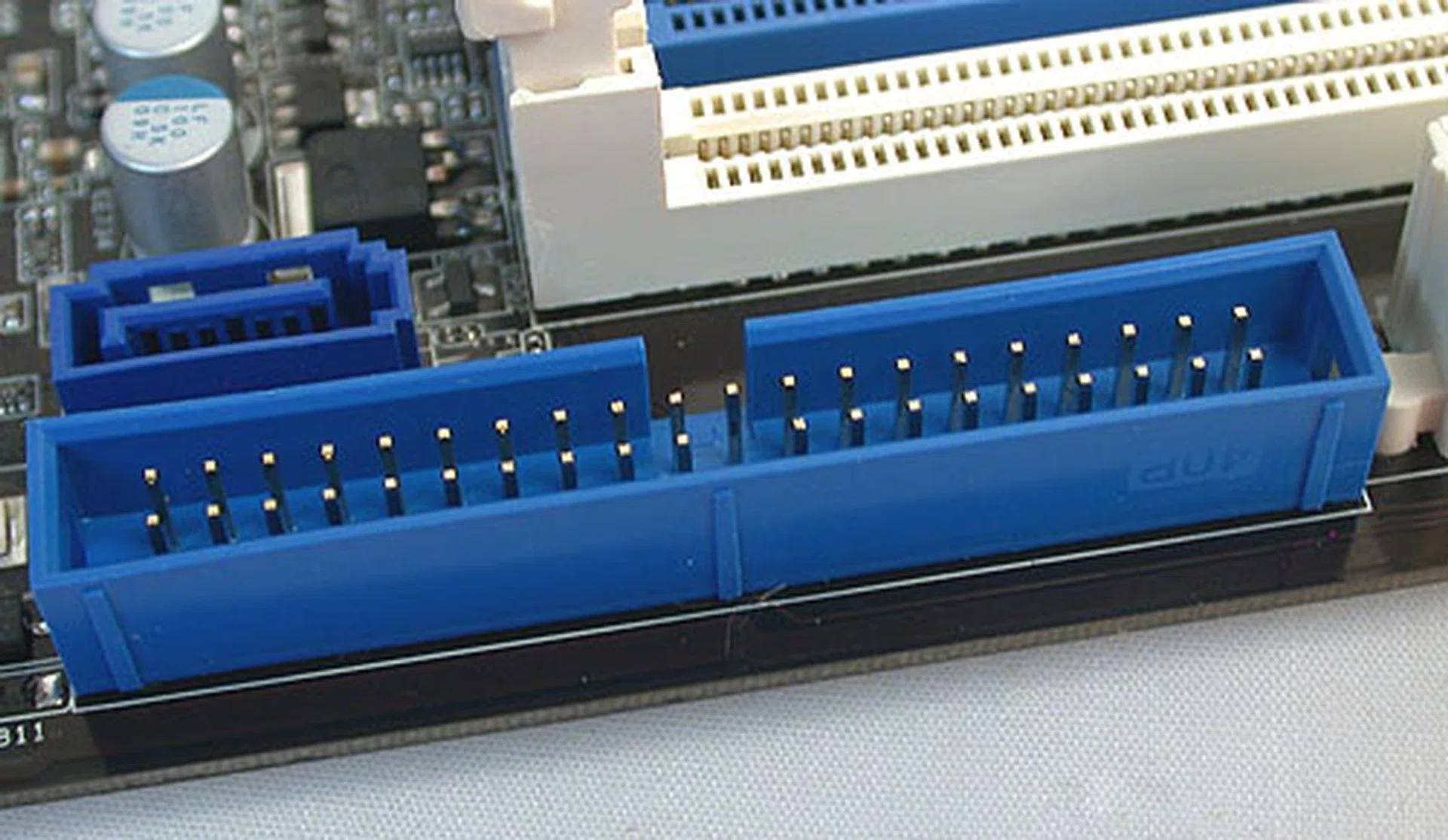
ASRock has added extra storage options, with a PATA option and an internal SATA 3Gbps port. There's also the eSATA port at the rear panel.
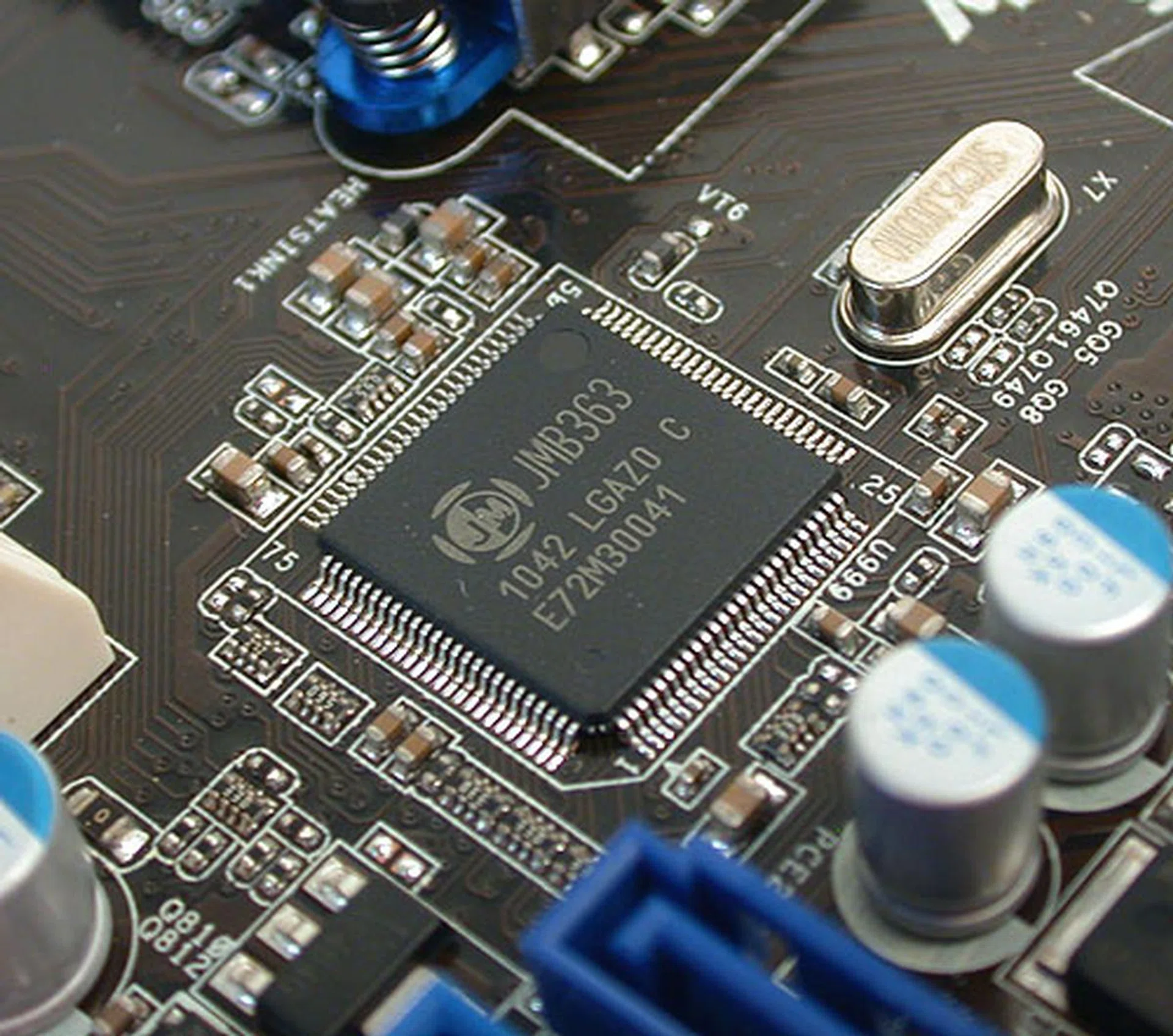
This Jmicron JMB363 controller is responsible for the extra SATA and PATA options.
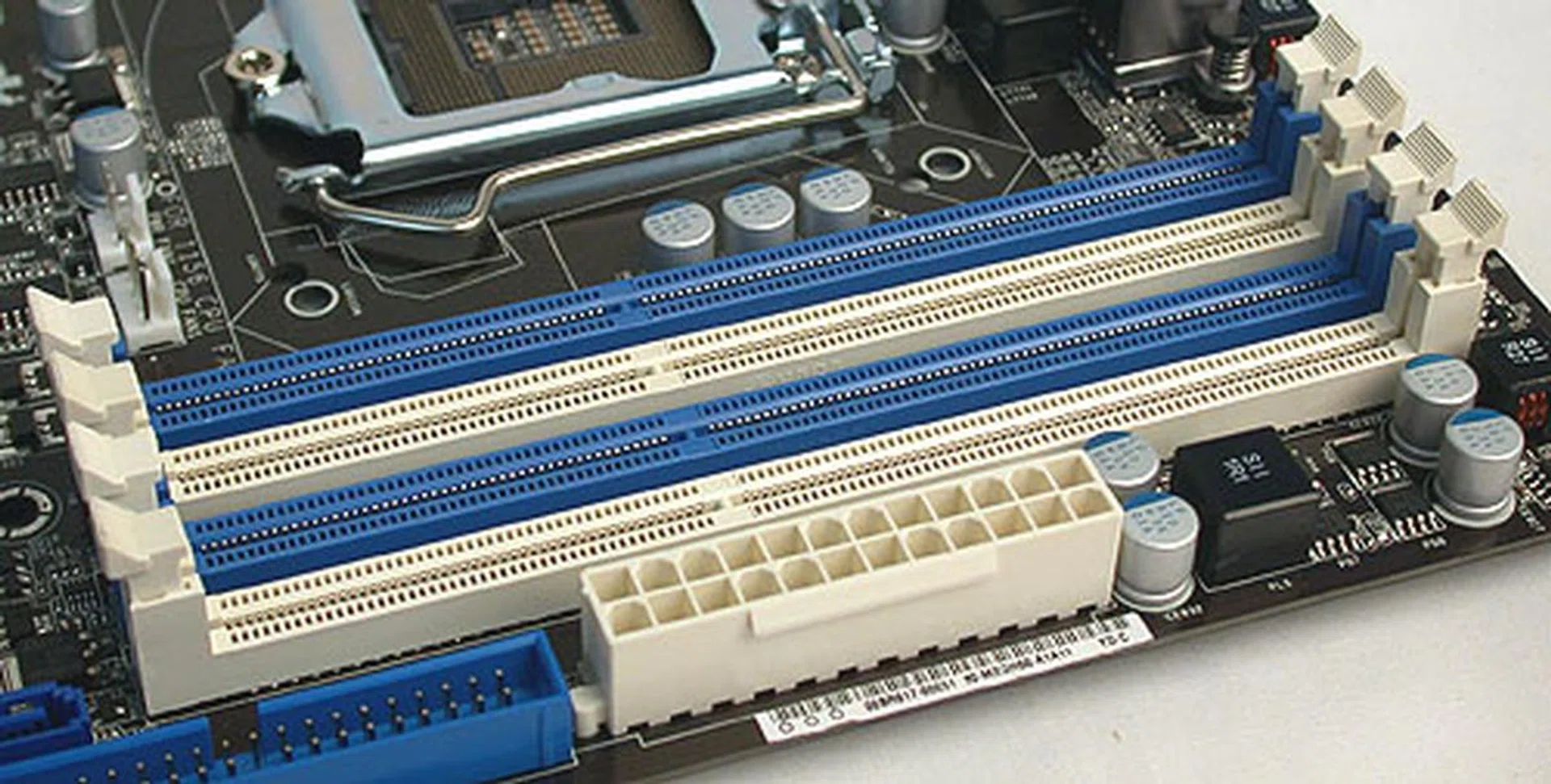
Up to DDR3 2600 is supported on this board, with a maximum total of 16GB of system memory.
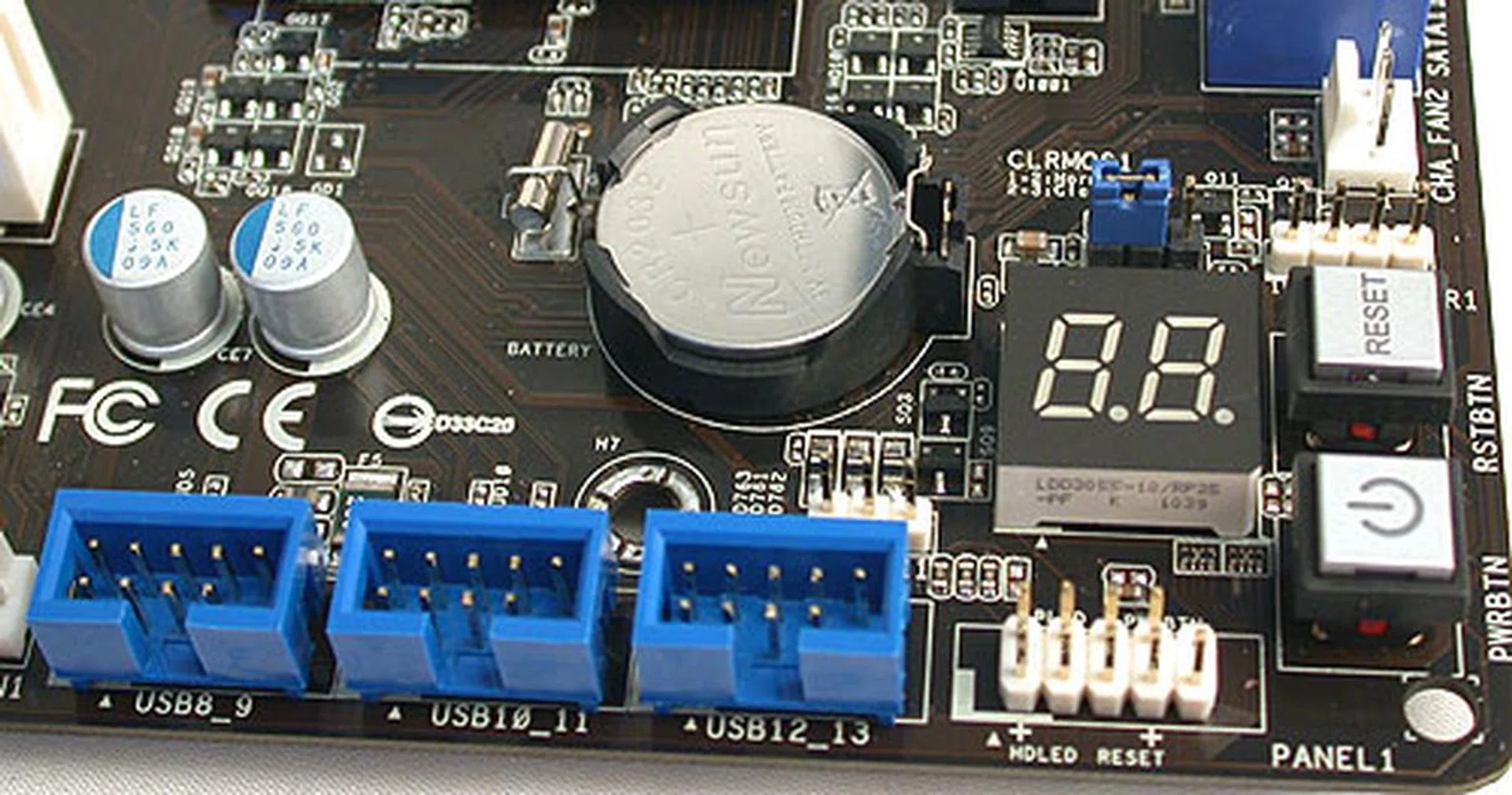
Onboard power, reset and a debugging LED are all present. There's also an onboard Clear CMOS jumper to complement the button at the rear panel. Lots of USB 2.0 headers too.
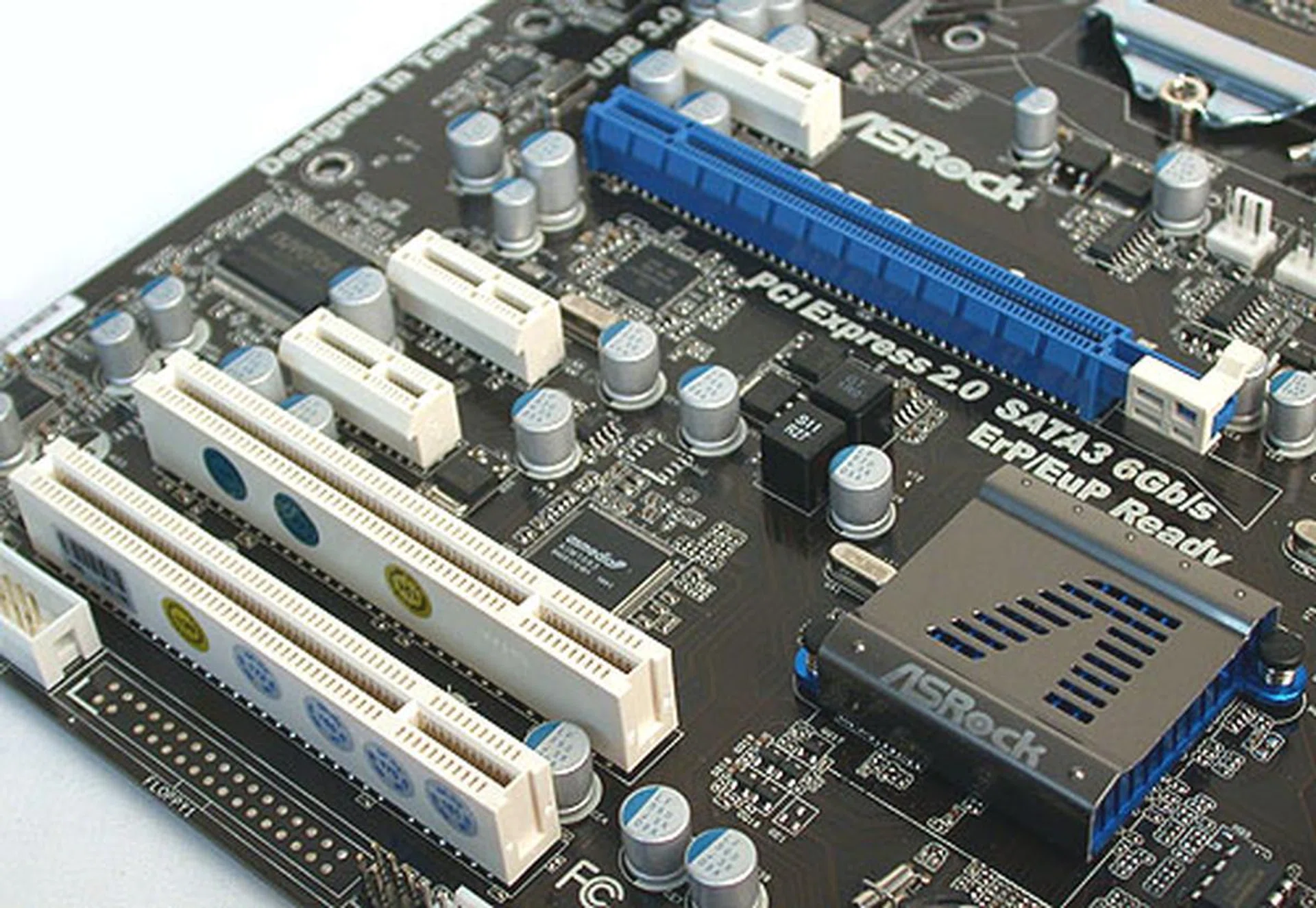
ASRock is not expecting anyone to do SLI/CrossFireX on this board, with only a single PCIe 2.0 x16 slot for a discrete graphics card. You do get up to three PCIe x1 expansion slots though.
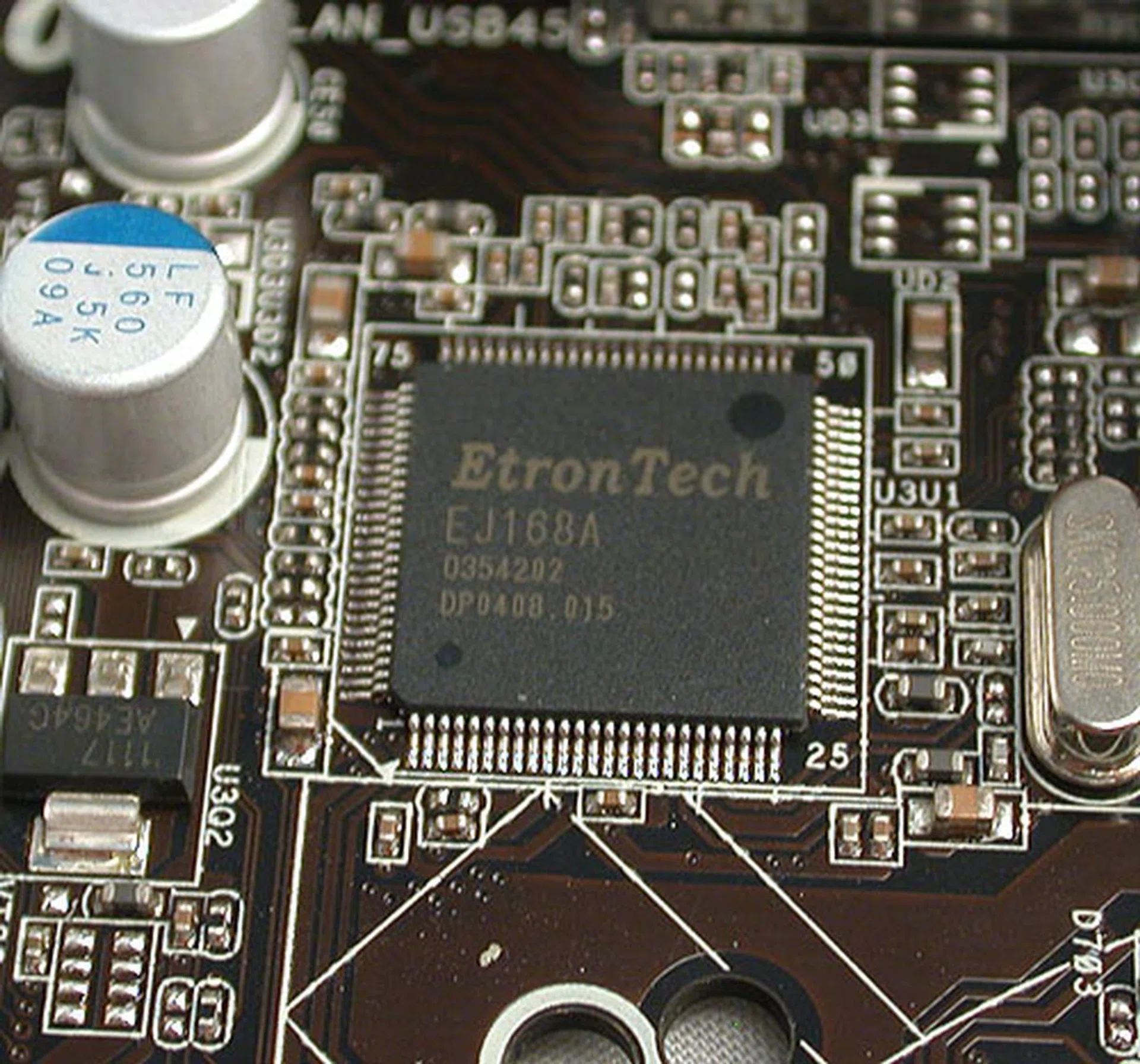
EtronTech's USB 3.0 controller is the preferred choice for ASRock.
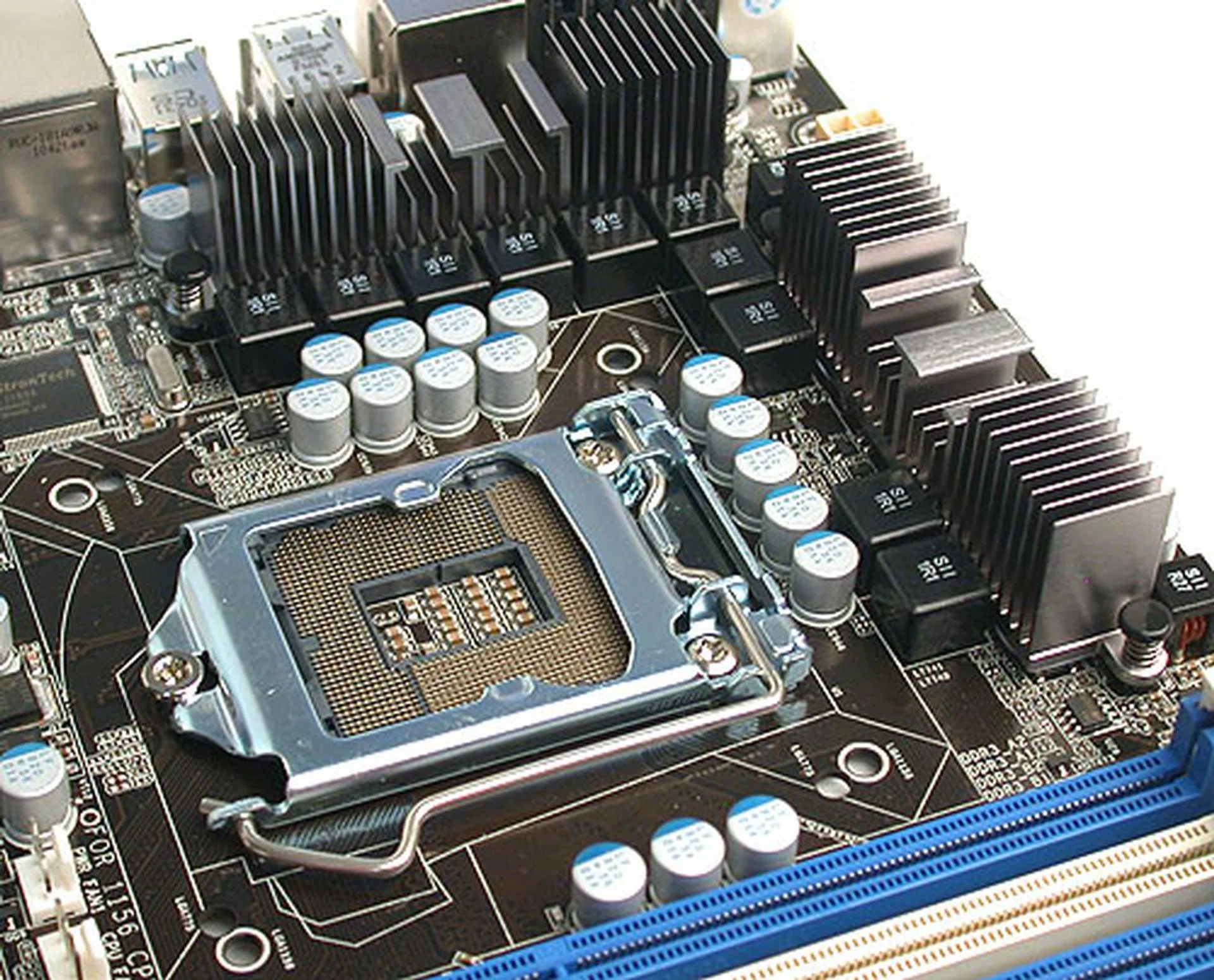
Fairly minimal passive heatsinks around the socket means that users shouldn't have any trouble with larger CPU coolers.
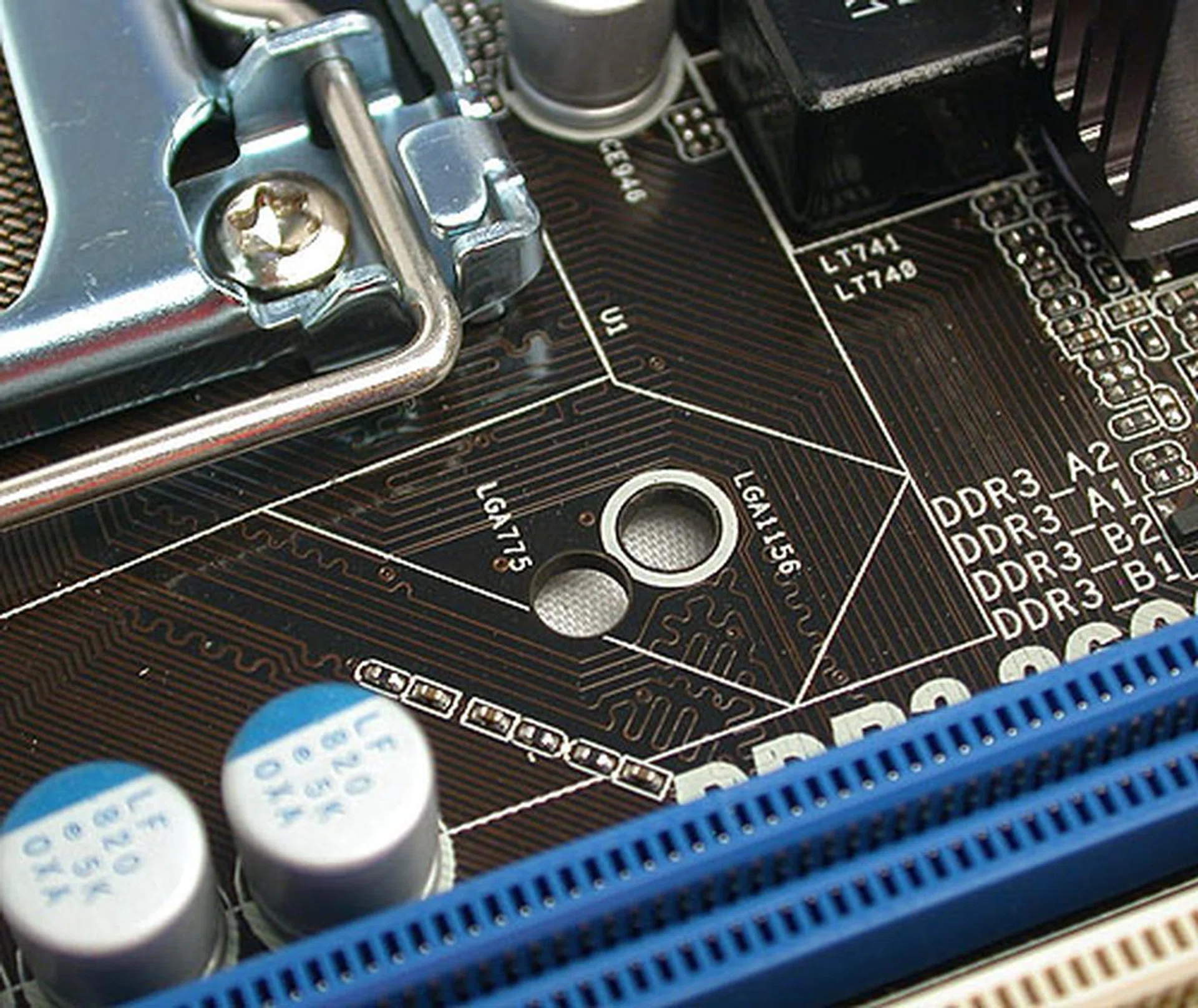
Here's something that we have seen often from ASRock - dual sets of mounting holes such that users can use either LGA1156 or LGA775 compatible CPU coolers.
Overall, the board quality is decent, with solid capacitors but not the fancy ferrite chokes that are more expensive. Again, it's an indication of the price segment that ASRock is building this board for. Layout was a non-issue and there was sufficient clearance for the onboard connectors and cards. There's also the bonus of having a decent EFI BIOS on this board. For its retail price of S$215, ASRock has got an affordable option for those still clinging onto their Lynnfield processors.
But the question that remains is, would those upgraders be better off not getting such an unorthodox solution? Let's find out in the next few pages whether the chipset is really that important.
Test Setup
Since the performance capabilities of the Intel Core i7-870 (which is the process of our choice in this test) and the Intel P55 chipset are known to us, we'll just test a couple of benchmarks - PCMark Vantage and Far Cry 2 - to verify that the ASRock is at least competitive with the previous generation. Then we switch our attention to finding out the exact amount of improvement offered by ASRock's decision to marry the P67 chipset with the older Lynnfield Core processor.
As mentioned earlier, the Intel P55 chipset itself does not have sufficient PCIe lanes to ensure optimal USB 3.0 and SATA 6Gbps performance. This is why ASRock turned to the beefier P67 chipset for the extra bandwidth. However, some manufacturers like ASUS have implemented their own solutions to increase the PCIe lanes on the P55 chipset, like the bridge chip on the ASUS P7P55D-E Premium.
Are these two solutions equally capable? That's what we'll find out in the HD Tune Pro 4.6 benchmarks, where we test the USB 3.0 and SATA 6Gbps performance on the two motherboards. We also included the Gigabyte GA-P55A-UD6 as a classic example of an Intel P55 motherboard with inadequate bandwidth for full speed USB 3.0 and SATA 6Gbps.
General performance with PCMark Vantage and Far Cry 2 along with read, write and random access performance for USB 3.0 and SATA 6Gbps are tested with the following system configuration:
- Intel Core i7-870 @ 2.93GHz (Lynnfield)
- ASRock P67 Transformer (Intel P67)
- Comparison boards:- ASUS P7P55D-E Premium (Intel P55) and Gigabyte GA-P55A-UD6 (Intel P55)
- 2 x 1GB Kingston HyperX DDR3-1333 (CAS 7-7-7-20)
- NVIDIA GeForce 9800 GTX (ForceWare 260.99)
- WD Caviar Black 1TB (Intel 6Gbps interface)
- LaCie 500GB USB 3.0 External HDD (Hitachi HTS725050A9A364 - Travelstar 7K500, 2.5-inch, 500GB, 7200RPM)
- Windows 7 Ultimate (64-bit)
- Intel INF 9.2.0.1015 drivers
- Intel Matrix Storage Manager
Benchmarks
- Futuremark PCMark Vantage (1.0.3.1)
- Far Cry 2
- HD Tune Pro 4.6 (SATA 6Gbps and USB 3.0 testing)
Results - Futuremark PCMark Vantage & Far Cry 2
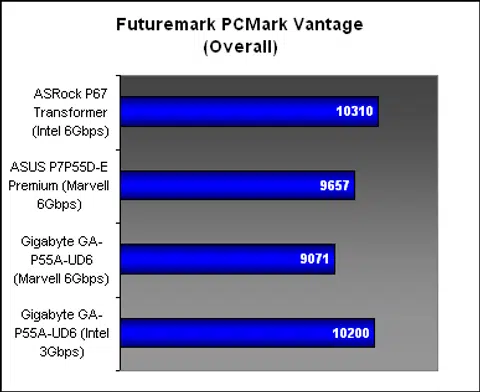
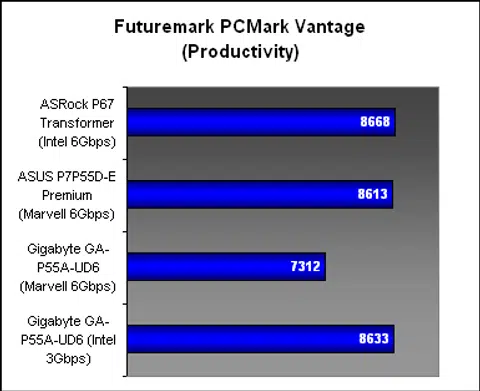
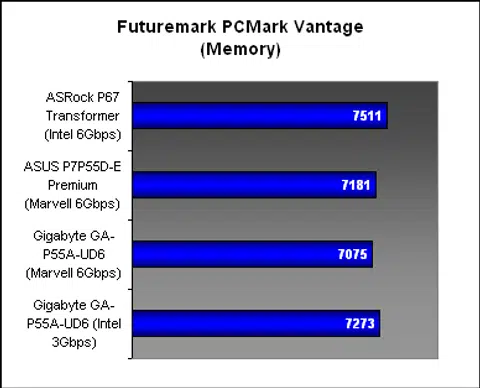
At a minimum, we expect the ASRock P67 Transformer to be equal to an older P55 motherboard with the same Core processor. We also expect it to perform better than the typical P55 board due to the inadequate bandwidth on the P55 chipset. To find out if that was the case, we ran the PCMark Vantage system suite. The ASRock came out ahead of the ASUS P7P55D-E Premium, which has compensated for the P55 chipset with an additional bridge chip. The Gigabyte GA-P55A-UD6 however took the performance hit when using its SATA 6Gbps port; it is in fact faster to use its Intel SATA 3Gbps port instead.
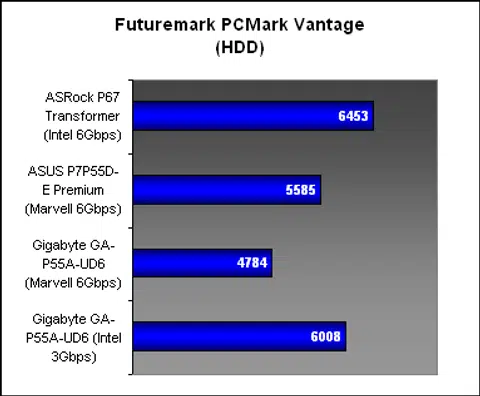
What can we conclude here? It seems that besides the differences in chipsets, there's also the issue of the SATA 6Gbps controller to consider. As we had , the Marvell SATA 6Gbps controller appears to be slightly slower than Intel's implementation. Hence the three tiers of results for the ASRock, ASUS and the Gigabyte as seen in the benchmarks below. The ASUS board takes a hit from the Marvell controller while the Gigabyte takes a double whammy from the controller and the limitations of the P55 chipset. Productivity scores for the Gigabyte also took a beating here, though the ASUS was surprisingly unaffected as this test taxes the storage subsystem.
This three-tier spread is best illustrated by the HDD scores, where one finds a similar pattern. Meanwhile, the SATA 3Gbps performance on the Gigabyte was just a bit slower than the Intel SATA 6Gbps on the ASRock, which only strengthens the case of not going with third-party SATA 6Gbps controllers if you can.
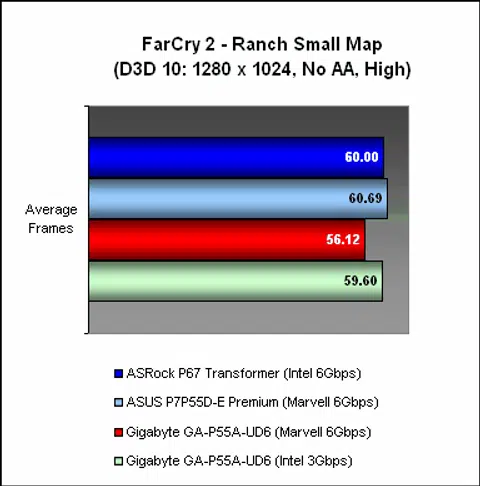
Finally, the PCIe x16 bandwidth on the Gigabyte P55 board was halved simply due to the presence of a SATA 6Gbps hard drive. It's something that you can see for yourself by checking CPU-Z with and without a SATA 6Gbps hard drive connected and our Far Cry 2 scores reflect this.
USB 3.0 Performance
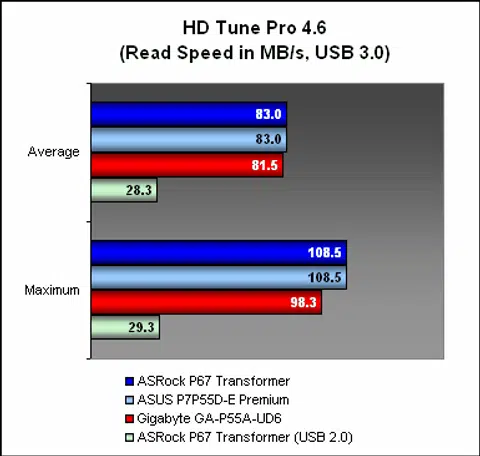
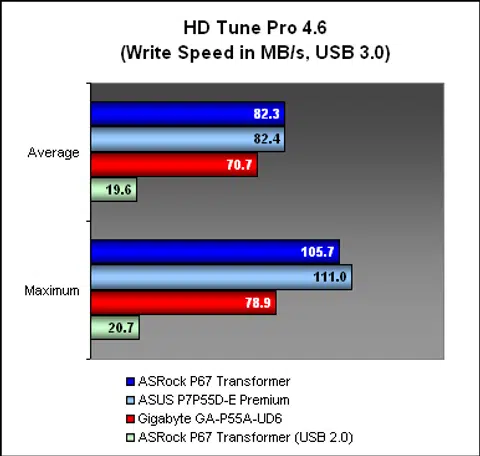
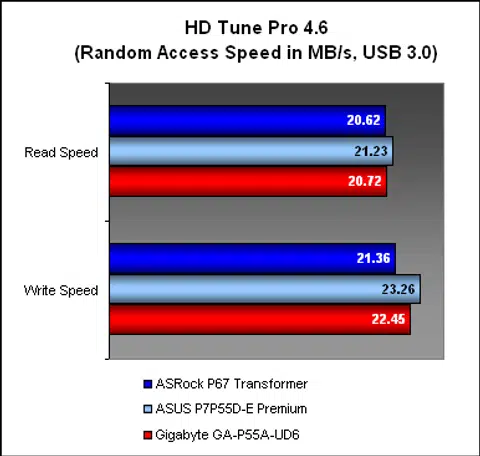
Moving onto USB 3.0 performance using HD Tune Pro 4.6 and a LaCie external USB 3.0 drive, we found that the average read speeds were mostly similar for all three boards (USB 2.0 was obviously lagging behind). The Gigabyte board however was significantly slower when it came to write performance, with both average and maximum speeds falling behind. Random access speeds were generally similar between the three configurations as well.
Additionally, we have to mention that the ASRock comes with an EtronTech USB 3.0 controller unlike the NEC controller on both the ASUS and Gigabyte. Though not conclusive, It could perhaps explain the slight differences in maximum speeds achieved by the ASUS compared to the ASRock since the former has adequate bandwidth with its bridge chip.
SATA 6Gbps Performance
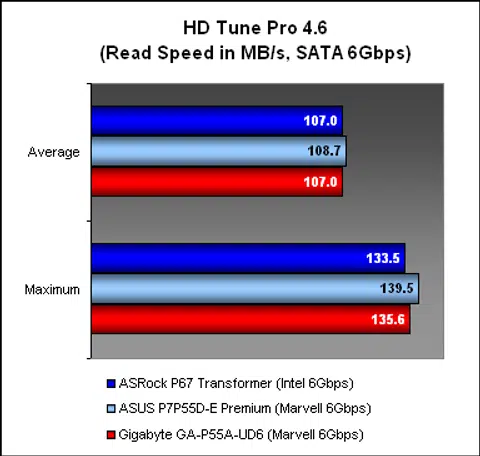
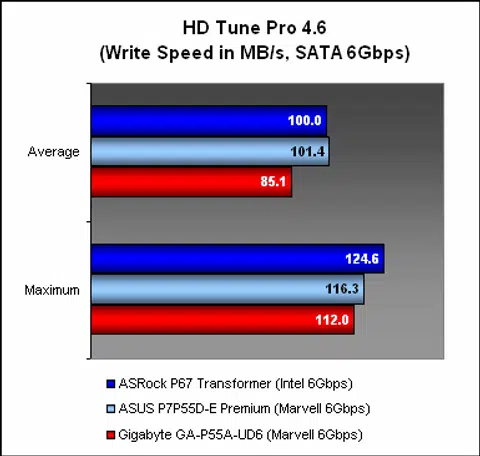
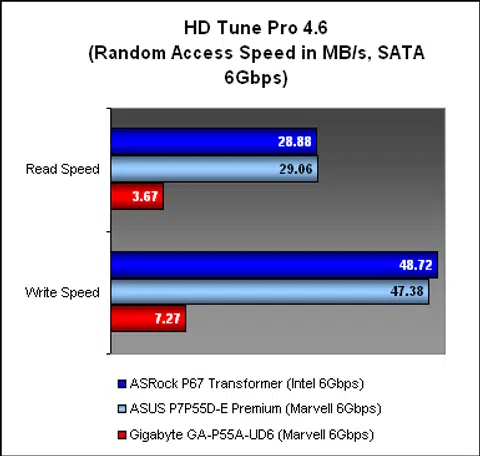
Read speed for the SATA 6Gbps interface on all the boards were almost identical, with the ASUS slightly edging the competition. Write performance however saw the Gigabyte falling behind by some margin. The random access performance of the Gigabyte was also drastically worse than the other two. This further concludes the chipset differences (P67 and P55) and motherboard implementations (between the two P55 boards) accounted for the performance gap, especially since the ASUS (with a similar Marvell controller as the Gigabyte) was not affected thanks to its use of a PCIe bridge chip for additional bandwidth.
Conclusion
The benchmark results speak for themselves. The Intel P67 chipset on the ASRock P67 Transformer fulfills its purpose - we saw no performance degradation in USB 3.0 or SATA 6Gbps. This was unlike the Gigabyte P55A-UD6, which was slower than both the ASRock and the ASUS P7P55D-E Premium which came with an additional bridge chip. In that sense, the Transformer works exactly as intended, allowing upgraders the chance to get the full speed from their storage devices without compromise. There's also the matter of having a proper Intel SATA 6Gbps interface rather than third-party implementations that may fall slightly short.
Unfortunately, ASRock is solving the upgrade dilemma of a rather small population. The chipset limitations that restrict the Transformer to supporting only Lynnfield Core processors mean that there are just a handful of compatible processors, those in the Core i5-7xx and Core i7-8xx series. Among these, it's quite likely that those who have gotten the more expensive Core i7-8xx processors may have also acquired a relatively high-end P55 motherboard. One that is perhaps similar to the ASUS P7P55D-E Premium, where the issue of insufficient PCIe lanes have been solved by the manufacturer.
If you fall within this group of users who may actually require such an unique board, the ASRock P67 Transformer is a decent one. We could find little fault with its layout and the features were generally appropriate for its target segment. There's no multi-GPU support, but it's not crucial for most users. Performance seems on par with what you'll expect from a Lynnfield Core processor and you'll get the benefits of having an EFI BIOS on this board too.
At S$215, the ASRock P67 Transformer is not exactly cheap either, with comparable P67 boards going for just a bit more at around $250 to 280. Although it's true that buyers will save on the cost of the processor, they will also miss out on the significant performance boost of going the full Sandy Bridge route. In fact, ASRock's local distributor has informed us that it is not carrying this model anymore in retail channels due to low demand. It seems that the market has spoken, but should you be interested, it's still available in this region from neighboring countries.
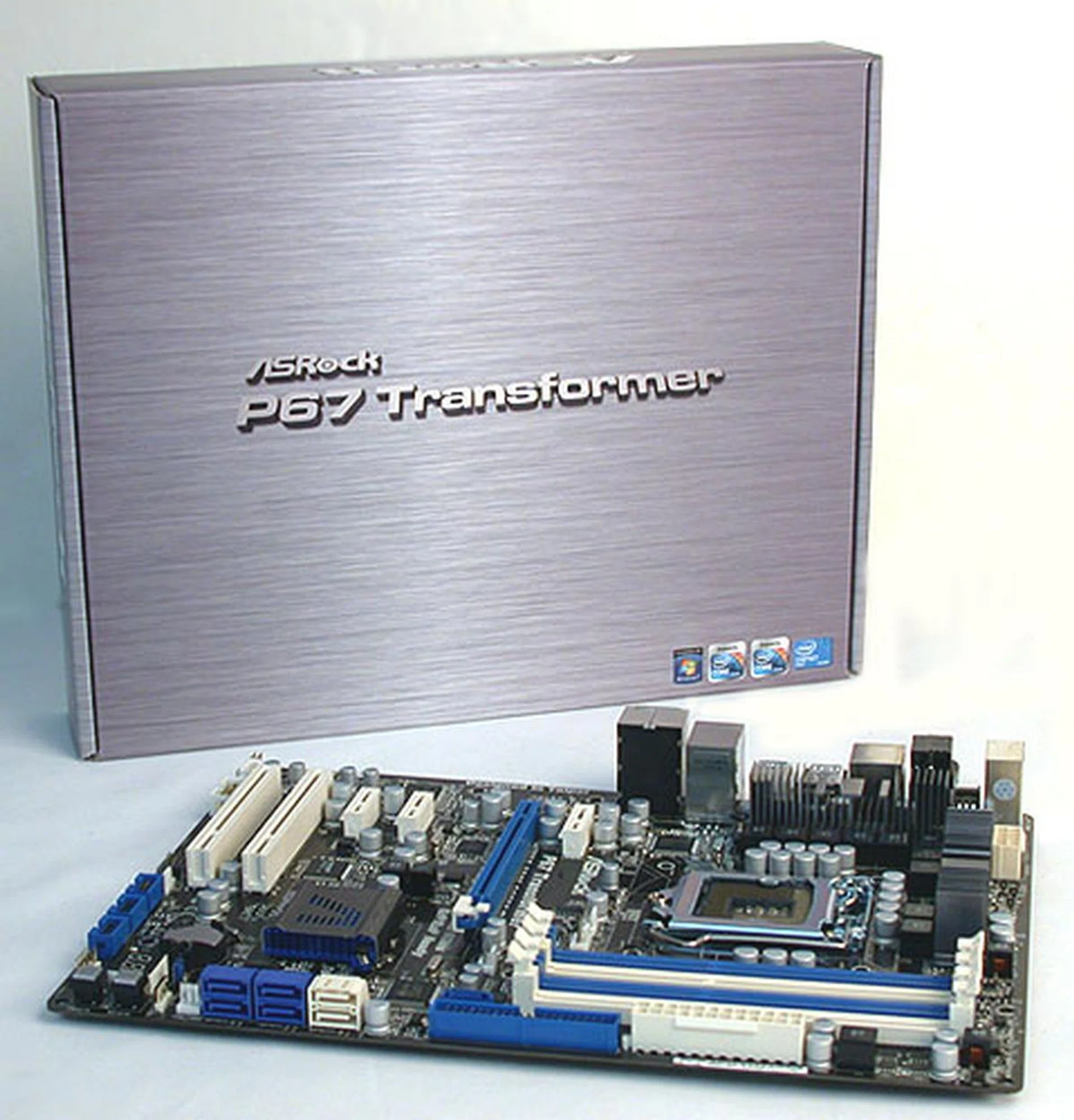
While the P67 chipset does the job of ensuring SATA 6Gbps and USB 3.0 speeds are not compromised, the ASRock P67 Transformer is unfortunately too niche for our taste.
Our articles may contain affiliate links. If you buy through these links, we may earn a small commission.