
Sapphire Pulse Radeon RX 7900 GRE: The AMD card that offers the best balance between price and performance
It can run 4K games even better than NVIDIA's GeForce RTX 4070.

Note: This review was first published on 24 June 2024.
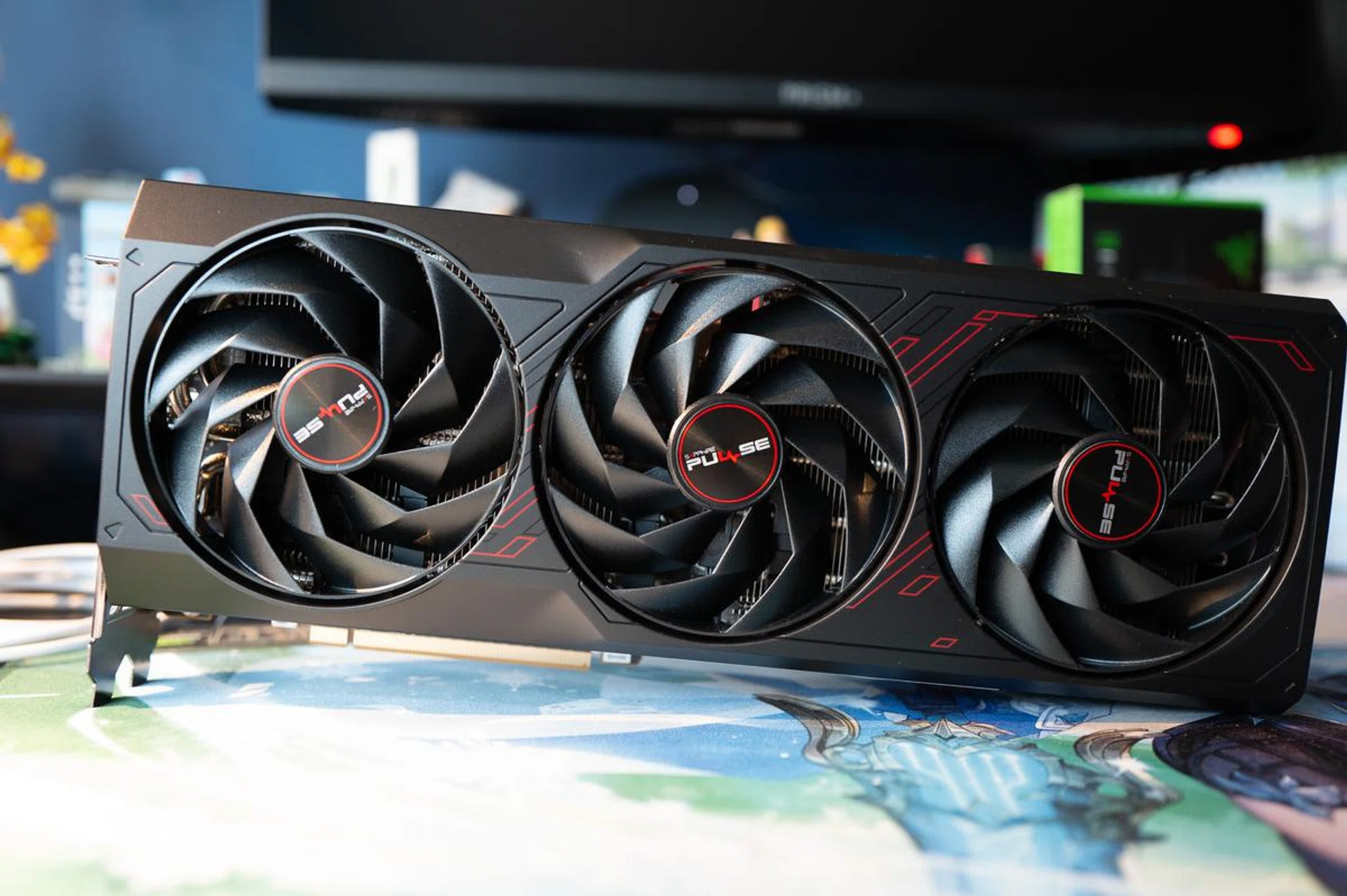
The Radeon RX 7900 GRE GPU was originally designed as a China-exclusive model, but AMD has made the Golden Rabbit Edition (hence, GRE) available worldwide now. With NVIDIA having launched the GeForce RTX 4070 Super GPU and cutting price on the vanilla GeForce RTX 4070 GPU as a result, the mid-range market segment has seen quite a fair bit of action, and the RX 7900 GRE is AMD’s attempt to offer some competition to the RTX 4070. Afterall, AMD’s latest GPU is priced at the same US$549 SRP as the RTX 4070 but offers 16GB of graphics memory instead of just 12GB.
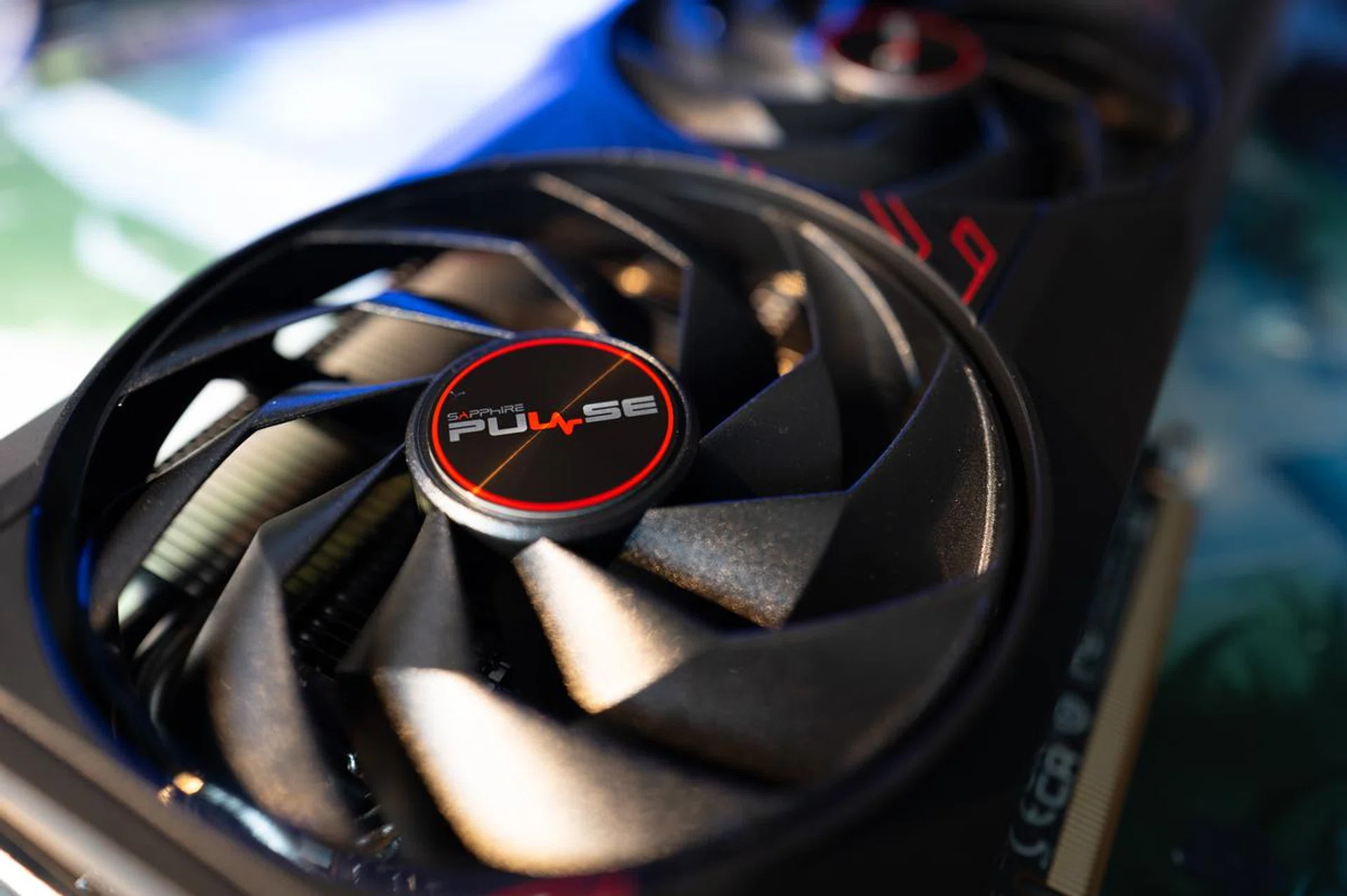
At the heart of the 7900 GRE is still the same RDNA 3 architecture that powers the rest of the Radeon RX 7000-series GPUs (you can read all about the technology that RDNA 3 brings to the table here), but features a partially disabled Navi 31 die with a modular memory subsystem. The Graphics Compute Die (GCD) is complemented by six Memory Complex Dies (MCD), each containing a memory controller and part of the 64MB L3 cache.
Here’s a more detailed specifications of the GPU in comparison to the rest of the RX 7000-series family:
RX 7900 XTX | RX 7900 XT | RX 7900 GRE | RX 7800 XT | RX 7700 XT | |
GPU | Navi 31 | Navi 31 | Navi 31 | Navi 31 | Navi 31 |
Compute Units | 96 | 84 | 80 | 60 | 54 |
Base Clock | 2,300MHz | 2,000MHz | 1,287MHz | 2,124MHz | 2,171MHz |
Boost Clock | 2,500MHz | 2,400MHz | 2,245MHz | 2,430MHz | 2,544MHz |
VRAM | 24GB GDDR6 | 20GB GDDR6 | 16GB GDDR6 | 16GB GDDR6 | 12GB GDDR6 |
Memory Bus | 384-bit | 320-bit | 256-bit | 256-bit | 192-bit |
Memory Speed | 20Gbps | 20Gbps | 18Gbps | 19.5Gbps | 18Gbps |
Memory Bandwidth | 960GB/s | 800GB/s | 576GB/s | 624GB/s | 432GB/s |
Typical Board Power (TBP) | 355W | 300W | 260W | 263W | 245W |
Price | US$999 | US$899 | US$549 | US$499 | US$449 |
The RX 7900 GRE offers 5120 shaders across 80 Compute Units and uses a 256-bit bus. It has a TGP of 260W and while it has more cores than the RX 7800 XT (5120 versus 3840), it has a lower memory bandwidth of 576GB/s compared to the latter’s 624GB/s due to the slower memory speed. Unlike previous RX 7000-series cards, AMD did not create a reference card for the RX 7900 GRE and we received the Sapphire Pulse Radeon RX 7900 GRE for this review instead.
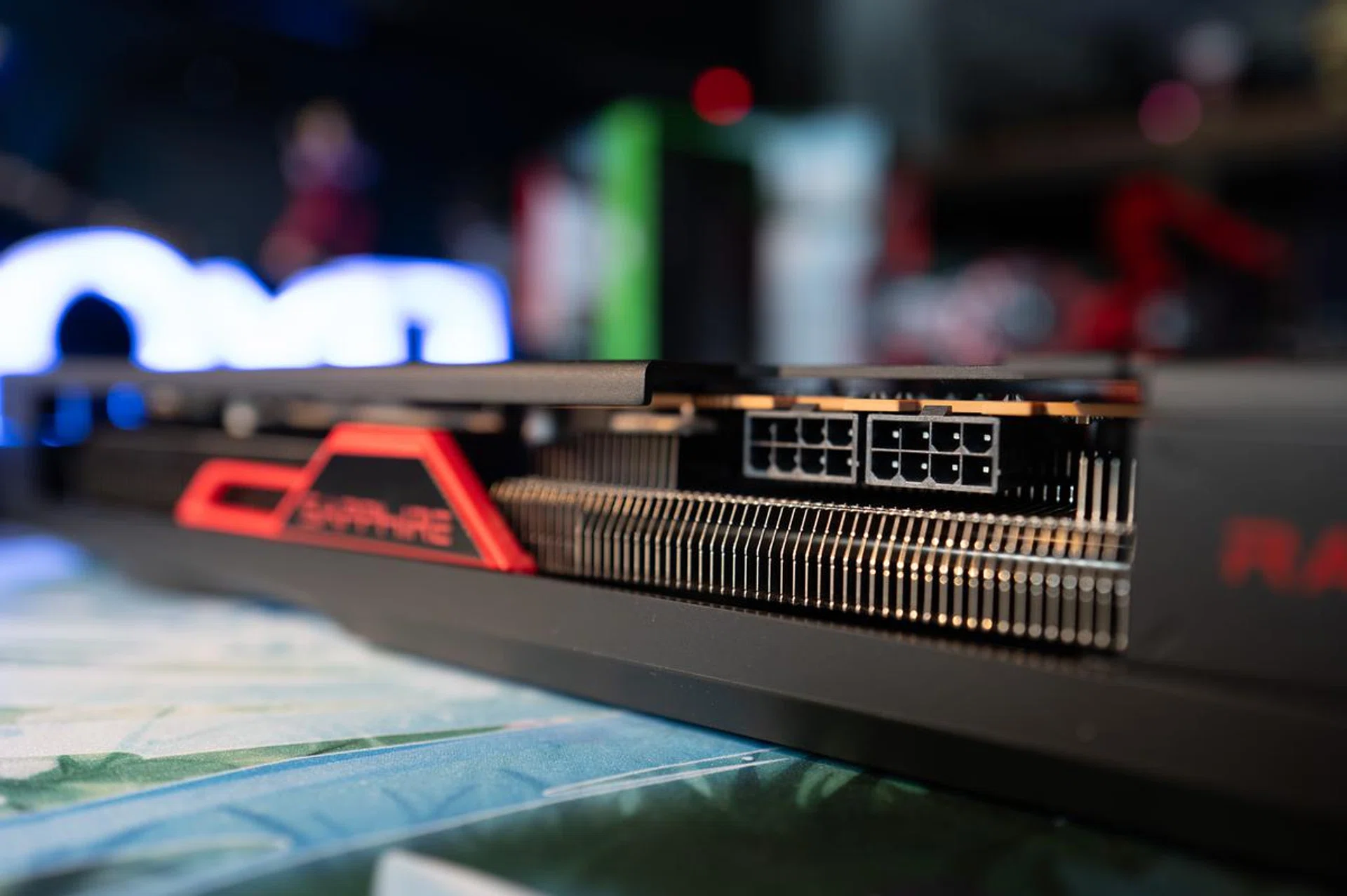
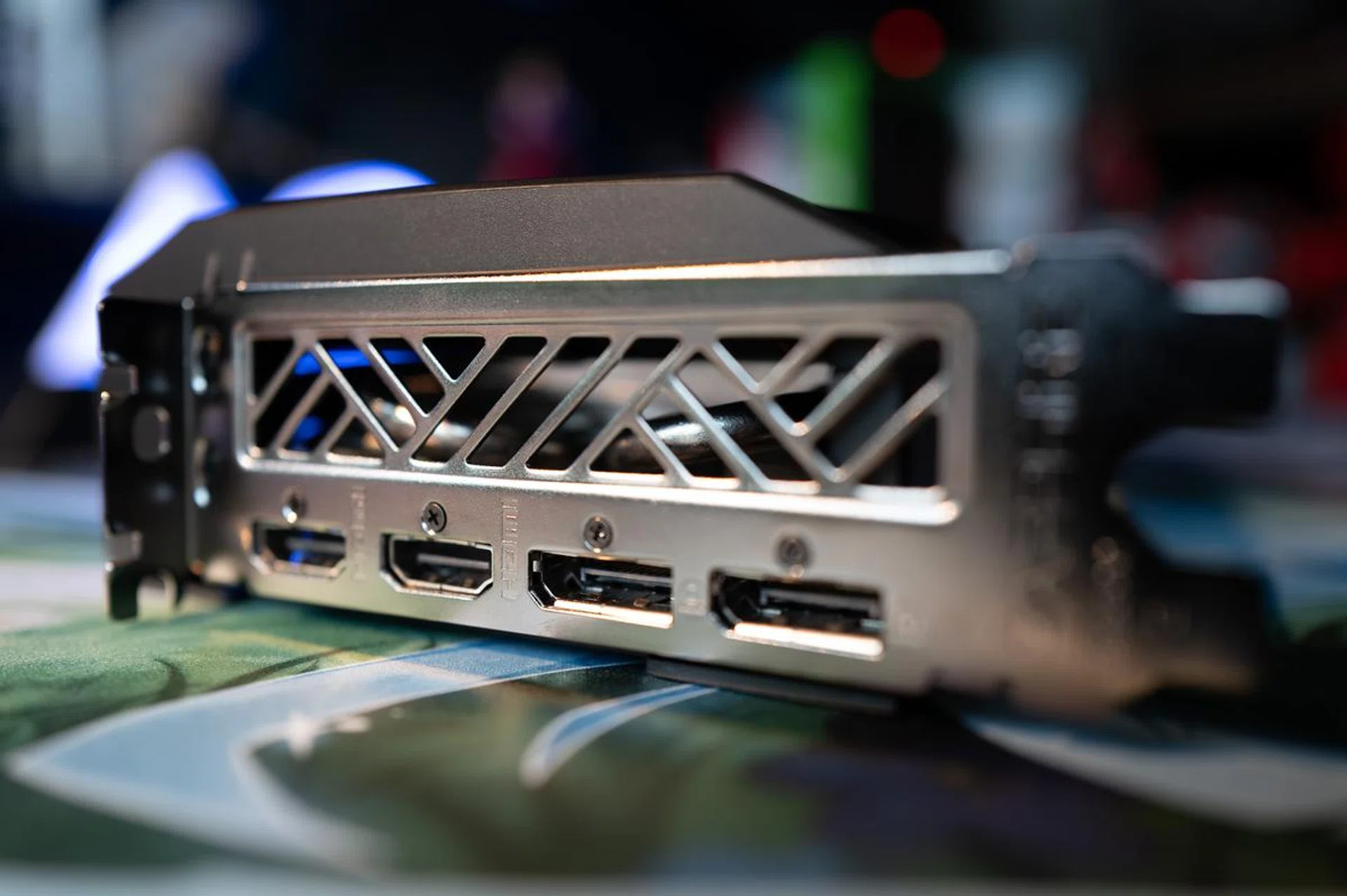
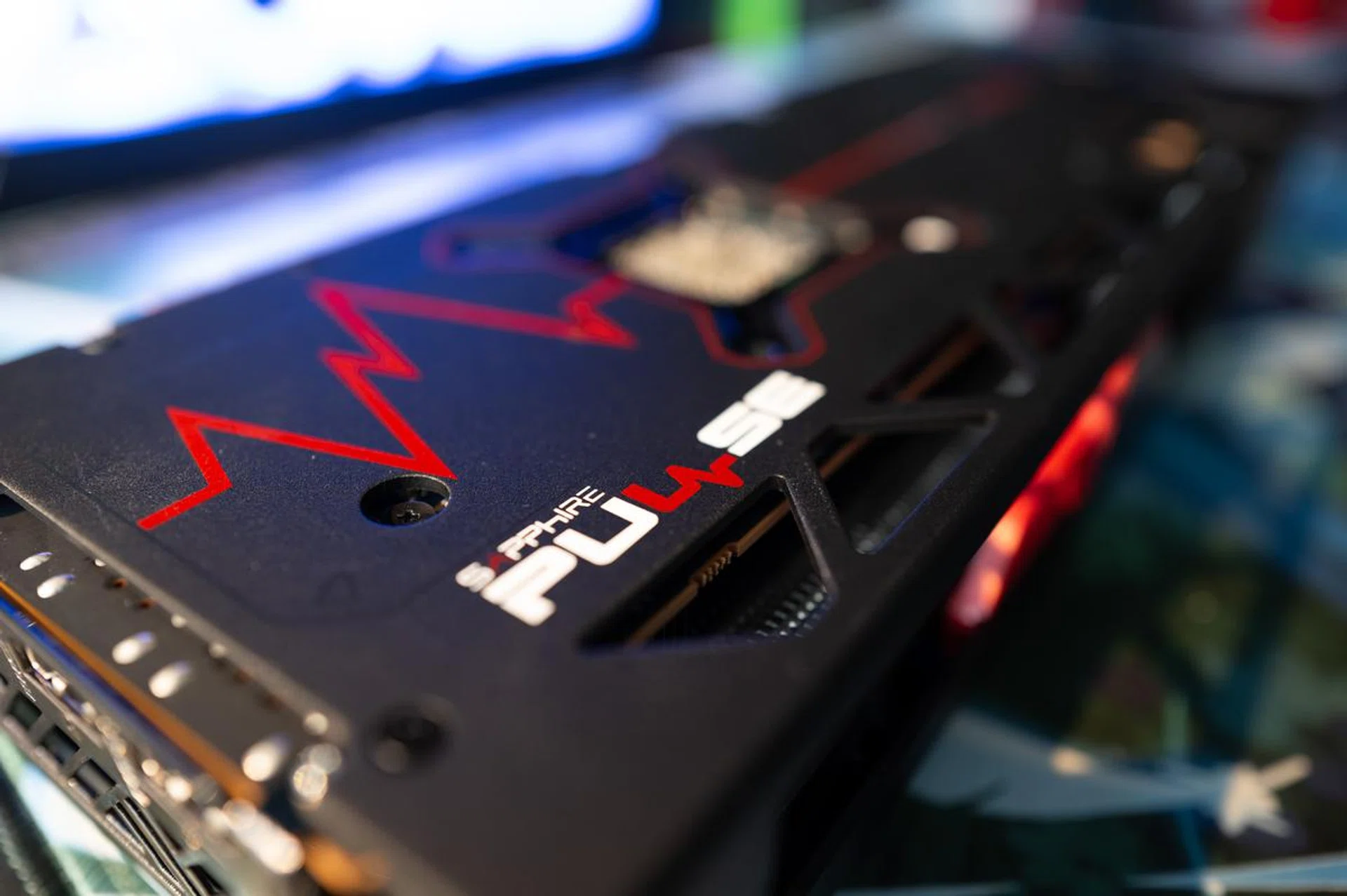
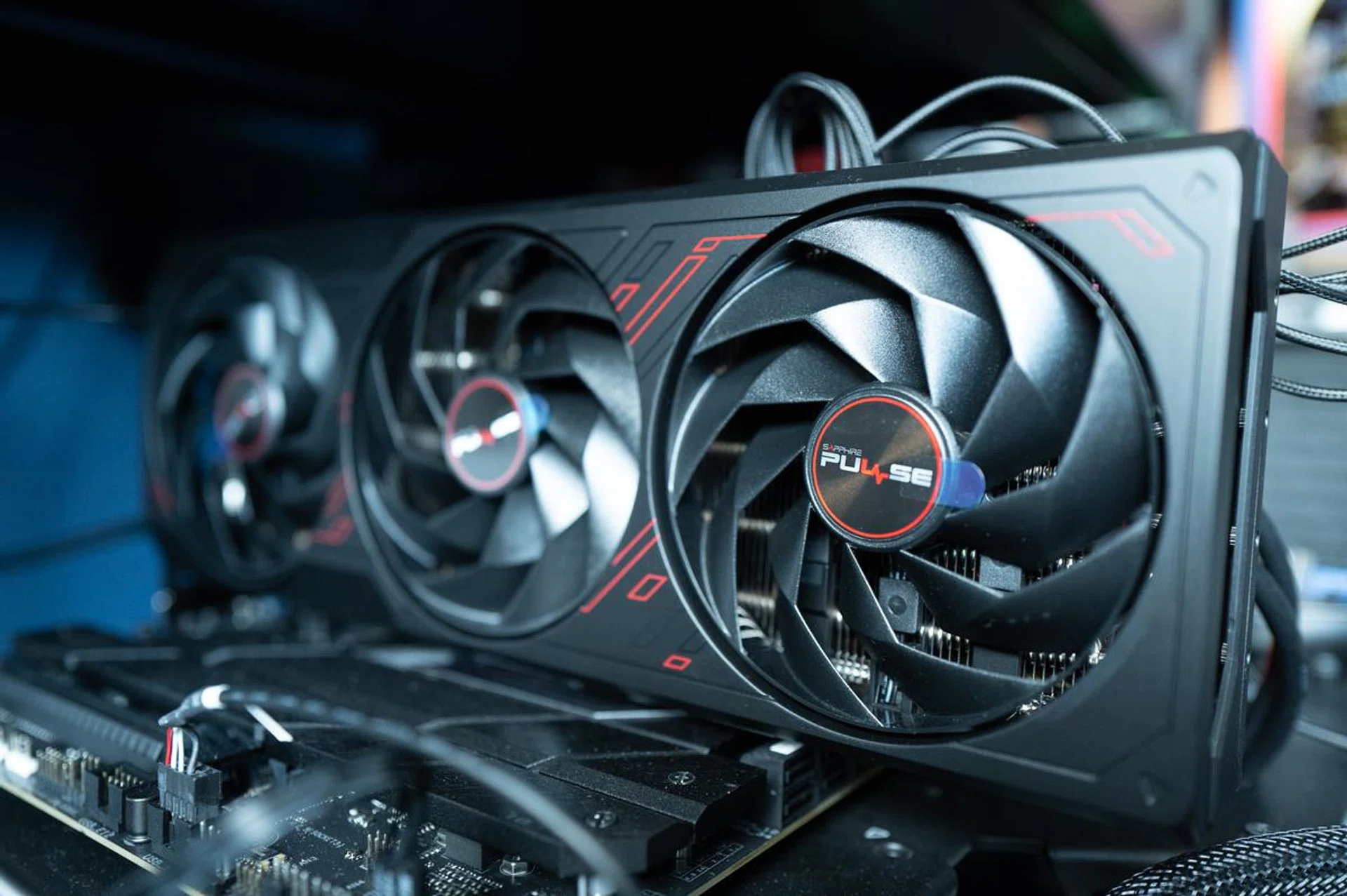
Even as an AIB partner’s card though, the Sapphire’s RX 7900 GRE bears an uncanny resemblance to the RX 7000-series reference cards – sporting the same dark finish and tapered edges. The card is powered by two 8-pin connectors, uses a dual-slot, triple-fan design to manage cooling effectively. It also gets two full-size DisplayPort 2.1 and two HDMI 2.1b connectors but lacks a USB-C with DP 2.1 passthrough that AMD’s reference cards have.
Performance Analysis
The RX 7900 GRE is firmly targeted at the 1440p gaming community, but yet it's not without its limitations. High-end games like Cyberpunk 2077 and Red Dead Redemption 2 posed a considerable challenge, even with FSR switched on. The card, however, demonstrates its strength with more traditional rasterised workloads.
HWZ Test Rig Specs
- Intel 14th Gen Core i9-14900K CPU
- ROG Maximus Z790
- Samsung 980 Pro 1TB SSD
- Kingston Fury 32GB DDR5
- Windows 11 Home 64-bit
- ASUS ROG Swift PG43UQ 4K Gaming Monitor
To evaluate its performance, I ran tests at 1080p,1440p and of course 2160p (aka 4K) and at maximum graphics settings to maximise the card’s full horsepower.
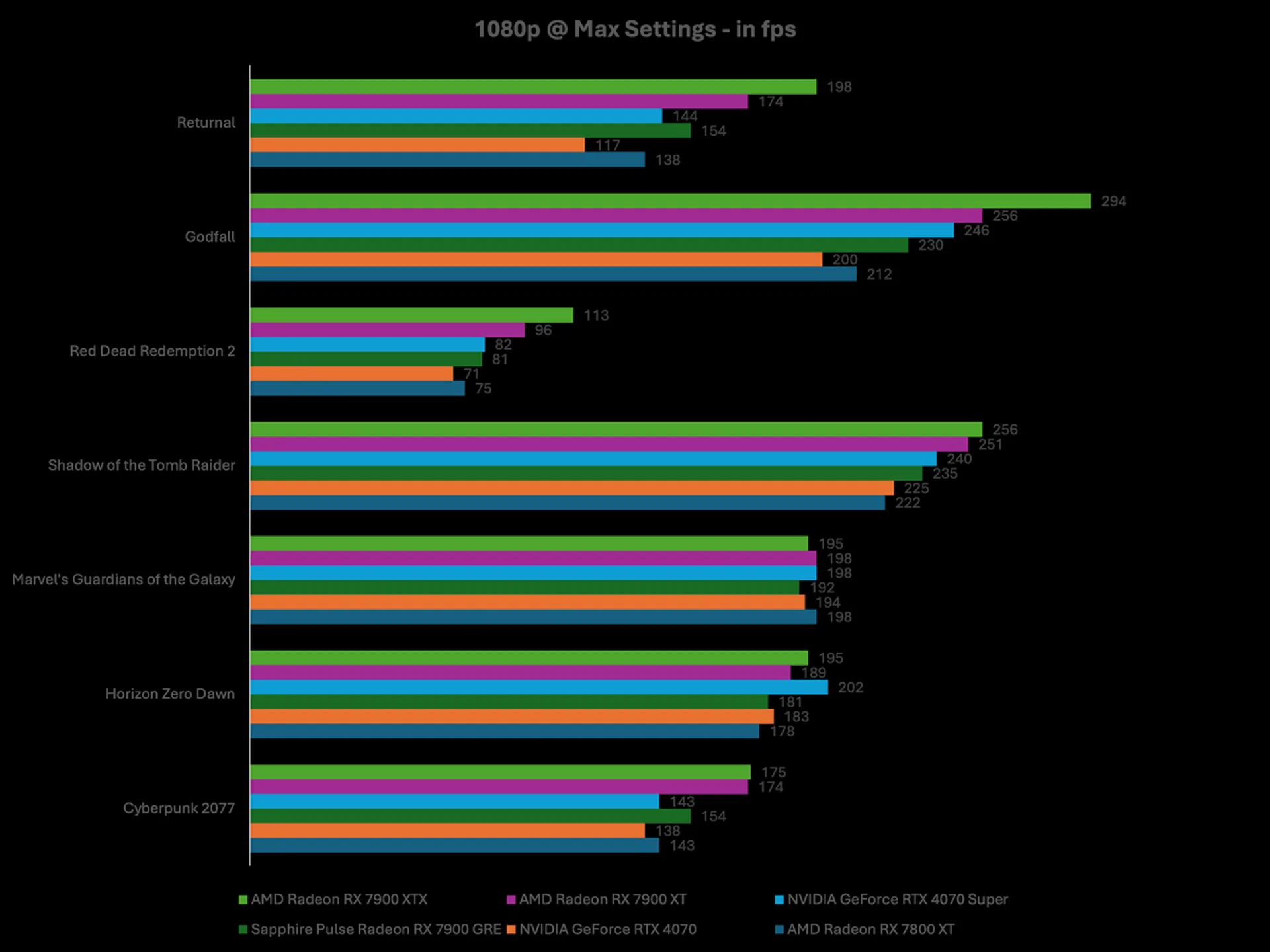
1080p results.
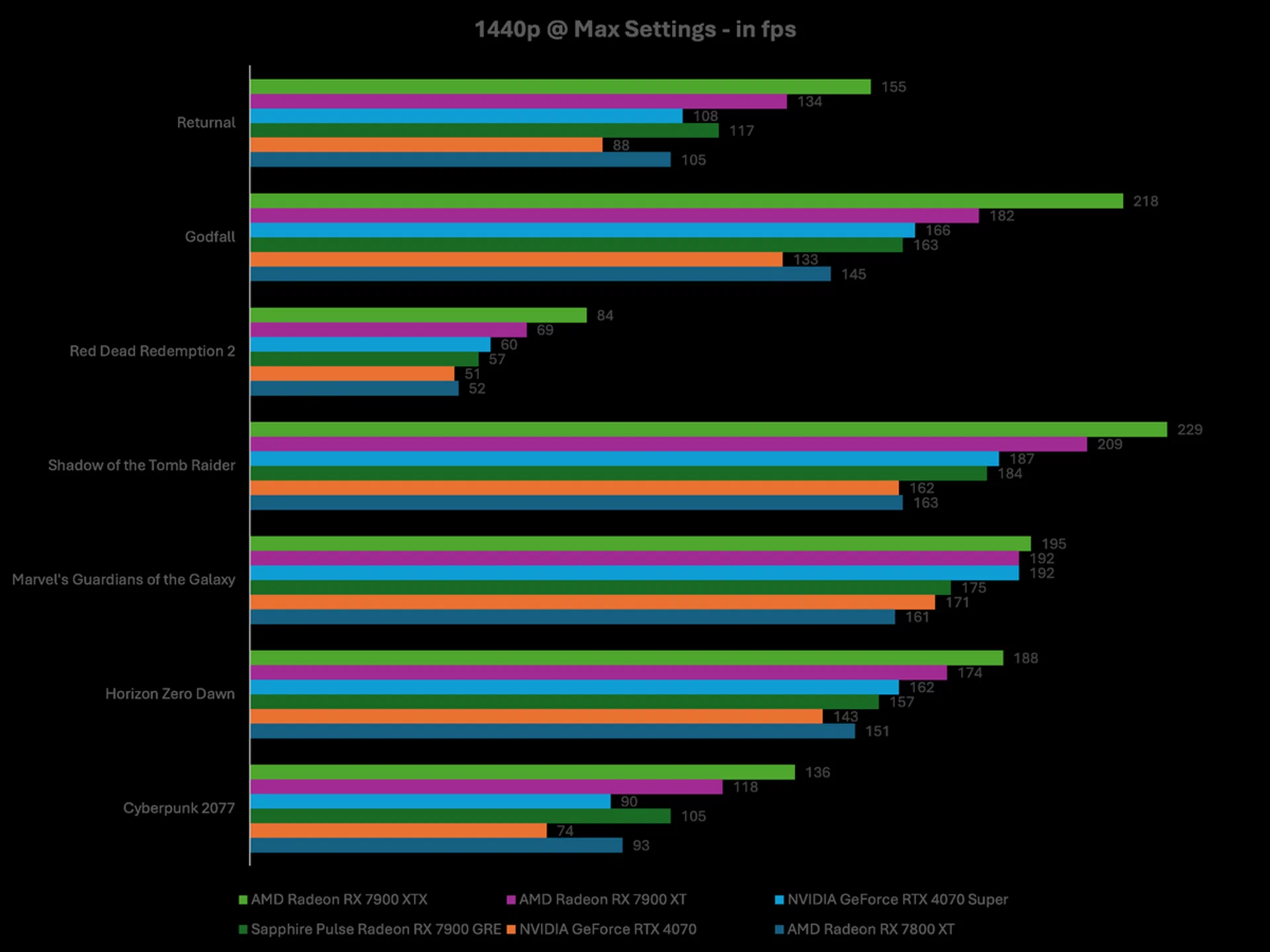
1440p results.
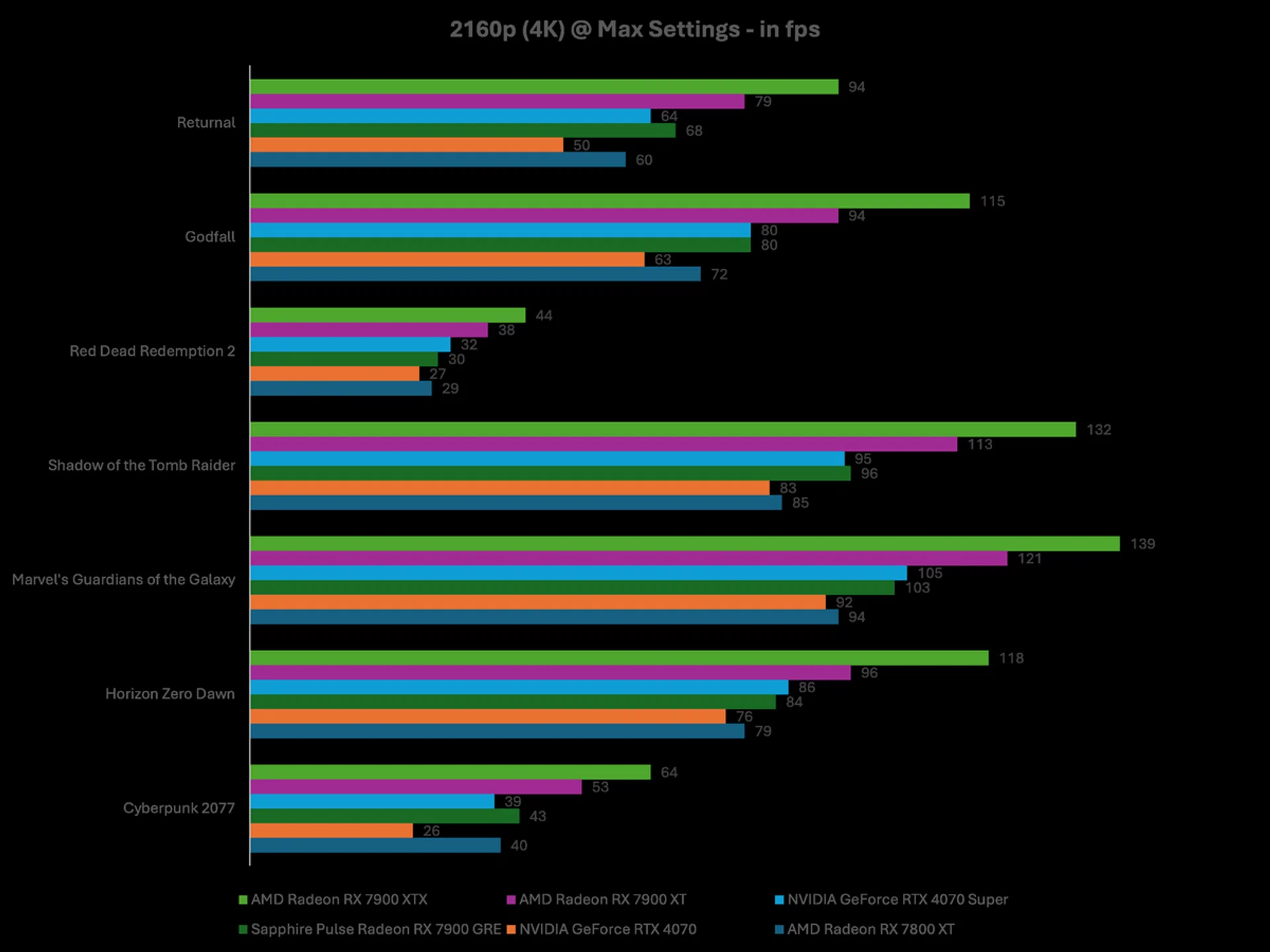
2160 (4K) results.
At 1440p and 4K, we see the RX 7900 GRE’s performance tapering off compared to the more powerful cards but that is to be expected, with the flagship Radeon RX 7900 XTX outperforming all cards below it, especially at higher resolutions. But the interesting thing is that with all three benchmarks, we can see AMD has now hit a segment with the RX 7900 GRE where it didn’t used to – the higher-end mid-range gaming market. noticed how the gap between the RX 7900 XT and the RX 7800 XT was remarkably wider if the RX 7900 GRE did not exist?
But more remarkable was how the RX 7900 GRE consistently outperformed NVIDIA’s GeForce RTX 4070 in the games it was benchmarked on. It even bested the GeForce RTX 4070 Super at 4K, thanks to its higher 16GB memory (versus 12GB on both RTX 4070 cards). There’s a big caveat here though: These are all raw, rasterised workloads and NVIDIA’s superweapon here is DLSS and when it’s turned on, outperforms AMD’s cards. AMD does have its own upscaling FSR tech, but it pales in comparison and is less supported compared to DLSS.
Conclusion
AMD certainly has a solid graphics card for 1440p gaming in the RX 7900 GRE. At US$549, it’s a very good and compelling alternative to NVIDIA’s GeForce RTX 4070 at the same price point and even comes close to matching the US$599 GeForce RTX 4070 Super. Thanks to 16GB of graphics memory, it can even run some games at 4K.
1440p gaming is the norm these days and recent (and demanding) games like Cyberpunk 2077 have shown that 12GB is barely cutting it, especially if you’re running them at full graphics settings – 16GB is becoming more essential.
Ultimately, I find the RX 7900 GRE offers good value. If you’re looking for a fast AMD GPU for 1440p gaming, the RX 7900 GRE is worth considering as it strikes a better balance between price and performance compared to other higher-end 7900 series cards, especially if you're focusing solely on the cost of upgrading your GPU.
Our articles may contain affiliate links. If you buy through these links, we may earn a small commission.