
AMD Ryzen 7 7800X3D performance review: Another fantastic gaming CPU
AMD is on a roll with its Zen 4-based Ryzen 7000 series processors.

Note: This review was first published on 5 April 2023.
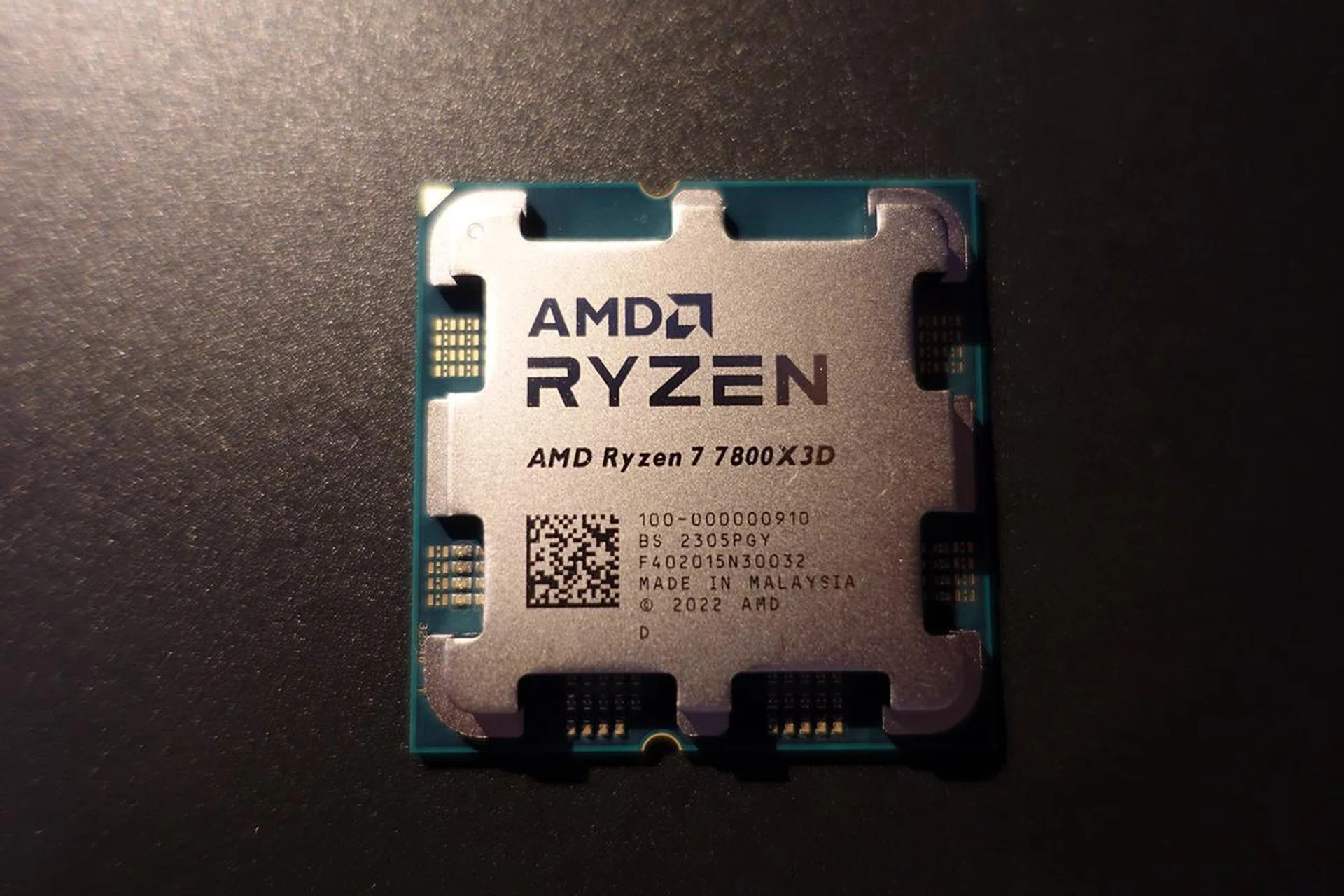
AMD has already made significant strides in closing the gap with Intel in terms of gaming performance with the introduction of its Ryzen 9 7950X3D processor. Now, the company is set to raise the bar even higher with the arrival of the much-anticipated Ryzen 7 7800X3D. Following in the footsteps of its successful predecessor, the Ryzen 7 5800X3D, the new 7800X3D comes more than a month after the 7950X3D and is definitely worth the wait.
The Ryzen 7 7800X3D is priced at US$449 and features eight cores, 16 threads, and a boost clock speed of up to 5GHz. Like the 7950X3D, it also features 3D V-Cache technology. However, the 7950X3D’s hybrid design, consisting of one eight-core chiplet (CCD) with an additional 64MB L3 cache and another eight-core CCD without it, required extra manoeuvring from the operating system. Consequently, it sacrificed some raw multithreaded performance typically expected from a standard 16-core chip.
In contrast, the Ryzen 7 7800X3D provides a more straightforward 3D V-Cache experience. With only one eight-core chiplet and extra cache, there's no need for complex provisioning or application adjustments to determine the optimal CCD usage. While it may not be faster than the 7950X3D, which highlights how well AMD's design and engineering team implemented the hybrid design, it is an ideal choice for a dedicated gaming PC.
Ryzen 7600X | Ryzen 7 7700X | Ryzen 7 7800X3D | Ryzen 9 7900X | Ryzen9 7900X3D | AMD Ryzen 9 7950X | AMD Ryzen 9 7950X3D | |
Base clock | 4.7GHz | 4.5GHz | 4.2GHz | 4.7GHz | 4.4GHz | 4.5GHz | 4.2GHz |
Boost clock | 5.3GHz | 5.4GHz | 5.0GHz | 5.6GHz | 5.6GHz | 5.7GHz | 5.7GHz |
Core | 6 | 8 | 8 | 12 | 12 | 16 | 16 |
Threads | 12 | 16 | 16 | 24 | 24 | 32 | 32 |
L3 Cache | 32MB | 32MB | 96MB | 64MB | 128MB | 64MB | 128MB |
PCIe | 5 | 5 | 5 | 5 | 5 | 5 | 5 |
Default TDP | 105W | 105W | 120W | 170W | 120W | 170W | 120W |
SRP(as of Feb 272023) | US$449 / S$TBC | US$599 /S$969 | US$699 /S$1,129 |
Performance benchmarks
Our CPU test rig comes with the following specifications, with motherboards used being the only different components used.
- ROG Crosshair X670E Hero (AMD) / ROG Maximus Z790 Extreme motherboard (Intel)
- Samsung 980 Pro 1TB SSD
- Kingston Fury 32GB DDR5 memory
- NVIDIA GeForce RTX 4090 Founders Edition
- Windows 11 OS
Gaming performance

(Click to view a larger image)
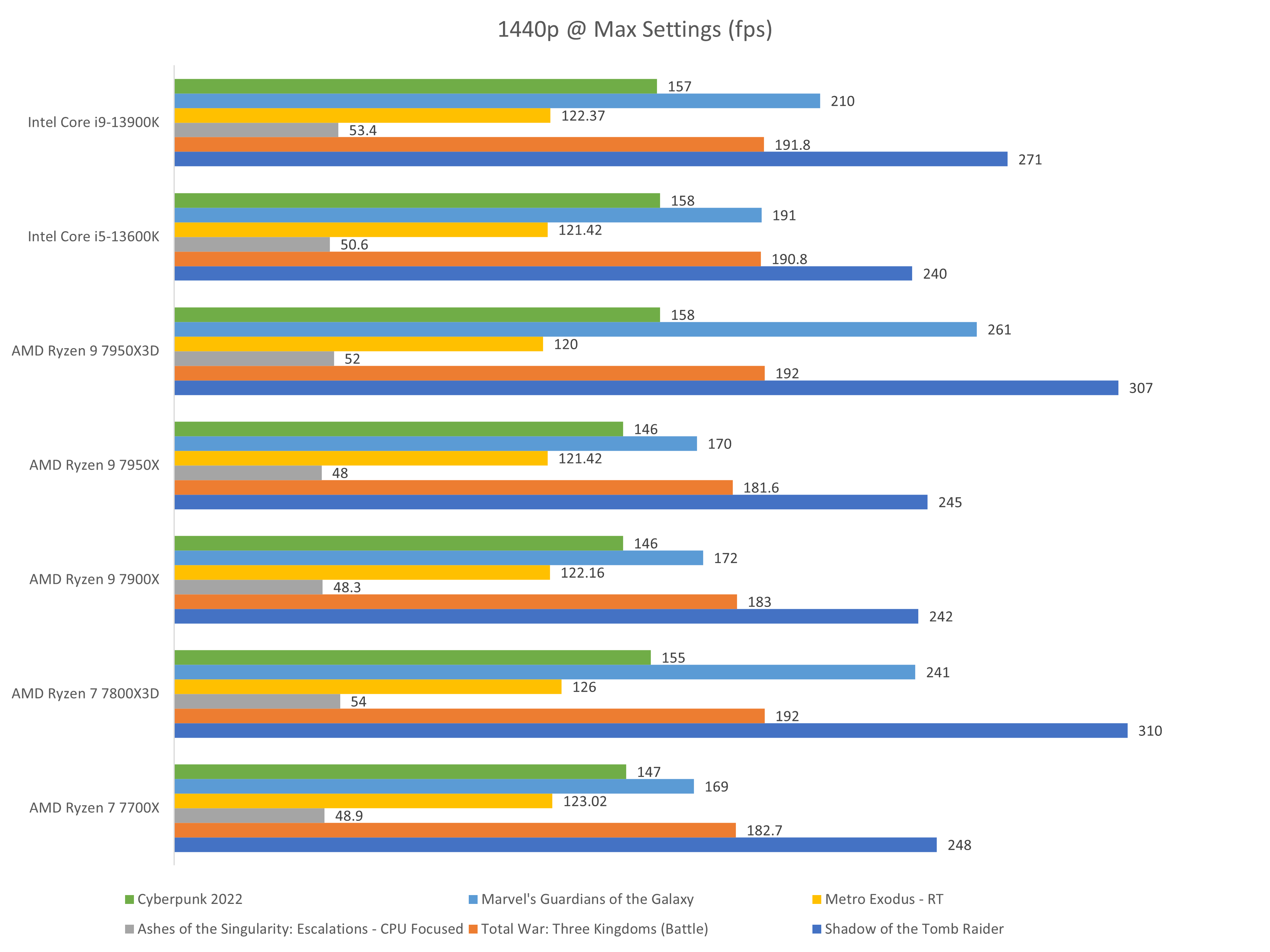
I put the Ryzen 7 7800X3D through its paces using the ROG Crosshair X670E Hero motherboard, 32GB of Kingston Fury DDR5 RAM, and an NVIDIA GeForce RTX 4090 Founders Edition. In most of the games I tested at 1080p with maximum settings, the 7800X3D outperformed Intel's flagship, the Core i9-13900K. It was particularly striking to see how the Ryzen 7 7800X3D and a GeForce RTX 4090 card achieved 354fps at 1080p in Shadow of the Tomb Raider, just a single digit behind the 7950X3D. Notable performance gains could also be seen with Marvel’s Guardians of the Galaxy and Metro Exodus and Ashes of the Singularity: Escalations, besting both the i9-13900K and 7950X3D.
(Click to view a larger image)

(Click to view a larger image)
However, it is essential to keep in mind that your CPU is not the sole determinant of gaming performance. At higher resolutions, the choice of graphics card has a more significant impact on frame rates. While the Ryzen 7 7800X3D and Ryzen 9 7950X3D are the fastest gaming CPUs we've tested, its performances will diminish at higher resolutions like 1440p, and more so at 4K, where performances of all the top-end CPUs in my tests are almost on par - separated only by very marginal differences.
Productivity and Content Creation performance

(Click to view a larger image)
(Click to view a larger image)

(Click to view a larger image)
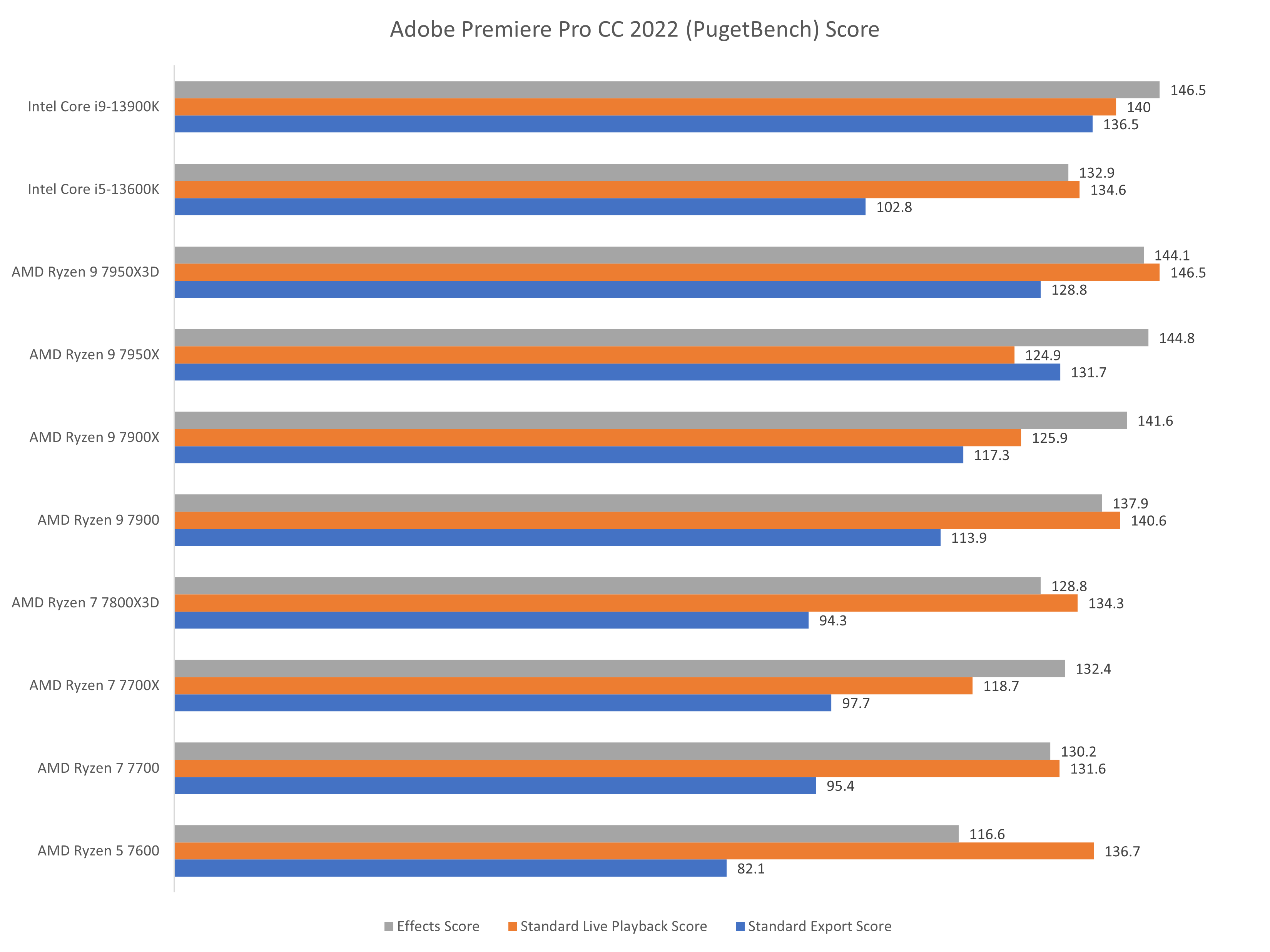
However, the 7800X3D doesn't quite measure up to both Intel and AMD’s flagship CPUs when it comes to productivity tasks. The Ryzen 7 7800X3D underperformed in benchmarks such as PugetBench's Adobe Premiere Pro, SYSmark 25 and Indigo Bench. If you are a user who prioritise productivity and content creation, the 7950X3D or Core i9-13900K would be more suitable choices.
However, for those primarily focused on gaming, the 7800X3D is the clear winner, thanks to its combination of performance enhancements, competitive pricing, and efficient power usage.
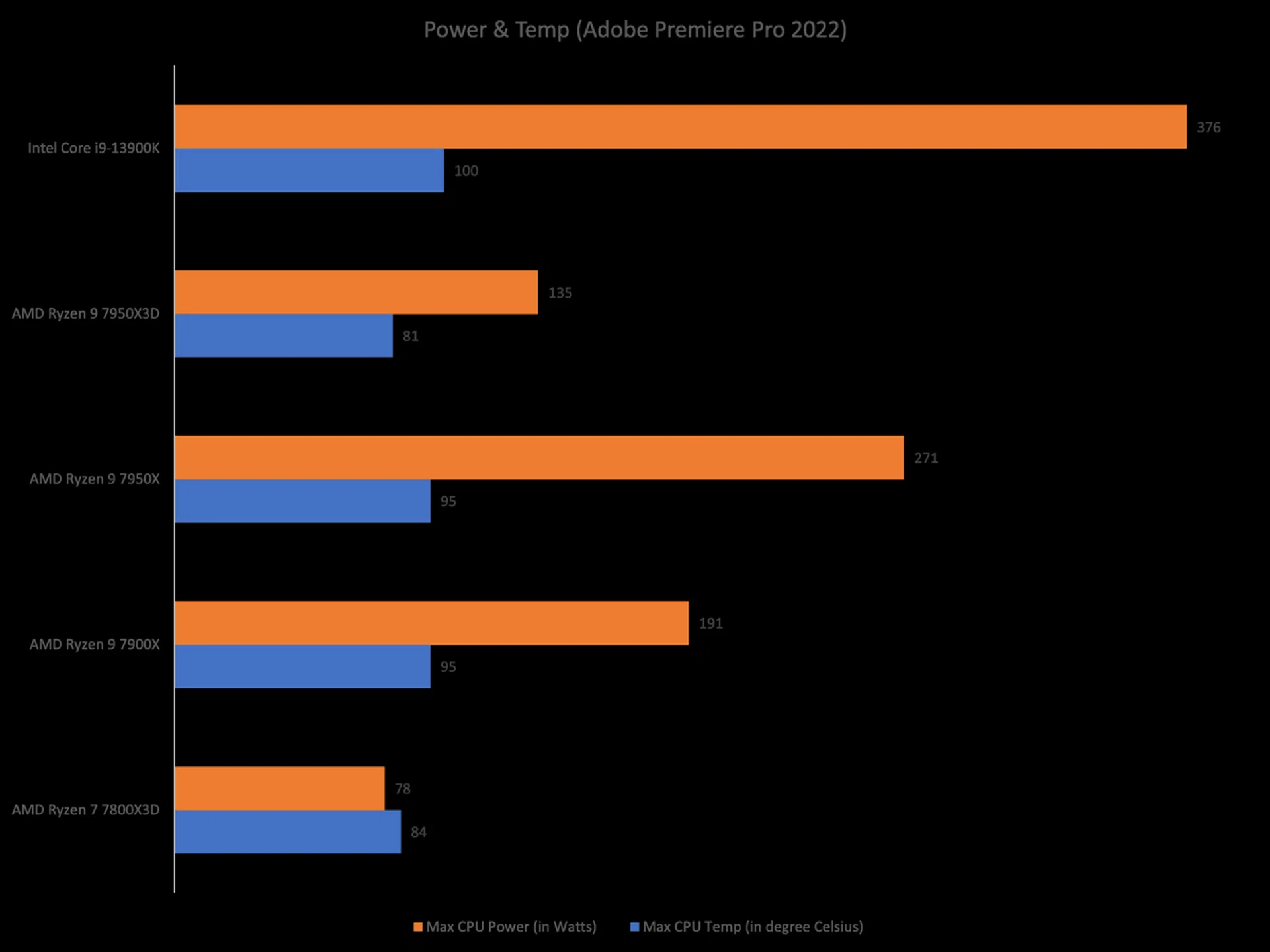
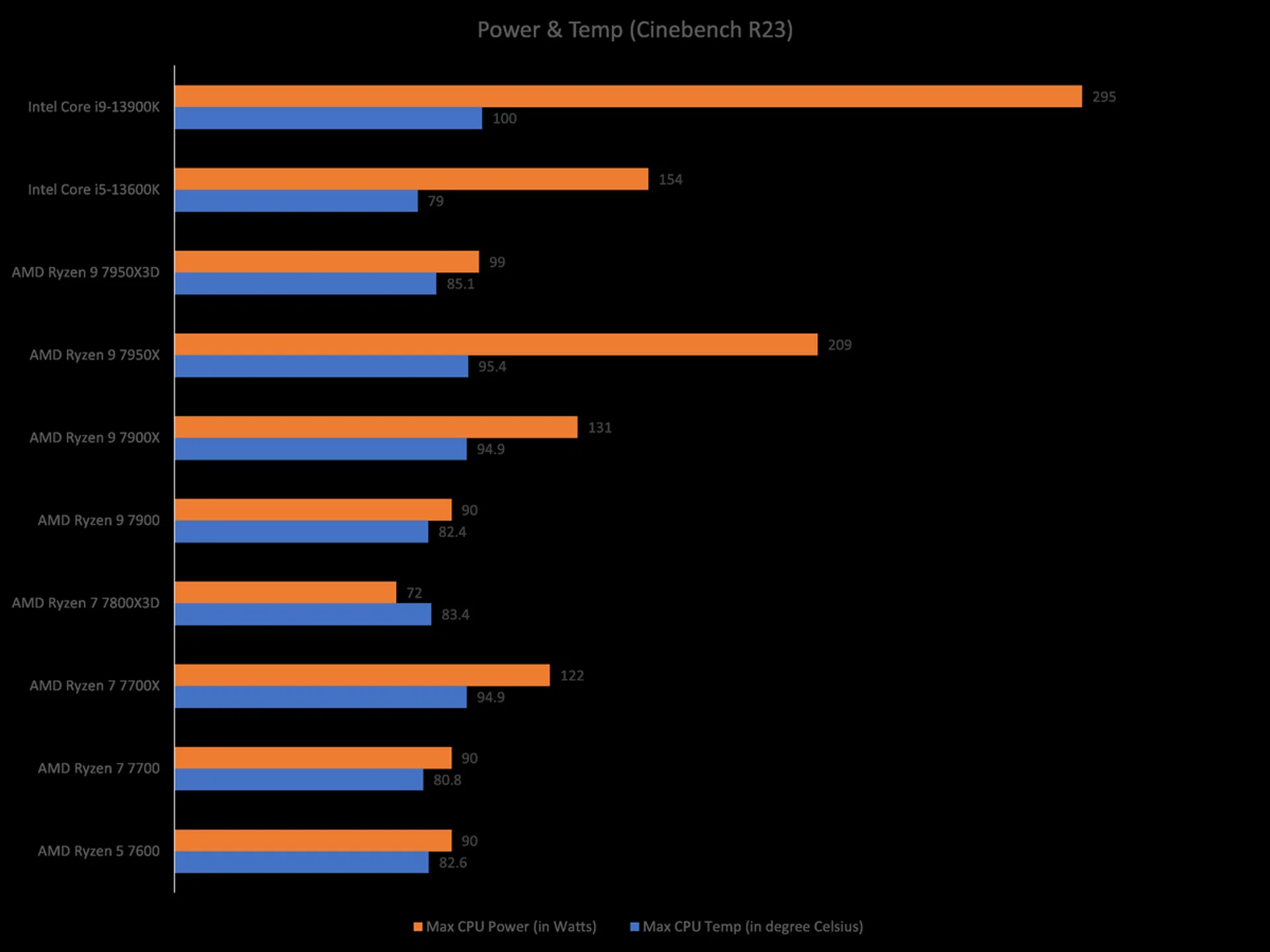
Speaking of power usage, the efficiency of the 7800X3D is truly remarkable. In my tests, I found that the processor's peak power draw was significantly lower than that of not just its Intel competitors, but even the 7950X3D. For example, while running Cinebench R23, the 7800X3D's CPU power reached a peak of 72W, compared to the 295W drawn by Intel's i9-13900K for the same task. Additionally, the 7800X3D's maximum temperature during the same Cinebench run was 83.4 degrees Celsius, significantly lower than the i9-13900K's 100 degrees Celsius or the 7950X3D’s 99 degrees Celsius.
The power efficiency of AMD's latest X3D chips can be attributed to the company's Zen 4 architecture and its innovative 3D V-Cache technology. The latter is particularly beneficial for gaming, as games typically do not require high CPU core counts or power, but instead favor processors capable of rapidly processing data with large cache sizes. On the other hand, productivity applications typically do not benefit as much from large cache sizes, which is why we don't see the same performance gains in these tasks.
Conclusion
The Ryzen 7 7800X3D is a truly impressive gaming CPU that not only narrows the gap with Intel's offerings (and even AMD’s own) but also showcases AMD's ability to deliver power-efficient processors, which in my opinion is becoming more important in today’s economic climate. If the Ryzen 9 7950X3D was AMD closing the gap with Intel, then the 7800X3D just validates how much it is better at making efficient processors. If I were to build a high-performing gaming PC today, the 7800X3D would undoubtedly be my first choice.
But if you require a balance between gaming and productivity and content creation performance, or do heavy multi-taskings (for example, live streaming a game play), then the Ryzen 9 7950X3D or even the i9-13900K is obviously a more suitable option – even if Intel’s 13th Gen processors are looking less and less attractive against AMD’s wider range of powerful and efficient models.
The Ryzen 7 5800X3D had become the go-to option for many PC gamers in 2022, and it seems the Ryzen 7 7800X3D is poised to take up that mantle for 2023 and beyond. With its impressive performance, power efficiency, and competitive pricing, I’m sure the 7800X3D is set to become a popular choice for gamers seeking a powerful and efficient CPU.
Our articles may contain affiliate links. If you buy through these links, we may earn a small commission.