
Gigabyte Radeon RX 9070 XT Gaming OC 16G review: Could this be the best Radeon card to buy?
It's not the prettiest Radeon card, but it could be the smartest buy.
#gigabyte #amd #gaming

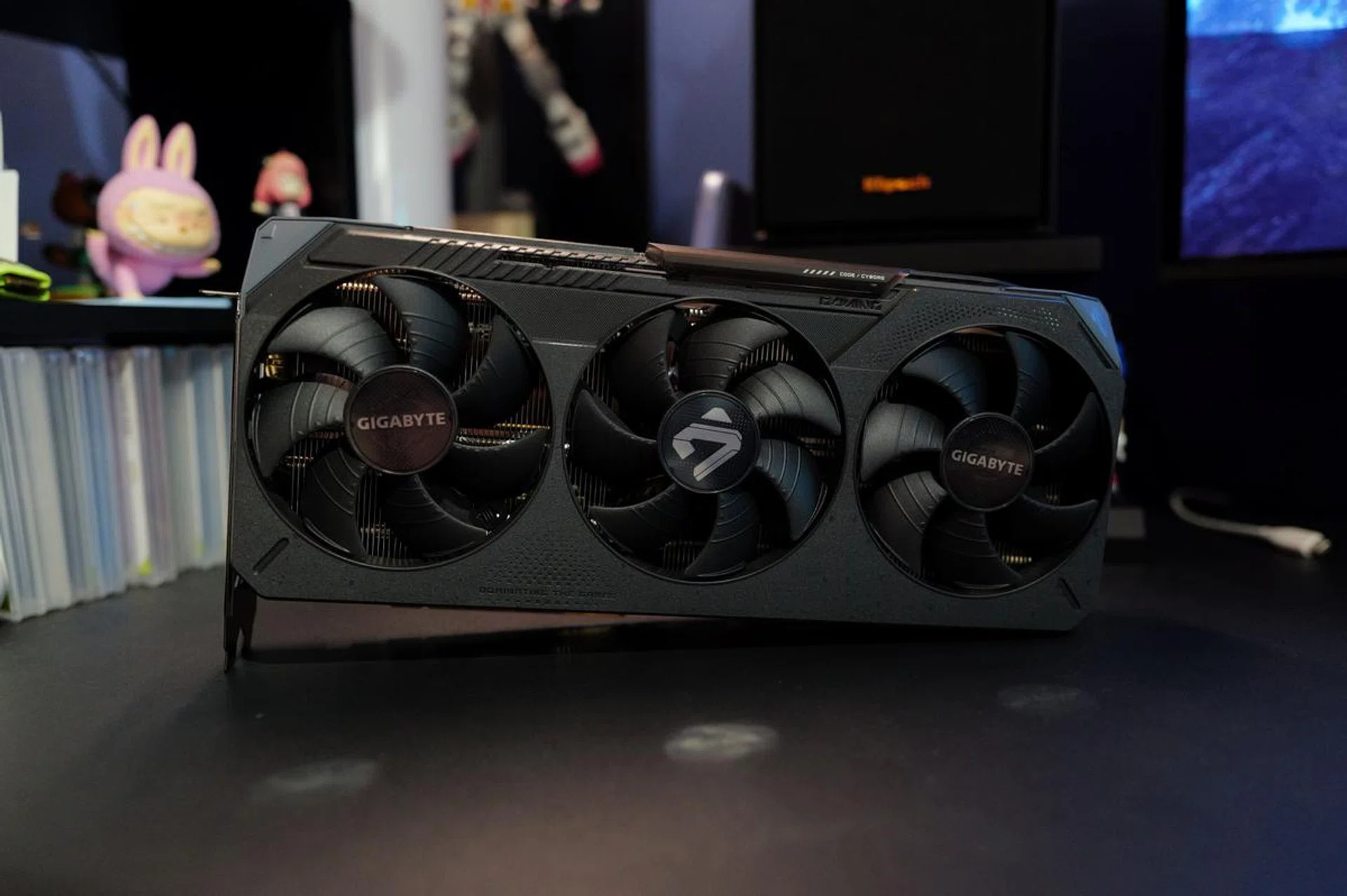
Photo: HWZ
Gigabyte’s Radeon RX 9070 XT Gaming OC 16G is based on the latest RDNA 4 architecture from AMD and promises excellent gaming performance at 1440p and even 4K resolutions. If you’ve read our Radeon RX 9070 XT review (read it here), you’ll know that’s actually true; AMD’s mid-ranged GPUs offer a better price-to-performance value over NVIDIA’s equivalent – the GeForce RTX 5070 Ti. In short, if you’re looking for a new mid-range (or mainstream) graphics card then the smart money is on the Radeon RX 9070 XT, like this Gigabyte card that we are reviewing today.
Physically, Gigabyte’s take on the RX 9070 XT leans toward the larger side, but it’s not quite as bulky as some of its competitors. Measuring roughly 288mm long and taking up 2.8 slots, it’s actually more compact than some of the other cards we’ve seen recently – the ASUS’ TUF Gaming Radeon RX 9070 XT OC Edition, for instance, is noticeably larger. Cooling is handled by a triple-fan WindForce setup that alternates fan rotation to reduce turbulence, sitting on top of a sizeable heatsink array with several composite copper heat pipes.
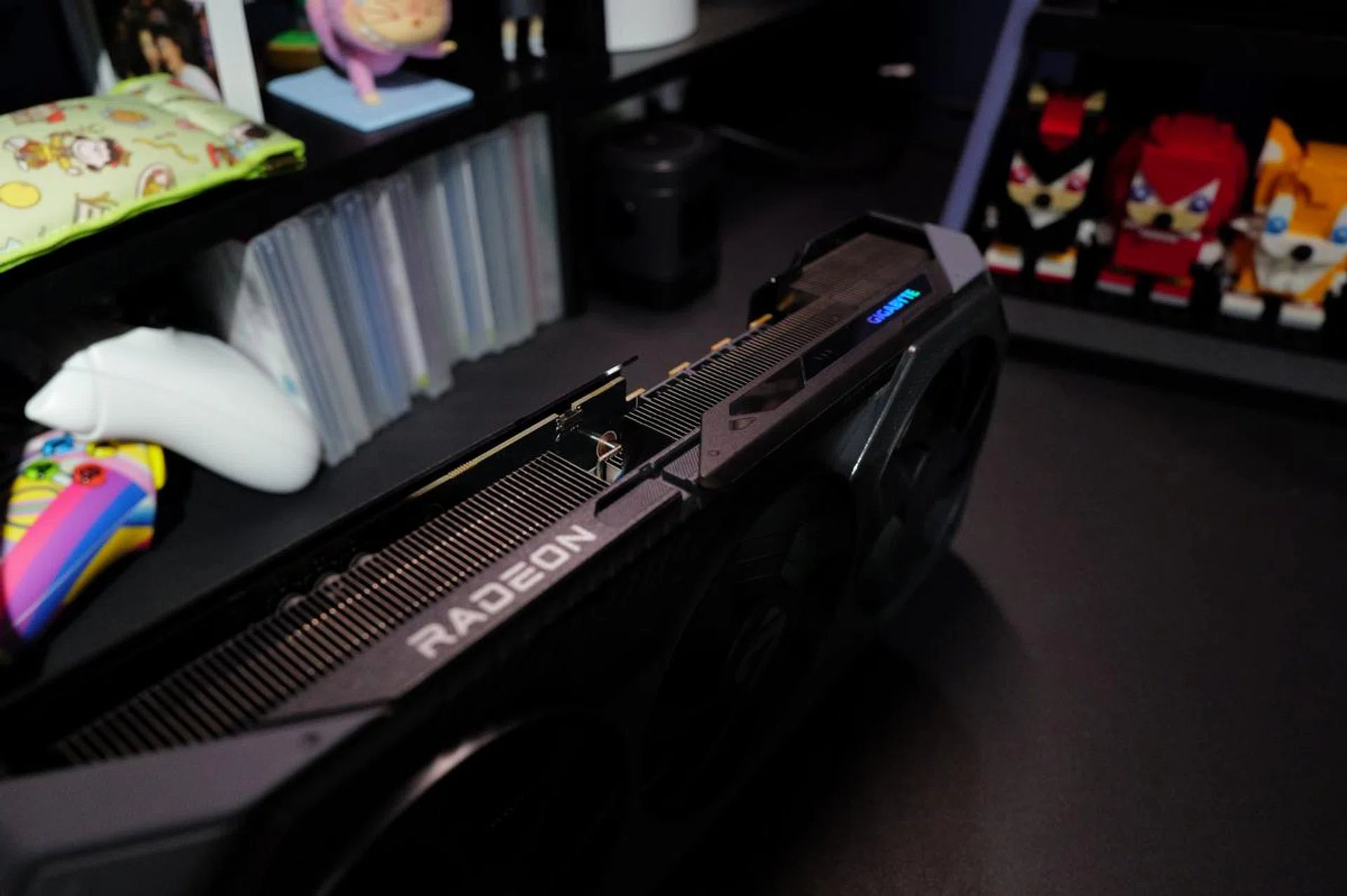
Photo: HWZ
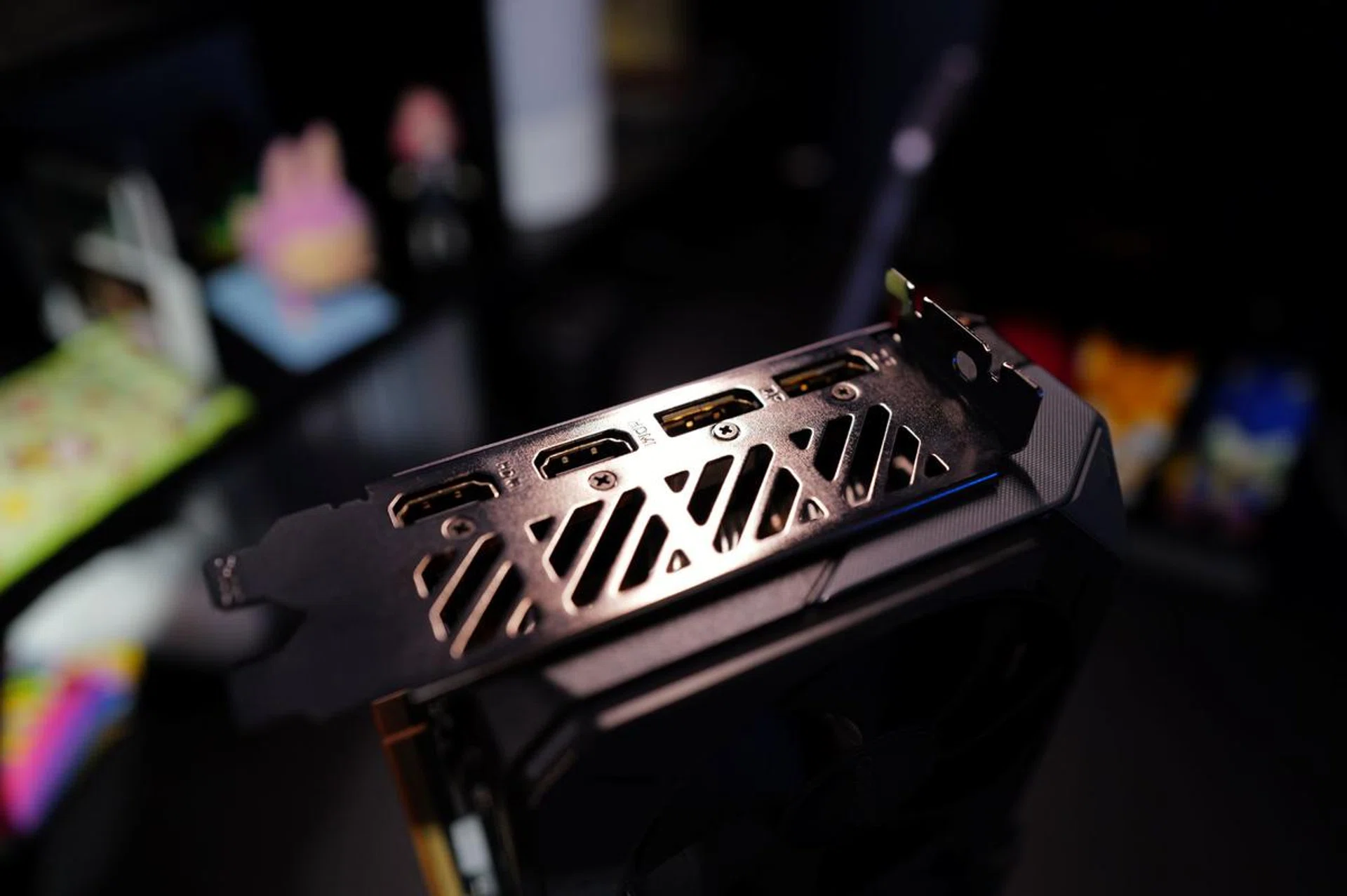
Photo: HWZ
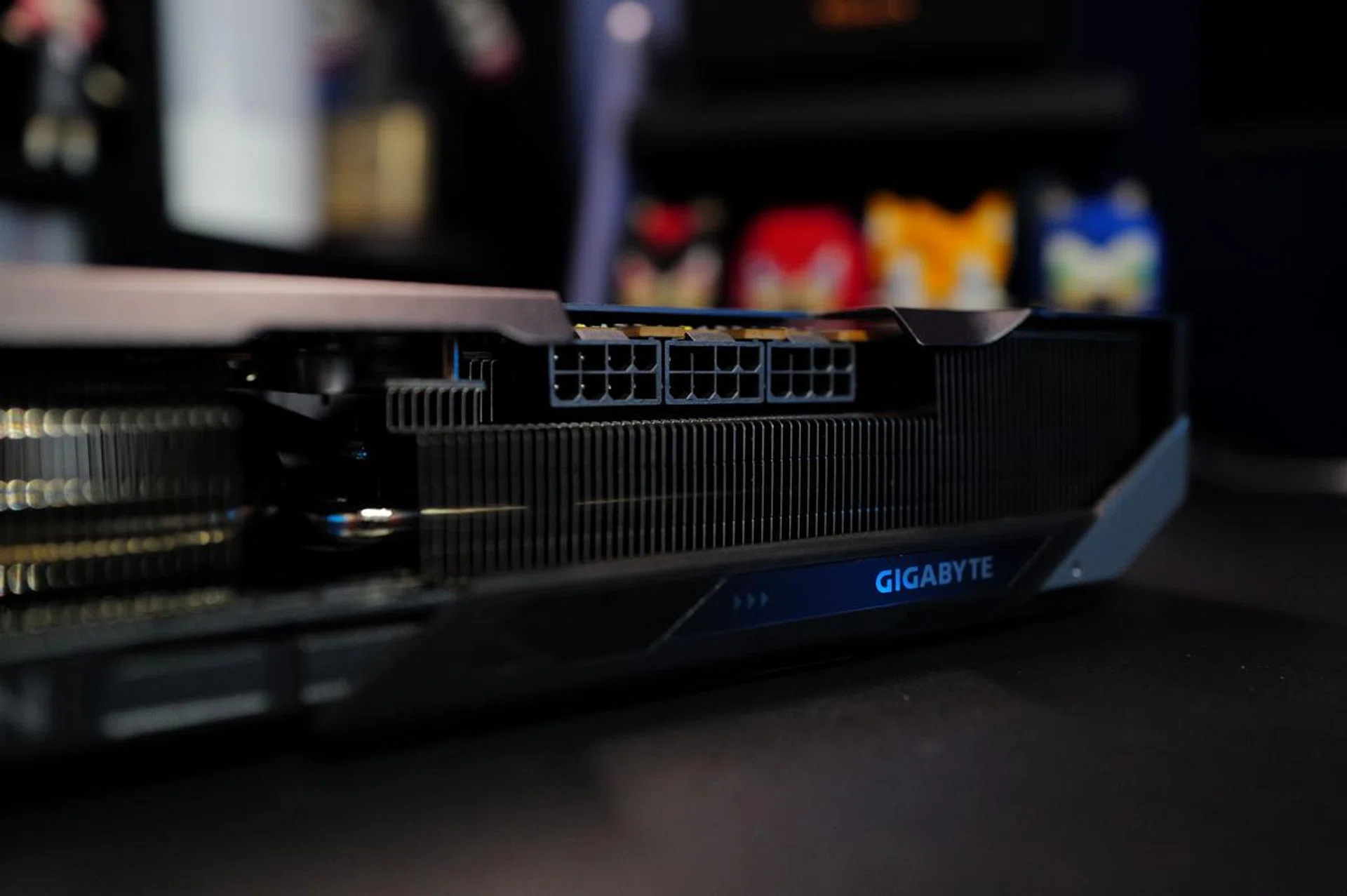
Photo: HWZ
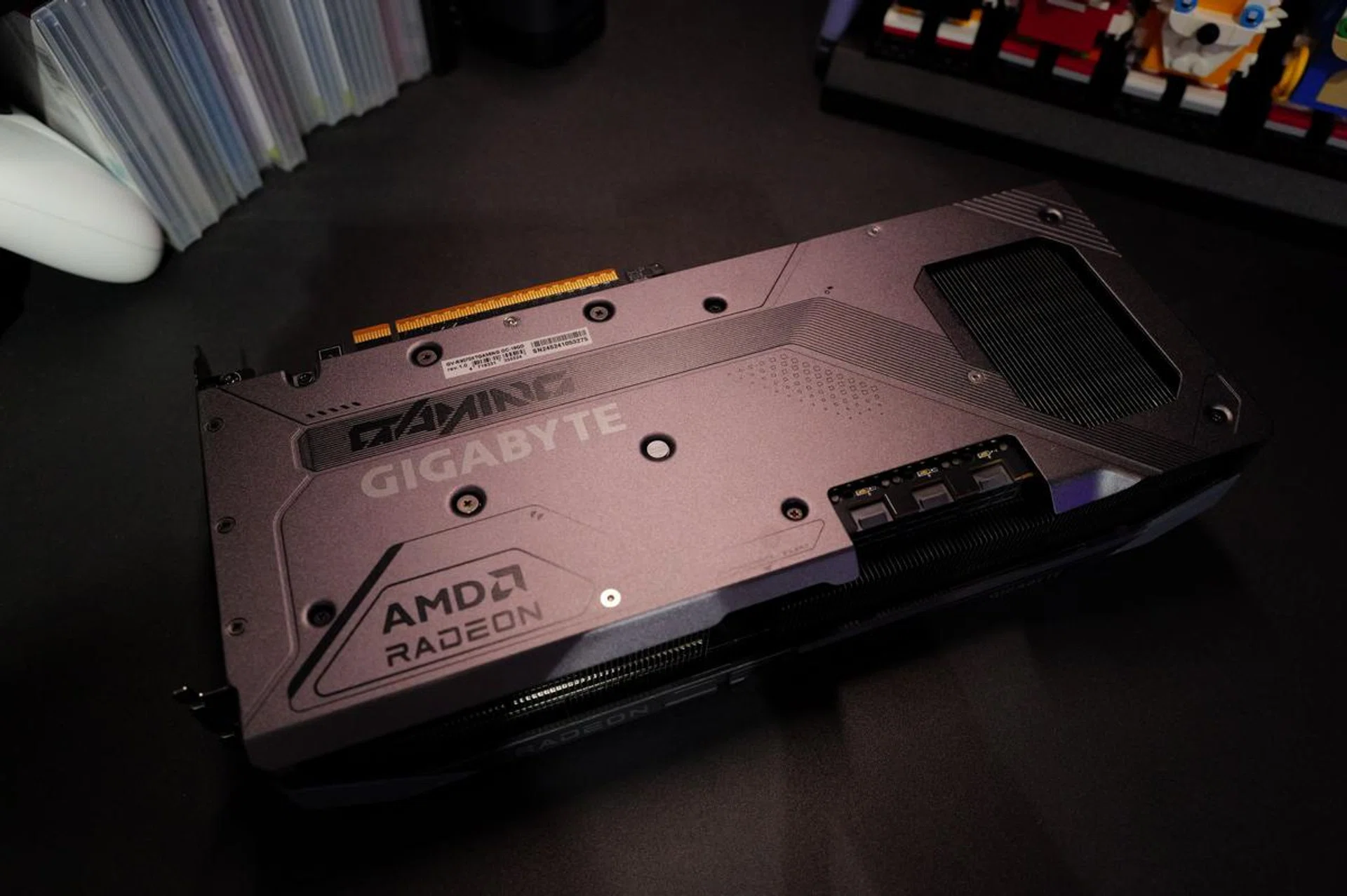
Photo: HWZ
The design is relatively understated, especially compared to the usual gamer-oriented fare. You get a matte black shroud with some grey detailing. It’s clean and simple, but not dull. There’s still some flair though: an RGB-lit Gigabyte logo on the side adds just enough bling without turning the card into a light show. Around the back, a full-length metal backplate gives the card a solid feel and adds some passive cooling benefits for the rear of the PCB. Structural integrity is also commendable, with little flex thanks to the reinforced frame.
PowerColor Hellhound Radeon RX 9070 XT (Reference card) | ASUS TUF Gaming Radeon RX 9070 XT OC Edition | Gigabyte Radeon RX 9070 XT Gaming OC 16G | |
GPU | Navi 48 (RDNA 4) | Navi 48 (RDNA 4) | Navi 48 (RDNA 4) |
Process | 5nm | 5nm | 5nm |
Foundry | TSMC | TSMC | TSMC |
Transistors | 53.9 Billion | 53.9 Billion | 53.9 Billion |
Compute Units | 64 | 64 | 64 |
Game Clock (MHz) | 2460 | 2520 | 2520 |
Boost Clock (MHz) | 3010 | 3060 | 3060 |
VRAM | 16GB GDDR6 | 16GB GDDR6 | 16GB GDDR6 |
Memory Bus | 256-bit | 256-bit | 256-bit |
Memory Bandwidth | 644.6 GB/s | 644.6 GB/s | 644.6 GB/s |
TDP | 304W | 330W | 330W |
Price | US$599 /S$1,079 (via Techyard) | S$1,349 |
Specifications-wise, the Gigabyte Radeon RX 9070 XT Gaming OC 16G is similar to the Powercolor Hellhound that we used as our reference RX 9070 XT card. Except that it is an OC (aka overclocked) variant, so it’s got a faster (albeit just slightly) clock speed right out of the box. And like most factory overclocked RX 9070 XT cards, you’ll need three 8-pin PCIe connectors to get this card powered up and Gigabyte recommends an 850W power supply to keep it running comfortably. But does that extra oomph translate to better performance? Let’s find out.
Our test rig
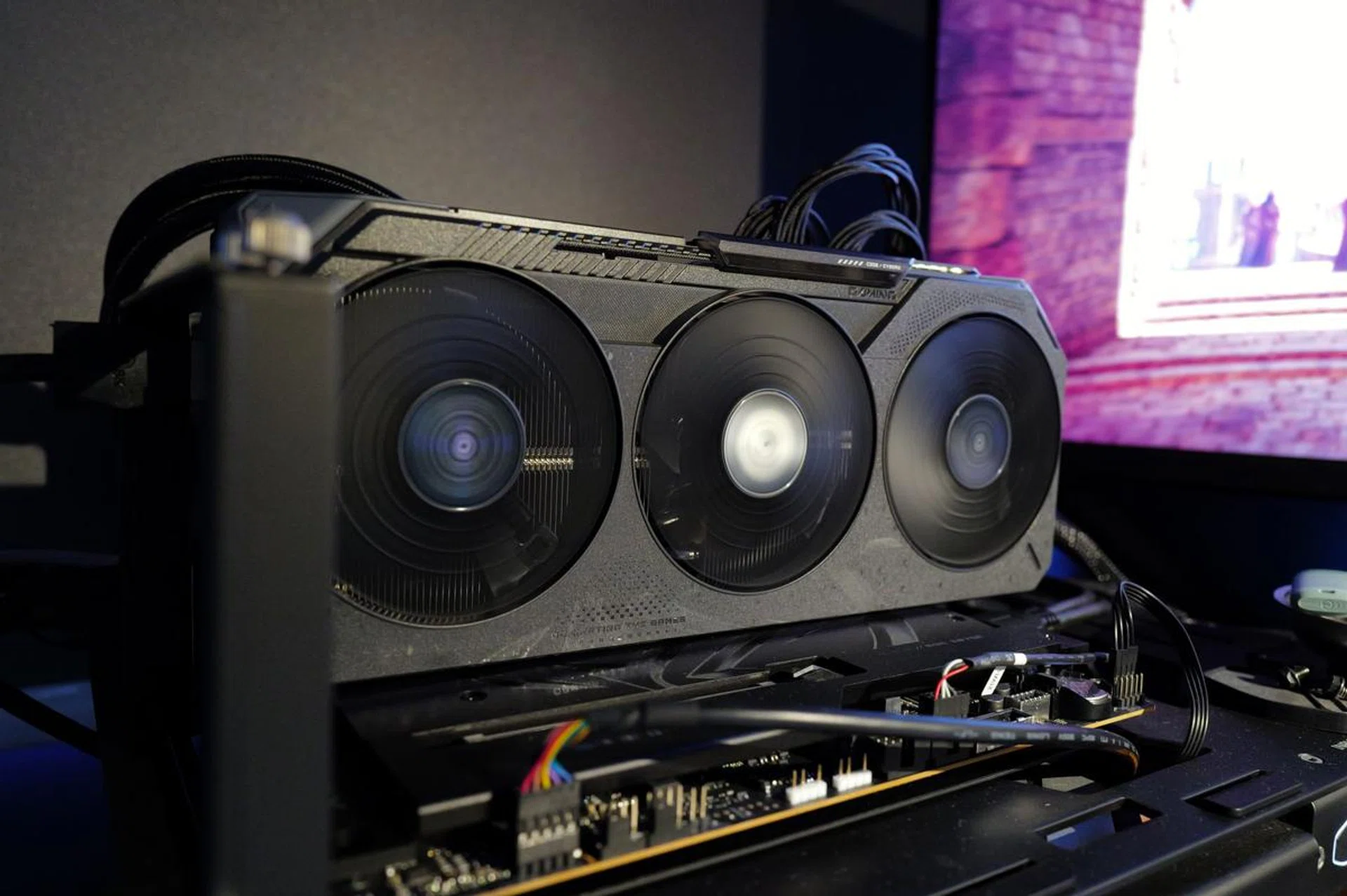
Photo: HWZ
Our test machine remains unchanged from the one used in our Radeon RX 9070 and RX 9070 XT review and comes with the following specifications:
- AMD Ryzen 9 9950X
- ROG Crosshair X870E Hero
- Samsung 990 Pro 1TB SSD
- Kingston Fury 32GB DDR5
- Windows 11 Home 64-bit
- ASUS ROG Swift OLED PG32UCDM 4K Gaming Monitor
Besides the PowerColor Hellhound Radeon RX 9070 XT that was used as our reference card, we’ll also measure the Gigabyte card against the ASUS TUF Gaming Radeon RX 9070 XT.
Gaming performance (rasterization)
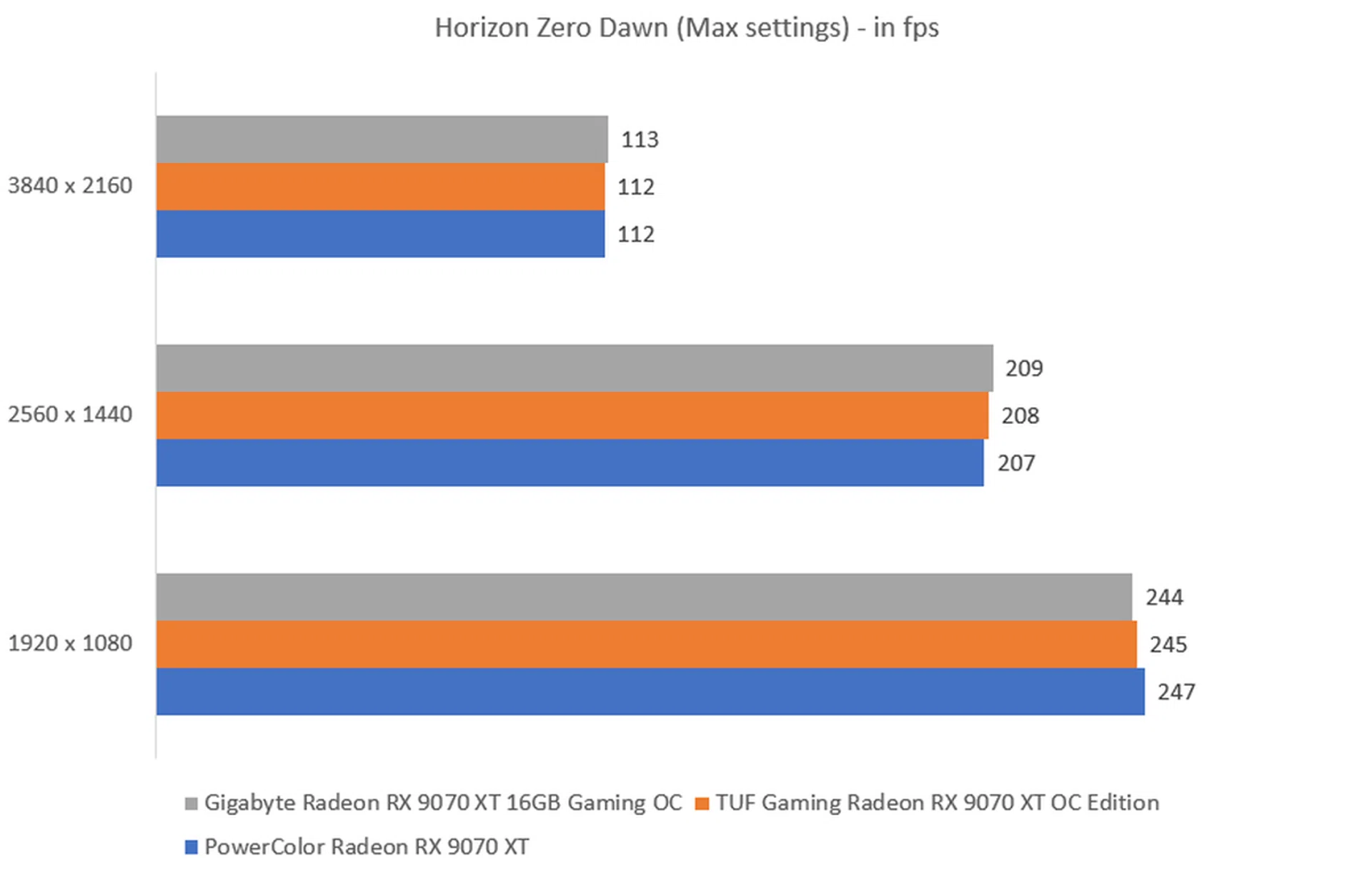
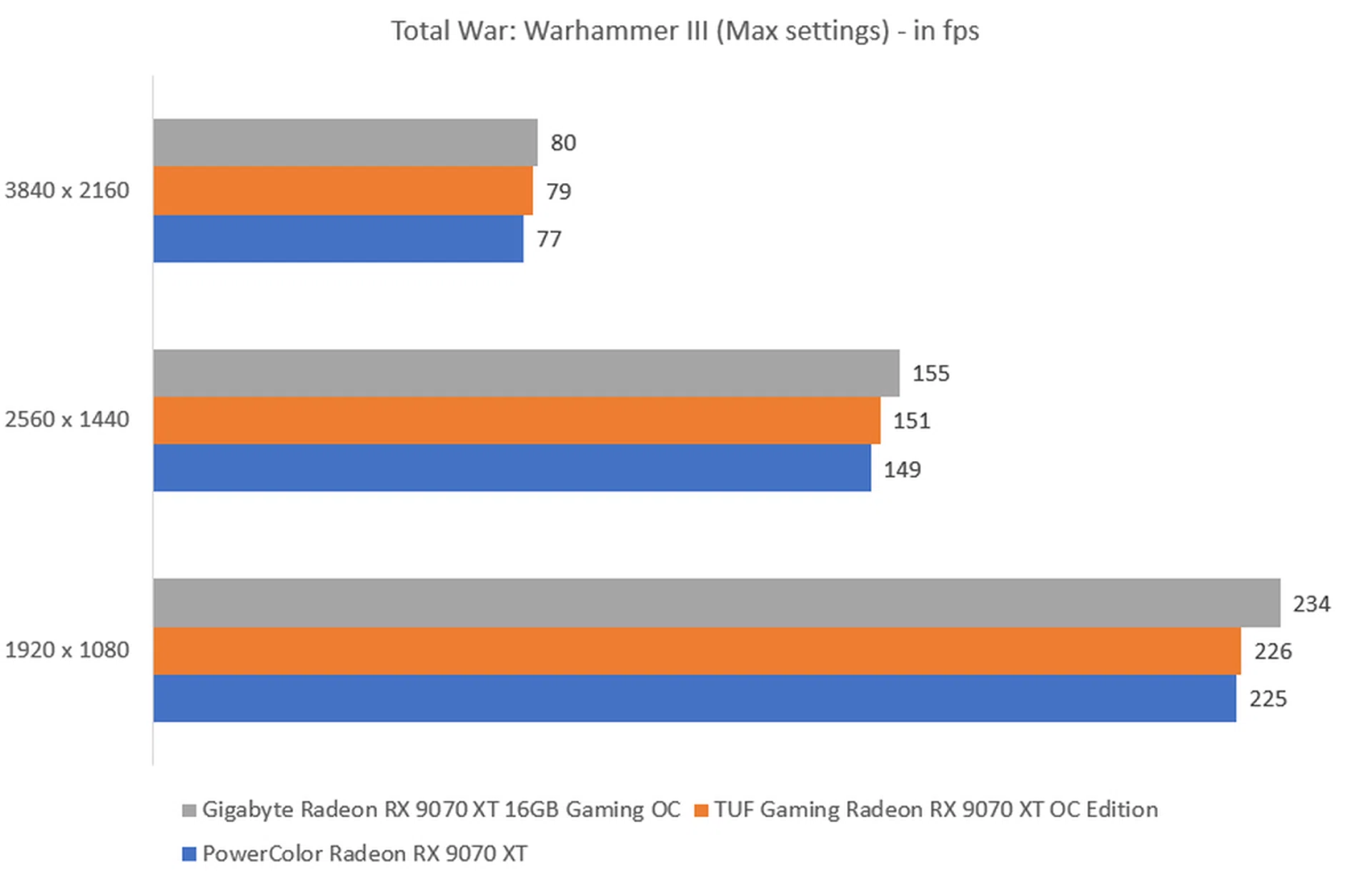
In terms of real-world gaming performance, Gigabyte’s Radeon RX 9070 XT Gaming OC 16G holds its ground well, edging out competing models from ASUS and PowerColor by small—but consistent—margins. The gains aren’t massive, but they’re there if you look closely, particularly in more demanding scenarios at higher resolutions.
The higher the frame rate, the better. Image: HWZ
Starting with Horizon Zero Dawn, all three RX 9070 XT cards push solid frame rates well beyond the 100fps mark at 4K, with the Gigabyte card nudging ahead slightly at 113fps. At 1440p, the difference is a negligible 2fps across the board, with Gigabyte again in front. Horizon Zero Dawn is not the most graphics intensive game these days and all three cards deliver excellent performance in this title, but it’s worth pointing out that Gigabyte’s card maintains a subtle lead throughout.
The higher the frame rate, the better. Image: HWZ
The gap widens a little in Total War: Warhammer III, where Gigabyte’s card consistently tops the charts. At 1440p, it is quicker than both of competitors and even at 4K, the Gigabyte card hits 80fps – just enough breathing room above the 60fps line to make a difference in fluidity, especially for an RTS game that thrives on CPU-GPU coordination during unit-heavy encounters.
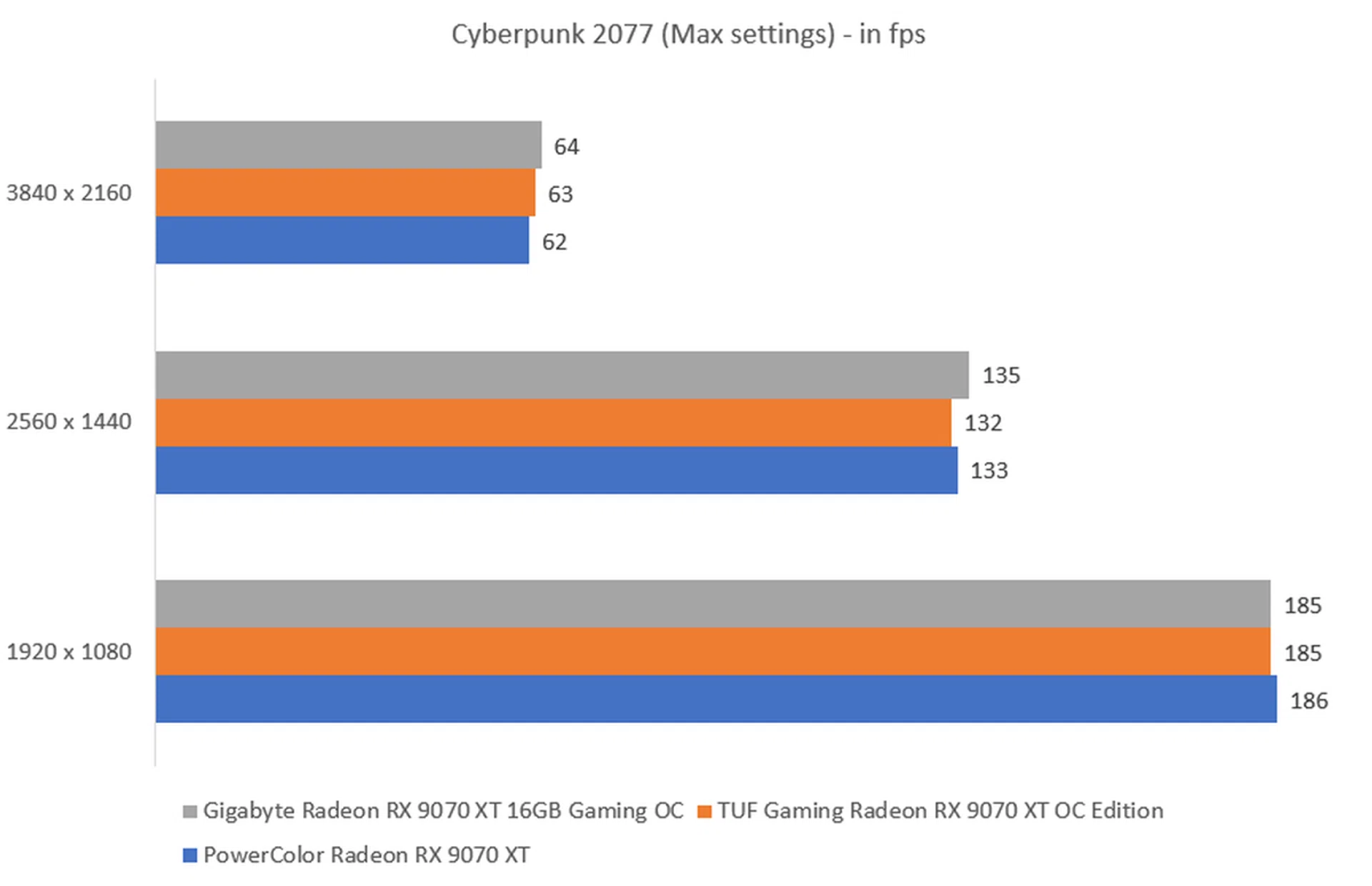
The higher the frame rate, the better. Image: HWZ
In Cyberpunk 2077, a notoriously punishing title, performance among all three cards flattens out. At 1080p, you’re looking at frame rates hovering around 185 to 186fps, and at 1440p, there’s virtually no daylight between them. The Gigabyte card does eke out a slight lead at 4K with 64fps, but let’s be honest – these margins fall well within the margin of error and won’t be felt during gameplay. If you’re playing Cyberpunk without ray tracing or path tracing – visual techs that NVIDIA’s GeForce RTX 50 Series cards still do better – any of these cards will give you a smooth gameplay.
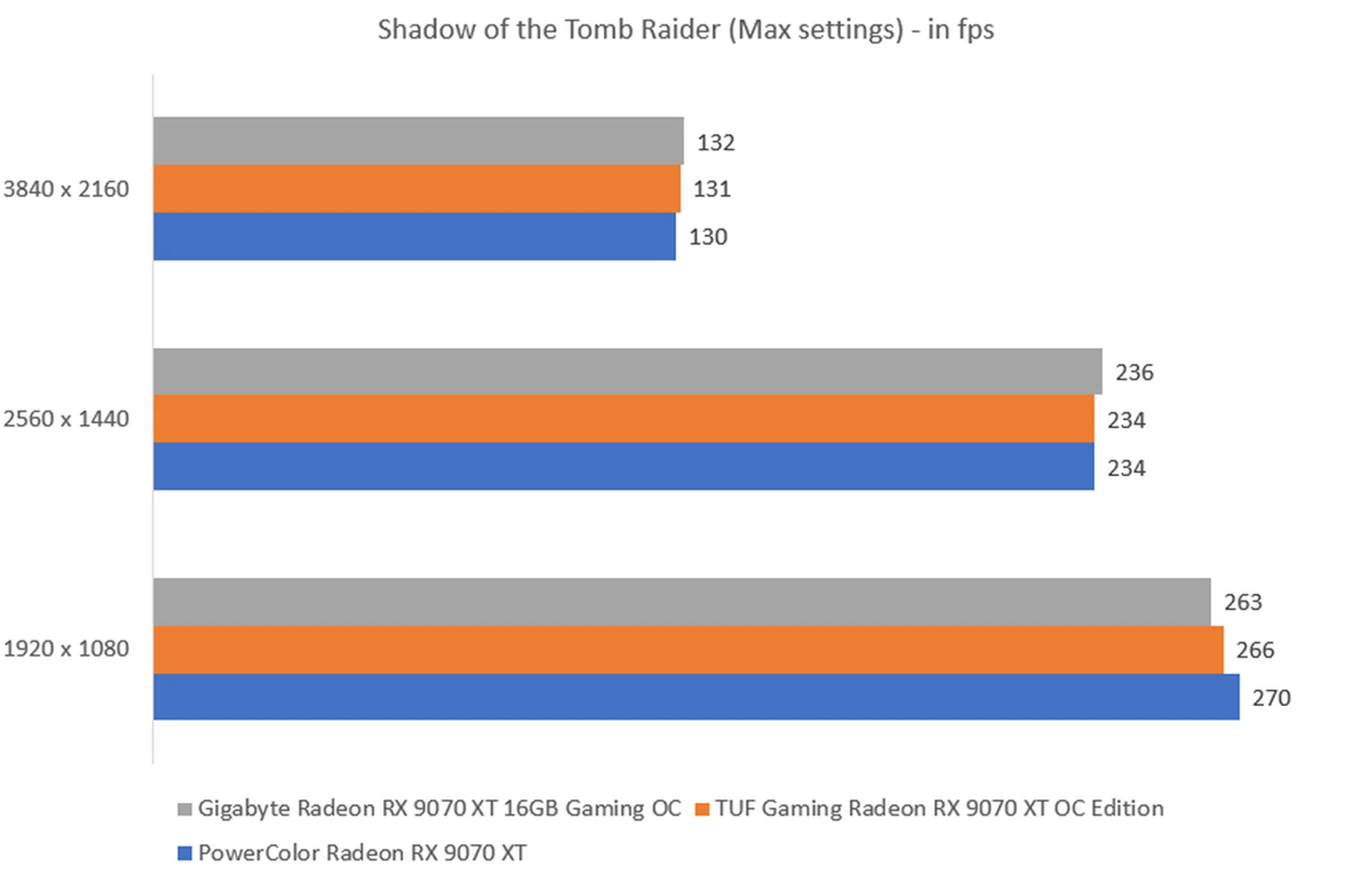
The higher the frame rate, the better. Image: HWZ
Shadow of the Tomb Raider paints a similar picture. At 4K, the differences are almost negligible. At 1440p, Gigabyte once again edges ahead, but only by a couple of frames. Interestingly, PowerColor’s card pulls slightly ahead at 1080p, hitting 270fps compared to 263fps on the Gigabyte and 266fps on the ASUS.
So what does this all mean? Gigabyte’s RX 9070 XT Gaming OC 16G doesn’t radically outperform its rivals, but it does show a pattern of being marginally faster across most games (at least those that we tested on), particularly in titles that are more GPU-bound. Whether that translates into a better overall experience depends on your setup, but if you’re already leaning towards the Gigabyte version, the benchmarks here back up that decision with just enough performance uplift to justify it.
Power and Temperature
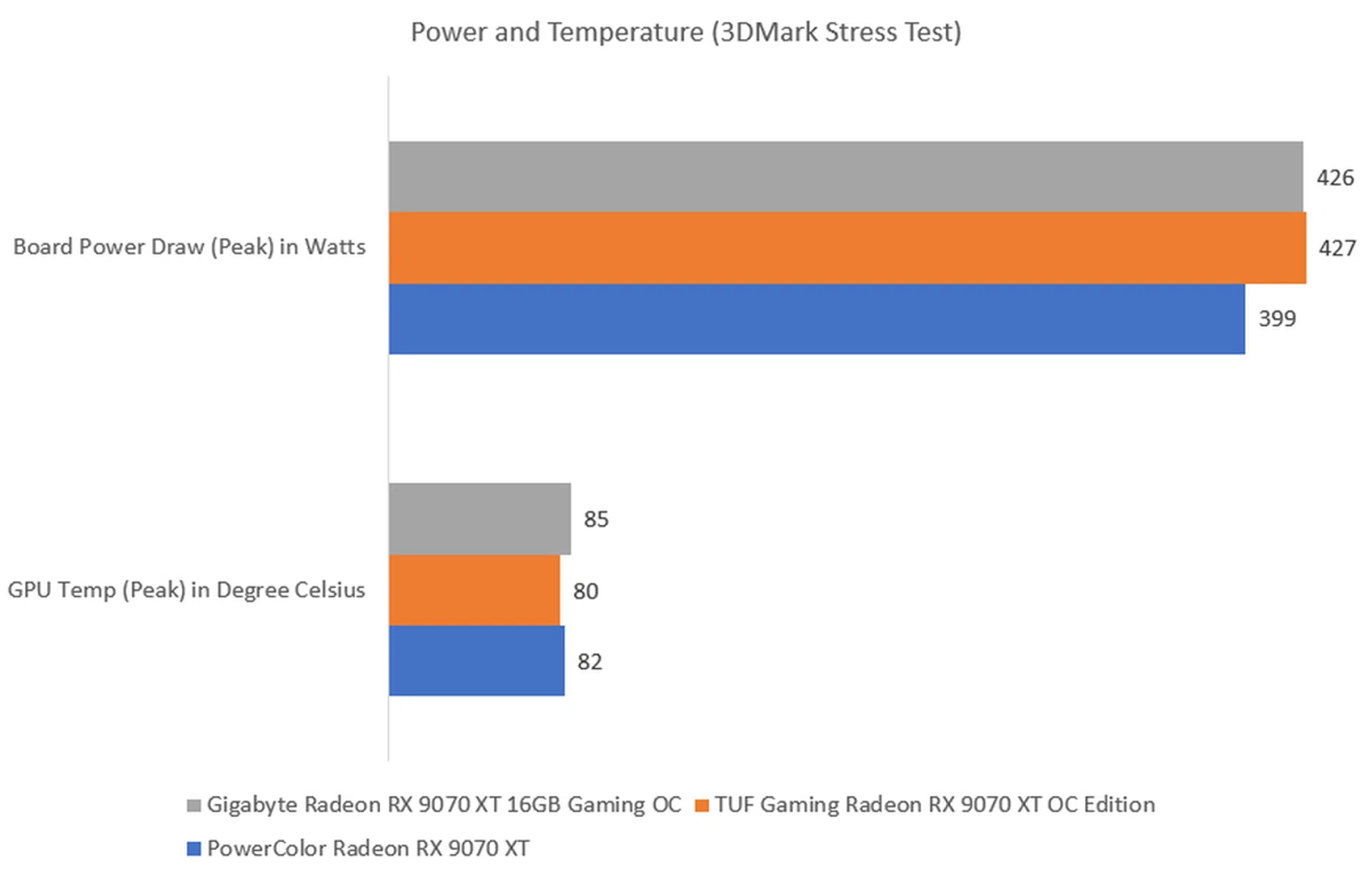
The lower the wattage and temperature, the better. Image: HWZ
When it comes to power and thermals, the Gigabyte Radeon RX 9070 XT Gaming OC 16G runs a little hotter and hungrier compared to the ASUS and PowerColor cards. Under a full 3DMark stress test, running repeatedly 20 times, the card pulled 426W at peak. By comparison, the PowerColor card was noticeably more power-efficient, drawing a lower 399W – remember this card isn’t factory overclocked. Thermally, Gigabyte’s card also peaked the highest at 85-degree Celsius, while the ASUS TUF Gaming card stayed cooled at 80-degree Celsius – thanks to its beefier cooling setup.
These numbers suggest a slight trade-off. The Gigabyte card delivers consistent top-end frame rates in most games, but it does so while consuming more power and running a few degrees warmer. It’s not a thermal outlier by any means, and most PC cases with decent airflow will handle the extra heat just fine.
Final thoughts
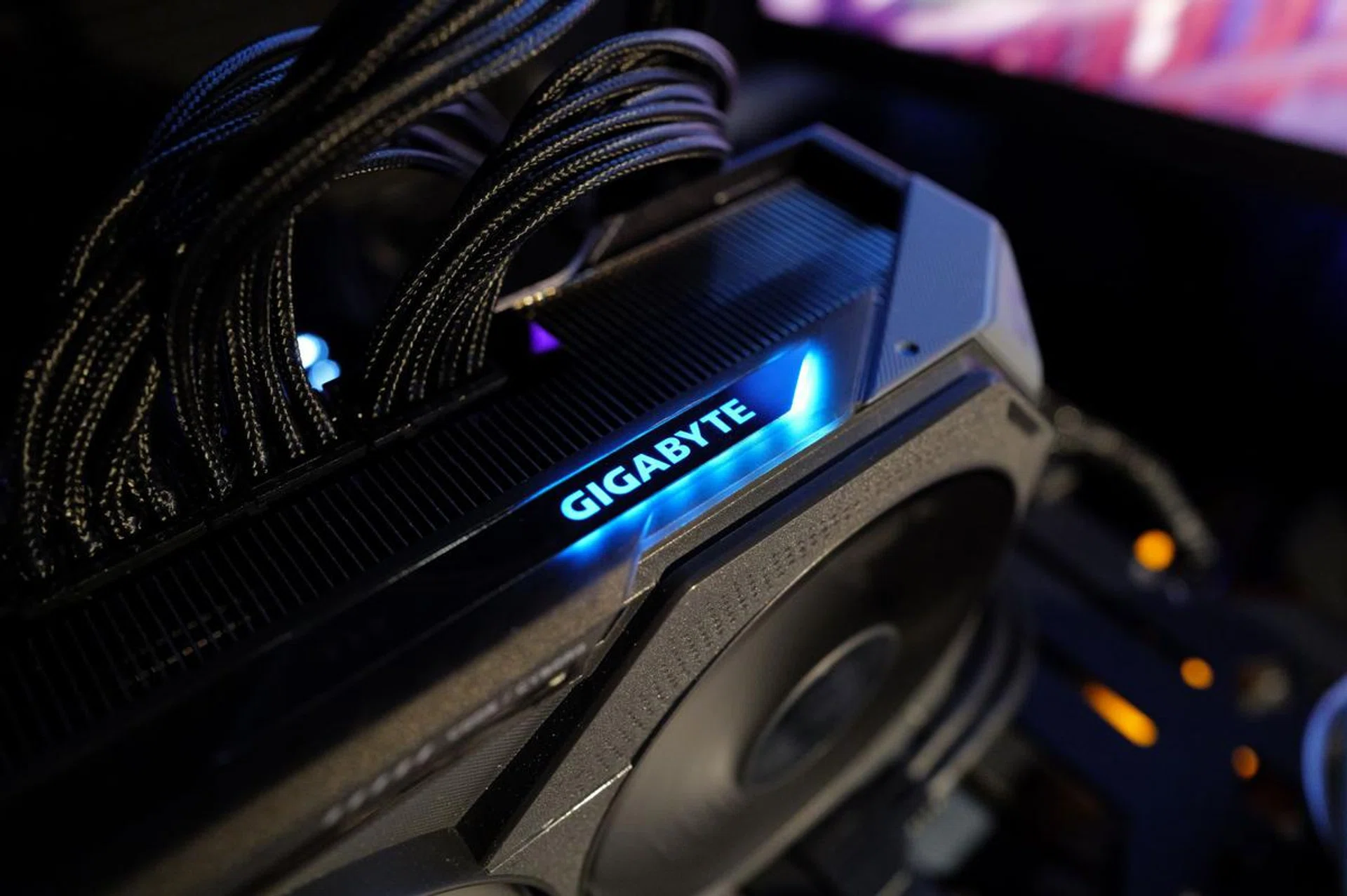
Photo: HWZ
At S$1,075, the Gigabyte Radeon RX 9070 XT Gaming OC 16G sits in a pretty attractive position in my opinion. The benchmark results speak for themselves: the card delivers performance that’s consistently on par – or slightly better – than the competition in most of the games we tested, especially at 1440p and 4K resolutions. While the raw frame rate gains over the PowerColor and ASUS cards aren’t dramatic, they are there, and they add up over a wide range of titles.
What gives Gigabyte’s card an edge, however, is its price-to-performance ratio. The ASUS TUF Gaming Radeon RX 9070 XT OC Edition launched at $1,349, which is nearly $275 more for what is, in practical gaming terms, virtually the same experience. Sure, the ASUS card runs a little cooler thanks to its better cooling setup, but it doesn’t offer a meaningful uplift in frame rates or features that justify that price difference unless you’re chasing the quietest, coolest option money can buy.
By contrast, the Gigabyte model stays competitive at game performance, while keeping things relatively efficient in both design and pricing. The higher power draw and warmer temperatures are trade-offs, yes, but I’d say they’re reasonable ones.
In short, unless you're partial to ASUS’ build or prioritise ultra-low thermals above all else, the Gigabyte Radeon RX 9070 XT Gaming OC 16G is the smarter buy. It gets you nearly identical performance for less, with a clean design, sturdy build, and just enough factory overclocking to give it a slight edge in benchmarks.
The Gigabyte Radeon RX 9070 XT Gaming OC 16G is available at The Techyard for $1,075. Click here to buy
Our articles may contain affiliate links. If you buy through these links, we may earn a small commission.