

Total Recall - The Past Decade in Memory
As the scratch pad for any form of computation, memory is an essential component of a computer. Join us in remembering the past ten years of memory developments in this Hardware Zone special.
The Stuff Memories are Made of
Any primer on the basics of the hierarchy within a computer would place the CPU as the central component. It is however serviced by many other supporting units and one of the most important would be the memory. In the modern computer architecture, there are different levels of memory, from the registers on the processor die to the many levels of cache and finally the separate memory modules installed on the motherboard. After all, a CPU is nothing but a giant calculator and the role of memory is as a form of temporary data storage for the CPU to extract and store the raw data and the results from the various operations performed on the data.
The modern computer uses various forms of memory, though they are all usually of the random access type, meaning that the data stored on these memory locations can be retrieved when needed in any order. Excluding the memory embedded within the processor die, the main form of memory found in most PCs today are dynamic random access memory modules or DRAM modules for short.
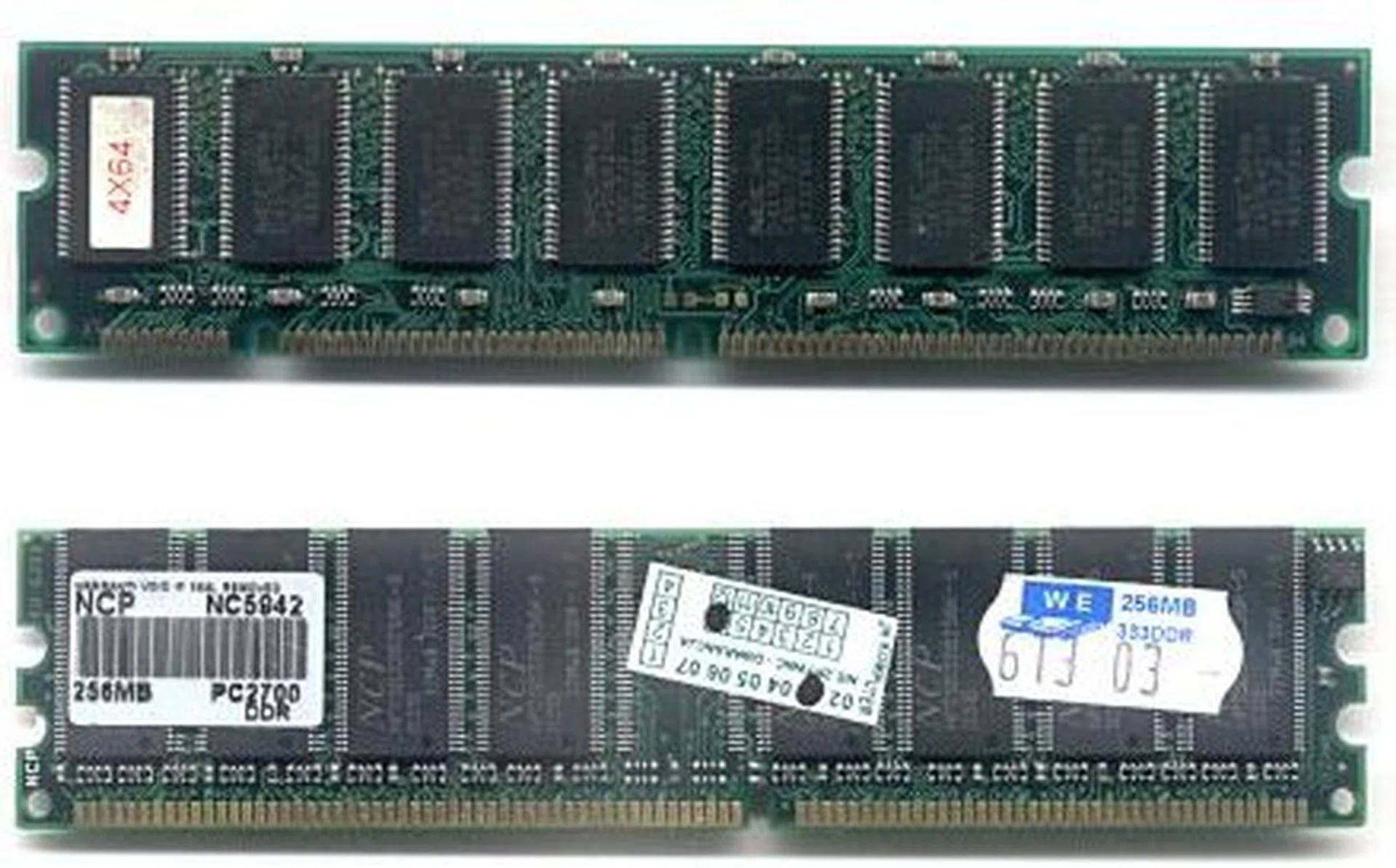
Shown here is a 168-pin SDRAM module (top) and a 184-pin DDR SDRAM module. Image from Wikipedia.
These modules have undergone quite a few changes in the past ten years but they have stayed recognizable over the years as integrated circuits on a rectangular PCBs. The number of pins have varied as the different formats came and went, from the 168-pin on the SDRAM module to the 240-pin on the current DDR2 and DDR3 SDRAM modules. While memory standards are determined by an industry standards body, JEDEC, they are co-dependent on the micro-architecture created by CPU firms like AMD and Intel.
In 1998, synchronous SDRAM which was only introduced in 1996 was beginning to dominate the industry. Yet by 1999, there was a new player, RAMBUS and the company's RDRAM had a large backer in the form of Intel, which licensed the use of RDRAM for its processors. Various issues associated with RDRAM, like its high cost and increased latency dulled its bandwidth advantage and the format was unpopular with consumers.
While RAMBUS was to fade into a bad memory (pun intended) for consumers who had bought into the technology via Intel's platform, the company was to haunt memory manufacturers for years with litigation, asserting that it owned patents on DDR technology. This would lead to an epic sequence of trials and appeals in American courts involving major players like Samsung, Micron and Infineon among others and lasting almost a decade. Anti-trust and price fixing were some of the related issues that came from the litigation, though RAMBUS has emerged as the eventual winner for most of the cases after many rounds, the most recent concluded in 2008.
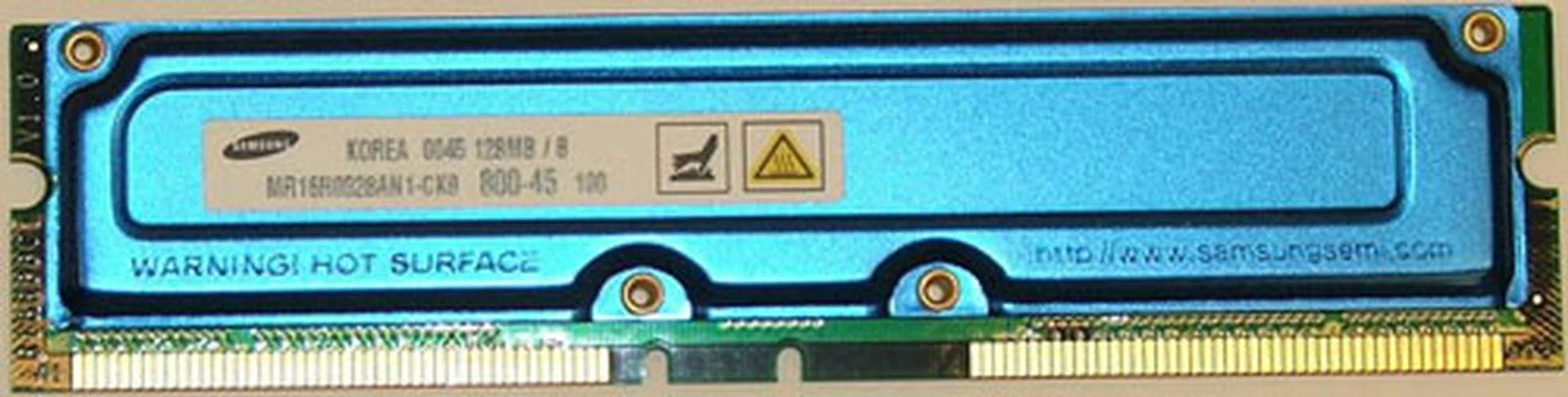
After failing to win over consumers, RAMBUS embarked on a costly litigation route that ultimately found that SDRAM manufacturers had fixed their prices in order to force out RDRAM. Shown here is a RDRAM module with heatsink, as these modules were warmer than competing SDRAM. Image from Wikipedia.
This failure of RDRAM set the stage for an uninterrupted progress for SDRAM, with the introduction of DDR SDRAM in 2000, which doubled the minimum read or write unit of the memory module to two words of data and hence increased the memory bandwidth, especially coupled with increased clock speeds ranging from 133 to 200MHz.
2003 was to see the debut of DDR2 SDRAM. As we mentioned: "The major difference between DDR2 and DDR was the doubling of its bus speeds to the memory clock, thus allowing higher data transfer per memory clock cycle." Clock speeds were from 200 to 400MHz (or DDR2-400 to DDR2-800).
DDR3 SDRAM entered the picture in 2007 and with all the major chipsets supporting the new format, should be slowly gaining traction in 2008 and more mainstream adoption in 2009. While the same concept is used to result in a higher pre-fetch of 8-bits and higher data rate, the latencies on DDR3 are also significantly higher. On the other hand, the new memory modules use less power than DDR2, 1.5V compared to 1.8V while the density of the memory chips are also increased. And that is the present state of memory on the desktop now.
Ever since Moore's Law was observed, the computing industry has largely kept to the promise of exponential growth in performance. Yet in one area, it has been looking quite bleak for the better part of almost twenty years. Computer scientists have been bemoaning the inability of memory bandwidth to match the increase in CPU speed. Termed the memory wall, this is a problem that doesn't seem to have an easy answer and even as the advent of newer memory standards is unlikely to cease, eventually it seems, the memory bandwidth will be the limiting factor in computing.
1998 - 2000
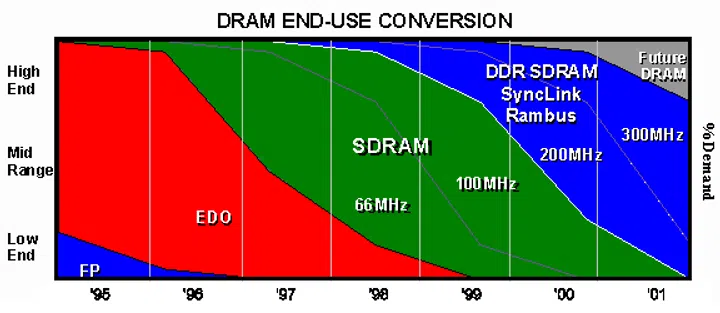
VisionTek White Paper.

For many RAMBUS implementation in chipsets, memory modules must be installed in pairs of two. Shown here is a dummy module that was known as a CRIMM (Continuityp-RIMM). Image from Wikipedia.
- The dominant memory format in this period was SDRAM or single data rate DRAM and they ranged from the 66MHz to 100MHz range. Intel was to introduce the proprietary RDRAM standard in 1999 with the i820 chipset, due to its licensing agreement with RAMBUS in 1996 that led to Intel buying RAMBUS shares at a discounted rate, along with using RAMBUS on its platform.
The new RDRAM had an advantage of transferring data on both the rising and falling edge of the clock and this double data transfer meant that it had a higher bandwidth than SDRAM. However, RDRAM was significantly more expensive than SDRAM due to a number of reasons.
Increased manufacturing cost from its complexity, warmer operation that necessitated memory heat spreaders, (something that would become the norm in modern memory modules) and increased latencies would hinder the adoption of RDRAM, especially since latency turned out to be the bottleneck for applications then, not memory bandwidth.
The reception from the public was not too welcoming for RAMBUS and RDRAM. This was not helped by a price fixing deal between major memory manufacturers from 1999 to 2002. This cartel included all the big names in the industry, like Infineon, Samsung, Hynix, Micron, etc and while the actual reasons were never revealed, forcing RDRAM out of the market by pricing it out of consumers' reach with relatively inexpensive SDRAM was mooted as a possible reason. In any case, the companies were eventually punished for their actions, though by then, the RAMBUS technology would be dead in the mainstream PC market with even Intel abandoning the technology by 2003. - The successor to SDRAM would emerge in 2000 with DDR SDRAM. Doubling the data rate and increased clock frequencies meant that it could be a viable alternative to SDRAM. However, SDRAM had gone up to 133MHz and with only the AMD platform having DDR support, the older standard continued to hold sway in this period.
2001 - 2003
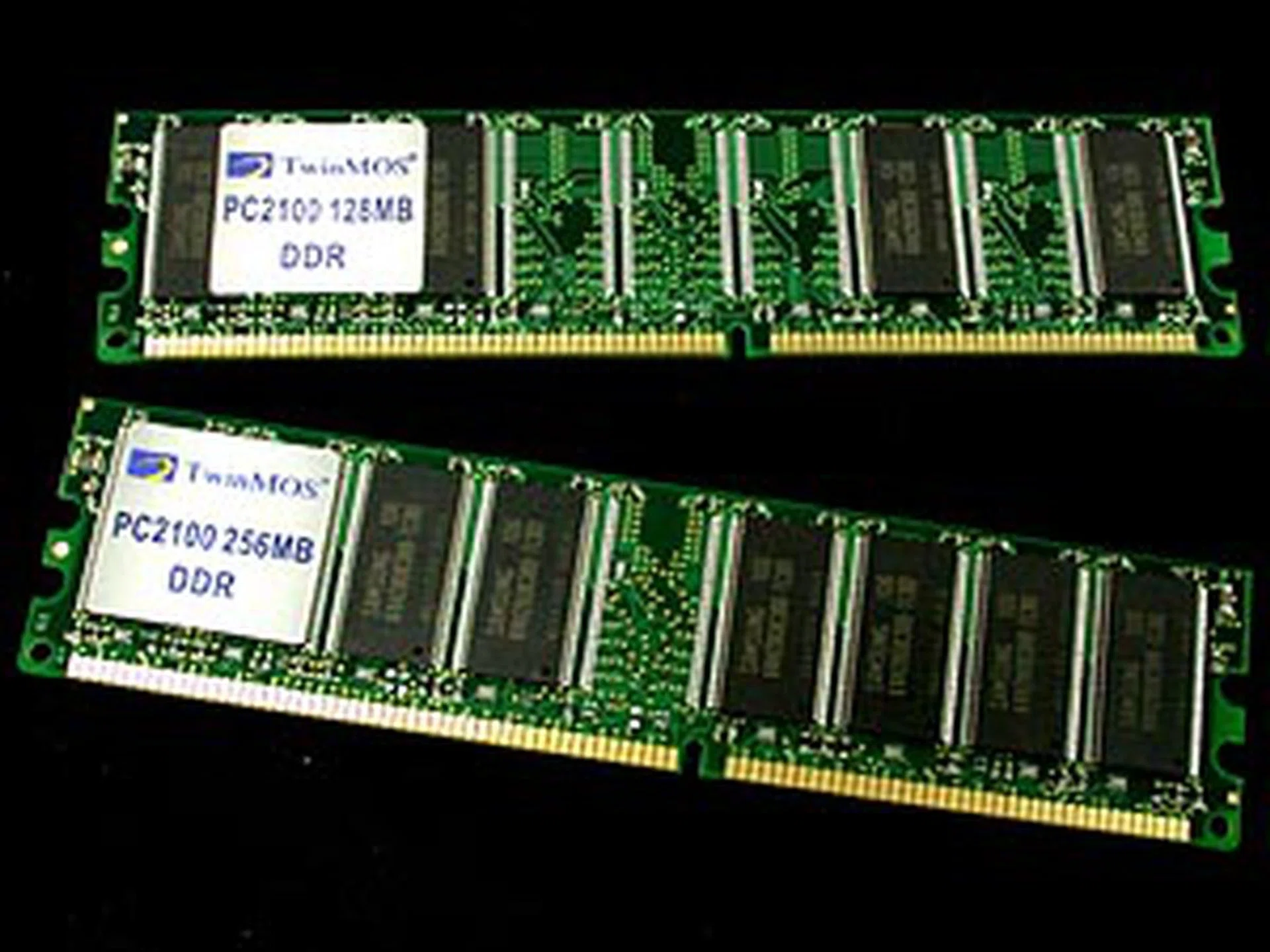
Place your bets on DDR technology folks, for that is where the future would be.
- In 2001, the three main competing memory formats were still jousting in the market. We took a long look at them in our article where we compared PC133 vs. DDR vs. RAMBUS to find out which one was the performance and price winner. At that time, PC133 SDRAM was in obvious decline while DDR SDRAM seemed like the replacement. RAMBUS meanwhile remained too expensive for its own good.
Our recommendation then was that DDR was indeed the future, especially if you were on the AMD platform. If not, PC-133 SDRAM would do in a pinch. Despite its high price, RDRAM proved to be the highest performer when used with the i850 platform. And unfortunately, as we all know, that was insufficient and DDR would become the de facto standard for the next two years. Intel's launch of its i845 chipset in 2002 supporting DDR200 and 266 was an admission that consumers wanted DDR and not RAMBUS.
- While DDR2 would officially debut in 2003, the market was as usual much slower to adopt the new technology, since it relied on the chipset and processor lineups to be in sync. Manufacturing new memory formats also took time, since fabrication plants took years in advance to be prepared for the actual production. Hence, though JEDEC may have finalized the standard, the shipping product could take a while to come.
- 2003 also saw the appearance of dual channel memory controllers at last on the Intel platform, with the debut of the 865 and 875 chipsets. NVIDIA had earlier pipped Intel to this with its nForce 2 platform, released in 2002 and supported dual channel DDR400.
2004 - 2008
- While DDR memory was the dominant memory standard with speeds to DDR400, vendors were racing to cater to the enthusiasts with ever increasing clock speeds. Kingmax and Corsair had DDR500 available in 2004 while Corsair and Geil had DDR550 in the market. These were covered in some of our articles in 2004, like this Value for Money memory kit from Geil.
- Intel brought DDR2 memory to the mainstream with its 9xx series of chipsets in 2004. Although there were DDR2 memory modules available, the speeds weren't terribly impressive and hardly keeping up with the chipset FSB. That would quickly change by 2005 and we saw the first of these high speed DDR2 memory modules in July 2005 with the Corsair TWIN2X1024-8000UL. These were DDR2-1000 modules with ultra low latency memory rated at CAS-5, 4-4-9 timings, though then, it needed quite a powerful setup in terms of processor and chipset to realize its potential.
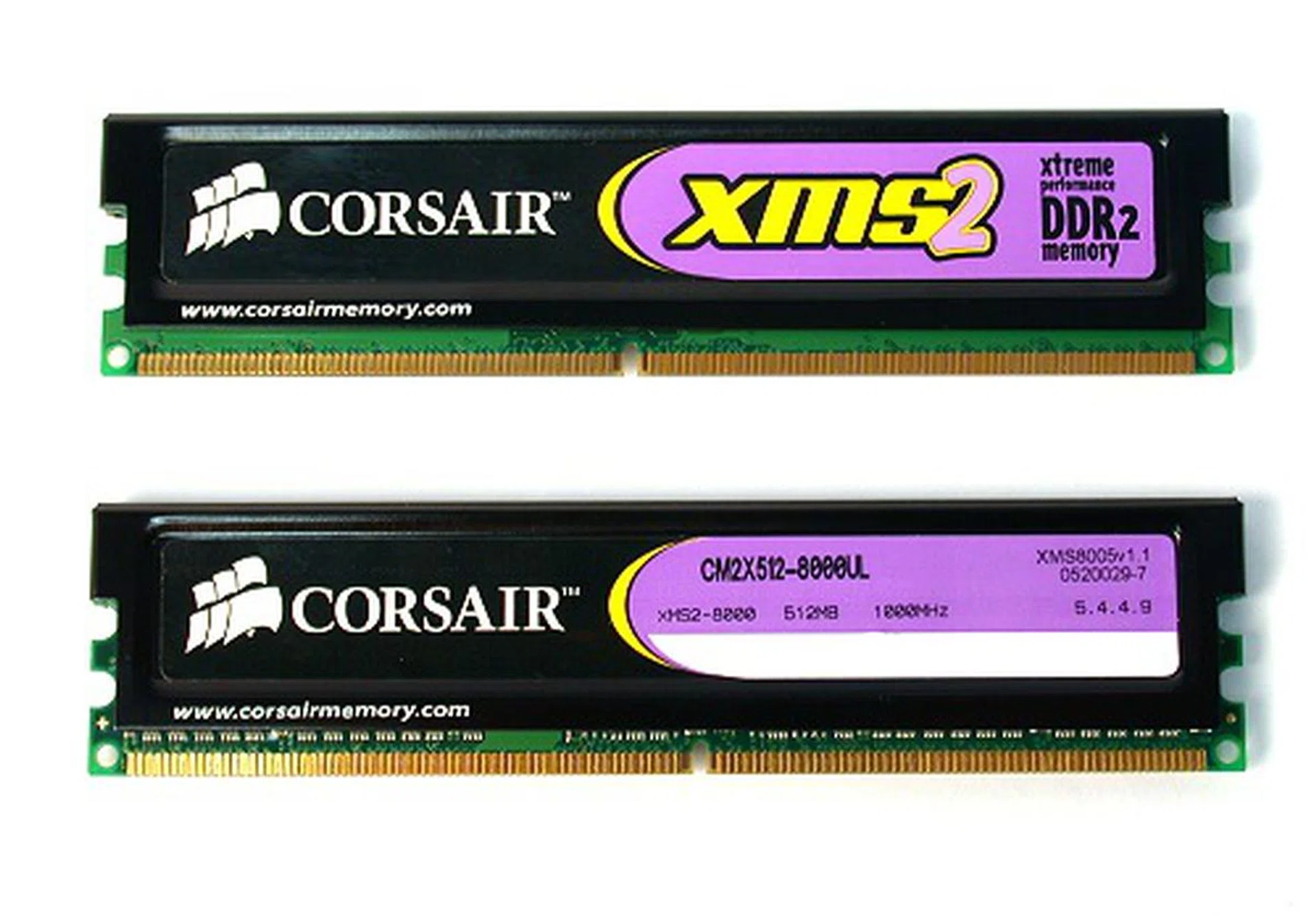
A matched pair of the Corsair TWIN2X1024-8000UL (DDR2-1000).
- Meanwhile AMD's micro-architecture, with its integrated memory controller meant that it was slower to change to the new memory format and it would only be in 2006 with Socket AM2 that AMD switched over to the DDR2 standard. The positive side of this of course is that supply would be quite plentiful when the shift was done and prices would be reasonable too. Naturally, having both AMD and Intel on DDR2 would lead to mass adoption of the memory standard.
- NVIDIA too would have its say in this area with its Enhanced Performance Profiles (EPP) for memory modules in 2006 with its nForce 500 series motherboards. Supported memory modules and motherboards had the SLI-Ready memory label, even though this has nothing to do with SLI. Instead, the EPP is about having a set of advanced memory settings (clock speed, CAS latency, tRCD, tRP, tRAS, memory voltage, and command rate) stored inside the supported memory module.
- On supported motherboards, these settings can be applied easily by enthusiasts, safe in the knowledge that the settings used would be correctly and automatically adjusted for that configuration/system. This will make tweaking the memory settings a one-step process for enthusiasts and of course, users can always use these settings as a starting point to further tweak in the BIOS.
- Corsair would be one of the first to offer memory modules with the EPP support, though we would see that with the too. Intel would come up with a similar scheme in 2007, which also stores these additional settings in the DIMM's SPD and simplifying overclocking. Intel's version however is only available for DDR3 memory, which was to be launched widely in the second half of 2007.
- This was to coincide of course with the introduction of Intel's P35 chipset that supported these new memory modules. Like DDR2 before that, DDR3 was and still is heavily affected by latencies and while the next generation Intel micro-architecture, along with AMD's upcoming products will use DDR3, the benefits of doing so now may not be worth its price.
Or as showed, "There is no doubt that DDR3 will offer higher performance and lower energy consumption in the long run, just as how DDR2 was to DDR, but whether you are an avid overclocker or the average Joe next door, it currently does not make sense to spend the amount of money needed to upgrade your system to DDR3 for the little benefits it provides in current 1066MHz and lower FSB systems."
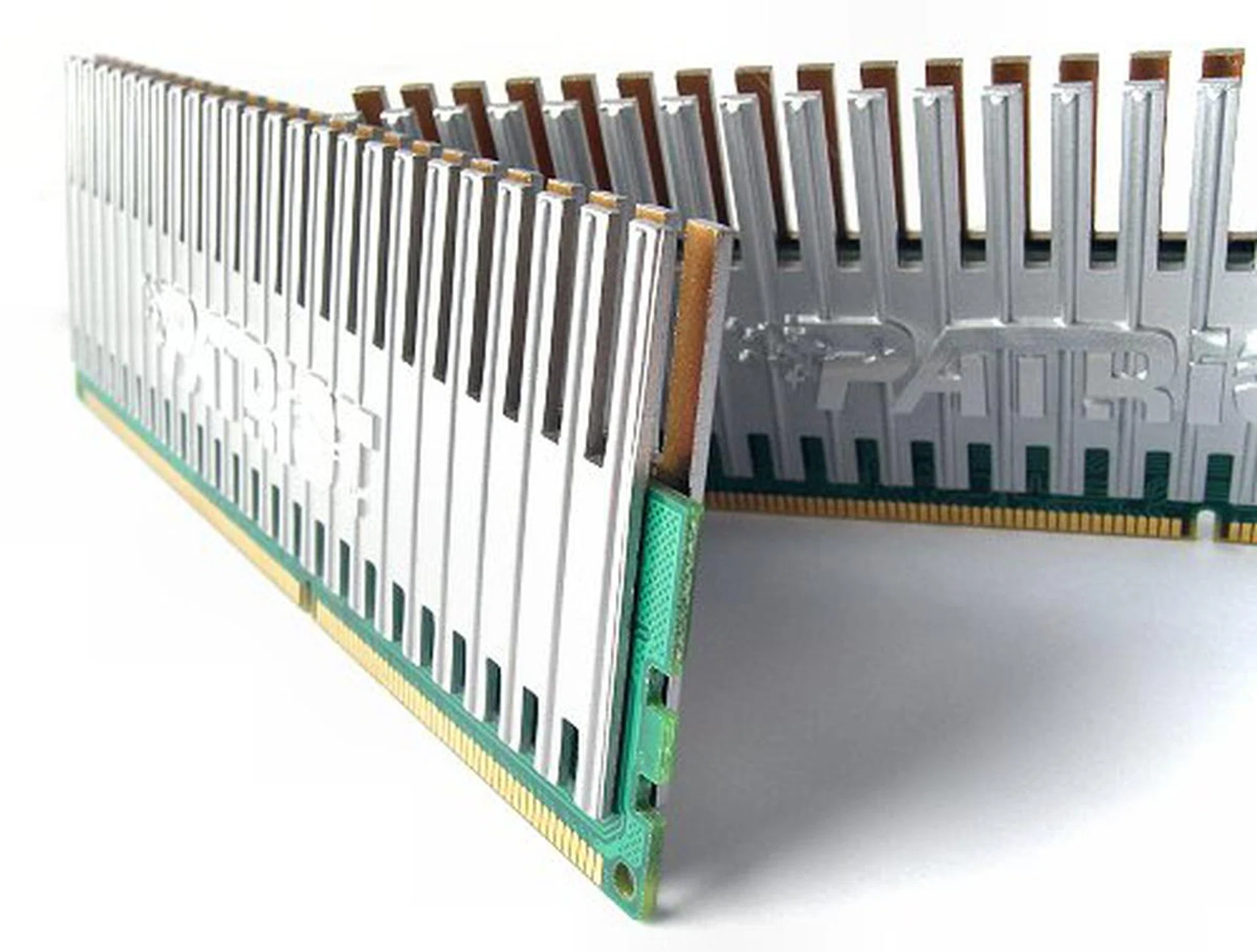
Patriot Viper Fin DDR3-1866 with Intel XMP support.
We saw an example of such enthusiast oriented DDR3 memory in 2008, with the that came with XMP support and was capable of up to 2000MHz while running very cool. This would be the current state of DDR3 memory now, but like any technology industry, expect this to be surpassed soon.
Our articles may contain affiliate links. If you buy through these links, we may earn a small commission.