
Technology Highlights from SIGGRAPH Asia 2008
For the first time, the SIGGRAPH computer graphics conference is being organized for the Asian market and it was held here in Singapore at Suntec City. Find out what took place, check out the gallery highlights and of course what ATI and NVIDIA had on display for the professional market.
Introduction and Gallery Highlights
For the very first time, the world renowned SIGGRAPH computer graphics conference is being organized for the Asian market and December 10th marked the kickoff for this momentous occasion. Held at the Suntec City Convention Center in Singapore, it was a logical choice that the very first SIGGRAPH Asia conference was hosted in this garden city where a number of game developers and animation/video production houses have recently been basing their Asian operations from Singapore. Some of the big names include Ubisoft, Koei and LucasArts, but even more developers are expected to set up studios here with the country's Media Development Authority (MDA) and Economic Development Board actively enticing even more developers to do so.
SIGGRAPH stands for Special Interest Group on GRAPHics and Interactive Techniques and this computer graphics conference attracts creative professionals from production houses such as graphics artists, animators, illustrators and even students from this region to come together and witness the latest trends, cutting edge of graphics and visualization technologies, illustration techniques, animation concepts, research, attend specialized talks, focused workshops and even view a gallery of interesting works of art to draw inspiration and to free one's mind in this ever-evolving trade. Previously only held in USA, the Asian extension of SIGGRAPH is a boon to the growing development in this region and to showcase and interact with matters closer to home.
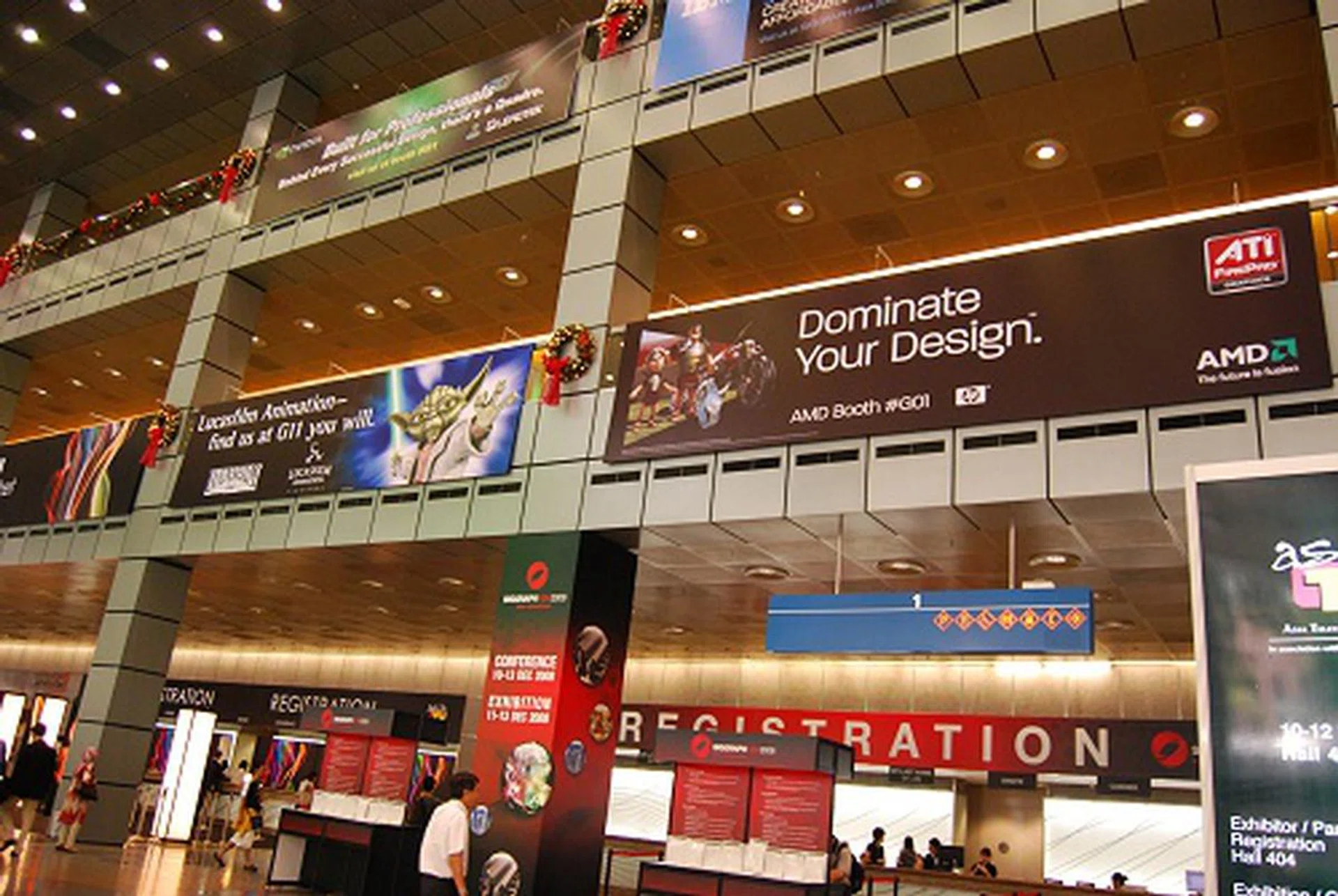
The first floor foyer of the Suntec City Convention Center was fully bannered with all the key names participating and supporting the show - ATI, Lucasfilm Animation, IBM and more.
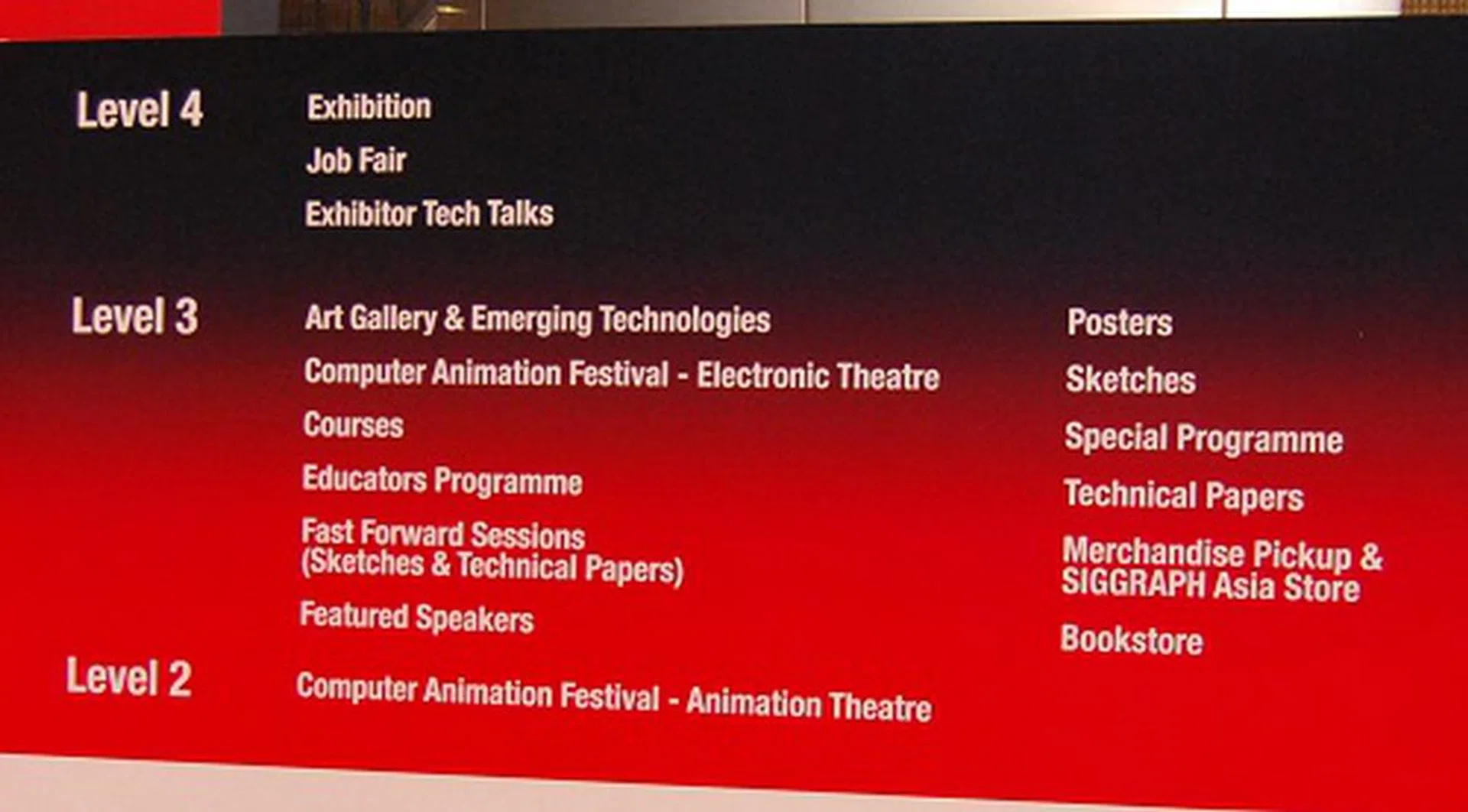
The various activities that were taking place at the SIGGRAPH Asia conference.
First off, let's take a quick look at the Emerging Technologies corner for some cool stuff:-
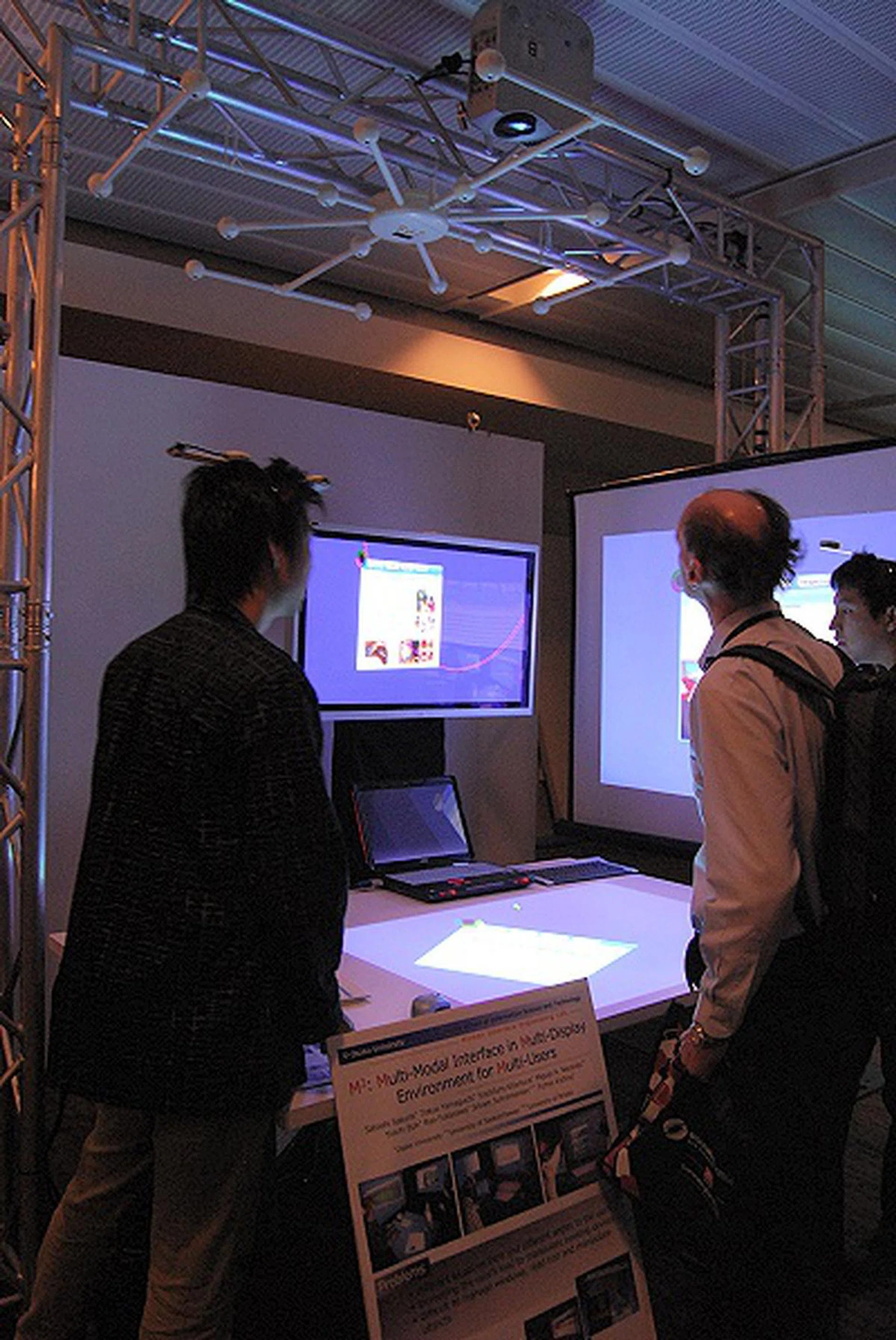
A prototype model built and engineered by the graduate students of Osaka University and others in Japan as a joint collaboration, this is a demonstration of a multi-model interface in multi-display environment for multi-users (also fondly called as M3 by the students). With a simple head mounted unit by each user, the system actually has a sensor array on top of the work area that detects the body movements and hand gestures of each user to display a perspective-aware window that each user is manipulating across multiple screens.
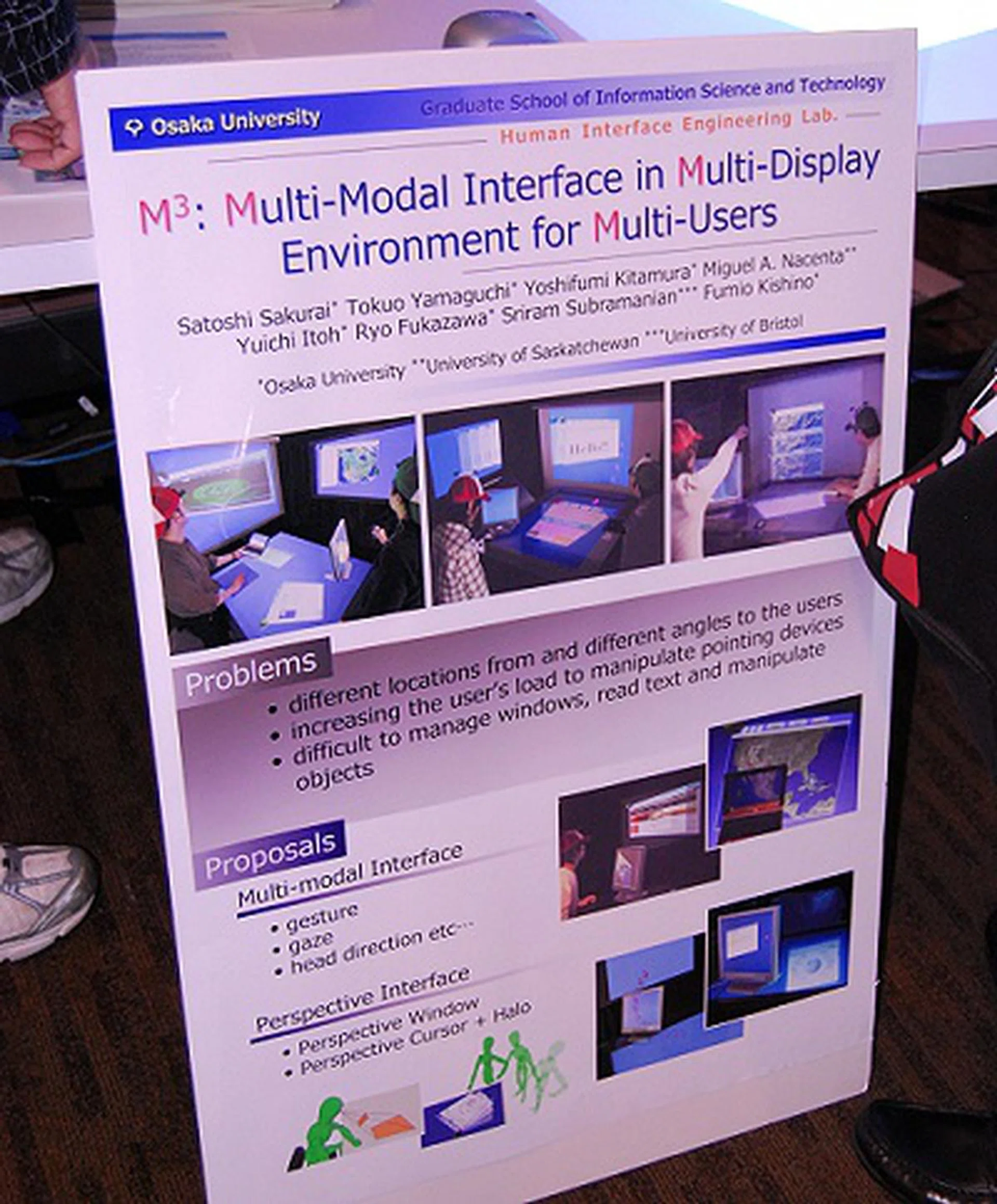
Overall the purpose of this model is to facilitate real-time collaboration in a different form.
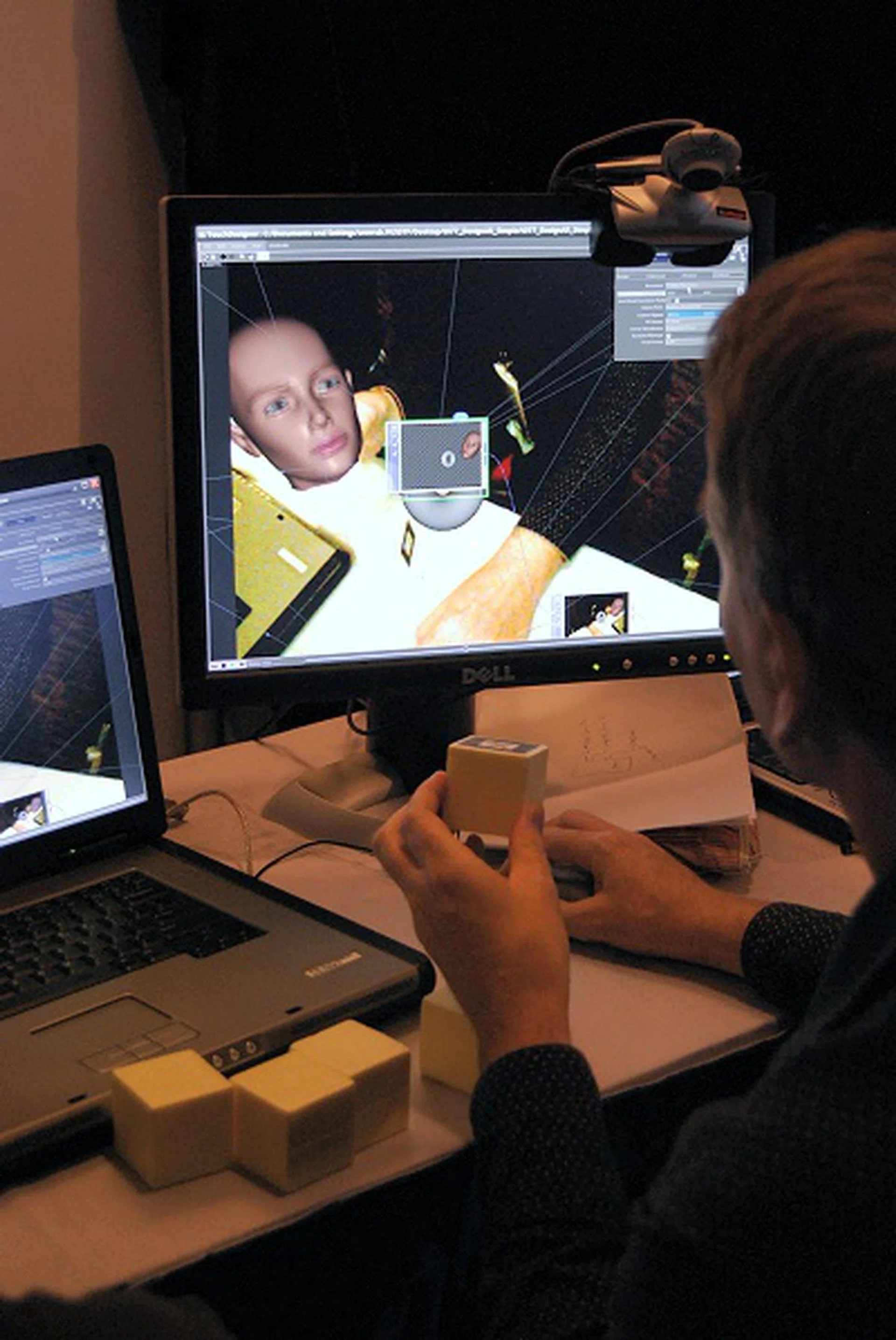
How about working on procedural interaction without even writing code? That's what DesignAR does by incorporating a camera-based marker tracking (ARToolkit) with an existing commercial real-time interactive 3D modeling and animation environment to help designers develop their own reality without any programming.
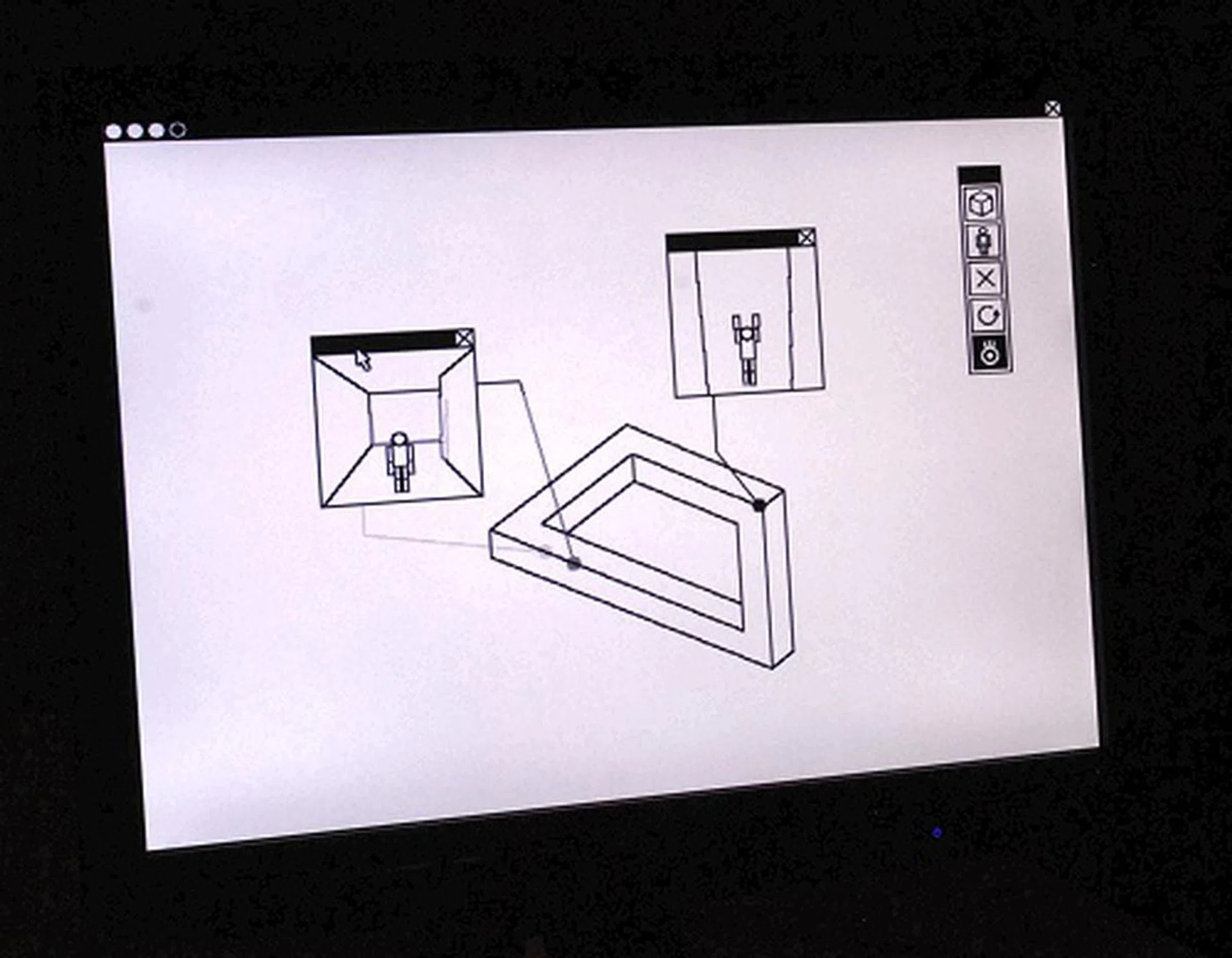
This is an interactive artwork of a third-person view of a structure into a first-person view. Called theRelativity, it is by Sony Computer Science Laboratories inc. Japan and it looks to be a tool that's handy to design mazes and structures of sort for visualizing a game or animation model.
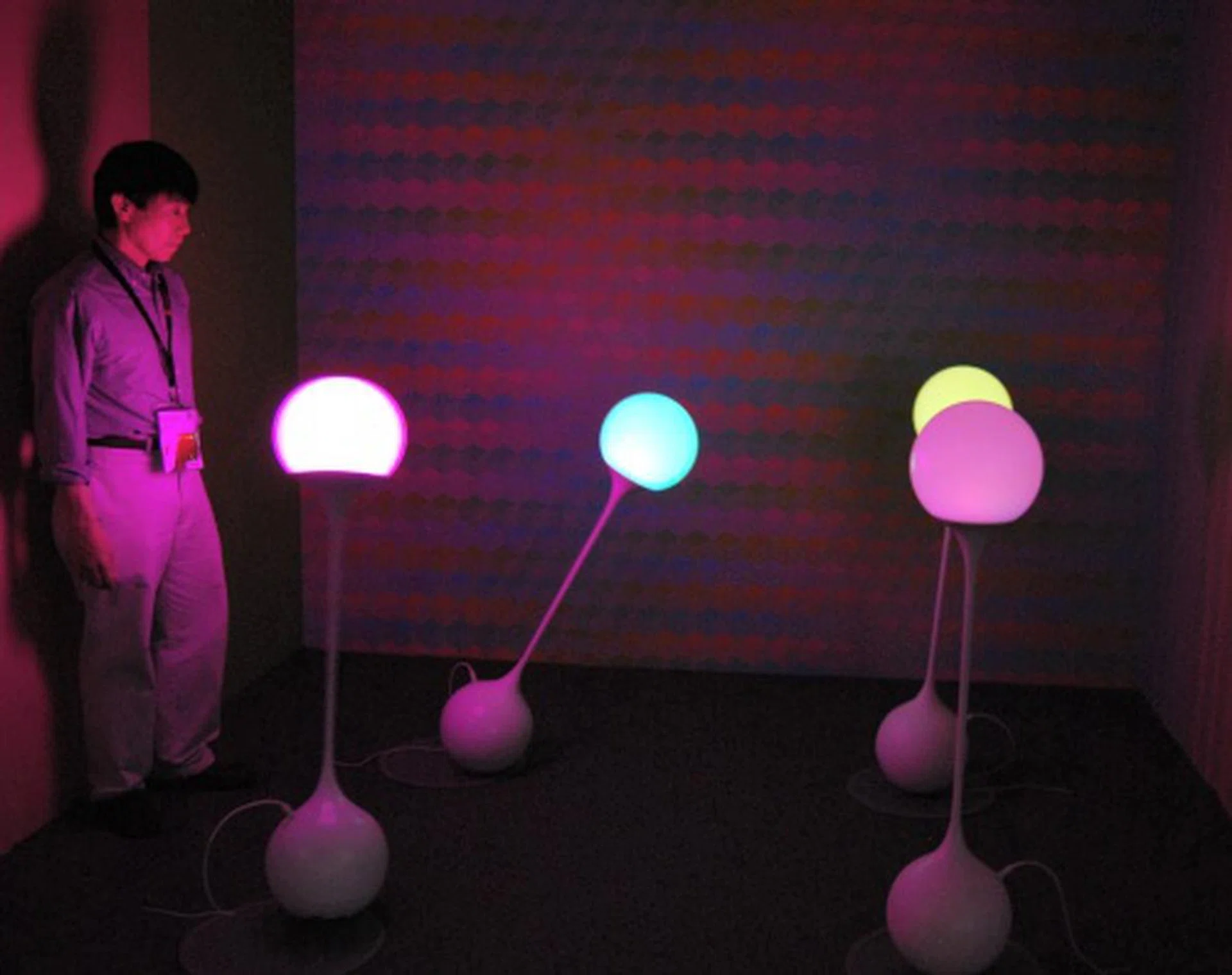
Here's a display of dynamic color composition using full-color LED device and the colors change with regards to the interaction the surrounding light source and that of the colors on the wall. While the end result is purely artwork that tickles the senses with the dynamic color changes, it's based on research and supported by the Japan Science and Technology Agency.
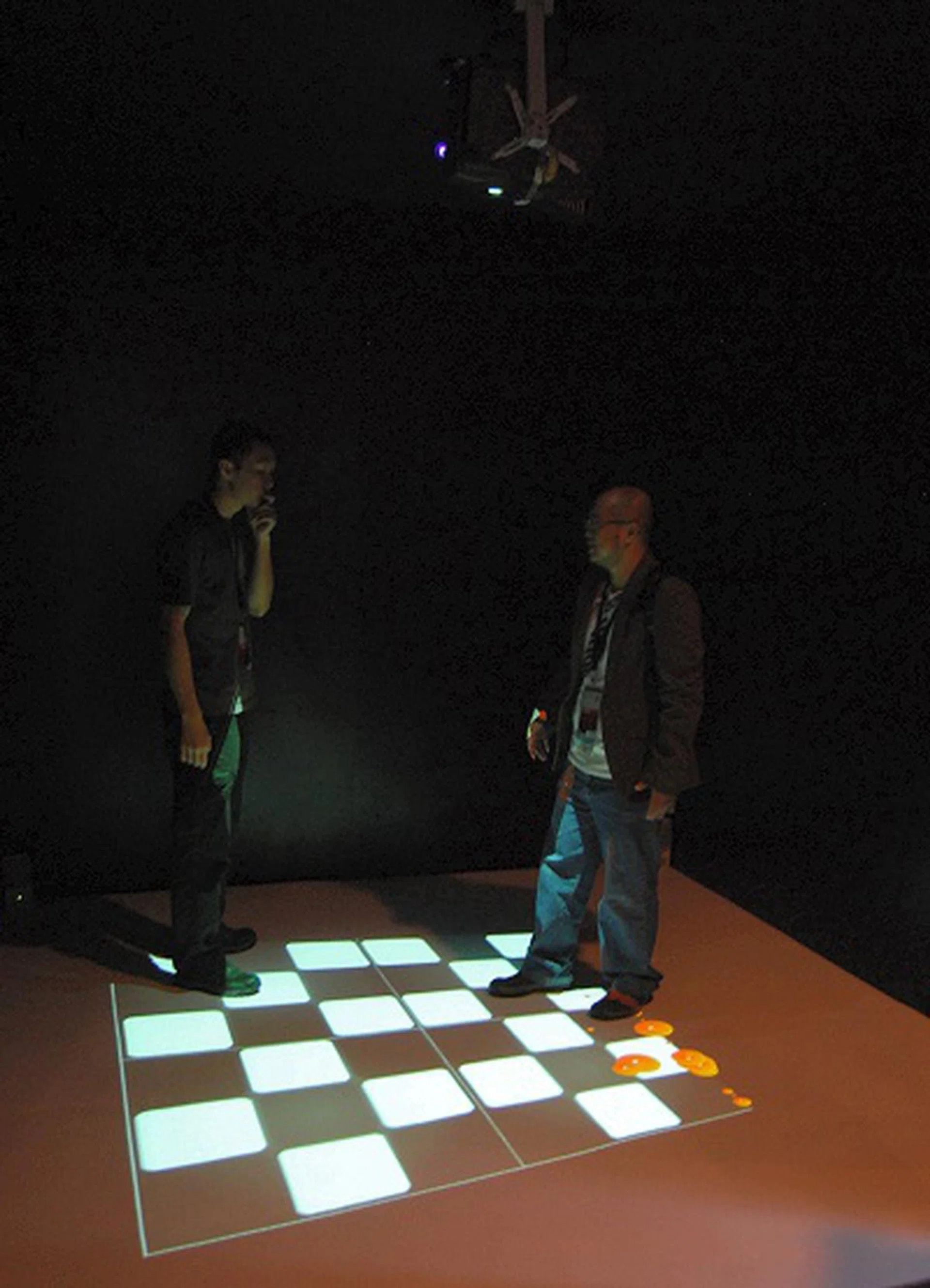
This display is of an interactive optical illusion where the board projected to the floor tilts depending where the user is and the balls on the floor follow the laws of physics as the roll around accordingly to where the board tilts. All this is facilitated by optical sensors overhead.
The Big Supporters and Facilitators of Computer Graphics
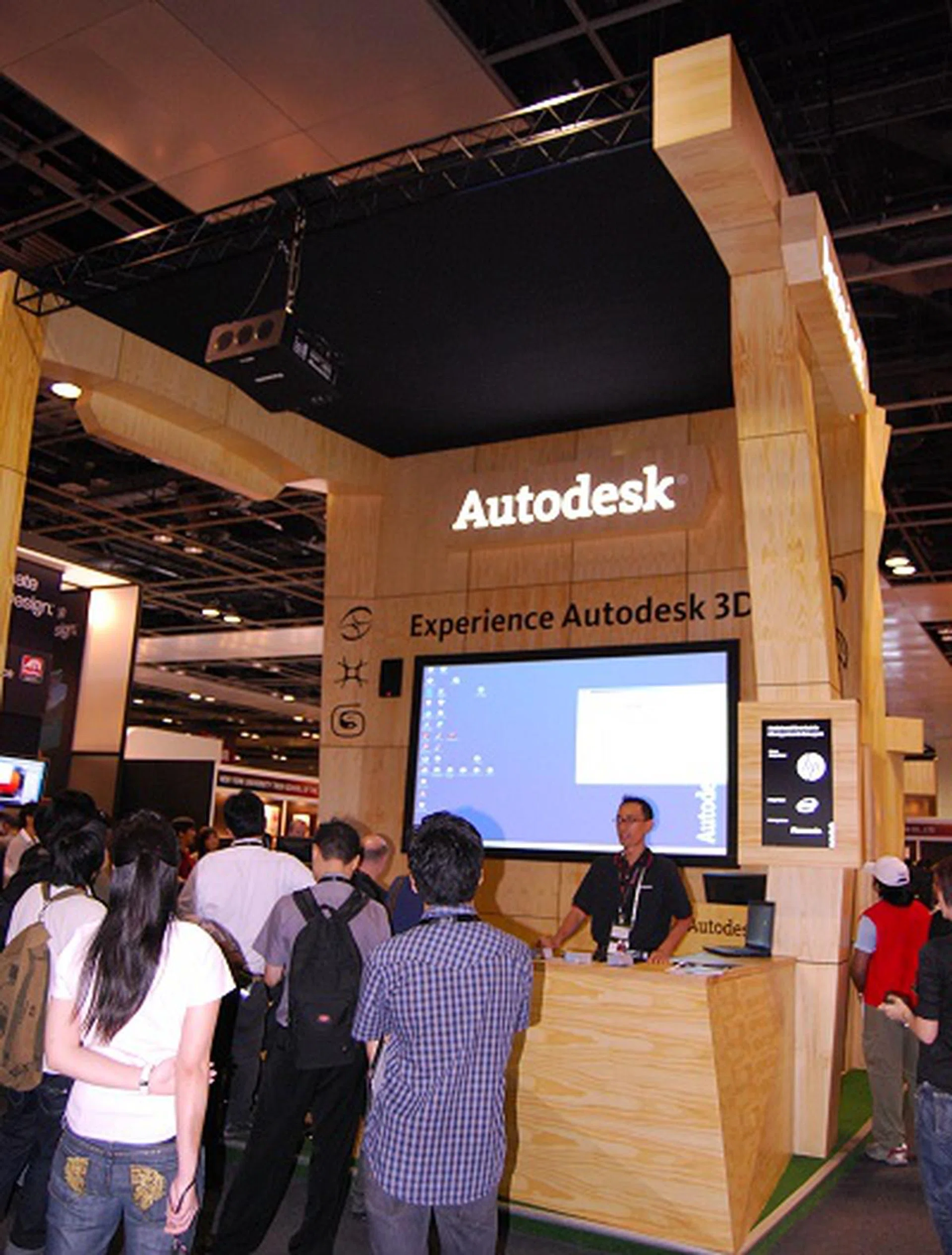
Around the clock, Autodesk was having mini courses, how-to sessions, trend talks and literally many other pertinent things related to their software, general design/animation and others.
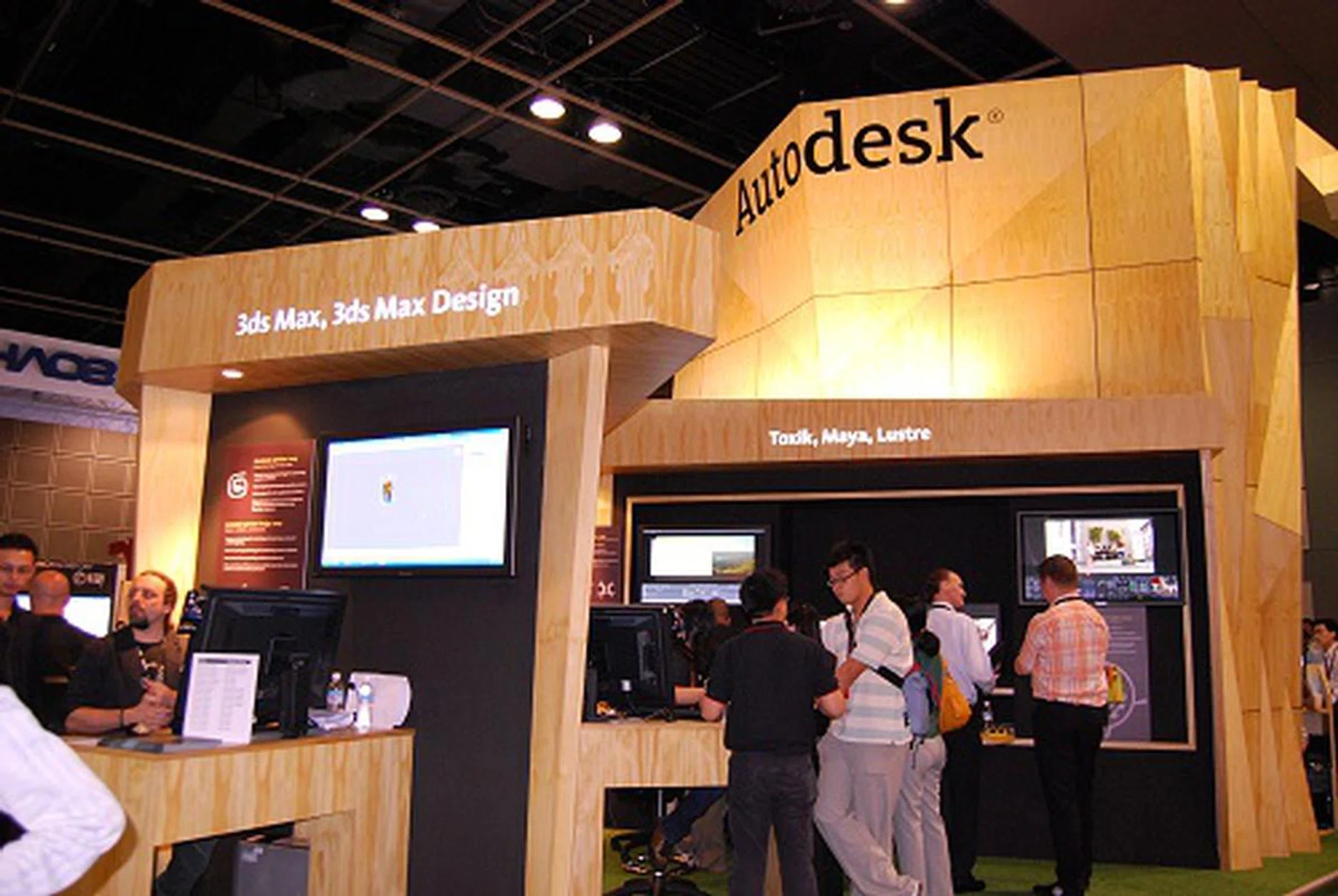
At the rear side of their huge booth, Autodesk was busy orientating and updating trade customers and others on their core products that are pertinent to graphics design and animation.
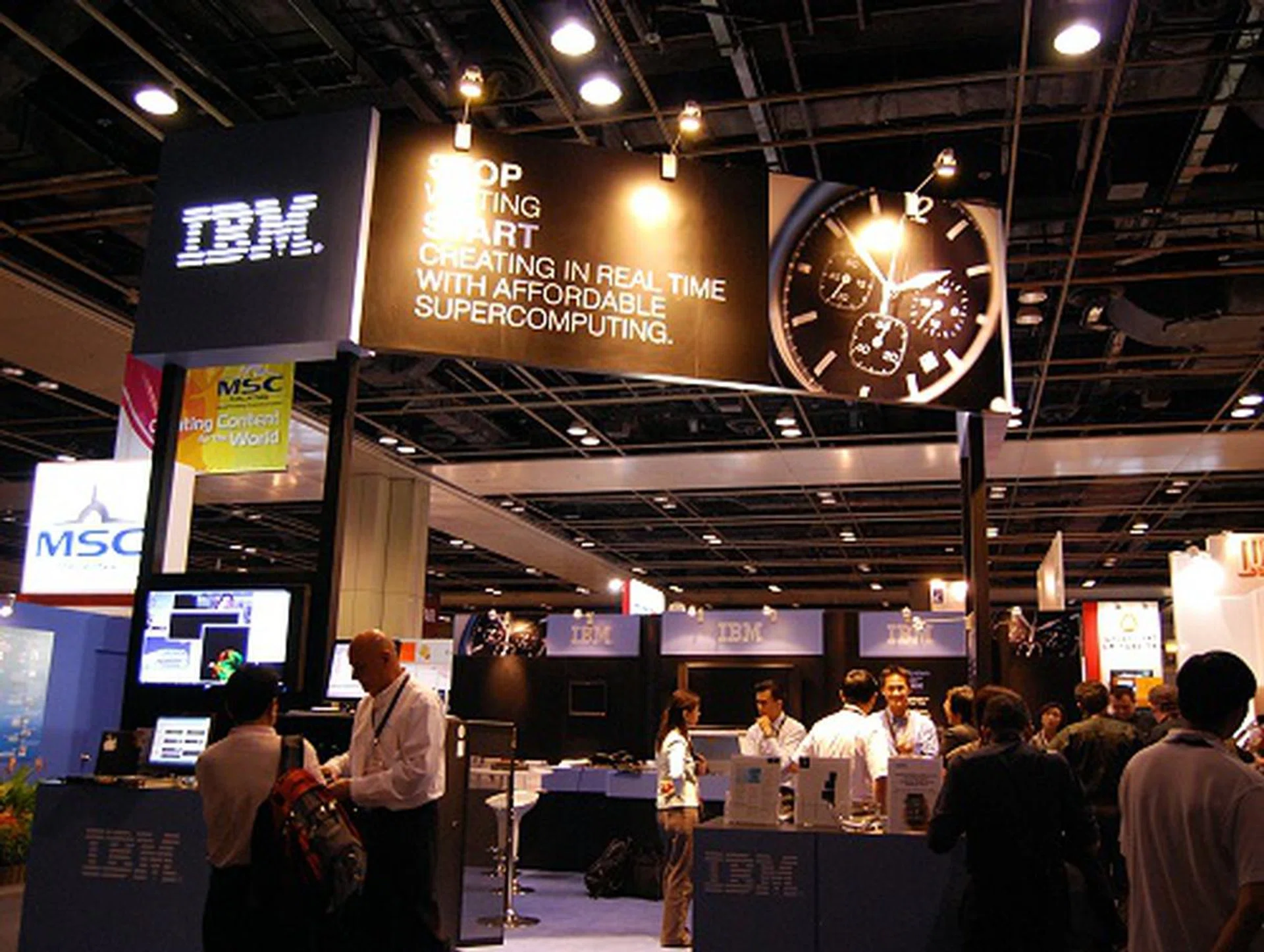
IBM was present to showcase their latest solutions for the ever growing demands of processing power in this industry of design and animation, as well as share their success stories in this field.
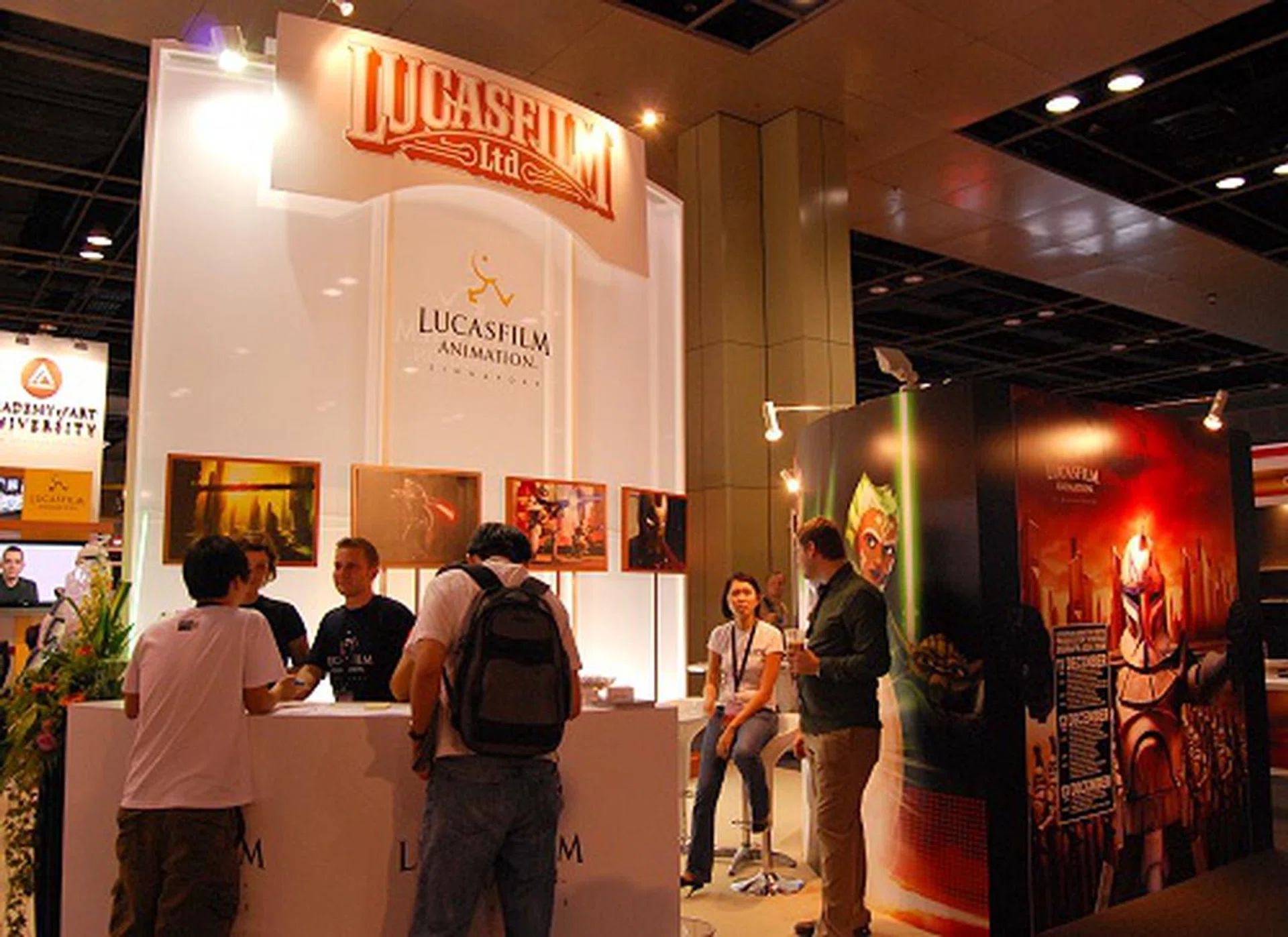
And how can we not mention Lucasfilm Animation which is one of the most well known movie related companies present for SIGGRAPH as well.
And yes it's the Lucasfilm Animation Singapore arm that was present at the show floor and ...
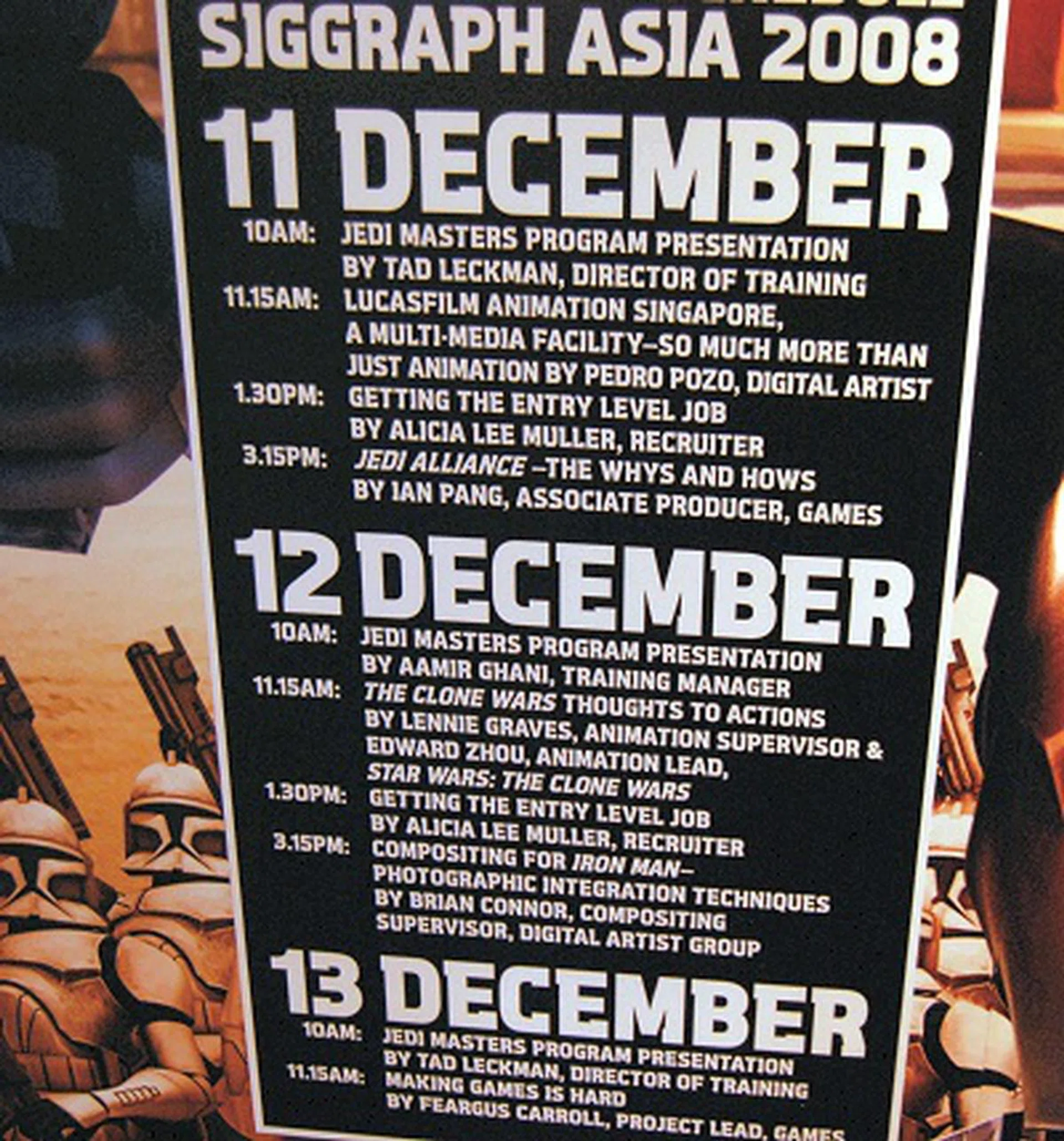
... they had quite a line-up to share with the folks who were present at the show regarding their campus in Singapore, talking about this industry, as well as talks regarding some of the animation process for some of their recent games and movie animation.
ATI and NVIDIA - Turbo Charging the Graphics & Animation Industry
So now that you know what SIGGRAPH is about, how does this matter to our computer technology focused www.hardwarezone.com? Well the two prominent graphics visualization players are key to enabling many cutting edge technologies as well providing the means to crunch and process complex visual data, so it's only natural that AMD (ATI) and NVIDIA had strong presence to demo and promote what their solutions are capable. In the weeks building up to this conference and exhibition, both companies were busy promoting their latest developments. So we've got quite a good picture of what their goals are with their latest hardware and software solutions.
If we had to sum up what both ATI and NVIDIA have in store as their next big thing, it has got to be stream processing. Stream processing is using the hundreds of specialized shader processors available on each of the GPUs to vastly accelerate the processing of certain general-purpose floating-point workloads which were once only possible to execute on the general purpose CPU that has far fewer cores.
Also known as GP-GPU computing (general purpose GPU), thanks to high-level shader processing interfaces/languages like NVIDIA's CUDA and ATI's Stream SDK along with their Brook+ compiler, this is all becoming a reality. However both of the above approaches are vendor-specific platforms, but the good thing is there's now the recently ratified OpenCL standard that both ATI and NVIDIA support and there's also DirectX 11 next year that will also facilitate these GP-GPU computing initiatives and really open the floodgate to all developers to reach out to the full audience. Meanwhile ATI and NVIDIA will still pursue their proprietary standards for some time to come since the common standards have barely emerged and each have been independently working with several software OEMs to spruce up their processing capability with steam processing.
To give you an example of the advantages to what extent stream processing will help the masses, take for example the latest Adobe Premiere Pro CS4 that's enhanced by the NVIDIA CUDA enabled plug-in which comes in conjunction with NVIDIA's latest Quadro CX 4800 graphics card designed for the creative professionals whose work heavily involves Adobe Premier Pro CS4. If you were to encode a 2-hour high resolution project into a H.264 file with a 1080p resolution, what would have taken a standard built-in encoder more than a day on a dual-core system, would have only taken 7 hours to complete on the very same system when using a CUDA enabled plug-in in conjunction with the Quadro CX 4800 professional graphics card. Convert the time savings into cost, and you get the big picture.
Not only does it complete the job a lot faster, the system CPU utilization is also far lower and you can actually get more productivity done while the encoding is taking place. Our own trials from a demo system on the show floor using a sample file saw the CPU usage levels drop from 100% to just 50%, while getting the job done a lot faster (just 30 seconds versus the 1min 40 seconds without the CUDA enabled plug-in - that's more than three times the improvement).
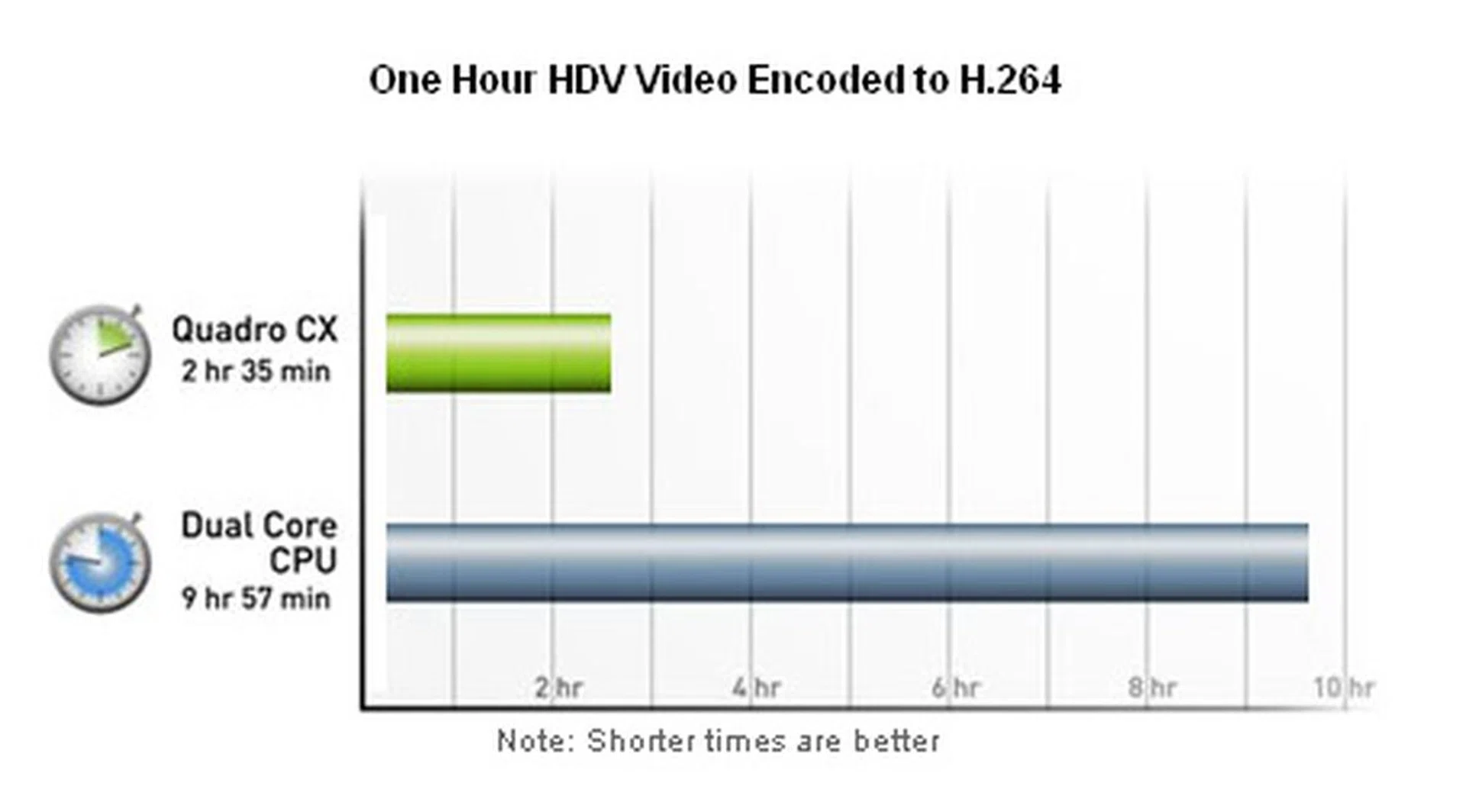
Here's another example from NVIDIA's website of a 1-hour sample project and how CUDA helps on that same system for video encoding. We're in the process of testing this capability out in our own labs, so stay tuned for a Quadro CX article shortly.
Likewise stream processing and GP-GPU computing in general are picking up in the consumer segment as well with fast transcoding, smoother decoding and much more with video-centric applications from Cyberlink and Arcsoft to just name a few. This is very much an infant segment at the moment, but the future is bright as developers are opening up to the GP-GPU computing idea with strong push from both ATI and NVIDIA to educate them on the vast untapped potential.
We'll round up the coverage of SIGGRAPH with some focused highlights from the NVIDI A and ATI booths on the following pages.
NVIDIA and Leadtek Showcase Quadro and Tesla Series
Over at NVIDIA's booth, there was quite a bit of emphasis on what their latest Quadro FX and Quadro Plex are capable of achieving. To prove it, they had important demos running on the Quadro graphics bases systems and showcased applications like 3ds Max, Adobe CS4 suite and even a new shader creation and management program from mental mill. Additionally, Leadtek partnered NVIDIA to showcase its complete professional series solutions.
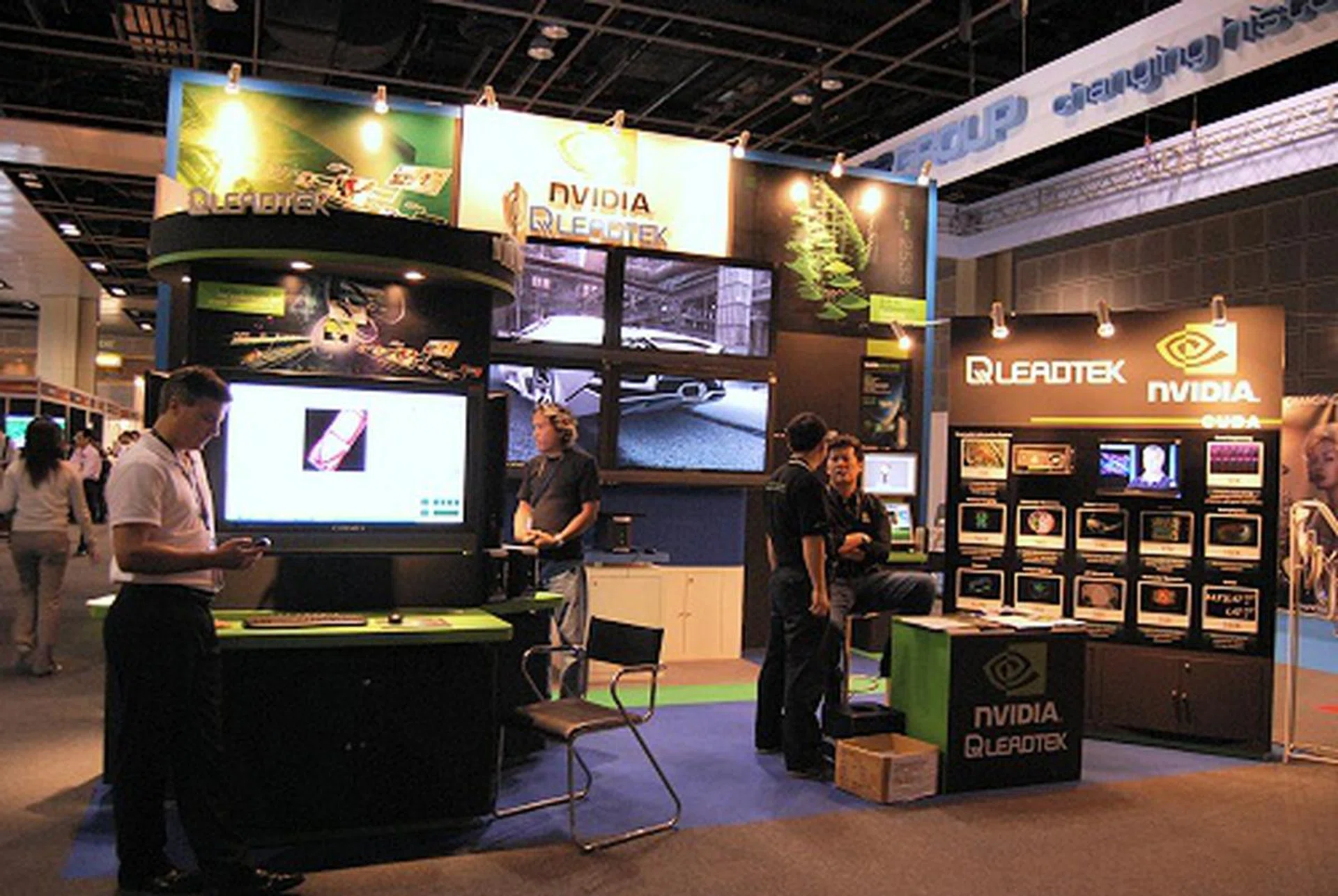
NVIDIA's booth at SIGGRAPH Asia 2008.
The screen on the left of the image was where Adobe was showcasing its new Adobe CS4 suite and how its new software greatly benefits from NVIDIA's latest Quadro FX graphics cards. On-site was Pete Brownstein, Adobe System's
Business Development Manager for the Asia-Pacific region, who guided us through three of the core applications that had the biggest advantage with the Quadro graphics card series:- Adobe After Effects CS4, Adobe Photoshop CS4 and Adobe Premiere Pro CS4.
The huge frame buffer size of the Quadro graphics cards and their OpenGL acceleration are key reasons why they help accelerate these highly used professional creative applications. As Pete showed us the performance as well as capabilities with and without the OpenGL acceleration feature enabled, there was quite a profound difference. We can clearly see that for professionals in this line of work, this advantage is certainly very much required for much better productivity. There is certainly no doubt about that. While OpenGL acceleration is also available on consumer-level desktop graphics cards, they don't have large frame buffers and neither have they been professionally certified, so these aren't solid solutions for serious work.
For creative professionals dabbling with Adobe Premiere Pro CS4 in particular, NVIDIA has recently launched a special graphics accelerator, the Quadro CX. This card is equivalent to the Quadro FX 4800 which was also recently launched, based on the original GeForce GTX 260 GPU. However, the CX comes exclusively bundled with the CUDA accelerated RapiHD plug-in developed by Elemental Technologies to greatly turbo charge the render time required and vastly cuts down on the CPU processing power required as we've highlighted earlier. This plug-in is not available by any other means besides purchasing a Quadro CX.
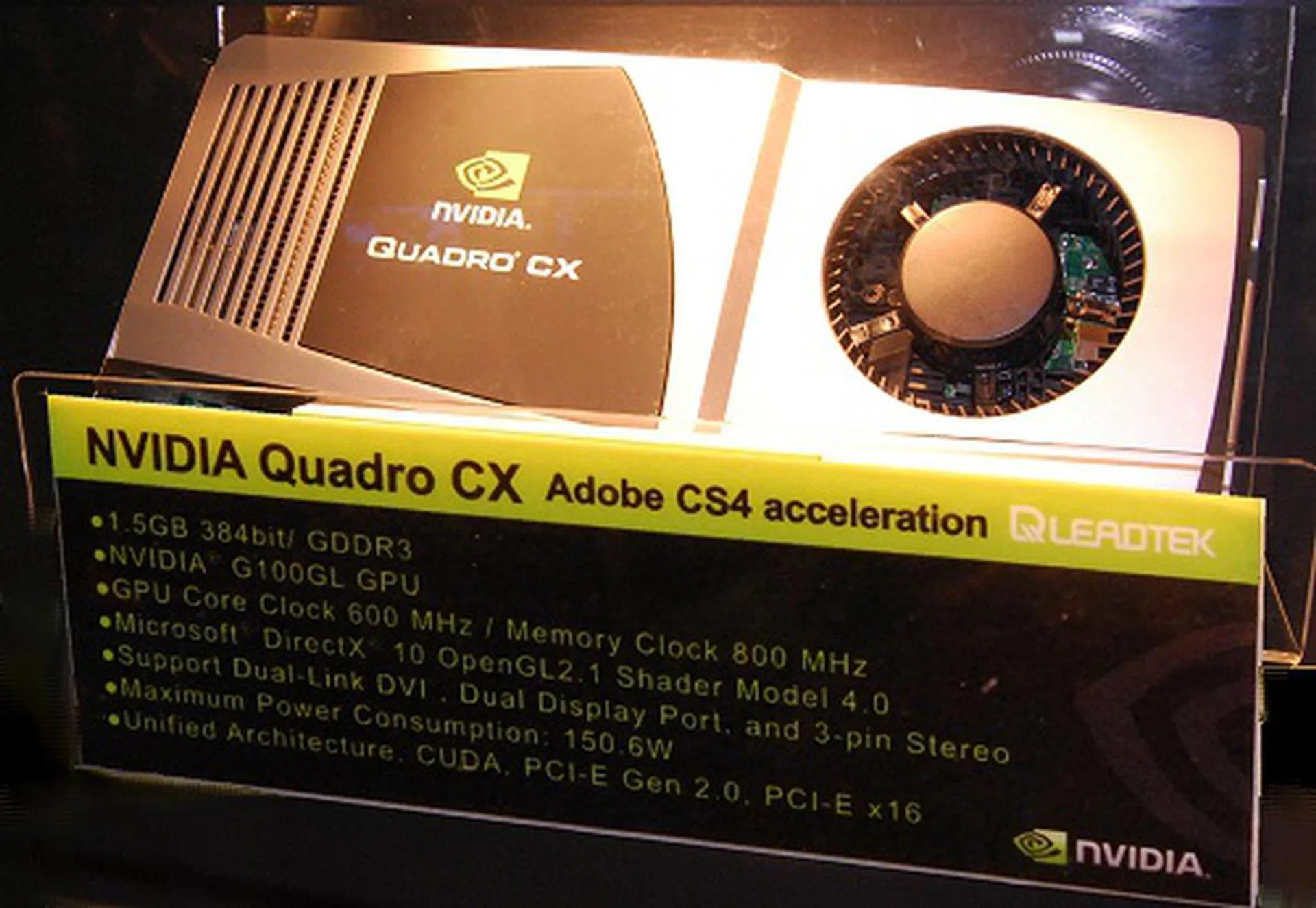
Dubbed as the definitive accelerator for Adobe CS4 Suite users, the Quadro CX is the only version available for this purpose unlike the numerous models in the FX series. It is based off the Quadro FX 4800 series but is exclusively bundled with the RapiHD plug-in for Adobe Premiere Pro CS4 and you can't get it by any other means.
While both the FX and CX variants have an equivalent suggested retail price of US$1,999, certainly we would recommend the CX since it can do all of what the FX can perform. This weird pricing strategy was of course a move to promote the new Quadro CX, however as we spoke to NVIDIA, they expect the retail/partner solutions to mark the Quadro series pricing up or down by demand and interest. This would likely cause the CX to cost more than the SRP or the FX to be priced lower than the CX in the long run.
For those who are more focused on other kind of illustration, animation and design applications like AutoCAD, Maya, 3DS Max and several others, the Quadro FX series has several models to cater to the level of usage and requirements. Additionally, the Quadro series come with specialized drivers for these applications to provide performance boosts. The top dog here is the recently launched Quadro FX 5800 that's based on the GTX 280 GPU and has a whopping 4GB frame buffer.
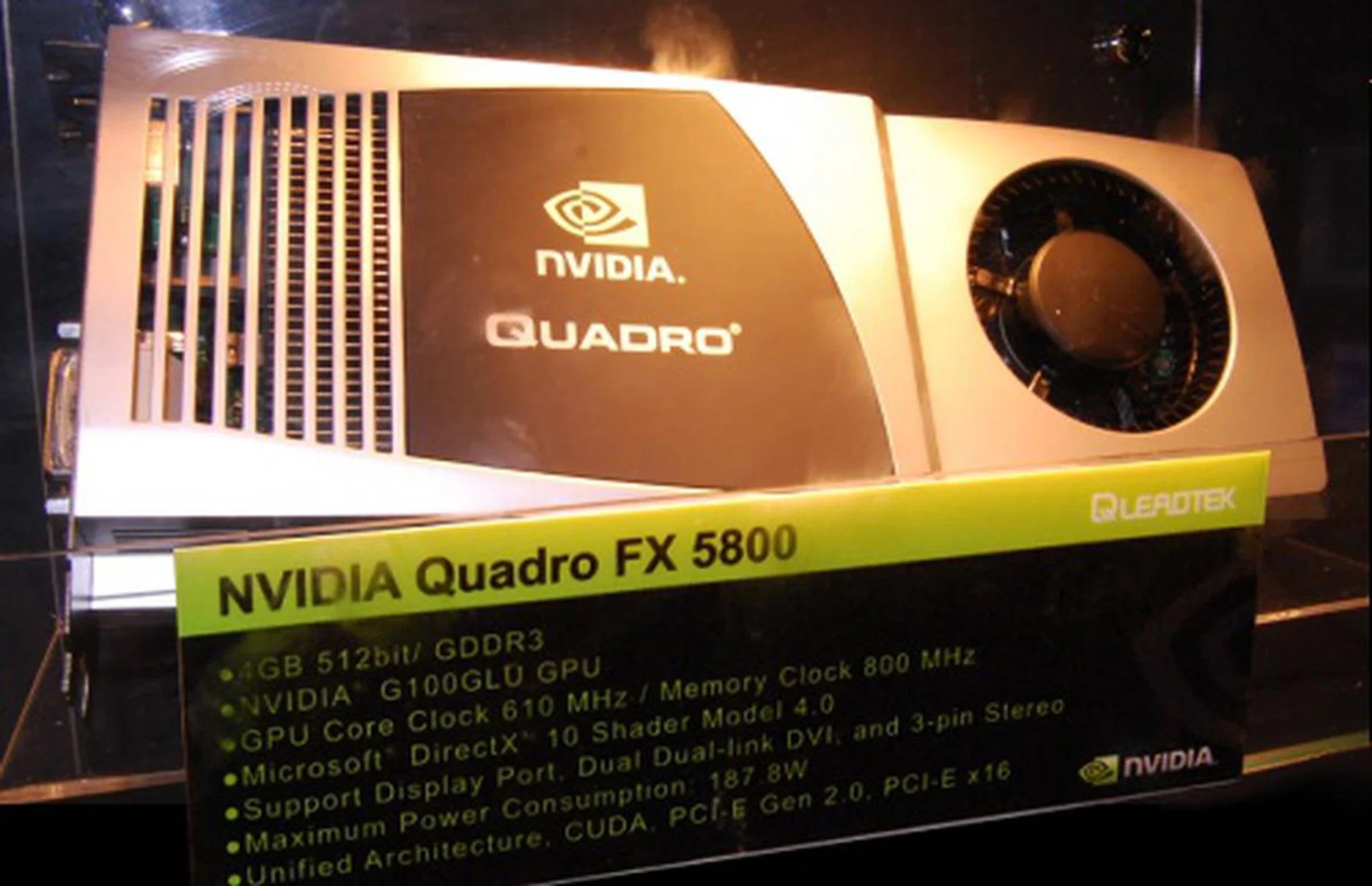
Here's the big daddy of the single GPU based Quadro series, the FX 5800. Eerily though it shares the same model name as the disastrous GeForce FX 5800 of the consumer lineup in 2003. But that's just a mere observation and nothing to do with the Quadro card itself - after all, there's only that many numbers you can tag to a model.
To get a better idea of who exactly requires that large a frame buffer size, we spoke more to Tyler Worden, Market Development Manager of NVIDIA who's in charge of the professional visualization solutions. From our discussion with him, it seems that while 4GB sounds a whole lot, the medical, engineering and especially the oil and gas industries can eat volumes of processing power and memory requirements in a jiffy. He explained the data which these industries handle to churn out their models for visualization is so immense that even if the Quadro card had 16GB of frame buffer, that wouldn't satiate their requirements.
For example in the oil and gas exploration arena, seismic charges are set off and numerous sensors are placed across a huge area to map the terrain to form an underground 3D map of sort. No longer is data just analyzed on specific areas, but these days a much larger area is mapped to get a clearer view of the macro scale of things and better determine the aspects of the entire terrain. This could be several kilometers in every direction and correspondingly requires a terrific amount of data manipulation and crunching power to generate the required analysis models. The huge frame buffer of the latest generation of Quadro FX cards help on two grounds:- one is on the CUDA-enhanced specialized programs used to tap on the GPU's crunching power and thus a huge streams of data are fed thru the GPU for accelerated processing. The other is on the actual handling of the visual model which is extremely huge and requires a boatload of memory to handle it fluently.
Over on the high-performance computing (HPC) segment, NVIDIA's targeting the Tesla series of stream processing cards, which the latest is also based on the GTX 200 series of GPUs such as this NVIDIA Tesla C1060 stream processing card shown below. No display outputs are featured, so it's likely a case of the removal of the NVIO chip, but then again, that's not required for a stream processing card.
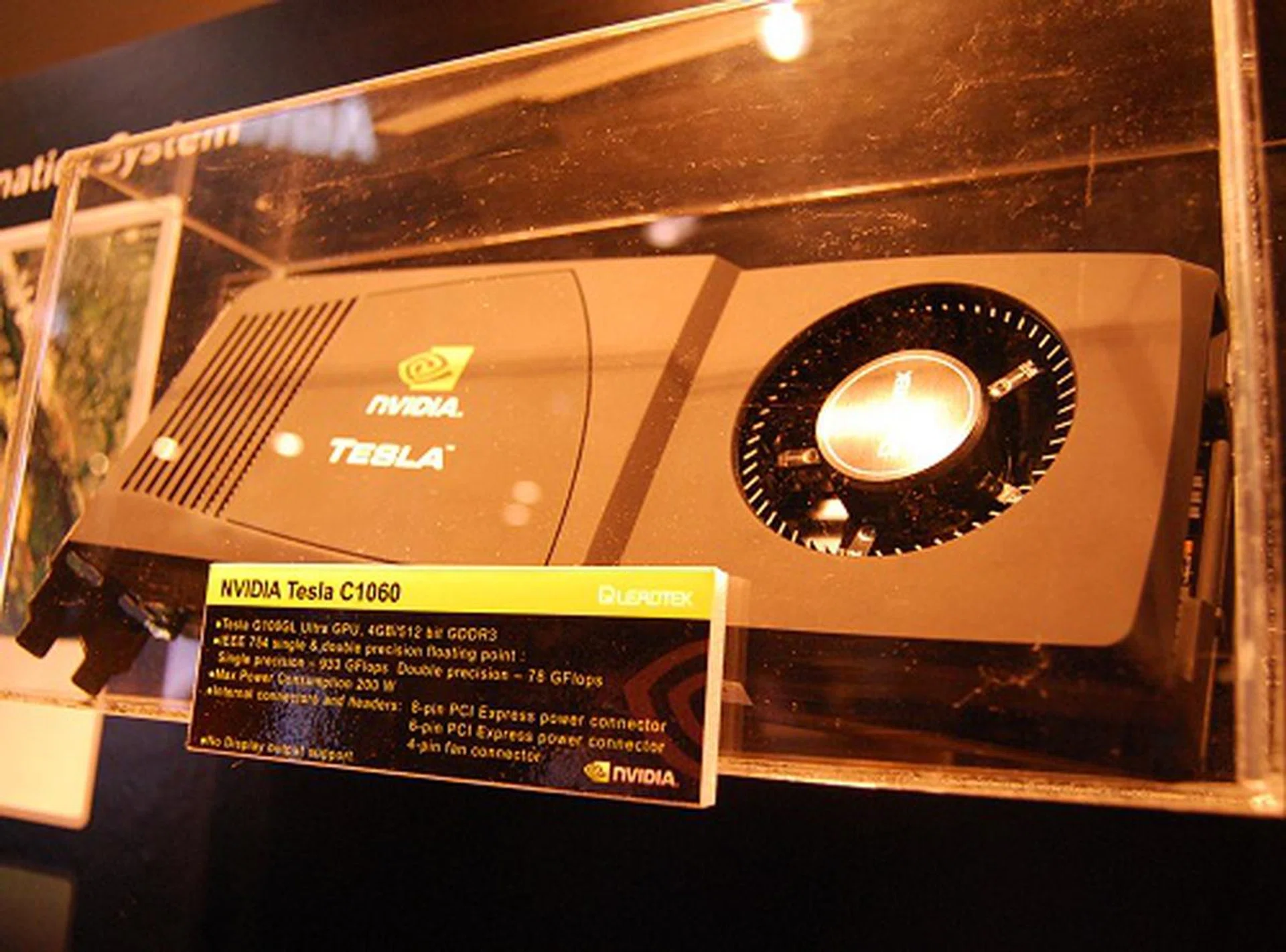
The NVIDIA Tesla stream processing card.
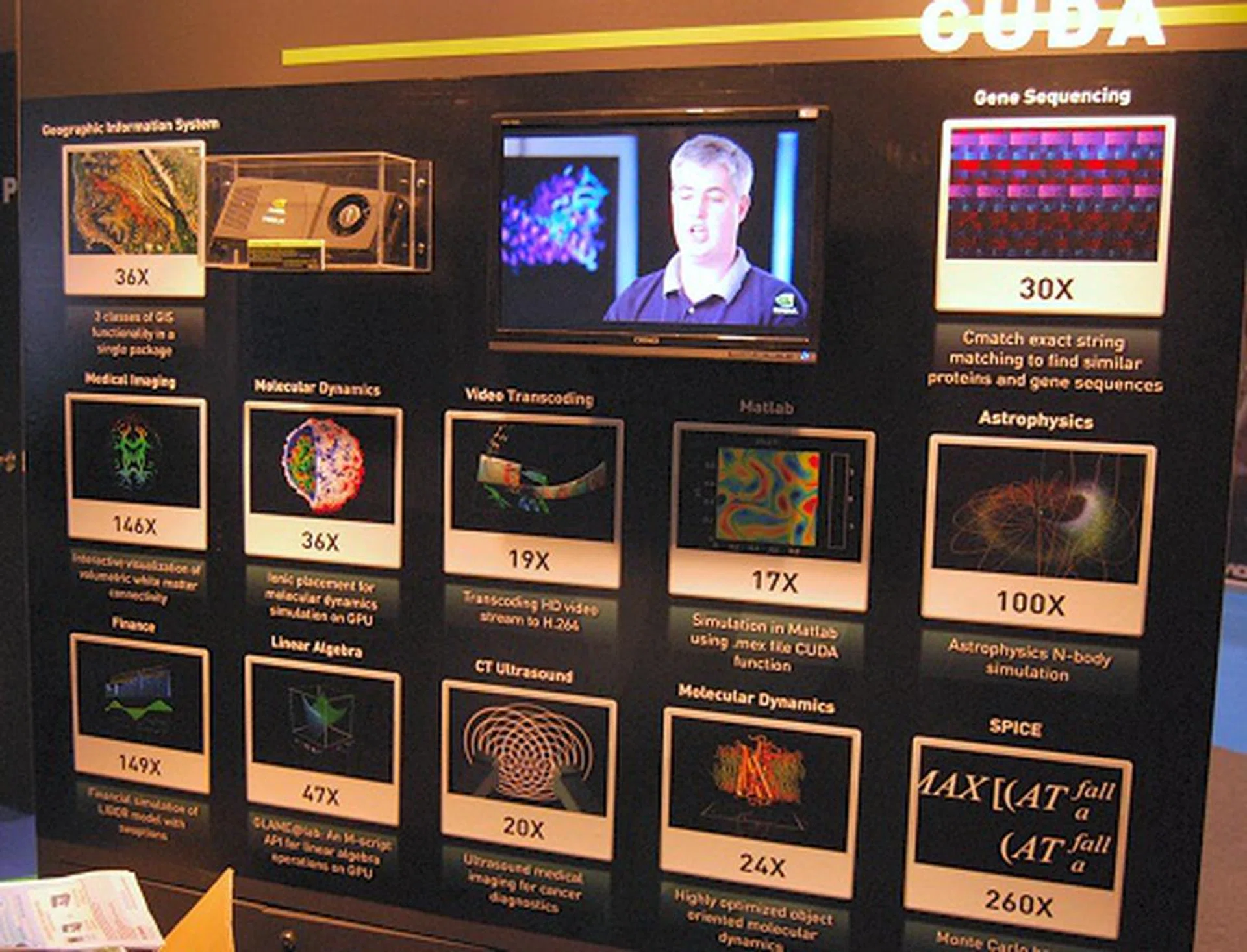
NVIDIA's promotional wall on all the processing speed-up the Tesla stream processing card is able to offer over a CPU.
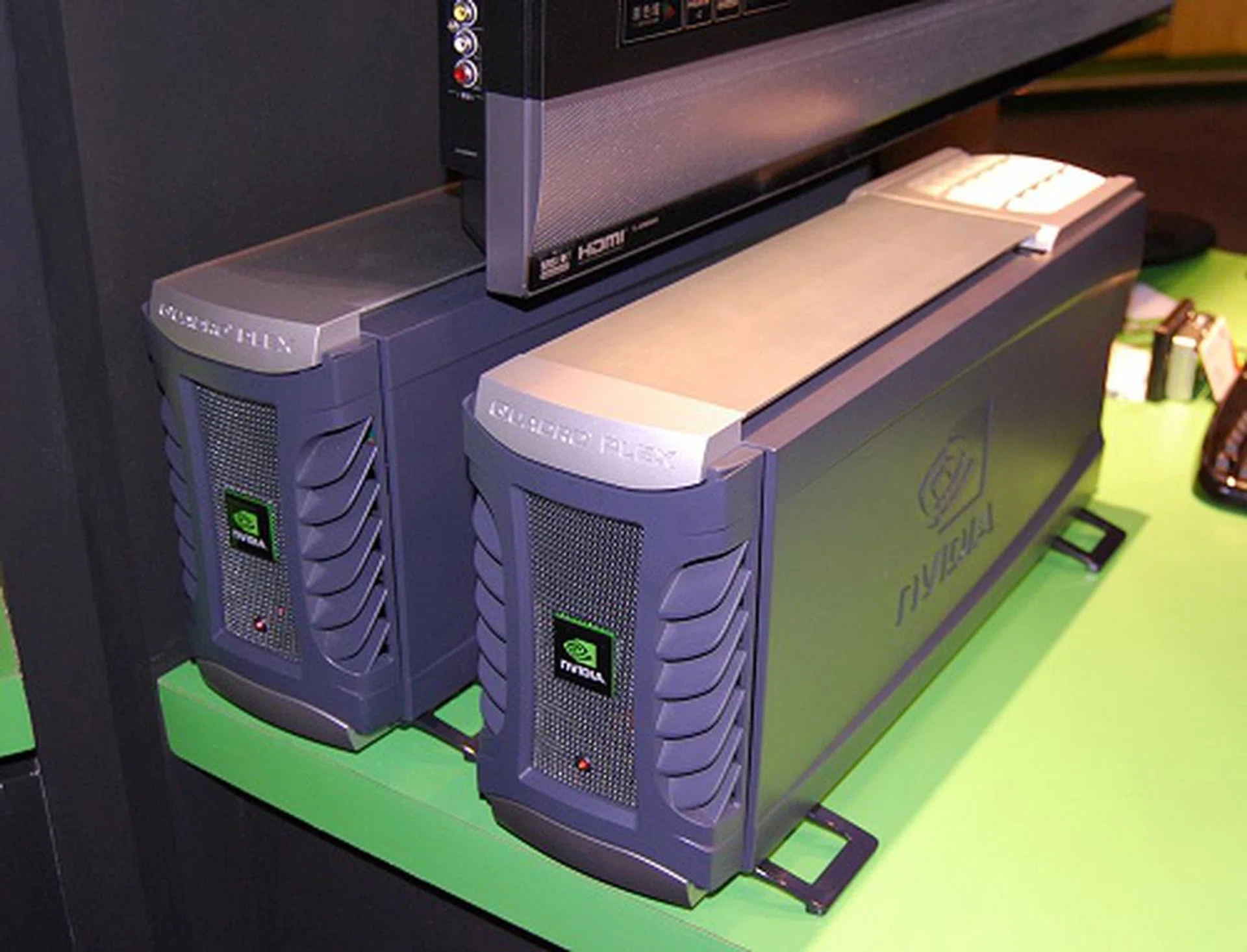
The main visual wall on NVIDIA's booth was powered by this pair of Quadro Plex visual computing system that was performing real-time ray tracing at very high resolution. An impressive feat.
Last but not least was a demo from mental mill that's related to the creation and managing shaders that can be re-used to create more complex shaders and can be used in several commercial design applications like mental ray, Catia, 3DS Max, Maya and Softimage XSI. Best of all, shader artists don't really require programming know-how to create, manipulate and incorporate the shaders as mental mill has a very graphical, intuitive and flexible GUI interface with real-time preview. Artists with programming skills can also directly write shaders within the program for further fine tuning, but with the real-time preview and debugging, the task at hand is far easier to manipulate. Here's how the node-based GUI looks like with each node having a list of attributes and numerous controllable parameters:-
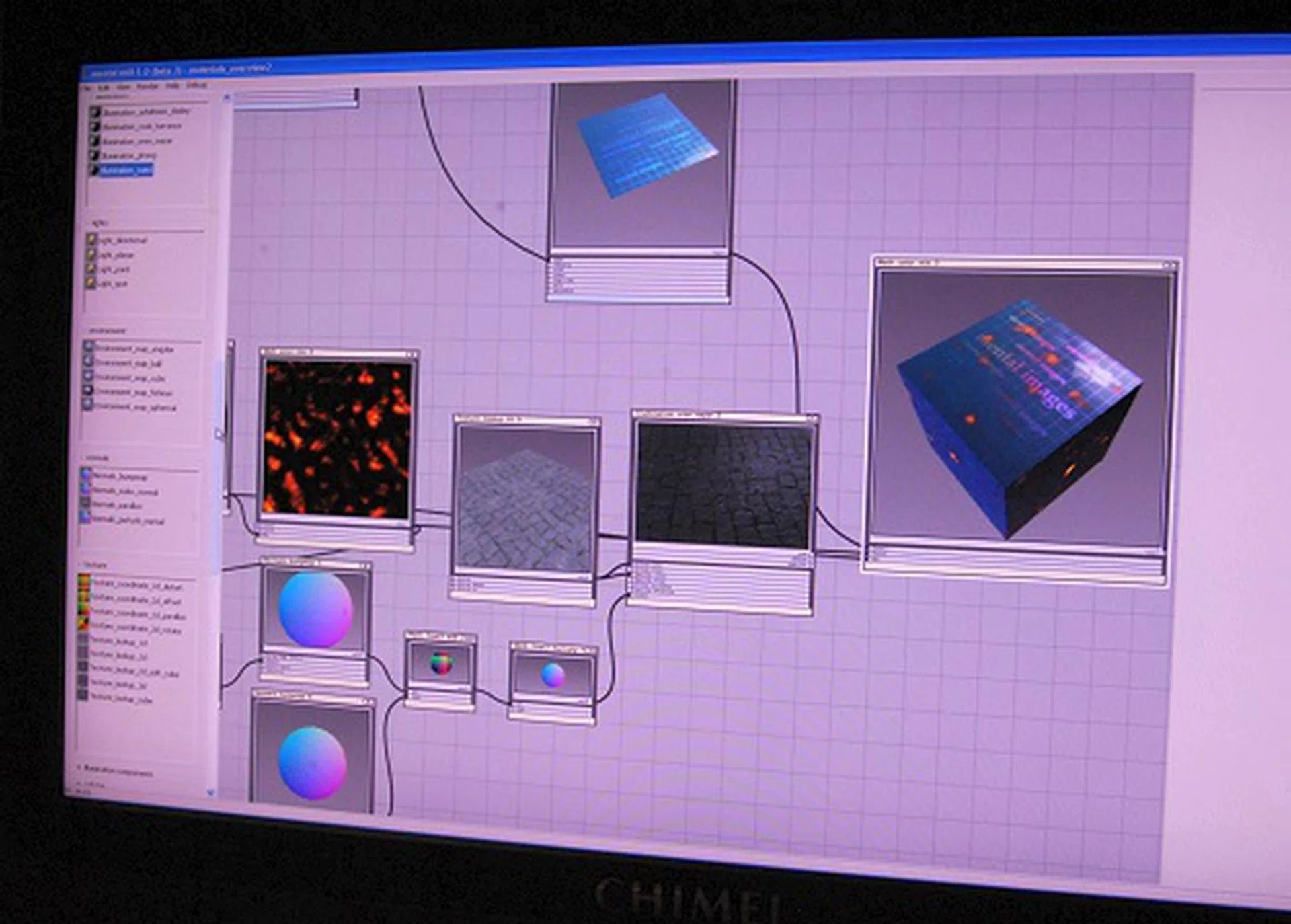
mental mill is still in beta at the moment, but it will be officially available sometime next year and has a lot of potential with its slick interface for easier manipulation of shaders. In fact they are forging close ties with leading industry application vendors to ensure their shaders can be output to compatible formats for reusability.
ATI and Sapphire Showcase Professional Visualization Solutions
Over on ATI's corner, one of the gold supporters of the SIGGRAPH Asia 2008 event, they had their own professional solutions on display. So here are some cool stuff we found on their booth:-
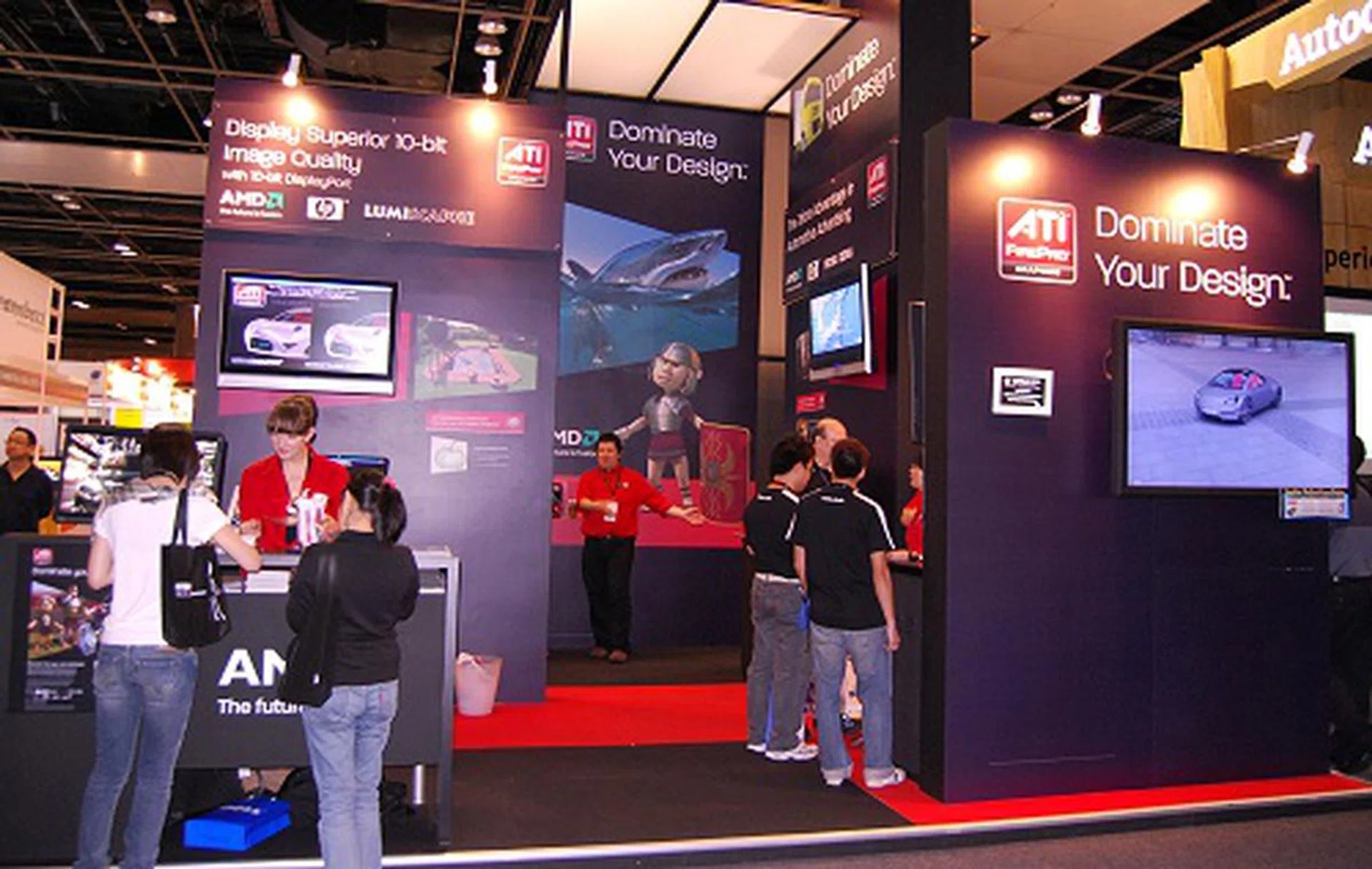
ATI had several varied highlights on display at their booth.
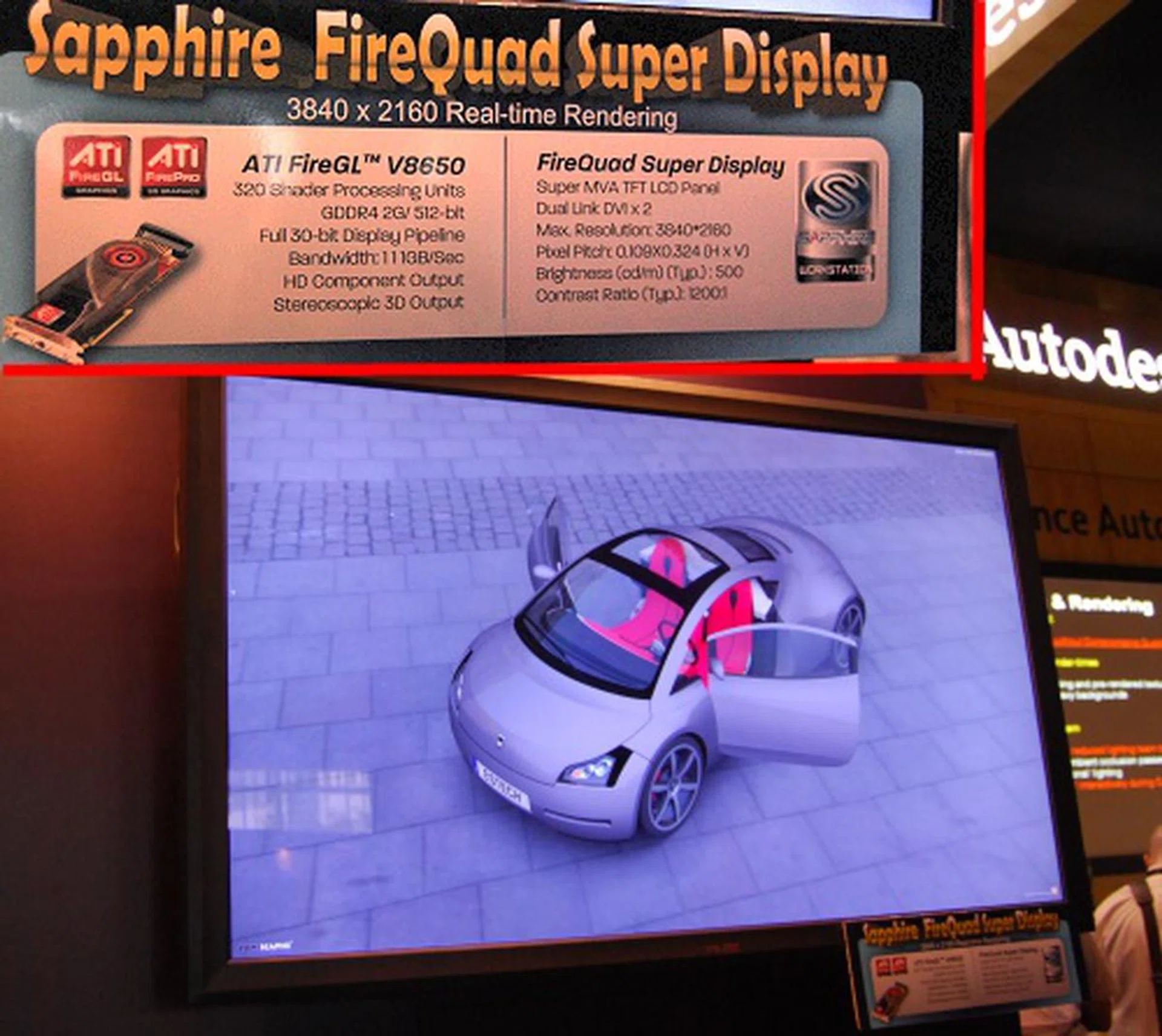
Most prominent up-front was a huge 56-inch Quad Full HD display from Sapphire that's being driven by a single ATI FireGL V8650 graphics card in addition to showcasing its processing prowess with real-time rendering on that same screen. Impressive.
Just when Full HD is getting into gear of mainstream, the industry is already pushing that to Quad Full HD - a resolution of 3840x2160 pixels that's capable of displaying close to 9 megapixels in 1:1 ratio. More resolution equates to getting more work done as you can squeeze more out of the same display area. To fulfill the high requirement needs, Sapphire, one of ATI's most loyal partners that also handle professional solutions offers its clients a 56-inch Quad Full HD LCD solution that comes bundled with an ATI FireGL V8650 professional graphics card that uses its dual-link DVI outputs to power the display. While not the newest, it is the only card from ATI with a 2GB frame buffer for processing the huge workload sizes that comes with such high resolution requirements.
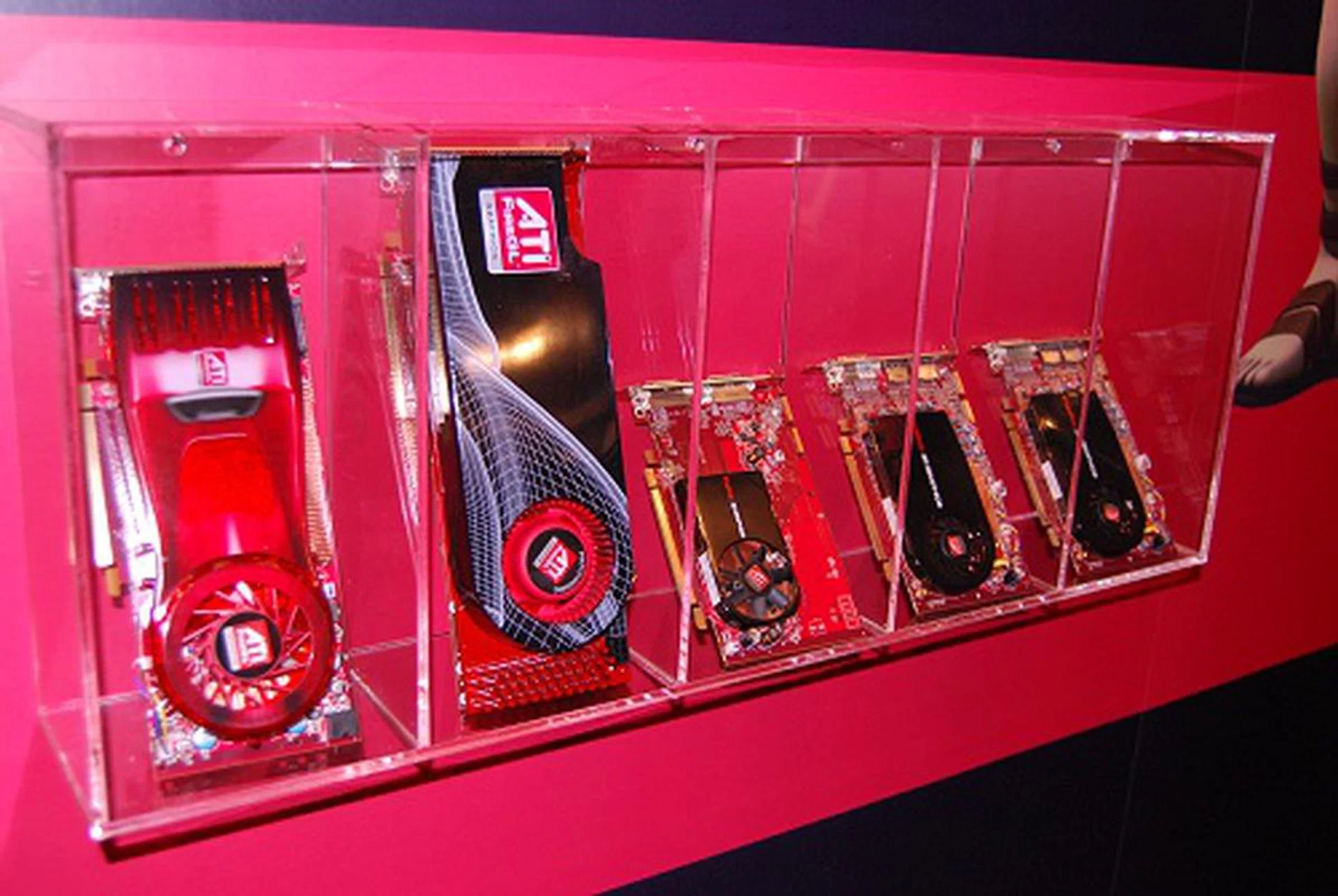
Some of the other FireGL professional graphics card solutions available from ATI.
ATI is also very focused on enabling stream processing for the masses and calls its technology ATI Stream. Its full potential is released when paired with the Radeon HD 4000 consumer series or with the AMD FireStream 9000 professional series as they utilize the latest GPU series. The ATI Stream SDK in combination with their Brook+ compiler enables easy high-level programming to unleash the GPU's full processing prowess for GP-GPU processing. Like NVIDIA, ATI too supports the OpenCL API and is probably an even stronger supporter of it. OpenCL is still in its early days and while there hasn't yet been a demo or program to showcase an OpenCL application running off the GPU, AMD/ATI is the first to showcase a demo running off the CPU and was displayed at their SIGGRAPH Asia booth:-
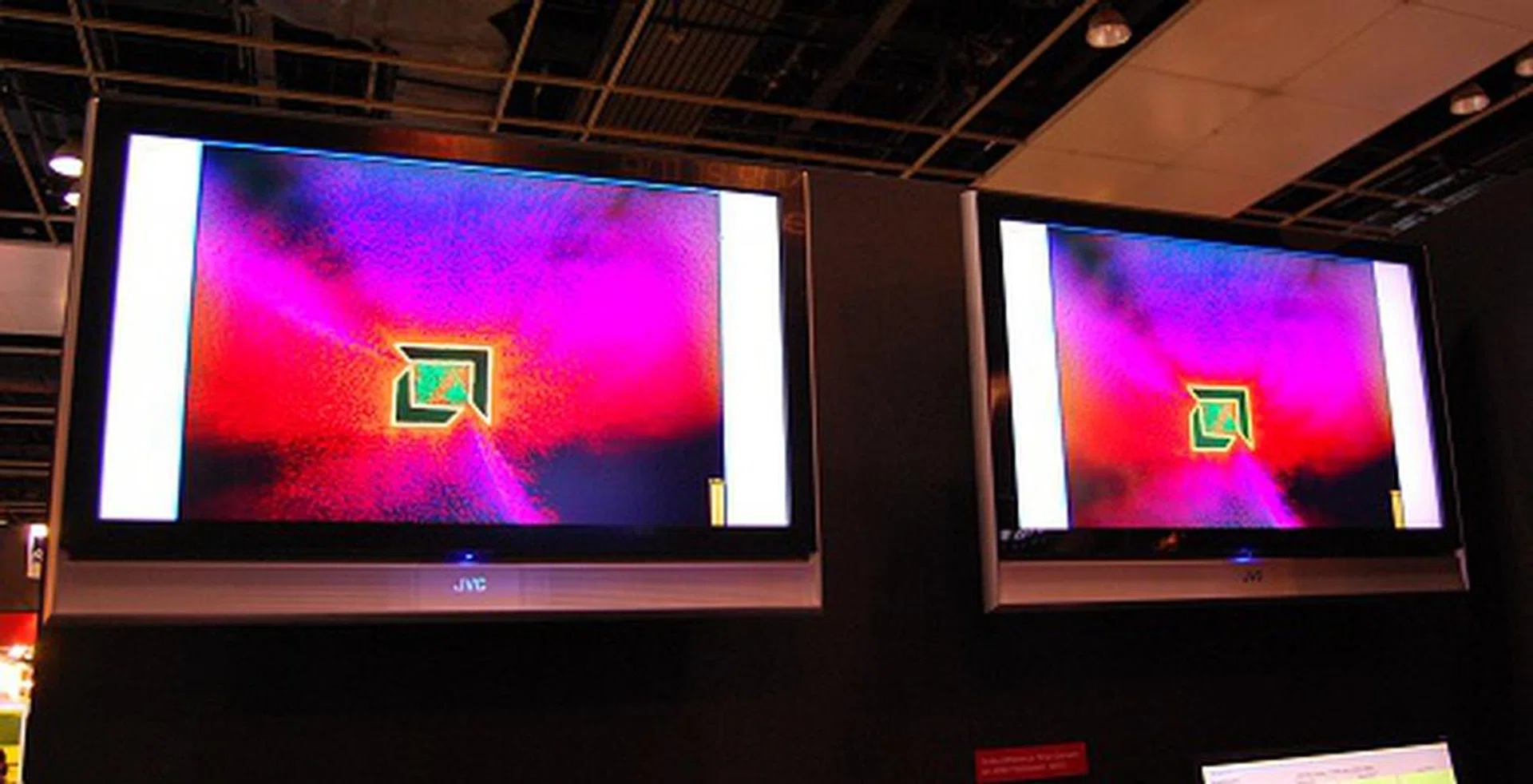
According to ATI, this is the first demo showcasing OpenCL in action even though it's running of the CPU currently. It shouldn't be long before a GPU port over is made as the OpenCL standard was only just ratified.
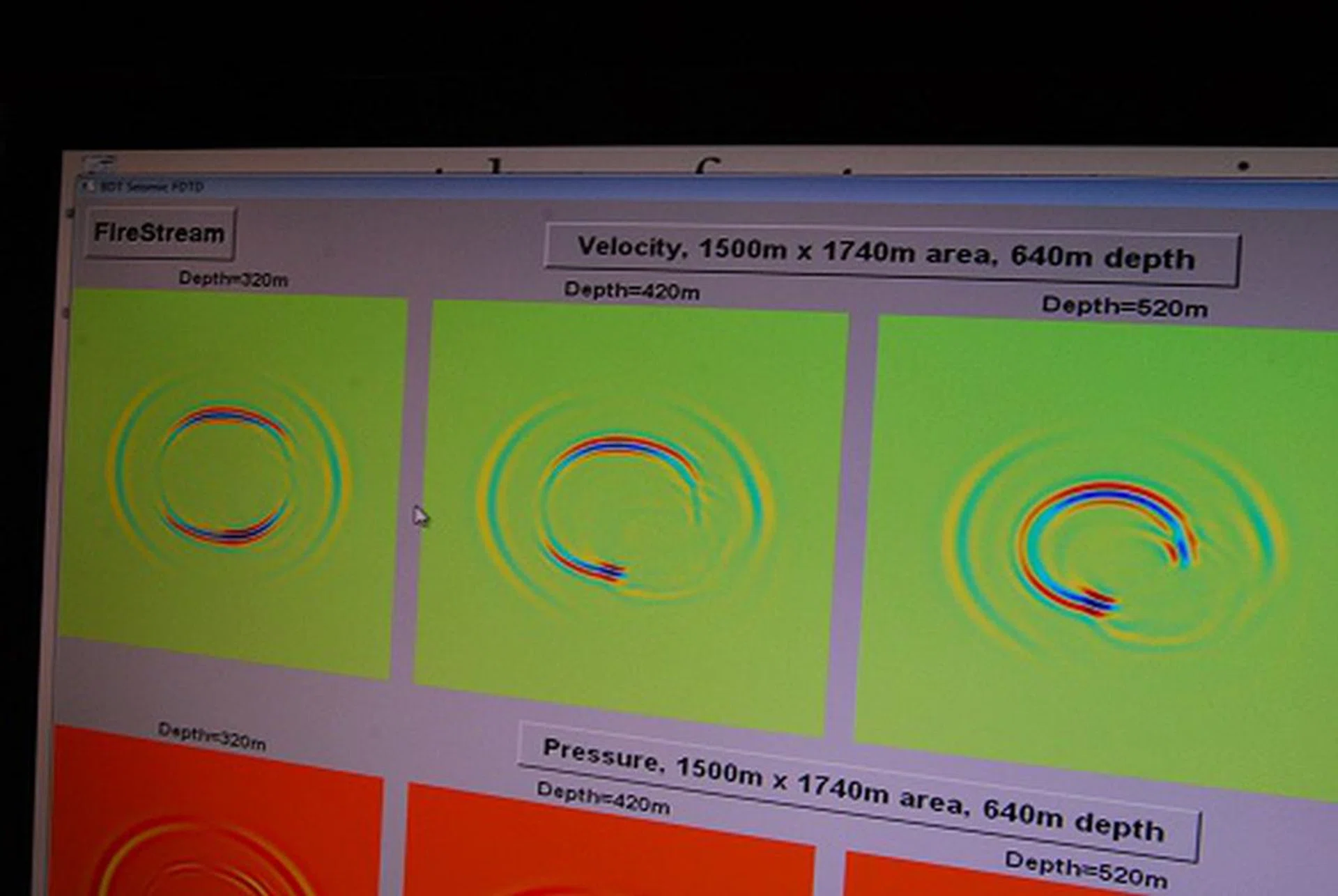
This isn't an OpenCL demo, but a demo simulating how a FireStream enabled platform helps simulate oil and gas exploration. The demo simulates seismic charges set off and sensors feeding back to the system on the seismic wave propagation.
However ATI Stream isn't just for the professional market; it's just as apt in the consumer realm as well. ATI is working with several video player/creation application vendors to help accelerate video encoding, transcoding, up-scaling and more. On demo at the show floor was ArcSoft TotalMedia Theater with SimHD DVD up-scaling technology (up to 1080p) that's enabled by ATI Stream technology:-
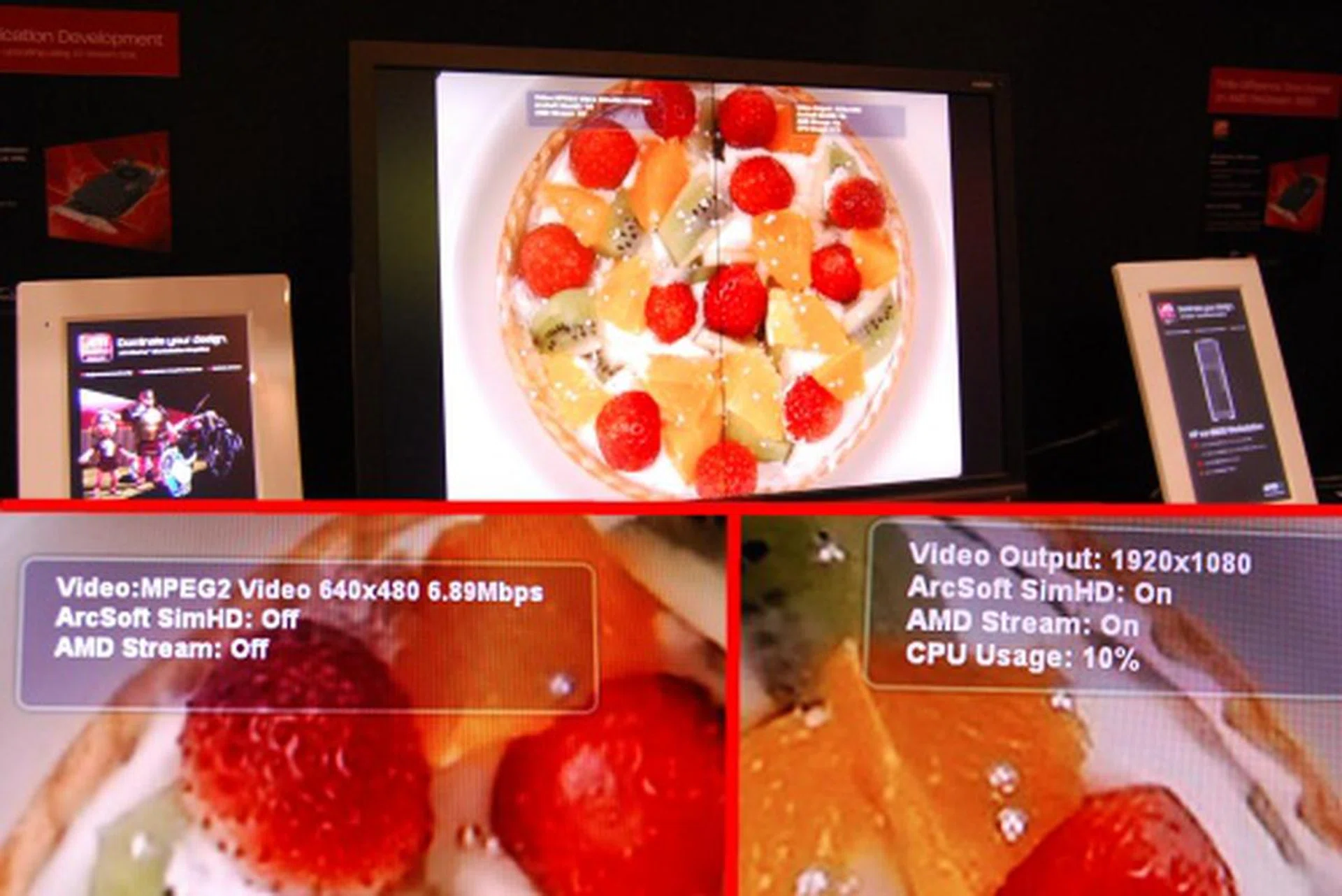
Here's the ArcSoft TotalMedia Theater software demo with an ATI Stream enabled SimHD DVD up-scaling technology at work. On the left is a standard definition MPEG2 clip while on the right is the up-scaler enabled showing better details and clarity with very low CPU utilization.
Well, that's it for the SIGGRAPH Asia 2008 and hopefully we'll be there in the 2009 conference to catch next year's updates in this field in Yokohama, Japan. See you then!
Our articles may contain affiliate links. If you buy through these links, we may earn a small commission.