
Radeon HD 5850 Roundup - Triple Threat
The Radeon HD 5850 is highly popular amongst users looking to upgrade to a powerful card while keeping their budget in check. We take a look at three fine examples to find out which offers the most bang for your buck.
Reexamining the Radeon HD 5850
Fermi is finally here, six months after the first Evergreen cards (Radeon HD 5000 series) from ATI were available on retail. So how has the graphics card landscape changed? Well, it's a bit too early to say. While the new GeForce GTX 480 and GTX 470 are fast and powerful cards in their own right, they are also known to be power hungry and run extremely hot. Furthermore, availability of these cards are poor and they are not the most affordable nor bang for your buck cards around.
For the best bang for your buck in the high-end graphics cards space, the Radeon HD 5850 is still the card of choice. It's considerably faster than any previous generation single-chip graphics card, and at around US$300 (about S$420 locally), it is also markedly cheaper than its bigger brother, the Radeon HD 5870, and NVIDIA's new GeForce GTX 480 and GTX 470. Overall, we think that the Radeon HD 5850 offers the ideal balance of performance and affordability. Looks like we were right all along, since we awarded it the Most Value For Money Award when it first came out and it still holds true.
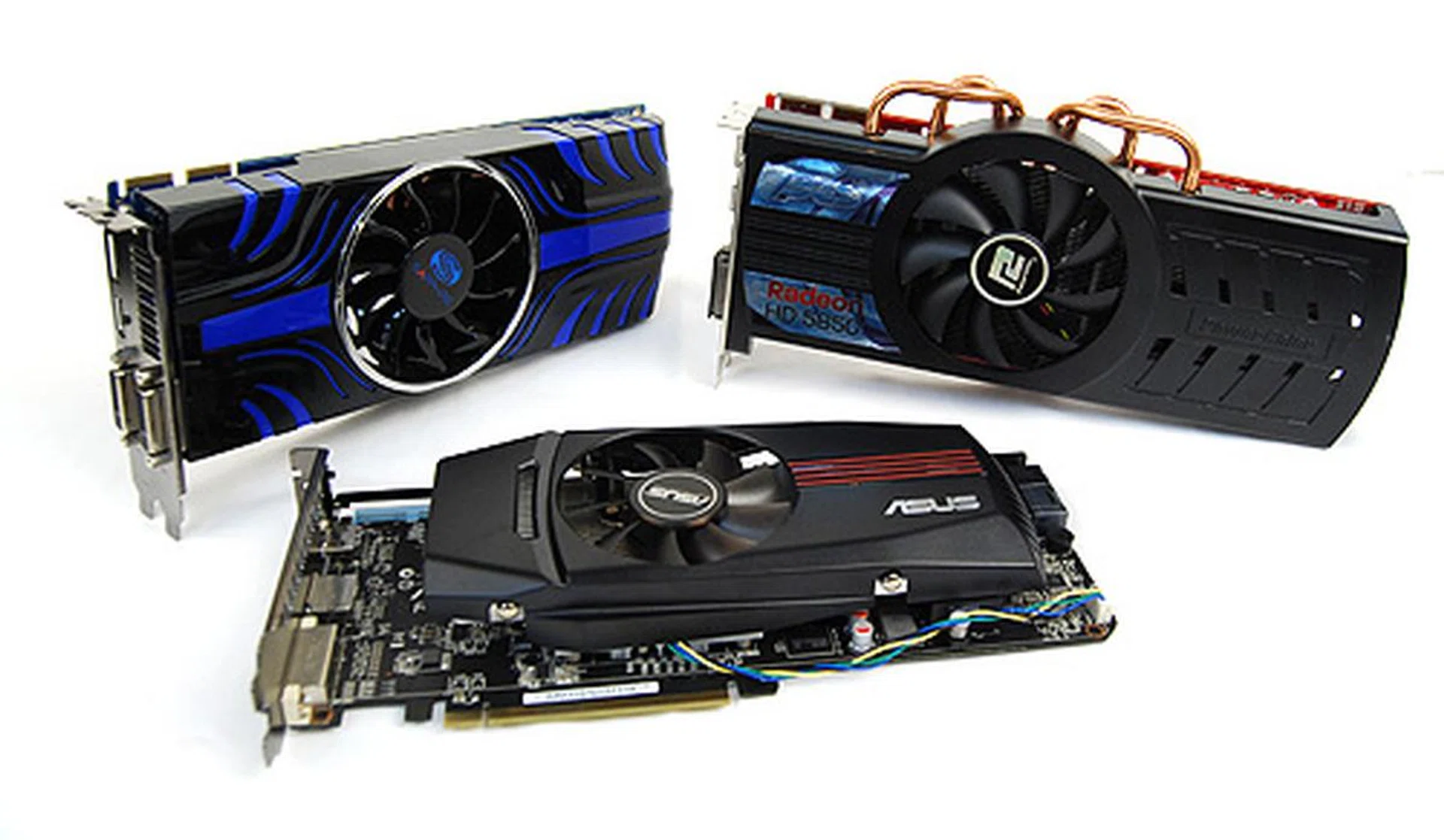
It's a three-way battle between ASUS, PowerColor & Sapphire. Who will emerge victorious in our custom-edition Radeon HD 5850 roundup? Read on to find out.
It's been six months since the launch of the Radeon HD 5850 and ATI's partners are coming up with custom editions of the Radeon HD 5850. Factory overclocked and sporting customized coolers, these cards offer superior performance to the original reference card, and we have here with us three fine examples of non-reference Radeon HD 5850 cards from ASUS, PowerColor and Sapphire.
Introducing the Cards
The ASUS EAH5850 DirectCU TOP 1GB GDDR5
The ASUS EAH5850 DirectCU TOP is the company's high-end non-reference Radeon HD 5850 card and it comes with a host of goodies from ASUS to make it perform substantially better than a bone stock Radeon HD 5850.
Firstly, the card is factory-overclocked at 765MHz at the core and 4500MHz DDR at the memory, representing a 40MHz and 500MHz DDR bump at the core and memory. Secondly, it employs a customized cooler which features ASUS' new DirectCU technology, which means its two copper heat pipes are in direct contact with the GPU core. If you're wondering how, the heat pipes are flattened at the area where they make contact with the GPU and therefore the direct cooling benefits can be reaped. As such, ASUS says that this will help improve cooling performance by up to 20%. We'll check that out soon enough in our test section.
ASUS also claims that only the best chips have been selected to create the ASUS EAH 5850 DirectCU TOP, with each chip handpicked and tested to be able to run at a punishing 800MHz at the core before it makes the grade and can be used.
The EAH 5850 DirectCU TOP also comes with ASUS' Voltage Tweak technology, a software that allows users to adjust the GPU core's voltage values to accommodate for higher clock speeds.
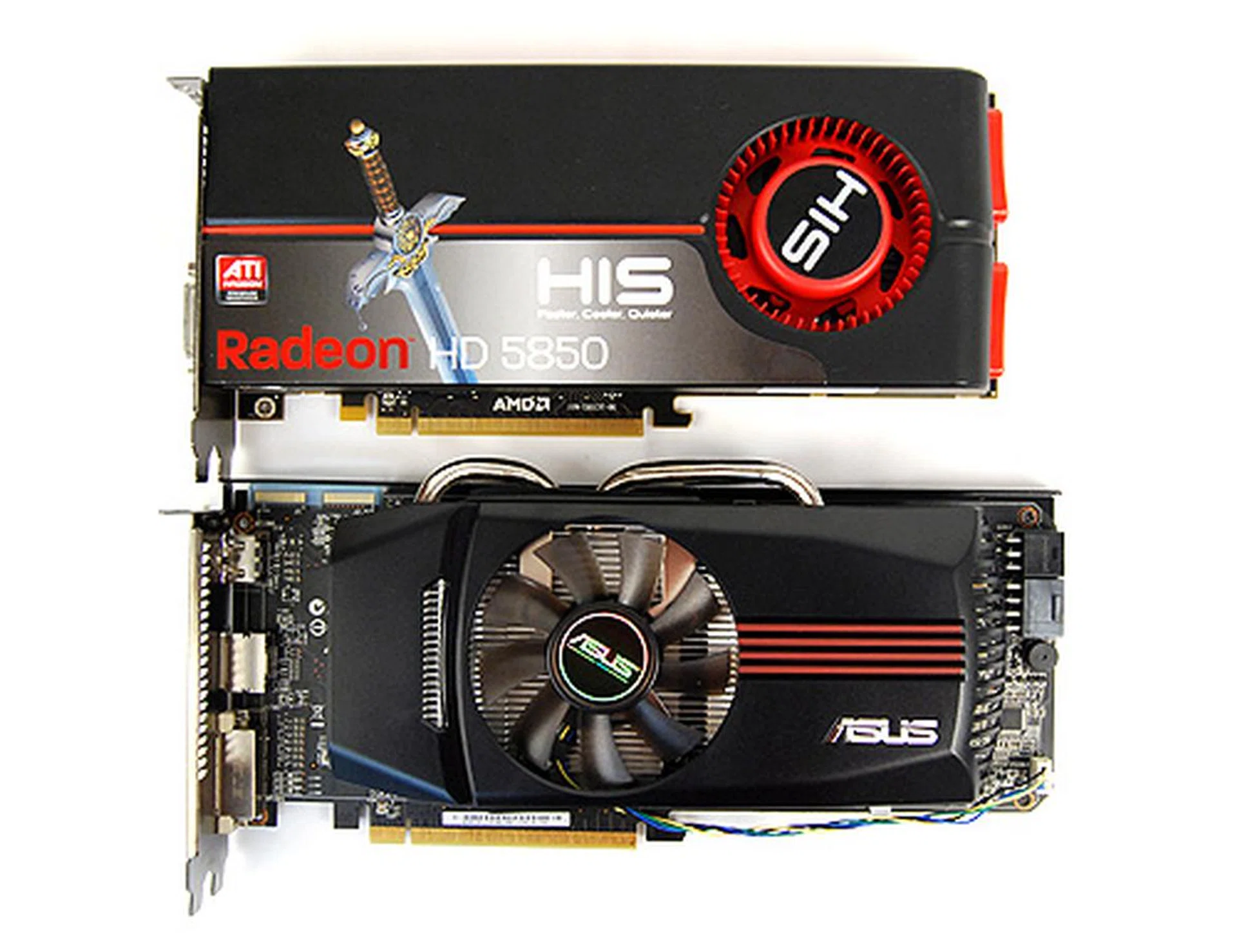
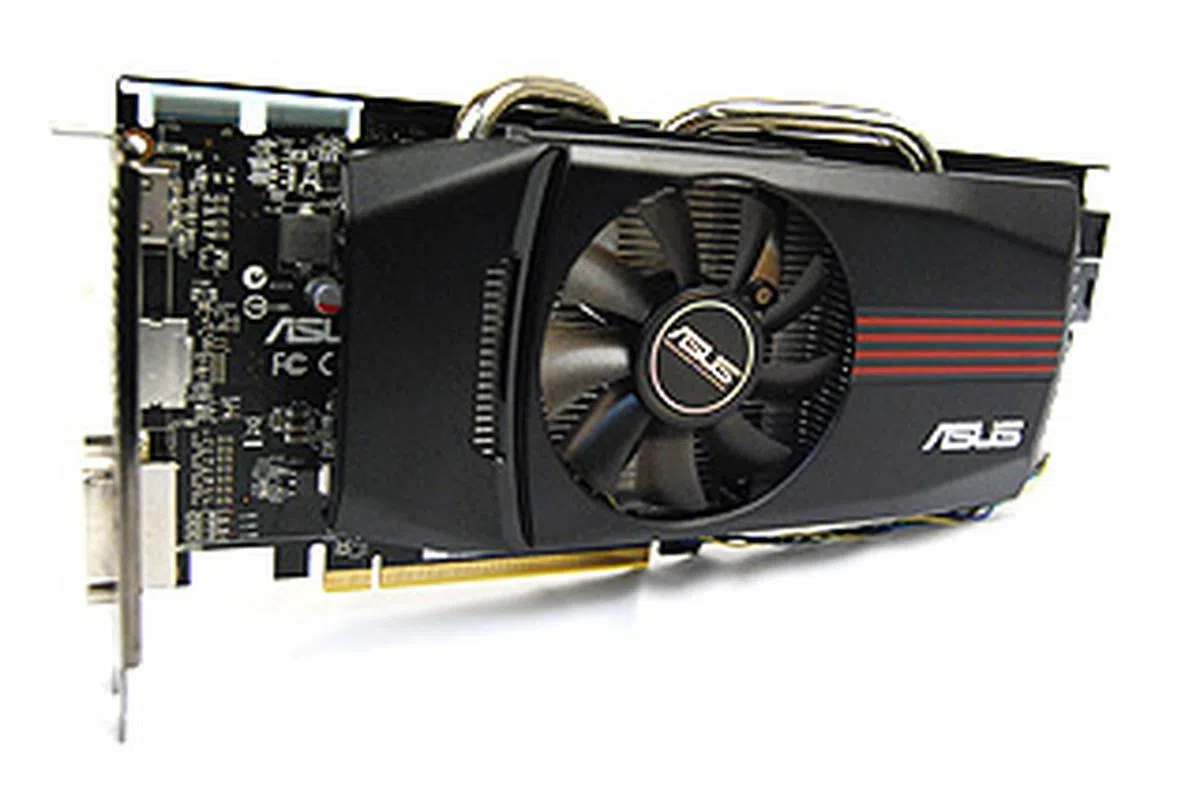
The ASUS EAH5850 DirectCU TOP is slightly larger than a reference Radeon HD 5850 and makes use of a large fan and heatsink combo cooler to keep things cool.
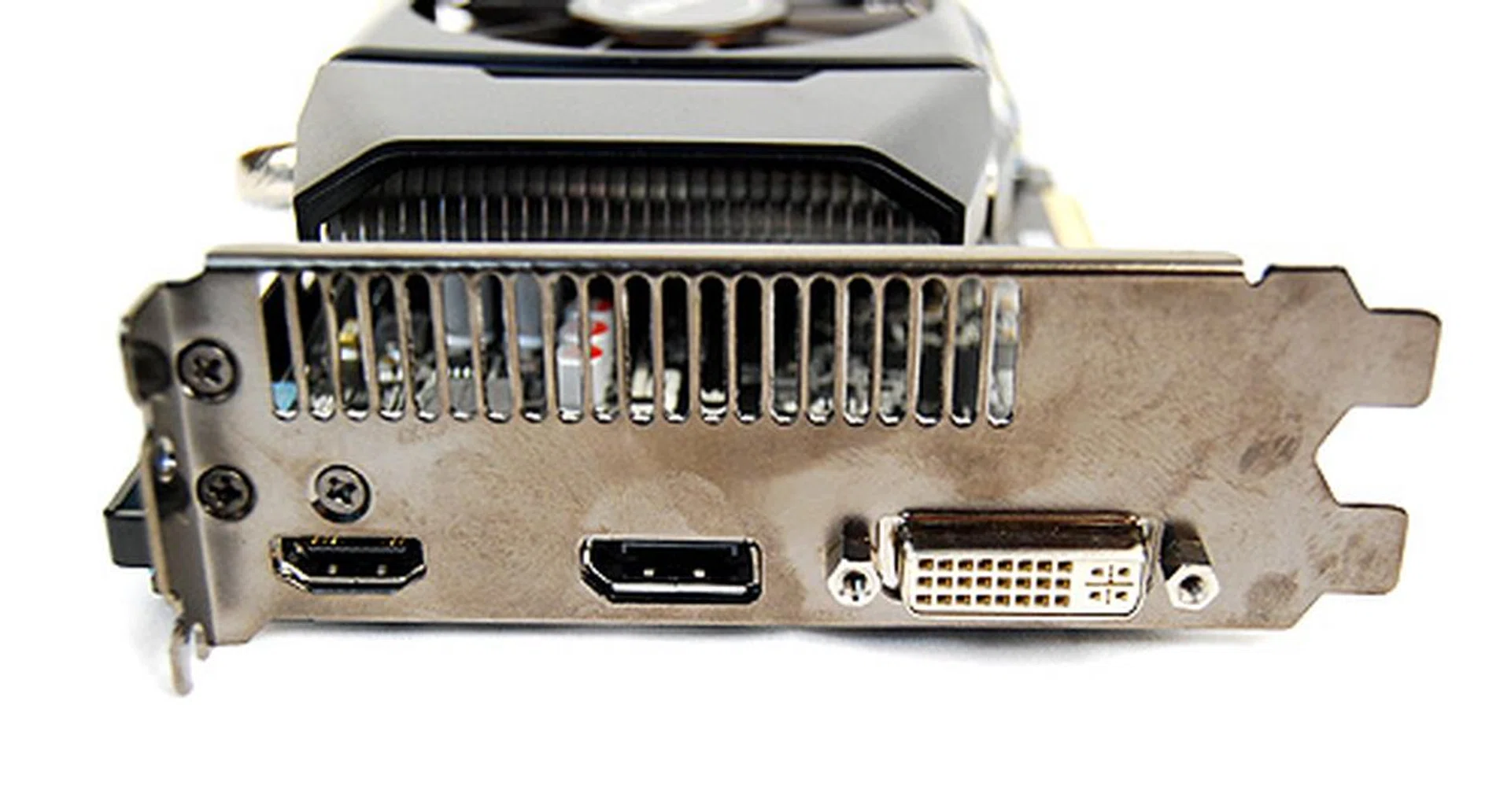
We are a bit miffed that ASUS has decided to forgo the extra DVI port that is found on all Evergreen cards. Users will have to make do with a single DVI, HDMI and DisplayPort.
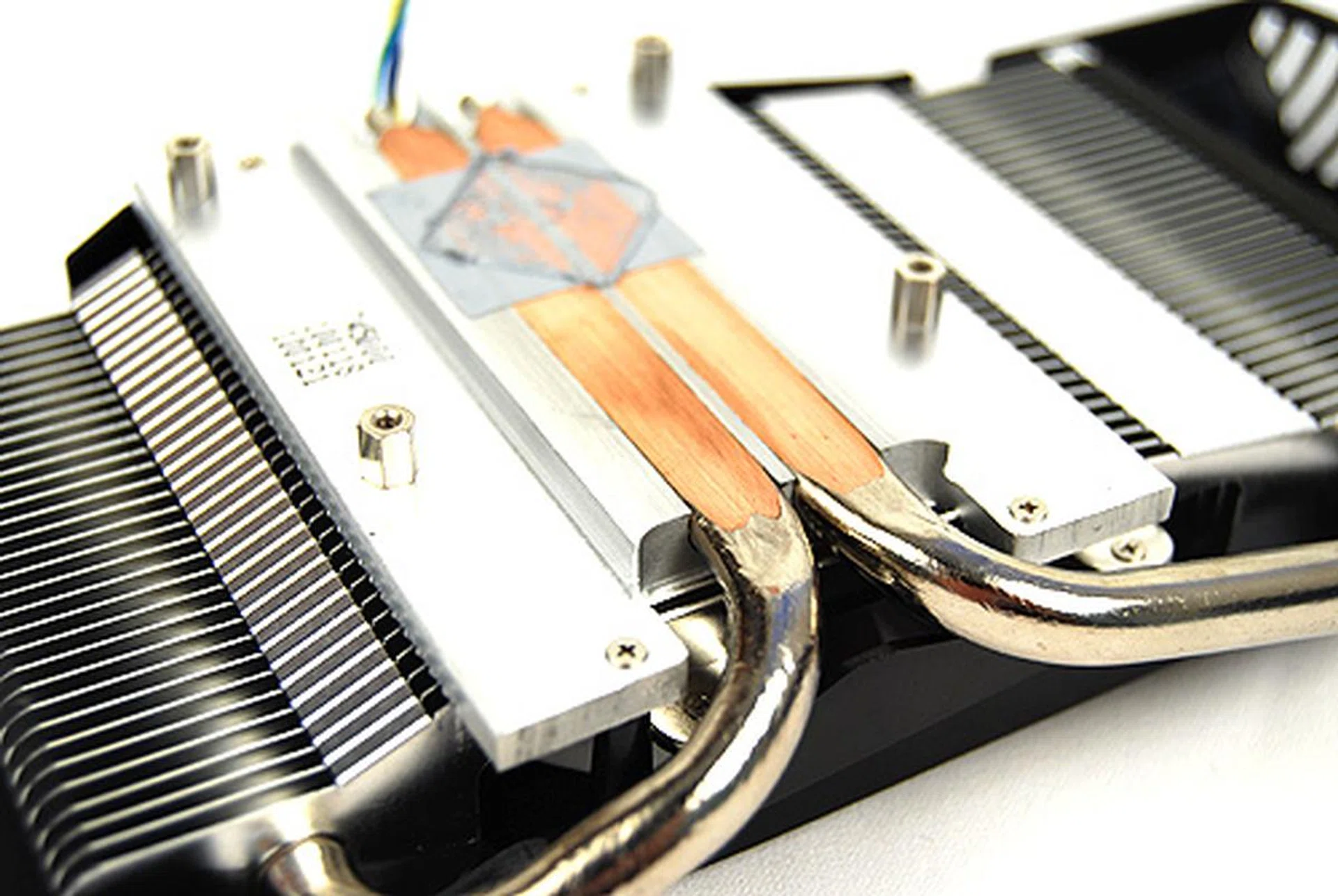
We removed the cooler to take a closer look at the DirectCU technology. Here, we can clearly see the two copper heat pipes that will be in direct contact with the GPU core. Strangely, ASUS has opted to give the heat pipes an aluminum finishing; perhaps they feel "copper orange" will disrupt the color theme of the product or scientifically taking advantage of aluminum's properties to radiate heat better while allowing copper to act as the better heat conductor.
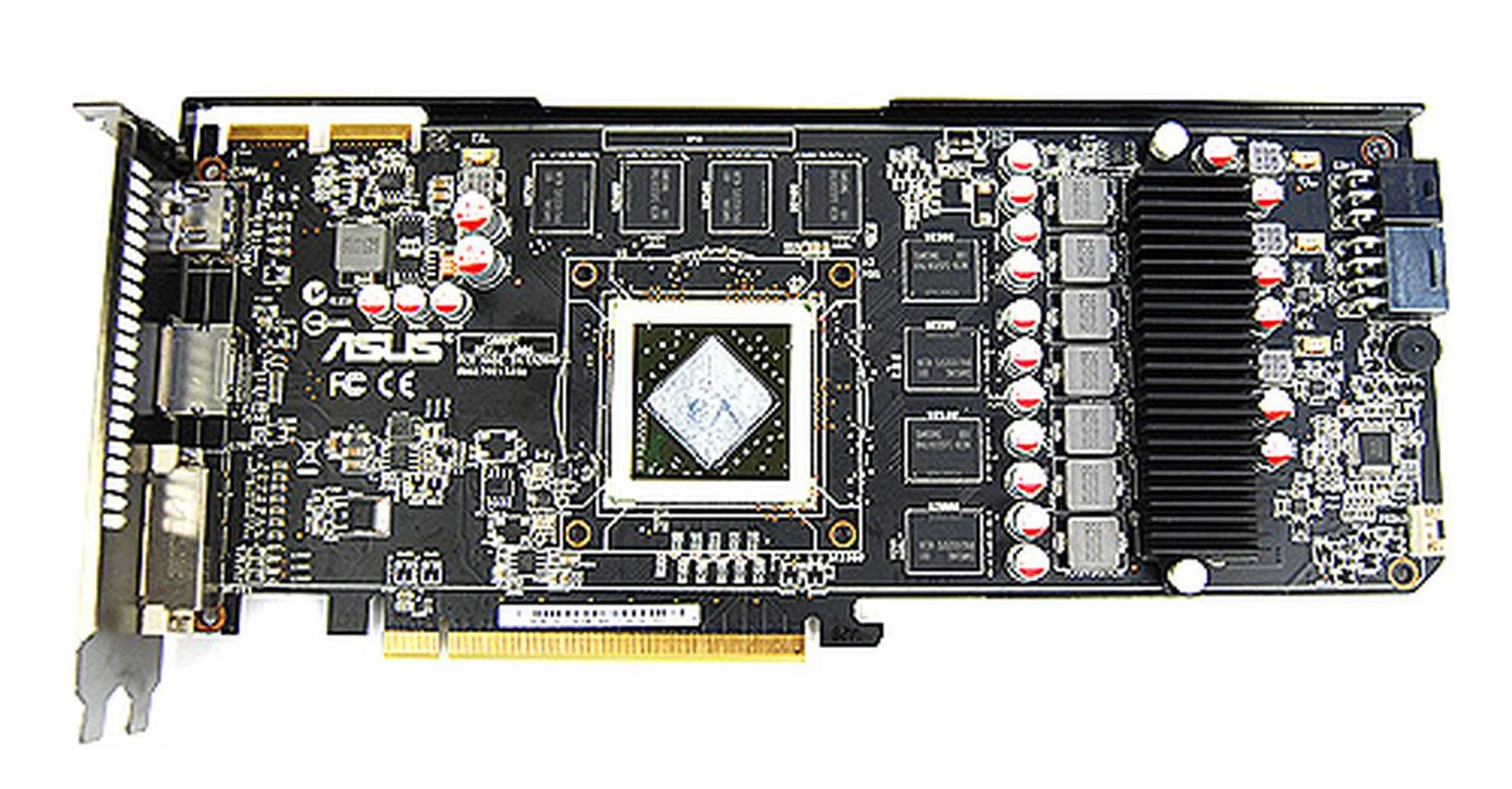
Since we've removed the cooler, here's a look at the board layout of the ASUS EAH5850 DirectCU TOP. In case you are wondering, the memory chips are from Samsung and are rated at 0.4ns.
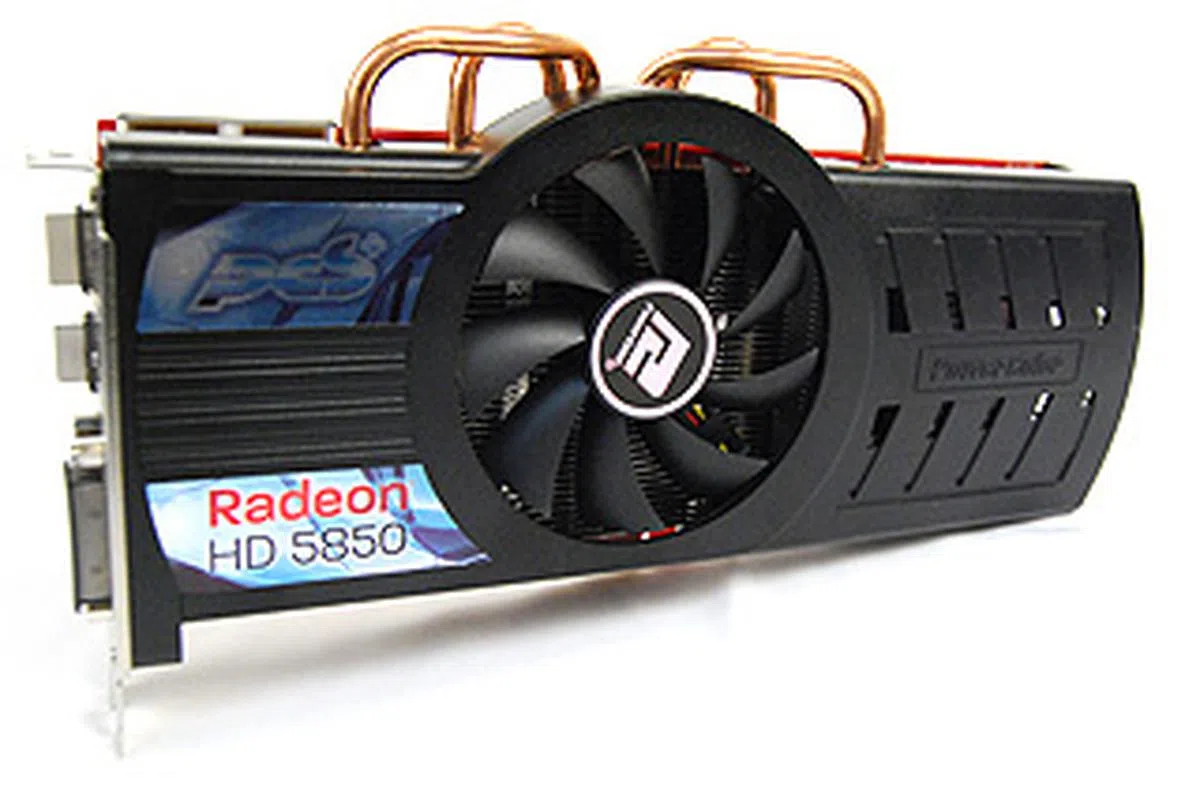
The PowerColor PCS+ HD 5850 1GB GDDR5
The PCS+ in the name stands for “professional cooling system” and so it is no surprise that the card comes with a huge customized cooler with thick copper heat pipes sprouting out from the core. Older PCS+ cards (like this Radeon HD 4890) used to sport coolers from cooling specialists ZEROtherm, but the newer cards seem to have coolers that are designed in-house, since the ZEROtherm logos that used to adorn PCS+ cards of old are not to be seen.
In terms of clock speeds, the PowerColor HD 5850 PCS+ comes in at 760MHz at the core and 4200MHz DDR at the memory, which is slightly lower than the ASUS EAH5850 DirectCU TOP.
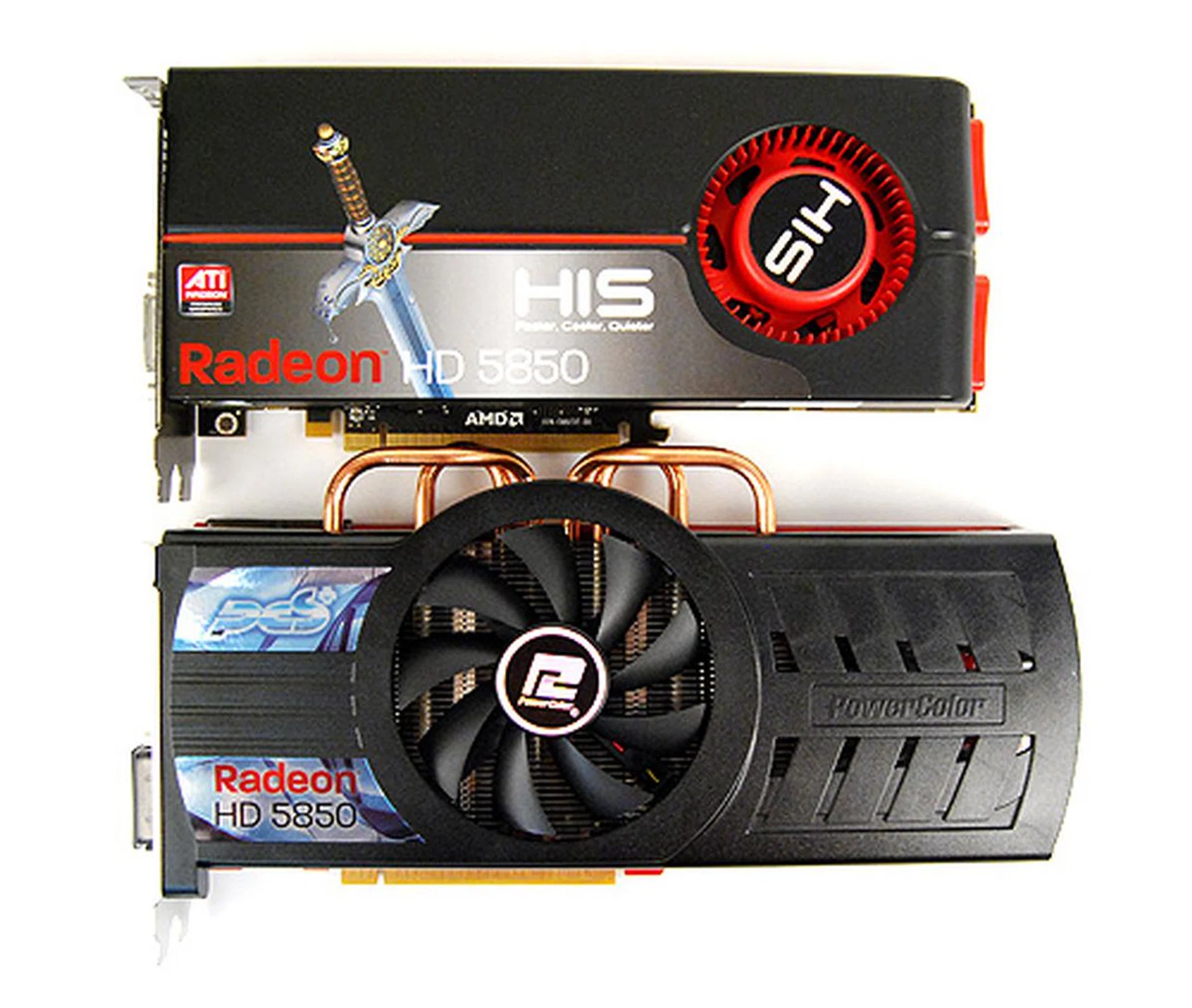
The PowerColor PCS+ HD 5850 is the most physically imposing card, thanks to its massive cooler.
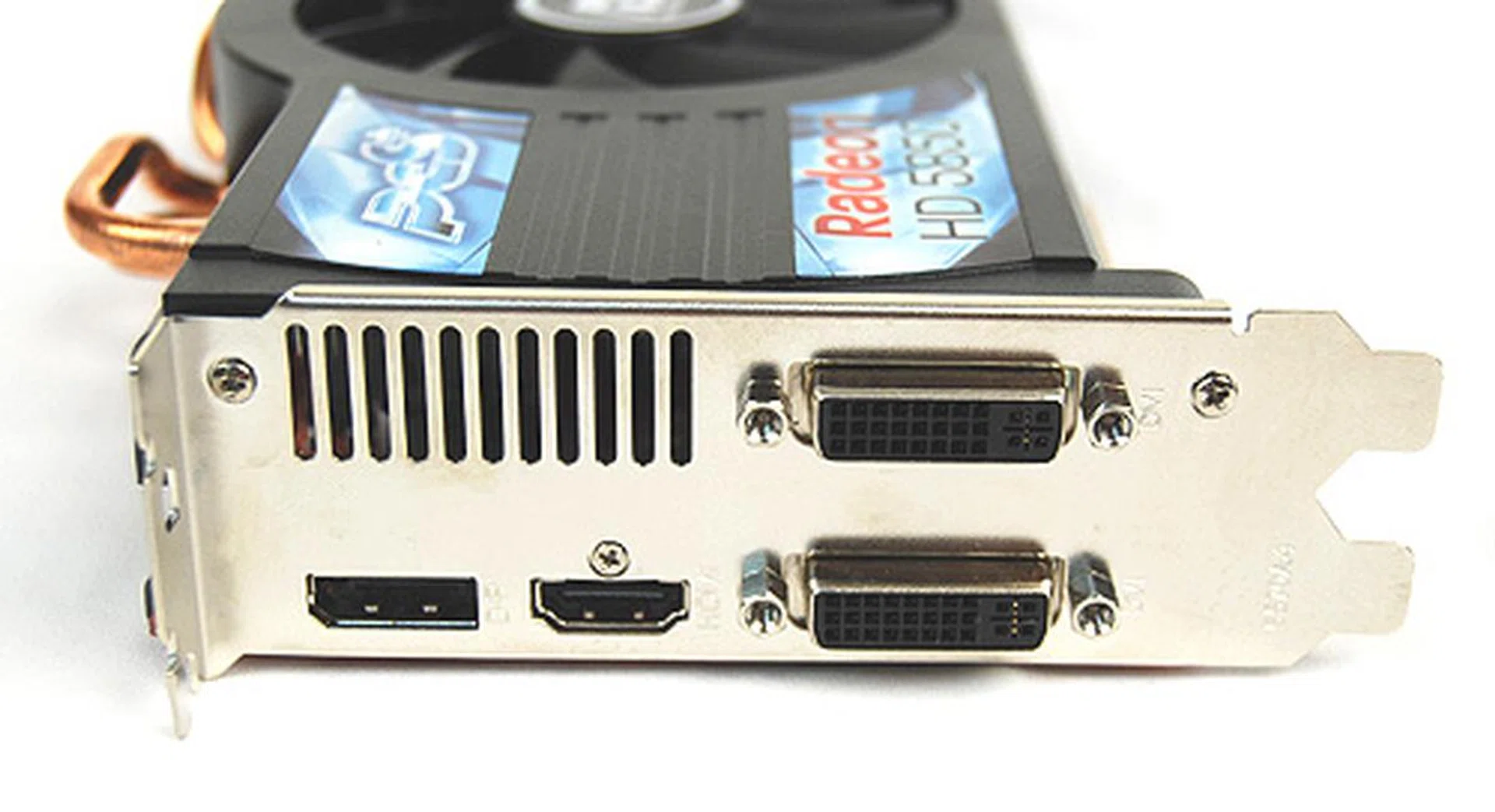
The PowerColor PCS+ HD 5850 retains the familiar dual DVI ports, a single HDMI port and DisplayPort that is found on all Evergreen cards.
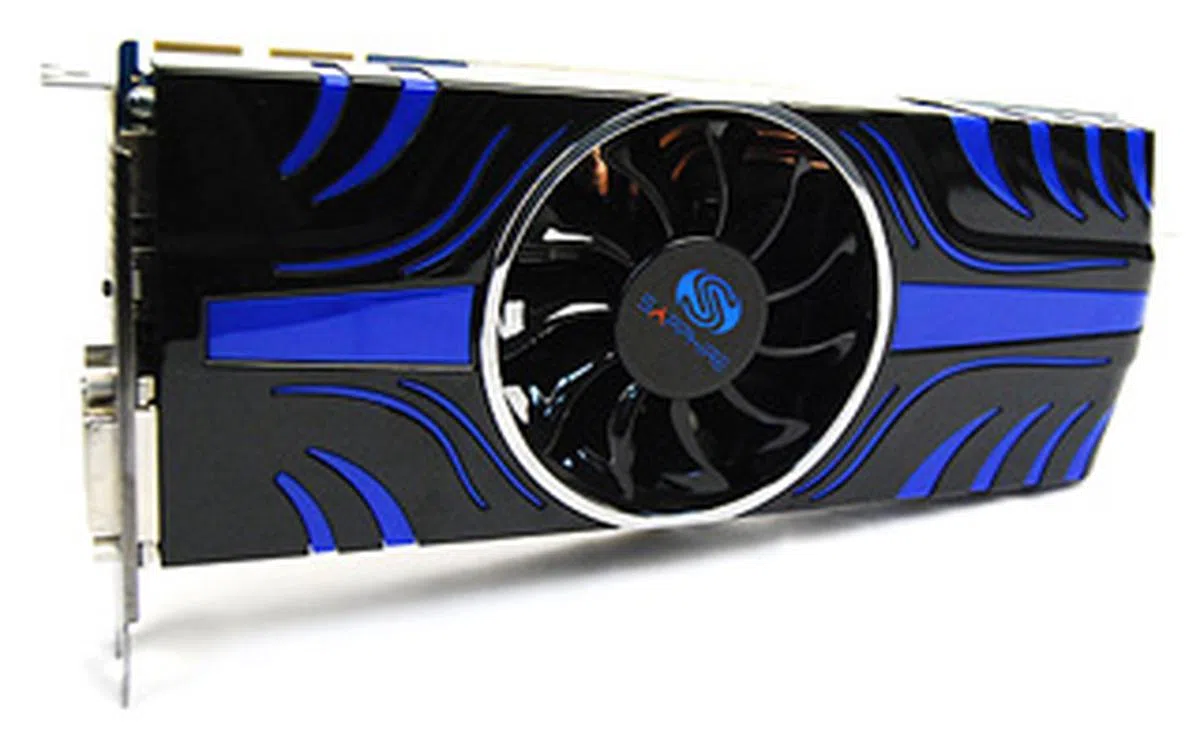
The Sapphire HD 5850 Toxic Edition 1GB GDDR5
Graphics enthusiasts familiar with Sapphire will know that amongst Sapphire's huge stable of graphics card, “Toxic Edition” ones stand out from the rest, and it is the same with the Sapphire HD 5850 Toxic Edition. Not only does it come with Sapphire's Vapor-X cooling technology (vapor chamber technology), it also comes factory overclocked. Clock speeds of 765MHz at the core and 4500MHz DDR are comparable to the above-mentioned two cards, so we should have a good 'fight'.
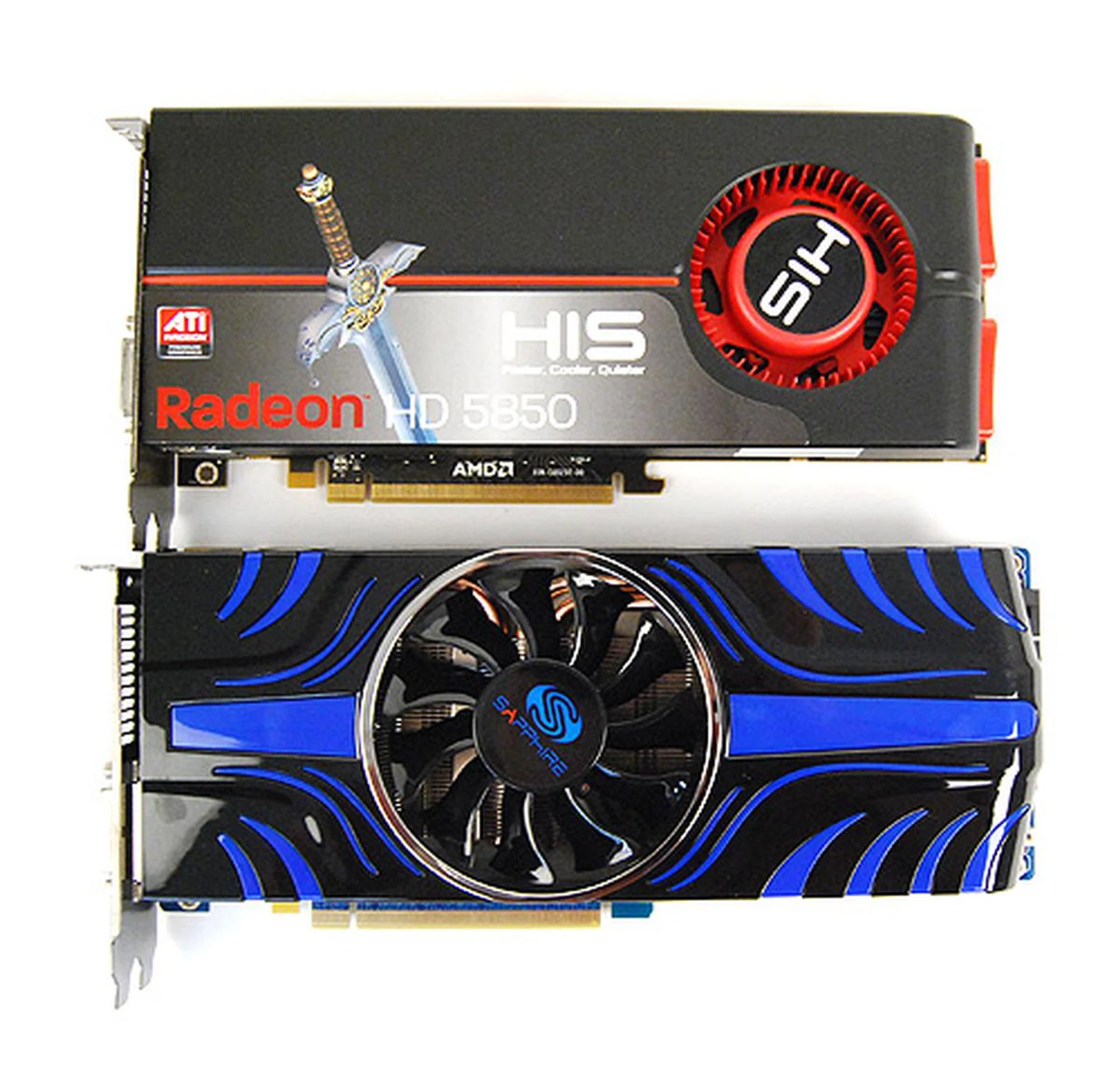
Like the ASUS and PowerColor cards, the Sapphire HD 5850 Toxic Edition is also slightly larger than a reference Radeon HD 5850. Also, the blue and black color scheme is rather groovy.
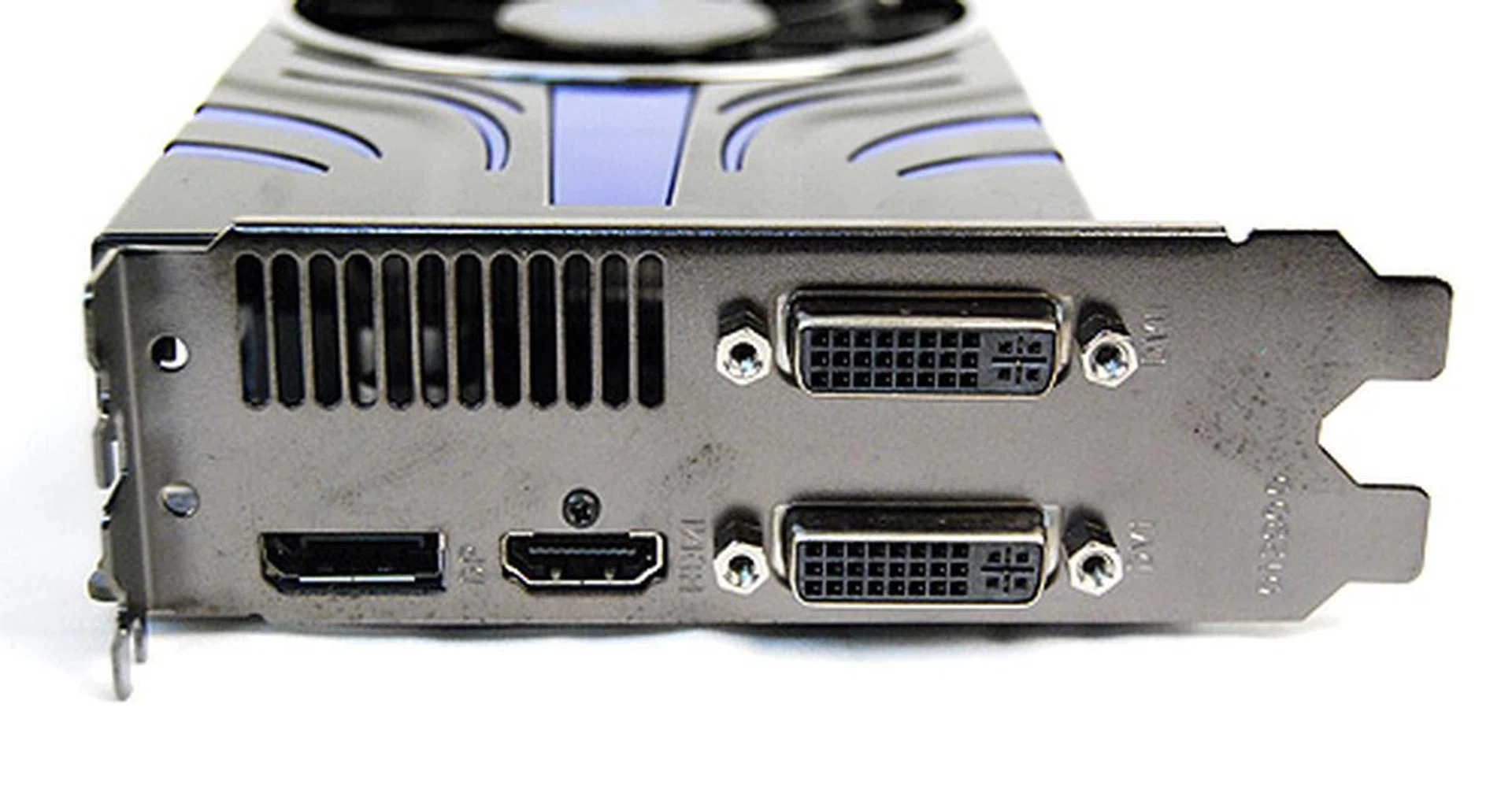
The Sapphire HD 5850 Toxic Edition offers two DVI ports, a single HDMI port and a DisplayPort.
Test Setup
We'll be testing the three Radeon HD 5850 cards using our new X58 system:
- Intel Core i7-975 (3.33GHz)
- Gigabyte GA-EX58-UD4P motherboard
- 3 x 1GB DDR3-1333 OCZ memory in triple channel mode
- Seagate 7200.10 200GB SATA hard drive
- Windows 7 Ultimate
With the three cards having nearly identical factory clock speeds, we expect performance to be really competitive. Therefore, we'll be paying more attention to how the cooler performs, by comparing their operating temperature against a reference card; and also how much overclocking overhead we can achieve. To spice things up a little, we have also included the Radeon HD 5870 and the new GeForce GTX 470 in our performance analysis.
The full list of cards tested and their driver versions:
- ASUS EAH5850 TOP 1GB GDDR5 (Catalyst 10.3)
- PowerColor HD 5850 PCS+ 1GB GDDR5 (Catalyst 10.3)
- Sapphire HD 5850 Toxic Edition 1GB GDDR5 (Catalyst 10.3)
- Reference ATI Radeon HD 5850 1GB GDDR5 (Catalyst 10.2)
- Reference ATI Radeon HD 5870 1GB GDDR5 (Catalyst 10.2)
- NVIDIA GeForce GTX 470 1280MB GDDR5 (ForceWare 197.17 Beta)
The list of benchmark used are as follows:
- Futuremark 3DMark Vantage
- Crysis Warhead
- Far Cry 2
- Warhammer: Dawn of War 2
- Battlefield Bad Company 2
- "Heaven" from Unigine
- S.T.A.L.K.E.R.: Call of Pripyat
3DMark Vantage Results
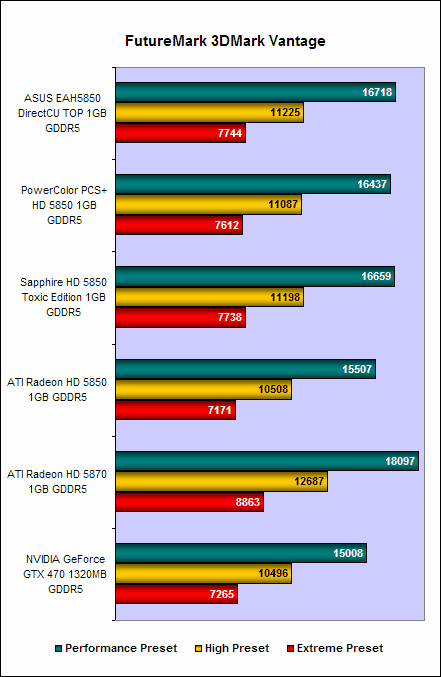
With their nearly identical clock speeds, it was not surprisingly to find the three Radeon HD 5850 cards chalking up scores that were comparable to one another. We also noted that the three non-reference Radeon HD 5850 were about 5% quicker than a regular Radeon HD 5850. The three cards were still some way off from the Radeon HD 5870, while the GeForce GTX 470, despite its might, didn't fare too well here.
Crysis Warhead Results
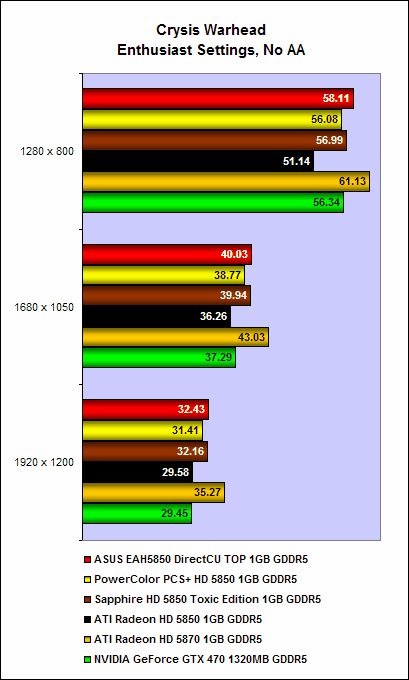
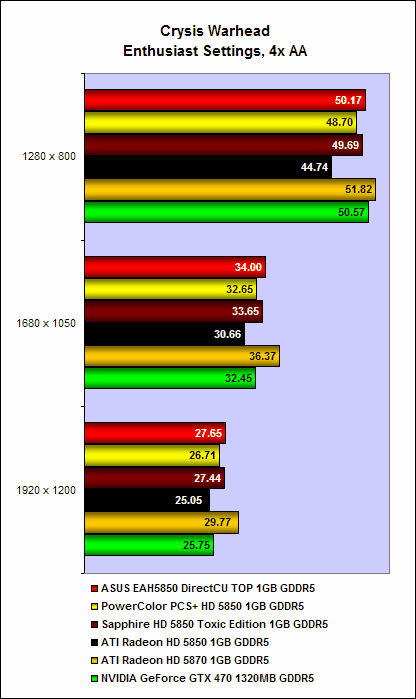
No surprises here too, as the three non-reference Radeon HD 5850 cards once again put in comparable performances. However, we did notice that the PowerColor PCS+ HD 5850 was a tad slower due to its slightly lower clock speeds. Even so, the difference is about a frame or two, which is negligible. To end, the three cards performed substantially better than the reference Radeon HD 5850 and was even capable of giving both the Radeon HD 5870 and the GeForce GTX 470 a run for their money.
Far Cry 2 Results
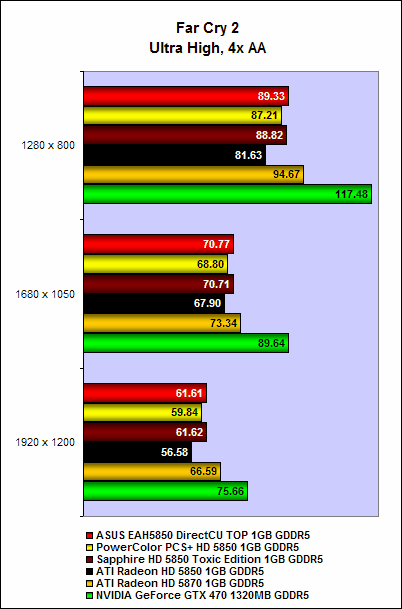
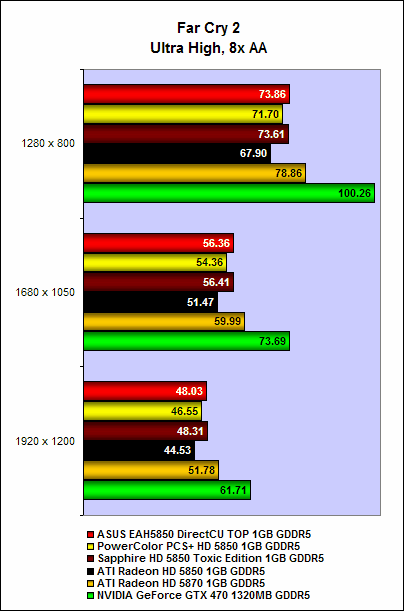
It's the same story on Far Cry 2, as we see the identically clocked ASUS EAH5850 DirectCU TOP and Sapphire HD 5850 Toxic Edition sandwiching the slower clocked PowerColor PCS+ HD 5850. Additionally, all three non-reference cards were about 5% to 10% quicker than a reference Radeon HD 5850. And while they were within striking distance of a Radeon HD 5870, they were no match for the GeForce GTX 470, which absolutely blitzed the competition.
Dawn of War 2 & Battlefield Bad Company 2 Results
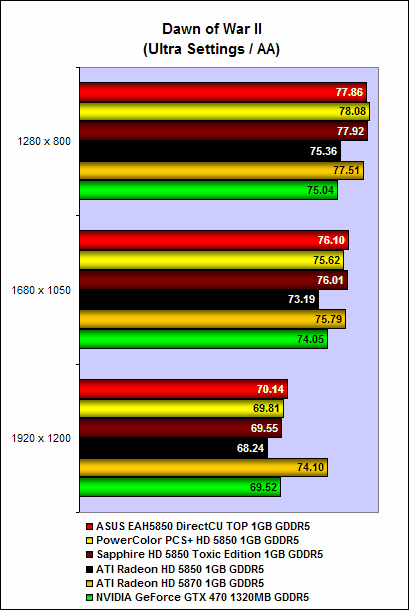
Dawn of War 2 was a tightly contested affair and we noticed that all three non-reference Radeon HD 5850 managed to put in nearly identical results give or take a frame or two. Nevertheless, they were noticeably quicker than a reference Radeon HD 5850 and on a par with the Radeon HD 5870.
Note: As we've noted in our review of the GeForce GTX 480 , NVIDIA claims that when running Dawn of War 2, ATI cards by default demote the FP16 render targets to R11G11B10 render targets, which are half the size and less accurate. Admittedly, NVIDIA says that the change in quality is subtle, but it does have an affect on performance. We have verified this to be true, and found that the performance does take a significant hit when Catalyst AI disabled. However, it must also be said that difference in graphics quality is negligible, so it does make sense for ATI to do so to offer better performance.
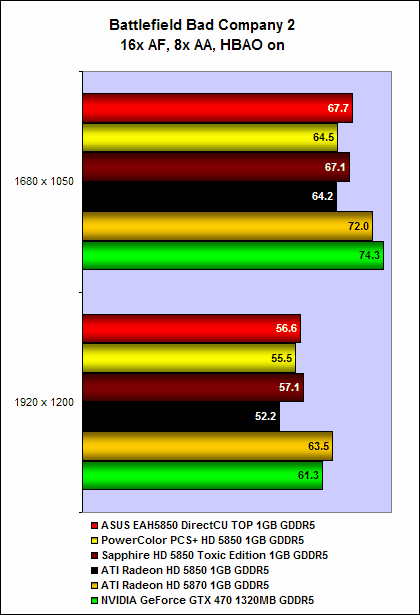
On Battlefield Bad Company 2, we see the familiar pattern of the PowerColor PCS+ HD 5850 being sandwiched by the ASUS EAH5850 DirectCU TOP and Sapphire HD 5850 Toxic Edition. The latter two cards might only have slightly higher clock speeds, but it does translate to a noticeable difference in performance, on paper at least.
Unigine "Heaven" Results
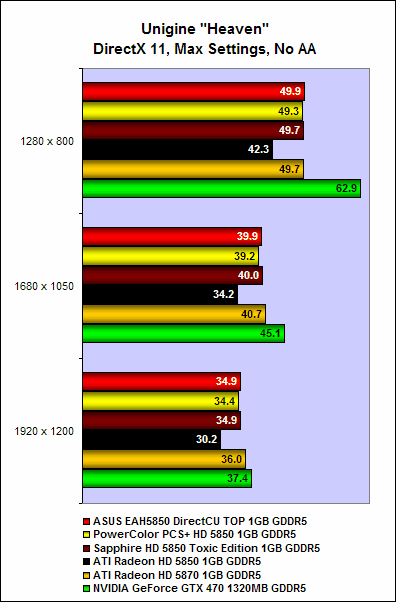
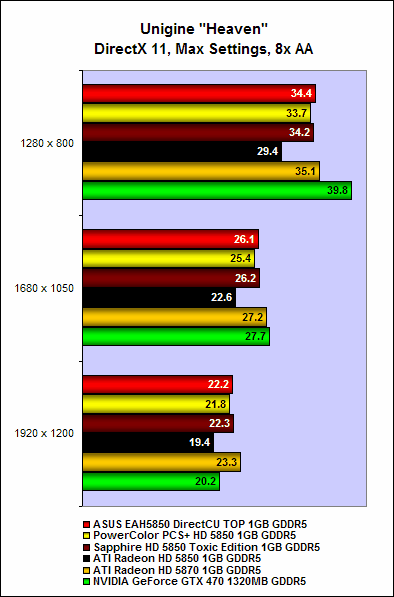
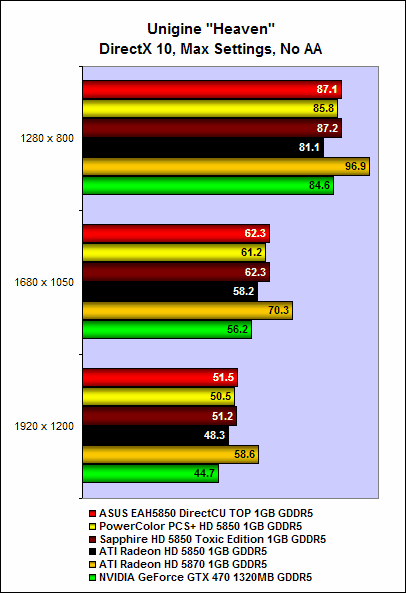
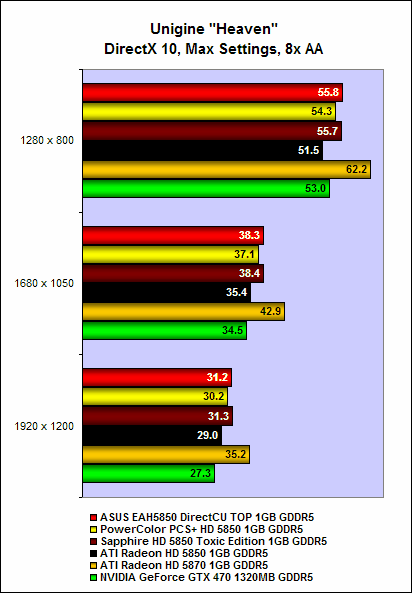
Expectedly, the ASUS and Sapphire cards managed nearly identical frame rates on Unigine's “Heaven” benchmark, while the PowerColor card was slightly slower. Realistically speaking, however, the PowerColor card is only a frame or two slower, which is undetectable by the naked eye. We also noticed that with tessellation enabled, the trio of overclocked Radeon HD 5850 cards could go toe-to-toe against the Radeon HD 5870. However, when running on DirectX 10 with tessellation disabled, the Radeon HD 5870 regained the advantage.
DirectX 11 Results
DirectX 10 Results
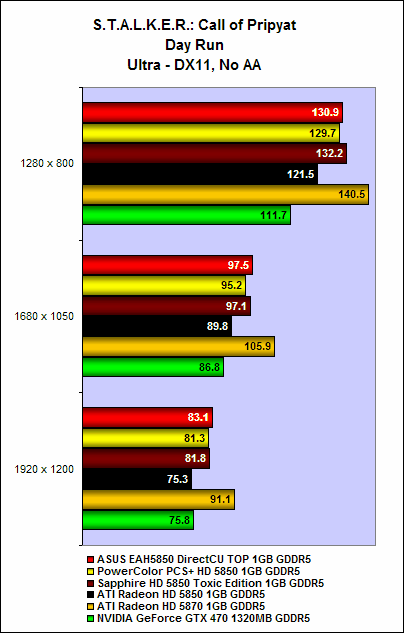
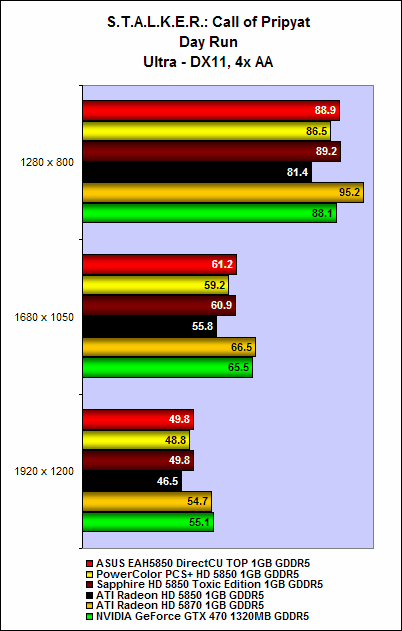
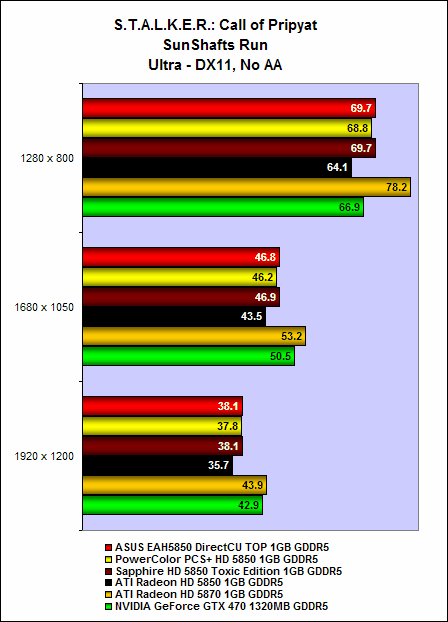
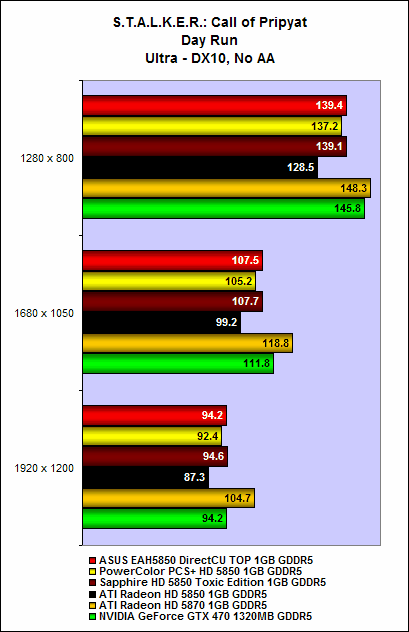
S.T.A.L.K.E.R.: Call of Pripyat Results
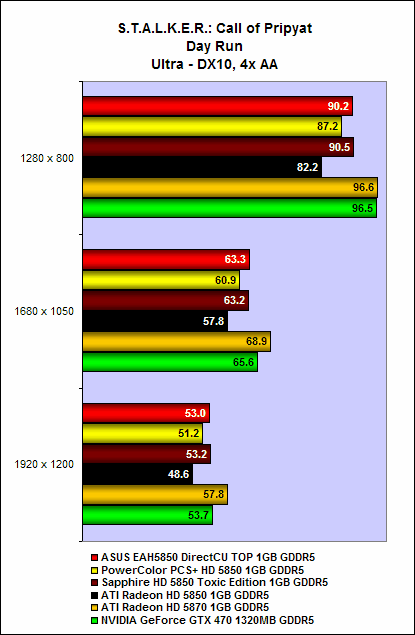
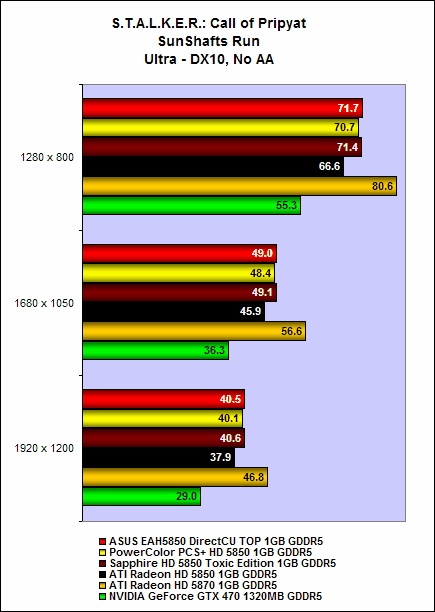
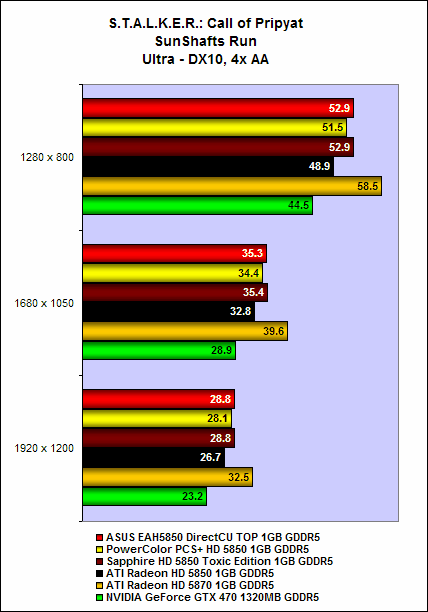
As has been the case for the previous benchmarks, the PowerColor PCS+ HD 5850 once again found itself sandwiched by the ASUS EAH5850 DirectCU TOP and Sapphire HD 5850 Toxic Edition. Although the difference is visible in the graphs, the real difference is only about a frame or two so it's not something we would lose sleep over.
DirectX 11 Results
 |  |
 | |
DirectX 10 Results
 |  |
 |  |
Temperature
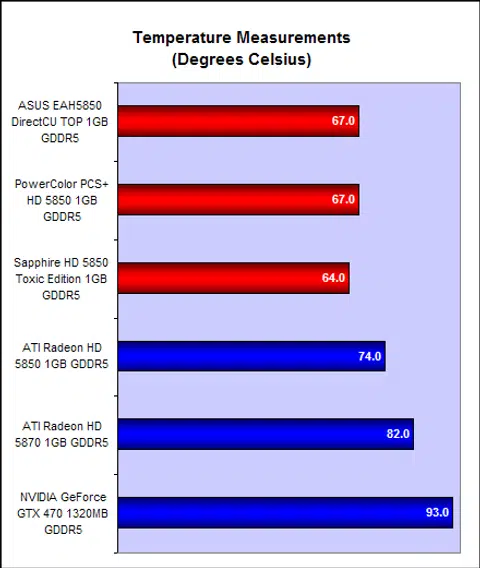
As we've mentioned, seeing that all three cards sport nearly matching clock speeds, we'll be paying close attention to the efficiency of their customized coolers. Overall, we must say that we're pleased with what the customized coolers have achieved. The ASUS EAH5850 DirectCU TOP and PowerColor PCS+ HD 5850 both topped out at a maximum operating temperature of 67 degrees Celsius (an improvement of 7 degrees Celsius), while the high-tech vapor chamber technology cooler of the Sapphire HD 5850 Toxic Edition managed an even more outstanding maximum operating temperature of 64 degrees Celsius.
Power Consumption
Class leading power efficiency has become synonymous with ATI's Evergreen series of cards and despite being factory overclocked and sporting huge custom coolers, the ASUS EAH5850 DirectCU TOP and the Sapphire HD 5850 Toxic Edition managed to maintain power consumption levels that are comparable to that of a reference Radeon HD 5850. The PowerColor PCS+ HD 5850, however, recorded slightly higher power consumption.
Overclocking
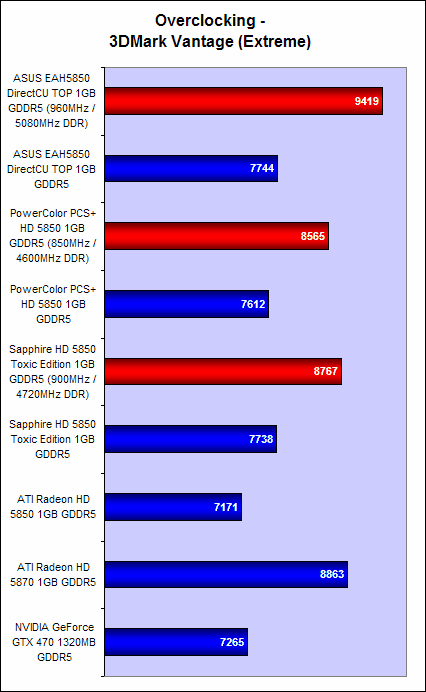
We were also pleasantly delighted by the three cards' overclocking performance. The ASUS EAH5850 DirectCU TOP was the most impressive. Using the bundled Voltage Tweak software, we increased the card's stock GPU core voltage from 1.118V to 1.235V, which was near the maximum safe limit. With these tweaks, we managed to run the card at a barely believable 960MHz at the core and 5080MHz DDR – an increase of 195MHz at the core and 580MHz DDR respectively. This gave us 9419 3DMarks, a whopping improvement of 21%!
The PowerColor PCS+ HD 5850 was a little more modest, topping out at 850MHz at the core and 4600MHz DDR – an increase of 90MHz at the core and 400MHz DDR at the memory. This resulted in a 12% improvement in performance on 3DMark Vantage, which is certainly nothing to sniff at.
Using the ATI Overdrive overclocking utility with the Sapphire HD 5850 Toxic Edition, we found that we could only bump the core clock speeds up by a meagre 10MHz, while memory clock speeds were already at the maximum. To fully ascertain how far the card could go, we fired up MSI Afterburner and managed to achieve 900MHz at the core and 4720MHz DDR at the memory – an increase of 135MHz at the core and 220MHz DDR at the memory. This gave us 8767 3DMarks, a respectable 13% jump in performance.
The Three Musketeers
Overall, we are pretty pleased with the performance offered by the three cards. Not only are these overclocked variants of the Radeon HD 5850 capable of competing against a Radeon HD 5870 and GeForce GTX 470, they have managed to do so with lower operating temperatures and without sacrificing power efficiency. Before offering our analysis of the individual cards, here's how they stack up against one another.
Card | Core Clock Speed | Memory Clock Speed | Price |
ASUSEAH 5850 DirectCUTOP | 765MHz | 4500MHz DDR | S$499 |
PowerColor PCS+HD 5850 | 760MHz | 4200MHz DDR | S$439 |
Sapphire HD5850 Toxic Edition | 765MHz | 4500MHz DDR | S$499 |
At S$499, the ASUS EAH5850 DirectCU TOP is substantially more costly than a reference card, but of the trio, it offers the most overclocking overhead. The ASUS Voltage Tweak software was easy to use and by increasing the voltage to the maximum safe limit, we could achieve 960MHz at the core and 5080MHz DDR, which is unbelievable considering a reference Radeon HD 5850 is only clocked 725MHz at the core and 4000MHz DDR. The only thing we dislike about the card is that it makes do with a single DVI port, which could make hooking up a second display more inconvenient, considering DVI is the most commonly found input on monitors.
The PowerColor PCS+ HD 5850 is the value option amongst the three. With a recommended retail price of S$439, it is only about S$15 to S$20 more costly than reference Radeon HD 5850 cards making it an attractive option for the budget conscious. Despite its relative “affordability”, the PowerColor PCS+ HD 5850 is also competitive in terms of performance. In stock form, it is only a tad slower than its competitors here, and it's capable of some decent overclocking as well.
Cards outfitted with Sapphire vapor chamber technology coolers have always commanded a premium and the Sapphire HD 5850 Toxic Edition is no different. At S$499, it costs the same as the ASUS EAH5850 DirectCU TOP and therefore significantly more than reference Radeon HD 5850 cards. Fortunately, it is backed up competitive performance, and the cooler is easily the most effective of the trio, allowing it to attain outstanding overclocking results.
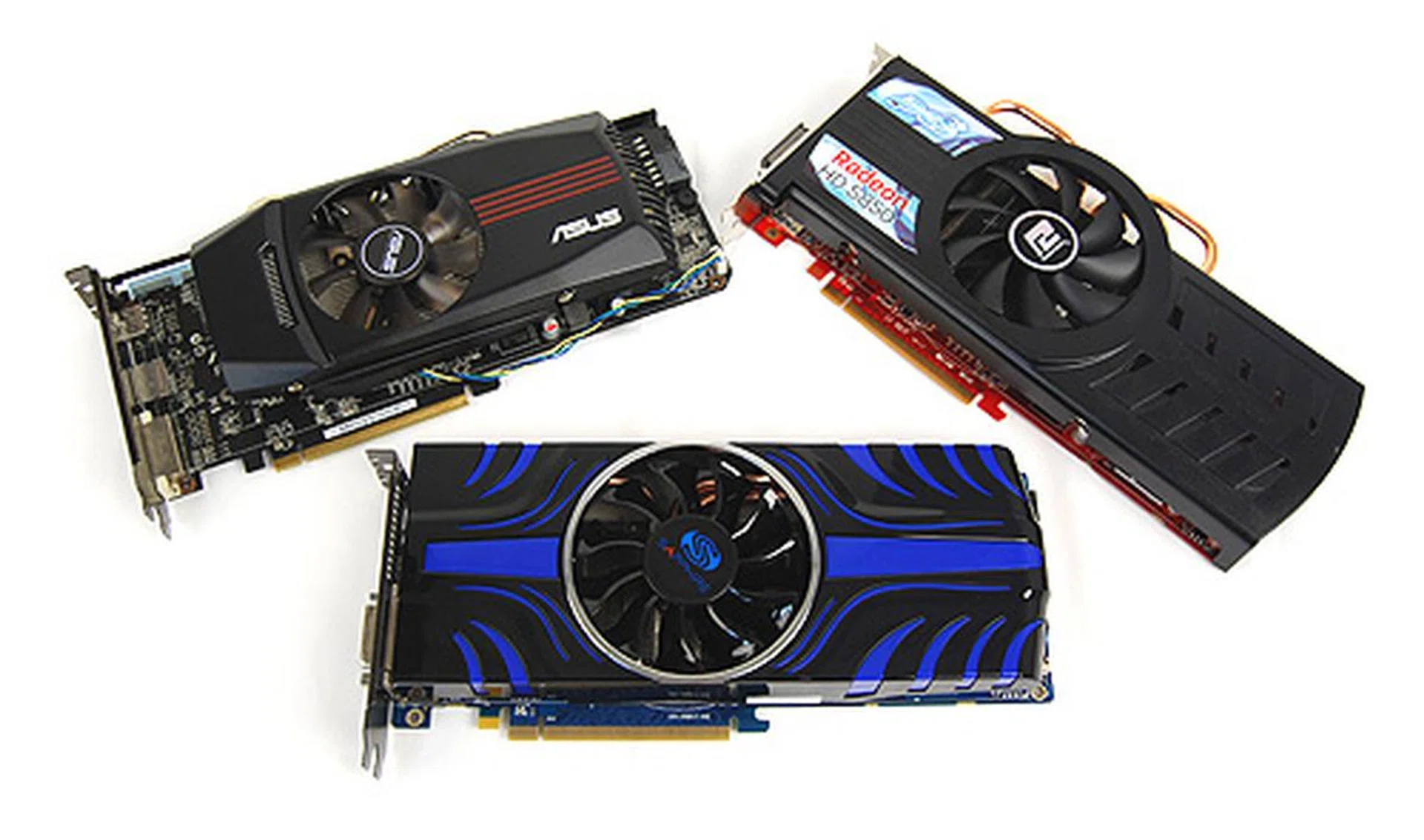
The PowerColor PCS+ HD 5850 is the value buy. But if you want a little more, the ASUS EAH5850 DirectCU TOP and Sapphire HD 5850 Toxic Edition won't disappoint, but prepare to fork out a little more.
If you were to compare the cards in their stock form, there would be very little to separate the three, since the ASUS and Sapphire cards have identical clock speeds and the PowerColor card is only slightly slower. With this in mind, the easiest card to recommend would be the PowerColor PCS+ HD 5850 only because it is the cheapest here.
But if you were to consider overclockability, then the ASUS EAH5850 TOP takes the cake. However, there's always the element of luck involved in overclocking and we could have been lucky here. Notwithstanding the element of luck, there's no denying the usefulness of the Voltage Tweak software when it comes to achieving higher clock speeds. That said, the Sapphire HD 5850 Toxic Edition isn't a shabby overclocker too, managing an impressive 900MHz at the core.
At the end of the day, it really depends on what you need. For those with tighter purse strings, the PowerColor PCS+ HD 5850 is the obvious choice, but for those who want a little more, then both the ASUS EAH5850 DirectCU TOP and Sapphire HD 5850 Toxic Edition are excellent cards worthy of your consideration.
| |
| 
|
|  |

Our articles may contain affiliate links. If you buy through these links, we may earn a small commission.