

NVIDIA nForce 600i Series - Intel Platform Core Logic Technology Overview
The highly anticipated nForce 600i series of chipsets for the Intel platform have been released by NVIDIA with promises of extreme overclocking support for the Core 2 Duo. 1333MHz FSB and DDR2-1200 are only the highlights of the nForce 680i SLI, but what else is there? Find out inside.
Introduction
NVIDIA's original nForce chipset was born as an AMD platform and it continued to be designed firstly for AMD and then adapted to use on the Intel platform. Since the nForce 4, NVIDIA has traditionally released the AMD version of the chipset before Intel. However, this week marks the launch of the sixth generation of the nForce chipset family and NVIDIA has chosen to push out the Intel version first. This course of action doesn't really come as a surprise however, because NVIDIA has not really updated its Intel chipsets since the nForce 4 Intel Edition and doesn't have a corresponding chipset to properly support Intel's new Core 2 Duo processor platform.
While the nForce 500 series for AMD marked a leap in features over its nForce 4 predecessors, the Intel versions were still based on variations of the nForce 4 (or C19) family and some of the new features introduced in its AMD counterpart were missing. The nForce 500 series retail implementations for Intel processors that we've encountered so far were handicapped with respect to Intel's own 'Broadwater' 965 chipsets. Mainly the lack of DDR2-800 compatibility and low overclocking capabilities were our concerns. However it doesn't end there as some were seen to have flaky implementation of the chipset, which doesn't bode well for stability and reliability.
NVIDIA nForce 600i Series
NVIDIA's new enthusiast Intel core logic chipset is finally here.
The new nForce 600i series of chipsets will finally have full Core 2 and above processor support and keeping with NVIDIA's 'Engineered for Enthusiasts' motto, boost DDR2 compatibility to support overclocked DDR2-1200 enthusiast memory and promises extreme FSB overclocking to beat or at least match that of the Intel P965. In addition, all the missing features from the AMD version of the nForce 590 SLI have been included with even more tweaks. If you haven't noticed yet, NVIDIA will now be denoting chipset models by appending an "a" or an "i" to the model number which essentially means supporting either AMD or Intel processors respectively. Good riddance to the lengthy "Intel Edition" nomenclature.
There will be three variations of the nForce 600i series: The top-end nForce 680i SLI, performance nForce 650i SLI and the mainstream single GPU nForce 650i Ultra. The main technical differences between these three chipsets are listed in the comparison table below:
Technical Features | nForce 680i SLI | nForce 650i SLI | nForce 650i Ultra |
Estimated Board Pricing |
|
|
|
CPU Support |
|
|
|
FSB Support |
|
|
|
PCI Express Configuration |
|
|
|
SLI Graphics Support |
|
|
|
SLI-Ready Memory Support |
|
|
|
LinkBoost Technology |
|
|
|
FirstPacket Technology |
|
|
|
DualNet Technology |
|
|
|
Integrated Ethernet MAC |
|
|
|
Audio Support |
|
|
|
Storage Support |
|
|
|
USB 2.0 Ports |
|
|
|
PCI Slots |
|
|
|
*1333MHz PSB for processors that support it.
nForce 600i Series Block Diagrams
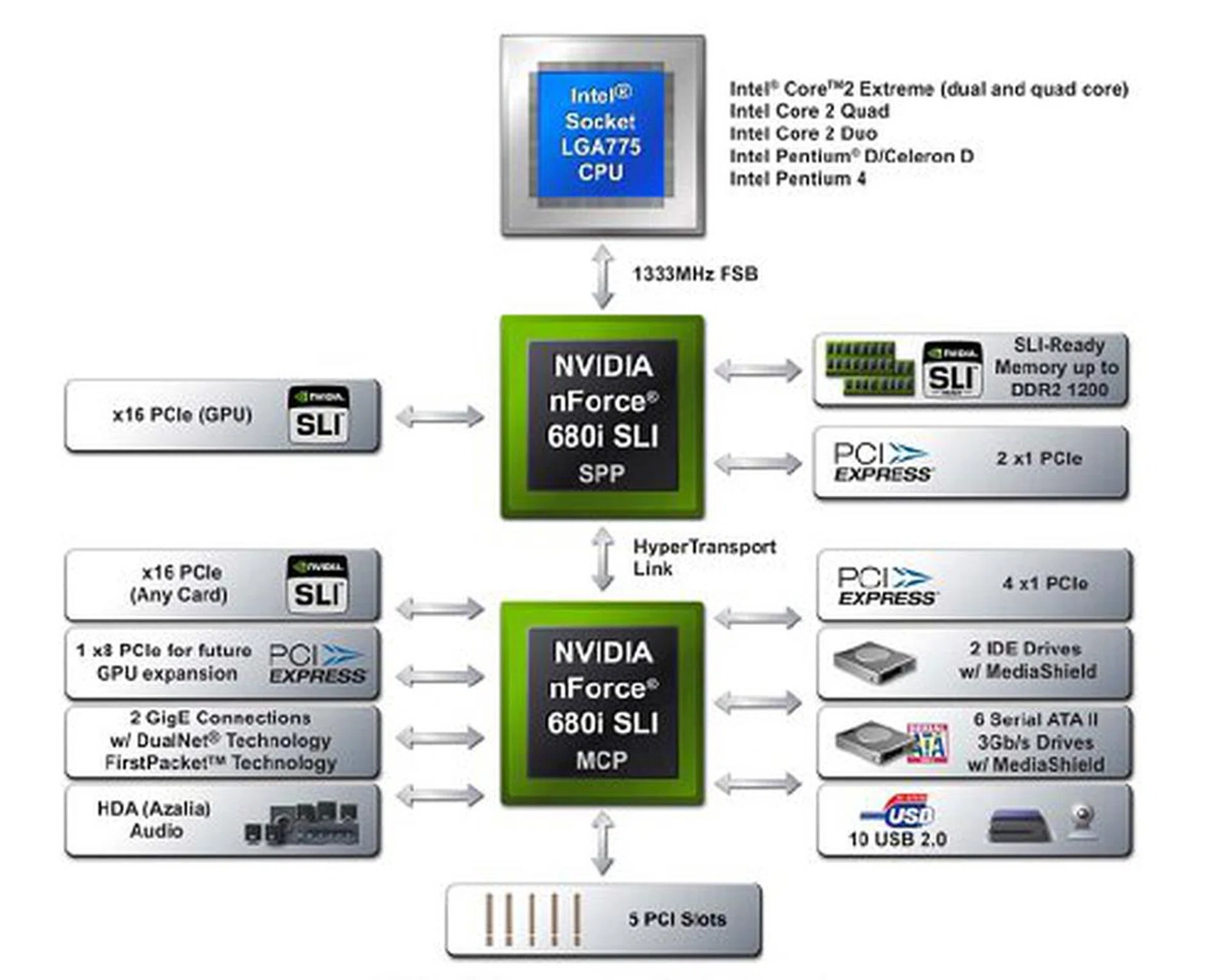
For the truly hardcore, the nForce 680i SLI has everything you'll ever need for a performance chipset as well as promise of extreme frequency support for the Intel Core 2 Duo platform.
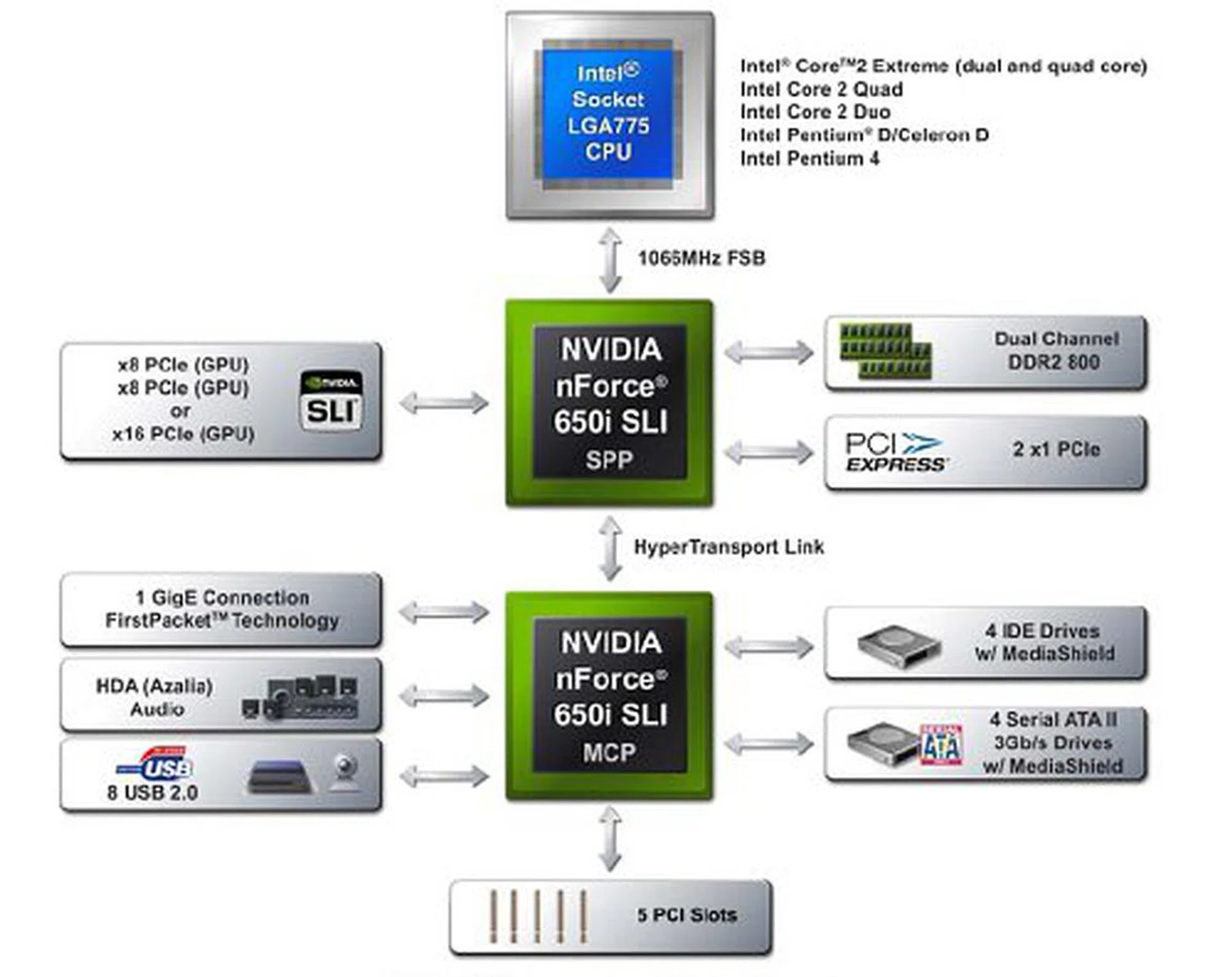
nForce 650i SLI is in the Performance Gamers category with regular dual x8 SLI support.
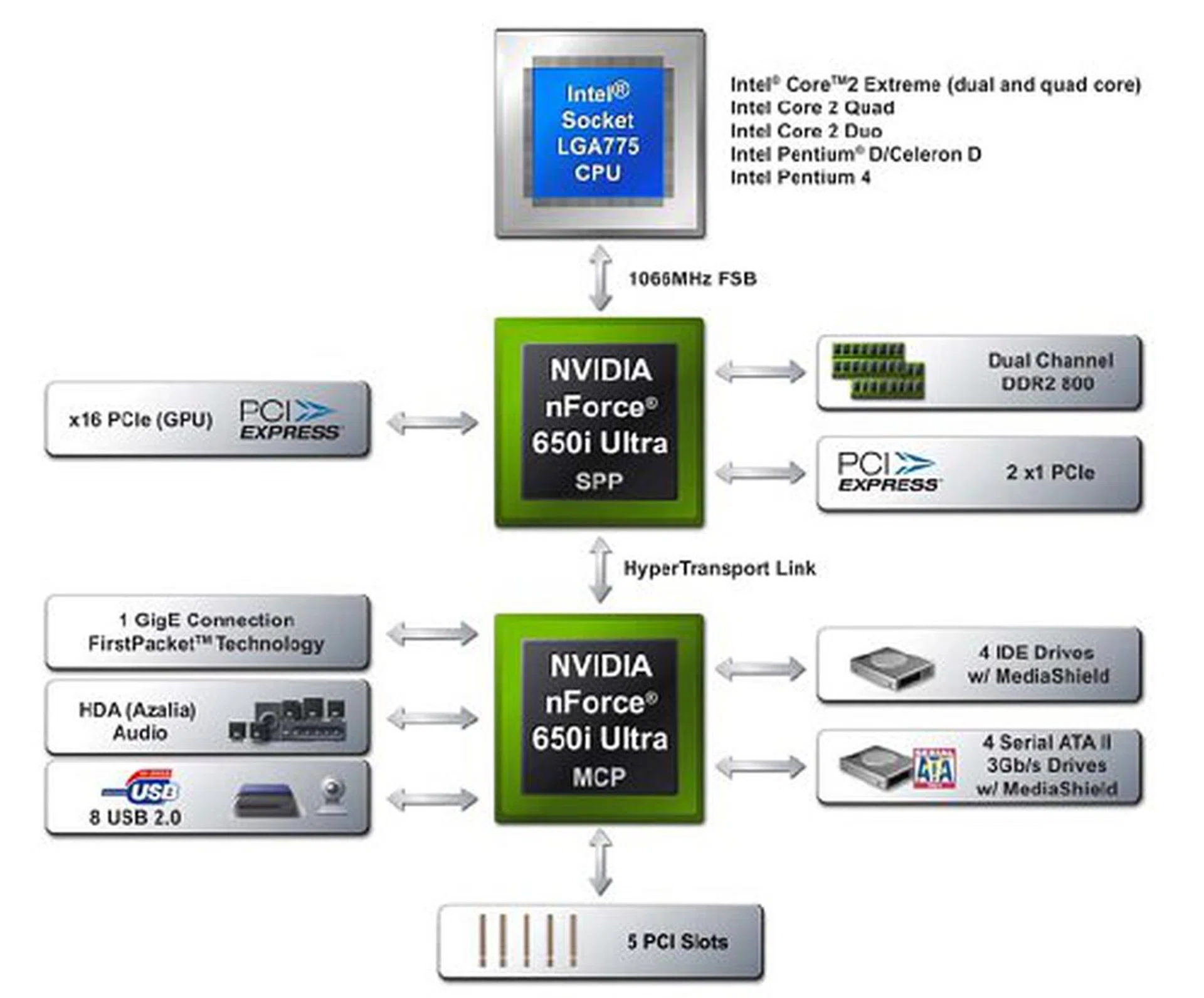
The nForce 650i Ultra is similar to the 650i SLI, except that it has only one PCIe x16 link with no SLI support.
nForce 600i Series Overview
All nForce 600i series down to the 650i Ultra will feature a two-chip design with an SPP and MCP. Connection between SPP and MCP will continue to utilize a HyperTransport link. The nForce 650i SLI and Ultra chipsets will support a 1066MHz FSB to the processor, but the high-end 680i SLI is spec'd out to be compatible with a 1333MHz FSB and these are the supported clock speeds before overclocking. Speaking of which, LinkBoost system overclocking technology has finally transitioned to the Intel edition chipsets, though only available on the nForce 680i.
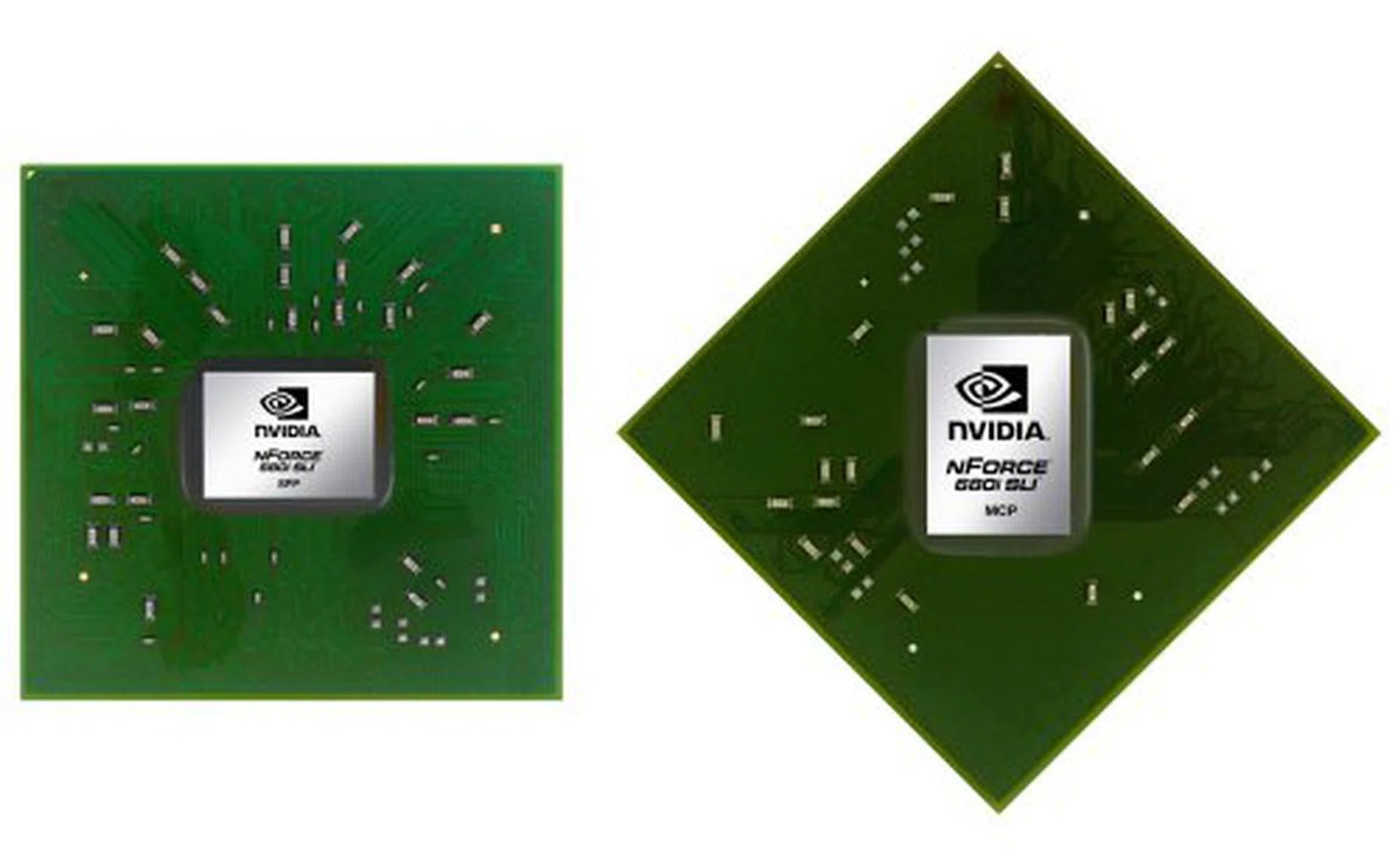
The nForce 680i SLI chipset.
The nForce 680i SLI matches the nForce 590 SLI with a combined number of 46 PCI Express lanes. Like the nForce 590 SLI, this allows the chipset to feature two full speed x16 slot for SLI plus an additional x8 slot for a third graphics card. The link layout is a little difference from the nForce 590 SLI though, the 680i SLI SPP only features 18 lanes, while the remaining bulk of 28 lanes are on the MCP chip. With three PCIe graphics slots, you can setup an extensive six-monitor display or the ideal GPU physics combo with two full-speed SLI and a third card for physics processing.
The lower end nForce 650i SLI and 650i Ultra on the other hand are both nearly identical in nature with 18 PCI Express lanes each. The only difference between these two chipsets is that the 650i SLI supports dual x8 SLI graphics while the 650i Ultra is a single GPU chipset. Do take note however that out of the 18 available PCIe lanes for the nForce 650i chipsets, 16 lanes are used for graphics, which only leave two extra lanes for additional peripherals. This doesn't really leave any room for peripheral add-ons, especially if motherboard manufacturers use of the existing lanes for additional onboard features - which is quite a common thing to see these days. Perhaps NVIDIA is extremely confident that the native features of the chipsets are enough to satisfy all users, reducing the need to add-on components, but this we highly doubt.
On the peripherals end, the nForce 680i SLI will have ten USB 2.0 ports, HD Audio, six SATA 3.0Gbps ports and unlike Intel's move to totally remove IDE from its latest chipset, the nForce 680i SLI will still feature one Ultra ATA port. On the lower end, the nForce 650i SLI and 650i Ultra will only have eight USB 2.0 ports, four SATA 3.0Gbps and two Ultra ATA channels. RAID support on MediaShield remains the same as previous nForce 500 series with no change.
Besides improving FSB, memory and graphics support, the complete suite of technologies first introduced with the nForce 590 SLI for AMD also makes its way into the nForce 600i series. DualNET Technology, SLI Memory, FirstPacket, MediaShield, nTune are all part of the nForce 600i series features. Although there is nothing technically new to these features that we haven't covered in detail from our nForce 500 series article, we'll briefly go through them as a refresher.
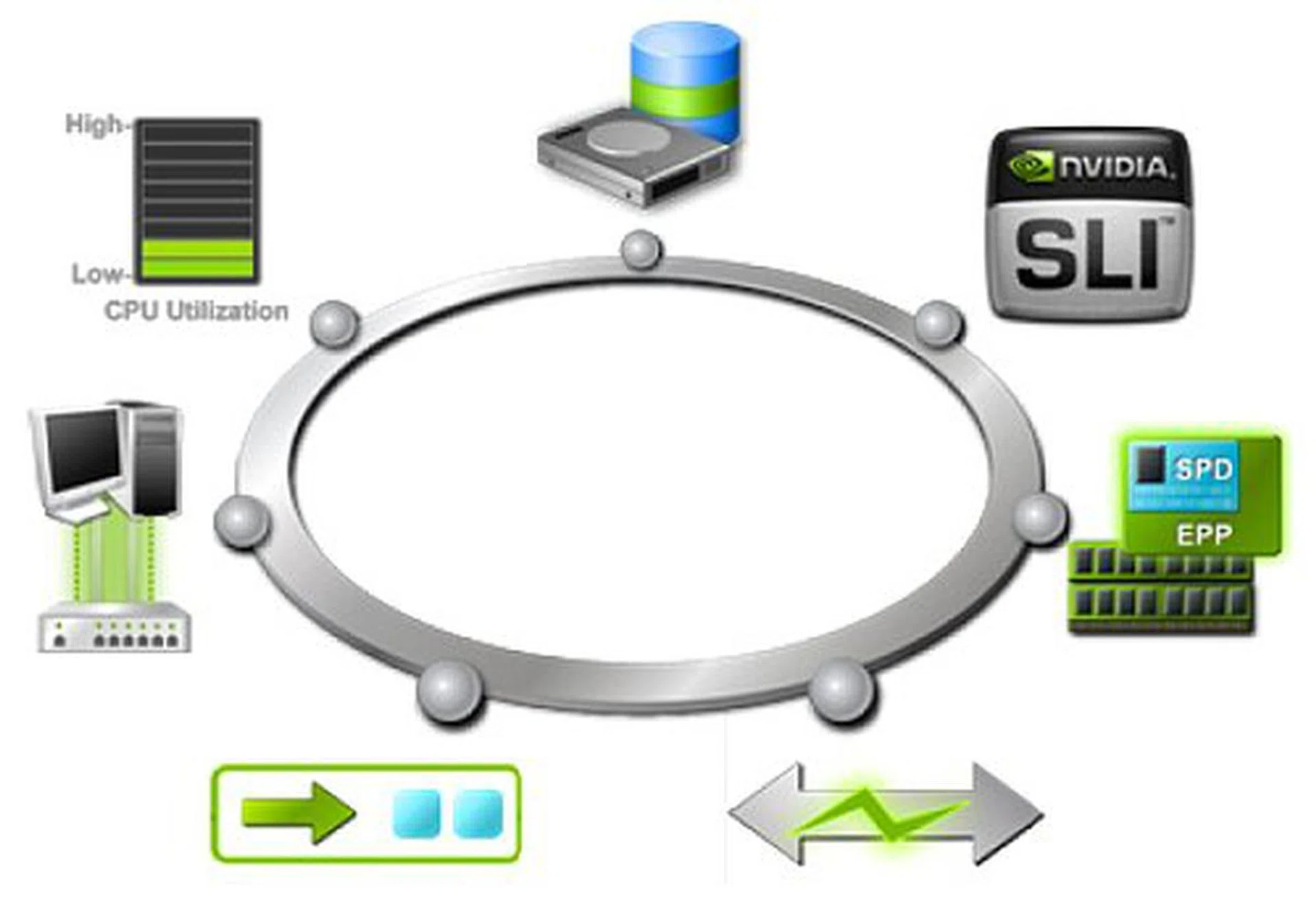
The nForce 680i SLI supports the full NVIDIA performance feature ecosystem - SLI graphics, SLI memory, LinkBoost, FirstPacket, DualNet, TCP/IP Acceleration and MediaShield.
nForce 600i Series Features
- Extreme Overclocking - Without an actual board on hand at the time of writing, we do not really have first hand experience on the true overclocking potential of the nForce 680i SLI chipset. However, it you look at its specifications, NVIDIA is hell bent on beating any and all its competitors. Right out of the box, they are basically guaranteeing that the chipset will support a 1333MHz FSB and DDR2-1200 (if you have the proper CPU and RAM of course). From our experience, we already know that the Core 2 Duo processors have no problem working with a 1333MHz FSB, so the nForce 680i SLI could be your ticket to a 'manufacturer supported' speed bump. nForce 680i SLI boards should also have a powerful BIOS that puts users in control of just about everything similar to what we've been accustomed to on the nForce 590 SLI AMD chipset.
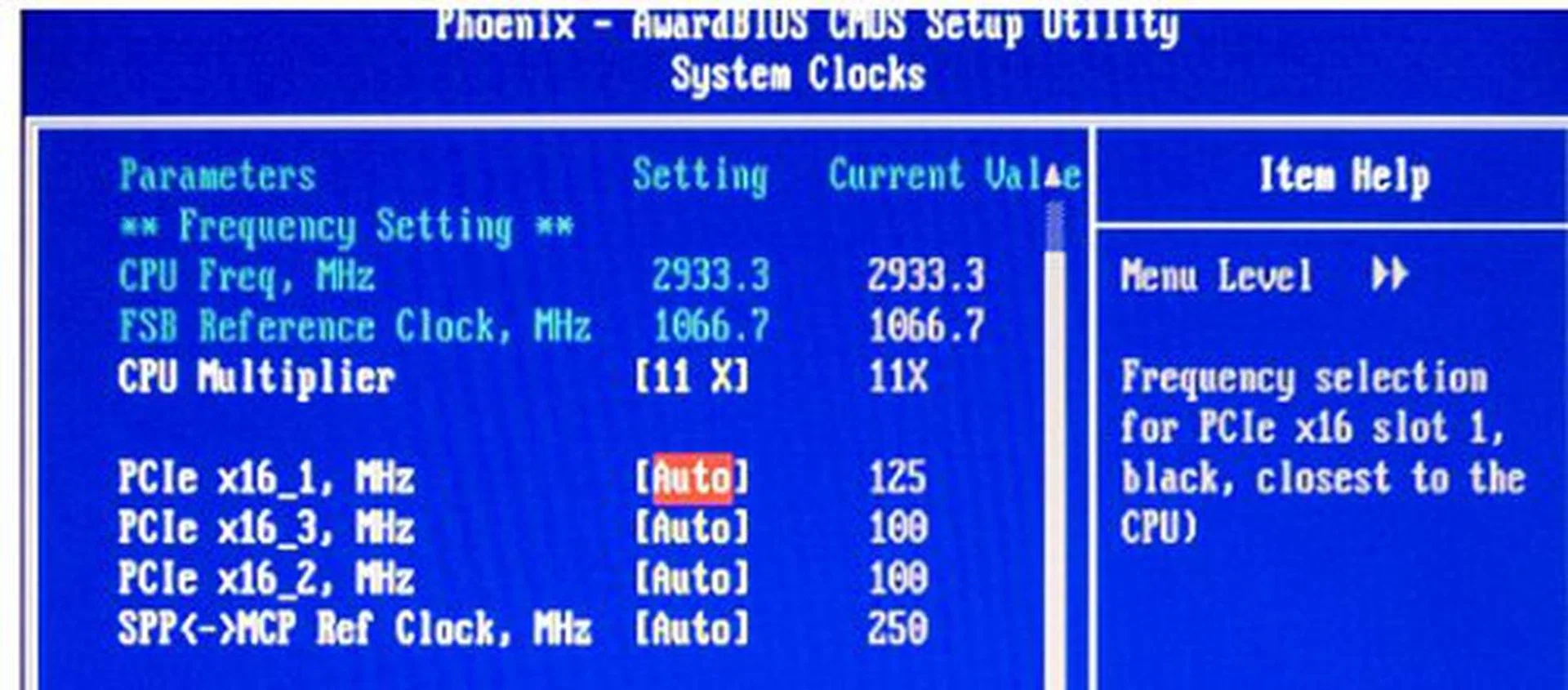
For the nForce 680i SLI, all three graphics PCIe lanes can be manually controlled - A tweaker's paradise.
- LinkBoost Technology - For people who want to overclock, but perhaps a little daunted by the BIOS can look forward to LinkBoost technology from NVIDIA. LinkBoost will detect your hardware installed and automatically apply a guaranteed 25% overclock to the PCIe and SPP/MCP HT link frequencies. At present, LinkBoost will only work with a combination of nForce 680i SLI and GeForce 7900 GTX or 8800 series cards. LinkBoost doesn't overclock your FSB though, just the PEG clocks (PCIe link speeds).
- SLI-Ready Memory with EPP - No surprise that EPP memory modules are supported across the board for all three nForce 600i series chipsets. With SLI-Ready memory, NVIDIA introduced Extended Memory Profiles with tweaked timing in addition to regular SPD. Since the nForce 500 series was launched, available SLI-Ready EPP memory modules have increased. Currently NVIDIA has certified various SLI-Ready memory modules from Corsair, Kingston, OCZ and Crucial and being one of its closes memory partners, Corsair is introducing their Dominator series of DDR2 memory with speeds up to DDR2-1200.
The nForce 650i SLI and 650i Ultra officially support the DDR2-800 specifications, but the nForce 680i SLI claims to be compatible with memory up to DDR2-1200. This should truly please enthusiasts who have been lamenting on the nForce 590 SLI Intel Edition's weak support for high frequency memory and FSB. Like Intel's Fast Memory Access and Memory Pipeline Technology, the nForce 600i series will feature NVIDIA's fourth-generation DASP (Dynamic Adaptive Speculative Preprocessor) memory optimization for perfecting data to feed the processor. Specifically, the DASP 4.0 is tweaked for Kenstfield processors as traffic patterns for quad-core vary from that of a dual-core processor, plus the difference in the processor's L2 cache. - DualNet Technology - Introduced with the nForce 500 series for AMD, DualNET is also available on the nForce 600i series. Chipsets with DualNet basically have two Gigabit LAN MACs built-in, but the beauty of this technology is that both MACs can work as a Teaming pair, forming a huge 2Gb pipe with fail-over and load balancing features. There is one caveat for the nForce 600i series however. While DualNet was a standard feature in all three of the nForce 500 AMD chipsets (excluding only the entry-level nForce 550), the nForce 680i SLI is the only chipset in the nForce 600i family to feature DualNet. Both the nForce 650i SLI and 650i Ultra will only feature a single Gigabit LAN port.
- FirstPacket - FirstPacket is a built-in network feature supporting real-time packet prioritization, benefiting latency sensitive applications like games and VoIP software. With FirstPacket, users can configure and optimize which applications have priority queue in your network. FirstPacket is available in all the nForce 600i chipsets.
- nTune 5.5 - In order to enable the full tweaking features under Windows for motherboards running on the nForce 600i series of chipsets, users will have to use the latest nTune 5.5 and above. Of course, like all the previous nForce and nTune versions, the motherboard needs to support it as well.
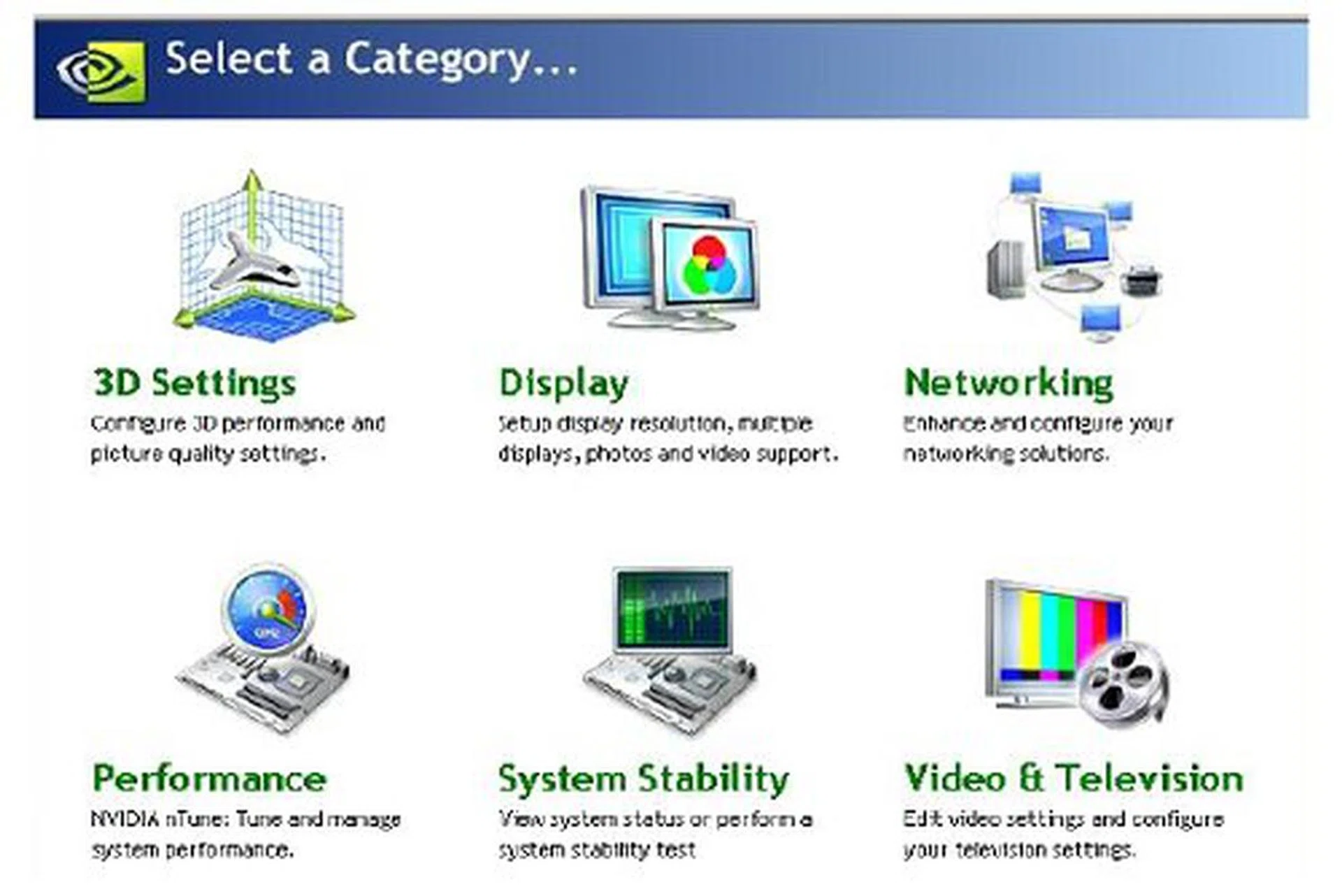
nTune 5.5 plugs into NVIDIA's new control panel scheme.
Conclusion
The launch of the nForce 680i SLI puts NVIDIA's Intel platform solutions back on track with its AMD counterpart as far as benefits and chipset feature set is concerned. And just in time too to support not only Intel's Core 2 Duo, but promote the Core 2 Quad as well as enthusiast overclocking with 1333MHz FSB and the new DDR2-1200 SLI-Ready Memory support.
It is very obvious that NVIDIA is focusing on the nForce 680i SLI as the flagship chipset for the Intel platform. With all the new features and extreme frequency support, they hope to once again challenge Intel's own chipsets like the original nForce 4 SLI Intel Edition had. If its features are anything to go by, the nForce 680i SLI should be a very attractive and powerful platform indeed. However, we're looking at a very steep pricing for nForce 680i SLI boards. We're still awaiting pricing information from manufacturers, but NVIDIA's estimate of US$249-299 will be much higher than most of the Intel 975X Express enthusiast boards available today. For comparison, the ASUS P5W DH Deluxe Wi-Fi can be found online for US$230. Another interesting matter pertaining to nForce 680i boards is that NVIDIA would now not only offer the reference design specs to its board partners who require it but it also offers a completely ready-built reference board (made by their contract manufacturer) for the board partner to repackage and put it into retail as soon as possible. While this is the reason for new motherboard vendor names like EVGA and BFG offering classy nForce 680i motherboard packages, enthusiasts should also expect to find more of these boards to have a lot in common.
If you're looking at plain performance, we're sure that all the chipsets in the nForce 600i series will do pretty well, but there is a slight tinge of disappointment with the muted features of the nForce 650i SLI and 650i Ultra compared to the 680i SLI. It seems that NVIDIA focused completely to deliver 'One-chipset to rule them all' and we can't help get the feeling that the rest was more of an afterthought. True to this statement, nForce 680i motherboards are populating the channels today, but expect a later rollout the custom designed boards as well as for the rest of the series.
With this nForce 600i series primer, we hope we have better enlightened you of what the new chipsets are, the changes that have undergone from their predecessors and the target market segments. So stay tuned to www.hardwarezone.com as we bring you the actual board reviews that will soon follow suit.
With the nForce 600i series, NVIDIA is back on track delivering powerful core logic solutions to both the AMD and Intel platforms.
Our articles may contain affiliate links. If you buy through these links, we may earn a small commission.