

NVIDIA GeForce GTX 570 SLI Performance Analysis
Following up on our review of the GeForce GTX 570 is our analysis of how two of these newcomers will perform in a 2-way SLI configuration. Dig in for the full results!
Doubling the Performance
The GeForce GTX 570 effectively replaces the old GeForce GTX 480 and we must say that it is a very decent high-end offering from NVIDIA. It may not be faster than the model it replaces, but it runs markedly cooler and is also less power hungry thanks to a better optimized core and a custom design vapor chamber cooler. And at US$349, the GeForce GTX 570 is decently priced too, bridging the gap between the uber expensive GeForce GTX 580 and its lesser brethren like the GeForce GTX 470, GTX 460 and so on. If you haven’t checked out our review, we suggest you do so by clicking here.
To follow up, we’ll be taking a look at how the GeForce GTX 570 performs in a 2-way SLI configuration. NVIDIA claims that the GeForce GTX 570 will scale in performance well, and judging from our past experiences, we have no reasons not to believe their claims.
Test Setup
To evaluate the GeForce GTX 570’s performance in a 2-way SLI configuration, we will be using our X58 setup which has the following specifications:
- Intel Core i7-975 (3.33GHz)
- Gigabyte GA-EX58-UD4P motherboard
- 3 x 1GB DDR3-1333 G.Skill memory in triple channel mode
- Seagate 7200.10 200GB SATA hard drive
- Windows 7 Ultimate
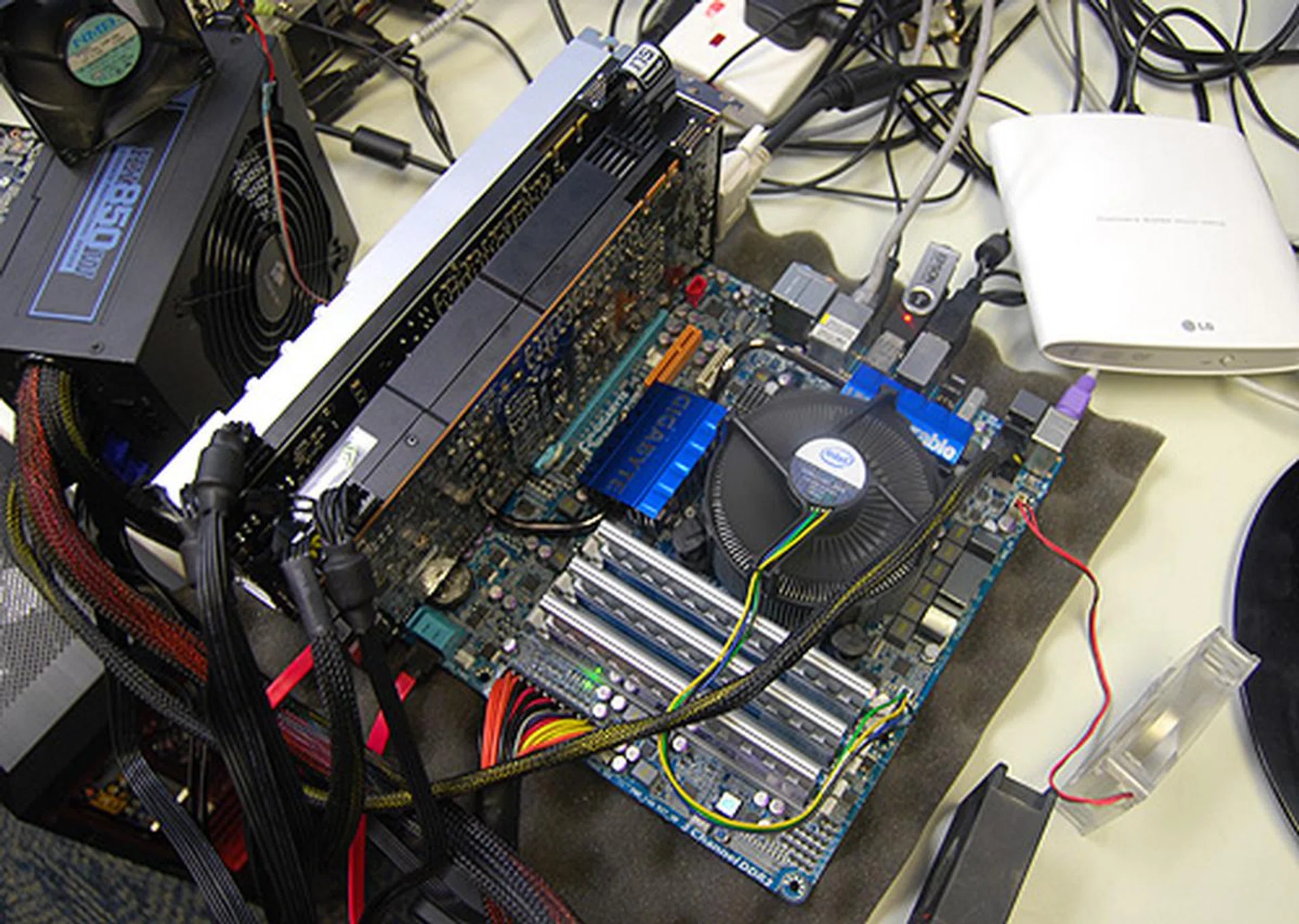
960 CUDA cores of pure, unadulterated graphics horsepower. But what kind of performance can we expect? Read on to find out.
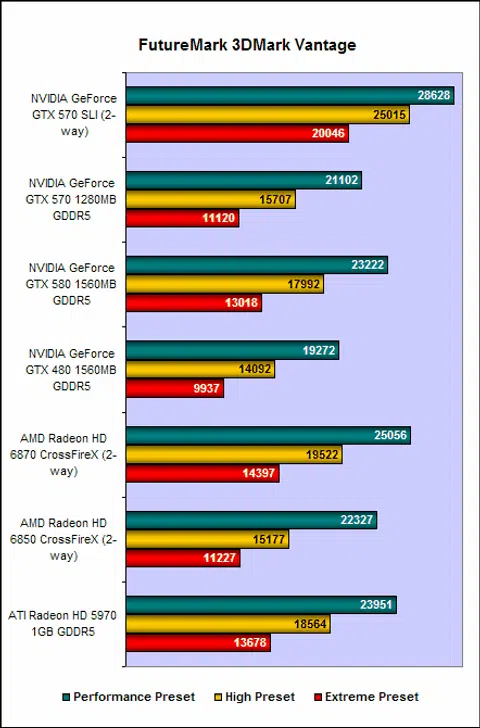
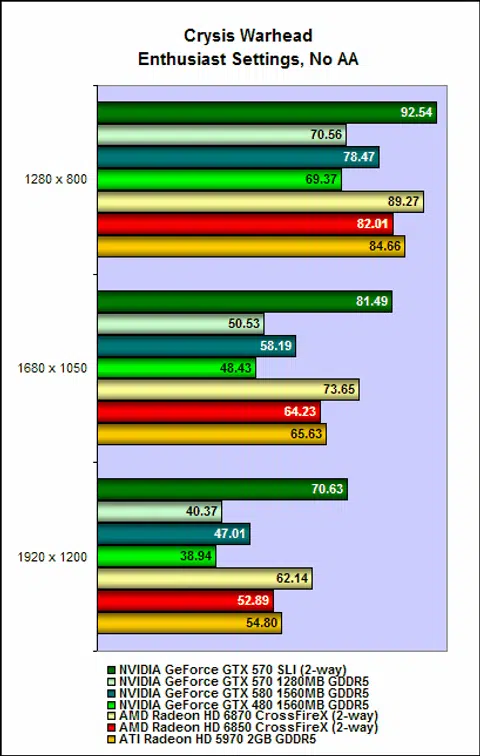
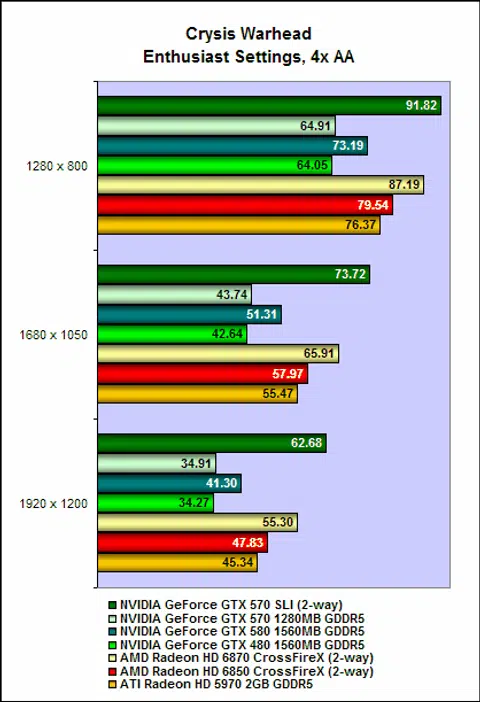
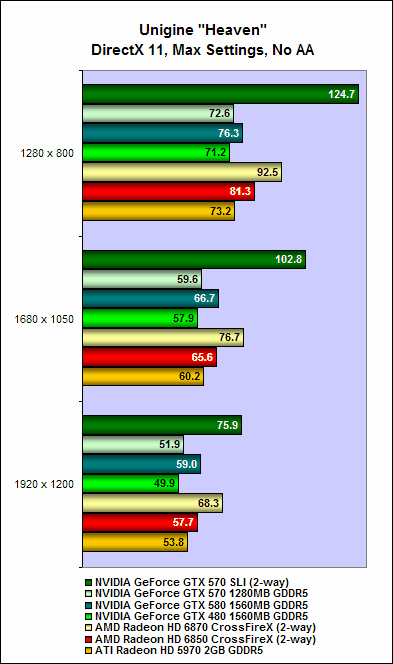
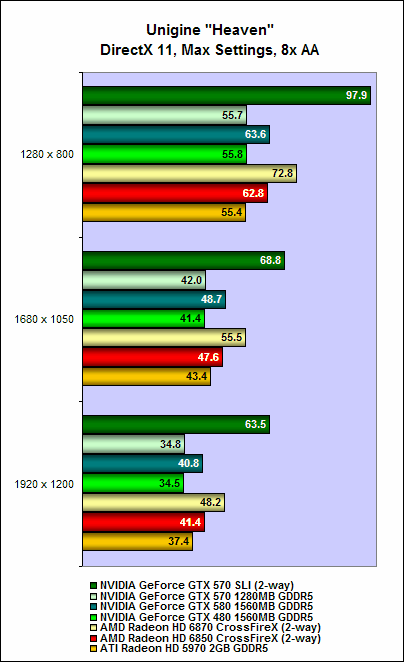
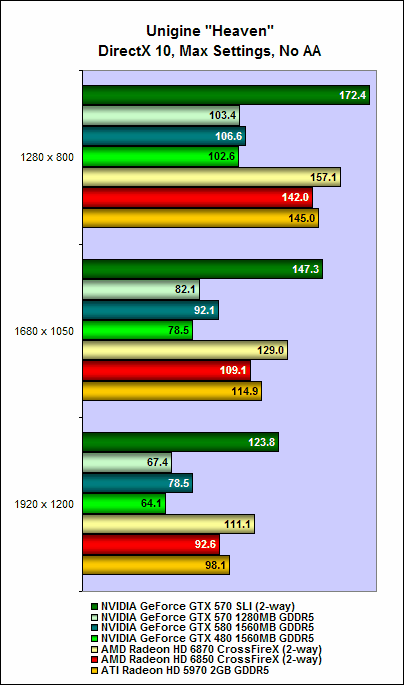
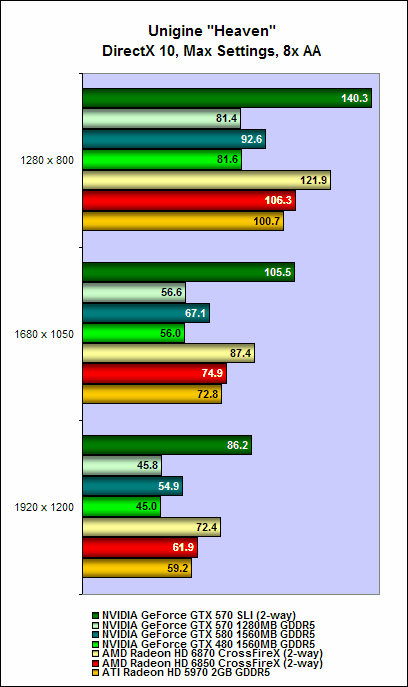
This time, we’ll be paying attention to how much gain in performance you can get by adding another GeForce GTX 570 to the system. Also, it’ll be interesting to see how the it will match up against the new Radeon HD 6870 and HD 6850 in 2-way CrossFire.
The full list of cards and driver versions tested:
- NVIDIA GeForce GTX 570 2-way SLI (ForceWare 263.09)
- NVIDIA GeForce GTX 570 1280MB GDDR5 (ForceWare 263.09)
- NVIDIA GeForce GTX 580 1560MB GDDR5 (ForceWare 262.99)
- NVIDIA GeForce GTX 480 1560MB GDDR5 (ForceWare 260.89)
- NVIDIA GeForce GTX 470 1280MB GDDR5 (ForceWare 263.09)
- AMD Radeon HD 6870 2-way CrossFireX (Catalyst 10.10)
- AMD Radeon HD 6850 2-way CrossFireX (Catalyst 10.10)
- ATI Radeon HD 5970 2GB GDDR5 (Catalyst 10.9)
The list of benchmark used are as follows:
- Futuremark 3DMark Vantage
- Crysis Warhead
- Far Cry 2
- Warhammer: Dawn of War 2
- Battlefield Bad Company 2
- “Heaven" from Unigine v2.1
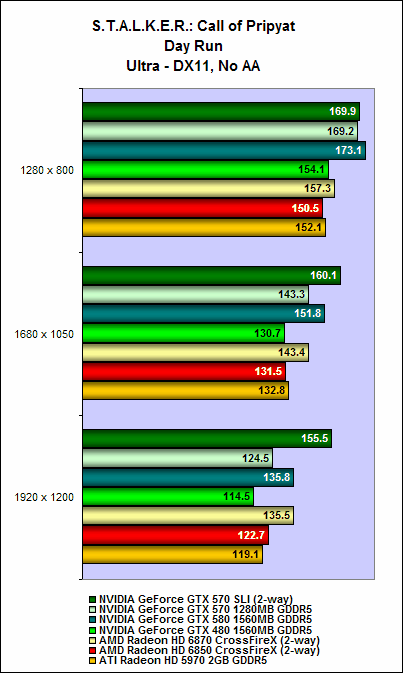
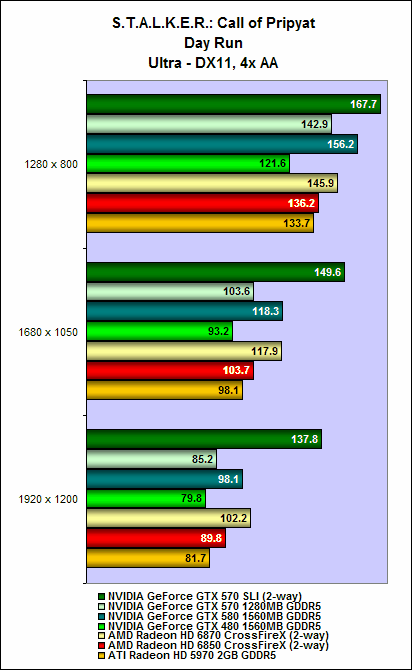
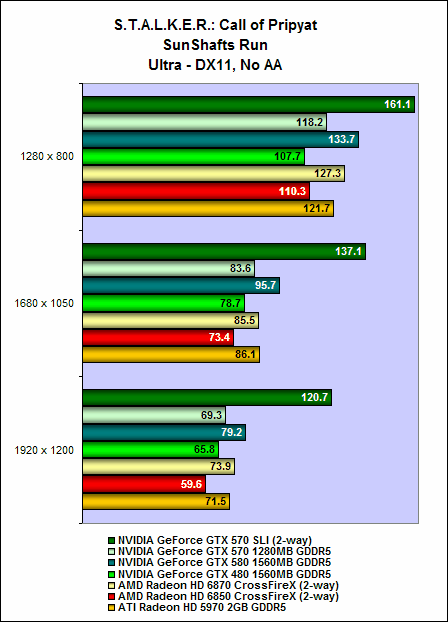
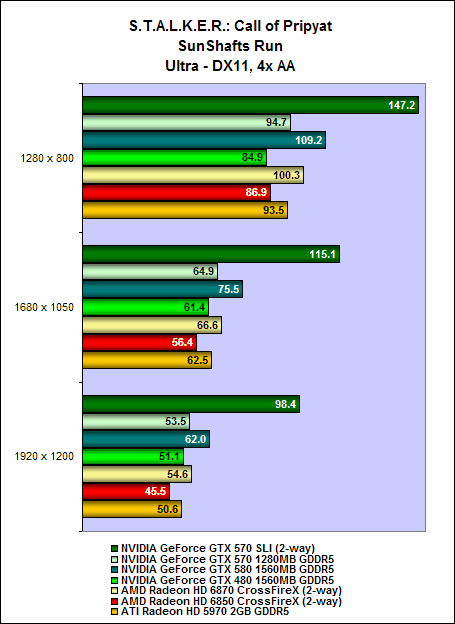
- S.T.A.L.K.E.R.: Call of Pripyat
3DMark Vantage Results
Crysis Warhead Results
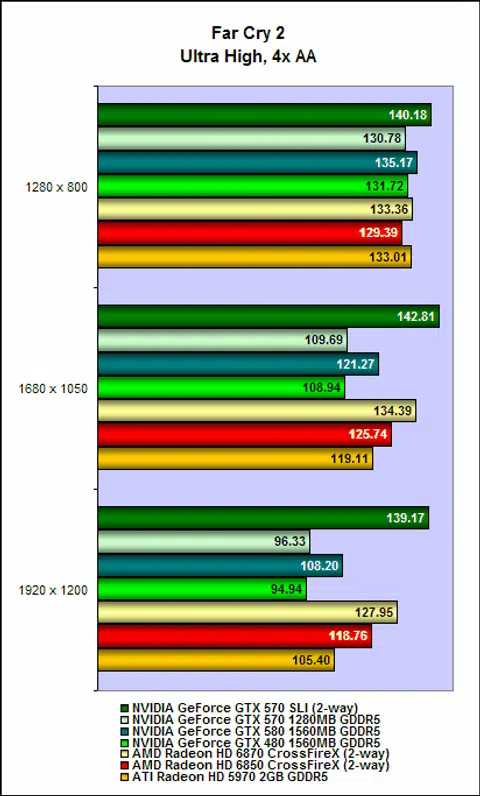
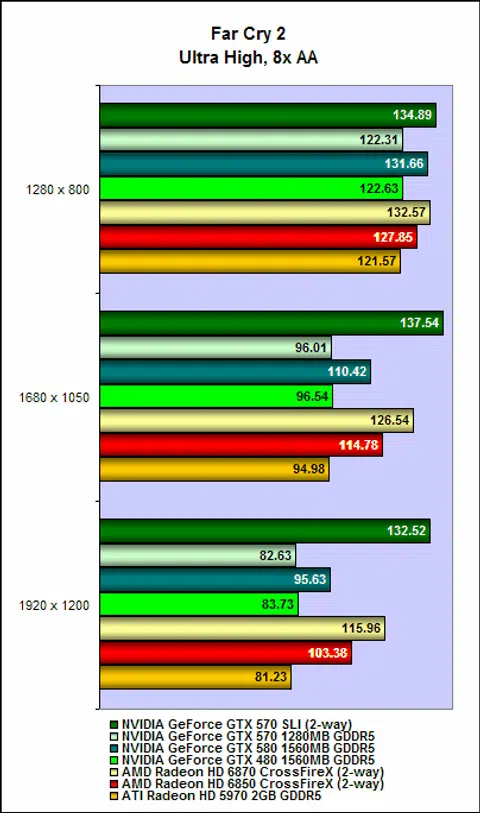
Far Cry 2 Results
Dawn of War 2 Results
Battlefield Bad Company 2 Results
Unigine "Heaven" 2.1 Results
DirectX 11 Results
 |  |
DirectX 10 Results
 |  |
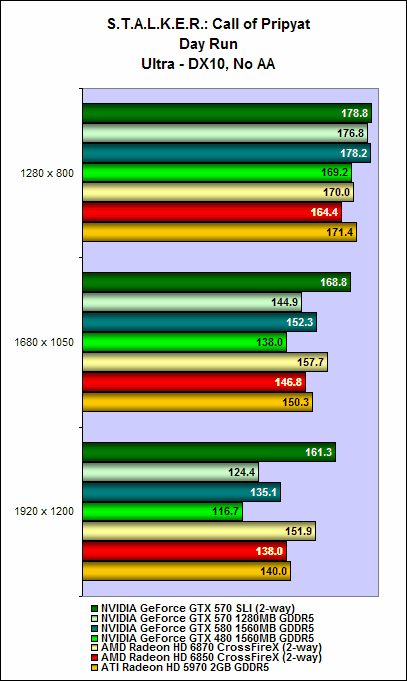
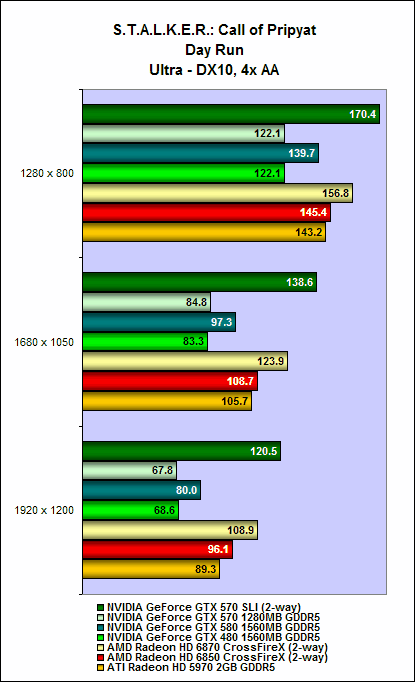
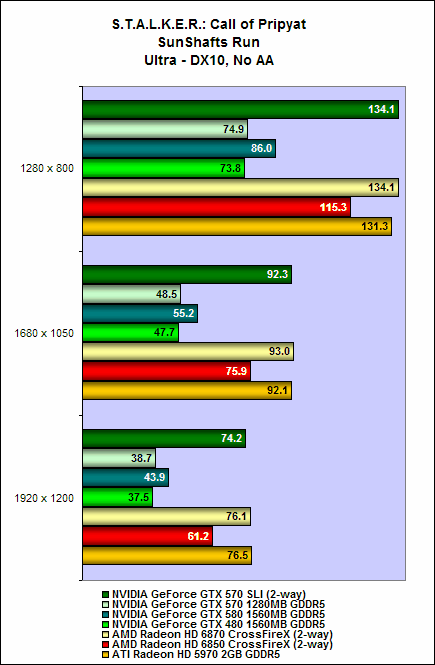
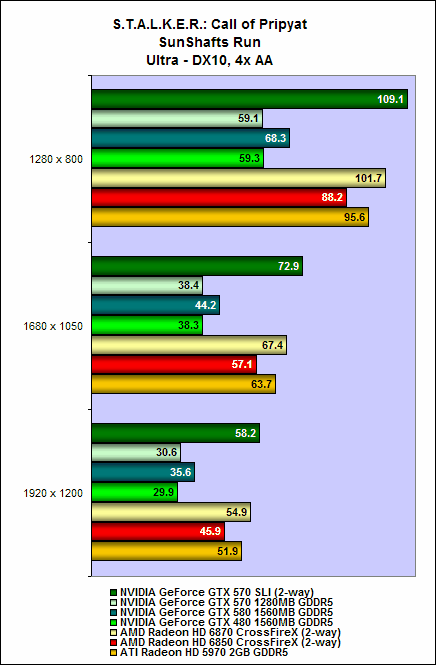
S.T.A.L.K.E.R.: Call of Pripyat Results
DirectX 11 Results
 |  |
 |  |
DirectX 10 Results
 |  |
 |  |
Temperature
Power Consumption
Conclusion
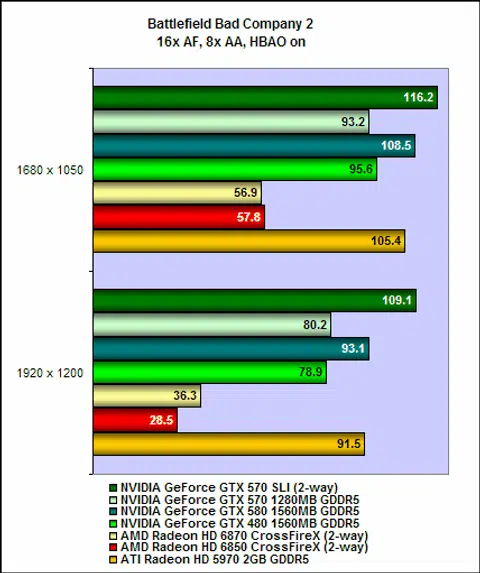
Unsurprisingly, two GeForce GTX 570 cards in an SLI configuration is a fearsome combination and it blows away any dual-GPU solution ATI/AMD has. Furthermore, scaling performance is very respectable, especially on higher resolutions and more intensive settings. For example, running Crysis Warhead at 1920 x 1200 with 4x anti-aliasing enabled saw a decent 82% boost in performance over a single GeForce GTX 570.
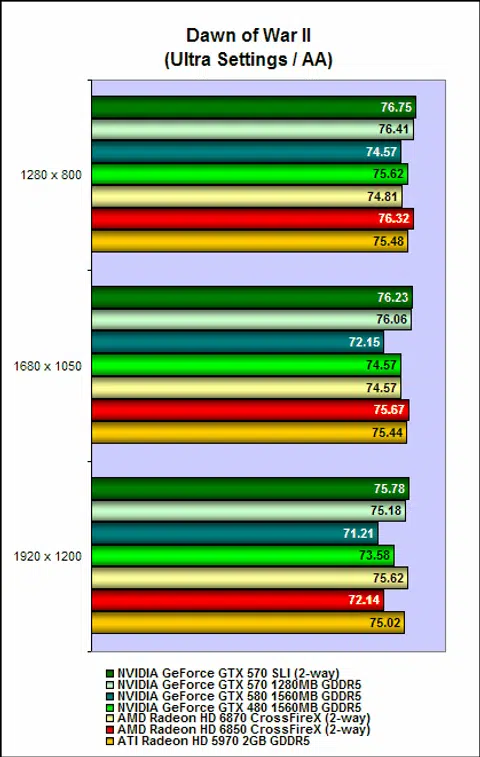
If dual GeForce GTX 570 cards in a 2-way SLI configuration is an option you’d like to explore, you best have a beefy enough system to accommodate it because on certain games such as Dawn of War 2 and Far Cry 2, we noticed that our CPU just could not make use of the tremendous graphics crunching power that was at its disposal.
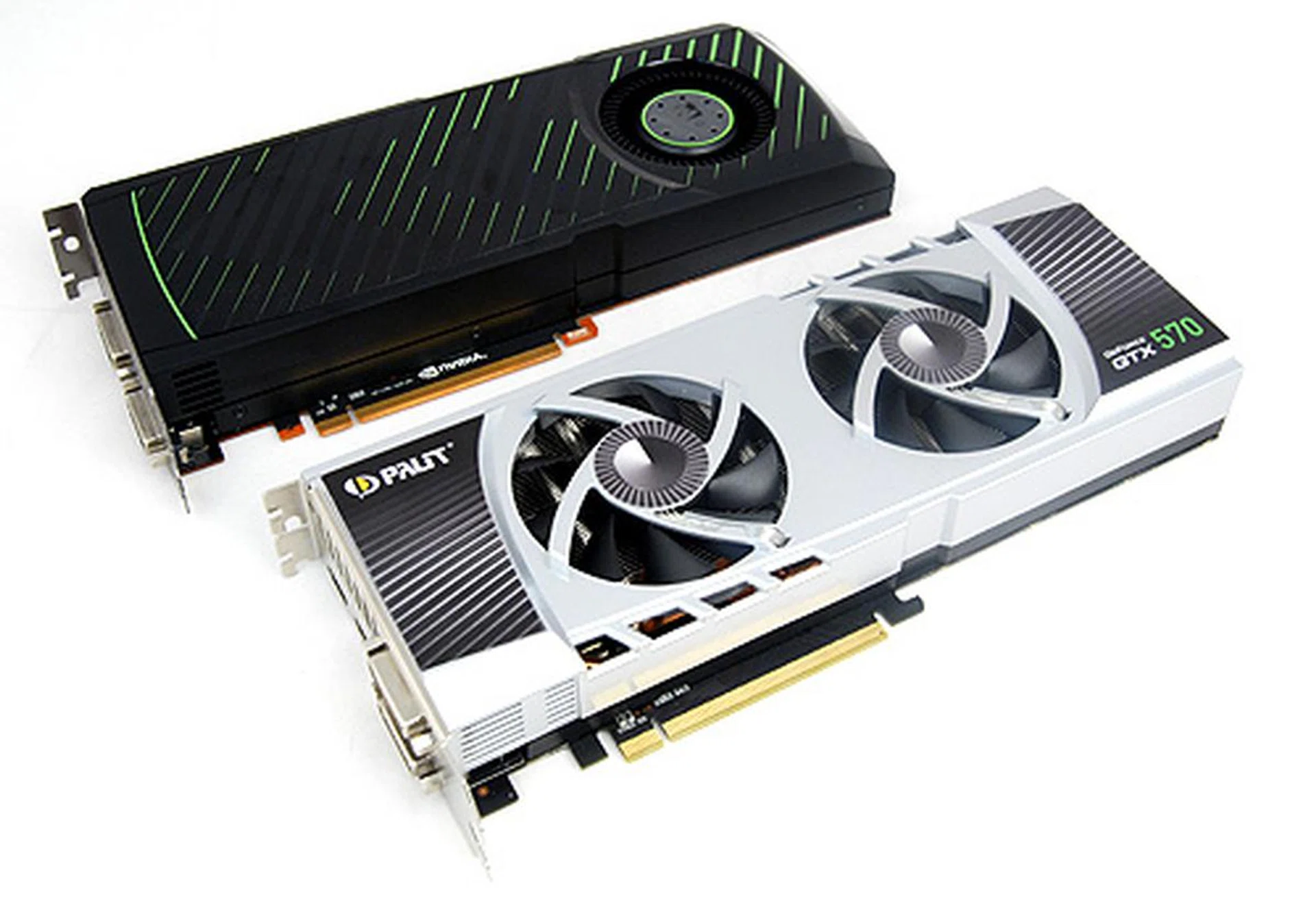
Two GeForce GTX 570 cards have power in abundance, a pity then that they are also extremely power hungry and pretty hot to run.
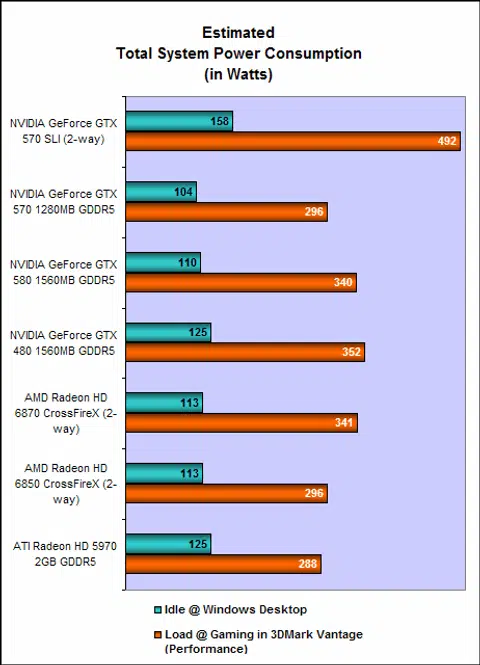
However, such graphics crunching power comes at a cost. For one, power draw figures go up considerably when you add an additional GeForce GTX 570 card into the mix. In our test, the highest sustained reading we got was a whopping 492W, hence a solid PSU with a rating of at least 700W would be needed to safely power the system.
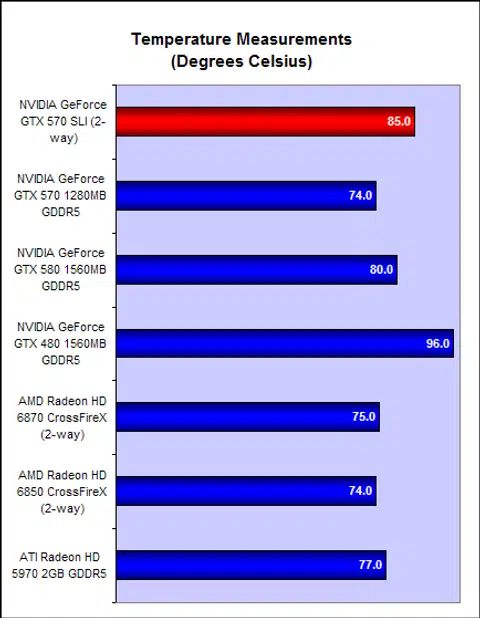
And then there’s the heat involved. As the graphs show, a single GeForce GTX 570 will run at about 74 degrees Celsius. Add another card though, and because of the more cramped environment, running temperatures can shoot up to 85 degrees Celsius, which was a bit too high for our liking. So, as is the case with any multi-GPU configuration, we urge that you make sure your system has adequate ventilation.
As of now, NVIDIA has a very potent line-up of high-end graphics solution, but with AMD set to release Cayman soon, the balance of power could still shift yet. For gamers and graphics enthusiasts, this looks set to be an exciting Christmas season.
Our articles may contain affiliate links. If you buy through these links, we may earn a small commission.