
NVIDIA GeForce GTX 465 Roundup - Third Time Lucky?
The NVIDIA GeForce GTX 465 is the company's third card to utilize the all-new Fermi chip. We roundup four cards to evaluate its performance.
Introducing the GeForce GTX 465
Announced and launched on May 31, the GeForce GTX 465 is NVIDIA's third Fermi-based graphics card, after the GeForce GTX 480 and GTX 470. And with a launch price of US$279, the new GeForce GTX 465 was clearly introduced to address the lack of a more affordable Fermi graphics card.
An affordable Fermi solution is critical, because ATI already has the advantage, considering that almost their entire line up of Evergreen cards (save for the Radeon HD 5830) have been available since the start of 2010. And with both the GeForce GTX 480 and GTX 470 costing upwards of US$350, it is clear that the aforementioned SKUs are geared towards hardcore gamers and that NVIDIA cannot possibly rely on them to gain ground in the DirectX 11 graphics market.
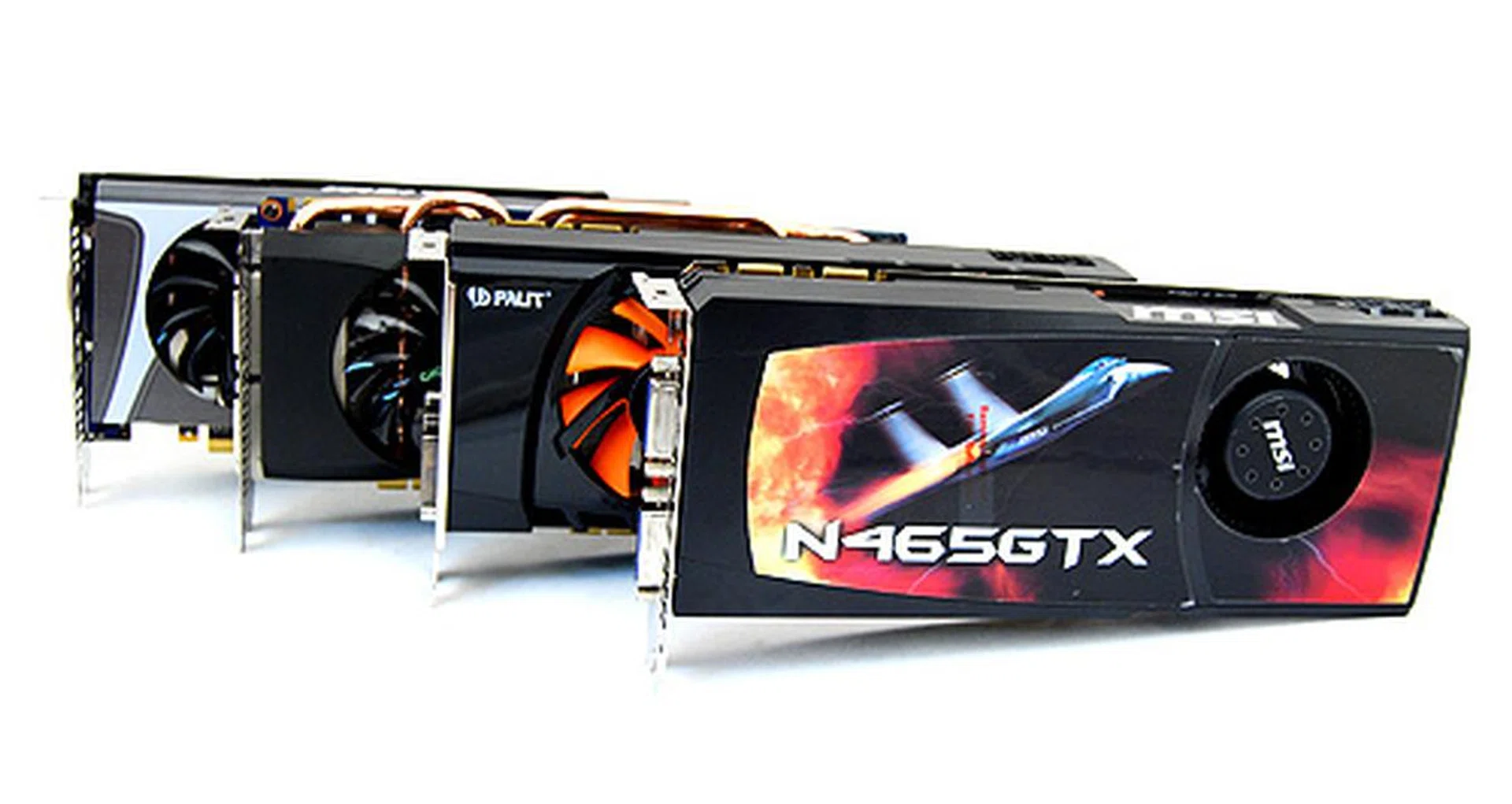
NVIDIA's GeForce GTX 465 arrives en mass into our labs. We put it to the test.
In terms of specifications, think of the GeForce GTX 465 as a weaker version of the GTX 470. One of the more important things to note is that it gets 96 lesser CUDA cores, bringing its total count to 352 CUDA cores. That also means it has lesser texture mapping and raster operating units - 44 and 32 respectively compared to a GTX 470 card with 56 and 40 units respectively. Memory bus width has also been cut down from 384-bit to a narrower 256-bit. Consequently, framebuffer size has been reduced as well, from 1280MB to a 1GB.
However, the GeForce GTX 465 keeps up by sharing the GTX 470's core and shader clock speeds: 607MHz at the core and 1215MHz at the shaders. Additionally, the GeForce GTX 465 continues to employ GDDR5 memory, but that is running at a slightly slower 3306MHz DDR, as opposed to the GeForce GTX 470's 3348MHz DDR. All in all, the GeForce GTX 465 takes a pretty big hit in terms of paper specifications, so it'll be interesting to see how it'll perform.
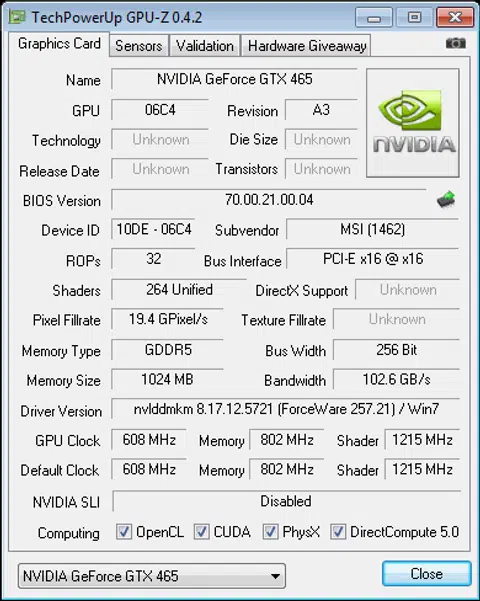
Screenshot from GPU-Z detailing the specifications of the GeForce GTX 465.
Here's how the GeForce GTX 465 matches up to its closest competitors as lined up below:-
Model | NVIDIAGeForce
GTX465 1GBGDDR5 | NVIDIAGeForce GTX 470 1280MBGDDR5 | ATI Radeon HD 5850 1GB GDDR5 | ATIRadeon HD5830 1GBGDDR5 | NVIDIAGeForce GTX 285 1GBGDDR3 |
Core Code | GF100 | GF100 | Cypress Pro | Cypress LE | GT200 |
Transistor Count | 3200 million | 3200 million | 2150 million | 2150 million | 1400 million |
Manufacturing Process | 40nm | 40nm | 40nm | 40nm | 55nm |
Core Clock | 607MHz | 607MHz | 725MHz | 800MHz | 648MHz |
Stream Processors | 352 Stream Processors | 448 Stream Processors | 1440 Stream processing units | 1120 Stream Processing Units | 240 Stream Processors |
Stream Processor Clock | 1215MHz | 1215MHz | 725MHz | 800MHz | 1476MHz |
Texture Mapping Units (TMU) or Texture Filtering (TF) units | 44 | 56 | 72 | 56 | 80 |
Raster Operator units (ROP) | 32 | 40 | 32 | 16 | 32 |
Memory Clock | 3206MHz GDDR5 | 3348MHz GDDR5 | 4000MHz GDDR5 | 4000MHz GDDR5 | 2484MHz GDDR3 |
DDR Memory Bus | 256-bit | 320-bit | 256-bit | 256-bit | 512-bit |
Memory Bandwidth | 102.6GB/s | 133.9GB/s | 128GB/s | 128GB/s | 159.0GB/s |
PCI Express Interface | PCIe ver 2.0 x16 | PCIe ver 2.0 x16 | PCIe ver 2.0 x16 | PCIe ver 2.0 x16 | PCIe ver 2.0 x16 |
Molex Power Connectors | 2 x 6-pin | 2 x 6-pin | 2 x 6-pin | 2 x 6-pin | 2 x 6-pin |
Multi GPU Technology | SLI | SLI | CrossFireX | CrossFireX | SLI |
DVI Output Support | 2 x Dual-Link | 2 x Dual-Link | 2 x Dual-Link | 2 x Dual-Link | 2 x Dual-Link |
HDCP Output Support | Yes | Yes | Yes | Yes | Yes |
Street Price | Launch Price: US$279 | ~US$349 | ~US$300 | ~US$220 | ~US$350 |
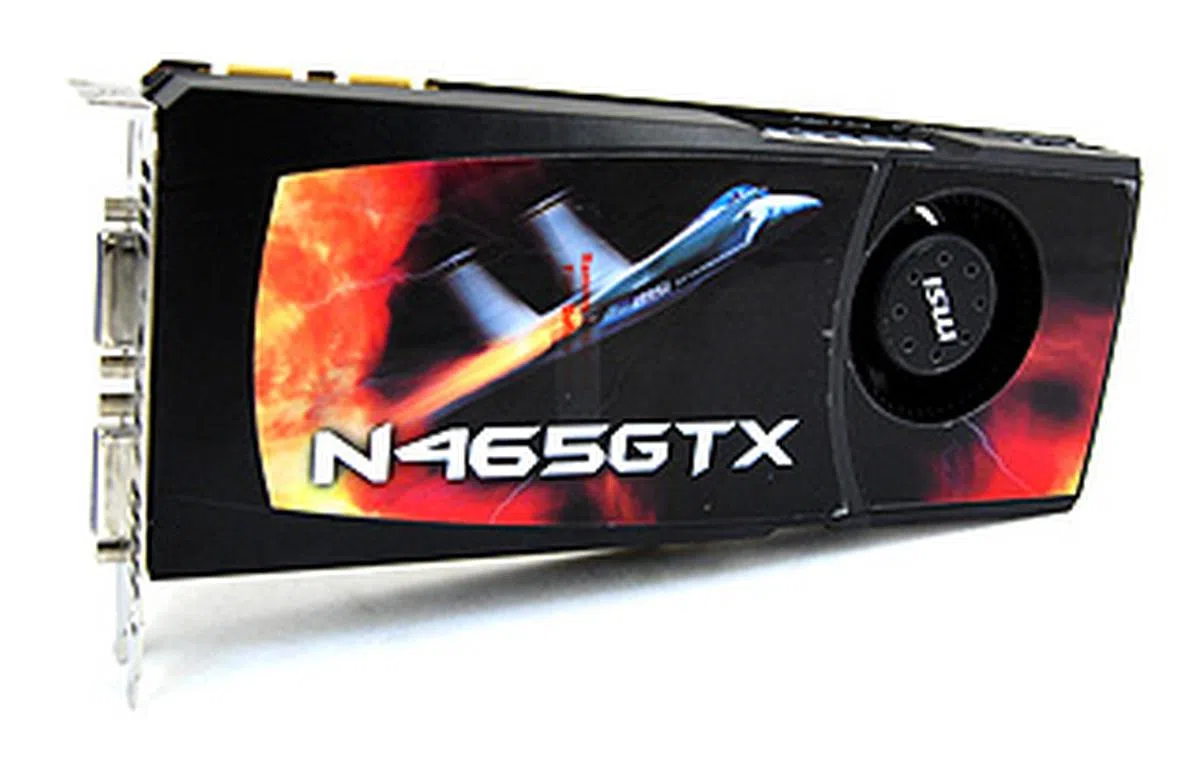
The MSI N465GTX-M2D1G
The MSI N465GTX is based on NVIDIA's reference design and was called in to provide a baseline reference of the GeForce GTX 465 SKU. It uses NVIDIA's reference cooler and sports reference clock speeds, which means 607MHz at the core, 1215MHz at the shaders and 3208MHz DDR at the memory.
However, this reference design card from MSI differentiates itself by offering full functionality with MSI's own Afterburner overclocking utility, which means you get to tweak the card's clock speeds as well as core voltage value. Hopefully this will give it an edge over others in our overclocking test.
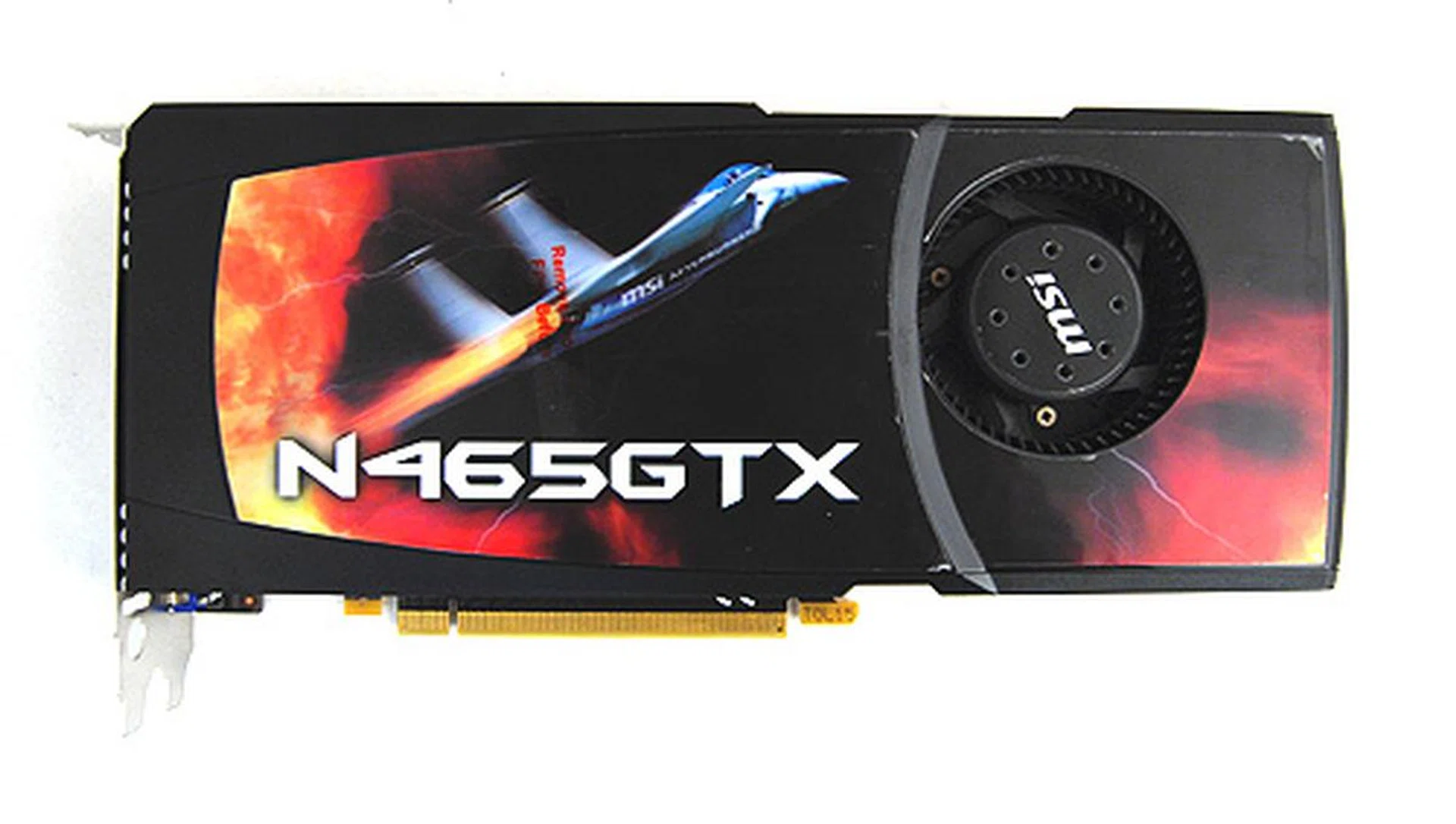
Physically, the MSI N465GTX closely resembles the more powerful GeForce GTX 470.
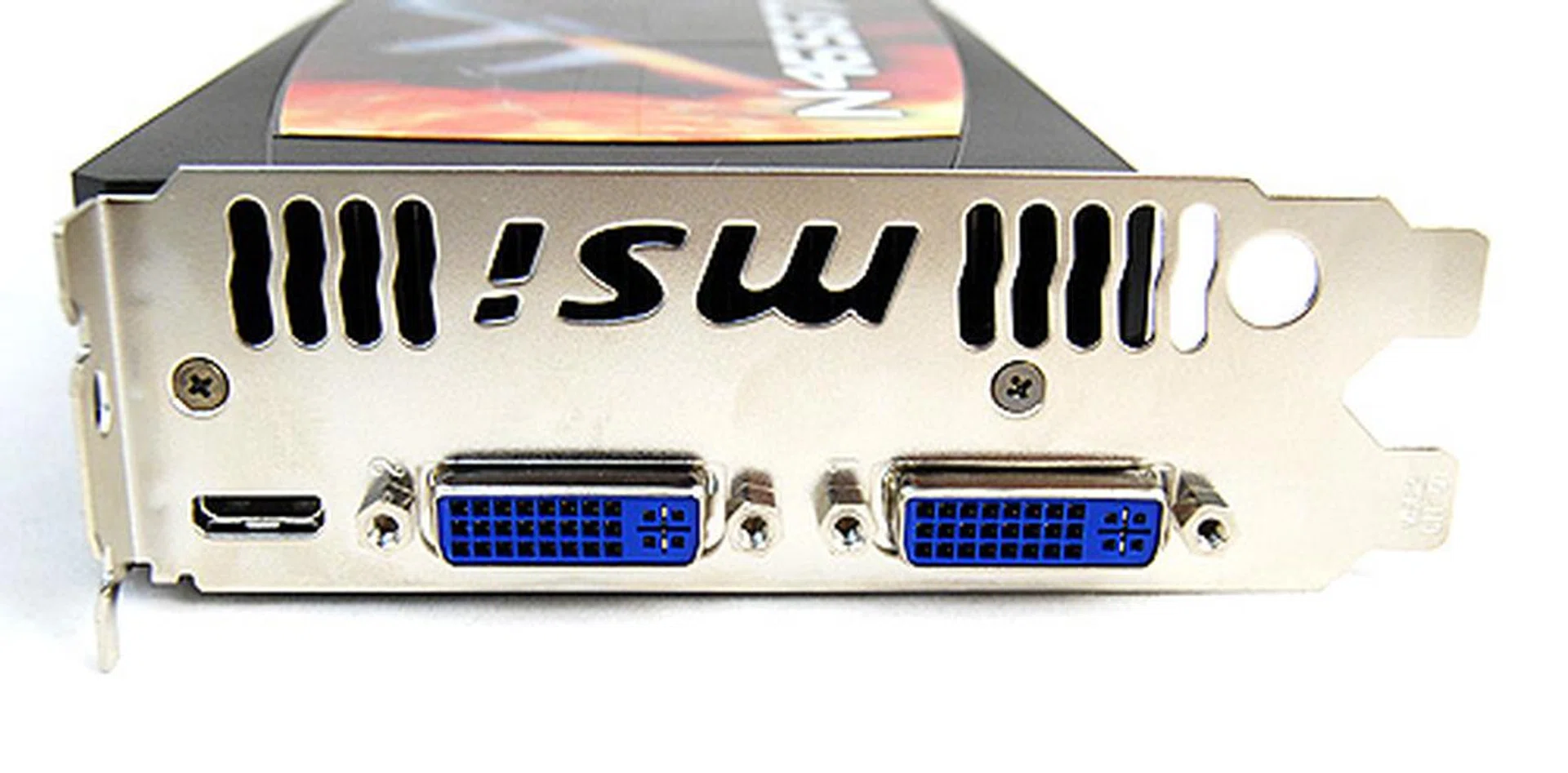
Like the GeForce GTX 480 and GTX 470, the GTX 465 has two DVI ports and a single mini-HDMI port.
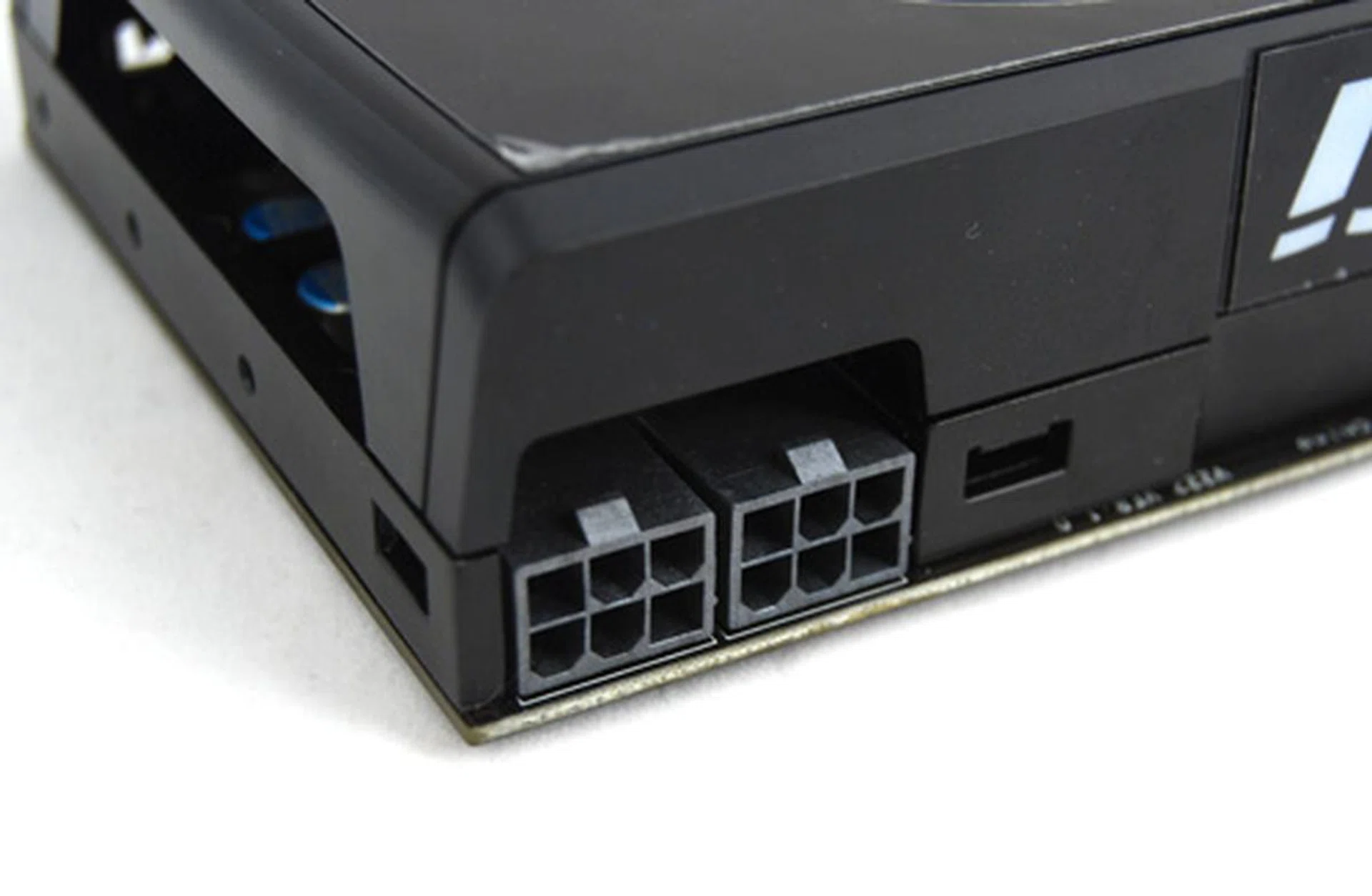
The GeForce GTX 465 is powered via two 6-pin PCIe power connectors and a PSU rated for at least 500W is recommended.
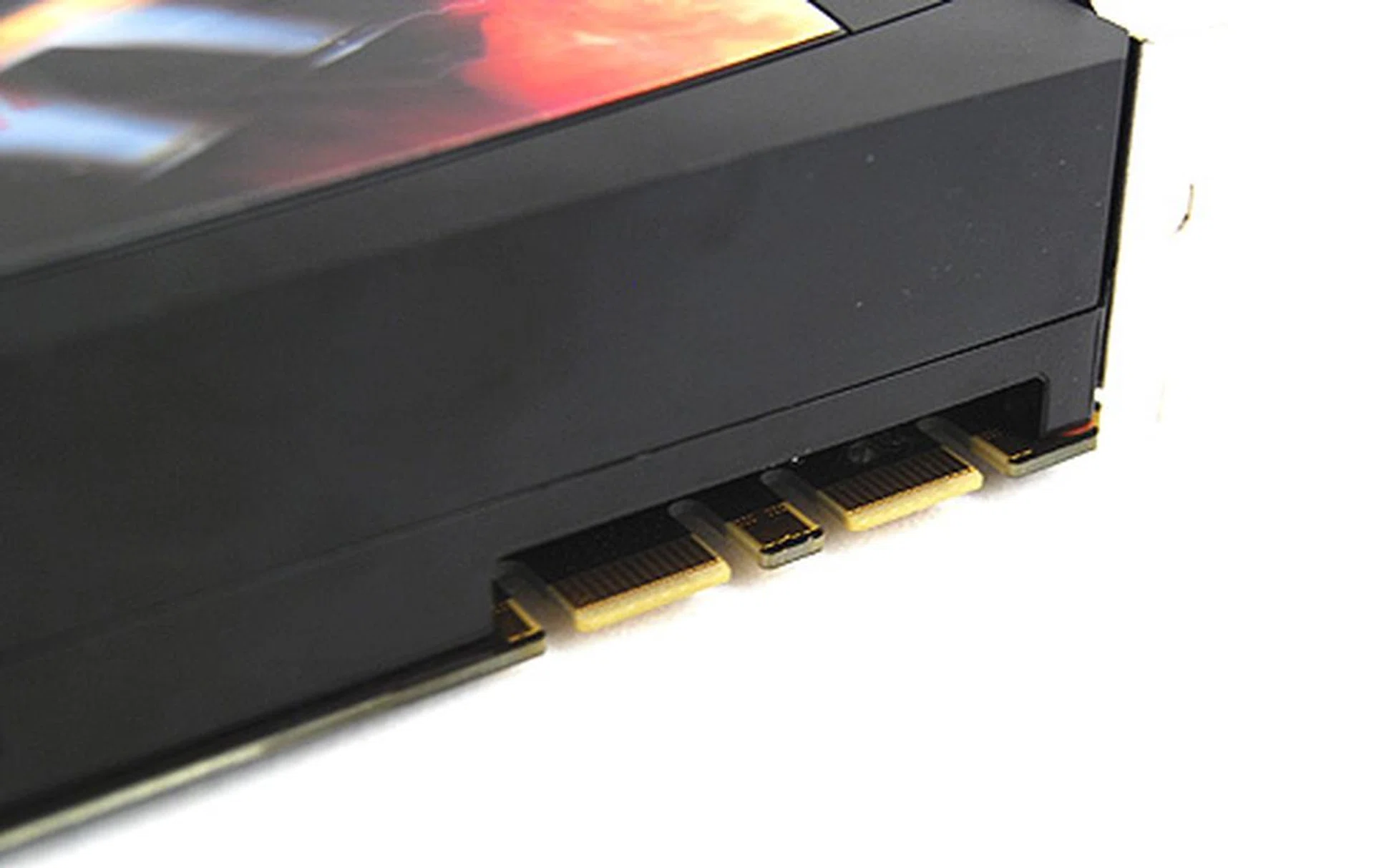
There's two SLI connectors for 3 and 4-way SLI configurations.
The Gigabyte GTX 465
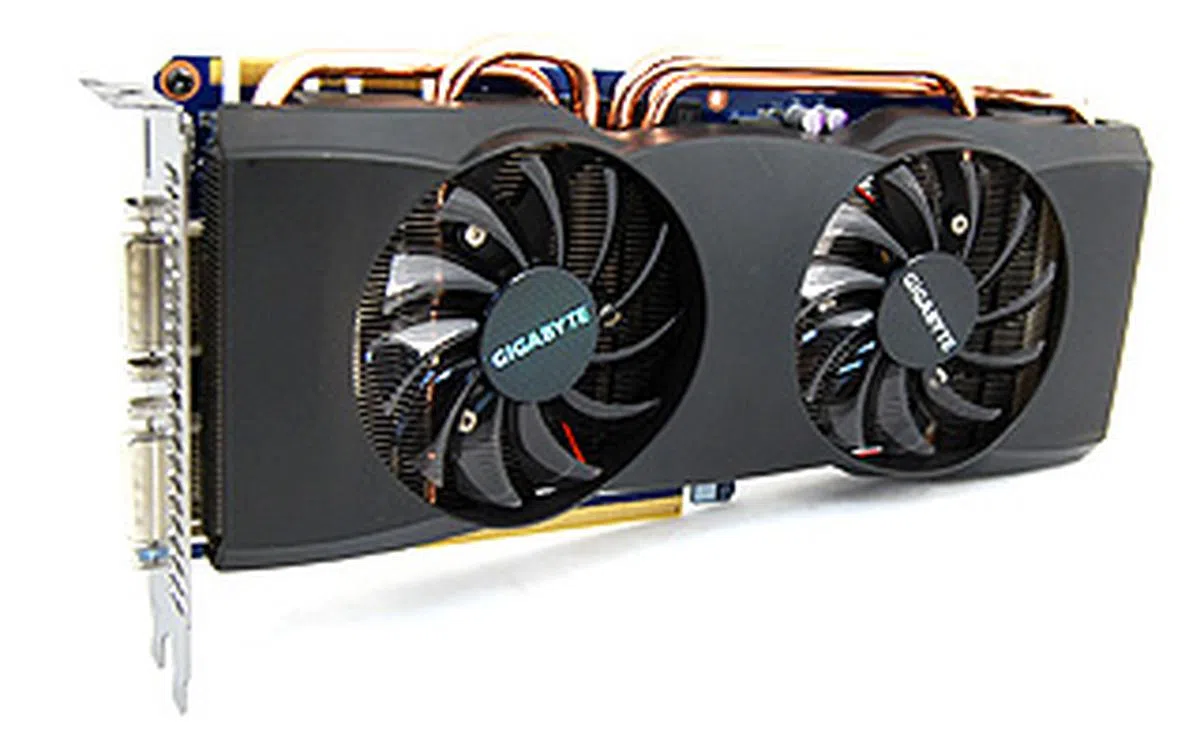
The Gigabyte GTX 465 is special because it uses its own customized cooler instead of NVIDIA's reference one. The cooler is the same we've seen on the awesome Gigabyte HD 5870 Super Overclock, and it's instantly recognizable thanks to its twin fans and its inclined fan design. The fans on this card are in fact directed at the heatsink below at an angle. This supposedly reduces turbulence and increases cooling efficiency.
Custom cooler aside, the Gigabyte GTX 465 also comes with the usual Gigabyte Ulta Durable VGA components, which includes 2 oz copper in the PCB, Japanese-made solid capacitors, ultra-fast top tier Samsung/Hynix memory, ferrite chokes and low RDS(on) MOSFETs, all of which help improve overall power and cooling efficiency, as well as overclocking performance.
Unfortunately, despite the card's rich set of features, Gigabyte has strangely decided to go with NVIDIA's reference clock speeds.
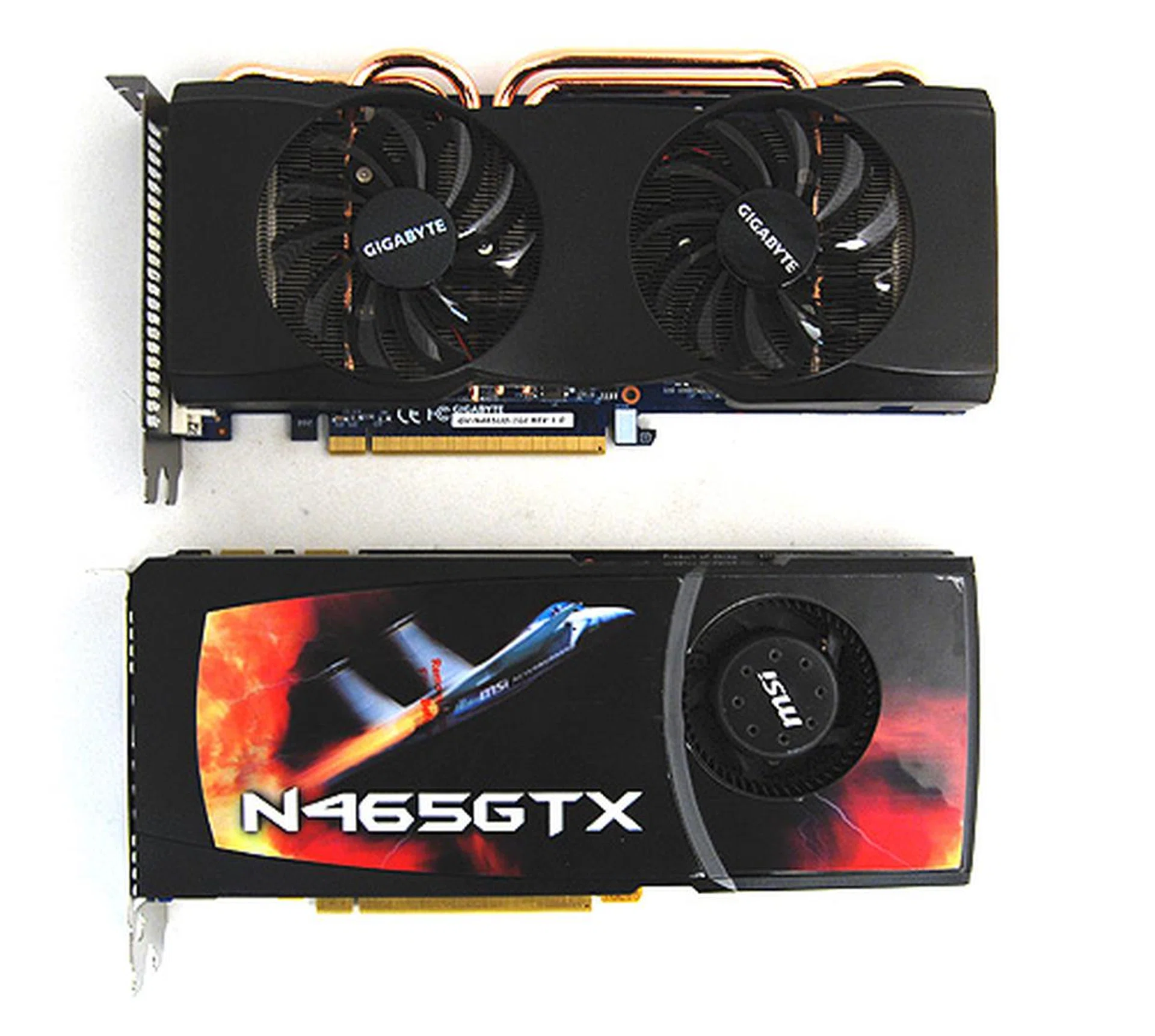
The Gigabyte GTX 465 looks remarkably different from our reference card, thanks to its customized cooler.
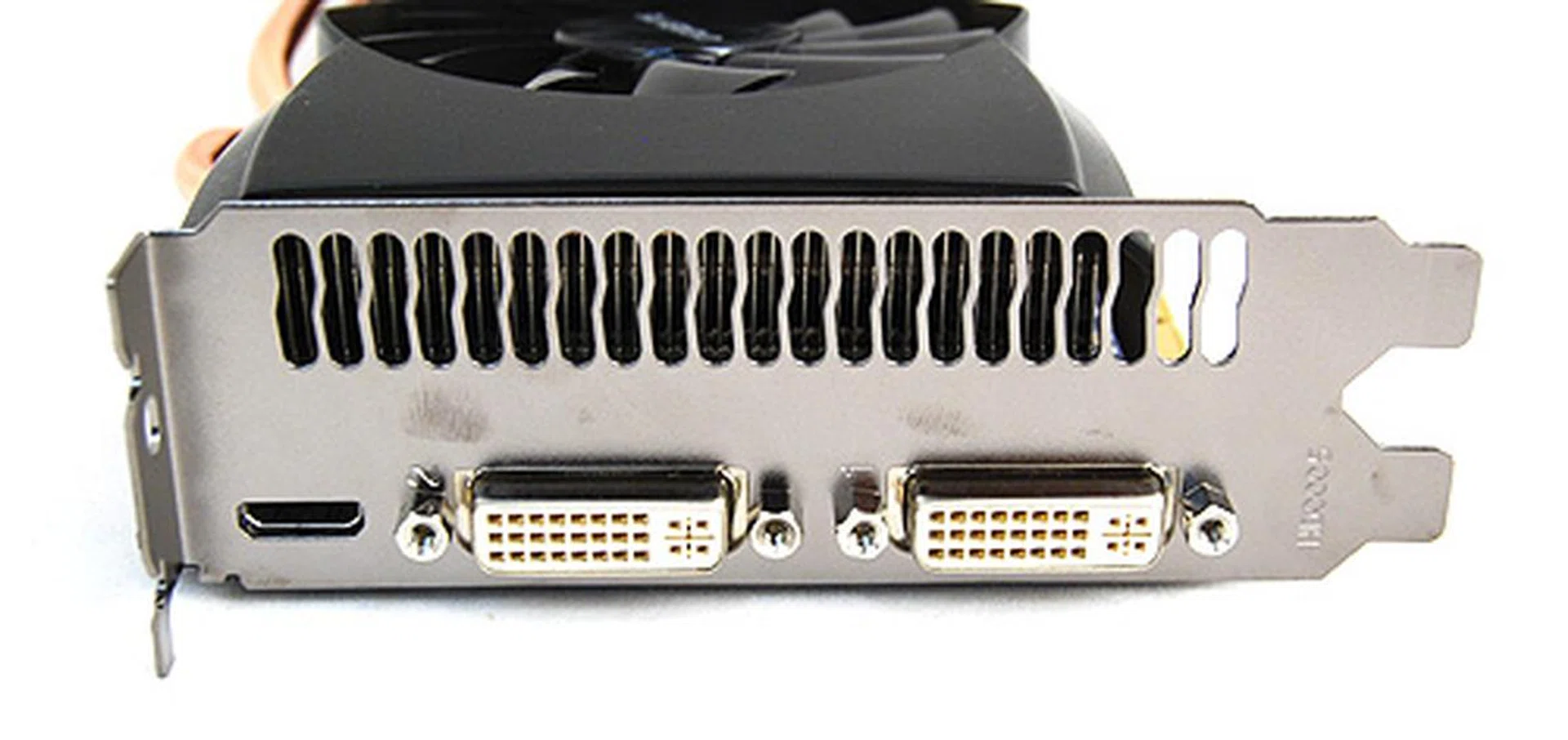
Video output options on the Gigabyte GTX 465 are identical to the reference card, which means two DVI ports and a single mini-HDMI port.
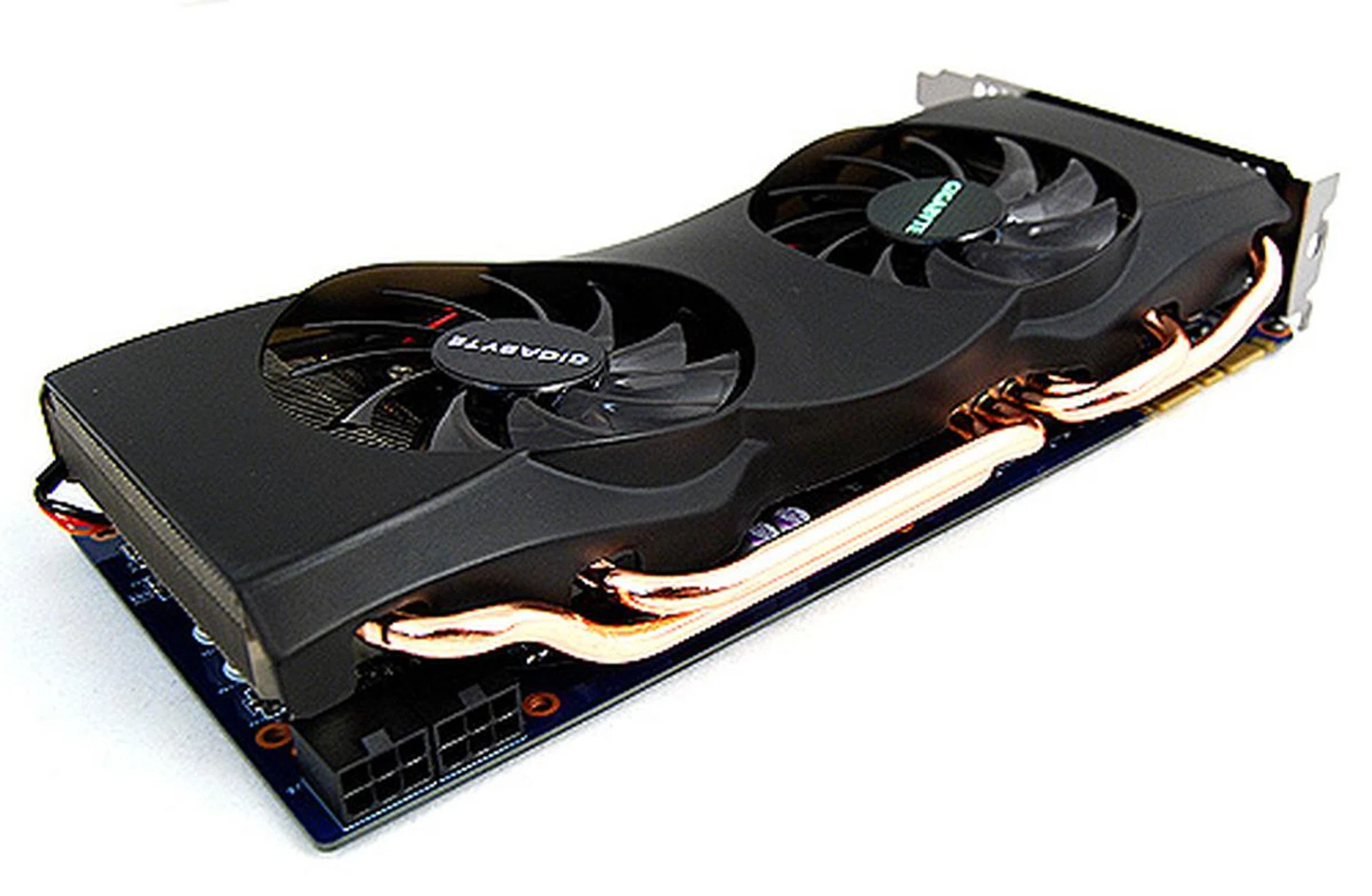
Apart from the four thick copper heat pipes which help dissipate heat evenly across the entire heatsink, the cooler also has fans which are specially inclined at an angle to provide better cooling.
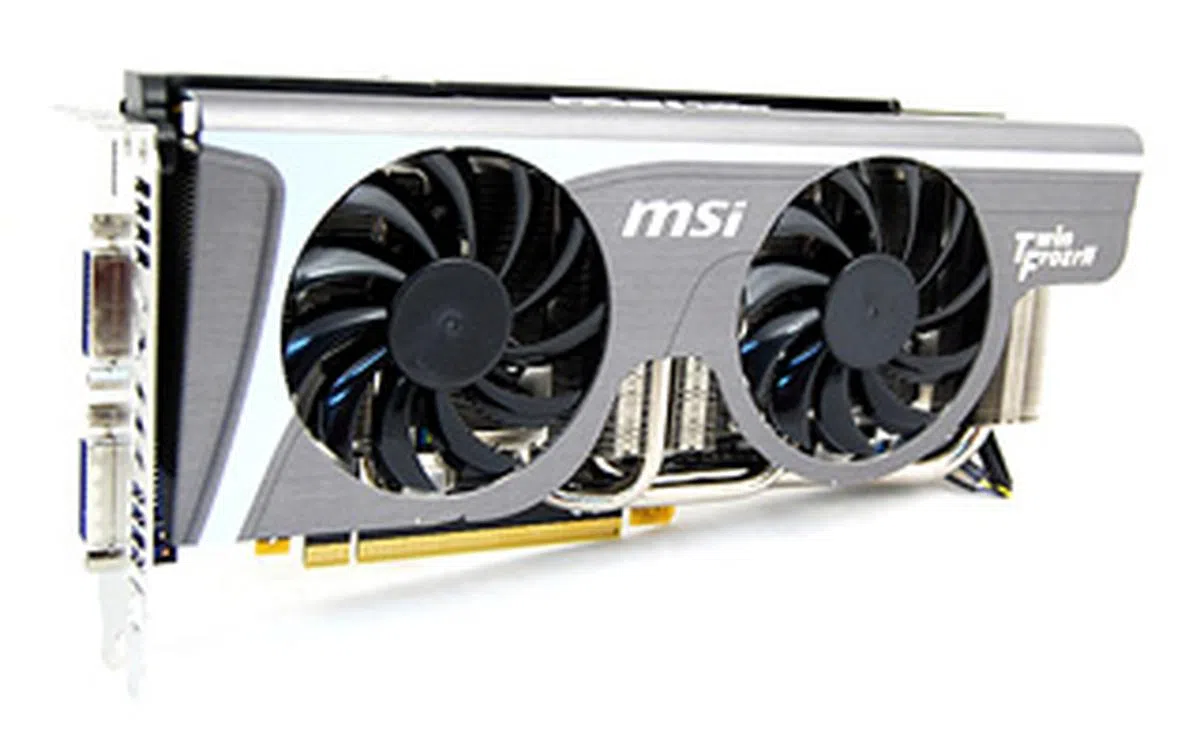
The MSI N465GTX Twin Frozr II
The MSI N465GTX Twin Frozr II is so named because of the special Twin Frozr II custom cooler that MSI fits on its higher-end cards. The cooler, which we have had good experience with, utilizes dual 80mm fans and an elaborate heatsink design that incorporates multiple cooling fins and heat pipes to help draw and dissipate heat quickly away from the GPU core.
That aside, the MSI N465GTX Twin Frozr II also comes with MSI's “Military Class Components”, which includes HI-C Caps for better voltage regulation and solid state chokes for better overclocking performance. Additionally, the N465GTX Twin Frozr II is also fully compatible with MSI's excellent Afterburner overclocking software, allowing users to tweak the card's core voltage for greater overclocking potential.
However, despite all the features the N465GTX Twin Frozr II packs, it comes with reference clock speeds, which is disappointing to say the least.
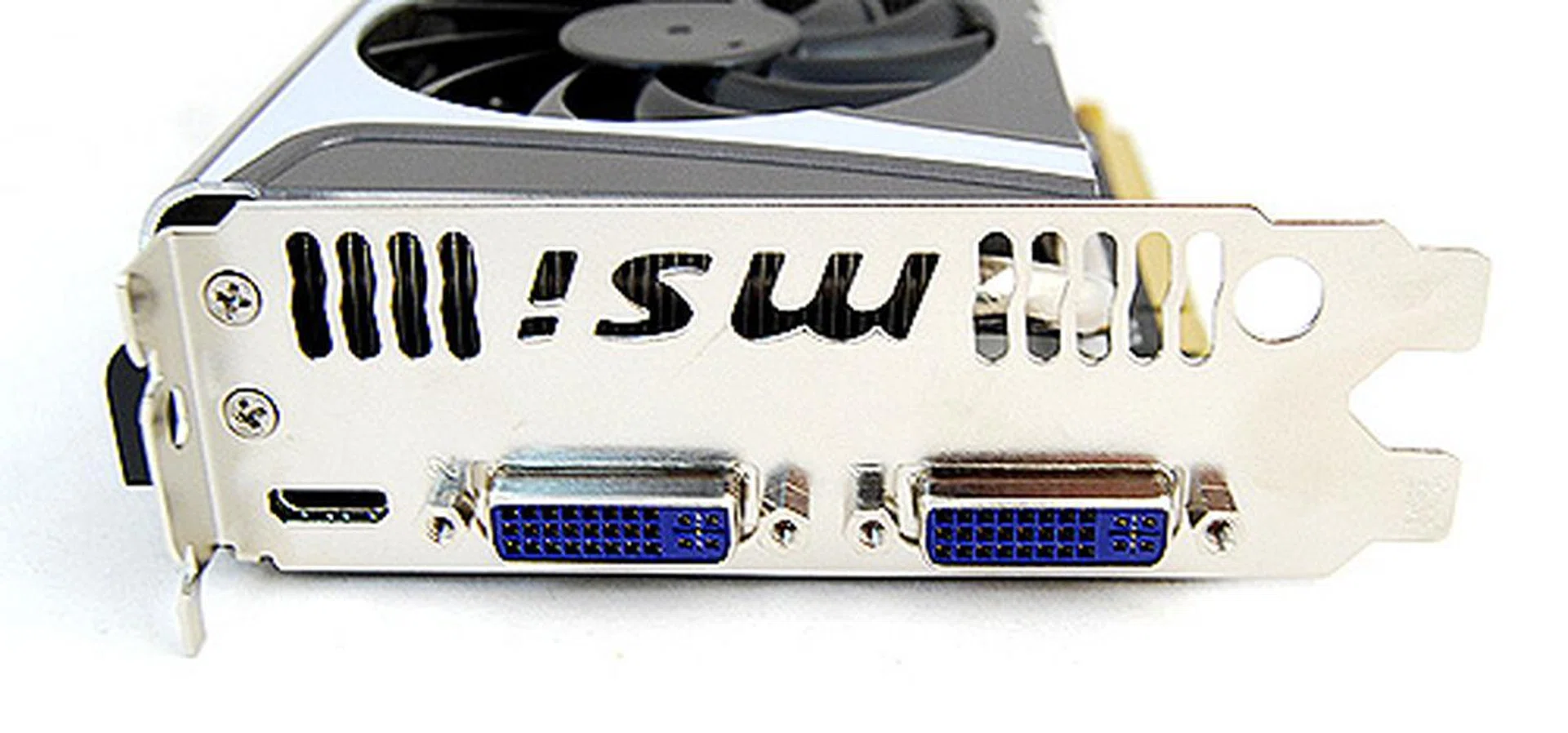
For video output, you get two DVI ports and a single mini-HDMI port.
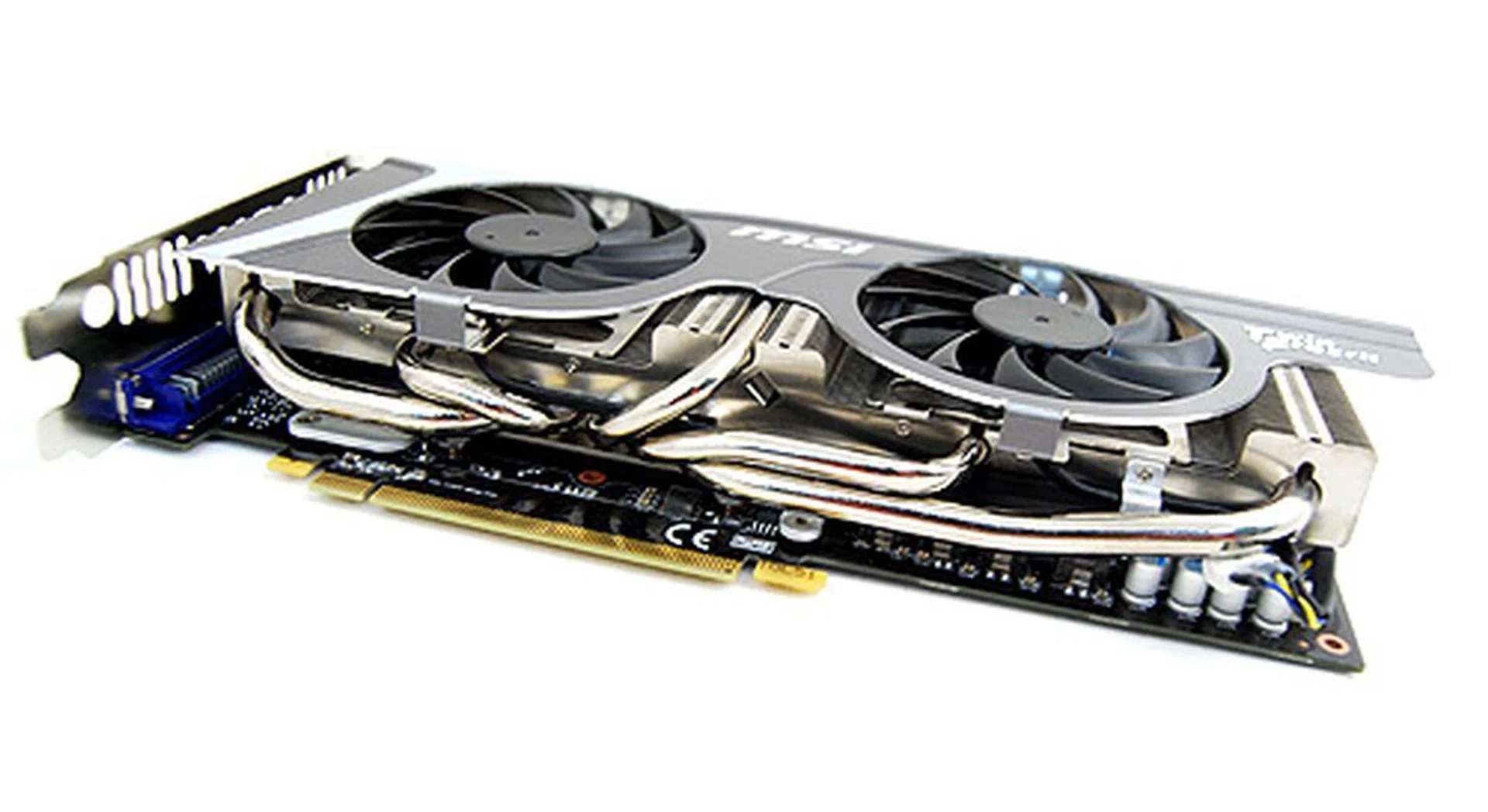
Some modifications have been made to the cooler to keep the ultra-hot Fermi chip cool. Here, we can see that it has a whopping five heat pipes.
The Palit GTX 465
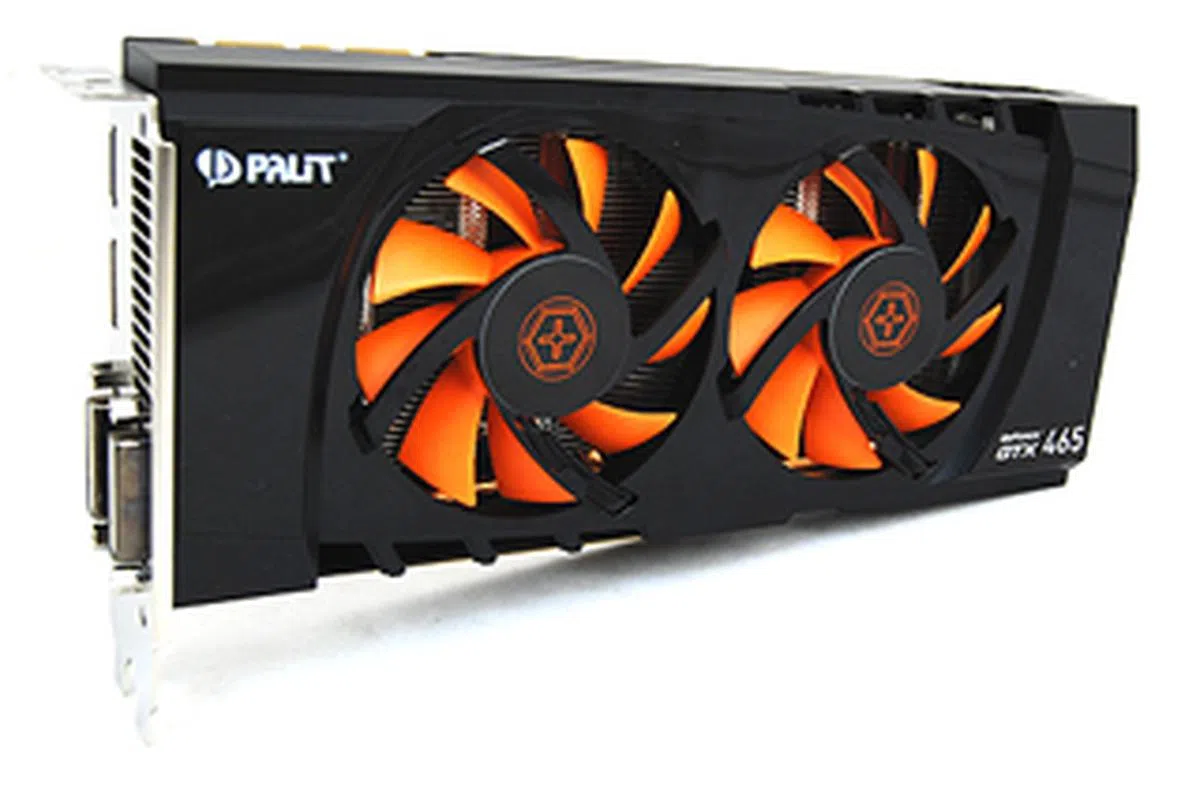
Our final GeForce GTX 465 card comes from Palit and it sports the same twin-fan cooler that we've seen being used in their take on the GeForce GTX 470. Apart from the eye-catching black and orange color scheme, the Palit GTX 465 is also unique in that it does away with the mini-HDMI port that comes with NVIDIA's GTX400 cards and instead offers the traditional HDMI port as well as and an additional DisplayPort.
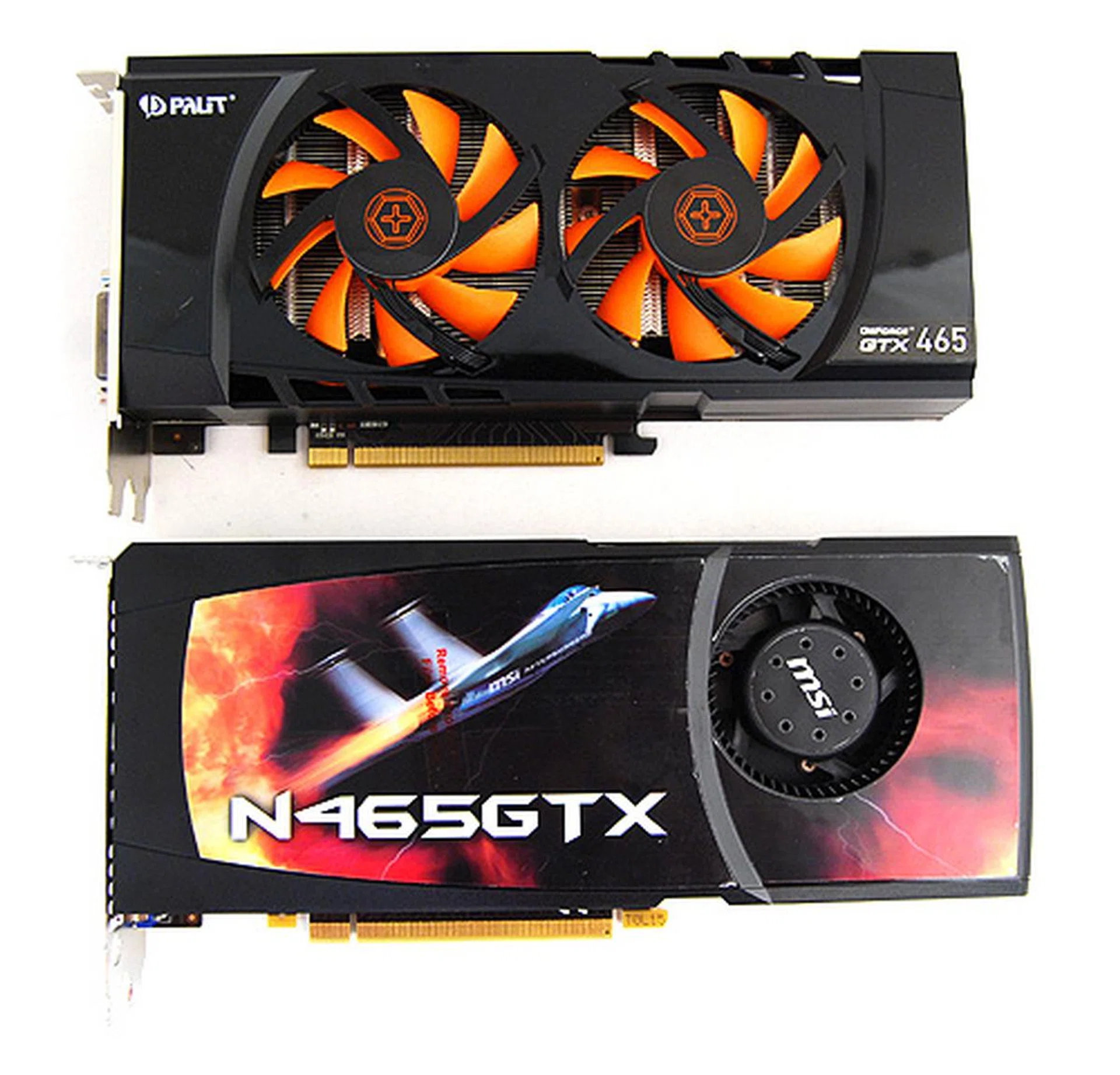
The Palit GTX 465 has a very attractive and funky black and orange color scheme.
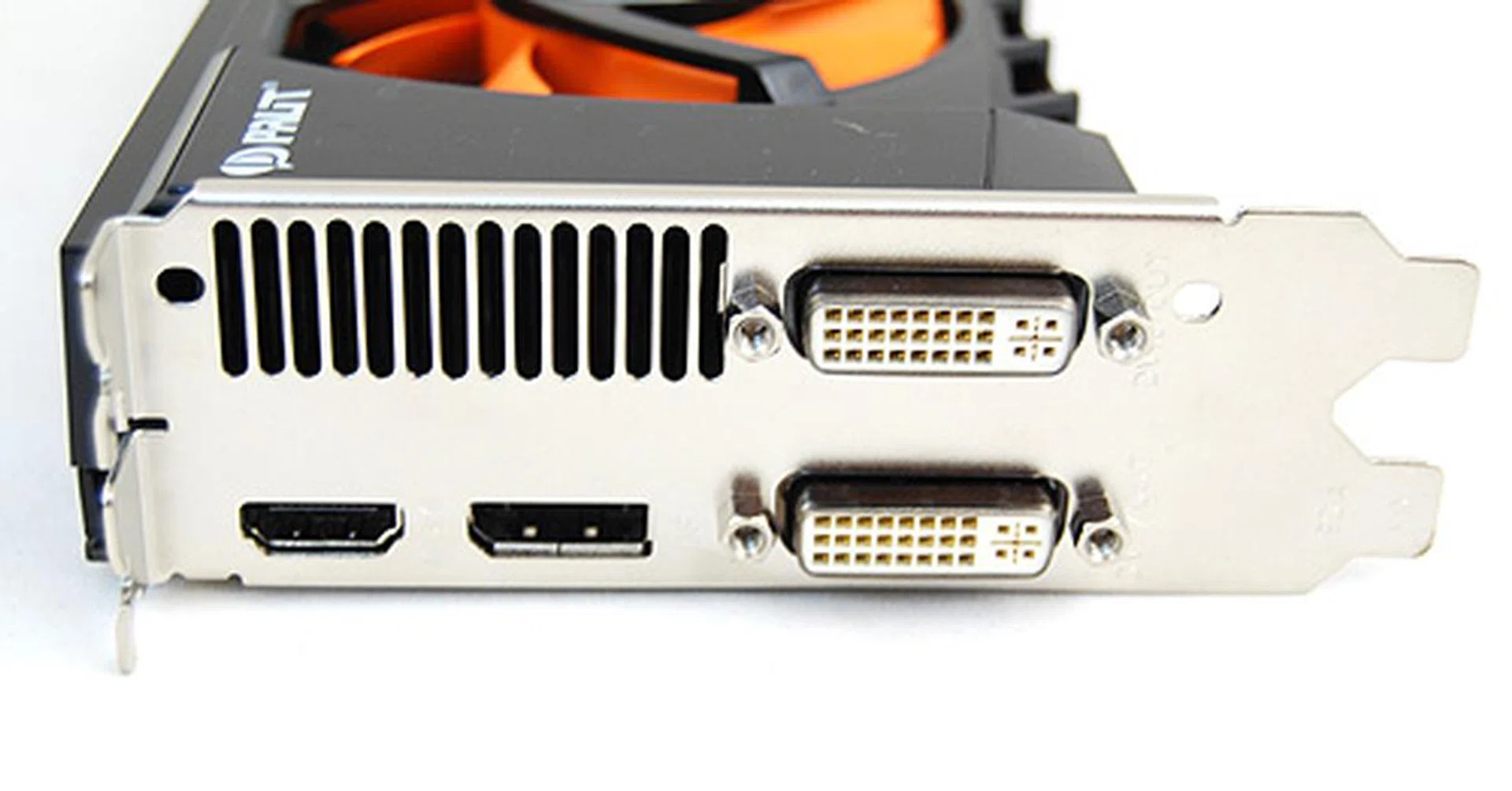
The Palit GTX 465 is unique in that apart from two DVI ports, it also has a DisplayPort and a more standard HDMI port.
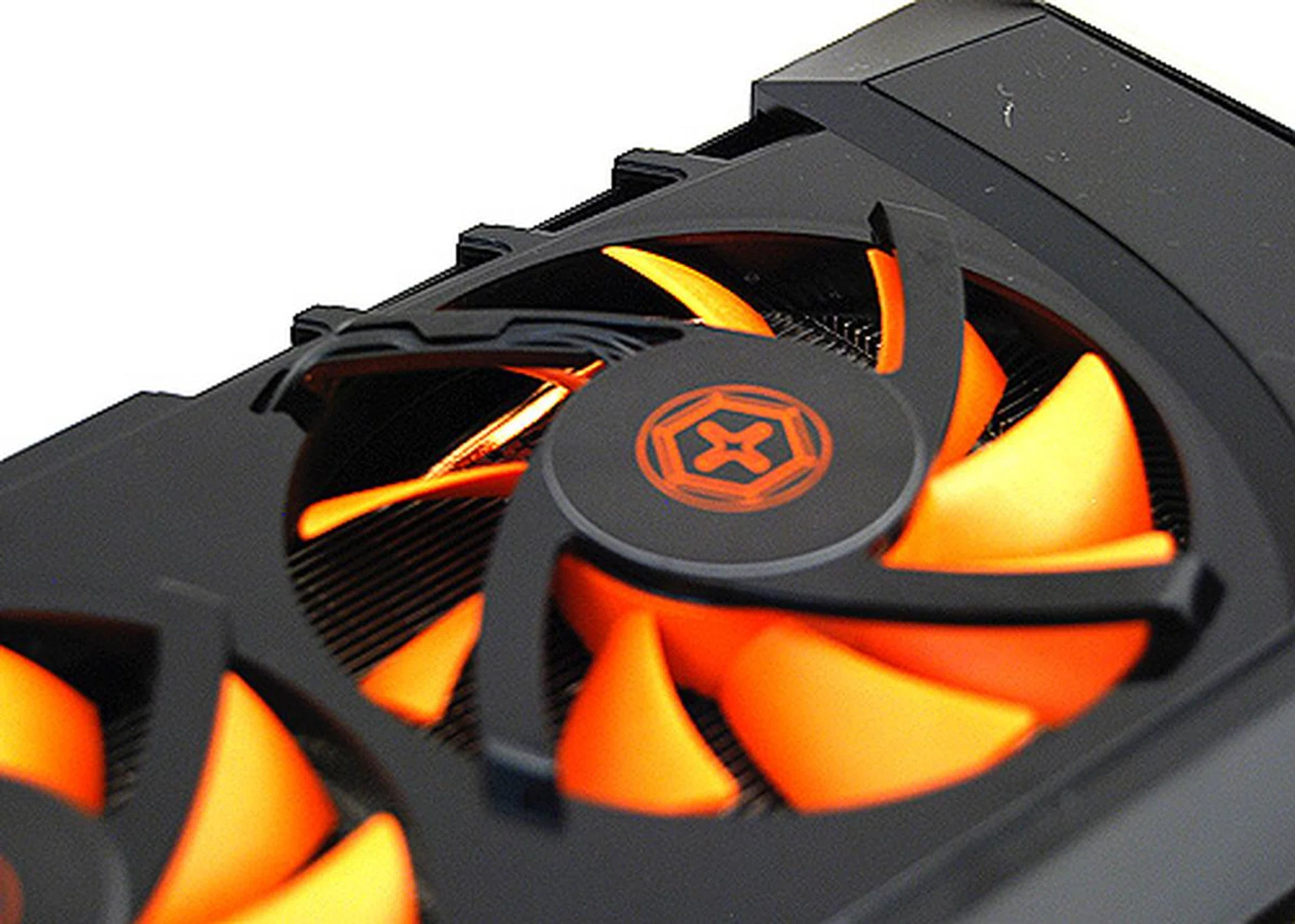
Taking a closer look at the cooler, we can see copper heat pipes peeking out from beneath the cooler cover.
Test Setup
The cards will be tested using our high-end X58 system with the following specifications:
- Intel Core i7-975 (3.33GHz)
- Gigabyte GA-EX58-UD4P motherboard
- 3 x 1GB DDR3-1333 OCZ memory in triple channel mode
- Seagate 7200.10 200GB SATA hard drive
- Windows 7 Ultimate
We'll be presenting our graphs a little differently for this article. After having tested all four GeForce GTX 465 cards, we have found their graphics performance to be identical, which is not suprising given that they all share reference clock speeds. Hence, we would not be listing down the individual scores for the four cards in our graphs. Instead, where raw performance is concerned, we'd be rating them collectively as the GeForce GTX 465.
However, we would be listing down individual scores of the cards for the temperature, power consumption and overclocking sections, and instead focus more on the efficiency of their customized coolers, power consumption and overclocking capability.
Moving on, with its reduced shader count, memory interface and framebuffer, it'll be interesting to see how the GeForce GTX 465 will perform against the the GeForce GTX 470. We've also included the GeForce GTX 285, NVIDIA's previous flagship single GPU card, to see if its quicker than the best from NVIDIA's last generation.
From the red camp, we'll be comparing the GeForce GTX 465 closely against the Radeon HD 5850 and HD 5830, since its price point is right smack between the two.
The full list of tested cards and their driver versions:
- MSI N465GTX-M2D1G (ForceWare 257.21)
- Gigabyte GTX 465 (ForceWare 257.21)
- MSI N465GTX Twin Frozr II (ForceWare 257.21)
- Palit GTX 465 (ForceWare 257.21)
- NVIDIA GeForce GTX 470 (ForceWare 197.41)
- NVIDIA GeForce GTX 285 (ForceWare 196.21)
- ATI Radeon HD 5850 (Catalyst 10.2)
- Radeon HD 5830 (Catalyst 10.5)
The list of benchmark used are as follows:
- Futuremark 3DMark Vantage
- Crysis Warhead
- Far Cry 2
- Warhammer: Dawn of War 2
- Battlefield Bad Company 2
- “Heaven" from Unigine v1.0
- S.T.A.L.K.E.R.: Call of Pripyat
3DMark Vantage Results
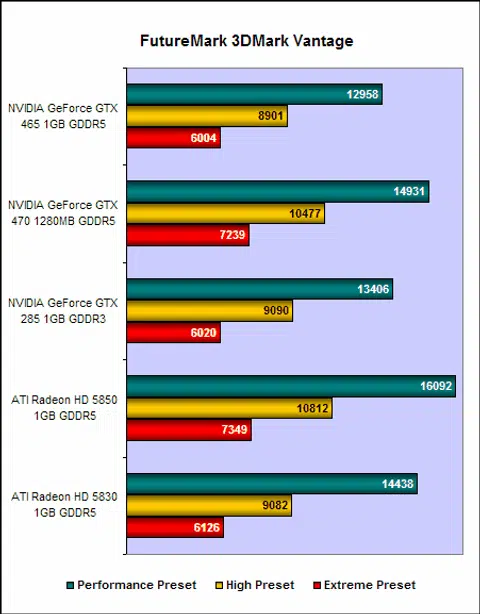
The GeForce GTX 465 began somewhat disappointingly on 3DMark Vantage, scoring well below the GeForce GTX 470 and was even beaten by the previous generation GeForce GTX 285, albeit narrowly. It had no answer against ATI's Radeon HD 5850 and even the less powerful HD 5830, which managed to beat the GeForce GTX 465 by a slight margin.
Crysis Warhead and Far Cry 2 Results
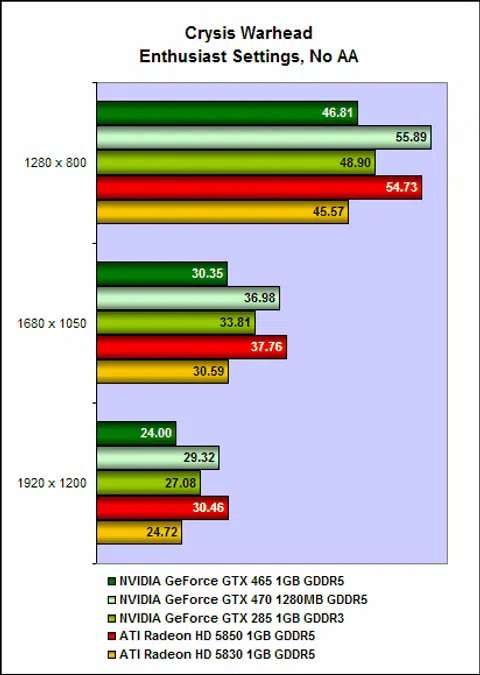
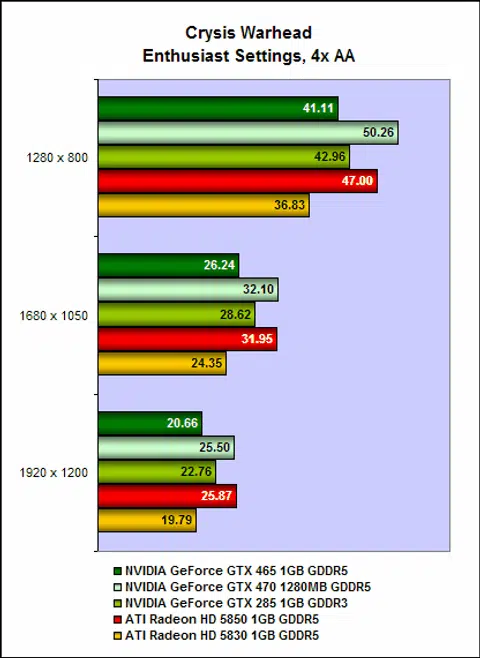
With its reduced shader count, the GeForce GTX 465 was noticeably slower than its GeForce GTX 470 sibling. In fact, on average, the GeForce GTX 465 was about 20% slower than the GeForce GTX 470. Also, despite sporting more CUDA cores, the GeForce GTX 465 also lost out to the older GeForce GTX 285. It seems that the hit in CUDA cores and the narrower 256-bit wide memory bus width is hurting performance quite a bit.
Additionally, the GeForce GTX 465 was also trumped by the Radeon HD 5850, but at least it was competitive against the Radeon HD 5830, taking a slight lead when we enabled anti-aliasing.
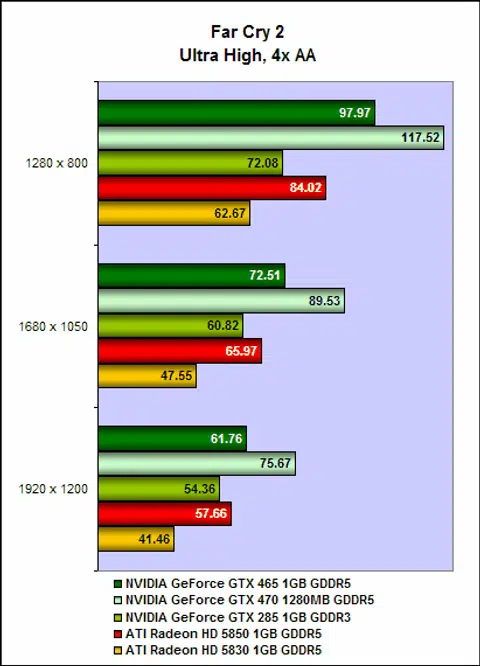
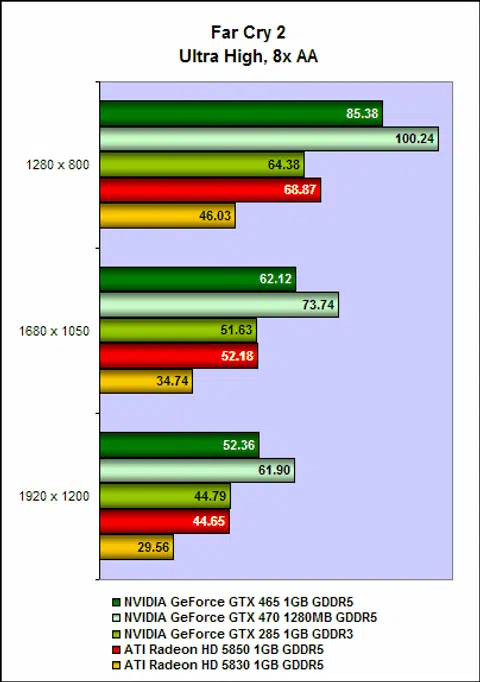
NVIDIA's GeForce cards have always performed well on Far Cry 2 and it is no different with the GeForce GTX 465, as it absolutely blitzed both the Radeon HD 5850 and HD 5830. Overall, it was about 15 - 20% quicker than the Radeon HD 5850. It is also markedly quicker than the GeForce GTX 285, NVIDIA's previous flagship single GPU card.
Dawn of War 2 and Battlefield Bad Company 2 Results
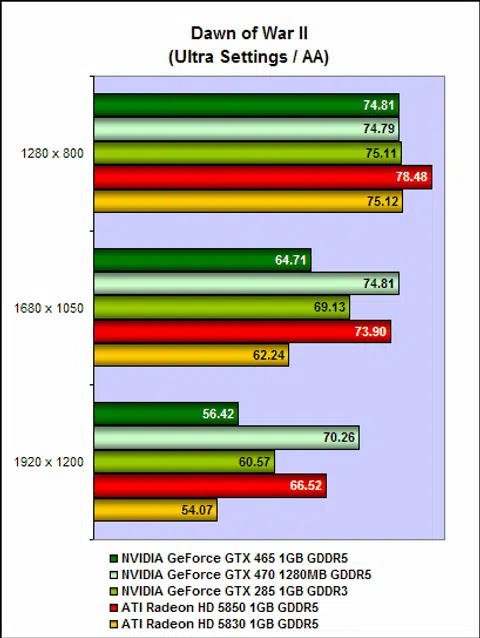
The GeForce GTX 465 started out well on Dawn of War 2, but its performance faded as we upped the resolution, losing out considerably to the GeForce GTX 470 and Radeon HD 5850 and even the older GeForce GTX 285. If it's any consolation, it manages to get the better of the Radeon HD 5830.
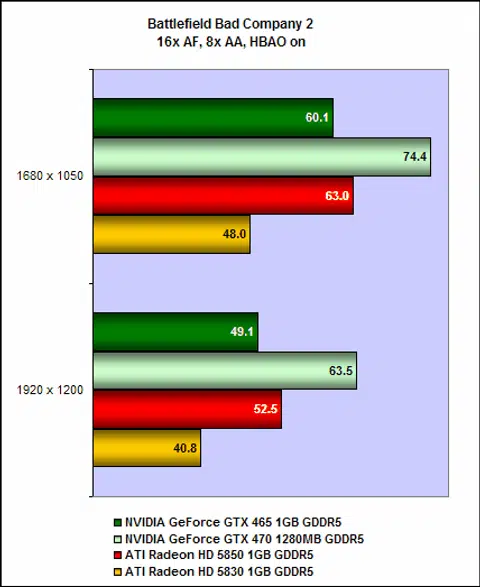
In Battlefield: Bad Company 2, The GeForce GTX 465 once again finds itself lagging behind the GeForce GTX 470, and by a considerable margin too - around 25%. It, however, manages to stay within striking distance of the Radeon HD 5850 and manages to convincingly outperform the Radeon HD 5830.
Unigine "Heaven" Results
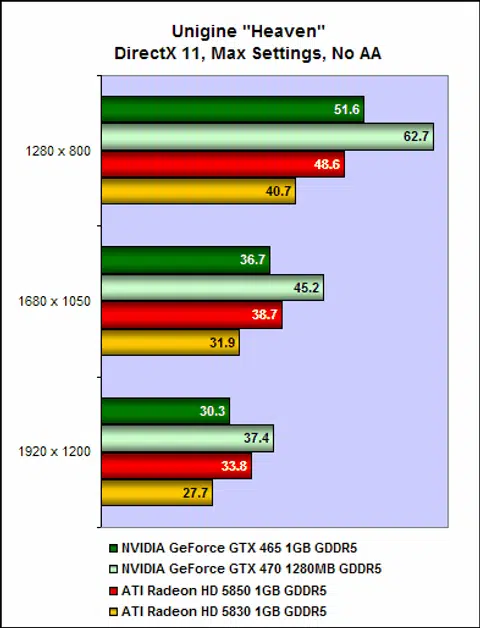
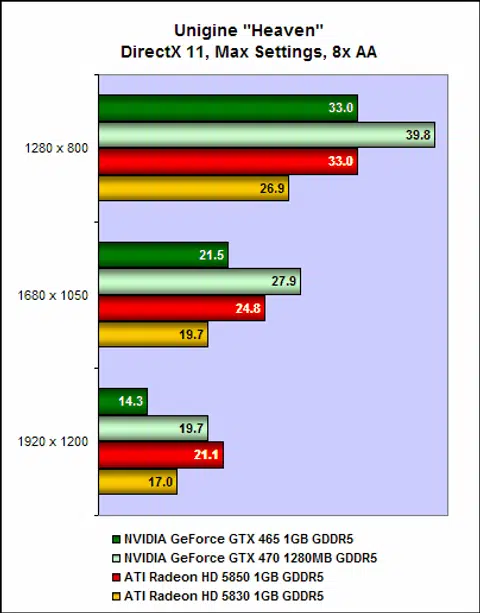
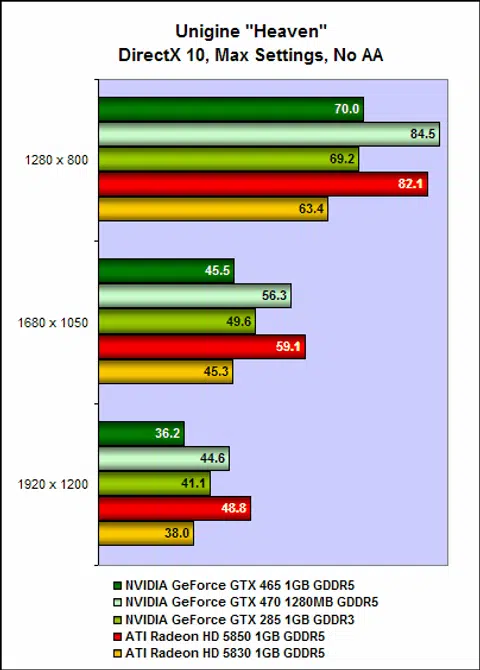
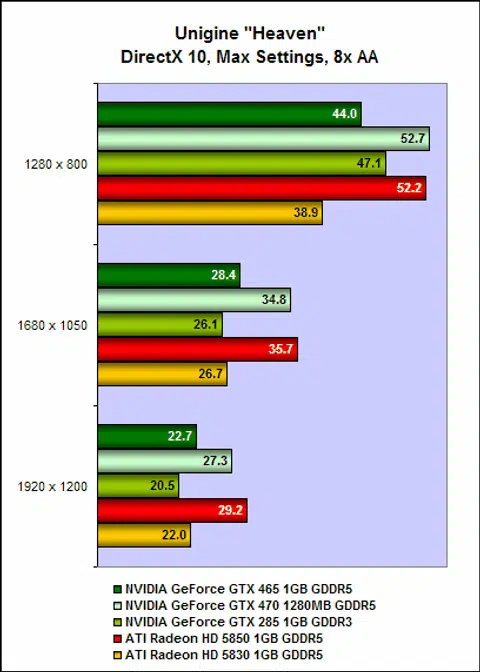
On Unigine's “Heaven” benchmark, the GeForce GTX 465 again found itself sandwiched by the Radeon HD 5850 and HD 5830. And once more, it found itself left in the wake of the GeForce GTX 470, which was much quicker. Running on the DirectX 10 API, the Radeon HD 5830 was able to keep pace with the GeForce GTX 465, an indication that NVIDIA's GPU are more well suited to tessellation heavy applications.
DirectX 11 Results
DirectX 10 Results
S.T.A.L.K.E.R.: Call of Pripyat Results
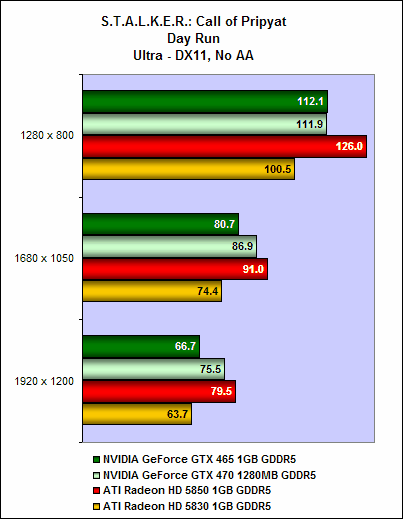
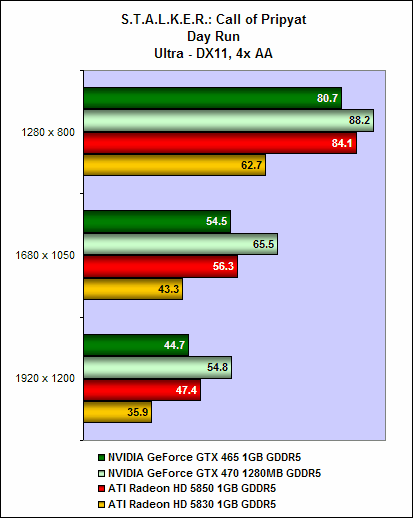
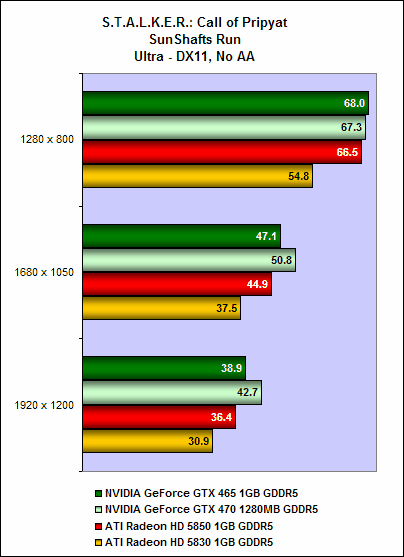
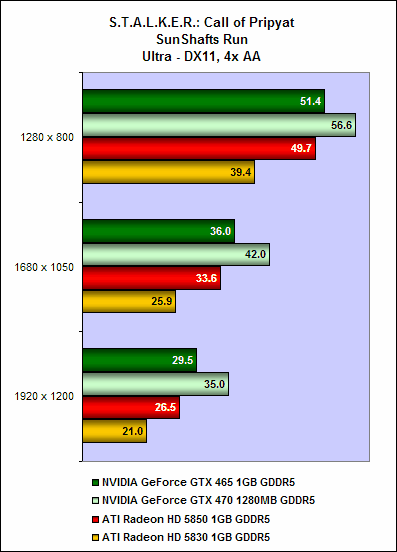
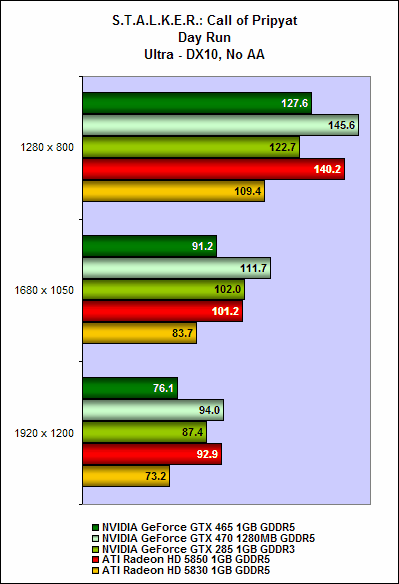
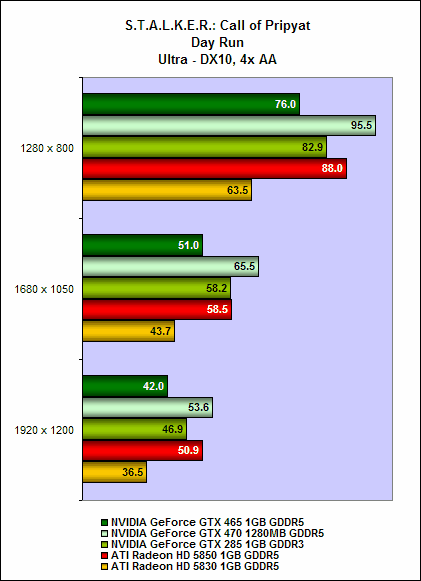
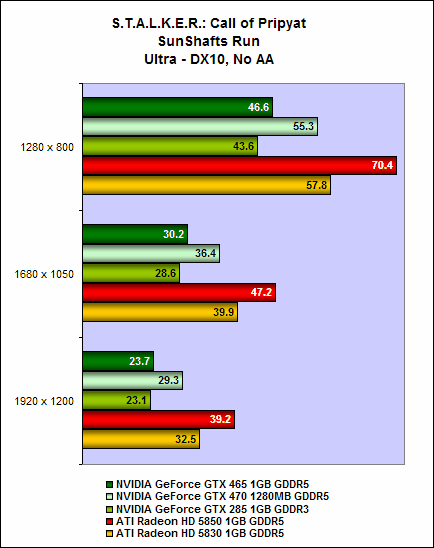
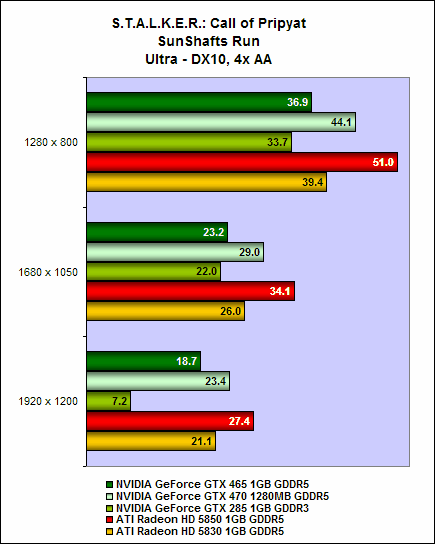
The GeForce GTX 465 performed quite well on S.T.A.L.K.E.R.: Call of Pripyat. While it was completely outclassed on the Day Run without anti-aliasing enabled, it managed to fight back and match the Radeon HD 5850 when we turned on anti-aliasing. And on the more demanding Sunshafts run, it was able to outperform the Radeon HD 5850.
However, it was a different story when we ran S.T.A.L.K.E.R.: Call of Pripyat with DirectX 10, as the GeForce GTX 465 was unable to cope with the Radeon HD 5850 and on the Sunshafts run, it was matched and even outperformed by the less powerful Radeon HD 5830. This suggests that NVIDIA's latest cards are better optimized for DirectX 11 applications.
DirectX 11 Results
 |  |
 |  |
DirectX 10 Results
 |  |
 |  |
Temperature
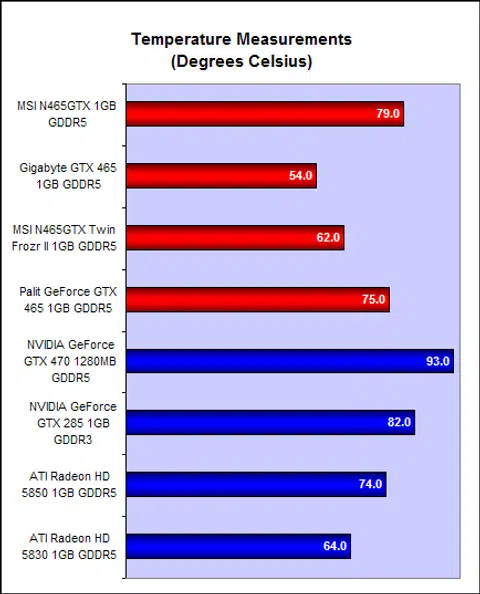
When it came to operating temperature, our reference GeForce GTX 465 (represented by MSI's N465GTX standard edition) notched up a maximum reading of 79 degrees Celsius, which is not cool by any means, but it is a massive improvement over the 90+ degrees Celsius readings of the GeForce GTX 480 and GTX 470 cards.
As for the custom-designed cards, the Gigabyte GTX 465, with its unique inclined dual fans, recorded the lowest reading of 54 degrees Celsius. This is a whopping 25 degrees Celsius cooler than a stock card, which is a stunning result.
On the other hand, the MSI N465GTX Twin Frozr recorded a respectable 62 degrees Celsius, which makes it 17 degrees cooler than a stock card, so it's nothing to be ashamed of either.
And lastly, the Palit GeForce GTX 465's maximum reading was a considerable 75 degrees Celsius, which makes it only a tad cooler than a reference card. So while the card might look fancy, it's not really effective.
Power Consumption
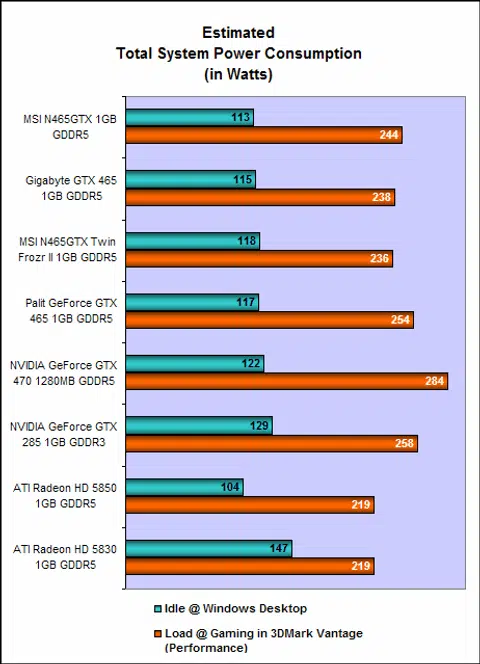
As we can see from the graphs, the new GeForce GTX 465 also consumes markedly less power compared to the Geforce GTX 470. Also, all four cards recorded roughly the same numbers. However, the GeForce GTX 465's figures are still higher compared to ATI's Radeon HD 5850 and HD 5830.
Overclocking
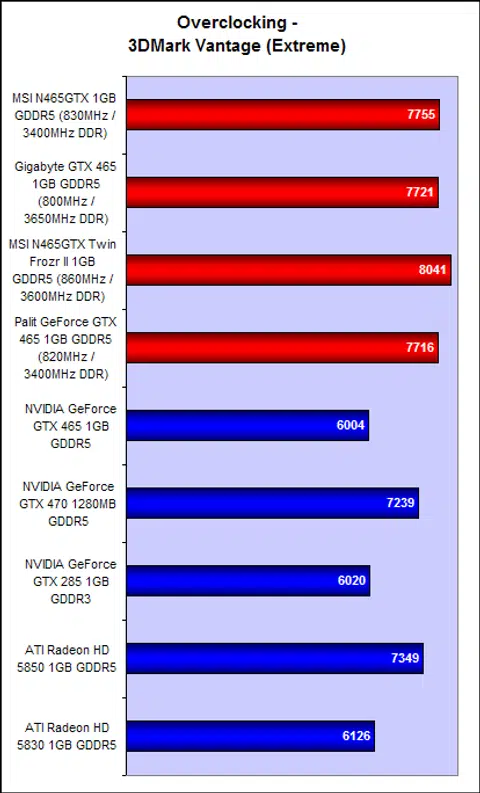
If there's one thing we like about the GeForce GTX 465, it is its amazing overclocking ability. All four cards tested managed at least 800MHz at the core, and considering the card's default core clock speed is only 607MHz, this is simply astounding.
The best overclocker, however, is MSI's N465GTX Twin Frozr II, which managed to attain a maximum overclocking state of 860MHz at the core and 3600MHz DDR at the memory - a whopping 252MHz and 192MHz DDR boost respectively. Running 3DMark Vantage with these clock speeds gave us 8041 3DMarks, an improvement of over 33%! This also means that with its boosted clock speeds, it surpasses both the GeForce GTX 470 and Radeon HD 5850.
The other three cards all managed to attain over 7700 3DMarks, which is an improvement of over 28% when compared to the scores attained by a bone stock GeForce GTX 465.
A Step in The Right Direction
Overall, we have mixed feelings about the GeForce GTX 465. In terms of raw graphics performance, is isn't quite fast as the GeForce GTX 470. The cut in the processing cluster resulted in fewer CUDA cores, narrower memory bus width, and reduced frame buffer size have all certainly played a part in the drop in performance.
It's performance is somewhere in between that of the Radeon HD 5850 and HD 5830, and if we had to pick, we would say it leans slightly more towards the latter. And so with that in mind, we would have to say that NVIDA's launch price of US$279 is a tad steep, considering the Radeon HD 5850 and HD 5830 are going for around US$290 and US$220 respectively.
And to add, the GeForce GTX 465 is still a bit of a power hog. It's not as quick as the Radeon HD 5850, but the HD 5850 still trumps it in the power consumption department. Nevertheless, the GeForce GTX 465 is less power hungry than the GeForce GTX 470 and so it's a small step in the right direction for NVIDIA.
Fortunately, however, compared to the scorching hot GeForce GTX 480 and GTX 470, the new GeForce GTX 465 runs remarkably cooler - even more so when you get a card with a decent customized cooler. This makes the card easier to live with on a daily basis, seeing that special precautions need not be taken to ensure the card doesn't overheat.
However, there's another side to the GeForce GTX 465. As revealed in my recent blog post, certain GeForce GTX 465 cards can easily be turned into more powerful GeForce GTX 470 ones simply by flashing the card's BIOS. What this means is that aside from the BIOS, the GeForce GTX 465 is no different from the GeForce GTX 470.
From an opportunistic end-user's point of view, this is of course good news. Getting more for less, that's a good deal isn't it? But as we've addressed in the blog post, what this also means is that while the GeForce GTX 465 is targeted at the mainstream to high-end market, it is really in fact a watered-down version of NVIDIA's higher-end premium SKUs.
Taking the GeForce GTX 465 as it is, it's hard to offer our hearty recommendation, because, despite its incredible overclocking ability, the fact is that if you are willing to stretch your budget a little, the more accomplished Radeon HD 5850 can be had. And this is especially true in our local context, as most GeForce GTX 465 and Radeon HD 5850 cards are priced around the same S$430 - S$450 mark. But for those who are willing to risk getting a GeForce GTX 465 and then flash the BIOS in hopes of getting a GeForce GTX 470, then the GeForce GTX 465 could very well be the bargain of the year.
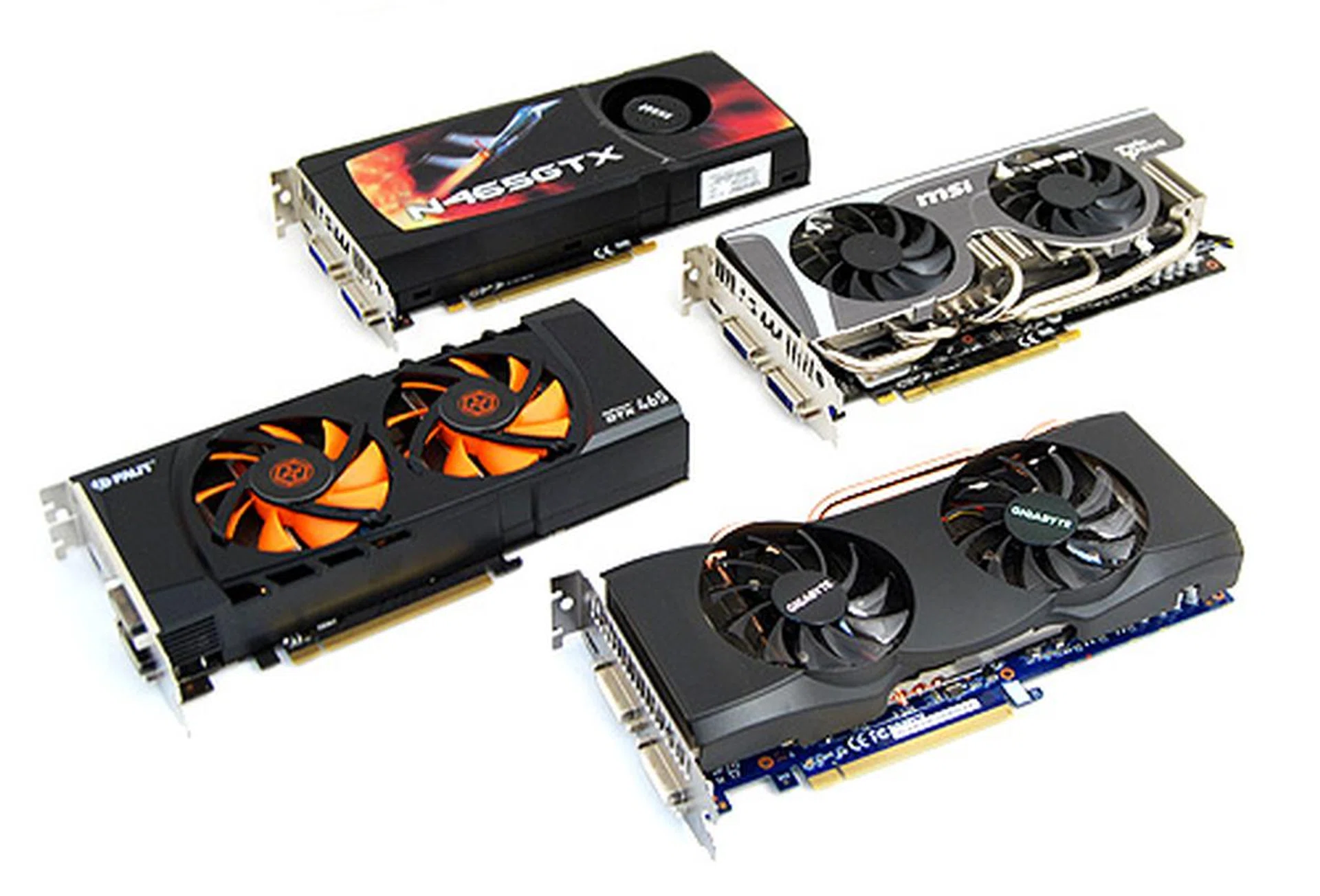
The MSI N465GTX Twin Frozr II stands out for its amazing overclocking ability, whereas the Gigabyte GTX 465 was as cool as the proverbial cucumber.
As for the individual cards we have here, the MSI N465GTX is a decent enough take on NVIDIA's reference design, especially since its fully compatible with MSI's Afterburner overclocking software.
With the remaining three cards all sporting reference clock speeds, it was impossible to judge them based on raw performance alone. Furthermore, all three are priced aggressively at around US$289. However, the MSI N465GTX Twin Frozr had decent cooling and was our most able overclocker, and as such gets our Overclockable Award. On the other hand, the Gigabyte GTX 465 ran the coolest and offered decent overclocking performance. Finally, the Palit loses out slightly as its cooler wasn't as effective as Gigabyte's nor MSI's, but it did have the best set of connectivity options.
| |
|  |
|  |
| |
| |

Our articles may contain affiliate links. If you buy through these links, we may earn a small commission.