
NVIDIA GeForce 8200 mGPU Preview
NVIDIA officially lifts the veil on the GeForce 8200 mGPU chipset, which boasts the first retail integrated graphics solution capable of 100% HD decoding of MPEG-2, VC-1 and H.264. Finally, a proper low cost chip to build a HD HTPC around, but is it still too soon? Read our preview to find out.
High Definition Integration
Integrated Graphics' HD Woes
Integrated graphics solutions have had their primary roles changed over the years from trying to offer decent graphical performance (and failing), to being cost effective convergence platforms in HTPC builds. Then came the whole high definition (HD) era, which again negated the role of integrated graphics in the realm of obsolescence. HDMI became a bigger part of the problem, as well as hardware decoding of new HD video CODECs for Blu-ray and HD DVD content. The biggest players in the game are AMD and NVIDIA, and yet, the chipsets we have today still leave us wanting. The AMD 690G, NVIDIA GeForce 7150 and GeForce 7050 all include basic HDMI/HDCP support, but no hardware H.264/AVC nor proper VC-1 acceleration. They are also lacking in the audio department, being unable to support multi-channel audio over HDMI. These stumbling blocks make the HDMI support on these chipsets seem almost irrelevant (other than just to have a single connection for audio and video) as one cannot really use the onboard IGP as the primary driver for Blu-ray/HD DVD content if you're building a HD HTPC.
Menage a trois
Intel has actually become somewhat of a third party in the scene as they've been continuously improving on their own IGP solutions over the past two years. Their latest Intel G35 chipset for example, beat NVIDIA and AMD to be the first IGP chipset to feature native 8-channel LPCM output via HDMI, but the chipset still has no support for H.264/AVC hardware decoding, and Intel's drivers aren't all that developed yet. So, the search for a proper HTPC platform goes on.
NVIDIA GeForce 8200
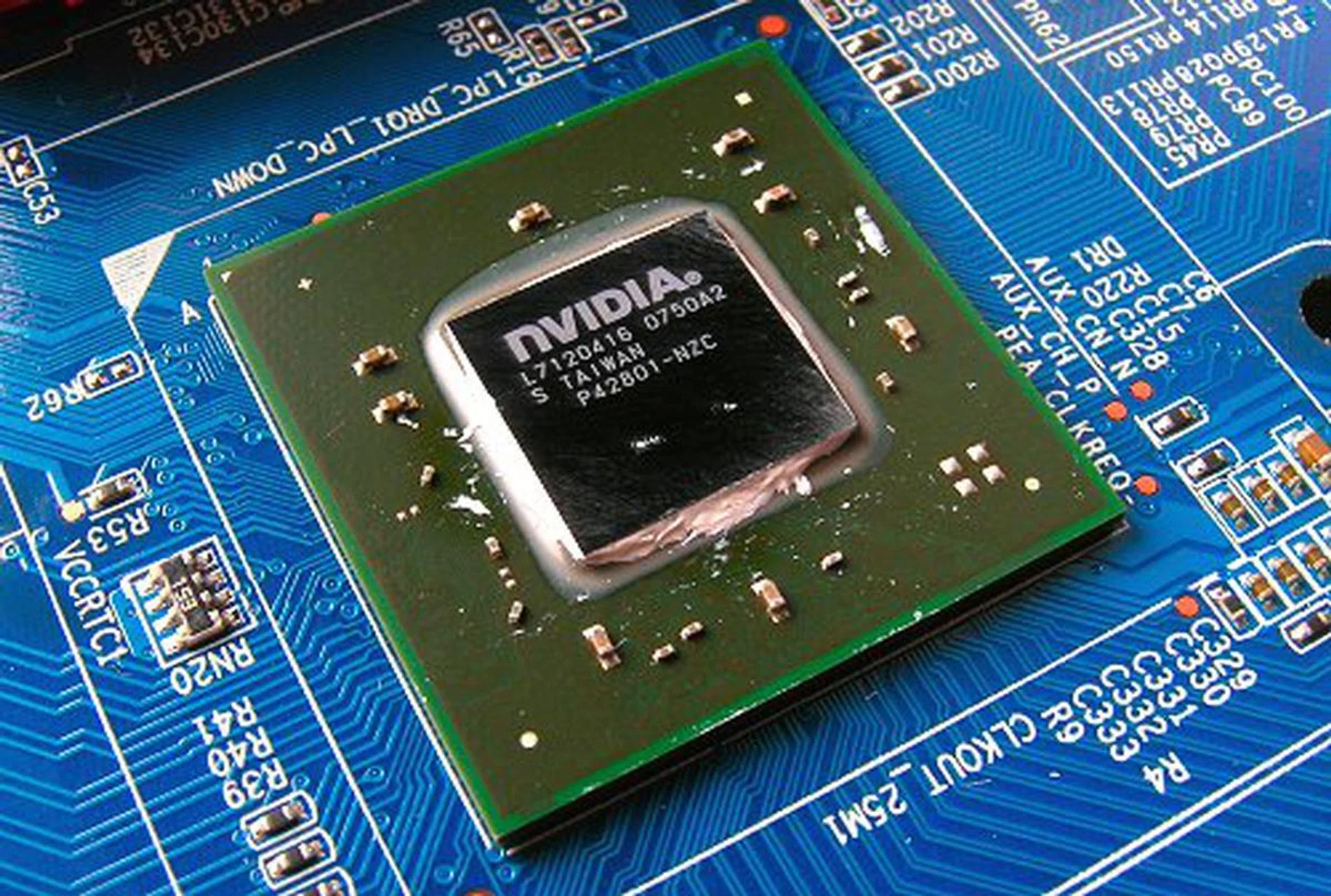
The NVIDIA GeForce 8200 is a single chip core logic chipset with integrated DX10 graphics and a powerful video processor.
In comes the NVIDIA GeForce 8200 mGPU, codenamed MCP78S, the newest integrated graphics chipset to come from the Big Green. Now, before we go on back to topic, the GeForce 8200 is an AMD AM2+ chipset, which makes it the successor to the GeForce 7050 PV/nForce 630a chipset. This time, the GeForce 8200 is a single chip solution, supporting AMD Phenom processors and HyperTransport 3. Specification-wise, the chipset features twelve USB 2.0 ports, one Gigabit LAN MAC with NVIDIA FirstPacket technology and HD Audio support. Its MediaShield storage solution offers native support of six SATA 3.0Gbps and two IDE drives. In terms of expansion capability, the chipset is capable of supporting one x16 PCIe 2.0, two PCIe x1 and up to five PCI slots. Besides supporting PCI Express 2.0 for a discrete graphics card, the rest of the features that make up the GeForce 8200 mGPU is pretty much standard for an entry level solution.
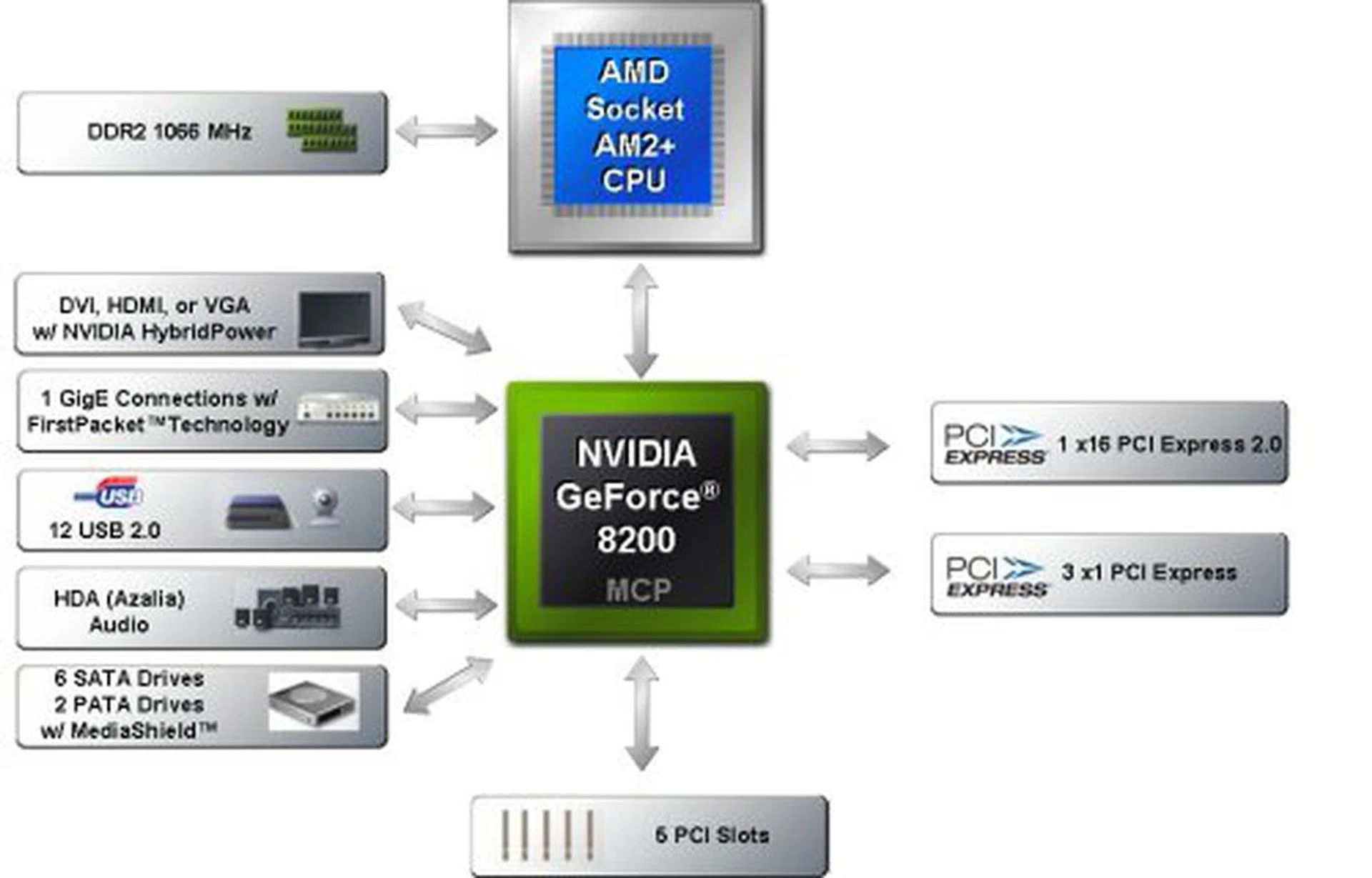
NVIDIA GeForce 8200 MCP block diagram.
As its name implies the GeForce 8200 mGPU is a DirectX 10 compliant graphics chip based on the GeForce 8 architecture, and is fully Windows Vista Premium certified. It has a 500MHz core clock and 16 stream processors running at 1200MHz. The GeForce 8200 will also be NVIDIA's first chipset to bring Hybrid SLI to the table (you can read more about Hybrid SLI in our in-depth article ).
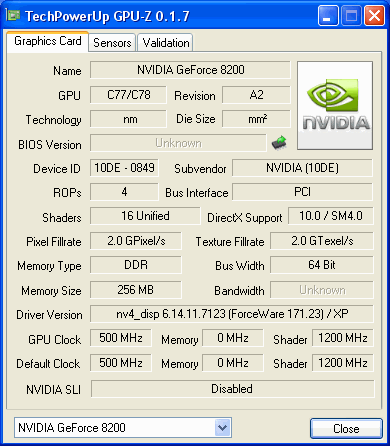
GPU-Z screenshot of GeForce 8200 features.
HD Comes Full Circle, Almost
The true gem of the GeForce 8200 isn't actually is 3D performance or DX10 support, but its video capabilities. The GeForce 8200 will feature a complete PureVideo HD engine, capable of 100% hardware acceleration of MPEG-2, VC-1 and H.264/AVC video streams. NVIDIA's hasn't confirmed which flavor of PureVideo HD powers the GeForce 8200, but it's surely a newer derivative of the VP2 engine that provides full GPU-based HD video decode and acceleration. The chipset also comes with HDMI 1.3a compliance as well as being able to handle multi-channel LPCM audio output through HDMI as well. This makes the GeForce 8200 the first integrated graphics solution to offer a real solution for low cost HTPC replacement that will fully offload all HD decoding to the GPU. Still, it isn't perfect yet. While HDMI 1.3a compliant, the GeForce 8200 doesn't support the new 12 and 16-bit color depths capable of the standard. Also, we understand that the chipset will not support transporting Dolby TrueHD and DTS-HD Master Audio streams via HDMI.
In a nut shell, the GeForce 8200 brings one new technology to the table and upgrades another. Time will tell if Hybrid SLI will really be able to bring merit to the value segment as far as PC gaming performance is concerned, but in the mean time, PureVideo HD and HDMI 1.3a is looking real good for HTPC enthusiasts - if it works as advertised.
GeForce 8200 on the Chopping Board
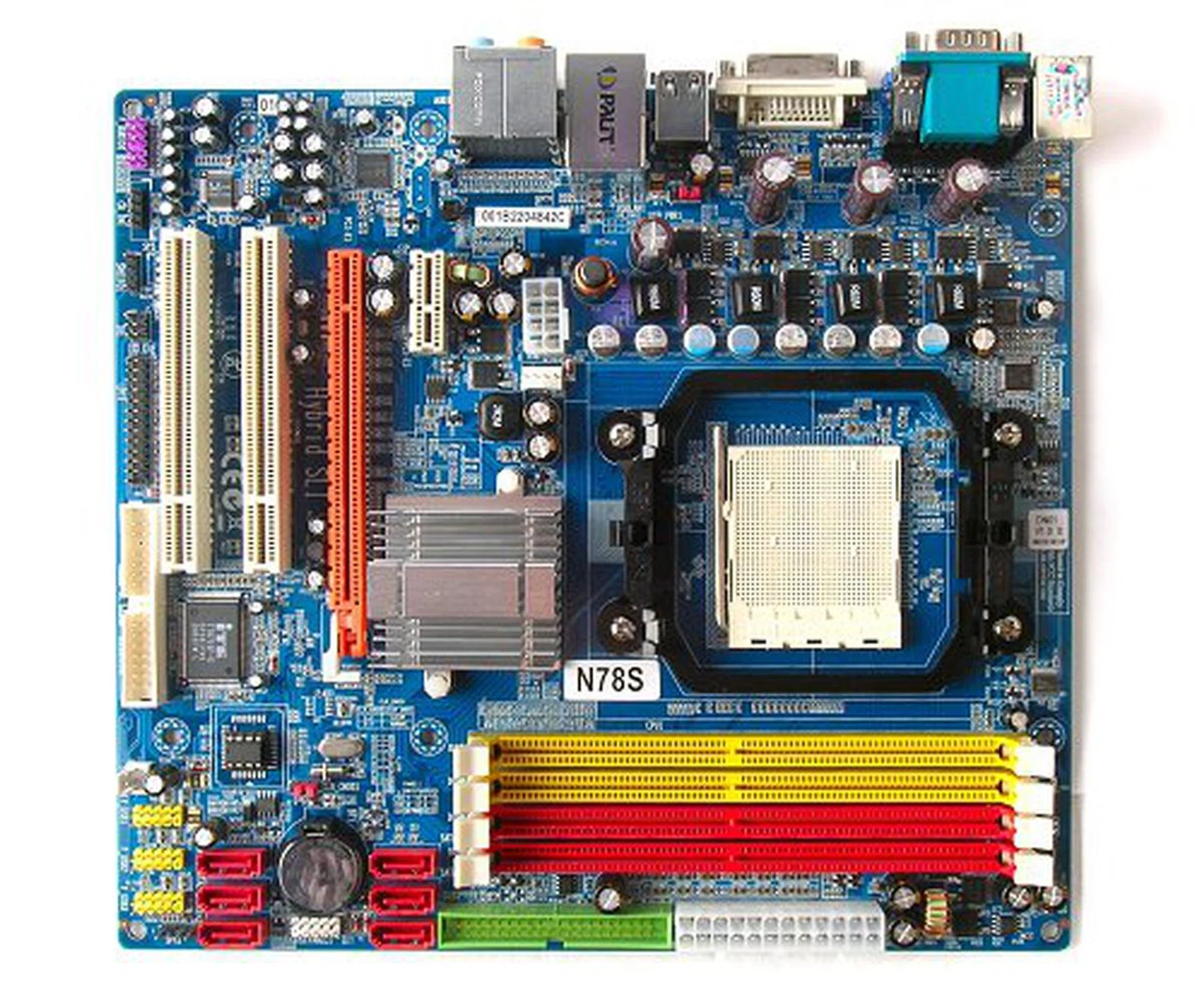
Palit N78S, one of the first few GeForce 8200 boards available.
The Palit N78S is one of the first GeForce 8200 motherboards to reach our labs. As expected, the board has a microATX form factor designed for entry-level systems and low noise HTPC enclosures. The board itself is very packed as Palit has included support for all onboard components here. As an AM2+ board, the N78S carries four DDR2 DIMM slots capable of up 8GB RAM. It supports DDR2-800 on older AM2 CPUs and up to DDR2-1066 if you happen to get your hands on a Phenom. Storage support is all handled natively by the MCP, and the board features all six SATA 3.0Gbps ports as well as one IDE connector. Much like all newer nForce chipsets, the GeForce 8200's SATA controller features AHCI. So, while setting up the N78S, you'll have to enable AHCI mode from the BIOS. Also, remember to make a set of the latest NVIDIA AHCI driver floppy images before beginning your OS installation.
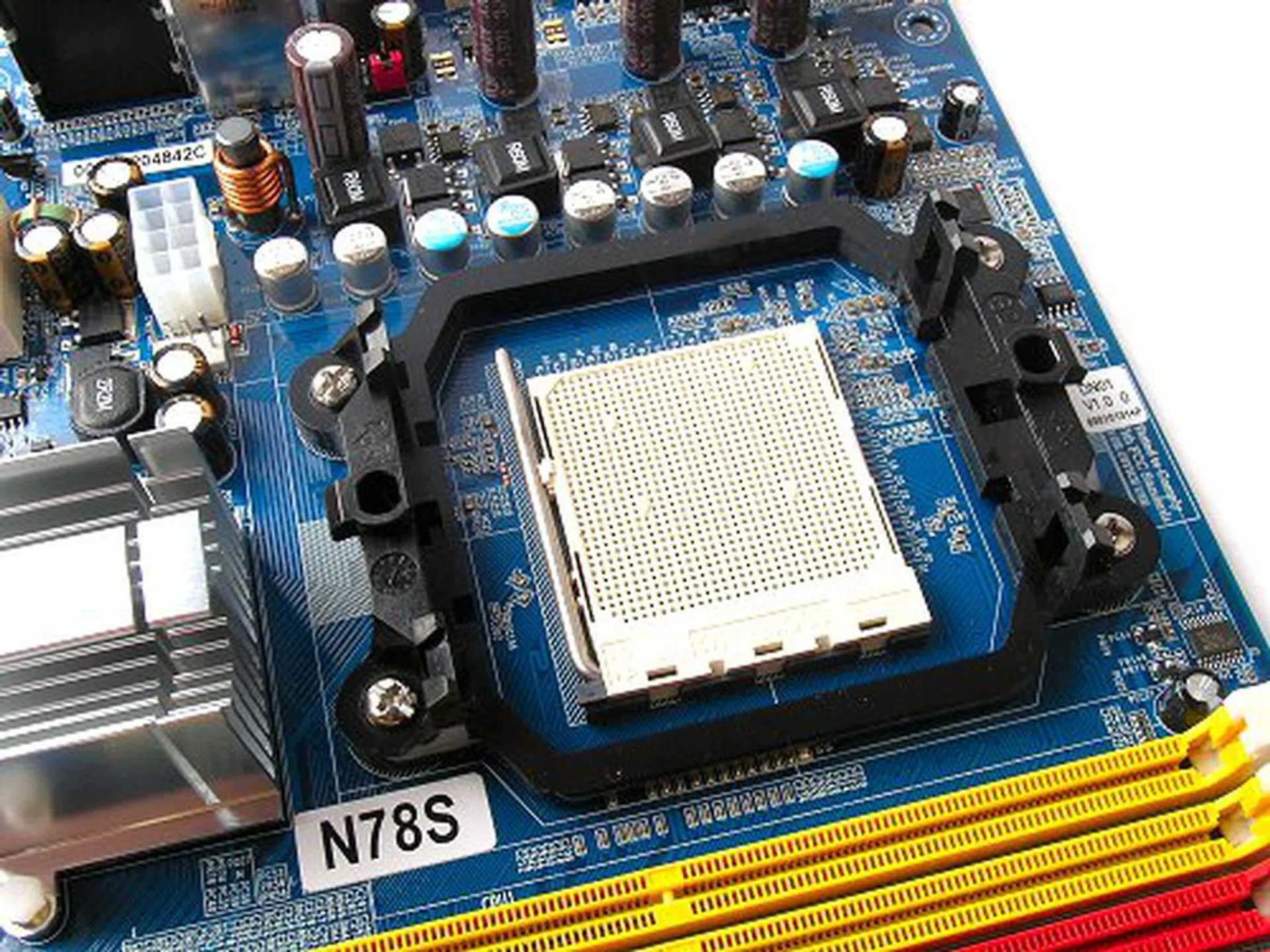
Socket AM2+ looking a little cramped for space.
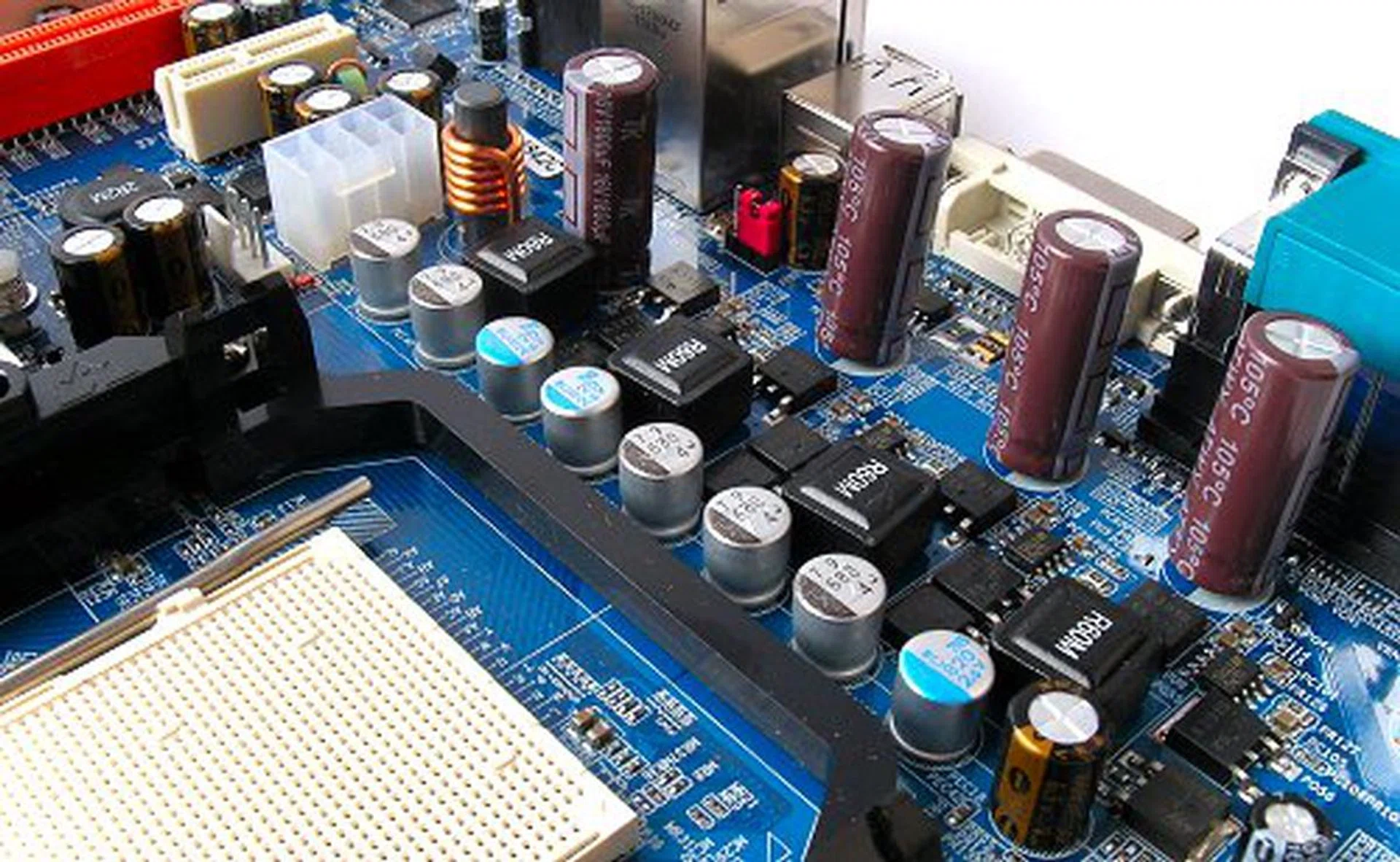
Solid caps line the 4-phase PWM, but the rest of the board use regular capacitors.
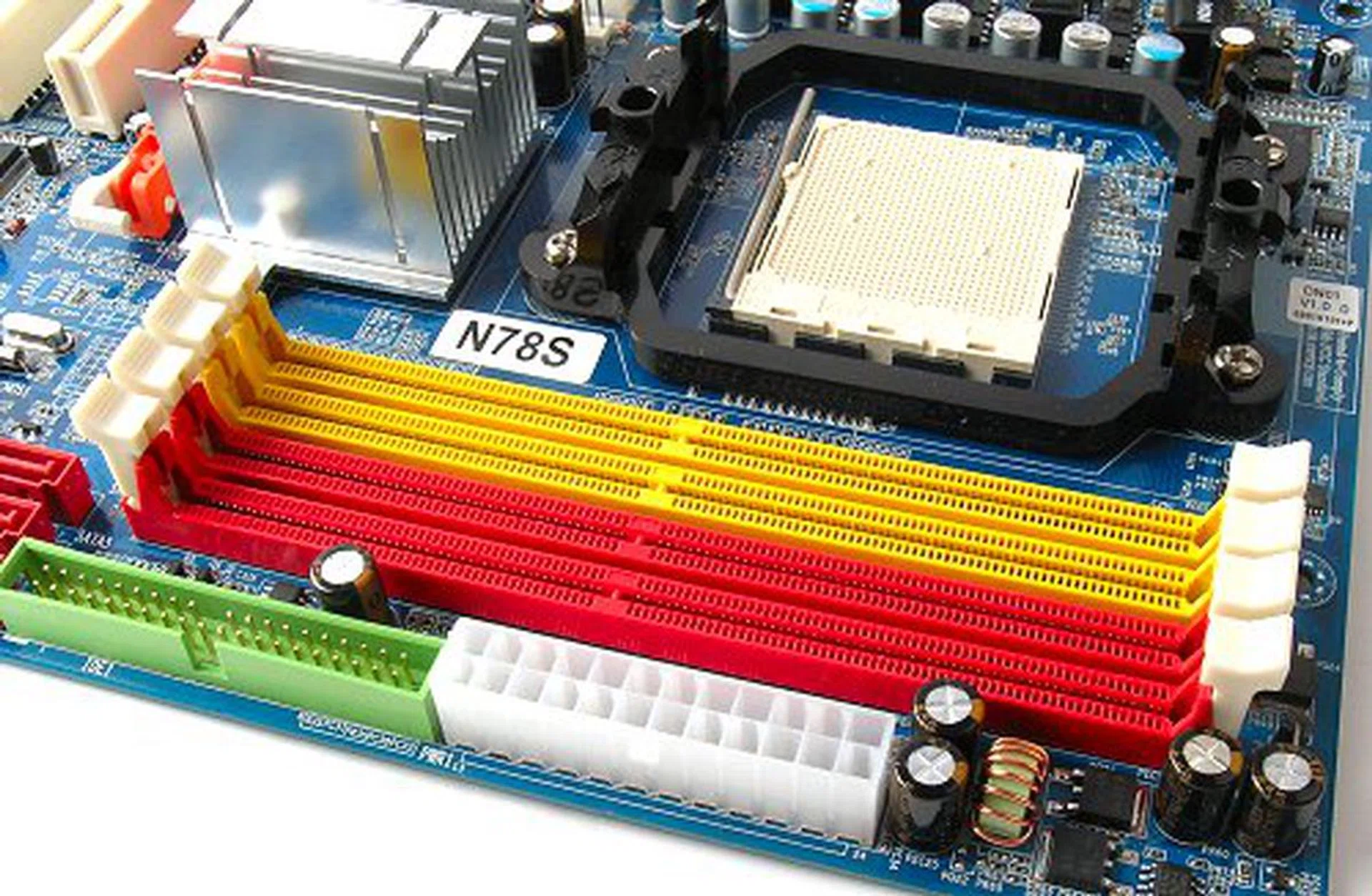
Packing four DIMM slots and still sporting a decent layout.
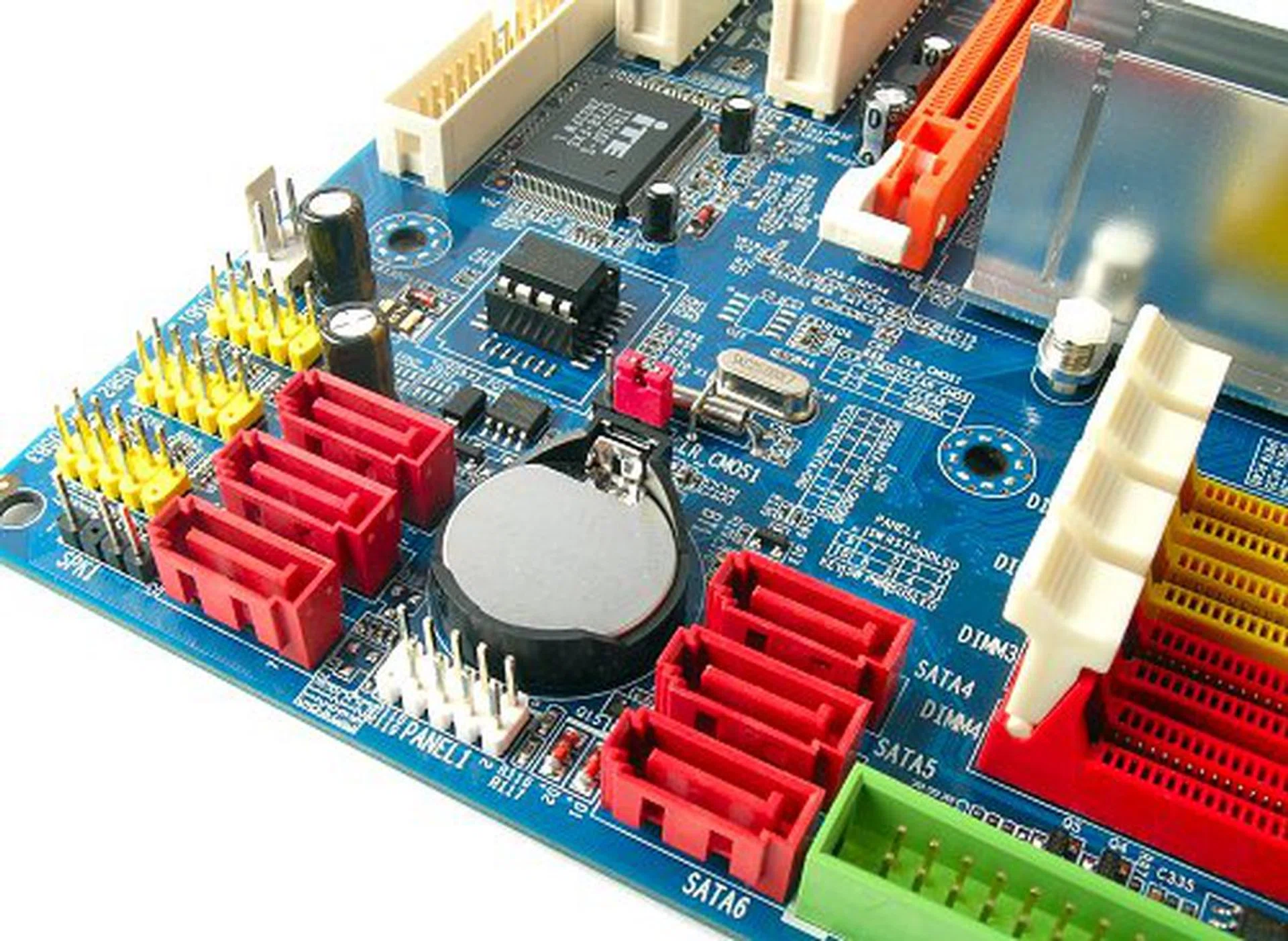
We have to say Palit's got a pretty neat layout going for the N78S.
Its audio functions are handled by the staple Realtek ALC883 HD Audio CODEC, and the Gigabit LAN MAC has been paired with a Realtek RTL8211B PHY.
The board has four expansion slots: two standard PCI slots, one PCIe x1 and one PCIe 2.0 x16 for discreet graphics support. As mentioned before, the N78S will support NVIDIA's Hybrid SLI feature using the onboard mGPU and a certified discreet graphics card (which at the moment are the GeForce 8400 GS and GeForce 8500 GT). In addition, the N78S features Palit's own Vsonic technology, which enabled automatic overclocking of the VGA card when a Palit card is used with a Palit motherboard. Actual details are kind of sketchy regarding the proper models that are supported by Vsonic on the N78S, but we can assume that it should work with Palit's range of Hybrid SLI ready GeForce graphics cards.
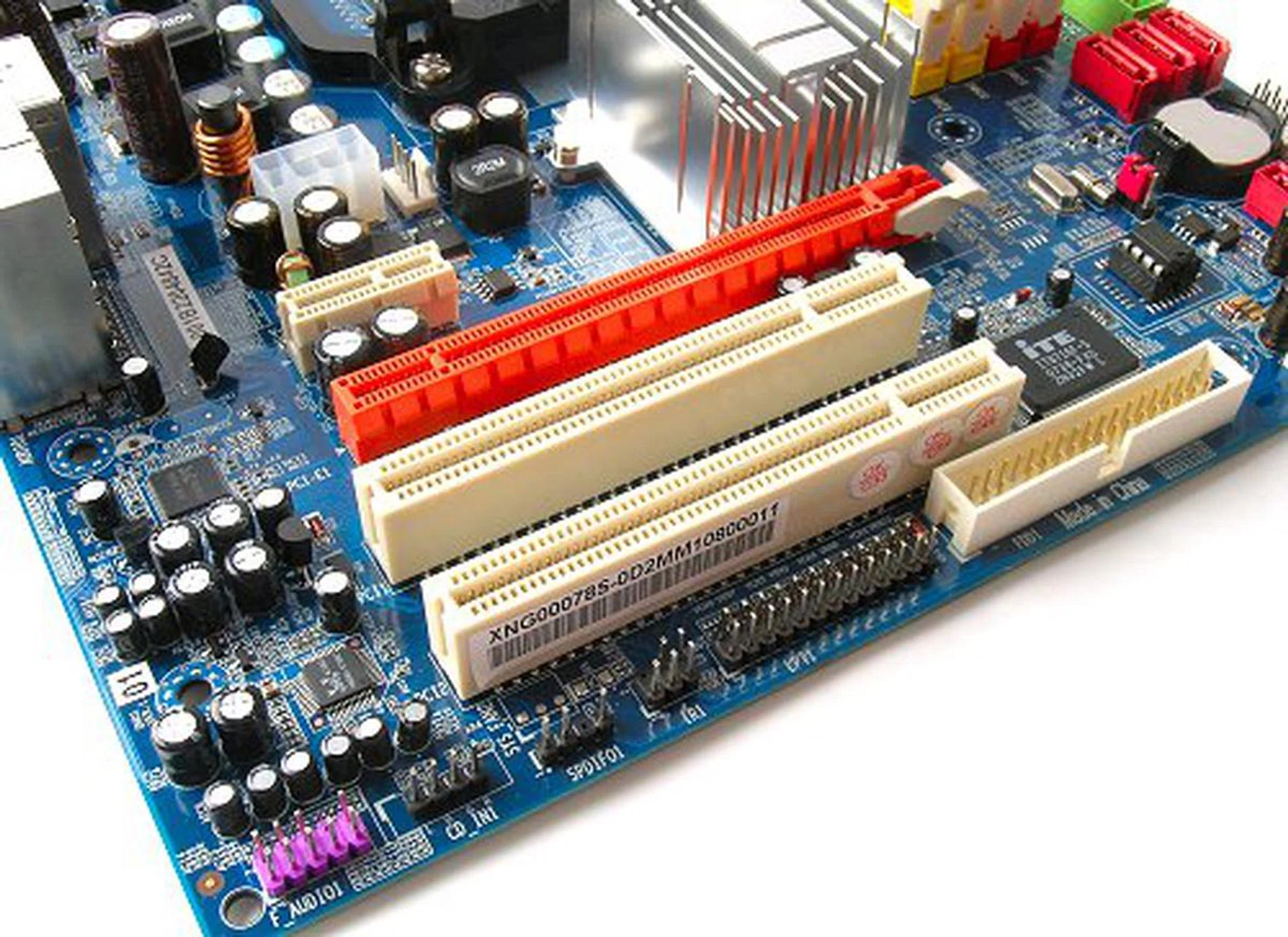
Expansion slot options on the N78S, as well as the row of optional headers below.
Graphics-wise, we'll be looking at benchmarking and performance numbers real soon to see how the low-cost DX10 part fares. What we wanted to comment on however, is the lack of HDMI connectivity on the N78S motherboard. Looking at where the strength of the chipset lies, we had expected that all GeForce 8200 boards would be targeted at the High Definition media center crowd, but it seems that there are still board manufacturers going for a more general configuration. Another note on the graphics output connectivity is that the GeForce 8200 still only supports one display option at a time - either via VGA output or DVI/HDMI output. This perhaps is one of the more thorny limitations as it's quite common in various circumstances to have two displays simultaneously either on a permanent or temporary basis. So watch out for this caveat.
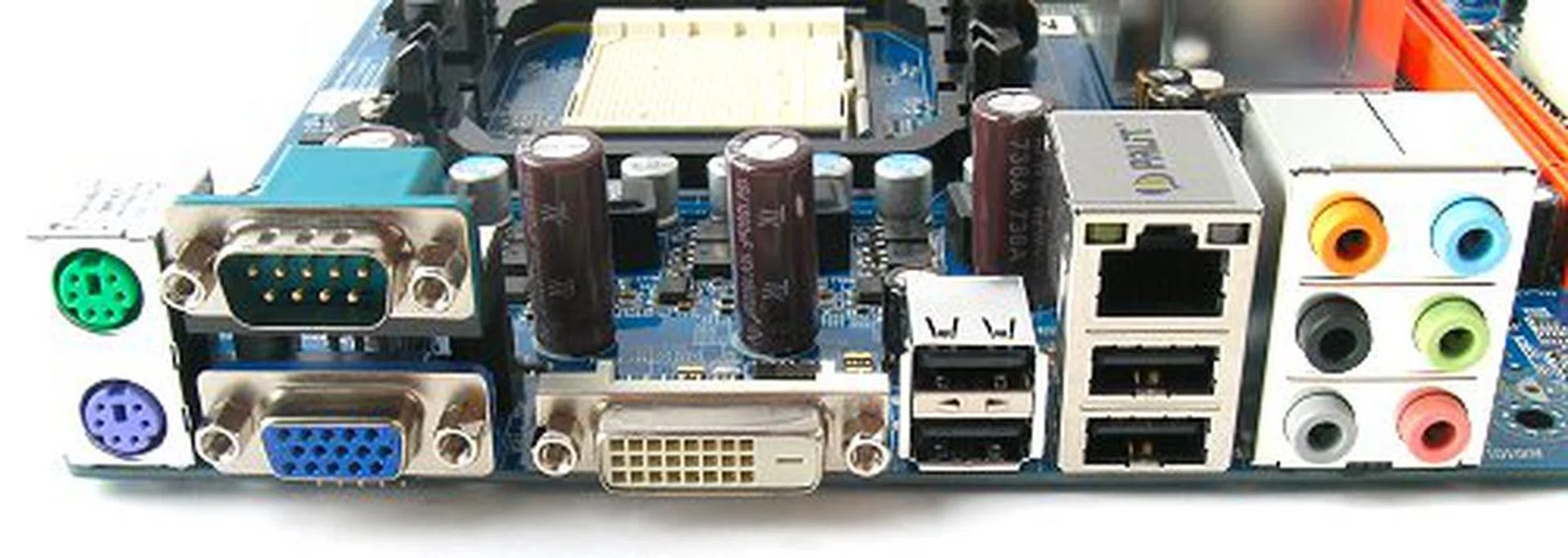
Look closely, the N78S doesn't feature a HDMI port, opting instead for DVI-I output.
GeForce 8200 Performance Testing
Since we have a motherboard on hand, we decided to give it a spin and see how the GeForce 8200 fares with previous generation Socket AM2 IGP chipsets. As AMD's own 780G is not out yet, we will take our sample comparison scores from the AMD 690G and NVIDIA's older GeForce 6100. The test bed configurations used for the various boards are listed below.
There are a few points to take note of however. The Palit N78S motherboard we have is a very early sample with a beta BIOS and beta drivers. At the time of testing, we did not have an Athlon 64 X2 5000+ on hand as well that was used in our previous articles, so we tried our best to compensate with an Athlon 64 FX-62 underclocked to 2.5GHz. Following AMD's performance rating system, the 2MB L2 of the FX-62 would counter the 100MHz loss in clock speeds of a true 2.6GHz Athlon X2 5000+ processor. Lastly, the Palit N78S does not feature any memory timing options, forcing us to run at SPD.
We usually enforce strict benchmarking rules for our review process, but since this is just an early preview of the GeForce 8200, we went ahead with our testing despite the abovementioned differences. As such, performance numbers in the next few pages should give you a highlight of the current status of the GeForce 8200 chipset/Palit N78S motherboard, but not a conclusive one.
- Palit N78S (GeForce 8200)
- AMD Athlon 64 FX-62 @ 2.5GHz, 2x1MB L2
- 2 x 1GB Kingston HyperX DDR2-800 @ 5-5-16 CAS 5.0*
- NVIDIA GeForce 8200 256MB UMA frame Buffer
- NVIDIA nForce 18.07 and ForceWare 171.17
- Seagate Barracuda 7200.7 80GB SATA hard disk drive (one single NTFS partition)
- Microsoft Windows XP Professional with Service Pack 2 (and DirectX 9.0c)
- Sapphire Pure Innovation HDMI (AMD 690G)
- AMD Athlon 64 X2 5000+ (2.6GHz, 2x512KB L2)
- 2 x 1GB Kingston HyperX DDR2-800 @ 4-4-12 CAS 4.0
- ATI Radeon X1250 IGP 256MB UMA frame butter with HyperMemory
- ATI Catalyst 7.3 IGP driver package
- Seagate Barracuda 7200.7 80GB SATA hard disk drive (one single NTFS partition)
- Microsoft Windows XP Professional with Service Pack 2 (and DirectX 9.0c)
- ASRock AM2NF6G-VSTA (GeForce 6100-405)
- AMD Athlon 64 X2 5000+ (2.6GHz, 2x512KB L2)
- 2 x 1GB Kingston HyperX DDR2-800 @ 4-4-12 CAS 4.0
- NVIDIA GeForce 6100-405 IGP 256MB UMA frame buffer with TurboCache
- NVIDIA ForceWare 93.71 driver package
- Seagate Barracuda 7200.7 80GB SATA hard disk drive (one single NTFS partition)
- Microsoft Windows XP Professional with Service Pack 2 (and DirectX 9.0c)
Benchmarks
The following benchmarks will be used in the review to gauge the performance of the Palit N78S:
- BAPco SYSmark 2004
- Futuremark PCMark05
- SPECviewperf 9.0
- AquaMark3
Results - BAPco SYSmark 2004
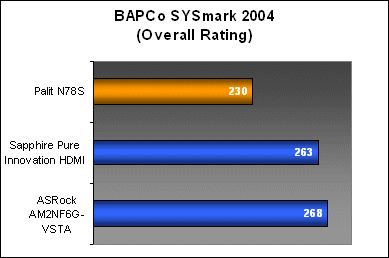
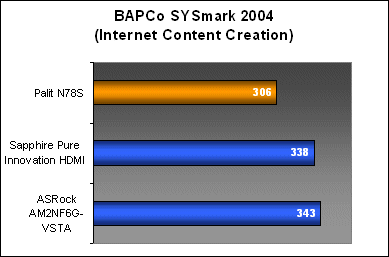
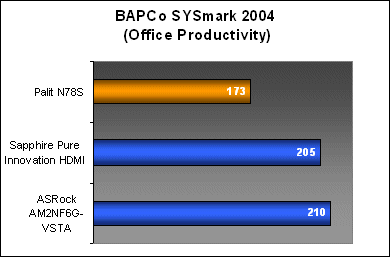
Initial performance results from the GeForce 8200 weren't at all convincing. We're not sure if this is due to the Palit sample or the chipset at the moment, but the board churned out sub-par performance in SYSmark 2004 in both Internet Content Creation and Office Productivity workloads. The board was even slower than the GeForce 6100-405 in this scenario. Even though the N78S has certain problems regarding memory timing, we did not expect this level of difference in performance.
Results - Futuremark PCMark05
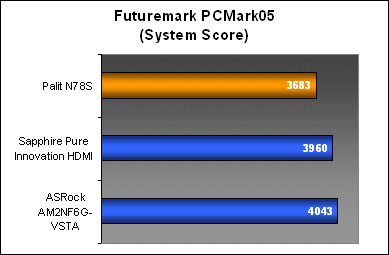
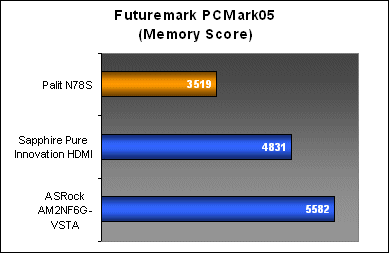
Overall System performance of the GeForce 8200 in PCMark05 looked like it was trailing the AMD 690G and GeForce 6100-405 as well. However, the real culprit seemed to be its memory subsystem performance, which was almost 37% below the GeForce 6100 level. Traditionally, NVIDIA has managed to maintain a strong performance against AMD chipsets, but we're really concerned with what we're seeing here. While it may seem as if the board is running in single-channel mode, it isn't because we got even lower results when running in single-channel mode. In any case, our previous experience with single and dual-channel memory performance tells us the difference in benchmarks is small and not to the degree we're seeing here.
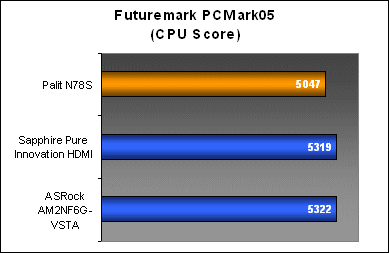
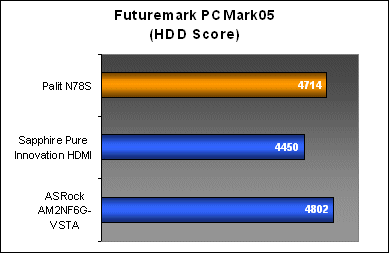
CPU scores are decent as well as storage, but you will notice that everything is pulled down by the much lower memory performance. A point to take note off though, NVIDIA SATA controllers have already supported features like NCQ even before AHCI implementation, so you don't really see any difference between the non-AHCI GeForce 6100 and the new GeForce 8200. It's only the Intel chipsets that implement NCQ through the support of AHCI.
Results - SPECviewperf 9.0
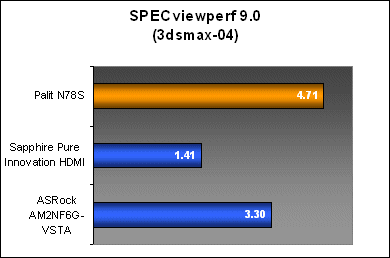
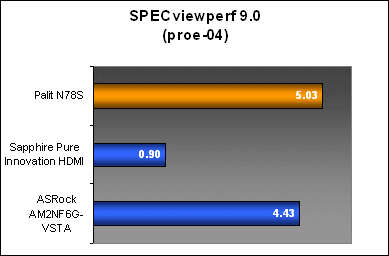
As we moved on to more graphics intensive benchmarks, the GeForce 8200 began to take the lead. These are actually the kind of results we initially expected from the board, as historically, next generation chipsets have been able to outperform its predecessors. In the realm of integrated graphics, we've seen a constant improvement in performance, and as you can see here, the GeForce 8200 offers a whopping 43% improvement in 3dsmax over the GeForce 6100 (albeit still low in the absolute frames per second churned). The performance gain in pro/Engineer was more subtle, at only around 14%. This is probably due to its low memory subsystem performance, since this particular workload is memory intensive as well.
Results - AquaMark3
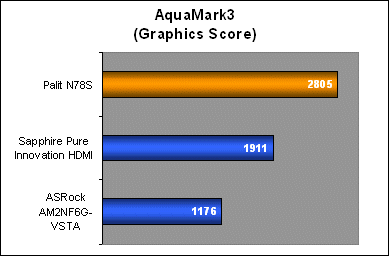
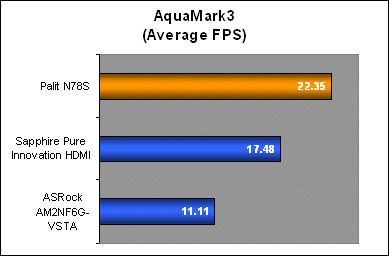
Now, AquaMark3 is the real test. The GeForce 8200 has shown some real improvements over past generations of IGPs, and actually delivering some semblance of playability with an average frame rate of 22fps at 1024x768. However, we're still at a point where onboard graphics is still unable to properly run a four year old game engine. Despite our tone, we're actually very excited about this prospect. Give the industry another 2-3 generations, and we might actually start to see IGP gaming a possibility and having it replace the entry-level discreet market.
High Definition Video Testing
As the Palit N78S does not have a HDMI port, our testing only centers around the PureVideo HD capabilities of the GeForce 8200 to offer full hardware acceleration of HD content. For this test, we hooked up our test system with an Xbox external HD DVD drive, Cyberlink PowerDVD 7 Ultra and proceeded to play our copy of Black Snake Moan, which is a H.264/AVC title.
When we started our tests, we were using the graphics drivers bundled together with the beta chipset driver package, which was ForceWare 171.17. Our initial testing yielded negative results as CPU loading was constantly at around the 60% mark. Video playback was also not smooth, with the player dropping frames constantly. Forward, rewind or seek functions will cause CPU spikes up to 100% too. After some trial and error, it seemed that our problems were driver issues after all and not a total hardware failure of the chipset.
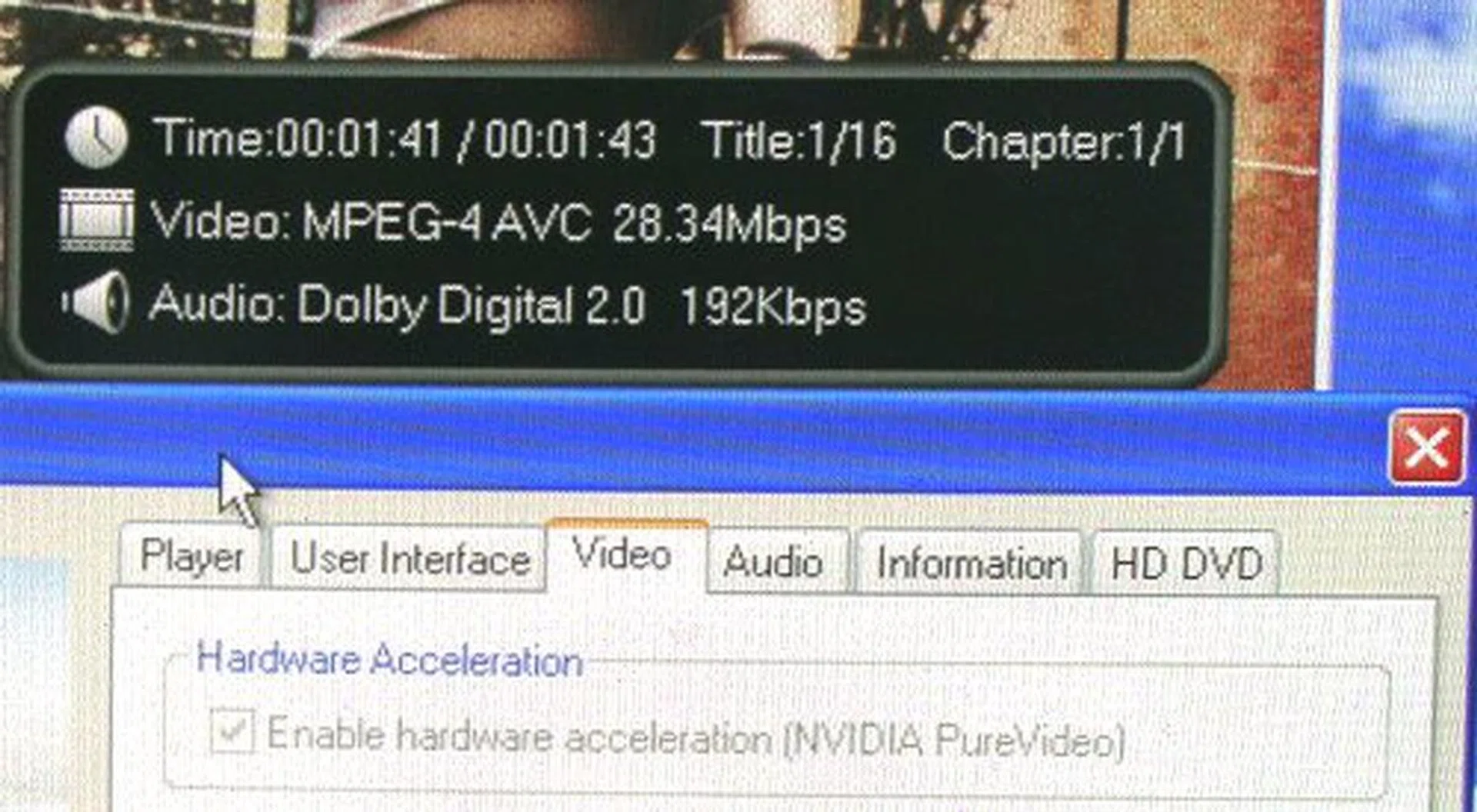
We initially wanted to take before and after performance results, but PowerDVD will not allow us to disable hardware acceleration. Even forced, it will always be enabled when playback begins.
After updating the graphics drivers to the ForceWare 171.23 beta (which can be found around the Internet), our video playback issues were solved. Our system hogging HD DVD movie now ran like a hot knife through butter. CPU load stayed constant between 20-30%, and instead of huge continuous spikes like before, we've even seen it drop down to as low as 9% in certain scenes. Windows remained responsive through playback, but even so, there is still noticeable jerking when performing video seeks. Factor in that we're using an external USB based Xbox HD DVD drive, and it's likely that this kink shouldn't exist when using an internal optical drive; plus, you should probably see slightly lower CPU utilization too. As it stands now, the results are really positive and even match up to the level of full discrete graphics cards, which you can compare in our recent .
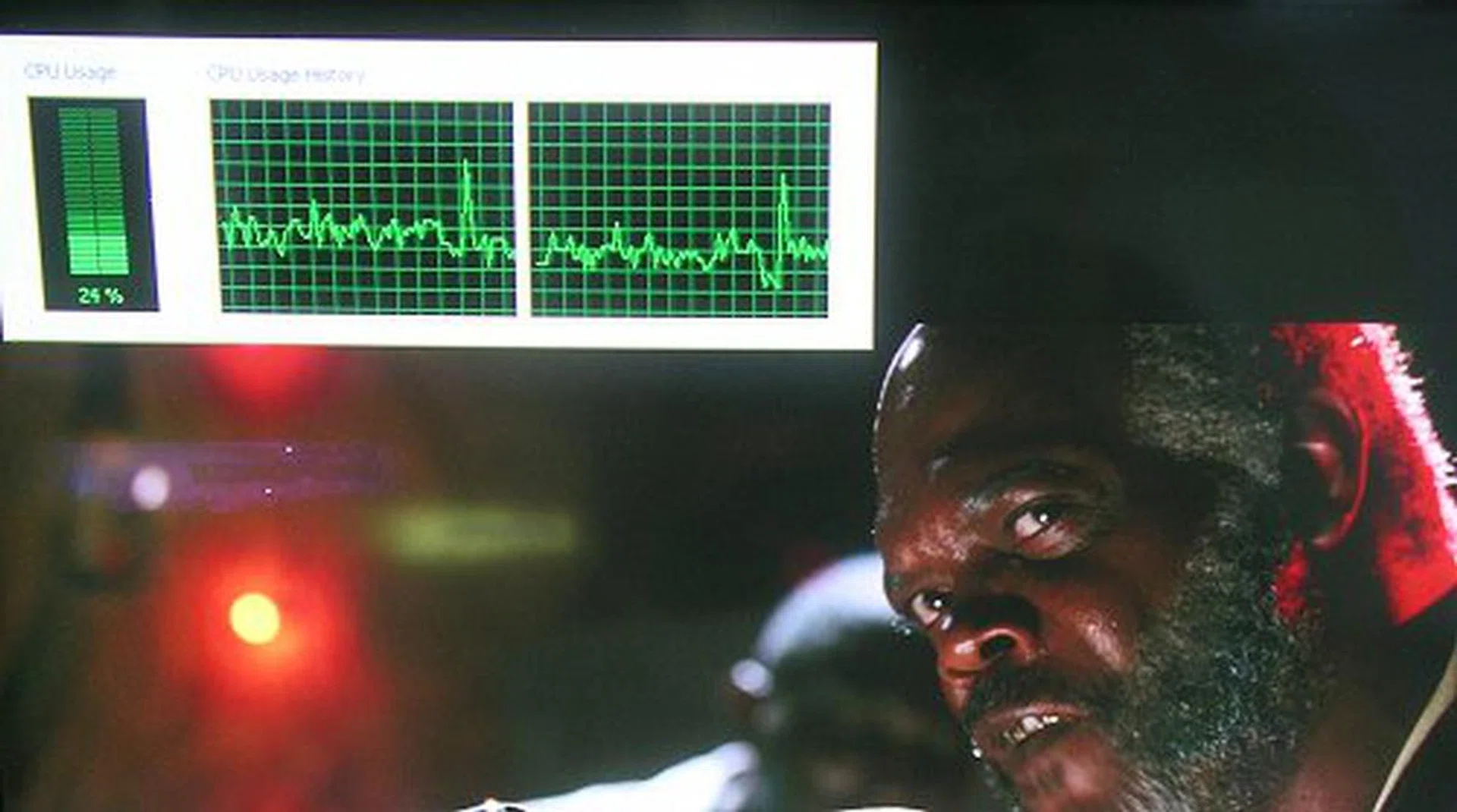
The GeForce 8200 delivers on its promise to provide full H.264 acceleration of Blu-ray and HD DVD movies - with the right drivers of course.
Bear in mind that we're using an Athlon 64 X2 5000+ class CPU for our tests. NVIDIA is quite sure that acceptable performance can be achieved with something as low as an Athlon 64 X2 3500+. Still, these results put back our faith in the chipset, and in spite of its system performance issues, the GeForce 8200 may well shape up to be a powerful low cost solution for high definition media center platforms - as long as HDMI is part of the package of course.
Overclocking
Overclocking has never been a strong point of any IGP chipset since they're designed for entry-level computing, and the GeForce 8200 doesn't seem to change the status quo. Like all mainstream motherboards, the Palit N78S has a very rudimentary BIOS system, offering only the essential tools. But, there is still room to wiggle, which also includes the capacity for some light overclocking. The Palit N78S was able to achieve a stable overclock of 250MHz using a 4x HTT multiplier, which is a predictable and familiar ceiling for older AM2-based processors. Although the GeForce 8200 does seem to offer minor overclockability, we do not recommend you doing so. Why? because the chipset is Hot!
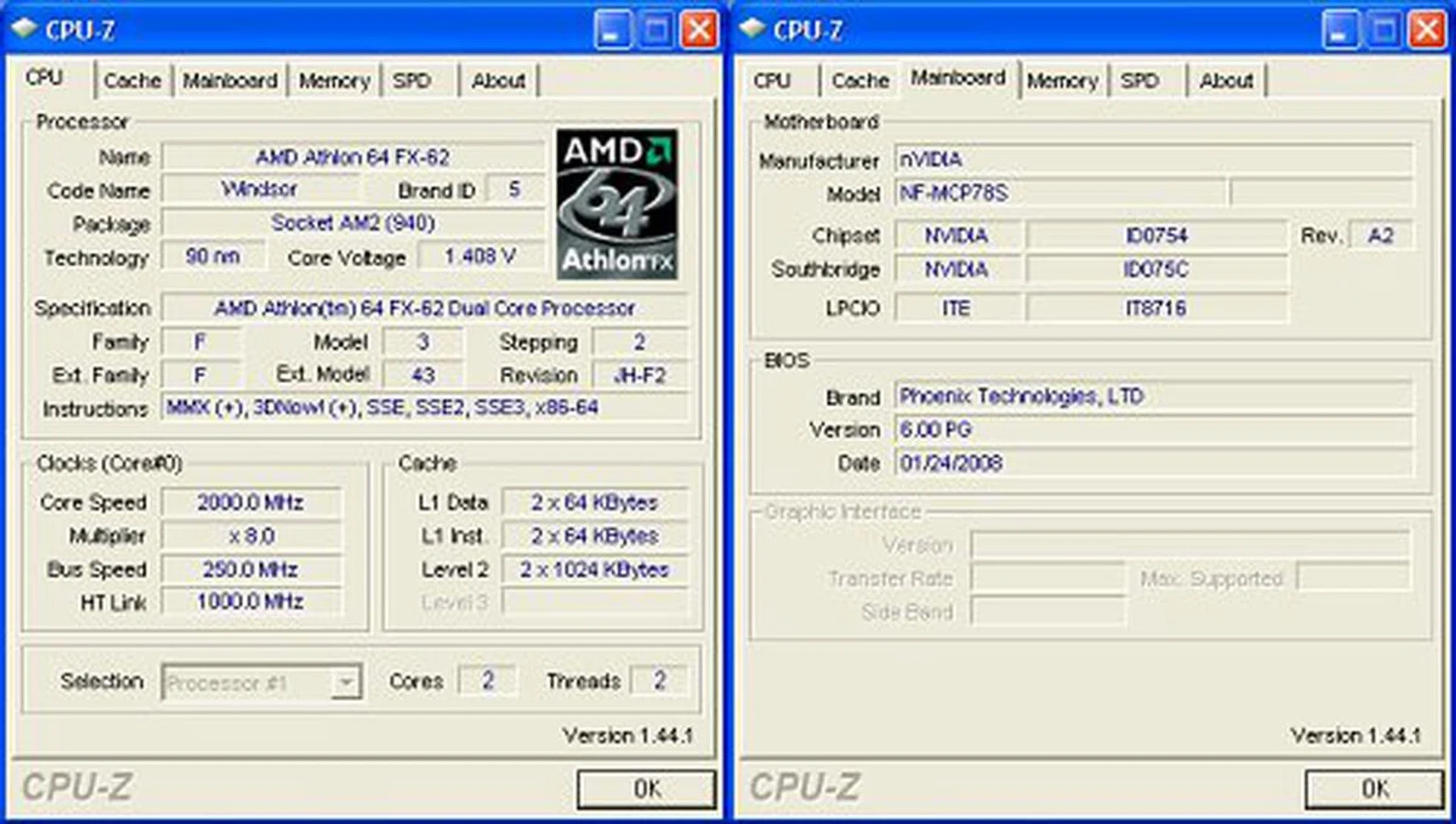
CPU-Z overclocking screenshot. Click for full-sized image.
Temperatures
Hot! Hot! HOT! Someone at NVIDIA must have overlooked that memo about thermal efficiency, because they've not addressed the heat issues with their products. Even at idle, the passive heatsink used on the Palit N78S is nearly scalding to the touch. Putting a laser thermometer to the heatsink, we read temperates between 53-55 degrees Celsius - and this is supposed to be idle. During benchmarking runs, we recorded temperatures above 60 degrees. The good news is that we did not encounter any stability issues with the board throughout our review. However, our tests are performed in an open system, under a heavily air-conditioned lab. We shudder to think what will happen inside a cramped HTPC chassis in a tropical environment. We will wait to evaluate more GeForce 8200 boards, but as it stands, this little sucker needs active cooling.
Close, but No Cigar
Here's the gist of things.
NVIDIA's launch of the GeForce 8200 today puts them in the lead again in the mainstream market, while AMD is gearing up for their own 780G chipset that should arrive in the Q2'08 time frame. As a chipset, there is no doubt that the GeForce 8200 is a worthy successor to the GeForce 6 and 7 series of mGPUs before it. Besides updating support for AMD's latest Socket AM2+, it is also the launch platform for their own Hybrid SLI technology, which we see as a way to address the low graphics performance of these integrated graphics processors.
All these are good on paper, but the one aspect we've yet to evaluate is Hybrid SLI effectiveness - which will probably come in a separate article after the official drivers support is available. From what we've seen, the GeForce 8200 still has some ways to go in terms of driver and BIOS maturity. Performance and heat issues are also a great concern in its present state, and are things that must be addressed immediately.
The saving grace of the GeForce 8200 is its PureVideo HD capabilities, which holds true to NVIDIA's claims of full H.264 decoding acceleration. The trick is to see the GeForce 8200 as a high definition video processor with PC graphical capabilities instead of the other way around.
Our articles may contain affiliate links. If you buy through these links, we may earn a small commission.