
Intel Core 2 Duo E6420 - Effortless Overclocking
If you thought overclocking the daylights out of the Core 2 Duo E6300 processor was easy, just wait till you lay your hands on the E6420 processor. It may not set new clock speed records, but it's incredibly easy to tap its hidden potential and its total system cost may be even lesser than it seems!
Scaling the Gigahertz Ladder the Easy Way
It's nearly a year since the Core microarchitecture was officially unveiled to the world and to-date Intel still has the lead (and by a large margin) in both the desktop and mobile market space with its Core 2 Duo and Quad series processors. These processors have exhibited such superiority that the originally launched desktop processor models, especially the Core 2 Duo E6600 and higher models, are significantly faster than the entire lineup of its competitor today. While AMD is still recovering from the strains of taking over ATI and doing its best to ramp up 65nm wafer fabrication for its processors, they have had some success as of recent times to offer lower power consuming processors to roughly match the thermals of Intel's current crop of processors, but they are still far from tackling the performance crown.
For performance enthusiasts, Intel is still the way to go and more so because of their extremely high overclocking margin. We've shown you first hand of what Intel's lowest and highest offerings of Core 2 Duo processors (E6300 and X6800 respectively) can do in our previous articles. You can read more about them in the Related Links section below. Today, we show you what the relatively newer E6420 model can achieve. But before we get to that, we'll throw in a little introduction for those uninitiated with this SKU.
Just a few months ago, Intel revitalized the E6300 (1.86GHz) and E6400 (2.13GHz) models which had 2MB of L2 cache each with the E6320 and E6420 models that have 4MB of L2 cache - at no extra cost. If you ask our opinion, Intel had either just masked away a defective portion of the silicon that happened to be cache or they've been artificially crippling the E6300 and E6400 processors all along because their transistor count and die-size is identical to their full fledged brothers like the E6600, E6700 and X6800 models that all posses 4MB of L2 cache. Whichever the case, the E6320 and E6420 models are welcomed news as they are direct replacements to their 2MB L2 predecessors.
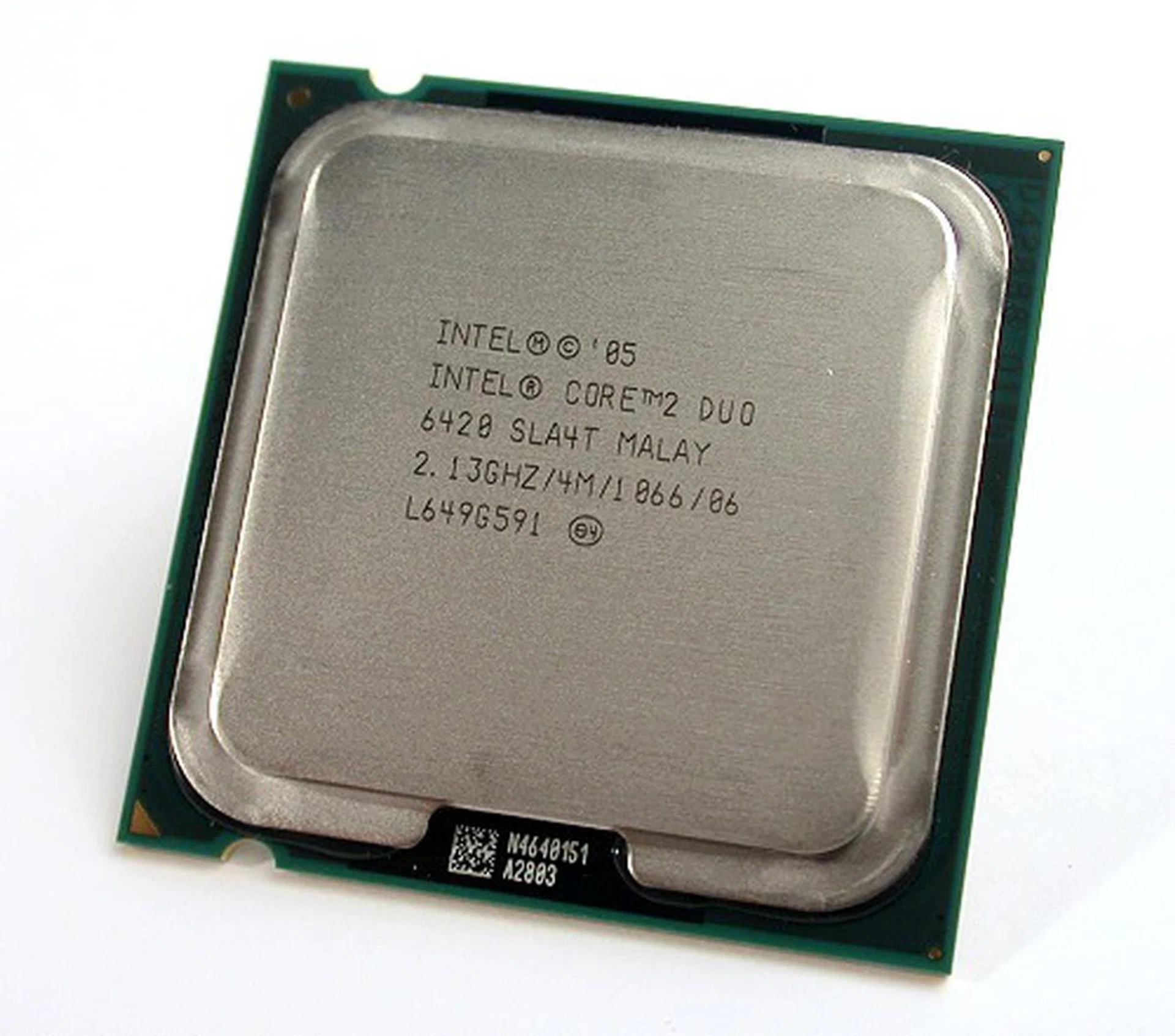
If you thought overclocking the E6300 was easy, overclocking the Intel Core 2 Duo E6420 is a walk in the park! With an inherent higher CPU multiplier, climbing the Gigahertz ladder can be achieved with little or no voltage boosts with the right hardware combo.
Since we've shown you what the E6300 can achieve in a previous article and what's required to get you there, the E6320 has the same potential, but with better performance thanks to more L2 cache memory. Thus the spotlight for this article is the next model up, the Intel Core 2 Duo E6420. At less than US$30 price difference, this processor's overclocking appeal lies in its 8x CPU multiplier. At one notch higher than the E6320 processor, the E6420 has capability to hit similar overclocking levels, but with little or no voltage boosts and on a far lower FSB. Now that opens up the possibility of overclocking on many more rudimentary boards (which in a way offsets the cost of more overclocking capable boards combined with a lower-end E6320 processor). So what amazing numbers can we hit with the E6420? Read on!
Cranking up the Clocks
At 'just' 375MHz FSB, the Intel Core 2 Due E6420 jumps to a net operating speed of 3GHz, which is more than adequate to displace the fastest dual-core desktop processor (X6800) at a fraction of its cost. With 1333MHz PSB (or 333MHz FSB) soon to become a norm and from our overclocking experience with a variety of motherboards, a jump to 375MHz is very much within means of a vast majority of Intel P965 and the new Intel P35 motherboards. In fact we could only think of boards with the most restrictive BIOS controls not being able to offer this capability.
By contrast, an E6320 would require an FSB overclock well over 425MHz to reach 3GHz. Herein lies the need for a more capable motherboard, and a good BIOS with the necessary overclocking controls. Not all boards are endowed with this and more often then not, you'll need to spend more on motherboard models renowned for overclocking if you take on the Intel E6320 route.
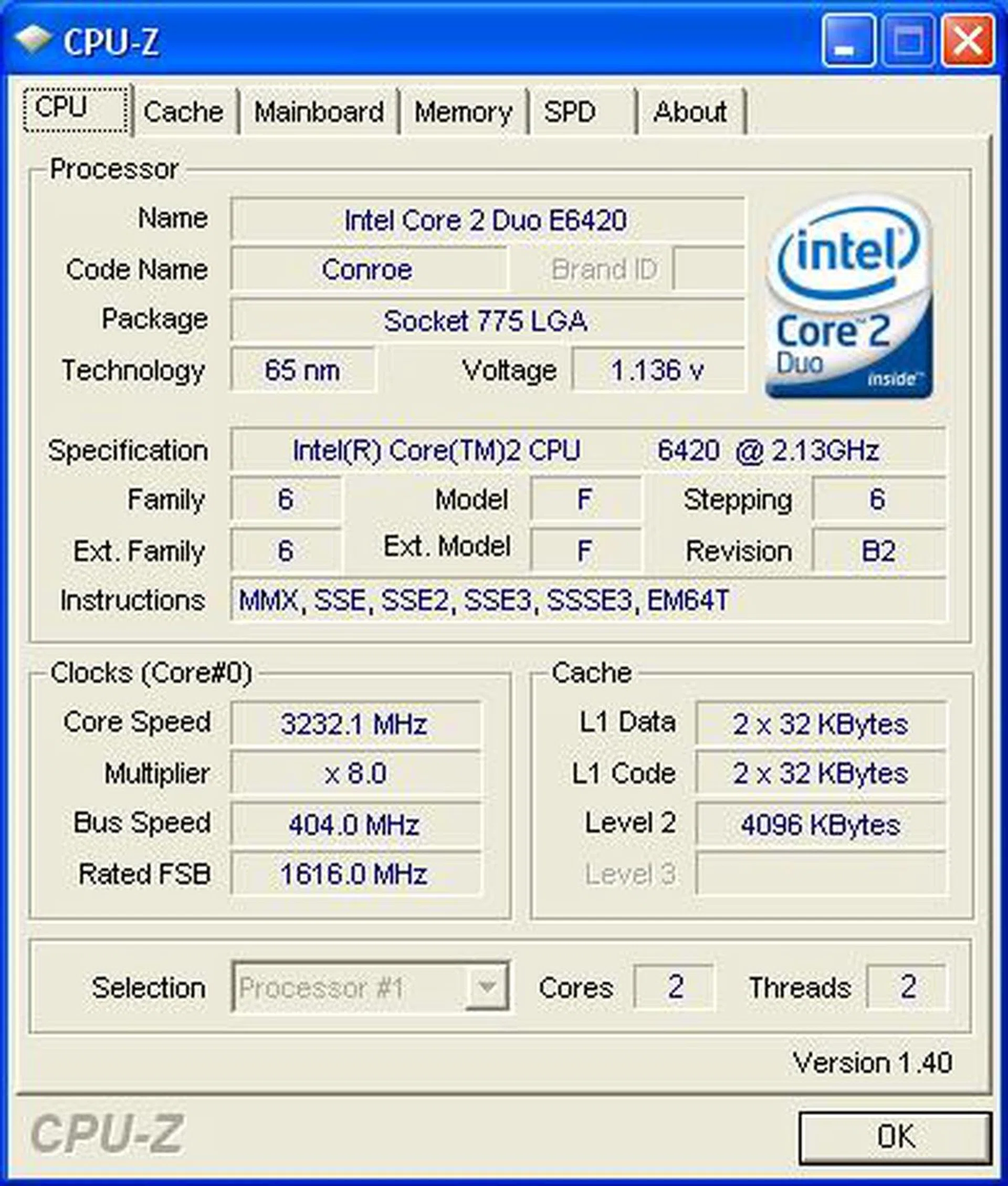
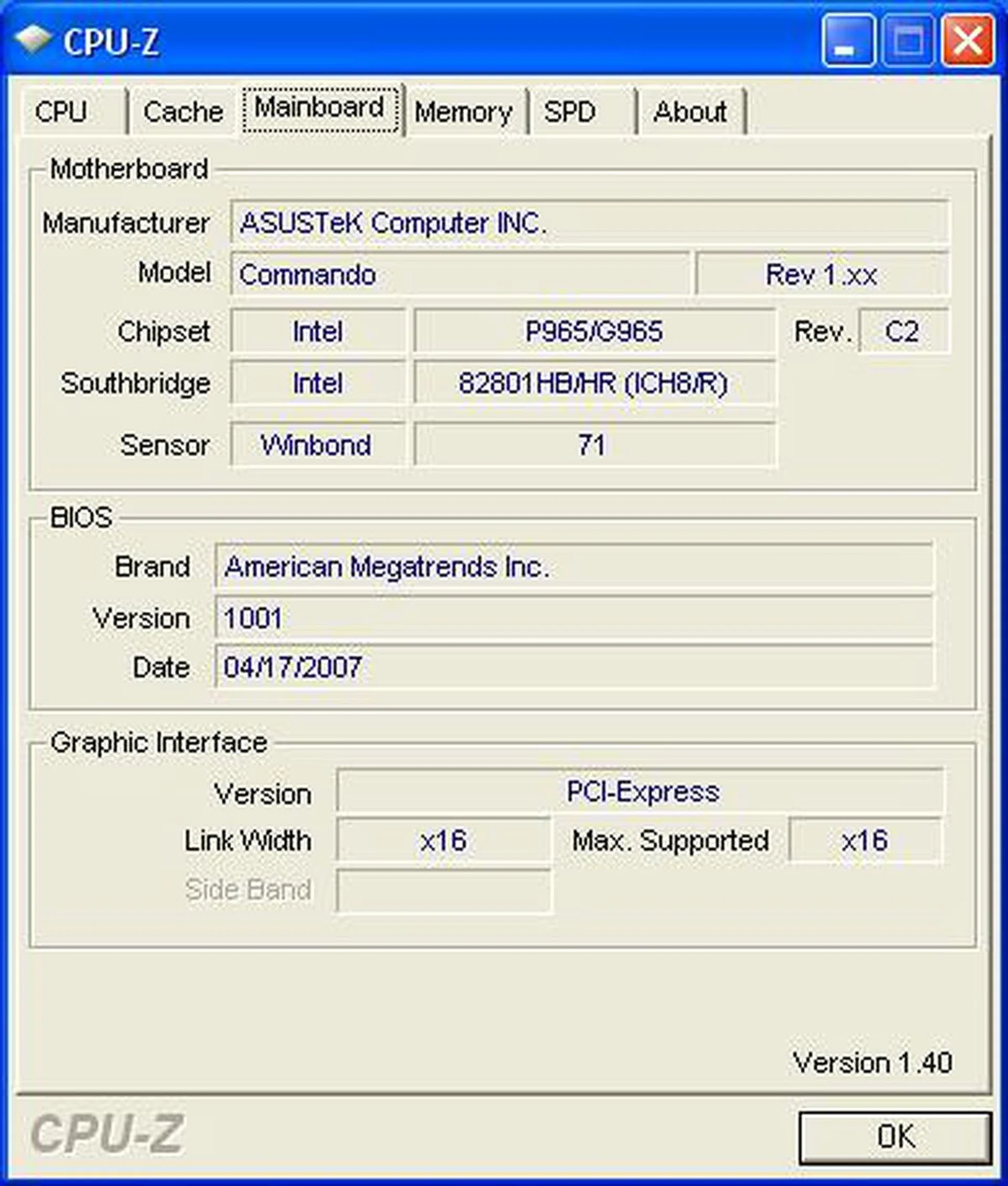
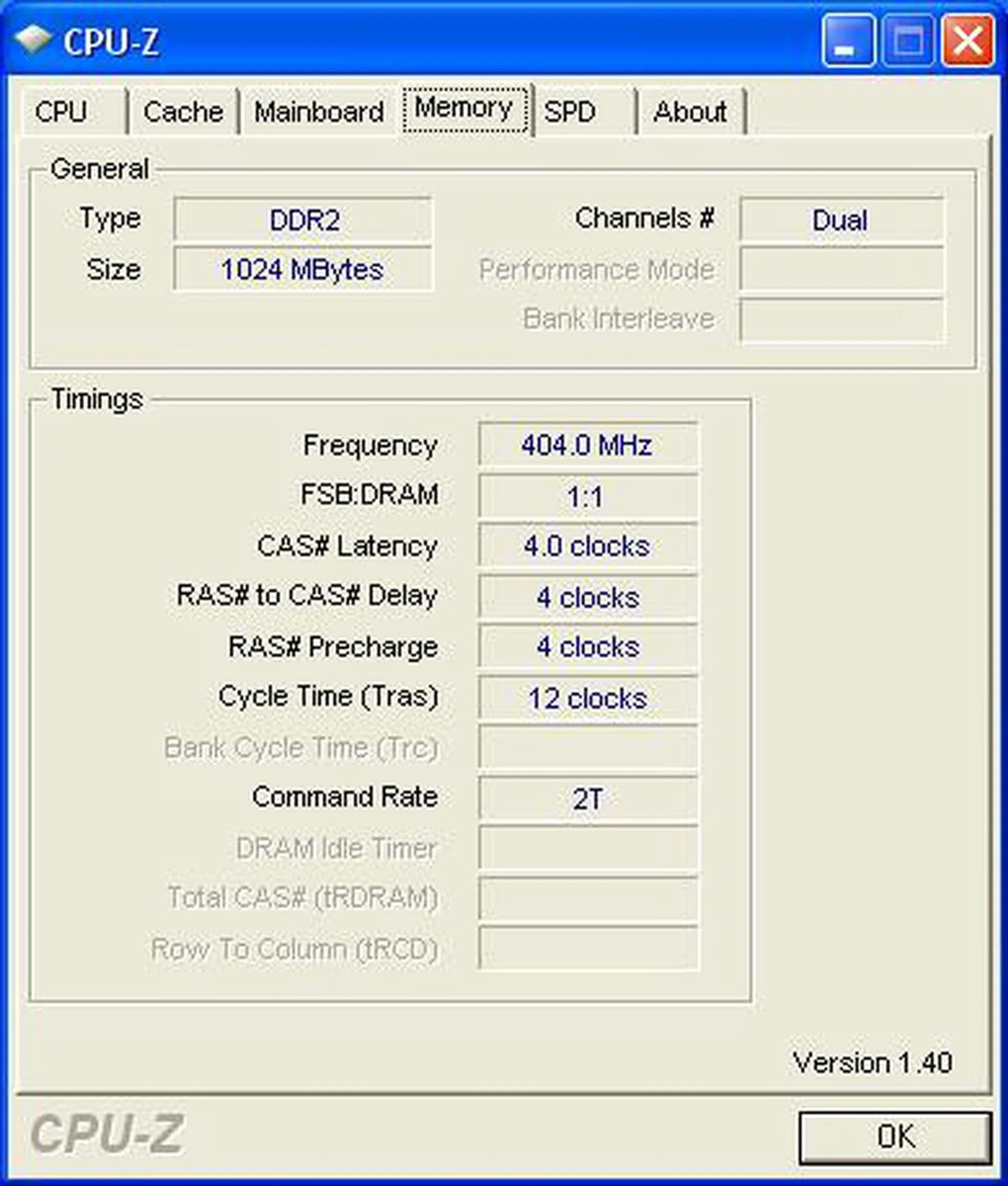
To rule out any bottlenecks in our overclocking article, we prepared a system based on the ASUS Commando motherboard (Intel P965) which holds the record here in www.hardwarezone.com of the highest FSB overclock attained to-date. After much trial and error, we attained the highest stable overclock with the E6420 processor at 3.23GHz - all on air-cooling with the stock cooler. Not exactly as high as what we cranked out with the E6300 previously, but they are in the same ballpark as far as overclocking headroom is concerned. Though we were hoping to hit this frequency without any modifications to the BIOS settings other than the FSB speed and the correct memory multiplier, a little more juice was needed. With a slight voltage boost to the E6420 processor at 1.4V and 1.3V to the Northbridge chip, we attained a rock stable clock speed of 3.23GHz at 404MHz FSB. That's not difficult to achieve at all and as our article title resonates - it is almost effortless. Here's a few CPU-Z screenshots for some CPU/system information before we bring on the results segment to show you exactly what an E6420 @ 3.23GHz can do for you:-
Test Setup
So let's cut to the chase where performance figures matter most. The overclocked Intel Core 2 Duo E6420 running at 3.23GHz was pitted against the Core 2 Duo E6300 that we last overclocked it at 3.36GHz and of course we've the usual standard clocked Core 2 Duo E6600, E6700 and Core 2 Extreme X6800 processors added into the comparison mix. AMD's Athlon 64 X2 5600+ and the newer 6000+ processor models were also added in for a more wholesome comparison. Take note that the Athlon 64 X2 5600+ model now 'replaces' the old Athlon 64 FX-62 processor, but that's only in terms of product positioning. Both processor models are actually 100% identical. The various testbeds used for this article are as follows:-
Core 2 Duo E6420 Overclocking Setup
- ASUS Commando (Intel P965 chipset)
- Intel Core 2 Duo E6420 CPU @ 3.23GHz (404 x 8)
- 2 x 512MB Kingston HyperX DDR2-800 memory modules (CAS 4. 4-4-12) @ DDR2-808
- Seagate Barracuda 7200.7 80GB SATA hard disk drive (one single NTFS partition)
- MSI GeForce 7900 GT 256MB - with NVIDIA Detonator XP 84.21
- Microsoft Windows XP Professional with Service Pack 2
Core 2 Duo E6300 Overclocking Setup
- Gigabyte GA-965P-DQ6 (Intel P965 chipset)
- Intel Core 2 Duo E6300 CPU @ 3.36GHz (480 x 7)
- 2 x 512MB Corsair XMS DDR2-1000 memory modules (CAS 5. 5-5-15) @ DDR2-980
- Seagate Barracuda 7200.7 80GB SATA hard disk drive (one single NTFS partition)
- MSI GeForce 7900 GT 256MB - with NVIDIA Detonator XP 84.21
- Microsoft Windows XP Professional with Service Pack 2
Core 2 Extreme & Duo Reference Setup
- Intel Desktop Board D975XBX (Intel 975X Express chipset)
- Intel Core 2 Extreme X6800, Core 2 Duo E6700 and E6600
- 2 x 512MB Corsair XMS DDR2-800 memory modules (CAS 4. 4-4-12)
- Seagate Barracuda 7200.7 80GB SATA hard disk drive (one single NTFS partition)
- MSI GeForce 7900 GT 256MB - with NVIDIA Detonator XP 84.21
- Microsoft Windows XP Professional with Service Pack 2
Athlon 64 X2 Reference Setup
- ASUS M2N32-SLI Deluxe (nForce 590 SLI chipset)
- AMD Athlon 64 X2 6000+ and 5600+
- 2 x 512MB Corsair DDR2-800 memory modules (CAS 4, 4-4-12)
- Seagate Barracuda 7200.7 80GB SATA hard disk drive (one single NTFS partition)
- MSI GeForce 7900 GT 256MB - with NVIDIA Detonator XP 84.21
- Microsoft Windows XP Professional with Service Pack 2
The benchmarks used in this review include:-
- BAPCo SYSmark 2004
- Futuremark PCMark 2005 Pro
- Cinebench 2003
- Lightwave 3D 7.5
- SPECviewperf 8.01
- XMpeg 5.03 (DivX encoding)
- Futuremark 3DMark05 Pro
- Futuremark 3DMark06 Pro
- Unreal Tournament 2004
- AquaMark3
- Quake 4 ver.1.20
Results - SYSmark 2004
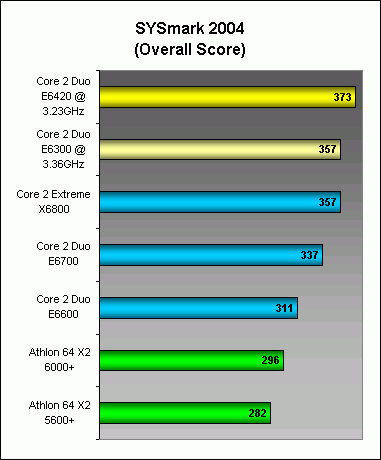
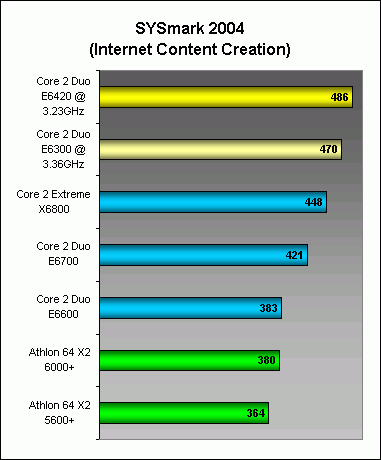
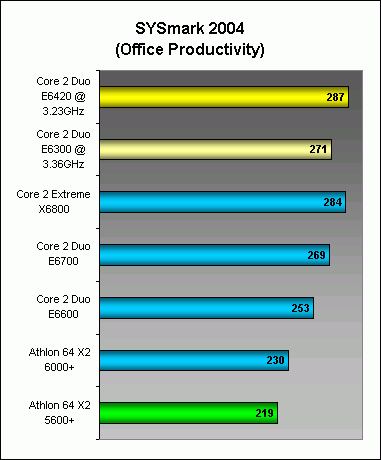
The overclocked E6420 at 3.23GHz is clearly the fastest processor in our first round of application based testing via Bapco's SYSmark 2004. Be it office productivity or multimedia content creation applications, the E6420 reigns over the faster clocked E6300. This clearly illustrates the power of the bigger L2 cache in heavy and varied system workloads. Overall this US$180 processor is 4 to 7% speedier than the most expensive Core 2 processors. When pitted against the AMD's top performer, the E6420 at 3.23GHz was found to have a startling leap up to 30%.
Results - SPECViewperf 8.01
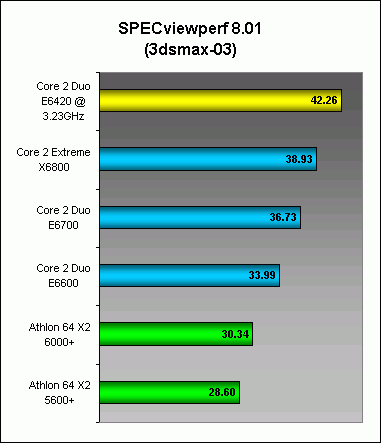
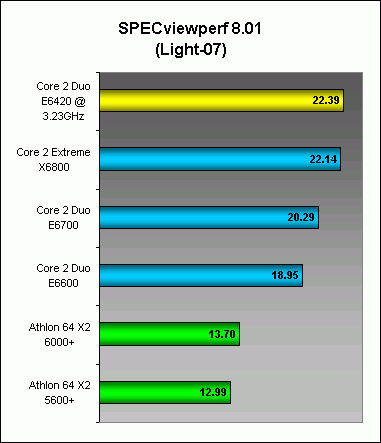
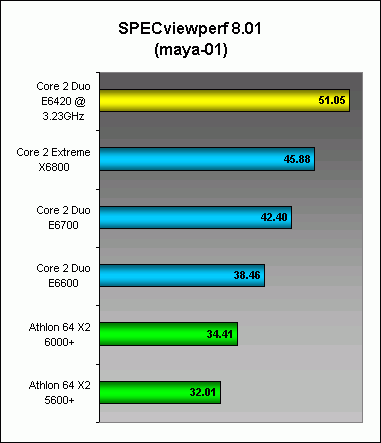
SPECViewperf's OpenGL nature has a mix of workloads that stresses the memory subsystem and scales well with CPU and GPU performance. With the GPU being capped in every test scenario, we've highlighted a couple of viewsets that scale well with regards to CPU performance. A rough glance of the results in the graph below show that the overclocked E6420 processor fares well in the comparison as it reaps 8 to 11% performance gain even against the Core 2 Extreme X6800. When stacked up next to a stock clocked Athlon 64 X2 6000+ (not that it can overclock much anyway), the E6420 at 3.23GHz was found to have a whopping 50% advantage. Imagine how much time a speedy Core 2 Duo can save you when getting such graphics jobs done!
Results - Lightwave 3D 7.5
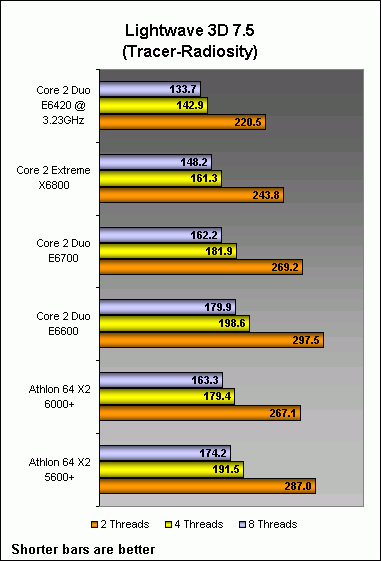
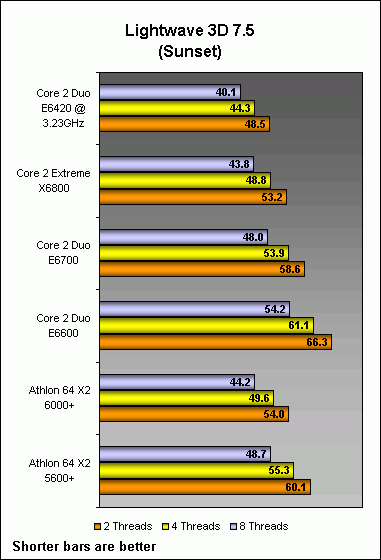
AMD processors fared much more competitively in this 3D modeling program's render tests, but Intel Core 2 processors still bagged the victory here again. The overclocked Intel Core 2 Duo E6420 processor too fared well, especially in the more complex Tracer-Radiosity render set.
Results - PCMark05, Cinebench 2003, Xmpeg 5.03
PCMark05 is a more straightforward synthetic benchmark than many of our other benchmarks but we continue to use this for its ease and simplicity that end-users can use for simple reference testing purposes. As such the results in PCMark05 are quite skewed towards higher clock speeds and the likes where the Core 2 Duo E6300 system overclocked to 3.36GHz and its faster operating DDR2-1000 memory gave the system slightly better scores than the overclocked E6420 system. Still, it is plenty faster than all of the stock clocked dual-core systems as shown below.
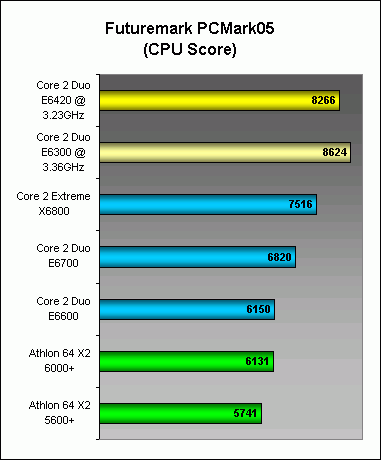
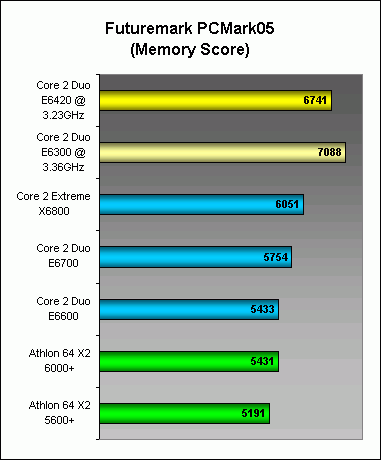
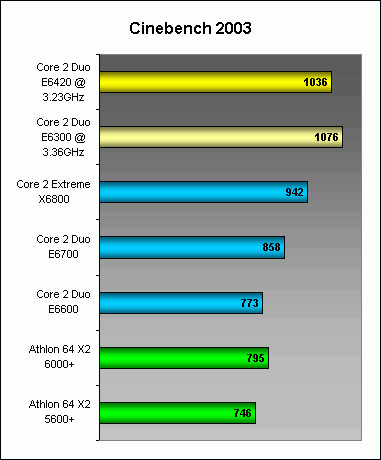
The outcome from Cinebench 2003's highly-threaded rendering benchmark came as no surprise to us as we've witnessed time and time again that it thrives on clock speeds improvements than other 'feature' enhancements like added L2 cache. Thus the 3.36GHz Core 2 Duo E6300 had a slight advantage here.
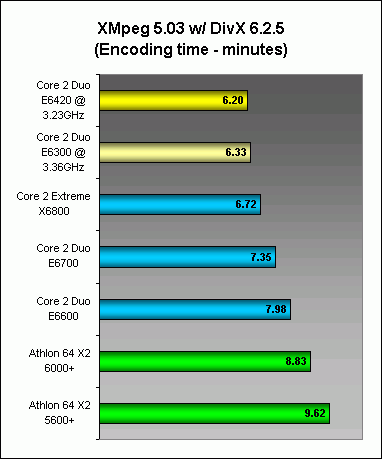
However, as our XMpeg encoding test shows, clock speed advantage isn't everything. The results indicate that the Core 2 Duo E6420 at 3.23GHz managed a small lead against the overlocked E6300 at 3.36GHz and shows off its L2 cache prominence in this test.
Results - Futuremark 3DMark06 and AquaMark3
Applications testing aside, gaming performance is definitely the other major facet we look into. On this page, we share with you our findings from famous synthetic game benchmarks like the 3DMark06 and AquaMark3.
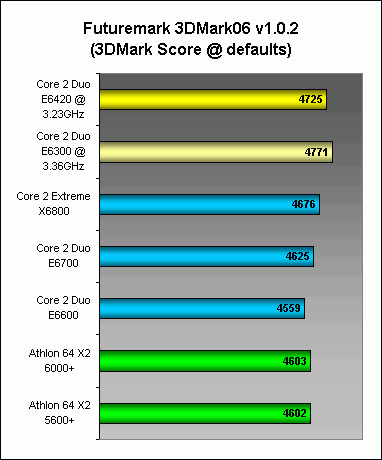
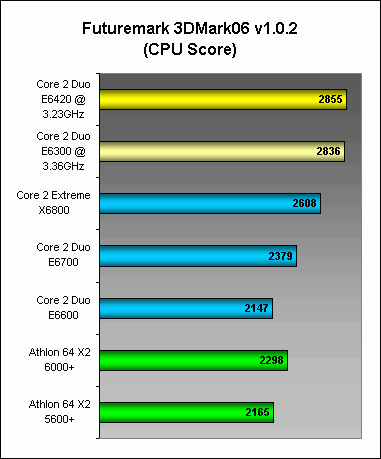
In Futuremark's 3DMark06, the CPU score was in favor of the new Intel E6420 overclocked at 3.23GHz, but the actual overall gaming score tilted in favor of the E6300 that was higher clocked at 3.36GHz. Games have always primarily shown performance gains with increments in CPU clock speeds and this was again repeated in this scenario. The good thing is that the overclocked E6420 still ranked ahead of the Core 2 Extreme X6800, making it a really viable path.
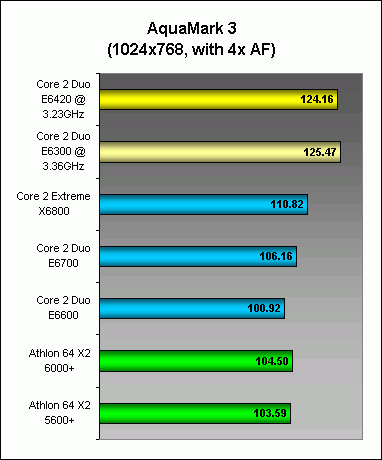
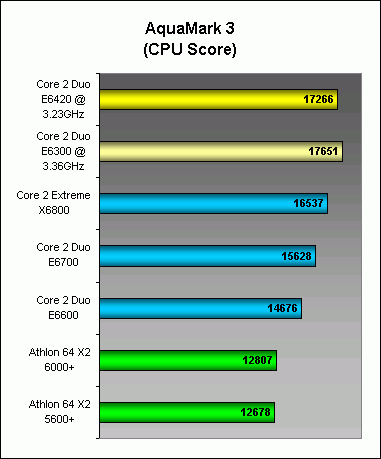
Different game engines react to subsystem improvements in different ways. Unlike 3DMark06, AquaMark3 benefits from every boost in subsystem performance. As such, it scaled very well in both the overall rendering performance as well as the CPU performance score, which takes into consideration many platform parameters. This is why both the overclocked processors fare exceptionally well in this test with both performing very much on par.
Results - Unreal Tournament 2004 and Quake 4
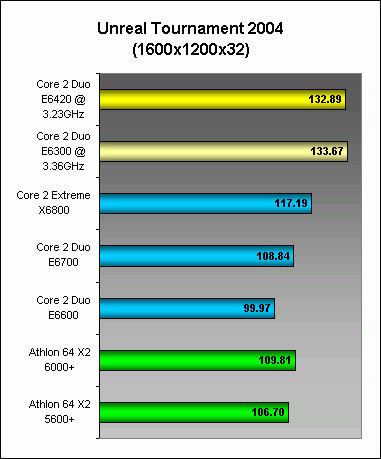
The E6420 at 3.23GHz in Unreal Tournament 2004 showed similar sizeable gains of up to 30% over competing stock-clocked processors just like in AquaMark3. And that's even when the test was configured to simulate an intense multiplayer environment with a multitude of bots to elevate CPU loading levels.
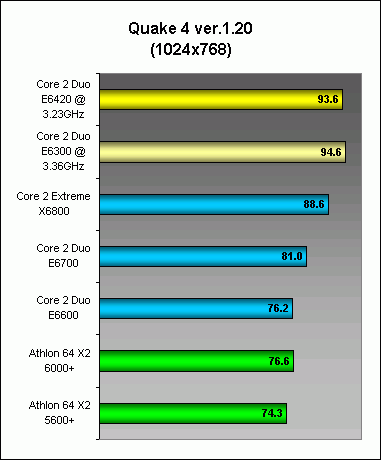
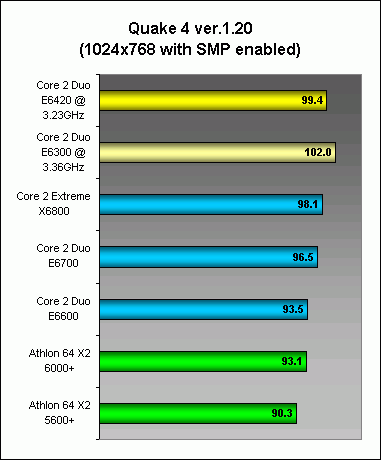
While Quake 4 does benefit from a speedier CPU, with SMP enabled to utilize modern dual-core processors, the gains from pure CPU overclocking are limited. Changes to the GPU subsystem definitely generate much larger gains than the gradual differences noted here. Strictly comparing the two overclocked processors, the 3.36GHz E6300 once again outpaced the 3.23GHz E6420 processor by a small margin.
Core 2 Duo E6420 - Easy Overclocking, Easy Performance Gain
Leading performance, low power consumption and heat output were the official reasons why the Intel Core 2 Duo processors are a hit with consumers, but unofficially, the processor's knack for overclocking is as important a factor as its other credentials. In the enthusiast's world, it's all about performance and clock speeds and the ease of overclocking these processors with huge gains made them an instant hit with this voiceful group. This echo was soon picked up by the mainstream DIY'ers whose mission is to pack the most value for any amount spent. Obviously with the Core 2 Duo processors and their huge headroom, many have a chance to dabble in this art safely without much concern as well as bag notable performance improvements. Now who wouldn't want that?
While overclocking still isn't condoned by any component manufacturer, and the necessity for it has been diminishing these days, the thrill of overclocking and speedups for audio/video encoding as well as other time/resource intensive tasks are still welcomed by all. With the spotlight this time round on the Core 2 Duo E6420 processor, we've once again proven how easy it is to overclock and reap huge gains without any added costs at all. In fact, the total system cost by going with the E6420 route may be lower than that of the E6320. The E6420 processor has an 8x CPU multiplier versus 7x on the E6320, thus allowing it to scale the Gigahertz ladder a lot quicker, and with less effort. For one, very little voltage boost was required, thus the processor operates at a lower temperatures, consumes less power and doesn't require any aftermarket coolers in our observation.
If you thought overclocking the E6300 was easy, overclocking the Intel Core 2 Duo E6420 is a walk in the park! With an inherent higher CPU multiplier, climbing the Gigahertz ladder can be achieved with little or no voltage boosts with the right hardware combo.
In this article, we managed to overclock the E6420 processor to 3.23GHz at an FSB of 404MHz 'only'. An FSB of around 400MHz is within reach by almost all Intel P965 and Intel P35 motherboards with rudimentary overclocking controls. And with very little voltage boosts needed to both the processor and Northbridge, it's easy to get a stable 400MHz FSB overclock going. The E6420 at this speed felt cooler to the touch than our E6300 clocked at 3.36GHz, thus the stock cooler was sufficient for its needs. Memory is yet another aspect and at close to 400MHz FSB, we could utilize standard DDR2-800 memory modules (or even overclock the better DDR2-667 modules). The E6300 required DDR2-1000 modules to reach FSB speeds approaching 500MHz FSB for its maximum overclock (not to mention better overclocking-grade motherboards, higher voltages and a better performing after-market cooler for precaution's sake). The net result? The overclocked E6420 at 3.23GHz was just a shade slower than the E6300 at 3.36GHz, but it did manage to better the latter in certain tests.
Overclocking for notable improvements has never been as easy as it has been with the Intel Core 2 Duo E6420, and more so since it doesn't require expensive supporting components. If you're still sitting on the fence, it's about time you try it out yourself too and enjoy the kicks.
Our articles may contain affiliate links. If you buy through these links, we may earn a small commission.