
IDF Fall 2010 Day 1 - Sandy Bridge Revealed
Intel revealed more details of its upcoming 2nd generation Intel Core processor family codenamed Sandy Bridge at the first day of the Intel Developer Forum 2010. Slated to arrive in early 2011, Sandy Bridge brings with it features that promises to change the user's computing experience.
If 0.68 seconds was nearly an eternity for an android (that was how long Data was tempted to join the Borg queen in Star Trek First Contact), then it's going to be a long grueling wait for the release of the next generation of Intel's latest processor codenamed Sandy Bridge - although it's just month's away. Slated for early 2011, the highly anticipated 2nd generation Intel Core processor family promises to deliver new and enhanced features that will further extend Intel's lead in the processor business.
Fabricated on Intel's current 32nm process technology, Sandy Bridge is based on Intel's matured chip process which takes advantage of its high performance 2nd generation high-k metal gate transistors. When it comes to delivering the state-of-the-art logic silicon, no one comes close to beating them yet. So it's of no surprise when Intel also revealed that their next generation 22nm transistors are currently being fabricated in their fabs today and are making great strides in meeting its targeted release in late 2011.
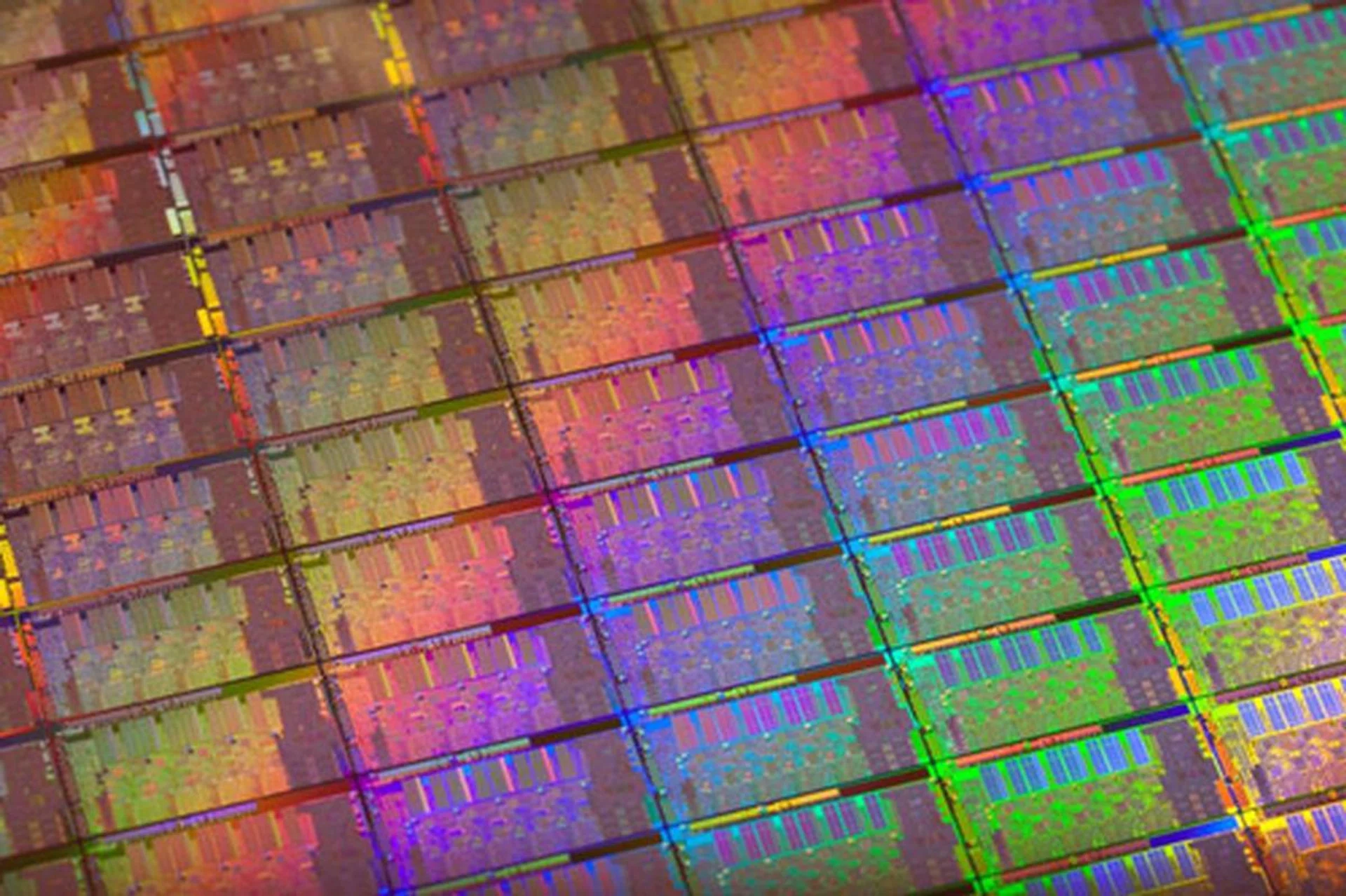
Intel's next generation Sandy Bridge manufactured on Intel's 32nm process technology with high-k metal gate transistors.
Unlike the current generation Westmere processor, Sandy Bridge will be a highly integrated single die solution incorporating a graphics processor built into the same die as the main processor cores. Thus, one can expect better graphics processing capabilities since its memory controller and graphics are now interconnected using a new high speed, high bandwidth 'ring' architecture. The unique ring architecture allows the processor's cores to share its critical resources such as its cache with the graphics processor, thereby improving the overall performance of the computer while maintaining an energy efficient system.
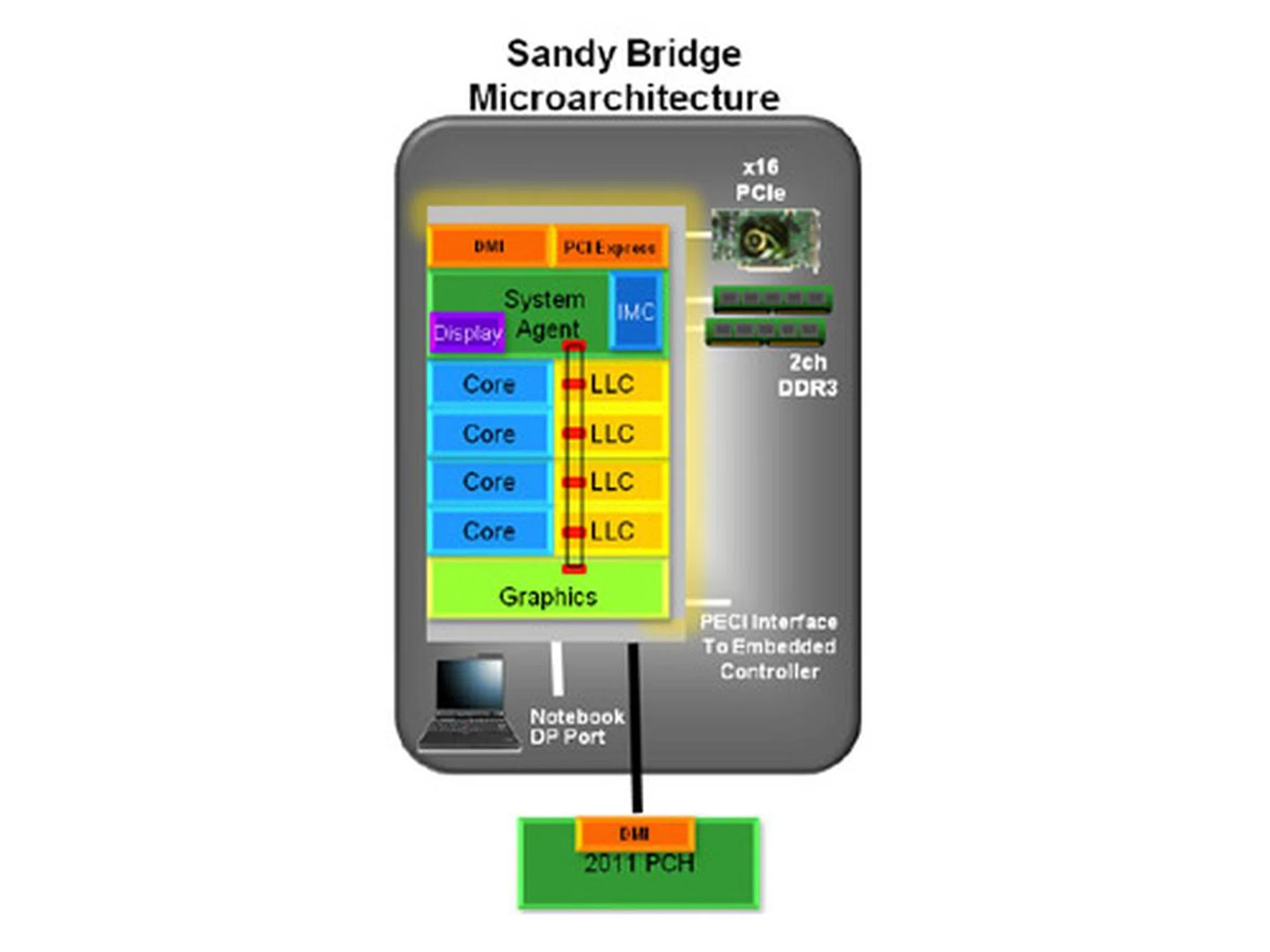
The Sandy Bridge block diagram.
The scalable ring architecture interconnect forms a link for all the critical components of the processor such as the cores, graphics, LLC (last level cache) and system agent. It provides 96GB/s of data bandwidth per connection and it is connected to a multi-bank cache, one bank for each core. For a four core processor, the ring interconnect can deliver a total of 384MB/s of low latency bandwidth to the cache while a dual core processor will deliver a total of 192MB/s.
Intel also created the ring interconnect to be modular in nature, such that it allows for the addition and removal of cores, graphics and cache with great ease. This would allow Intel to create multiple product SKUs based on various configurations for greater product variety and quicker deployment in the market. The removal of cache and cores can also be performed on the finished product, thereby allowing Intel to ship the same four core die, but with two of them disabled.
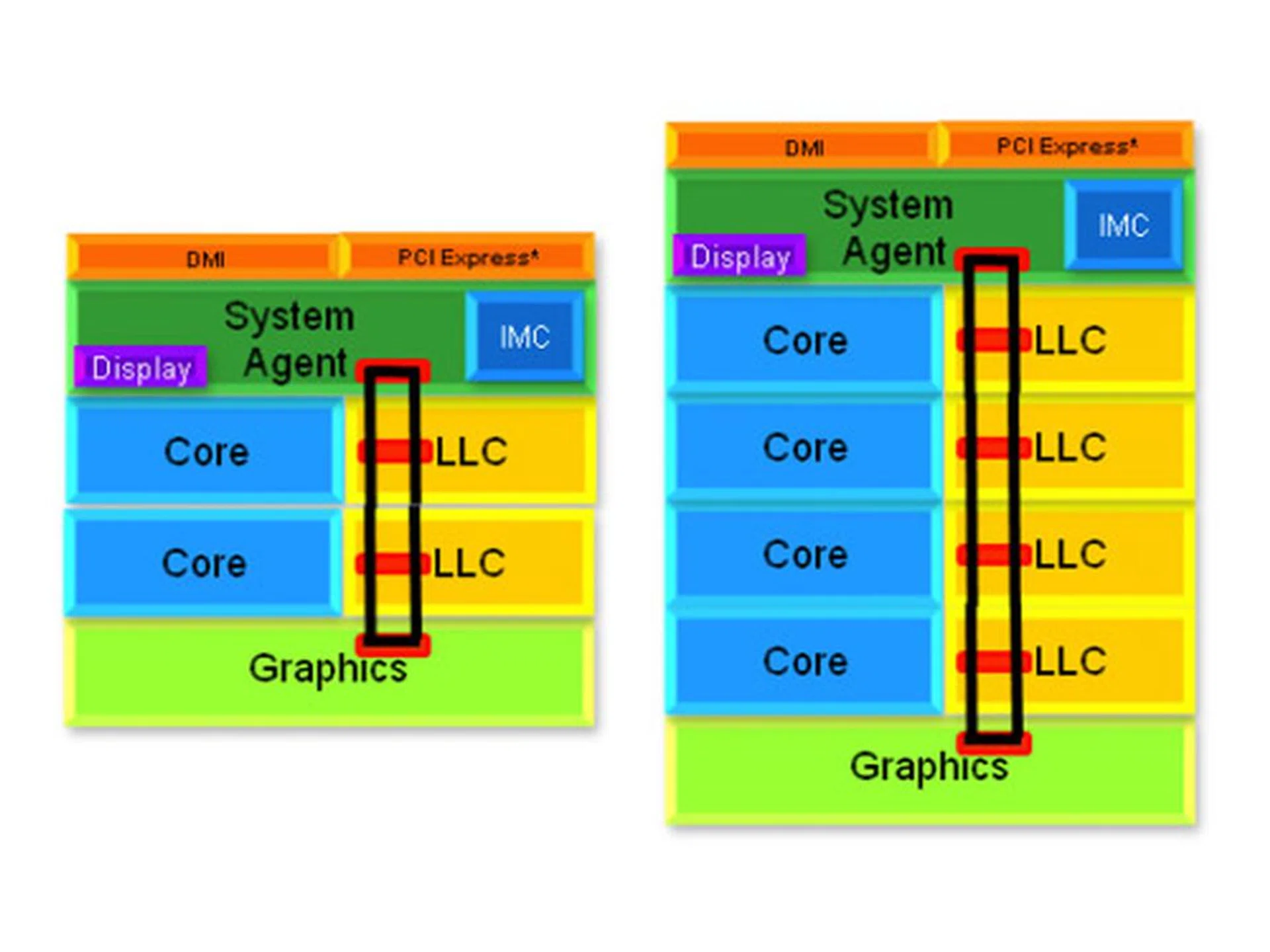
The Sandy Bridge ring architecture allows Intel to add and remove cores, graphics and cache to create various configurations to suit market needs. Pictured above is a dual-core (left) and a quad-core (right) version.
The new graphics processor within the Sandy Bridge is designed to deliver enhanced visuals in areas where users need them most in their daily computing usage. These include HD videos, 3D videos, mainstream 3D gaming, multi-tasking and online socializing, and multimedia. Thus, the graphics processor will boost graphics performance in most applications and not just 3D gaming. In fact, it's not intended for advance 3D graphics since that would still require the presence of a dedicated discrete graphics processing unit (GPU). But for the masses and general consumers who play the occasional Facebook flash game or the social media enthusiast who encodes homemade videos for Youtube, the integrated graphics core in Sandy Bridge is more than adequate.
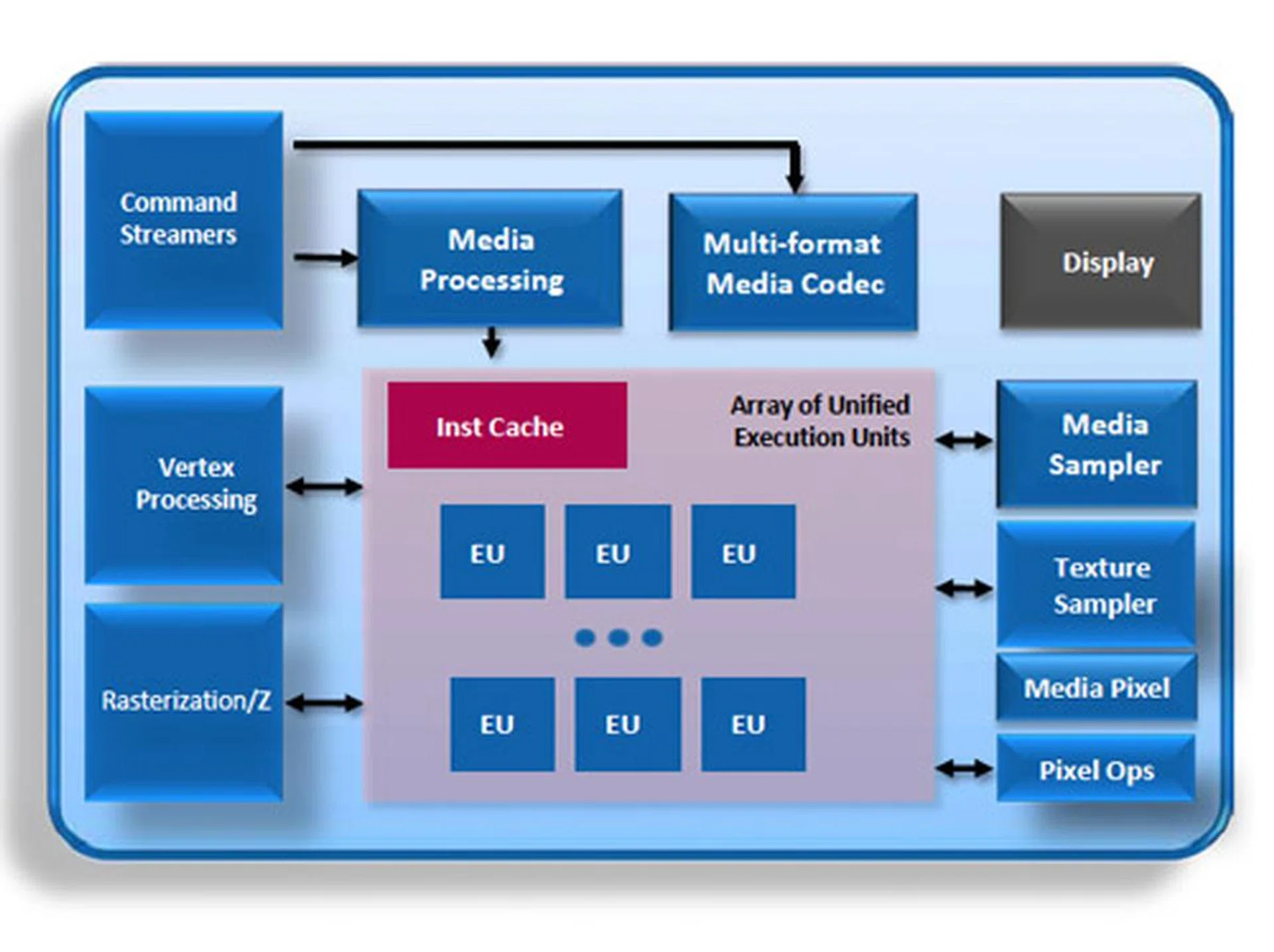
The Sandy Bridge graphics processor block diagram.
In a demonstration during the keynote, Dadi Perlmutter, executive vice president and general manager of the Intel Architecture Group showed how one can play the popular Starcraft II : Wings of Liberty game with visual effects looking essentially the same as another laptop configured with a discrete graphics card. Besides having the ability to render 3D graphics with no dropped frames, the demo also showed how it had enough processing capabilities to record the gameplay in full high-definition video which was later shared with friends on Youtube.
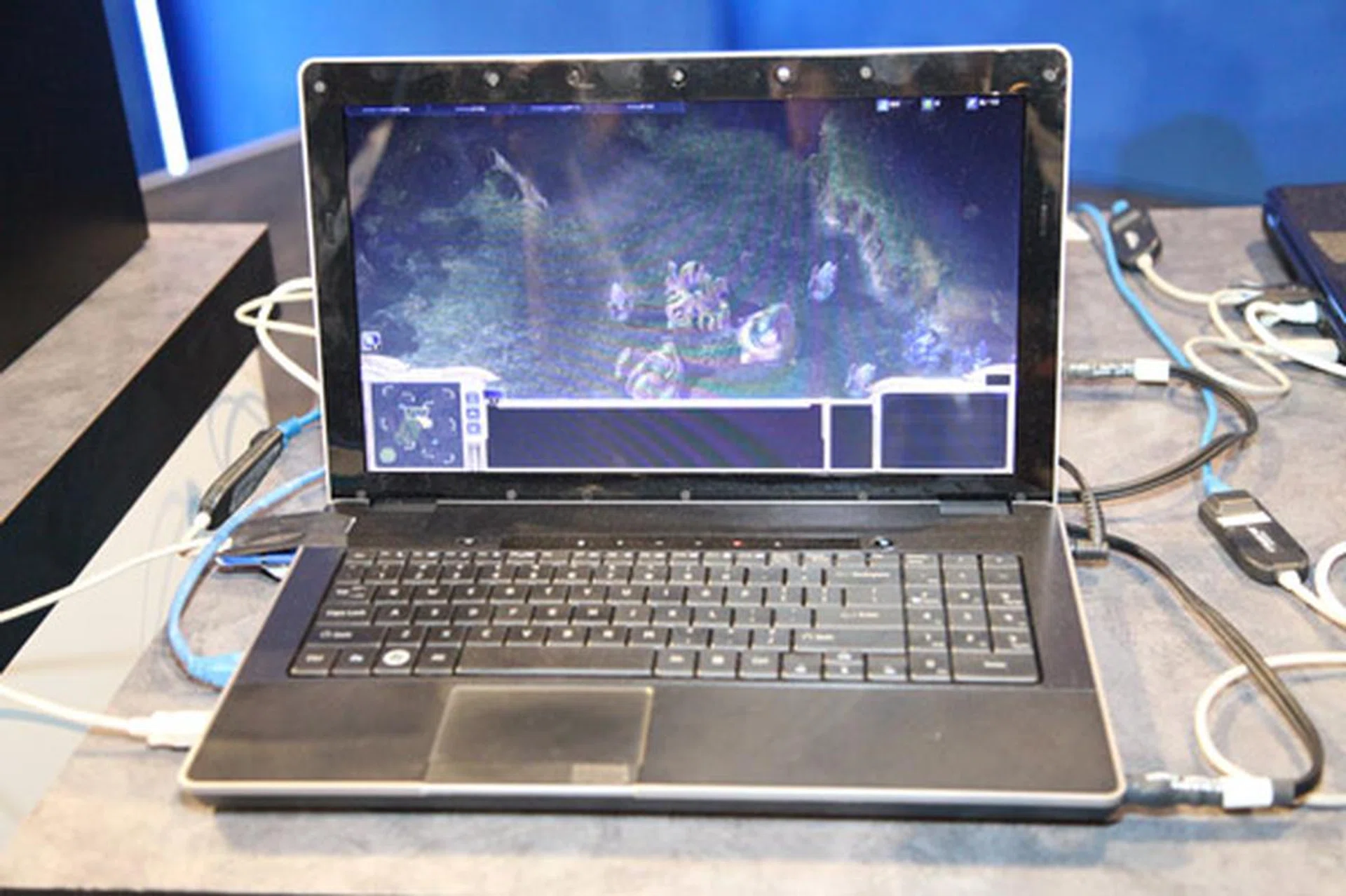
Notebook platform fitted with a Sandy Bridge processor running Starcraft 2 and concurrently capturing the gameplay video at full resolution.
The multi-tasking capabilities of the graphics processor is made possible by the highly parallel flexible architecture that is optimized for the next generation of media workloads. Featuring the next generation execution unit, the graphics core in Sandy Bridge is capable of delivering two times the throughput per execution unit as compared with the previous generation. The execution units also feature a larger register file for increased parallelism and a more efficient complex shader execution.
All the dedicated accelerators and native implementation of mainstream codecs for video rendering also allows the graphics processor to improve its HD media encode and decode performance. As a result, power consumption is lowered and battery performance improved.
Power management at the die level is also improved with Intel's next generation turbo boost technology. The processor cores and graphics now enjoy greater frequency boost in Sandy Bridge as compared to the previous generation. The greater turbo headroom is capable of adding more speed bins to the processor cores above its rated TDP, even when all four cores are utilized at the same time. Now that the graphics processor is also integrated into the same die, power management is better controlled at the hardware level, giving the user all the performance that is required when it's needed.
Finally, floating point intensive applications will enjoy greater performance with the added Intel Advanced Vector Extensions (AVX) instruction set. AVX delivers a new 256-bit instruction set that greatly benefits applications like digital photo editing and content creation. Developers can also take advantage of these instructions to accelerate motion and facial recognition tracking as well as computational simulation and analysis.
Sandy Bridge will be available in low power performance-optimized 65W solutions as well as versions at 45W and 35W using a new low-profile fan heat sink solution. Intel expects Sandy Bridge to help users build smaller and more stylish desktop systems such as thin mini-ITX based desktop systems as well as all-in-one desktops.
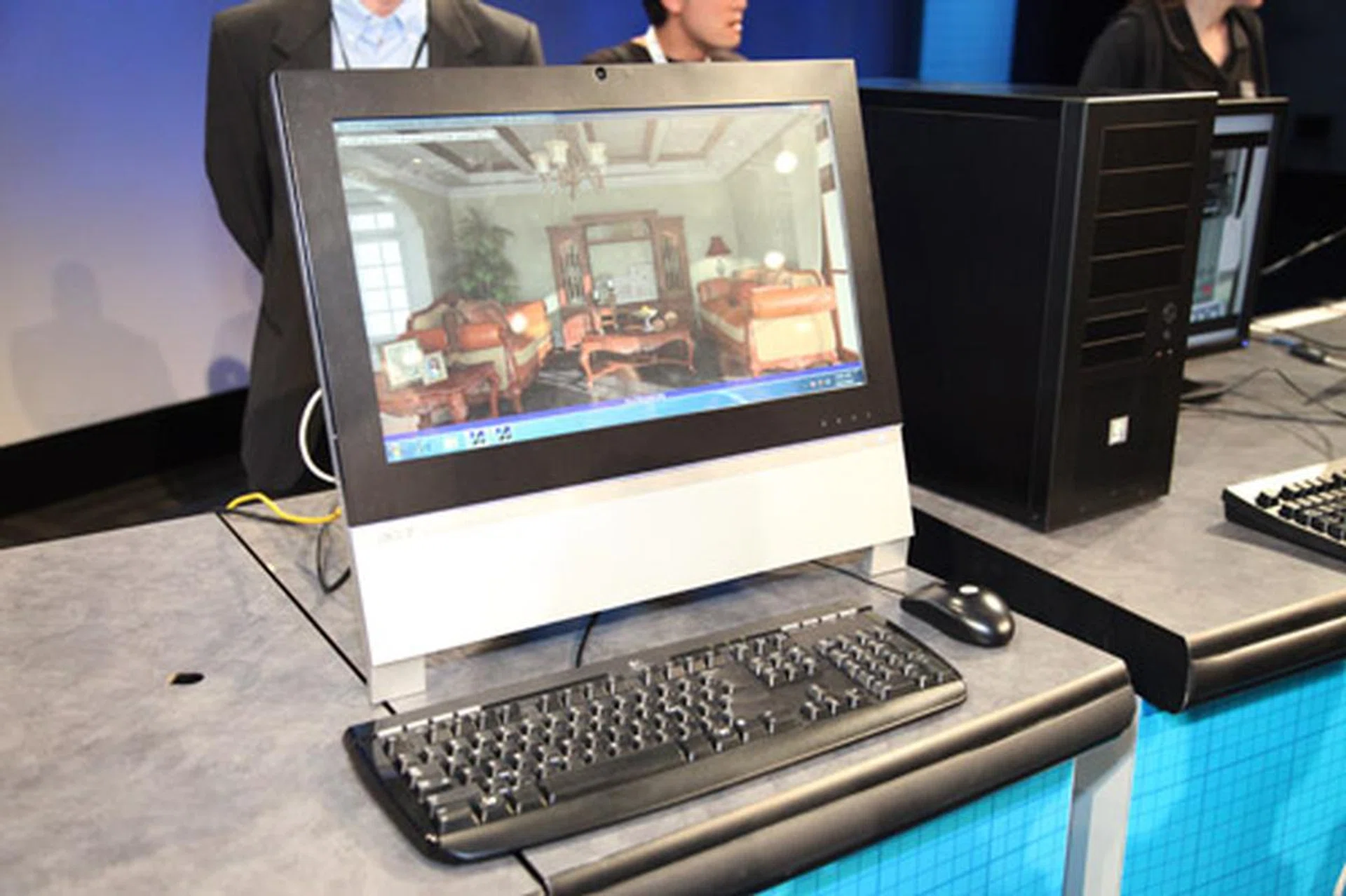
An Acer all-in-one desktop PC with a low power Sandy Bridge processor demonstrating complex 3D renders taking advantage of Intel's AVX instruction set.
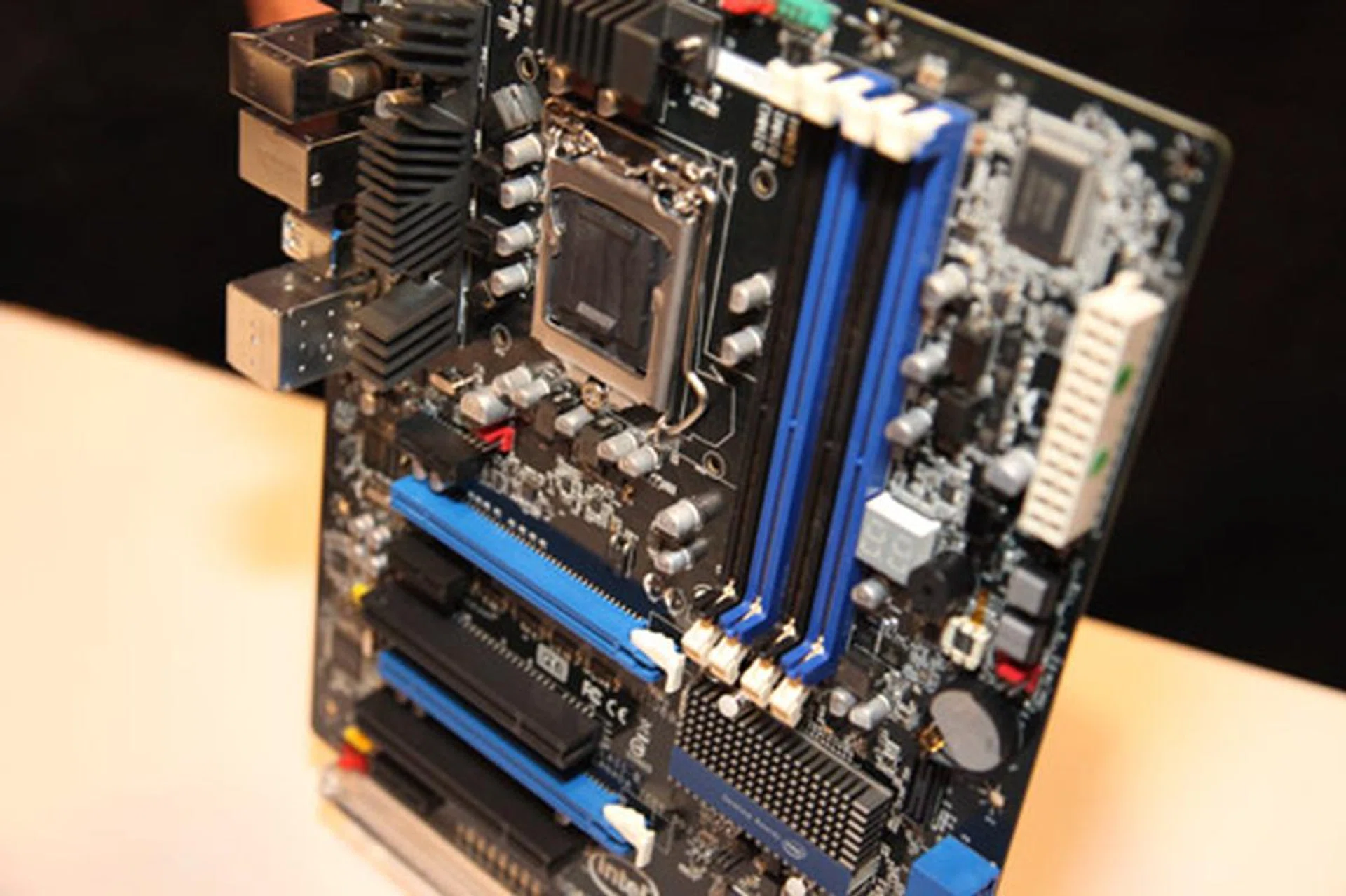
Intel's motherboard for the next generation Sandy Bridge processor, featuring the next Intel 6 series chipset.
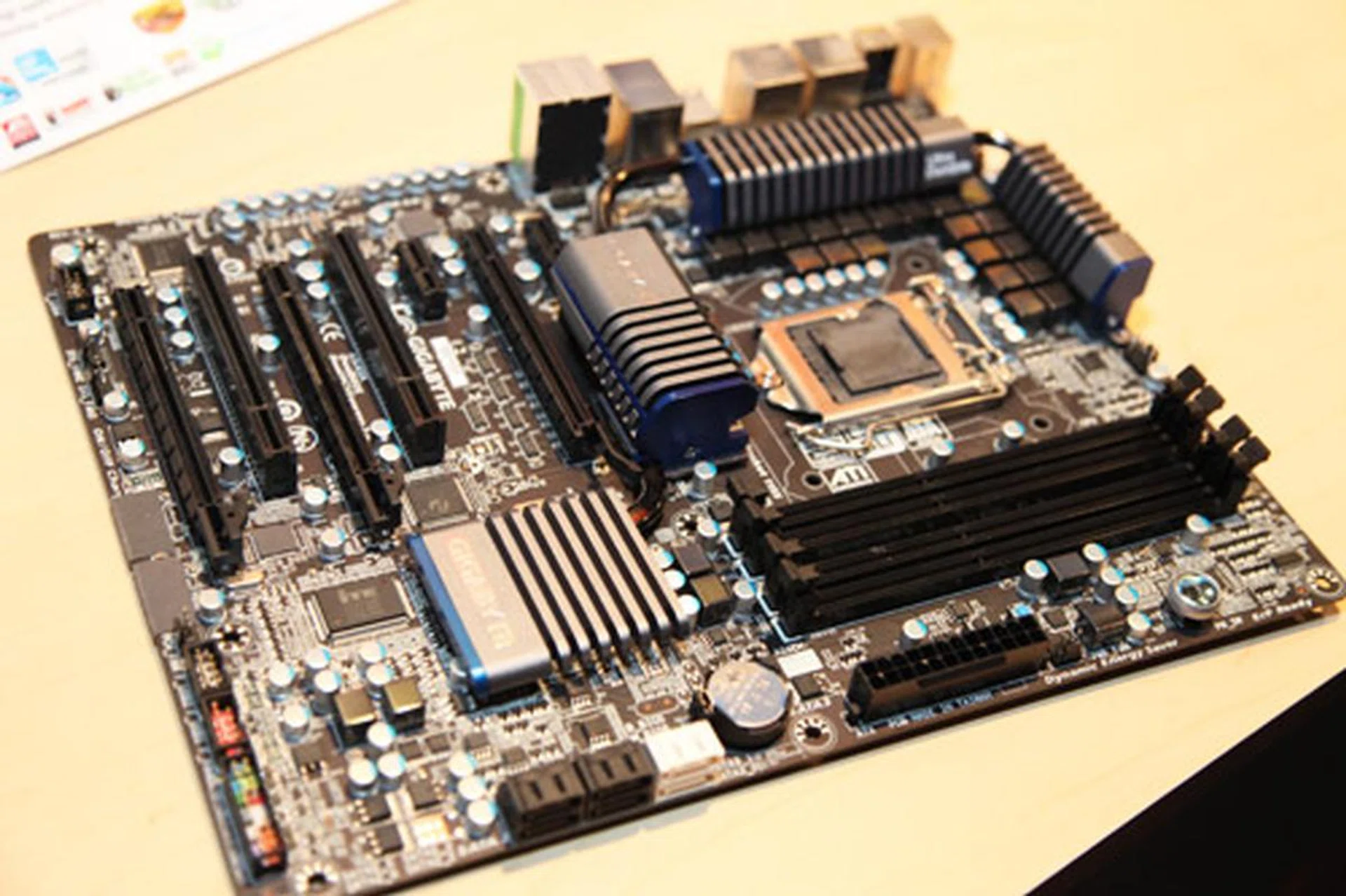
The new Gigabyte GA-P67A-UD5 is the latest motherboard built for the new Sandy Bridge microprocessor. It's also Gigabyte's first foray into black PCB design. The GA-P67A-UD5 comes with a 20 phase power VRM design, SATA 3.0 storage, USB 3.0, two PCIe 2.0 graphics slot for SLI and CrossFireX and their proprietary 3X USB power delivery system.
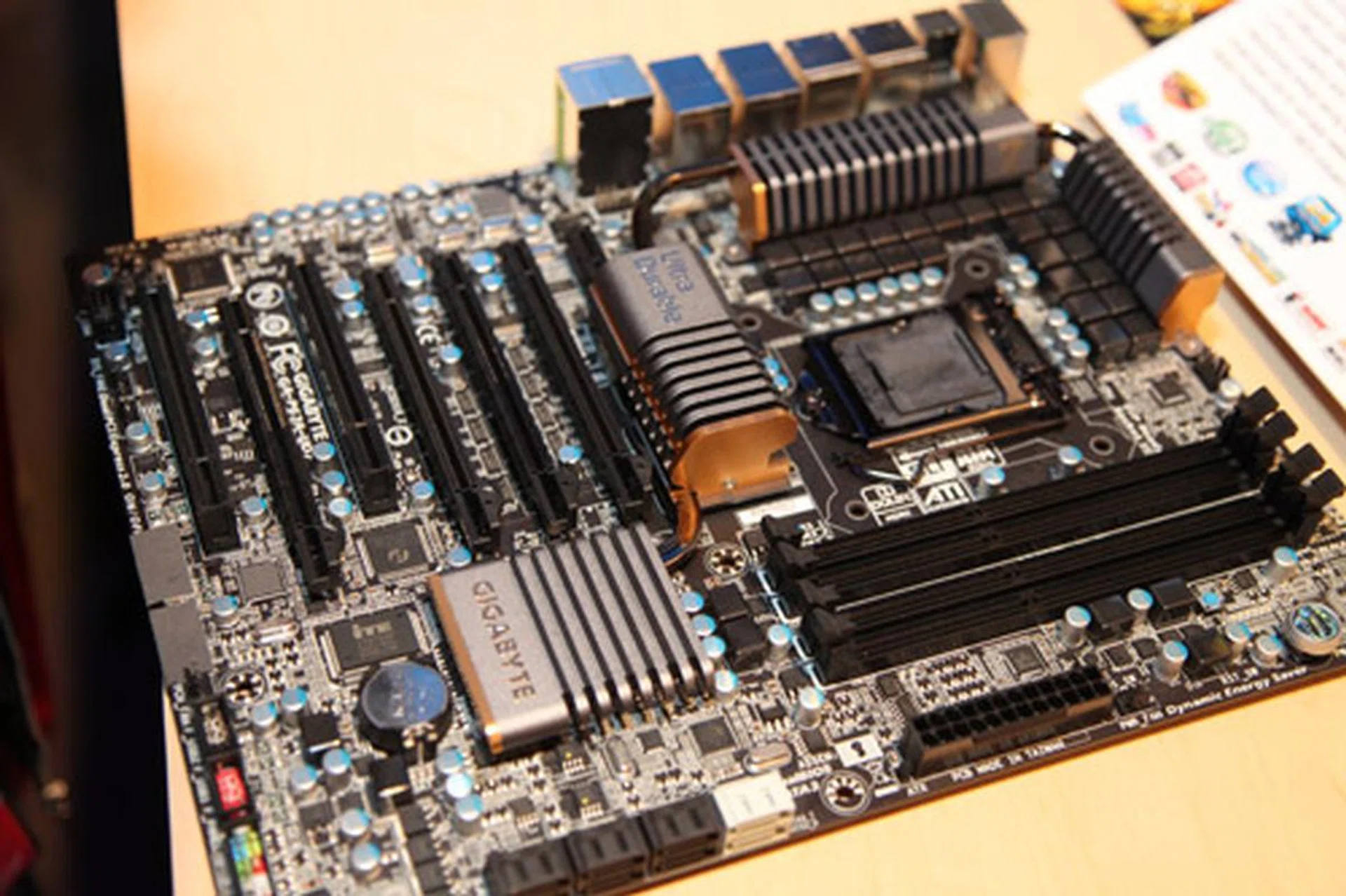
The higher-end GA-P67A-UD7 comes with four PCIe 2.0 graphics slots for 3-way multi-graphics SLI and CrossFireX configurations. It also comes with smart dual LAN technology which allows users to configure its GbE to have automatic failover or improve network performance through teaming.
Our articles may contain affiliate links. If you buy through these links, we may earn a small commission.