
Heart of the PC - 10 Years of Motherboards
For years, the motherboard has been the foundation for any PC and even as we march into the 21st century, it is still the case. Here, we look back at the past 10 years in the evolution of the motherboard from 1998 to 2008.
Introduction
If one were to compare the personal computer to the human body, then the brain is naturally the CPU which does all the number crunching. As the common platform where all your PC components are attached to, the motherboard is analogous to the heart of the machine. It is therefore the most important component of your system and the final arbiter of whether you can plug your latest devices and other add-on cards and have them working fine.
While the concept of the motherboard may have its roots in the 1980s, the past ten years have obviously seen its fair share of developments. Most of the changes are inevitable and are determined not by motherboard manufacturers, but by industry giants like Intel that design and build the reference chipsets for its processors. Changes in the processor design, like a new socket with a different number of pins will affect the motherboards too. In that sense, this segment is subject to the changing whims of the PC industry and many of the changes we'll be seeing are related to it. However, while the core logic used by manufacturers may be the same from one vendor to another, there are still plenty of opportunities for them to innovate and distinguish themselves.
At the start of 1998, the reigning processor then was the Intel Pentium II and one of the best chipsets ever released to complement this processor was the Intel 440BX. With a front-side bus (FSB) ranging from 66 to 100MHz, motherboards built on this chipset supported four memory banks for a total of 1GB of SDRAM memory. It used the AGP slot (Accelerated Graphics Port) for discrete graphics, supported the PCI 2.1 standard and interfaced with hard drives using ATA/66 in UDMA Mode 2.
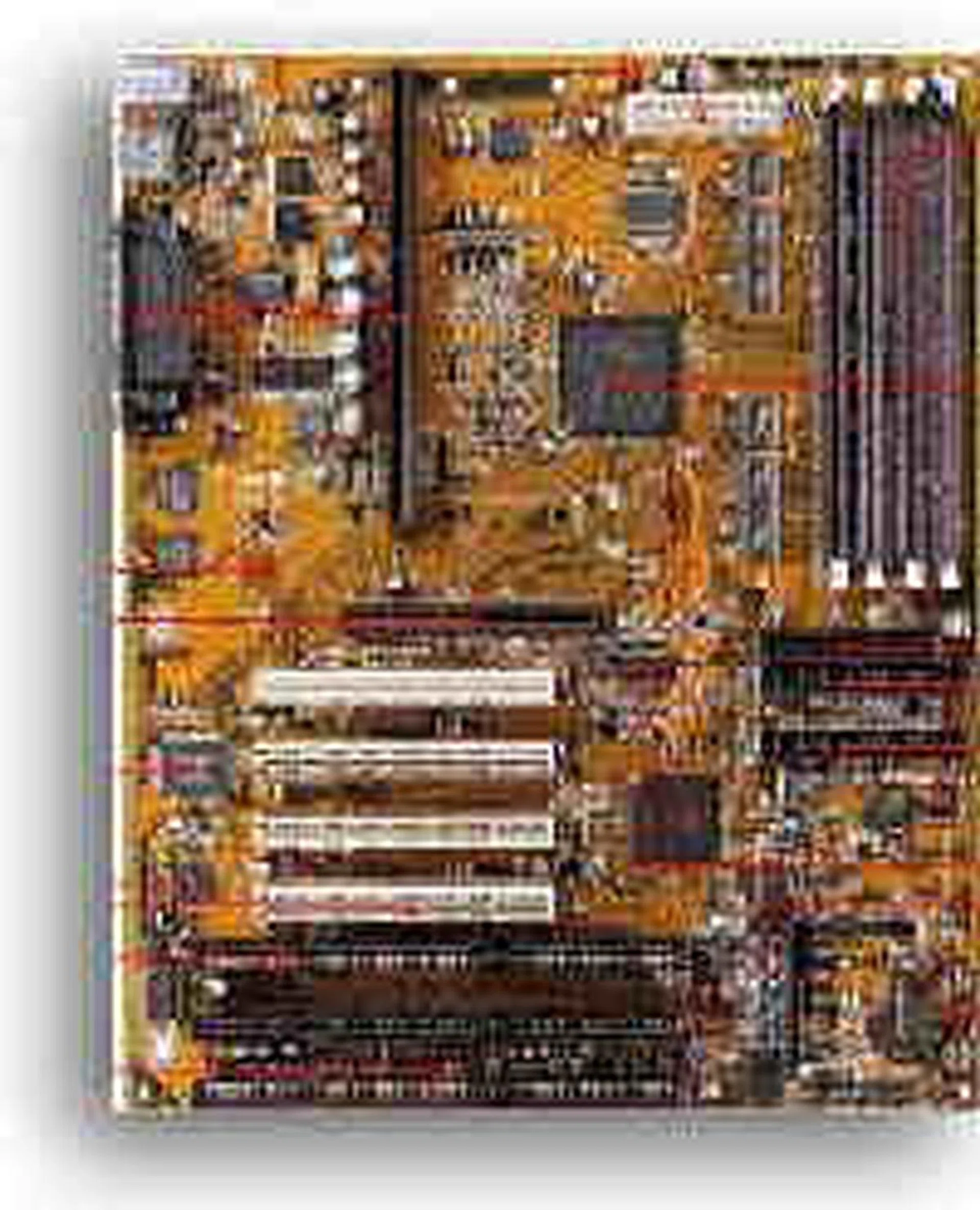
One of the earliest jumperless motherboards from abit, this abit BX6 was one of the many boards that were using Intel's highly popular 440BX chipset. Meant for enthusiasts, this board could go up to 133MHz FSB (unofficially) and came with abit's famous SoftMenu II.
Fast forward ten years later and the latest mainstream Intel P45 chipset has a FSB that goes up to 1333MHz (or higher) and the AGP port had long given way to the version 1.0 predecessor before the current PCI Express 2.0 format. While PATA was still supported through a third party solution, Intel had done away with this interface and its successor, SATA was the de facto standard for interfacing with storage drives. The memory technology standard was also very different from the single channel, single data rate of SDRAM as one can now choose between DDR2 or DDR3 implementations of the P45 chipset. As for the ISA I/O bus on the 440BX, this had been obsolete for many years and fully replaced by PCI and PCIe.
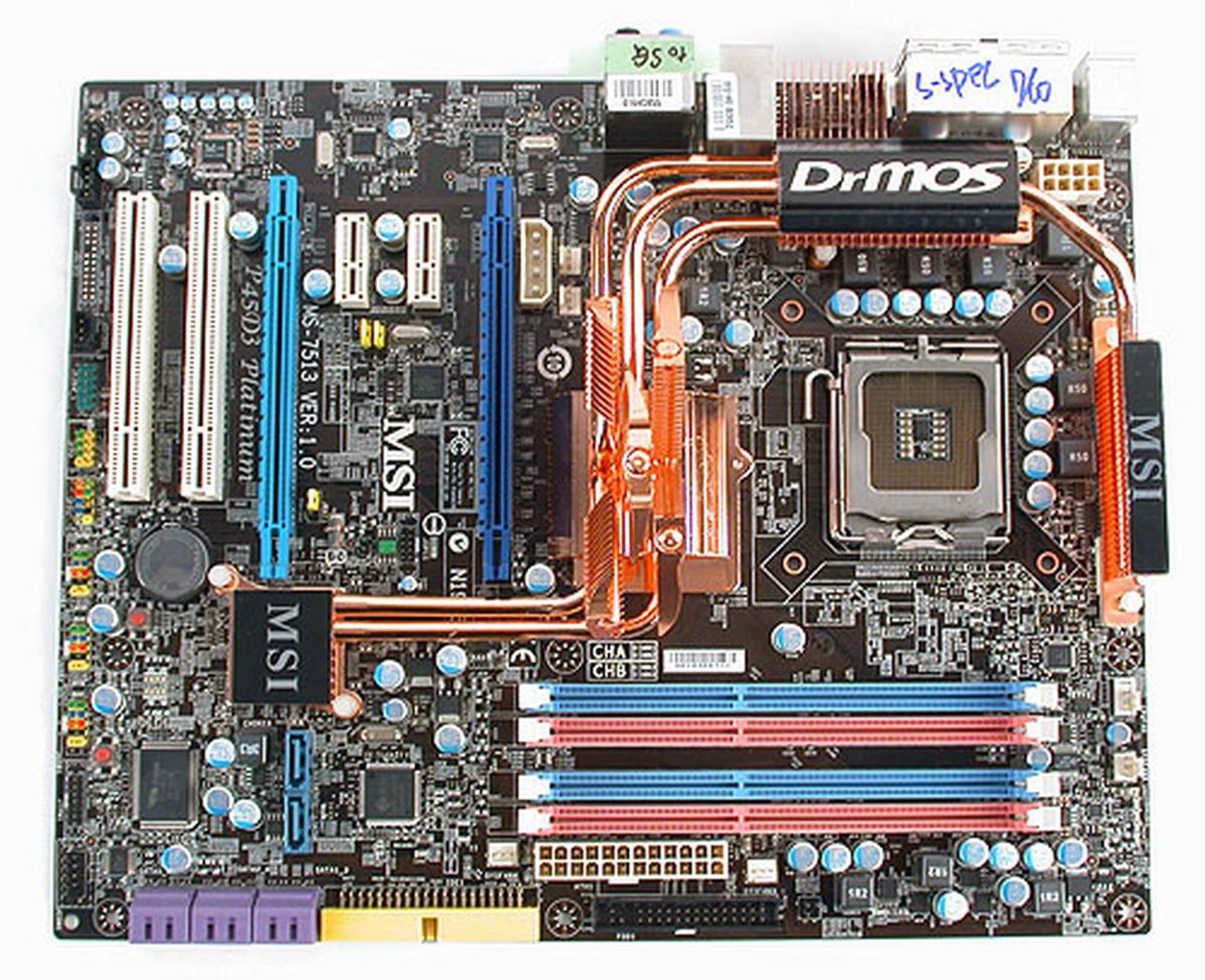
A typical motherboard using the latest Intel P45 chipset circa 2008. Despite the ten-year difference, overclocking and other tweaks are still done through the BIOS while the layout has remained relatively unchanged.
As you may have noticed from our short description, the basic format and layout of a motherboard have largely remained the same. It is recognizably a motherboard, whether you have a modern version or a relic from ten years ago. The ATX form factor and its variants have survived the years mostly intact and while the names have changed, the functionality of the motherboard has not. There is still an I/O bus for communications between the processor and the other devices connected to the motherboard. Dedicated channels exist for the hard drive and the graphics card and even ten years ago, they had USB ports, albeit of the 1.0 variety.
The concept of a Northbridge (typically a memory and graphics controller hub) and Southbridge (I/O hub) to handle different communication tasks has been around for a while now. And though the newer chipsets may not have them as a mandatory feature, motherboards have continued to provide support for legacy devices like the communication ports, floppy drive and PS/2 to name but a few.
Of course, that's not to say that nothing has really changed. For one, modern motherboards have extensive tweaking options available in BIOS. While there were already 'soft' BIOS prior to 1998 (QDI comes to mind with its SpeedEasy jumper-free technology), it was made famous by overclocking pioneers like abit and its SoftMenu, where users could adjust their settings for overclocking purposes inside the BIOS instead of fiddling with jumpers. This concept has by now spread to practically every aspect of the motherboard and is used by all vendors.
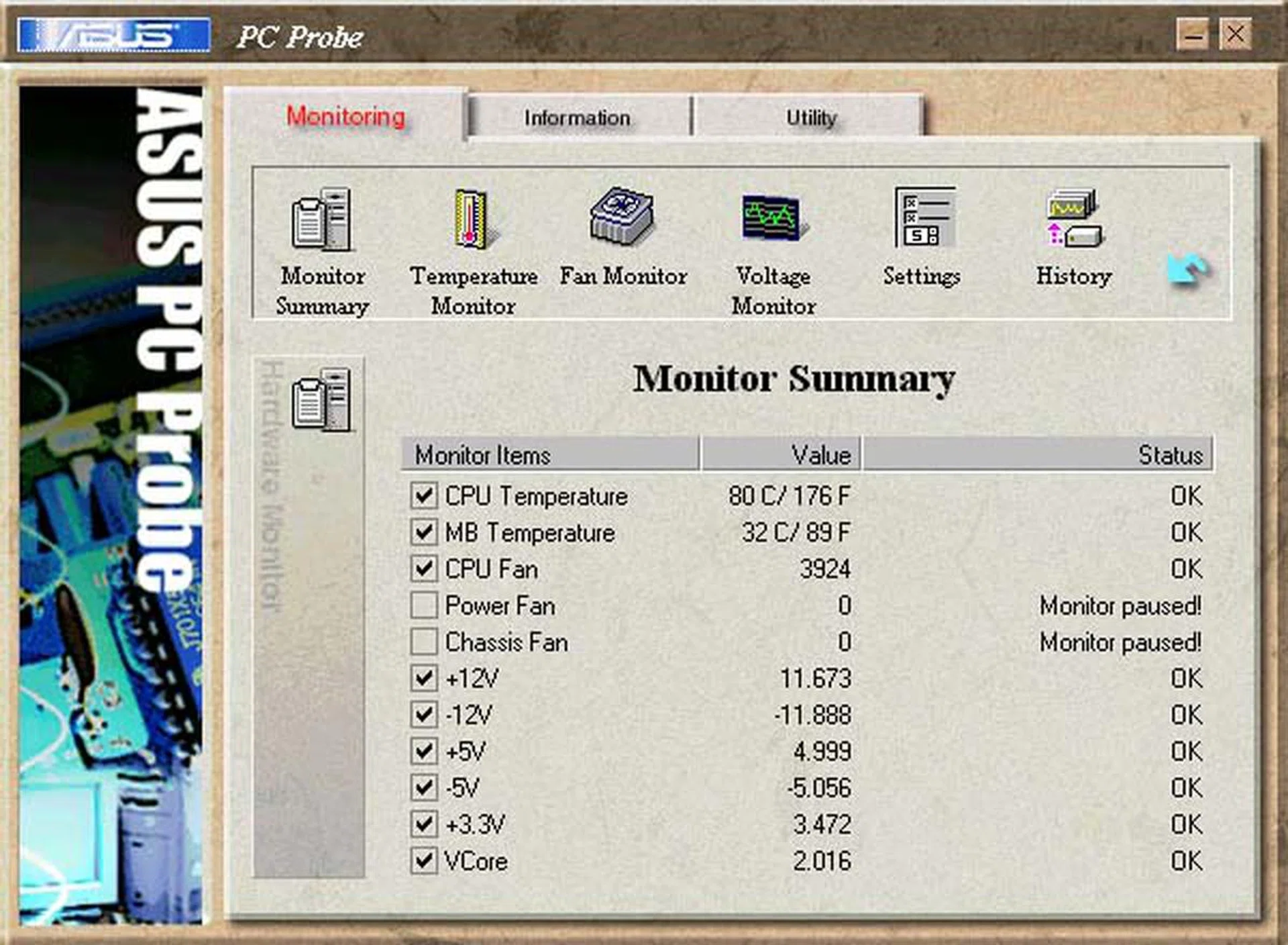
We haven't really come very far in ten years as software monitoring tools like this have existed for quite a while and they are as similar in functionality as modern versions. Perhaps the newer versions have a nicer GUI.
One could of course attribute this trend to overclocking enthusiasts and in some way, it's true that many of the extensive tweaks are meant for overclocking, like core and memory voltages. Others however are could be prompted by power users and generally useful for all, such as the ability to flash the BIOS using a utility accessed directly from the BIOS. In fact, the BIOS has become the playground for vendors eager to flex their engineering prowess, with the addition of new and proprietary features.
Over the years, we have also seen the integration of various peripherals onto the motherboard. Again, this is not new as the motherboard has usually included some integrated peripherals, from your onboard audio to Ethernet LAN. Arguably, the modern motherboard is more fully featured than boards of ten years ago, though this can really depend on what price segment one looks at. At the high-end segment, we have seen some extreme configurations where the vendor seemed to have included every conceivable possible onboard peripheral.
Besides the powerful and comprehensive modern BIOS, the modern motherboard is usually designed with a multi-phase power distribution system, in part from the greater power efficiencies compared to a single phase solution and also because the motherboard has grown in complexity and their thermal and power ratings has increased, making it essential to have multi-phase power designs. On a similar note, the printed circuit board (PCB) of the typical motherboard is also usually multi-layered as the complexity of the board necessitates these layers for the required signal traces and partly because some motherboard vendors have jumped on this issue in their marketing to distinguish their products from competitors.
Indeed, quality and reliability are key factors that consumers have demanded over the years and motherboard vendors have jumped onto this trend, leading to an industry-wide practice. For instance, Gigabyte was one of the first to introduce only solid capacitors for its motherboard, which are rated to have a longer lifespan than electrolytic ones. Shortly after that, this use of solid capacitors was observed happening on motherboards issued by other vendors, especially since Gigabyte had followed this move with a marketing campaign touting its use of solid capacitors. Now, it's almost a norm to find solid capacitors on motherboards, more so if it's from one of the bigger brand names.
These industry trends can count on a new 'green' movement that has sprung up in recent years. Aided by multi-phase power designs that are responsive to changes in workloads and are able to adjust the voltages accordingly, vendors have taken every opportunity to tout the energy and thermal advantages of their particular boards. Newer forms of cooling the warmer parts of the motherboard (the Northbridge and Southbridge) have been introduced. While early boards could rely simply on passive heatsinks to do the job, later motherboards came with heatsinks reinforced with small fans.
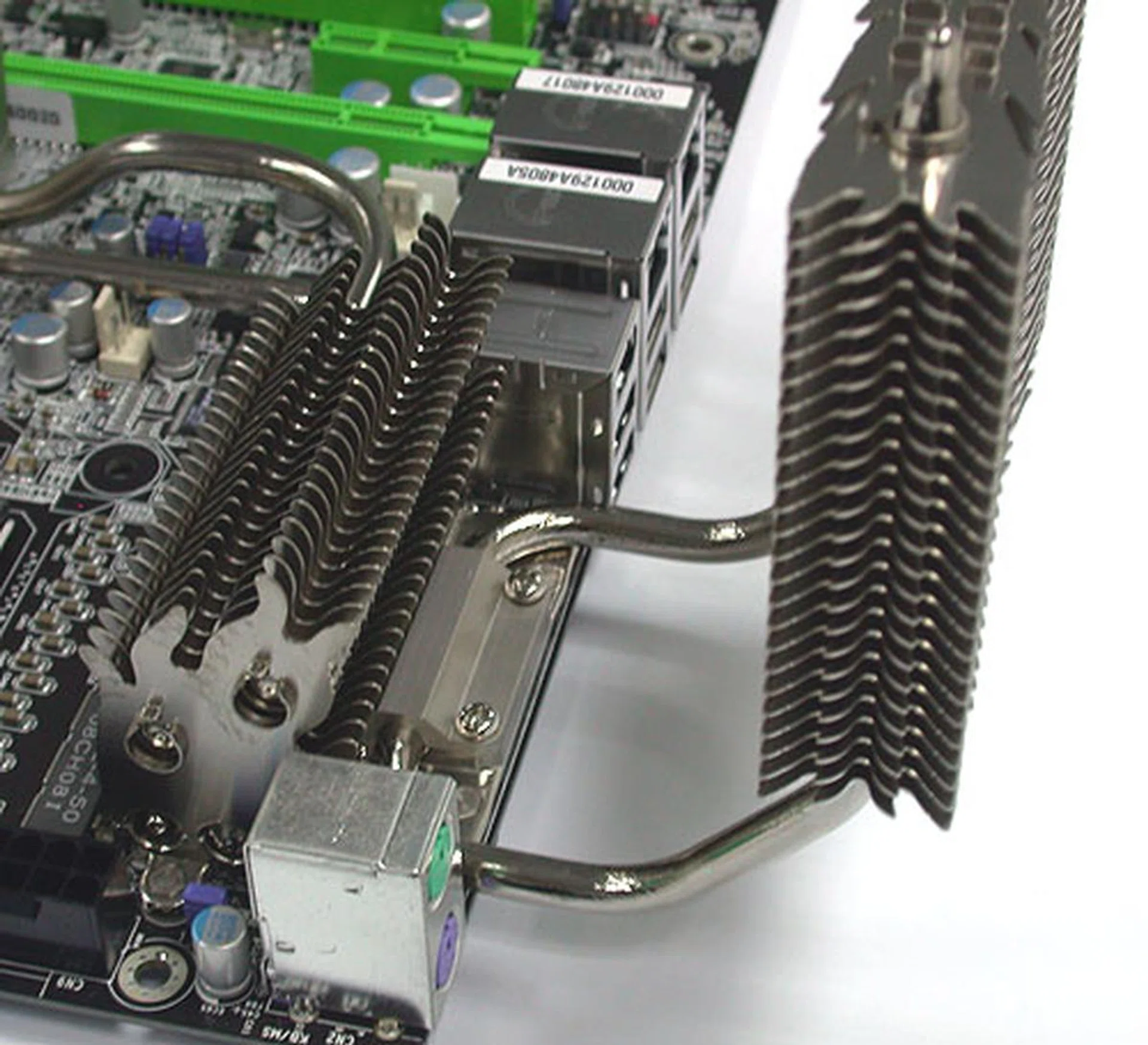
An extreme example of a large passive motherboard cooler from DFI.
Although the power draw for PCs has generally increased, depending on the chipset, passive cooling has not entirely died out, though some of the heatsinks have grown to become elaborate, heat-pipe based, full copper structures that can dissipate more heat than its simple ancestors. Obviously, for the overclocking crowd, liquid cooling has always been an option and vendors too have responded with designs that cater to this niche.
Compared to the motherboards that we witnessed in 1998, the last decade has rightly seen great innovative leaps in technology. Some of the tweaks that enthusiasts use on a daily basis now would be unimaginable to a similar crowd ten years ago. We have no doubts that with the changes in CPU technology, there will be more to come in the future. For now, enjoy our picks for some of the more important motherboard developments in the past ten years.
1998
- Intel was the dominant force in the industry then, with its few rivals like AMD and Cyrix either scrabbling in the low-end segment or unable to provide a viable alternative to the Pentium brand. The Pentium II had just been launched in 1997 and early 1998 saw the introduction of the 440BX chipset from Intel, arguably one of the most popular chipsets ever for any processor. The chipset was capable of being overclocked up to 133MHz from its official 100MHz FSB and even supported the later Pentium III processors that would debut in 1999. Given the high cost of RDRAM that Intel tried to foster onto the public with its later i820 chipset, it was perhaps unsurprising that users stuck with their 440BX boards for a while to come.
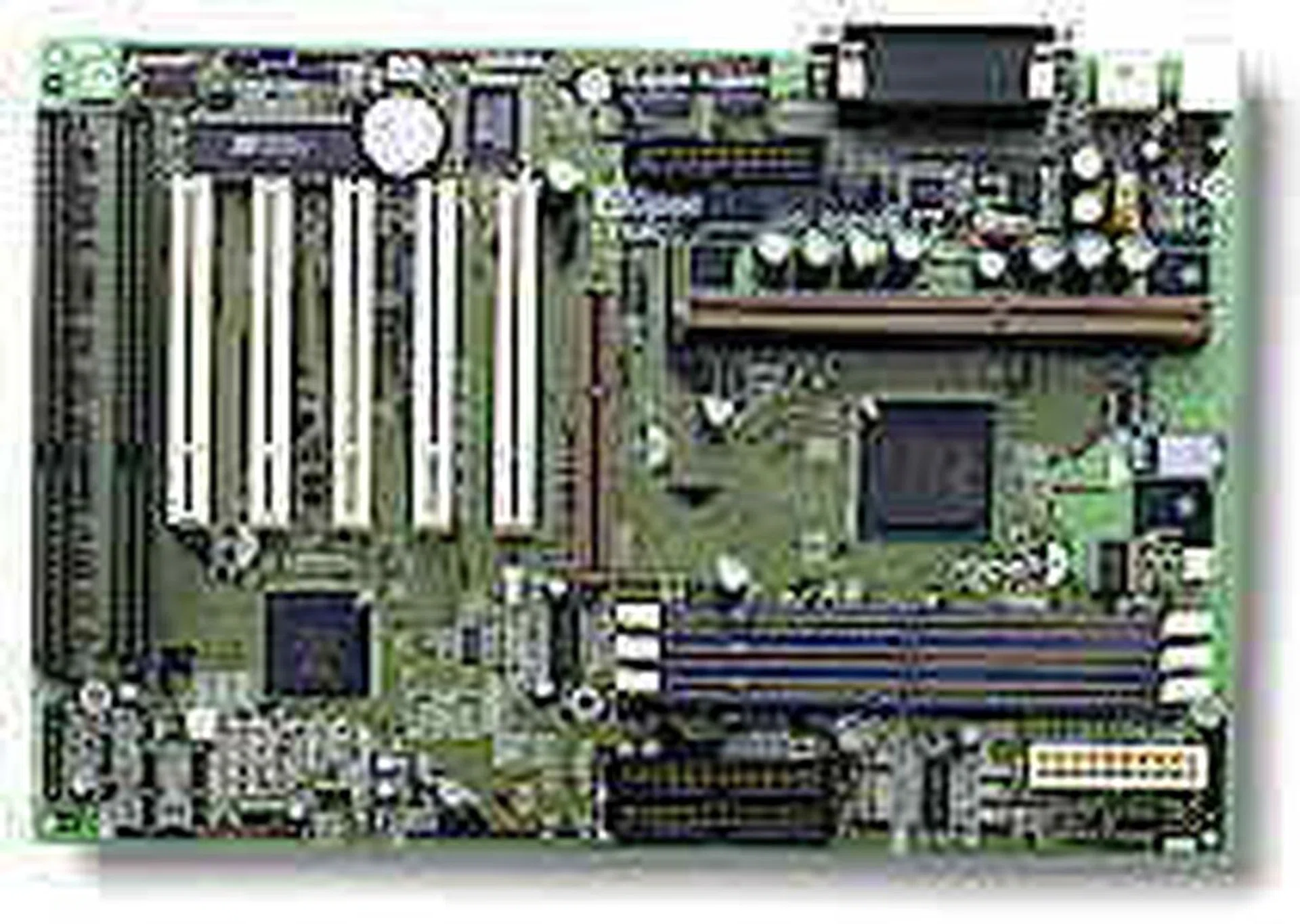
A typical 440BX board, the Aopen AX6BC had an impressive 5 PCI expansion slots and had many overclocker friendly options, like saving your BIOS settings and a jumperless CPU configuration.
- One of the excellent motherboards based on the Intel 440BX was the AOpen AX6BC, which was a rather forward looking board with many features that would be found in motherboards today. It was to be AOpen's second attempt at a 440BX board and it offered an extra PCI slot on this board, sacrificing an ISA slot in the process. This was how motherboard vendors have gradually introduced change in their boards, slowly weaning off the older legacy standards, something that has remained true up to this day.
With lots of options for overclocking, stability and decent performance, "the AX6BC was a clear winner among the BX motherboards available in the market. If you are looking around for a good BX motherboard that is both reliable and stable, and providing you 5 PCI slots for your peripherals, the AX6BC would be a good choice.
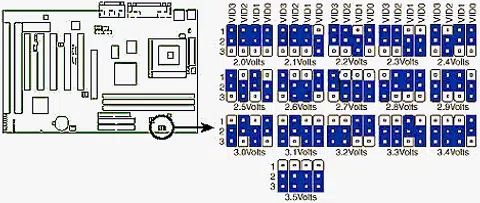
Yes, in the not too distant, good old past, voltages and multipliers were adjusted via jumpers. God forbid!
- Of course, not everyone had switched to the Pentium II by 1998. The older Super Socket 7 format probably supported one of the widest varieties of processors, from AMD to Cyrix to Intel, though it soon fell into disuse as users upgraded. Its original appeal was its versatility and HardwareZone looked at a few of these boards in 1998. One of the more interesting ones was the ASUS P5A, which used an ALi M1541 Aladdin V chipset and had quite a lot of overclocking options, especially if you were using an AMD K6-2. It also had a wide selection of core voltage settings. Stepping through the 2.0V all the way to 3.5V in 0.1V increments, ASUS seems to have designed this board with the intention of winning the best overclocker's motherboard.
1999
- While one of the most important processors, AMD's Athlon would be introduced to the world in June 1999, Intel was still top dog when 1999 dawned. The chip giant would soon launch the Pentium III, with SSE and along with this, a new generation of chipsets was to follow, including the i810 chipset that came with integrated graphics and more significantly from a historical perspective, we saw the first definition of a Memory Controller Hub (MCH), I/O Controller Hub (ICH) on a chipset. And yes, this is a chipset for the low-end.
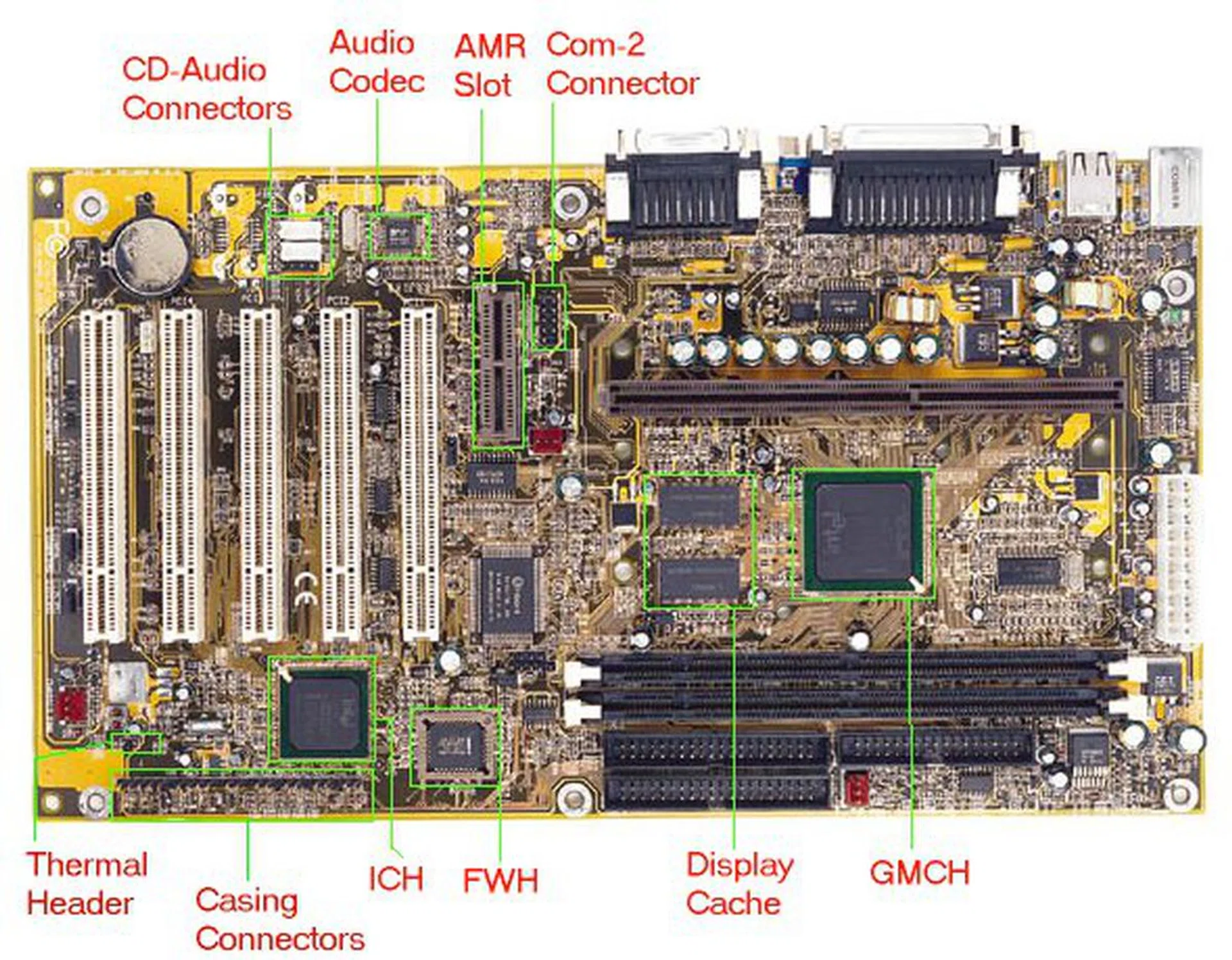
An early i810 board that we looked at, the DFI PW65-D.
- While the functions of these 'hubs' were not so much different from its former names of North and Southbridge chips, the use of this new terminology would soon be a part of Intel's official nomenclature and frankly, these names were definitely more descriptive than 'North and Southbridge' chips. The i810 chipset also saw the appearance of the Audio Modem Riser (AMR) which 'gives Audio and Modem functionality on the cheap.' This provided integrated audio and modem functionality and removed the need for a full fledged add-on card, appropriate for the i810's target audience of "system-integrators, office PCs and low to medium-home usage (not for hard-core 3D gamers)." However, the AMR and its successive counterparts like ACR and other variants never really caught on and was silently discontinued in a couple of years.
- Intel was to follow the i810 with the widely anticipated i820, 'Camino' chipset, which brought some significant technical improvements, including the use of RAMBUS' RDRAM memory. Despite providing better bandwidth on paper, RDRAM would prove to be a failure, due to its high cost and latencies, making it unappealing to consumers. The i820 also saw the increase of the AGP standard to 4x and ATA66 doubled the bandwidth of ATA33.
AMD's K7 showing the Pentium III that there's a new kid on the block in our test of the AMD-751 board from MSI, the 6167.
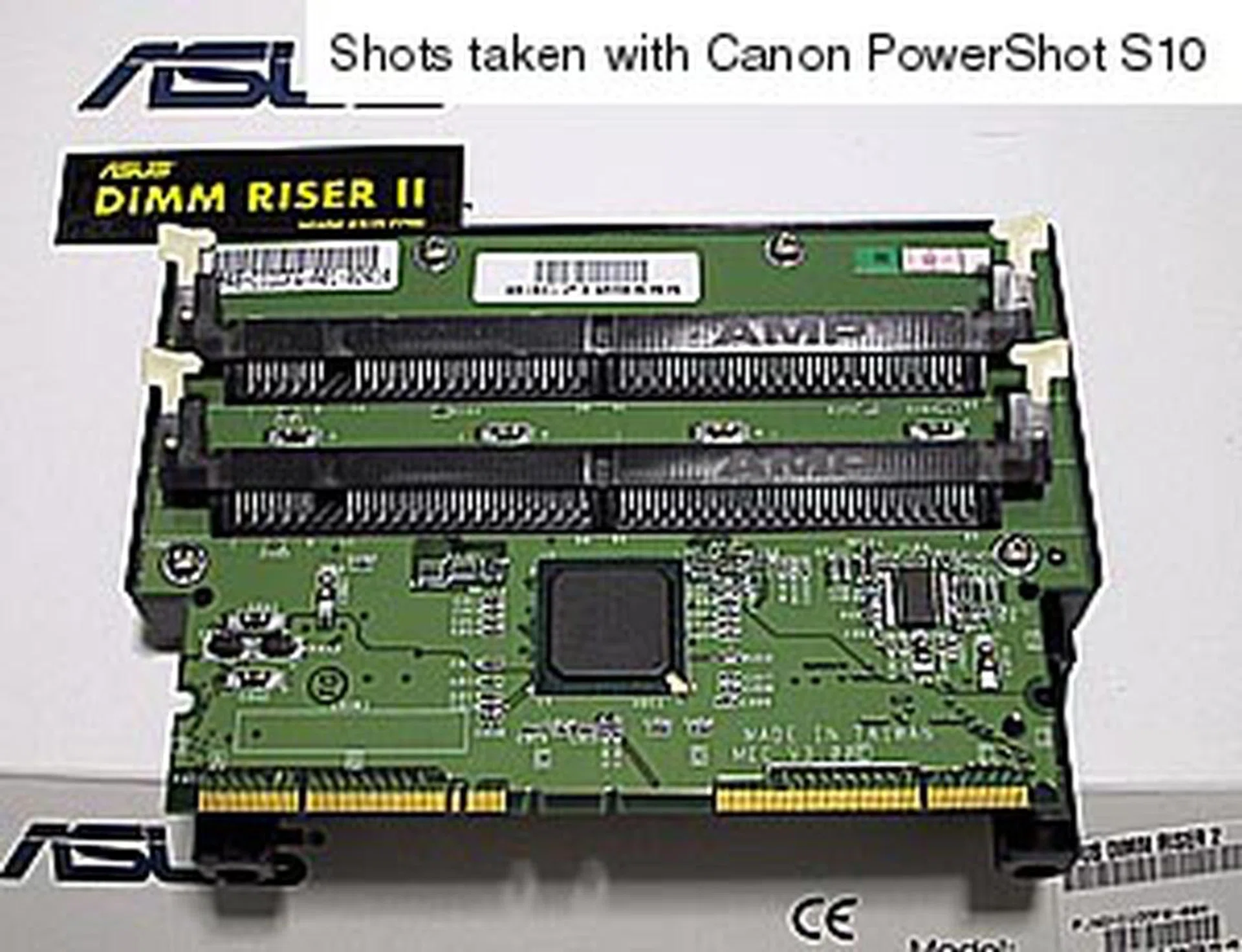
As a new chipset, the i820 found the going tough against the popular 440BX, no doubt due to the limited and dubious benefits of going the RAMBUS way. We had the same conclusions while testing the ASUS P3C-S, which managed to support both SDRAM and RDRAM through a riser converter. Unfortunately, "in all the three benchmarks, we do see a lot of difference when we use RDRAM instead of SDRAM. I guess RAMBUS does live up to its name, but, the gain in performance is not a lot, and not enough to justify its cost."
Intel was to make a U-turn in the next few years but this decision, together with the recent release of a certain K7 micro-architecture would tilt the scales towards AMD.
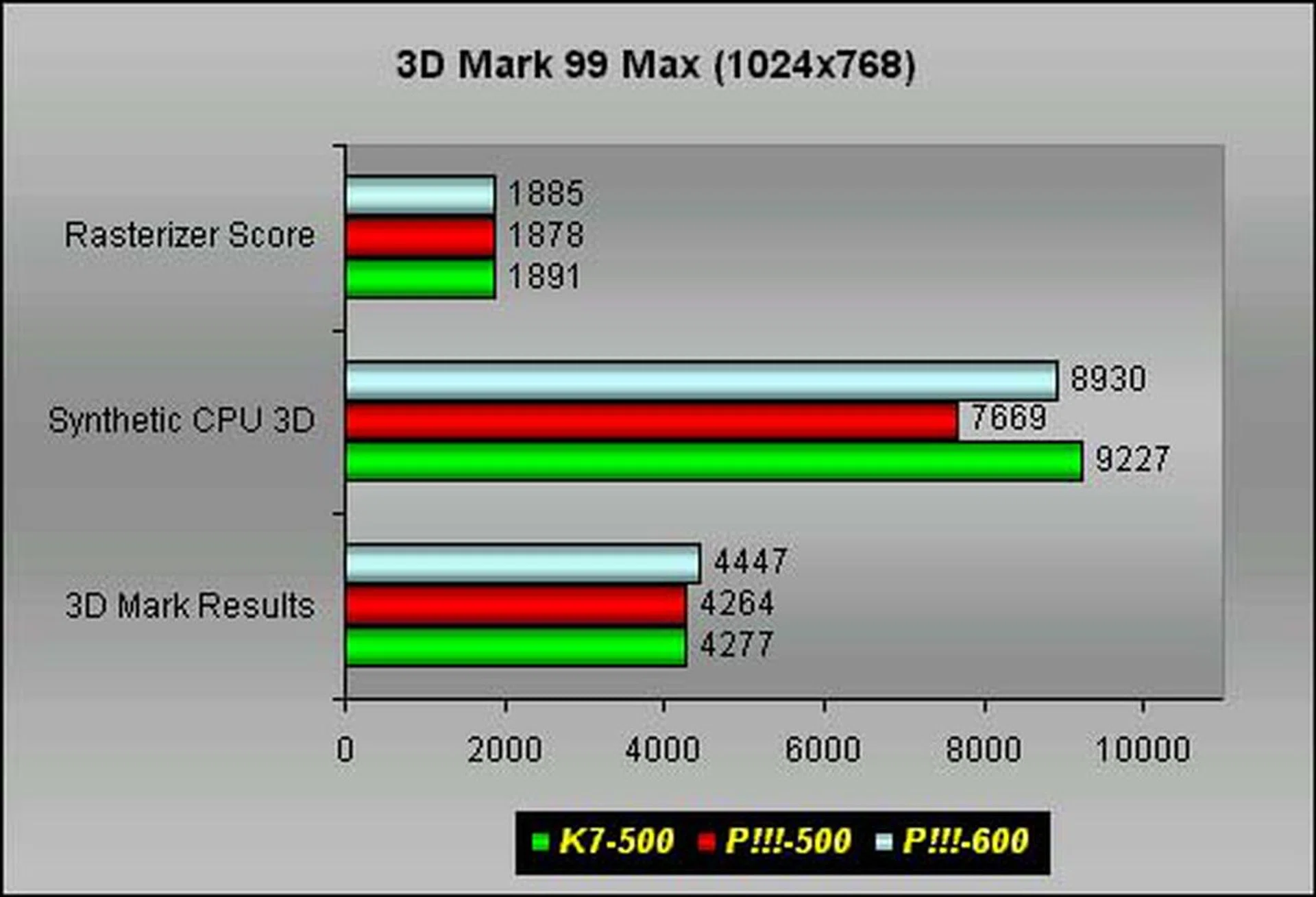
AMD's K7 showing the Pentium III that there's a new kid on the block in our test of the AMD-751 board from MSI, the 6167.
We got a glimpse of the potential of the K7 with our testing of the MSI MS-6167, which was a typical AMD-751 board that ran stable and fine. The scores meanwhile, were impressive against the Pentium III, even though this board came with only 2x AGP and even then its AGP was also prone to incompatibility issues. "Overall, the MS-6167 is one of the most stable boards I've ever tested. Its performance is pretty good considering how infant the Athlon and its chipsets were."
Amidst all the excitement generated by the K7, there was a certain motherboard vendor which introduced a new feature on its 440BX board that would become a standard for the company and inspire others to follow. This was the Gigabyte BX2000, which was the first appearance of Gigabyte's DualBIOS feature. As you may know by now, this feature saw the implementation of two Flash BIOS chip onboard, with one acting as the backup in cases where the BIOS got corrupted due to viruses or a bad BIOS update.
Our opinion then was that "The new Dual-Bios feature will really be treasured by important office-PCs with little down-time to spare as well as end-users like us who aren't keen in overclocking but would like to spend on safety and reliability of their system." And thus far, this has been true and Gigabyte would tout this advantage for years to come.
2000
- With the Athlon proving to be an able competitor to the Pentium III, manufacturers were soon jumping onto the K7 bandwagon. However, a major stumbling block to the adoption of the Athlon was the patchy performance of AMD's own reference 'Irongate' chipset, particularly when it came to its AGP performance. Fortunately, AMD could count on VIA to help them out here, as the VIA KX133 chipset turned out to be a very competent complement to the Athlon.
With support for PC-133 SDRAM memory (2GB max), AGP 4x and ATA66, this was a VIA chipset that brought parity in features to what Intel was offering with its newer i820. Except for the fact that the i820 was using RDRAM and that costed a bomb then. Instantly, Athlon users were drawn to this chipset and we saw quite a few of these boards in that year.
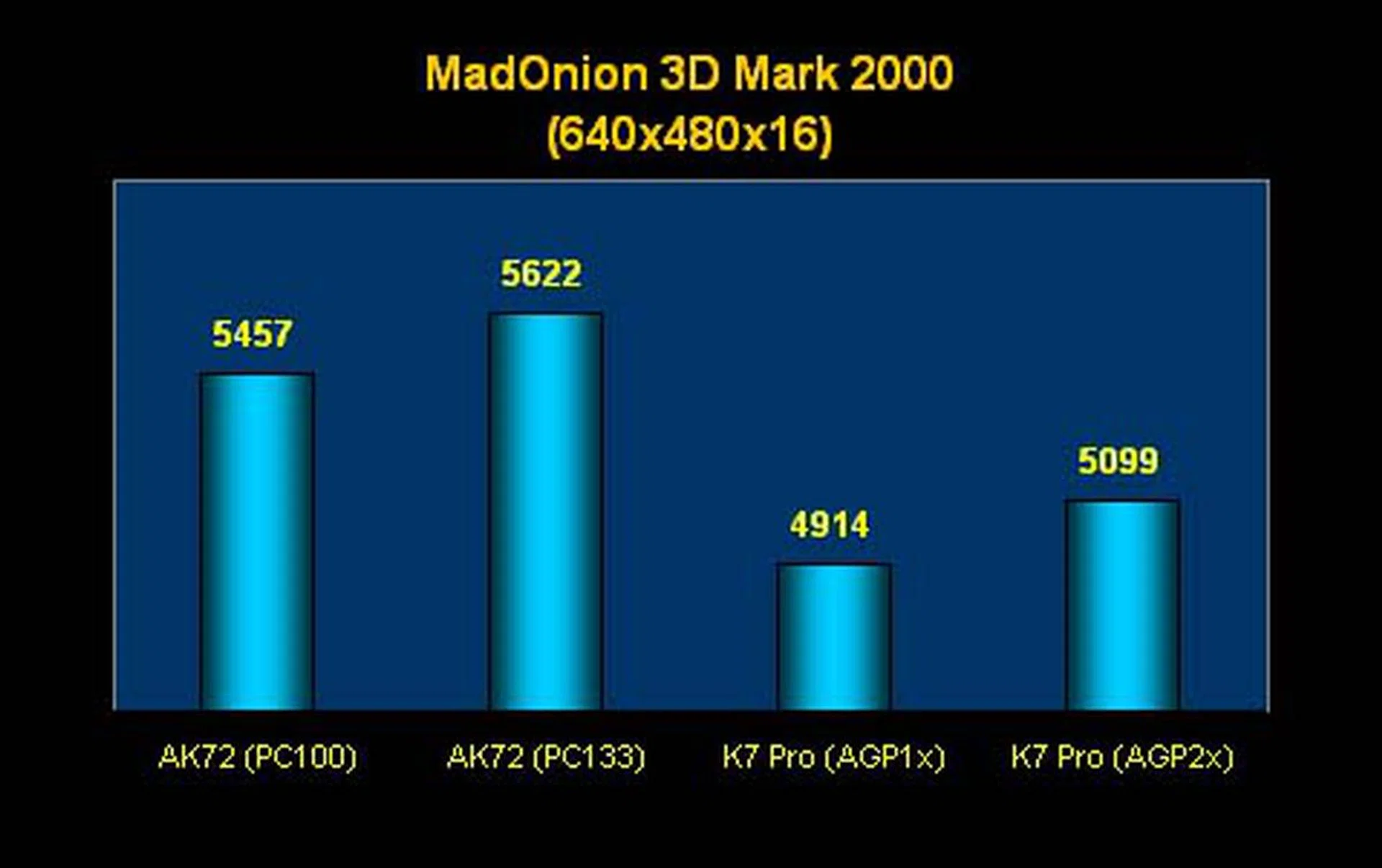
3D performance took a big step forward on the AMD platform with the introduction of the VIA KX133. Our results only confirmed this.
- One of the earlier ones we saw was the AOpen AK72 and while the board itself was only an average performer and lacking in the overclocking department, "3D graphics performance will soar for the first time for AMD K7 CPUs" and that was the main grouse users had with AMD's reference chipset.
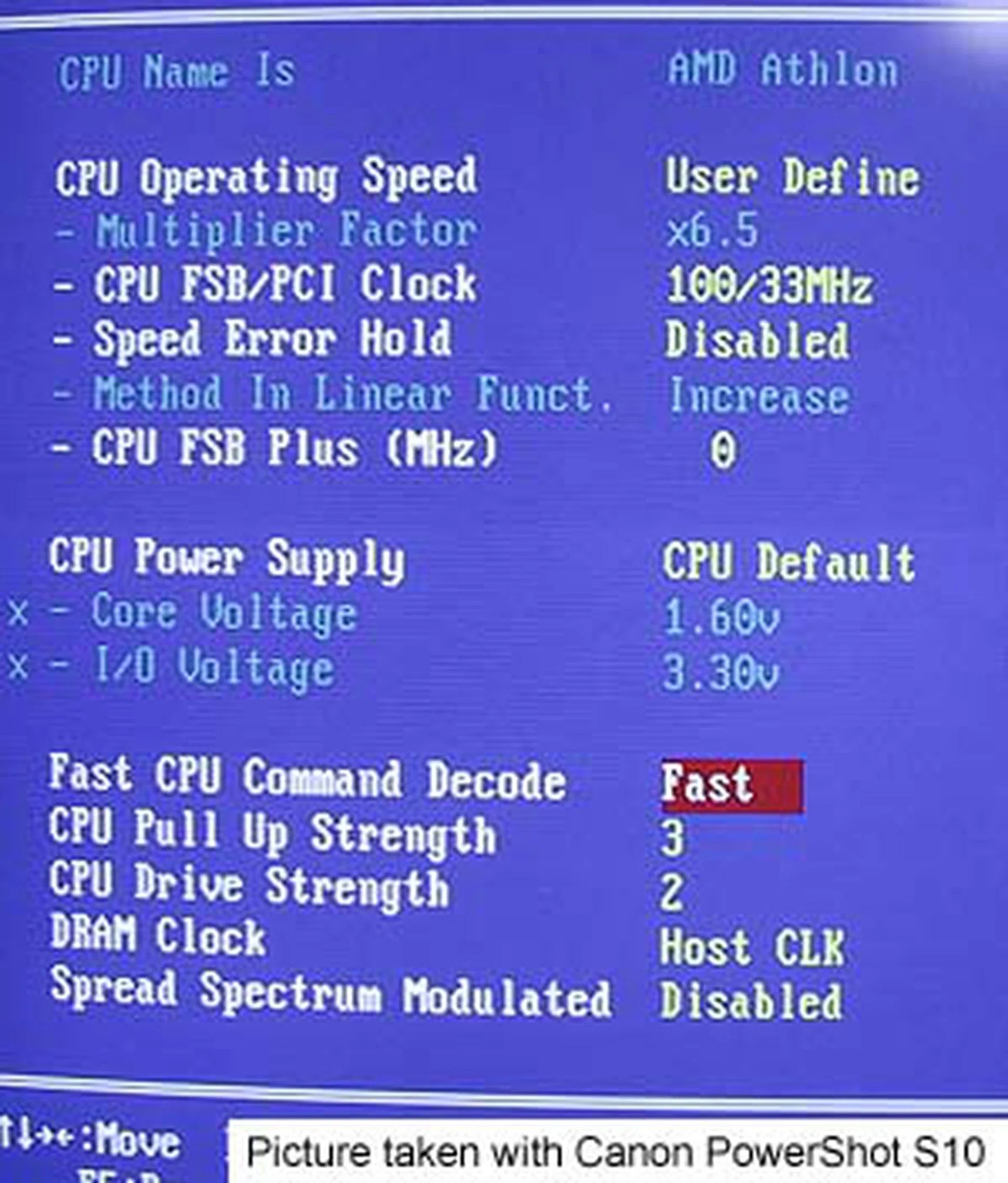
abit's SoftMenu III allowed the selection of FSB settings in increments of 1MHz, giving enthusiasts greater control over their overclocking. It also supported changing of CPU core voltages.
- Another notable board based on the KX133 chipset came from abit and it was a very feature packed board known as the KA7 , equipped with up to 6 PCI and 4 DIMM slots. The usual abit enthusiast oriented features like jumperless, SoftMenu III, extra fan connectors and thermal probes contrived to make it a complete package for the AMD enthusiast.
- VIA was to modify its KX133 chipset following changes by AMD to its EV6 bus, resulting in the KT133 and by the middle of the year, this newer chipset was found in a majority of AMD motherboards.
- VIA was not content just to cater to the AMD community. Intel's i820 chipset was proving to be too big an investment for the mainstream users who were content to remain on SDRAM. It was another opportunity for a third party to step in and VIA's Apollo Pro 133A chipset was exactly what users were looking for. Current features like ATA66 and PC-133 SDRAM support, with a 133MHz FSB and with AC-97 onboard audio support, this was a chipset for users on the Pentium III platform and Socket 370/Slot-1 solutions.
- An example of this chipset that we saw in 2000 was the abit VT6X4 and it was "a pretty good board, considering its stability and performance, as compared to other VIA based boards around." A more extreme version of this chipset was conjured by DFI, which managed to support both Slot-1 and Socket 370 processors on the same board. "Part of a new series of boards from DFI which is dubbed as the 'Twin-Series' ... this is really a one of a kind motherboard" that has to be seen to be believed.
- Realizing that they needed another chipset for the SDRAM crowd, Intel came up with the i815 chipset. Enthusiasts were hopeful that this would be a proper successor to the 440BX and the specifications seemed promising. There was AGP 4x, PC-133 SDRAM and ATA/66/100 support and surprisingly, an integrated graphics core. However, this chipset cost much more than VIA's solutions and the company would continue to refine this chipset the next year.
- The first Pentium 4 chips based on the Willamette would be released in November 2000. Intel had realized it needed a new micro-architecture to match the K7 and the Pentium 4 and its NetBurst micro-architecture was its answer. However, this spelled a new Socket 423 for the new processors and this new format would be a short-lived one that was soon replaced the next year by Socket 478. Meanwhile, the Pentium 4 continued to rely on RDRAM and the performance of these early cores were disappointing. 2000 was a year that Intel was keen to forget and move on.
2001
- Intel's i815 chipset the year before got almost everything right, but its cost held users back. To enthusiasts, the presence of a relatively weak integrated graphics was unnecessary and it only served to increase the price of a i815 motherboard. Hence, Intel took that into consideration and removed the integrated graphics, creating the i815EP chipset in the process.
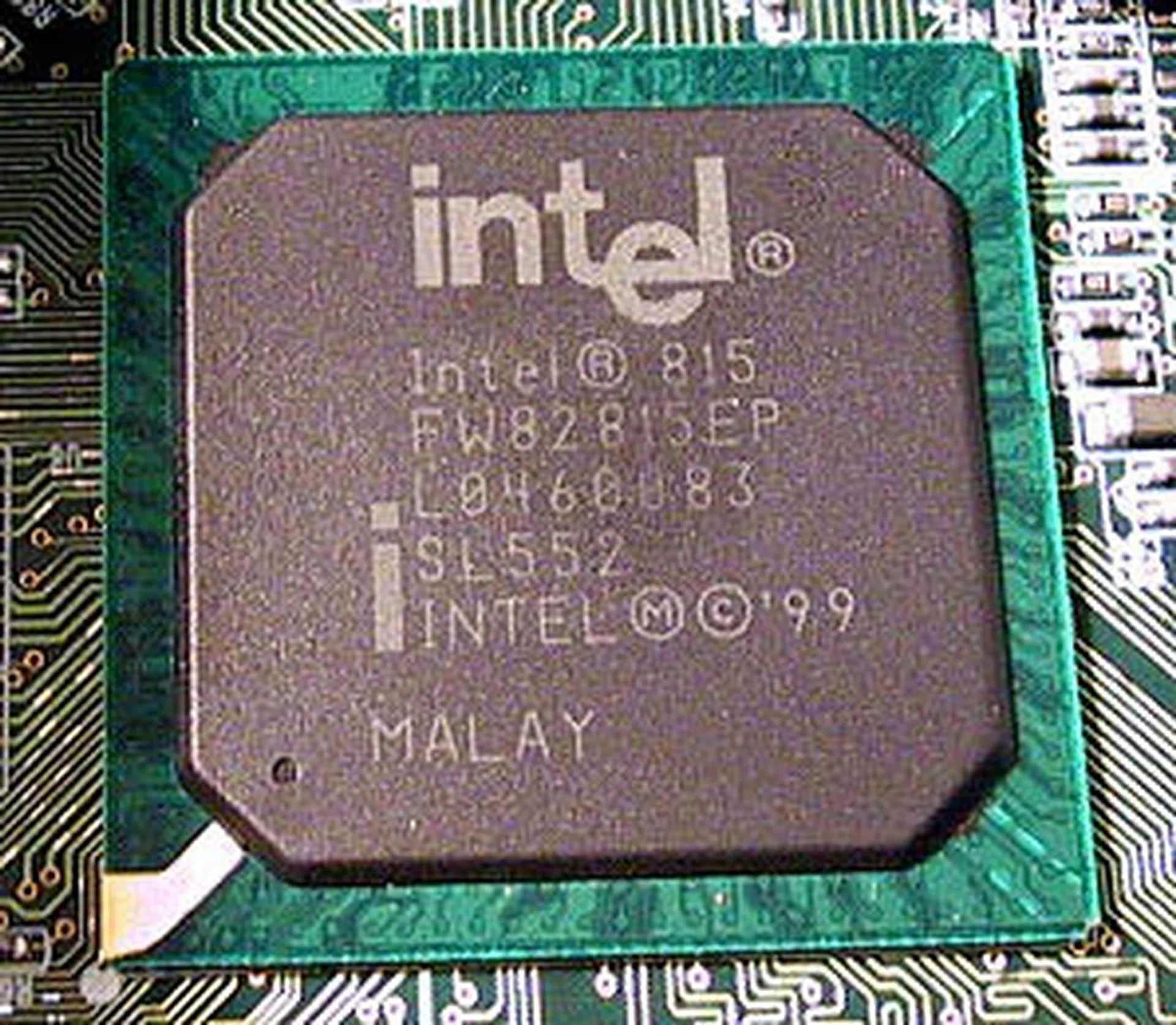
The Intel i815EP chipset resolved some weaknesses with Intel's current chipset lineup but it was far from perfect.
- Essentially the i815 without the graphics, the i815EP had some things going for it, like ATA100 support but at the same time, it was limited to only 512MB of total memory. Compared to the 1.5GB and 2.0GB possible on a VIA equivalent, this was quite pitiful. Also, the removal of the graphics core was not sufficient to make the i815EP price competitive with VIA's offerings. As we said than, "the 815EP is not the ultimate chipset for Intel processors as it lacks the support for larger memory sizes. In addition, PC133 support with the 815E or 815EP is not at its best."
- AMD's Athlon Thunderbird continued to put out excellent performance its Intel rivals and this meant there was a growing community of users. There was however quite a few third party vendors offering chipsets, like ALi and VIA. The beginning of 2001 would see a frenetic launch of chipsets.
VIA would update its KT133 chipset to KT133A, with a faster 266MHz FSB first in January 2001. This was necessary as the latest Thunderbird had already gotten a speed boost, with a FSB increase to 133MHz (266MHz). We only managed to preview a DFI AK75-EC board using the new chipset in March 2001 though.
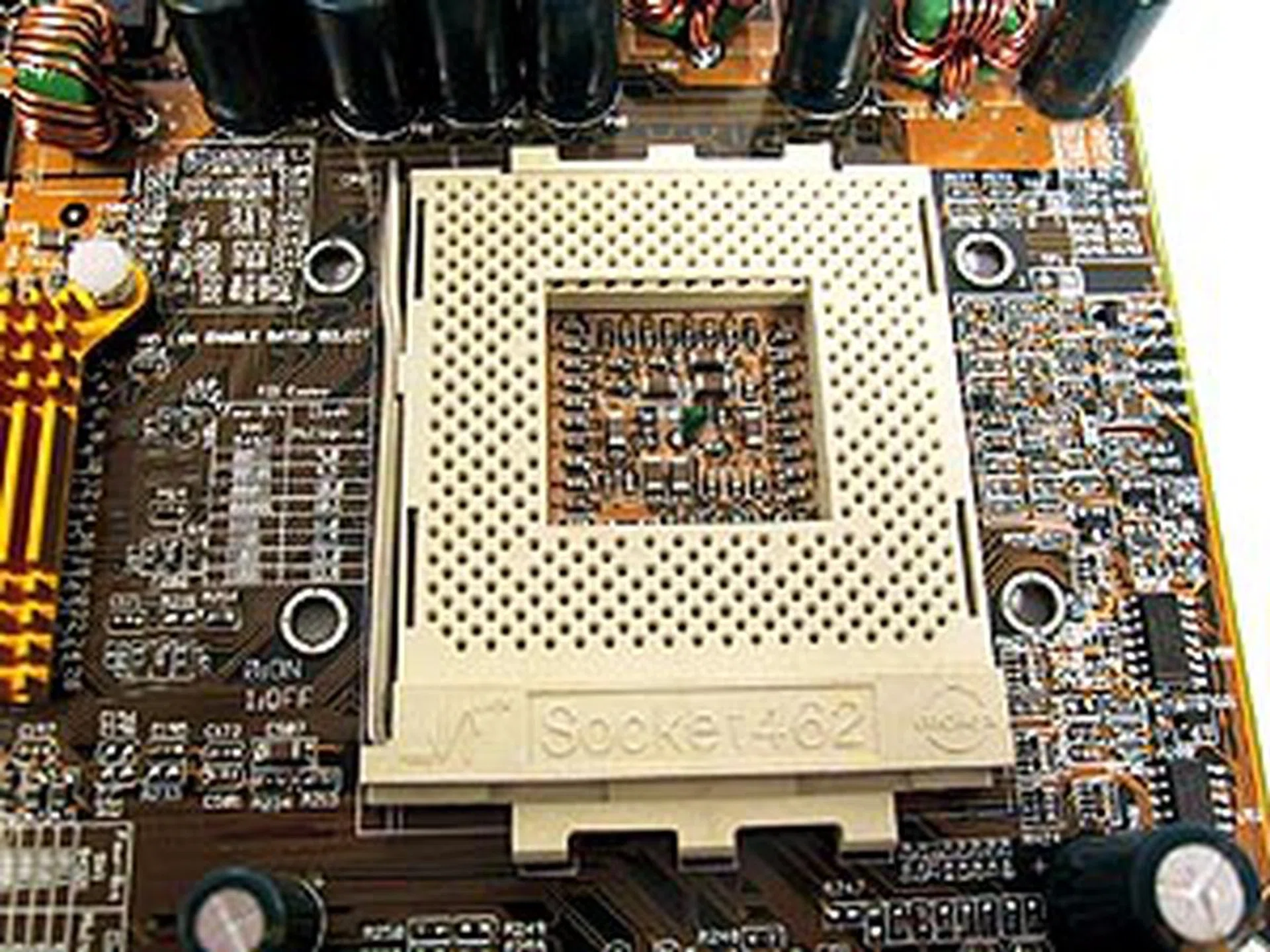
The Socket A on the DFI AK75-EC.
- VIA was to soon debut its DDR board for the AMD platform , the KT266 but obviously, AMD was supposed to take the lead when it came to its own processor. In fact the AMD 760 chipset was released in February 2001 but its price premium (apparently, the boards were on 6-layer PCBs and not the more common and cheaper 4-layer) and the price of DDR RAM meant that it was not popular with consumers. Instead, all eyes were on VIA and its upcoming DDR chipset. The consensus then was that despite performance that was slightly weaker than the AMD 760, its cost made it attractive and we were soon to find more KT266 boards in the market.
- It was a busy year for VIA as the company also followed its Pentium III Apollo Pro 133 and 133A with a chipset targeted at the Pentium 4. This was the P4X266 but Intel did not license the rights to production to the company and this was a serious dampener on its prospects for adoption. There was even a lawsuit by Intel regarding this.
- This meant that Intel's own reference i850 chipset was the only option but that was RDRAM and again not attractive to most consumers. SiS instead filled in the void, with a new SiS 645 chipset that was capable of using DDR 333 memory and most importantly, had the blessings from Intel. As usual, we had access to a SiS 645 motherboard and found that "the new SiS 645 chipset gives superb performance with DDR 333 memory technology, rivalling the much more expensive Intel 850 and VIA's P4X266 ... They are definitely getting my recommendation here."
- 2001 was also the year that NVIDIA made its first baby steps in the chipset business. The GPU company ventured into the AMD arena with the nForce series, which was available in three variants at launch, the 220, 415 and 420. HardwareZone had a comprehensive article by Vijay Anand on the new nForce chipset, especially about its novel use of dual channel DDR memory and the use of a "dedicated link used to communicate with the MCP, an infant technology from AMD called the HyperTransport Technology."
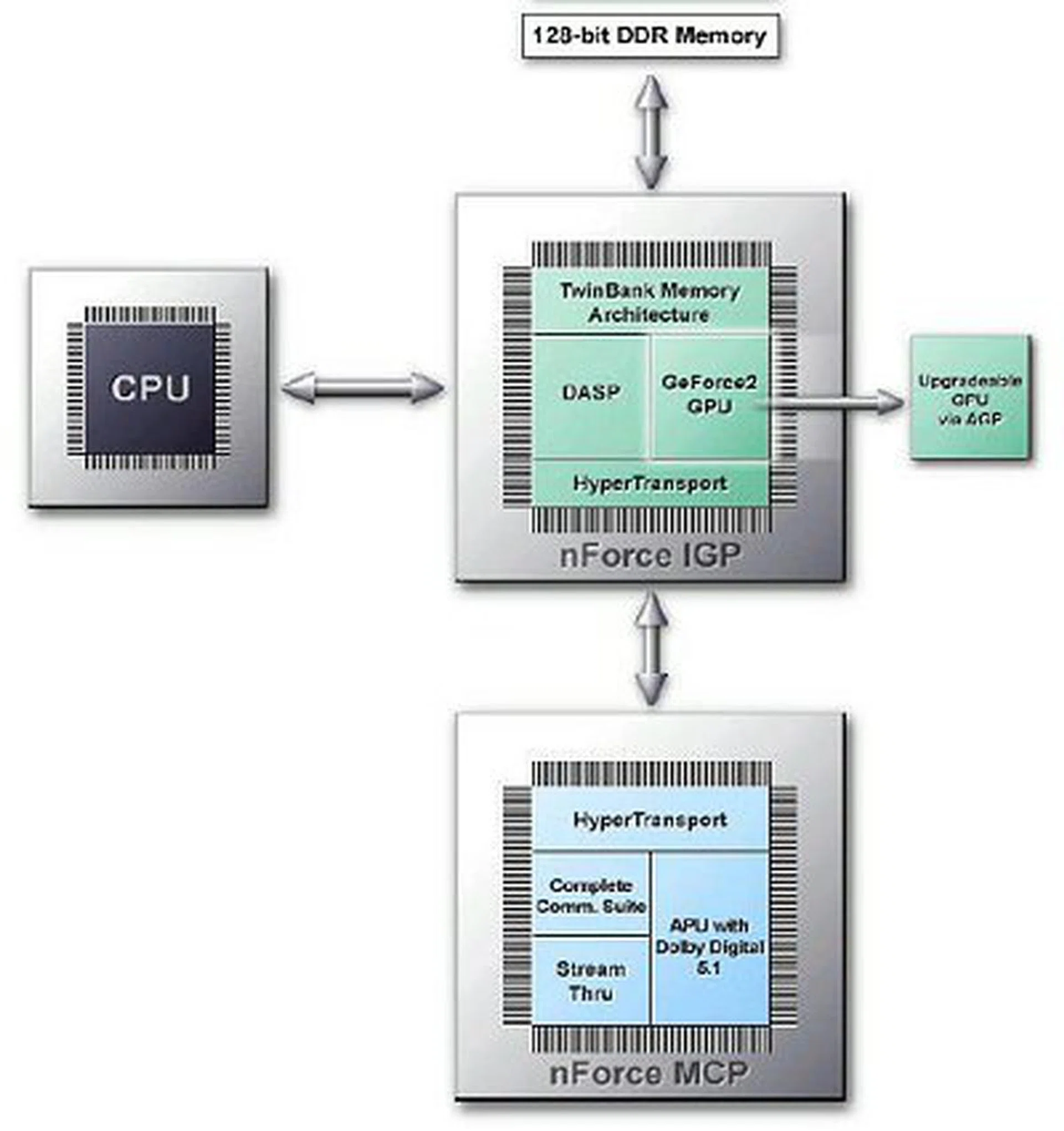
A new player enters the chipset business. NVIDIA's motherboards would become one of the more important chipsets in the industry for both AMD and Intel platforms.
2002
- When Intel went it alone with RAMBUS memory, it soon paid the price for the expensive memory as users were reluctant to move away from the inexpensive SDRAM. By 2002, it was increasingly obvious that change was needed. And with the new 845 series of chipsets for the Pentium 4, Intel would join the DDR party and officially support DDR200/266 with the i845. Our first contact was with the Intel D845BGSE motherboard, which supported both Willamette and Northwood Pentium 4 processors and was also one of the first motherboards to support USB 2.0. Although the OS support was scanty then, the USB 2.0 controller would enable much greater speeds and would replace the former 1.1 standard.
Meanwhile, this Intel chipset was just the medicine the masses needed to adopt the Pentium 4 and following the introduction of the 845 (and the increasing clocks on the Pentium 4), the numbers started to look good for Intel again. While it may sound like a marketing slogan, our opinion that the Intel D845BGSE represented "simplicity, stability and reliability from a brand that you can trust.
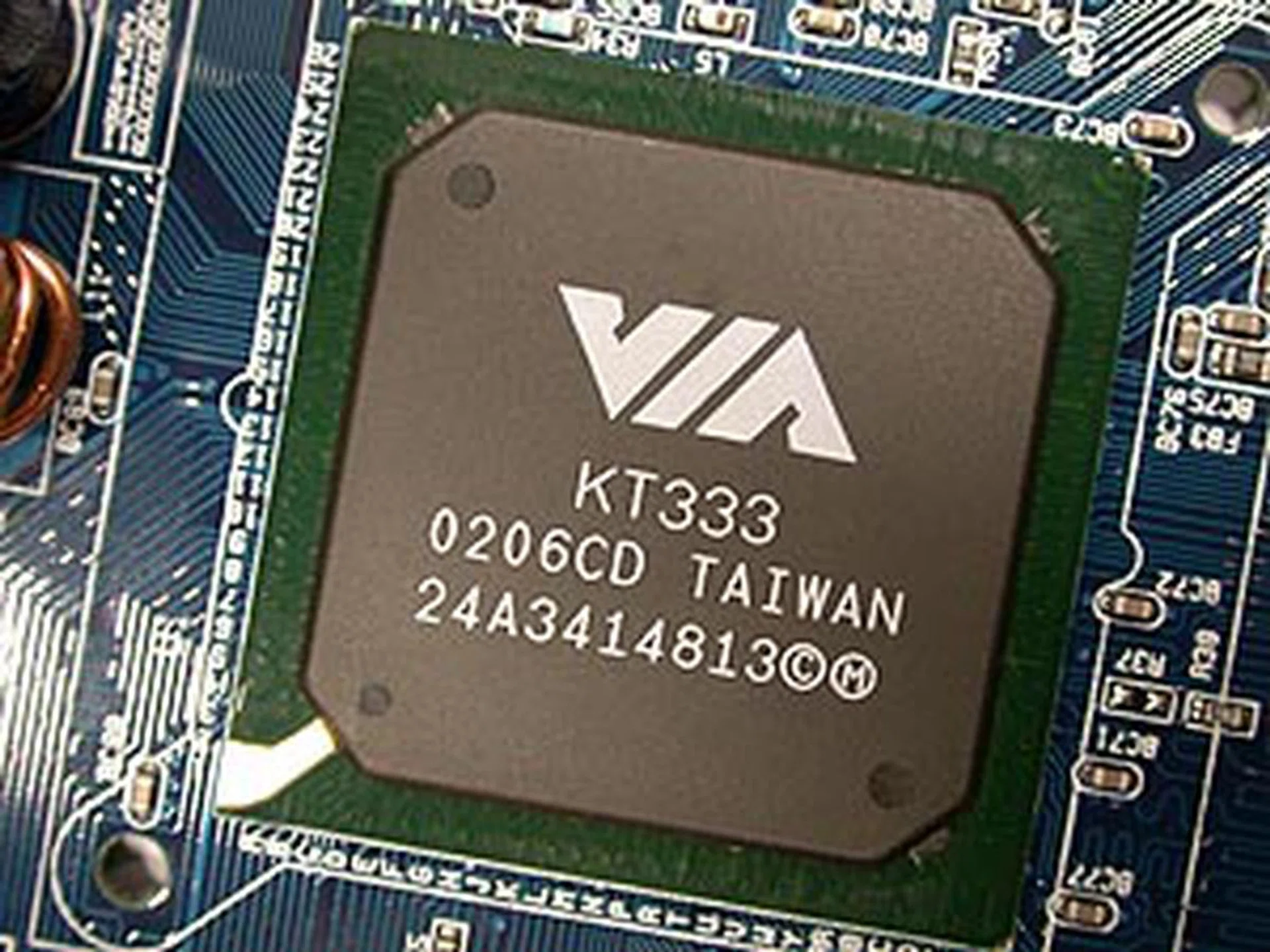
VIA upgraded its AMD chipset to DDR333 memory too with the KT333 chipset.
- Cut off from the Intel market, VIA worked on its AMD motherboards and the KT266 chipset was soon seeing an upgrade to KT333. We saw one of the earlier KT333 boards from Gigabyte that year. Packed with features like USB 2.0 support and an ATA133 controller, the Gigabyte GA-7VRXP had an abundance of onboard peripherals and was priced reasonably.
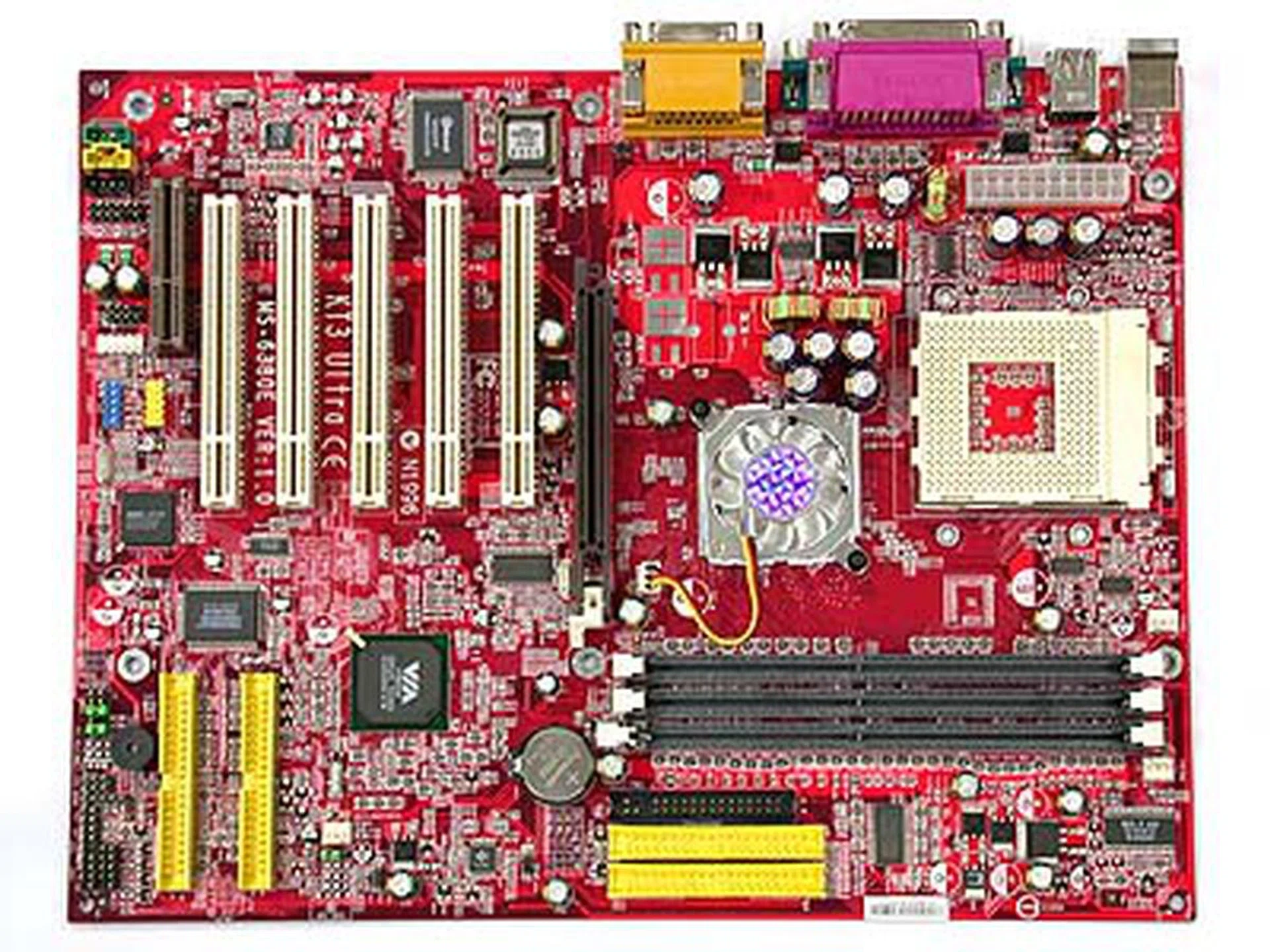
The MSI KT3 Ultra-ARU was an excellent example of a VIA KT333 motherboard. It had the ability to overclock its front side bus frequency to a whopping 166MHz and came with many features, like a surprise inclusion of Bluetooth support.
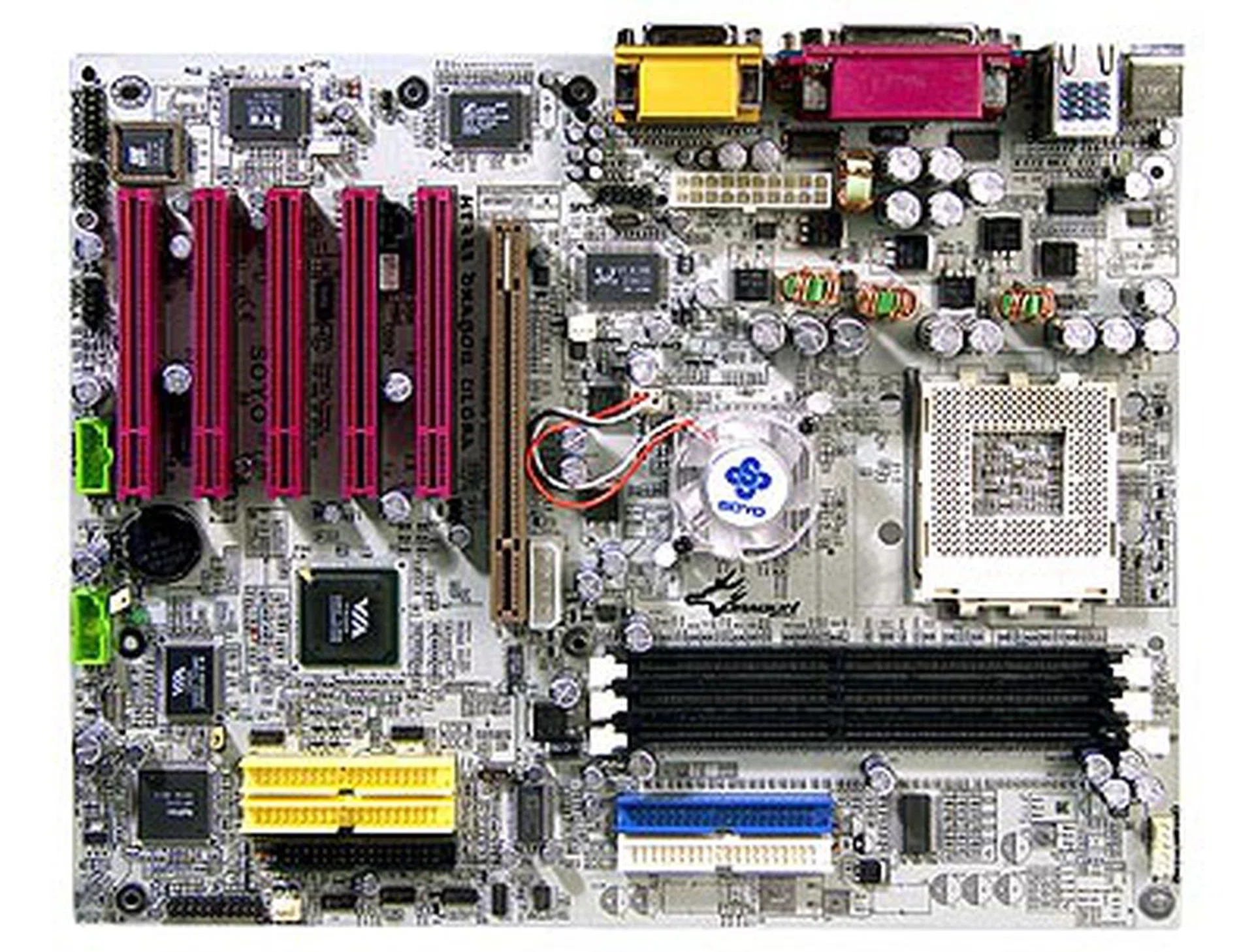
For one of the ultimate KT333 boards, there's the SOYO KT333 DRAGON Ultra Platinum Edition, which has more features than anything we had ever seen and excellent stability.
- More 845 chipsets from Intel were quickly introduced and one of these was the 845G which had integrated graphics and support for 533MHz FSB Pentium 4. There was also up to six USB 2.0 ports onboard thanks to the new ICH4 SouthBridge. Although the use of integrated graphics meant that this was never going to be seriously treated by enthusiasts, casual users will find plenty of useful features.
- Of course the 845E based motherboards were popular with vendors and users alike and 2002 saw many of these boards enter our labs.
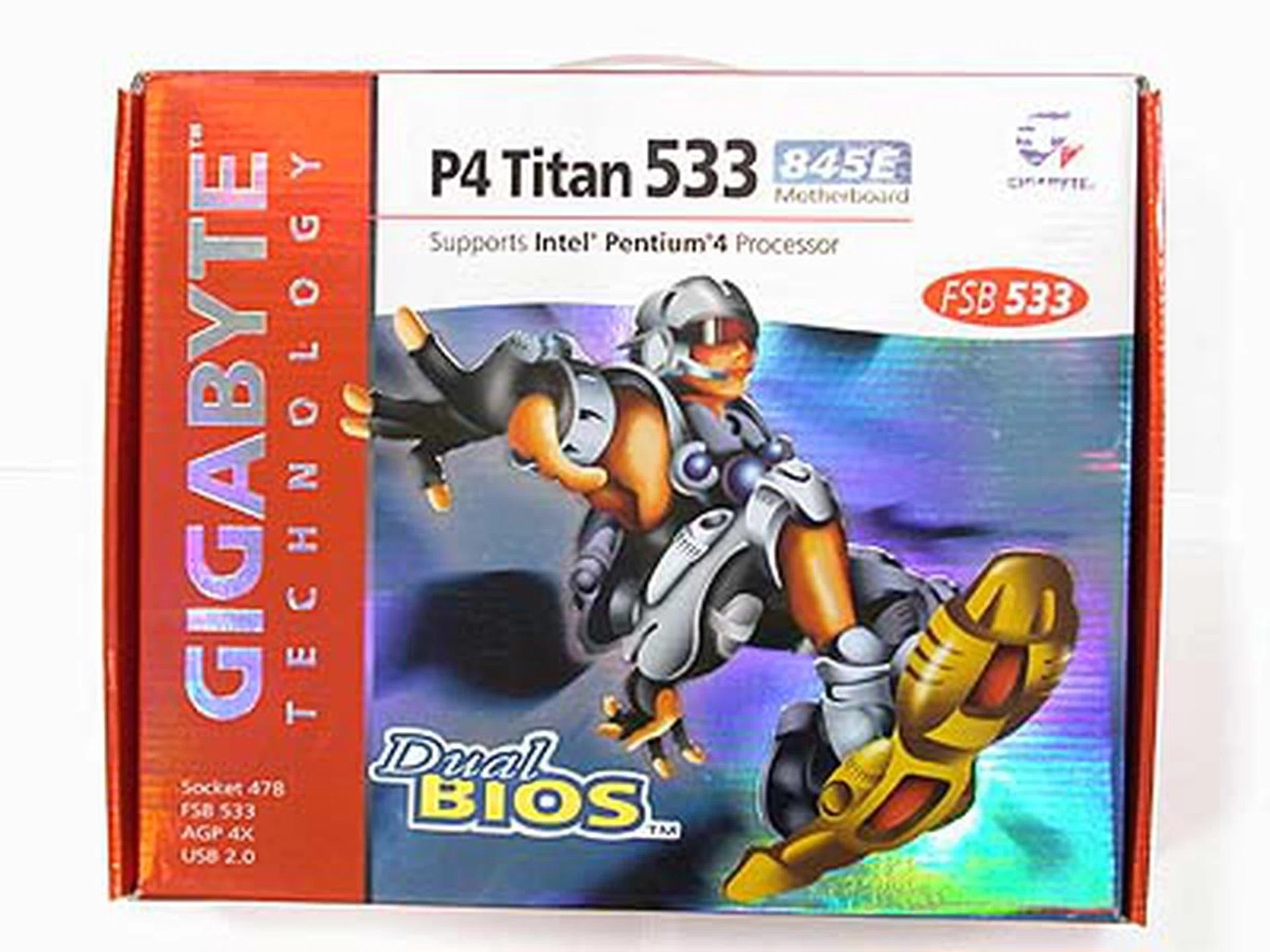
The Gigabyte GA-8IEXP had attractive packaging and many many features but it also had one of the most extensive adjustments to FSB and voltages. PCI and AGP bus frequencies can also be adjusted to precise values.
Intel finally went DDR333 with the entry of the D845GE chipset in late 2002 and we got a look at the reference board too. Although the integrated graphics on this chipset was predictably average despite a higher clocked integrated GPU, it had Hyper-Threading support, something which the older i845G boards lacked.
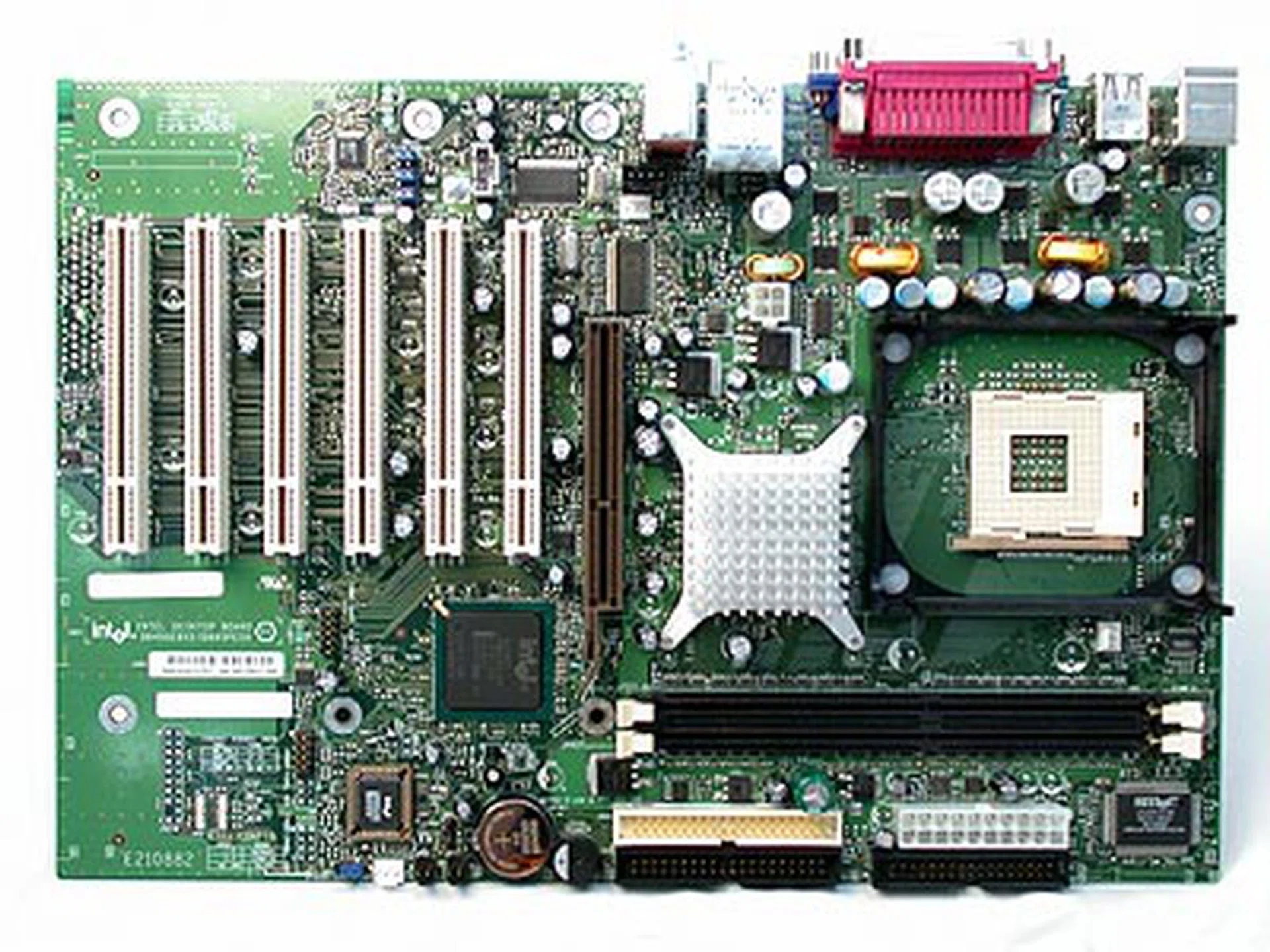
Supporting DDR333 officially and Hyper-Threading was Intel's i845GE chipset.
As the year drew to an end, we saw minor updates to the various chipsets, like the VIA KT400 and SiS 655. However the main event was reserved for NVIDIA's second iteration of its nForce chipsets, the nForce 2. It was officially launched in July but numerous delays due to stability issues meant that it was only in December that the first retail nForce 2 boards started shipping and HardwareZone managed to lay hands on the Leadtek K7NCR18D-Pro.
The nForce 2 would have dual-channel support for DDR400 memory, leading to plentiful memory bandwidth for the Athlon processor. It supported AGP 8x and an updated GeForce 4 MX integrated graphics. There were dual Ethernet controllers, an IDE controller for ATA-133, USB 2.0 and FireWire support for the top end version. Soundstorm integrated audio was also a major highlight of the nForce 2 chipset, though it would be removed sadly in subsequent nForce chipsets.
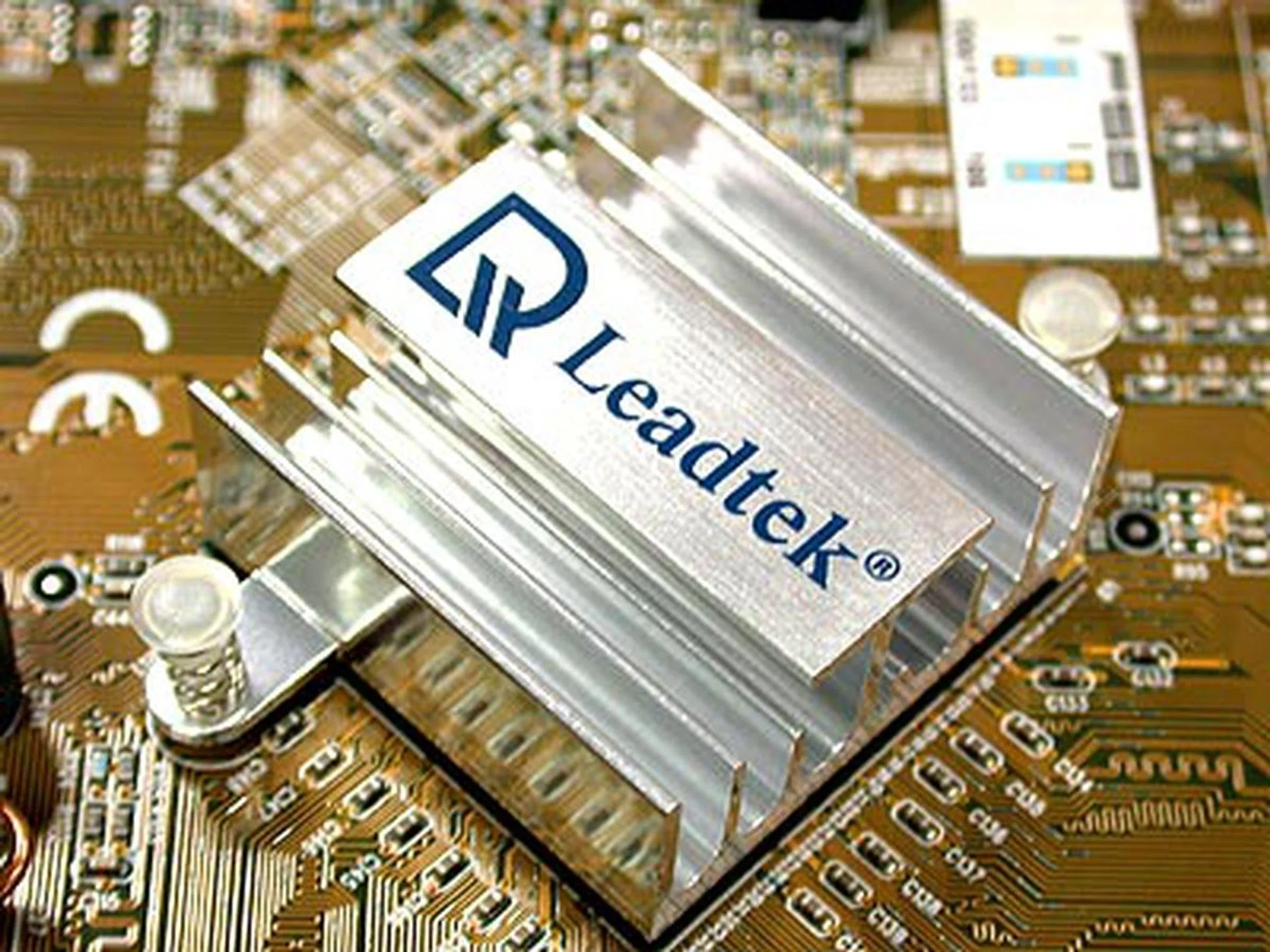
Our first experience with an nForce 2 came from Leadtek. Beneath this passive heatsink is the nForce 2-SPP NorthBridge.
2003
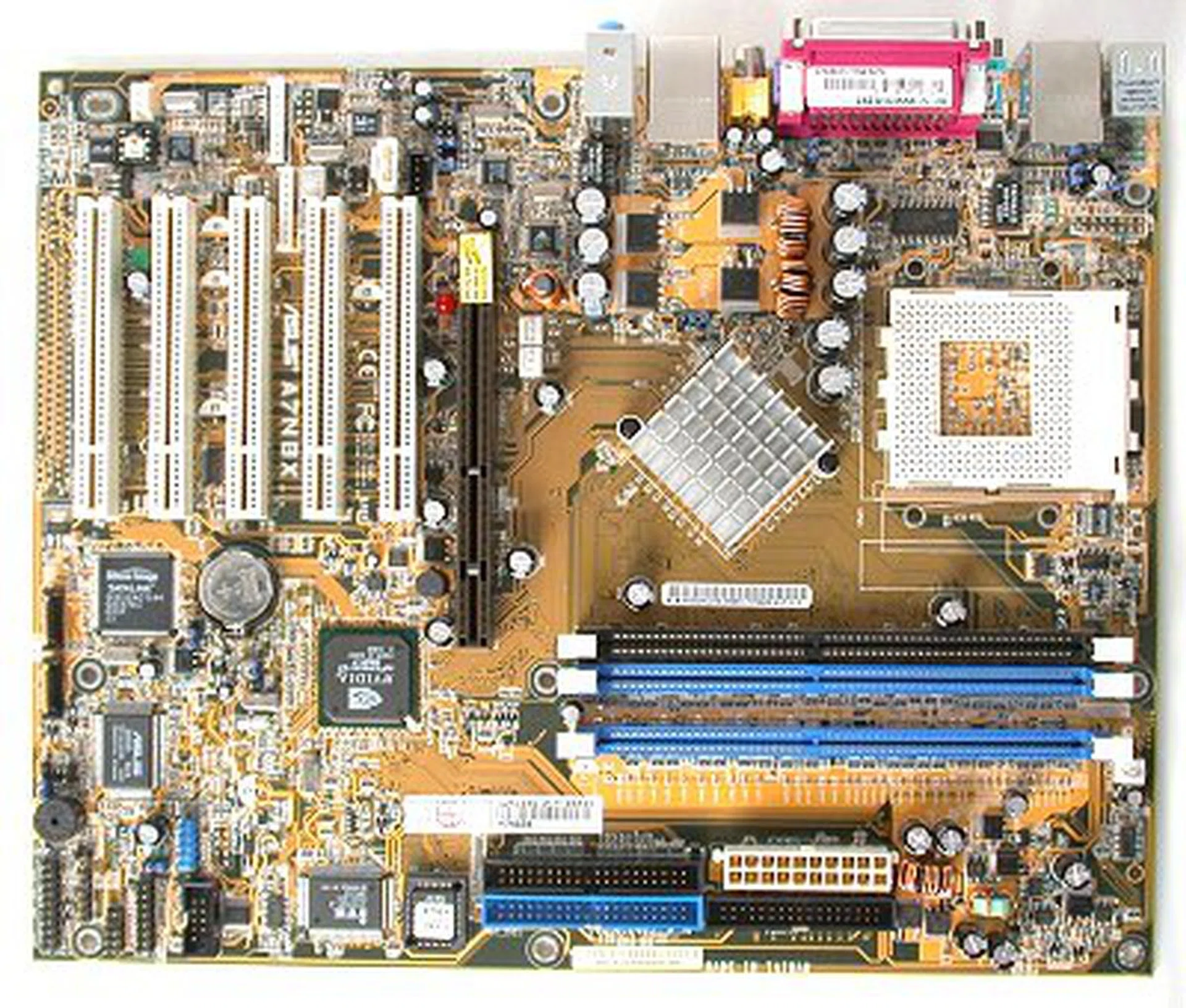
The ASUS A7N8X Deluxe wasn't cheap but it was packed full of featuresm like dual IEEE-1394 Firewire ports, dual LAN ports and Serial-ATA RAID, along with ASUS' proprietary applications.
- The year at Hardware Zone started with an influx of nForce 2 boards from quite a few vendors. NVIDIA's chipset was maturing into a strong candidate for the AMD platform and a commendable motherboard we saw was from ASUS:
The ASUS A7N8X Deluxe was rated 5 stars for bringing "out the best of the NVIDIA nForce2 platform by capitalizing all the features offered by the nForce2 platform in the neatest and simplest possible layout."
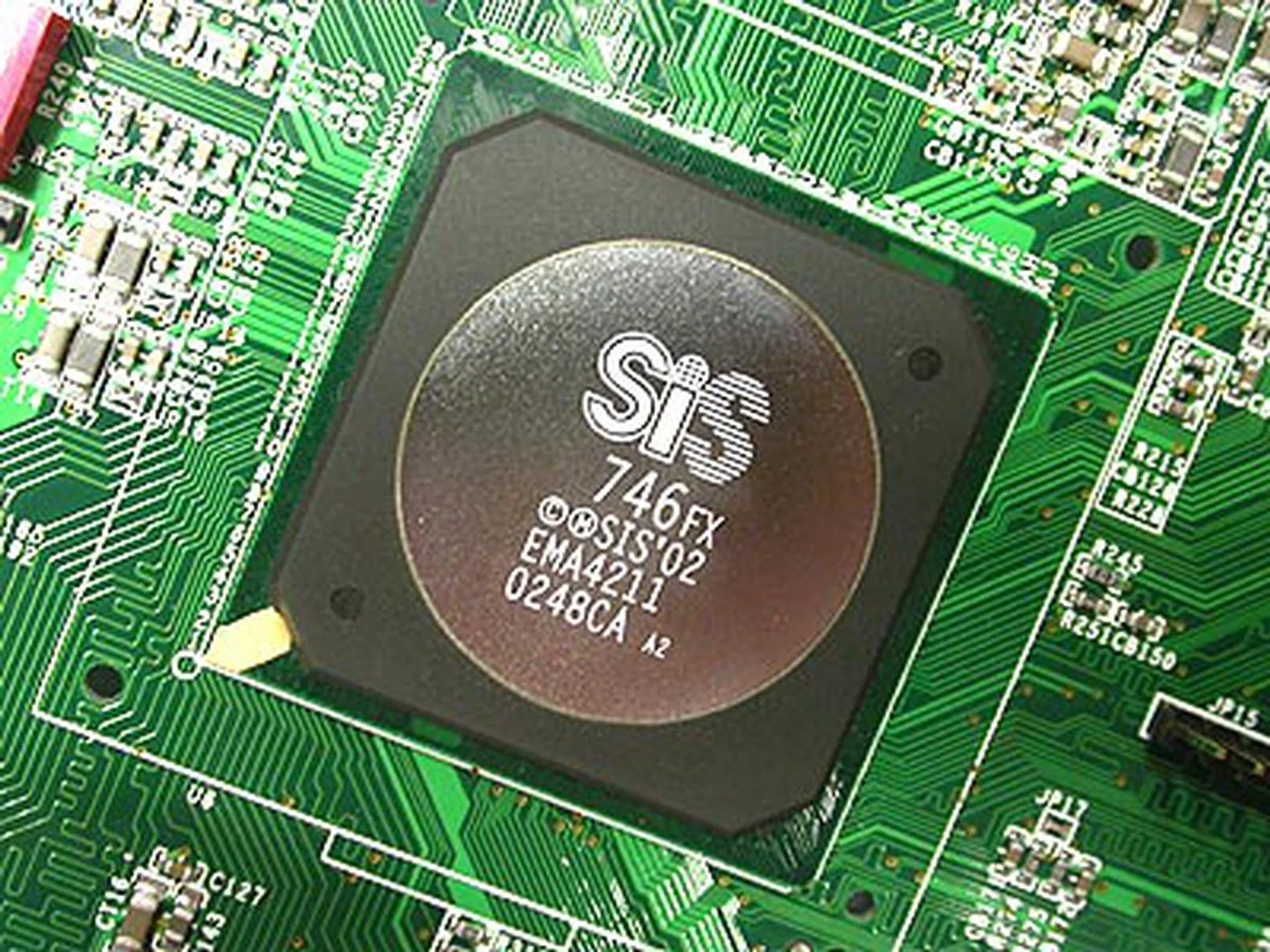
Running cool even without a heatsink, the SiS 746FX NorthBridge.
- We also saw SiS refreshing its chipset to support Athlon processors using a 333MHz FSB. This was the SiS 746FX and it was mostly similar to its 746 chipset with the exception of "more built-in support for newer memory speeds and 333MHz FSB Athlon XP processors." With this refresh, the SiS 746FX will be on the same level as competing chipsets like VIA's KT400 and NVIDIA' nForce 2. SiS also seemingly had the advantage with a new bridge link between the North and SouthBridge that had a massive 1GB/s worth of bandwidth, much more than its competitors. Unfortunately, while the chipset ran cool, it was not up to par in its AGP performance against both NVIDIA and VIA and was more suitable for budget and compact desktop setups.
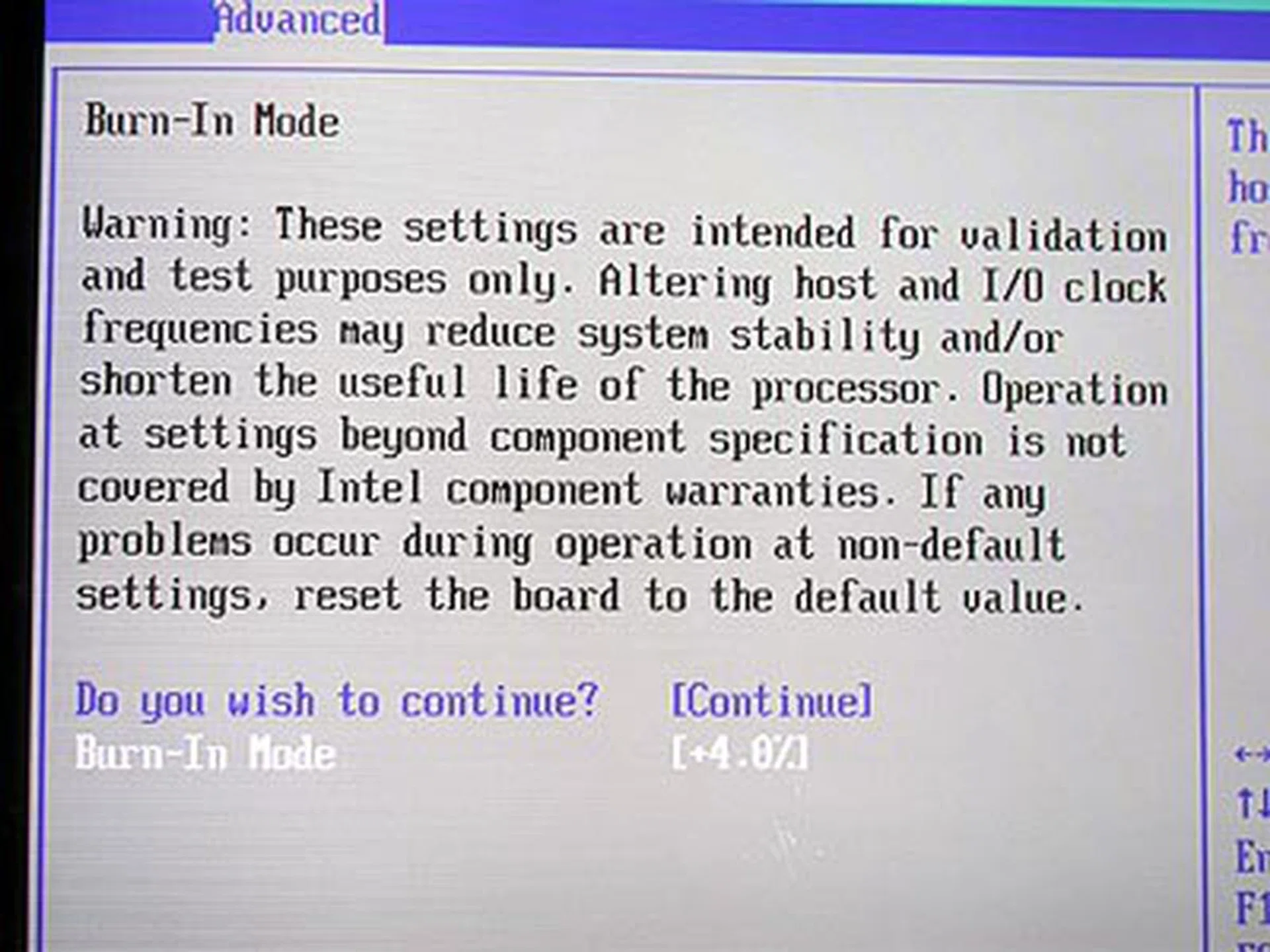
Sanctioned overclocking from Intel? OMG!
- Intel meanwhile had released the 845PE chipset for its Pentium 4 processors (up to 533MHz FSB) late last year but we got our hands on a fully featured version in March 2003 that was not just your typical plain reference board. The Intel D845PEBT2 had a third-party Serial ATA solution in the form of a Silicon Image Sil3112a controller in addition to the four Ultra ATA-100 ports offered by its own ICH4. It also had 5.1-channel integrated audio and IEEE-1394a FireWire support. Surprisingly for Intel, there were options for tweaking memory settings and overclocking in the BIOS and "even a Burn-In mode that allows one to overclock the processor for faster performance."
Of course, you may find the various motherboard vendors having more compelling products than those from 'stodgy' Intel. MSI had a very stable, feature-packed and above average board in the MSI 845PE Max2-FIR. ASUS too had its very limited edition 'Black Pearl' (the first version ever) 845PE (ASUS P4PE) board with eye-catching packaging, lots of features and extra accessories. In our own words, its "performance was good, stability was solid and overclockability is phenomenal."
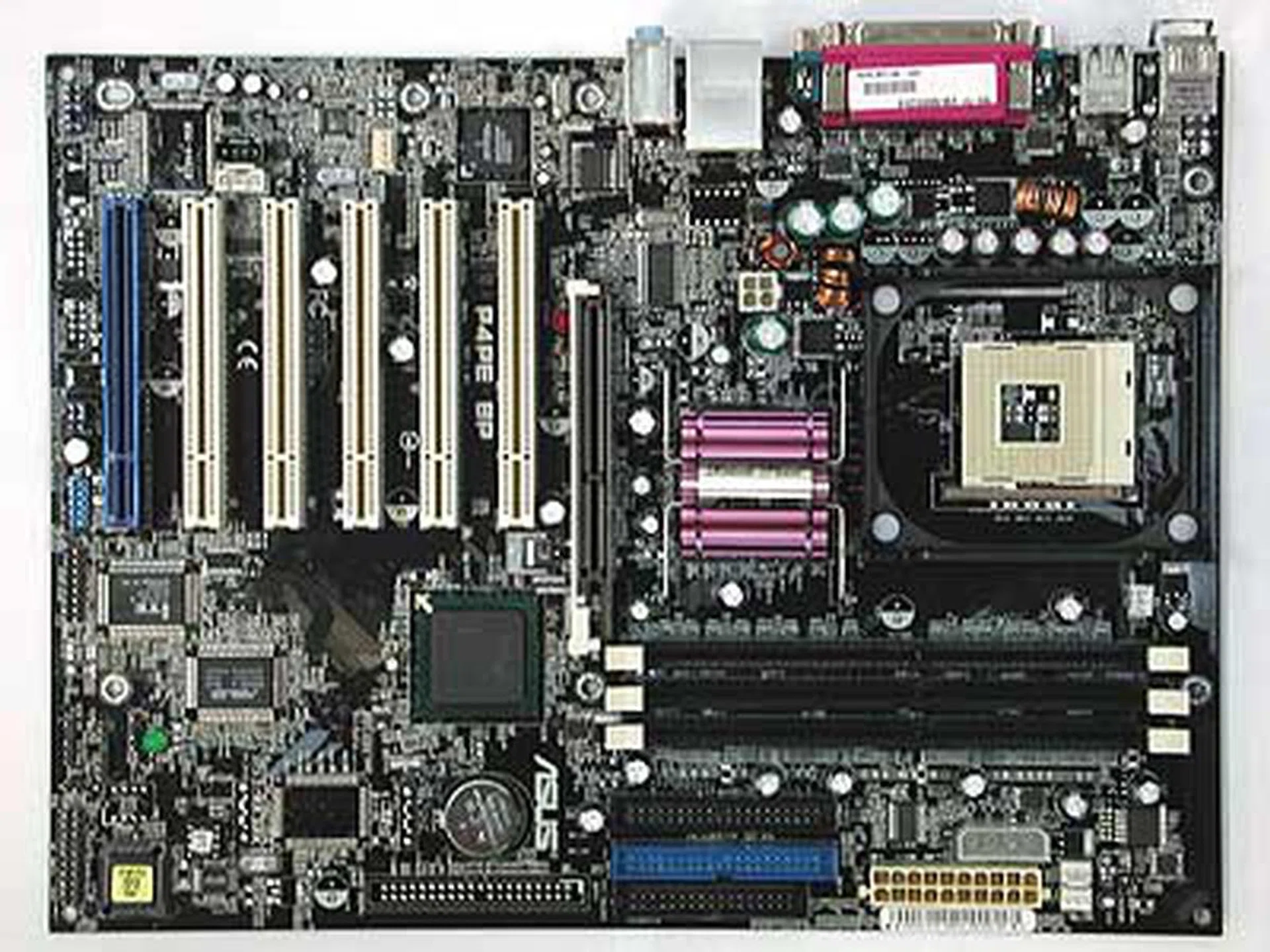
The ASUS P4PE Black Pearl motherboard.
- These 845 boards only served to whet the appetite of enthusiasts, who were looking forward to the Springdale and Canterwood chipsets that Intel was expected to release in 2003. The Canterwood (875) chipsets were available first in April 2003 supporting the new Pentium 4 with 800MHz FSB and featuring a new ICH5/5R with Ultra ATA-100 and SATA support. It finally brought dual channel DDR memory (up to 400MHz) to the desktop (if you discount the Granite Bay workstation chipsets that ended up in desktops due to it being the first Intel chipset with dual channel memory support) and supported up to 4GB of memory. AGP 8x was also brought to the Intel chipsets for the first time (again, discounting Granite Bay).
The Gigabyte GA-8KNXP Ultra was our introduction to a retail 875P board and being an early sample with a less than mature BIOS, its performance was perhaps not ideal and slightly behind the reference Intel D875PBZ. Gigabyte did include an Ultra320 SCSI controller and a ITE GigaRAID controller for an additional four ATA-133 drives with full RAID 0, 1 and 0+1 functionality. In short, it was a storage powerhouse. Thanks to that and Gigabyte's unique Dual Power System, it was rather expensive but more 875P boards were to follow shortly.
One excellent example was the MSI 875P Neo-FIS2R, which came with a host of overclocking features, from system bus to memory, from AGP speed to memory and core voltages. Most of these overclocking options are considered the norm nowadays, but it was quite impressive then. Also, MSI's CoreCell technology made its appearance then, combining both hardware monitoring with automatic performance optimization.
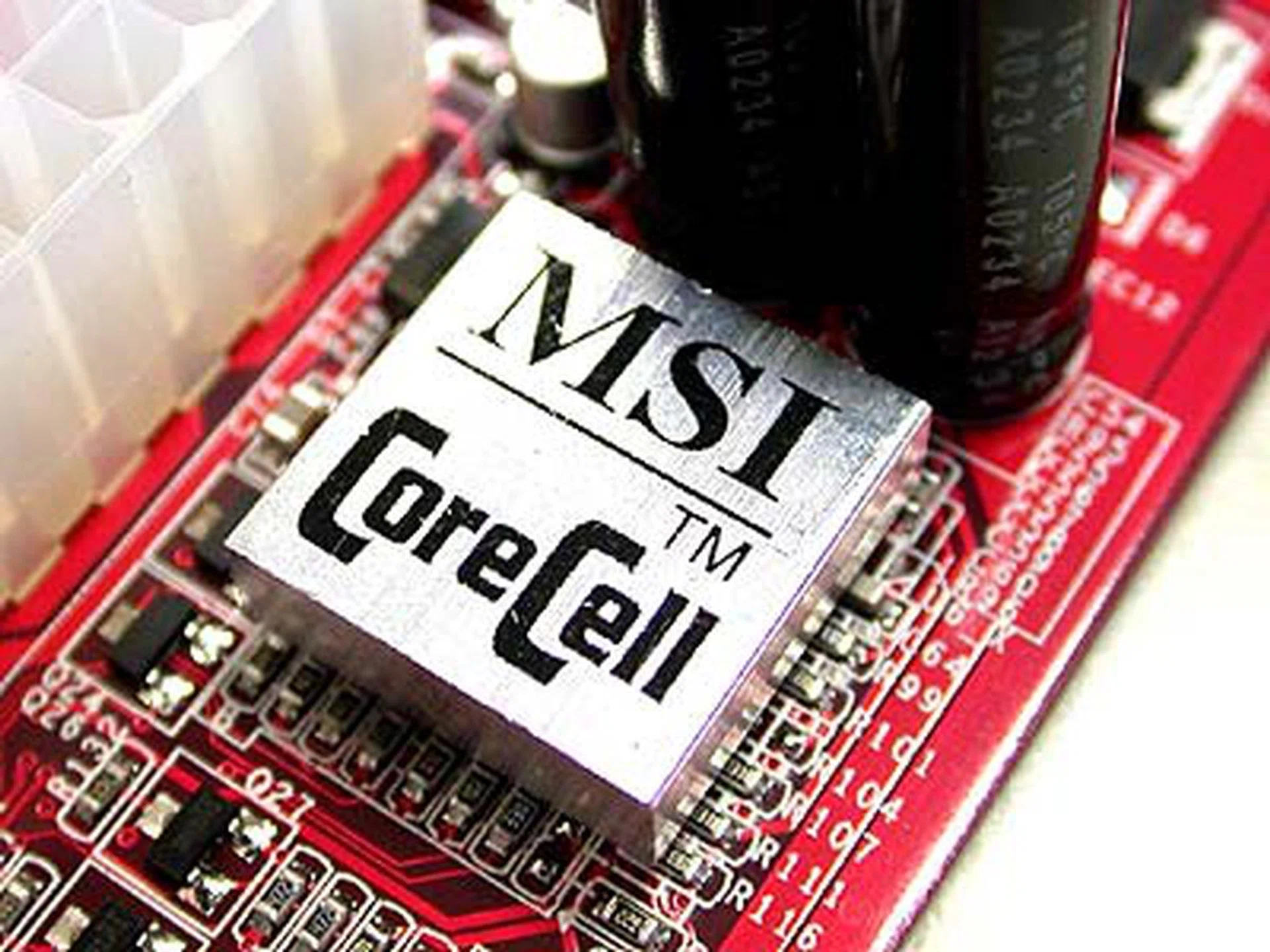
MSI's CoreCell technology gave users a lot more headroom for overclocking with its radical set of tweaks and voltage ranges.
- The Intel Springdale boards (865 series) were to follow the 875P a month later. Naturally we got a look at what it brought to the table and it was in fact very similar to the 875 series. Dual channel DDR400 memory support and AGP 8x were the prominent check boxes, along with support for 800MHz FSB Pentium 4 processors. The 865 series came with different variants, catering to all mainstream users, with discrete and integrated graphics versions. With the addition of the 875/865 series and their embrace of DDR memory, one could say that RDRAM is well and truly dead.
The reference Intel D865PERL we saw in May 2003 had features that mainstream consumers wanted, like AGP 8x, serial ATA, 800MHz FSB, dual-channel DDR400 and Hyper-Threading support. Intel also had three new processors for the 800MHz FSB ready for these new chipsets: 2.40C, 2.60C and 2.80C. "All in all, the Intel D865PERL would make an attractive buy for users who only trust in Intel's product reliability, stability and support."
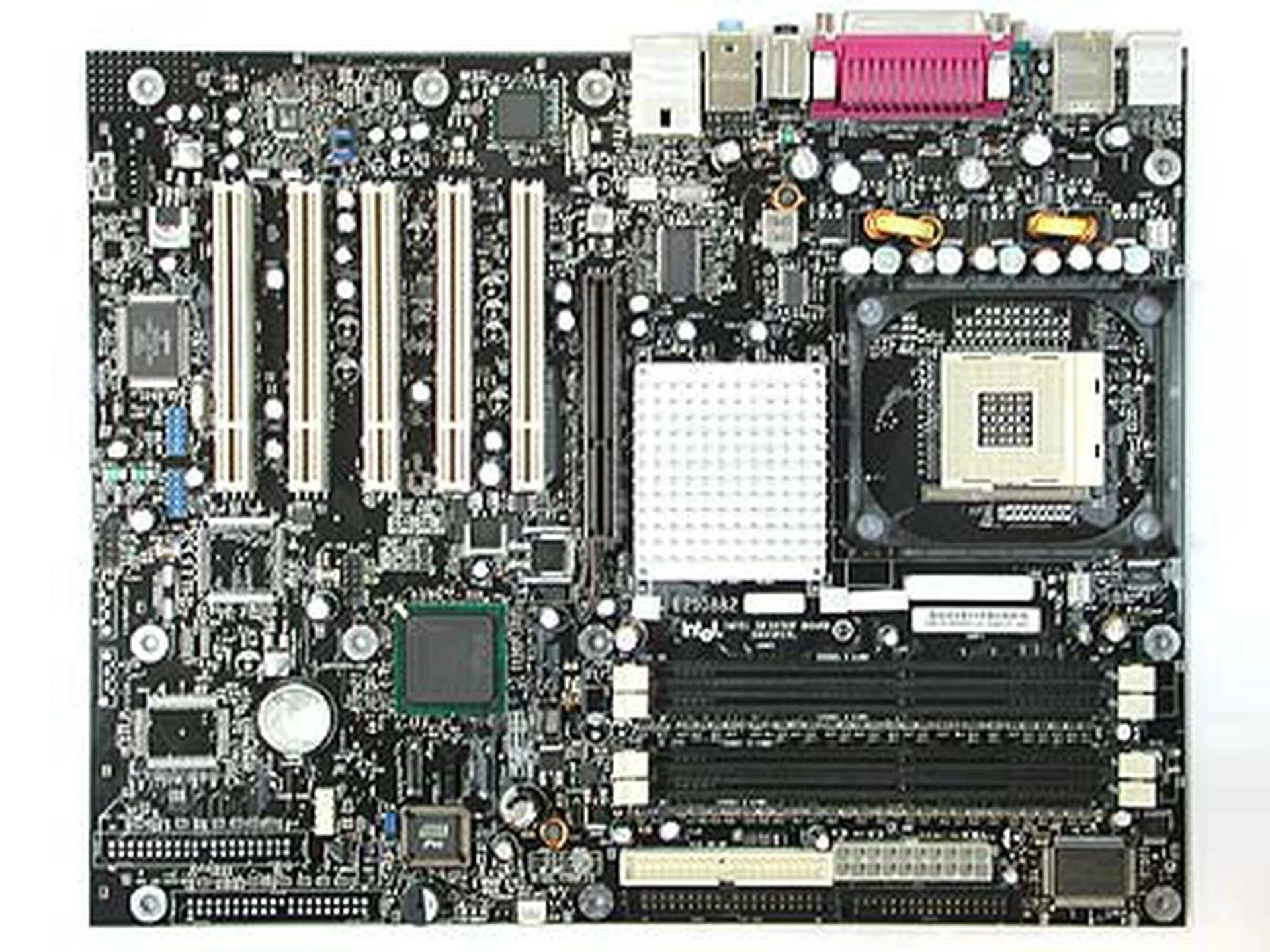
The Intel Desktop Board D865PERL.
- NVIDIA was to refresh its nForce 2 chipset and this was known as the nForce 2 Ultra 400. This 'Ultra' version had a newer packaging and brought official support for 200MHz FSB and dual channel support for PC-3200 memory. Our initial review of such a board, the Soltek SL-75FRN2-L saw various memory related issues that were linked to the new chipset. A BIOS update later solved most of these problems but early adopters had to have the right memory module for it to work.
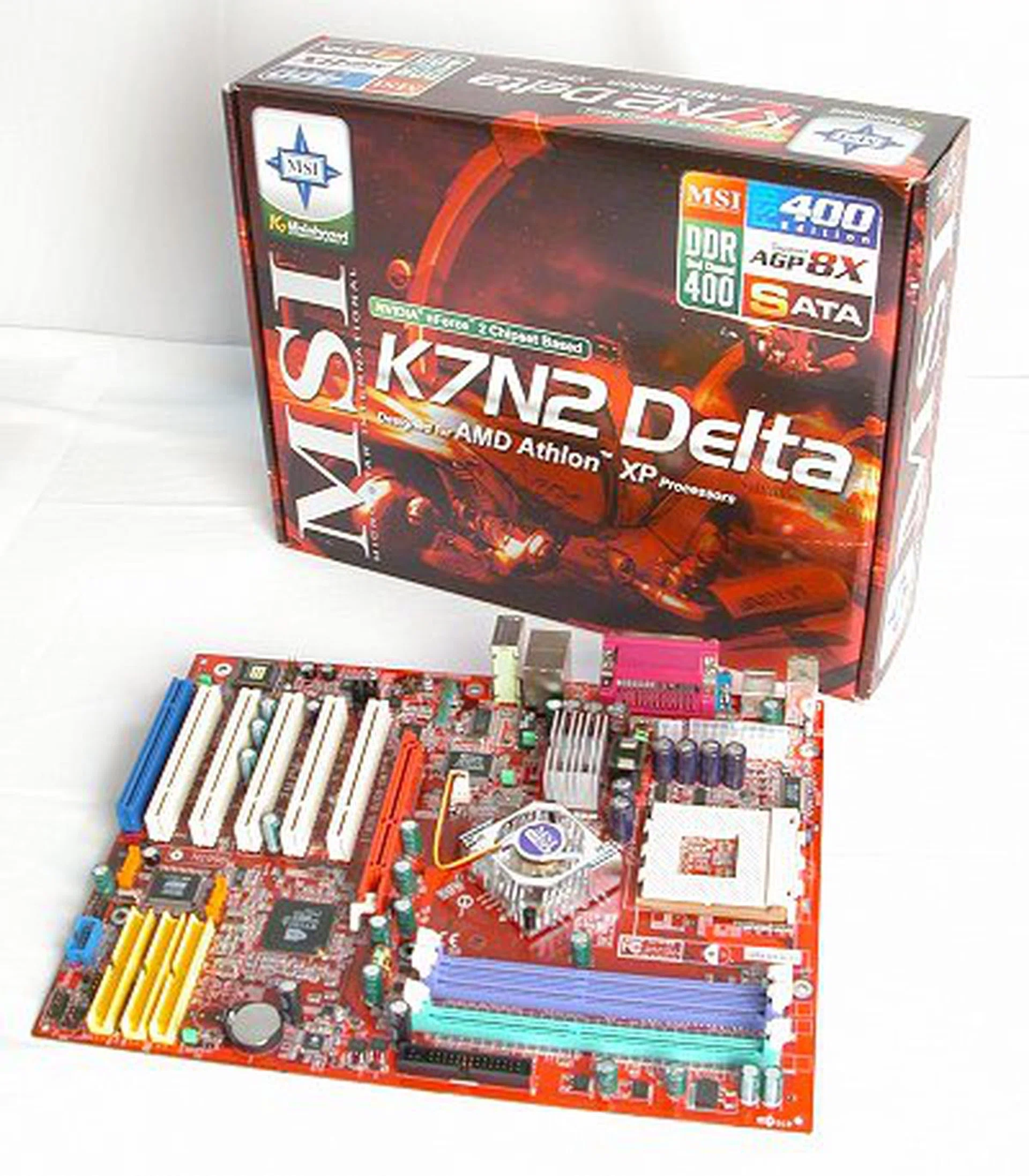
The MSI K7N2 Delta-ILSR would have easily garnered a better award than the 4 stars it received had it not been for the questionable RAM incompatibility issue
- Even later boards like the MSI K7N2 Delta-ILSR still had lingering memory compatibility issues, which was a waste since this board had "almost everything one would require; Firewire, SATA and IDE RAID, rounded IDE cables, SATA power and data cables, surround sound and SPDIF output interfaces, and an MSI diagnostics LED bracket."
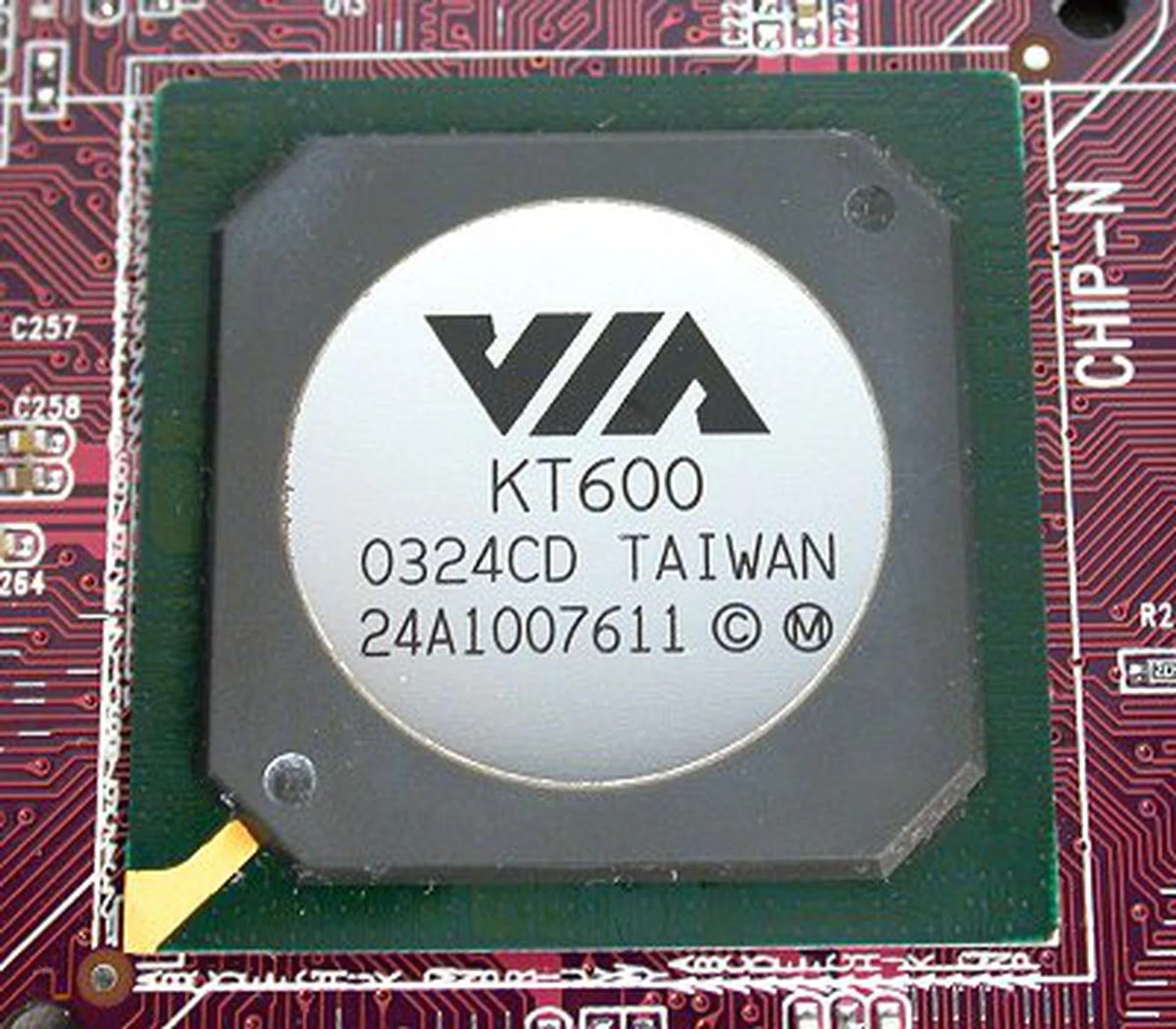
VIA's new KT600 NorthBridge.
- The year was not to end yet and the next chipset manufacturer to unleash its updates was VIA and its KT600 chipset. By 2003, VIA had lost much of its earlier luster, due to competition from NVIDIA's nForce 2 platform. Attempts to bolster the KT400 with the KT400A were not too successful, and the newly added FastStream64 technology underperformed. This meant that motherboard vendors and consumers did not take to the revised chipset.
Therefore, it was high time that VIA got back into the game and this was spearheaded by the KT600, which finally brought support for a FSB of 400MHz and DDR400 memory. There was a new VT8237 SouthBridge that offered, ATA-133, SATA (150MB/s) and V-RAID (supports RAID 0, RAID 1, RAID 0+1 and JBOD for SATA drives). VIA's excellent Envy24PT audio controller was also onboard.
While the new chipset "certainly fixed all that went wrong with the KT400A and outperformed it in almost all situations. However, when pitting the KT600 against the old KT400, we were a little disappointed from the net performance gain." Although the KT600 was slower than the nForce 2 Ultra 400, it was also generally less expensive and could be a decent alternative. - Before the end of the year, AMD's 64-bit consumer CPU, the Athlon 64 would debut and of course that would require new chipsets. All the big names would come to play and in November, HardwareZone would gather all these chipsets for an ultimate showdown. This list included the NVIDIA nForce3 150, VIA K8T800, SiS755 and ALi M1687.
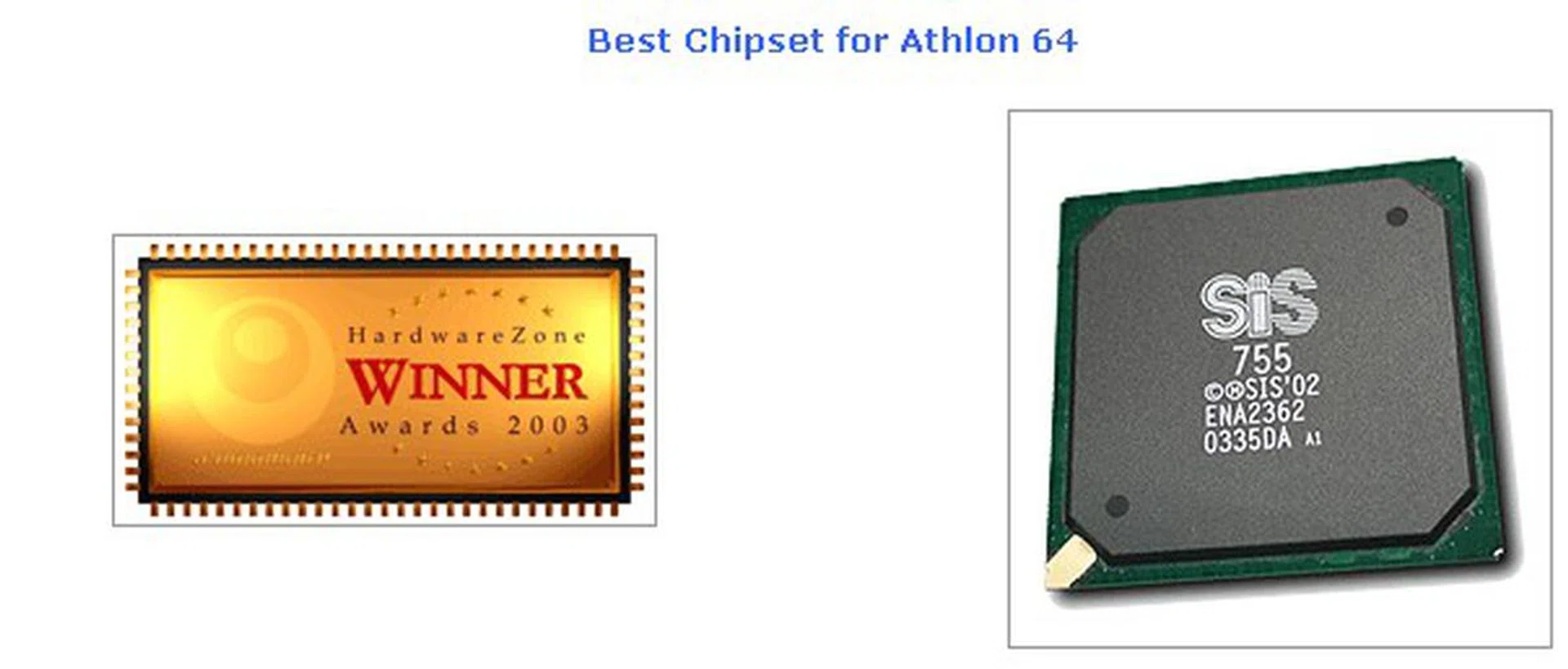
SiS pulled off an unexpected victory in our roundup of the new Athlon 64 chipsets.
Suffice to say, all these new chipsets were thoroughly covered in this mega-article and you should read it to find all the differences. In a surprising twist of events, the winner of this shootout was found to be the SiS 755 and not current favorites like VIA or NVIDIA.
2004
- With the Athlon 64 getting all the attention at the beginning of 2004, we attempted a massive roundup of the available Athlon 64 motherboards in retail to find out which was the best. Even though we were only looking at boards using VIA's K8T800 and NVIDIA's nForce 3 150 chipsets - there were then no boards based on the SiS 755 chipset that won our Best Chipset for Athlon 64 the year before - the total was a staggering 15 motherboards from practically all the brands you'll find in retail locally.
Boards using VIA's K8T800 turned out to have a slight advantage over their nForce 3 counterparts, though the margin between them were within 3%. We decided to give separate awards for the two different chipsets, with Chaintech's ZNF3-150 the winner for the nForce 3 category and MSI's K8T Neo-FIS2R took the honors for the VIA chipset.
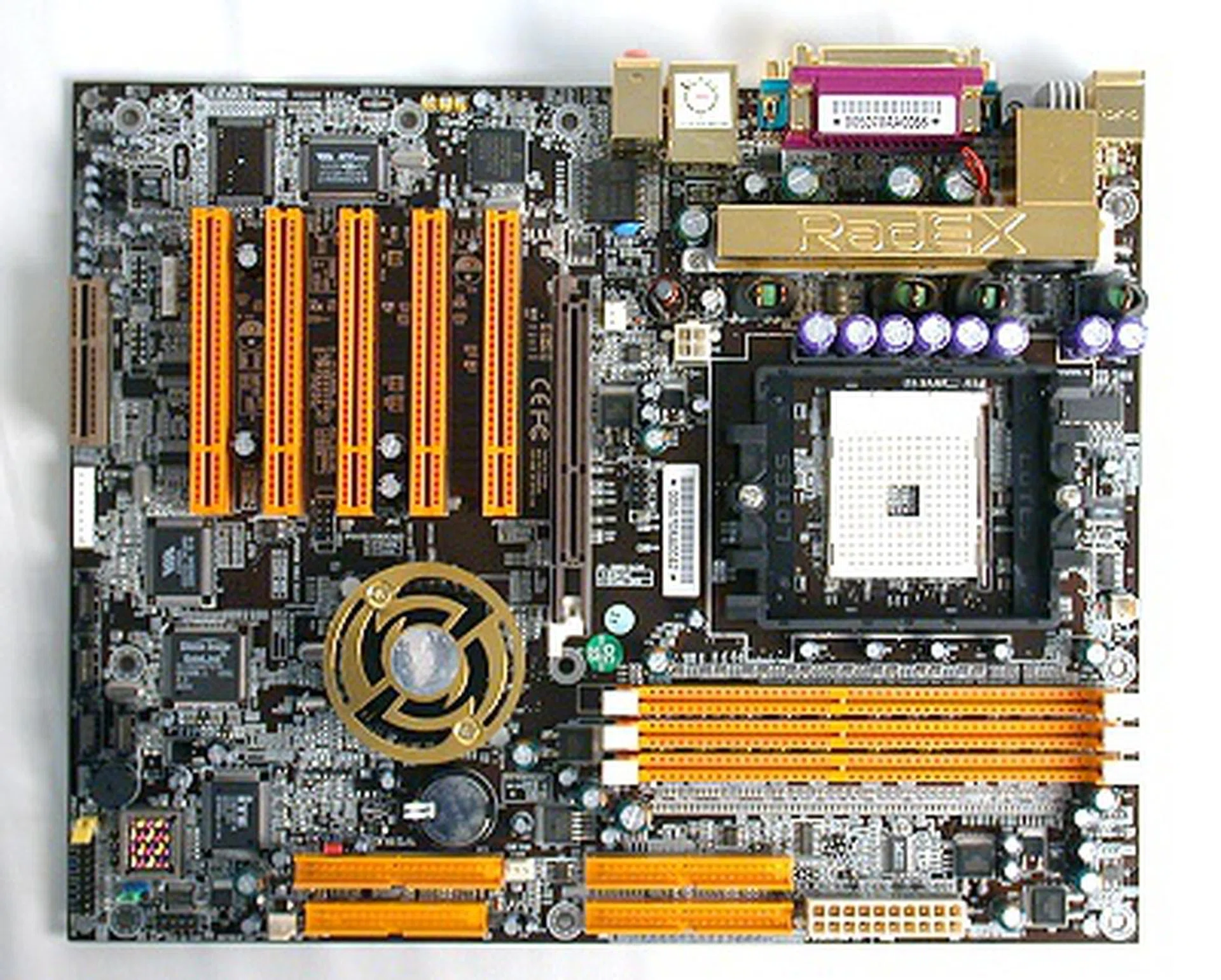
The best nForce 3 board we saw in our shootout, the Chaintech ZNF3-150.
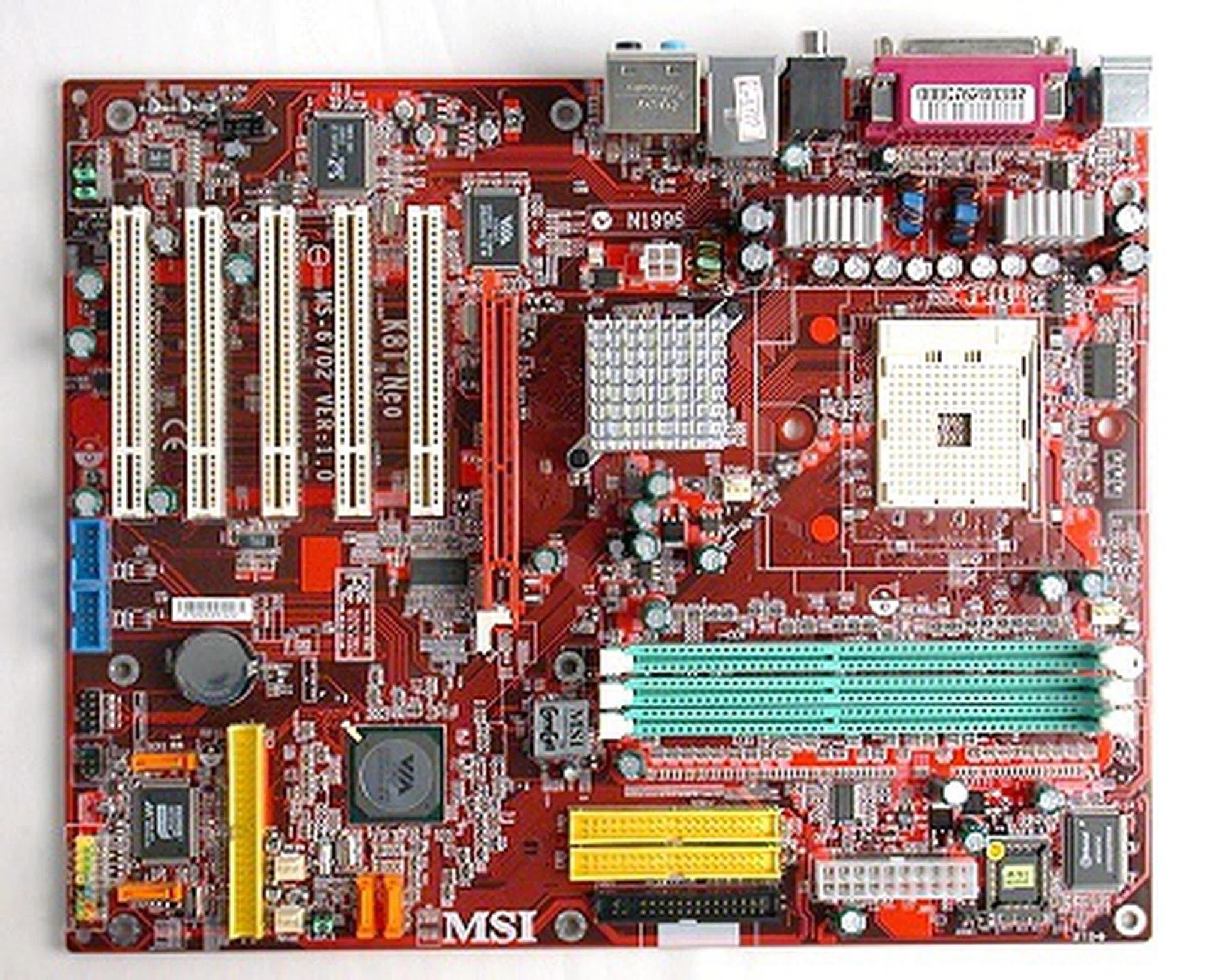
The winner for the VIA K8T800 category was MSI's K8T Neo-FIS2R.
- More of these large scale shootouts were to follow that year and soon after this Athlon 64 roundup, there was a 30-page one involving boards using the nForce 3 250 chipset. This was an updated version with a newer MCP that had the full HyperTransport bus running at 800MHz in both directions, giving up to 6.4GB/s of data throughput and not the 600MHz on the 150 chipset. "Besides that, the nForce3 250 also comes with support for up to eight storage devices, four based on the older Ultra ATA-133 interface and another four on the new SATA interface," making it a crucial upgrade. To make things crystal clear, there was a table describing the differences between the various flavors of the nForce 3 chipsets and this is reproduced here:
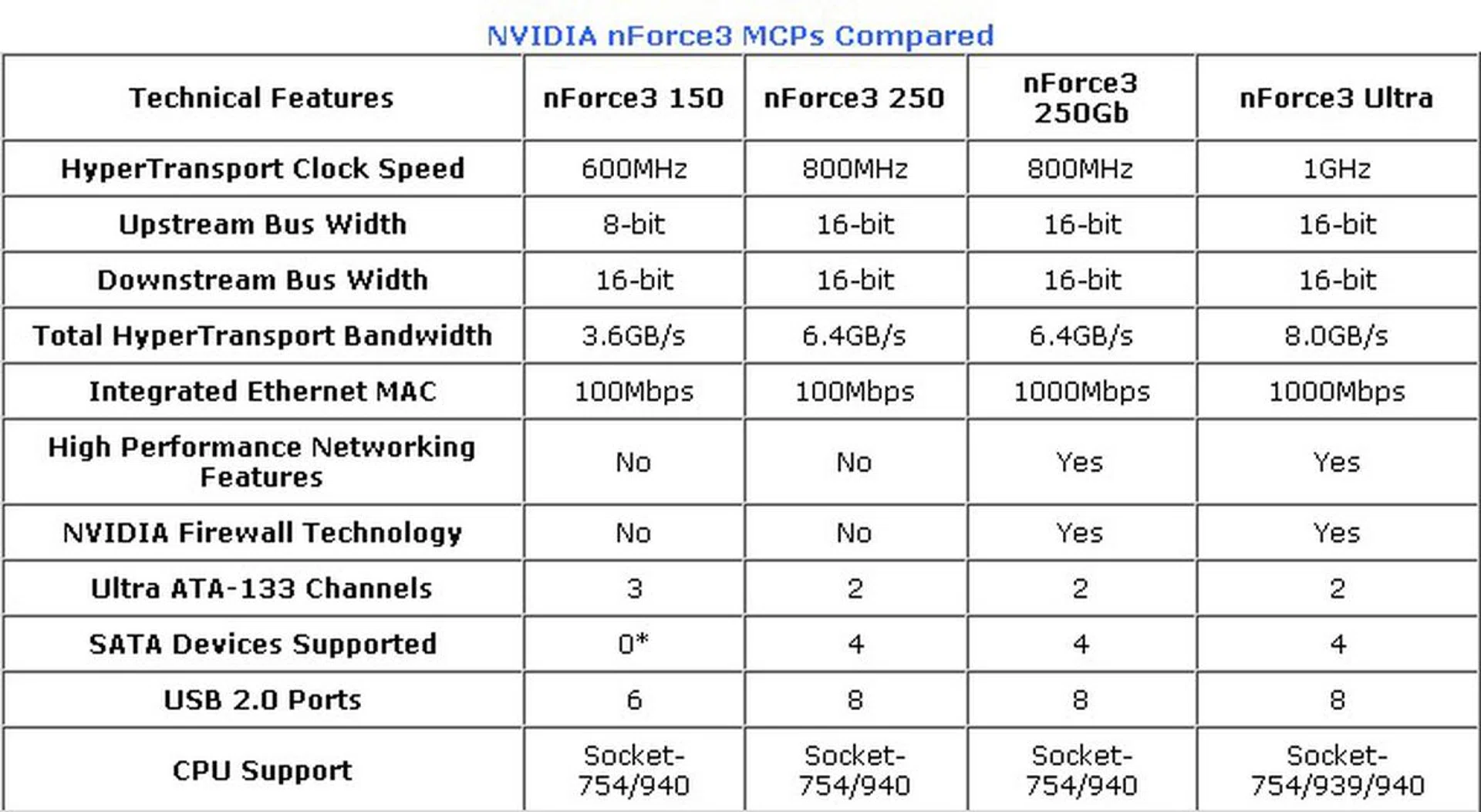
* SATA support on nForce3 150 is through an external SERDES chip on third Ultra ATA-133 channel - providing up to two ports.
In the resultant benchmarking, the winner was the ASUS K8N-E Deluxe, which triumphed thanks to its balance of features, excellent performance, good accessories bundling, good software bundle and overclockability.
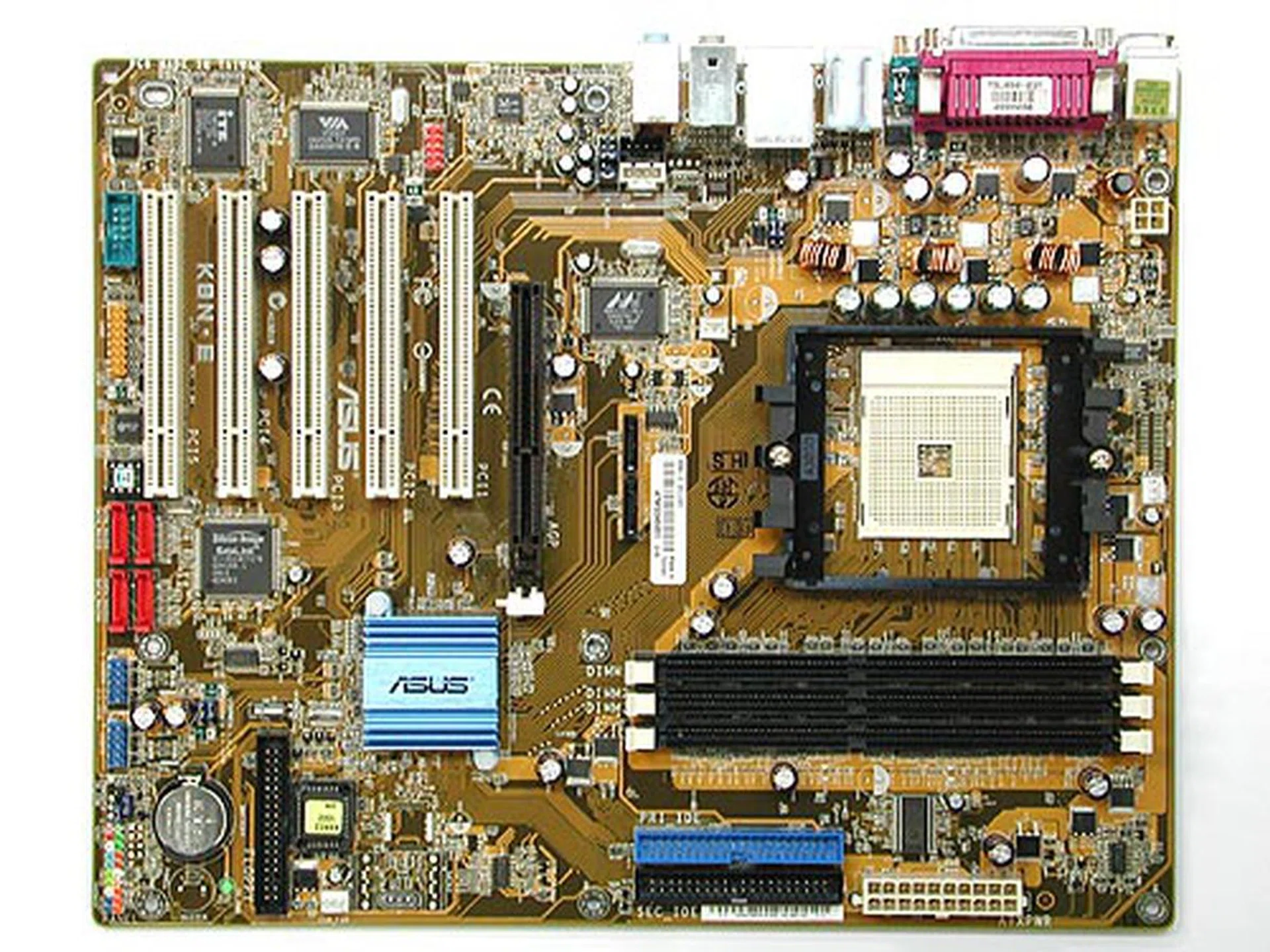
A fair reasonable price for its excellent blend of features and performance helped the ASUS K8N-E Deluxe win our nForce 3 250 shootout.
- PCI Express and DDR2 memory support became the next major developments in 2004 and for consumers, it all started with Intel's Grantsdale and Alderwood chipsets, the 9xx series. Intel had moved to a new processor core with the Prescott Pentium 4 in February 2004 and along with this shift, a transition to a new socket, the LGA 775.
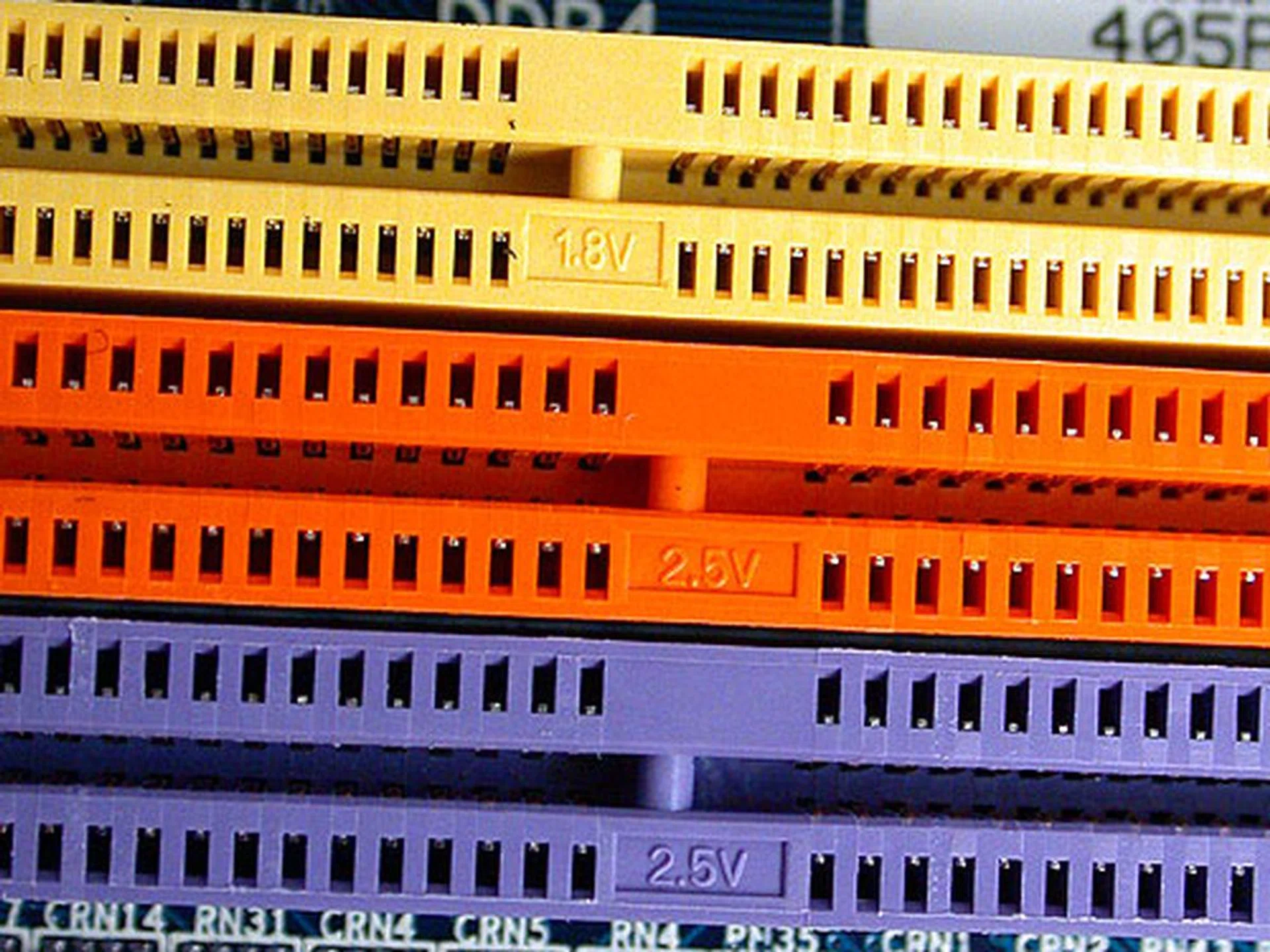
The support for two types of memory on this very impressive 915P motherboard from Gigabyte.
- The first board we encountered that supported the new order was the Gigabyte GA-8GPNXP Duo, which was an extremely high-end product with tons of accessories and features. It also supported two types of memory, the newer DDR2 memory and the common DDR400. There was a PCI Express x16 slot to replace AGP 8x and four PCIe x1 slots for cards that did not really exist yet in the market. Intel's new HD Audio CODEC, Azalia was also found in these new 9xx boards.
Gigabyte bolstered this board with its own D.P.S technology which doubled the amount of power MOSFETs available in their power circuit, making it eight-phase. Along with a host of new and unique set of software and BIOS enhancements known as ShieldWare, Gigabyte produced "one of the finest piece of hardware we've tested." It deservedly garnered our Most Innovative Product award.
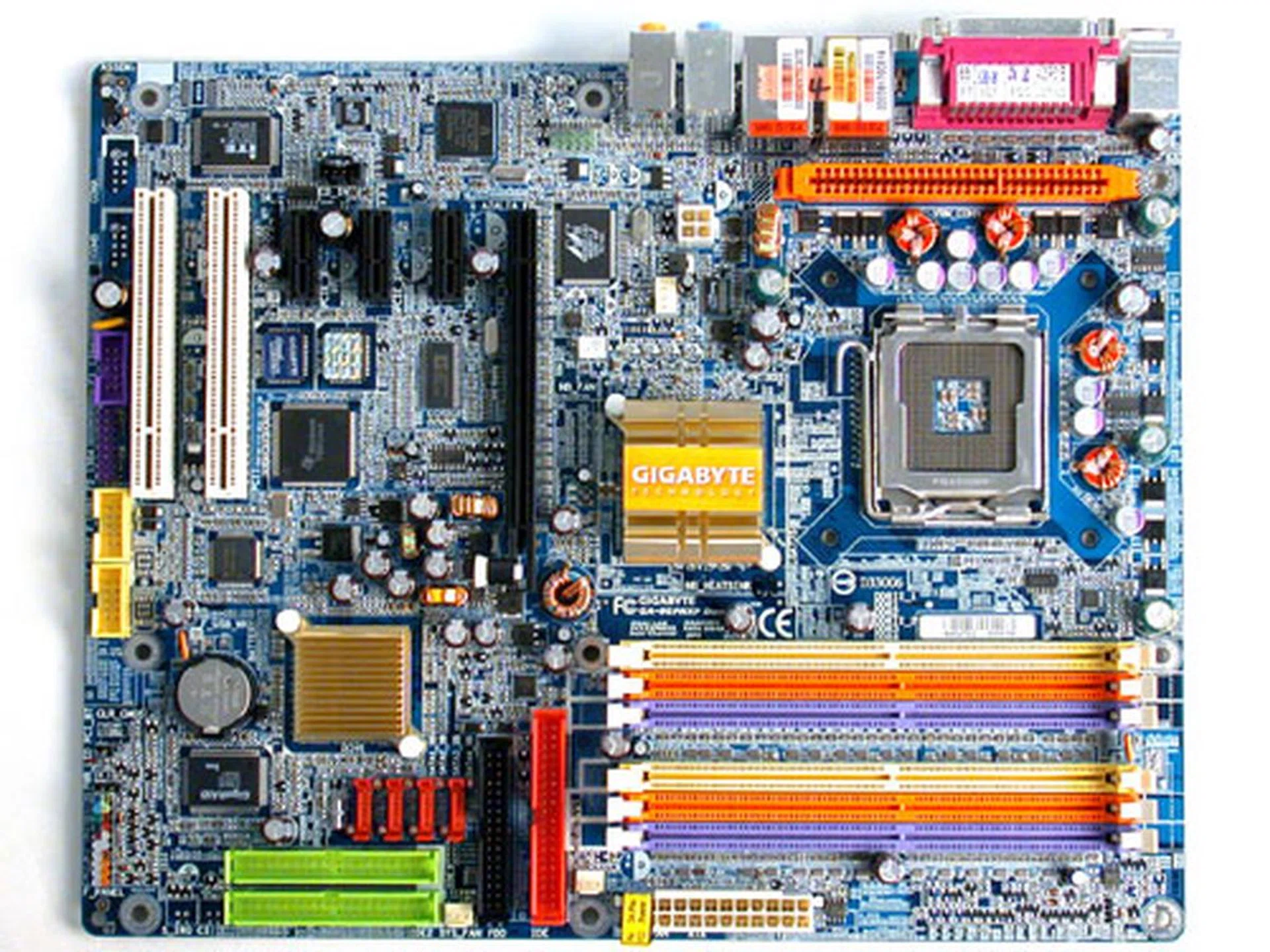
Kudos to Gigabyte for an excellent motherboard design and a well executed set of features, firmware and software.
- Although Intel's 925X Express chipset (Alderwood) was introduced along with Grantsdale, we were not to review a retail version till 2005 when writer Zachary Chan talked about the ASUS P5AD2 Premium, which was to receive a perfect rating along with a Most Innovative Product award. However, we had previously looked at an Intel D925XCV in our review of the Pentium 4 560 and were not "looking too healthy in the performance and availability standpoint." Hence, the time lag between this and the actual retail version. Nevertheless, we found the new features on the 9xx series impressive.
The Radeon Xpress 200 marked ATI's entry into the desktop scene for Athlon 64.
- ATI got into the Athlon 64 game with serious intent in 2004 with its Radeon Xpress 200 chipset. Although the company had done chipsets before, especially its recent Pentium 4 Radeon 9100 IGP boards which Hardware Zone covered, the Xpress 200 was a serious desktop chipset that had all the latest technologies including PCI Express and supported both socket 754 and 939. Yes, AMD had shifted to the new Socket 939 in June and the Radeon Xpress had to follow too, as would other AMD chipset players. ATI intended to exploit its strength in graphics by integrating a Radeon X300 graphics core into the Northbridge and using ATI's HyperMemory technology.
After comprehensive testing against some of the Athlon 64 alternatives in the market, "we were very pleased with the outcome of the ATI RADEON XPRESS 200 series and we see it is an excellent addition to the existing AMD64 platform of chipsets."
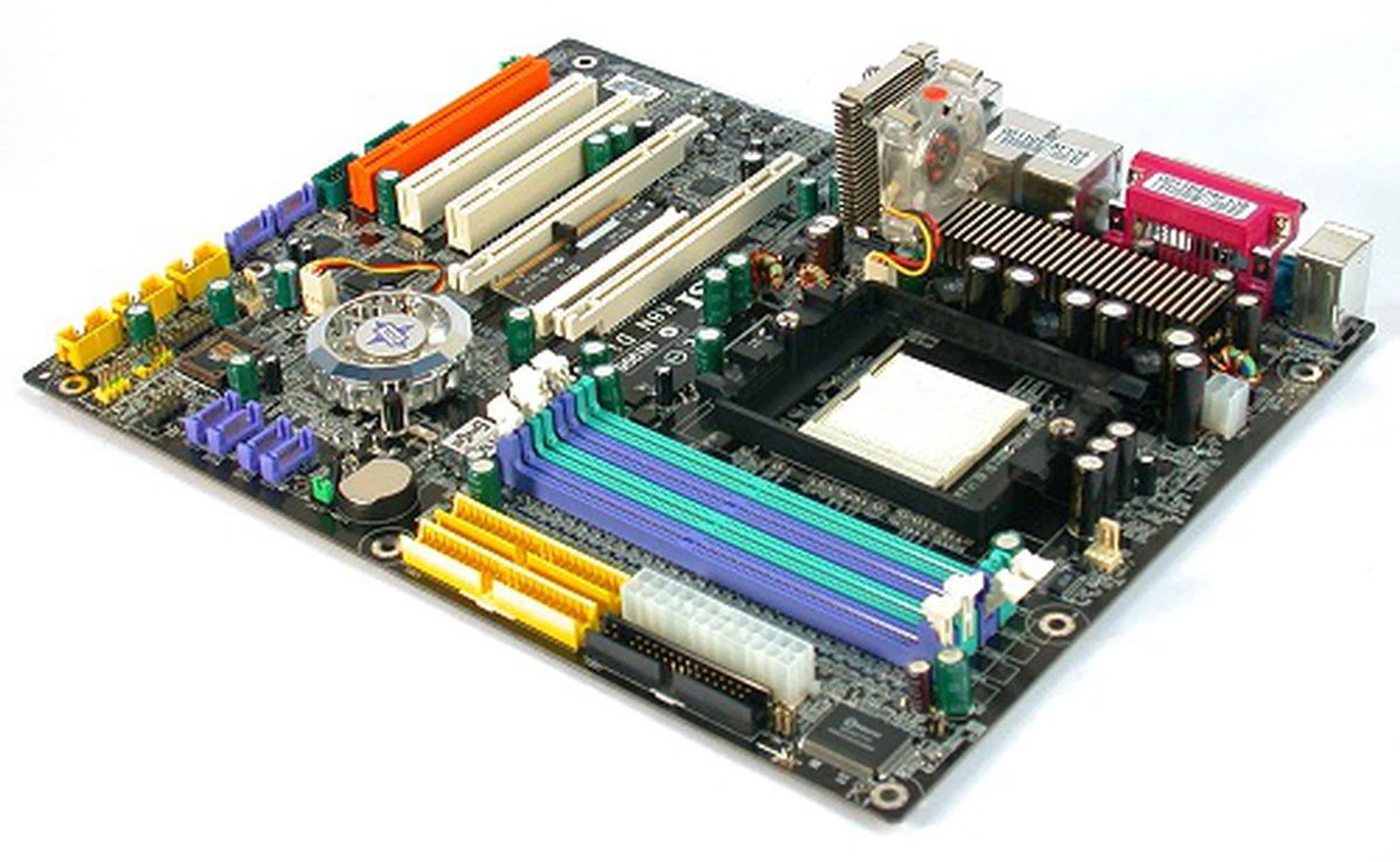
The MSI K8N Diamond nForce4 SLI motherboard got a near perfect score and a Most Innovative Product award for its unmatched features and all-round performance in both overclocking and benchmarks.
- Late in 2004, NVIDIA was to quickly supersede its nForce 3 chipsets with the new nForce 4. It represented NVIDIA's effort to bring PCI Express to the Athlon platform (Socket 939). ATI's Radeon Xpress had already done so and while VIA was arguably fading away as a major player, its K8T890 chipset did just that with a new K8T890 Northbridge that had PCI Express x16. Hence it was about time NVIDIA stepped up, especially since the company had emerged as a force in this segment.
The nForce 4 obviously came with PCI Express capability but it also had some interesting proprietary features. Some were predictable, like built-in Gigabit Ethernet MAC with advanced networking features and a 1GHz HyperTransport bus, while others like SATA 3.0Gbit/s, NVIDIA ActiveArmor (a hardware firewall) and most of all, SLI support was quite innovative and unique. Enthusiasts were quite eager to get their hands on the SLI capability and test it out with the GeForce 6 series cards that first supported this technology.
We managed to get our hands on a NVIDIA nForce 4 SLI board from MSI, the K8N Diamond and our initial impressions were that NVIDIA had "literally swept its competition with brute force incorporation of features and early time to market."
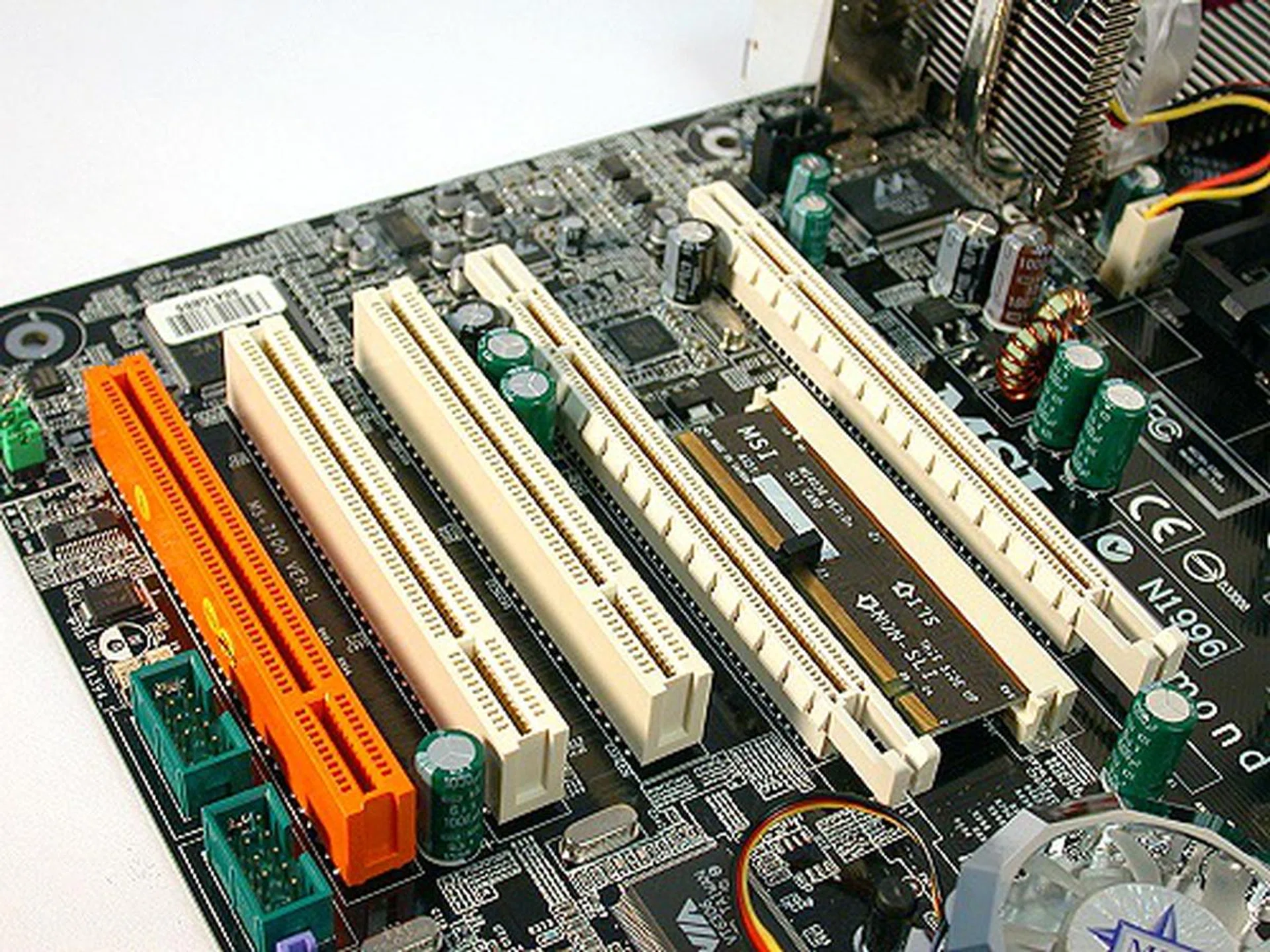
The two longer slots shown here are the dual PCI Express x16 slots for SLI and sandwiched in between them is the SLI switch. Yes, it was not as simple as plugging in both cards and expecting it work, at least not initially.
2005
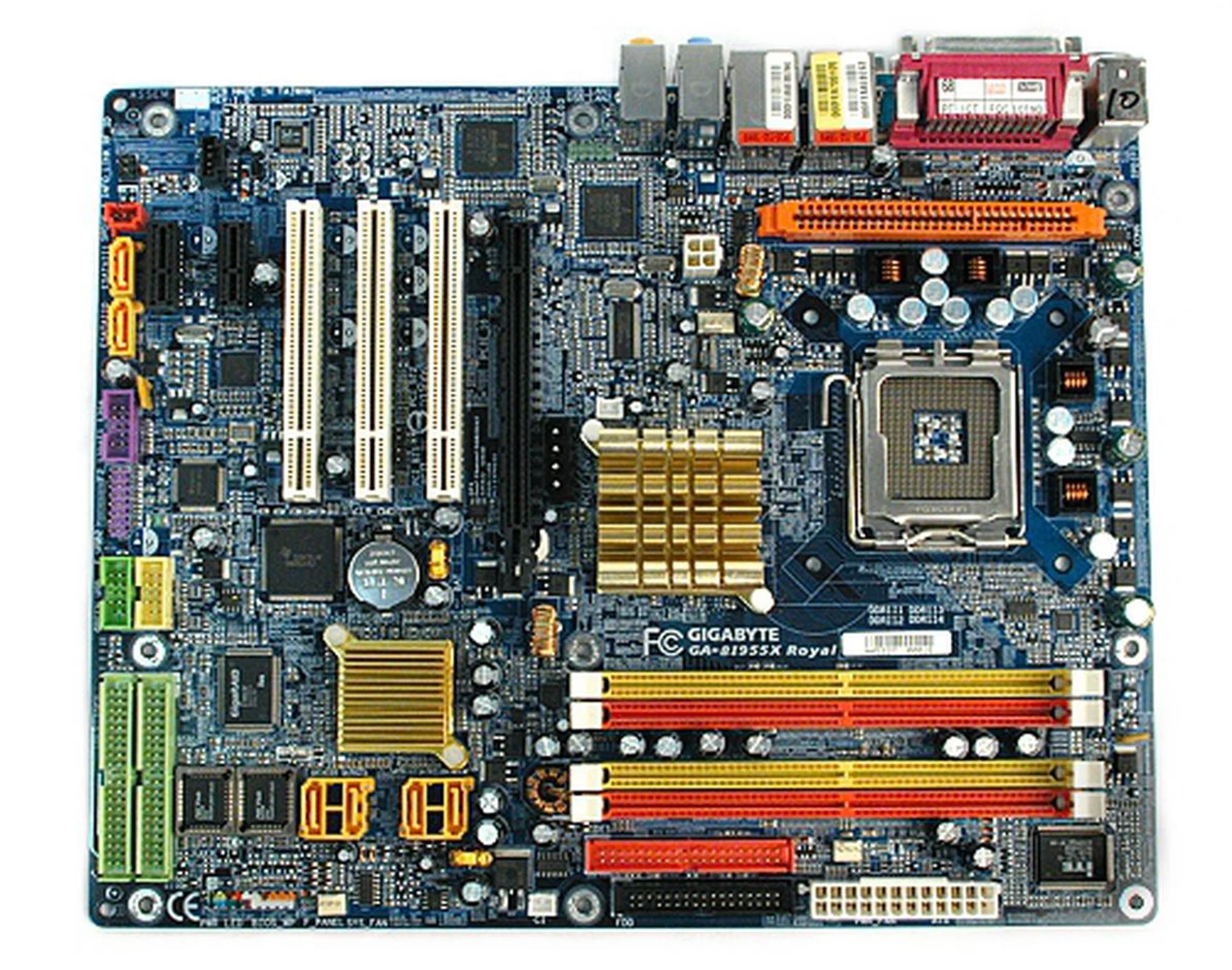
Using the 955X chipset, the Gigabyte GA-8I955X Royal was equal to and in some cases outperform the Intel 925XE Express reference board.
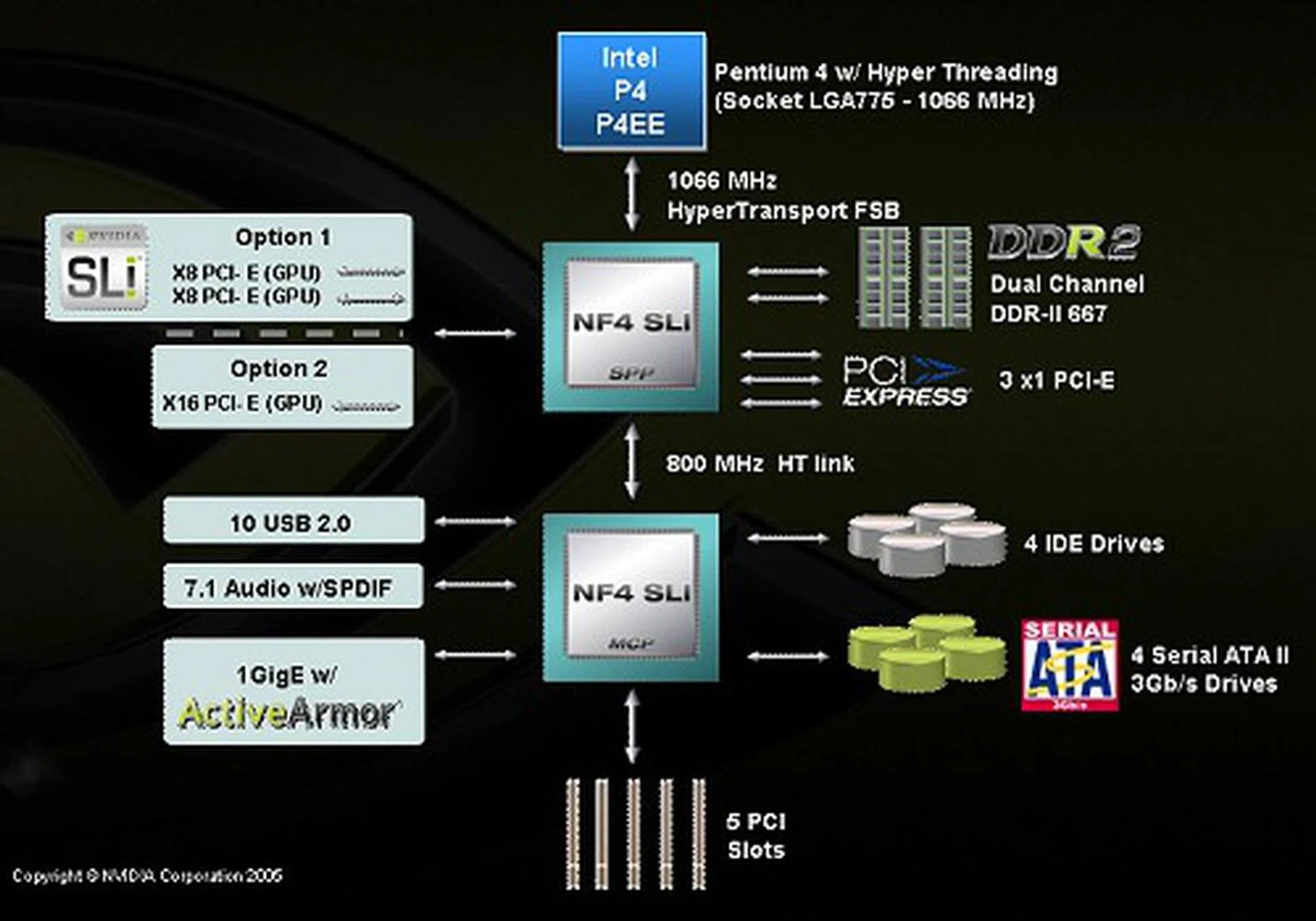
How it all links together, courtesy of NVIDIA.
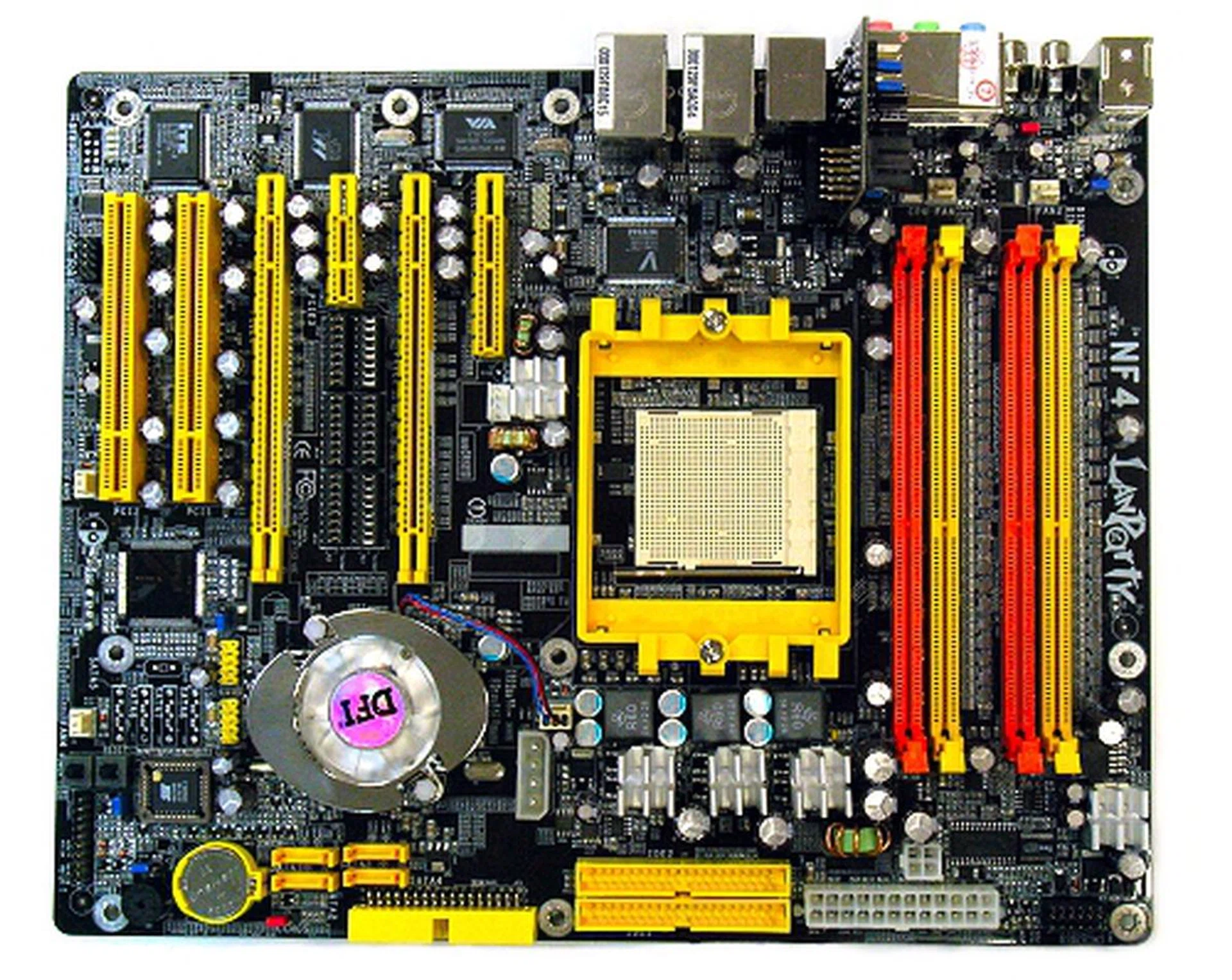
The ultimate winner for our nForce 4 Ultra shootout, the DFI LANParty UT nF4 Ultra-D.
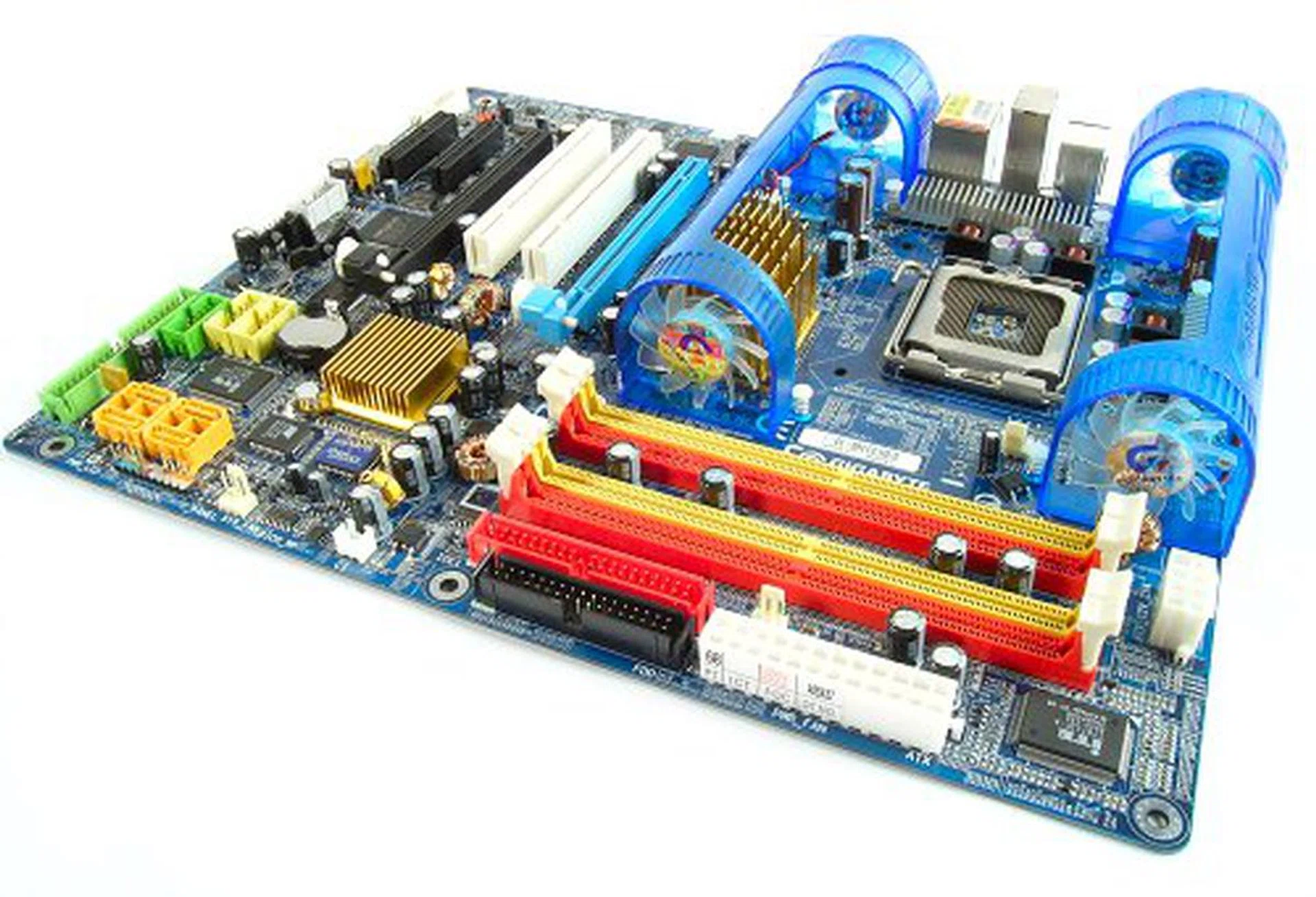
Our first 975X board had little to recommend in terms of performance over the 955X. Furthermore it was still behind an equivalent nForce4 SLI Intel Edition board. However, things were to change dramatically in the coming year so it wasn't that important.
- At HardwareZone, 2005 for motherboards was a year for shootouts, as we rounded up various boards using chipsets like the nForce 3 Ultra, nForce 4 Ultra, VIA K8T800 and Intel 915P for comparison. Of course, there were also some new chipsets on show and one of the earlier ones that year was the Gigabyte GA-8I955X Royal, using the Intel 955X Express (Glenwood) chipset. It had a "wide range of compatibility and support from Prescotts, to dual-cored Smithfields and Pentium Processor Extreme Editions. Official memory support has been updated to embrace dual channel DDR2-667."
Significantly, the 955X brought more PCI Express lanes and SATA 3.0Gbit/s to the Pentium 4, reflecting the competitiveness between the AMD and Intel eco-system. Along with the 955X, the 945 was also introduced for the mainstream users at the same time, with slightly less PCI Express lanes. - NVIDIA too would embrace the Intel platform in 2005, bringing its nForce chipset over to the Pentium 4 world and expanding the potential consumers of its SLI technology. This was done by NVIDIA licensing the use of Intel's front-side bus technology. "Essentially, NVIDIA bottled all the goodness of the nForce4 SLI and released them into a chipset suitable for use with Intel processors."
NVIDIA's move looked like a success, with our benchmarks showing that it was handily beating Intel's own 925X Express reference chipset by around 5%. Additionally, NVIDIA's proprietary technologies were also a handful for any competitor and especially if you have bought into the green team's GPUs, SLI seemed like a natural progression and for that, you'll need this chipset. - The nForce 4 Ultra also got a thorough look in a series of articles featuring nForce 4 Ultra boards. One of the first was the abit Fatal1ty AN8, which also happened to be one of the first motherboards to be branded with professional gamer, Jonathan 'Fata1ty' Wendel's gaming handle. For those who weren't too sure about the Ultra version of the nForce 4, we prepared a table listing the differences and this has been reproduced here for reference.
This series of shootout articles concluded with an extensive summary listing the pros and cons of eight motherboards. Sweeping the competition was the DFI LANParty UT nF4 Ultra-D, which took the Most Overclockable Product and Most Innovative Product awards and hence was rightly the overall winner. - While the 955X brought new features to the table, it was not exactly much of an improvement over the 925X it originated and the entry of NVIDIA into the Pentium 4 space meant that Intel had to be on its toes too when it came to chipsets. Hence, in November 2005, the giant updated its chipset for all LGA 775 processors with the new 975X chipset. This new chipset is yet another refresh of the 955X chipset, this time supporting dual graphics.
Whereas NVIDIA had its SLI technology, Intel was unable to get that right for its own chipset. But there are two GPU players in town, so ATI's CrossFire instead is the choice. Intel implements this by having two PCI Express x16 slots but each slot will only have x8 bandwidth when dual graphics cards are installed.
Our first look at such a board only came in January 2006, when we tested the Gigabyte GA-G1975X. The experience with CrossFire was smooth and the benefits from the dual GPU setup looked promising. "Starting from a resolution of 1024x768, enabling CrossFire delivers around a 34% performance increment to nearly 70% at 1600x1200."
2006
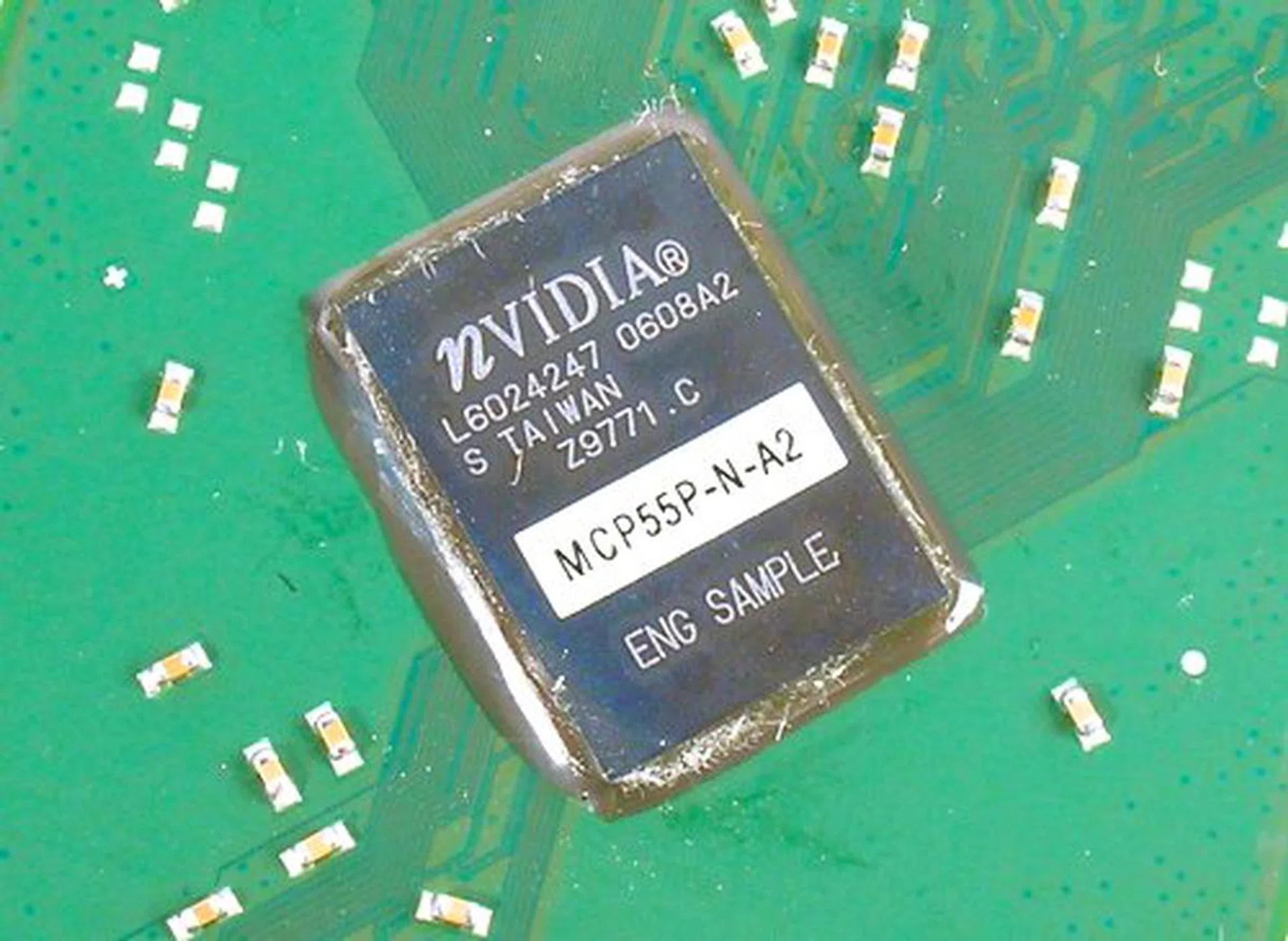
Under the heatsink on the board was the single chip nForce 570 SLI MCP.
- A seismic event was to occur in 2006 for the CPU industry and that had far-reaching effects on the chipset segment. Even before the year started, Intel had been building up the hype for its next generation micro-architecture and the goods duly arrived in July 2006 with the release of the Core 2 Duo processors (Conroe), built on the Core micro-architecture and along with it, new chipsets.
But before that happened, AMD was shifting to a new 940-pin, AM2 socket in May 2006 in preparation for its official shift to DDR2 memory and this was heralded by the arrival of NVIDIA's nForce 500 series of chipsets. An early preview of the NVIDIA nForce 570 SLI chipset was done thanks to MSI's K9N SLI Platinum board and we got a look at the MCP. Most of the features on this chipset was expected, like dual PCIe x8 SLI support. There was also "six SATA 3.0Gbps connectors, dual Gigbit LAN and Azalia HD Audio." Soundstorm looked truly dead as NVIDIA did not seem to be continuing it.
We followed up this early look with more tantalizing glimpses of the nForce 590 from Gigabyte.

Gigabyte's nForce 590 SLI board that we got an early preview of.
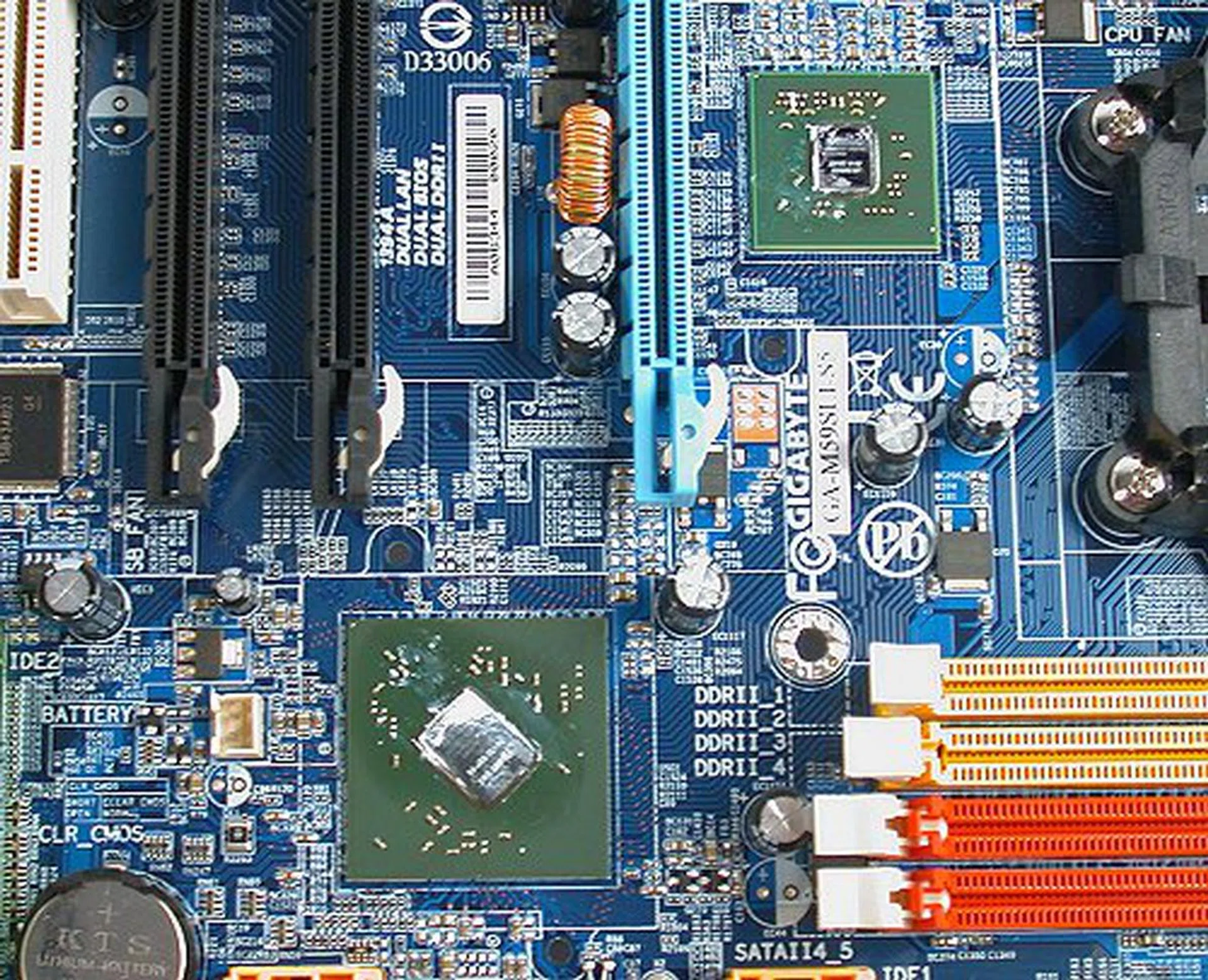
With the heat pipe carefully removed, the motherboard chipset is exposed.
And we finally had the green light to publish the actual review of the NVIDIA nForce 500 chipsets:
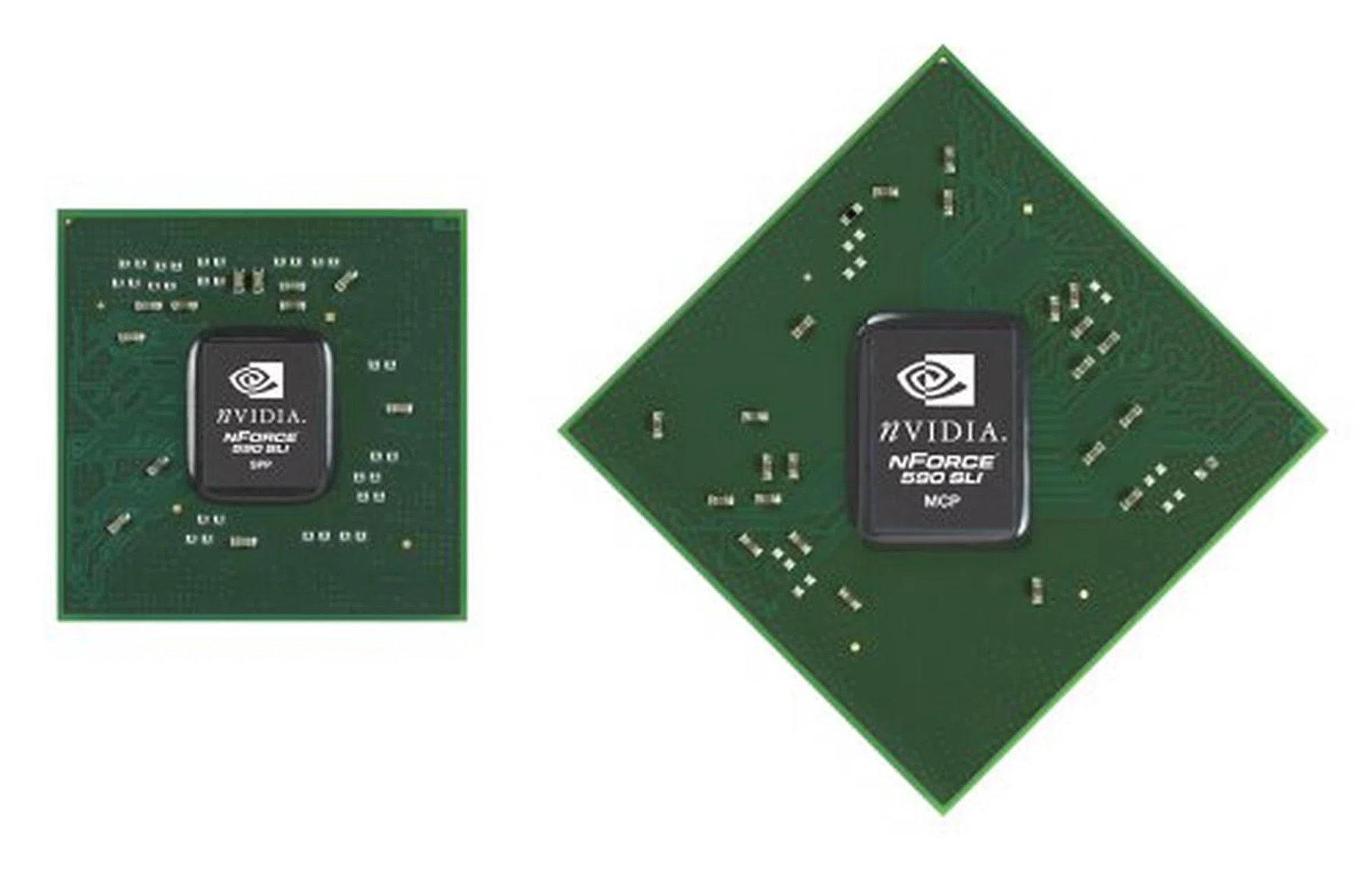
NVIDIA has refreshed its entire nForce core logic line-up and the nForce 500 series is looking to extend NVIDIA's lead in the chipset market. Shown here is the nForce 590 SLI MCP and SPP chipset.
Covering a range of price segments and varying in features, the nForce 500 had four members at launch, (in increasing order of price and features), the 550, 570 Ultra, 570 SLI, 590 SLI. They all supported the new AM2 socket, came with SATA 3.0Gbps, 1GHz HyperTransport link, Gigabit Ethernet, PCI Express x16 slots and Azalia HD Audio. NVIDIA again had its own unique technologies for the higher end models and they are LinkBoost, FirstPacket and SLI-Ready Memory. Our article had the details about these technologies and the new chipsets.
Overall, we found the "chipsets offer some very significant enhancements to the current core logic chipset market with features that are ready to take advantage of Socket AM2, faster memory and advanced operating systems like the upcoming Windows Vista." The Intel SLI editions of these chipsets were also announced.
For us, this would arrive in the form of the ECS NFORCE 570 SLIT-A, which is "basically a re-badged nForce 4 SLI XE and the use of the C19 A3 revision chipset and the design to support Core 2 CPUs." With some stability issues and average performance, this would end up as a decent entry level board, especially with its price tag.
ATI too had an updated chipset for the AM2 platform and this was the RD580 that became the Radeon Xpress 3200. Impressively, it was the first chipset to have up to 40 PCI Express lanes for full CrossFire bandwidth and paired with a new SB600 SouthBridge that had SATA 3.0Gbps, AHCI and NCQ among others, this looked like a promising start. An example of this would be the ECS KA3 MVP which turned out to be "a feature-packed gaming board and ECS's pricing makes it a very attractive board for users who are more interested in getting into some dual x16 CrossFire action."
The big event that we were talking about earlier, the launch of the Core 2 processors happened in July 2006 but before that, Intel had laid the groundwork by releasing the 965 series (codenamed Broadwater) of chipsets. Technically, it was an updated 945, with official support for higher DDR2 memory (DDR2-800) and to support the new Core 2 processors, the FSB was increased to 1066MHz. We got a sample from Gigabyte and that was used to introduce this chipset. Gigabyte GA-965P-DQ6
Other significant changes include a "new I/O controller hub, the ICH8 Southbridge family sporting several improvements over its predecessor including ten USB 2.0 ports with an additional EHCI controller, Gigabit LAN MAC (finally!) and up to six SATA 3.0Gbps ports with eSATA drive support and a reworked MCH architecture with Intel Fast Memory Access (FMA) technology."

The chipset block diagram for the Intel P965.
The 975X chipset was then Intel's enthusiast level chipset and excepting some of the early versions that came out in 2005, the later boards could support the Core 2 processors with a BIOS update. Of course, manufacturers also brought out newer revisions of these boards to ensure there was full support for the Core 2 and one of those we saw was the ASUS P5W DH Deluxe.
This board had its own Digital Home entertainment components, despite using a ICH7R Southbridge and not the ICH7DH (Digital Home) variant that Intel had pushed with its Viiv platform. Some of our comments here apply to most of the revised 975X boards that came out during this period: "The P5W DH Deluxe comes as a straight upgrade for the P5WD2-E Premium with a cleaner layout, stronger cooling capabilities and much more enhanced VRM design."
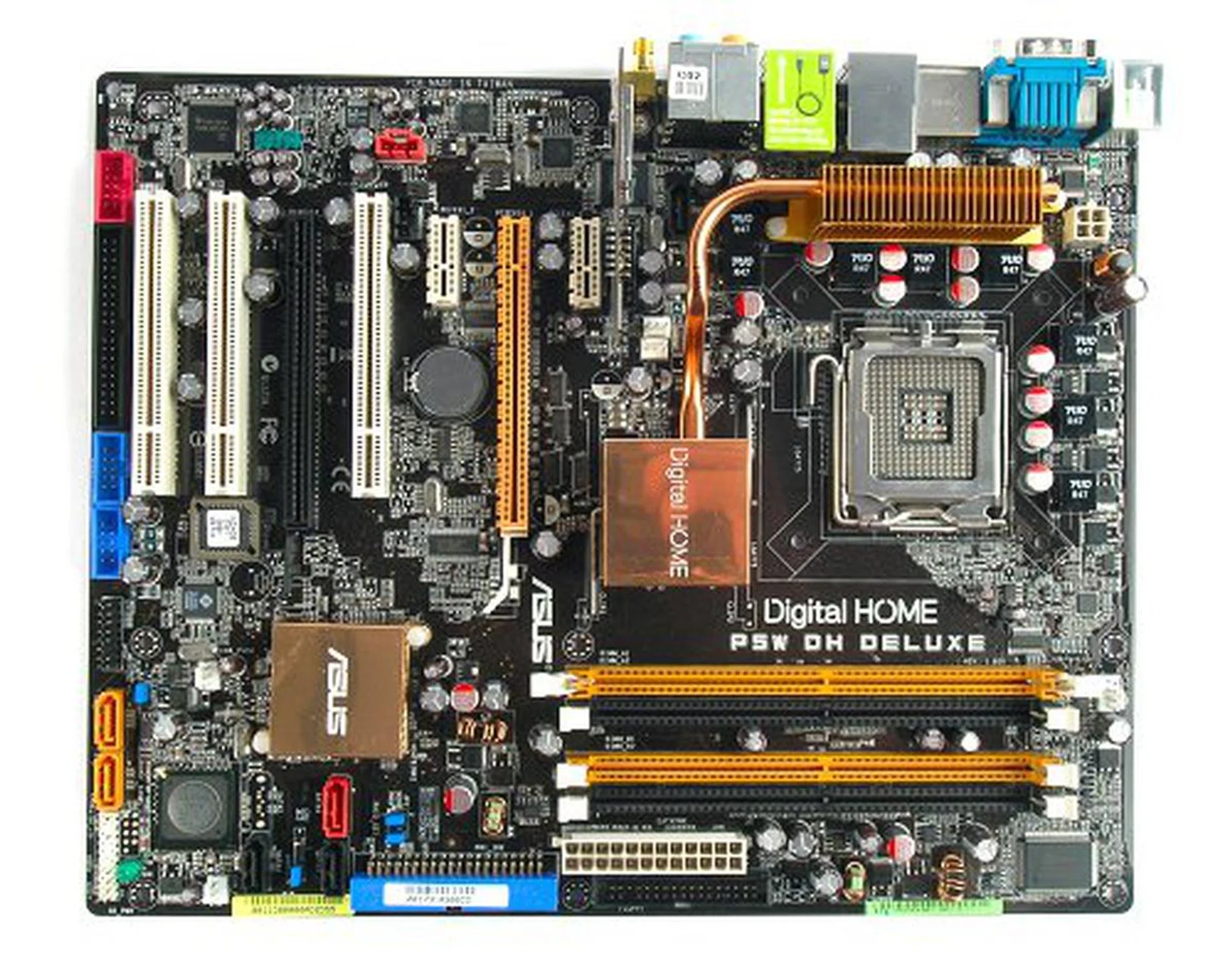
The ASUS P5W DH Deluxe motherboard.
This BIOS update to enable support for the Core 2 cropped up again when Intel prepared to release its first quad-core processor, the Kentsfield later that year. While not every motherboard could support the new processors, most were capable of doing so with a simple BIOS update.
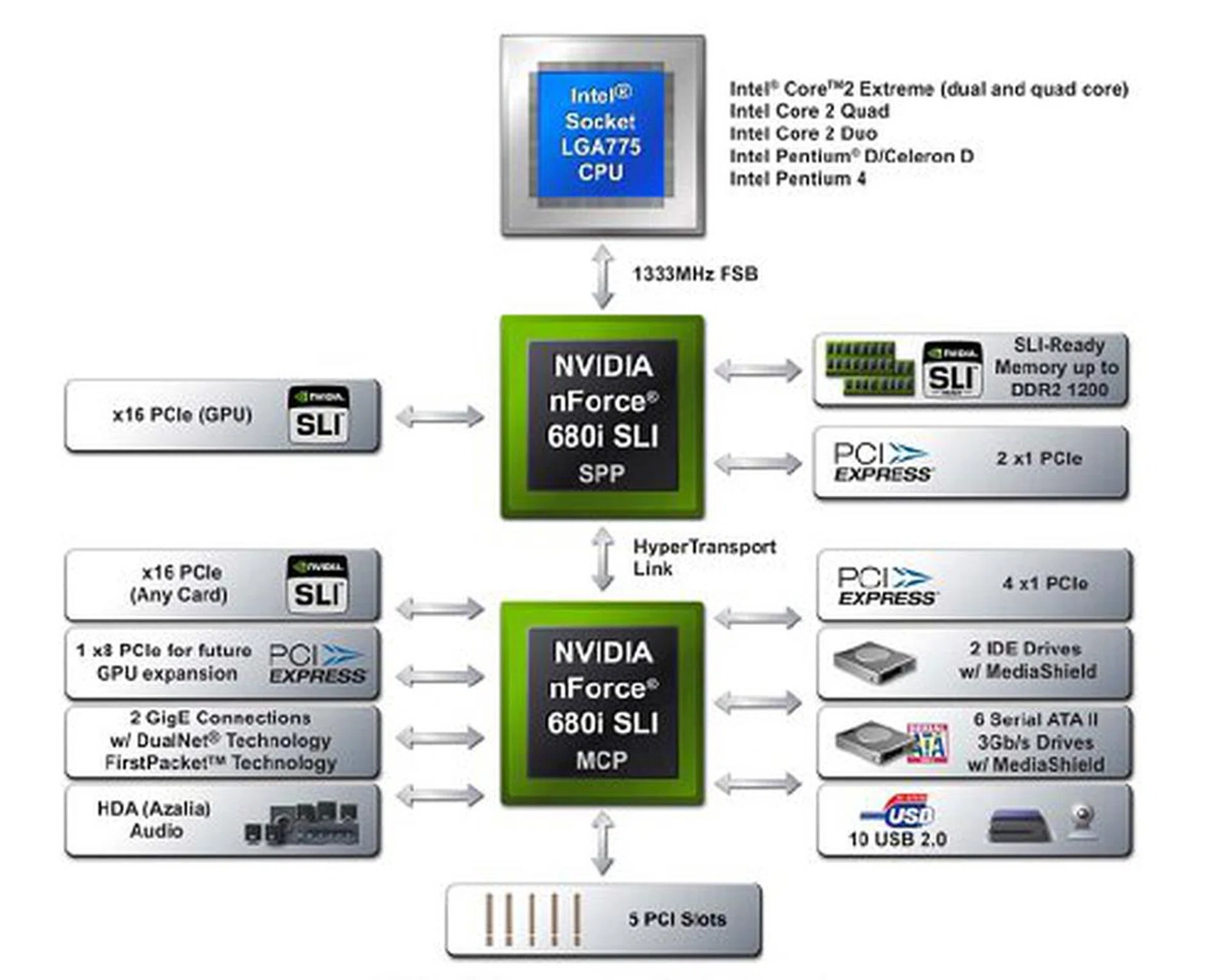
For the truly hardcore, the nForce 680i SLI has everything you'll ever need for a performance chipset as well as promise of extreme frequency support for the Intel Core 2 Duo platform.
- Before the year ended however, there was one more mega-announcement from the big players and that was NVIDIA and its 600 series of nForce chipsets. This was mainly an update for the Intel compatible nForce 500 boards, which had been struggling with modified/recycled nForce 4 core logic components and lacked true compatibility for DDR2-800. These new 600i boards addressed this head-on. NVIDIA promised "full Core 2 and above processor support and DDR2 compatibility to support overclocked DDR2-1200 enthusiast memory with extreme FSB overclocking to beat or at least match that of the Intel P965."
A board that represented the best of this chipset was the ASUS Striker Extreme which had the Republic of Gamers handle and besides the usual rich features on an ASUS, was a very solid gaming motherboard with lots of overclocking headroom.
2007
- With the flurry of chipset launches in 2006, things settled down comfortably, as vendors had to manufacture the goods while consumers considered whether they needed the upgrades. Hence, it was not till June 2007 that the next great bang happened. And that was the introduction of Intel's 'Bearlake' motherboards, or the 35 series of chipsets (P31, P35, G31, G33, G35, Q33, Q35) that spanned the entire range, from desktop to low-end integrated solutions.
These new chipsets all came with support for Intel's upcoming 45nm processors (Core 2 and Quad) and had its maximum FSB bumped up to 1333MHz. The mainstream P35 boards (slated to replace the 965 chipset) were also the first to have DDR3 memory support for the Core 2. Meanwhile those with integrated graphics had a new Intel GMA 3100 with Intel Clear Video technology.
Despite being the first P35 motherboard that we reviewed, the MSI P35 Platinum (DDR2 version) was a solid, Other boards that we saw with outstanding performance included the which was very good for overclocking and the that was similarly excellent for the same reason. In case you forgot, it was also ASUS' limited edition motherboard series, revived after a four year hiatus. This latest incarnation was still as impressive.
- We would also get an early look at a Intel X38 board. This new chipset would be launched in September but most vendors were showing off the boards at Computex 2007 and we soon had our hands on the Gigabyte version, the GA-X38-DQ6. As the high-end replacement for the 975X chipset, the X38 came with PCI Express 2.0 support with dual PCIe x16 graphics.
As we said, these X38 boards would be available in September and we indeed took the wraps off the X38 chipset with a of that Gigabyte board.
For those who are already on a P35 board, the new chipset, enthusiast-class it may be, did not look that much of an advancement since both are of the same generation and there's nothing new besides PCI Express 2.0 and Intel's own XMP memory for overclockers. Of course, if you're coming from a 975X chipset, there are enough improvements to satisfy most users. Overall, the performance of the X38 was generally better than Gigabyte's own P35 implementation, though some nagging issues remained regarding some benchmarks. The fact that this was a DDR2 board may have held the chipset back.
One other X38 board that would surprise us, but in other ways besides its performance, would be the ASUS P5E3 Deluxe, which would come with ExpressGate, ASUS' way of sneaking Linux into its motherboard, through the use of an embedded
Through ExpressGate, you can surf the Internet, check email, watch videos without going into Windows. All the necessary software and hardware have been configured for you, like LAN and Wi-Fi. While you can't install any new software, this utility allows you to connect to the Internet and we all know the tons of stuff you can do online nowadays. This was an innovative feature that distinguished this board (albeit it was already a very good, high-end X38 board) from the competition.
- AMD would try to revive its ailing CPU with the launch of its consumer processors based on its 'Barcelona' core (K10 architecture). This was aligned with a new motherboard chipset and the sum was the so-called 'Spider' platform that AMD was touting, which also included a Radeon HD 3800 series GPU.
Supporting the new Phenom X4 CPUs, the new chipset, the would have a new Socket AM2+ which is compatible with the older AM2 format. New features included HyperTransport 3.0, PCI Express 2.0, DDR2-1066 support, split power planes and a total of 42 PCI Express lanes, 32 of which are dedicated for graphics, hence supporting up to 4-way CrossFireX. AMD however had to stick to an older SB600 SouthBridge that may hamper its attractiveness, due to limited SATA 3.0Gbps ports and no integrated Ethernet.
2008
- NVIDIA would try to recapture the magic of its Intel SLI Edition chipsets with the release of the nForce 700 series late last year but it was only in January 2008 that we saw the first of these, a ASUS P5N-T Deluxe based on the nForce 780i. The reasons for the upgrade were the usual, the nForce 600 series was getting long in the tooth and Intel's own chipsets were dominant, especially when it came to the Core 2 processors. The lack of PCI Express 2.0 and DDR3 support made the nForce look behind the times.
Unfortunately, there wasn't much that was groundbreaking in the new nForce 780i. It was more like a 680i in disguise. There were indeed more PCI Express lanes and 2.0 support, along with 3-way SLI and even support for 45nm processors. But these were hardly any changes in the North and Southbridge and new additions like the PCI Express 2.0 was actually enabled through a third chip, the nForce 200.
As we concluded at the end of our review,
- This shift to the nForce 790i Ultra SLI chipset finally occurred in March and it basically brought NVIDIA back into the present era, with DDR3 memory support, native 45nm processor support and a FSB of 1600MHz. Two SKUs were available, the 790i Ultra SLI and 790i SLI, differing in only support for NVIDIA's enhanced memory standard (EPP 2.0).
The wait however was quite worthwhile and For those who needed SLI and wanted to get Intel's latest, the only answer would be NVIDIA and the 790i series looks to be just what the enthusiasts ordered.
- The high-end X38 would get a minor refresh too in 2008 with the X48, which had a very low profile, probably due to the fact that it was such a minor improvement (official support for native 1600MHz FSB being the only difference) that Intel was not too keen to trumpet that. We did get a look of that with the in February.
- Finally, the middle of 2008, just like the previous year, saw the debut of Intel's mainstream chipset. This time, it was the Intel P45 chipset, which improved over the P35 by having PCI Express 2.0 support, a memory bump to DDR3-1333 and a newer ICH10/10R Southbridge. Also, CrossFireX, with up to 8x lanes for each PCIe graphics slot is now possible. We saw that with the .
With a significant improvement over the competition, this new mainstream chipset looked set to stay for a while, especially as it is expected to be Intel's last LGA 775 chipset before the company moves to its next generation micro-architecture. Consumers however may not upgrade that soon. Additionally, some of ASUS' new features like Memory OC Charger and the older but still golden ExpressGate were around to make it quite the modern motherboard.
- The last quarter of the year also saw the introduction of Intel's new microarchitecture and as usual, a supporting chipset saw light. This was a high-end enthusiast oriented chipset using a new socket, the LGA 1366-based Intel X58, which was paired with a ICH10R Southbridge. DDR3 was the standard for this chipset, along with both SLI and CrossFireX support, making it a very versatile board for enthusiasts. However, the major change was the integration of the memory controller on the motherboard with triple channel DDR3 memory support. We managed to review some of these expensive new toys and
The exciting new Intel X58 is a fitting finale to our ten year coverage and there will no doubt be more changes in this field. We too will continue to keep you up to date on the latest developments.
Our articles may contain affiliate links. If you buy through these links, we may earn a small commission.