
GeForce 8 Mobile - The Next Chapter in Notebook Graphics
Following last month's launch of the mid and entry-level GeForce 8 graphics parts, today NVIDIA launches the mobile variants ensuring DirectX 10 graphics is within everyone's grasp. We captured the juicy details of this new mobile GPU that will soon prevail in many of the upcoming notebooks.
Raising the Performance Bar for Notebooks
With NVIDIA's rising graphics portfolio, products with favorable characteristics, current technological leadership and most importantly being able to supply what the market requires, it is no surprise that Jon Peddie Research (JPR) reported of NVIDIA's steady 28.5% market share for the overall graphics market while ATI's market share kept declining for at least two quarters (now at 21.9% while the rest belong to Intel). While we are all well aware that ATI's inability meet the market needs in both technology/performance and steady supply of its parts are vital reasons for its current state on the desktop side, surprisingly, even the mobile segment has been equally affected. Further findings from JPR have revealed that NVIDIA now has just over 60% of the total mobile discrete graphics market as of Q1 2007. And it looks like this figure will further sway in favor of NVIDIA with the GeForce 8 graphics engine making its way to notebooks in the following weeks.
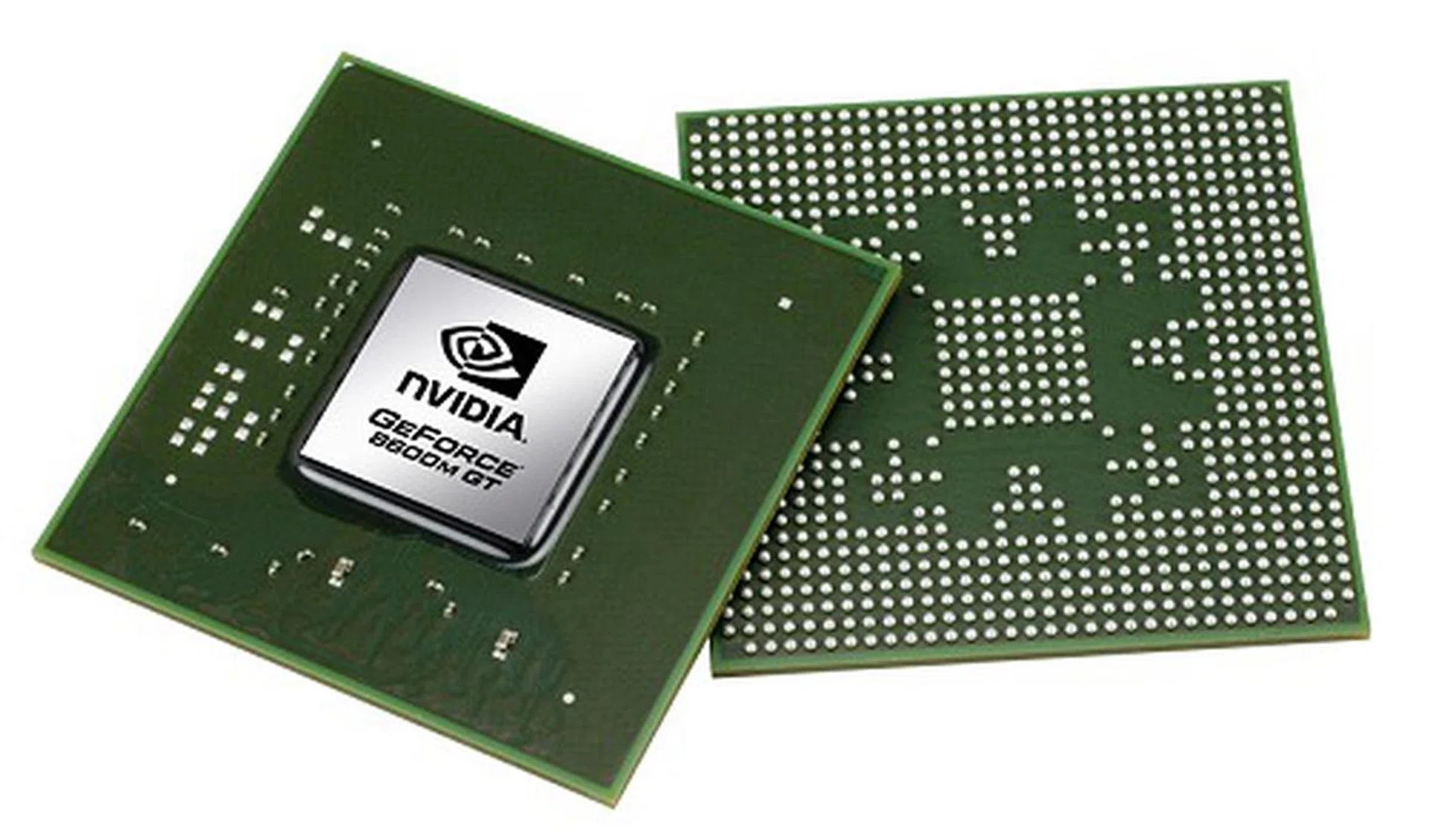
The GeForce 8600M GT - a top of the line DirectX 10 mobile GPU among the new GeForce 8M series.
Today, NVIDIA officially announces the availability of the GeForce 8 Mobile GPUs for a wide a variety of notebooks. Based on the same G84 and G86 cores of the recently launched GeForce 8600/8500 and GeForce 8400/8300 series for the desktop markets, NVIDIA launches a slew of GeForce 8M series GPUs for the notebook market. Silicon-wise, these mobile parts are actually the better yields of the current G84 and G86 dies to ensure that they can operate at lower voltages and TDP (thermal design power) requirements where such minute thermal matters are of a great concern in the mobile computing department. Notebooks built with the GeForce 8M stand to gain all of the features of the GeForce 8 architecture that we've come to know such as DirectX 10 compliance and even the second generation VP2 video processor found on the G84/G86 cores.
Model | GeForce 8600M GT | GeForce 8600M GS | GeForce 8400M GT | GeForce 8400M GS | GeForce 8400M G |
Notbook Segment | Performance | Performance | Mainstream | Mainstream | Mainstream |
Core Code | G84 | G84 | G86 | G86 | G86 |
Manufacturing Process (microns) | 0.08 | 0.08 | 0.08 | 0.08 | 0.08 |
Core Clock | 475MHz | 600MHz | 450MHz | 400MHz | 400MHz |
Vertex Shaders | 32 Stream Processors (operating at 950MHz) | 16 Stream Processors (operating at 1200MHz) | 16 Stream Processors (operating at 900MHz) | 16 Stream Processors (operating at 800MHz) | 8 Stream Processors (operating at 800MHz) |
Rendering (Pixel) Pipelines | |||||
Pixel Shader Processors | |||||
Memory Clock | 1400MHz DDR | 1400MHz DDR | 1200MHz DDR | 1200MHz DDR | 1200MHz DDR |
DDR Memory Bus | 128-bit | 128-bit | 128-bit | 64-bit | 64-bit |
Maximum Memory Size | 512MB | 512MB | 512MB | 256MB | 256MB |
Memory Bandwidth | 22.4GB/s | 22.4GB/s | 19.2GB/s | 9.6GB/s | 9.6GB/s |
PureVideo HD | Yes | Yes | Yes | Yes | Yes |
Video Processor Engine | VP2 | VP2 | VP2 | VP2 | VP1 |
PowerMizer version | 7.0 | 7.0 | 7.0 | 7.0 | 7.0 |
Possible Form Factor | MXM Type II | MXM Type II | MXM Type I / II | MXM Type I / integrated onboard | MXM Type I / integrated onboard |
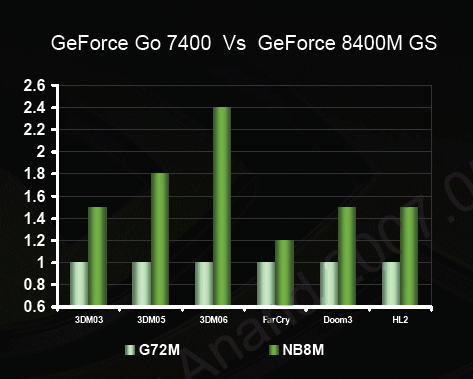
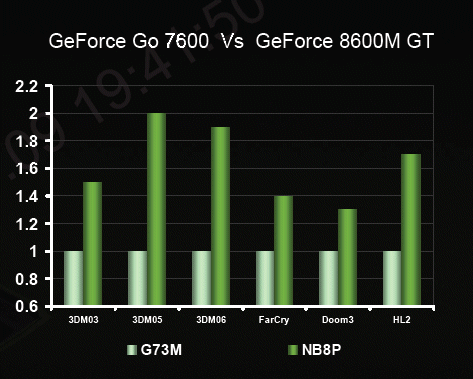
If you've not noticed yet, these new mobile GPUs no longer have the "Go" in their naming convention and instead replaced with "M" to denote the mobile segment. Naming conventions aside, those looking forward to own a GeForce 8M based notebook can at least expect 50% higher gaming performance than the previous GeForce Go 7 series. What's worth noting about this performance boost is that the GeForce 8M series stays within the same TDP specs of the previous generation. Sum that up with new and improved engine (excluding the GeForce 8400M G) that we've highlighted in our , and you can see that the new mobile GPU offers far greater performance per watt efficiency in gaming and video acceleration over its predecessors. We haven't had a chance to lay our hands on a notebook with this new GPU to conduct proper testing, but you can be sure we'll scrutinize one in the near future. For now, NVIDIA has this performance graph to share and it pretty much speaks for itself:-
Improved Power Efficiency
The power efficiency of the various notebook components play a key role in prolong the life of a notebook and ever since Intel's Centrino Technology, consumers have had very high expectations in this department. Compared with its integrated graphics controller, a discrete GPU is a potential problem for the notebook vendor to maintain long batter life by virtue of the design and performance nature of the GPU component. Thankfully over the years, the graphics giants of the industry have been constantly improving their designs for greater efficiency while boosting performance in tandem. The new GeForce 8M series follows this principle too and as mentioned on the earlier page, these new GPUs are up to twice the performance of its predecessors while maintaining the same TDP envelope.
Windows Vista however, brings about new challenges as its fancy Aero interface requires constant use of a GPU's 3D pipeline, which in turn translates to more power consumption. To counter this concern as well as improve overall power efficiency of a notebook, NVIDIA has revised the PowerMizer to version 7.0 on the GeForce 8M series. This latest iteration of NVIDIA's power saving technology incorporates several enhancements that brings about both GPU and system-level power savings. Featuring improved power saving circuitry for the PLLs, TMDS controllers and PCIe bus, it ensures only the required power is used depending on the operating state of these components; but wait, there's more. Activity based switching between performance modes and Adaptive Clocking to dynamically tune power to match demand, as well as Dynamic Clock Gating to shut down unused circuitry all help to keep power consumption levels in check. So for example you are gaming away on your notebook, the GPU can shut down the PureVideo HD engine if there's no need for it.
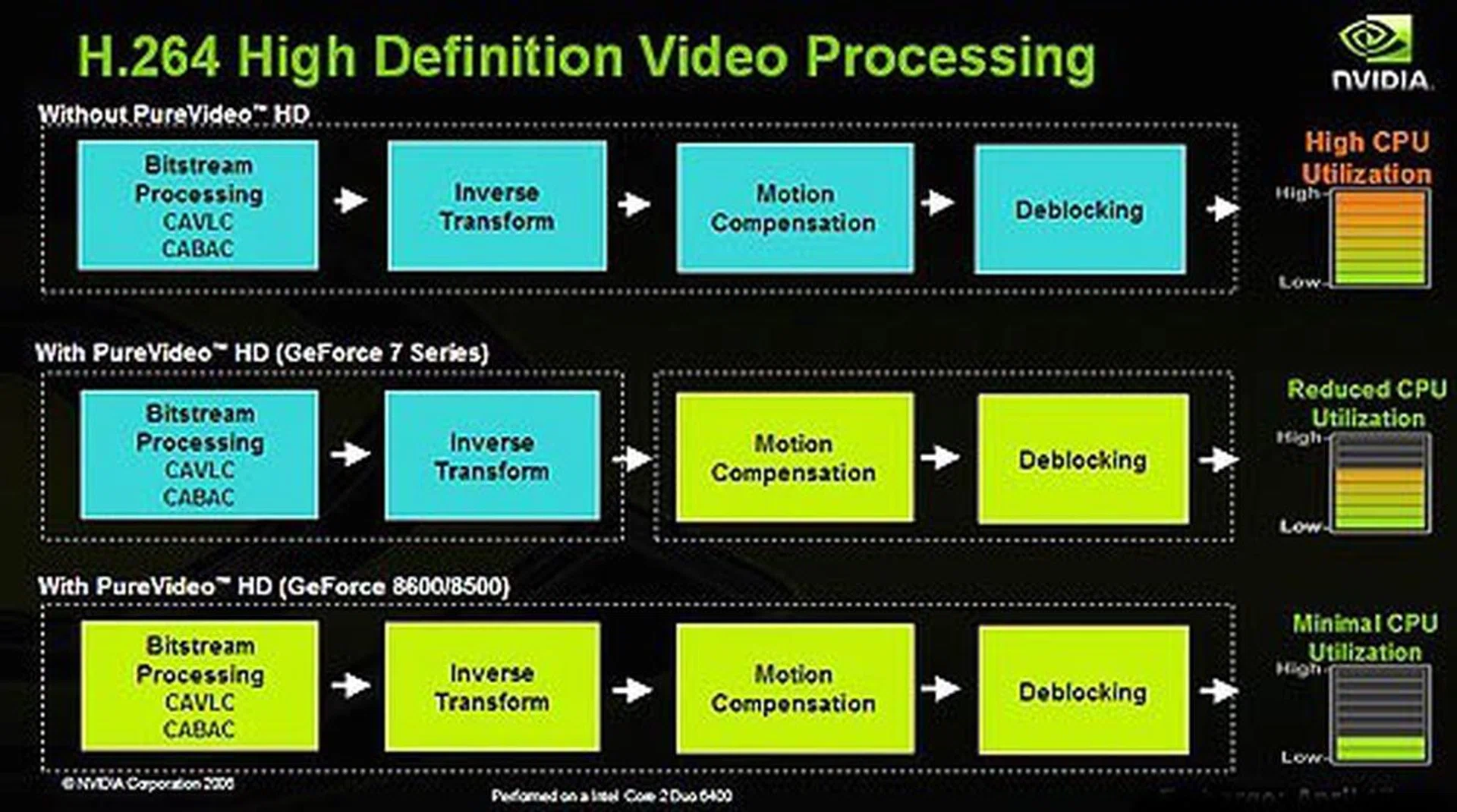
The diagram illustrates the benefits of having a GeForce 8600/8400 series mobile GPU. As you can see, thanks to the additional bitstream processor, HD video decoding can now be fully offloaded to the graphics engine, where previously certain processes still needed the attention of the CPU.
Speaking of PureVideo HD, the new VP2 video processing engine drastically reduces CPU utilization for HD video playback and as shown in our GeForce 8600 GTS article, is extremely competent in handling heavy-duty tasks like playback of Blu-ray and HD DVD movies encoded in MPEG-2, VC-1 and even H.264 without breaking sweat. In fact, NVIDIA shared with us that the power savings with PureVideo HD (running on a VP2 engine) on a notebook is in the range of five to 10W as compared to solely utilizing the CPU. Depending on the notebook, this amount of power savings can equate to another 30 to 60 minutes worth of battery life.
Lastly, PowerMizer 7.0 has an improved PowerDimmer version 2.0. If you recall three years back, NVIDIA debuted the PowerDimmer function that automatically reduces brightness and contrast when no activity is present. The extent of how soon and to what level this feature kicks in was controlled via the power profiles. Version 2.0 builds upon its existing capability by gauging how much power is actually required to comfortably display the contents of the screen. As such PowerDimmer 2.0 dynamically (and constantly) modulates the LCD screen's backlight lamp power to achieve this high degree of power tuning and savings.
Upcoming Notebooks with GF 8M GPU & Sneak Peek at DX10 Gaming!
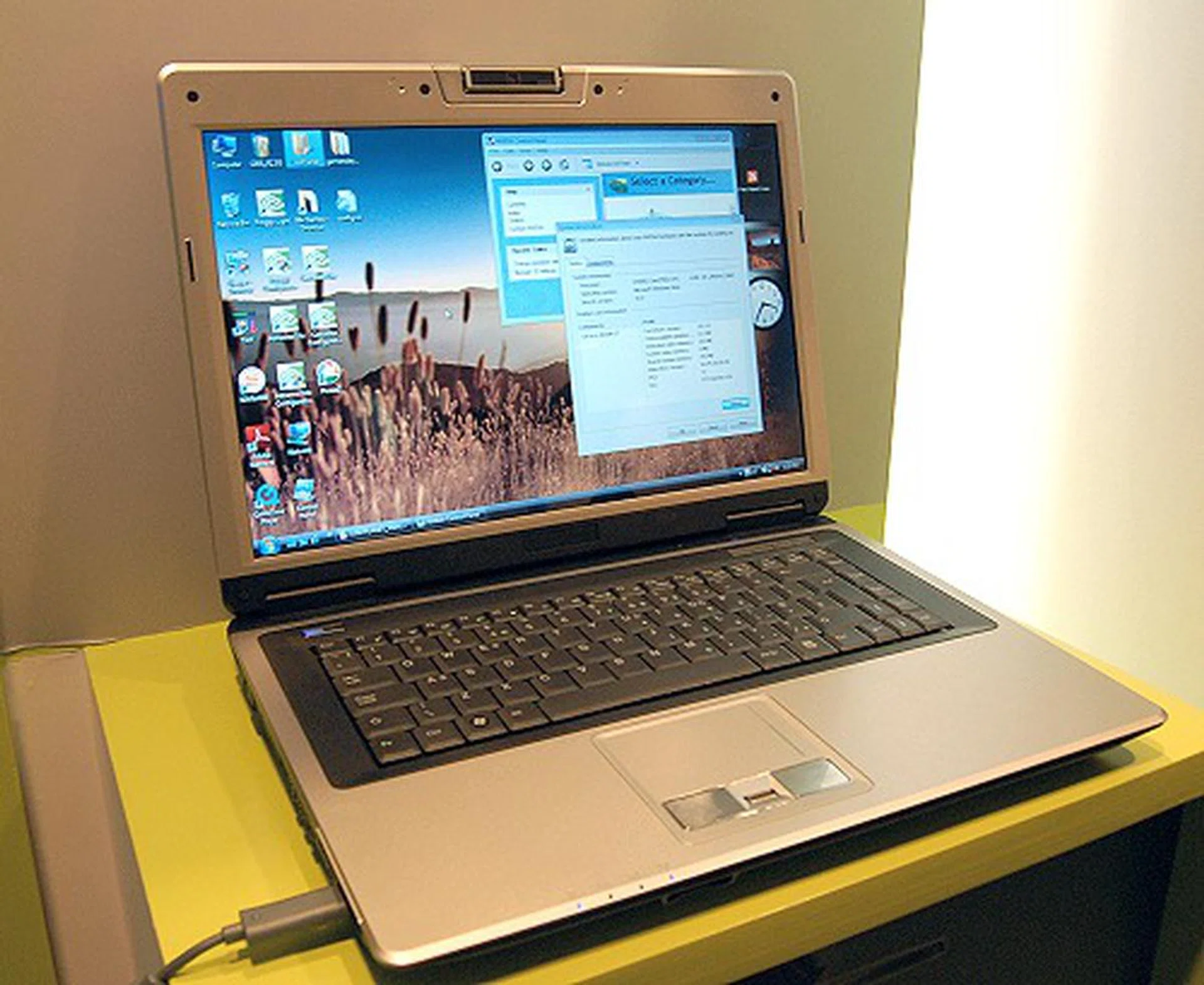
Here's an upcoming ASUS notebook that's using a fairly high-end GeForce 8M series GPU.
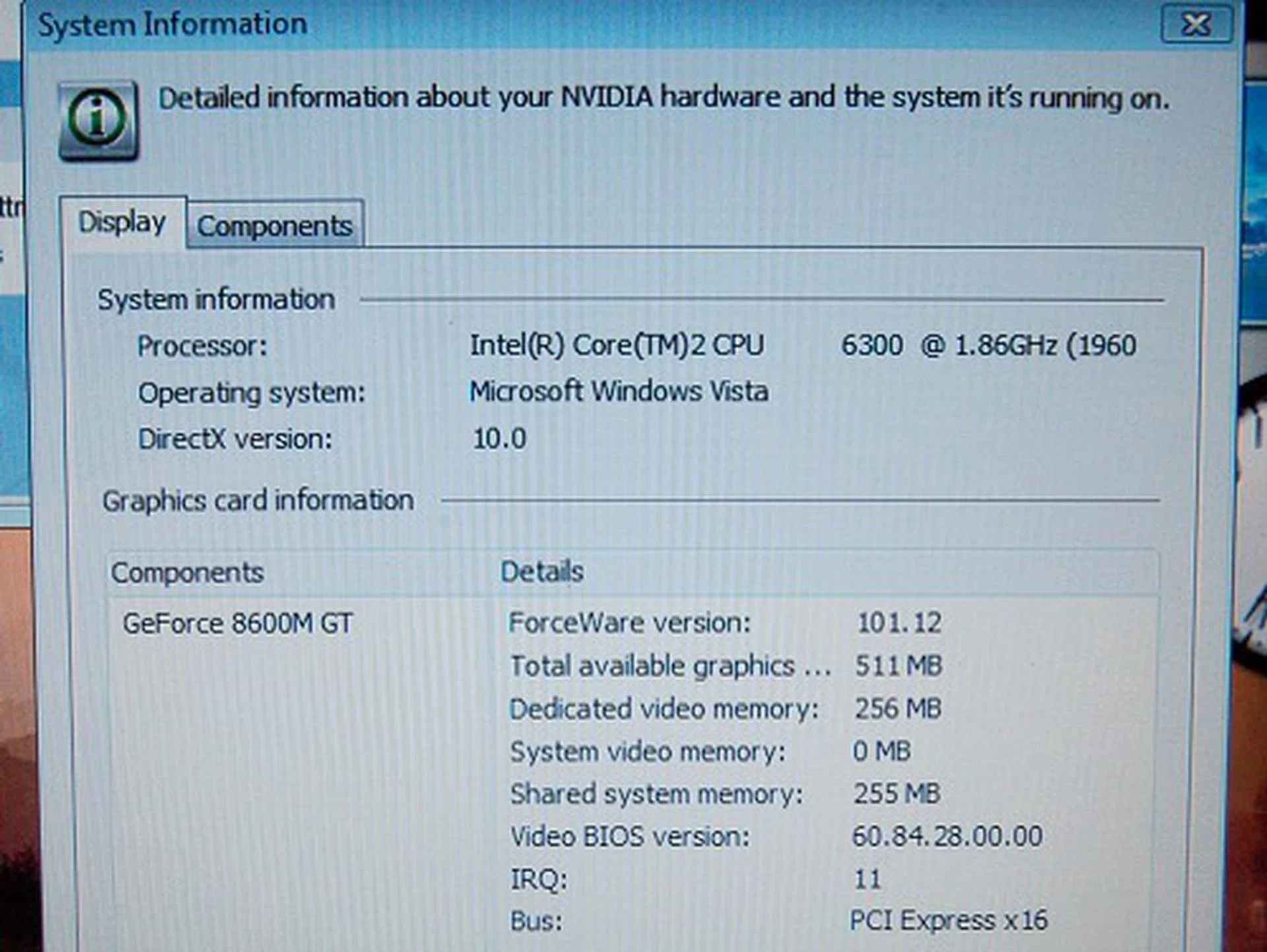
As shown in the system information, it's using a Core 2 Duo 6300 processor (may not be the final spec) and is using the fastest available GeForce 8600M GT mobile GPU with 256MB local frame buffer. With TurboCache, the GPU's total frame buffer size climbs to 512MB.
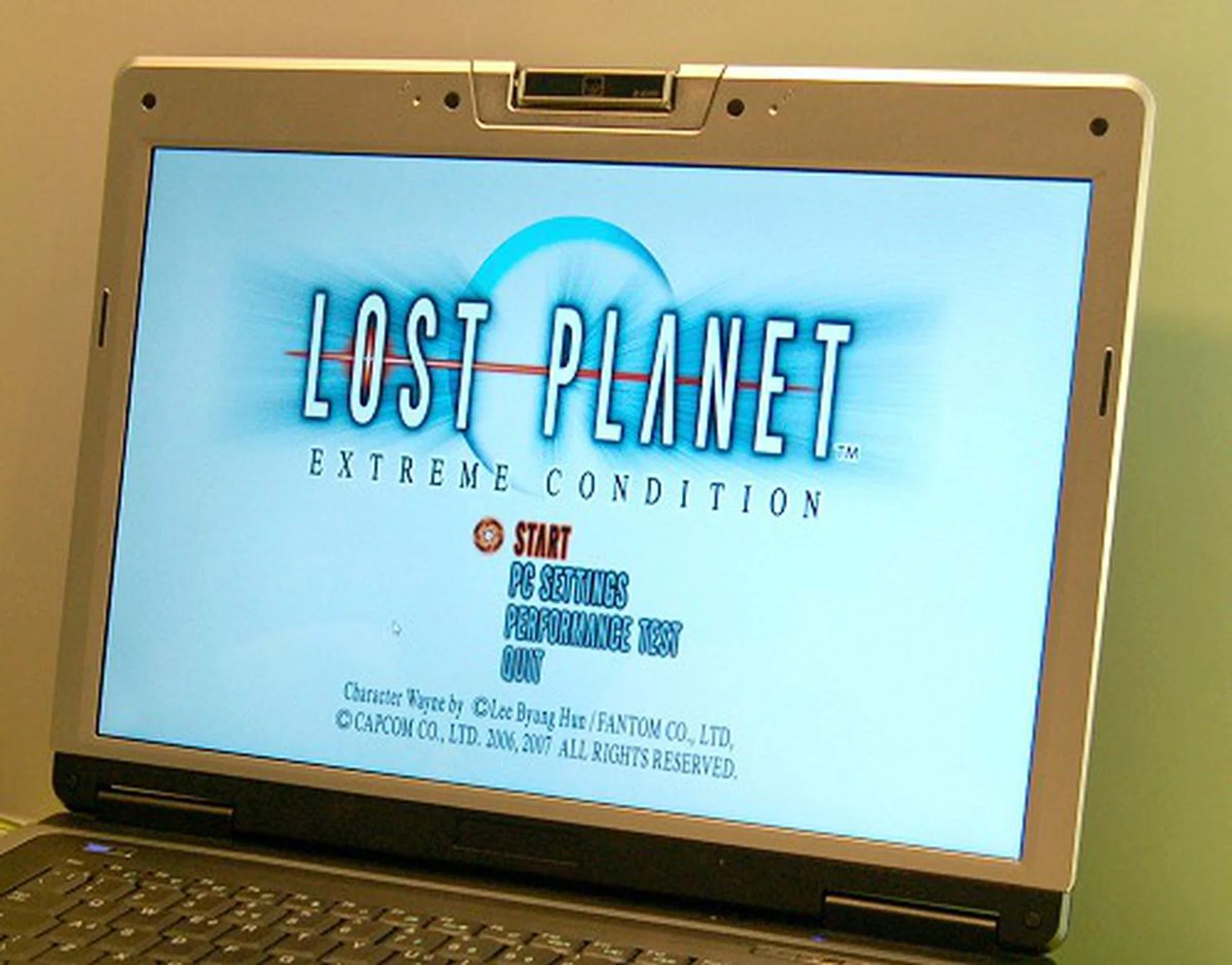
Guess what? We were treated to an early DirectX 10 game preview on this ASUS notebook - Lost Planet: Extreme Condition.
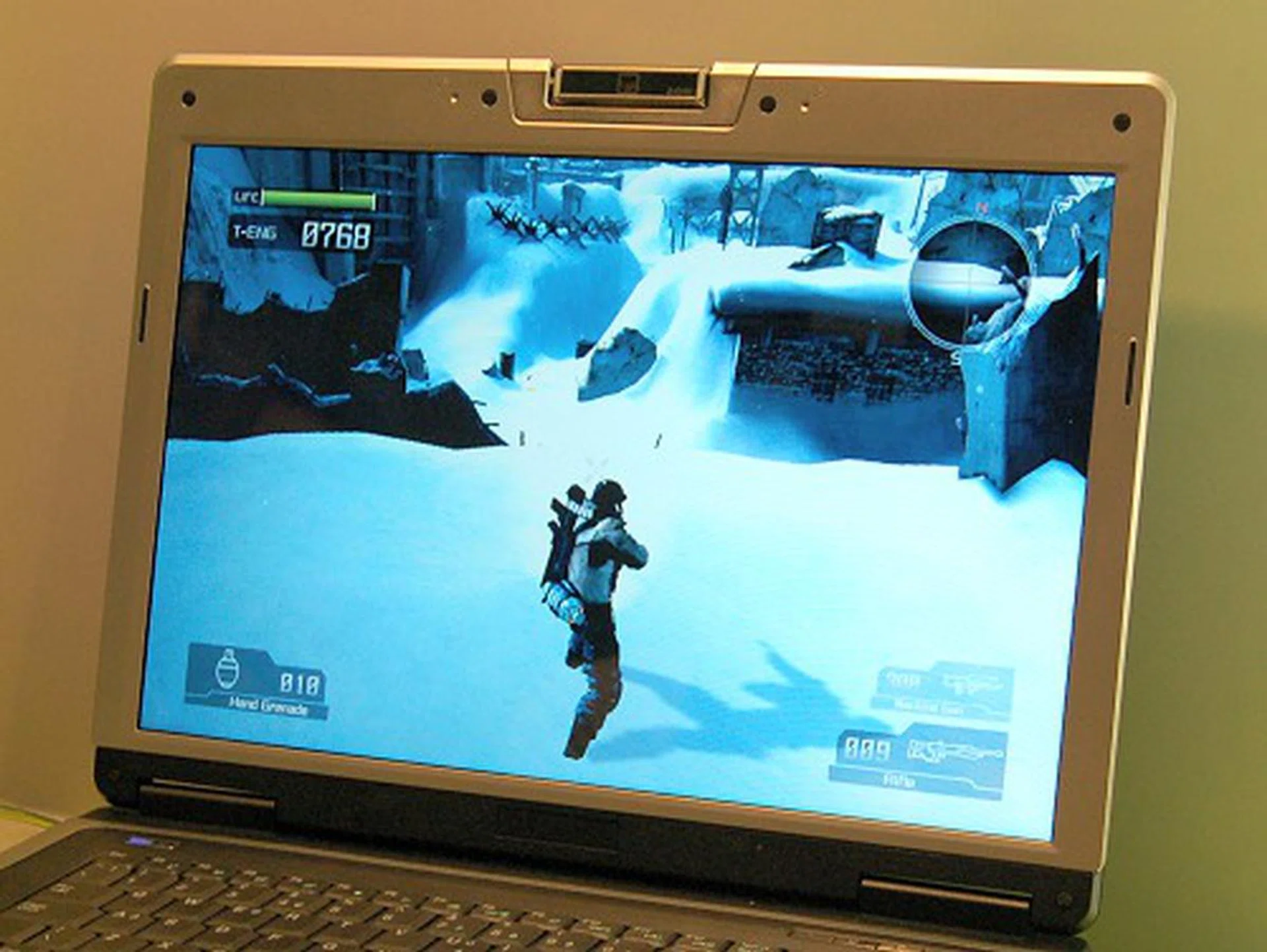
This is our first ever encounter of a real DirectX 10 game and we must say that it looked impressive. Something to definitely look forward to, but unfortunately not till the later part of the year.
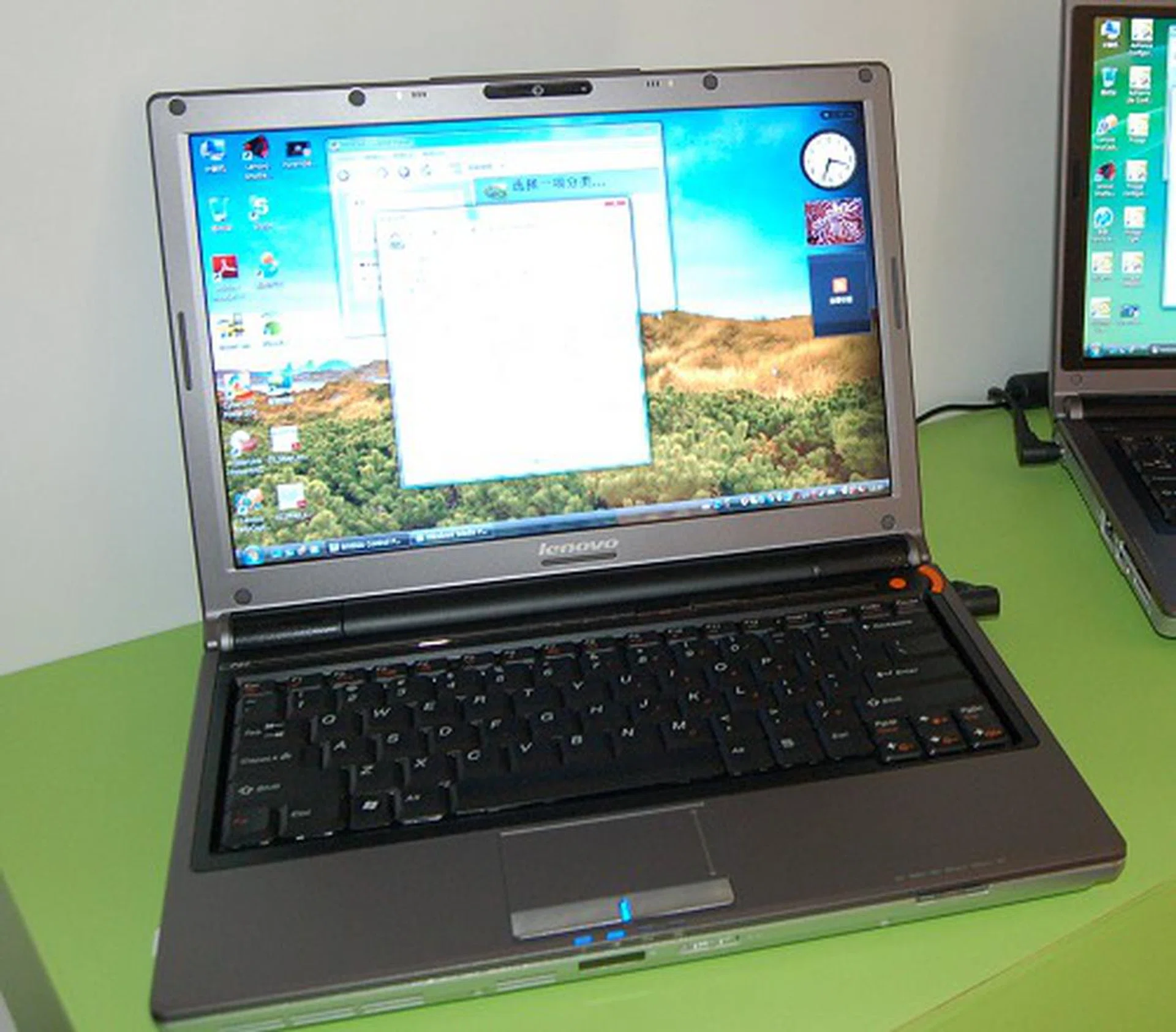
An upcoming Lenovo notebook that's featuring NVIDIA's latest graphics subsystem - this could well be the first of many more mainstream Lenova notebooks to come equipped with NVIDIA's graphics.
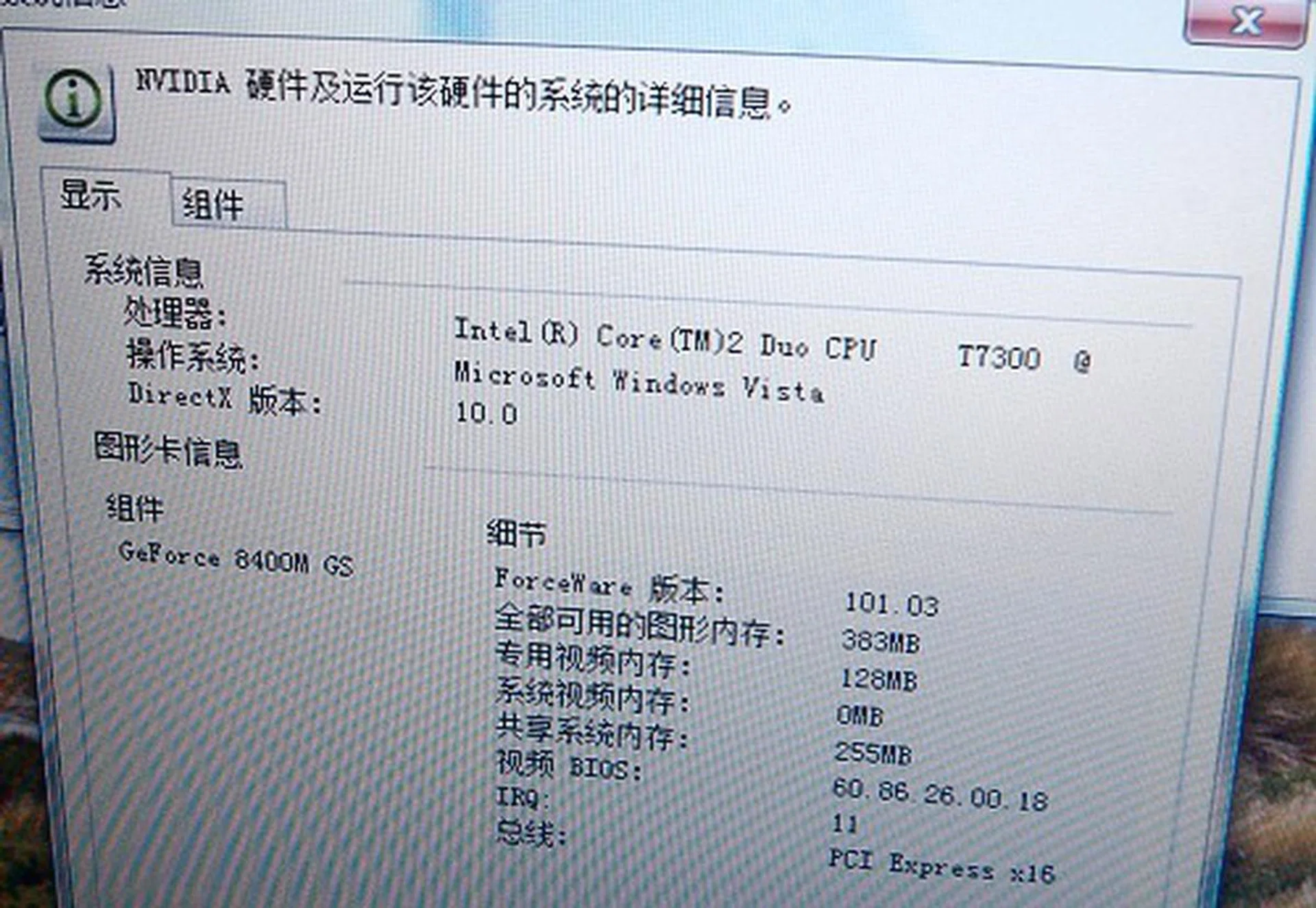
The Lenova notebook on showcase used an Intel Core 2 Duo T 7300 CPU and is paired with a GeForce 8400M GS with 128MB of dedicated memory. TurboCache pumps the total frame buffer size to 384MB.
The Notebooks Gallery (continued)
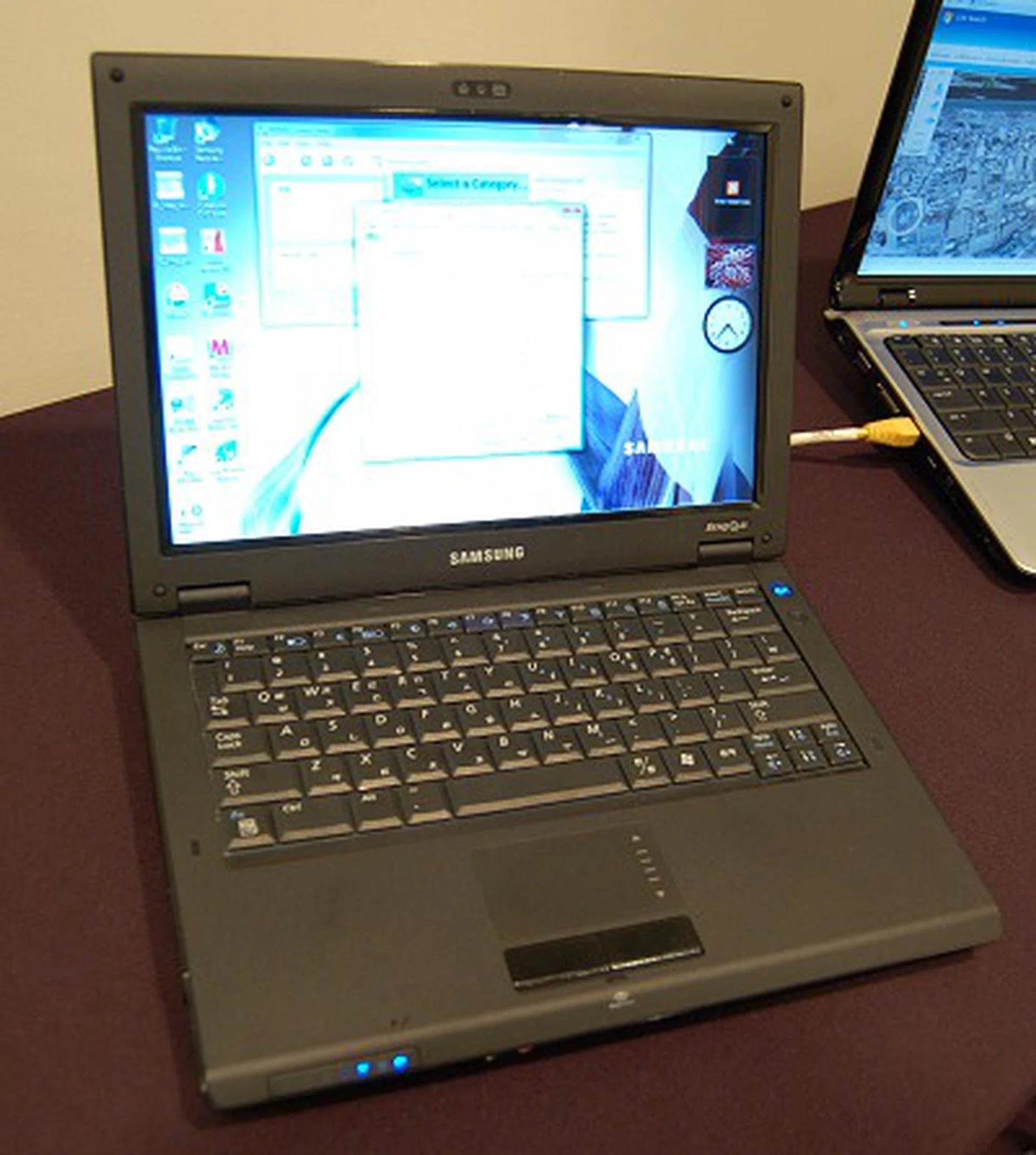
Samsung's Sens Q45 ultra mobile notebook was the smallest of the showcased notebooks.
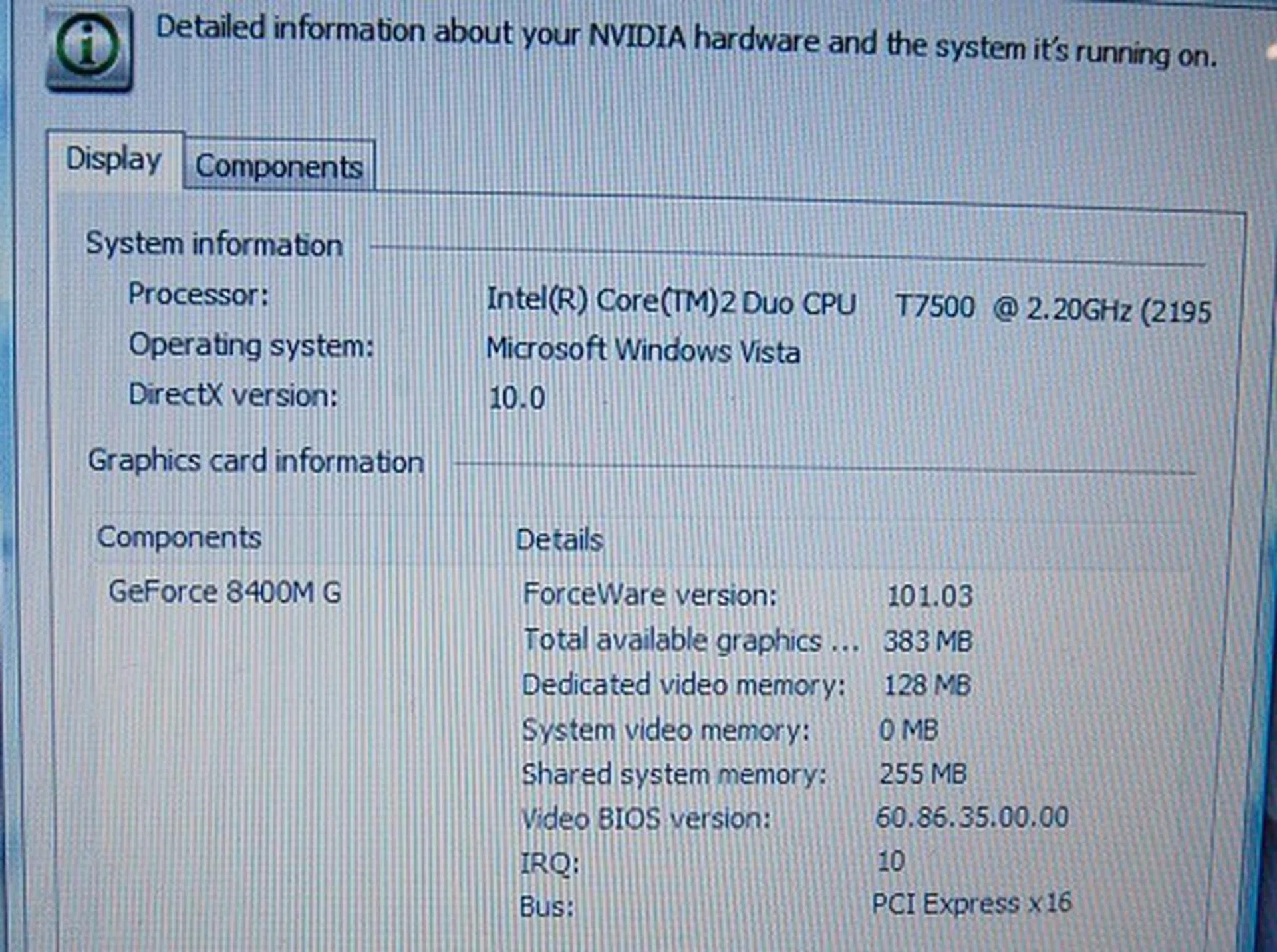
While it was equipped with a rather speedy Core 2 Duo T7500 processor, evidently it was paired with the low-end GeForce 8400M G graphics and 128MB RAM. Still it is plenty faster than the previous generation's counterpart all-round. But don't expect this guy to tackle high definition streams without taking a toll on your notebook power and CPU processing cycles as this GPU class features only the older VP1 engine.
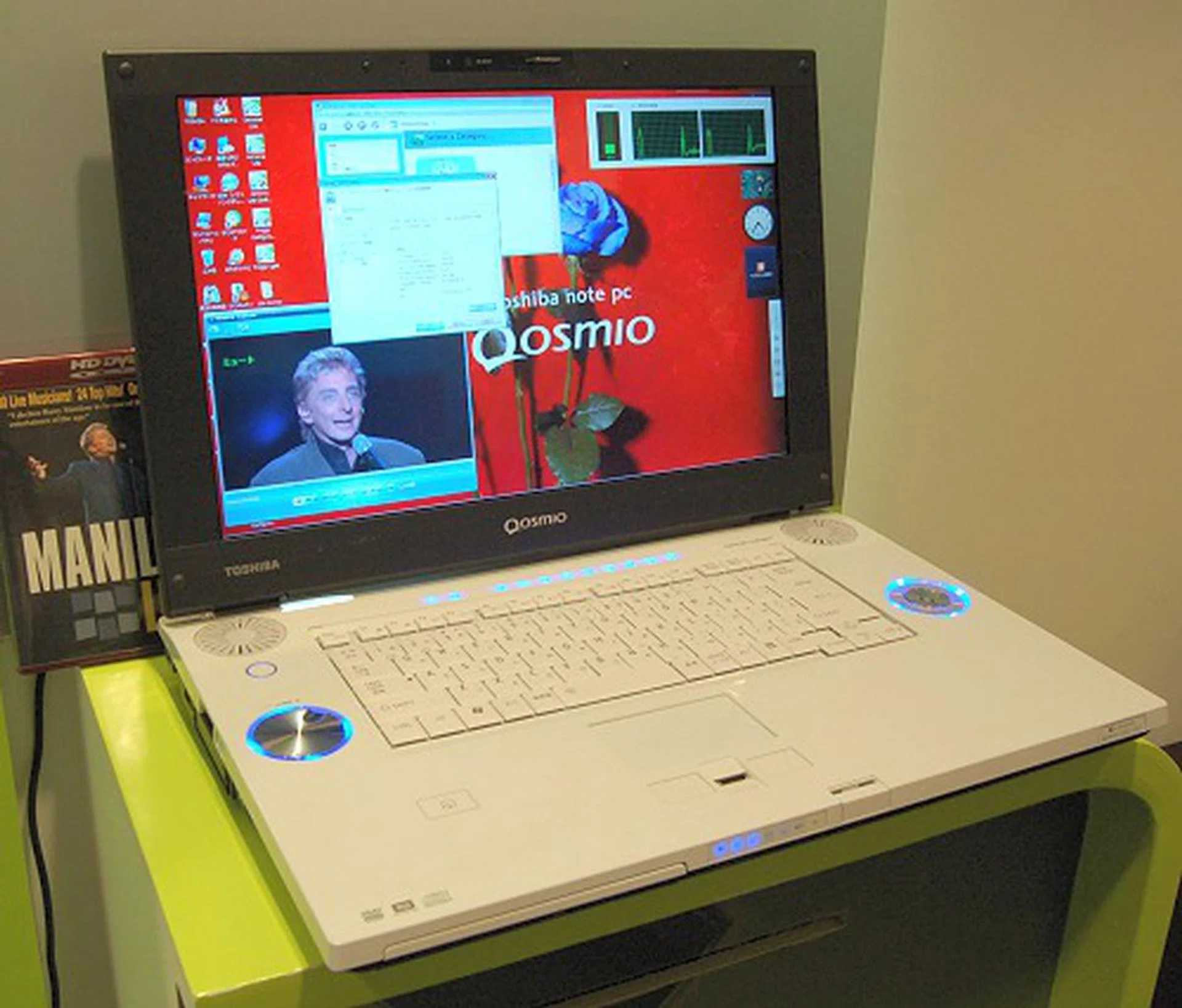
Now here's a looker... the Toshiba's entertainment class Qosmio was given a real good facelift and it feels less bulky than its predecessors.
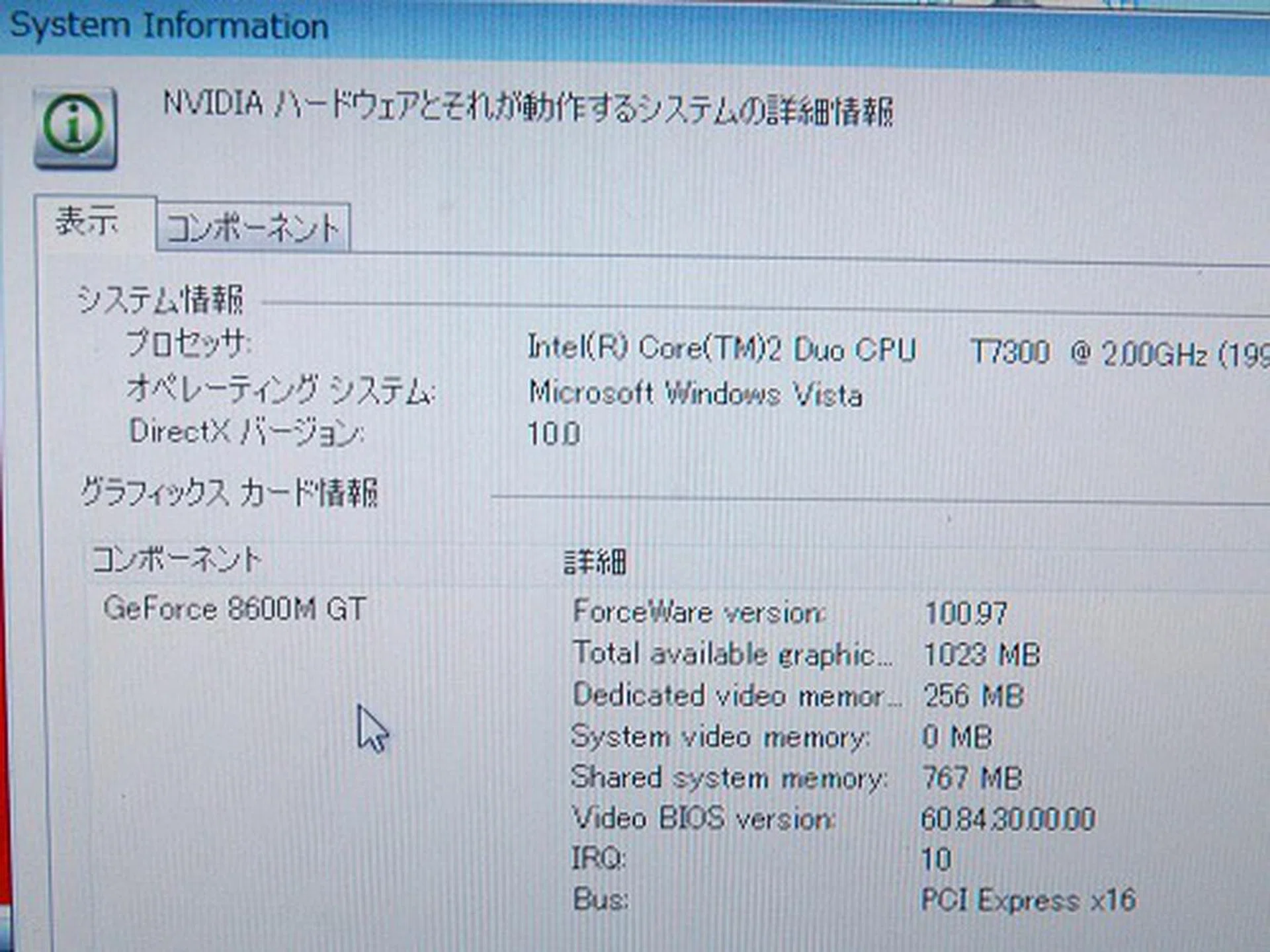
Inside, this Toshiba Qosmio packs a Core 2 Duo T7300 processor and NVIDIA's new high-end GeForce 8600M GT mobile GPU with 256MB of local memory. This particular system is configured for 1GB of graphics frame buffer with NVIDIA TurboCache, indicating that it's rich in memory to be able to pull this off.
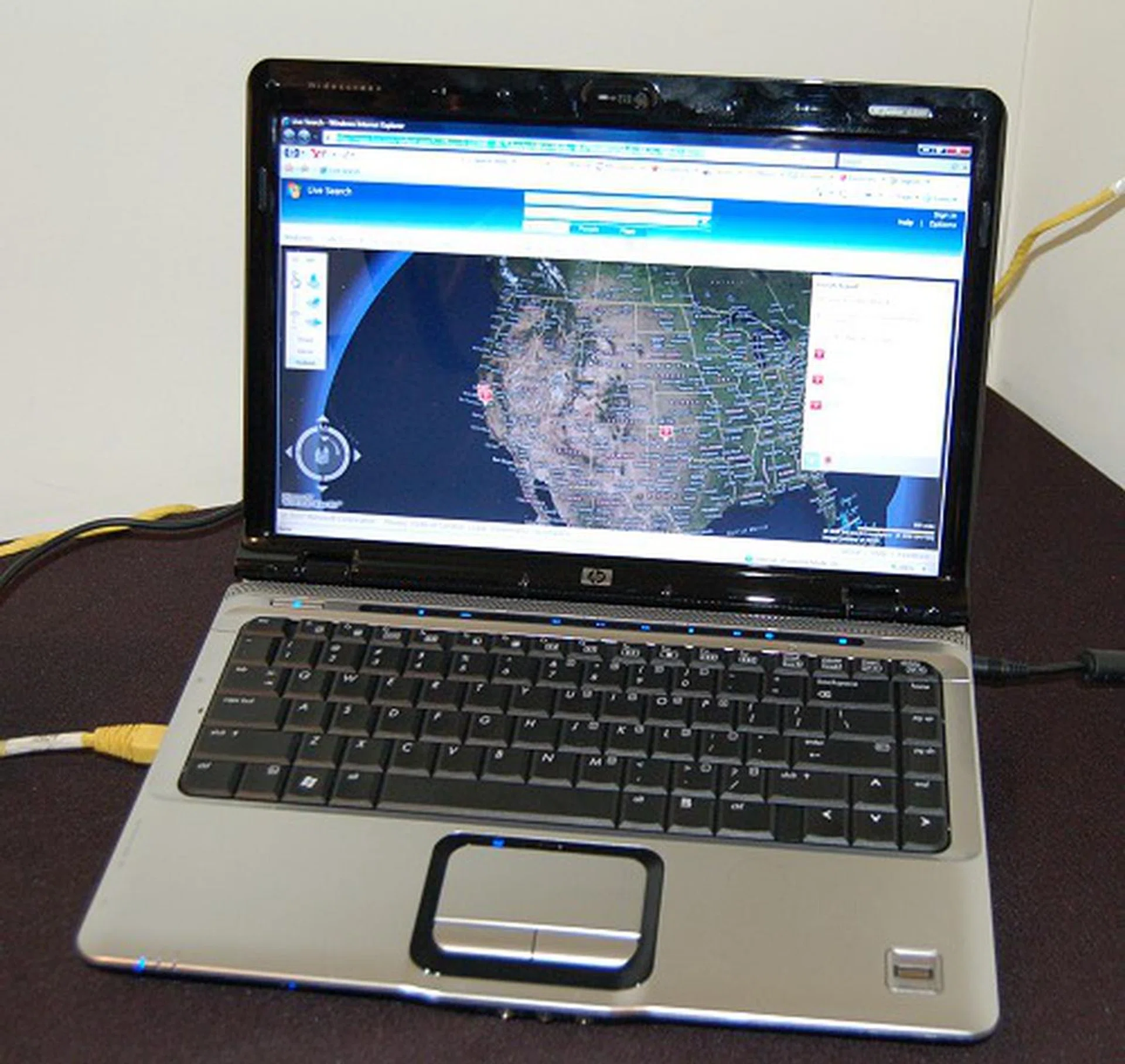
HP too has a new machine (probably part of the DV2000 series) featuring the new NVIDIA GPU. We were told that this guy among a few others in this showcase are based on the new Santa Rosa platform.
Showcase - PureVideo HD in Action on the VP2 Engine
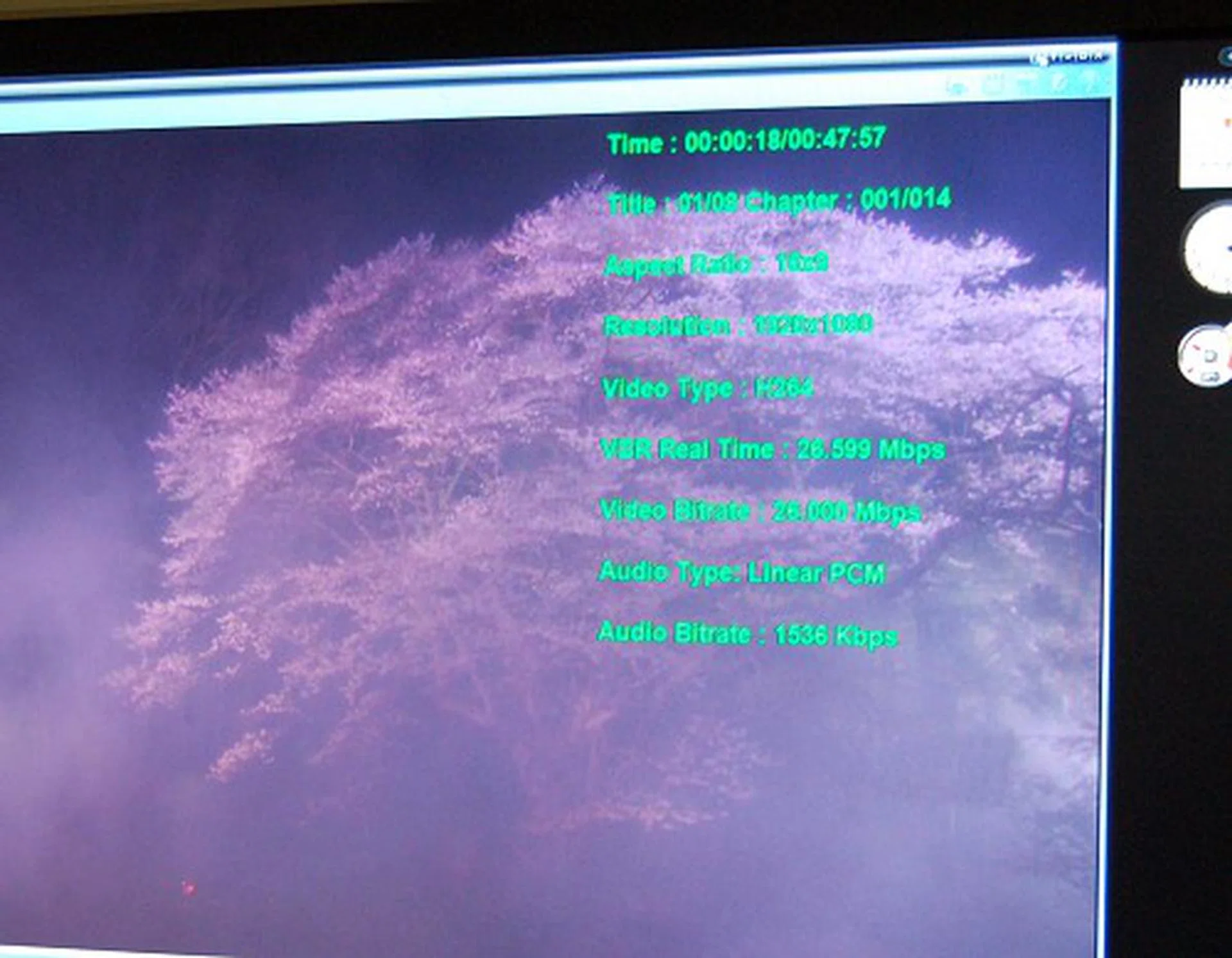
Recall our previous HD tests not too long ago with the Virtual Trip Yoazkura HD DVD? Using a desktop system with a GeForce 7600 GT (VP1 engine), this video encoded at around 26Mbps taxes the CPU to a 75% loading level. A similar system outfitted with a VP2 based GeForce 8600 card managed a very much lower CPU utilization...
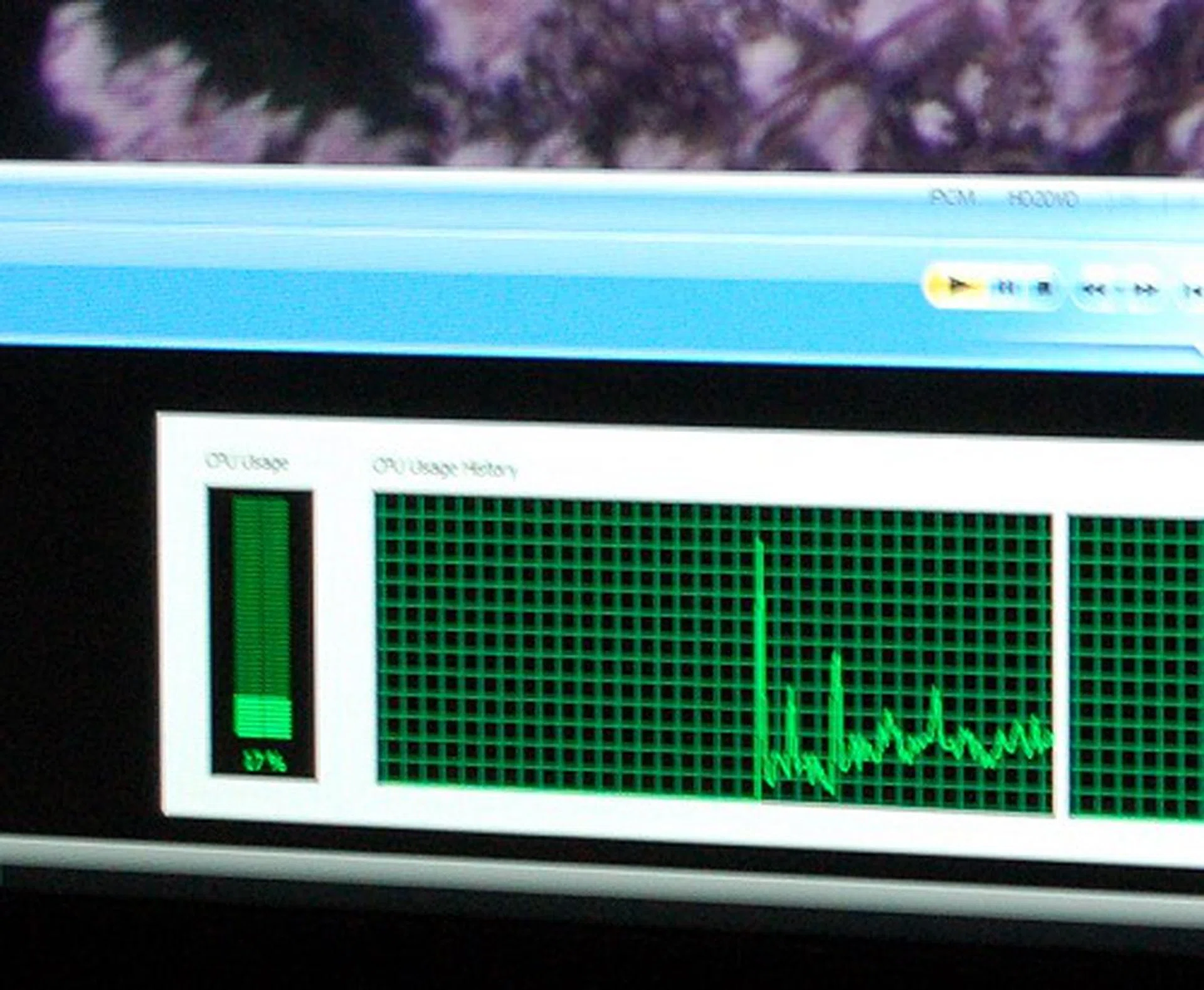
Just under 20% CPU utilization! This difference is greatly appreciable and yes, even notebooks with the right GPU can achieve this.
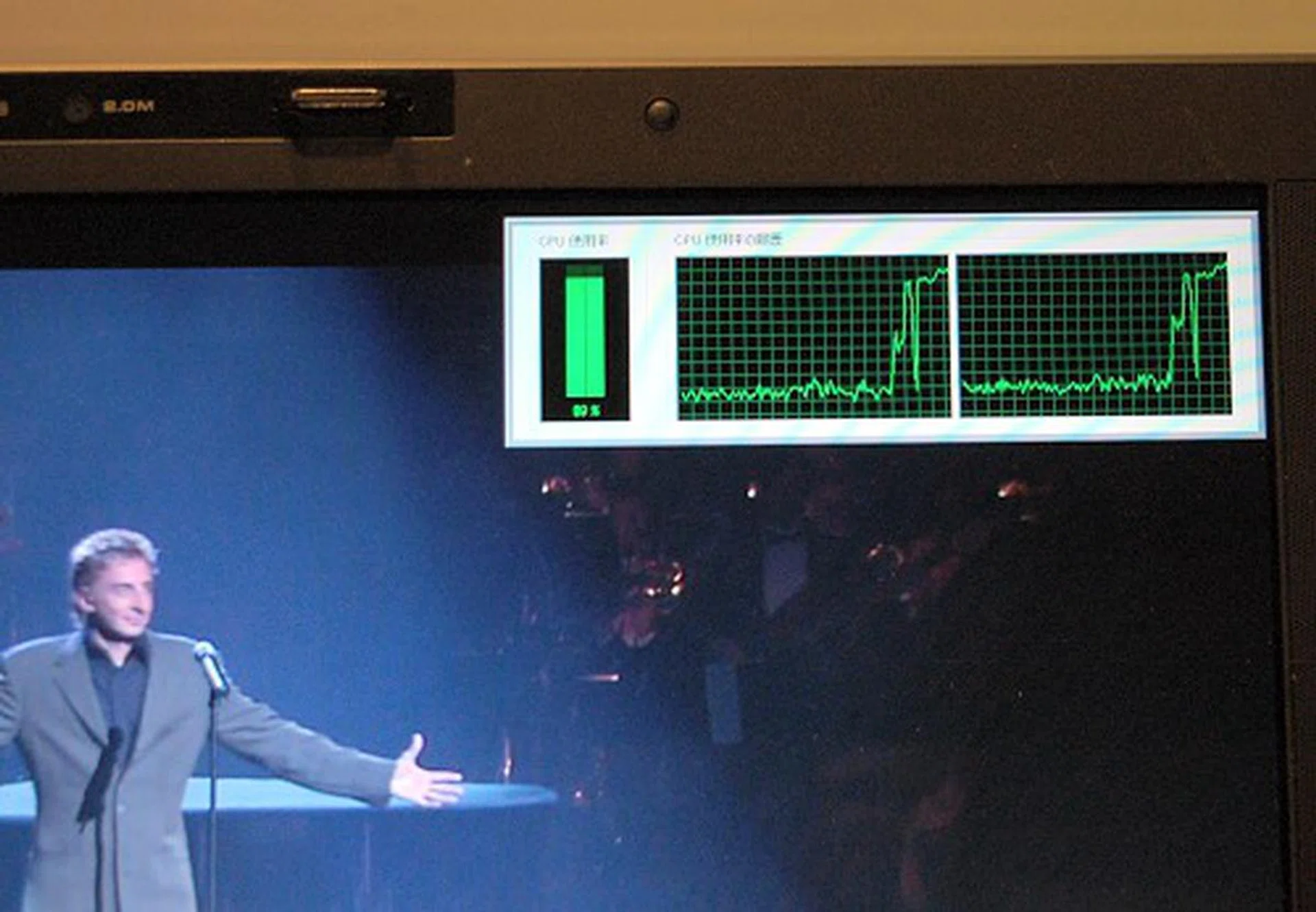
Here's a notebook playing a H.264 encoded HD DVD title. Notice the CPU utilization chart? The segment registering low utilization (just under 20%) is with PureVideo HD enabled on this VP2 equipped notebook GPU. The later portion with above 90% CPU utilization is when we disabled PureVideo HD. It's amazing just how much the new VP2 engine can offload the CPU and yet conserve more power.
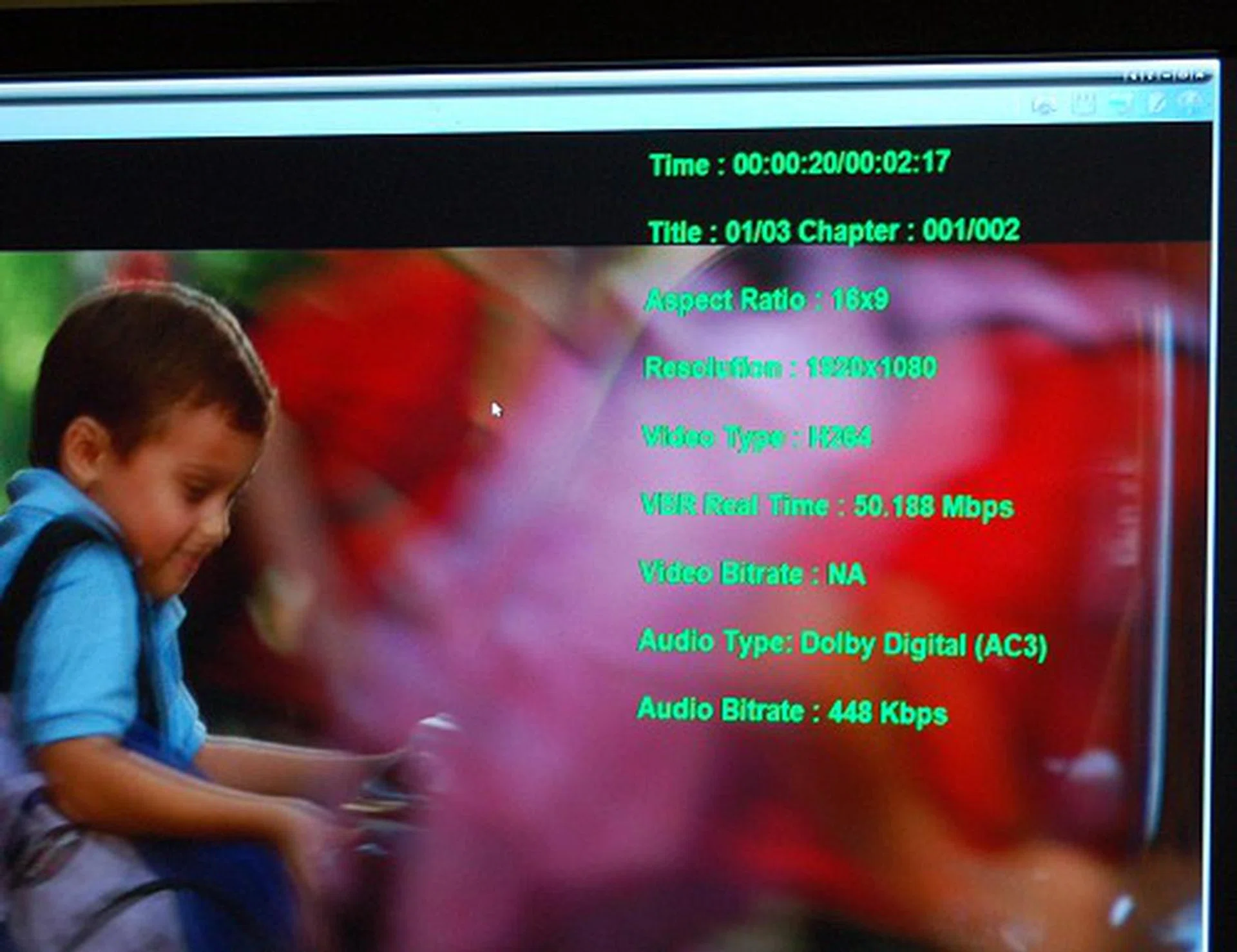
The VP2 video engine is equipped to even tackle H.264 encoded HD video content beyond the 40Mbps Blu-ray spec. Take for example this screen shot of a Full HD movie trailer encoded in H.264 on a Blu-ray disc, it surpasses the 50Mbps bitrate, but yet the VP2 equipped GPU is capable of playing this clip smoothly and with plenty of CPU headroom available. Surprising, but it is a very strong assurance of the VP2's capability.
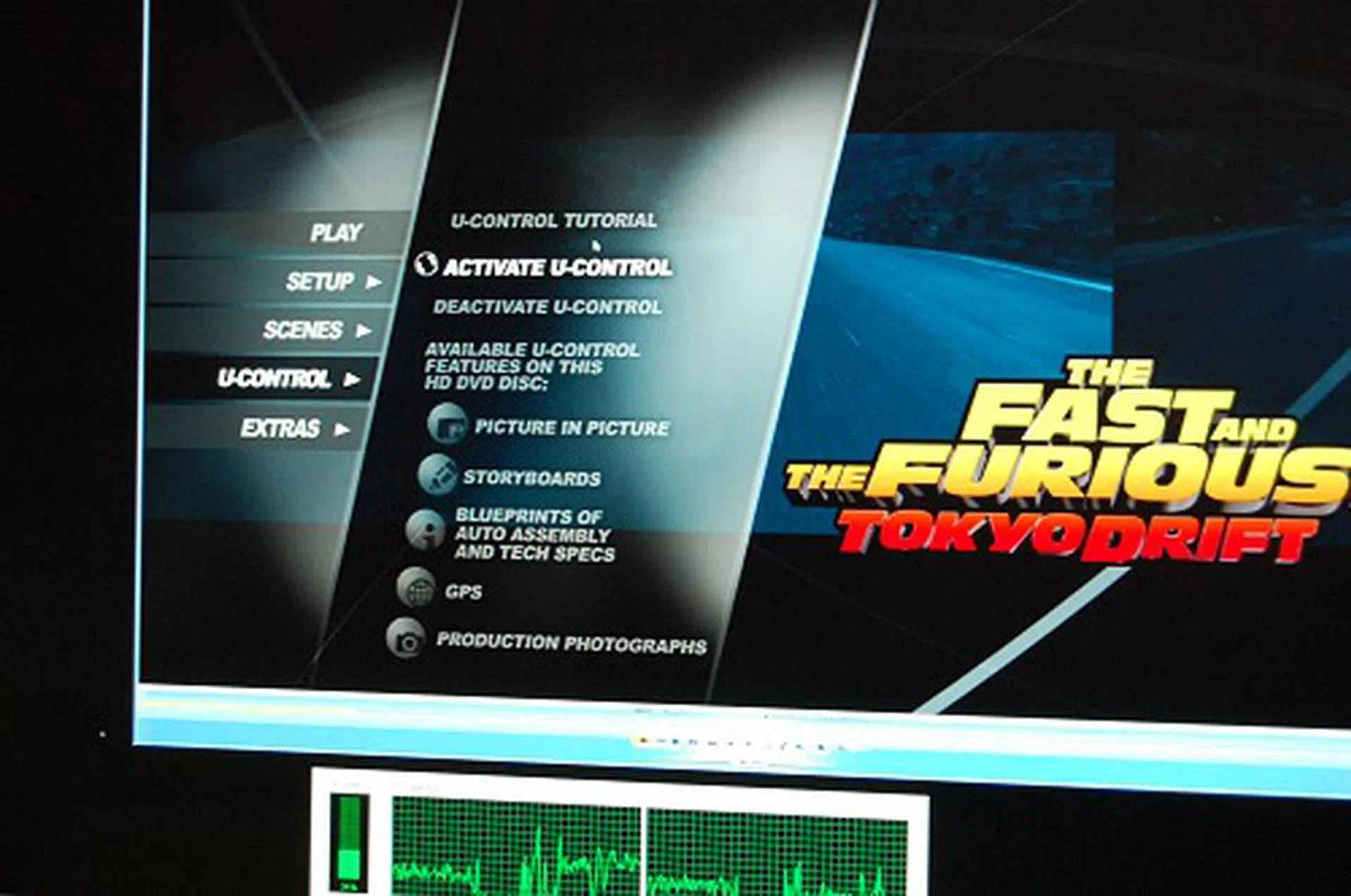
Processing the interactive overlays on top of the video stream is computationally intensive, thus the higher CPU utilization noted in this photo shot.
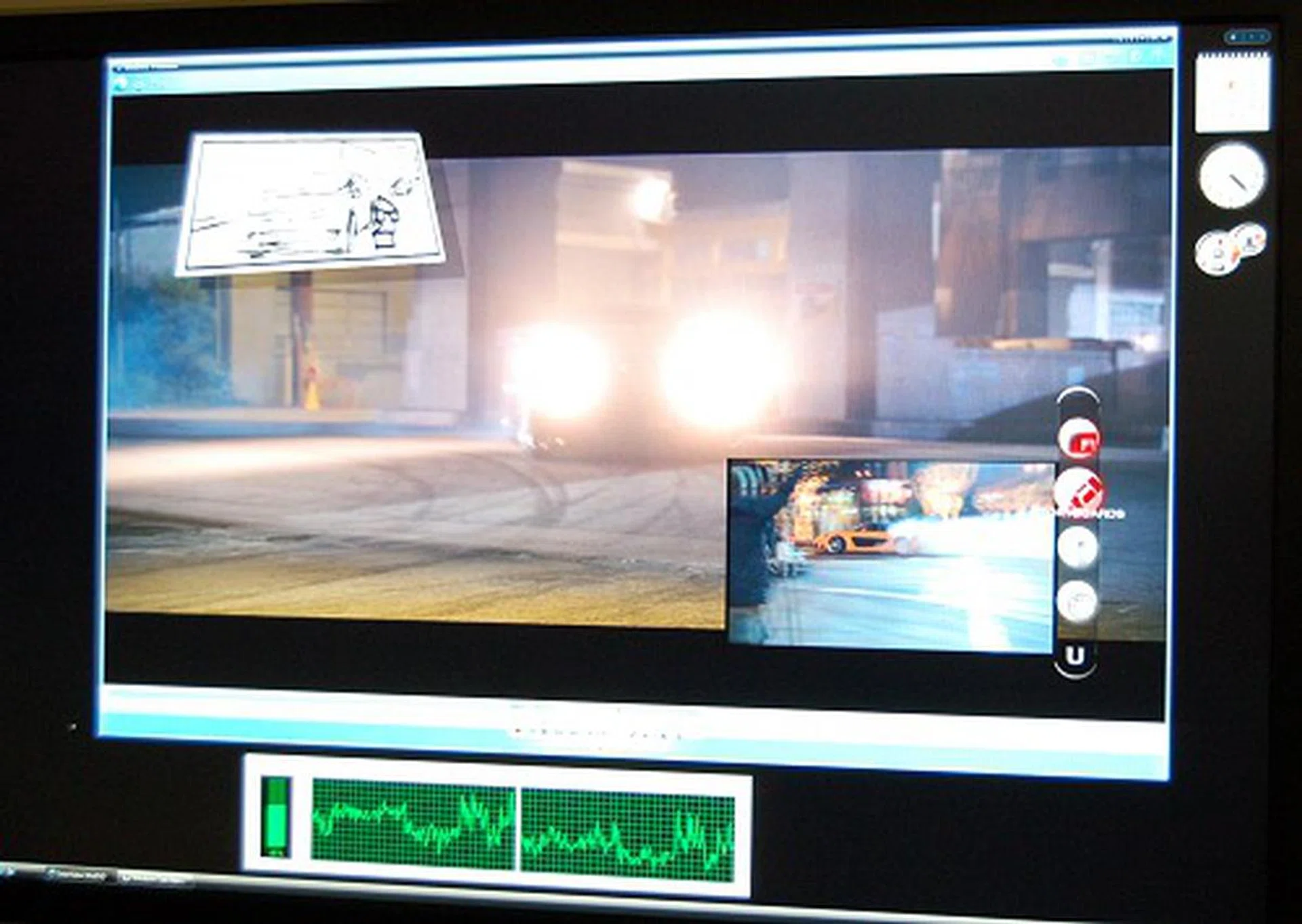
Activating features like Picture-in-Picture and a story-board overlay kick up the processing requirements higher yet, but this VP2 equipped system takes it well in its stride and shows no lag, frame dropping or other anomalies. Don't expect a VP1 equipped GPU to walk through this same test without a performance impact though.
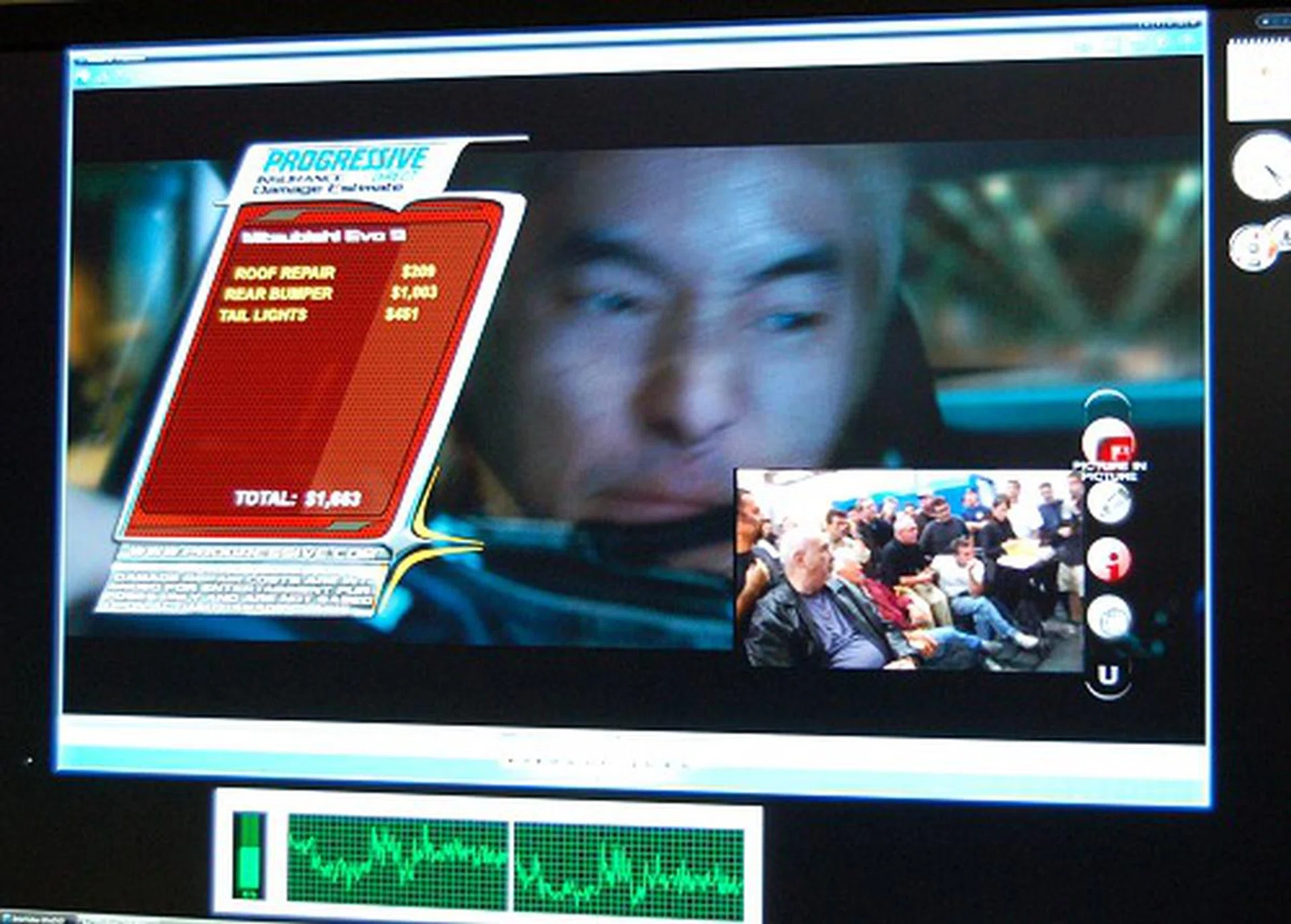
A rather interesting interactive function of this particular movie title is a car damage assessment report which is shown on the left hand-side overlay. Very apt indeed.
GPU Assisted Applications
While there are a handful of common application that can take advantage of a modern GPU's processing prowess to do more than just run 3D games, accelerate video and beautify your Vista interface, there hasn't been much demos or hands-on to really showcase them. With more powerful GPUs getting into notebooks these days, they can surely assist us much more than their traditional roles and NVIDIA had set up demos of two such applications that don't require you to be a rocket scientist or engineer to appreciate them:-

Picasa2, a simple image manipulation and management application that is freely available on the Internet, showed off subtle advantages of having a discrete GPU. Notice how the image becomes translucent when being dragged around so that you can still view the image you're moving as well as what you're moving it over. That's possible thanks to the assistance of a GPU.
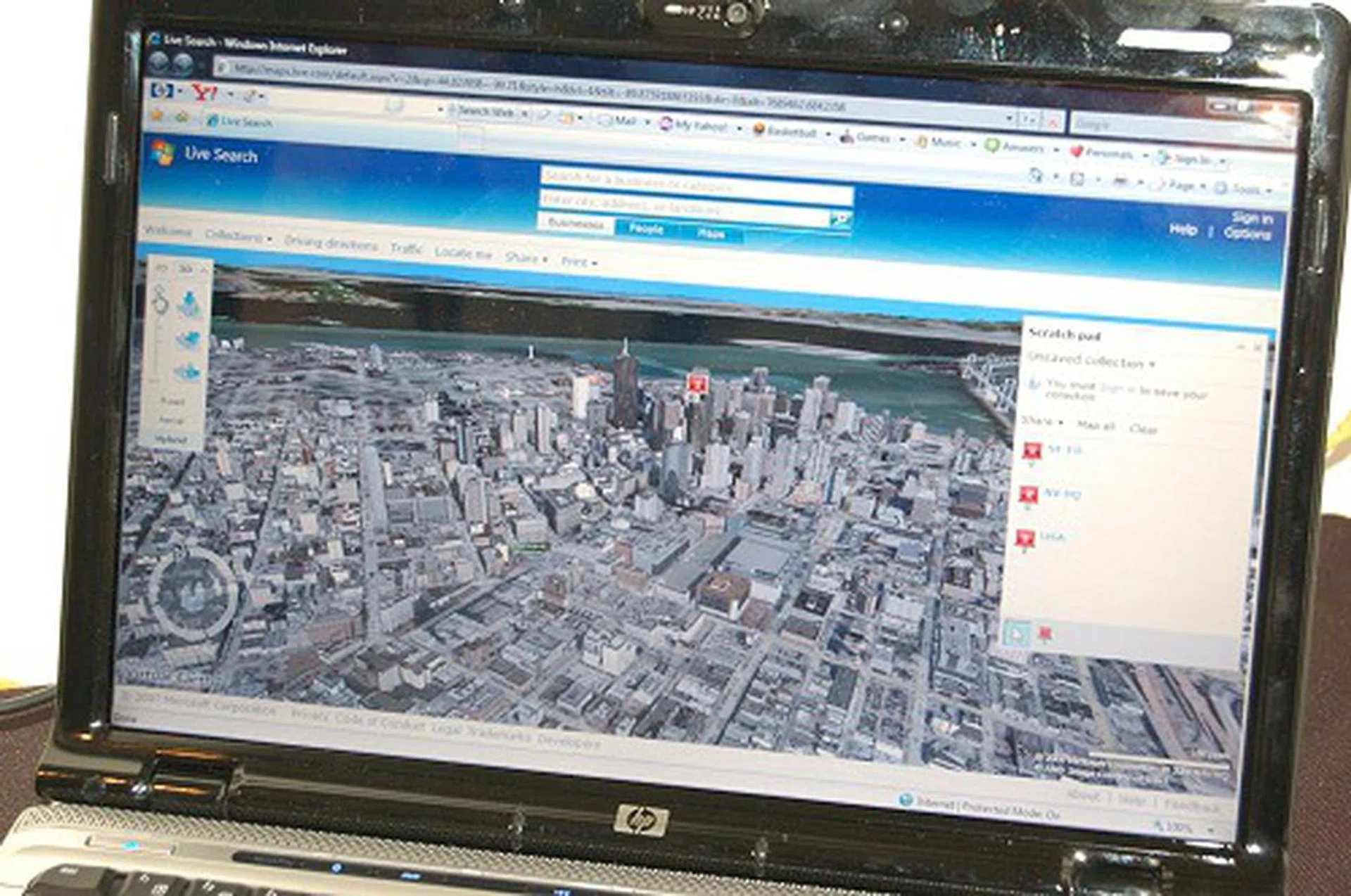
Microsoft Virtual Earth is another application that gets greatly accelerated to render such visual 3D maps. The difference with and without the GPU assistance is as clear as night and day for this application.
Adding to this list of common applications that thrive on your GPU's processing power to deliver a smoother working experience is the latest version of Adobe Acrobat Reader. Surely you would have noticed the drag of navigating through huge PDF files, but the latest version of this handy reader utility takes advantage of GPU acceleration to smoothen your navigation. Such are the subtle changes coming our way to enhance our everyday working experience.
Closing Comments
Well, as great as the new GeForce 8M series from NVIDIA seems to perform, we've yet to give it a go personally since vendors are only know readying their notebooks to hit retail shortly. While this announcement today may see somewhat like a paper-launch, the fact that NVIDIA has not faltered on its rollout schedule in recent times is strong assurance that history would likely repeat itself again.
So far, the demos conducted were convincing and we believe they should stay true even for the actual notebooks released in the channel. ATI's own DirectX 10 based GPU solutions won't arrive till another two months at least, so don't expect any comparisons or competition anytime soon. For now, expect the new Santa Rosa and GeForce 8M equipped notebooks to enter the channel over the next few weeks and hopefully we get to thoroughly put one of them through our usual paces.
Looking ahead, NVIDIA shared with us that GeForce 8M based SLI notebooks might take off later this year in July and that more variety of these high-end gaming-class notebooks should prevail than there are available currently. They also put a note that SLI notebooks based on the Intel Napa platform might debut during the Computex 2007 timeframe and if that does come to pass, it certainly would reflect what NVIDIA has really been working close with Intel to make this a possibility, among other developments that we've recently heard. Meanwhile, stay tuned for more tech articles here at www.hardwarezone.com to satisfy your thirst for information.
Our articles may contain affiliate links. If you buy through these links, we may earn a small commission.