
Back in the Fray - ATI Radeon HD 4890
After months of inactivity, ATI finally sprung back into action with its latest offering - the Radeon HD 4890. Boosting higher clock speeds and promising faster, better performance, can it successfully deliver a knock-out blow to its arch-rival, NVIDIA? Join us as we find out with a trio of the newcomers from ASUS, PowerColor and Sapphire.
Harder, Faster, Stronger
Work it
Make it
Do it
Makes Us
Harder
Better
Faster
Stronger
Folks familiar with Kanye West's music should by now have a pretty good idea of what ATI's new Radeon HD 4890 (HD 4890) is all about. But for those who don't, it is quite literally, as the lyrics go, a pumped up, beefed up version of the Radeon HD 4870. Think of it as a HD 4870 that has taken a steroid or two and has undergone many hours of intensive weight-training.
Since the release of the Radeon HD 4830, ATI has been fairly quiet on the GPU scene. And in between then and now, NVIDIA has released a slew of new SKUs. To be fair, most of them are rehashed products, but the super-fast GeForce GTX 295 and GeForce GTX 285 were two particularly outstanding SKUs that managed to put NVIDIA back in the limelight. In fact, word on the street is that NVIDIA has another high-end SKU up their sleeves and is finding ways to slim it down and improve their massive GTX 295.
It's time ATI fought back and the HD 4890 is their response. It is ATI's latest flagship GPU, but it still retains the 55nm core and 800 stream processors from the HD 4870. Happily, clock speeds have been bumped up. The core now clocks in at 850MHz, whereas the memory is now doing a stratospheric 3900MHz DDR. This is up from the HD 4870's 750MHz at the core and 3600MHz DDR at the memory.
To accommodate these massive increases in clock speeds, ATI has redesigned the core by adding decoupling capacitors to reduce signal noise. The company has also re-timed the chip and altered the chip's power distribution. Thanks to this new design, ATI claims that most boards tested in their labs were able to achieve clock speeds of 950MHz at the core and 4300MHz DDR at the memory. We'll definitely be putting this claim to the test.
In any case, we are expecting the HD 4890 to significantly outperform the older HD 4870. With that, we must now put the HD 4890 to the test to see if it is really any better, faster and stronger. But first, a quick look at its technical specifications and how it stacks up against comparable competitive SKUs.
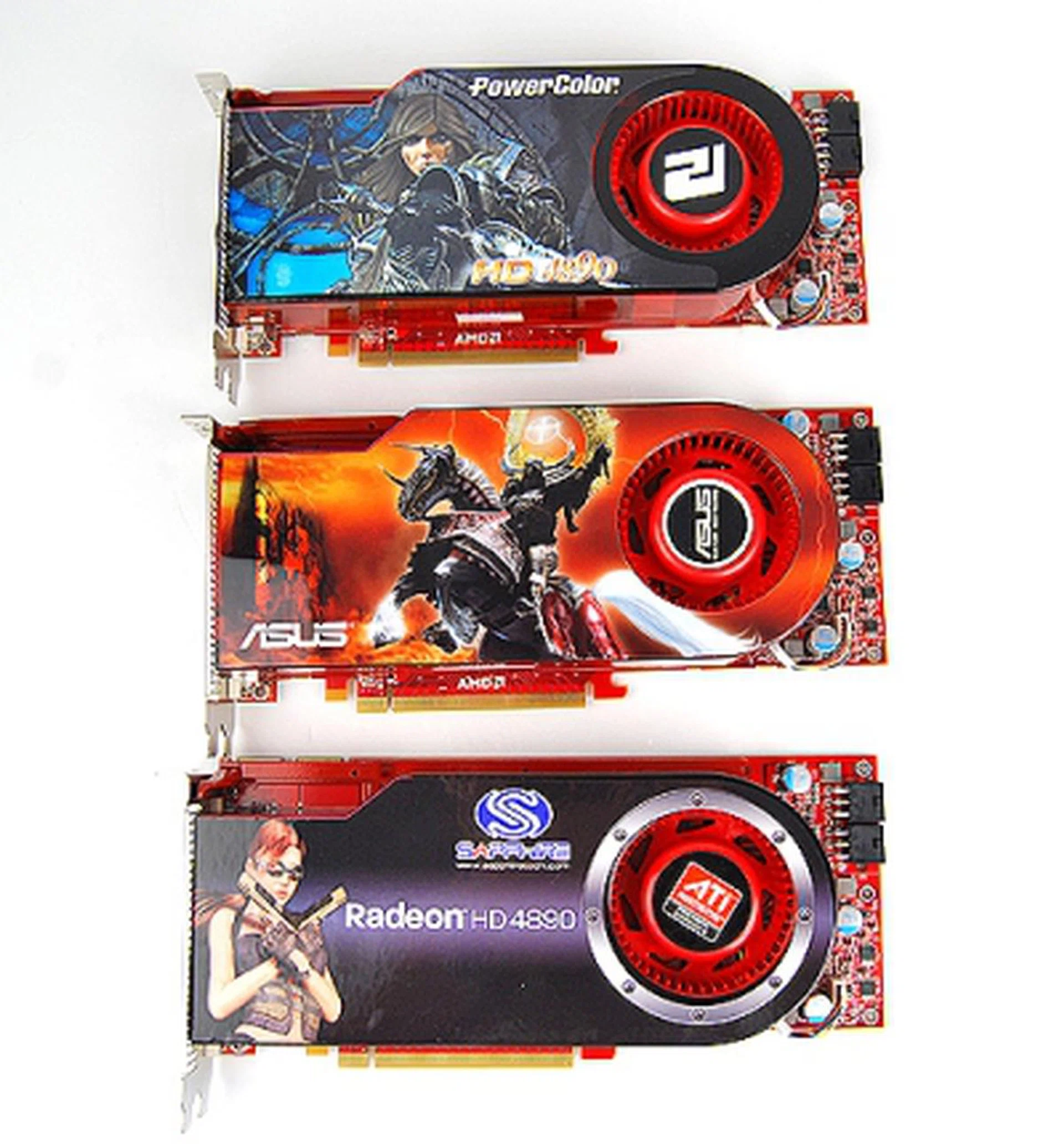
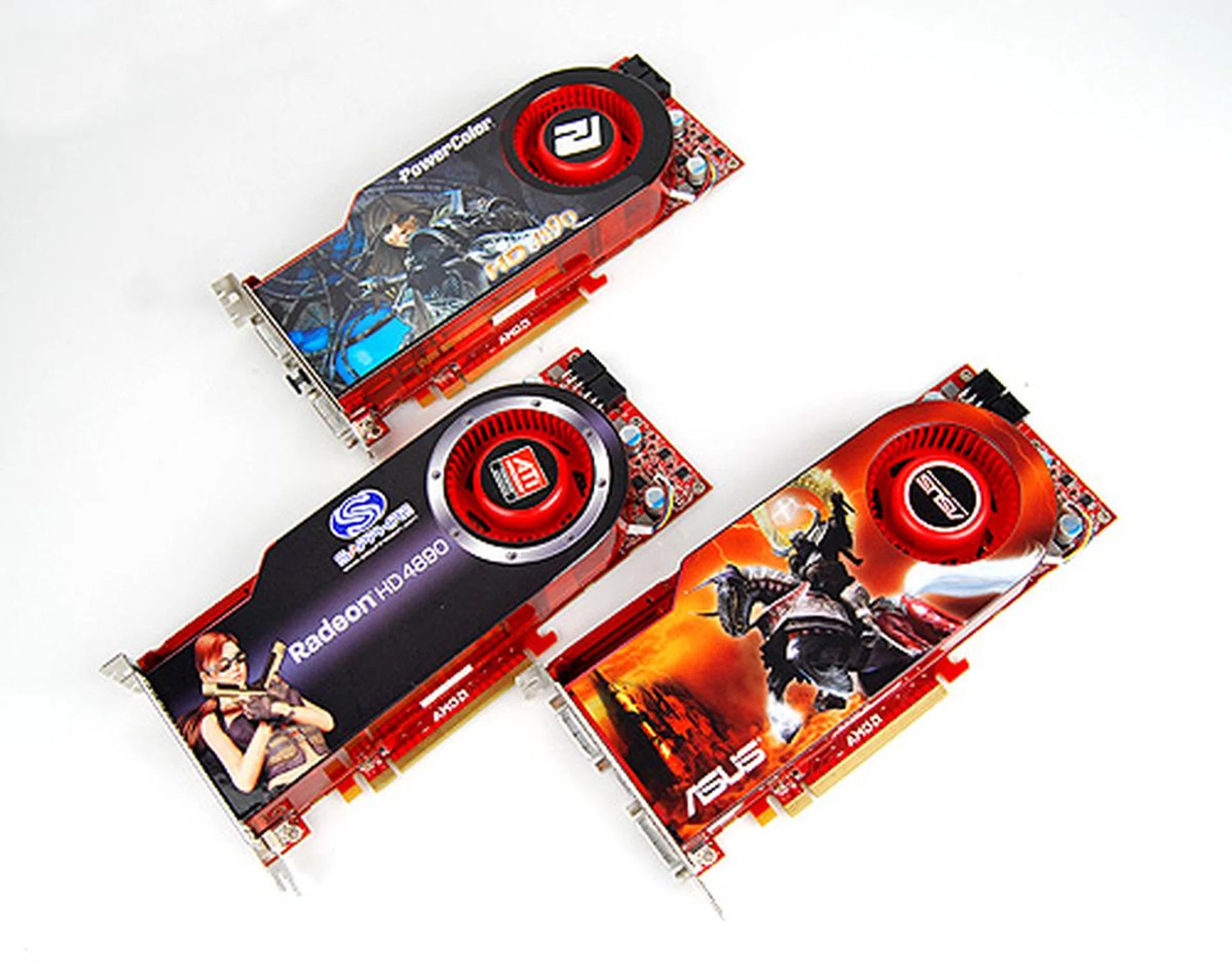
Our three Radeon HD 4890 cards stacked neatly. Without their stickers on, even "Photo Hunt" experts will have difficulty trying to spot the differences between them.
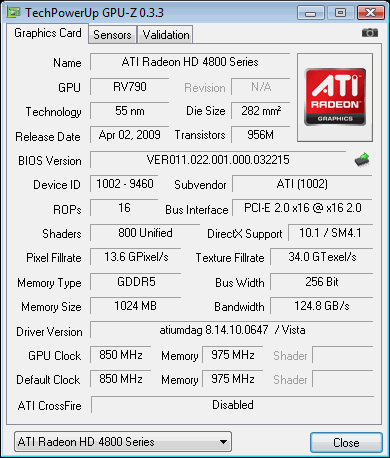
Model | ATI Radeon HD 4890 1GB | ATI Radeon HD 4870 512MB | ATI Radeon HD 4850 512MB | NVIDIA GeForce GTX 260 Core 216 896MB | NVIDIA GeForce GTX 285 1GB |
Core Code | RV790 | RV770 | RV770 | GT200 | GT200 |
Transistor Count | 959 million | 956 million | 956 million | 1400 million | 1400 million |
Manufacturing Process | 55nm | 55nm | 55nm | 65nm | 55nm |
Core Clock | 850MHz | 750MHz | 625MHz | 576MHz | 648MHz |
Stream Processors | 800 Stream processing units | 800 Stream processing units | 800 Stream processing units | 216 Stream Processors | 240 Stream Processors |
Stream Processor Clock | 850MHz | 750MHz | 625MHz | 1242MHz | 1476MHz |
Texture Mapping Units (TMU) or Texture Filtering (TF) units | 40 | 40 | 40 | 72 | 80 |
Raster Operator units (ROP) | 16 | 16 | 16 | 28 | 32 |
Memory Clock | 3900MHz GDDR5 | 3600MHz GDDR5 | 2000MHz GDDR3 | 1998MHz GDDR3 | 2484MHz GDDR3 |
DDR Memory Bus | 256-bit | 256-bit | 256-bit | 448-bit | 512-bit |
Memory Bandwidth | 124.8GB/s | 115.2GB/s | 64GB/s | 111.9GB/s | 159GB/s |
PCI Express Interface | PCIe ver 2.0 x16 | PCIe ver 2.0 x16 | PCIe ver 2.0 x16 | PCIe ver 2.0 x16 | PCIe ver 2.0 x16 |
Molex Power Connectors | 2 x 6-pin | 2 x 6-pin | 6-pin | 2 x 6-pin | 2 x 6-pin |
Multi GPU Technology | CrossFireX | CrossFireX | CrossFireX | SLI | SLI |
DVI Output Support | 2 x Dual-Link | 2 x Dual-Link | 2 x Dual-Link | 2 x Dual-Link | 2 x Dual-Link |
HDCP Output Support | Yes | Yes | Yes | Yes | Yes |
Street Price | US$260 | ~US$219 | ~US$159 | ~US$229 | ~US$359 |
ASUS EAH4890
The ASUS EAH4890 is an ideal example of a "vanilla" HD 4890. It sports ATI's reference cooler (which is remarkably similar to the one on the HD 4870), and it comes with standard clock speeds of 850MHz at the core and 3900MHz DDR at the memory. This card should give us a good understanding of the base performance of a HD 4890. As for video connectivity, the card comes with the usual twin DVI outputs and single 7-pin mini-DIN.
It also has the usual bunch of bundled ASUS utilities, but with a little trick up its sleeves. It comes with an updated ASUS SmartDoctor utility, which allows you to manually adjust the voltage of the graphics card. This gives you greater control when attempting to overclock it. These are done at your own risk of course, and we'll be taking a look at it to see how much more overclocking overhead we can achieve.
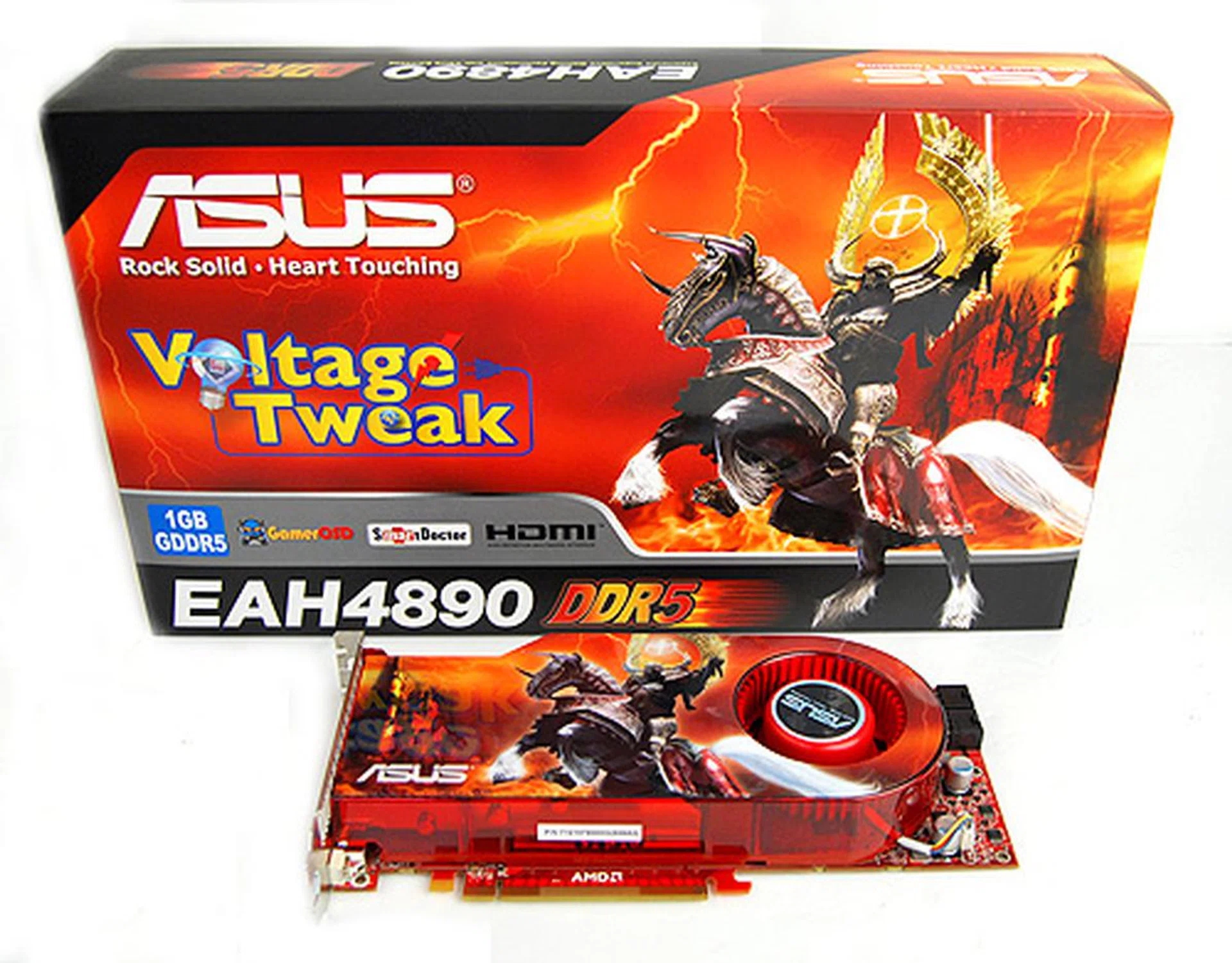
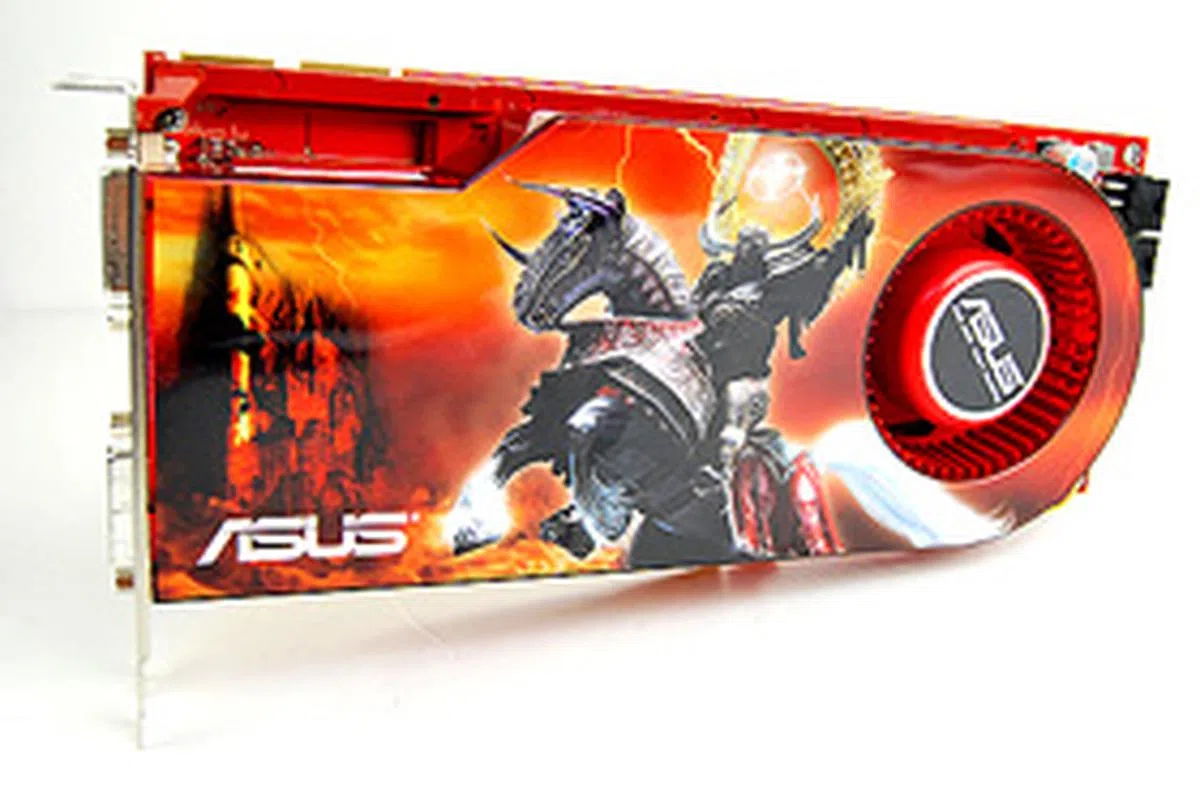
The ASUS EAH4890 came in box of fiery thunder, flames, cinder, and even features a Black Knight with wings, no less!
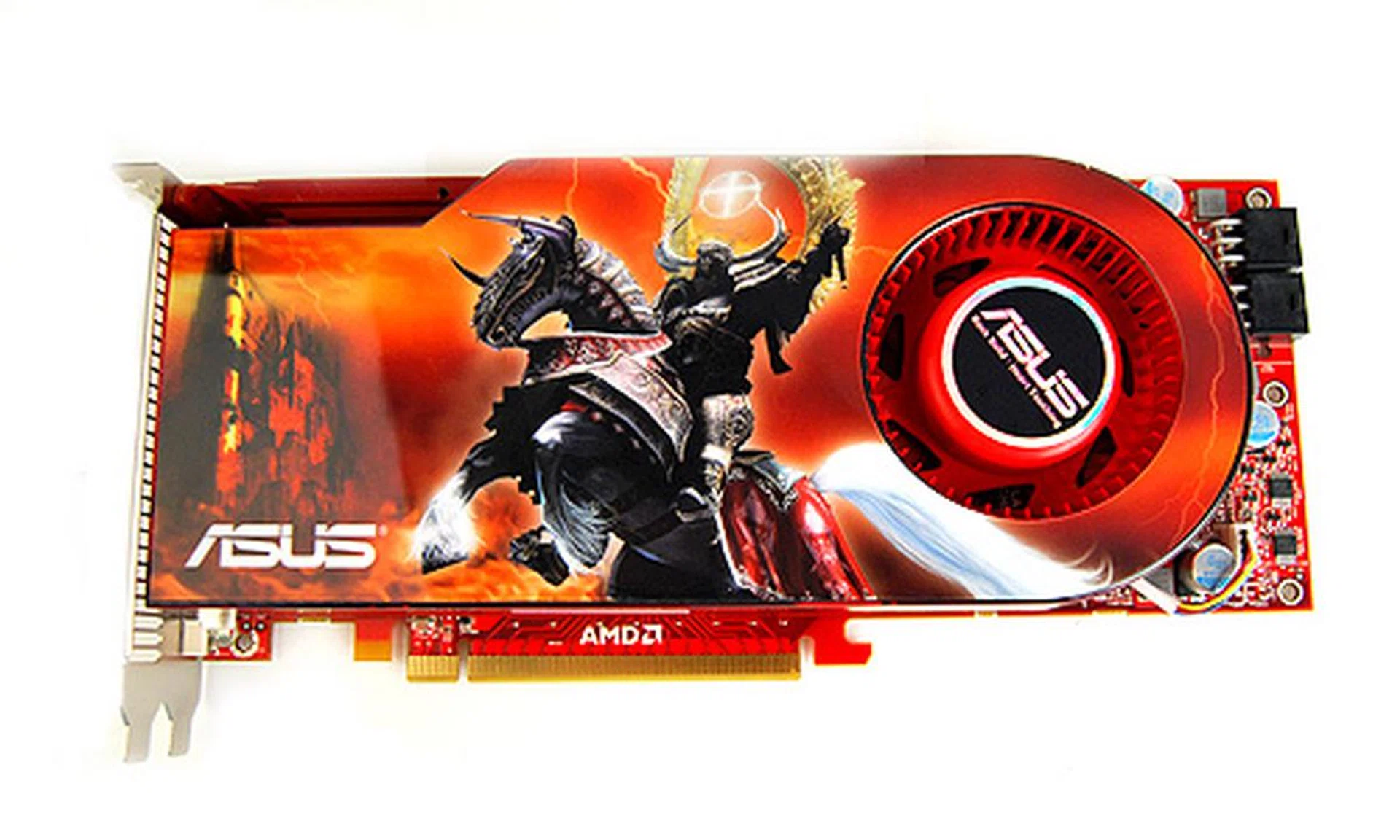
The ASUS EAH4890 has a cooler that looks identical to the reference HD 4870 that we've seen before. Given the high operating temperatures of a bog standard HD 4870, we are not feeling too hopeful for the HD 4890.
This is what came with ASUS EAH4890:
- Driver CD
- Installation Guide
- A copy of ASUS GamerOSD utility
- An ASUS leather mouse pad
- 1 x DVI to HDMI adapter
- 1 x DVI to VGA connector
- 1 x HDTV cable
- 1 x Molex to 6-pin PCIe power adapter
- 1 x CrossFire connector
The PowerColor HD 4890
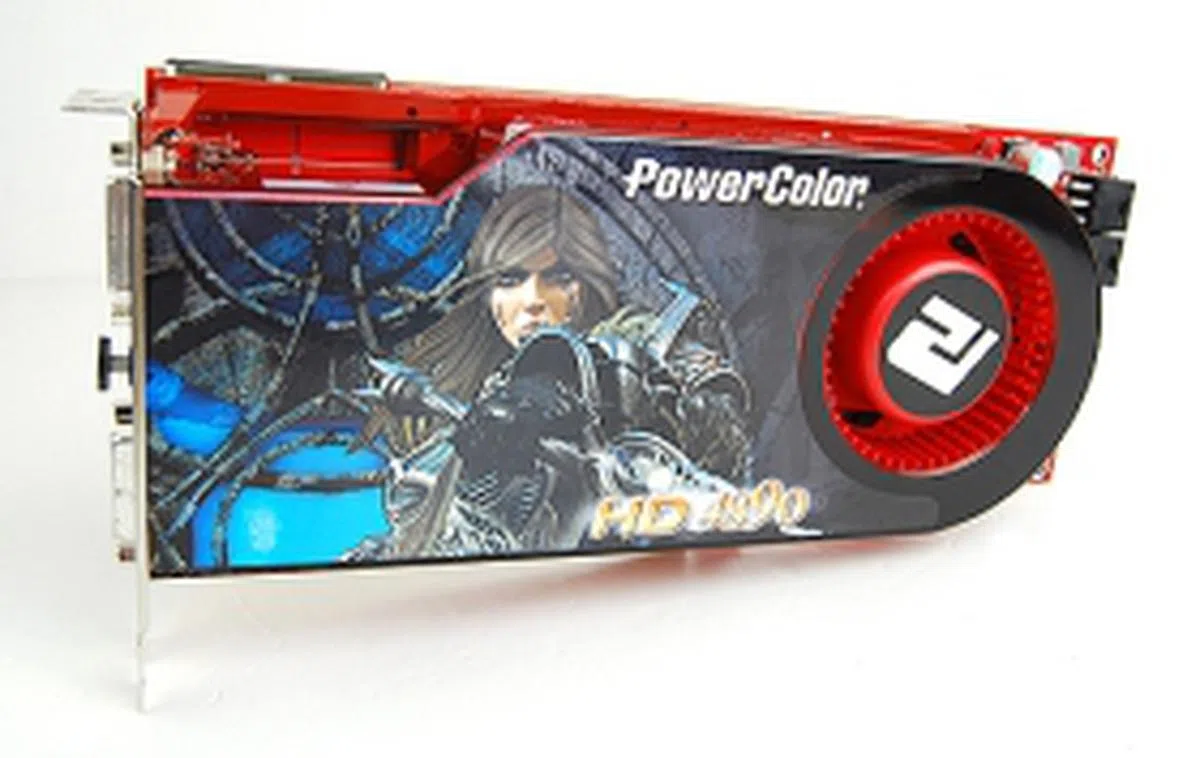
The PowerColor HD 4890 is highly similar to the ASUS EAH4890 as it also comes with a reference cooler and reference clock speeds. Again, like the ASUS EAH4890, it has a 7-pin mini-DIN flanked by two DVI ports.
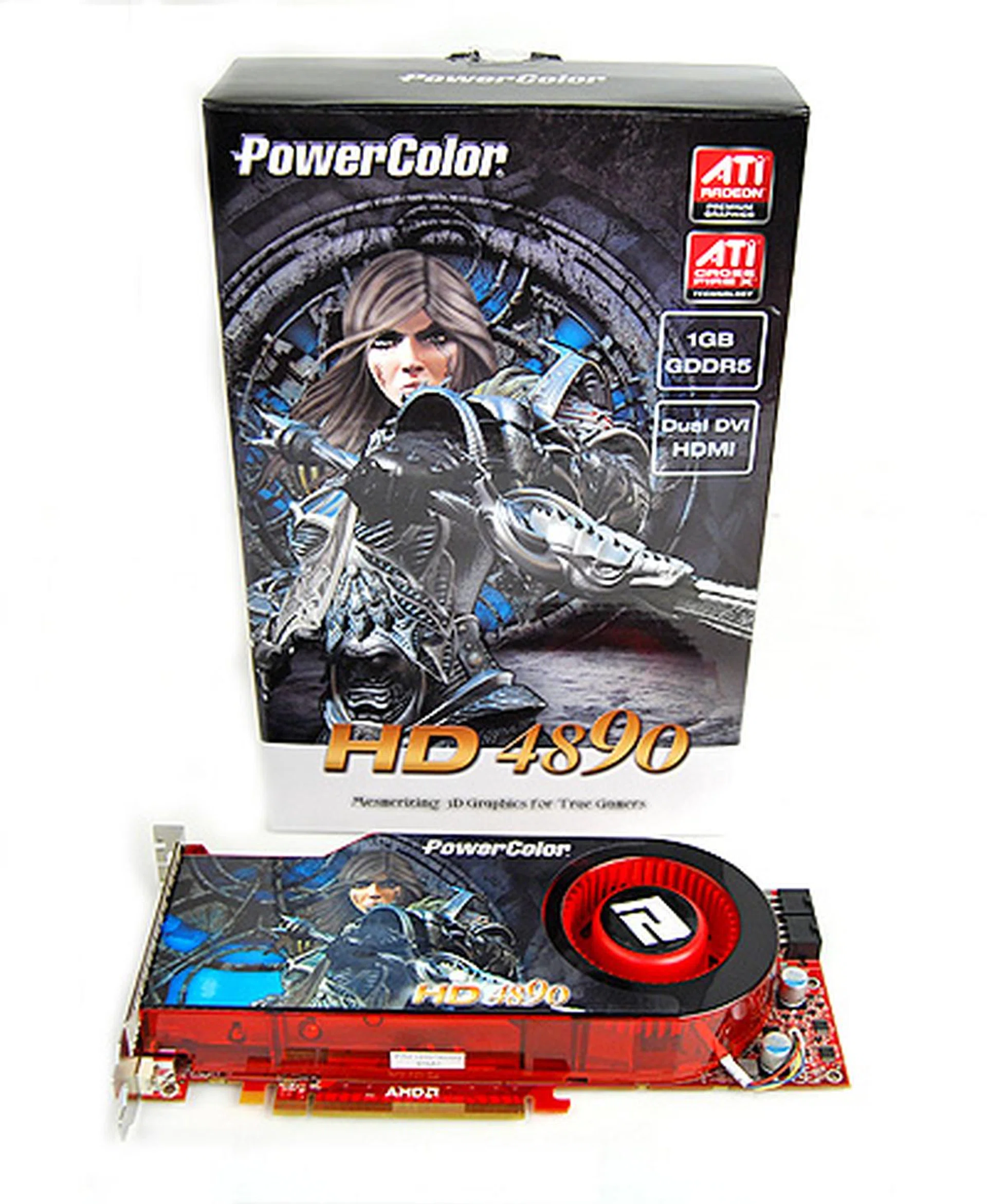
The PowerColor HD 4890's package is more conservative. Fronting the box is PowerColor's warrior babe, who seems to be looking angrier with each subsequent release.
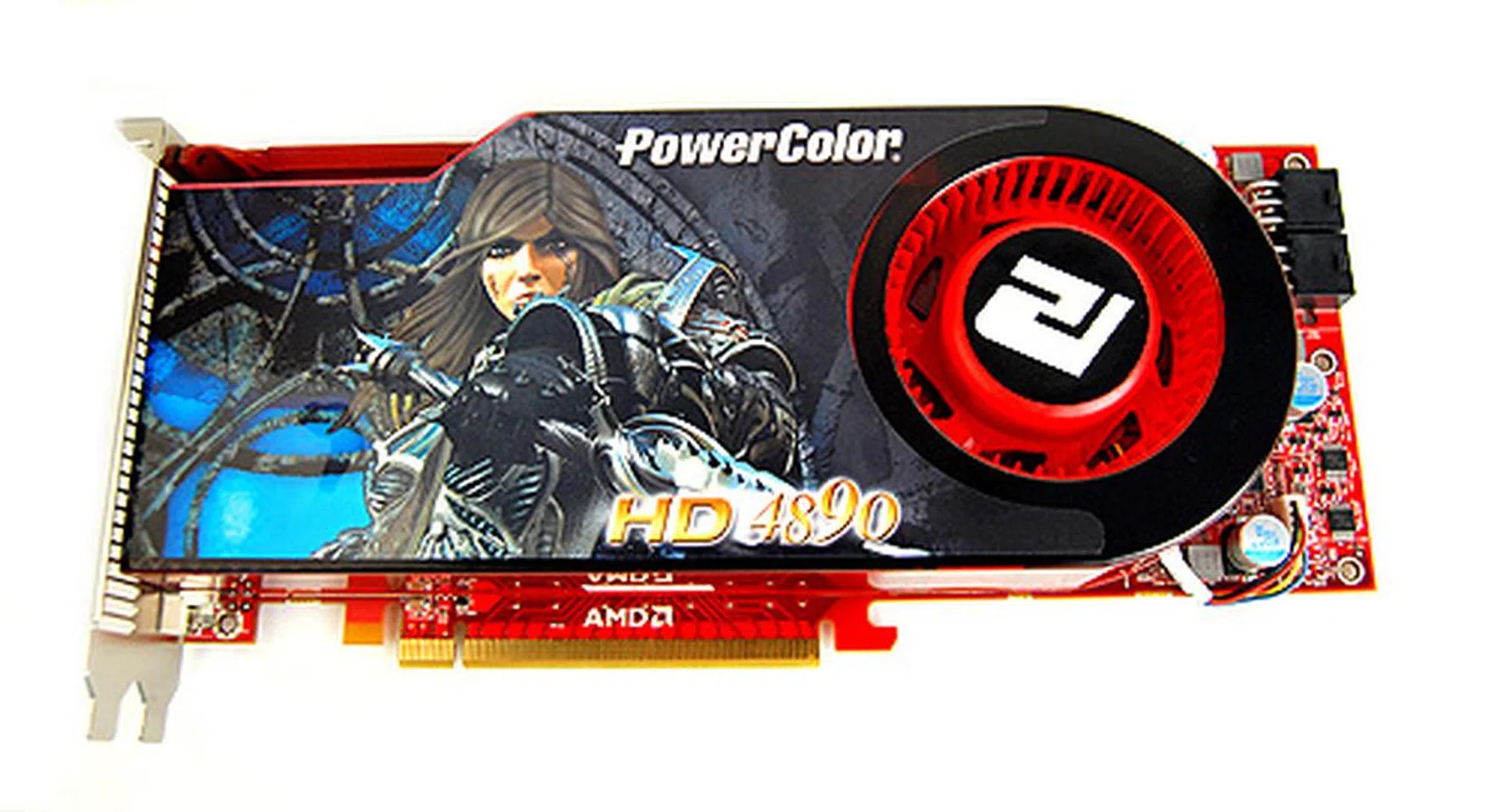
The PowerColor HD 4890 looks exactly identical to the ASUS EAH4980. If both of them had the stickers on their coolers peeled, we would be hard pressed to tell which is which.
This is what came with PowerColor HD 4890:
- Driver CD
- Installation Guide
- 1 x DVI to HDMI adapter
- 1 x DVI to VGA connector
- 1 x HDTV cable
- 1 x CrossFire connector
Sapphire HD 4980
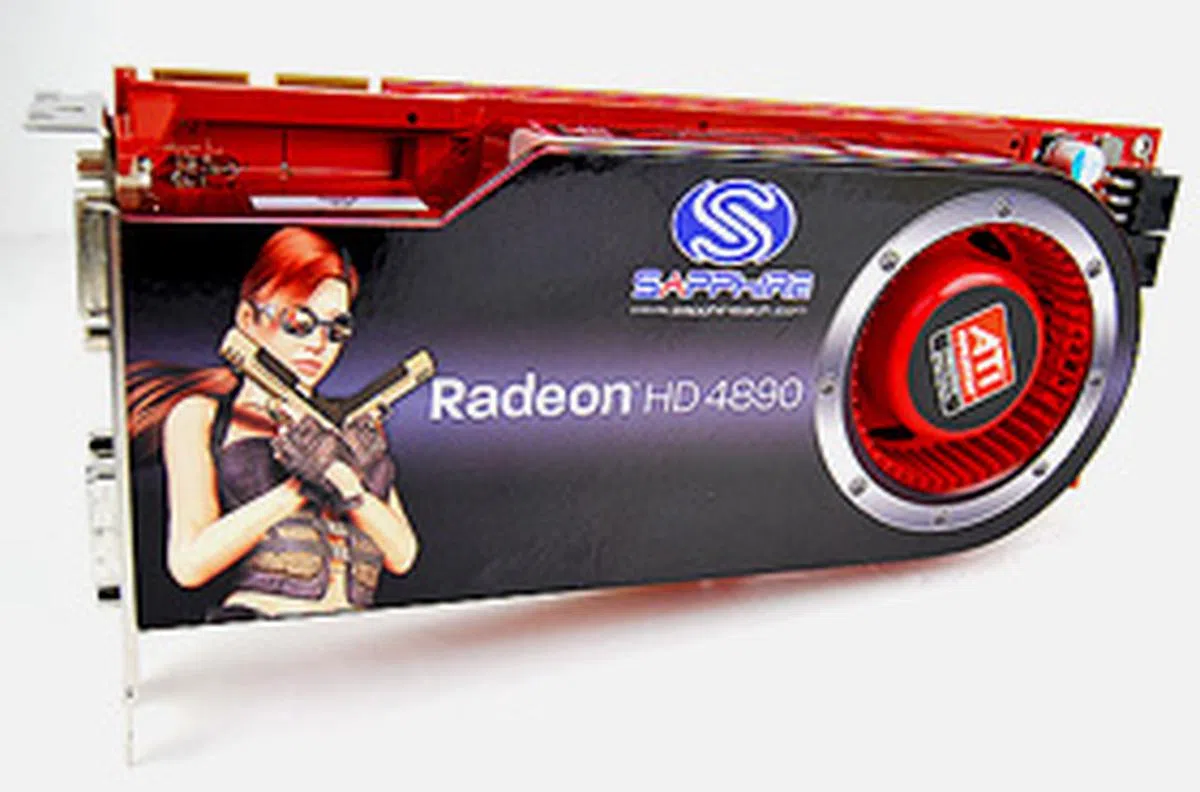
Our third and final HD 4890 is the Sapphire HD 4890, which is identical to the other two cards in terms of looks. Don't let looks fool you though, because underneath, it comes factory-overclocked. Memory clock speeds remain unchanged, but core clock speeds have been bumped up to a heady 900MHz - that is 50MHz over a reference HD 4890 and 150MHz more than the HD 4870. It probably still won't outperform a GeForce GTX 285, but should still give us some interesting performance numbers.
Our Sapphire HD 4890 came directly from Sapphire and wasn't in retail packaging. As such, we cannot confirm the packaging, but we do expect it to have the usual assortment of cables and accessories.
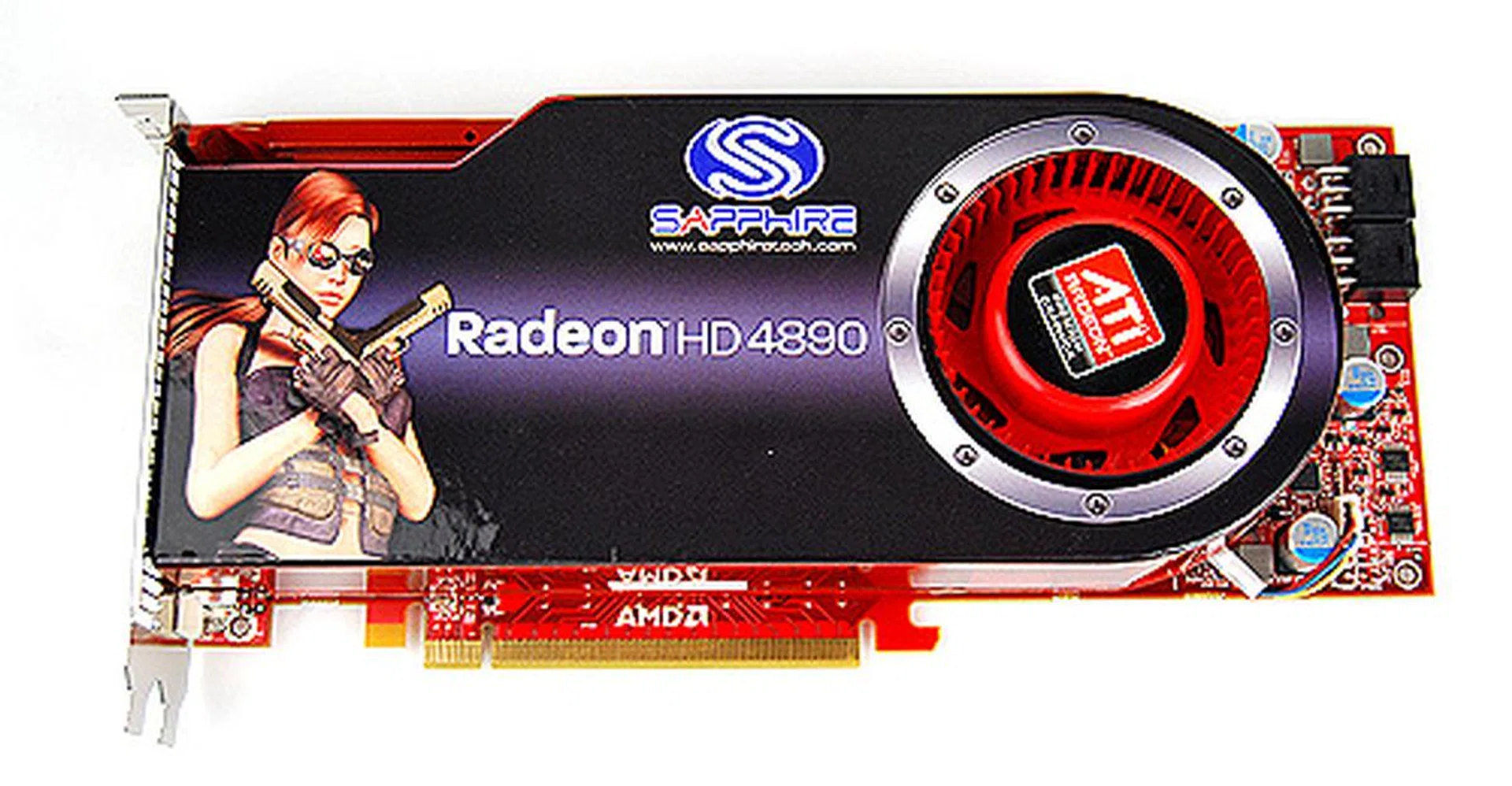
The Sapphire card looks identical to the other two HD 4890 cards we've seen earlier. Underneath, however, it sports higher clock speeds. As they say, never judge a book by its cover.
Test Setup
As has been our practice for some time, the three Radeon HD 4890 cards will be put through its paces using our Vista system which has the following specifications:
Windows Vista SP1 Test System
- Intel Core 2 Extreme QX6850 (3.00GHz)
- Gigabyte X38T-DQ6 motherboard
- 2 x 1GB DDR3-1333 Aeneon memory in dual channel mode
- Seagate 7200.10 200GB SATA hard drive
- Windows Vista Ultimate with SP1
The specifications of the HD 4890 suggests that its intended competitor will be NVIDIA's GeForce GTX 260 Core 216 (GTX 260+) and so we've included a reference version of that card as well as an overclocked one, the recently reviewed Palit GeForce GTX 260 Sonic 216 SP (Palit GTX260+ Sonic) for comparison. We've also thrown a pair of HD 4870s - one reference, one factory-overclocked - as well as a NVIDIA GeForce GTX 285 into the mix. This will allow us to determine how much more improved this new HD 4890 is over the older HD 4870, and at the same time also see if it is any match for NVIDIA's current flagship GPU, the GeForce GTX 285.
The list of cards tested and their driver versions:
- ASUS Radeon HD 4890 1GB (8.592.1RC1 - provided by ATI)
- PowerColor HD 4890 1GB (8.592.1RC1 - provided by ATI))
- Sapphire Radeon HD 4890 1GB (8.592.1RC1 - provided by ATI)
- Palit GeForce GTX 260 Sonic 216 SP (ForceWare 181.20)
- NVIDIA GeForce GTX 260 Core 216 (ForceWare 181.20)
- Sapphire HD 4870 1GB Toxic Edition (Catalyst 8.12)
- ATI Radeon 4870 512MB (Catalyst 9.1)
- NVIDIA GeForce GTX 285 (181.20)
Also, the cards were tested using the following benchmarks:
- Futuremark 3DMark06
- Futuremark 3DMark Vantage
- Crysis Warhead
- Far Cry 2
- Unreal Tournament 3
Windows Vista Results - 3DMark06
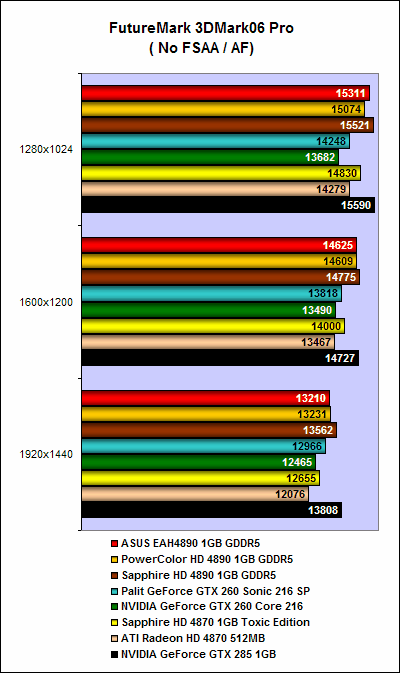
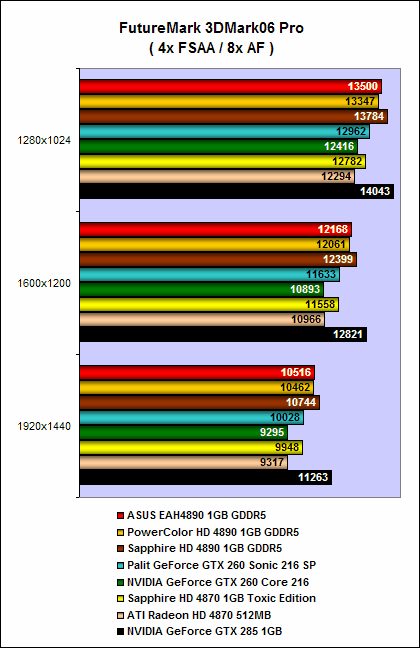
Our three Radeon HD 4890 cards started brightly in 3DMark06 by posting scores that were significantly better than the GTX 260+. In fact, it was even almost a match for the fearsome GTX 285. Also, we can see that the HD 4890 outperformed the older HD 4870 by about 5% across all resolutions and test settings.
Windows Vista Results - 3DMark Vantage
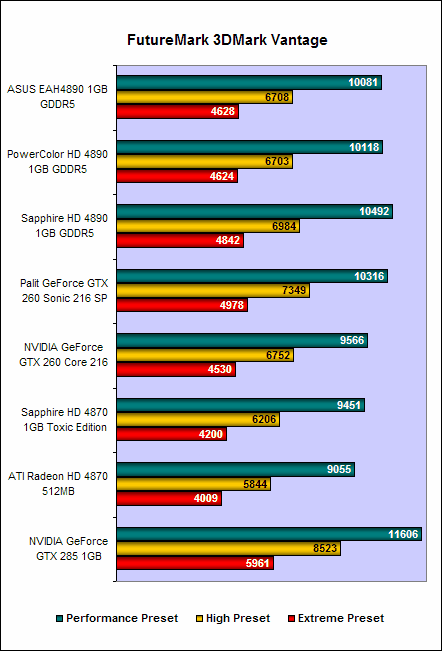
Coming to Vantage, we noted once again that the Radeon HD 4890 managed better scores than its rival, the GTX 260+. They were also substantially faster than even the factory-overclocked Sapphire HD 4870. However, our threesome met their match in the factory-overclocked Palit GTX 260+ Sonic, and was expectedly beaten by the GTX 285.
Windows Vista Results - Crysis Warhead & Far Cry 2
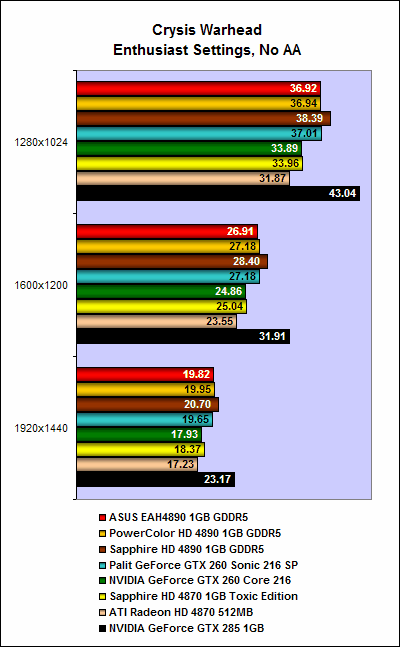
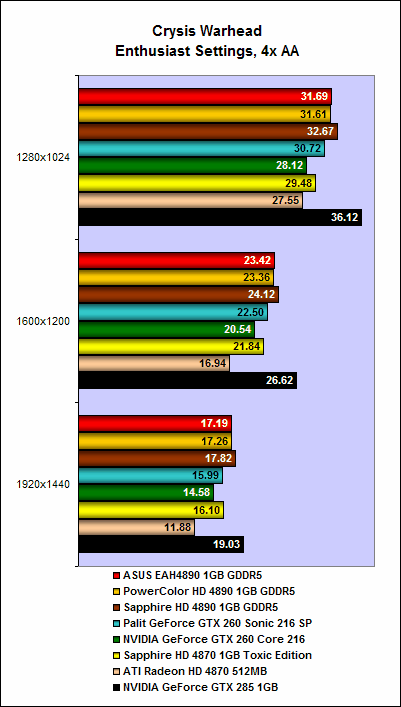
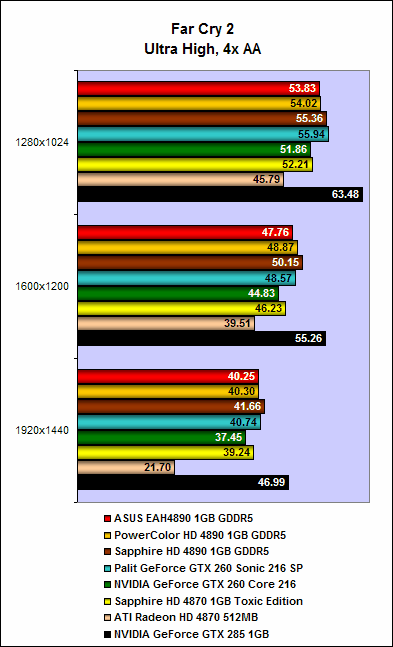
The super-intensive and resource hungry CryENGINE really put our cards to the test and given the similar clock speeds of the ASUS EAH4890 and PowerColor HD 4890, it is not surprising to see the both of them recording nearly identical results. The Sapphire HD 4890, thanks to its slightly higher clock speeds, was a tad faster. From the graph, we can also see that the new HD 4890 offers slightly better performance than the GTX260+ and HD 4870. It was no match, however, for the GTX 285.
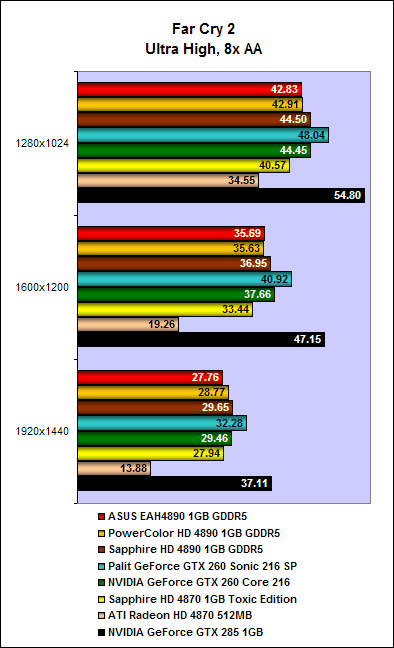
The HD 4890 managed Far Cry 2 pretty well. Despite our demanding graphics settings, all three cards successfully achieved playable frame rates of more than 30fps up until the most intensive setting of 1920 x 1440 with 8x anti-aliasing sampling activated. Against their intended rivals, the GTX 260+, their performance was mostly on par with a difference of at most 3fps separating them.
Windows Vista Results - Unreal Tournament 3
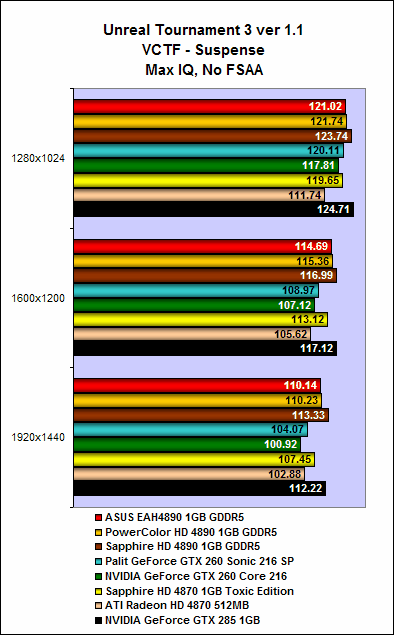
Unreal Tournament 3 went in favor of the Radeon HD 4890. The factory-overclocked Sapphire HD 4890 was the leader of the trio and it was about 5% to 10% quicker than a reference GTX 260+. In fact, its scores could easily rival that of GTX 285.
Temperature
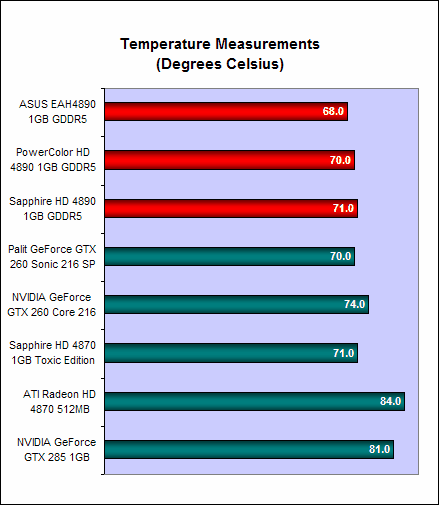
High operating temperatures have traditionally plagued ATI's Radeon HD 4800 series of cards. Reference cards, armed with only the reference cooler, could easily reach temperatures of 80 degrees Celsius when taxed with a heavy load. Hence, we were pleasantly surprised to find that our trio of HD 4890 cards topped out at around 70 degrees Celsius, the same as the Sapphire HD 4870 Toxic Edition with its customized Vapor-X cooler. There is a trade-off, however, as all three cards were particularly noisy. It sounded as if their coolers were all working overtime to keep the card cool.
Power Consumption
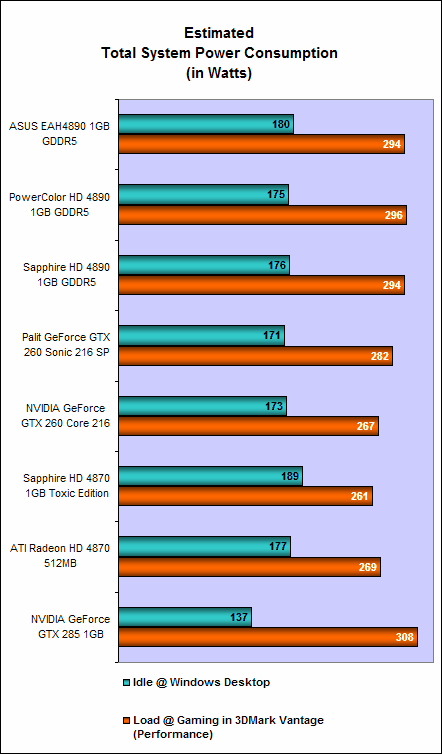
There were rumors that the new Radeon HD 4890 would be a more efficient card and from its GPU enhancements, we expected that as well. Sadly, that attribute didn't show up in our tests, no doubt due to the HD 4890's correspondingly higher clocks. In fact, our findings indicate that new HD 4890 is a more power-hungry card at idle than its predecessor and even the competition. This is still one area where ATI is still particularly weak in.
Overclocking
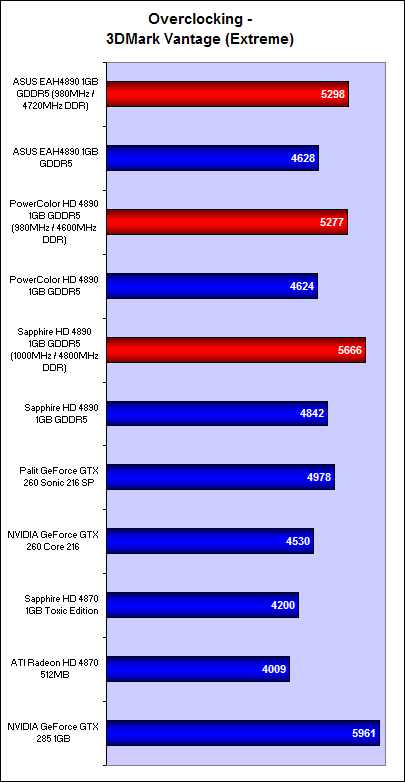
The Radeon 4800 series apart from being infamously hot and power-hungry were also known for its stubbornness to overclock. This seems to have changed with the HD 4890 as all three cards were capable of some truly unbelievable clock speeds. The Sapphire HD 4890 was the top performer here as we achieved an almost insane 1000MHz at the core and 4800MHz DDR at the memory, this was as far as Catalyst Control Center would allow us. Armed with these impressive clock speeds, we got a 17% increase in performance on 3DMark Vantage.
Using ASUS' SmartDoctor application, we managed to tweak the ASUS EAH4890 graphics card's voltage settings from 1.312V to 1.404V and this allowed it to achieve a maximum overclock of 980MHz at the core and 4720MHz DDR at the memory, giving us a 14% boost in 3DMark Vantage scores.
Finally, the PowerColor managed a respectable 980MHz at the core and 4600MHz DDR at the memory, which also allowed it to record 14% higher 3DMarks.
Refreshing the Radeon HD 4800
Taking everything into perspective, it would perhaps not be wrong to say that the Radeon HD 4890 is ultimately just an overclocked Radeon HD 4870 stamped with a new name. Armed with higher clock speeds and a slightly updated GPU core, we expected the HD 4890 to perform better than its sibling and it duly delivered. And while it made significant gains on the performance front, it lost out in others too, most notably in power consumption figures.
In our tests, we found that it was clearly more power hungry than the HD 4870 and its figures were comparable to even the NVIDIA GeForce GTX 285, which offers performance on a whole other level. Power consumption is one area ATI needs to improve on. While NVIDIA has consistently managed to bring down their cards' appetite for power with each driver revision, ATI's offerings have largely been stagnant, making this shortcoming even more obvious, especially at idle.
Despite this fallback, it does improve in the one area it desperately needs improvement in and that is its operating temperature. ATI's Radeon 4800 series cards are notorious for their obscenely high operating temperatures, and we were surprised to see that they managed to bring down temperatures as compared to the HD 4870 and HD 4850. Of course, given the noise of the card, it's more probable that they increased the fan's speed more than anything else. Nevertheless, despite the downsides, it is irrefutable that the new HD 4890 runs cooler.
As part of its "sweet spot" performance and pricing strategy, ATI has declared that the HD 4890 will be retailing for under US$260, which makes it slightly more costly than HD 4870 and just about the same as overclocked versions of the GTX 260+. And looking back at our results, we think its asking price is just about right. Individually, the PowerColor HD 4890 has a retail price of US$259, whereas Sapphire has an a local asking price of S$439 (about US$289), which is understandable given it's factory-overclocked and that there's always a price difference to factor in for the products being sold here. ASUS, at the time of writing, has yet to confirm the price of the EAH 4890.
Locally, prices of the HD 4870 and GTX 260+ have typically reflected the prices that we find in the United States, and the new HD 4890 is no different. As such, we think the PowerColor HD 4890 and Sapphire HD 4890 are both reasonably priced, if not competitive.
In terms of overall standings, the Sapphire HD 4890 and ASUS EAH4890 are a notch up above the PowerColor HD 4890 because of their slightly better performance and features. The Sapphire HD 4890 comes factory-overclocked and could be pushed all the way to a maximum overclock of 1000MHz at the core and 4800MHz DDR at the memory, which is just incredible. The ASUS EAH4890, on the other hand, has the nifty ability to allowing users to tweak the card's voltage, which can be handy especially if you intend to do some overclocking of your own. Last but not the least, the PowerColor HD 4890 is a solid take on the HD 4890 SKU.
Overall, the HD 4890 is a decent attempt at refreshing and beefing up the high-end spectrum of the Radeon 4800 series. As ATI's latest flagship single GPU, it brings about improved performance that is very much needed, in light of the recent comeback by NVIDIA.\
All in all, the new Radeon HD 4890 does bring about significant improvements. It's willingness to overclock is astounding and we're eagerly awaiting vendors to offer hardcore overclocked variants of these cards.
Not surprisingly, rumors are rife that a new dual-GPU card, the HD 4890 X2, is in the works. If this comes to fruition (and we think it will), it'll be intriguing to see where it'll stand in the current hierarchy of things. If our speculations are correct, it will easily outperform the GTX 285, but will ultimately fall short at reclaiming the speed crown from the GTX 295. Clearly, in terms of sheer graphics horsepower, ATI still has some catch up to do. However this is merely for claiming the high-end 'throne'. Volume shipment and the bulk of the revenue takes place at more palatable price points such as the 4300, 4600 and single-GPU 4800 series for which ATI has maintained quite a reasonable price-performance ratio ever since the 4000 series of graphics cards.
Interestingly and worrying at the same time however is that NVIDIA already has a counter to the Radeon HD 4890. Dubbed the GTX 275, it will supposedly fit in between the GTX 260+ and the GTX 285. It sounds like it's going to be more than a handful for the Radeon HD 4890. Stay tuned!
** Updated on 2nd April 2009, 1.30pm **
We just received a new update from AMD that unlike their initial presentation that mentioned a US$260 price bracket for the new Radeon HD 4890 product SKU, it should actually range from US$276 to US$316. That's a little expensive in our opinion unlike the initial target price from US$260. But we expect that competition pressure would soon push these prices downwards in a matter of weeks.
 |  |
 | |
 |  |
 | |
Our articles may contain affiliate links. If you buy through these links, we may earn a small commission.