
AMD Radeon HD 6970 & HD 6950 CrossFireX Performance Analysis
We investigate AMD's latest Radeon HD 6900 series further by taking a look at how a pair of Radeon HD 6970 and HD 6950 cards will perform in a 2-way CrossFireX configuration.
Running Caymen in CrossFire
After a month long delay, AMD’s latest and fastest single GPU offerings are finally here. Codenamed Cayman, the Radeon HD 6900 series is presently made up of the Radeon HD 6970 and HD 6950 and boasts a couple of improvements such as a next-generation tessellation unit and a new VLIW4 core design over the Radeon HD 6800 series that was launched in late October.
To be honest, we found the new Radeon HD 6900 series cards to be slightly underwhelming in view of AMD’s recent hits. Although tessellation performance has been improved, the new cards weren’t that much faster than the old Radeon HD 5870 - ATI/AMD’s previous fastest single GPU card. To compound matters, NVIDIA has made substantial improvements to their Fermi cards, enabling better performance and power and thermal characteristics. To get to speed on the Radeon HD 6900 series, we highly suggest checking out our full review here.
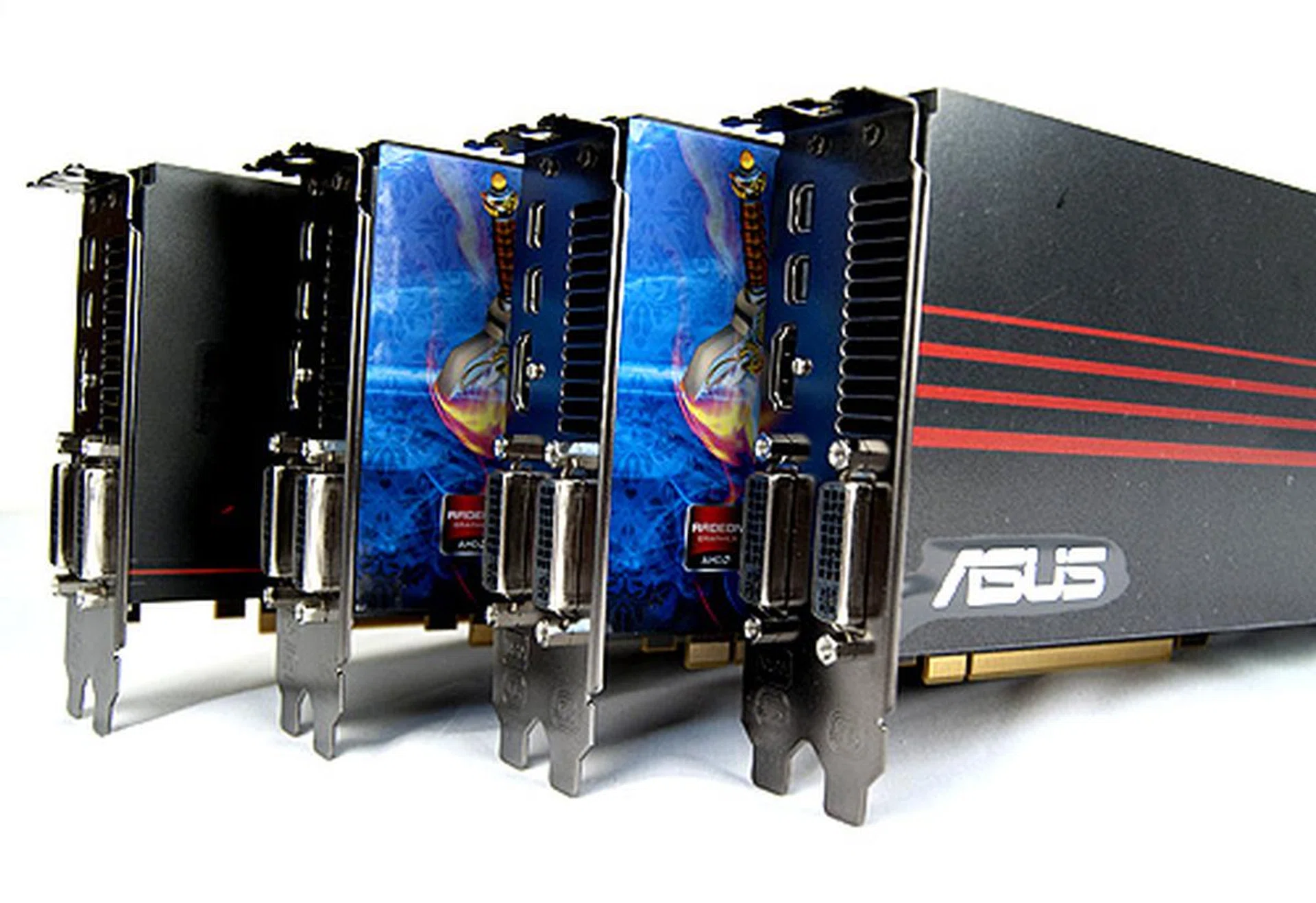
Combined, these four cards (a pair of 6970 and a pair of 6950), we have on test a total of 5888 cores and close to 10 teraFLOPS of pure computing power. Well, we wish we could run them all in a four-way CrossFireX configuration, but we'll just have to make do with pairs for now.
In true HardwareZone tradition, we’ll be following up our review of the Radeon HD 6900 series by taking a look at how the new cards perform in a 2-way CrossFireX configuration.
Test Setup
To evaluate the new Radeon HD 6900 series in a 2-way CrossFireX configuration, we’ll be using our X58 setup which has the following specifications:
- Intel Core i7-975 (3.33GHz)
- Gigabyte GA-EX58-UD4P motherboard
- 3 x 1GB DDR3-1333 G.Skill memory in triple channel mode
- Seagate 7200.10 200GB SATA hard drive
- Windows 7 Ultimate
The full list of cards tested and driver version used are as follows:
- AMD Radeon HD 6970 2GB GDDR5 (2-way CrossFireX) (Catalyst 10.11)
- AMD Radeon HD 6950 2GB GDDR5 (2-way CrossFireX) (Catalyst 10.11)
- AMD Radeon HD 6970 2GB GDDR5 (Catalyst 10.11)
- AMD Radeon HD 6950 2GB GDDR5 (Catalyst 10.11)
- NVIDIA GeForce GTX 570 1280MB GDDR5 (2-way SLI) (ForceWare 263.09)
- NVIDIA GeForce GTX 570 1280MB GDDR5 (ForceWare 263.09)
- NVIDIA GeForce GTX 580 1560MB GDDR5 (ForceWare 262.99)
- ATI Radeon HD 5970 2GB GDDR5 (Catalyst 10.9)
- AMD Radeon HD 6870 1GB GDDR5 (2-way CrossFireX) (Catalyst 10.10)
- ATI Radeon HD 5870 1GB GDDR5 (2-way CrossFireX) (Catalyst 10.9)
The list of benchmarks used:
- Futuremark 3DMark 11
- Futuremark 3DMark Vantage
- Crysis Warhead
- Far Cry 2
- Warhammer: Dawn of War 2
- Battlefield Bad Company 2
- “Heaven" from Unigine v2.1
- S.T.A.L.K.E.R.: Call of Pripyat
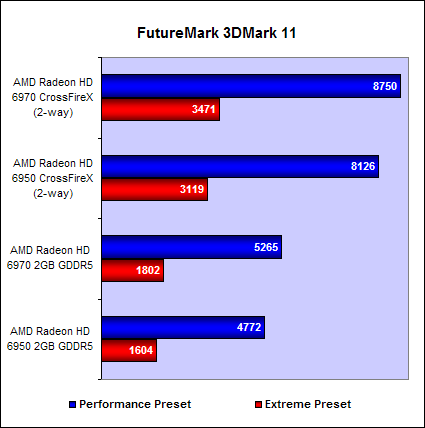
3DMark 11
3DMark Vantage
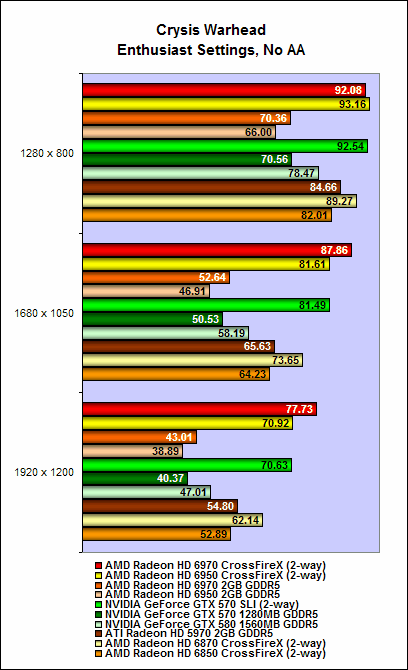
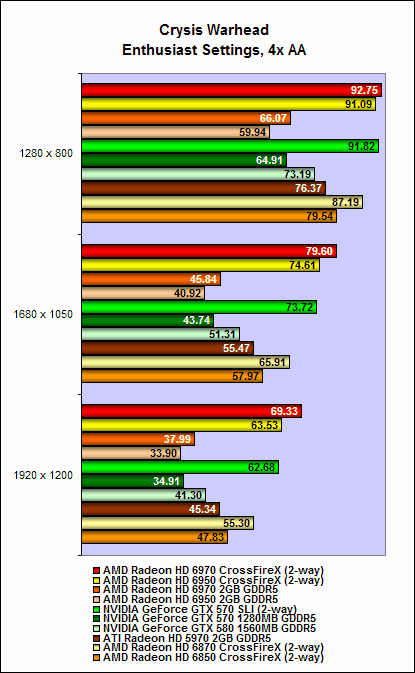
Crysis Warhead
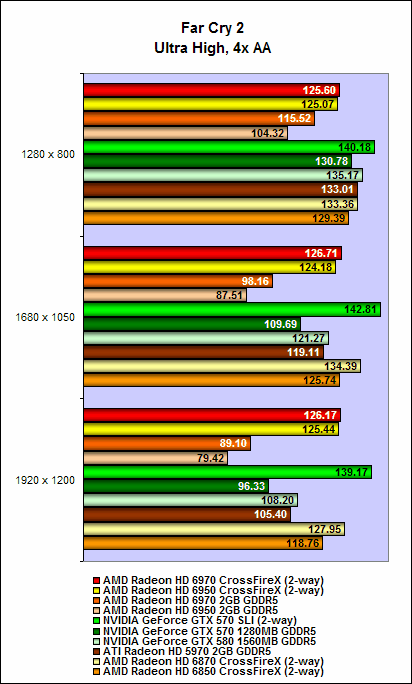
Far Cry 2

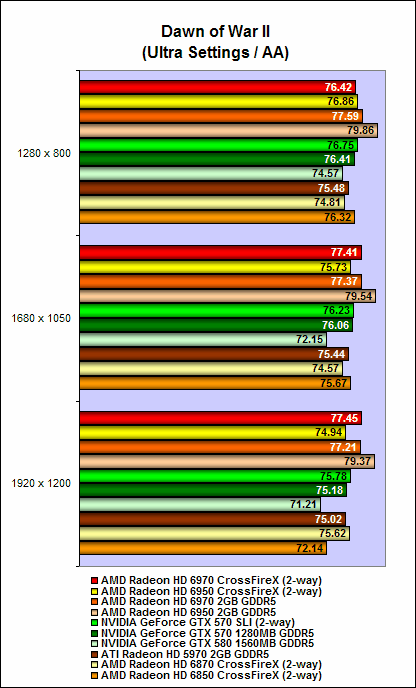
Dawn of War 2
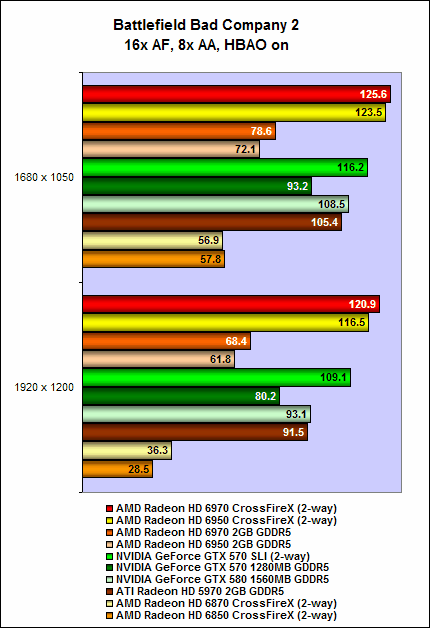
Battlefield Bad Company 2
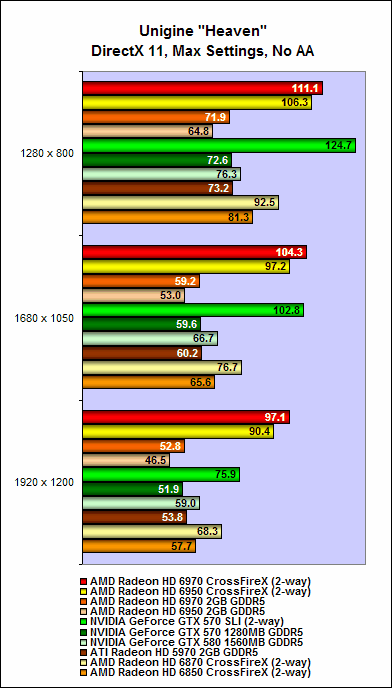
Unigine "Heaven" 2.1
 |  |
 |  |
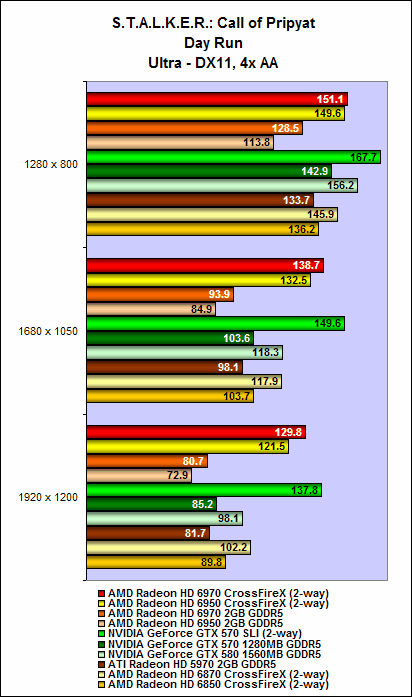
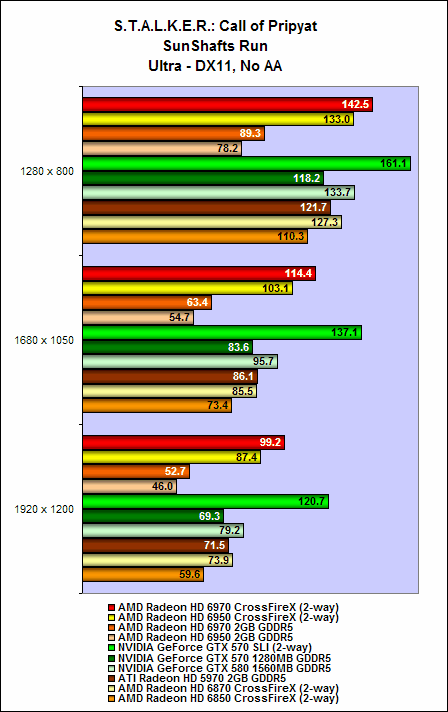
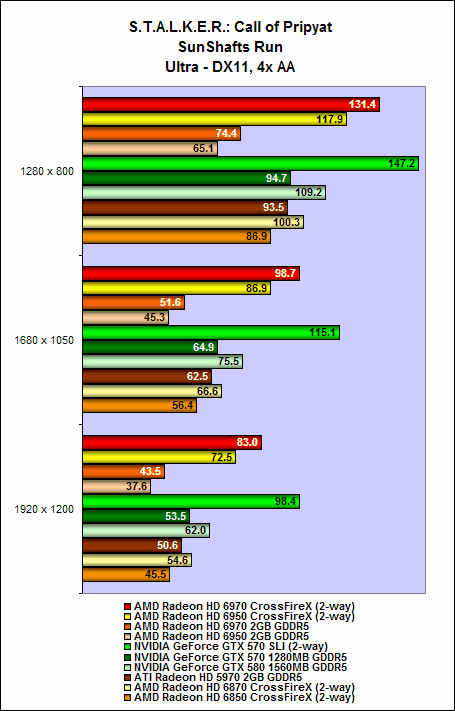
S.T.A.L.K.E.R.: Call of Pripyat
 |  |
 |  |
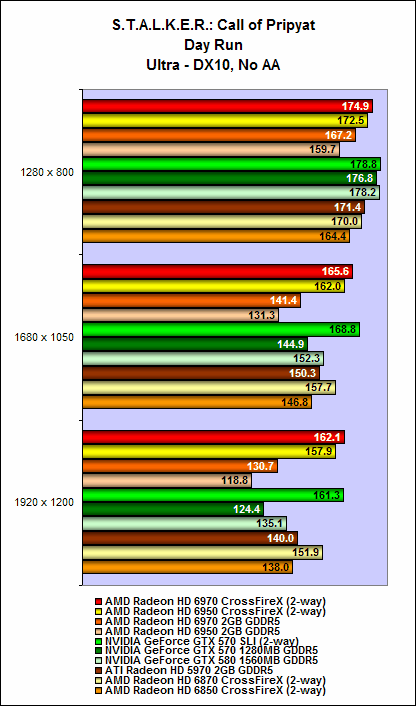
DirectX 10 Results
 |  |
 |  |
Temperature
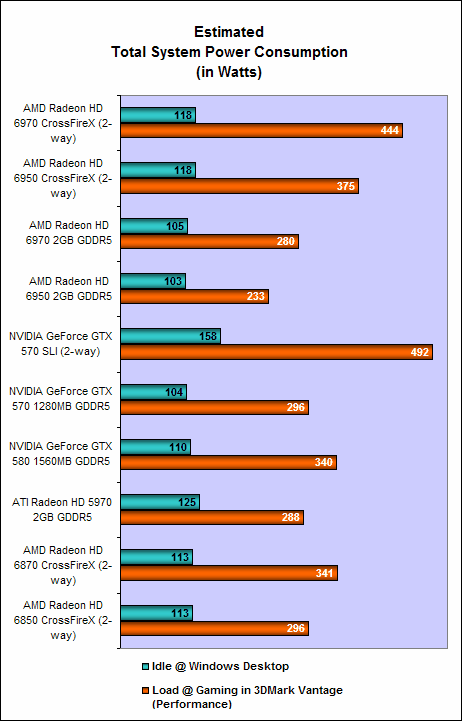
Power Consumption
Fast and Good, but Not Impressive
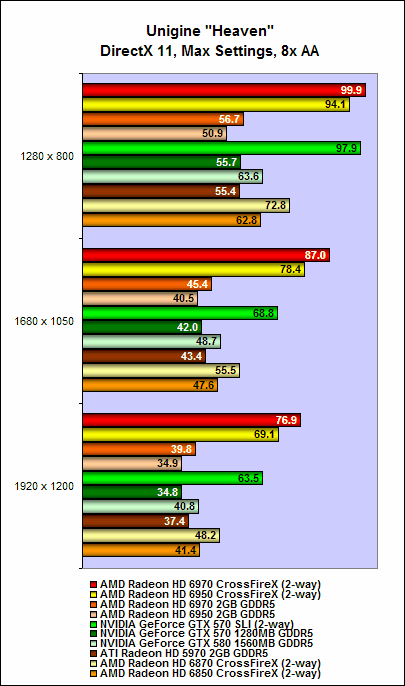
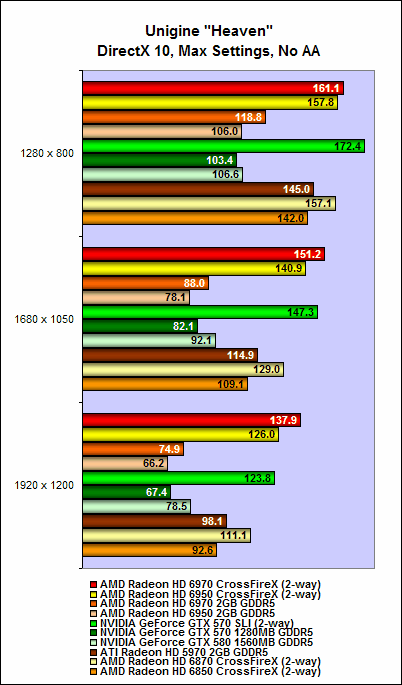
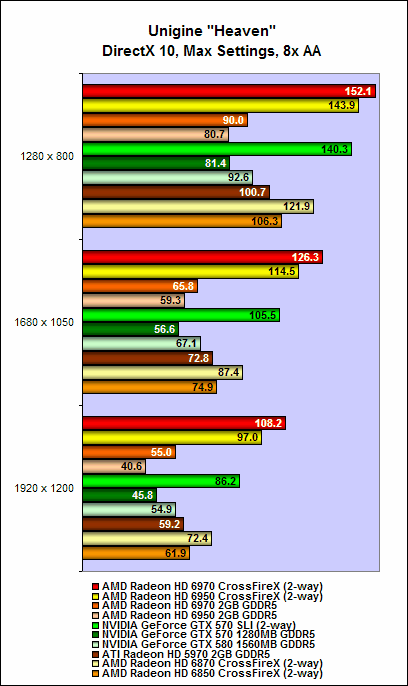
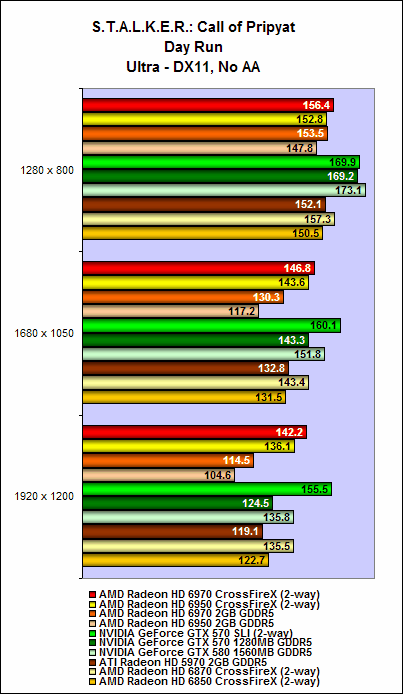
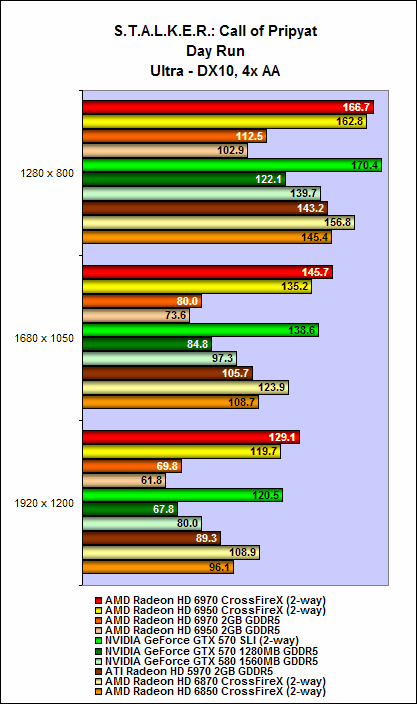
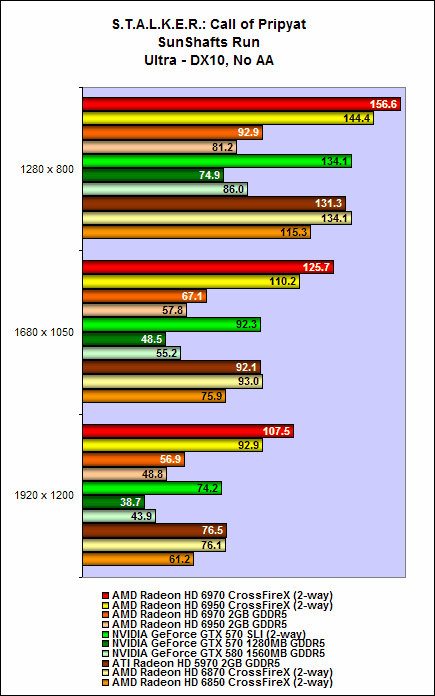
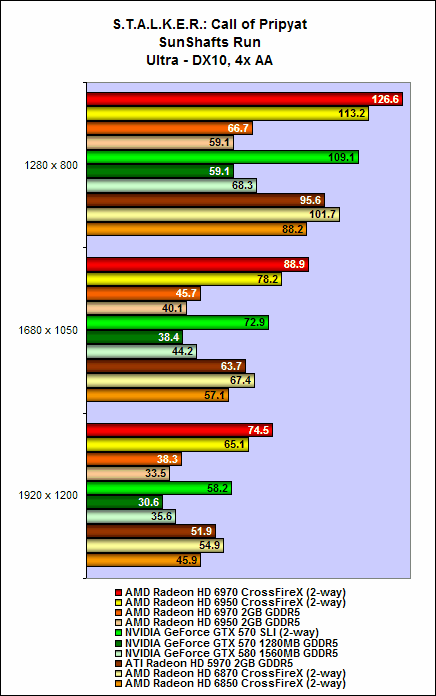
In our earlier review, we noted that a single GeForce GTX 570 was mostly quicker than the Radeon HD 6970, and it was mostly the same case here, with two GeForce GTX 570 cards offering mostly quicker performance than two Radeon HD 6970 cards. However, thanks to its massive combined framebuffer of 4GB, the Radeon HD 6970 was very capable when running on the highest resolutions and with anti-aliasing enabled.
Nevertheless, both the Radeon HD 6970 and HD 6950 offered decent performance scaling. On intensive benchmarks such as Crysis Warhead and the Sunshaft runs for Stalker, we noted that adding an additional card to the mix can garner as much as a 80% to 90% increase in performance. On some benchmarks, the cards Radeon HD 6900 series in CrossFire can surpass the GTX 570 SLI configuration, but unfortunately this outcome wasn't consistent all through (but they were close at times).
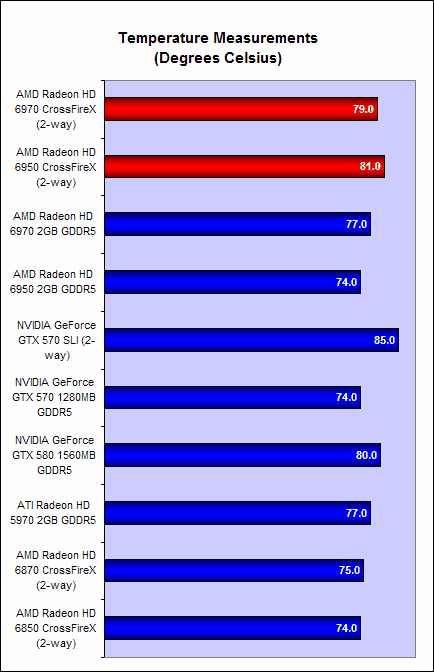
On the flip side, more graphics performance also means greater power consumption and more heat generated. With two Radeon HD 6970 cards in a CrossFireX configuration, we recorded a maximum power draw of 444W, which means, to be safe, a PSU rated for at least 700W is required. Consequently, a casing with adequate ventilation is also needed to expel the excess heat, as excess built up heat within the chassis can shorten the lifespan of components or even damage them.

A potent combination, but sadly, it doesn't obliterate the competition. We await AMD's dual-GPU solution to see if it'll snatch the speed crown back from NVIDIA.
To end, an additional Radeon HD 6970 or HD 6950 card is going to net you some pretty impressive gains in performance, especially on the more intensive settings where the massive 4GB framebuffer gets a workout. But as is the case with multi-GPU configurations, be wary of the additional power requirements and built up of heat.
Looking ahead, AMD is set to have a dual-GPU solution planned to succeed the Radeon HD 5970 and although specifications of that card are sketchy, many have speculated that it will essentially be two Radeon HD 6950 GPUs (Cayman PRO) on a single card. With the Radeon HD 6970 and HD 6950 disappointing us slightly, hopefully AMD’s upcoming dual-GPU part might be more exciting by means of better efficiency.
Our articles may contain affiliate links. If you buy through these links, we may earn a small commission.