
AMD Does DDR3 - The AM3 Phenom II
AMD's long awaited move to DDR3 happens today, as it is launching five new Phenom II models using its AM3 938-pin socket. These processors support both DDR2 and DDR3 memory, making them compatible with old and new motherboards alike. Do they have what it takes to compete with Intel?
DDR3 at Last
It has been a difficult time for both AMD and Intel, affected as they are by falling demand resulting from the current economic 'gloom and doom'. Intel reported dismal revenues for the last quarter while the new year has begun with more job cuts at AMD. The situation looks more bleak for AMD, as they have been hemorrhaging even before the economic downturn. Hence, there was a lot at stake here for AMD's recent 45nm shrink of its Phenom CPU microarchitecture, dubbed the Phenom II.
Fortunately, our last encounter with the Phenom II gave us a few reasons to be optimistic. The die shrunk has brought a larger L3 cache to a chip which runs cooler and is energy efficient than the original while at the same time boasting higher clock speeds. A lower total cost of entry for the entire platform (dubbed the Dragon) thanks in part to its use of DDR2 memory and a simple drop-in CPU upgrade for existing Phenom users helped to fuel this mainstream value perception. For enthusiasts, the return of some overclocking potential to the AMD platform is also much appreciated.
Yet this is but the beginning. Today, AMD launches its AM3 socket (938-pin) Phenom II, the first processors from the company to embrace DDR3 memory. It's a long awaited shift, coming more than a year after Intel made its move. However, with the AMD architecture having an integrated memory controller as it has been for a while now, one could argue that Intel only made its shift with its Core i7 architecture. In any case, there are up to five new 45nm AM3 Phenom II processors launched today, including the first triple-core Phenom II models.
Of these five models, three will be available in retail while the other two are tray versions for the OEM market. While the underlying architecture and process technology is similar to the earlier Phenom II models, there are some differences, chief being naturally the DDR3 support in the integrated memory controller. According to AMD, these AM3 processors can accept either up to DDR2-1066 or DDR3-1333. Hence you could drop them into an AM2+ motherboard and they will work fine, with a BIOS update at most. If you do plan to go DDR3, motherboard vendors have already released AM3 boards.
One thing about DDR3-1333 - the integrated memory controller on current AM3 processors only support a single DDR3-1333 DIMM per channel, thus limiting the amount of DDR3 memory that can feasibly be installed (good luck finding a 4GB DDR3 module now), even if the CPU does support up to 8GB memory on paper. At the moment, fully populating all the available DDR3 DIMM slots, assuming the typical 4 DIMMs, will result in a lower (than DDR3-1333) memory frequency.
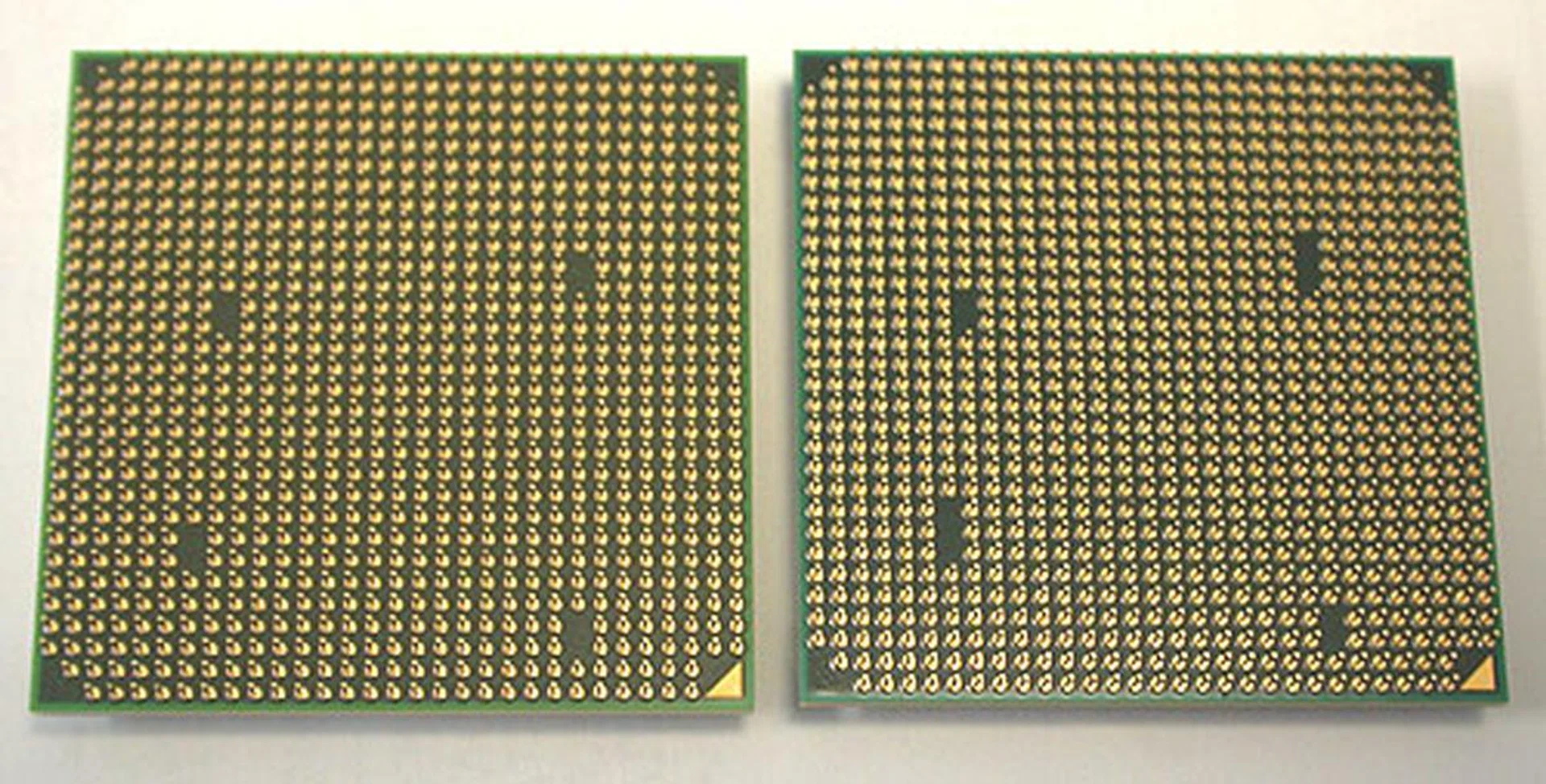
The only physical difference that we saw to distinguish between an AM2+ and an AM3 socket processor lies in the pins. Or rather the lack of. If you look closely enough, the AM3 CPU (on the right) has a larger gap of three pins at the 'holes', compared to two on the AM2+ version.
One difference with these new models is that some of them (X4 810 and X4 805) come with only 4MB of L3 cache. If you remember, the Phenom II models that have debuted have 6MB of L3 cache and this is significant performance-wise compared to the original Phenom processors that have only 2MB of L3. No doubt, AMD has its sights on the mainstream segment with these 4MB L3 processors. The 2.6GHz Phenom II X4 810 in particular, is aimed at Intel's newer mainstream quad-cores, like the 2.33Ghz Q8200 with a 4MB L2 cache. Interestingly, the memory controller and HyperTransport on these AM3 Phenom IIs are running at 2.0GHz, faster than the 1.8GHz found on the Phenom II 940 and 920.
Finally, all these new AM3 Phenom II are 95W models, which are about 30W lower than the 125W models that have been launched previously. Thus, we're looking forward to better idle and peak power consumption numbers from these newcomers and to help us find out how they fare, AMD sent us two of the retail models, the Phenom II X4 810 and the Phenom II X3 720 'Black Edition'.
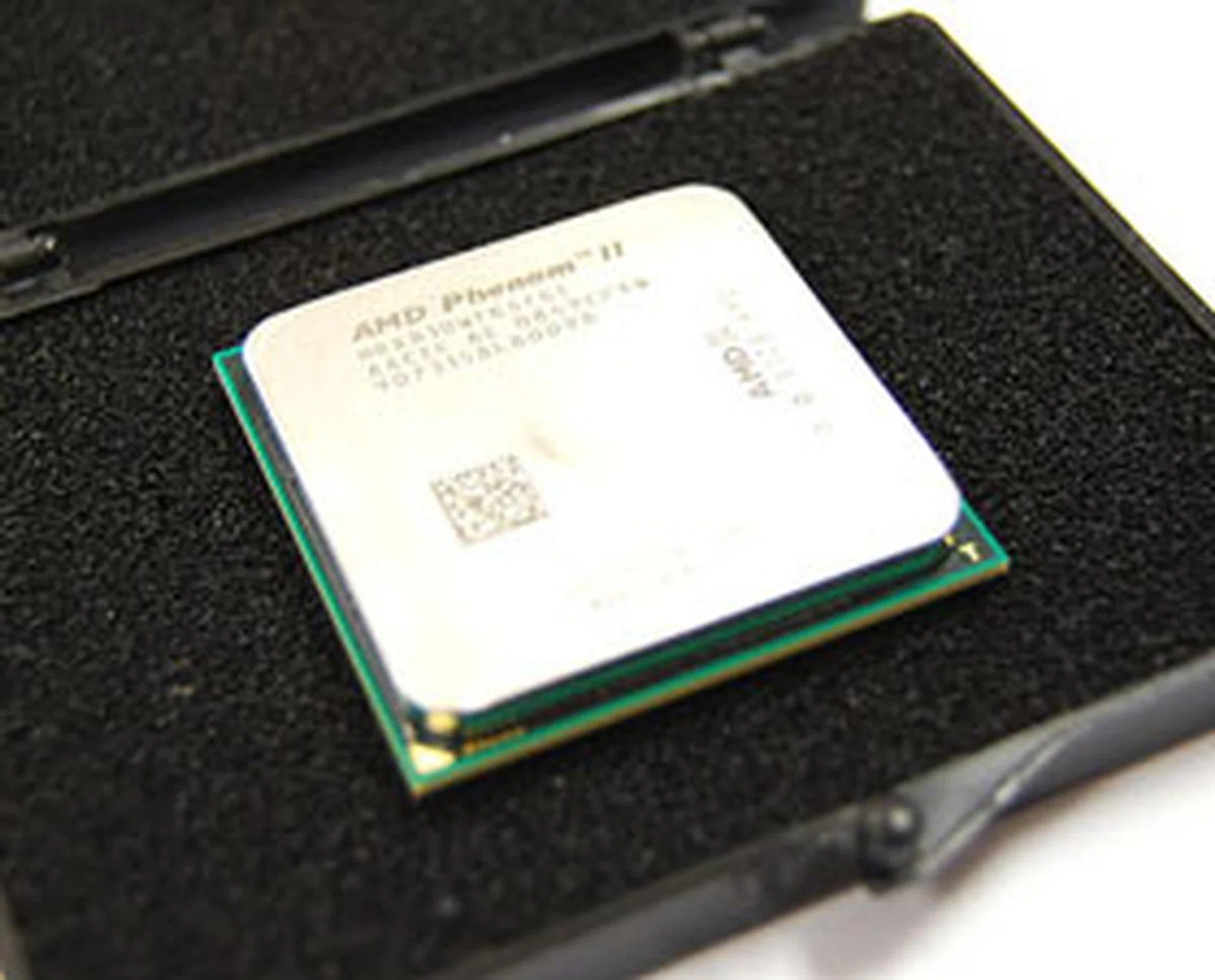
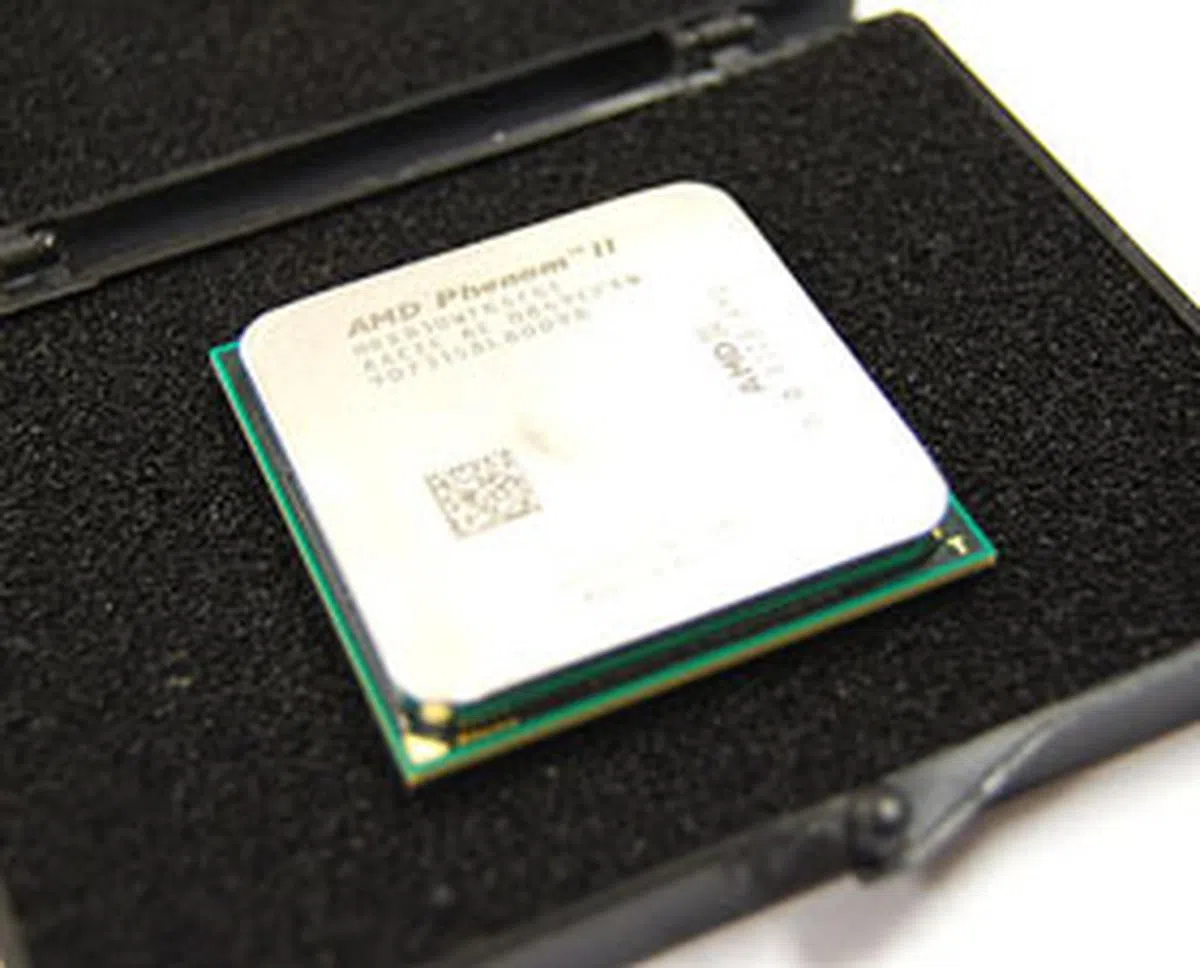
The Phenom II X4 810.
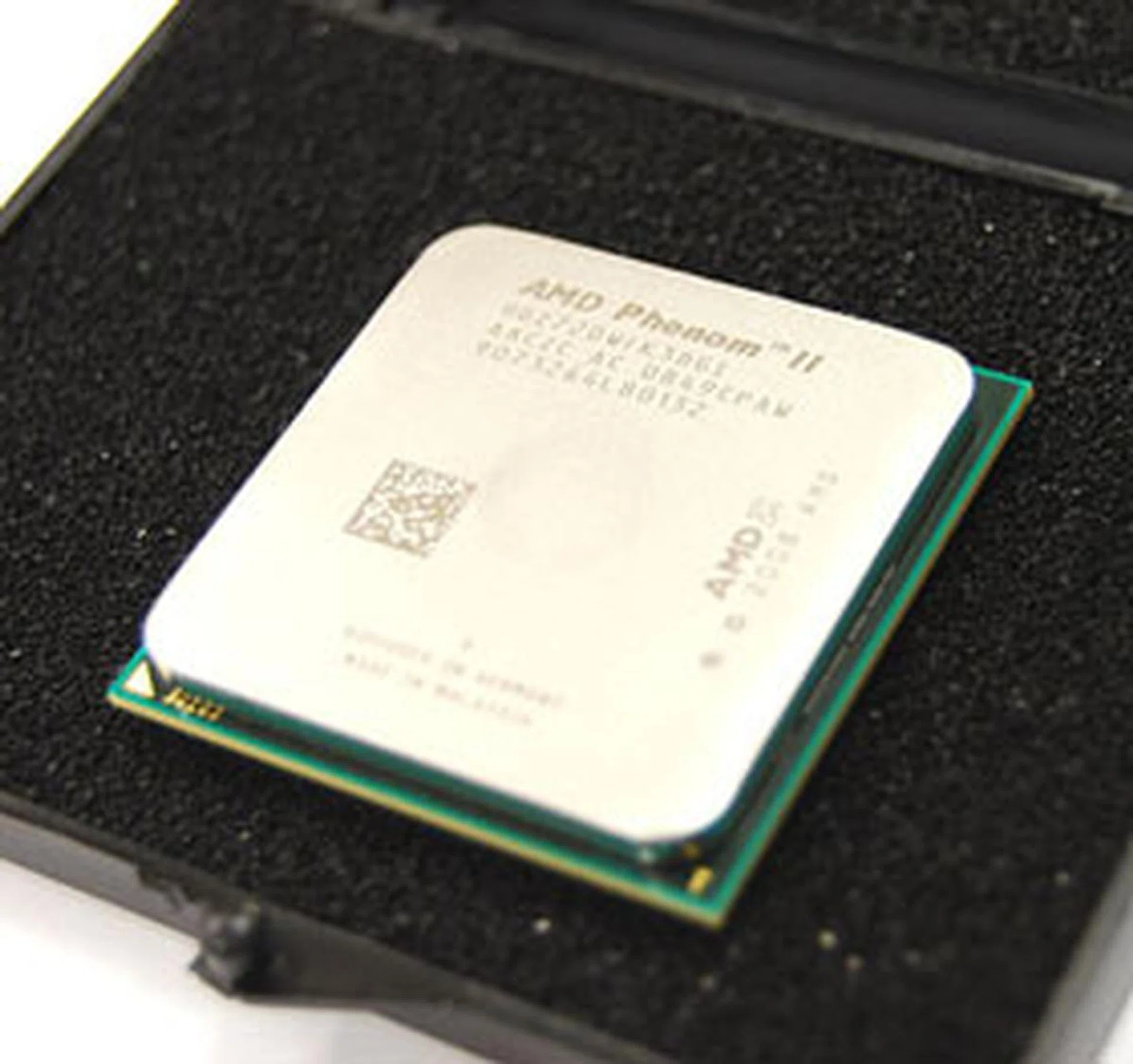
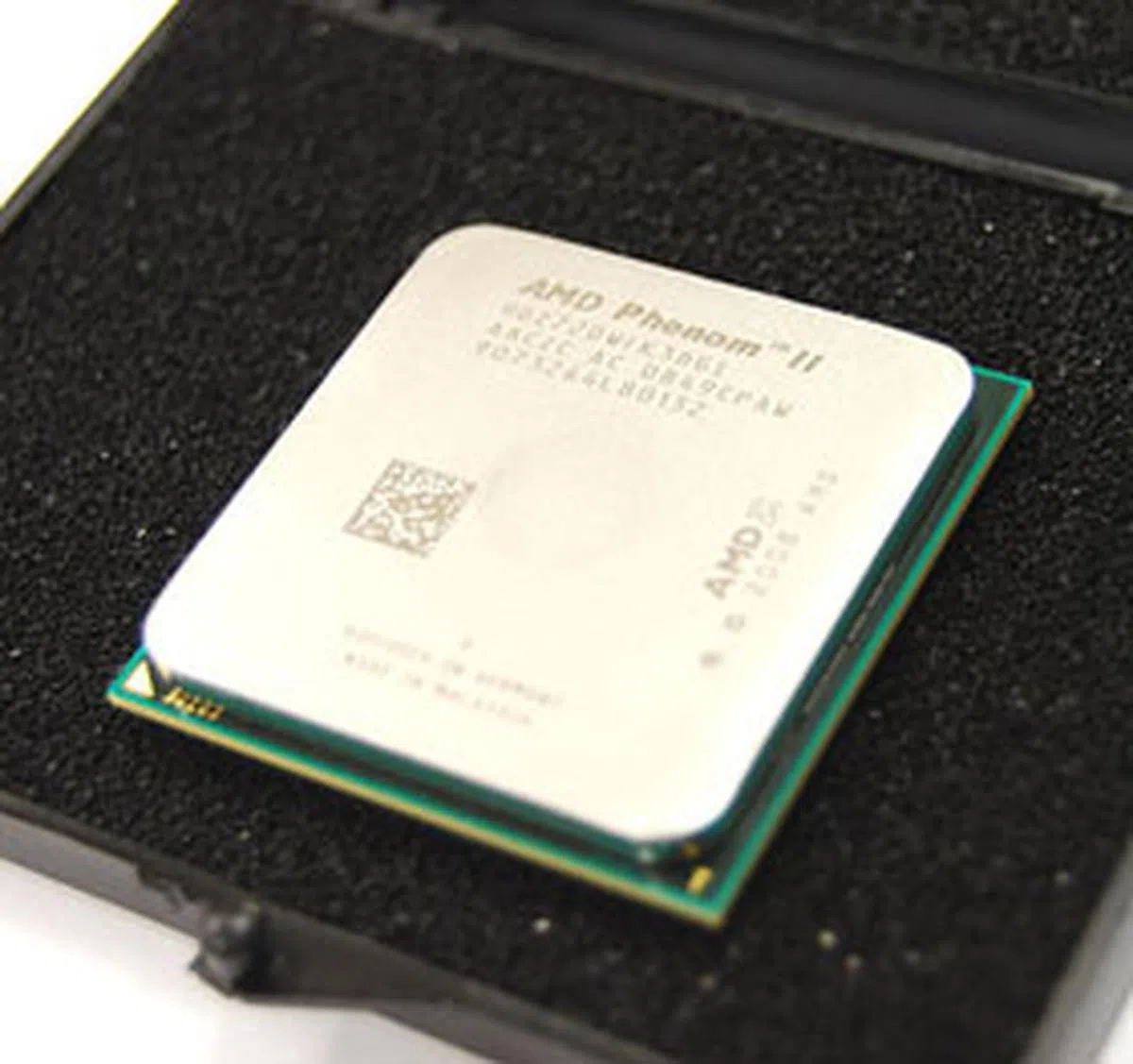
The Phenom II X3 720 'Black Edition'.
New AM3 Phenom II Processors | ||||||||
Processor Model | Clock Speed | L2 Cache | L3 Cache | HyperTransport Bus | Memory Controller Speed | Max TDP (W) | Retail Price (US$) | Availability |
Phenom II X4 810 | 2.6GHz | 512KB x 4 | 4MB | 2.0GHz | 2.0GHz | 95 | $175 | Now (PiB) |
Phenom II X3 720 'Black Edition' | 2.8GHz | 512KB x 3 | 6MB | 2.0GHz | 2.0GHz | 95 | $145 | Now (PiB) |
Phenom II X3 710 | 2.6GHz | 512KB x 3 | 6MB | 2.0GHz | 2.0GHz | 95 | $125 | Now (PiB) |
Phenom II X4 910 | 2.6GHz | 512KB x 4 | 6MB | 2.0GHz | 2.0GHz | 95 | N.A | Now (Tray) |
Phenom II X4 805 | 2.5GHz | 512KB x 4 | 4MB | 2.0GHz | 2.0GHz | 95 | N.A | Now (Tray) |
Existing AM2+ Phenom II Processors | ||||||||
Phenom II X4 940 | 3.0GHz | 512KB x 4 | 6MB | 1.8GHz | 1.8GHz | 125 | $229 | Now (PiB) |
Phenom II X4 920 | 2.8GHz | 512KB x 4 | 6MB | 1.8GHz | 1.8GHz | 125 | $189 | Now (PiB) |
Test Setup
As usual, we had various test configurations for the processors that we'll be comparing today. For the new Phenom II models that we are reviewing, we have kept with the previous configuration for the Phenom II, since these AM3 processors will work without a hitch on the older AM2+ boards. We'll be sharing with you the performance on AM3 boards using DDR3 memory in a follow-up article.
- MSI DKA 790GX Platinum (AMD 790GX chipset)
- 2 x 1GB Aeneon DDR2-1066 (CAS 5-5-5-15)
- Seagate Barracuda 7200.10 200GB SATA hard drive (one single NTFS partition)
- ASUS GeForce 8800 GT 512MB (ForceWare 169.21)
- Zotac GeForce GTX 260 (For World in Conflict and Crysis only, ForceWare 178.24)
- Microsoft Windows XP Professional with Service Pack 2
For the Phenom II X4 810, AMD has targeted Intel's Q8200 (2.33GHz) quad-core CPU as its main competitor in terms of price and performance. However, we don't have this CPU in our lab hence we went with the alternatives, the faster Core 2 Quad Q9300, which is clocked at 2.5GHz and comes with a larger L2 (6MB) than the Q8200 and the aging but golden Q6600, which at 2.4GHz and with 2 x 4MB L2 cache, is quite similar to the Q8200.
Meanwhile the other CPU we received, the X3 720 'Black Edition' is intended to go against Intel's dual-core models, with the E8400 identified by AMD as the direct competitor (though we believe the E7000 series are better suited). Obviously, the X3 720 is priced accordingly in the Intel dual-core region. Hence, the test setup for these processors (Intel Q9300. Q6600 and Core 2 Duo) are listed below:-
ASUS P5E3 Deluxe (Intel X38 Express chipset)
- 2 x 1GB Kingston HyperX DDR3-1333 (CAS 7-7-7-20), DDR3-1066 (for Q6600)
- Seagate Barracuda 7200.10 200GB SATA hard drive (one single NTFS partition)
- ASUS GeForce 8800 GT 512MB (ForceWare 169.21)
- Zotac GeForce GTX 260 (For World in Conflict and Crysis only, ForceWare 178.24)
- Microsoft Windows XP Professional with Service Pack 2
- Intel INF 8.3.1.1009 and Matrix Storage Manager 7.8.0.1012
Also, we have included a set of Core i7-920 results for reference and the configuration is as follows. Do note that HyperThreading and Turbo mode is enabled for the Core i7 system and it does have 3GB of DDR3-1333 memory instead of the 2GB on the other setups. The difference in memory capacity however makes little difference as established in an earlier exploration article.
- Intel DX58SO Motherboard (Intel X58 Express chipset)
- 3 x 1GB Kingston HyperX DDR3-1333 (CAS 7-7-7-20) @1.62V
- ASUS GeForce 8800 GT 512MB (ForceWare 169.21)
- Zotac GeForce GTX 260 (For World in Conflict and Crysis only, ForceWare 178.24)
- Seagate 7200.10 200GB SATA hard drive (one single NTFS partition)
- Windows XP Professional with Service Pack 2
- Intel INF 9.1.0.1007 and Matrix Storage Manager 8.6.0.1007
And finally, since we had a Phenom II X3 to look at, we have included our results from our last Phenom X3, the 8750 and the setup is:-
- ASUS M3A32-MVP Deluxe Wi-Fi (AMD 790FX chipset)
- 2 x 1GB Aeneon DDR2-1066@ DDR2-800 (CAS 5-5-5-15)
- Seagate Barracuda 7200.10 200GB SATA hard drive (one single NTFS partition)
- ASUS GeForce 8800 GT 512MB (ForceWare 169.21)
- Microsoft Windows XP Professional with Service Pack 2
For two of our game benchmarks, World in Conflict and Crysis, we have started to move to a Zotac GeForce GTX 260 for testing. This was due to our experience when testing the Core i7, where our previous GPU, a GeForce 8800 GT appeared to be a bottleneck.
Benchmarks
The following benchmarks were used in this review:-
- SYSmark 2007 Preview (ver 1.04)
- SPEC CPU2000 v1.3
- Futuremark PCMark 2005 Pro
- Lightwave 3D 7.5
- 3ds Max8 (SP2)
- Cinebench 10
- XMpeg 5.0.3 (DivX 6.8 encoding)
- Futuremark 3DMark06 v1.1
- AquaMark3
- World in Conflict v1.05
- Crysis v1.1
A note about the color coding for the benchmark graphs. We have placed the X4 810 and X3 720 against its closest competitors (we did have to replace the Q8200 with the Q9300 and Q6600). Hence, these 'groups' have distinct colors. Then we also included two sets of reference results, the Core i7 920 and Phenom II X4 920, which are in blue to distinguish them from the others.
Results - SPEC CPU2000 v1.3
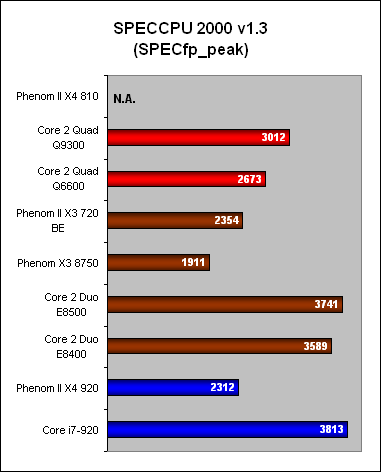
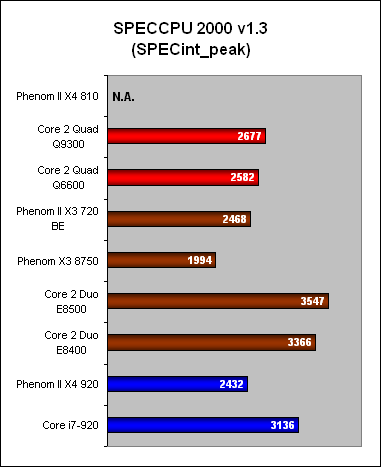
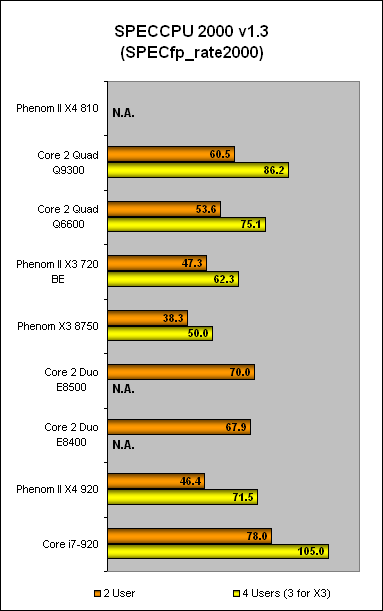
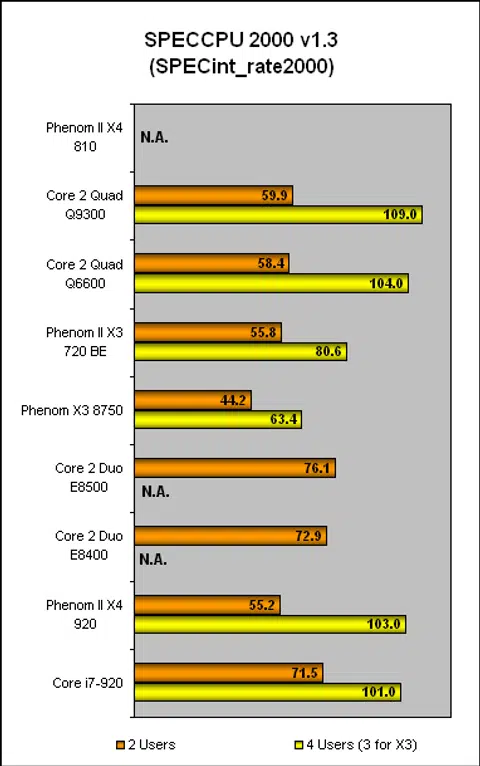
As usual, we started off with SPEC CPU2000 to find out the raw integer and floating point performance of these processors. Unfortunately, we ran into issues completing the benchmark using the Phenom II X4 810 and at the moment, we do not have the results for this processor. We did manage to get the results from the X3 720 'Black Edition' and the peak scores for fp and int appeared to be on par with the Phenom II X4 920. This made sense given that both CPUs are clocked at 2.8GHz, with similar L3 cache sizes. The HT bus on the X3 720 however is running a tad faster at 2.0GHz.
While these scores meant that the X3 720 was around 23% faster than the older Phenom X3 8750, it was still far from the Intel dual-cores here with their higher clock speeds, not to mention the Core i7, especially when it came to floating point performance. When it came to the two and four-user threads, the Phenom II processors were generally unable to keep up with their Intel counterparts, though the Phenom II X4 920 did match the Core i7 920 for int_rate for the four-user workload.
Results - SYSmark 2007 Preview
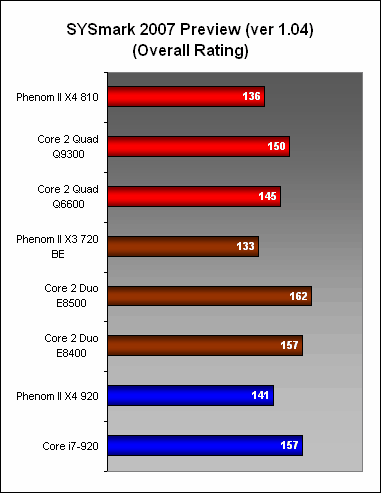
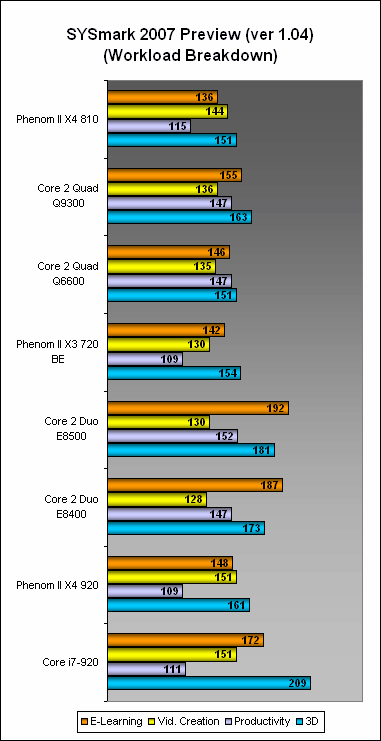
Next, we finally see some results from the X4 810 in SYSmark 2007. Its overall rating was slightly less than the X4 920, though compared to the mainstream Q9300, there was some way to go. However, the X4 810 should have a better chance against the slower Q8200 that is its intended competitor in this segment. Our scores for the Q6600, which is nevertheless faster than the X4 810 should be an indication of where the Q8200 will probably roughly stand.
Meanwhile, the X3 720 was unable to compete against the dual-core Intel chips, with even the E8400 proving too fast for it. That is, until we looked at the breakdown in the scores, where the extra core on the X3 720 seemed to pay off. In video creation, the X3 was equal to the E8500 and slightly faster than the E8400 so that was one area where it could compete. For most other tasks however, expect the dual-cores Intel processors to be ahead.
Results - Futuremark PCMark05 Pro
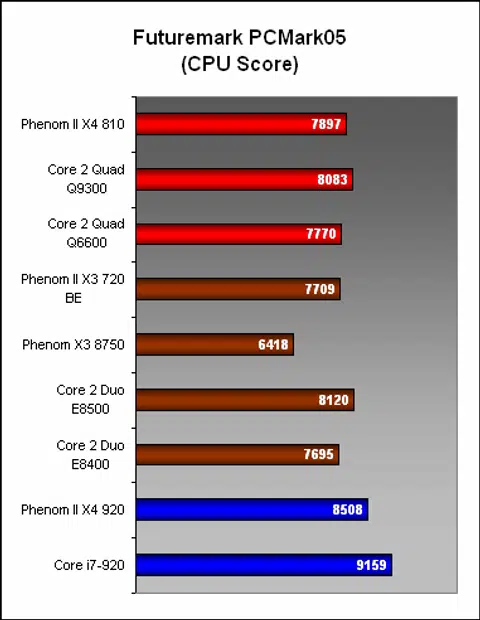
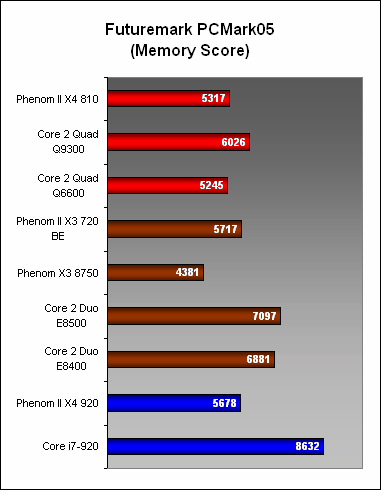
PCMark05 affirmed the potential of the Phenom II X4 810, as its CPU score here was only slightly behind the Q9300 and also faster than the Q6600. Hence, the chances of it winning against the Q8200 here appear to be high. The X3 720 was also another strong performer, beating its target, the E8400 narrowly. When it came to the memory subsection, the 4MB L3 on the X4 810 affected its performance, with the X4 losing out to the 6MB X3 720. Nevertheless, the Intel dual-cores were easily in front and the Core i7 920 was untouchable.
Results - Lightwave 3D 7.5
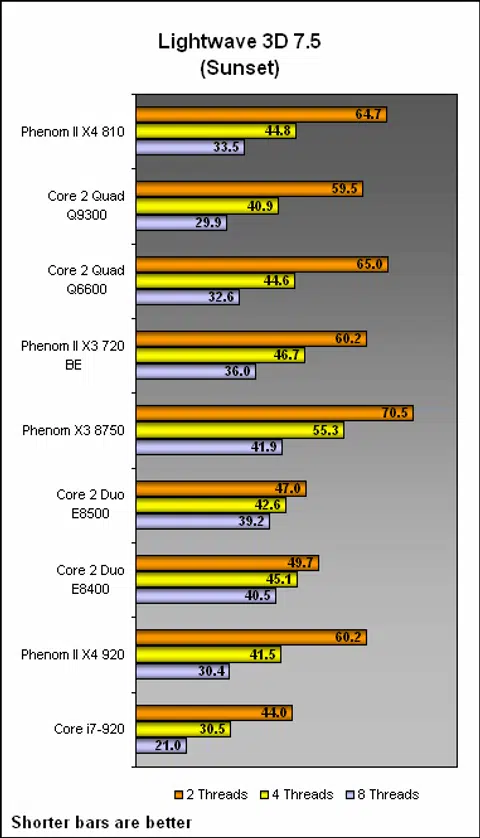
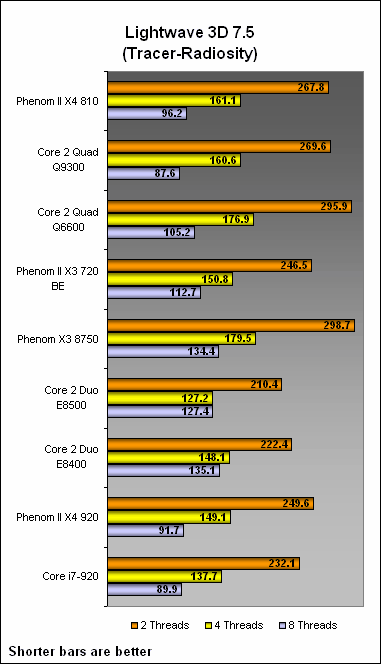
Moving on to Lightwave 3D, the Phenom II continued to fare decently against its competitors. The X4 810 was predictably slower than the quad-core Q9300, but it was dead even between the X4 and the Q6600 in Sunset, with the X4 having a slight advantage in Tracer-Radiosity. The X3 720 was initially slower than the Core 2 Duo processors at two-user threads but again, its triple-core came into play once the number of user threads were increased. At four and eight-user threads, the X3 was competitive with the E8400.
Results - 3ds Max 8 (SP2)
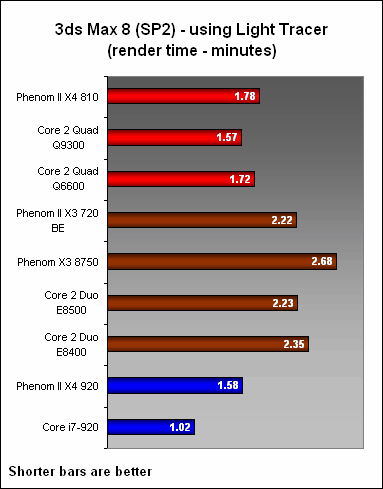
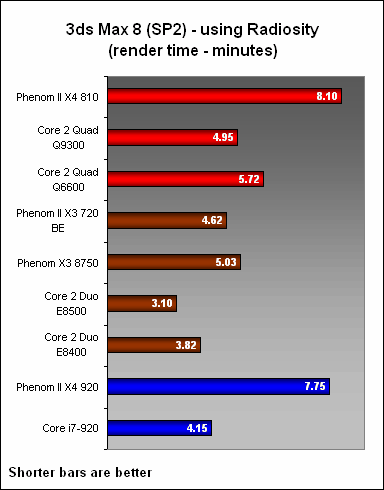
Another 3D rendering test, we rendered using 3ds Max 8's Light Tracer plugin first and found the X3 720 to be marginally in front of the E8500, which is good news for AMD. The X4 810 as usual was unable to match the Intel Q9300, but it should fancy its chances against the Q8200 given its close score with the Q6600. However, when we used the Radiosity plugin, the results were quite unexpected, with both Phenom II quad-cores taking a significantly longer time than the X3 models, including the Phenom X3 8750. We aren't sure why we are seeing such results and repeat tests yielded the same outcome.
Results - Cinebench 10 and XMpeg 5.0.3 (DivX 6.8 encoding)
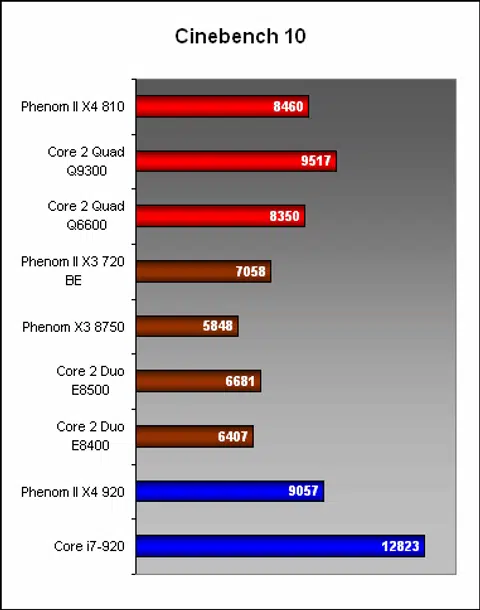
Next up, Cinebench 10 showed that AMD was correct to place the X3 720 against the Intel dual-core processors. While the triple-core could not stand a chance against its quad-core competitors, it was sufficient to edge ahead of the dual-cores. The X4 810 also did creditably here, despite losing to the Q9300. At least it managed to narrowly beat the Q6600.
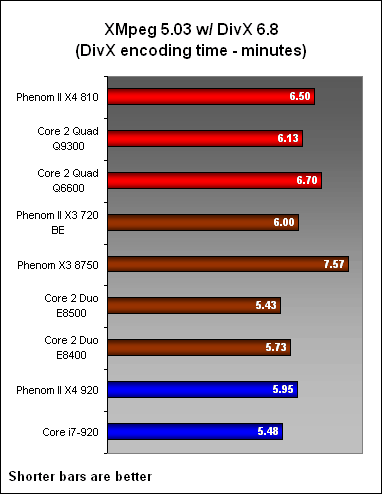
When it came to XMpeg encoding speed, the number of cores did not seem to matter as much as pure clock speeds, as the dual-cores and their higher clocks performed much better than the Phenom II processors and even the quad-core Q9300. This also meant that the X3 720 emerged faster than the X4 810.
Results - Futuremark 3DMark06
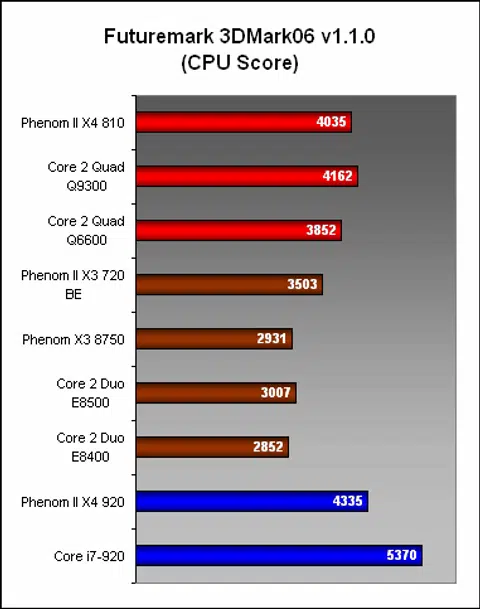
Both the Phenom II X4 810 and X3 720 did well in 3DMark06, scoring very competitively against its opponents. The extra core in particular paid off in the CPU score, with the X3 far ahead of the dual-core processors. The X4 810 was right behind the Q9300 and ahead of the Q6600, so the Q8200 should be right within its sight.
Results - AquaMark3
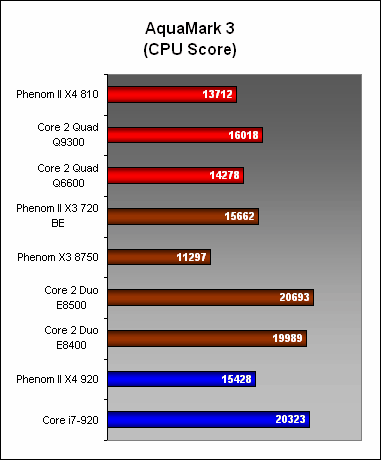
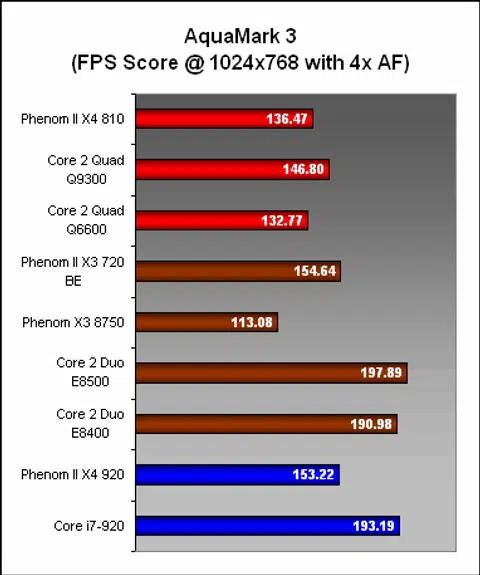
Clock speeds mattered more than the number of cores here in AquaMark3, as we saw the dual-cores running away with the lead, surpassing even the Core i7. It's no surprise then that the higher clocked X3 was leading the X4 810 here.
Results - Crysis and World in Conflict
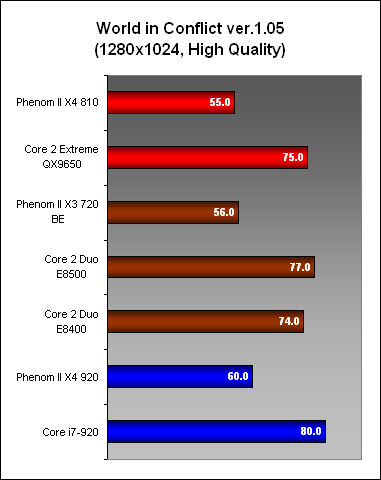
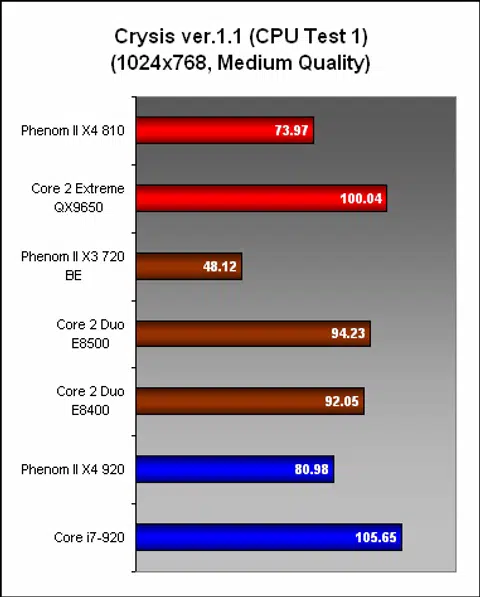
AMD may hope that its X3 720 could compete against the Intel dual-core but in games, it was not able to cut it despite its 2.8GHz clock. The dual-cores have higher clocks and they were simply better overall here in Crysis and World in Conflict. In fact, these dual-cores performed better than Phenom II X4 CPUs. More heavily multi-threaded games may help to narrow the gap between the Intel dual-core and the X3 but we're not betting on it.
Since we do not have the scores for the Q9300 and Q6600 using a GeForce GTX 260, we have replaced that with the QX9650, a much faster processor no doubt as a reference. However, we could see here that the very competitive Intel dual-cores beating even the QX9650 in World in Conflict.
Power Consumption
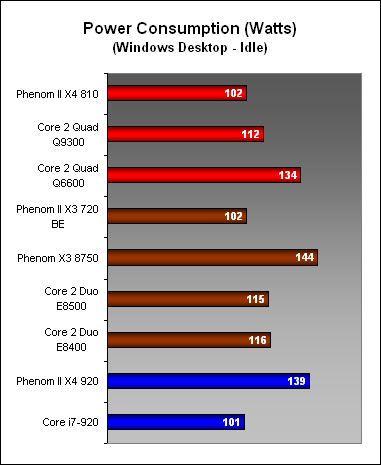
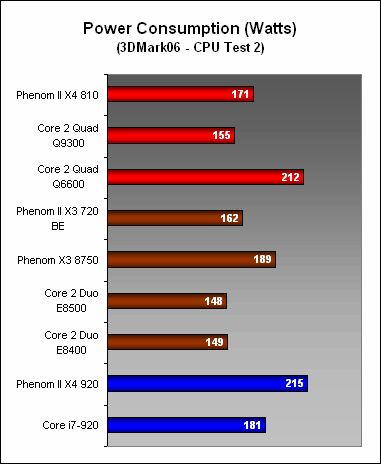
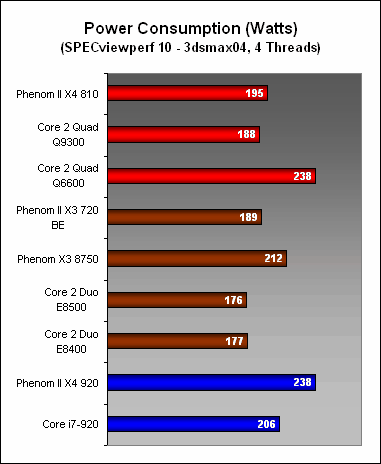
All doubts about these 95W Phenom II processors were cleared instantly in our power consumption tests, with the X4 810 easily drawing less power at idle and at peak than the 125W X4 920. Of course, the lower clock speed on the 810 could be a reason for this, though the 2.8GHz X3 720 also posted similar figures (after accounting for its one lesser core). Also, the MSI DKA790GX Platinum used to test the 95W Phenom IIs has been updated to BIOS version 1.6, which solved an issue where the C1E power consumption numbers were not as low as it should be. This issue affected our initial Phenom II testing (X4 940 and 920) so the gap between the 125W and 95W Phenom IIs should be a bit closer (~5W narrower) than suggested here.
Looking at these results, the new 95W Phenom II processors generally consume less power than Intel's Core i7 processors, though the mainstream quad-cores from Intel (like the Q9300) still maintain the edge here when it comes to power efficiency, especially since the performance of the Q9300 is more than a match for the Phenom II X4 810. Finally, the 65nm Q6600 is looking its age when compared to the newer Intel quad-cores with its higher power draw.
Conclusion
With the launch of these five new models, AMD's AM3 socket has become reality and DDR3 has finally arrived on the AMD platform. One could say that the time is more than ripe for AMD to go DDR3, what with the prices of DDR3 memory modules almost approaching mainstream levels and the fact that Intel has had support for DDR3 for almost two years now. There are still some limitations of DDR3 on the platform, as we have mentioned, but for the most part, it only affects those with more extreme, high-end configurations in mind and if that's the case, why are you even considering AMD?
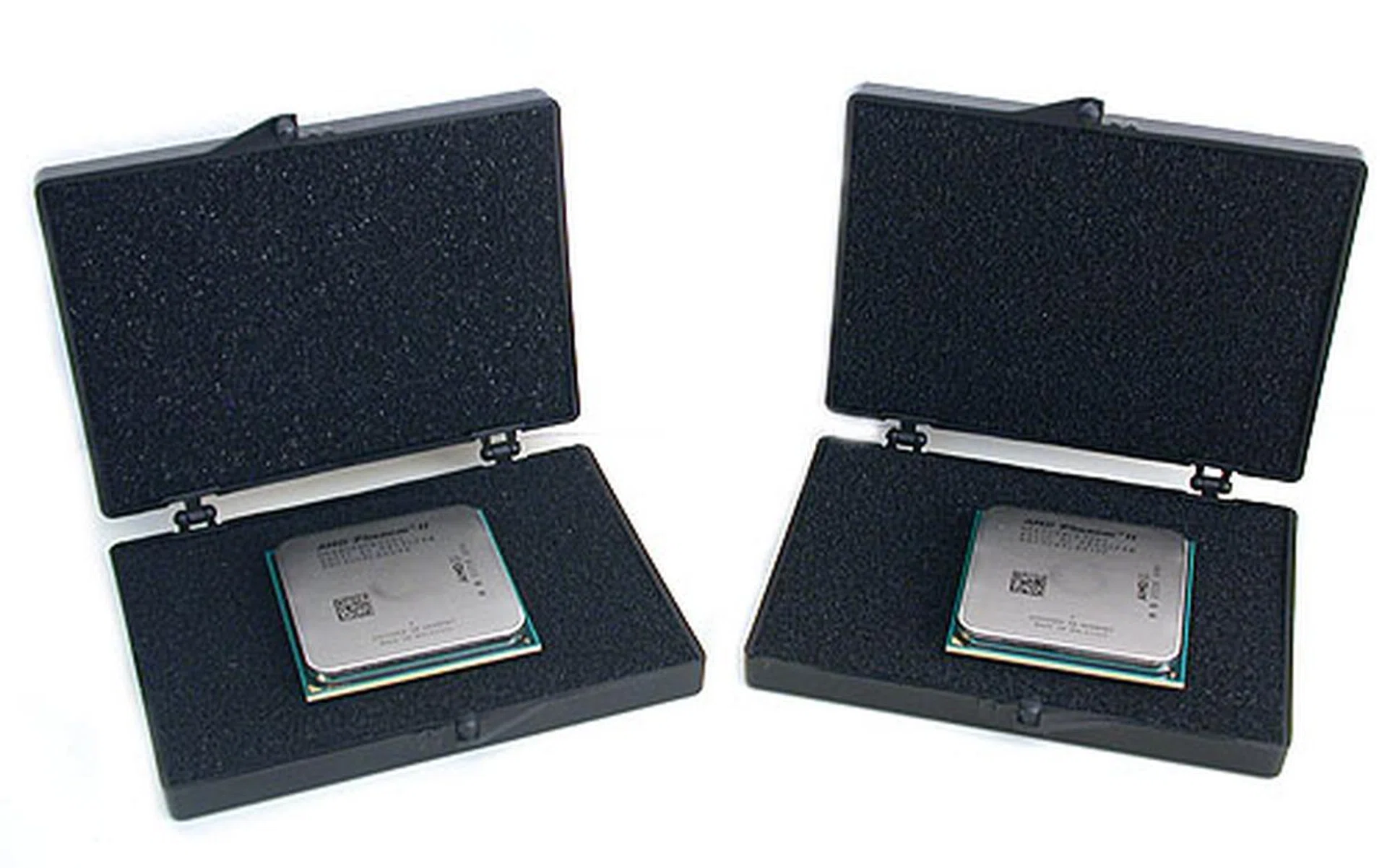
AMD's first step towards a DDR3 based platform starts with these AM3 Phenom processors.
At the moment, the Phenom II X4 940 'Black Edition' that launched earlier remains the top Phenom II and as you may know, these Phenom IIs have the Intel Yorkfield quad-cores in sight, and not so much the Core i7. These new models are similarly aimed at the mainstream and are priced below US$200. Their goals are modest, with the US$175 Phenom II X4 810 aimed at the less powerful quad-core range (Q8200) while the US$145 triple-core X3 720 'Black Edition' takes on the Intel dual-cores.
With the arrival of AM3, the cost of DDR3 memory is no longer an advantage for AMD when touting its more affordable platform. Nevertheless, one can look forward to more price cuts from Intel in the future, similar to what happened when the Phenom II X4 940/920 debuted. The US$170 Q8200 may be such a candidate (against the X4 810), though without testing that processor ourselves, we can't say for sure if the X4 810 is indeed superior.
In terms of performance, the Phenom II X4 810 and X3 720 'Black Edition' that we tested did not give us any surprises. Their results were in line with our expectations given what we have seen of the X4 940/920. Moreover, the X3 720 looks to be quite an interesting model, using its extra core to keep up with the Intel dual-cores and at the same time, making use of its higher 2.8GHz clock and larger L3 cache to edge ahead of the X4 810 for those non multi-threaded scenarios. Though we haven't tested its overclocking potential, having one less core usually allows for a better chance of further overclocking this Black Edition X3.
The other highlight of these new models is obviously their 95W maximum TDP. Compared to the 125W Phenom II which had already impressed us with its power draw, the efficiency of these 95W models is further enhanced. Our numbers have confirmed this and while Intel's mainstream quad-cores also do very well in this section, at least AMD is somewhat competitive here, particularly when the system is at idle.
Once we have gathered enough AM3 motherboards, look out for an upcoming roundup of these motherboards. In the mean time, we'll also be testing these AM3 processors on a AM3 board with DDR3 memory to find out exactly how much difference DDR3 can bring to the platform. So be sure to check back here at www.hardwarezone.com for more updates soon!
 |  |
 | |
Our articles may contain affiliate links. If you buy through these links, we may earn a small commission.