

AMD Ryzen 7 9850X3D performance review: A very, very modest refresh
Side-by-side testing shows just how narrow the gap is between it and the already excellent 9800X3D.
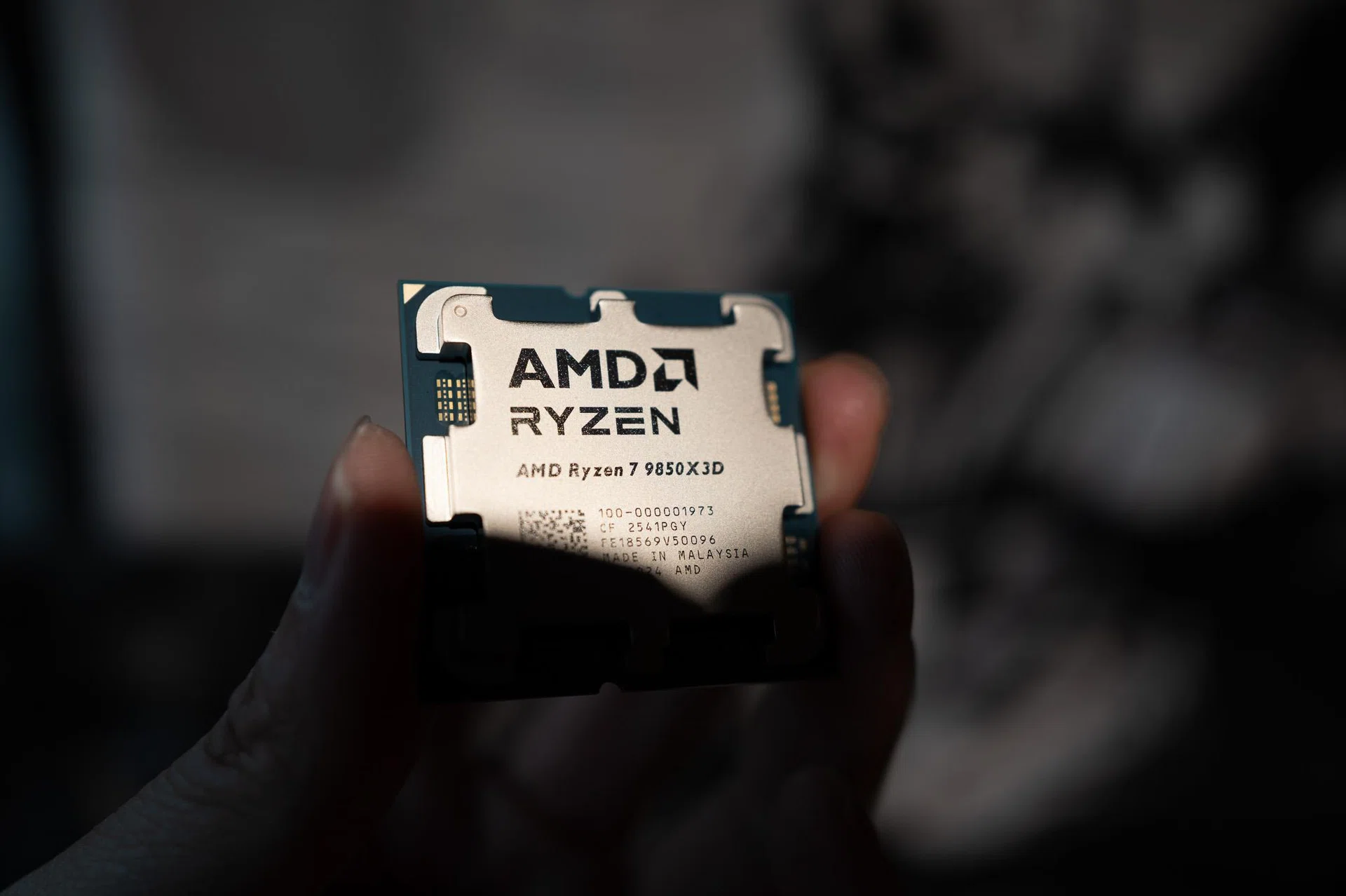
Note: This review was first published on 29 January 2026.
At this point, AMD’s Ryzen X3D formula is well understood. If you want a gaming-focused desktop CPU, the current Ryzen 7 9800X3D and its impressive 3D V-Cache is your best bet and many tech reviewers (including yours truly) agree – the 9800X3D is the most sensible choice for a lot of PC gamers.
Which is why the new Ryzen 7 9850X3D feels like an odd follow-up.
There’s no new architecture to talk about, no rethink of how X3D chips behave, and no attempt to reposition it as something other than what it is. On paper, the pitch is almost comically straightforward: take the 9800X3D, turn the clocks up a little, and release it as a new processor.
That leads to one problem: the 9800X3D is still very much around, and still very good. So the obvious question here isn’t “how fast is the 9850X3D?”, but “who is this actually for?”
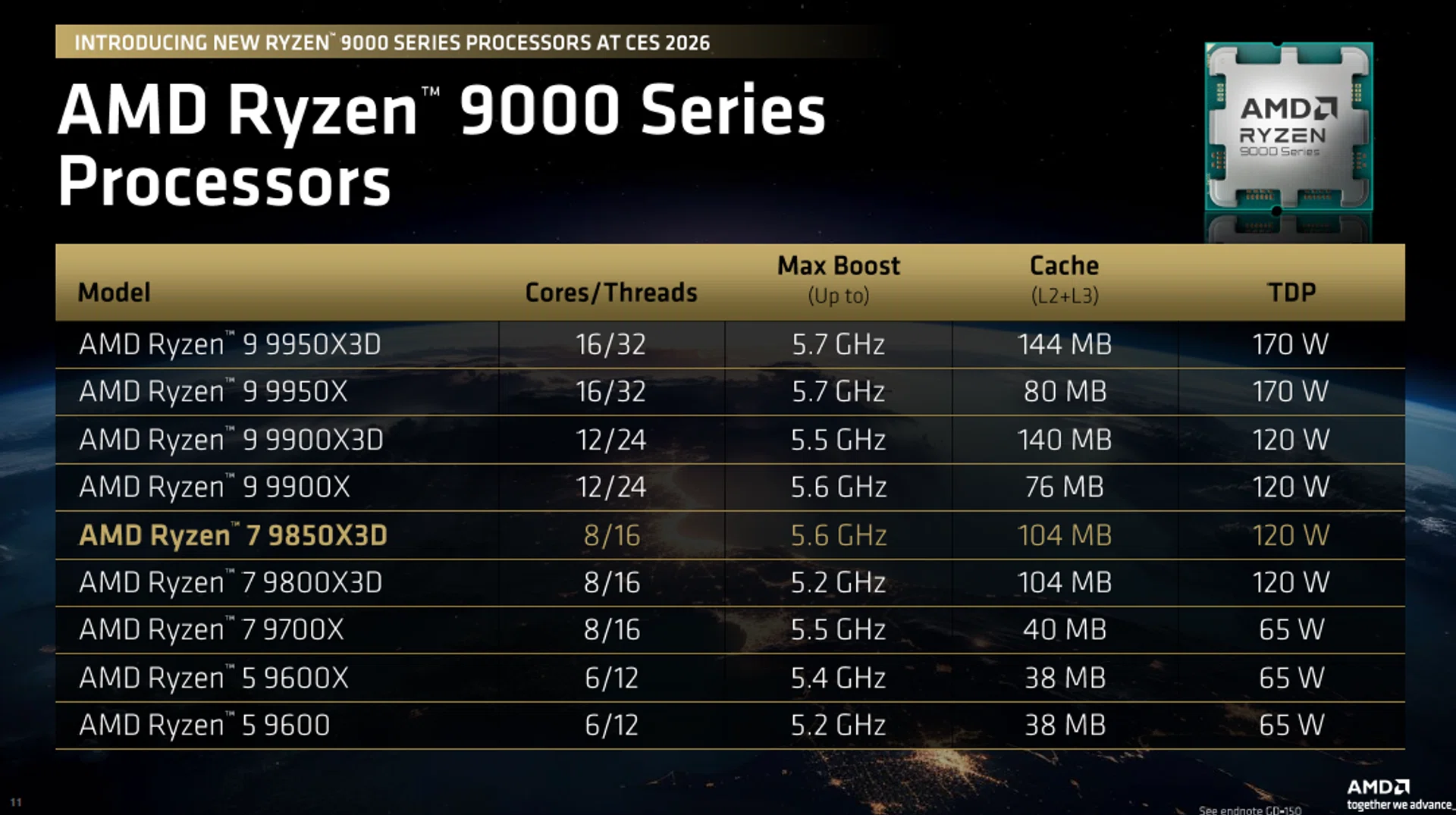
The full Ryzen 9000 series stack.
Just from the new processor’s specifications alone, nothing meaningful has changed. The 9860X3D is still an eight-core, 16-thread Zen 5 processor paired with 96MB of L3 cache thanks to AMD’s 3D-stacked V-Cache design. I won’t explain much about 3D V-Cache since I’ve covered that quite a few times (you can read about it here). But the short explanation is this: By stacking additional L3 directly on top of the compute die, AMD reduces latency and keeps more game data close to the cores, which is exactly why X3D chips tend to punch above their weight in games, especially when paired with a high-end graphics card.
The only real update with the new processor is clock speed. The Ryzen 7 9850X3D now boosts up to 5.6GHz, a 400MHz increase from the 9800X3D. That sounds like a reasonable uplift except that boot clocks are fickle things in reality, especially on X3D processors that are tuned to prioritise efficiency and thermals over sustained frequency. In fact, those top-end speeds are only ever reached briefly.
That puts the 9850X3D in an awkward spot. AMD says it isn’t a replacement for the 9800X3D, nor does it meaningfully move the platform forward. Instead, it exists alongside it, asking gamers to pay a little more for what is, in essence, a slightly looser leash on boost behaviour. If you’re already on a 9800X3D, there’s no obvious reason to feel left behind. And if you’re building a new system, the choice becomes less about performance and more about whether you care about owning the newer SKU since the 9800X3D cost just a wee bit lesser (more on that in my conclusion below).
Anyhow, I went into testing the Ryzen 7 9850X3D with a fair bit of scepticism. Not because it’s a bad processor – and I can tell you it isn’t – but because the bar for improvement here is set by a processor that already does its job very well. Over the past week, I’ve put it through gaming and content creation workloads to see whether that extra headroom actually translates into something you can feel, rather than just measure. The benchmarks below ought to help answer that question, and they also make it clear where the Ryzen 7 9850X3D fits in AMD’s consumer desktop stack.
Ryzen 7 9850X3D performance
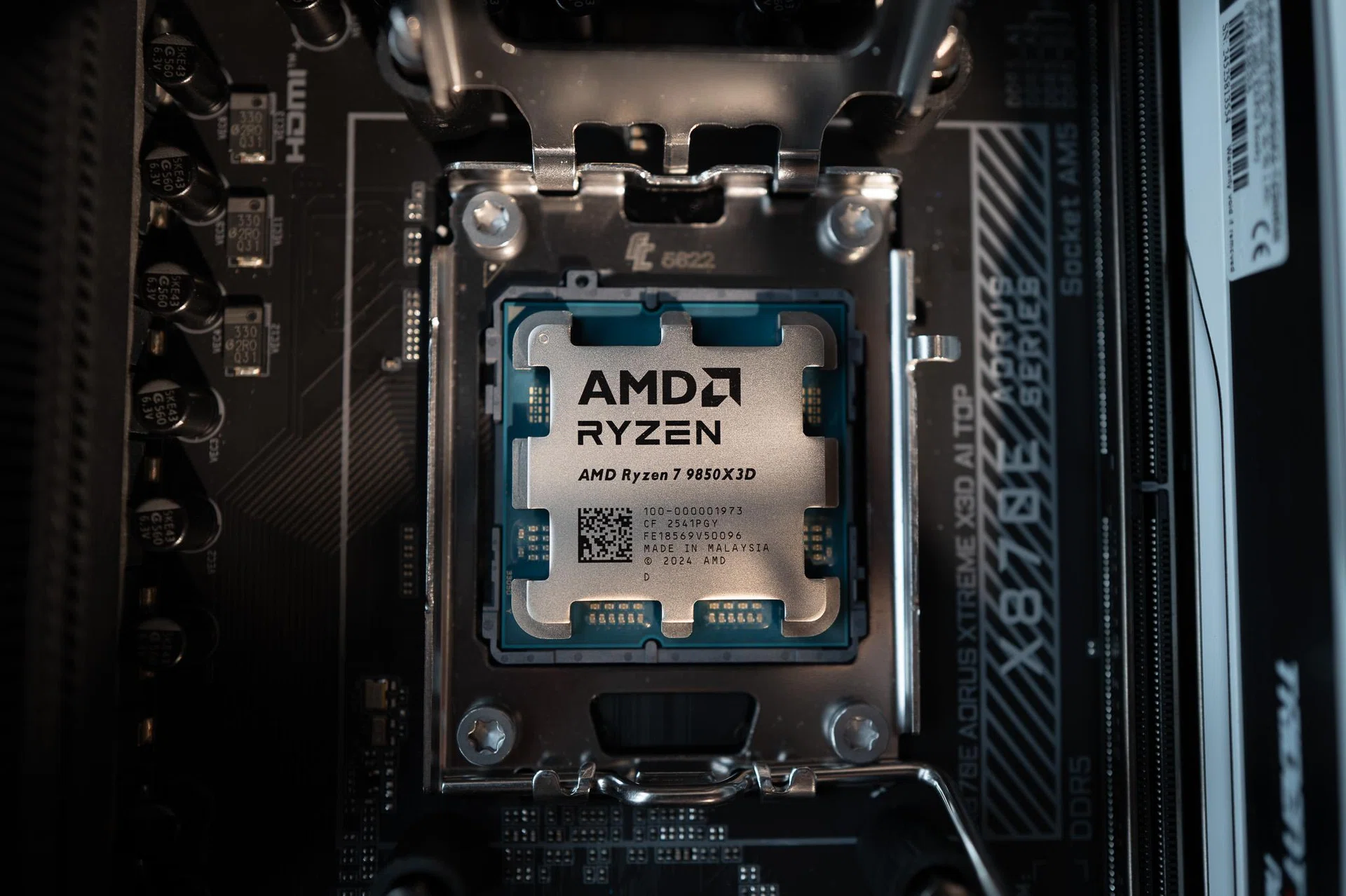
Here’s your Ryzen 7 9850X3D
My AM5-based test platform for the Ryzen 7 9850X3D remains almost the same as the one used to test CPUs, except with a new motherboard from Gigabyte – which are all housed by an also-new Thermal Grizzly Der8enchtable benchtable.
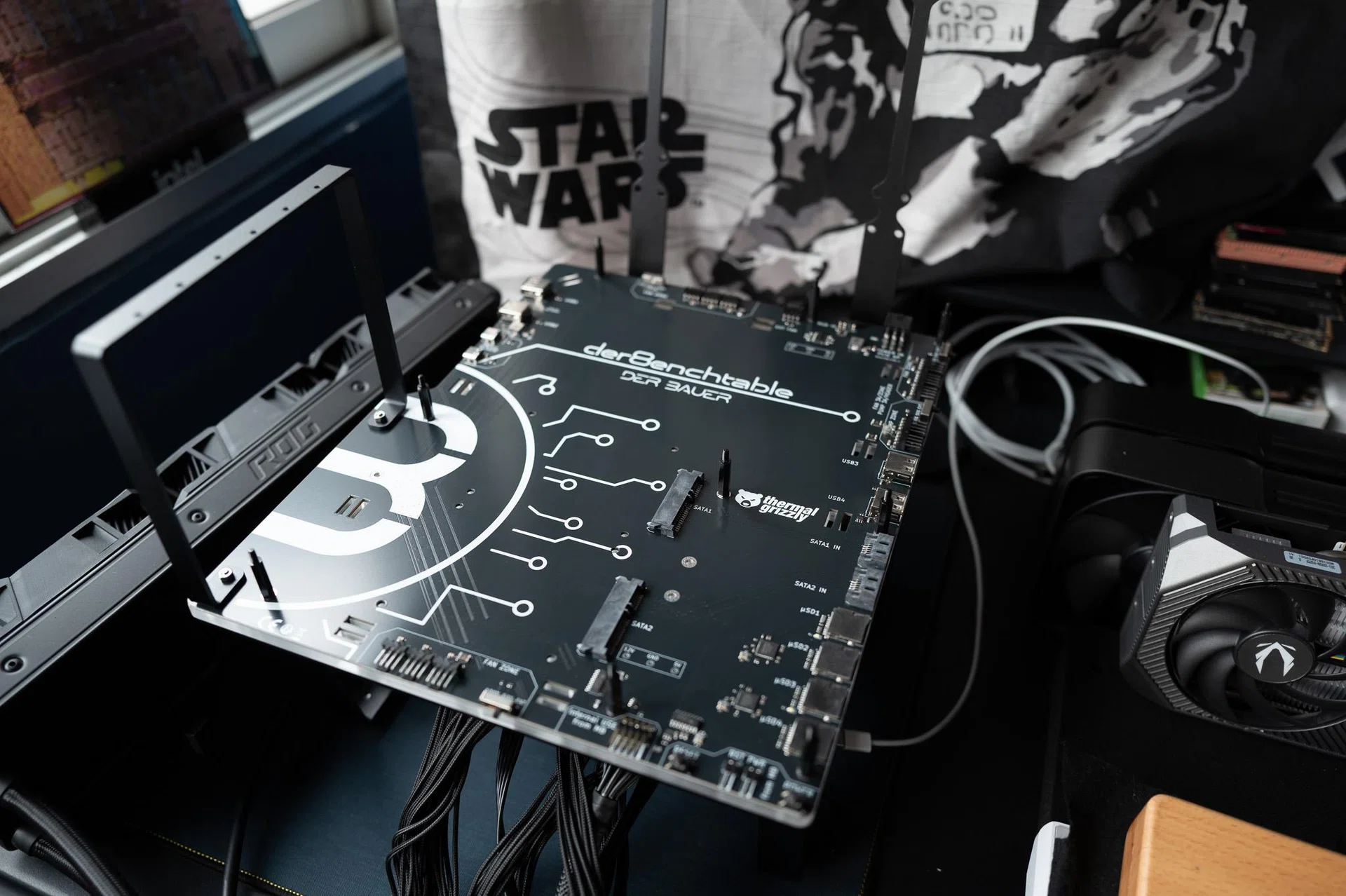
The Thermal Grizzly Der8enchtable is an excellent open-benchtable platform for reviewers.
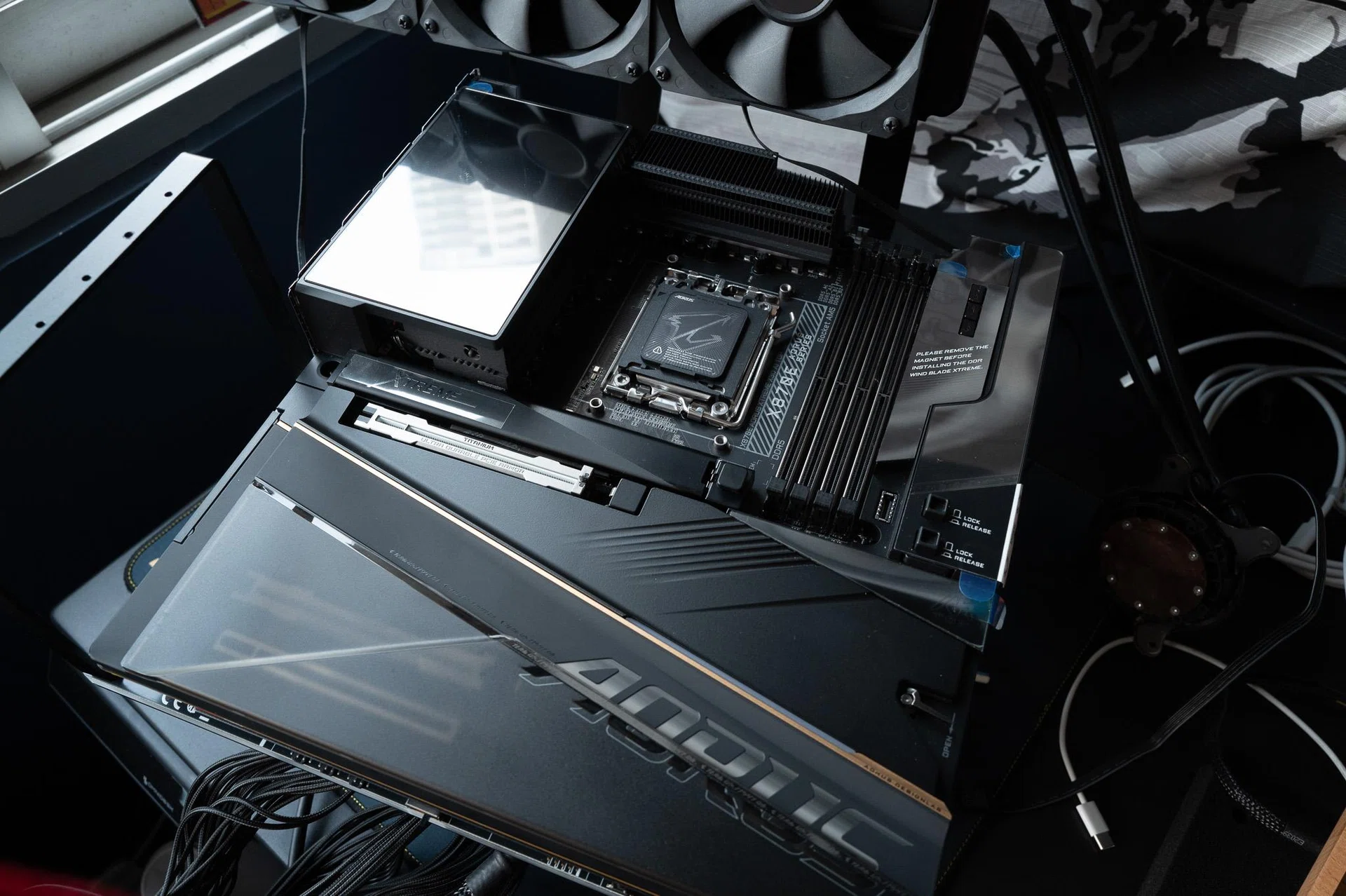
Meet Gigabyte’s latest X870E flagship: The X870E Aorus Xtreme X3D AI Top
- Gigabyte X870E Aorus Xtreme X3D AI Top
- Samsung 990 Pro 1TB SSD
- Kingston Fury 32GB DDR5 memory
- NVIDIA GeForce RTX 5080 Founders Edition
- Windows 11 OS
Comparing against the 9850X3D are the Ryzen 9 9950X3D, 7950X3D, Ryzen 7 9800X3D as well as the Ryzen 9 9950X for us to see how an X3D-less chip fares.
For games, my list includes a mixture of old and recent games to test these processors’ performance, and while the list isn’t exhaustive by any measure there are enough different game engines and APIs variety to give us an idea of broader performance trends.
I also focused solely on 1080p, as it is a great measure of a CPU’s prowess because at lower resolutions, the GPU can process and transfer data much quicker than at higher resolutions. A CPU bottleneck happens here because the processor cannot keep up with the processing speed of the graphics card. The CPU, after all, is responsible for processing real-time game actions, physics, UI, audio and other complex CPU-bound processes.
Gaming performance
Looking across the gaming benchmarks as a whole, the Ryzen 7 9850X3D tells a fairly consistent story – and it’s one that reinforces my scepticism going into this review. Yes, it’s fast. In some cases, it’s technically the fastest chip. But the gap between “fastest” and “functionally identical” is doing a lot of heavy lifting here.
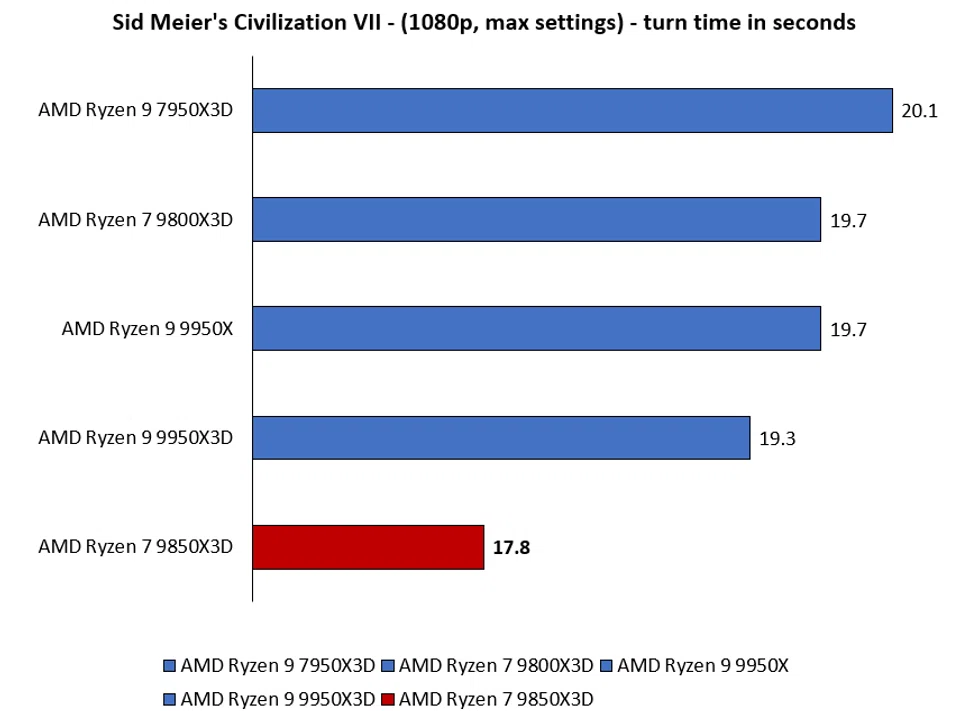
The shorter the time, the better.
Take Sid Meier’s Civilization VII, a title that responds well to large caches and strong single-threaded prowess. Here, the 9850X3D posts the quickest turn times at 17.8 seconds, pulling ahead of both the Ryzen 7 9800X3D and even the higher-end Ryzen 9 siblings. On paper, this is exactly the kind of result AMD would want to point at – a clean win, in a CPU-limited scenario, no ambiguity.
But let’s step back for a moment. The difference between the 9850X3D and the 9800X3D is just under two seconds. In real gameplay terms, that’s the difference between waiting for a sip of coffee and waiting for…slightly less coffee? I mean it’s measurable, but it’s not transformative, and it doesn’t change how the game feels to play.
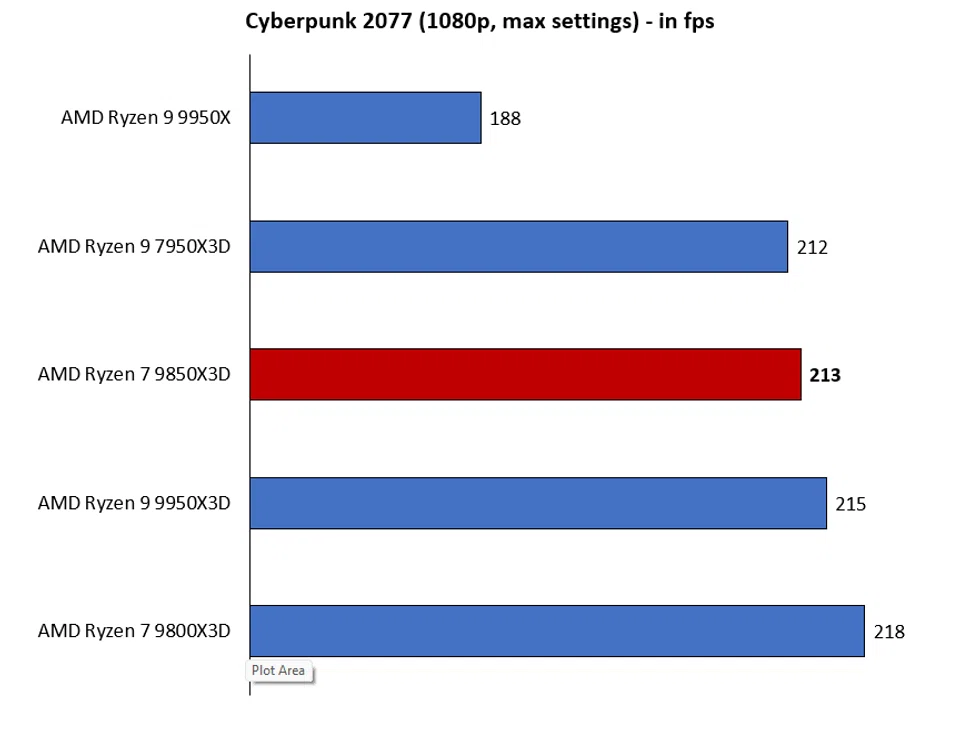
The higher the score, the better,
It’s the same for Cyberpunk 2077, where the numbers tighten even further. At 1080p with maximum graphics settings, the 9850X3D lands squarely in the middle of the X3D pack at 213fps. It edges out the last-gen 7950X3D but sits just behind the 9800X3D and 9950X3D. In other words, it performs exactly like what it is: another high-end X3D chip operating within the same thermal and power envelope. Once GPU constraints start creeping in at higher resolutions, the extra boost clock simply doesn’t have room to stretch its legs.
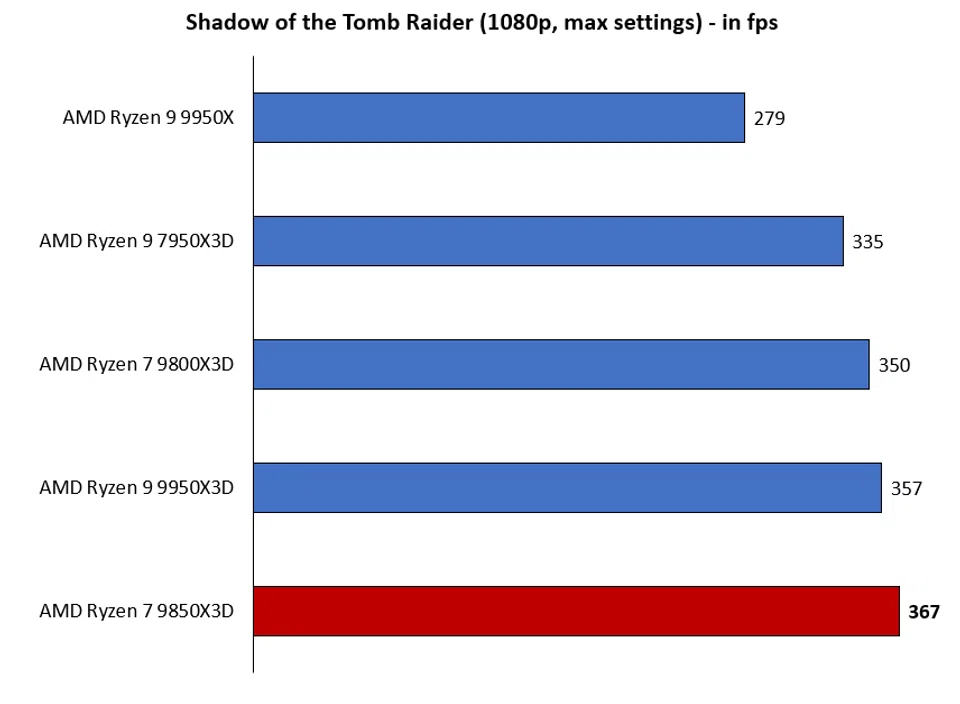
The higher the score, the better.
Shadow of the Tomb Raider is where we start to see what the deal is about with the 9850X3D. At 367fps, it tops the chart, beating the 9950X3D and 9800X3D. It’s a clean result, and one that shows the benefit of slightly higher clocks in a game engine that still responds well to frequency. But again, context matters. When all five Ryzen 9000 series CPUs on the chart are already pushing well past 300fps, this becomes an academic win rather than a practical one – will 367fps play better than 357fps? No, but let’s say a win is still a win in the context of this review.
The higher the score, the better.
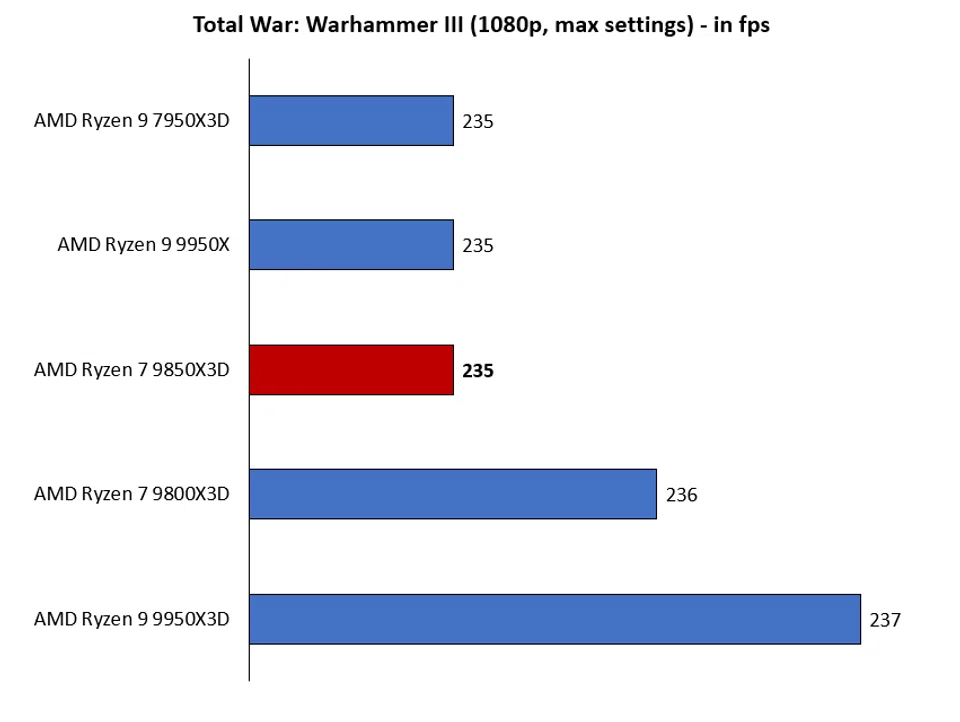
Then there’s Total War: Warhammer III, which is almost comically indifferent to the entire benchmark. All five processors land within a two-frame window, with the 9850X3D matching the 7950X3D and 9950X at 235fps. This is one of those results that quietly undercuts the whole premise of the product. When cache size, core count, and clock speed converge within the same performance bracket, the idea of “upgrading” loses most of its meaning here.
Video encoding performance
The shorter the time, the better.
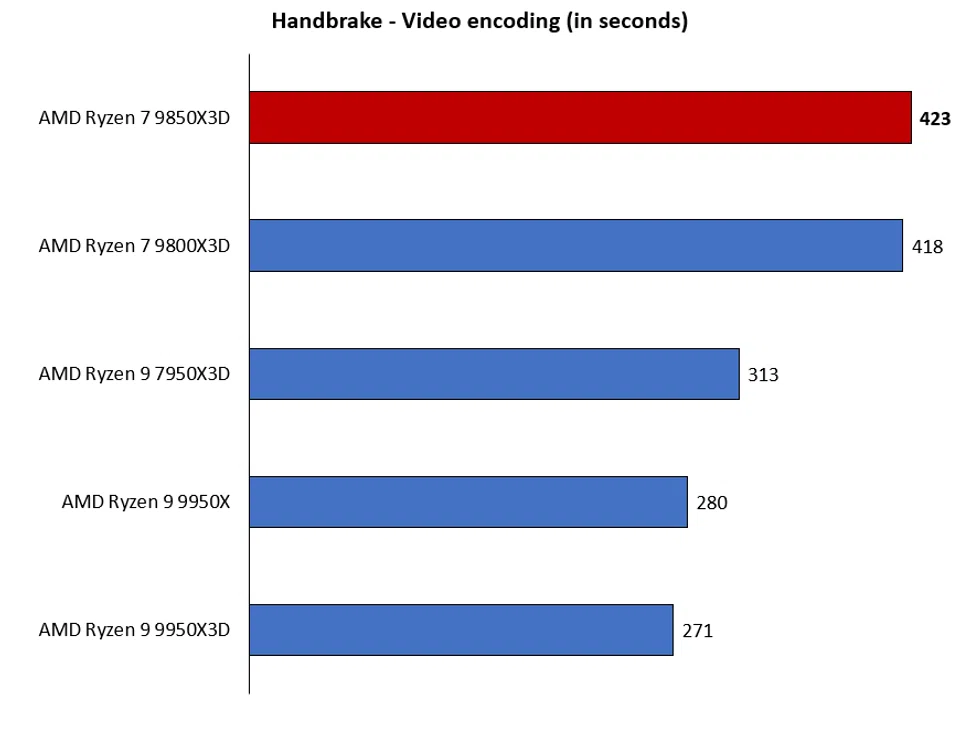
The Handbrake results underline the familiar trade-offs that come with AMD’s X3D chips, and they’re not flattering to the Ryzen 7 9850X3D. At 423 seconds (or about seven minutes), it actually trails the 9800X3D, which completes the same encode in 418 seconds, and it falls well behind the higher-core-count Ryzen 9 parts. This isn’t especially surprising. Video encoding workloads scale with cores, which isn’t the strength of an eight-core X3D processor that’s tuned primarily for gaming efficiency. What’s more telling is that the higher boost clock over the 9800X3D seems to do little either. The 9850X3D doesn’t meaningfully improve on its predecessor here, and in fact ends up slightly slower, reinforcing the idea that the extra frequency headroom is situational at best. Anyway, if content creation or regular video work is a meaningful part of your workflow, then the results here make a clear case for stepping up to a Ryzen 9-class processor
Final thoughts
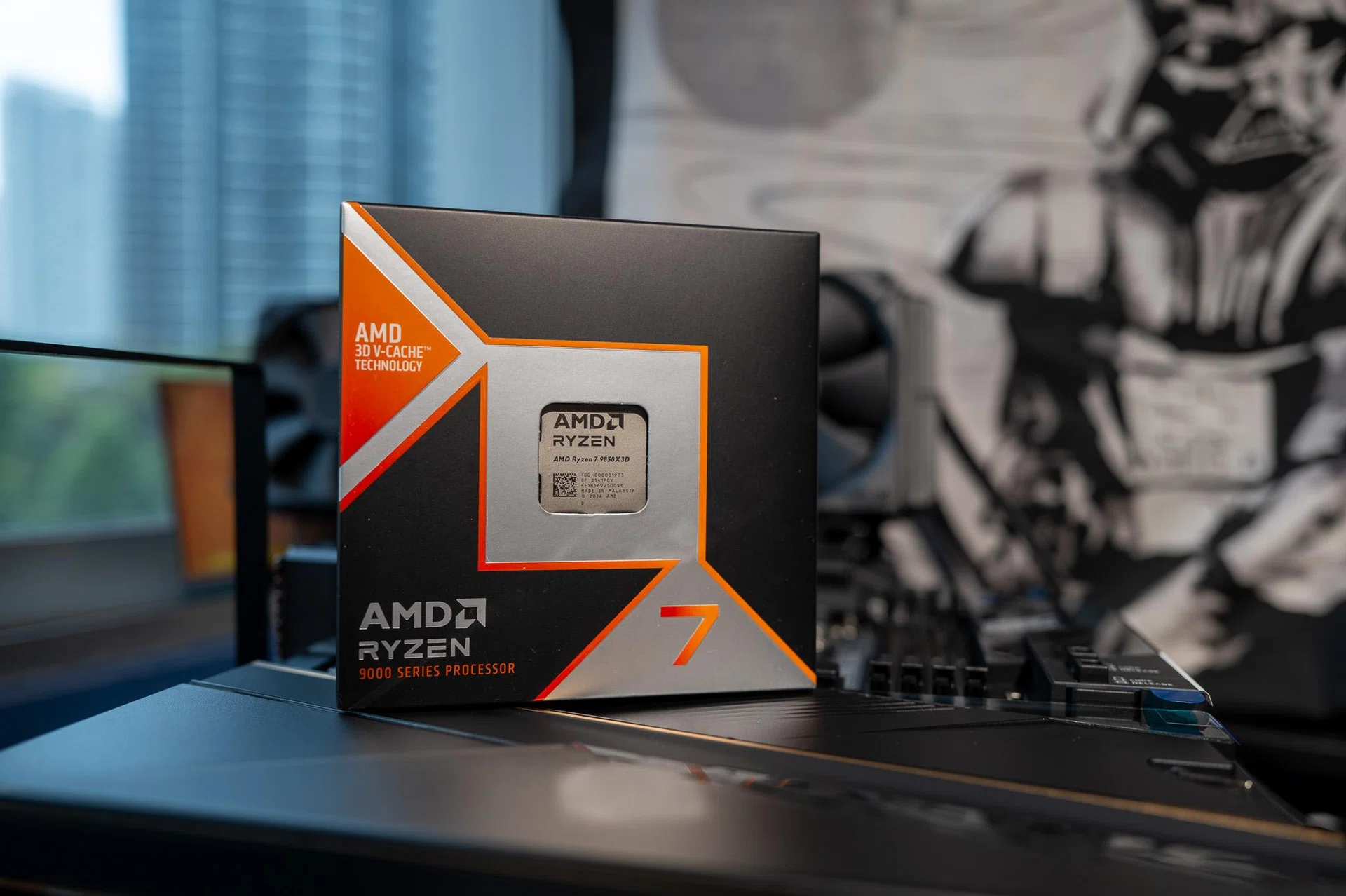
The Ryzen 7 9850X3D is a most curious gaming CPU because it’s actually very good.
Taken together, these results paint a very clear picture. The Ryzen 7 9850X3D is not meaningfully faster than the Ryzen 7 9800X3D in gaming, even when it technically wins. The gains are situational, narrow, and often buried in scenarios where the GPU is already doing the heavy lifting. You can find games where the 9850X3D comes out on top, but you can just as easily find games where it blends back into the pack. In fact, if you look at the bigger picture, it becomes clear that AMD’s own lineup is the biggest competition the 9850X3D faces.
And that’s really the crux of it. If you’re coming from an older non-X3D Ryzen, or even a Zen 4 platform, the 9850X3D will feel excellent at US$499. But if you already own a 9800X3D (which was launched for US$20 less) – or you’re deciding between the two – the gaming results here don’t make a compelling case for spending extra. I’d even go as far as to say to buy the one that is more easily available at retail.
The AMD Ryzen 7 9850X3D officially launches on 29 January 2026 for US$499. Local price for Singapore and Malaysia were not available at time of writing.