

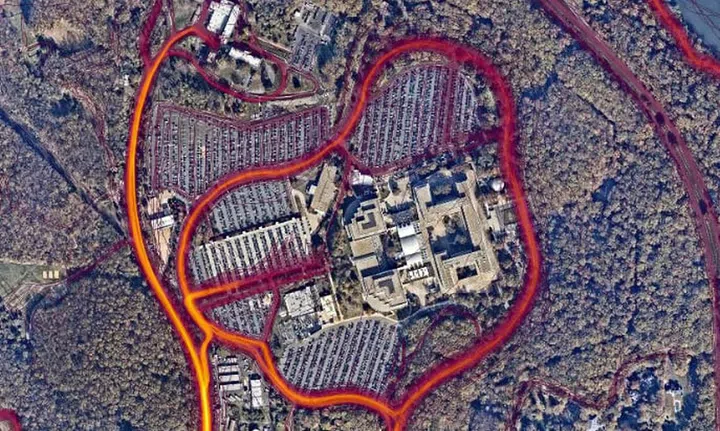
The George Bush Center for Intelligence in Langley Virginia.
First announced last November, Strava Labs’ global heatmap has inadvertently given away the location and staffing of military bases. It appears that there are enough military personnel on active service using Strava for the combined log of their activities to give away detailed information of army bases, and the routes that troops take while training.
The map shows every single activity uploaded to Strava, which apparently equates to more than a trillion individual GPS points. This allows you to see popular running routes in a city or spot individuals in remote areas carrying out specific activities. The company calls it a "direct visualisation of Strava's global network of athletes".
However, when the information is coming from military personnel and not your regular athletes, you obviously have an issue. The Straits Times reports that the map of Iraq is largely dark, indicating limited use of the Strava app, but a series of well-known military bases where American and allied forces have been deployed are highlighted in detail.
These include Taji, north of Baghdad; Qayyarah, south of Mosul; and Al-Asad in Anbar province. Smaller sites also appear on the map in northern and western Iraq, indicating the presence of other, lesser-known installations. Stretches of road are also highlighted, indicating that Strava users left their devices on while travelling, potentially providing details about commonly taken routes.
The US Department of Defence said it is "reviewing" the situation. "Recent data releases emphasise the need for situational awareness when members of the military share personal information," said Major Audricia Harris, a Pentagon spokesman.
The Pentagon "recommends limiting public profiles on the Internet, including personal social media accounts", she added.
Strava has since issued a statement saying: “Our global heatmap represents an aggregated and anonymised view of over a billion activities uploaded to our platform. It excludes activities that have been marked as private and user-defined privacy zones.”
“We take the safety of our community seriously and are committed to working with military and government officials to address sensitive areas that might appear.”
In other words, the military should simply get service men to opt out of the global heatmap if they wish to keep using the service.
Source: The Straits Times, The Guardian, Strava, Medium
Our articles may contain affiliate links. If you buy through these links, we may earn a small commission.