

We visited the South Korean city that manufactures Samsung Galaxy Z Flip5 and Z Fold5 phones
Ever wondered what it takes to make an actual flagship-grade smartphone with a foldable display?
#samsung #southkorea #factoryvisit
Note: This article was first published on 20th August 2023.
A city of of smartphone manufacturing
Gumi, a North Gyeongsang city three hours away from Seoul (South Korea), is the land where your flagship Samsung smartphones are born. More specifically, our visit saw the Samsung Galaxy Z Flip5 and Fold5 on the assembly lines, folding and unfolding their way into existence after undergoing strict manufacturing routines and gruelling quality tests.
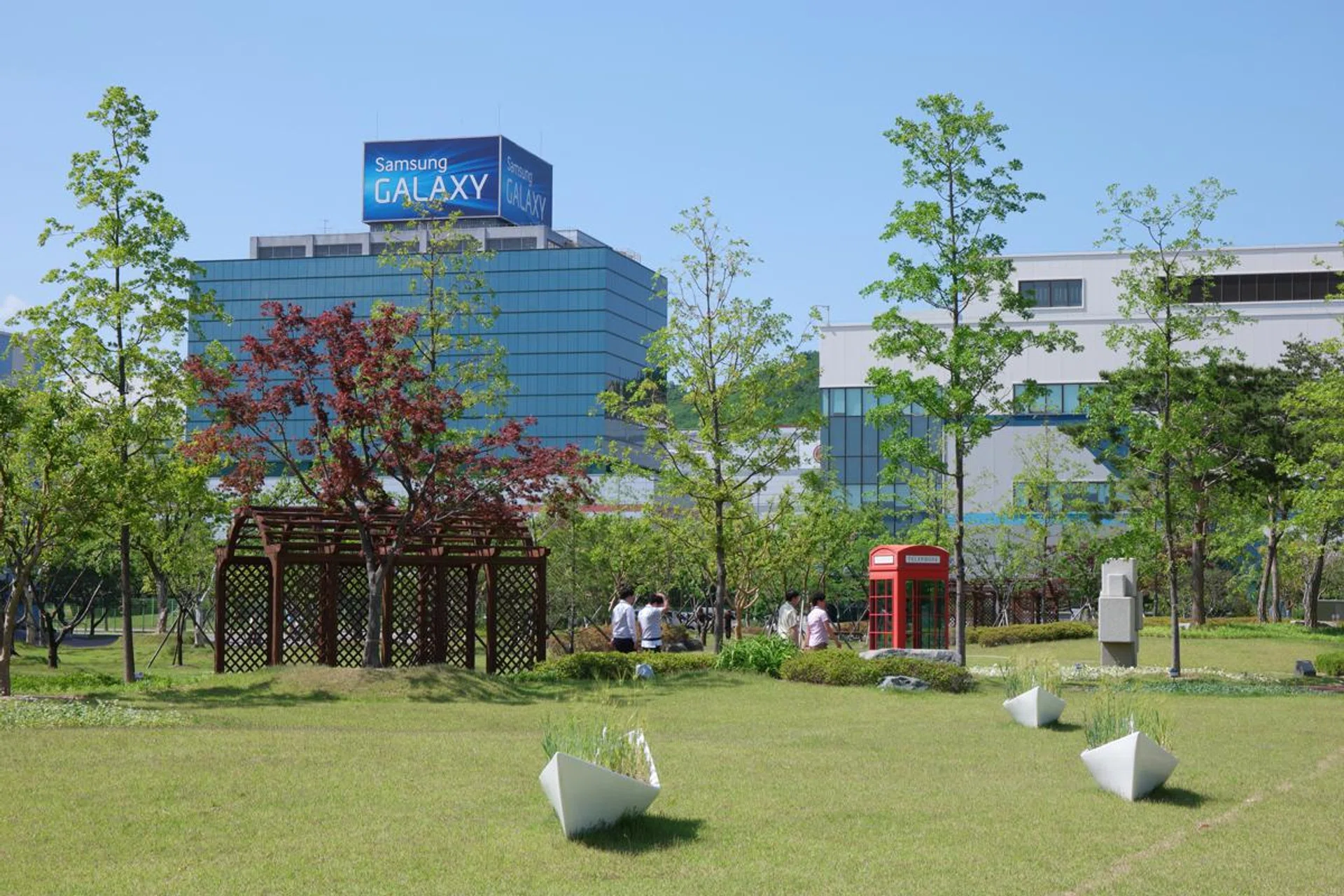
One of the five complexes in Samsung's Smart City, its name for its Gumi operations.
While we’re certain parts of our factory visit were akin to a full-dress rehearsal (i.e. made for show, just like the Samsung Unpacked keynotes), the scale of Samsung’s Smart City is not something you can masquerade.
Samsung’s Gumi properties — spanning across five complexes —are responsible for 18 million Samsung smartphones made annually. You’d think that’s enough foldables for just about everyone, until you realise it covers only 7% of Samsung’s 320 million total handset units produced across its nine global hubs annually.
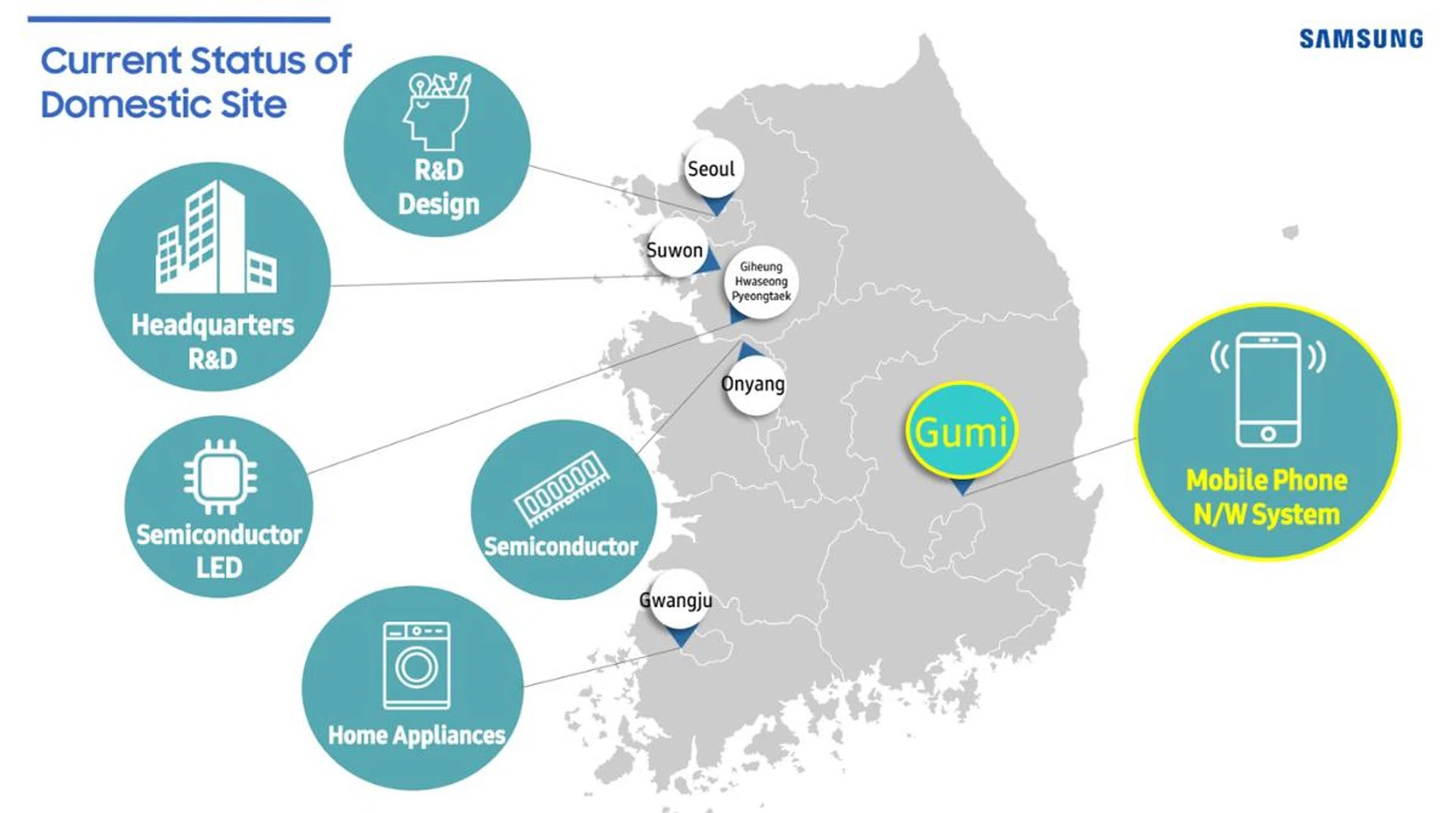
For folks unfamiliar with South Korea, this is a helpful map on where Gumi (Samsung's smartphone manufacturing centre) lies.
That’s not yet considering the municipal city’s population of ~400,000, where ~16% are Samsung Electronics employees spread out across its campuses. We had the opportunity to visit one of its biggest campuses housing its main phone manufacturing plant, some 7,970 of Samsung’s Gumi employees, and a whole bunch of quality testing and line assembling of its latest foldable phones.
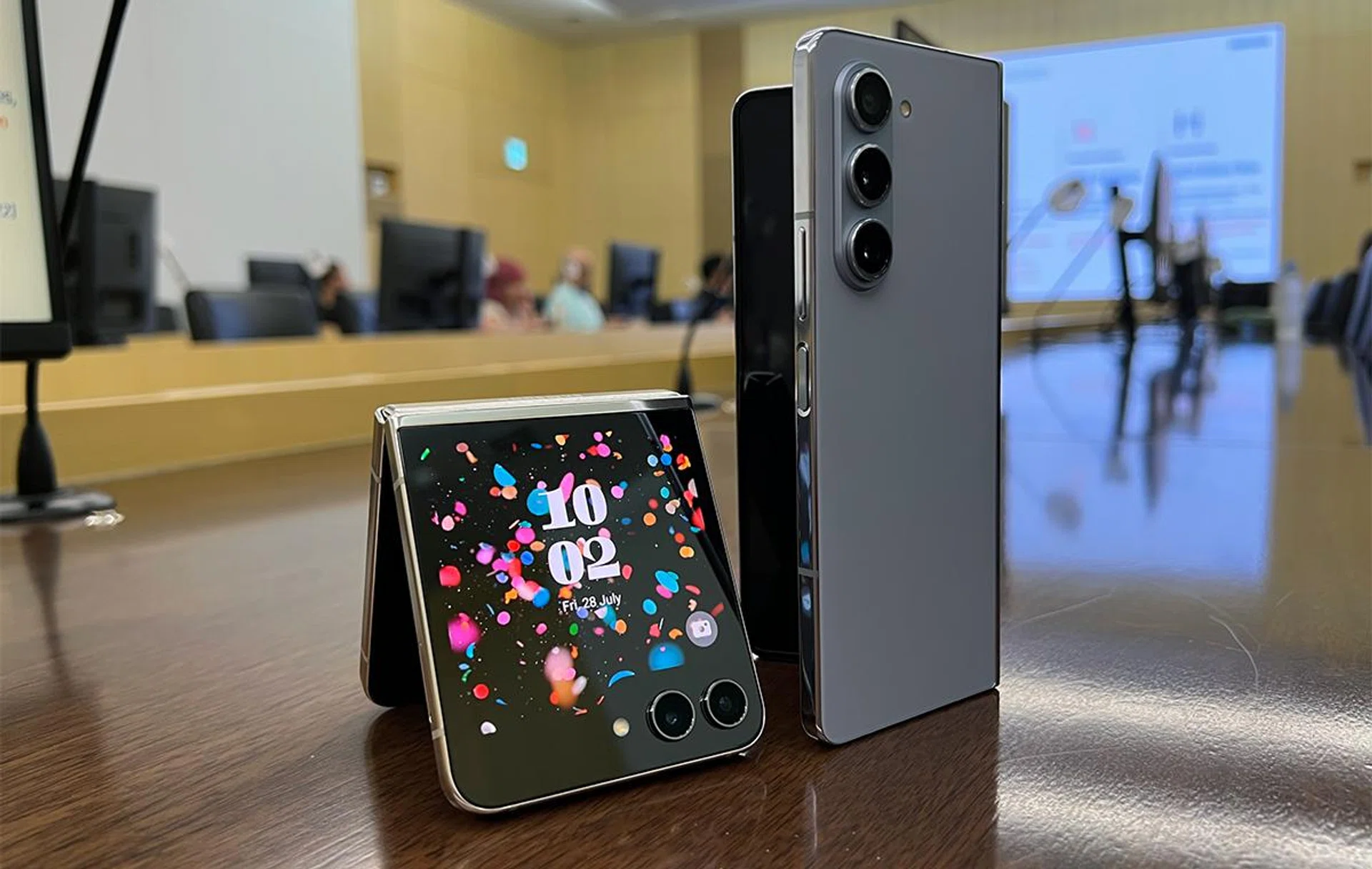
One last photo of the Samsung Galaxy Z Flip5 and Galaxy Z Fold5 at the factory tour safety and introduction briefing, before we were forced to stow away all imaging devices.
As with any smartphone factory tour, certain areas were off-limits and footage or photos weren’t allowed, so we made do with what we could get our hands on. The footages from Samsung below are chosen because it was identical to what we've seen at the testing labs and assembly lines.
Reliability testing like no other

The reliability testing of both Flip5 and Fold5 form a significant part of their manufacturing ritual before reaching buyers.
You’d think we’d grow numb to smartphone factory visits by now, given how most of them typically try to showcase best-in-class phone manufacturing, comfortable living and eating quarters for on-site staff, and quality assurance (QA) through stress tests. However, Samsung’s Smart City isn’t like the others.

Samsung Galaxy Z Flip5 lives in a folding purgatory, trapped between two states, perpetual, unending.
The lengths the Koreans went to ensure every foldable phone could pass muster stood out to us. While nearly every other phone brand has rigorous procedures to earn durability assurances and resistance certifications, we’ve not seen anything as intense as what Galaxy Z Flip5 and Galaxy Z Fold5 go through to earn a spot on retail shelves. The factory floor not only checks if they measure up to their sticker labels and claims, but also tests whether the phones are usable even after significant abuse.

One of dozens combined folding tests the Galaxy Z devices go through.
One example is how Samsung said that the Galaxy Z Flip5 and Fold5 are certified for 200,000 folds by Bureau Veritas, an independent French reliability testing company. But at Gumi, the Koreans bent the phones in ways that made the Kāma-sūtra look tame, followed by a gauntlet of functionality scenarios. You have countless robotic fingers poking every corner of its display; constant checks for wireless connectivity with every possible wireless profile; endless looping of media, content, and partnered apps played at every conceivable folded angle. And that was only just the appetiser.

Galaxy Z devices need to live up to their IP ratings. Samsung cuts no corners in testing.
IP (ingress protection) rating for these phones’ water and dust resistance isn’t a mere trip to the car wash or swimming pool — that’s the PG13 version made for the b-rolls you see in marketing materials. Samsung pushes the phones to their absolute limits by injecting air pressure into every device to ensure there are no gaps for water to get through. If they fail, it goes back to the starting line — though we’ve not seen a handset that failed its IP ratings during our visit.

A severed head locked inside a prison of eternal phonecalls, possibly a millennial's or Gen Z's worst nightmare.
The culmination of its stress testing is a lab filled with what Samsung considers a real-life simulation of daily activities using its wearable and mobile products to check both hardware and software features. This factory floor is filled with partial cyborgs wearing synthetic human skin. You have earbuds inserted and removed into disembodied heads hundreds of times to check its neck-stretching reminders, or a torso forced on a Hell’s march with a smartwatch to record tracking accuracies. Many examples of daily usage (cycling, swimming, etc.) were repeated endlessly for metrics and functions we've taken for granted on our devices. There are also robotic arms checking and re-checking Samsung’s user interfaces, menu flows, and even mobile gaming compatibility in a “Smart Device Farm”.

A Galaxy Z Flip5 gets typed on after being bent about.
At this point, we understood why photos and videos weren’t allowed — it wasn’t just to protect Samsung’s secrets, but to protect our sanity. Knowing that these fully-articulated test dummies wouldn’t likely be our robotic allies if they ever become sentient is scary, but it’s also assuring to know that every Samsung product you might carry can last until the uprising of androids.
Every material counts
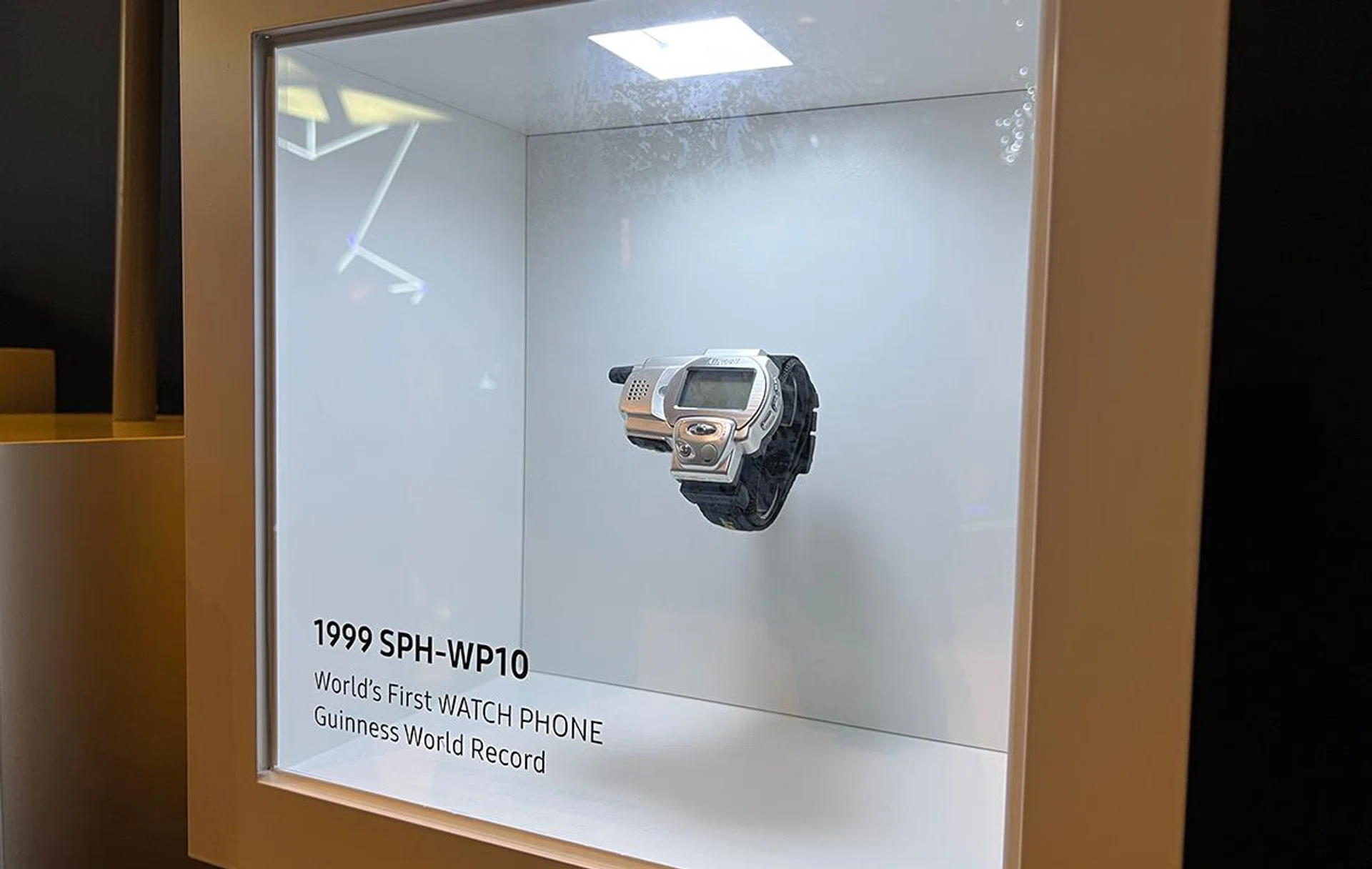
We weren't allowed to photograph the engineers or their work materials, especially the colours. So here's a photo of an old Samsung SPH-WP10 spotted during the tour.
Much of Samsung’s use of glass, metals, and plastics for its devices is kept confidential to retain a competitive edge over its main rivals. Still, the Korean facility was willing to shed some light and help potential Galaxy Z Flip5 and Fold5 users better understand how their handsets were made to please.
Our visit showed us that the improved thing in Samsung Galaxy Z Flip5 uses 45 components, while the Galaxy Z Fold5’s hinge has 41. The foldable thin glass on these devices (marketed as UTG, or ultra-thin glass) is half the thickness of a single human hair, and the cover glasses for both phones use multiple heatforming and strengthening techniques that cannot be copied or reproduced at your typical neighbourhood phone repair shop.
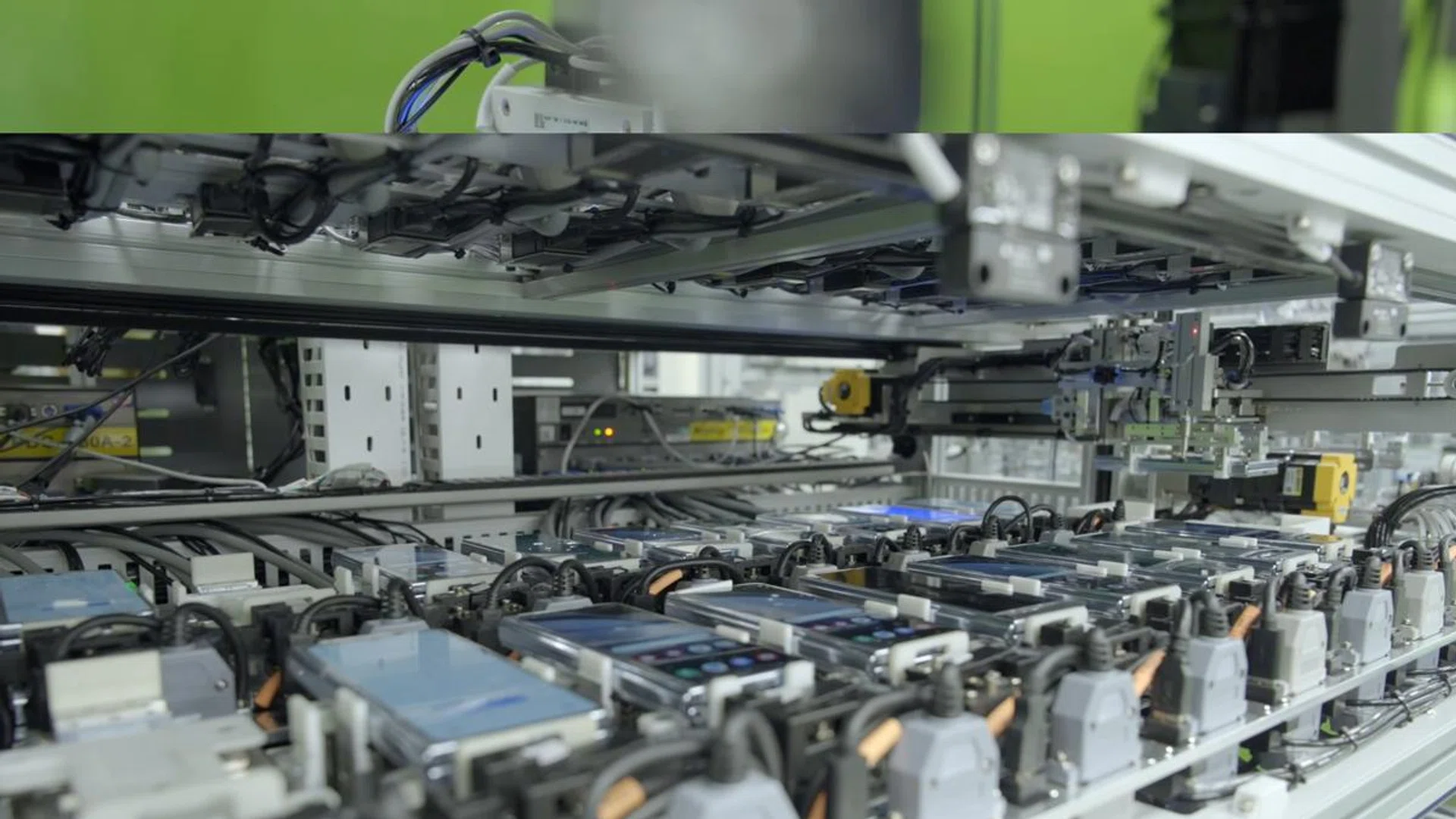
Samsung's assembly and cutting machines are extremely precise, with almost no room for delay or errors.
All their cutting machines use the latest technologies for micron-level precision and significantly reduced assembly time. An example is your phone’s rear camera cutout, where Samsung adopts a special cutting tool to complete this production step in five minutes; should they use a conventional cutting method (wire electrical discharge machining), it would’ve taken 48 hours to finish up instead.
We also saw how the colourways of your Galaxy phones contain tightly-controlled percentages of natural dyes from different plants and flora — many pretty rocks, flowers, and other minerals were sacrificed to make your foldable’s default colours look striking and vibrant. The factory even carried Galaxy Z handsets with colours that never saw commercial retail, like orange, lime green, and what looked like an iridescent oil spill.
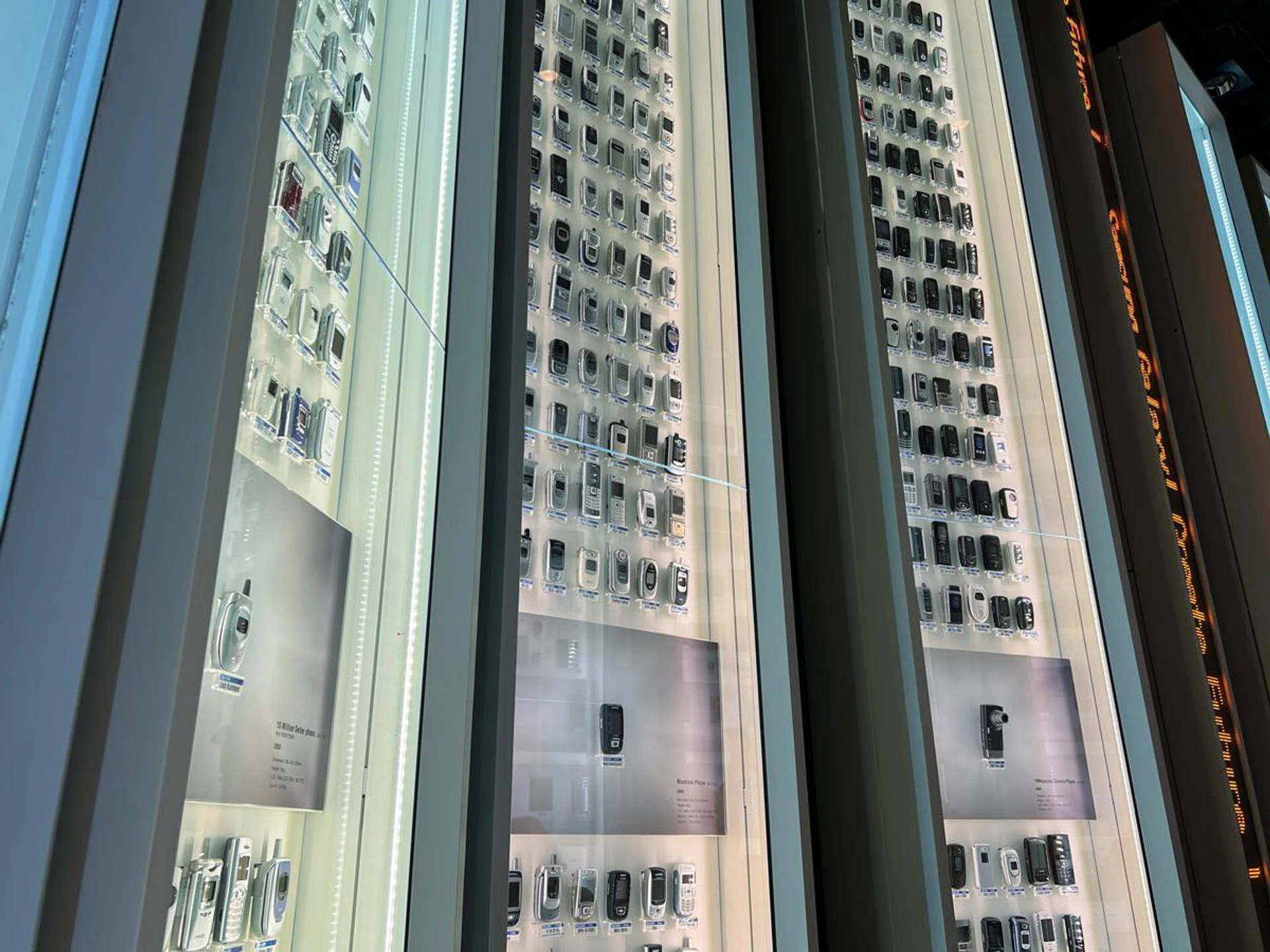
Within its Gumi campuses, Samsung has a museum of all its phone models ever made, from the very first mobile handset to the current Galaxy Z series devices.
Despite having no mastery of the Korean language, we understood that the factory personnel and lab technicians are actually more than happy to invent new, vibrant colours for Samsung phones, but consumers typically end up buying black or grey, which results in them limiting their creative options to bringing more colours to market.
Needless to say, raw materials are precious and expensive, so much of its manufacturing was also centred around minimal waste in its process to ensure maximum yield.
Closing thoughts
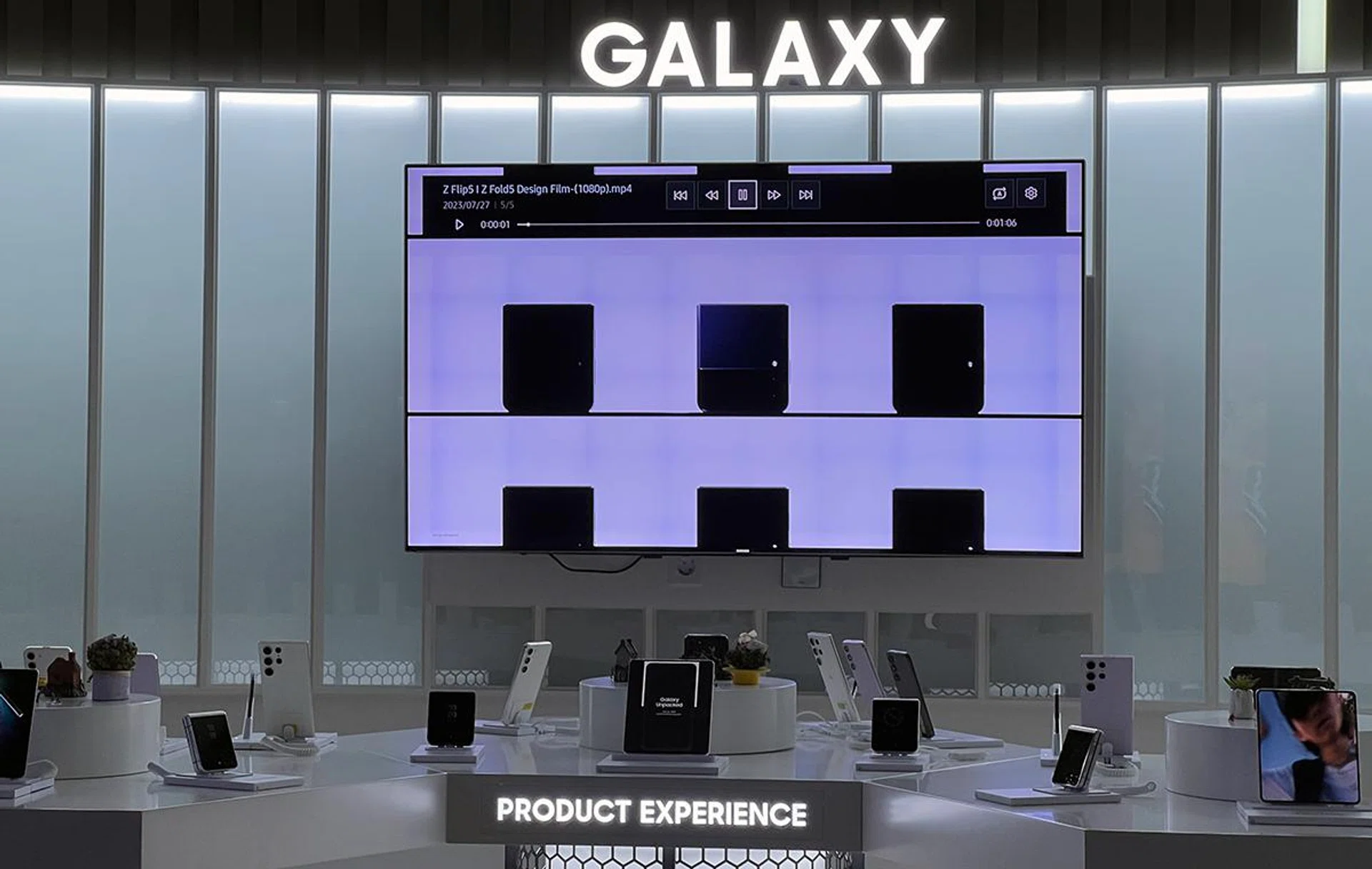
A display of the latest Galaxy Z handsets and Galaxy wearables launched at Samsung Unpacked 2023.
Besides a thorough history of Samsung's phones where we saw Anycall phones evolve to Galaxy S, the entire visit to its massive holy ground of foldables also included a visit (and meal) to its staff canteens, and a step-by-step guided explanation of its manufacturing process.
After a trip like that, do we think that Samsung Galaxy Z Flip5 and Z Fold5 are devices that can last? We know that Samsung goes to great lengths to ensure that phones look good and work better. We also understood how they could make so many handsets in such a short amount of time. The phones have gone through enough, even before they make it onto shipping pallets and out of its Gumi birthplace.

Samsung Unpacked 2023.
Samsung Galaxy Z Flip5 and Galaxy Z Fold5 are currently available in Singapore. Don’t forget to check out its pricing details here, and also read our reviews here (Flip5, Fold5).
Our articles may contain affiliate links. If you buy through these links, we may earn a small commission.