
Xiaomi Mi 10T Pro review: Affordable flagship phone with some trimmings
At just S$749, the Xiaomi Mi 10T Pro signifies flagship-like performance minus some clippings to keep its price appealing. Can it outshine the Samsung Galaxy S20 FE?

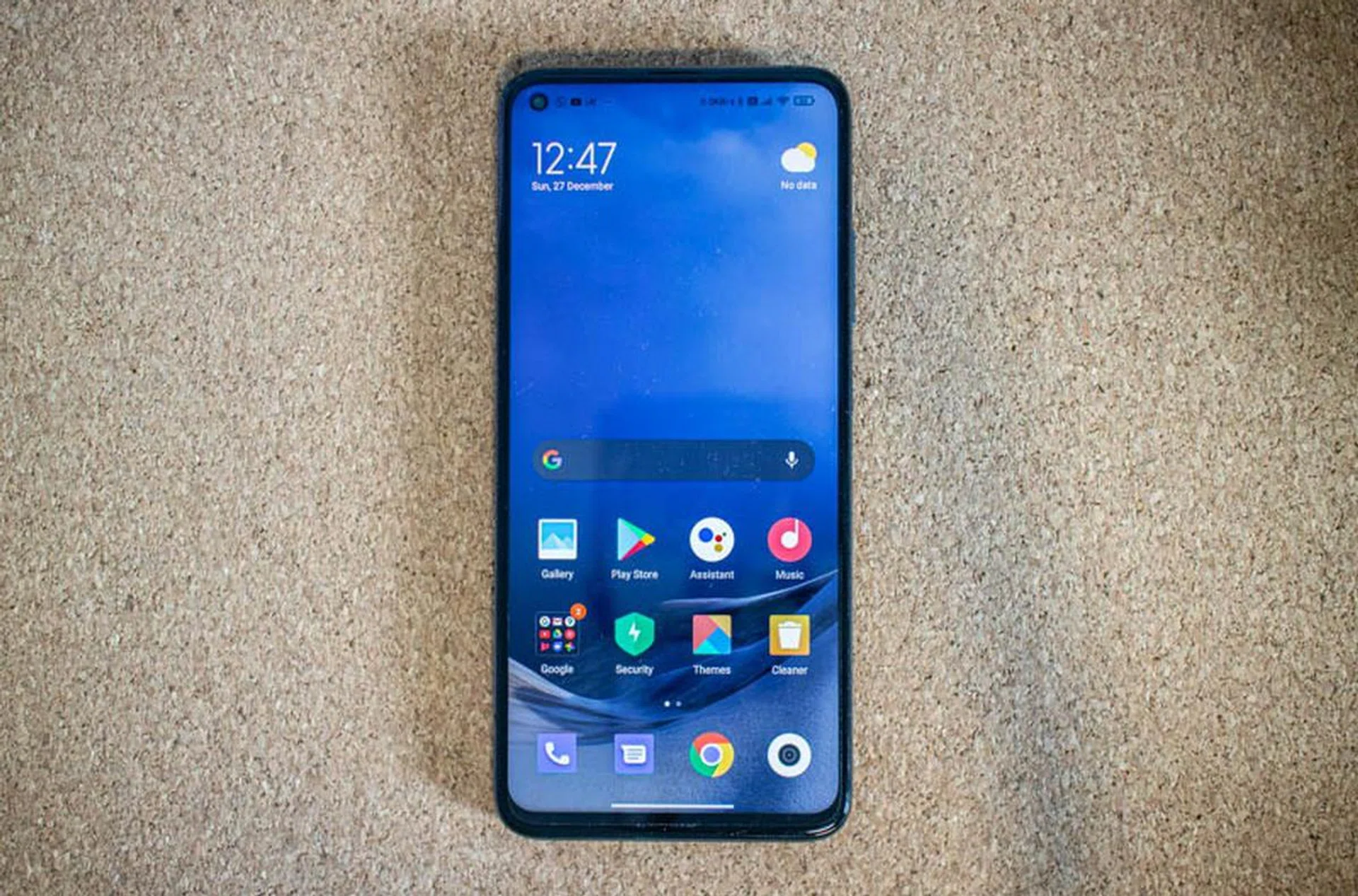
A fitting example of value for money
Xiaomi's Mi series represents their top-of-the-line flagship range with the Mi 10 Ultra sitting at the very top. While it's a very respectable phone with top-of-the-line specs and functionality, the problem is not a whole lot of Xiaomi buyers are really looking to fork out over S$1,000 for what it packs. At the price point, you've a lot of competitors who may not match it spec-for-spec, but they are credible options on their own. Plus, once it approaches or crosses the four-digit sum, you tend to think twice before parting with your hard-earned money - especially when the Mi 10 Ultra isn't officially supported and sold in Singapore. Meanwhile, the officially available Mi 10 and Mi 10 Pro are quite a bit more expensive and command a retail price of nearly $1.4k.
It's precisely for this reason that the ‘T’ series of Mi 10 was launched recently, with ‘T’ bringing still-flagship level specs but with some trimmings done to the series to target value seekers (similar to how OnePlus handles its mainline and 'T' series phones).
With that as the background, Xiaomi has launched three models under the Mi 10T moniker:
Mi 10T Pro | Mi 10T | Mi 10T Lite | |
Display |
|
| |
Chipset |
|
| |
Rear cameras |
|
|
|
Front camera |
|
| |
Connectivity |
|
| |
Battery |
|
| |
RAM & Storage |
|
|
|
The Xiaomi Mi 10T phones are officially available in Singapore since 14 November 2020, at Lazada, Shopee, Qoo10, the big three telcos (M1, Singtel, StarHub) all authorised Mi Stores. Prices and models available are as follows:
- Xiaomi Mi 10T (8GB RAM + 128GB internal storage): S$649
- Xiaomi Mi 10T Pro (8GB RAM + 256GB internal storage): S$749
This review will solely touch on the Mi 10T Pro 5G-ready model, in which we find out whether the 10T series can hold up to its flagship promise, what trimmings were made, and how different it is from the Mi 10 series. As you can tell, the price point is really enticing.
Design and Features
At 218g, the phone felt somewhat hefty upon unboxing, which is not surprising for many of the flagship phones released in recent years. Despite that, it does not feel bulky, for its body dimensions (165.1 x 76.4 x 9.33mm) is such that the phone fits somewhat nicely into my palm, at the very least. Compared to other flagships of the same size, the iPhone 12 Pro Max is slightly wider at 78.1mm, while the Samsung Galaxy Note 20 Ultra is 77.2 mm.
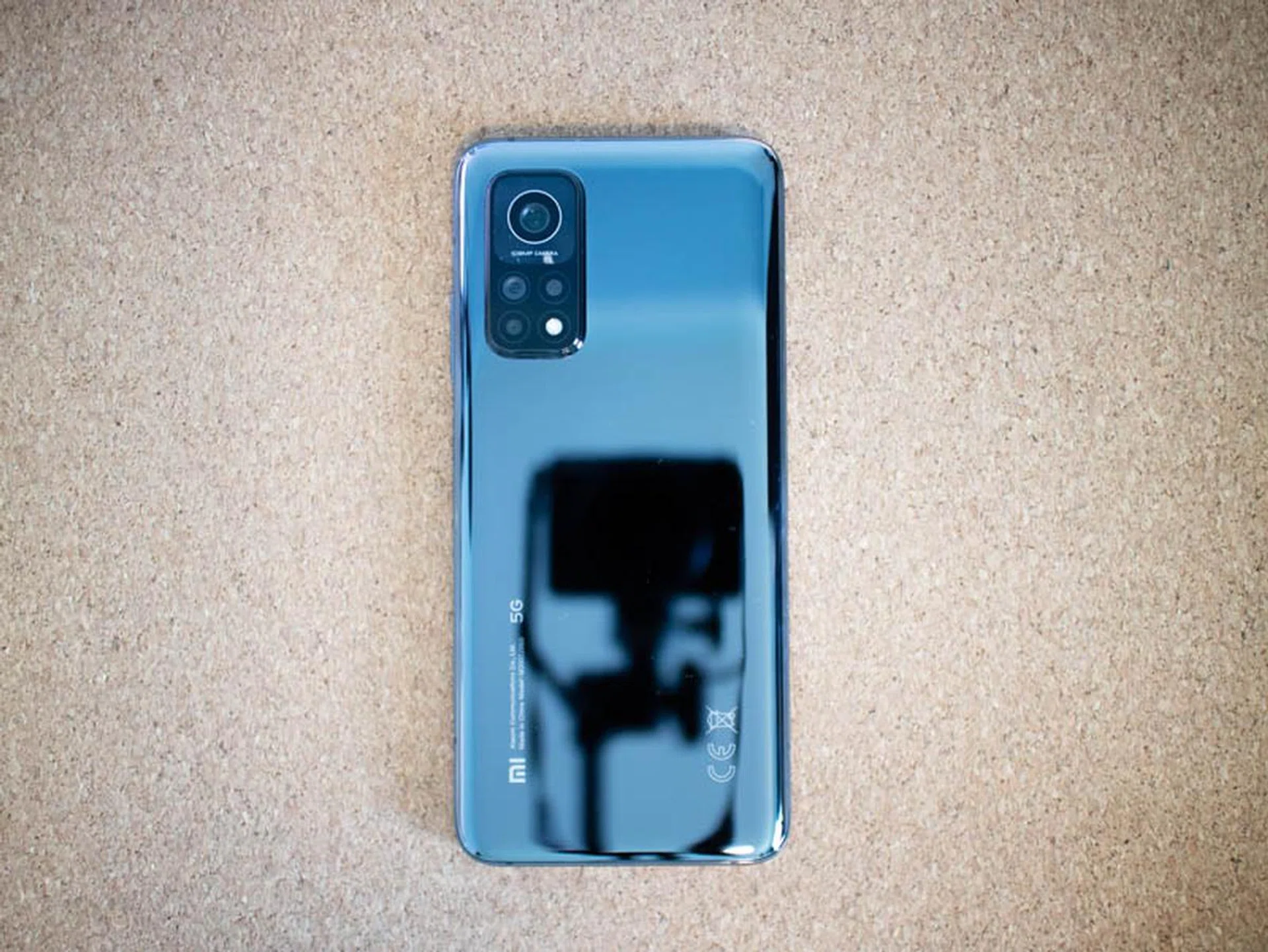
Note the highly reflective back, which while looking really nice, is also a fingerprint magnet.
The Xiaomi Mi 10T Pro features an aluminium frame, and Corning Gorilla Glass 5 is used to cover the front and back. As you can see, the rear is highly reflective and is somewhat of a fingerprint magnet, though they can be easily wiped off. The Mi 10T Pro comes with three colour options: Cosmic Black, Lunar Silver, and Aurora Blue. The review unit I got is the Cosmic Black variant.
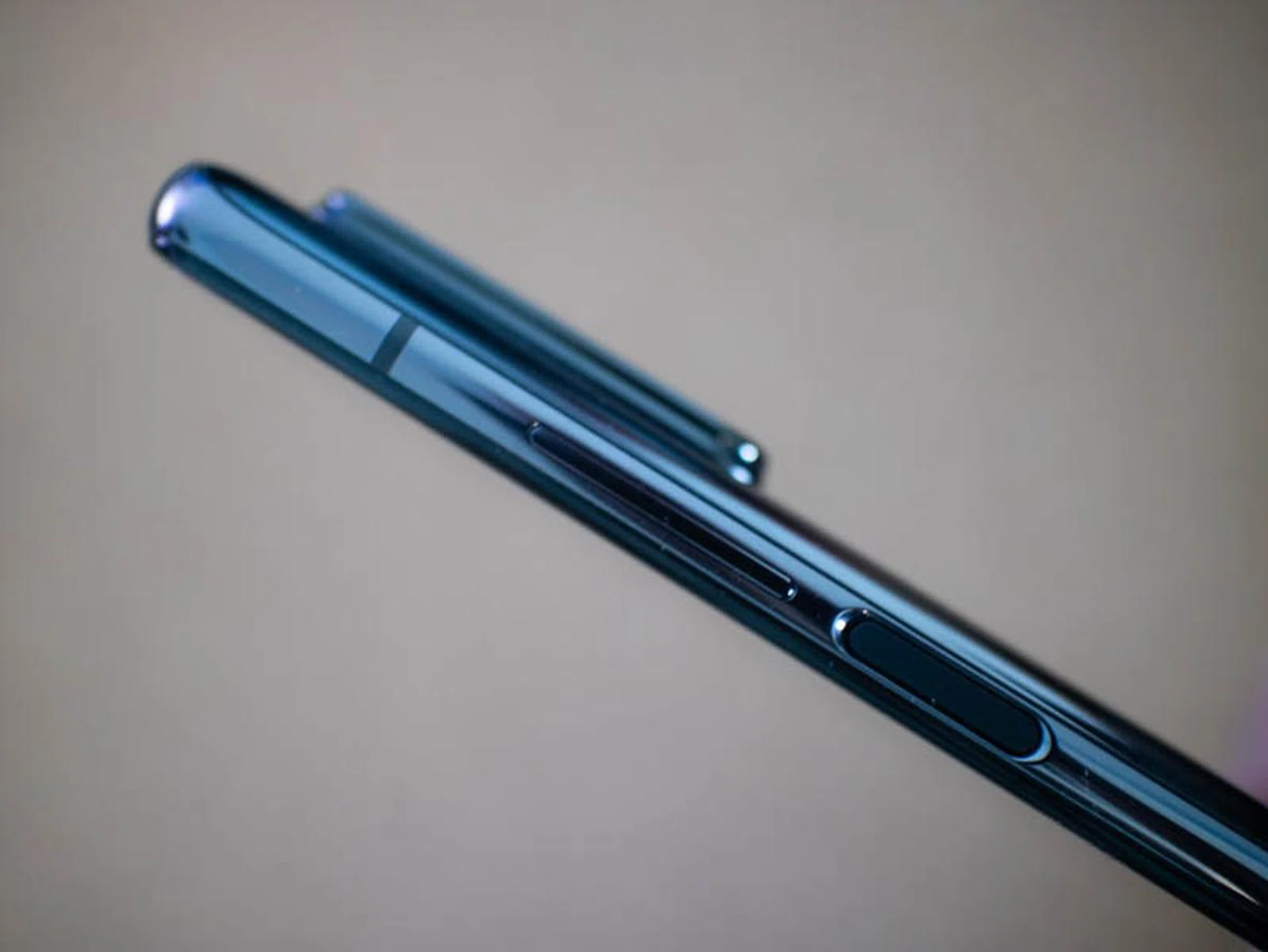
The phone's right flank houses the power button which has fingerprint authentication built-in. On a different note, you can also see that the camera module's bump seems quite pronounced in this side view shot.
Many flagships phones tend to feature higher-tier biometric sensors, either via advanced facial recognition or in-display fingerprint technology. The Mi 10T Pro eschewed all that and opted for a traditional fingerprint sensor integrated on the power button, featured prominently on the phone's right flank. This is one of the trimmings that Xiaomi has done for the 10T series as the Mi 10 series has an under-display fingerprint sensor. Despite the “old-school” tech, the sensor still works very well and we don't really miss not having more advanced biometric options. Power-button fingerprint integration is, in fact, one of our favourite practical features.
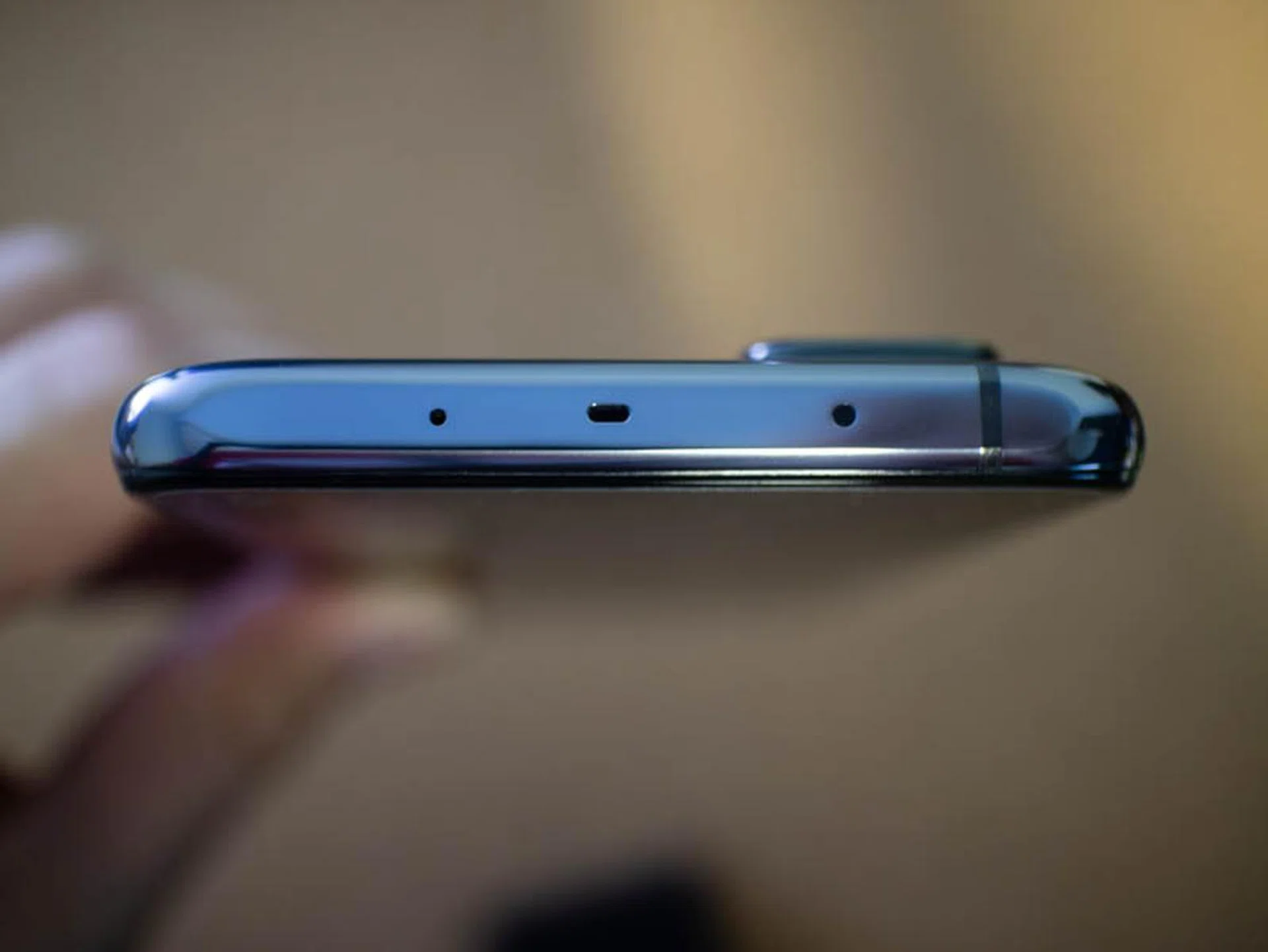
The small circle on the right is the IR blaster
The volume rocker sits on the same right side of the phone with the power button. The phone supports Dual SIM cards, and its slot is at the bottom of the phone, together with a USB-C port. An infrared blaster sits on top of the phone, a feature rarely found in phones in recent years.
It must be noted that unlike other flagship devices from major OEMs, the Mi 10T Pro is not water-resistant rated. It's likely another cost-saving measure, since IP certification costs money for Xiaomi, too. Nevertheless, try not to get your phone wet. As can be expected, there is also no wireless charging on Mi 10T Pro - a feature we've taken for granted on mainline flagship handsets.
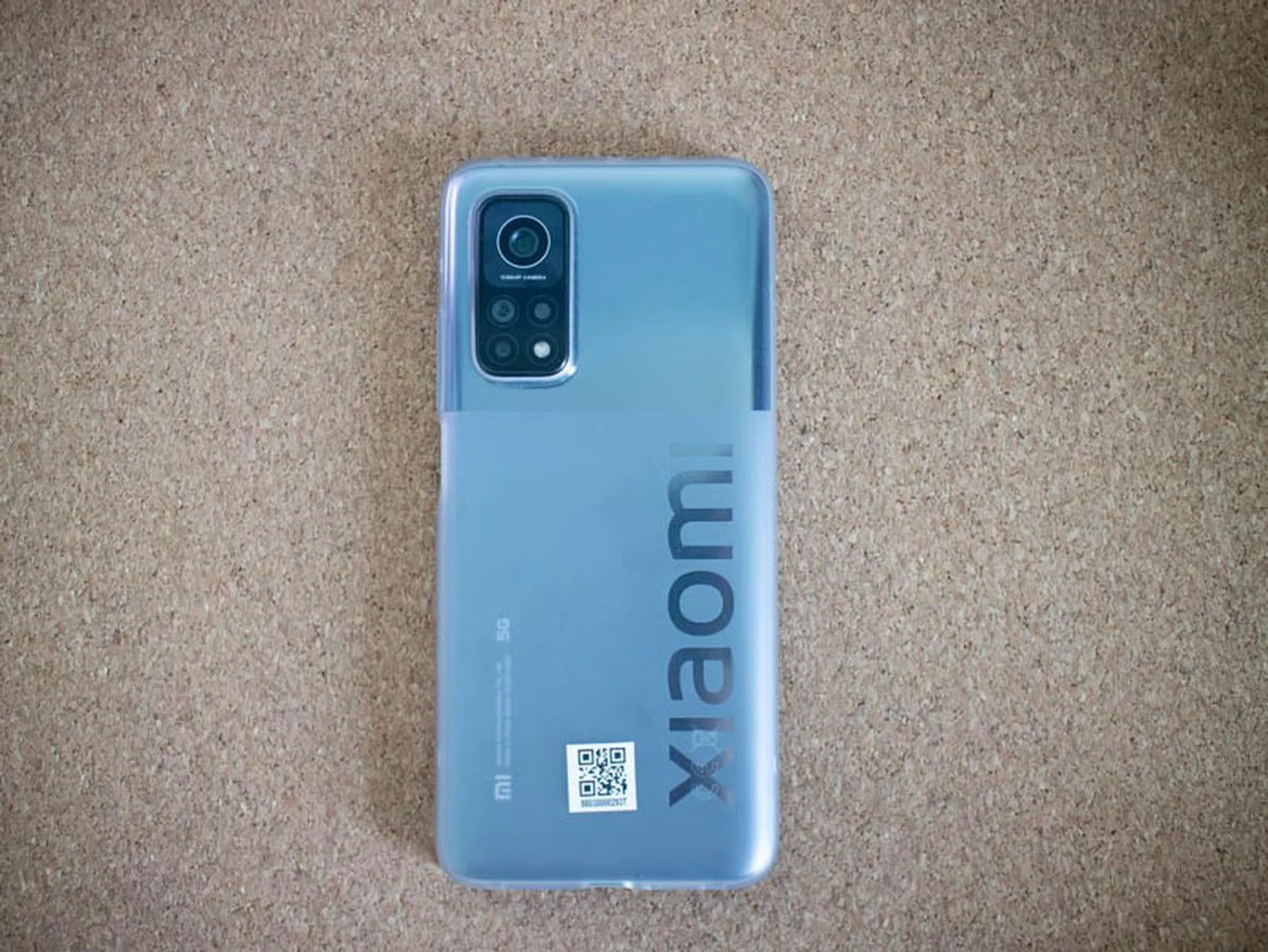
A translucent TPU phone case is included in the package and this is how the phone looks like with the case slipped on.
Display and Audio
The display is a 6.67-inch "DotDisplay" panel, which is basically an LCD screen with a punch-hole for the forward-facing camera. It has an FHD+ resolution of 2,400 x 1,080 pixels and boasts a 144Hz AdaptiveSync variable refresh rate display. Having a high refresh rate yields a much smoother user experience and smoother gameplay.
The display also supports HDR10, and it allows for watching Netflix in HDR10 mode as well. The screen is nearly bezel-less, but not as bezel-less as the Mi 10 series’s edge-to-edge screen. Instead, the advantage it has over the Mi 10 is the heightened refresh rate, since the Mi 10 debuted earlier with only a 90Hz refresh rate display.
While it may seem that it is nearly impossible to house a notification light in this nearly bezel-less screen setup, there in fact exists such a notification LED, and it is hidden at the top left-hand corner of the phone. Most non-Xiaomi apps cannot get this notification to light up though it does flicker to life when charging, or when the OS is being updated. That means your notifications from WhatsApp will not trigger the notification light.
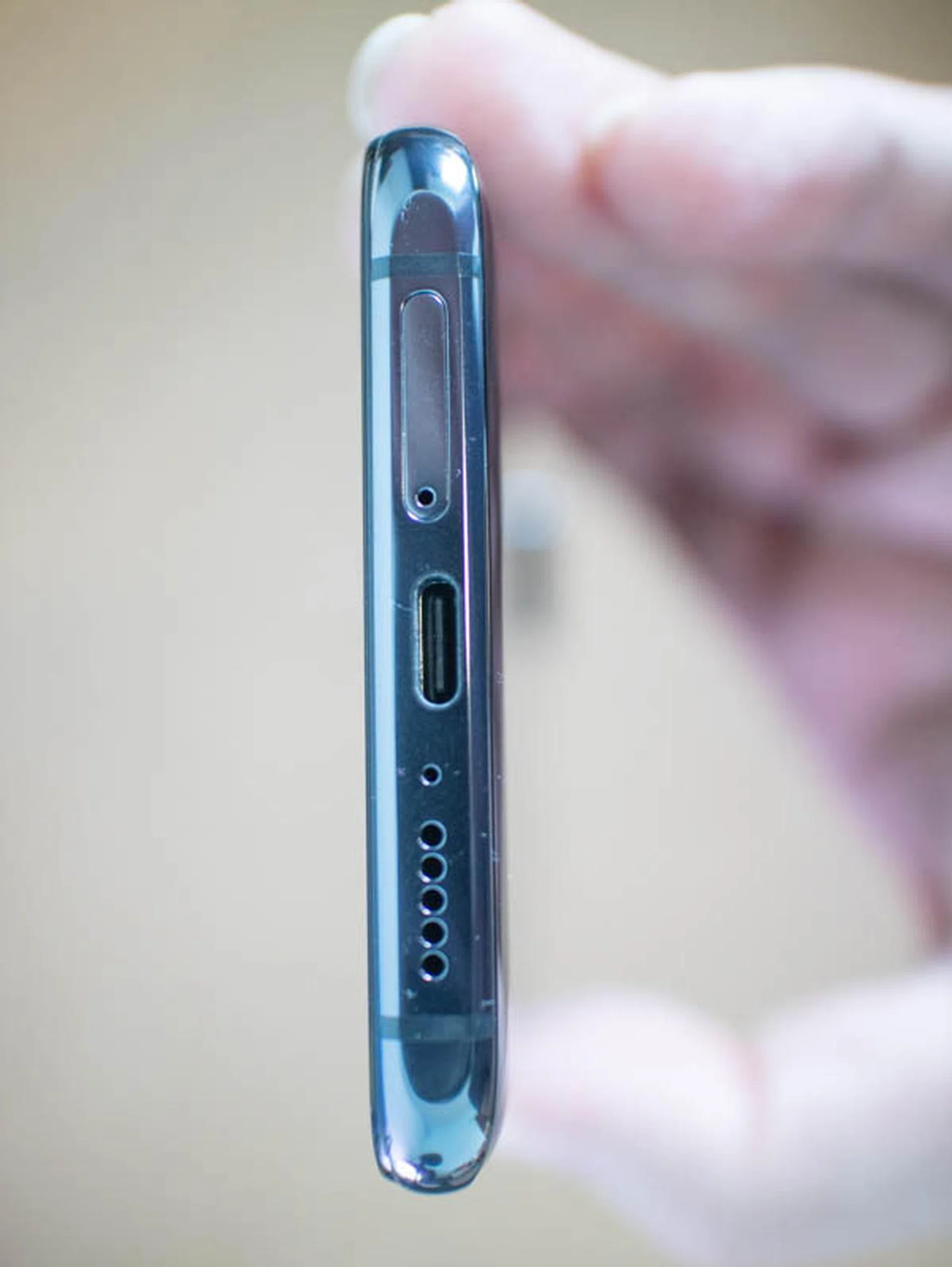
The sole speaker grille is located at the bottom left of the phone. The speakers' audio quality is comparable to other high-end phones, and it is audible even at maximum volume; I can still hear the music playing from the phone despite the loud demolition and renovation works at the unit below my flat.
UI & Features
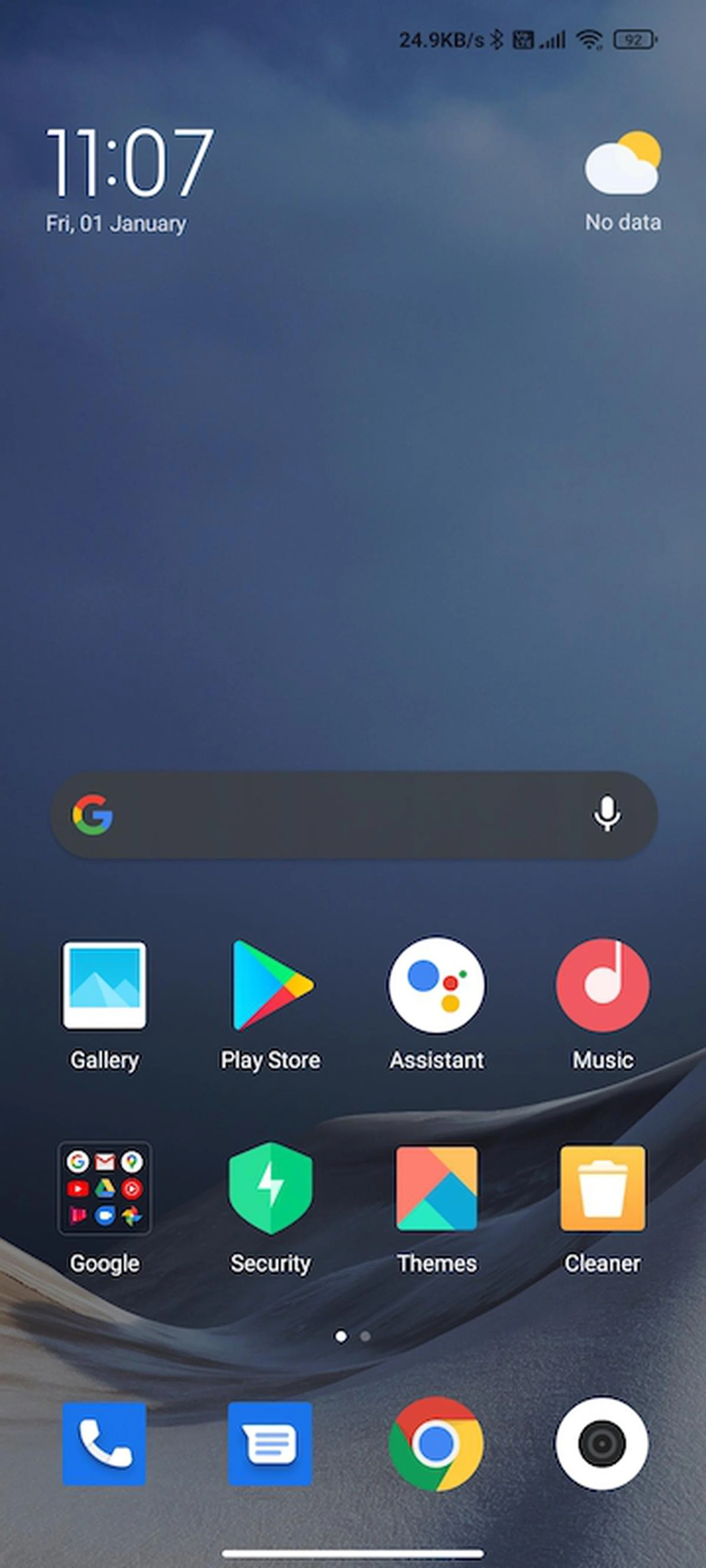
Xiaomi Mi 10T Pro runs on Android 10, cloaked underneath its proprietary Xiaomi’s MIUI 12 interface.
As it is a Mi Phone, fortunately, it contains no ads. However, it isn't free from bloatware such as (disk) Cleaner and Security, which cannot be uninstalled.
One small but nifty feature is the Mi Remote app. It used an actual infrared blaster on the phone to act as a remote control. Pretty useful if you wish to control your TV or air-conditioner.
Another crucial feature present in the Mi 10T is NFC, which is quite necessary for the wide variety of digital payment methods that empower our cashless habits in Singapore.
That said, the Mi 10T Pro lacks expandable storage (which becomes an issue for videography in our next section), doesn't have certified waterproofing, and also lacks wireless charging (which is not in favour of the phone as you'll see in our battery benchmark), so read on.
Imaging
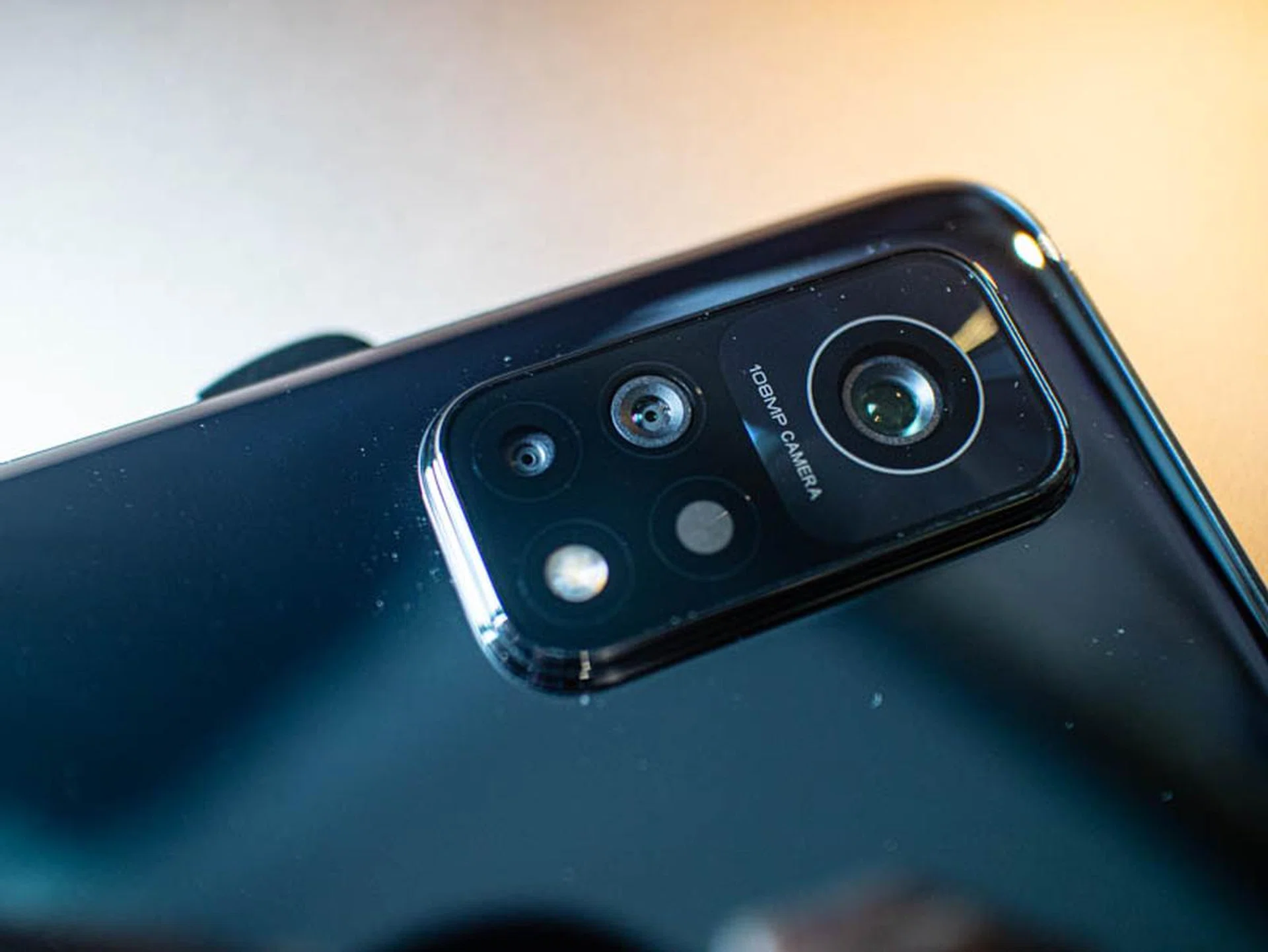
It would seem that the flagships of 2020 typically feature massively huge protruding camera lens housings, and Mi 10T Pro is no exception. The bulge is reminiscent of Note20 Ultra; hence the phone cannot lie down flat on its back. Surely it must have exceptional hardware to overthrow this inconvenience? Here’s a rundown on the Mi 10T Pro’s camera array:
- 108MP, f/1.69, 1/1.33-inch, OIS, 7P lens, wide-angle main camera
- 13MP, f/2.4, 5P lens, ultra-wide camera (FOV 123 degrees)
- 5MP, f/2.4, 3P lens, macro camera (2-10cm focusing distance)
Looking at the configuration, the 108MP main camera lens is the obvious one at the top of the camera module, with the other two lenses situated in the 4x4 square at the bottom, with the flash module on the bottom right, and a dummy placeholder on the top right.
Despite the main camera using a 108MP sensor, photos are taken at 15-25MP by default (depending on the aspect ratio chosen), thanks to pixel-binning technology.
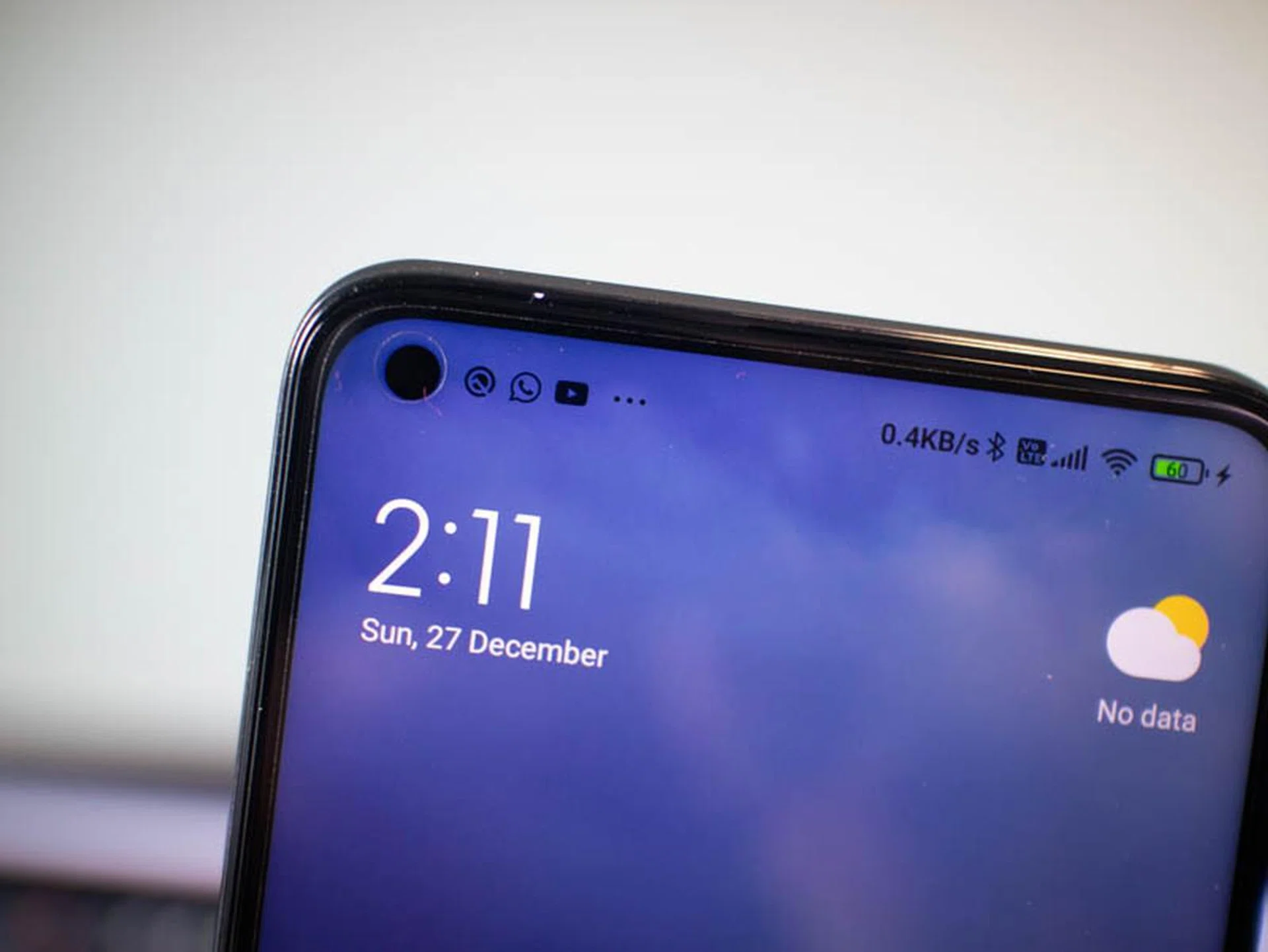
Note the notification light near the punch hole as well
The front camera also sees a significant change over Mi 10T Pro’s predecessor by having a single 20MP ultra-clear front camera (f/2.2, 1/ 3.4-inch sensor, 5P lens) in the form of a punch hole in the top left-hand corner of the display.
Does the phone's image and video capabilities justify its huge camera hump housing that contributes close to 2mm of the phone's additional thickness? Let's find out from our fieldwork.
Day Photos

Default image settings and no zoom.
The image quality of photos taken without any zoom is sharp and crisp, even on a cloudy day.
The UI, by default, offers three levels of zoom. 1x, 0.6x (ultra-wide), and 2x. As the Mi 10T Pro does not come with a telephoto lens, so any zoom level beyond 1x is digitally cropped and rendered. Despite that, the quality at 2x zoom is still good as seen in the following resized image:-

2X zoom
Long pressing the zoom button gives you more zoom options, up to 30x. The quality still holds up at 5x but starts to dip at 10x and beyond.

Ultra-wide shot (0.6x zoom)
At 0.6x “zoom”, we see 13MP ultra-wide lens put into action. Despite using a dedicated camera for ultra-wide action, there is a drop in photo quality compared to using the main lens as the photos look slightly fuzzy. This will be even more pronounced when photos are taken in the dark (more on this later).
There is also a 108MP mode, whereby the phone will take photos at 108MP resolution without pixel-binning. You are probably better off using its normal camera functions as the 108MP photos may lose some details due to the lack of pixel-binning and post-processing done to get the best out of the shot. If you're keen to scrutinise, click the below image to see the original 108MP photo in all its glory:-

Click to see the 108MP photo in full glory (if you don't mind a 30MB image file).
Night Mode
The night mode quality is good for typical night shots that involve some form of ambient light, like our cityscape with plenty of street or building lights.

However, the quality takes a hit in darker places (below), though it is still passable for typical social media consumption. This shot below has very little ambient lighting:-

Using night mode on other zoom levels yields pixelated photos. Even using night mode with the ultra-wide lens results in somewhat dark and slightly blurry photos, though it is still passable for social media consumption.
Fun modes
Out of the box, Mi 10T Pro comes with various cool features for the Tiktok / Instagram generation:
- Long exposure of various modes
- Clone: taking two shots of oneself
- Preset Vlog modes
Here is a long exposure photo taken using the Mi 10T Pro which turned out quite nicely:-

Videography
Mi 10T Pro features up to 8K video recording, on top of 4K60p-recording that is typically expected from flagships in 2020. Though, it must be noted that video stabilisation works only up to 4K. Also, given that there is no expandable storage, it makes little sense to record in 8K resolution; just a 10-second recording yields a 130-200MB file. The 8K recording is also only limited to 30fps as seen here:-

Below is the same footage but shot in 4K resolution, both in 30fps and 60fps. It also seems that the OIS video stabilisation works only when the video is shot on 30fps, as you can see the difference between the two clips (top - 4k60, bottom - 4k30):-


Mi 10T Pro also offers ShootSteady, an EIS feature that aggressively stabilises shaky video recording. While the feature does stabilise the video somewhat, in our testing, however, the use of ShootSteady also induces wobble and excessive blurriness, which undoes the stabilisation it brings along. This effect is much worse when shot at night that you're better off disabling ShootSteady.


Performance
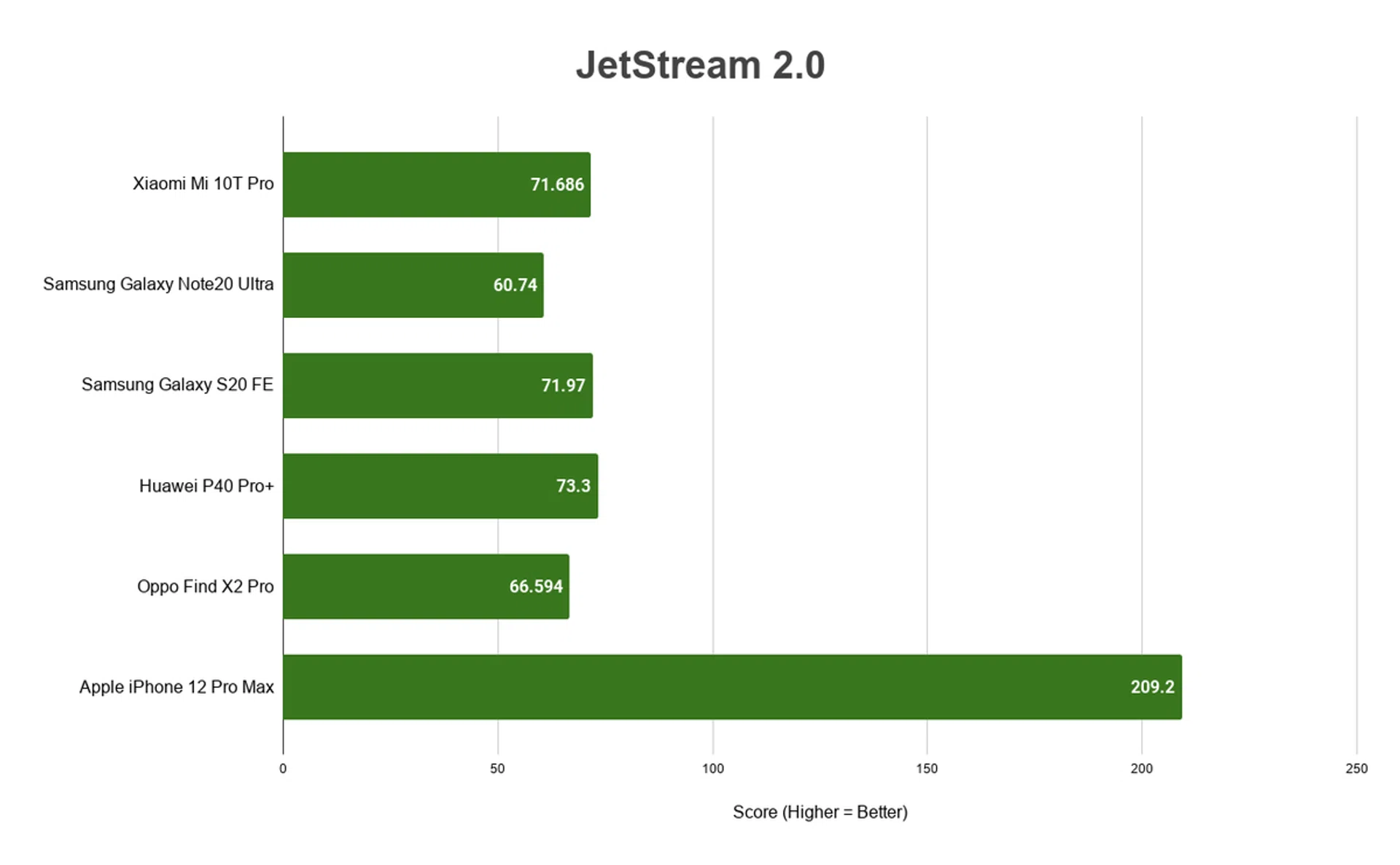
Mi 10T Pro features a Qualcomm Snapdragon 865, a flagship processor of its time. This puts the Mi 10T Pro on par with other flagships containing Snapdragon 865 chipsets, such as Samsung Galaxy S20 FE, Huawei P40 Pro, Oppo Find X2 Pro, and OnePlus 8. As such, we will be including these phones into our benchmark charts, including the latest iPhone.
Jetstream 2.0
JetStream 2 is a combination of a variety of JavaScript and Web Assembly benchmarks, including benchmarks that came before like SunSpider and Octane. It primarily tests for a system’s and browser’s ability in delivering a good web experience. We found the Jetstream score comparable to other Android flagships, but fall short of iPhone’s flagships.
Geekbench
Geekbench CPU is a cross-platform processor benchmark that tests both single-core and multi-core performance with workloads that simulate real-world usage. Geekbench 5 scores are calibrated against a baseline score of 1000, which is an Intel Core i3-8100.
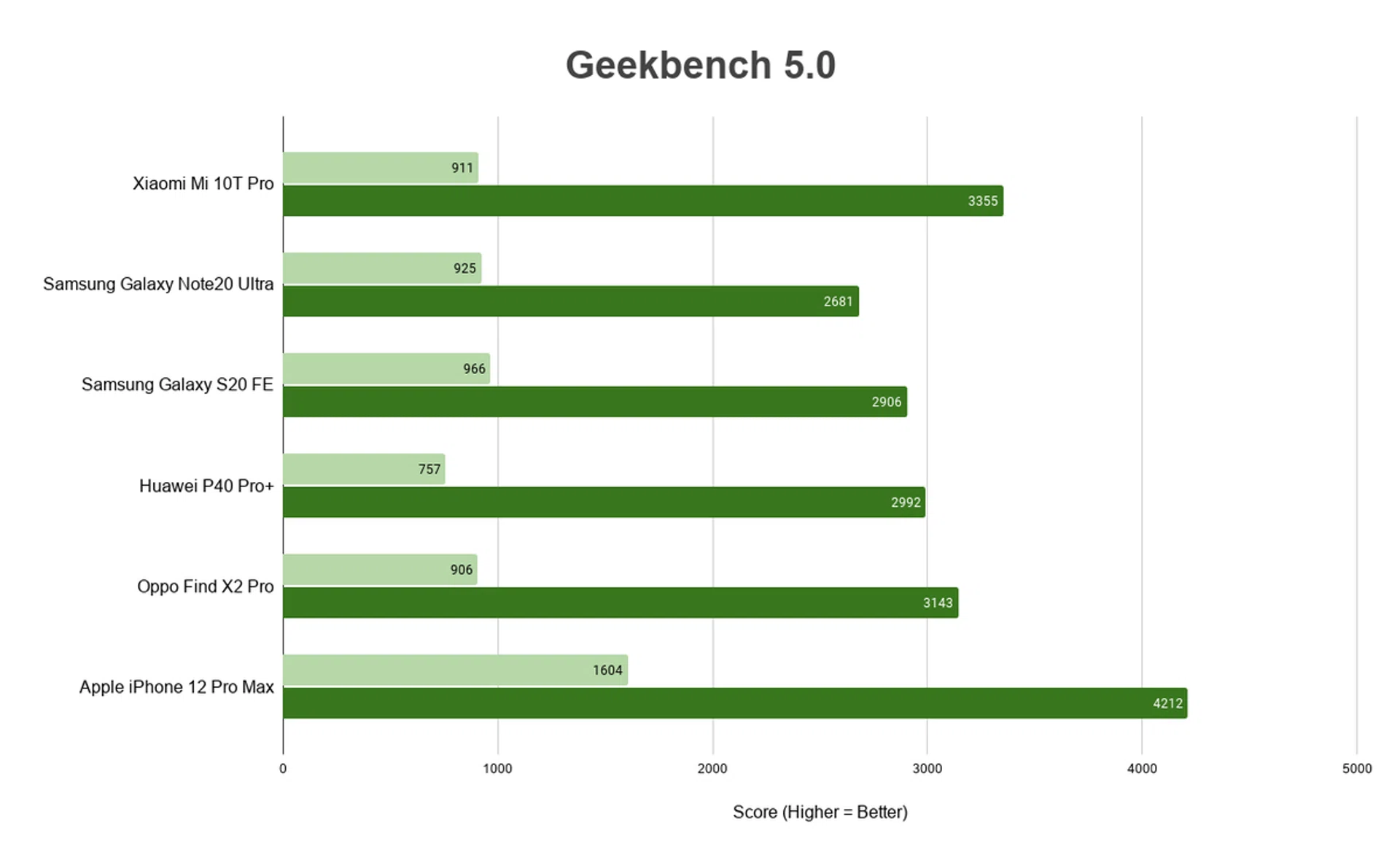
Again, the Mi 10T Pro’s single-core scores are close to Samsung’s flagships, and its multi-core score exceeds that of almost all Android flagships. Snapdragon 865 does plenty of heavy lifting for Xiaomi in the performance arena.
3DMark Wild Life & Sling Shot Extreme (Unlimited)
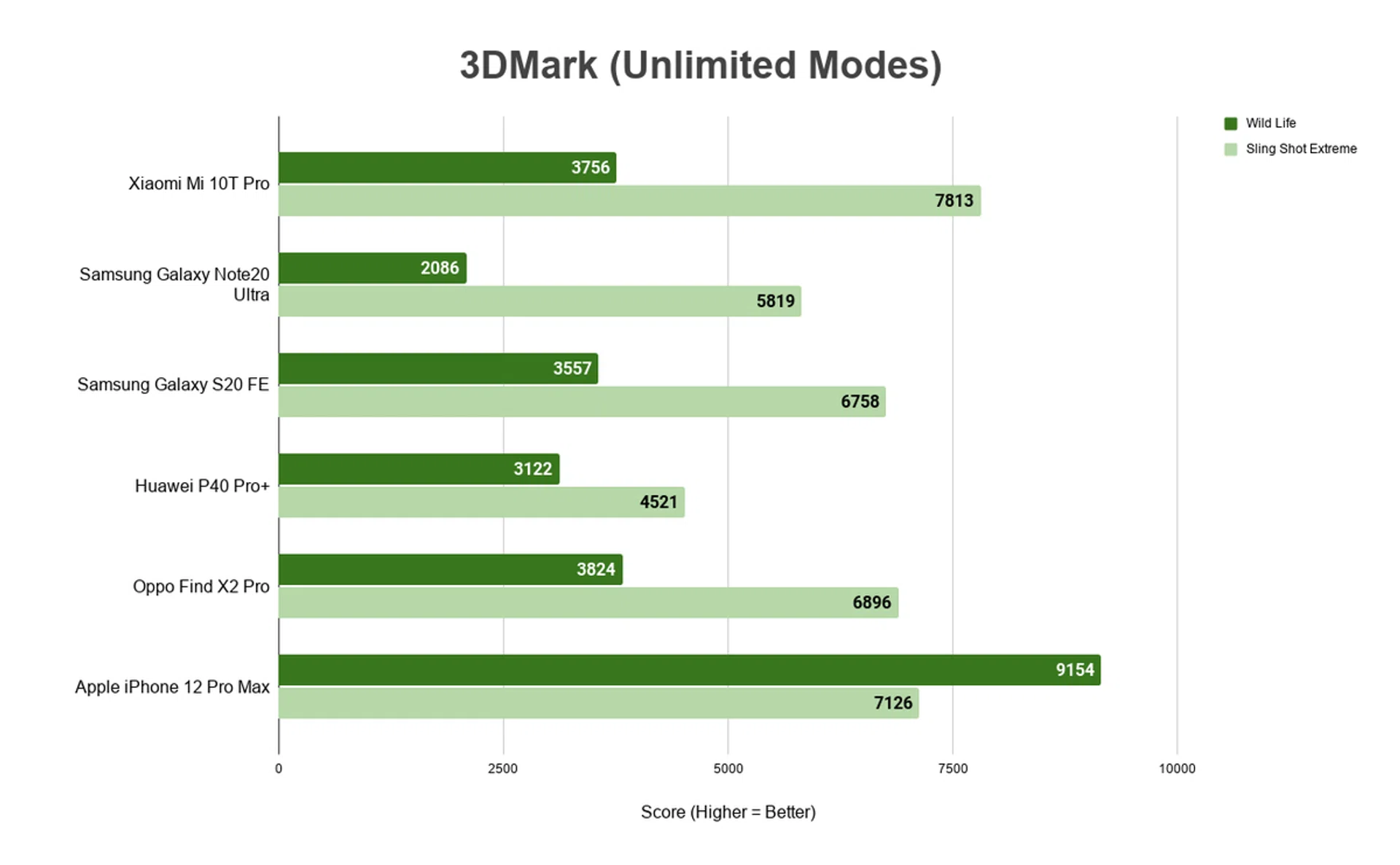
Its 3DMark scores resoundingly beat other Android flagships with the same Snapdragon 865 chip. Of note, the newer Wild Life benchmark scores better on the iPhone 12 Pro Max, whereby the older Sling Shot Extreme test runs better on the Mi 10T Pro. This is likely due to the fact that Sling Shot uses OpenGL APIs to render the benchmarks, whereas Wild Life uses the latest graphics rendering APIs in each respective platform: Metal for iOS, and Vulkan for Android OS.
As a whole, the Xiaomi Mi 10T Pro not only has a decent flagship processor. The consistent performance we see signals that the Xiaomi phone is at least well-optimised, if not better optimised than some other Android flagship smartphones with the same processor. However, the raw performance is only half the story as the cost of its high performance takes a toll on its battery life as you'll see below.
Battery Life
Our standard battery test for mobile phones has the following parameters:
- Looping a 720p video with screen brightness and volume at 100%
- Wi-Fi and Bluetooth connectivity turned on
- Constant data streaming through email and Twitter
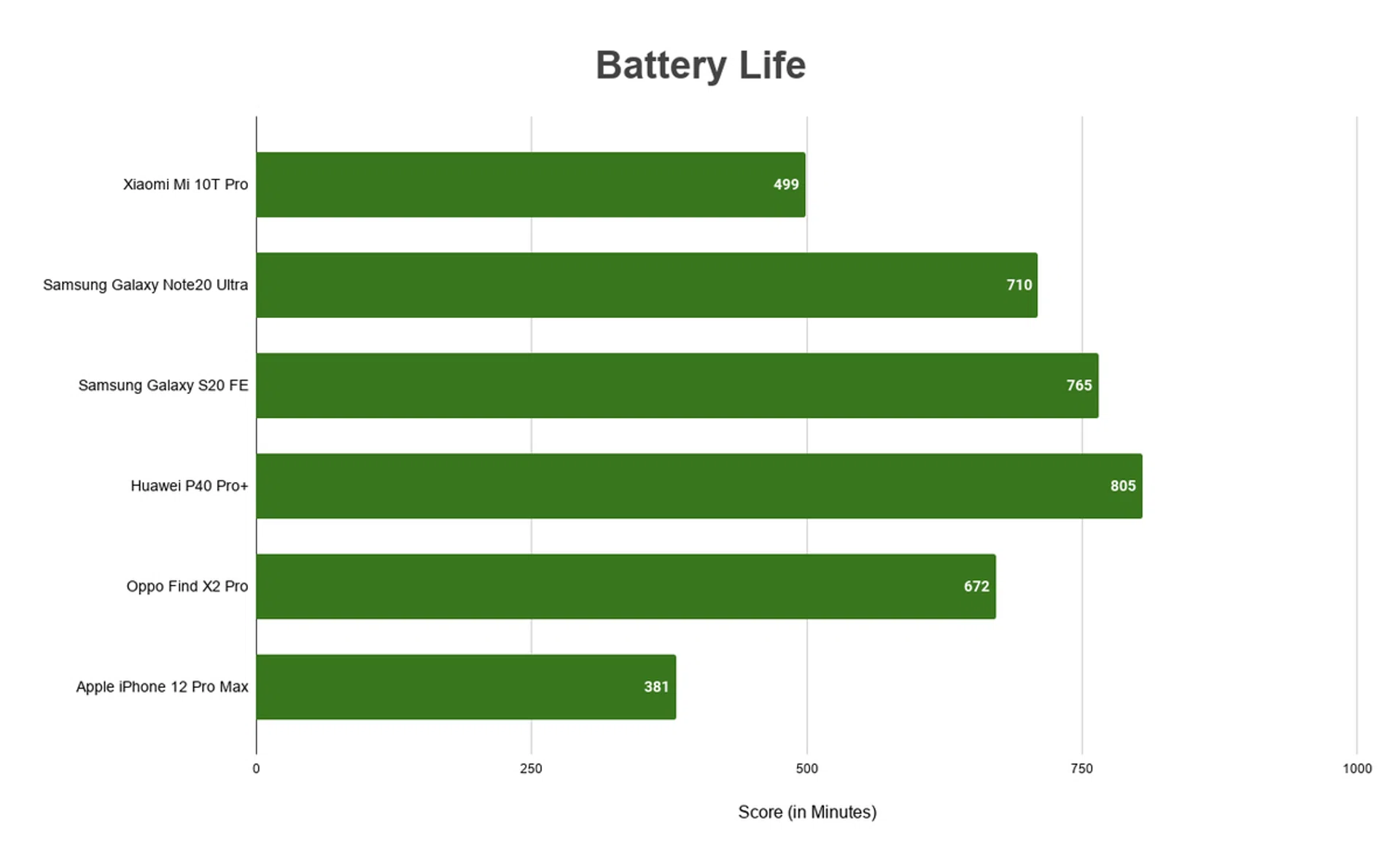
The Mi 10T Pro comes with a pretty beefy 4,900mAh battery pack. Despite the large battery capacity, which is in fact the biggest of any phone we've compared in this review, its battery performance is the weakest among the Android competition. The Mi 10T Pro lasted around 8.5 hours before depletion, much faster than just about every other 2020 high-end phone alternative. Even so, it is still better than all the iPhones launched in 2020. As mentioned, the higher benchmarking performance not only indicates phone optimisation. Higher performance from the same chipset would demand more juice, and the Xiaomi's battery life performance shows. For instance, it's anywhere 3% to 15% more powerful than alternatives like Samsung Galaxy S20 FE and Oppo Find X2 Pro, but you trade 200 to 300 minutes of battery life for that higher performance. So yes, the Mi 10T Pro is fast, but it comes at a price.
Included in Mi 10T Pro package is a 33W fast charger. Unlike other Chinese phones, this one does not come with ultra-fast charging, but it's still plenty fast that it charges the phone from zero to full in about slightly over an hour. That's quite respectable.
Conclusion
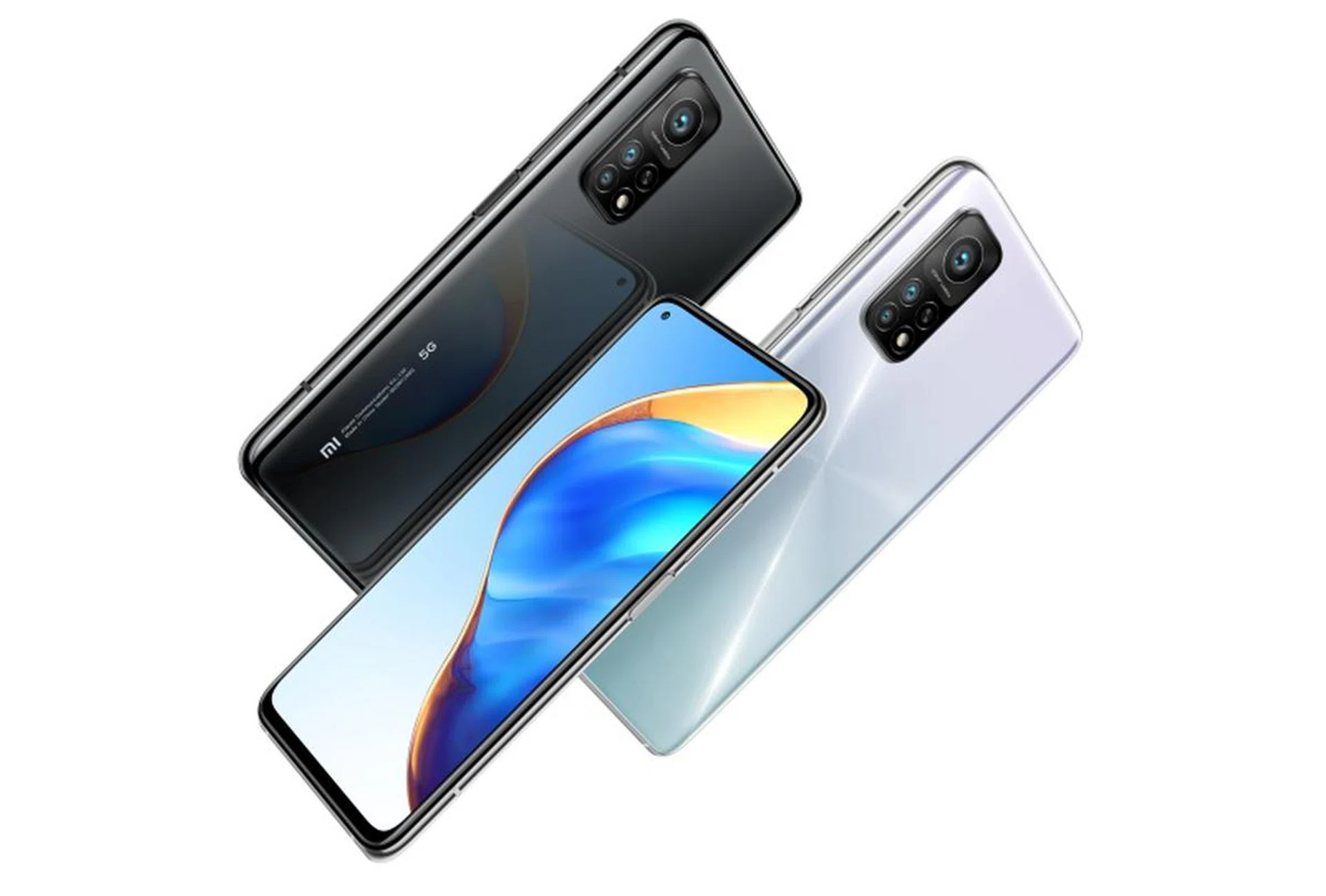
In this review, we have seen just how snappy, smooth, and powerful the Xiaomi Mi 10T Pro is. With a recommended retail price of S$749, and boasting key specs like a Snapdragon 865 SoC processor and a 108MP main camera, it would seem like the ideal budget Android flagship phone of 2020.
However, Mi 10T Pro’s Achilles' heel is Xiaomi's very own MIUI interface. Its preloaded bloatware and the unpolished UI mars the overall user experience. It would definitely be a deal-breaker for users who prefer a cleaner Android interface that places emphasis on UX details right out of the box.
In addition to that, Mi 10T Pro still lacks some key features that some would have expected out of a true flagship. It foregoes certified waterproofing, wireless charging, advanced biometrics login options and a dedicated telephoto lens. The lack of these features may not be a concern to some phone users, but it's a stark reminder why the Mi 10T Pro can command a far lower-than-average price point for the tier of performance it offers. Overall camera performance should also please most users, especially at its price point. It camera UI may not be polished or have advanced shooting features, but daylight photography and some aspects of low light shots are fairly decent.
On the upside, we found that the 144Hz display yielded a super-smooth usage experience, though it is only marginally better than the 90Hz display found in the Mi 10 series that debuted earlier.
If the trimmings Xiaomi made to the Mi 10T series severely impact your expectations, it may be better to go for the full-featured Mi 10 series instead that offers a superior OLED screen, build quality and camera configuration, biometrics and charging capabilities. These are quite a bit expensive though as the Mi 10 starts from S$1,088 while the Mi 10 Pro with the superior camera configuration goes for S$1,399. The original Mi 10 underscored its popularity over the Mi 10T series because of its constantly fluctuating retail prices and scarcity of inventory even on official retail platforms.
However, if you absolutely need the lowest price possible for a phone with some flagship-tier components, or if you can't get Mi 10 to restock and don't mind foregoing some non-core features (and perhaps some battery life), the Xiaomi Mi 10T Pro could be the phone you've been looking for.
Does it really offer great value? That's however debatable as it's not the most well-rounded phone option. For a little over S$300 more, you can get Samsung's Galaxy S20 FE that offers you pretty much everything that has been omitted on the Mi 10T Pro - a better screen, advanced biometrics, vastly better UI, a more advanced camera app, wireless charging, reverse wireless charging, much better battery performance, lots of colour options and it even has expandable storage. The Samsung phone is also a lot easier to handle (even if its back is made out of plastic) as the Xiaomi Mi 10T Pro is a fairly bulky phone.
So while the Xiaomi Mi 10T Pro sounds like a great catch, it is, but only if you're not concerned about anything else besides the phone performance (with some caveats) at a nice price point. As the old saying goes, you get what you pay for and it does hold true for the Xiaomi Mi 10T Pro.
Interested to purchase the phone? The Xiaomi Mi 10T phones are officially available at Lazada, Shopee, Qoo10, the big three telcos (M1, Singtel, StarHub) and all authorised Mi Stores.
Our articles may contain affiliate links. If you buy through these links, we may earn a small commission.