
Sony Ericsson Xperia arc - Right on the Mark
The Sony Ericsson Xperia arc is one of the latest additions to a growing Xperia line. The slim and uniquely angular device stands out in an intensively competitive tech category, but does it impress? We check out this Android 2.3 and Bravia Mobile Engine equipped smartphone.

A[r]ching for Style?
The Sony Ericsson Xperia arc has been on our radar for quite some time now - we initially did a short preview article with a video overview on the classy looker. The Android 2.3 device comes as one of the latest additions to its increasingly Android-crowded mobile space, but with a fairly unique preposition. Not only does the wiry phone boast of a unique design, it also comes with a huge 4.2-inch Reality Display touchscreen with the new Mobile BRAVIA Engine technology. Is the arc as good as it promises to be? Let's start with a recap of its design aspects:
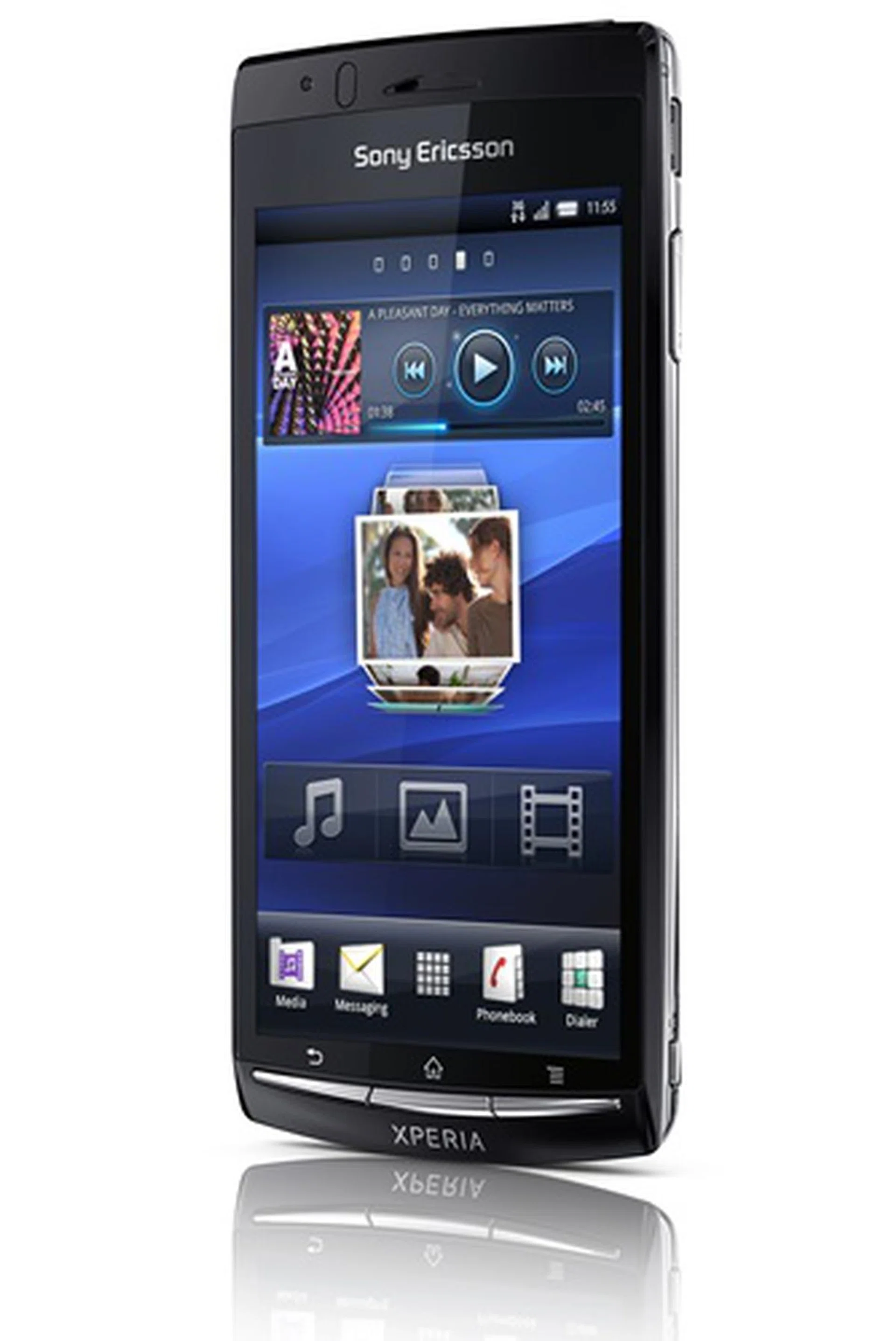
The 4.2-inch screen practically takes the whole real estate on the front, save for three thin slightly curved physical controls. They have been clearly demarcated with symbols, so its pretty easy to distinguish from one another. Unfortunately, these symbols don't light up, leaving us pretty confused when in the dark.
Off the bat, we must say we are impressed - the phone is really very thin, light, fashionable, stylish and classy. However, because of this attention to weight, the phone's sturdiness feels somewhat compromised. As a result, the device feels fragile because of the light materials used to construct the arc with its rear plastic cover feeling like it can be easily snapped into two pieces. The other smaller area of concern we had was with the arc's fingerprint-friendly shiny sides which should have been replaced with a matte material finish.
While we are fans of the simple and clean design, we felt that more attention to detail would have benefited the physical buttons used across the device. For example, the tiny power button was too flushed for comfortable use while the shutter button required better positioning.
Apart from the above concerns, the overall handling experience was positive with its scarce weight of 117g evenly distributed across a comfortably-sized body.
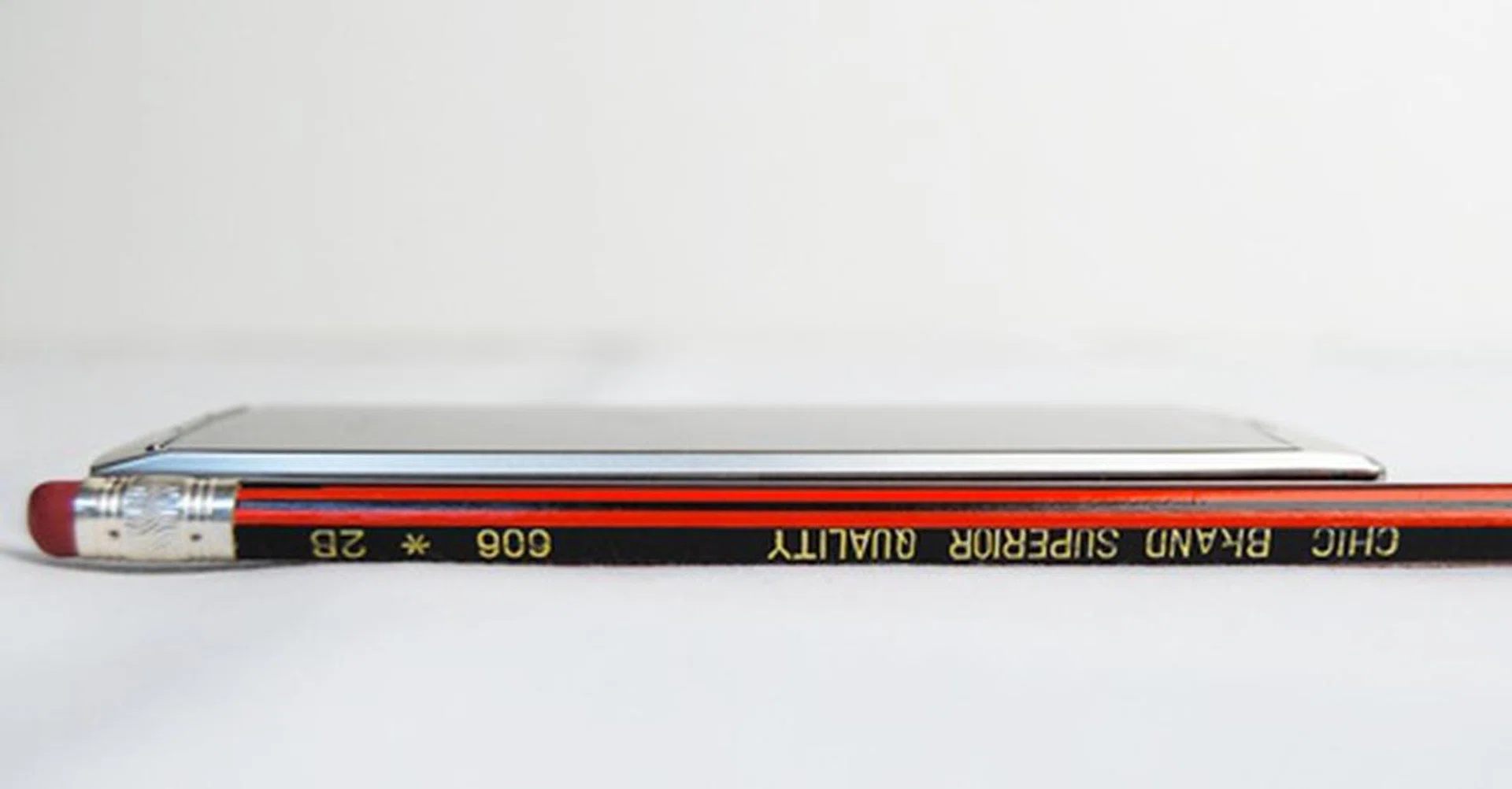
The arc is slightly thicker than a pencil, and stands at a mere 8.7mm thick, roughly 5mm thinner than the original X10, and definitely thinner than most of the other Android phones out there. It is also lighter as well, tipping the scales at just 117g.
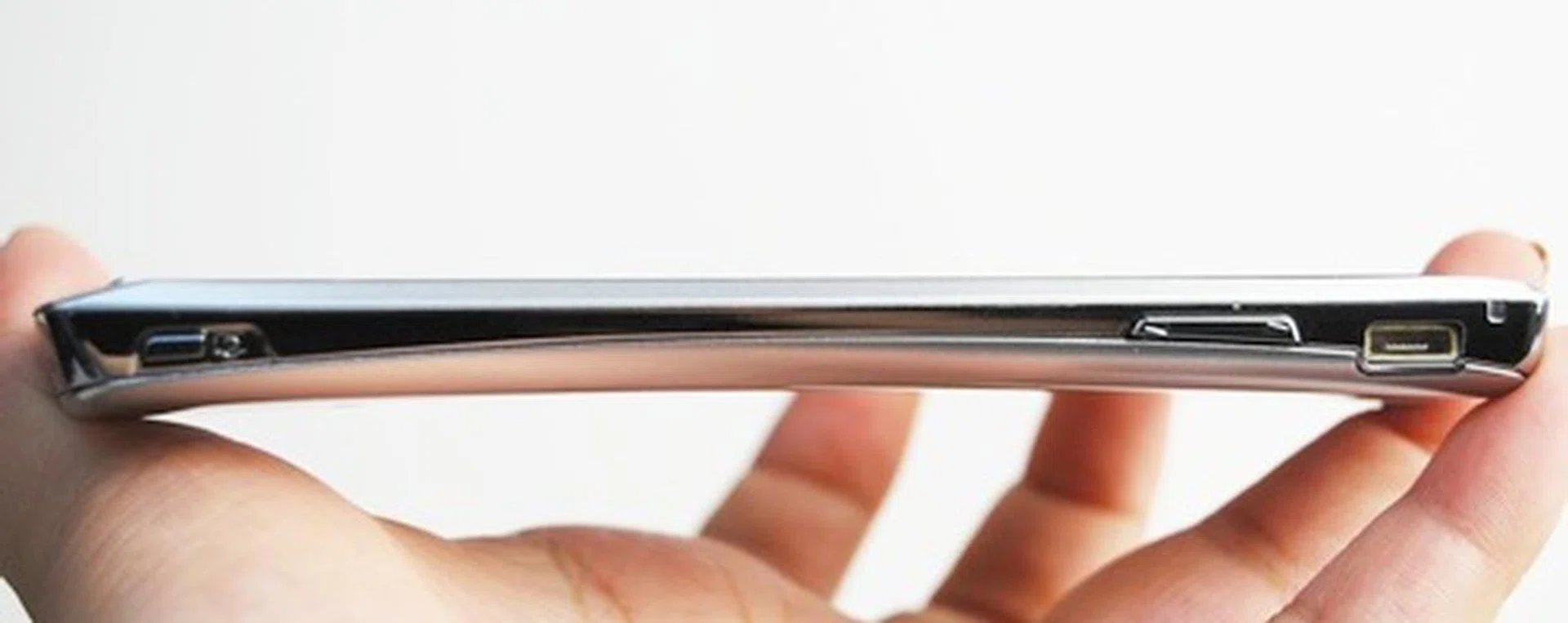
If you look carefully at the back of the phone, you will notice that the arc stands out from most smartphones because of its thin and uniquely curved profile. From left to right: camera button, volume controls and micro-USB port. The volume button is rather short but presents good feedback. The camera button, like the power button, is really small and is placed too far right for quick snapping.
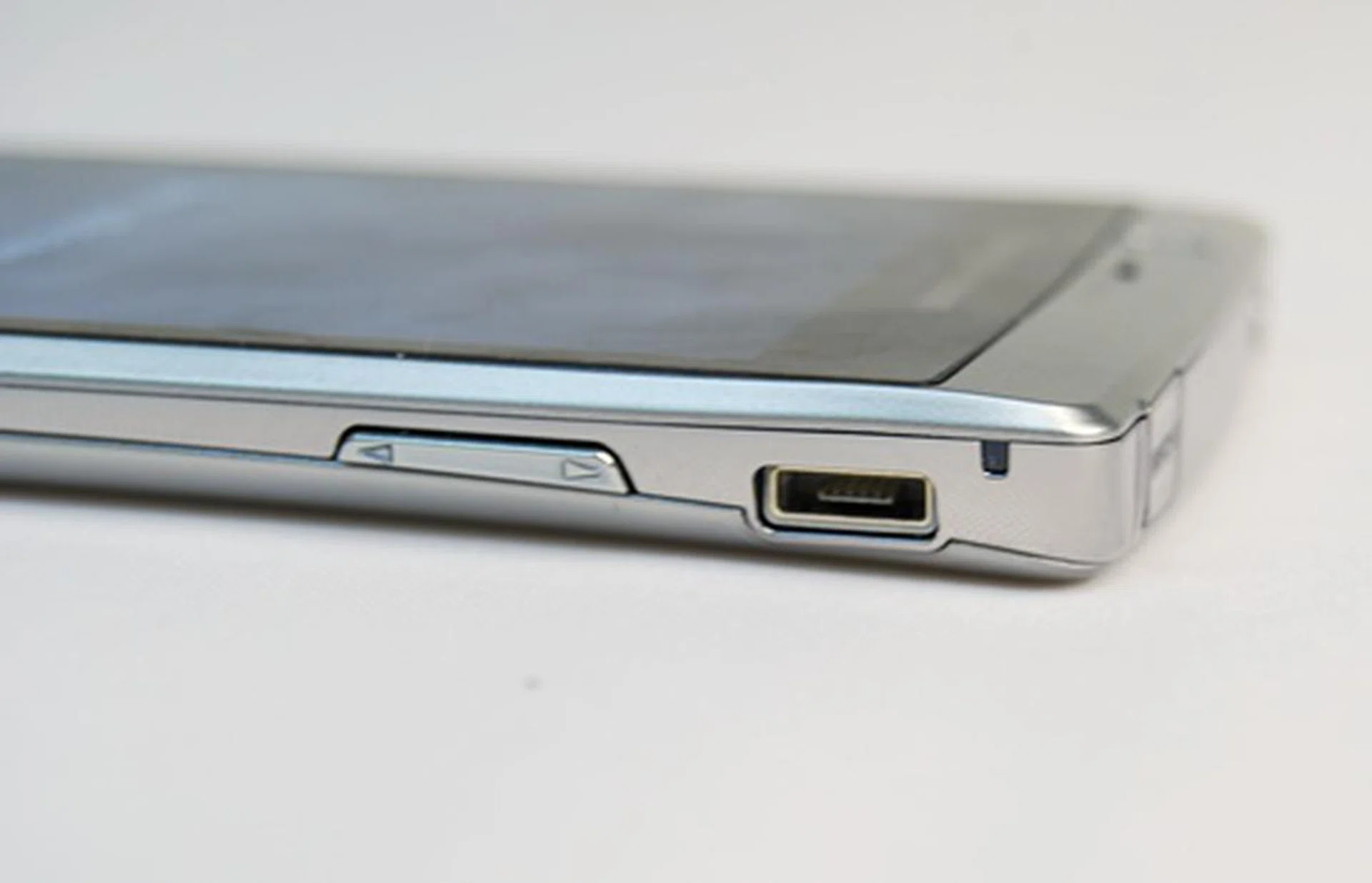
If you look closer at the right profile, you will spot a small notification LED light which serves as an alert for ongoing phone activities such as incoming messages and battery charging. We definitely appreciate its presence but not so much so of its inconspicuous positioning. It should have been present on the front face or at the top of the phone.
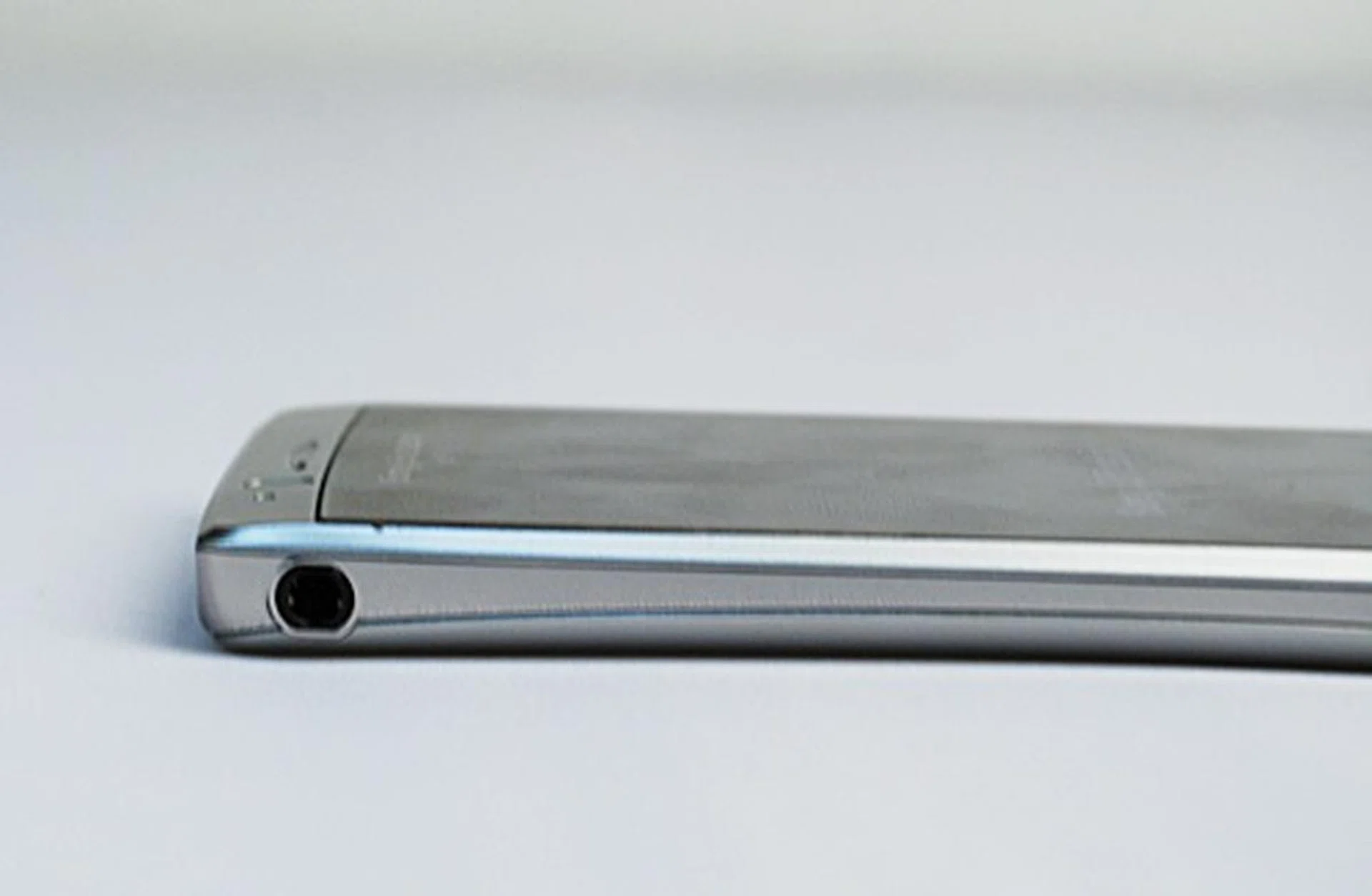
On the left profile lies a lone 3.5mm headphones jack.
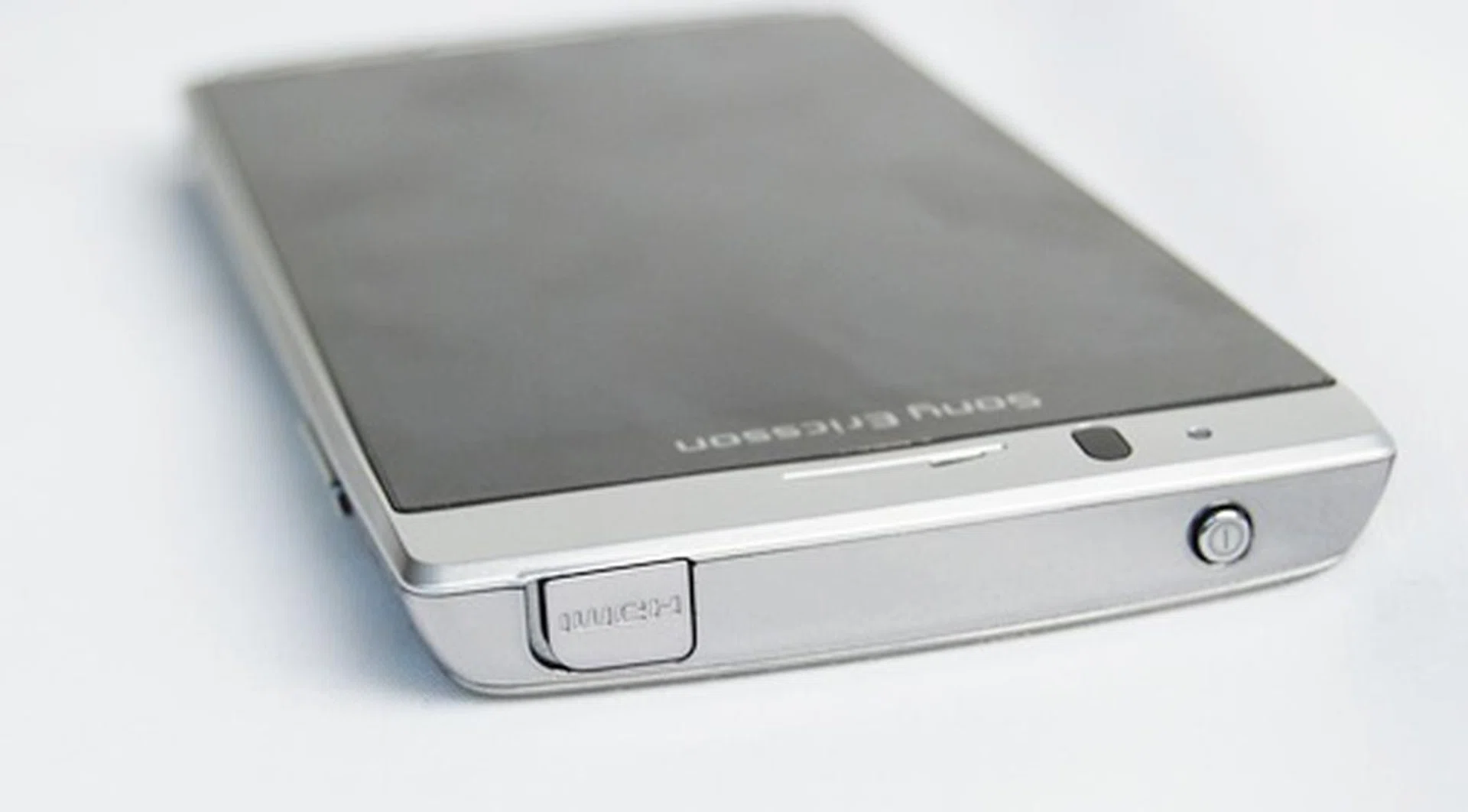
The phone also comes with a HDMI video output on the top that's protected by a small cap. The power button sits on the other end - tiny and flushed, we found it difficult to press and sometimes, locate.
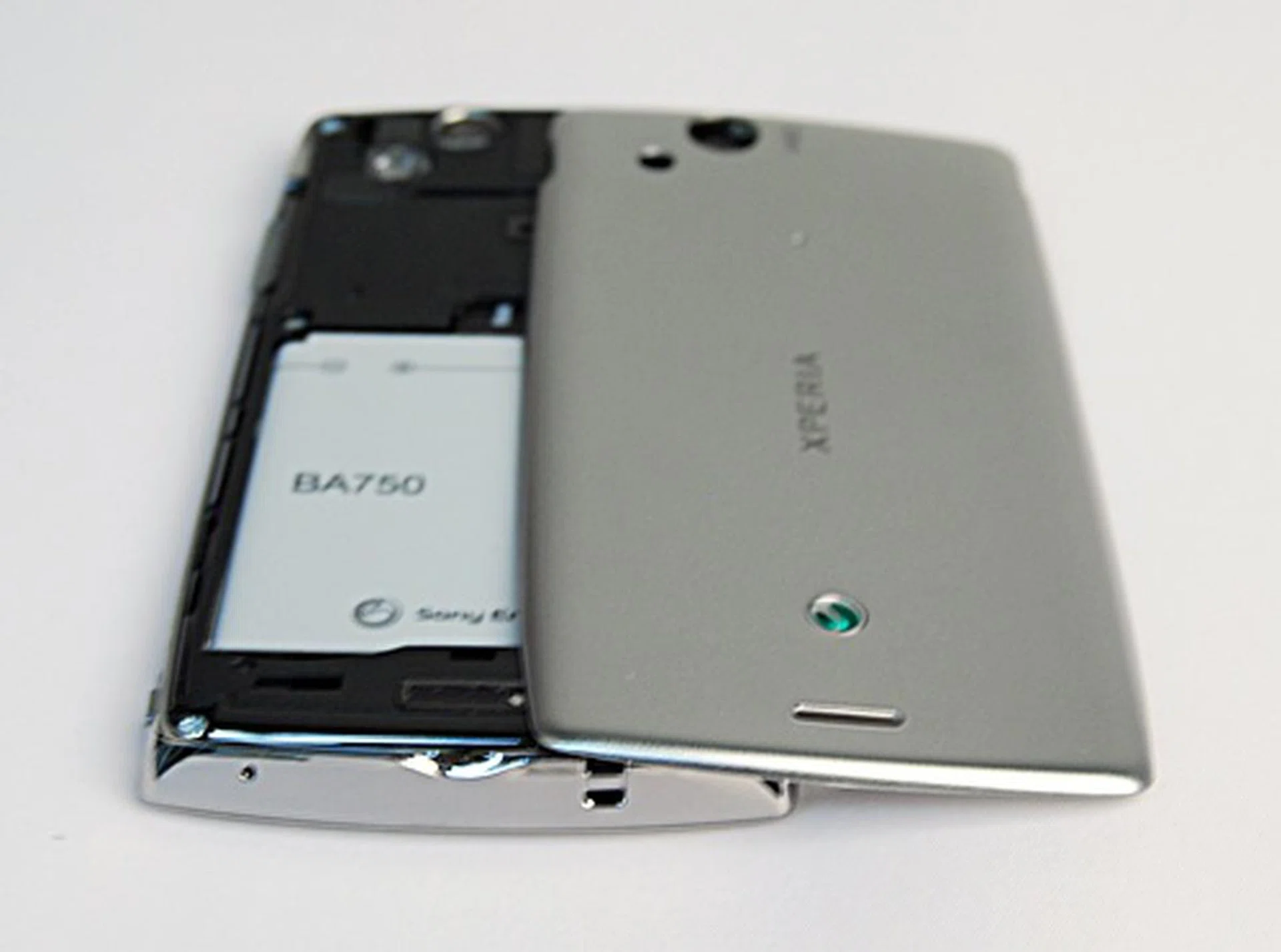
The groove at the bottom makes for easy removal of the back cover. However a word of caution: do use less force as the cover is relatively fragile.
Our initial impressions remain consistent to our first trial over three months ago - the user experience is largely a positive one due to its slim build and lightweight body. On the other hand, we weren't big fans of its small, sometimes, impractically positioned buttons and unlit symbols (the latter has resulted in occasions where we find ourselves awkwardly fumbling in the dark).
Much Ado About Froyo and Bravia Mobile Engine
Thankfully, Sony Ericsson learned its lesson with the Xperia X10 - a flagship phone that only had the Android 1.6 OS when it was released while other manufacturers already had their phones featuring the Android 2.1 OS - and has kept the Xperia arc relevant with an Android 2.3 Gingerbread build. The makes the arc one of the earliest adopters of the new Android OS update. Both Timescape and Mediascape features make their appearances as well on the arc, and are apps that are primed for easy access to your social networking updates and multimedia files.
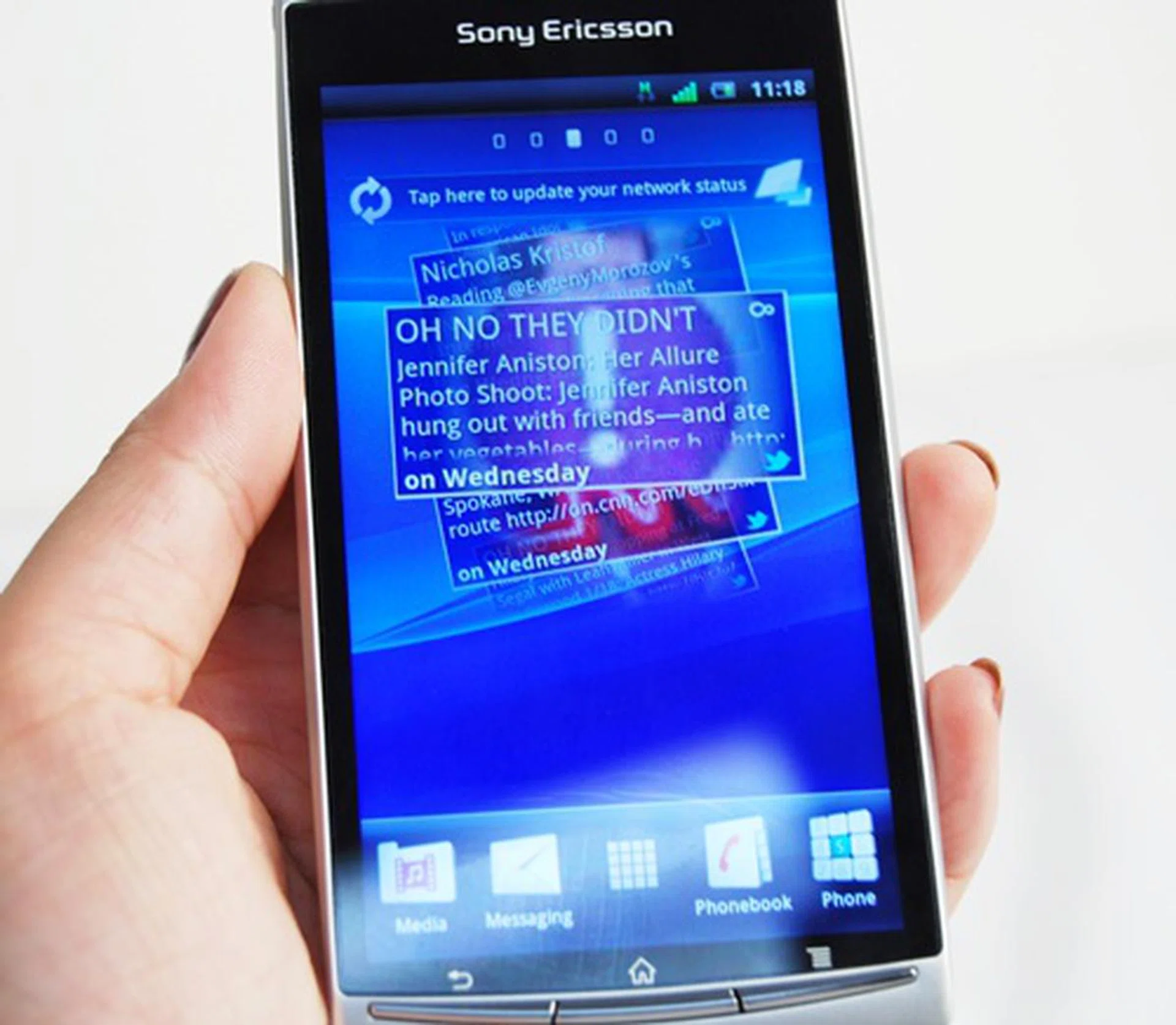
So far, we have not really spotted any incremental differences on the arc's user interface compared to the older Xperia X10 or X8 phones, but the good news is that the social-network friendly Timescape UI makes a reappearance here. The Timescape gives you a bird's eye view of all communications on the phone from Facebook, Twitter updates to emails and SMSes in tabs.
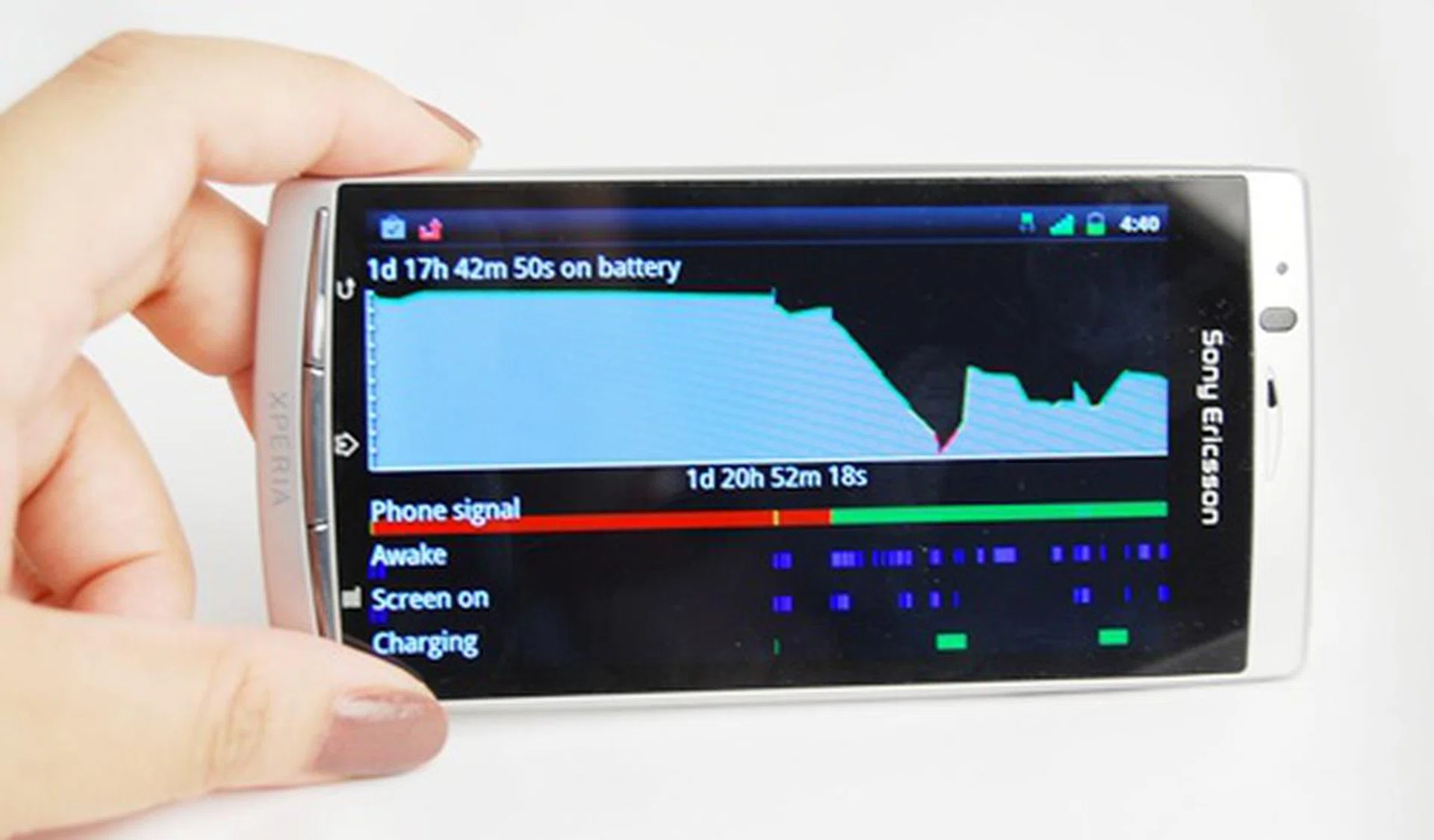
As mentioned, while the Android 2.3 OS hasn't featured any dramatic changes from the current Android 2.2 OS, there are some subtle differences that streamline the user experience. For one, the Application settings now has a more comprehensive overview of how the battery is being used, with details of usage by each app or component.
Of course, the main draw for the Xperia arc is plain to see: a huge 4.2-inch 854 x 480 pixels screen with Sony’s Mobile BRAVIA Engine image processing technology that enhances video playback quality. We realized that the LED-backlit LCD lives up to its Reality Display moniker, boasting richer and brighter color display than its predecessors with good viewing angles under bright light. The sharp and beautiful results shine through while playing videos and games on the device as well as while navigating through the smartphone’s stylish interface.
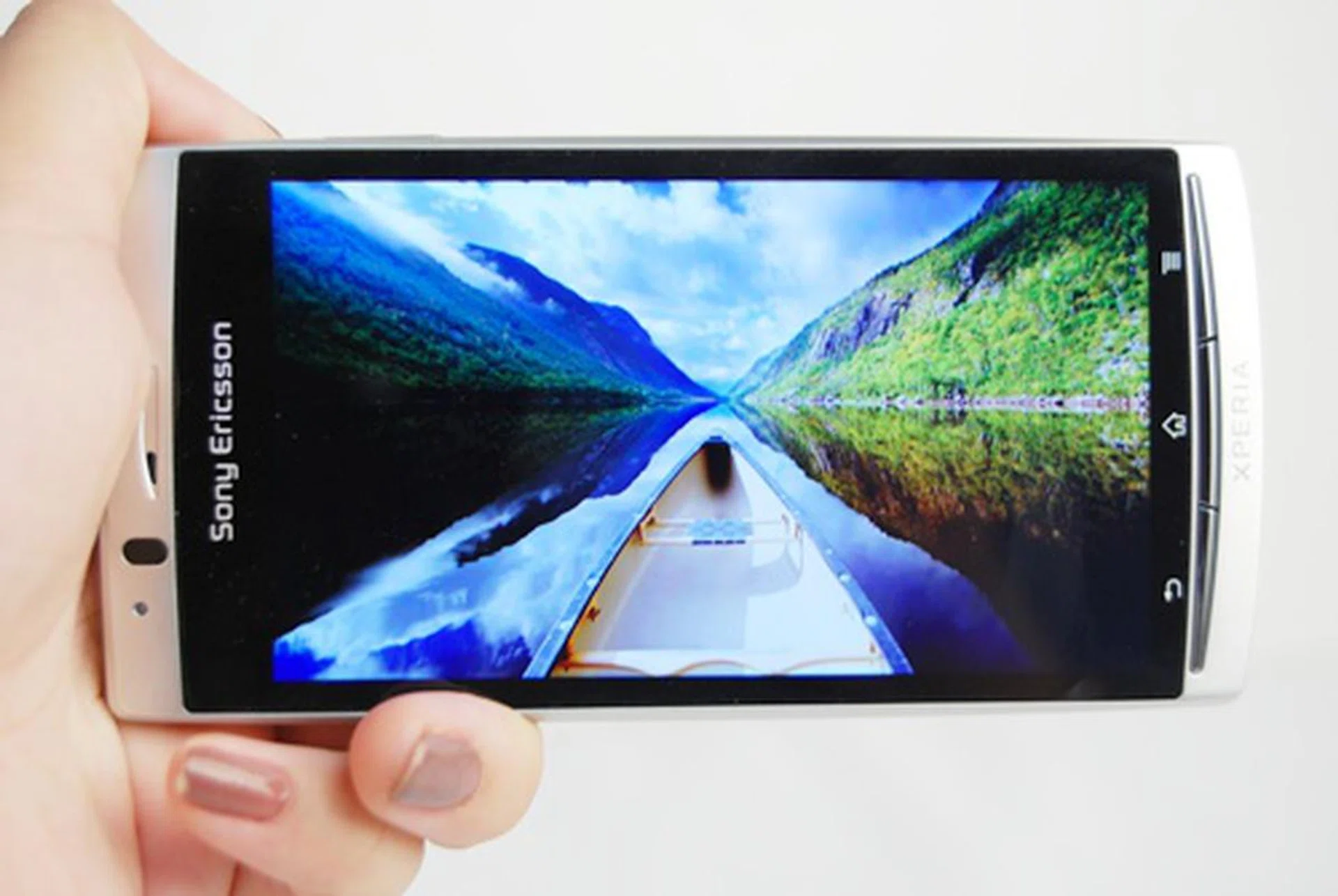
Looking impressive. The smartphone comes with a big 4.2-inch, 854 x 480 pixels multi-touch Reality Display with the Mobile BRAVIA engine enhancing its display.
Benchmarking the Arc
For those who have been regularly reading our phone reviews, this additional section will come as no surprise. We mentioned earlier in previous reviews that we have adopted a few benchmark tests specific to the Android platform for a few reasons. With the Google Android platform maturing so quickly, choosing a suitable phone in a growing sea of Android devices with close to identical specs is extremely difficult; to add on, with manufacturers jumping on the dual-core processing bandwagon, these results will give a gauge of how they will fare against their lesser endowed counterparts. Hopefully, these benchmarks will allow for a clearer picture on which smartphone is worth your while.
Within this page, we'll be looking at two specific benchmarks, both of which are downloadable via the Android Market.
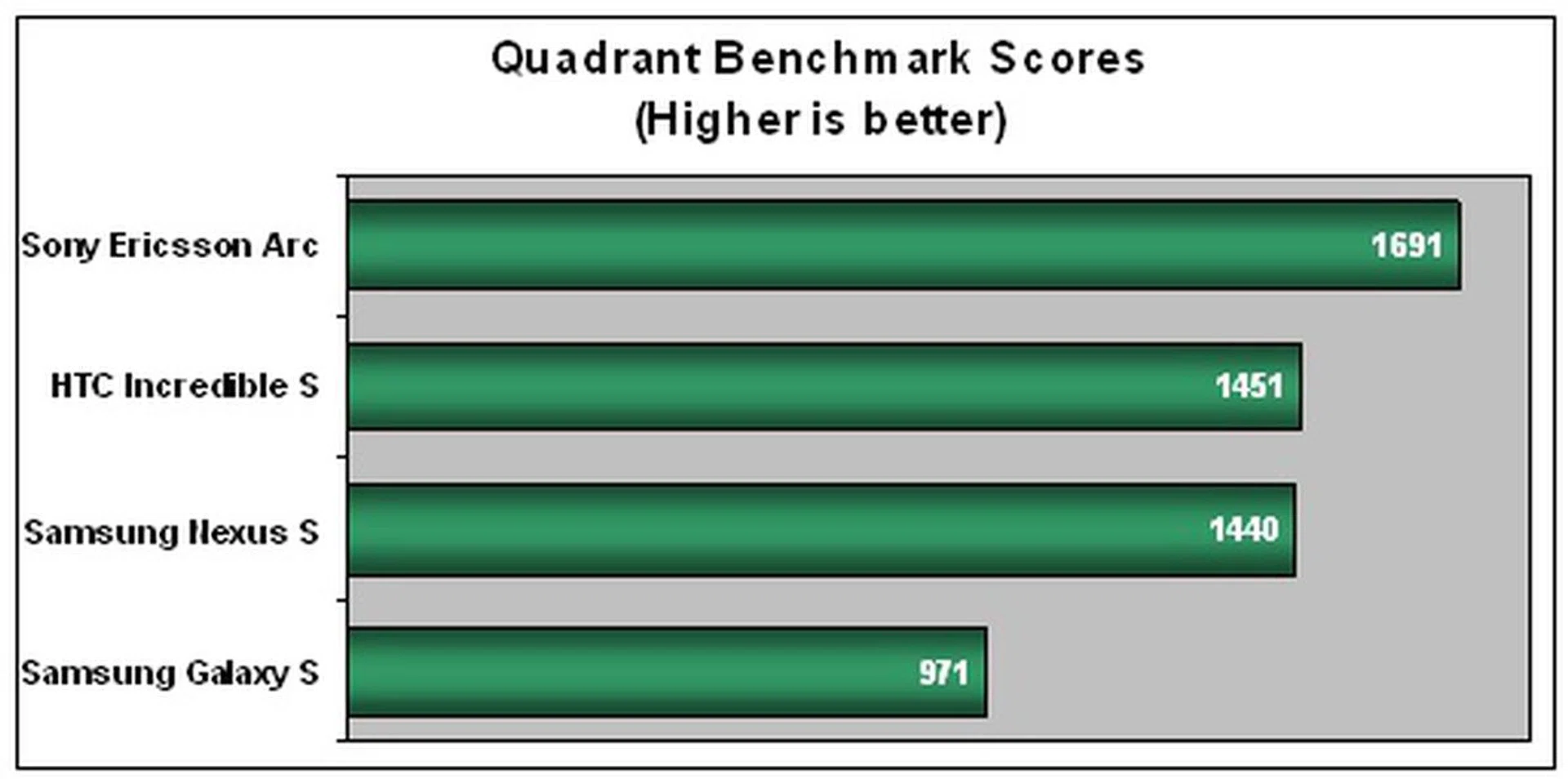
- The first benchmark is Quadrant - it measures the device's performance based on its CPU, I/O and GPU. Simply put, Quadrant is a benchmark that gives you a general idea of how your device performs against other Android devices.
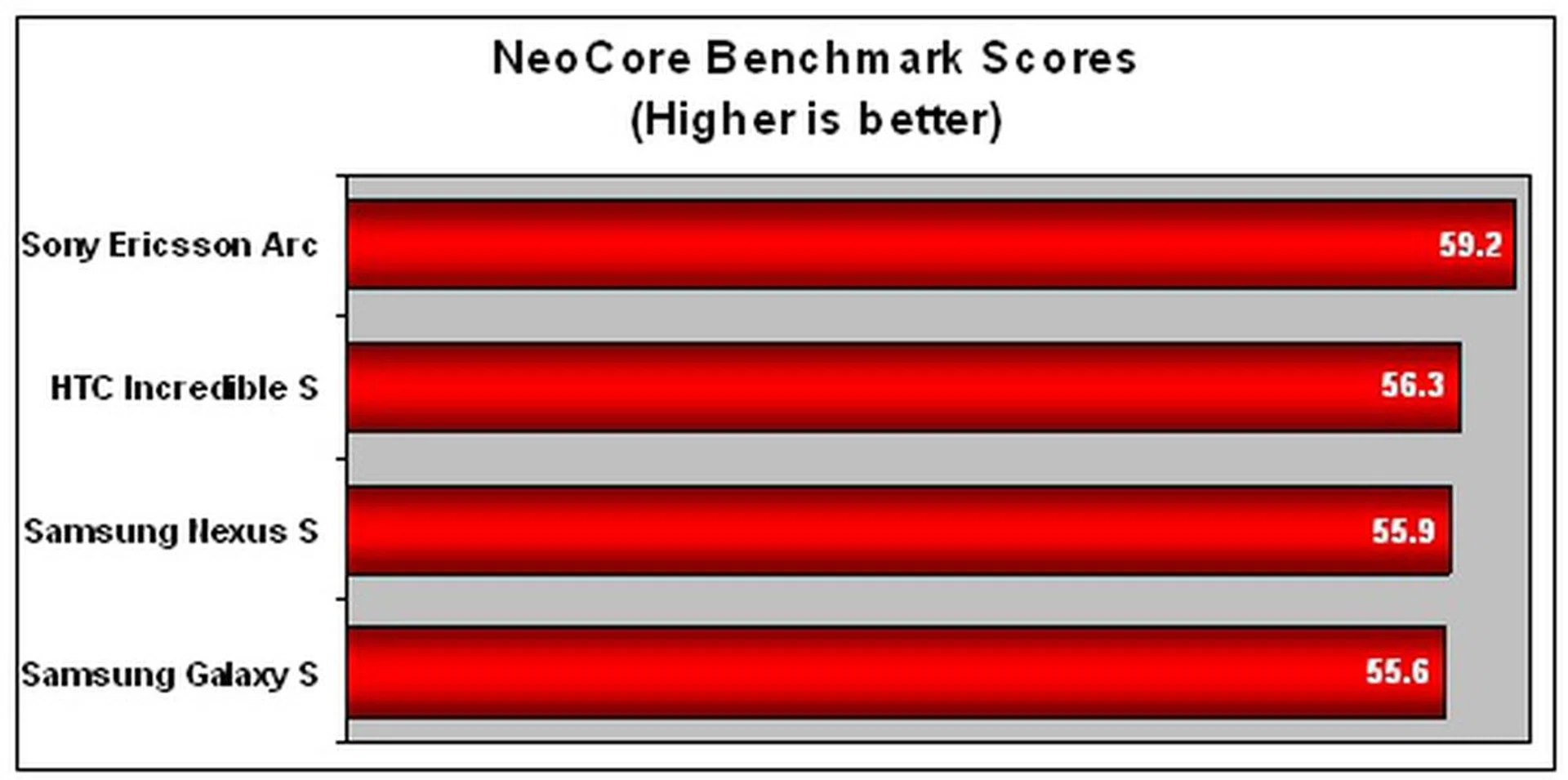
- The second benchmark is NeoCore - it is targeted towards the device's GPU performance. This is especially important given how smartphones of today have evolved into an alternative, high-powered device that dabbles in heavy graphical interfaces and gaming.
Do note that the above two benchmarks are not absolute in measuring performance, but they give you a good rough estimate of how the device performs. Our tests were conducted on devices from a fresh reboot on a stock firmware. To showcase how the Sony Ericsson Xperia arc performed against similar smartphones, we compared its results against the following Android devices - HTC Incredible S, Samsung Nexus S, and Samsung Galaxy S.
Device | Sony Ericsson Xperia arc | HTC Incredible S | Samsung Nexus S | Samsung Galaxy S |
CPU | Qualcomm Snapdragon MSM8255 1Ghz | Qualcomm Snapdragon MSM8255 1Ghz | Hummingbird Cortex-A8 1Ghz | Hummingbird Cortex-A8 1Ghz |
GPU | Qualcomm Adreno 205 | Qualcomm Adreno 205 | PowerVRSGX540 | PowerVR SGX540 |
RAM | 512MB | 768MB | 512MB | 512MB |
OS | Google Android 2.3 | Google Android 2.2 | Google Android 2.3 | Google Android 2.2 |
As discerned from the results above, the Sony Ericsson Xperia arc clearly leads the pack with the highest score, followed by the HTC Incredible S. Both phones are almost identical in terms of the hardware specs listed above, save for the difference in their Android operating systems. The key to the arc's victory might possibly lie in the fact that it runs on the more optimal Android 2.3 OS as well as the fact the the Incredible S might be bogged down by an "intensive" HTC Sense UI. As we test more mobile phones in the coming weeks, we'll be able to pinpoint the exact attributes that make up for the differences.
While the arc comes with a relatively standard 1GHz processor, you do get an extremely responsive device with more than enough horsepower for fluid multi-tasking. Web browsing was generally speedy, with pages loading in a breeze. Like on most high-end smartphones, the general navigational experience was generally smooth with no lags and crashes, aided by a receptive touchscreen.
Multimedia & Battery Life Performance
To kick start, the Xperia arc's 4.2-inch LCD screen is huge and primed for excellent multimedia viewing. We tried watching videos with and without the Mobile Bravia Engine on, and were impressed with both results. The Super AMOLED screens still triumph over the arc's screen, but it is only a marginal victory. That aside, an acceptable 480 x 854 pixels resolution is sufficient for comfortable video playback. Audio is good and reasonably loud when pumped up to the maximum, boasting of clear vocals and solid bass, at least as far as phones are concerned.
Next up is the camera's imaging performance and thankfully, Sony Ericsson lives up to its name and the Sony branding that is synonymous with imaging products.
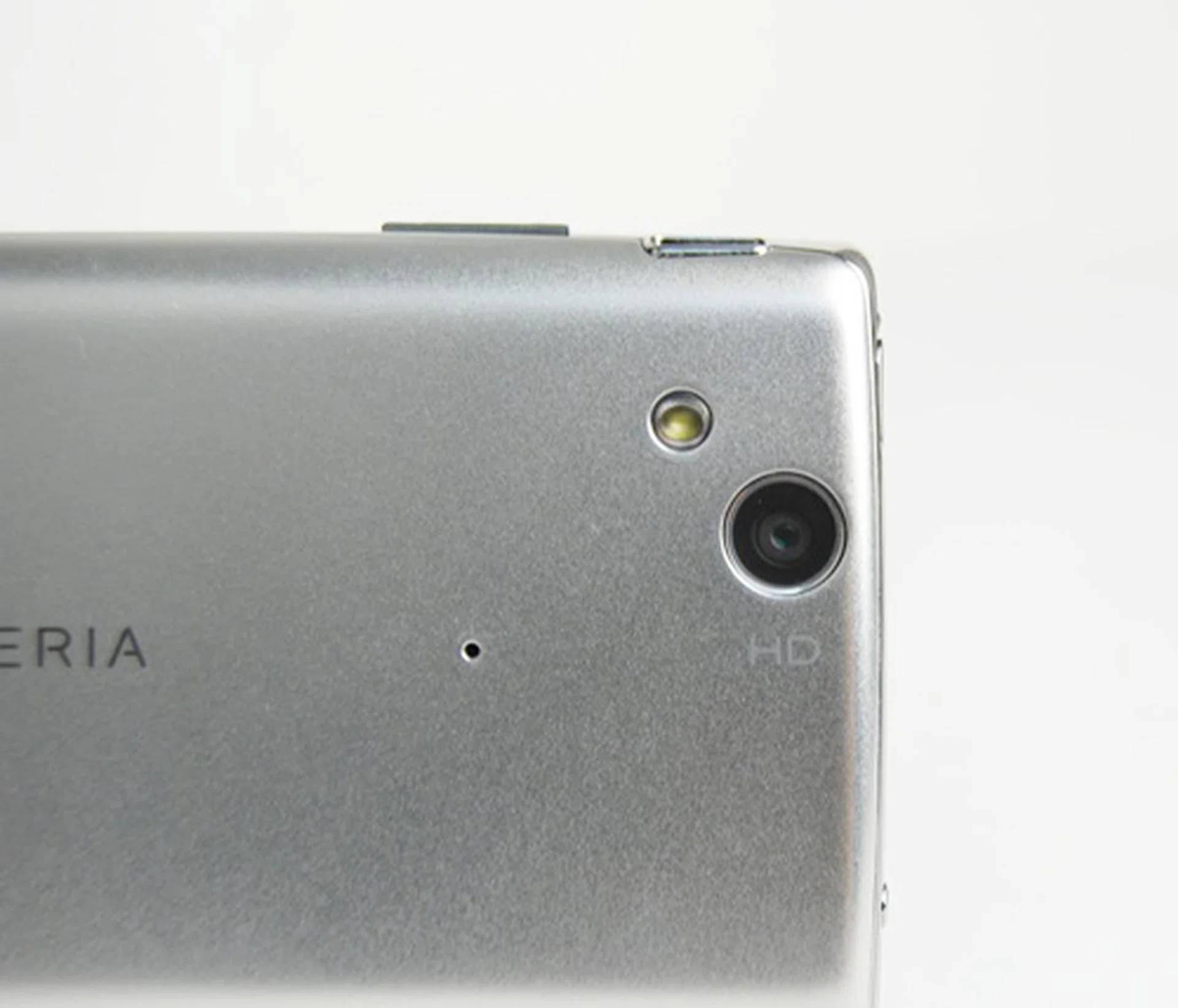
Situated at the back, the 8.1-megapixel camera comes with a f/2.4 lens and a LED flash. It also features autofocus, LED flash, image stabilization, geo-tagging, face and smile detection capabilities and most importantly, supports 720p video capture.
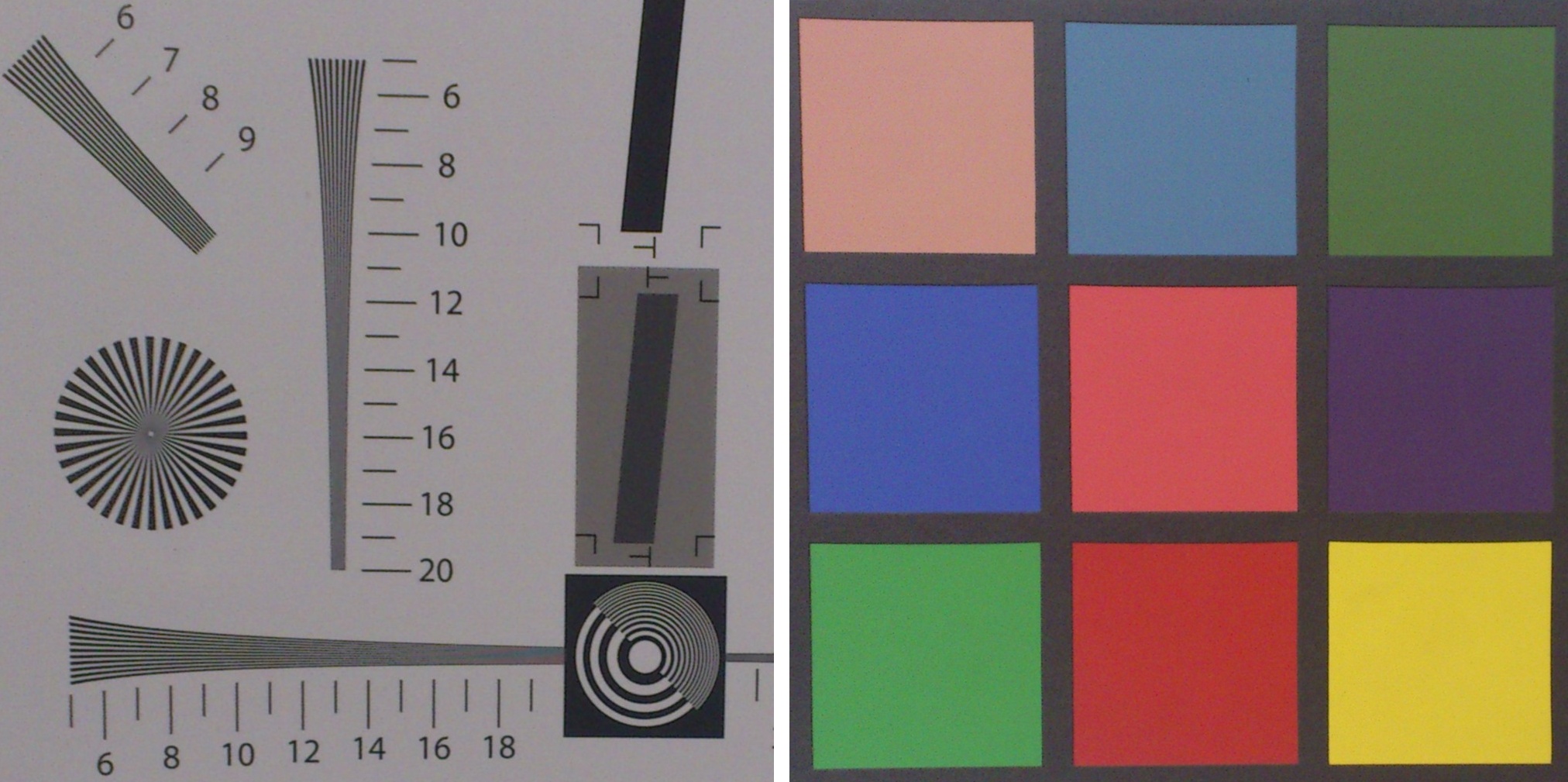
Photos were very clear with accurate colors that are well-contrasted.

The camera managed to capture some of the finer details clearly - the text on the bottle and furring on the teddy bear can be plainly seen. Minimal artefacts and fringing spotted.
On the resolution chart, both the horizontal and vertical LPH showed readings of 1500 and 1100, results that are extremely positive for a camera on a mobile phone. As mentioned, color reproduction is positive here, showcasing accurate colors that are well-contrasted. All in all, the snappy 8.1-megapixel camera produces clear and sharp photos with accurate blacks and colors. Because of its f/2.4 lens, visible details in night shots are also easier to capture without having to flush them out with the available LED flash.
As usual, we compare the Sony Ericsson Xperia arc's battery performance with a selected group of devices chosen based on their similarities across battery capacities, display sizes, resolution and processing power. This standard battery test consists of looping a 240 x 320 pixels resolution video clip at 100% volume and screen brightness, with Wi-Fi and Bluetooth active with push email or data being pulled at regular intervals. For the Xperia arc, we compared it against other similar recent Android devices such as HTC Incredible S, Samsung Nexus S and Samsung Galaxy S.
Specifications/Device | Sony Ericsson Xperia arc | HTC Incredible S | Samsung Nexus S | Samsung Galaxy S |
Processor |
|
|
|
|
Display Size |
|
|
|
|
Display Type |
|
|
|
|
Display Resolution |
|
|
|
|
Dimensions |
|
|
|
|
Weight |
|
|
|
|
Battery |
|
|
|
|
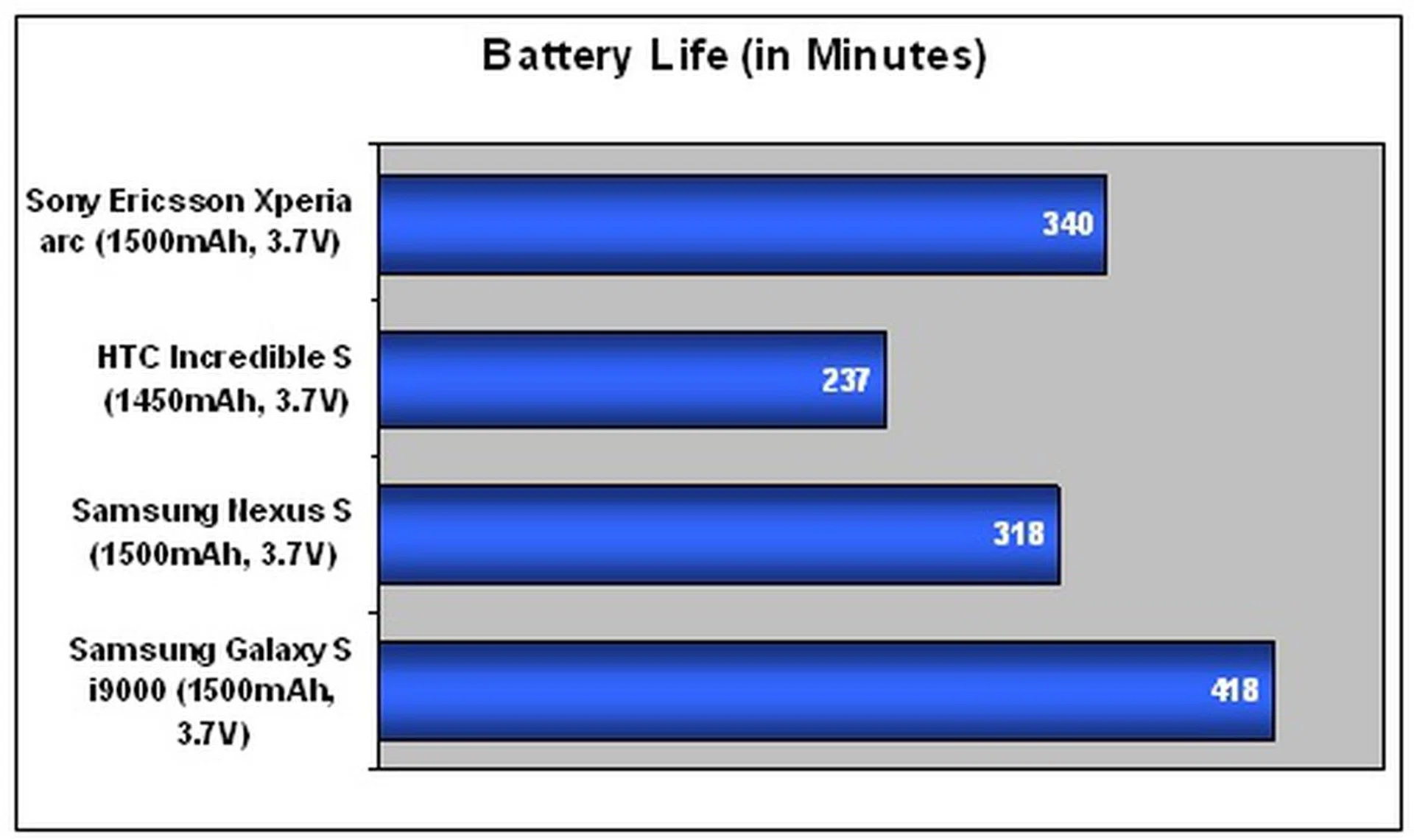
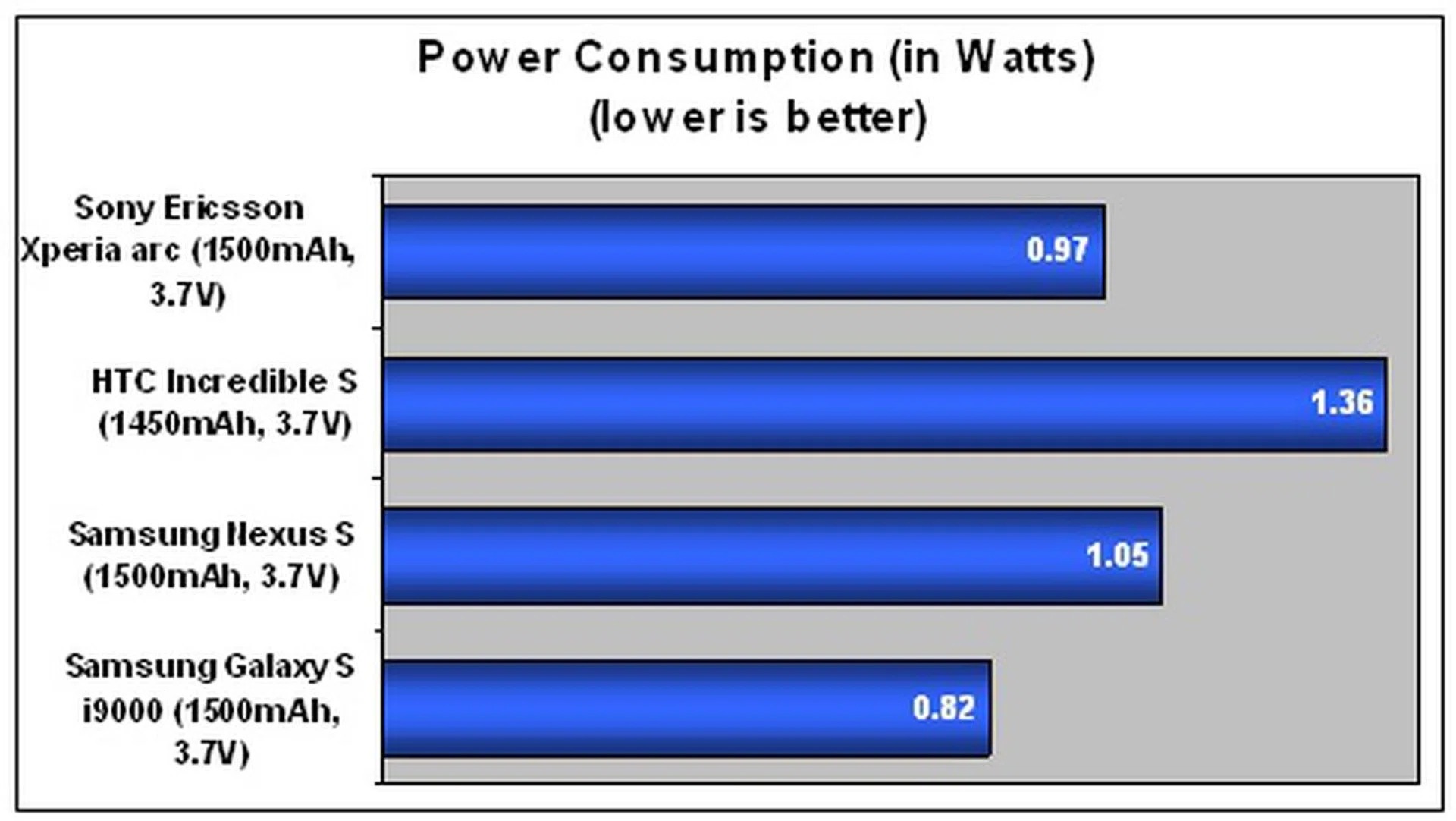
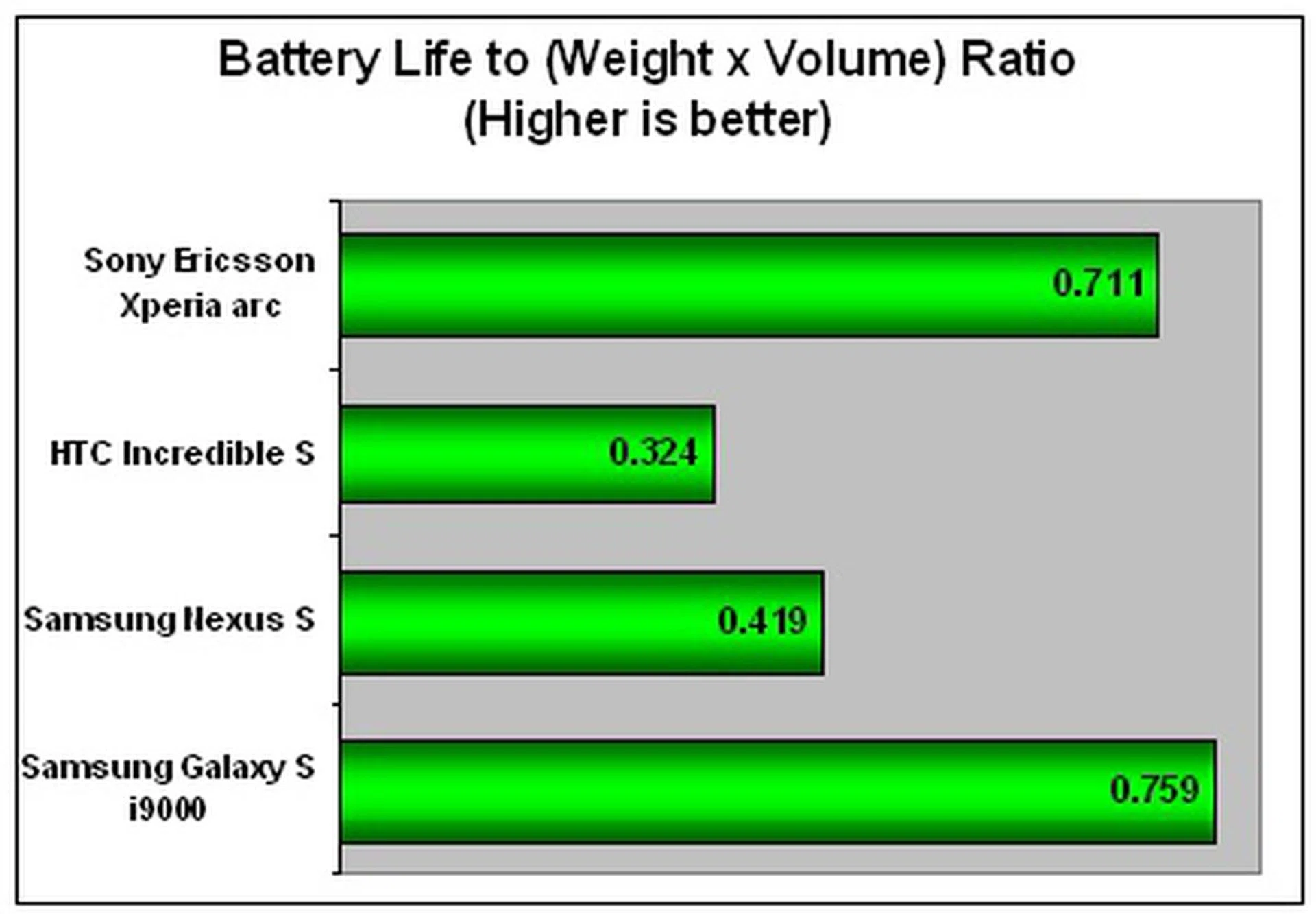
The Xperia arc fared pretty well, coming in at second place, but with more than an hour of battery life lesser than the top scorer here, the Samsung Galaxy S. Nonetheless, judging by the results, the arc lasted for a reasonable amount of time (340 mins), which isn't bad or extremely good either. However, once you consider that the Xperia arc is actually driving a larger screen at a slightly higher resolution, it becomes clearer that Sony Ericsson has actually managed to create a phone that has a screen almost as large as the bulky but with much better talk time in a slim build. We say that's commendable. Take note that we ran these tests with the Mobile Bravia Technology switched off, so we would expect that in the reverse situation, the battery life results could take small dive, though we doubt that it will affect it much.
Given that the dimensions and weight of both the Samsung Galaxy S and Xperia arc are the most similar, it's not surprising that they managed a pretty similar ration in the Portability Index above where we consider the battery uptime divided by the product of the device's weight and volume. We can attribute the slight advantage of the Galaxy S' battery life to its Super AMOLED screen, which is well-known for being more power efficient than its LCD counterparts, as well as the Xperia arc's larger screen. Despite the Samsung Galaxy S holding pole position in battery life, power efficiency and portability index, we have say the Xperia arc still stands in good light given its characteristics.
Notably, while rationing the phone for normal day-to-day operations, the phone could last for at least a full day. If you are a light user, you can possibly stretch it out to about 1.5 to 2 days' worth of usage, especially if you only turn on your 3G periodically.
Analyzing the arc
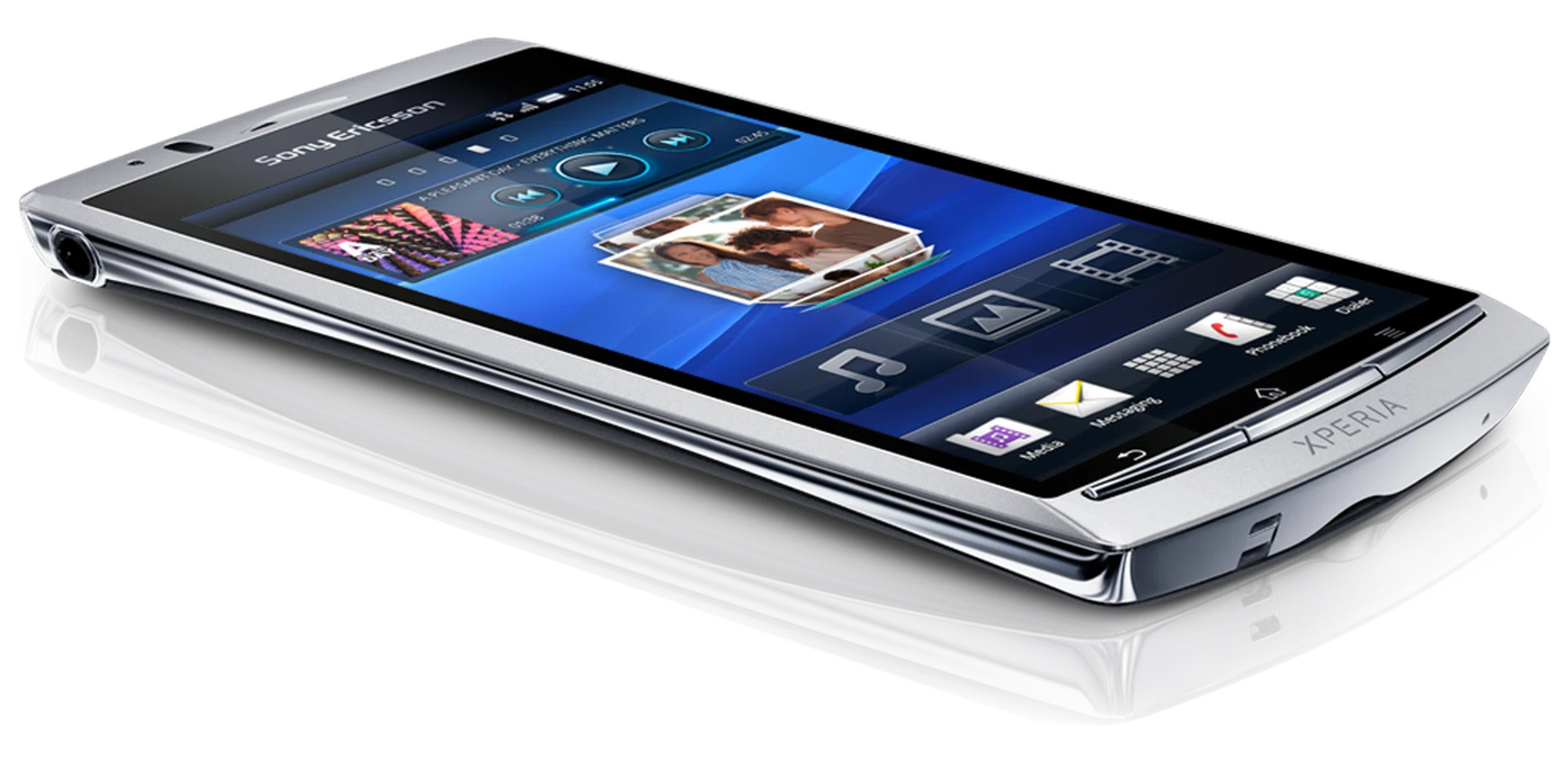
The pretty Sony Ericsson Xperia arc is an impressive phone by design, but it's not perfect. Overall performance is certainly a big thumbs up, but the discussion point would be if you can handle the phone gently and if you don't mind the default UI out of the box.
The Sony Ericsson Xperia arc is good-looking, functional and primed for success - even if the 4.2-inch awesome display doesn’t bowl you over for some unknown reason, its impossibly slim build will. Of course, the phone itself is not 100% perfect. Minor flaws like impractical buttons and an average battery performance cripple its score but its gorgeous widescreen display and capable camera more than make up for it. While it comes with a 'standard' 1GHz processor, you get an extremely responsive phone with smooth transitions and enough horsepower for fluid multi-tasking.
However, if you are looking for a more niche product, like a game-centric device, you might want to look towards the more relevant Xperia Play. On the other hand, for those who don't quite like the Sony Ericsson user interface and the arc's somewhat fragile build, you should consider other more robust options from the competition.
Wrapping it up, the Xperia arc is a highly functional phone that balances both productivity and its multimedia prowess delicately. To top it off, it is a steal for all its attributes at a reasonable price of S$888.
Our articles may contain affiliate links. If you buy through these links, we may earn a small commission.