
Samsung Galaxy S21 FE review: Fan Edition again, but in a different sense
Can the Galaxy S21 FE still replicate the Fan Edition formula it tried previously? We find out.

Note: This review was first published on 4 Feb 2022.
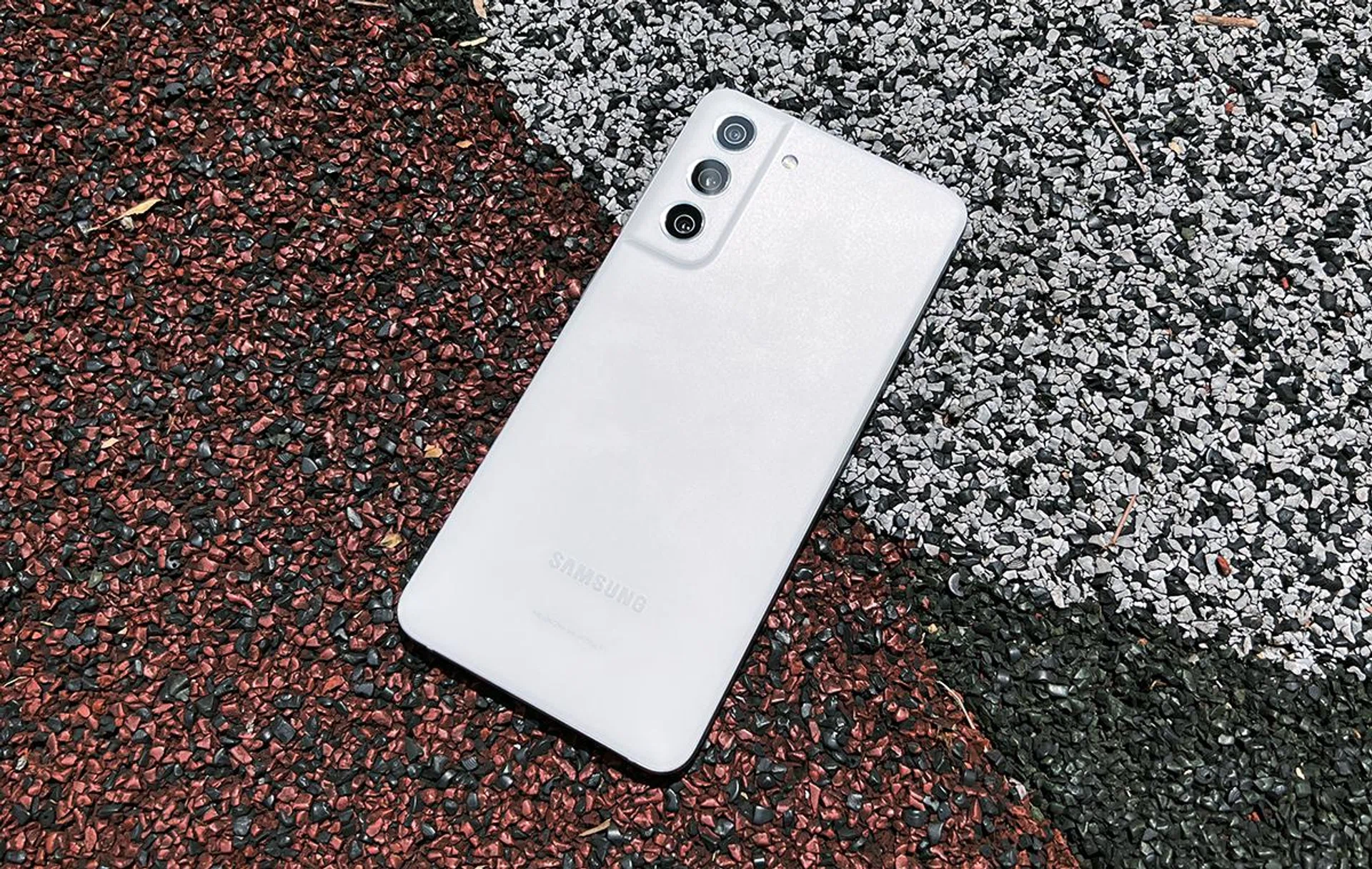
Can Samsung recreate the S20 FE magic?
The success of the Samsung Galaxy S20 FE saw fans and non-fans of Samsung phones wanting a piece of that budget flagship goodness. What’s not to like about an affordable phone with great components and software at a reasonable price?
Samsung now piggybacks that success by following the same formula through the Samsung Galaxy S21 FE. It’s the Fan Edition of the premium flagship Galaxy S21 series with the same software optimisations. This time around, Samsung made the FE more similar by using an Exynos 2100 processor for the local units of Galaxy S21 FE, forgoing the previous choice in bringing the Snapdragon variant to Singapore instead.
As a device, Samsung Galaxy S21 FE packs a 6.4-inch, FHD+ Dynamic AMOLED 2X display with 120Hz refresh rate and 240Hz touch sampling rate. It also has a 7.9mm body, and packs core flagship features like NFC, IP68-rated water and dust resistance, Bluetooth 5.0, and triple rear cameras with a 12MP primary shooter.
To consumers here, that means that the Galaxy S21 FE’s components are quite a bit similar to last year's Galaxy S20 FE. It still sports a different processor choice, a mildly different display type (more explained below), and a negligibly smaller body and panel size.
Part of the reason why the previous Galaxy S20 FE was so well received was also because of its wide colour variety and that it used a more powerful Snapdragon flagship processor, both of which are missing on this year's Galaxy S21 FE model (more on this later).
Fortunately, the starting price now at S$978 for the 128GB Galaxy S21 FE (and S$1,048 for 256GB) is S$100+ lower than the Galaxy S20 FE’s debut RRP. That said, it officially hit retail just before the next Samsung Unpacked event, which makes this debut even more confusing at this juncture.
So, was it a good idea for Samsung to replicate the Fan Edition formula through the Galaxy S21 FE? Is the lower starting price bad news for other competing S$1,000 Android phones? And how does it stack up against Galaxy S20 FE or the original Galaxy S21 series? Let’s find out.
Design and Handling
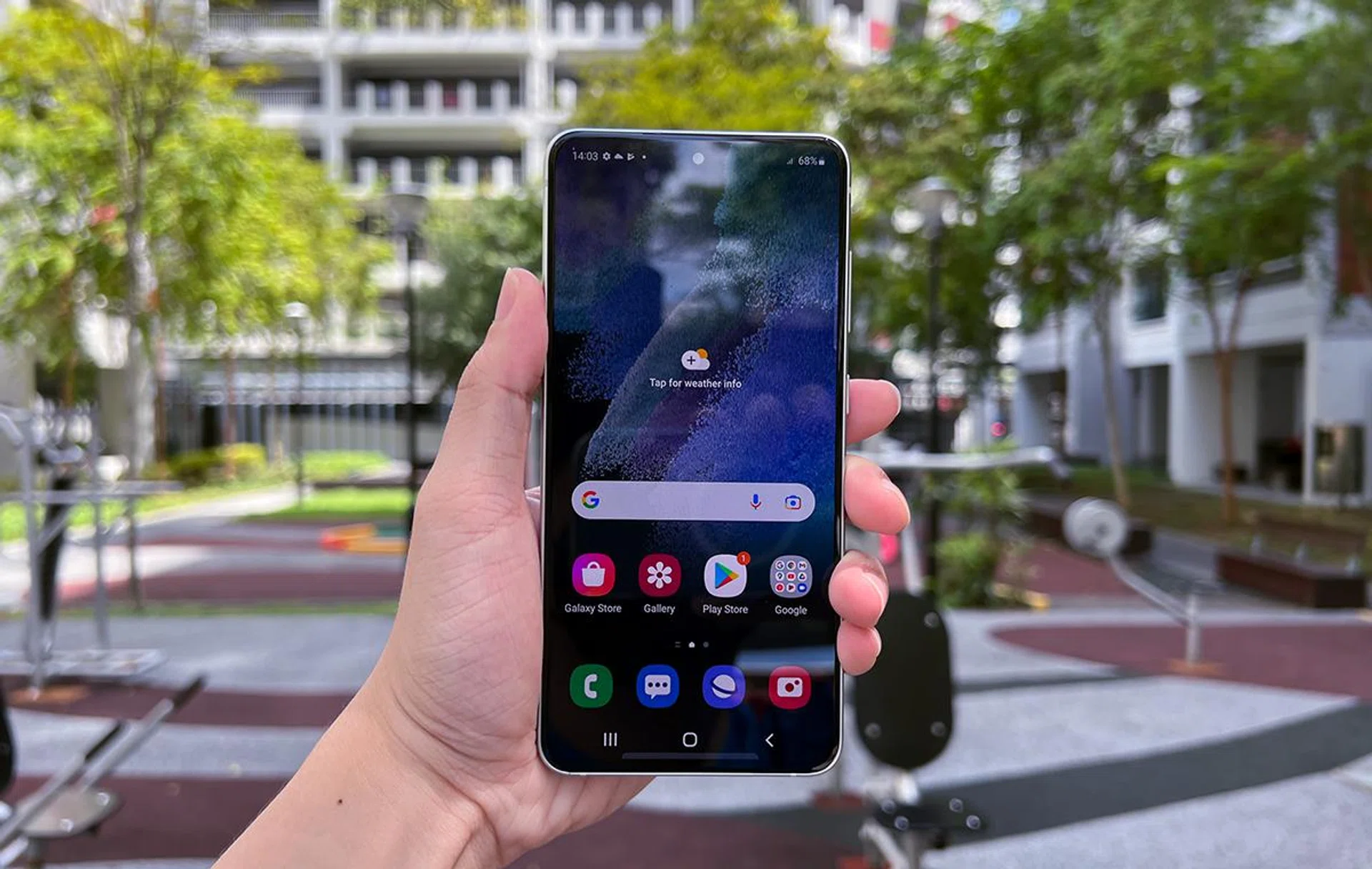
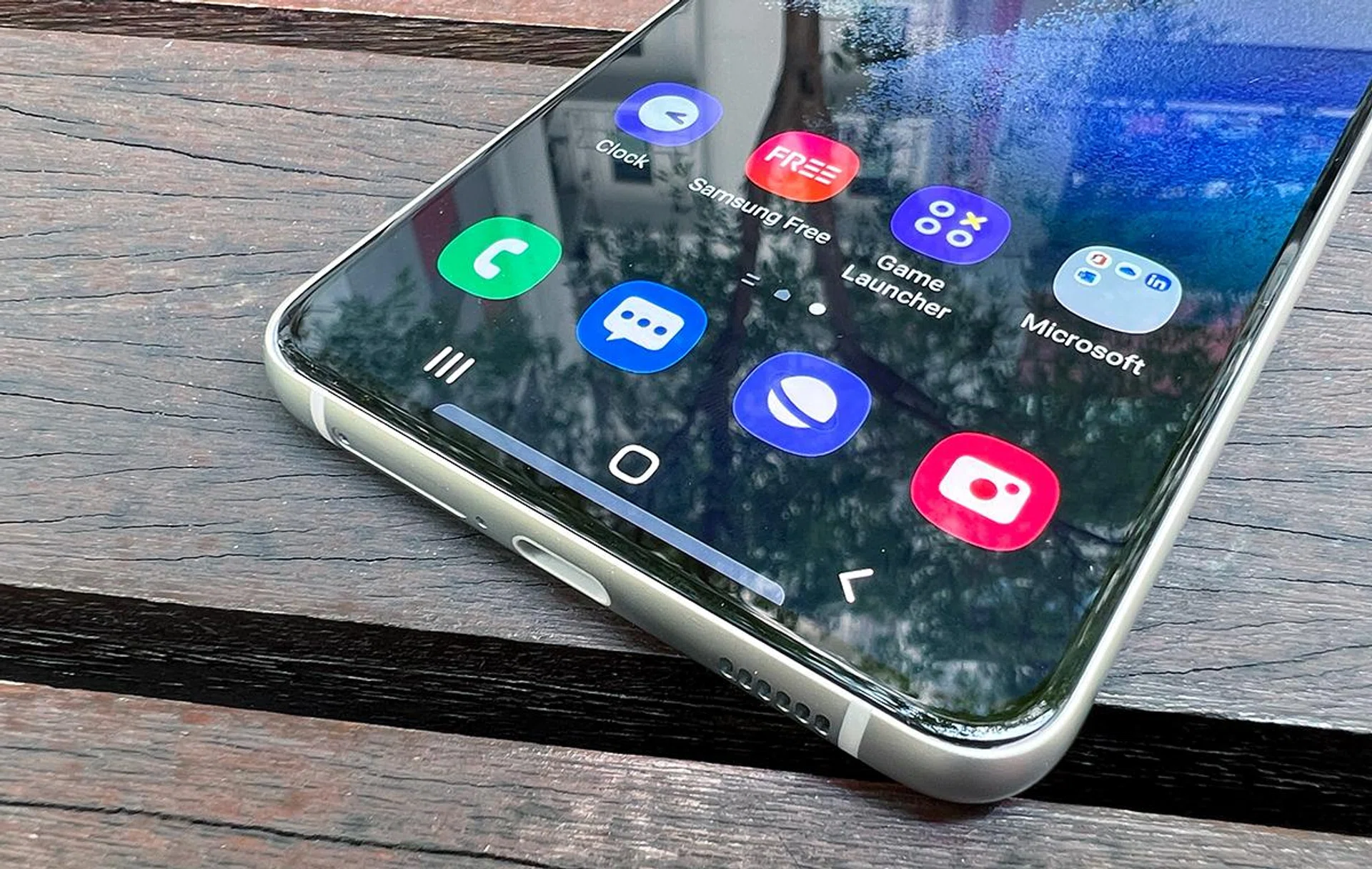
Galaxy S21 FE’s appearance is largely inspired by the original Galaxy S21 series design language. Familiar cues are its rear camera hump, which adopts the S21 series' Contour Cut chamfered plateau that ensures its lenses lay flushed with its body. A key difference lies in its finish, where Galaxy S21 FE drops the two-toned look in favour of a uniform, single-colour back. Also, the rear’s made of plastic, with no glass coverage (at least, going by touch).
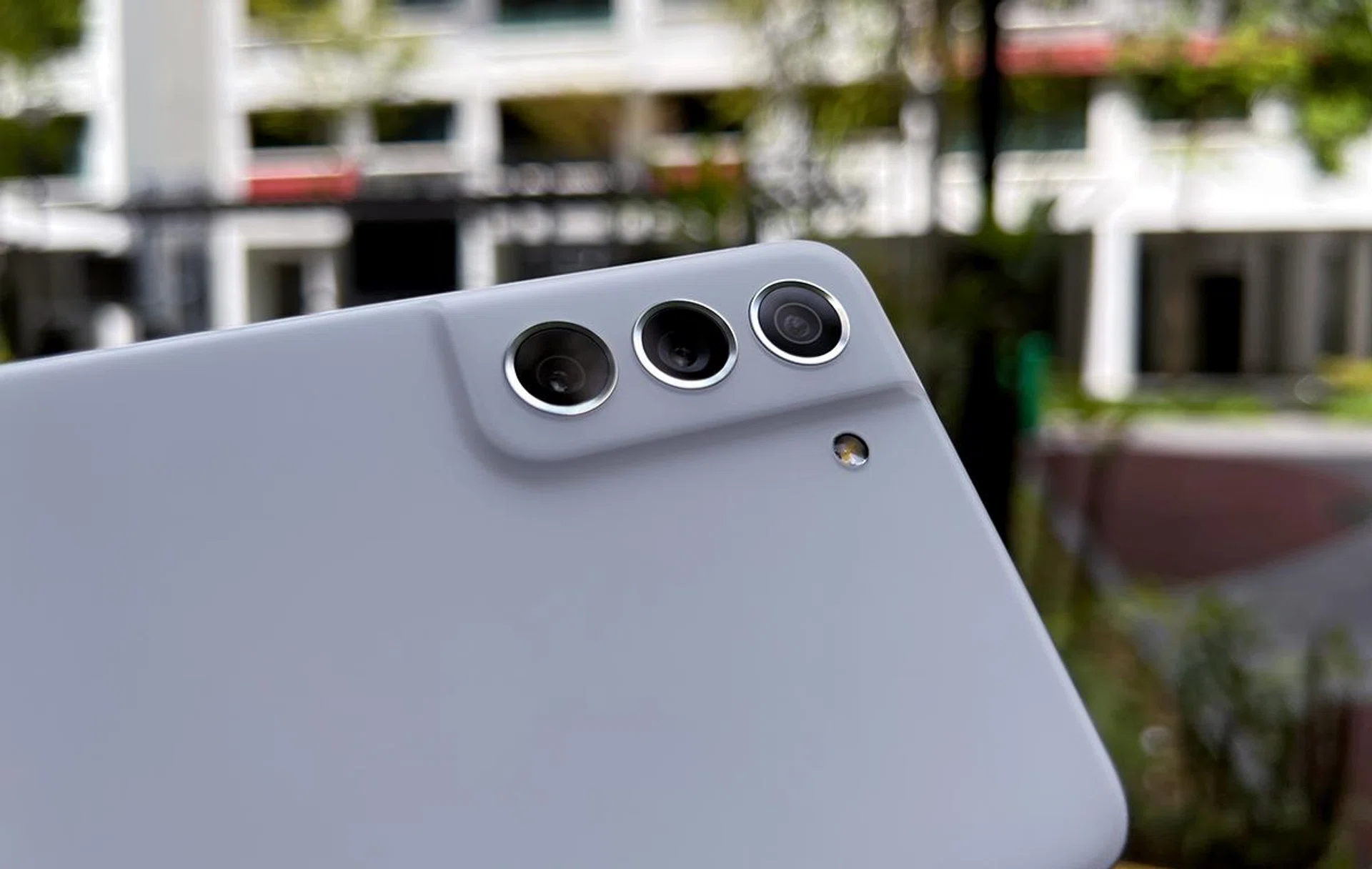
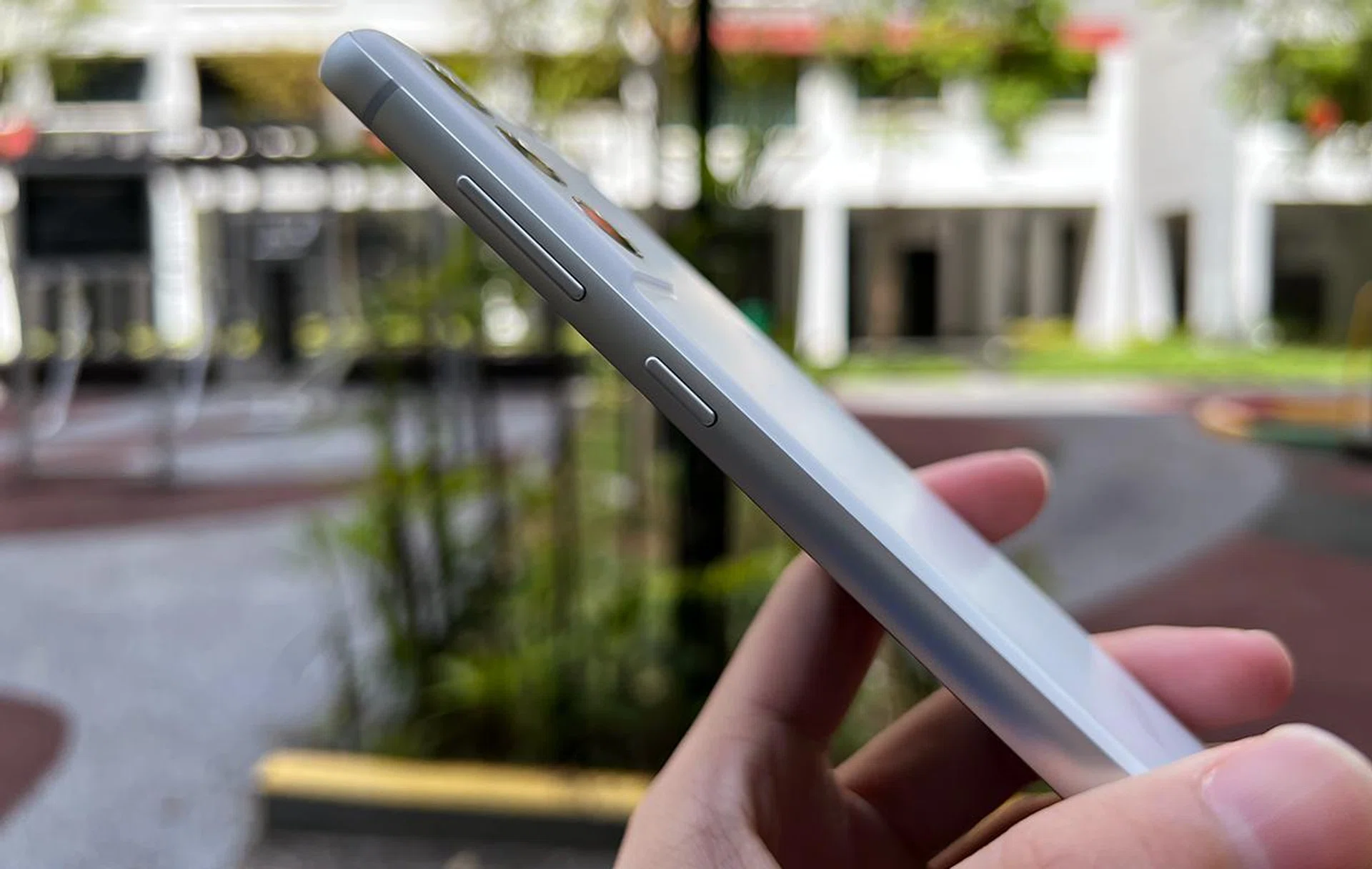
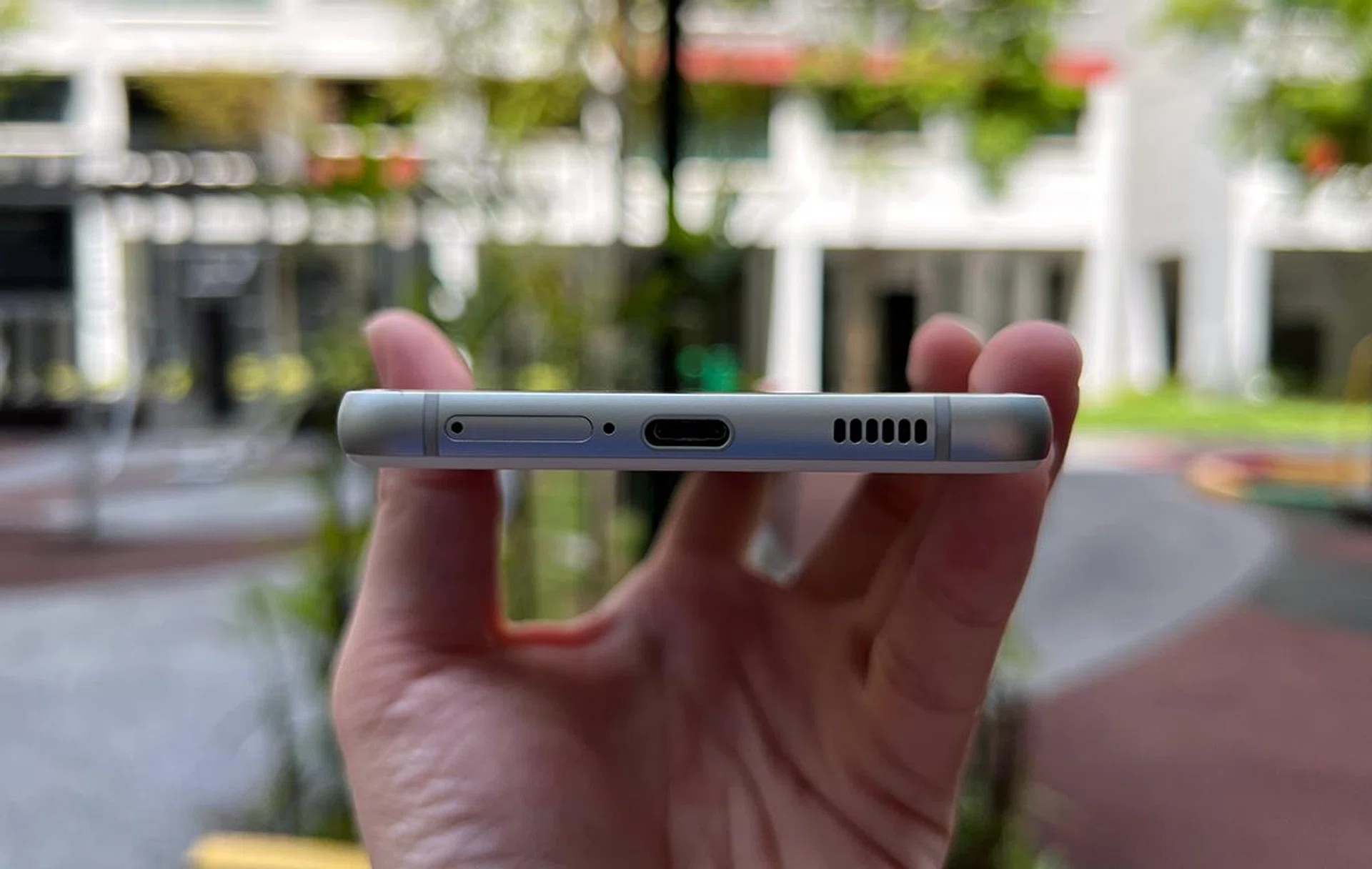
Considering how the S21 phones were already comfortable in hand and how S21 FE is meant to be a fan tribute to the series, there really isn’t much more about the phone’s design to flesh out here. If anything, we liked the attention paid to its display bezels, where it’s evenly distributed on all sides.
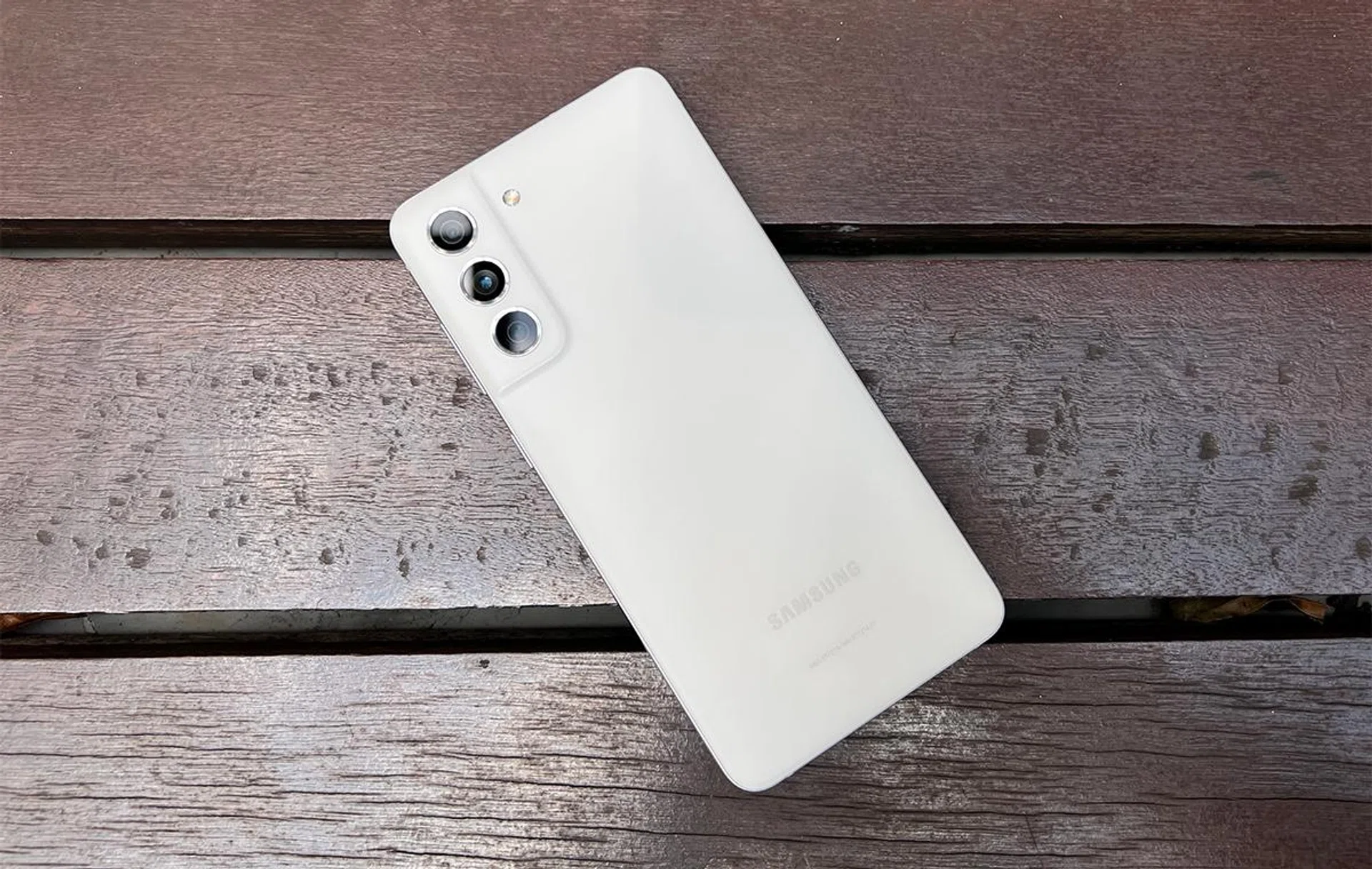
We rarely (if ever) consider phone colour options as a contentious point in our reviews, but we felt that Samsung’s strange regression into the mundane colour choices needs to be brought up for the S21 FE.
At launch, the phone has only four muted pastel colourways. S21 FE’s lack of colour tone and options at launch makes it less exciting - the four you choose from look similar no matter which you pick (which points to the colour palette choice), and they look depressing next to the fun looking S20 FE choices. It’s also partly why we chose to review the phone in white since it’s the cheeriest looker of the bunch.
The preceding S20 FE started out with six bold colours (with options atypical of Samsung’s practice, like Cloud Red and Cloud Orange), which we felt was a great way to introduce frivolity into Samsung’s typically corporate-friendly design language at the appropriate budget flagship categorisation and target demographics. Hopefully, Samsung will consider reintroducing its wider palette in a future make - for the time being, just pick a favourable phone casing and roll with it.
Display and Audio
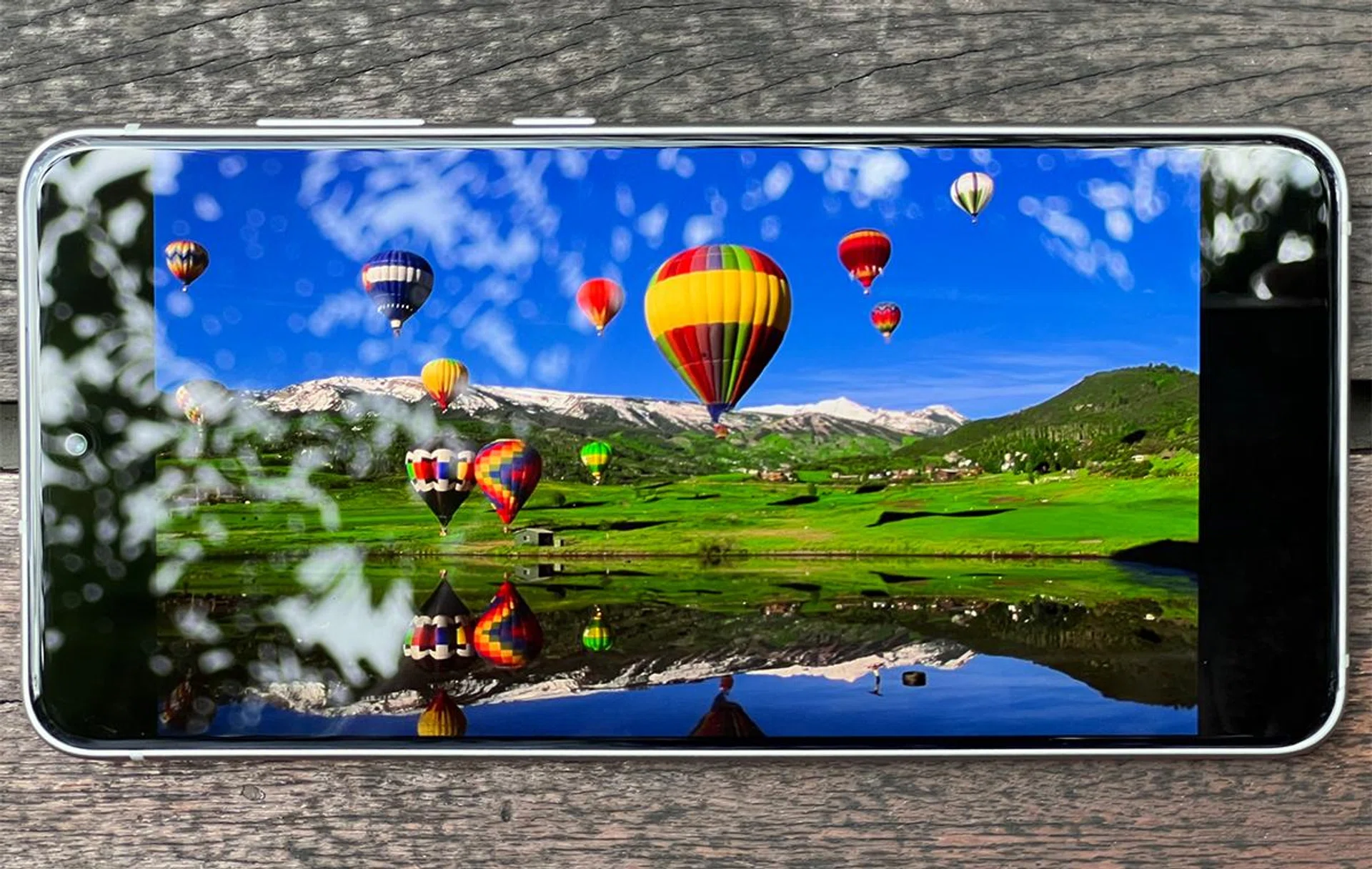
A key difference in S21 FE’s display (when compared to S20 FE) is the update to Samsung’s Dynamic AMOLED 2X display (up from the previous Super AMOLED variant). That means the S21 FE now supports HDR10+, while the older model doesn’t. The S21 FE’s display also has a higher touch sampling rate of 240Hz.
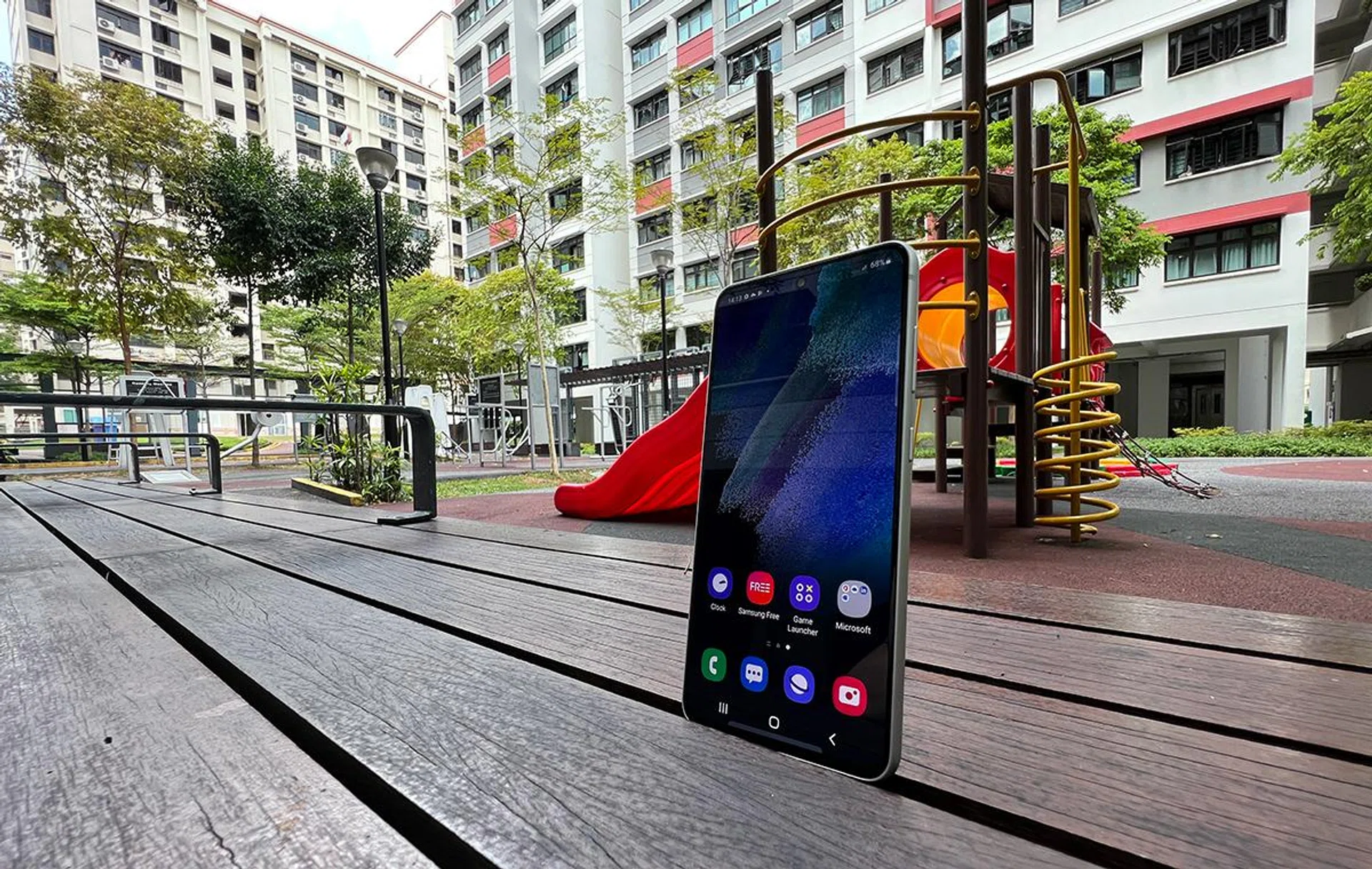
Beyond that, the S21 FE’s FHD+ resolution display stands at 6.4 inches across. This is 0.1-inch smaller than the S20 FE, but it still sits between the Galaxy S21 and S21+’s respective 6.2 and 6.7-inch display size. Colour reproduction is expectedly vibrant, fairly accurate, while details still look sharp.
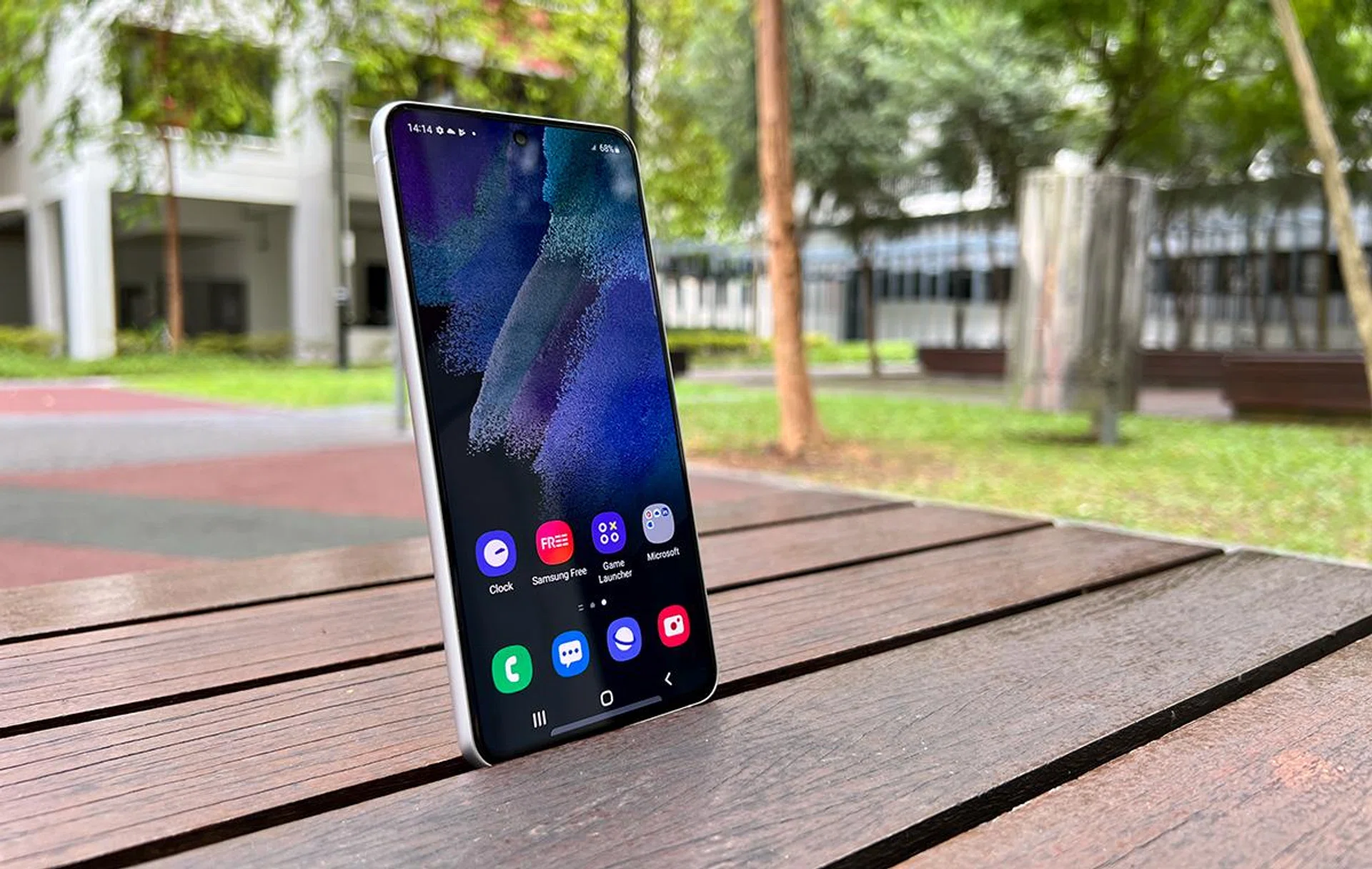
We did notice minor issues with the built-in motion smoothness algorithm when playing back some YouTube videos that support 60FPS – it compensates for the sync and timing, but you’d notice jumps between cuts. This is likely not a persistent problem, since it could be fixed with a firmware update.
There’s no difference in the S21 FE’s speaker layout and audio signature. Just like the S20 FE, it borrows the call speaker to create stereo sound with its additional bottom-firing grilles. The sound is still mid-heavy with biases in percussion and vocals.
Interface and Features
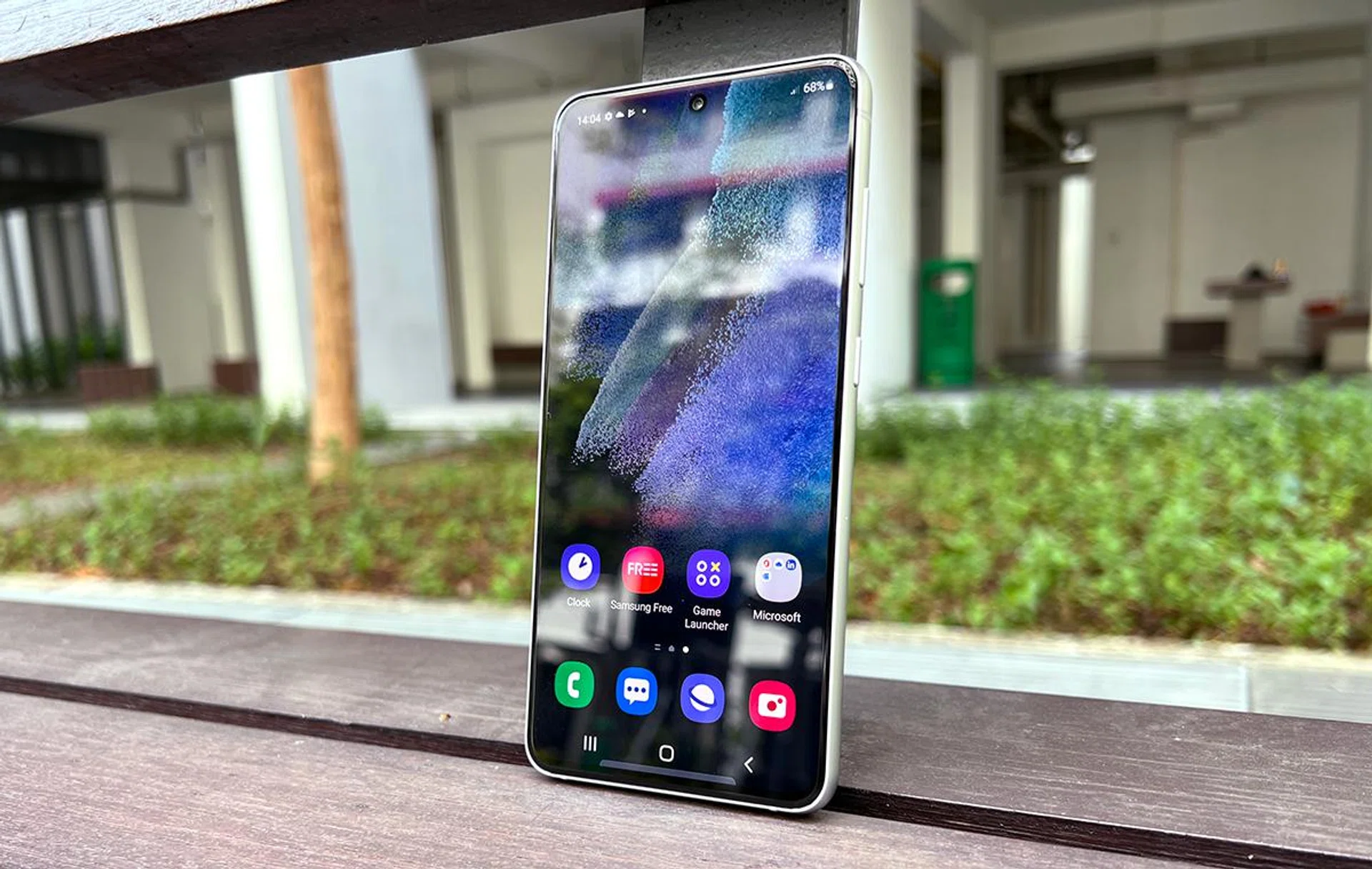
Samsung Galaxy S21 FE’s One UI 4 interface is based on Android 12 out of the box, so you’re getting the same Android optimisations made to its base operating system. Its design and user interface, however, sticks to Samsung’s tried-and-tested look, save for some minor tweaks like the shape of notifications in the pull-down menu and Settings app.
Given that it’s functionally similar to the Galaxy S20 FE, we’ve tested the device on its hygiene factors - the fingerprint sensor unlocks without a hitch, and so does facial recognition unlocking. NFC works just like any other high-end phone, so we've no qualms in this department. One thing we’ve not deliberately tested is its IP68 water resistance, but know that the flagship-tier waterproofing isn’t an invitation to dunk it in water - it’s there to protect itself from being rained or splashed on.
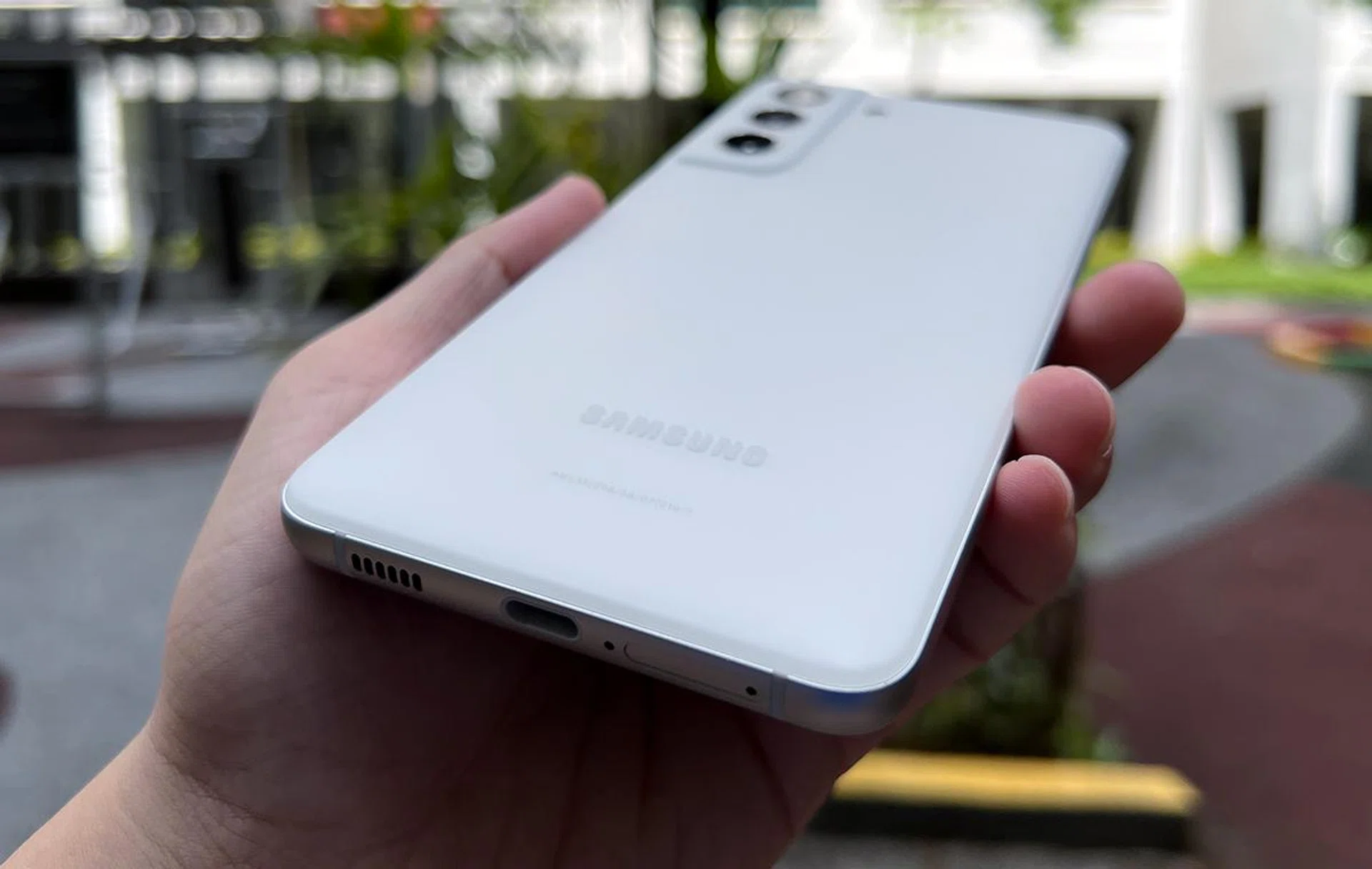
The only thing that didn't make it to the S21 FE? A microSD card slot. Together with the use of Samsung's own processor, that probably explains how the S21 FE is cheaper than the S20 FE.
With its overall interface, features, and appearance, the Galaxy S21 FE’s similarities with the S20 FE and Galaxy S21 series plays into its intended design - if you want a reliable, up-to-date Samsung handset that comes just under a four-figure price tag and offers flagship-tier performance without losing out on the basics, the Galaxy S21 FE is there to serve. But if you want to be swept off your feet with stars in your eyes, you might have to look elsewhere.
Galaxy S20 FE owners might wonder what tangible benefits are there should they choose to upgrade to this phone. We can say that Samsung’s commitment to three generations of Android updates may be compelling enough to make that purchase, but there’s also the option of letting your S20 FE get even older before you make the switch.
Imaging Performance
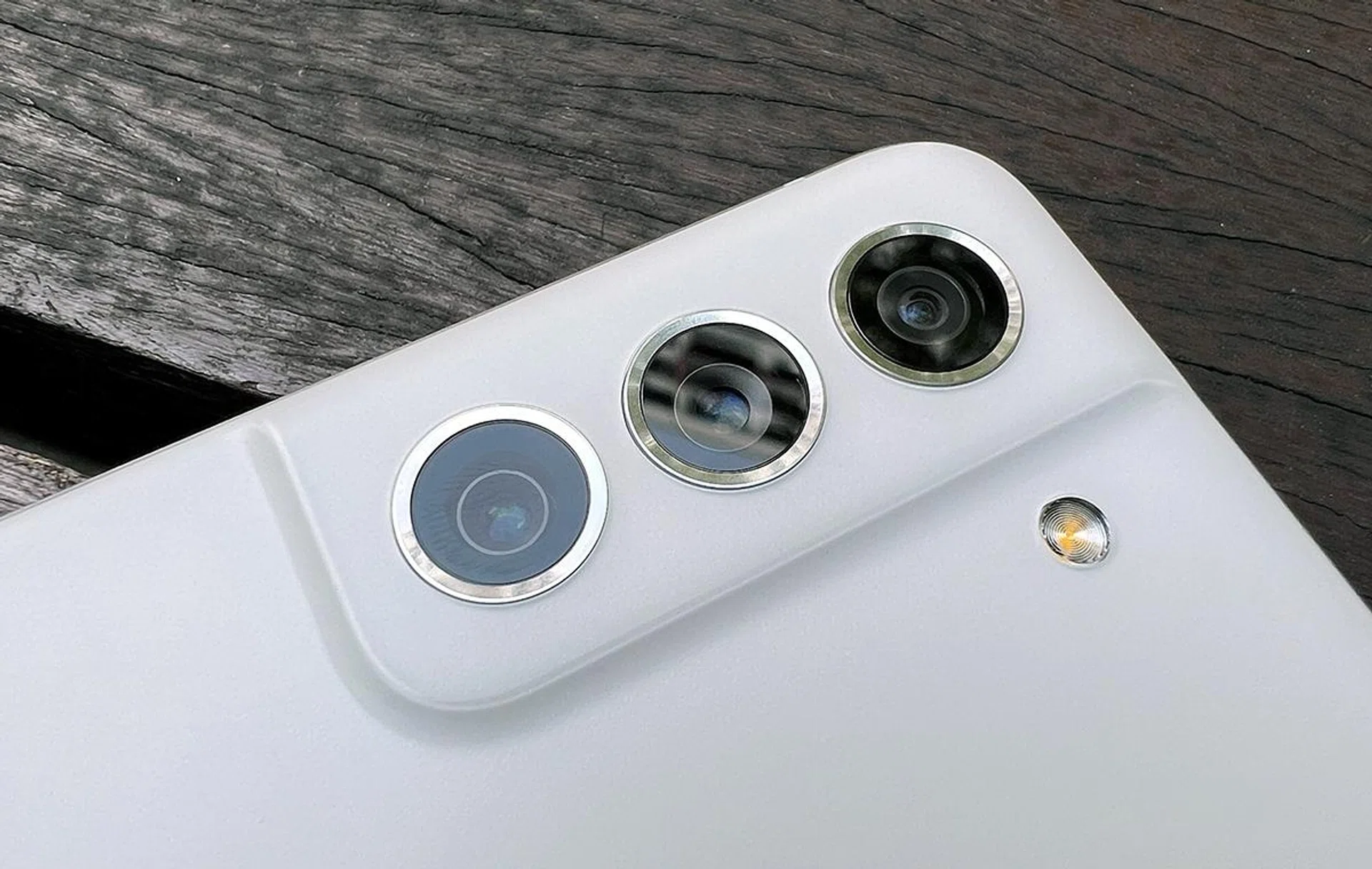
Samsung Galaxy S21 FE has a triple rear camera setup:
- Main: 12MP wide angle, f/1.8 aperture, Dual Pixel AutoFocus, and OIS
- Ultra-wide: 12MP, f/2.2 aperture, and 123° field-of-view
- Zoom: 8MP telephoto, f/2.4 aperture, and 3x optical zoom
Together, these cameras offer 4K60FPS video recording, Slow Motion (HD at 960FPS, FHD at 240FPS), and 30x Space Zoom. These specs are identical to the Galaxy S20 FE’s imaging capabilities. We can’t complain since an FE product is generally based on an existing model, so there are no further expectations. Not that we've had anything to complain about in the imaging department for most high-end Samsung phones, so here are some sample photos for comparison.
If you’re curious, the S21 FE also followed the same Fan Edition formula as before, where they replaced the S21 series’s 64MP telephoto lens with an 8MP one.
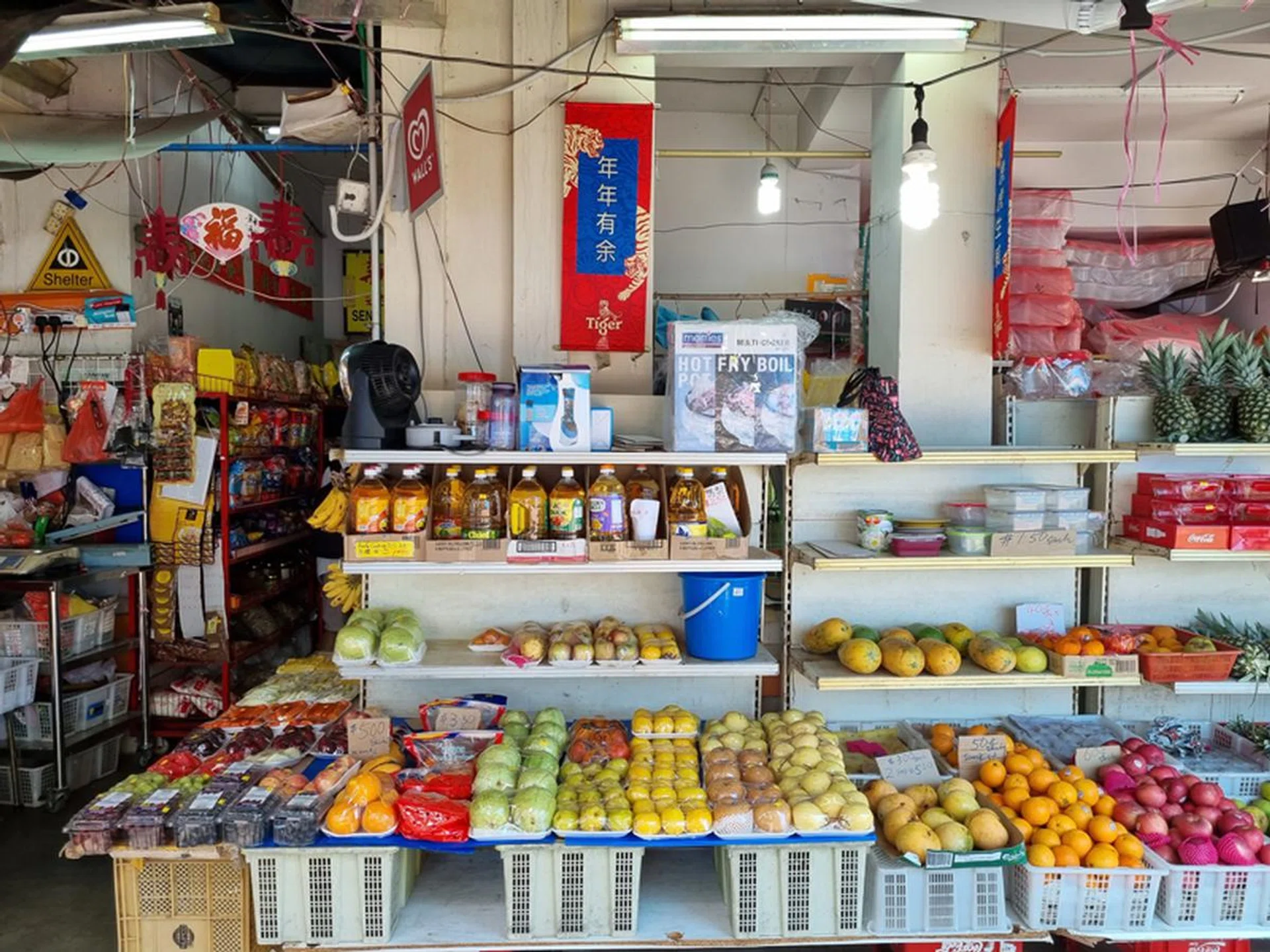
Main camera.

Main camera.

Ultra-wide.

3x optical zoom.

Main camera.

Ultra-wide.
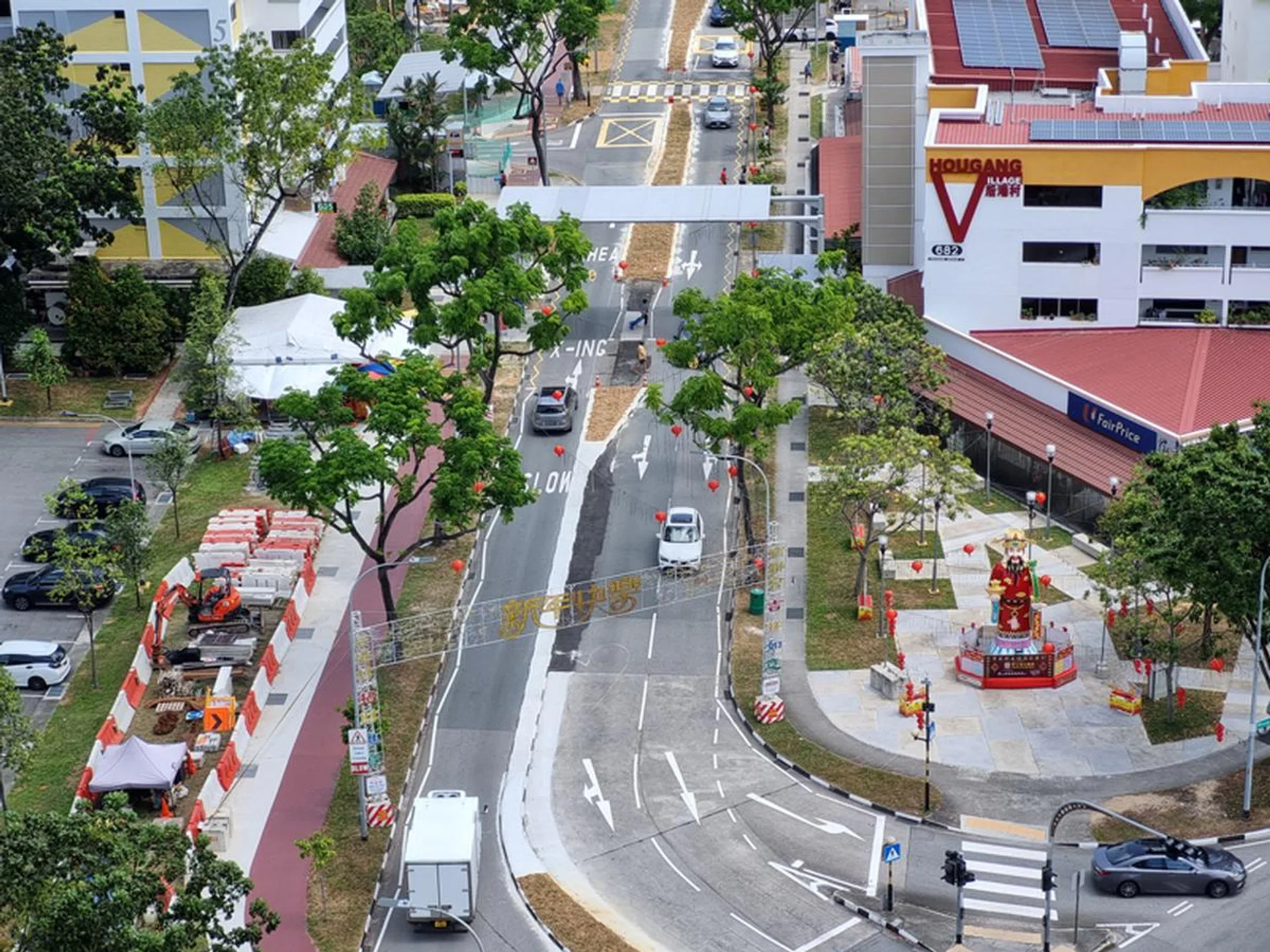
3x optical zoom.

30x Space Zoom.
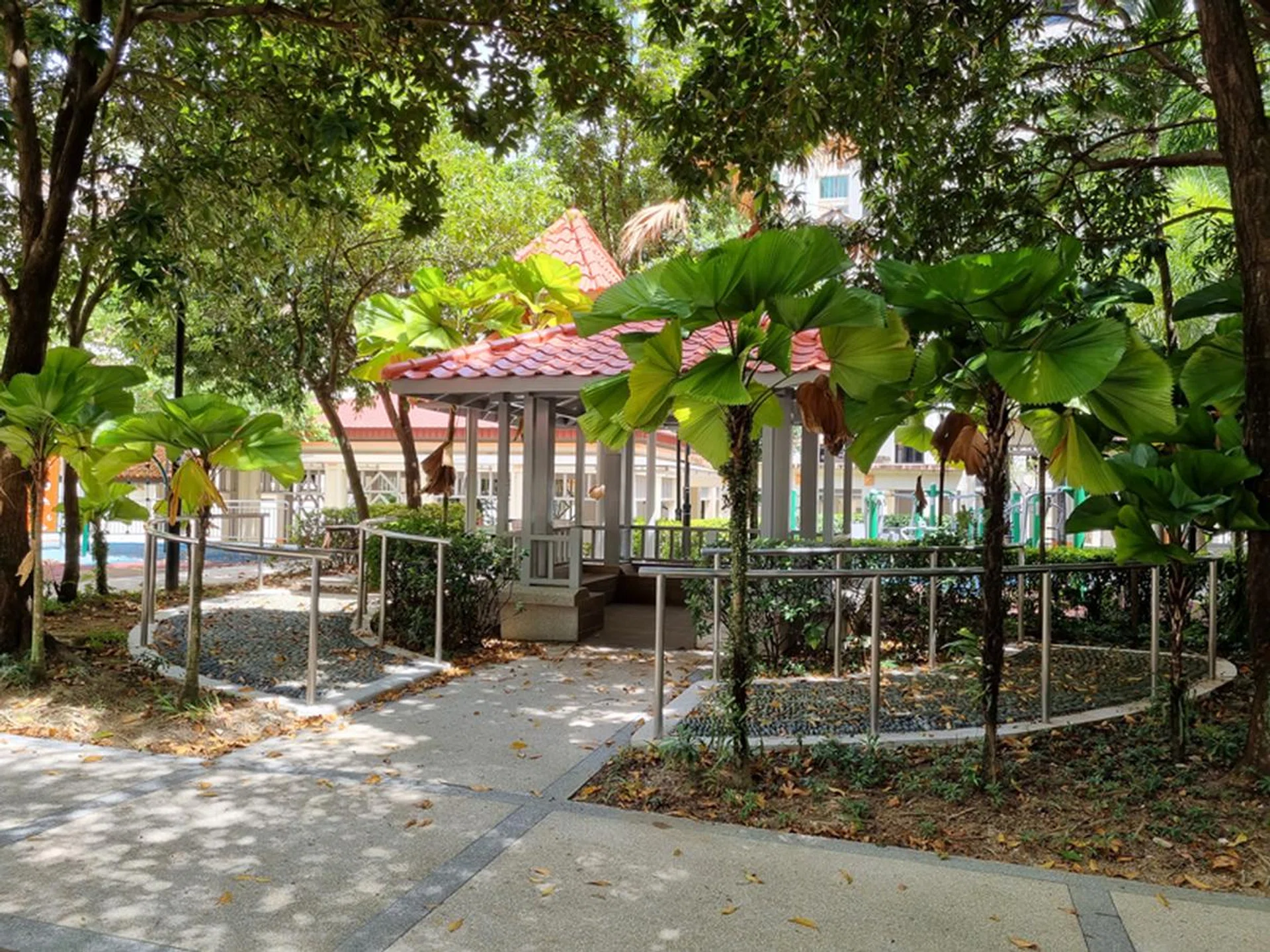
Main camera.
Benchmark Performance
A quick word before we share the benchmark results of the Galaxy S21 FE.
To catch our benchmark results up to speed with modern benchmarking tools and processors, we’ve updated our process to better reflect modern phone demands. AnTuTu has remained unavailable from the Google Play Store for two years, and the benchmark is getting more prone to manipulation with the passage of time. We’ve since removed it from our tests and replaced it with newer benchmarks that better capture the overall performance of the phone, while letting us drive down into core performance areas we’d come to expect from these devices.
In a nutshell, we now employ separate benchmarks for GPU, CPU, web browsing, productivity, and storage, to help us ascertain if the phones tested can hold up in everyday use in ways their most often utilised.
Singapore gets the Samsung Galaxy S21 FE with an Exynos 2100 processor, instead of SD888 like other territories do. It’s the same chipset backing the local Galaxy S21 series phones here, putting the phone’s classification on par with budget flagship alternatives - phones with flagship-grade components at a lower price. For comparison, we’ve selected other 2021 budget flagship competitors and the base Galaxy S21 model to understand what the Galaxy S21 FE offers in our competitive landscape.
Note: The review unit we’ve received comes with 8GB+128GB of RAM and internal storage respectively. Samsung Singapore also has the 8GB+256GB variant for sale.
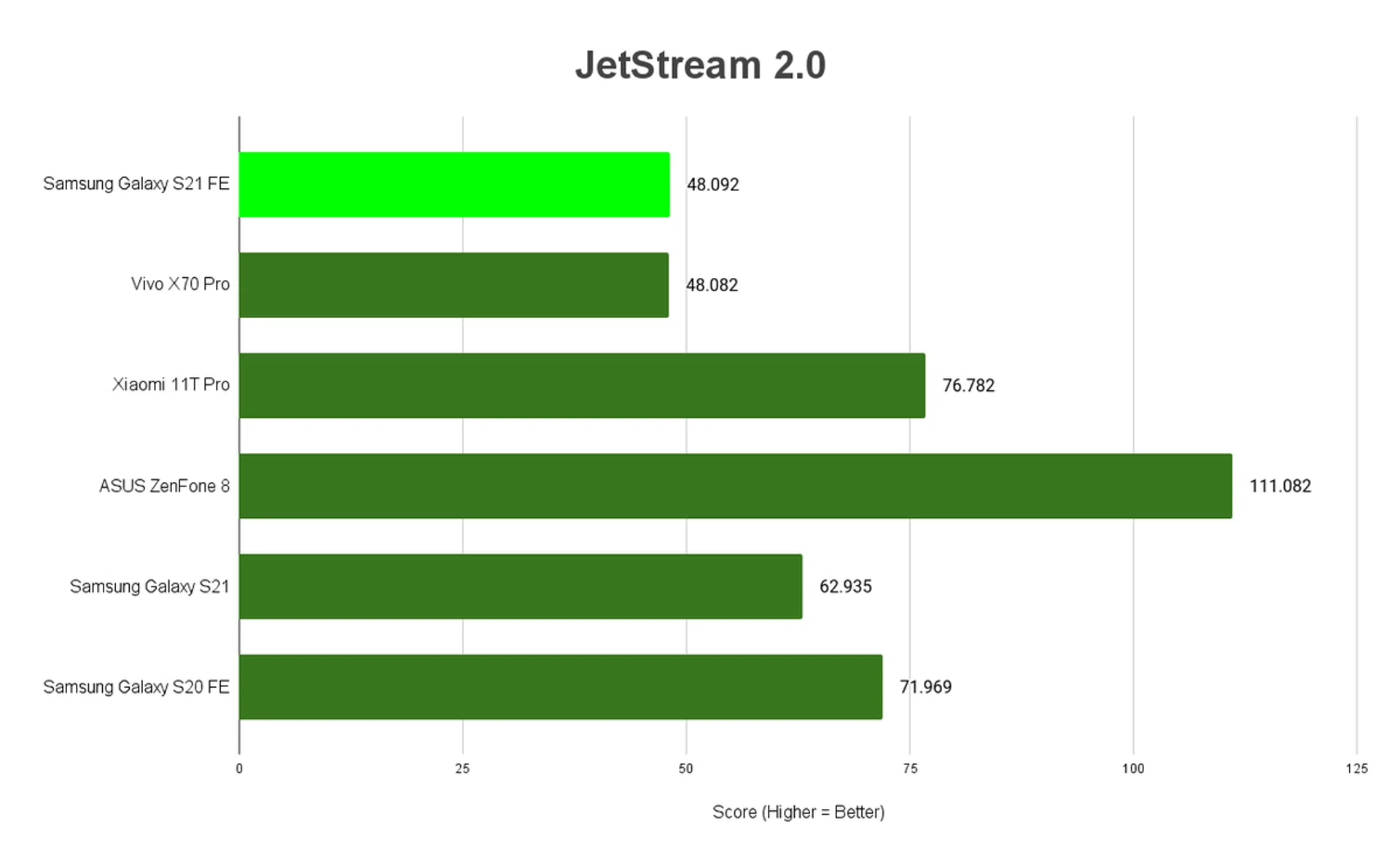
JetStream 2.0
JetStream 2 is a combination of a variety of JavaScript and Web Assembly benchmarks, including benchmarks that came before like SunSpider and Octane. It primarily tests for a system’s and browser’s ability in delivering a good web experience. It runs a total of 64 subtests, each weighted equally, with multiple iterations, and takes the geometric mean to compute the overall score. The higher the score, the better.
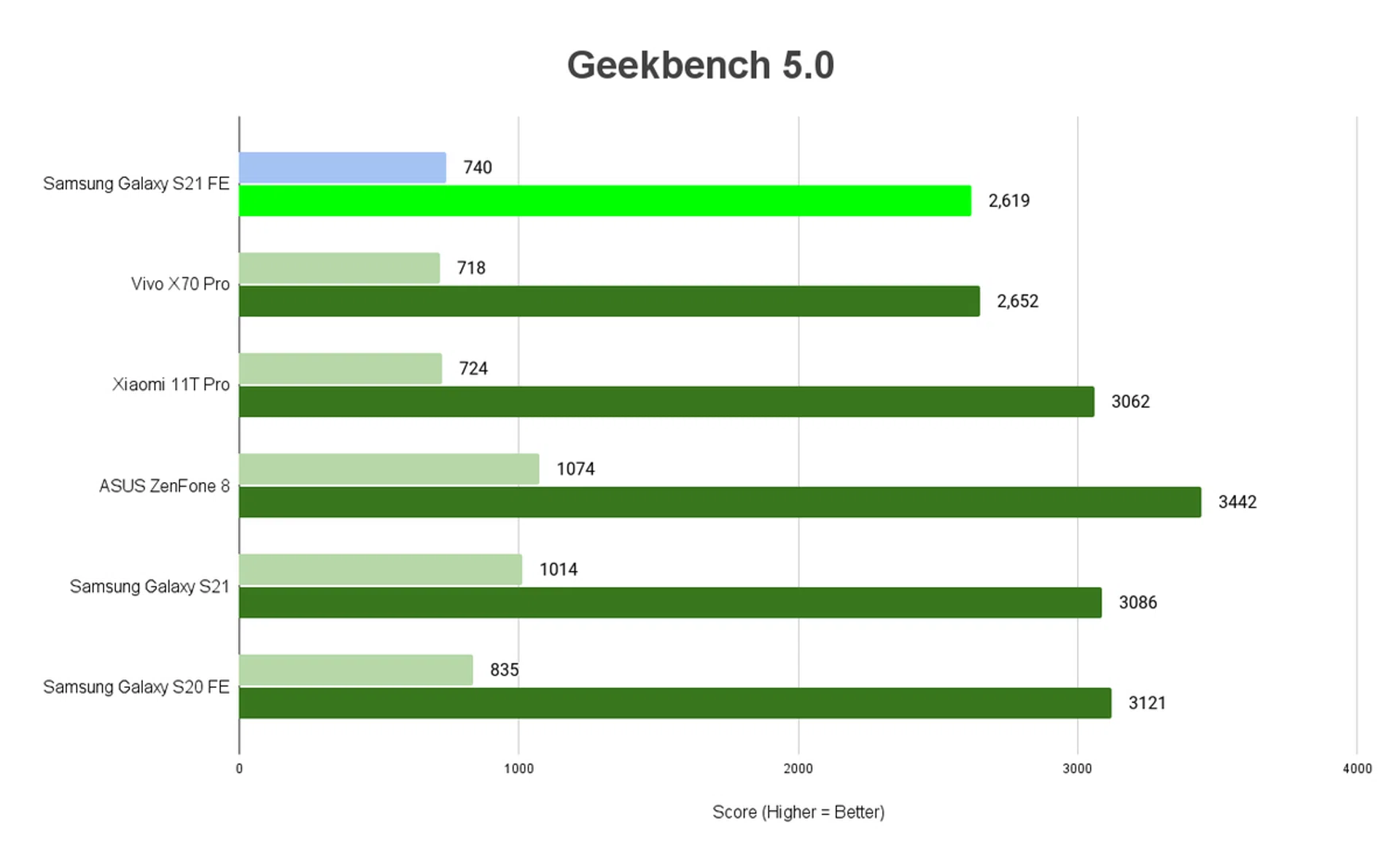
Geekbench 5
Geekbench CPU is a cross-platform processor benchmark that tests both single-core and multi-core performance with workloads that simulate real-world usage. Geekbench 5 scores are calibrated against a baseline score of 1000, which is the score of an Intel Core i3-8100. The higher the score, the better.
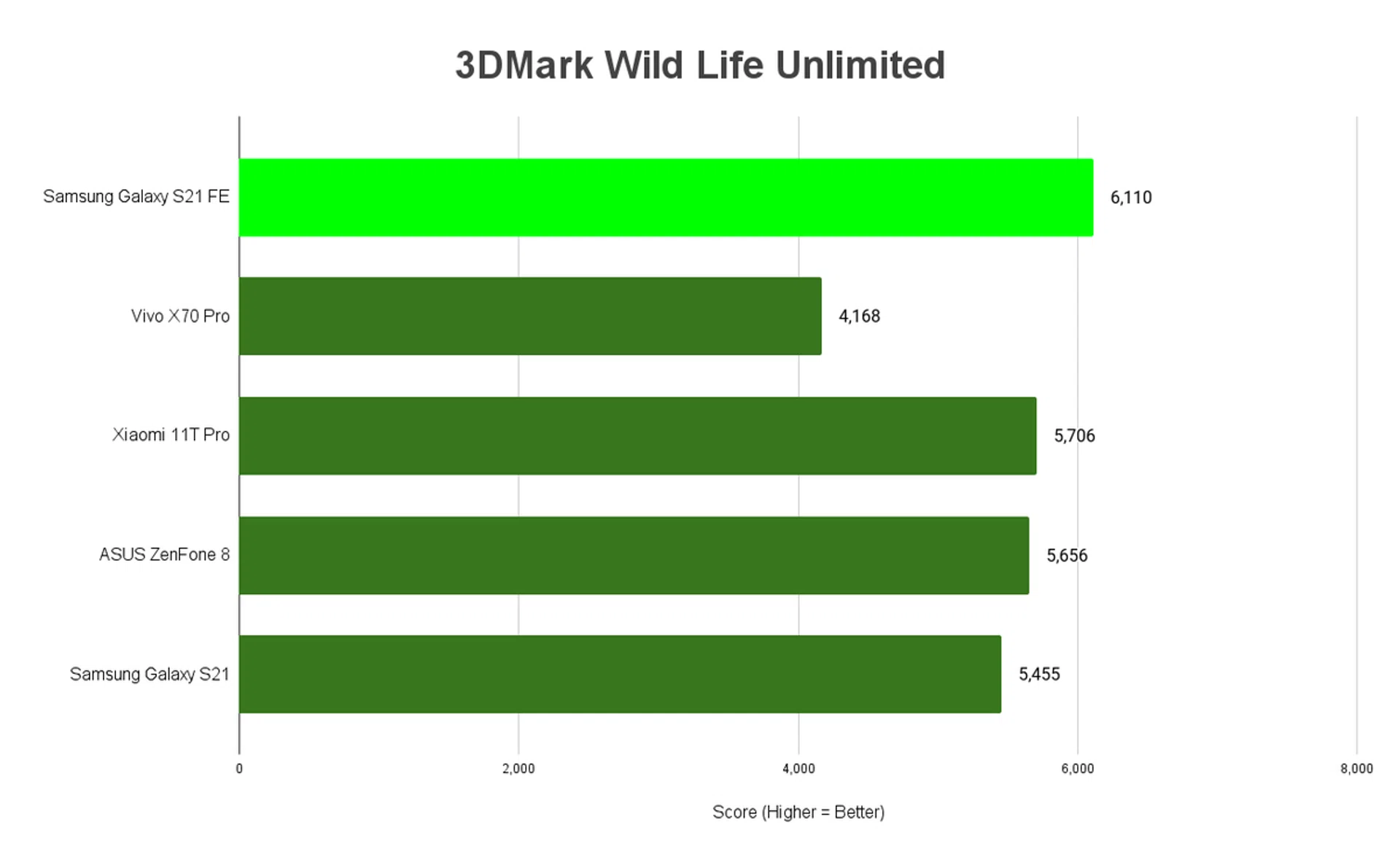
3DMark Wild Life (Unlimited)
3DMark Wild Life is a cross-platform benchmark for Windows, Android and Apple iOS for measuring GPU performance. Its graphics test consists of multiple scenes with variations in the amount of geometry, lights and post-processing effects, mirroring mobile games that are based on short bursts of intense activity. Wild Life uses the Vulkan graphics API on Windows PCs and Android devices. On iOS devices, it uses Metal.
In Unlimited mode, the benchmark runs offscreen using a fixed time step between frames. Unlimited mode renders exactly the same frames in every run on every device, regardless of resolution scaling. The higher the score, the better.
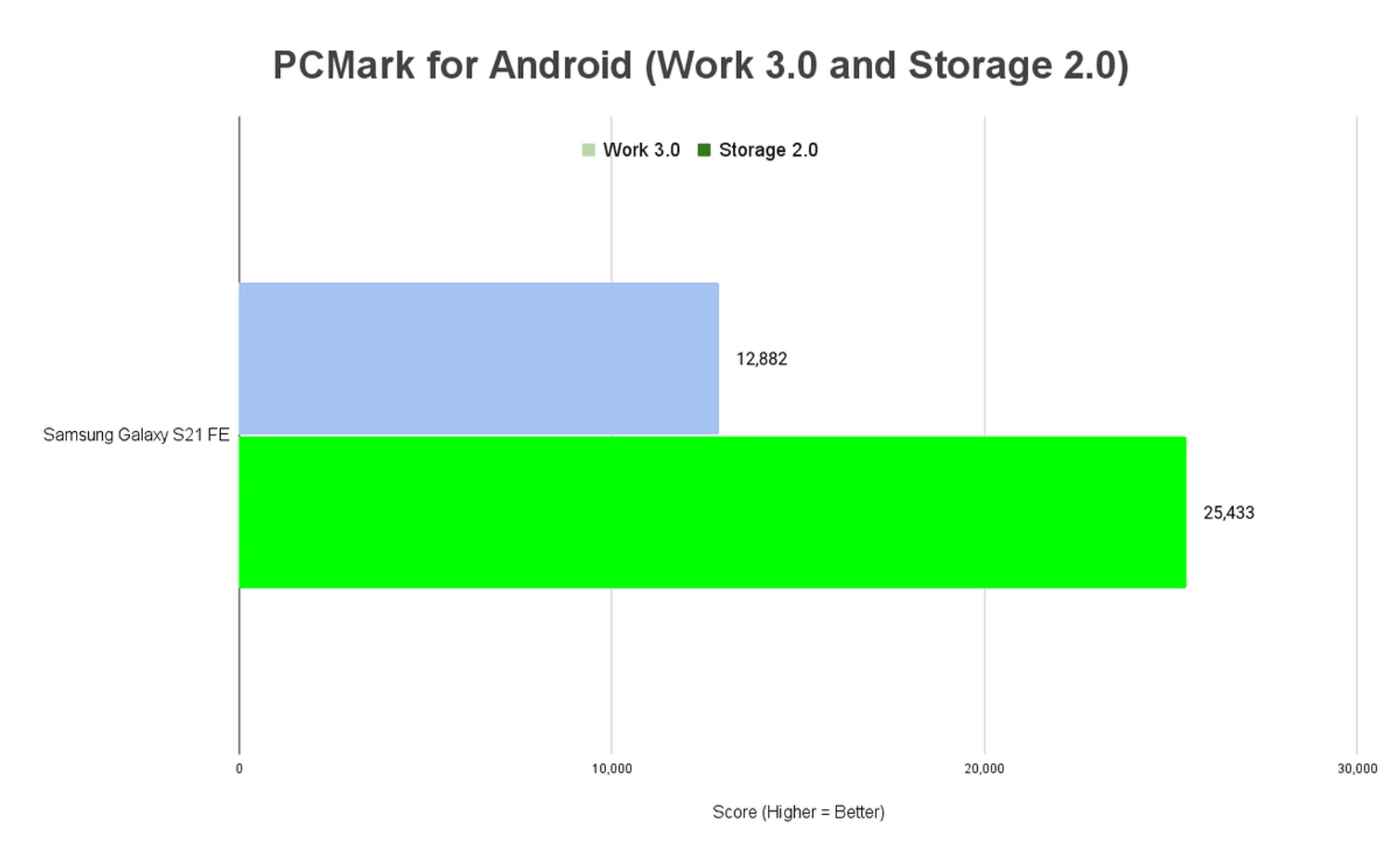
PCMark for Android - Work 3.0 and Storage 2.0
PCMark for Android is a benchmark for testing the performance of Android phones and tablets. The Work 3.0 test checks how the device handles common productivity tasks such as browsing the web, editing videos, working with documents and data, and editing photos. Storage 2.0 checks write-in and read-out performance for internal storage, external storage (if applicable), and SQLite database management. Together, the benchmarks can clue us in on how capable a phone is at handling everyday use. Work 3.0 scores are above, while Storage 2.0 scores are immediately below for each device - the higher the score, the better.
Since this is a newly introduced benchmark in our reviews, we’re building up our database of PCMark scores for Android phones.
Battery life
Our standard battery test for mobile phones has the following parameters:
- Looping a 720p video with screen brightness and volume at 100%
- Wi-Fi and Bluetooth connectivity turned on
- Constant data streaming through email
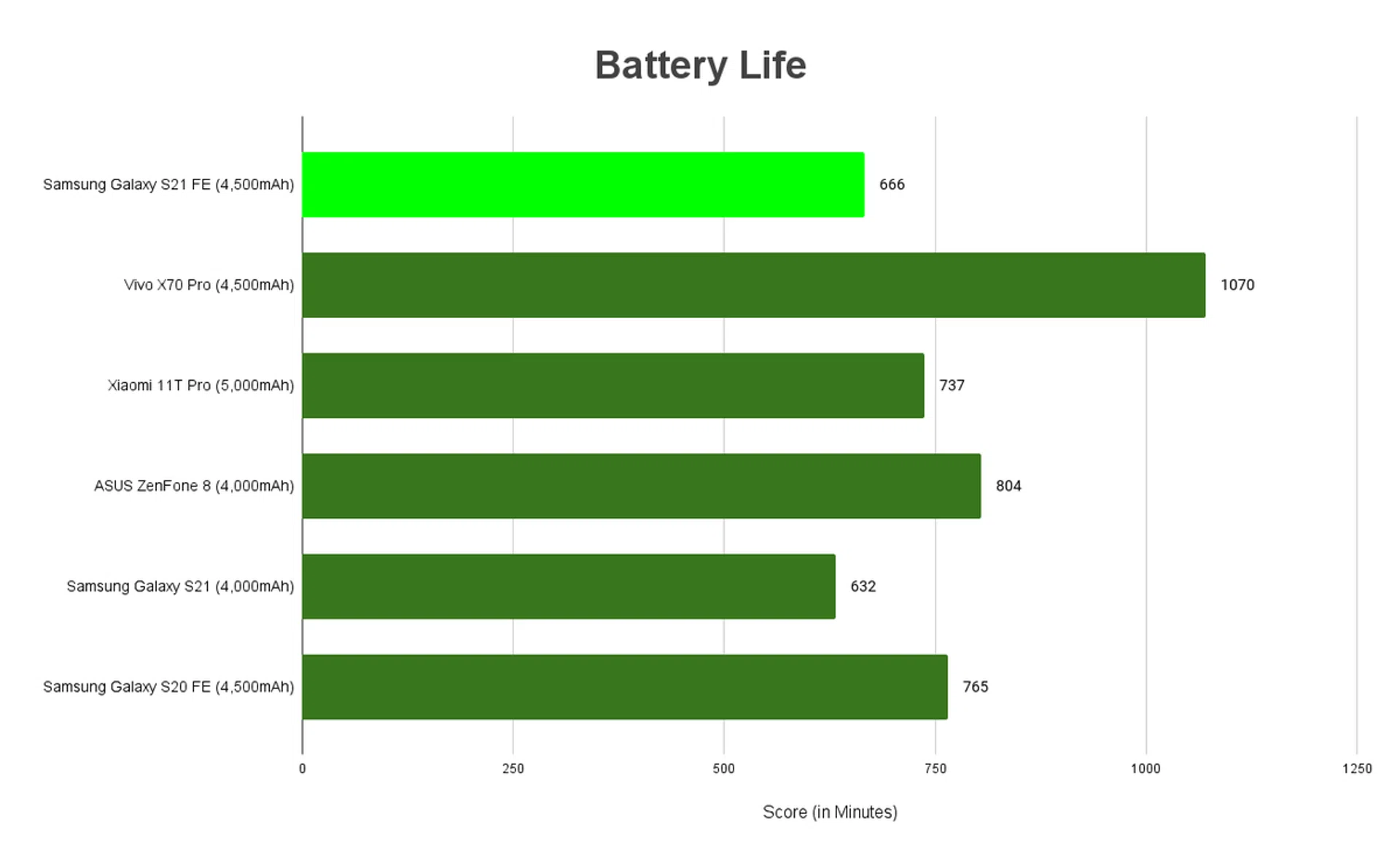
With its 4,500mAh battery, the Galaxy S21 FE squeezed out 666 minutes of continuous uptime before giving up the ghost. This is a little disappointing considering the almost similar S20 FE from last year has 100 minutes more run time. That said, it actually tallies with the rest - the regular S21 had 4,000mAh capacity and lower uptime, while the S21+ had 4,800mAh and lasted longer than the S21 FE (these phones all share the same chipset here).
Like the S20 FE, the S21 FE also offers 25W wired fast charging and 15W wireless fast charging with compatible charging pads. It took roughly 70 minutes for the S21 FE to charge from 0% to 100% on a third party fast-charger. Why third party? Because Samsung still refuses to bundle a charging adapter with its budget or premium flagship phones. We felt this more keenly considering how cheaper Chinese phones with SD888 come with fast-charging adapters in the box going anywhere from 30W to 120W.
Conclusion
With the previous Galaxy S20 FE, we said that Samsung defied expectations and made a true Fan Edition device that packed core flagship expectations into a budget flagship price tag without sacrificing quality.
The Galaxy S21 FE actually offers the same value for money, but repeating its winning formula does make it fall short in certain ways. For one, the improvements you get between Galaxy S20 FE and S21 FE are minor. Short of the added HDR10+ support and another year of software support, you’re not going to see any difference between these devices in day-to-day use. Coupled with Singapore getting Exynos 2100 processors for its Galaxy S21 FE units when other countries get Snapdragon 888, we can’t help but feel a little shortchanged.
To add, holding another Samsung Unpacked barely a month after bringing S21 FE just doesn’t bode well for the decent budget flagship device. Now, Samsung has to contend with users holding on to their money to decide if they should take this handset, or the next generation of Galaxy S phones.
Despite the phone’s circumstances exacerbating its shortcomings, the Galaxy S21 FE is still a great budget flagship alternative. For one, it starts at just S$978. Considering how other alternatives from 2021 are officially priced at S$999 or higher (bar the Xiaomi 11T Pro), the Galaxy S21 FE is priced well below the competition it’s meant to take on. It also comes with the brand's familiar UI and optimisations, so your browsing experience doesn't take a hit like how some Chinese UIs do.
Taken together, the consumer gets to pay slightly less than before, get HDR10+ support, with performance commensurate to other 2021 flagship phones. If you missed out on the S20 FE or S21 series and want a budget flagship upgrade, the Samsung Galaxy S21 FE offers a fairly sensible upgrade path.
Interested in one? Don’t forget to check out all the pricing and availability details here.