
LG Optimus 2X - Twice the Horse Power
Powered by NVIDIA's Tegra 2 chip and loaded with Android 2.2 (with an upcoming update to 2.3), the LG Optimus 2X is the first phone to use this hardware and also comes with a large 4.0-inch screen in a well-constructed body. Check out how it fared under our scrutiny.

Reining in the LG Optimus 2X
There has been a lot of hoohaa about smartphones taking on the next generation of technology, coming in with dual-core processors that promise faster speed, an especially essential component for crunching the increasing multimedia content smoothly. While the LG Optimus 2X is another addition to its Autobot-inspired lineup, more importantly, it also paves the way for the next-gen high-end mobile devices as it is the first smartphone to be equipped with the NVIDIA's Tegra 2 chip. So now that LG has set its new Optimus 2X ("2 "for twice the power, get it?) apart from its competitors, how does it really fare? Let's find out.

The LG Optimus 2X isn't a hefty monster by a long shot, and is almost equally as thin as the HTC Desire (shown here on top) or the Google Nexus S. Nonetheless, it is definitely thicker than the slim Samsung Galaxy S.
As most can gleam, the LG Optimus 2X sports a simple and clean design not unlike its contemporaries. Its front is covered by a glass slab, only to be interrupted by the speaker grille at the top. Unsurprisingly, the quick-to-be-standard 4-inch LCD screen takes most of the real estate on the front, alongside four capacitive touch buttons at the bottom. The rest is sparsely taken up by an LG logo and an accompanying front-facing camera at the top. Its unobtrusive design keeps the phone attractive and accessible - take for example, the ports are neatly lined along the top and bottom of the phone with volume controls taking main stage on its right profile.
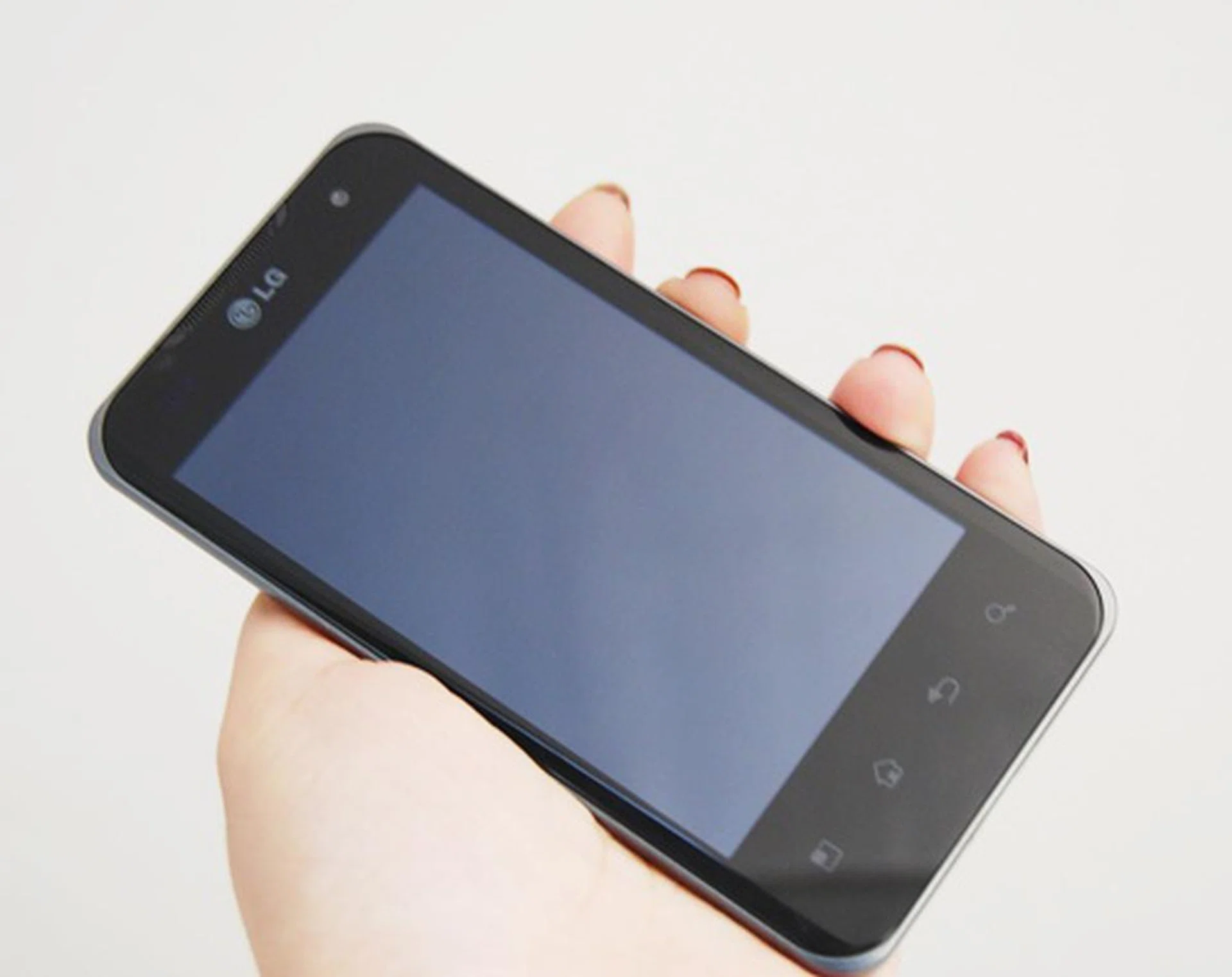
The front is almost entirely covered with a glass panel, which undeniably adds class to the phone's design but also makes it easy to be smudged by fingerprints. We definitely advise users to get screen protectors to protect it from both grease and scratches.
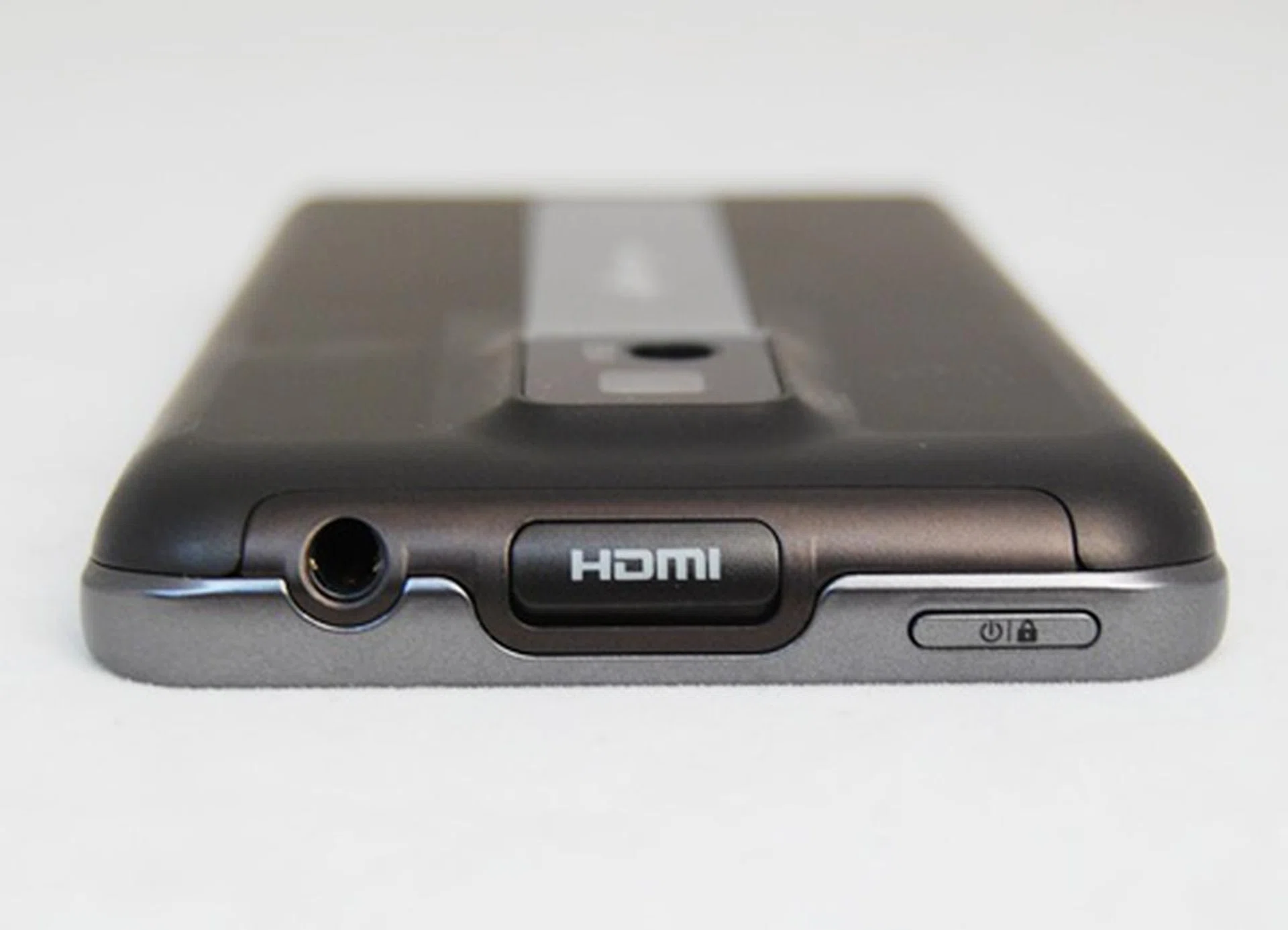
Top, from left to right: 3.5mm headphone jack, HDMI port and the power/lock button. They are evenly spread out, making it easy for users to access them.
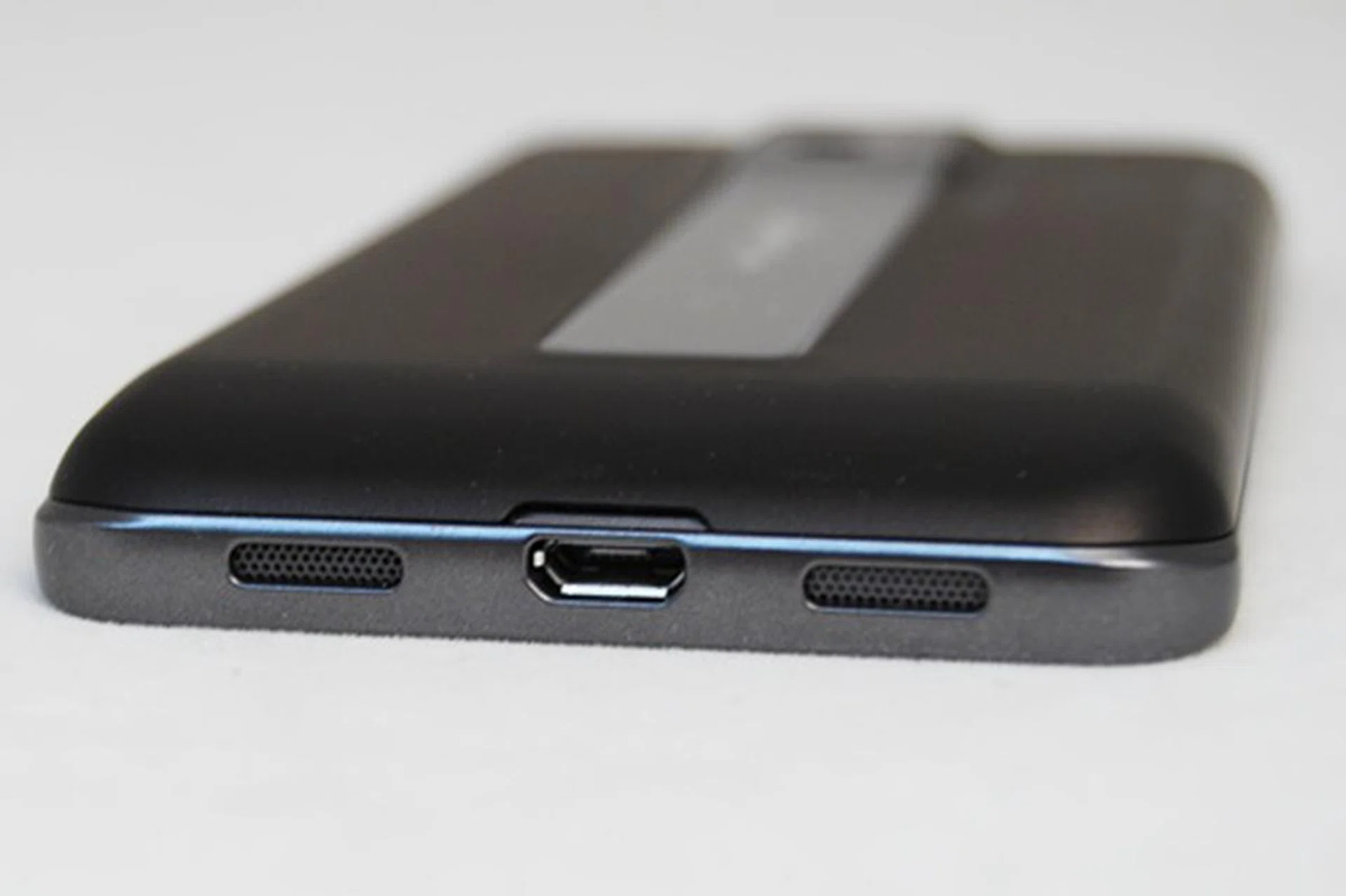
The bottom is kept sparse, with a single micro-USB port that's found neatly lined alongside two more speakers, supposedly for better spatial sound.
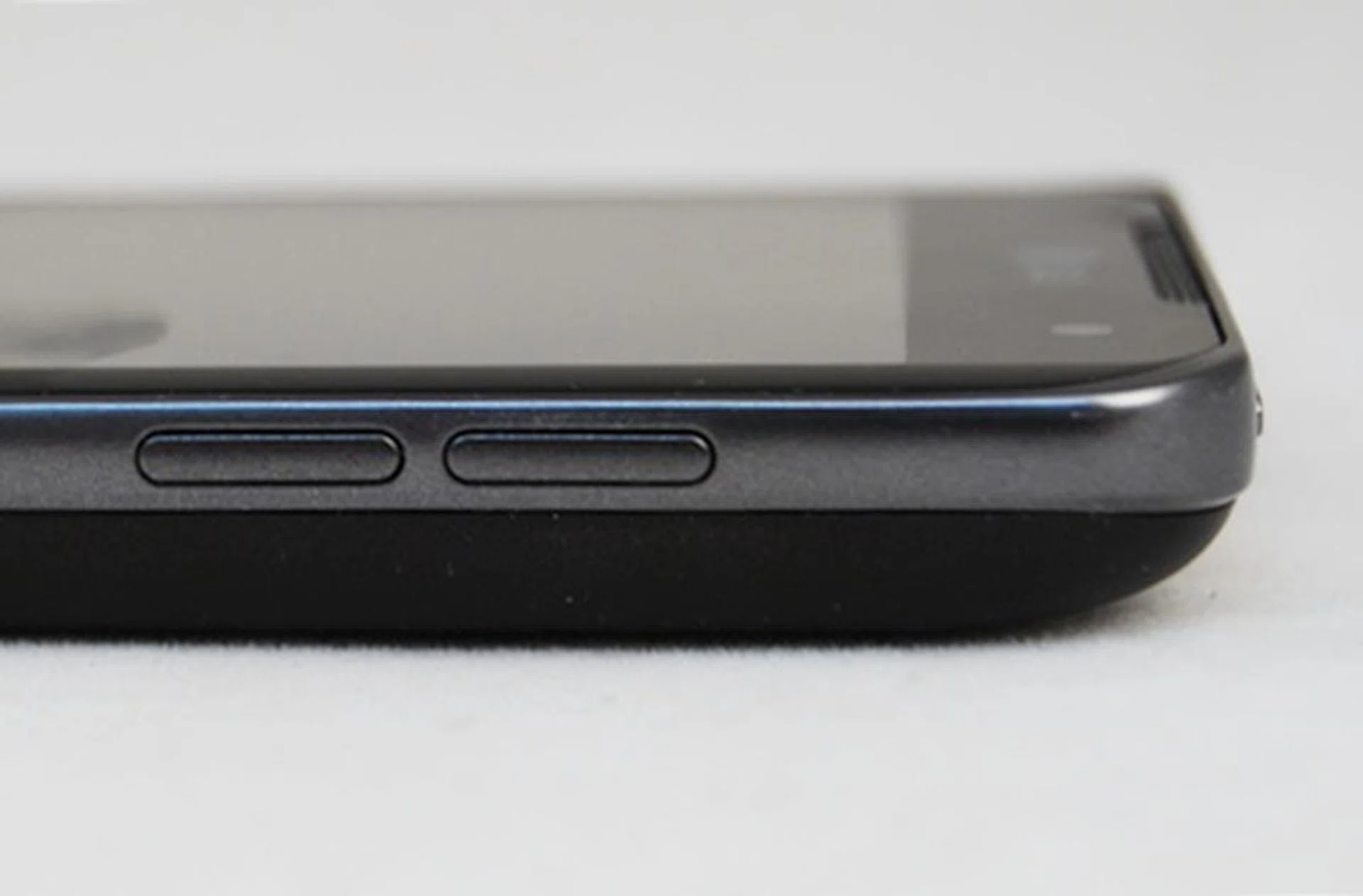
The volume controls are found on the right profile of the phone. Noticeably missing is a camera button - a nifty addition that should have been included on the smartphone.
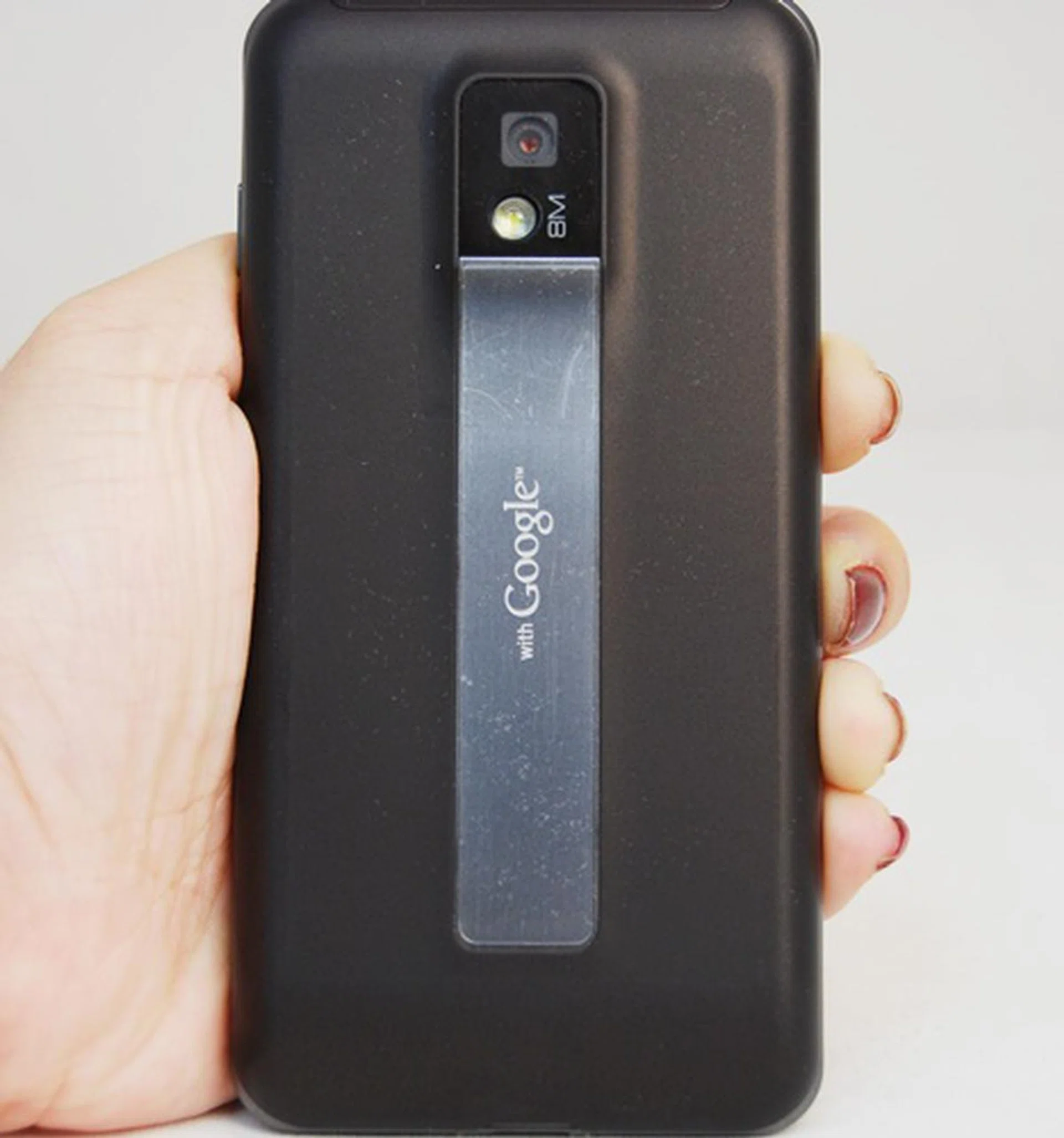
The main framework of the phone is cast in metal and is accompanied by a matte plastic back cover. The latter is austerely decorated with a column of silver in the middle that's inscribed with two words: "with Google".
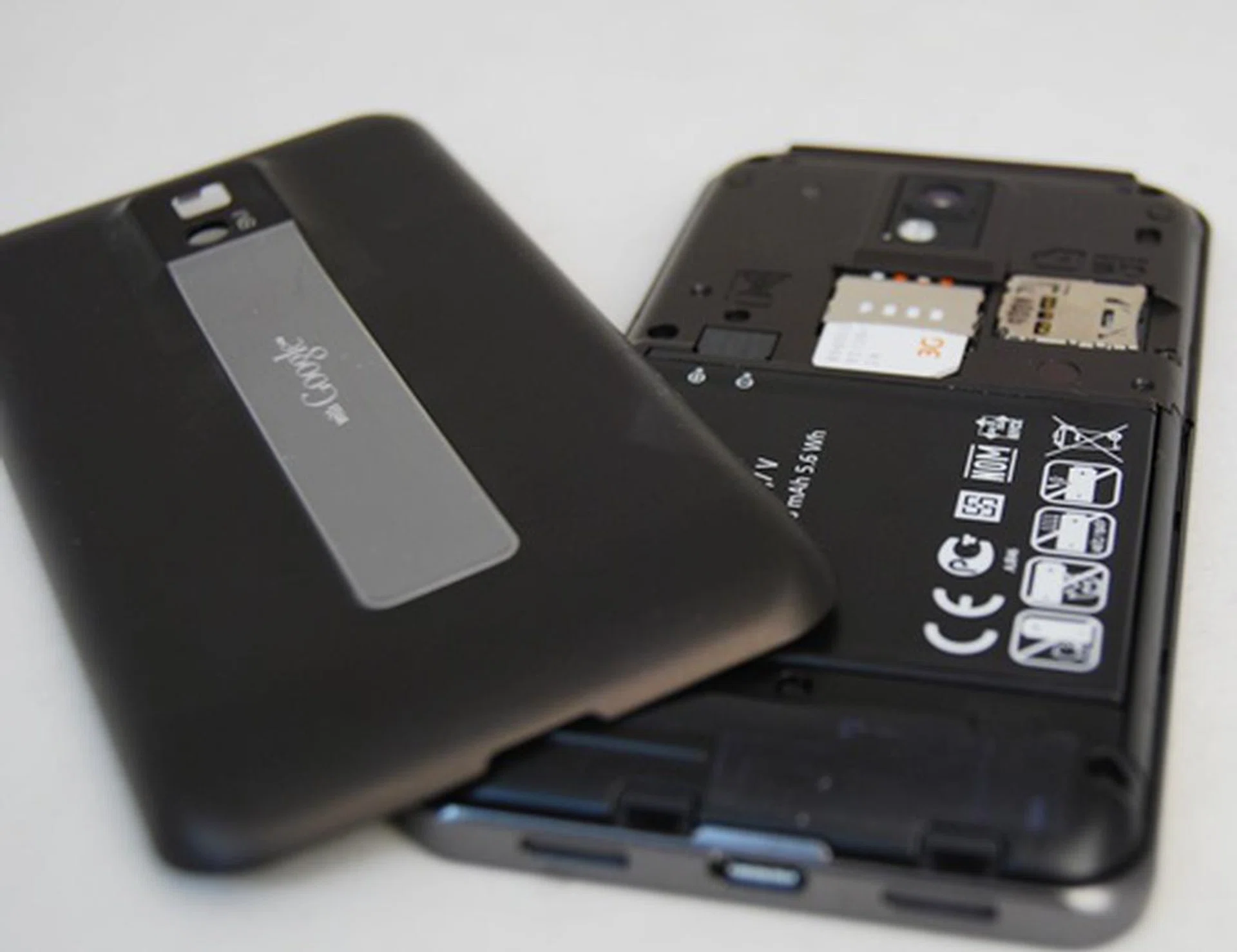
The cover is easily pried open through a small gap that's roughly the width of a thumb. Inside, you will find the usual battery, SIM card and micro SD card compartments.
Overall, we found the handling experience to be well-balanced due to its uncomplicated and minimalistic design. We must also add that while the LG Optimus 2X comes across as contrived in terms of visuals, it is still a stylish and compact smartphone. The physical buttons are easy to press with good tactile feedback and the capacitive ones are well spaced out without being too close to the screen (although, we would have very much preferred physical controls). The phone fits rather comfortably in our palms; however, we did feel that the body is a tad too long for our liking but its sturdiness and pleasing aesthetics more than make up for it.
Different Device, Same Old UI
A whole lot of emphasis has been put into fine-tuning user interfaces (UI) across the different mobile platforms to a point where they have been stagnant in terms of design. In all honesty, most phones that we have reviewed recently have similar user interfaces or if not, similar user experiences - be it from iOS, TouchWiz or HTC Sense. Here the LG Optimus 2X seems to have taken a leaf out of Samsung's TouchWiz UI (of which, the latter share incremental resemblances to Apple's iOS), featuring a blend of widget-positioning and app shortcuts. Of course, there are also other small nice touches that we definitely appreciate.
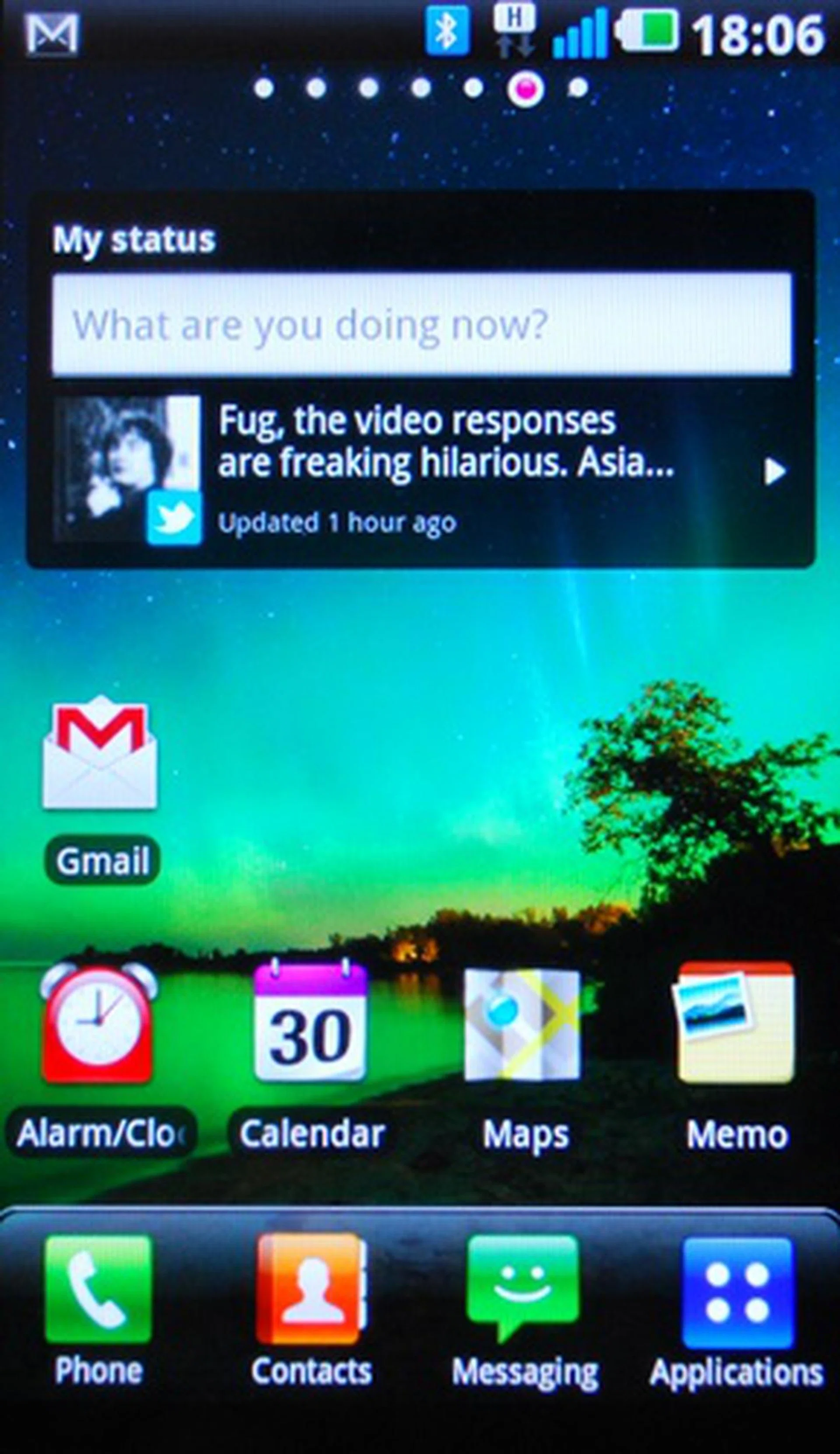
Just like on the TouchWiz UI, users are greeted with four standard app shortcuts at the bottom. These direct users to functions that are regularly used or referred to.
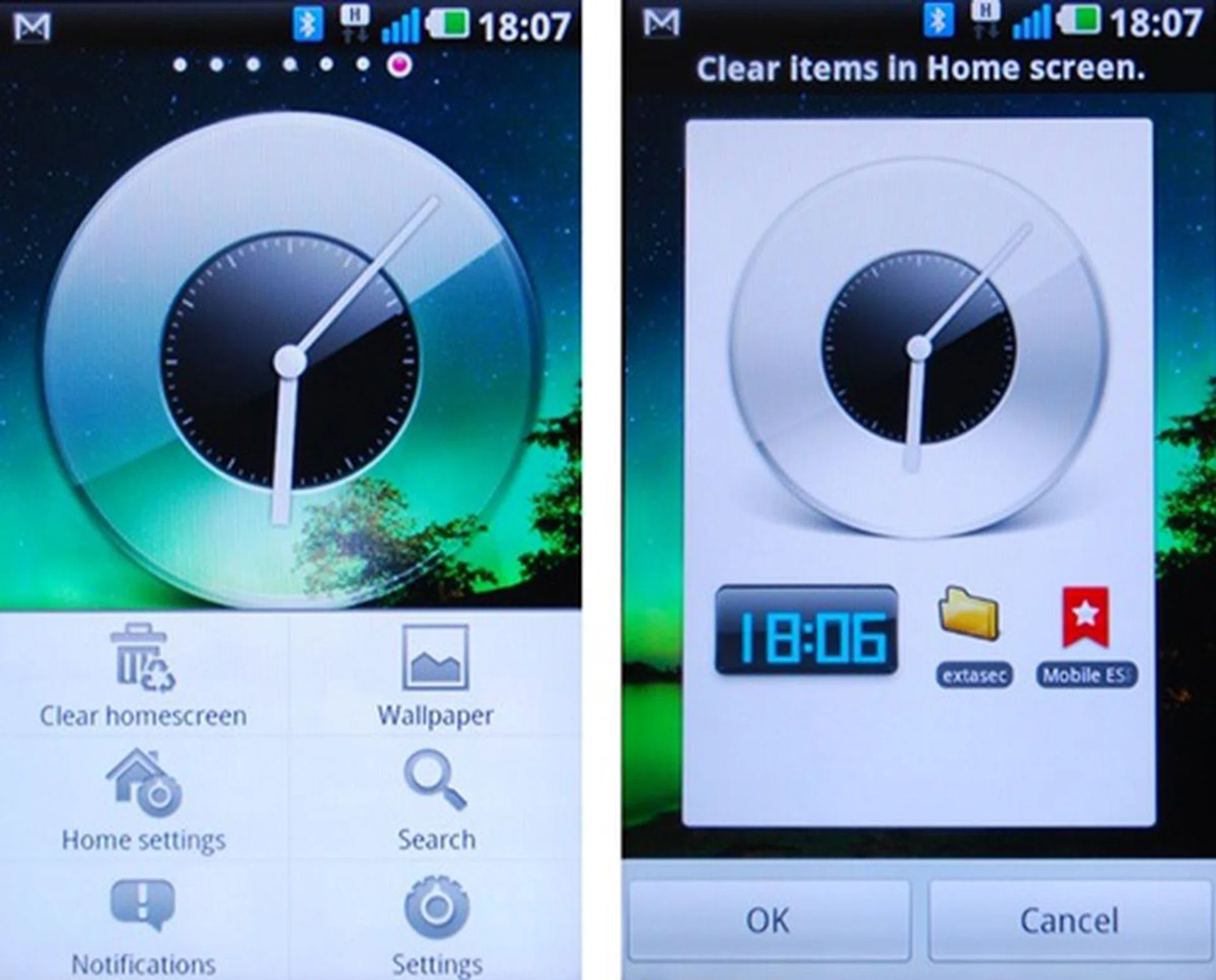
Users have the option to clear your screen with one touch of a button. Downside is, you can only clear one homepage at a time - which is the one that you are on - and only when it is filled to the brim with widgets or shortcuts; otherwise, the option will not be available.
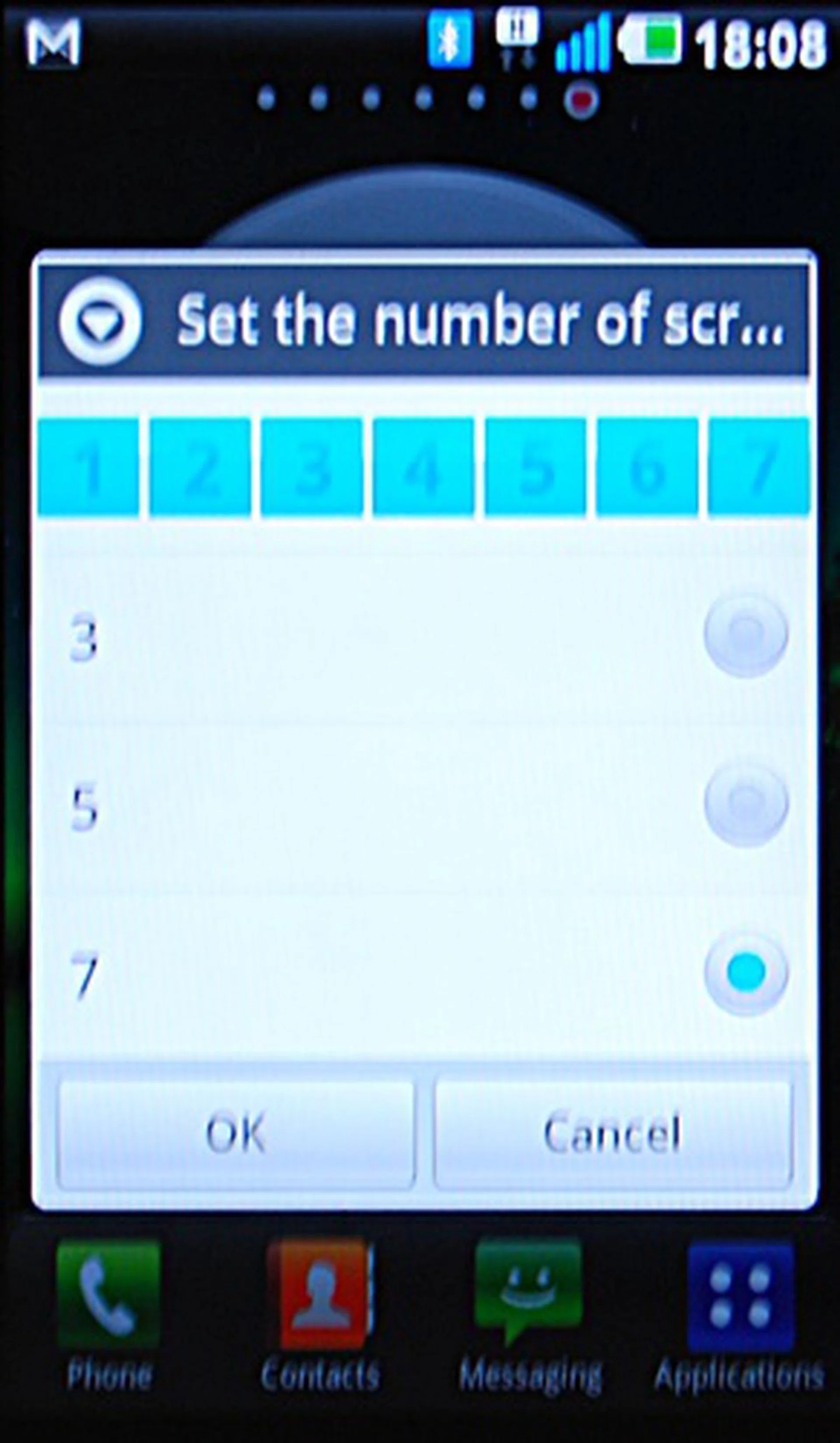
If you find that you prefer to keep your home pages concise, here's a nifty option. You can easily choose from 3, 5 to 7 screen pages from Home settings.
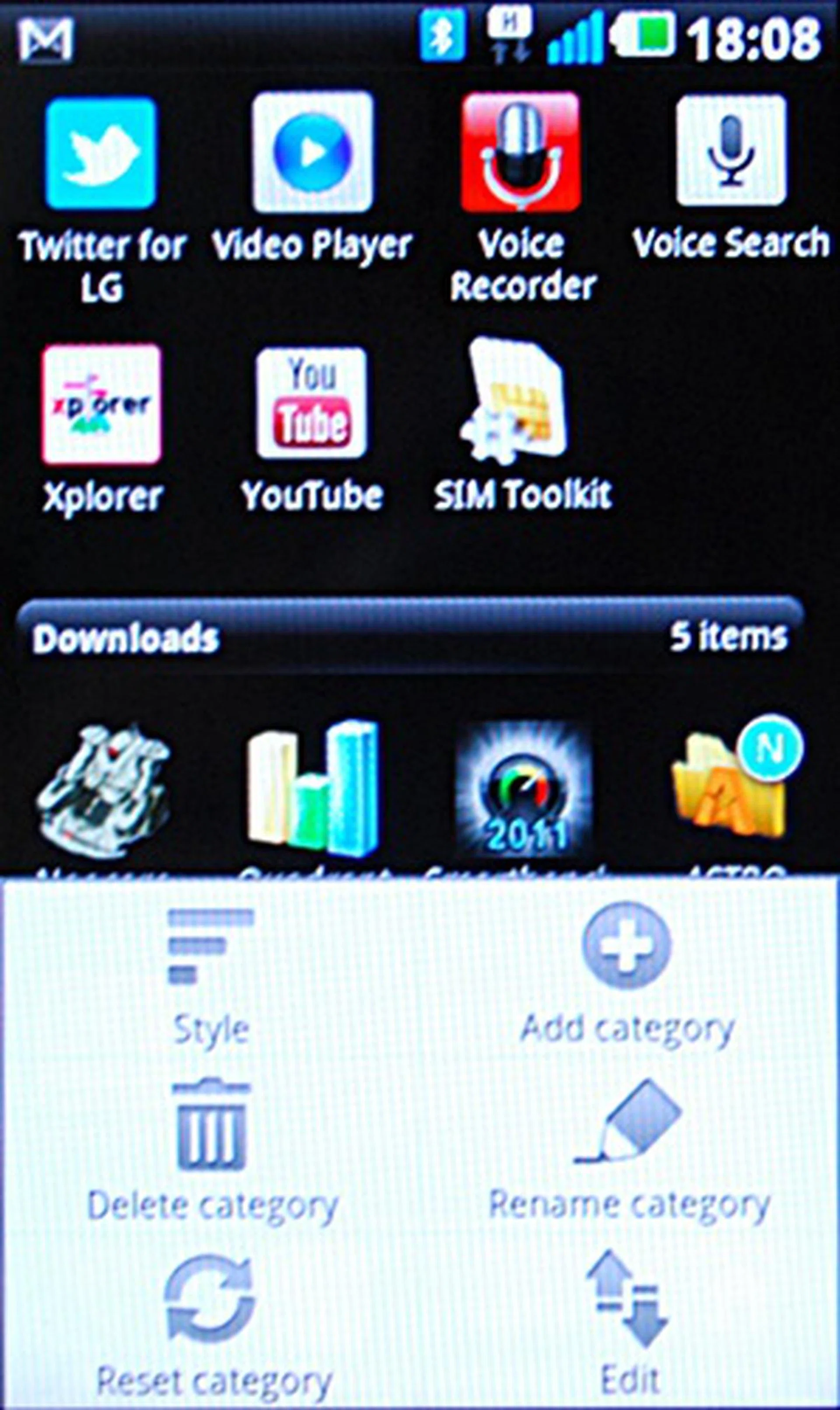
In addition, downloaded and new apps are segregated accordingly in the applications page. You can also create new or rename categories aside from the ones that are automatically available (System Applications, and Downloads) on the phone.
LG's Exclusive Content

We first saw the LG App Advisor on the Optimus One, and naturally, it makes a reappearance on the LG Optimus 2X. This app gives you an overview of what's hot in the vast Android Marketplace.
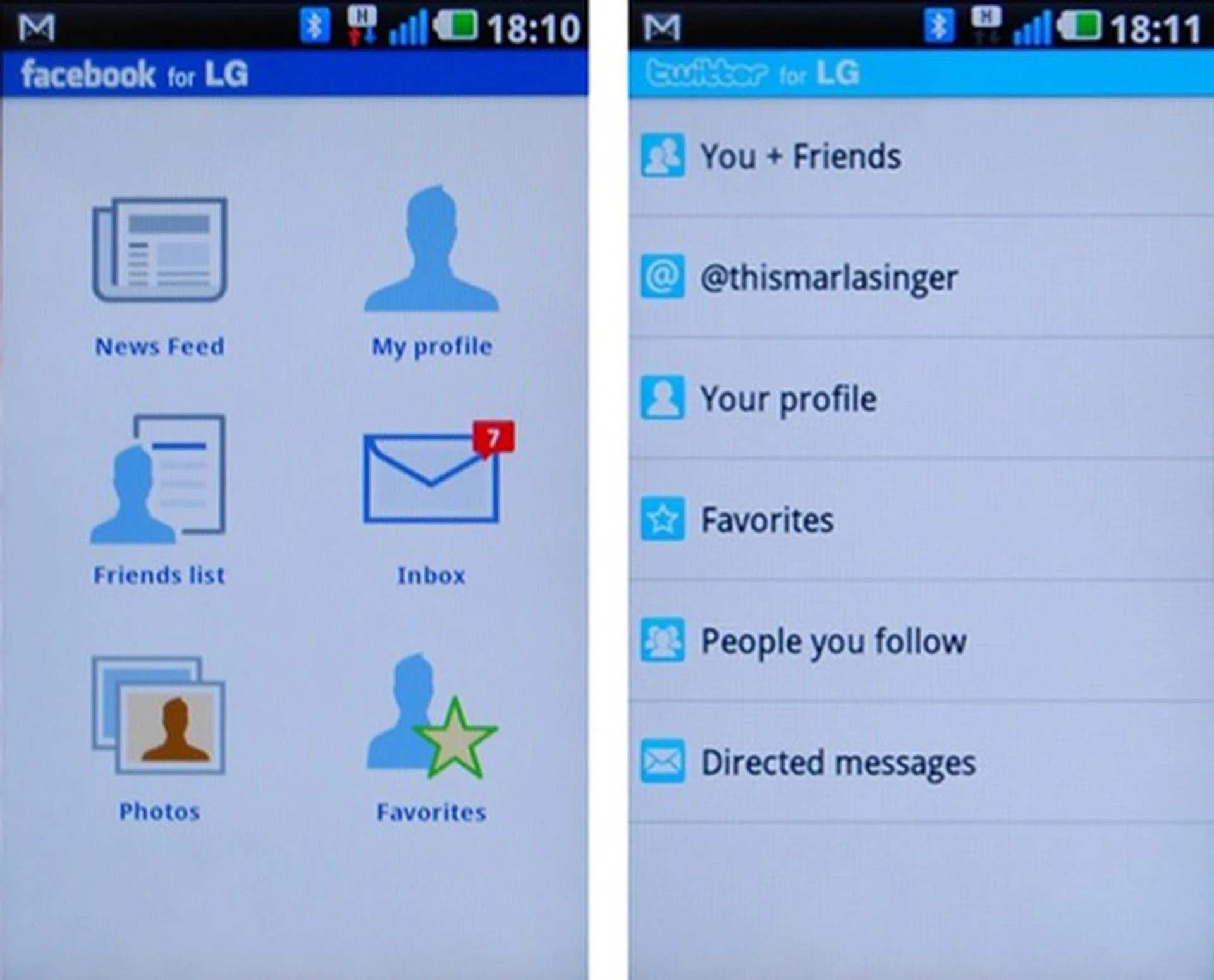
LG has its own Facebook for LG and Twitter for LG apps, which are basically simplified versions of other and frankly, more comprehensive third-party social networking apps.
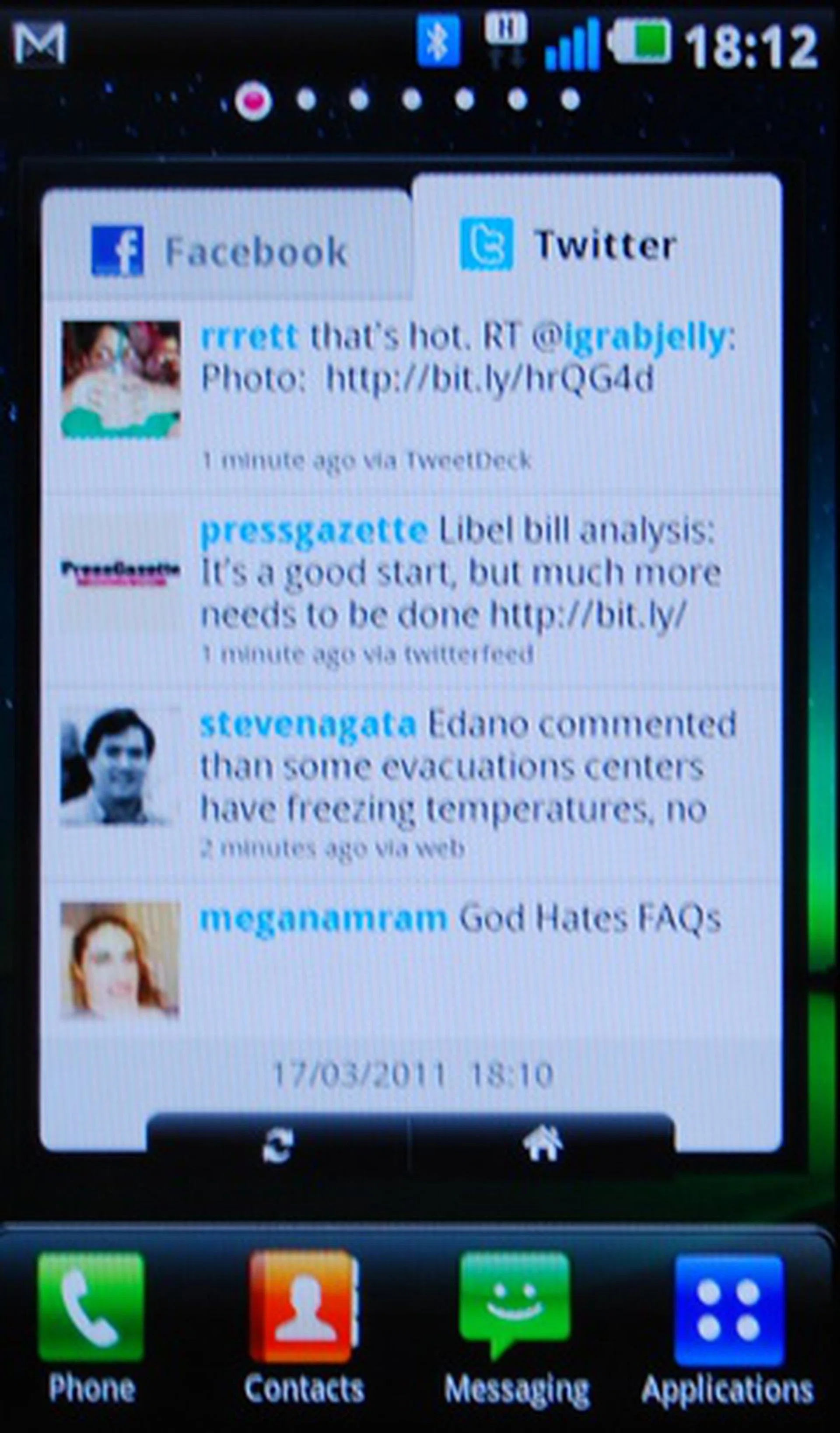
As with most other operating systems, the phone comes with a widget that consolidates all relevant social feeds into one location.
All in all, the LG Optimus 2X comes with some cool additions that are otherwise non-revolutionary. We liked the simple yet tasteful UI but once again, we have to iterate that there is nothing too unique about the user experience. Of course, the upside to that is that previous users of other smartphones with differing operating systems can easily switch over with little difficulty. Do also note that the phone will initially be released with Android 2.2 (Froyo) but an update to Android 2.3 (Gingerbread) is in the lineup.
Twice the Performance on Optimus 2X
The Optimus 2X runs on a the Tegra 2 dual-core processor, which is double the processing power of even the high-end smartphones that are the likes of Nexus S and Samsung S. This is also one of the reasons why we started adding benchmark tests to our performance testings to start giving readers a gauge of how dual-core smartphones will fare against their lesser endowed counterparts. Foreseeing more similarly spec-ed tablets and smartphones joining us in the future, this information will be handy for comparisons against them as well.
Within this page, we'll be looking at two specific benchmarks, both of which are downloadable via the Android Market.
- The first benchmark is Quadrant - it measures the device's performance based on its CPU, I/O and GPU. Simply put, Quadrant is a benchmark that gives you a general idea of how your device performs against other Android devices.
- The second benchmark is NeoCore - it is targeted towards the device's GPU performance. This is especially important given how smartphones of today have evolved into an alternative, high-powered device that dabbles in heavy graphical interfaces and gaming - especially important in the LG Optimus 2X's case as it is outfitted with hardware meant to boost game and graphics rendering.
Our tests were conducted on devices from a fresh reboot on a stock firmware. Depending on how you customize your device, you might get different numbers on different runs. With these results in place, we compared the scores against the Google Nexus One, Nexus S, and the Galaxy S. Do note that the above two benchmarks are not absolute in performance measures, but they give you a rough estimate of the phone's capability.
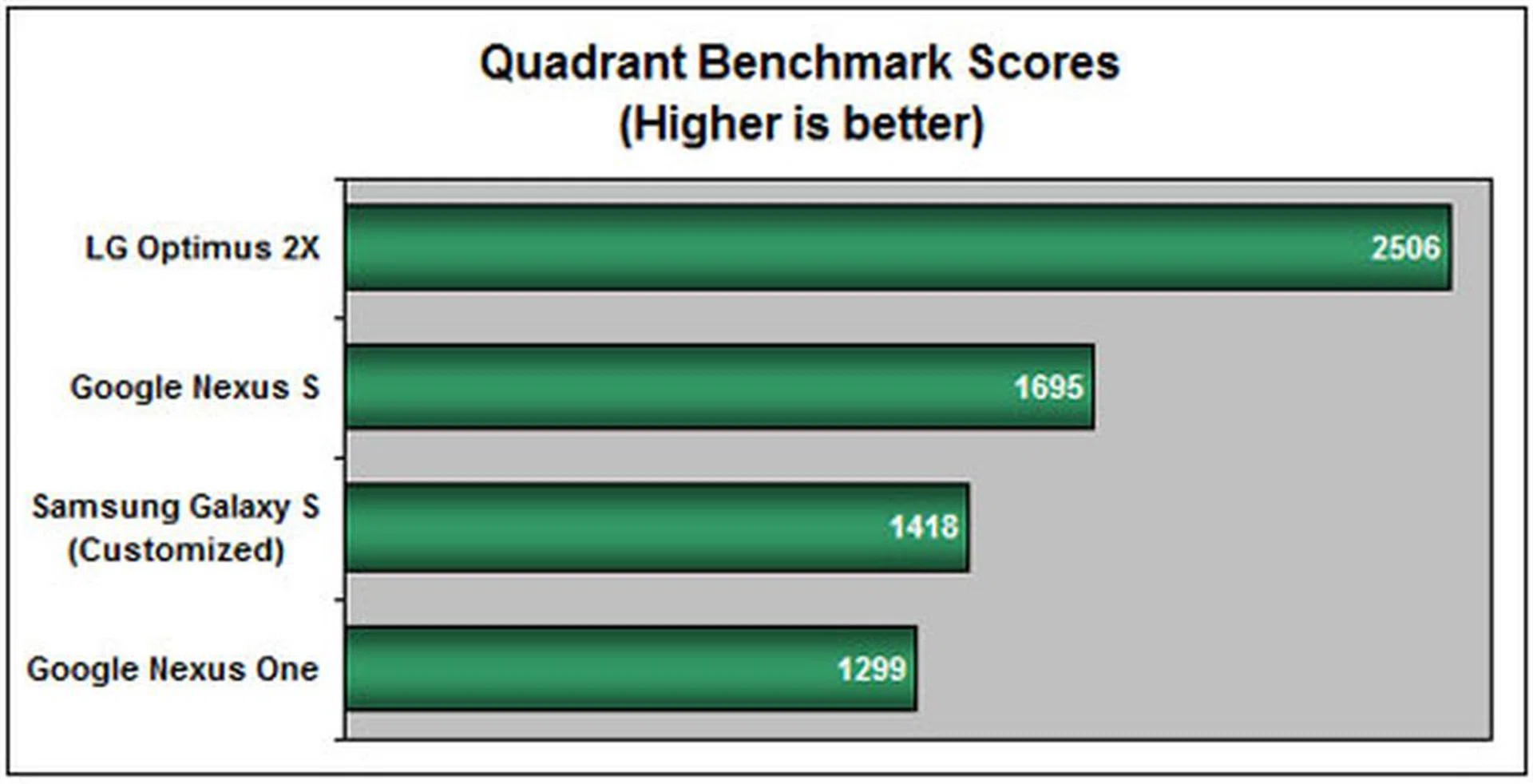
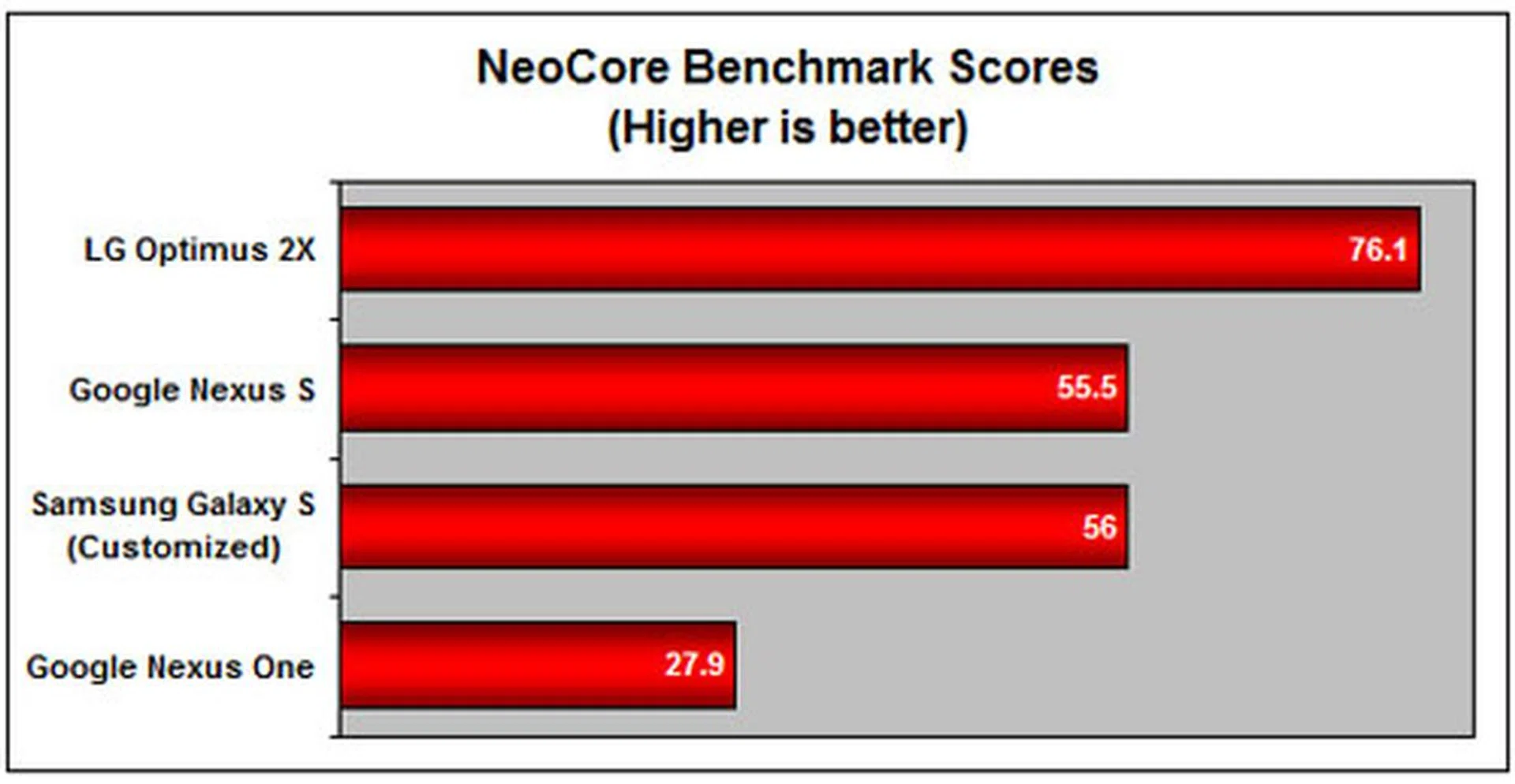
Both results reflected here show that the LG Optimus 2X showcased far superior results compared to the other smartphones . The answer is pretty self-explanatory here. Nonetheless, we have to stop and ask ourselves whether the extra processing power is actually all that necessary. Case in point: all the phones that we have pitted the Optimus 2X against ran on less powerful and yet decent 1GHz processors. Based on our testing and usage, all phones fared well with no sluggish performances noted; screen transitions and browsing were smooth even with multiple apps running in the background. Of course, the Optimus 2X does all these better, but the improvements are incremental, or bluntly put, not essential for the average handphone-toting crowd. The biggest selling point that Tegra 2 touts is processing multiple apps and multi-tasking while ensuring no slowdown in speed - which most phones of even less than half of the scores can achieve.
Nonetheless, gamers on-the-move would want to take a good look at Tegra 2 based smartphones as it's certainly more capable than any other smartphone hardware in the market at this point of time. More so with the recent news about Playstation games coming to Android Tegra 2 devices. Check out the video demo that we have captured with none other than NVIDIA's CEO showing the full multimedia potential of Tegra 2 based devices using the LG Optimus 2X when it was first launched:-

Multimedia & Battery Life Performance
In this segment, the LG Optimus 2X impresses but also fails in certain areas. To kickstart, its 4.0-inch LCD screen is excellent, displaying true blacks, rich and vivid colors. It isn't a stretch to say that the visual experience is almost parallel to the one on the Samsung's patented Super AMOLED screens, boasting of good readability under bright sunlight. Hence, flipping through photos or playing games can be very satisfactory on the smartphone. Messaging is a fluid affair too, not only in terms of agility but also thanks to the decently sized 4.0-inch screen, which gave us ample space for our fingers to maneuver. Those aside, an acceptable 480 x 800 pixels resolution is sufficient for comfortable video playback.
Surfing on the smartphone yielded no problems; generally, the user experience was smooth and receptive on its 4.0-inch touchscreen. Throughout our duration of handling the phone, it never lagged or crashed once. We attribute the smoothness and lag-free experience to the built-in Tegra 2 processor. Audio is average, boasting of airy and weak vocals with strong bass. The media player comes with equalizer choices that range from virtual surround, bass boost, XtraBass to classical - you can choose to switch the sound effects entirely or stick with one of these presets.
As with most high-end smartphones, the Optimus 2X is equipped with a front facing 1.3-megapixel camera and a rear 8-megapixel camera with flash. We conducted our usual imaging tests to check on its photographic performance, concentrating on the main camera on the back.
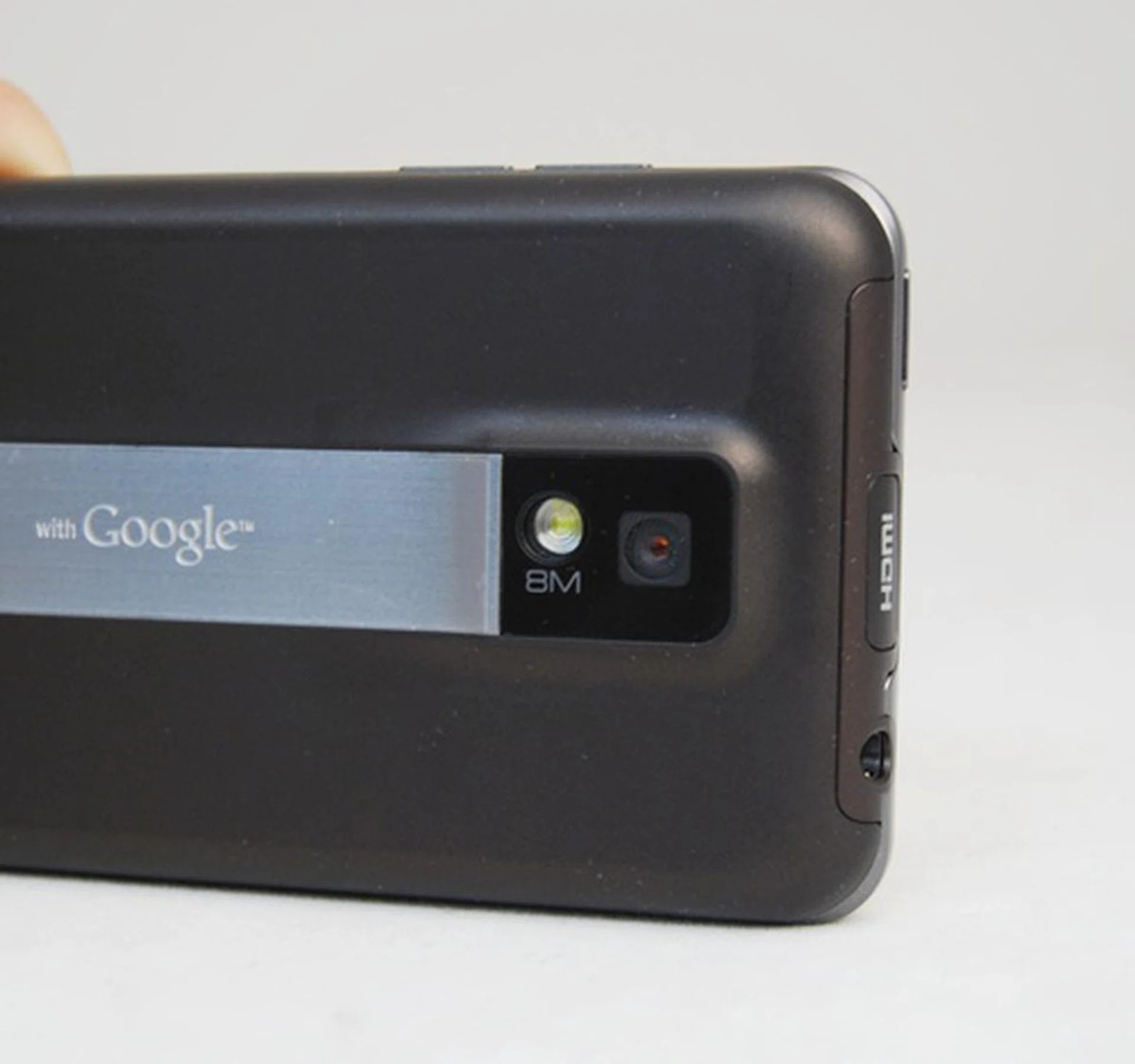
Seen on the smartphone: 8-megapixel camera with LED flash and auto-focus.
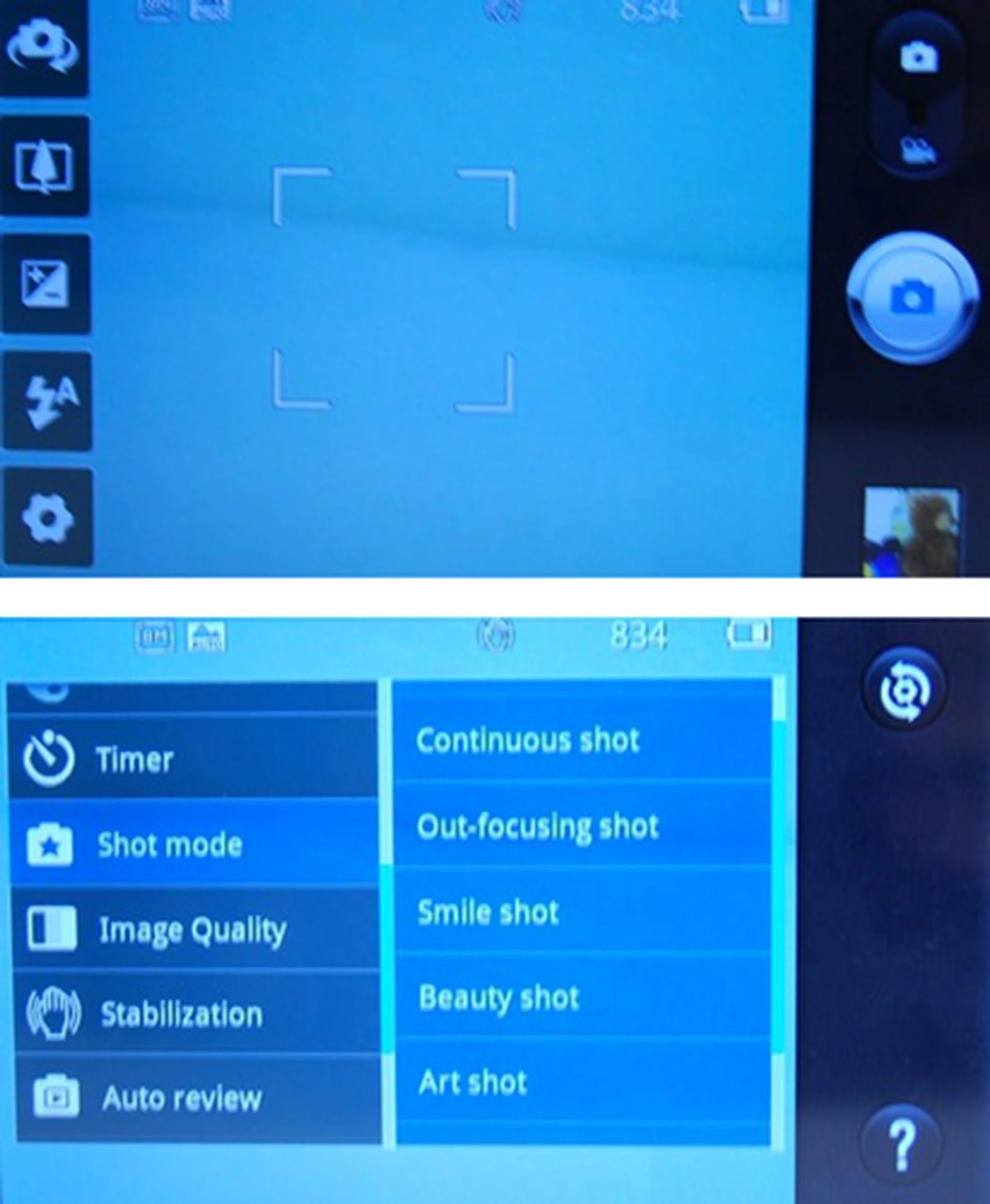
While we would have preferred easier access to the zoom options, we must say that the stock camera app here comes packed with some cool features. Click the first icon for a quick switch from your rear to front camera.
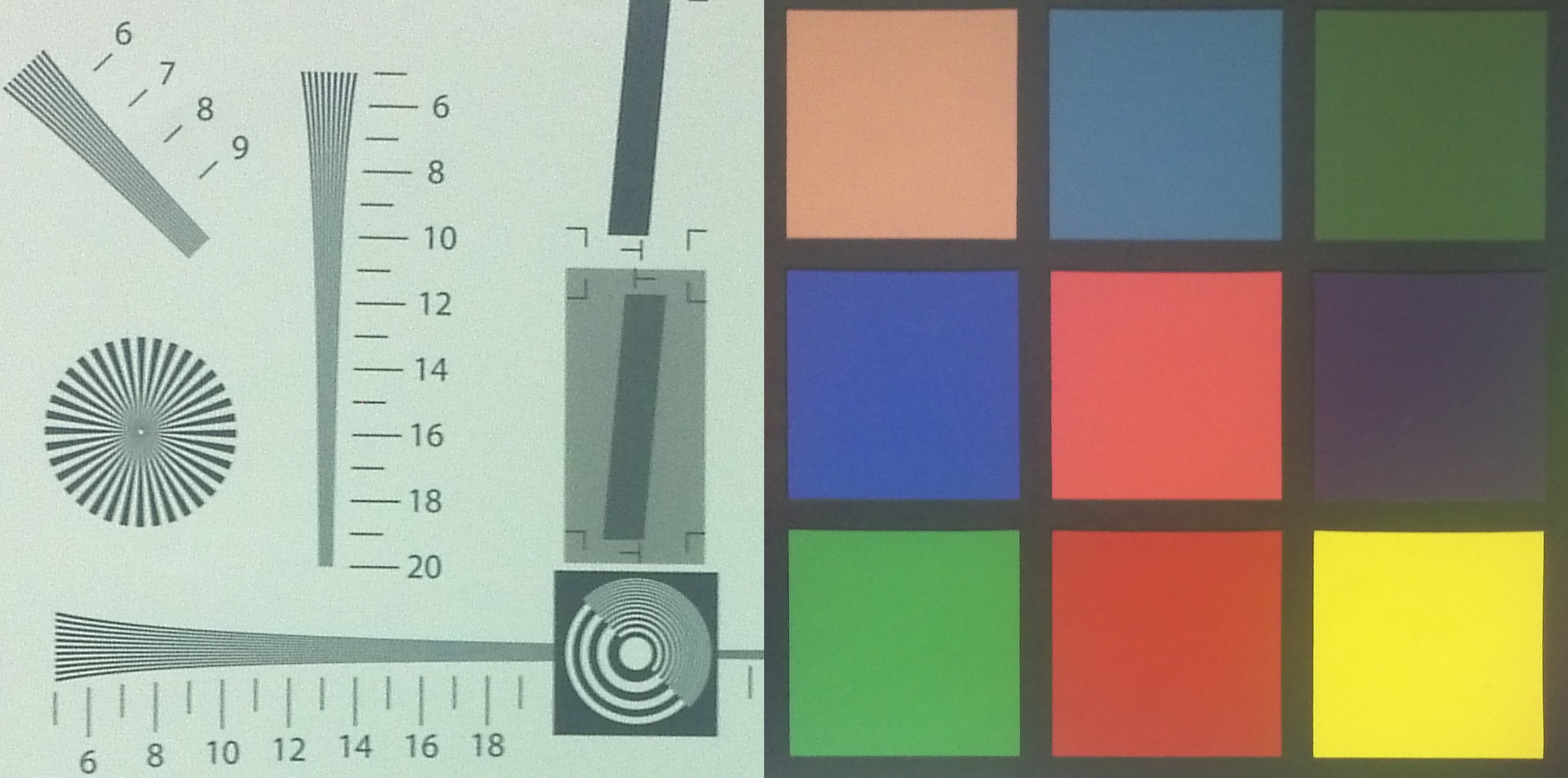
Photos were evidently whitewashed. The 8-megapixel camera is not too impressive, even losing out to 5-megapixel phones of late. Photos were reasonably sharp but the whitewashed nature isn't helping it.

The camera did not manage to capture fine details, and we spotted aggressive compression artifacts along the edges of objects.
On the resolution chart, both the horizontal and vertical LPH showed readings of 1300 and 1000, results which are pretty high for a mobile phone. However, colors were somewhat washed-out but otherwise, relatively accurate. In our test shot, we noticed aggressive compression artifacts along the edges of the objects pictured, which could be a result of the built-in noise reduction software. Nonetheless, the overall photographic performance is rather lackluster, with even the triumphing in terms of performance.
As usual, we compare the Optimus 2X's battery performance with a selected group of devices chosen based on their similarities across battery capacities, display sizes, resolution and processing power. This standard battery test consists of looping a 240 x 320 pixels resolution video clip at 100% volume and screen brightness, with Wi-Fi and Bluetooth active with push email or data being pulled at regular intervals. For the LG Optimus 2X, we compared it against similar Android devices such as the Google Nexus S, Samsung Galaxy S and the Google Nexus One.
Specifications/Device | LG Optimus 2X | Google Nexus S | Samsung Galaxy S | Google Nexus One |
Processor |
|
|
|
|
Display Size |
|
|
|
|
Display Type |
|
|
|
|
Display Resolution |
|
|
|
|
Dimensions |
|
|
|
|
Weight |
|
|
|
|
Battery |
|
|
|
|
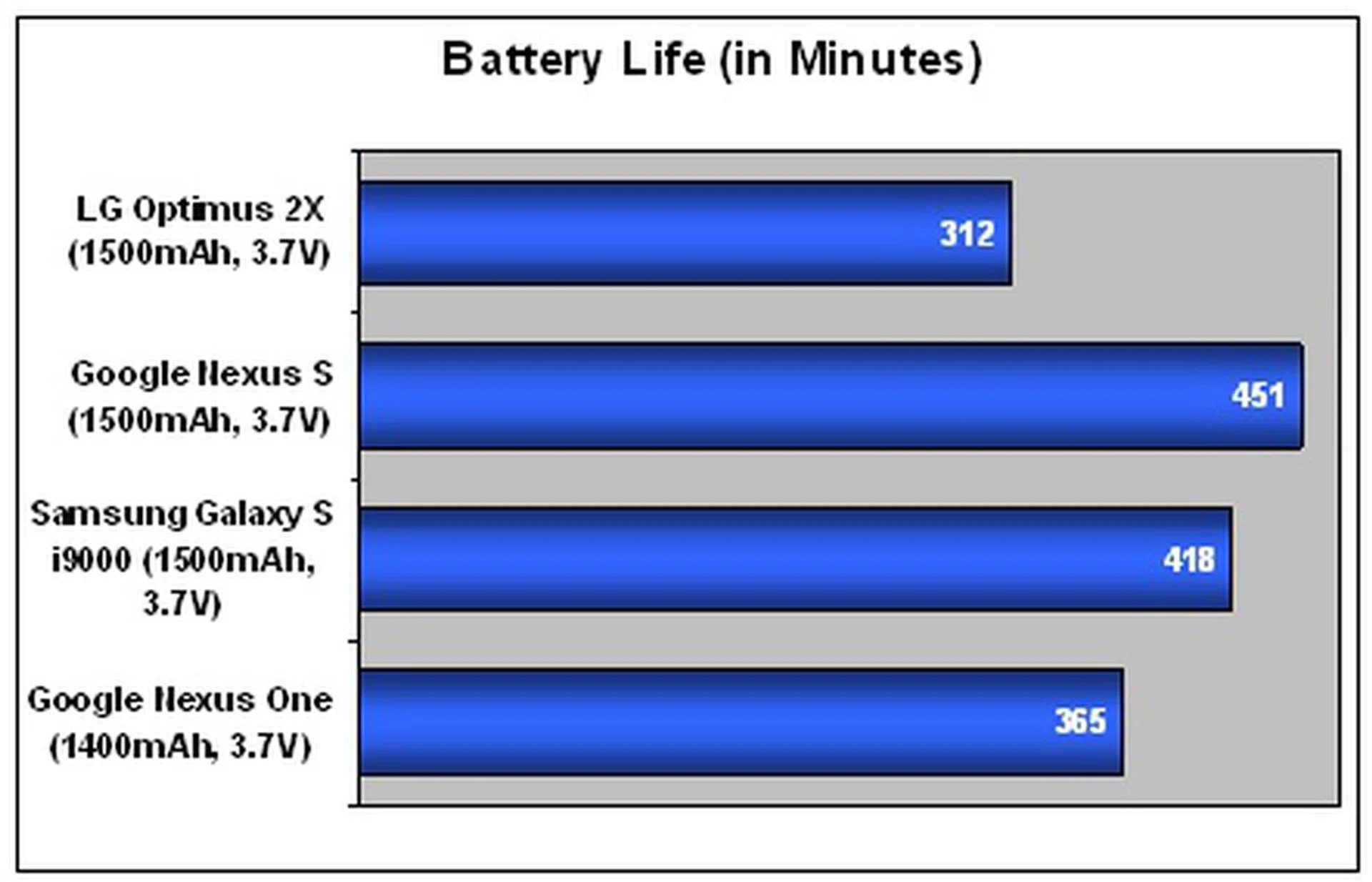
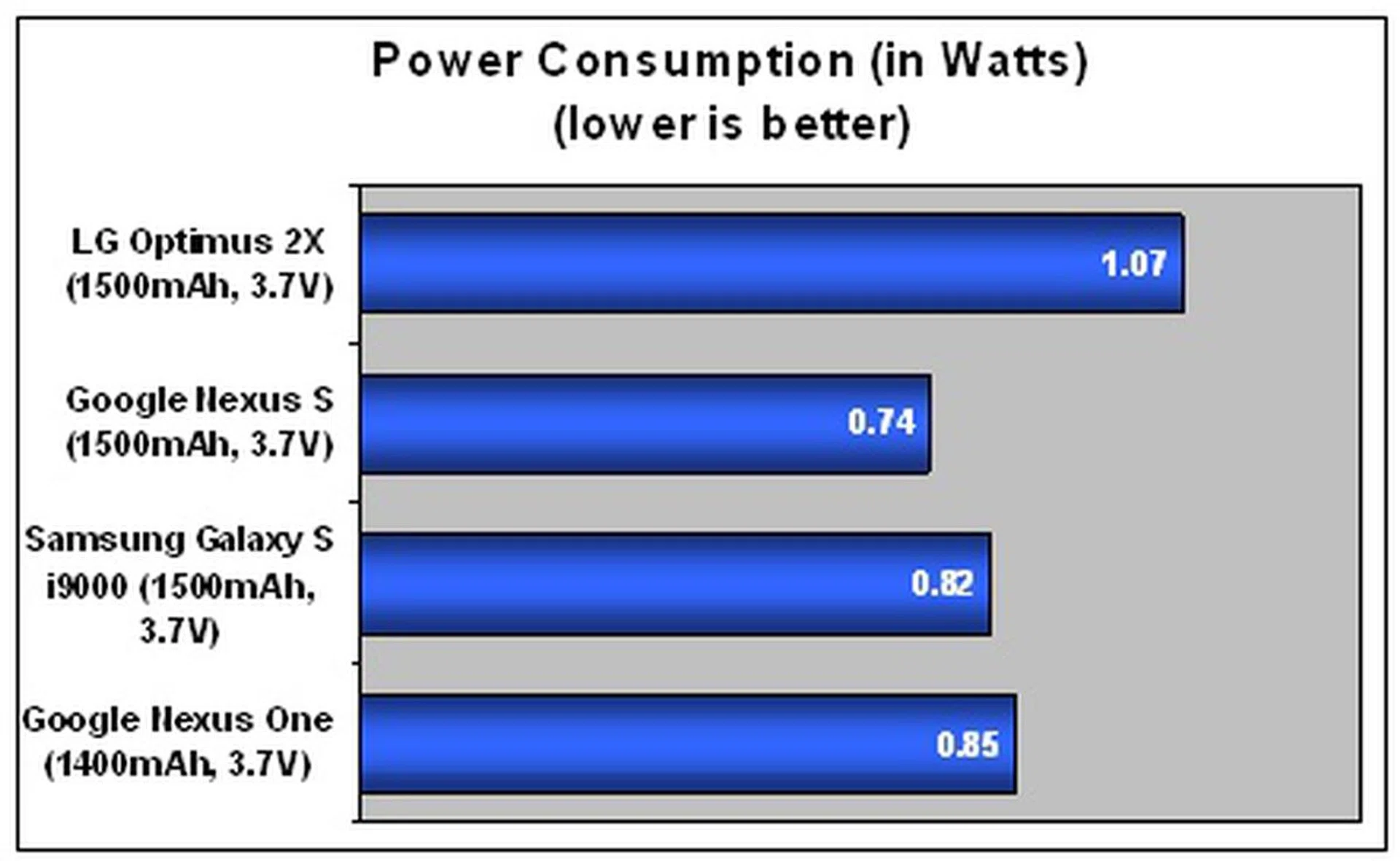
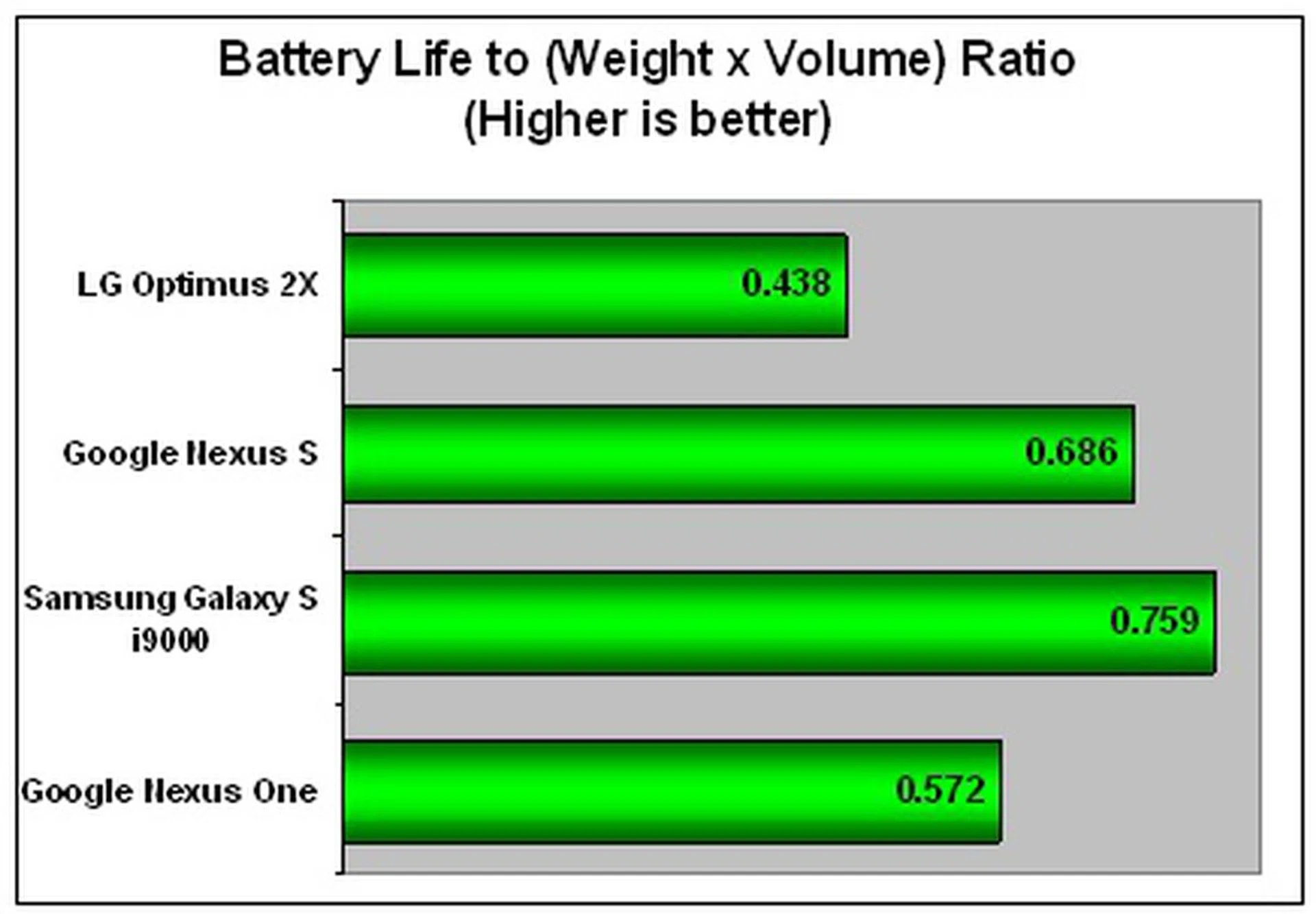
The LG Optimus 2X underperformed in this area, displaying the weakest result of the bunch, only lasting for a fair 5+ hours when we ran our tests. Judging by the power consumption benchmark results, the phone uses about 28-30% more power compared to the rest. Factors like screen sizes, UI and differing operating systems play a part in optimizing battery consumption - and so does the processor. In this case, despite having a more powerful processor, the phone's battery life in intensive usage takes a 50-100 minutes cut - chalking up to a less-than-efficient power consumption. Notably, while rationing it for normal day-to-day operations, the phone could last for at least three-quarters of a full day.
Our Verdict
We must say, the Optimus line has gotten a big boost from their newest Optimus 2X. Prior to this, LG Android smartphones have been concentrated on the mid and entry-level segment. With the 2X, it brings the possibility for LG to take a piece of the high-end smartphone pie as it ushers in the new age of multi-core smartphone devices.
For the Optimus 2X, we must say that despite its conventional build and design, the phone is well-constructed and detailed. Overall, the physical handling is a pleasant experience, with responsive physical keys and nicely spaced-out capacitive control buttons for comfortable toggling. Ports are unobtrusively placed, in accordance with its streamlined design. Nice indeed. Also very impressive is its large 4-inch LCD screen (which is fast becoming the next standard), boasting of colors that are vibrant and viewing angles that allow one to easily discern what's happening on the screen under sunlight. Audio performance is somewhat decent too with a suite of equalizer modes at your disposal. The only disappointment here is its lackluster 8-megapixel camera that is most likely bogged down by aggressive noise reduction and whitewashed colors.
The new UI spotted on the 2X is nothing out of the ordinary but it gets the job done as we had an easy time handling and navigating through various aspects of the phone. Both iPhone and Android users will find no trouble in adapting to it given their similar design aspects. LG has made a commendable effort of including some exclusive apps for their smartphones, but we say more could be done judging by how the other major players have more significant offerings - be it apps or extensive web services. The Tegra 2 processor allowed for smooth and swift interaction/gameplay, without any visible lapse in performance even with many apps loaded in the background.
Your main concern should lie with its 5 hours of battery life under non-stop intensive usage, a number that's significantly less than other competing phones like Nexus S or Samsung Galaxy S. It didn't even last a whole day for casual usage, so we're kind of disappointed that long battery life isn't one of its aces. While its true that even popular phones like the iPhone don't last long enough, the difference is that NVIDIA had been publicizing the Tegra 2's lifespan and yet we have the Optimus 2X not living up to those credentials. Definitely room for improvement on LG's part.

What's next for LG after the Optimus 2X?
Is a dual-core smartphone really that necessary? We might have appreciated it more if the phone lasted longer. But for what it's worth, the LG Optimus 2X will attract gamers who are interested in a capable device that can handle intensive graphical rendering without losing frame rates. Given that Sony is looking to bring Playstation Suite to Tegra 2 phones and smartphones (which inadvertently means that users can relive PS1 originals) on Android 2.3 and newer devices, the Optimus 2X is a timely release (the phone itself comes with the Android 2.2 OS, but a 2.3 update is well on its way). For the rest of us who don't require that extra processing power and would rather have our phones last longer, there are plenty of other options to choose from - for now.
Our articles may contain affiliate links. If you buy through these links, we may earn a small commission.