
Lenovo Vibe Shot: The smartphone that wants to be a compact camera
Part phone and part compact camera, the Lenovo Vibe Shot is a midrange Android smartphone with an interesting design. Touting a premium build and camera-centric features, can the Vibe Shot find its place among the competitive smartphone landscape? Find out more in our review!

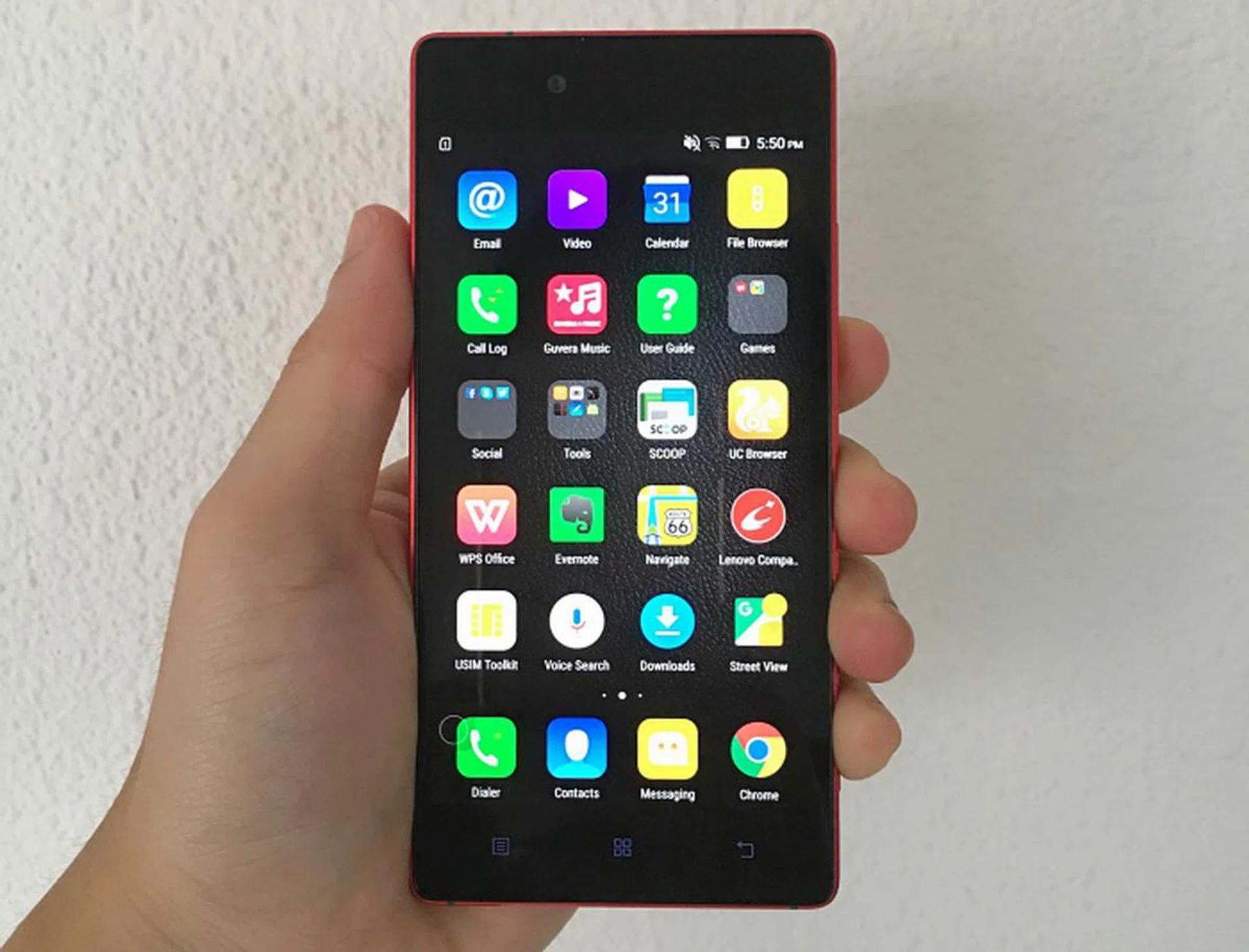
The Lenovo Vibe Shot looks like any other 5-inch Android smartphone, but when you turn to the back, it is a different beast altogether.
Overview
As one of the top five smartphone brands in the world, Lenovo is by no means a small player. Unfortunately, most of its phones were not available in Singapore until recently. One of its more recent developments, the brand secured an exclusive partnership with Lazada Singapore to bring its camera-centric smartphone, the Vibe Shot, to the local market. With Android flagship smartphones stepping up their game in the mobile photography arena, can Lenovo carve out a space for its Vibe Shot, which can easily be mistaken for an old Sony Cyber-shot DSC-TX series compact camera? That's what we intend to find out from this review. Here's a quick overview of its specs:
Design & Handling
(Note: We've done a hands-on article with the Vibe Shot, so we'll summarize the key points here instead of going into great length again.)
While some of you might find the Vibe Shot very iPhone-ish from the front face, it take on a different perspective from the rear where it looks more like a conventional Sony point-and-shoot camera design from a few years back. The in-hand feel is strikingly familiar to the Sony Xperia Z series, except that the Vibe Shot has an aluminum frame that gives it a premium feel.
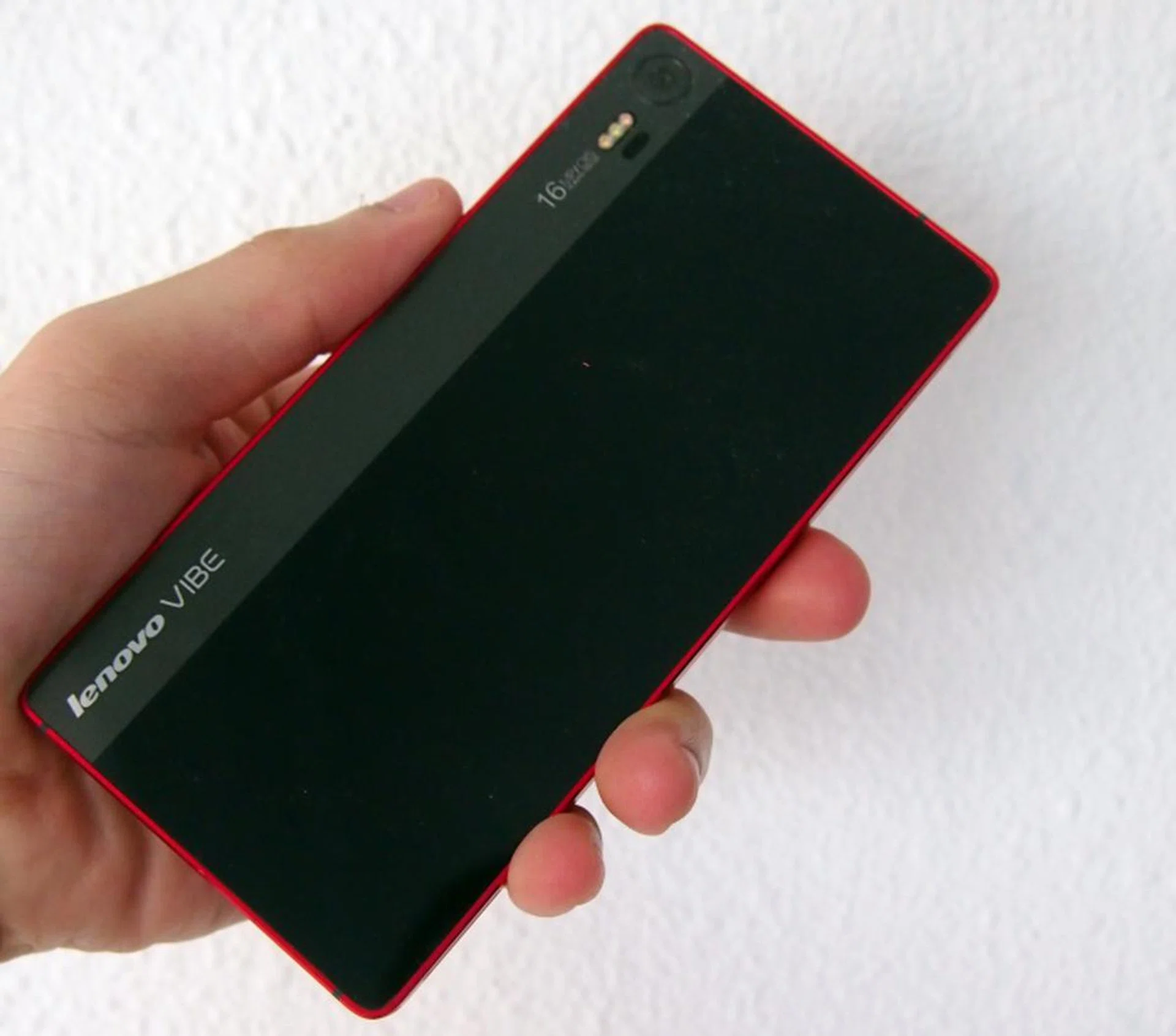
The rear of the Lenovo Vibe Shot looks very similar to that of a point-and-shoot Sony camera.
The rear of the Vibe Shot consists of a sheet of Corning Gorilla Glass 3, which means you shouldn't be overly concerned about scratches even without a case. However, based on Apple's experience with the iPhone 4/4S and Samsung's recent use of glass backs for the Galaxy S and Note series, you have to be careful not to drop it as glass shatters easily upon impact. You also have to deal with the frequent fingerprints and smudges on the glass rear.
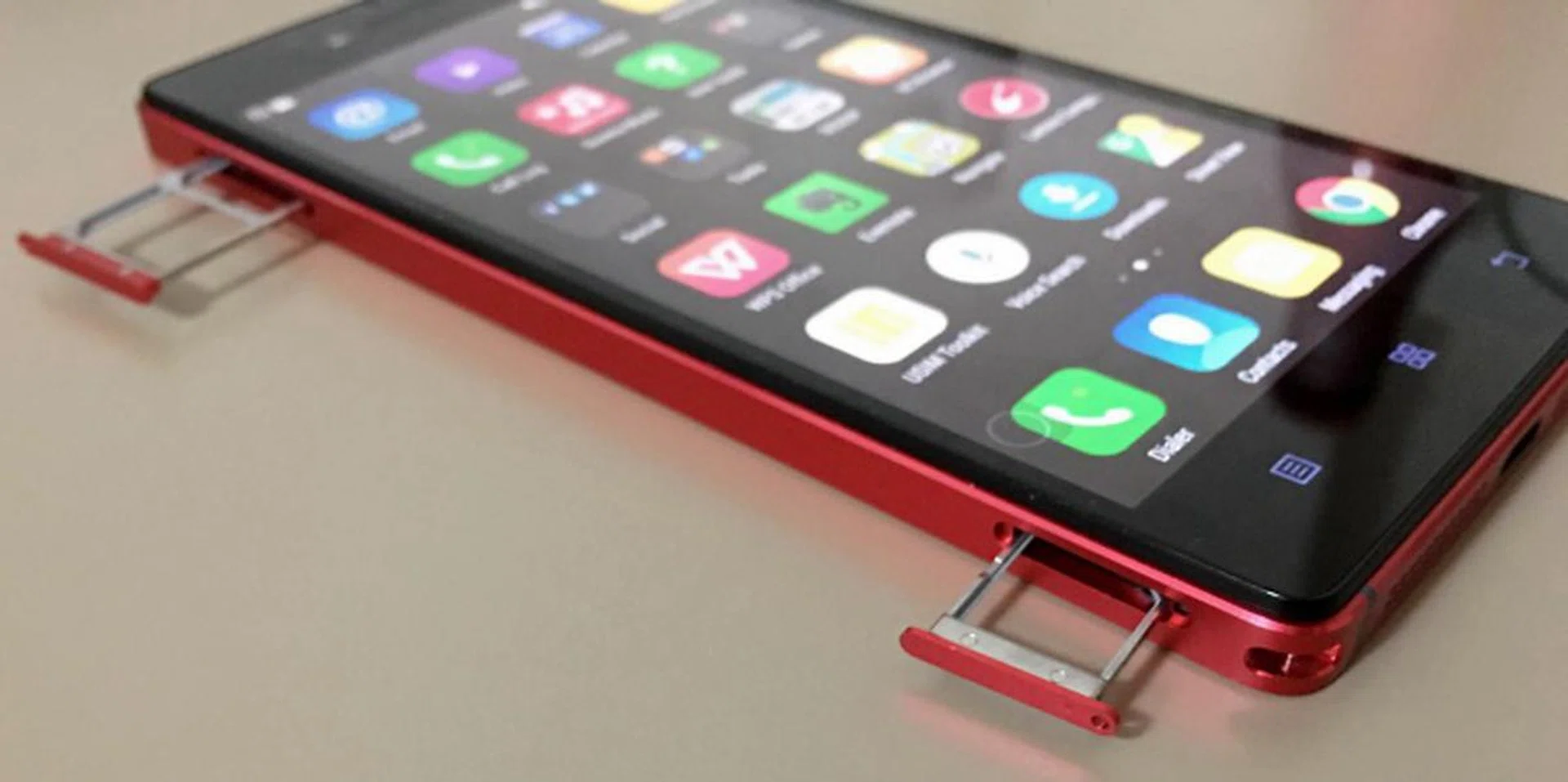
You will find the dual-SIM card slot (both micro-SIM) and the microSD memory card slot (supports cards of up to 128GB in capacity) on the left side of the Lenovo Vibe Shot.
Overall, the Vibe Shot is a well-built device although its design is uninspiring. Handling is expectedly good for a 5-inch screen smartphone. On a lighter note, Lenovo also included a lanyard loop at the bottom left, an aspect that's usually absent in most modern smartphones.
The Vibe UI with Android 5.1 Lollipop
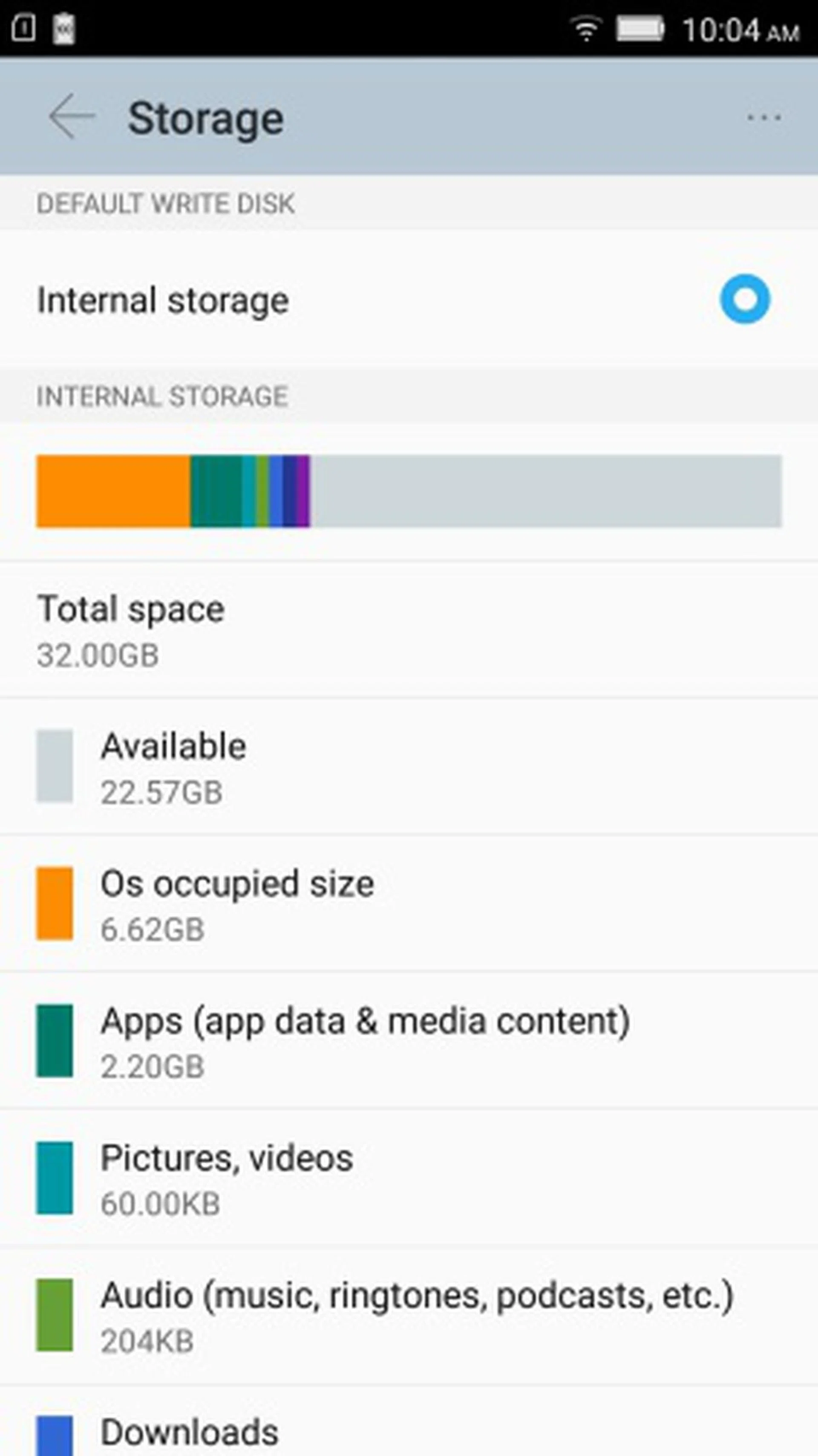
Vibe UI is considered lean compared to other Android vendors' customized UIs. It occupies 6.62GB of the internal storage.
Similar to Huawei's EMUI 3.1 and Xiaomi's MIUI interfaces, the Vibe Shot has Vibe UI that resembles Apple's iOS where the conventional app drawer seen in most Android phones is removed. What you get is several home screens displaying all the apps on the Vibe Shot.
Themes are popular among Android users and Lenovo has included a Theme Center on the Vibe Shot. The Theme Center is quite limited though; it comes preloaded with 6 themes, 15 wallpapers, 15 call alert tones, 10 alarm tones, 14 message alert tones, 6 lock screen themes, and 2 recent task list options.
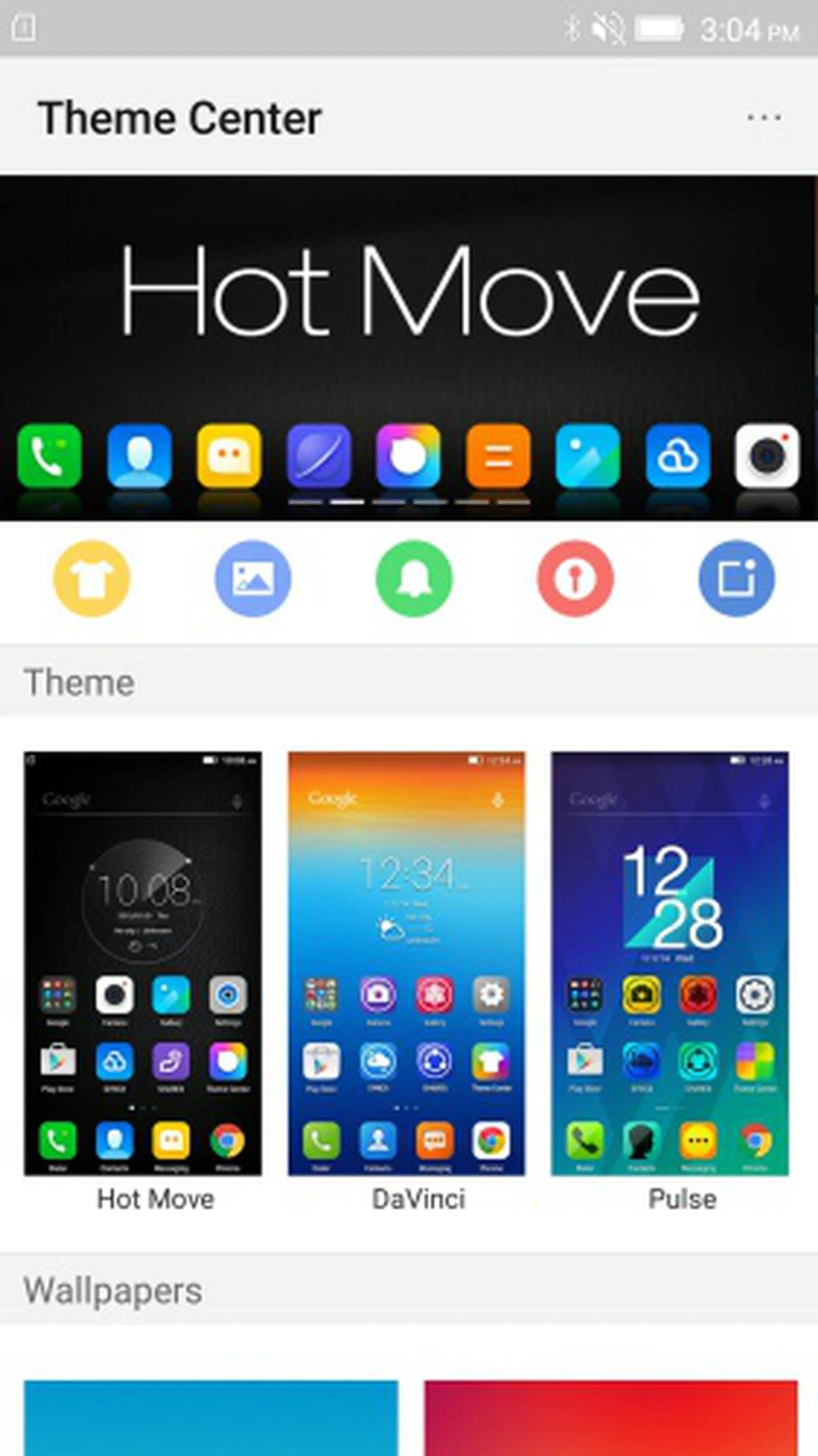
Lenovo adds a degree of customization for the Vibe Shot via its Theme Center.
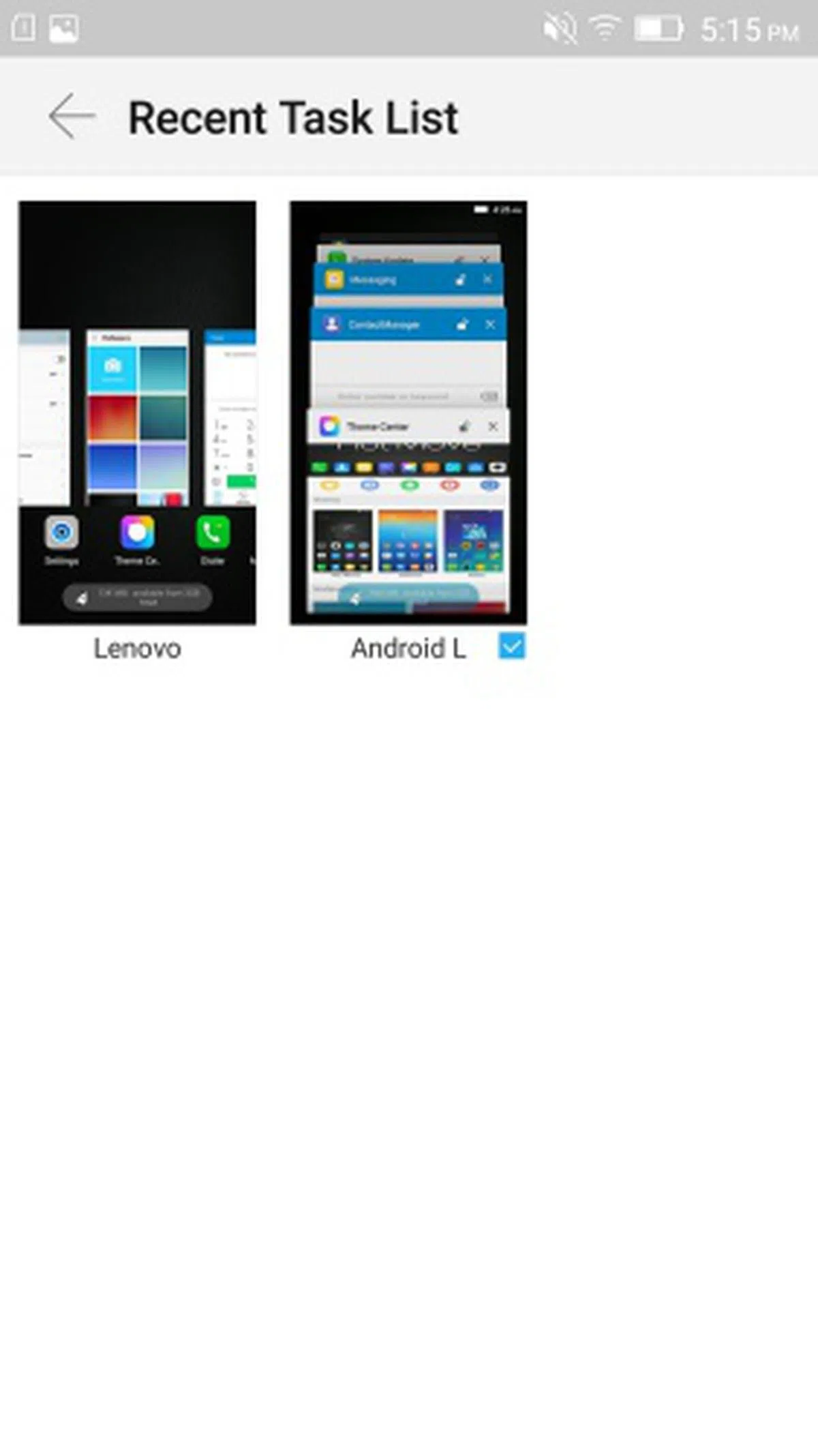
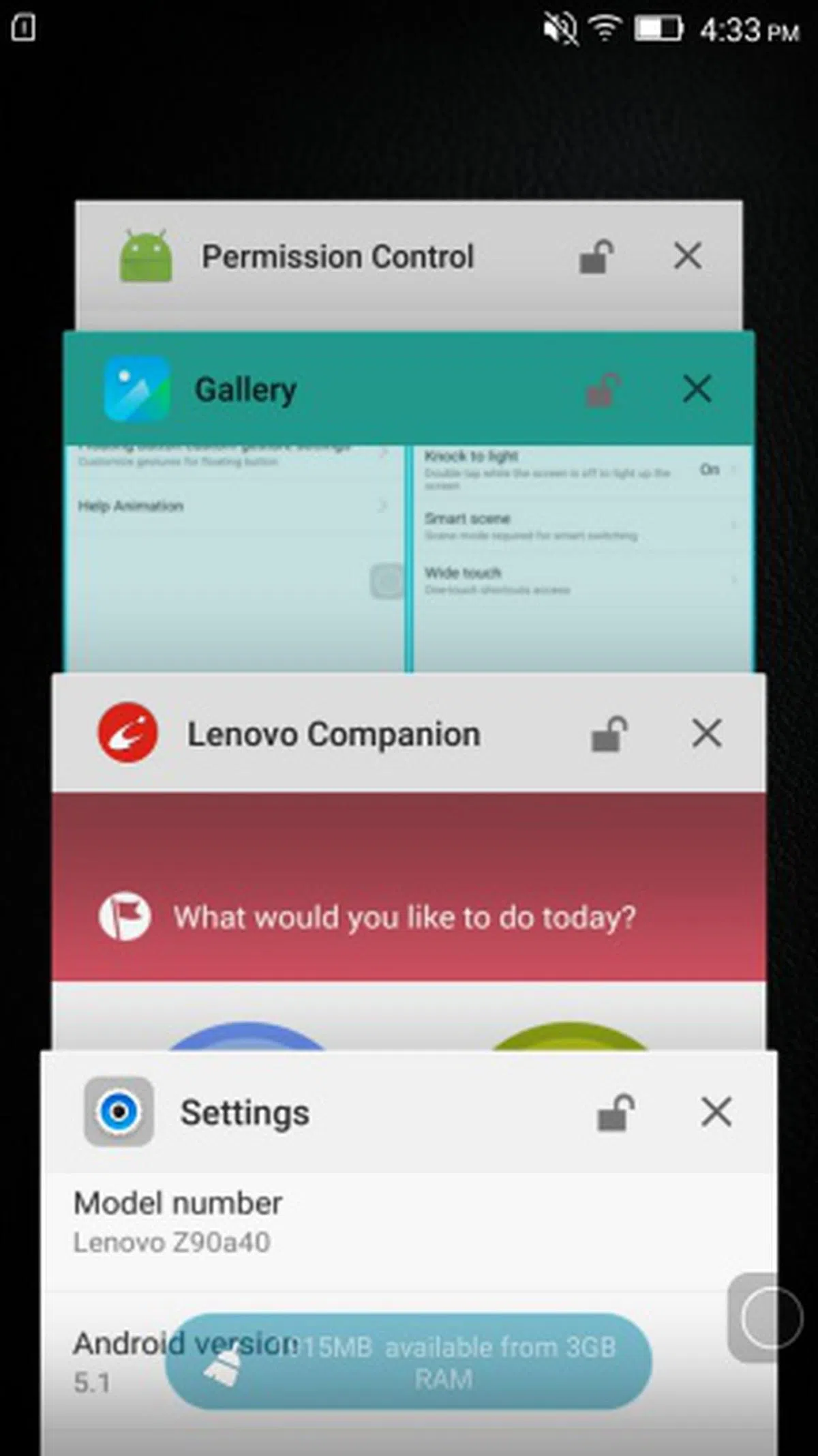
As mentioned, there are two recent task list options for you to choose on the Vibe Shot. The first one is by Lenovo, which looks like a blatant copy of Apple's previous multitasking interface. The second one mimics Android Lollipop by having a stacked card interface. Both options come with an option to clear all background apps with one touch.
 |  |
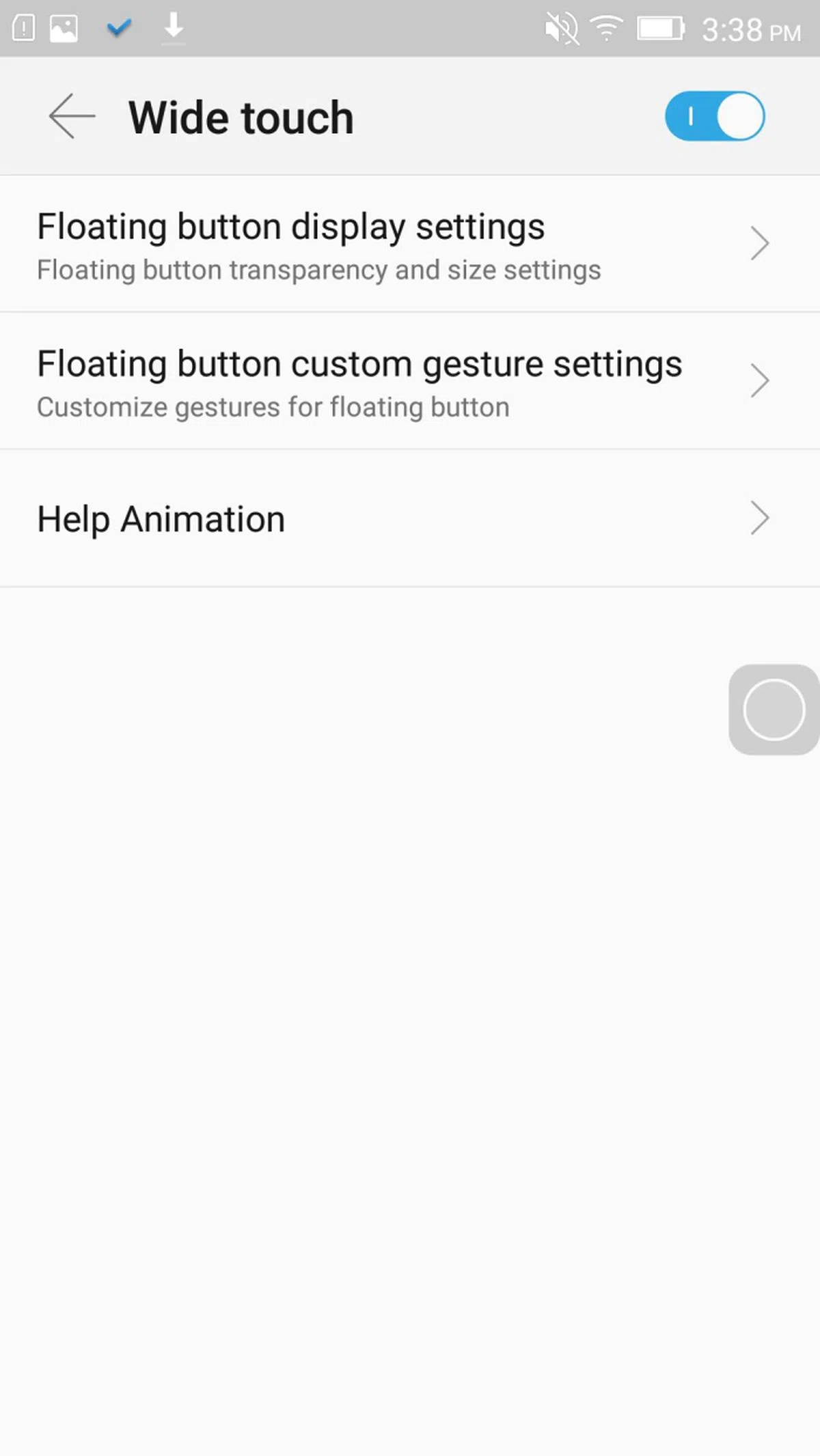
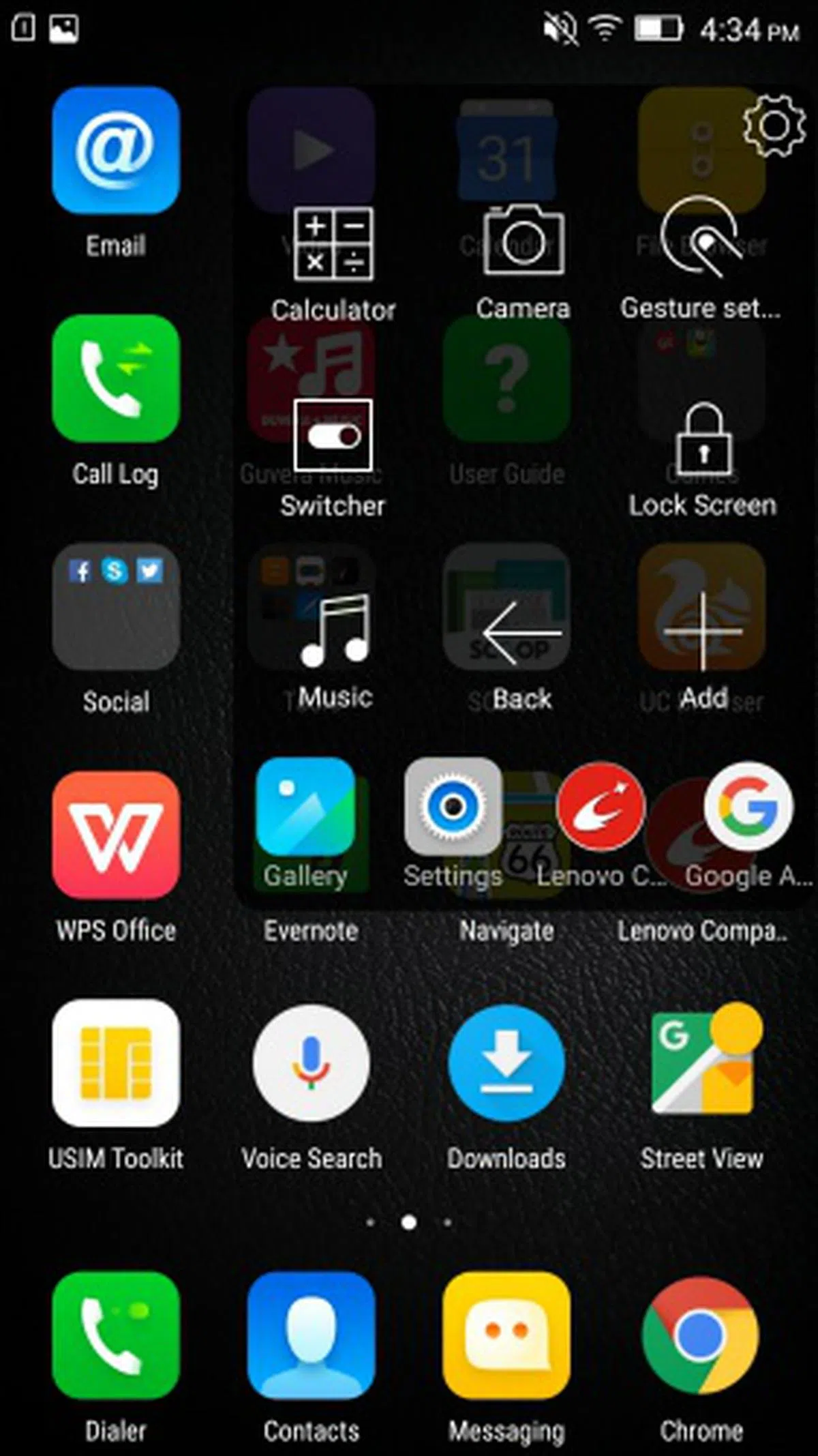
Another aspect where Lenovo took inspiration from Apple's iOS is the inclusion of wide touch. Wide Touch works like Apple's AssistiveTouch button which is essentially a floating button you can place anywhere on the screen. Enabled via Settings > Feature > Wide Touch, you can customize it to carry out predetermined actions. For example, a double tap or long press on the Wide Touch can bring you back to the home screen, menu, lock screen or simply go back to the previous menu.
 |  |
Performance benchmarks
The Vibe Shot is powered by a Qualcomm Snapdragon 615 octa-core 1.7GHz processor and 3GB RAM. For this review, we compared the benchmark performance of the Vibe Shot against other similar phones like the ASUS ZenFone 2 ZE551ML (4GB RAM), the Huawei P8 and Xiaomi Mi 4i.
Quadrant
Quadrant evaluates a device's CPU, memory, I/O, and 3D graphics performance. As the Vibe Shot and Mi 4i run on the same processor, it is no surprise that their Quadrant scores are comparable.

3DMark (2013)
Originally developed as a PC gaming benchmarking tool, 3DMark now supports multiple platforms including Android. The Ice Storm benchmark is designed for smartphones, mobile devices and ARM architecture computers.
For an in-depth understanding of 3DMark for Android, do head over to our article, "3DMark - Android Device GPU Performance Review." In a nutshell, it is an OpenGL ES 2.0 benchmark test that uses fixed off-screen rendering to run two graphics tests designed to stress the GPU performance of your device and a physics test to stress its CPU performance. The benchmark consists of three test portfolios: Standard (720p resolution rendering), Extreme (1080p resolution rendering with higher quality textures and post-processing effects), and Unlimited (disabled v-sync, display scaling and other OS factors that make it ideal for chipset comparison).
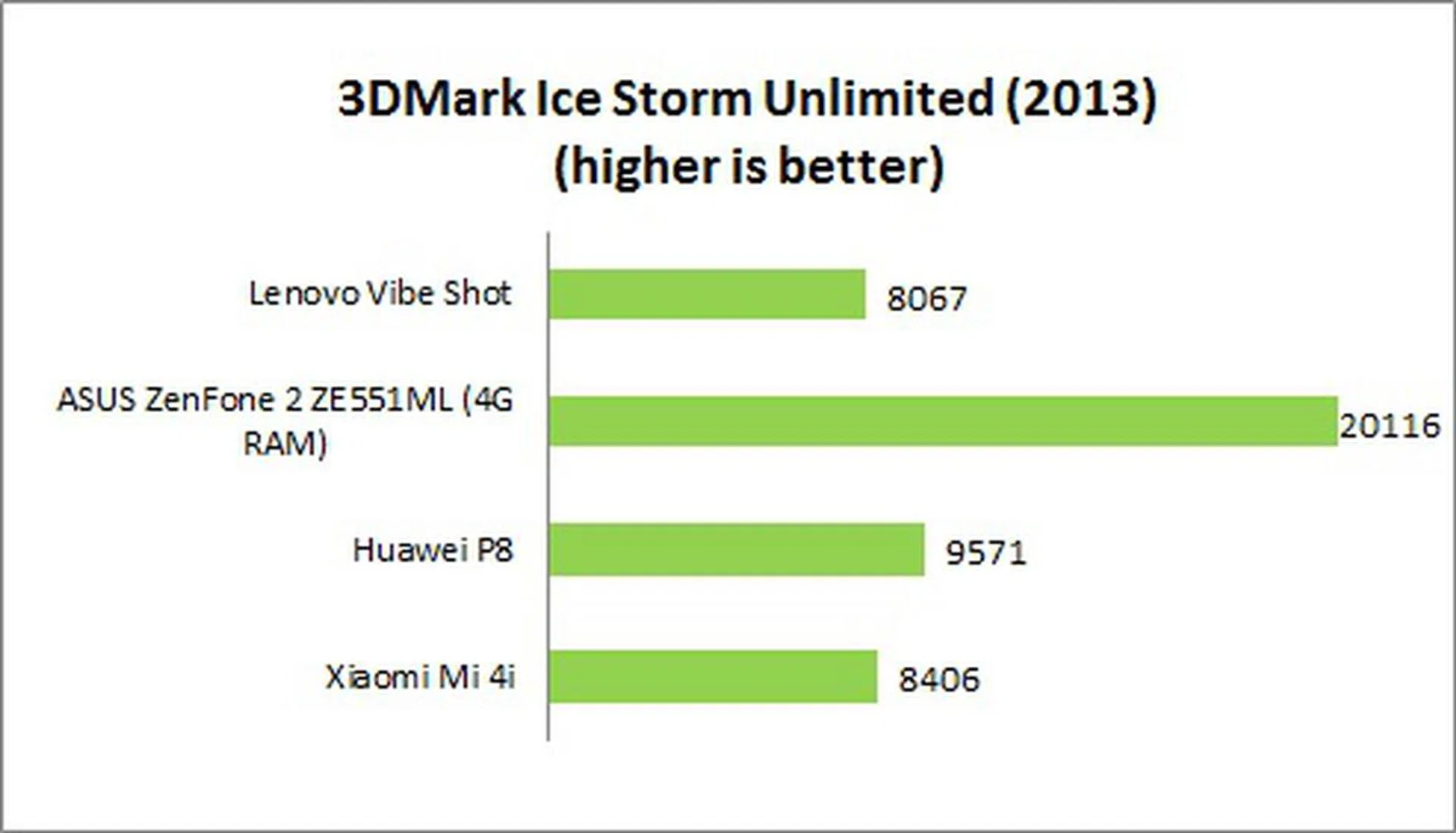
Similar to the Quadrant benchmark, the Vibe Shot ranks on a par with the Mi 4i in the Unlimited benchmark. While they may seem to be at the bottom rung, it's actually because the Intel processor on the ASUS ZenFone 2 is more adept in gaming benchmarks. We stress the word "benchmarks" because these gains are usually most notable in such tests, but they don't necessarily translate to better real-world game experience - unless the game apps run plenty of 3D graphics and require very fast response (such as simulators and FPS shooting style games).
SunSpider JavaScript
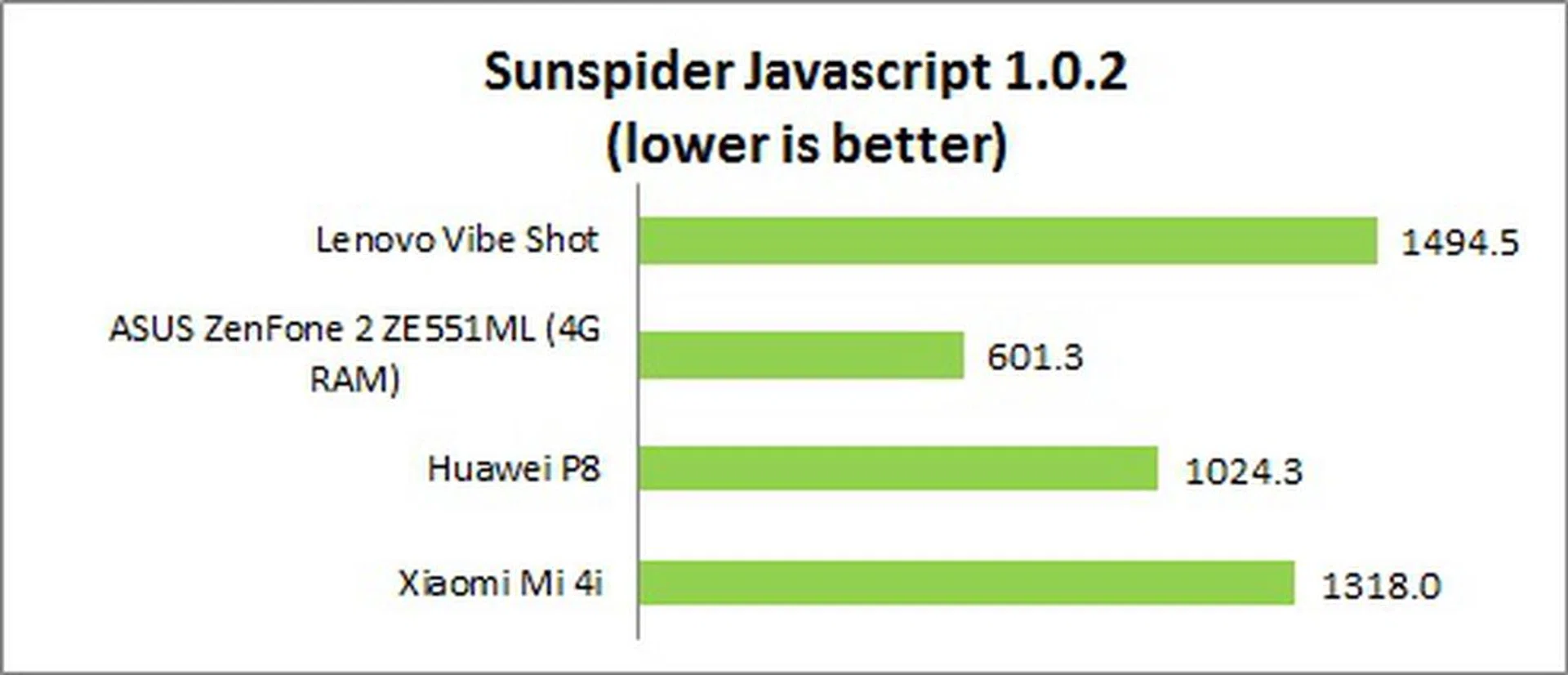
SunSpider JavaScript helps measure the browsing performance of a device when processing Javascript. It not only takes into consideration the underlying hardware performance, but also assesses how optimized a particular platform is at delivering a high-speed web browsing experience. The Vibe Shot fared the worst in the SunSpider Javascript., though it's not far off from the Mi 4i.
Benchmark results aside, under real world usage conditions, user experience was decent. Scrolling was smooth most of the time although we encountered stutters from time to time when opening apps and multitasking.
Battery performance
Our standard battery test for mobile phones includes the following parameters:
- Looping a 800 x 480-pixel video with screen brightness and volume at 100%
- Wi-Fi and Bluetooth connectivity turned on
- Constant data streaming through email and Twitter

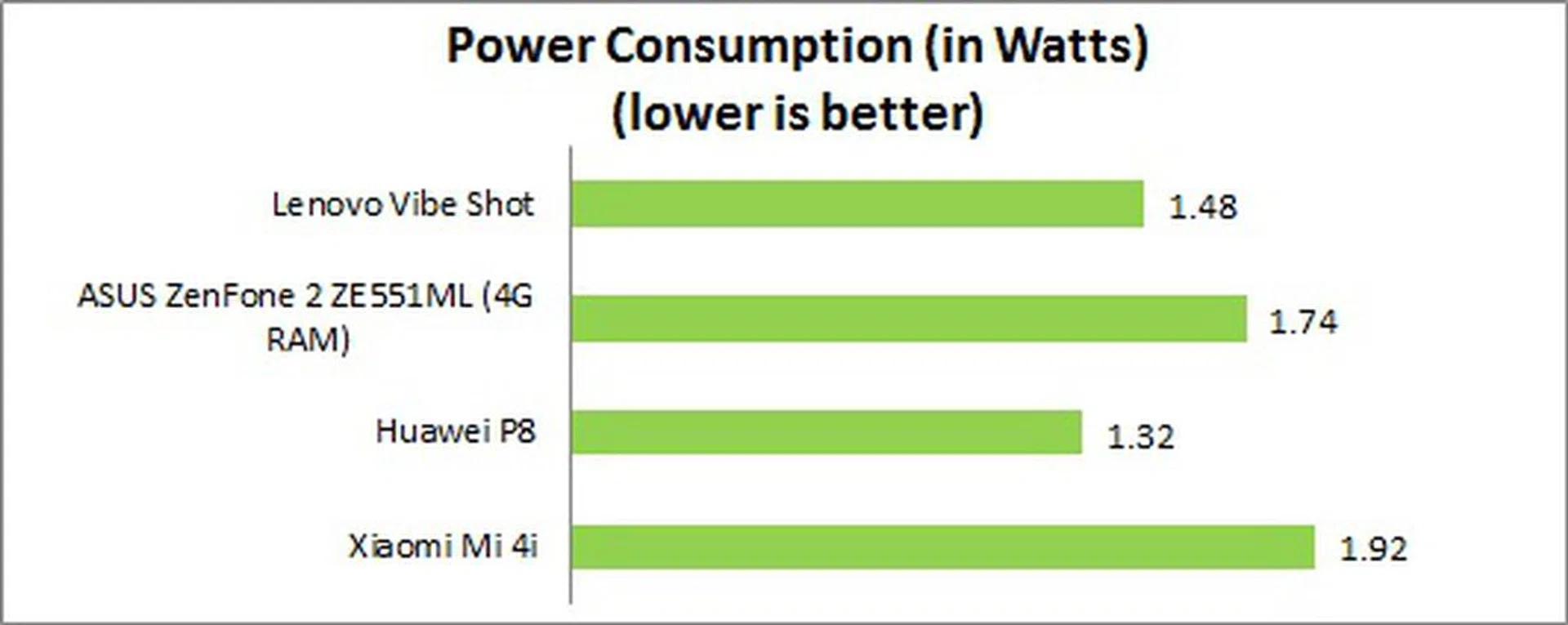
The Vibe Shot lasted the longest with nearly 8 hours of uptime. It's about an hour longer than the similarly spec'ed Mi 4i although the latter has a slightly larger battery (3,120mAh). Seems like the good power optimization is the key reason for its good battery up-time performance.
Portability
We measure the portability of a device by calculating its battery life to (weight x volume) ratio. Thanks to its superior battery life and small footprint, the Vibe Shot ranked second in the Portability Index behind the Huawei P8 which is lighter and thinner.
Camera performance
The Vibe Shot is equipped with a 16-megapixel f/2.2 rear camera with a 16:9 BSI sensor and optical image stabilization. Its software is also impressive on paper; it has two modes which you can switch easily via a physical button on the bottom right of the device. If you are looking for more control over photography, slide the button towards "Pro mode" where you get exposure compensation, ISO, shutter speed, focus, and white balance controls.
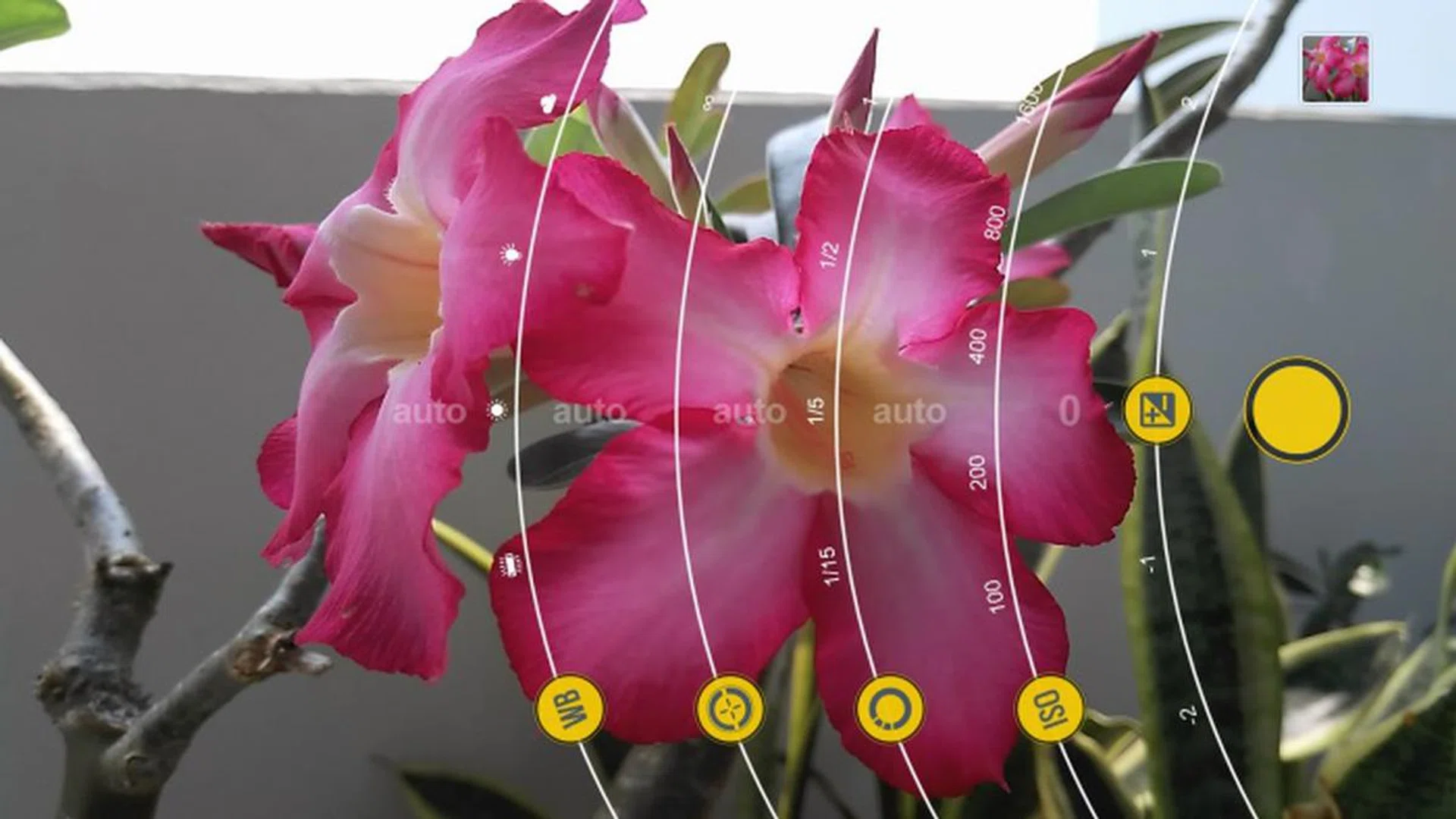
Here's how the Pro mode looks on the Lenovo Vibe Shot. To access the different manual options, simply swipe left from the on-screen button.
Here are two photos we took in normal and low light conditions:

Photo taken using Auto Mode. <br> The image quality is quite good; you can see the fine details on the flower petals when you zoom in. Color reproduction is accurate too. <br> Click to enlarge the image.

Photo taken using Auto Mode. <br> Low light is where the camera falters. Upon zooming in, image artifacts and noise are apparent. Details also get murky. <br> Click to enlarge the image.

This photo is taken by the Samsung Galaxy S6 edge in Auto mode. You can see that the photo is brighter (the hotel windows) and upon zooming in, artifacts and noise are kept to a minimum. Do note that the rear camera of the Galaxy S6 edge has an aperture of f/1.9, which explains the better low light photo. <br> Click to enlarge the image.
For those interested to know more, we've also provided further input on its camera user interface and performance in our previous hands-on article.
Conclusion
The Vibe Shot wants to be the ultimate camera phone, and it kind of looks the part. Ironically, it is let down by poor low light performance and subpar camera software. It's also rather expensive for what it offers at a suggested retail price of S$479 (though the price seems higher on Lazada at the time of publishing). Discounting its camera, the Vibe Shot matches up with other mid-range phones, with similar battery life, design, handling and overall user experience. These phones generally cost around S$300-400 and provide similar capabilities and experience. So the premium on the Lenovo the Vibe Shot doesn't seem to pay off.
Ultimately, the Vibe Shot is likely to be overlooked by consumers as there is limited marketing for it. Lenovo also does not enjoy the social media reach of its Chinese counterparts, Xiaomi and Huawei. In addition, it does not have a track record of post-sales support as it is a relatively new player in the mobile tech scene locally.
All things said and done, you might be better off selecting one of these sub S$350 smartphones.
Our articles may contain affiliate links. If you buy through these links, we may earn a small commission.