
MWC 2011 - Making Sense of HTC's New Android Tablet and Smartphones
At MWC 2011, HTC once again threw a whole slew of updates to its portfolio. This time, we see new Android 2.3 devices, smartphones with a one-key access to Facebook and more importantly, the company's first tablet running with an updated HTC Sense.
HTC at MWC 2011
The "Quietly Brilliant" motto has been one of the key focus for HTC during its press conferences. But this year's MWC was anything but quiet when the Taiwanese company revealed a slew of Android devices that will hit the market very soon. Five of which, are newly updated Android devices, two of which have been that will get a dedicated Facebook button while the remaining three sees some updates in the hardware and software aspect. Most importantly, 2011 is the year when HTC introduces its very own Android tablet, the HTC Flyer.

A total of six Android devices were announced by HTC, namely the HTC Incredible S, Desire S, Wildfire S, Facebook-centric phones such as the HTC Salsa and Chacha, and finally the first HTC tablet, the HTC Flyer.
During the earlier press conference, Peter Chou, CEO of HTC, shared how the company saw a 50% growth in brand awareness over the last year, with a total of 25 million units sold in that same year. In a mere few years, HTC definitely saw its name splashed all over the world, a name that was once recognized as one of the largest OEM of smartphones. However, times have changed, when it's no longer just the hardware, but the whole ecosystem that will drive the growth of the company. This year, HTC also made some significant announcements with regards to partnerships. Content will be its key focus, as apparent through its collaboration with Saffron Digital and OnLive. The former dabbles in online movie distribution, which will be part of the HTC Watch service that'll be available on the Flyer. The latter is an online gaming service that streams games such as Batman: Arkham Asylum with the tablet's broadband connection.

With its investment in both Saffron Digital and OnLive, HTC is making its first, major step to providing more content to support its ecosystem.
Eyes-on with HTC Flyer
There were a limited number of units on display at the HTC press conference, and unfortunately, the media were only allowed to attend a show-and-tell policy from the presenters, leaving us with no opportunity to have a hands-on experience with the HTC tablet. Nonetheless, we managed to gleam some info from the demonstration, such as how the new HTC Sense will be running on the Flyer. Adopting a carousel interface with widgets as its focus, the new Sense departs from HTC's usual page and apps approach. In our opinion, this makes much more sense for the tablet device, given the 7-inch real estate space that will be fully utilized by the widget, not to mention an easier time when it comes to accessing content through the widgets. Here's a video demo followed by a few still shots of the upcoming product:-


An updated HTC Sense with a carousel interface populated by widgets can be seen on the HTC Flyer.

A 7-inch display with a screen resolution of 1280 x 600 pixels will be the interaction point between the Flyer and the Scribe pen.
Further to that, the Flyer will also be armed with a stylus capable of capacitive input, and with it, a new input method known as HTC Scribe and an enhanced note-taking feature called HTC Timemark that captures audio to work in tandem with your note taking. Scribe shows its usefulness beyond note taking, through the act of sharing content that are added with specific notes on web pages, images or even documents.

The HTC Scribe pen is used in various formats, one of which is drawing and taking notes on the tablet.
For its hardware, the Flyer chose to retain a single-core 1.5GHz processor, unlike most other tablets of 2011 that have gone the dual-core route. It's powered by a 4000mAh battery for its 7-inch screen at 1024 x 600 resolution. Its memory is well-catered for, with 1GB of RAM to handle multi-tasking on the Google Android platform, and sufficient storage with 32GB internal and the option to expand via microSD. On the point of Google Android, it was reported as Google Android 2.4 as a minor update to the Gingerbread version, much like how Google positions the Android 2.1/2.2 Froyo platform. To complete its full suite of services, the Flyer is armed with a rear 5-megapixel camera, and a front 1.3-megapixel camera for video chatting purposes.

At the rear lies the 5-megapixel camera (obscured by the finger) while a 1.3-megapixel front-facing camera will be used for video calls.

The microUSB port at the bottom serves as the data port and display output for the tablet.
According to HTC, the HTC Flyer will be available in Q2 2011.
 | Key highlights of the HTCFlyer
|
Hands-on with HTC Desire S, Wildfire S and Incredible S
While it was a strictly hands-off policy with the HTC Flyer, we did get some hands-on time with the three new Android smartphones. The HTC Desire S and Wildfire S, as you can discern from its name, are updates to the earlier HTC Desire and Wildfire. The Desire S does get a few upgrades along the way, including a bumped up RAM capacity to 768MB and faster HSDPA download speeds clocking in at 14.4Mbps. While its camera sensor remains at 5-megapixel, it is now capable of 720p video recording. As expected, the Desire S moves onto the next Google iteration, that being Google Android 2.3, aka Gingerbread, and powered by the new Qualcomm Snapdragon MSM8255 1GHz processor.

From the front, the resemblance between the Desire S and Desire is uncanny, until...

...you turn to the back, and discover a unibody design that was first seen on the HTC Mozart 7.
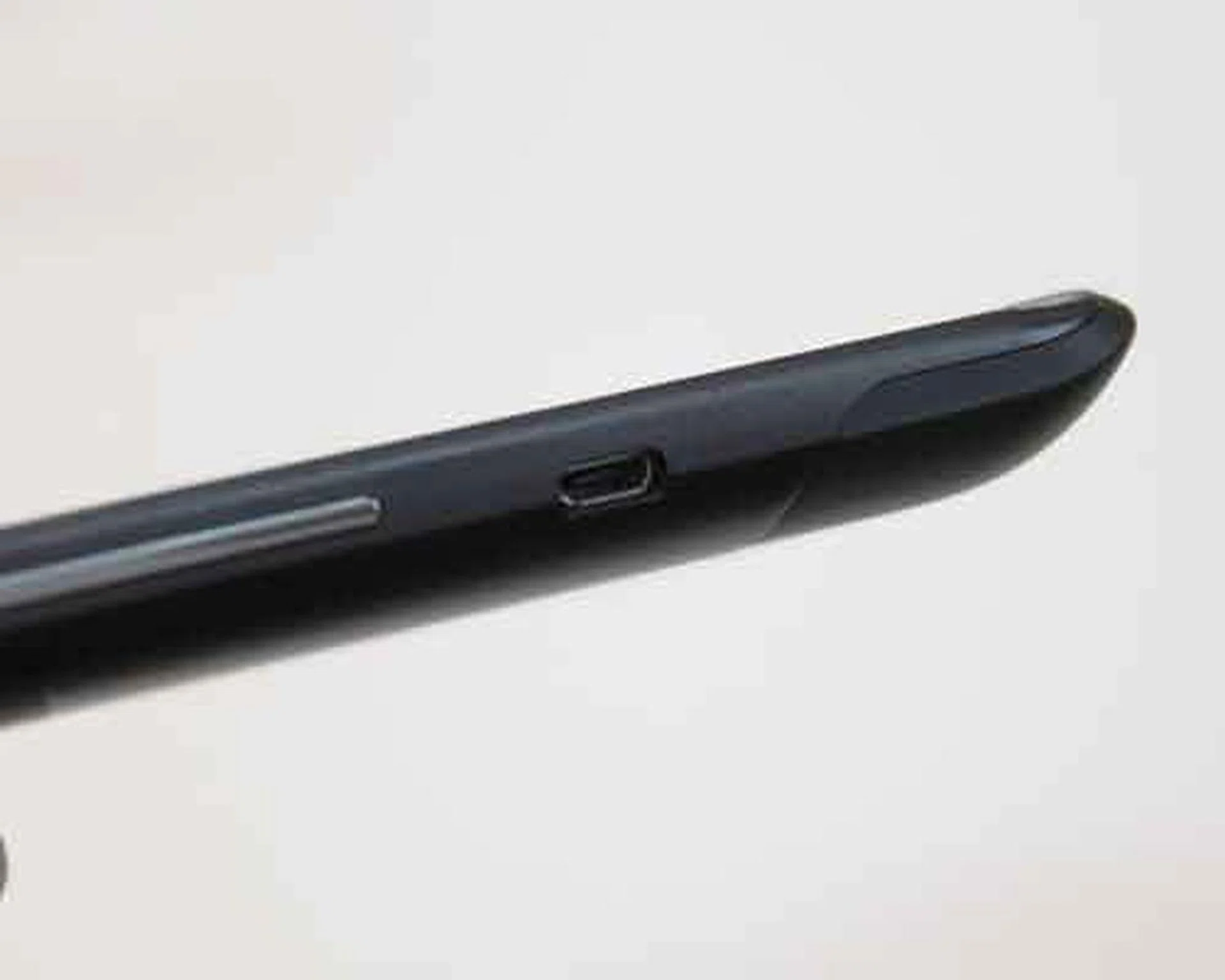
The microUSB port is now situated at the side, due to the nature of the unibody chassis.
The Wildfire S is designated by HTC as a device for the mass market, aiming to create high sales volume through its affordable, yet feature packed offerings. This is evident from its Google Android 2.3 update, to an improvement on its display with a HVGA resolution of 320 x 480 pixels, and a 5-megapixel camera

Targeted at the mass market, the HTC Wildfire S follows its predecessor's compact and lightweight design concept.

Its side profile is still relatively chunky.

A quick check within the settings shows Android 2.3, an upgrade from the original Wildfire's earlier Android version.
.
Both the HTC Desire S and Wildfire S will be slated for a Q2 2011 release, with no pricing confirmed as of now.
 | Key highlights of the HTC Desire S
|
 | Key highlights of the HTC Wildfire S
|
The HTC Incredible S is the last of the three Android devices tagged with the S. As to why it is so, your guess is as good as ours, with HTC being unable to comment on that. Nonetheless, what really matters is the features of the Incredible S. Similar to the Desire S, it will be powered by the same Qualcomm 1GHz processor, but it goes a step further with a larger 4-inch screen at a resolution of 480 x 800 pixels, powered by Super LCD. Its imaging capabilities is also given a slight advantage over the other two devices, with an 8-megapixel camera accompanied by two LED flashes. Its multimedia features are aplenty, including stereo surround sound and the ability to stream the device's content through DLNA.

The front of the Incredible S looks strikingly similar to the Desire S, except for its larger screen real estate at 4-inches.

Considering its relatively large size, the side profile is seemingly thin.

Honestly, the Incredible S has one of the odder designs we've seen for the past few years, with an uneven rear profile.
The HTC Incredible S will be targeted for a March 2011 availability.
 | Key highlights of the HTC Incredible S
|
Hands-on with HTC Chacha and Salsa
The last item on HTC's agenda for MWC 2011 is once again another partnership, this time with a social network twist to it. HTC devices have been known for its tight integration to Facebook, be it through the phone's contacts or HTC's Friend Stream that pulls news feed from various social networks. And just a while back, there were leaks that revealed HTC's intention to create a Facebook-centric Android device, with a dedicated Facebook button to access the social network. And this was confirmed, when HTC announced the HTC Salsa and Chacha, and with it, a video announcement from Facebook's very own CEO, Mark Zuckerberg.

Mark Zuckerberg makes an appearance at the press conference, albeit in a video, congratulating HTC as the first manufacturer to bring an even tighter Facebook integration to its lineup.
Running on Google Android 2.3, the HTC Salsa and Chacha are differentiated through its form factors. The former takes the full touch screen route, with a 3.4-inch display at 320 x 480 screen resolution, while the Chacha comes with a 2.6-inch touch screen at the same screen resolution, with its lower half occupied by a physical QWERTY keyboard.

The HTC Chacha (left) and Salsa (right) are the company's first devices with a dedicated Facebook button to create an easy access point for the social network.

A noticeable curve can be seen from the side, contouring the phone to your face, much like what the HTC Legend was.
Besides these two differentiating factors, these Facebook phones share quite a number of similarities. Firstly, both devices will be powered by a 600MHz processor, with a 5-megapixel camera strapped on for imaging purposes. Bluetooth technology has been updated to version 3.0 with A2DP support, and surprisingly, both the Salsa and Chacha share the same 120g weight according to the specification sheets.
The Facebook button is the core focus of these two Android devices. Its contextual-awareness will notify you of any potentially shareable content, be it music, web pages or messages, through a pulsing, breathing light. An even tighter integration into the basic functions of the device such as contact is implemented, with your friend's latest status update and photos being reported when an incoming call comes through. New Facebook-centric widgets are also added into the formula to complete the Facebook experience on the mobile platform.

The Facebook button will pulse with light if the content you're currently viewing can be shared via the network.
Both the HTC Salsa and Chacha will be available in Q2 2011.
 | Key highlights of the HTC Chacha
|
 | Key highlights of the HTC Salsa
|
Our articles may contain affiliate links. If you buy through these links, we may earn a small commission.