
BlackBerry DevCon Asia 2011 - Asia's Big Show
Developers get down and dirty with RIM at the inaugural BlackBerry DevCon Asia. Find out more about the PlayBook tablet staus, BlackBerry ecosystem, super apps and more hands-on feedback of the PlayBook tablet from our event coverage.
Highlights of BlackBerry DevCon Asia 2011
Asia's a market that's brimming with potential for a company like RIM, having already tasted great success with Indonesia where the company's BlackBerry smartphones took the country by storm, turning the BlackBerry into something more akin to social glue than mere smartphone. However, RIM also understands that the future of the smartphone doesn't just lie in bringing better, faster and more advanced models to the market year after year, but also in the software and applications that drive those devices. Over the course of two short days in mid-January on the idyllic shores of Bali, Indonesia, RIM brought together Asia's developer communities by hosting the first ever BlackBerry DevCon Asia.
What follows are some of the key highlights of the opening keynote, and on the following page, a quick pictorial hands-on of RIM's tablet contender, the BlackBerry Playbook.
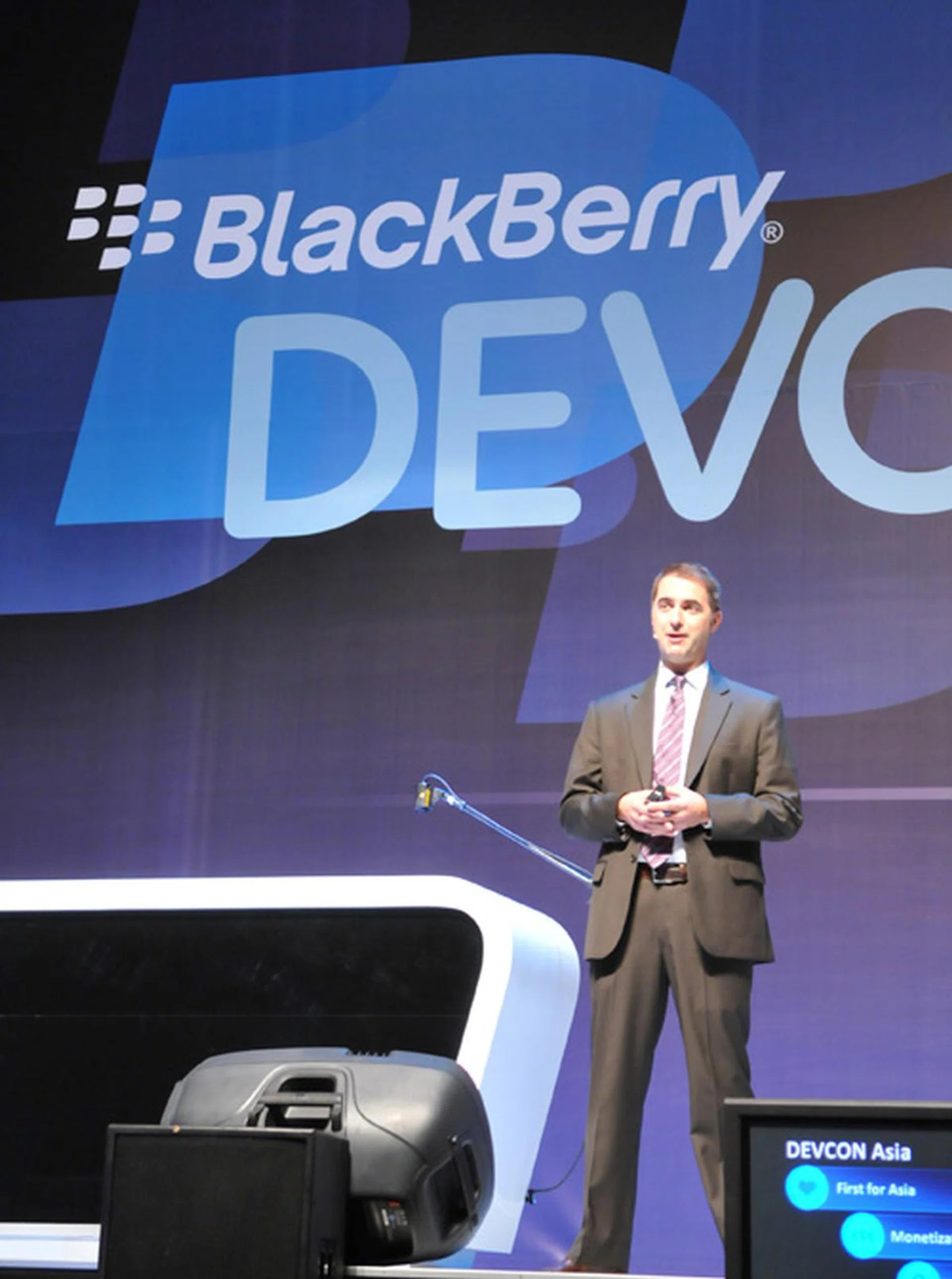
Gregory Wade, managing director for RIM Southeast Asia takes the stage for his keynote speech, occasionally whipping out the company's much-talked about PlayBook tablet to snatch a quick glance at his presentation notes.
Kicking off the 2-day event was a keynote speech by Gregory Wade, managing director for RIM Southeast Asia, who highlighted that the growth potential for smartphones in the region also means major opportunities for BlackBerry developers, hence RIM's decision to host Asia's very own BlackBerry DevCon for the very first time.
Today, there are more than 55 million global subscriber accounts for BlackBerry devices, with RIM's BlackBerry Messaging service leading the way as the world's largest mobile social network.
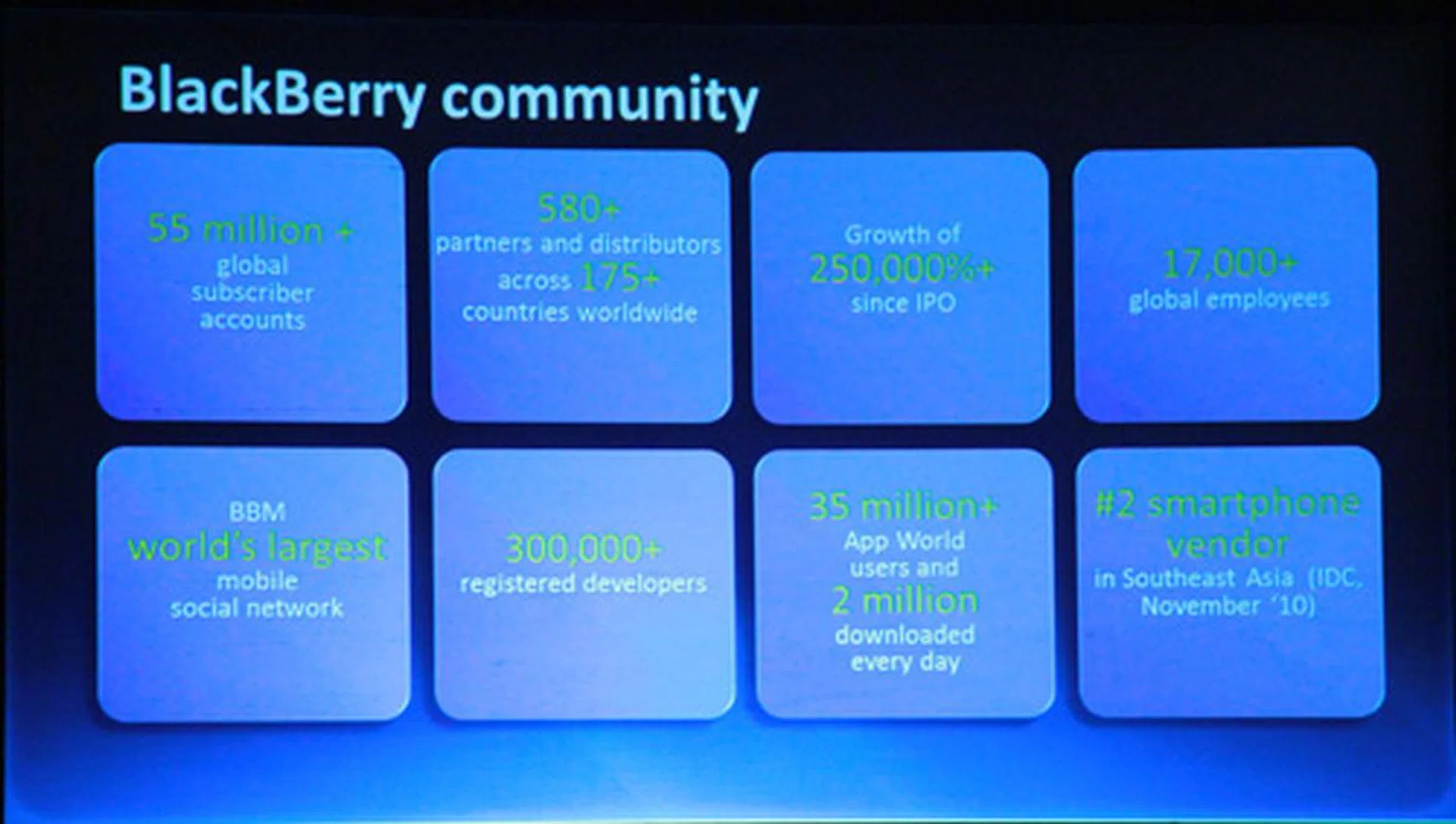
Some essential numbers on the BlackBerry community in general.
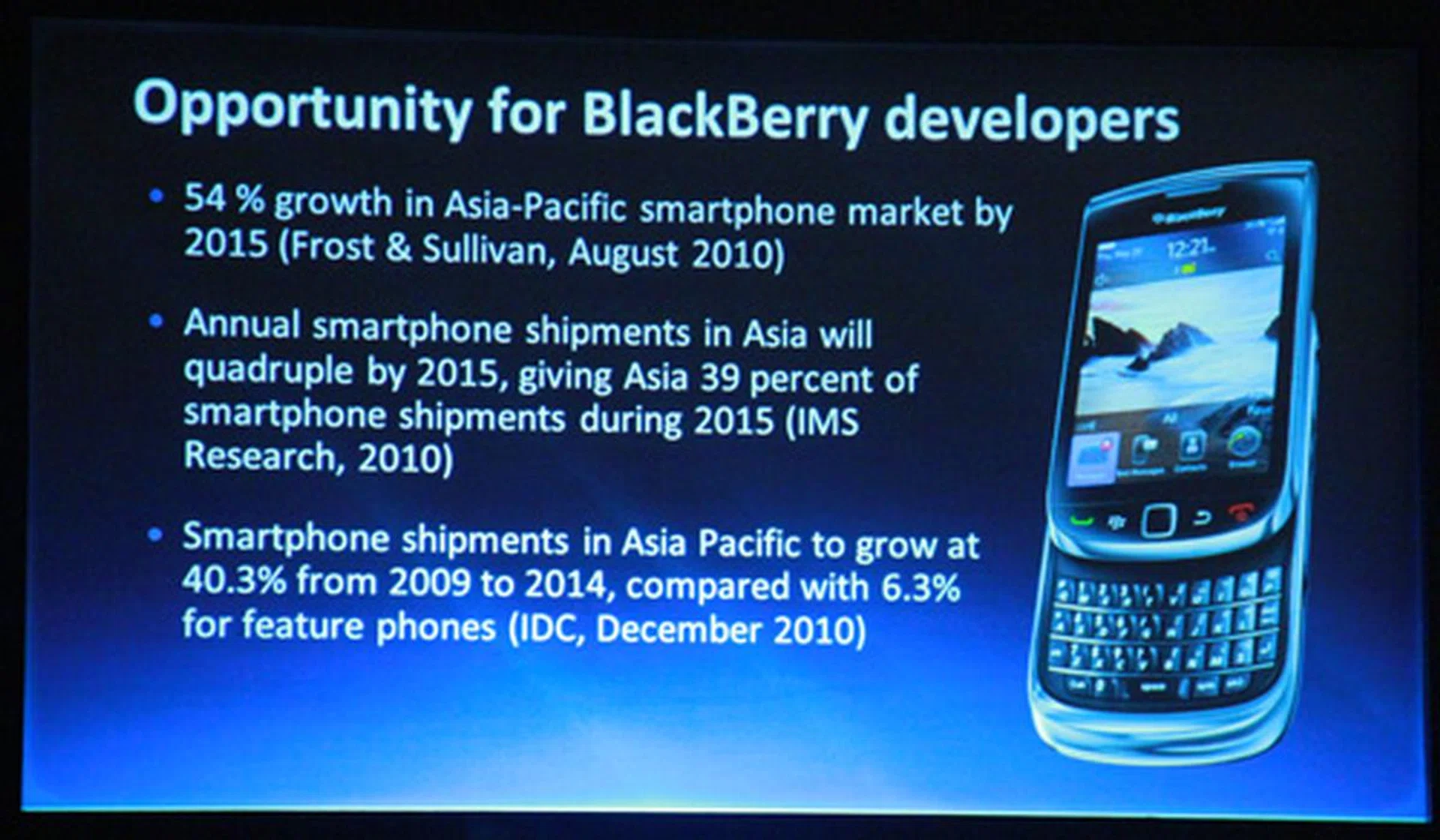
Asia is a hotbed of opportunity for BlackBerry developers, or so the numbers appear to say.
Wade also touched on the Super App, a term originally coined by RIM Co-CEO and Founder Mike Lazaridis, saying that users should expect a slew of Super Apps to lead the charge into the future of smartphones, offering seamless integration with native and third-party apps in a manner not only proactive and notification-driven, but also highly contextualized and connected.
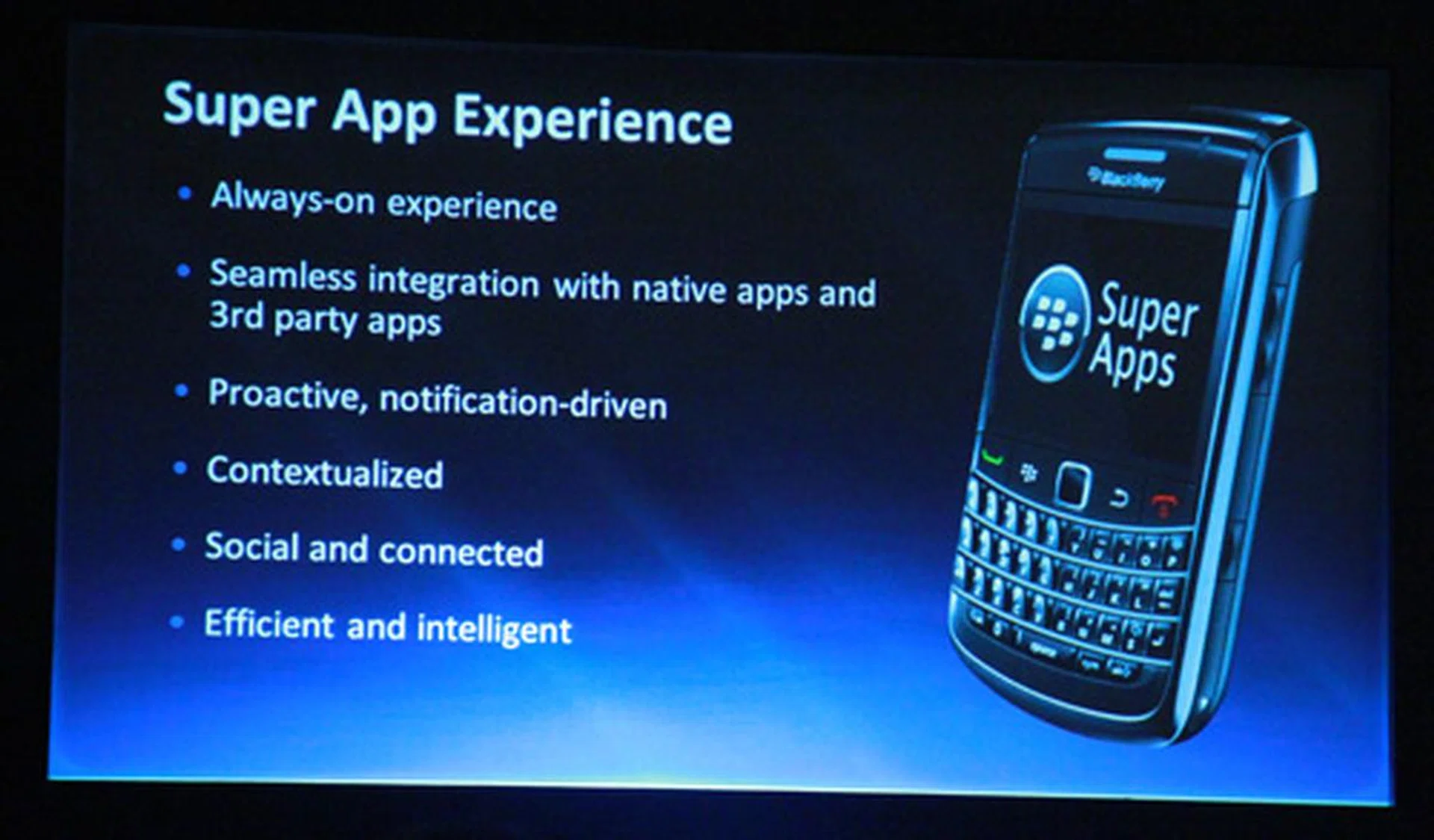
We'll be hearing a great deal more about Super Apps from RIM in the months to come.
RIM also took the opportunity to announce their WebWorks architecture, which is aimed at enabling developers to build applications for their upcoming PlayBook tablet, with a framework and APIs designed with both the web and mobile web in mind. One advantage is that apps written for BlackBerry smartphones will be able to work with the PlayBook and vice-versa, with some minor modifications needed depending on the underlying device capabilities. Furthermore, all HTML5, CSS and Javascript code should retain compatibility, making this a very attractive platform for developers with skills in web technologies.

To help developers build apps optimized for the PlayBook, RIM also announced the BlackBerry WebWorks SDK.
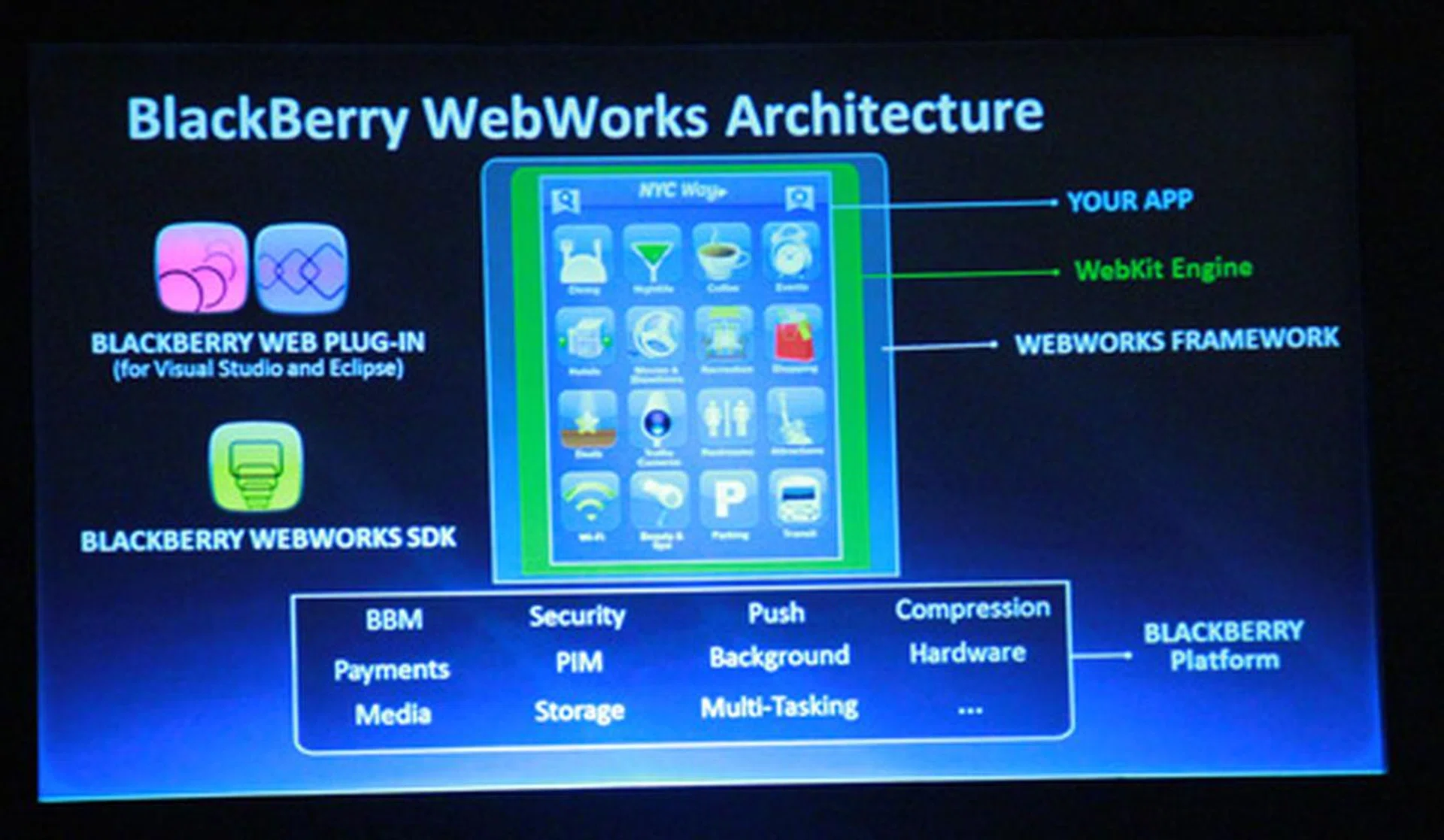
An overview of WebWorks' architecture.
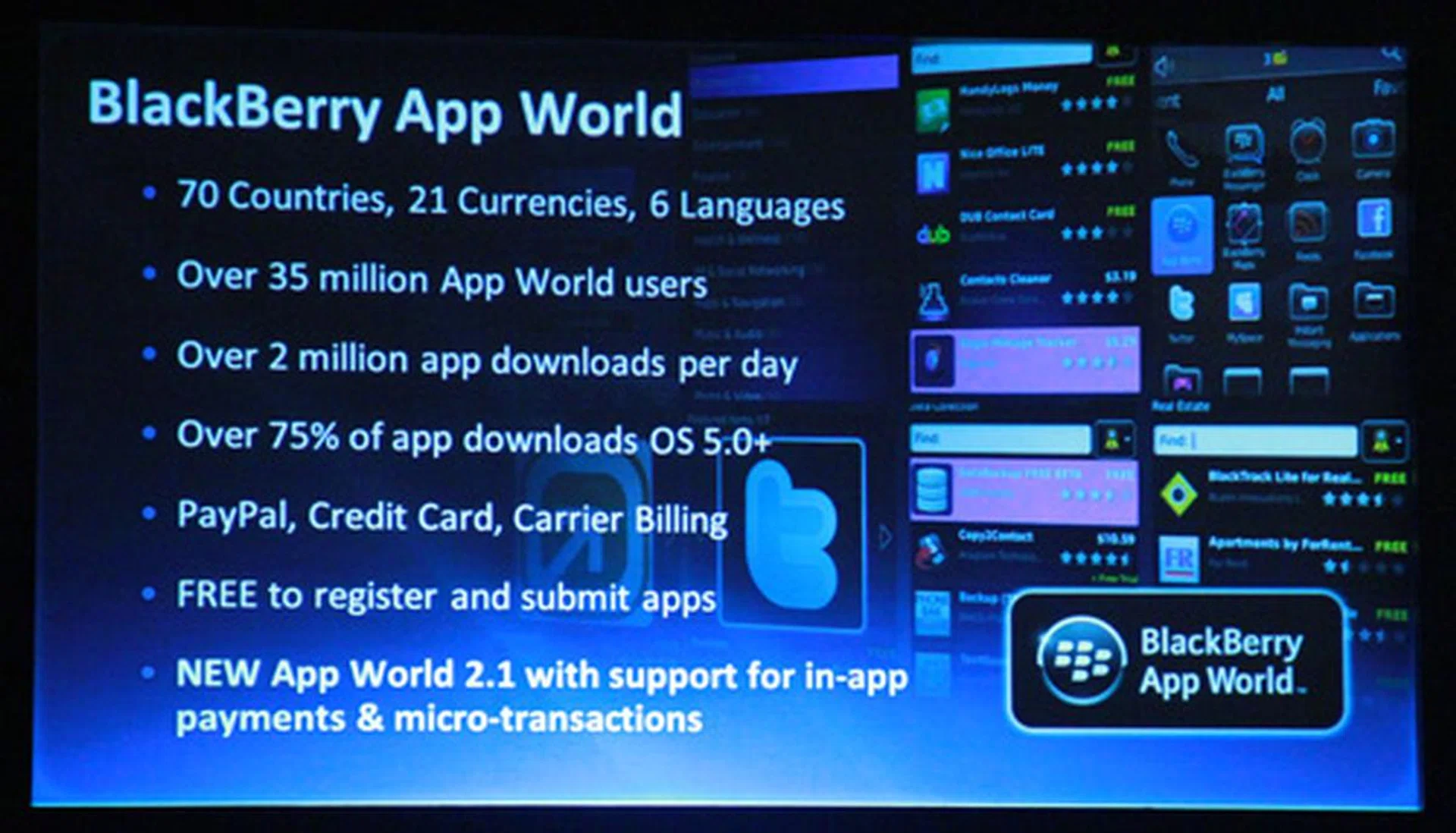
BlackBerry App World by the numbers.
RIM is also looking to take their popular BBM functionality even further, with the ultimate goal of turning BBM into a social platform. Develoeprs can build apps that provide additional functionality to BBM, for example, or simply to include BBM chat into their apps. The possibilities are endless, and limited only to the ingenuity of the developers and apps in question.
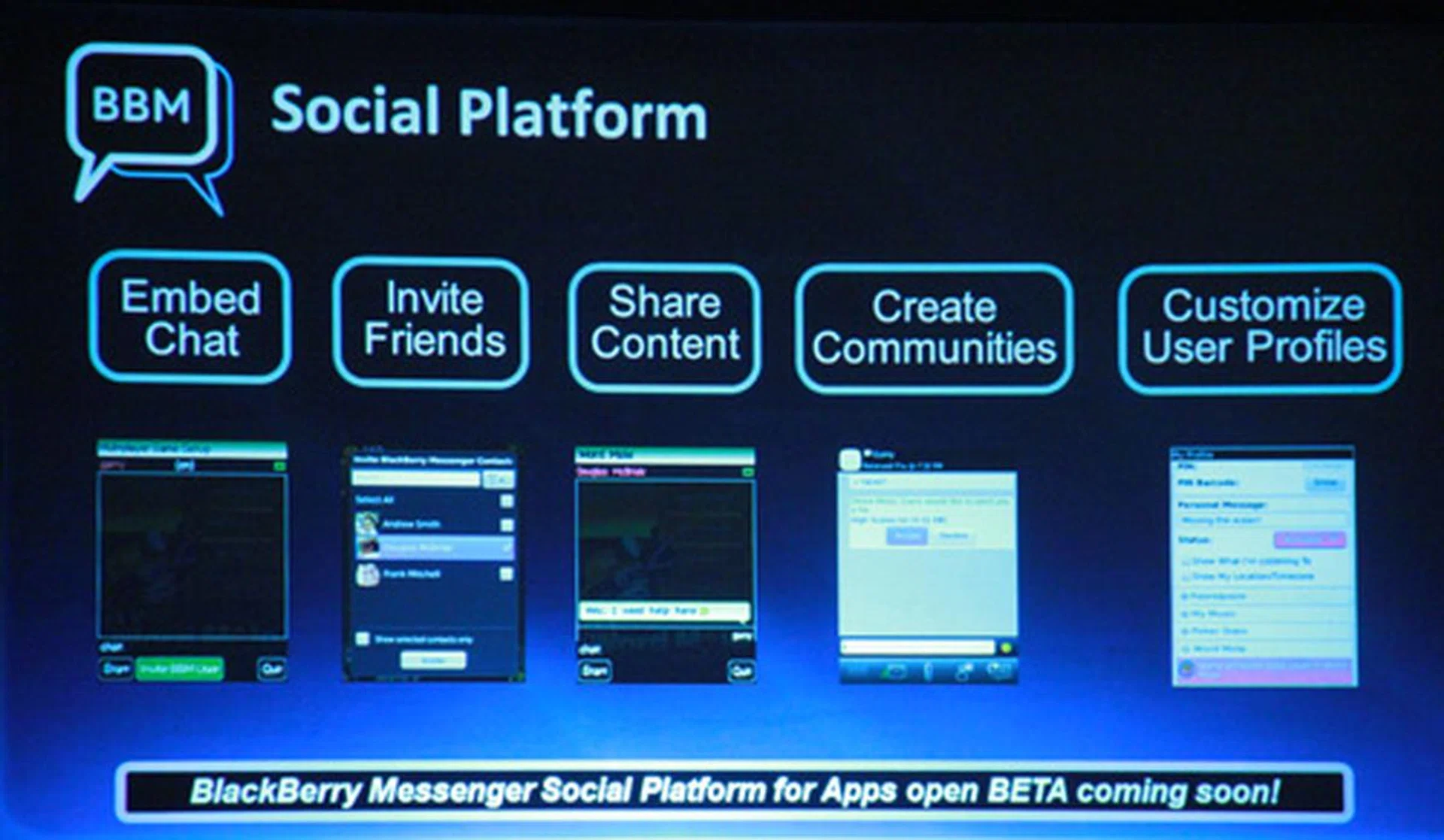
RIM is also looking at heavy BBM integration to bring their BlackBerry app experience to the next level.

The BlackBerry Application Platform also gets an update to version 6.1.
First Looks - The BlackBerry PlayBook
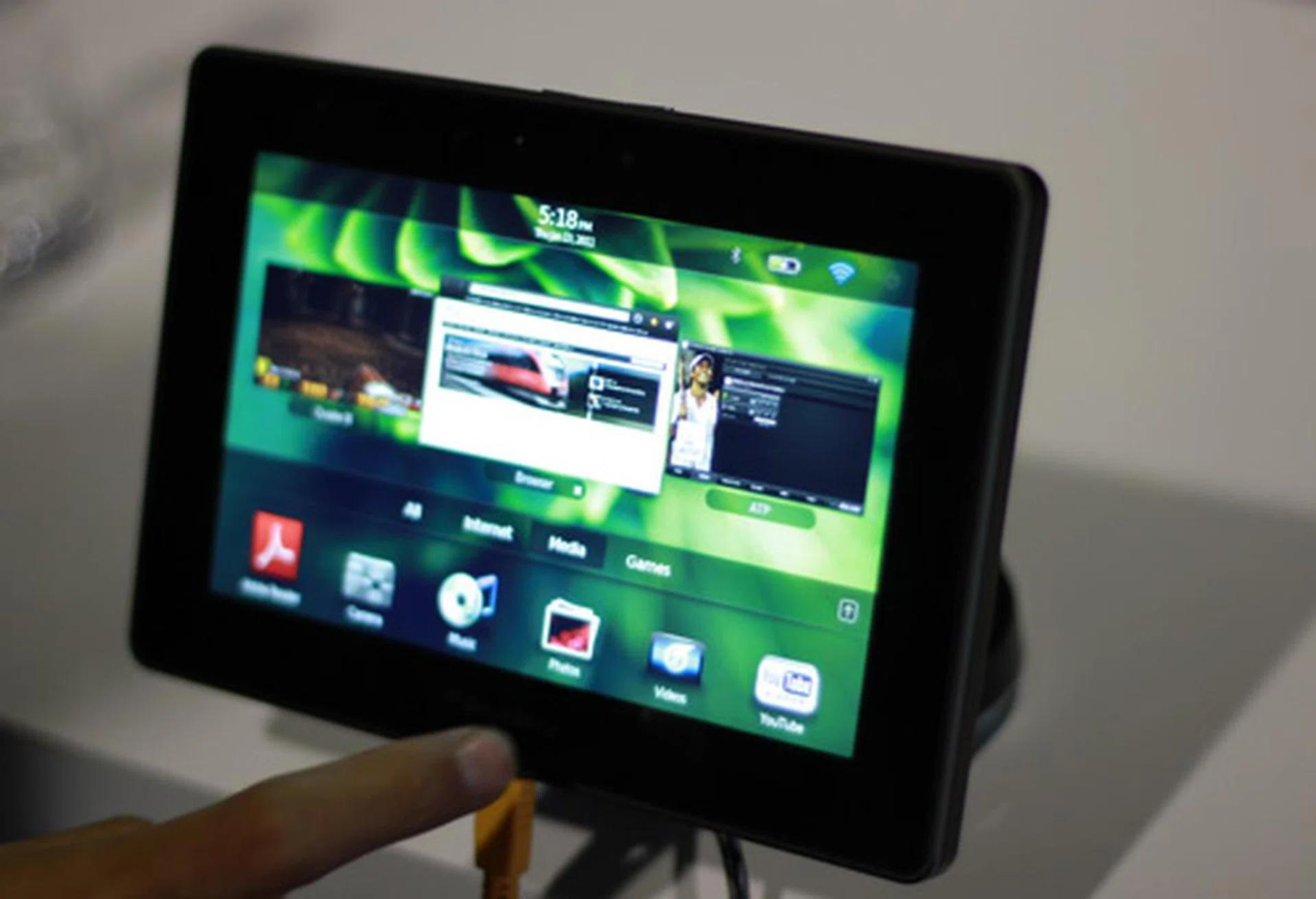
RIM had a couple of their PlayBooks on display, though getting some personal time with one took some effort and trading of elbows with an enthusiastic developer crowd.
The PlayBook will come in three different capacities of 16GB, 32GB and 64GB of flash memory, though Wade wasn't willing to divulge more on price points other than insisting it would come below the US$500 mark. Internally, the PlayBook will be powered by a 1GHz dual-core Cortex A9 processor and 1GB of RAM. Two cameras are built-in; a front-facing 3-megapixel camera and a rear-facing 5-megapixel camera. The 7-inch display has a resolution of 1024 x 600 pixels.
It must be noted that the PlayBooks available for perusal were locked down tight, as the settings menu was inaccessible, giving us no means of determining the software revision powering the device. Even in prototype form however, the PlayBook was reassuringly solid in terms of heft and feel, while the screen was sharp and clear. Most if not all 3D and multimedia demos shown ran silky smooth and with nary a hitch. Navigating the device, interestingly, also involves heavy use of the bezel surrounding the display, as most swipe gestures usually start and end at the bezel.
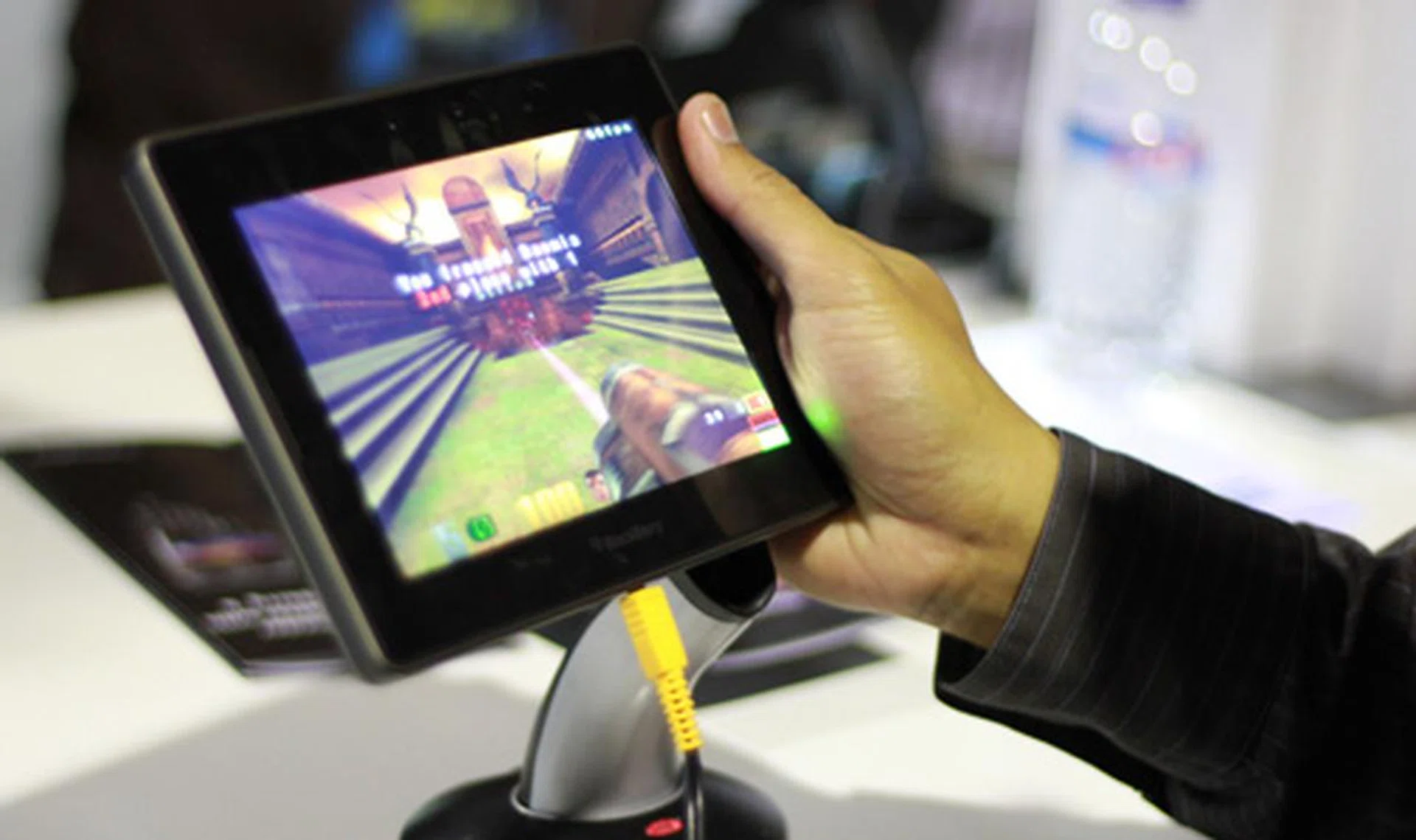
Quake 3 Arena was one of the more prominent demos on the PlayBook, clocking in an impressive frame rate of 60fps, though admittedly, there was no way to verify the settings used to run the demo.
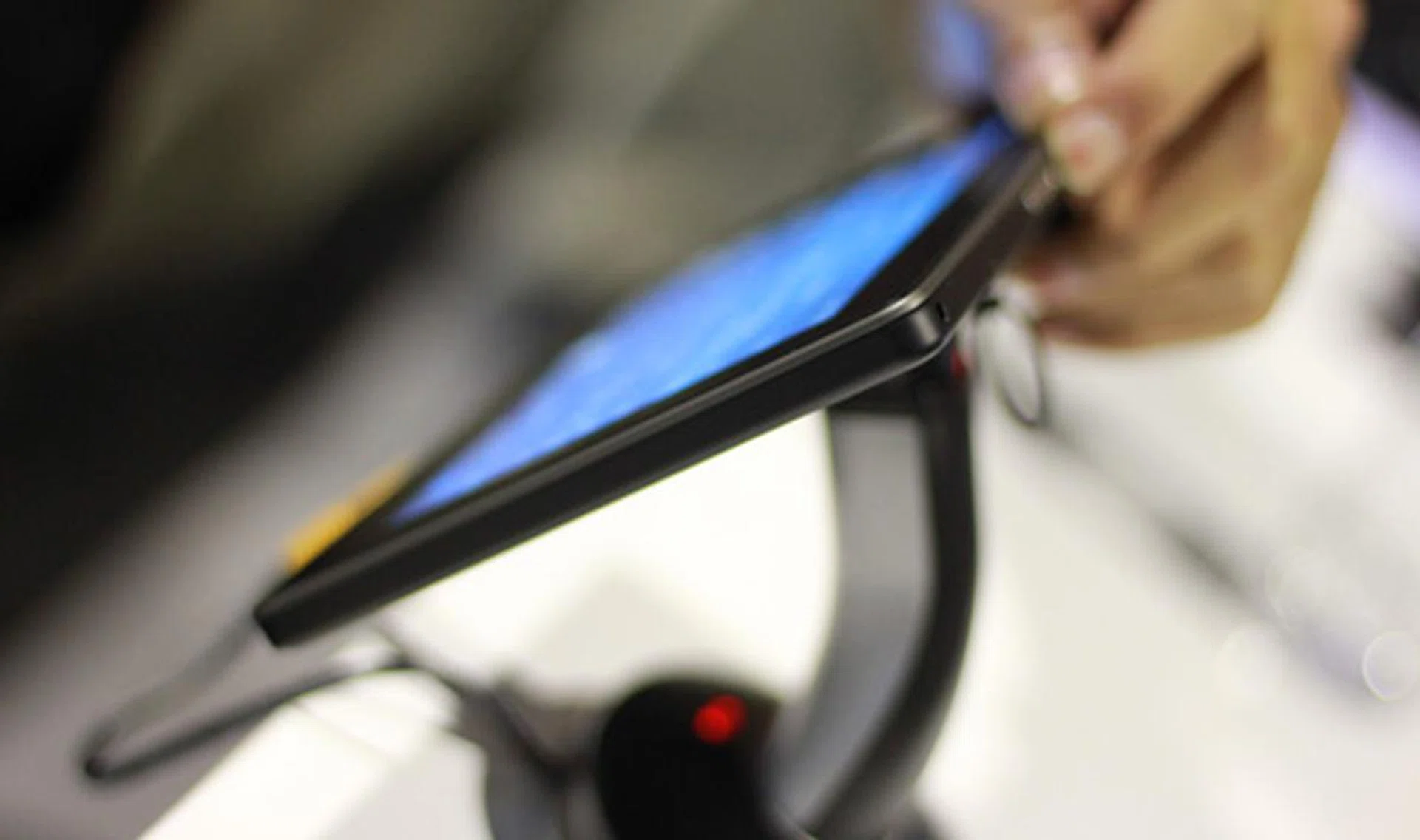
In terms of design, the PlayBook features a very heavy industrial influence, with very few rounded corners in favor of strong, square lines.
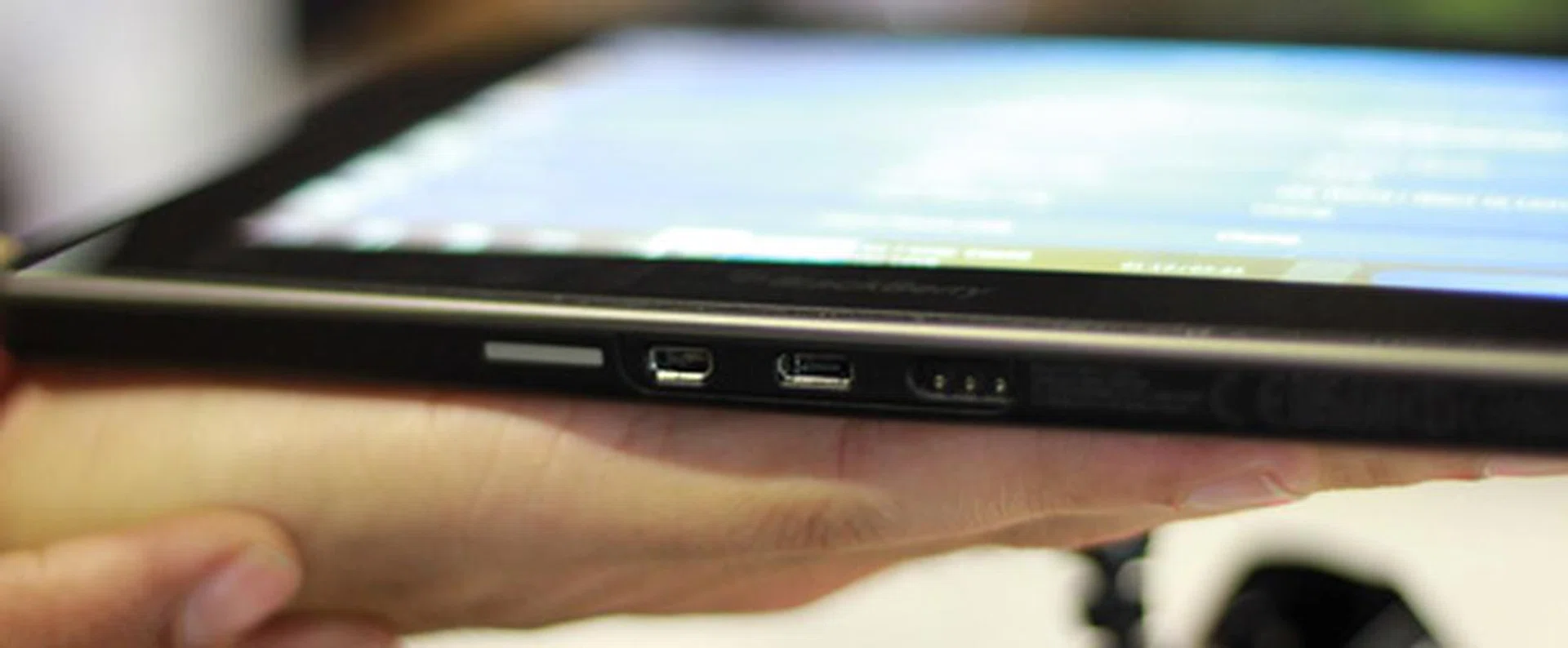
From left to right: mini HDMI port (for video output to bigger screens), microUSB port (which can also be used to charge the PlayBook), and the magnetic charge connector much like Apple's MagSafe design.
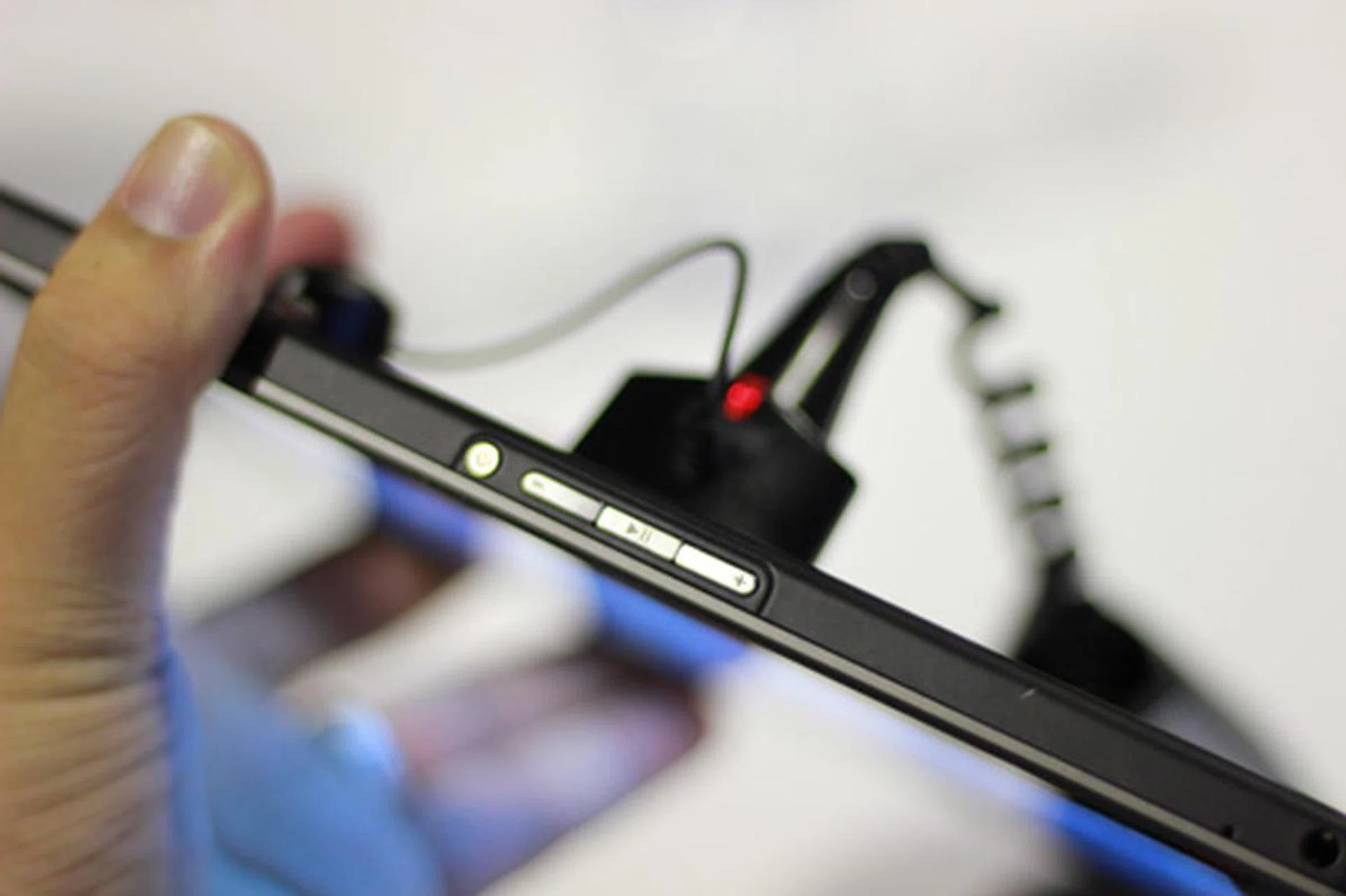
The media control buttons are placed up top, and are also recessed into the bezel.
Our articles may contain affiliate links. If you buy through these links, we may earn a small commission.