

Apple iPhone Air vs. Samsung Galaxy S25 Edge: Slim phones comparison
We take a look at two of the best mobile brands and their slim, flagship-grade phones.
Apple iPhone Air vs. Samsung Galaxy S25 Edge: what’s the difference?
With Apple’s iPhone Air now a reality, it’s inevitable that the 5.6mm phone will be compared against its Korean equivalent, Samsung Galaxy S25 Edge.
We’ve put together a quick comparison chart and pointed out some key differences, for your easy reference.
Specs at a glance
| Apple iPhone Air | Samsung Galaxy S25 Edge | Notes | |
|---|---|---|---|
| Launch date | September 2025 | May 2025 | Samsung did not follow it's usual H1 and H2 flagship launch cadence |
| Starting price (storage) | S$1,599 (256GB) | S$1,628 (256GB) | Same starting storage, iPhone Air is S$29 cheaper |
| Thickness | 5.6mm, 165g | 5.8mm, 163g | A 0.2mm difference is really only 3.5% thinner |
| Display size (refresh rate) | 6.5-inch OLED (1-120Hz) | 6.7-inch Dynamic AMOLED 2X (1-120Hz) | 0.2-inch difference isn't much, too |
| Resolution, pixel density | 2,736 x 1,260 pixels, 463 PPI | 3,120 x 1,440 pixels, 512 PPI | Samsung has superior pixel density, but your content's pixel quality plays a bigger role here |
| Resistance | IP68 | IP68 | -- |
| Cameras | 48MP fusion camera (1x, 2x zoom) | 200MP main and 12MP ultrawide (1x, 2x zoom, and 0.5x) | More versatility on Samsung |
| SIM configuration | eSIMs only | Dual nano-SIM, dual eSIM | More SIM flexibility on Samsung |
| USB-C | USB 2 (480Mbps) | USB 3.2 Gen 1 (5Gbps) | ~10x USB speed on Samsung |
| Bluetooth | Bluetooth 6 | Bluetooth 5.4 | See below for explainer |
| Wi-Fi | Up to Wi-Fi 7 | Up to Wi-Fi 7 | -- |
| Wired charging | Compatible with Apple 20W adapter | 25W | About the same. |
| Wireless charging | Qi2 (with 20W adapter), MagSafe | Qi2-compatible | Qi2 is only up to 15W, but S25 Edge lacks magnets |
| Battery (video playback hours) | Up to 27 hours | Up to 24 hours | Both are claims by respective brands. Apple does not publish battery capacity in mAh. the S25 Edge is 3,900mAh |
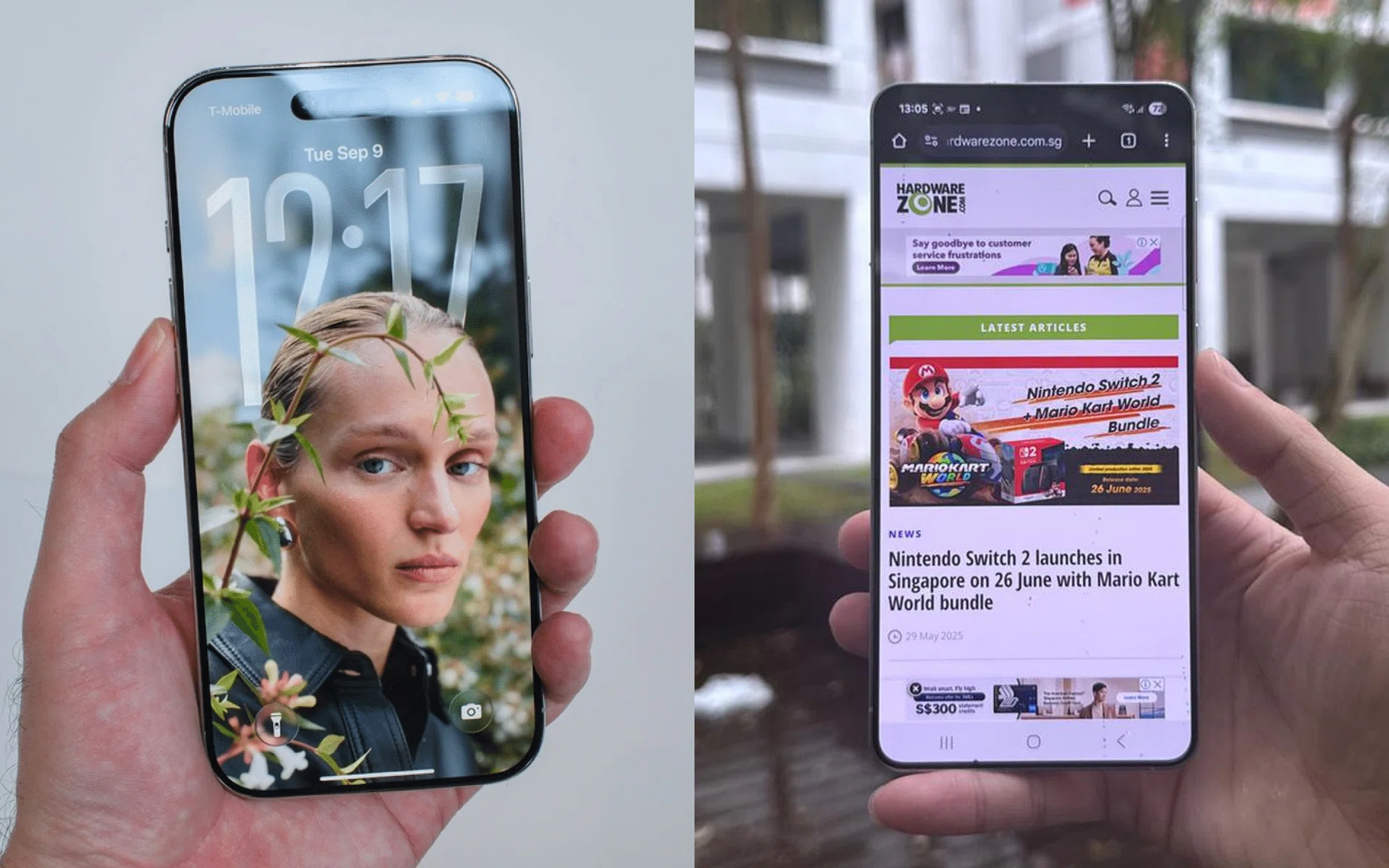
L: Apple iPhone Air. R: Samsung Galaxy S25 Edge.
Know what you’re paying for
It’s actually amazing how similar they both are in terms of cutting-edge technology. There are only three key differences that we feel would affect users in day-to-day use.
USB for wired file transfers
First is the glaring difference between the USB 2 (up to 480Mbps) on the iPhone Air and the USB 3.2 Gen 1 (up to 5Gbps) on the Samsung Galaxy S25 Edge. While the Samsung phone seems a lot faster, it only affects wired file transfers.
eSIM-only, or dual nano-SIM
Second is the SIM compatibility. Users holding on to a physical nano-SIM may feel more assured that there are two slots for the SIM card, but this is a matter of changing telcos and mobile plans to ensure that you get eSIM instead.
Ultrawide camera
Third, the Samsung Galaxy S25 Edge has an ultrawide camera. It may affect some users who feel that the iPhone Air could have done better here, but photography-first users would likely be eyeing an iPhone 17 Pro or Pro Max or the Samsung Galaxy S25 Ultra instead.
What about thinner, lighter, sharper?
The other aspects are either very similar or nearly imperceptible during regular use.
You’re not suddenly going to have hand cramps because the Galaxy S25 Edge is 0.2mm thicker or 2g lighter. Neither is the iPhone Air’s “lower” pixel density going to make your favourite videos appear less sharp if they’re already streamed or rendered at 1440p/4K resolution.
An important point to note is that both phones use Qi2 wireless charging (Apple, Samsung), which is only rated for a maximum of 15W. However, Apple’s iPhone Air has built-in MagSafe, so you get wireless charging right out of the box. Samsung Galaxy S25 Edge is compatible with Qi2 wireless charging, but only if you get a phone case that has the magnets for it.
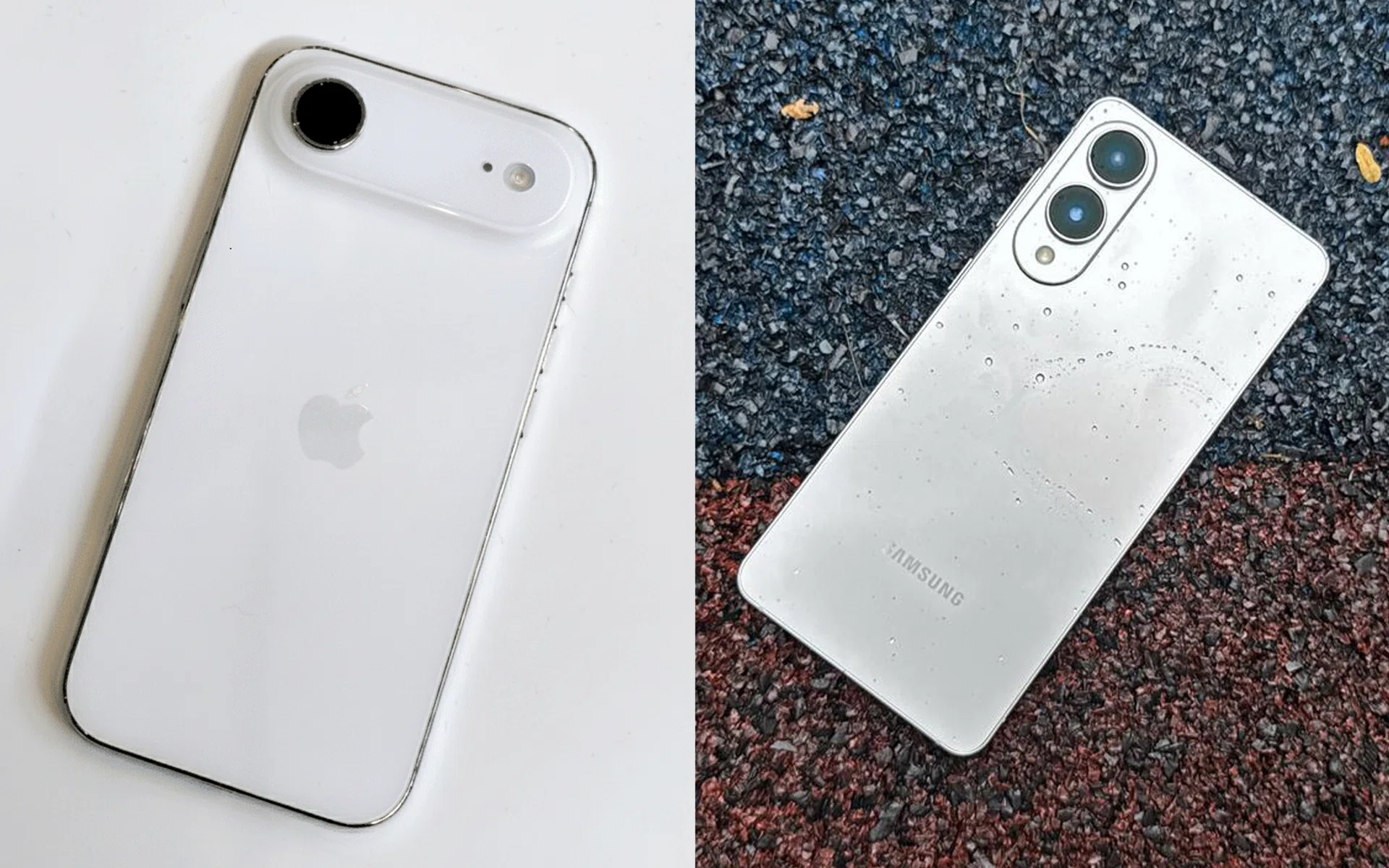
L: Apple iPhone Air. R: Samsung Galaxy S25 Edge.
Does the difference between Bluetooth 6.0 and Bluetooth 5.4 matter?
The short answer: Bluetooth 6 matters if you plan to buy high-end wearables and audio that also support it, in the future.
The same answer, but longer: It depends on what you use Bluetooth for. Broadly speaking, Bluetooth 6.0 succeeds Bluetooth 5.4, with improvements to accuracy, scanning efficiency, and transmission reliability. New to Bluetooth 6 are:
- “Ultra low-latency” (ULL) at 20ms or less, but dependent on codec and usage
- Native LDAC and LC3+ codec support
- Secure fine ranging (distance measuring, down to the centimetre)
- Maximum 4Mbps transmission (up from 2Mbps)
- AI-prioritisation used for multi-point connection
These perks can affect wearables (e.g. fitness trackers and smartwatches, etc.), wireless audio (true wireless earbuds and headphones, etc.), as well as other connected accessories (modern hearing aids, VR headsets, etc.).
Bluetooth 6 is backwards-compatible, but it will fall back on mutually-supported tech, which is usually the older Bluetooth tech between two mismatched gadgets.
Pricing and availability
The iPhone Air starts at S$1,599 for the 256GB version. Pre-order begins on 12 September 2025, and the phone will go on sale on 19 September. It launches alongside the iPhone 17, iPhone 17 Pro, and iPhone 17 Pro Max. To pre-order, head over here.
The Samsung Galaxy S25 Edge is available at S$1,628 (256GB) onwards in Titanium Silver, Titanium Jetblack, and Titanium Icyblue at the Samsung Online Store and Samsung Official Stores on Lazada, Shopee, and TikTok.