

Best Android phone camera review: OPPO Find X8 Pro vs. Samsung Galaxy S25 Ultra vs. Xiaomi 15 Ultra
We compare the best of the best Android cameraphones to see which has the better shooter.
We’re back with the next instalment of our phone camera shootout for 2025. If you haven’t already, check out our first shootout here.
This time around, we’re pitting the previous winners of that shootout against the flagship Xiaomi 15 Ultra with its Leica-branded cameras. If you’ve read our last shootout, you’d be familar with the testing and scoring the contenders. For those who are new here, read on.
Contenders for the best Android smartphone camera
We’ll identify strong nominees from the start of the year and only let the winners of each mini-shootout move on to the next. Each time we get enough new flagship phones to try, we’ll make another comparison against the previous victor(s). This continues until only one phone is left standing, either by beating out new entrants consistently or overthrowing a previous winner.
Xiaomi enters the ring
We’re interested in seeing how the Leica-branded cameras on the Xiaomi 15 Ultra compare to the joint winners of our previous shootout: the OPPO Find X8 Pro and Samsung Galaxy S25 Ultra. After all, branded camera and lens collaborations must not be easy to maintain, even when it’s a titan of a phone brand doing so.
We choose flagship-tier devices to avoid any shooting limitations that might arise from not having top-tier processors. In 2025, examples include the Qualcomm Snapdragon 8 Elite and MediaTek Dimensity 9400, which are present in all three of our contenders.
Scoring the phone camera, and updating our scoring system
Our general rule of thumb is to recreate the average user’s experience as much as possible. We want the shootout to reflect the ad-hoc shooting experience when a user is out and about.
We’re giving extra weightage to the main camera and low-light performance, as these are two of the most essential camera functions, regardless of the phone’s grade. We’ve also decided to make the scoring more granular, rather than using a binary all-or-nothing system, which better reflects the competency of each result.
In a nutshell:
- Each tested category is worth a maximum of 5 points.
- The only exceptions are the main camera and low-light testing, which can earn up to 10 points.
- Points are awarded based on the final image output of the test type.
Like before, this is strictly a phone camera comparison. These scores do not reflect the phone’s overall quality or perceived value.
Let’s get to the actual shootout.
Main camera quality and performance
We will judge the main camera’s performance based on each phone’s colour accuracy, sharpness, noise handling, detail retention, dynamic range, and exposure handling. We also account for built-in software optimisations, including any irregularities or artefacts.
Since the winner will be tested again against new entrants at a later date, we opted to take a control shot for the main camera. That would be the indoor shot of unchanging trinkets and accessories with different textures and colours for maximum imaging challenge. This gives us a consistent image to compare across the shootouts.
The other primary camera test is a daytime shot overlooking a field, an open-air car park, and some buildings. This will give us a chance to judge the detail retention, colour accuracy, and exposure, in a real-world setting.
OPPO Find X8 Pro | Samsung Galaxy S25 Ultra | Xiaomi 15 Ultra |
50MP | 200MP | 50MP |
1/1.4-inch Sony LYT808 | 1/1.3-inch sensor | 1/1-inch sensor |
f/1.6 aperture | f/1.7 aperture | f/1.63 aperture |
OIS | OIS | OIS |
OPPO Find X8 Pro
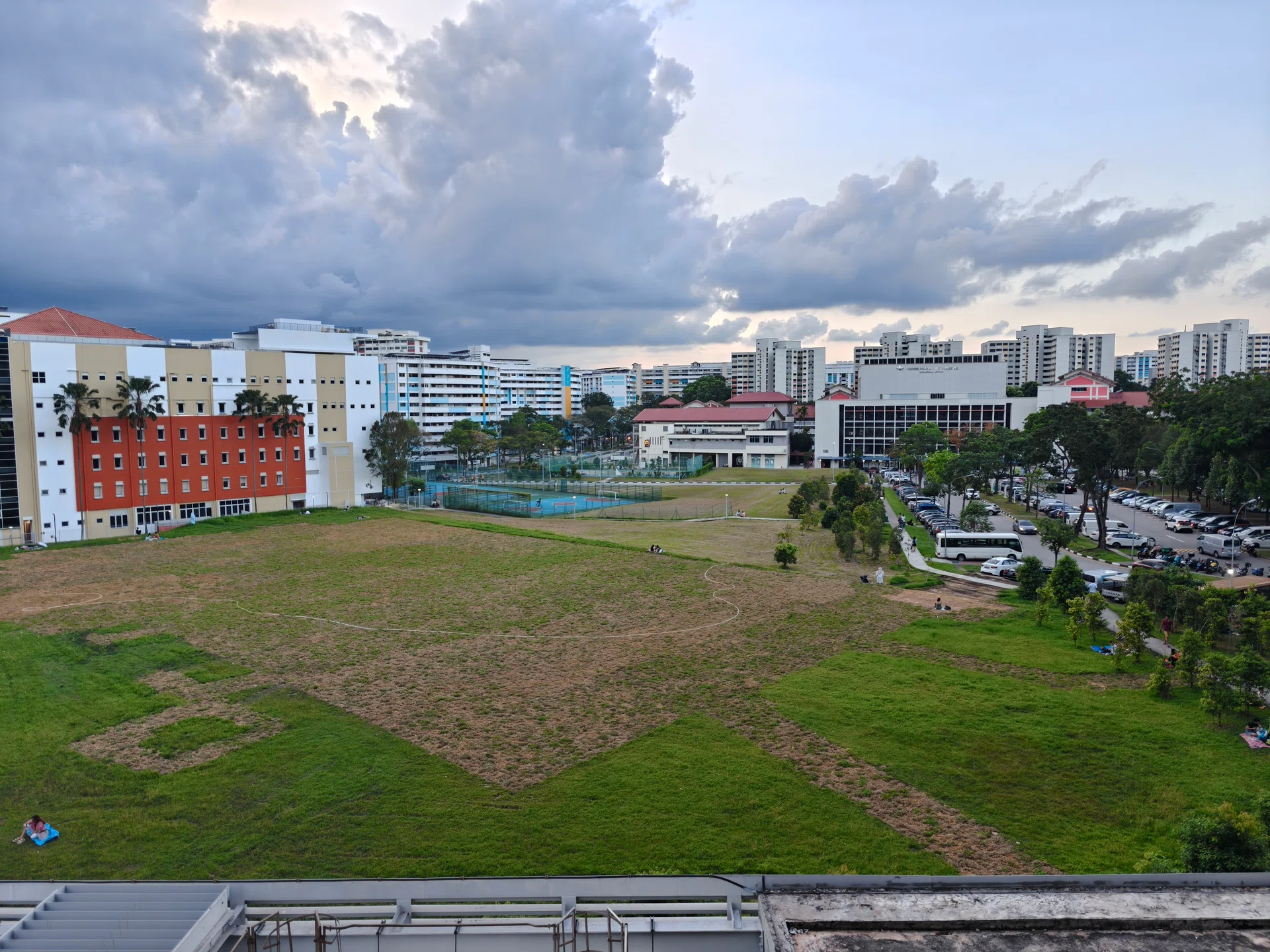
OPPO Find X8 Pro.
The Oppo Find X8 Pro puts up a pretty good image, with a properly exposed image that has nice, vibrant colours while not oversaturating the greens. In fact, the colours on the buildings in the background such as the brick red accent feels closest to what I was seeing in real life.
The image also properly captured the gloomy overcast of that day, with good noise reduction in the shadows. If we had to nitpick, the only issue might be that the detail retention here isn’t the best, with the words on the Marine Parade Town Council building looking slightly fuzzy when zooming in.

OPPO Find X8 Pro.
The control photo taken with the OPPO Find X8 Pro shows the same issues from before: sharpness falloff. Aside from that, the label of the glass bottle is sharp and legible, the colours are accurate and the colour and texture of the Magic: The Gathering card looks correct.
We can tell that OPPO has improved its main camera with software updates, as the colour and contrast are significantly better than the previous attempt in our first shootout.
Samsung Galaxy S25 Ultra
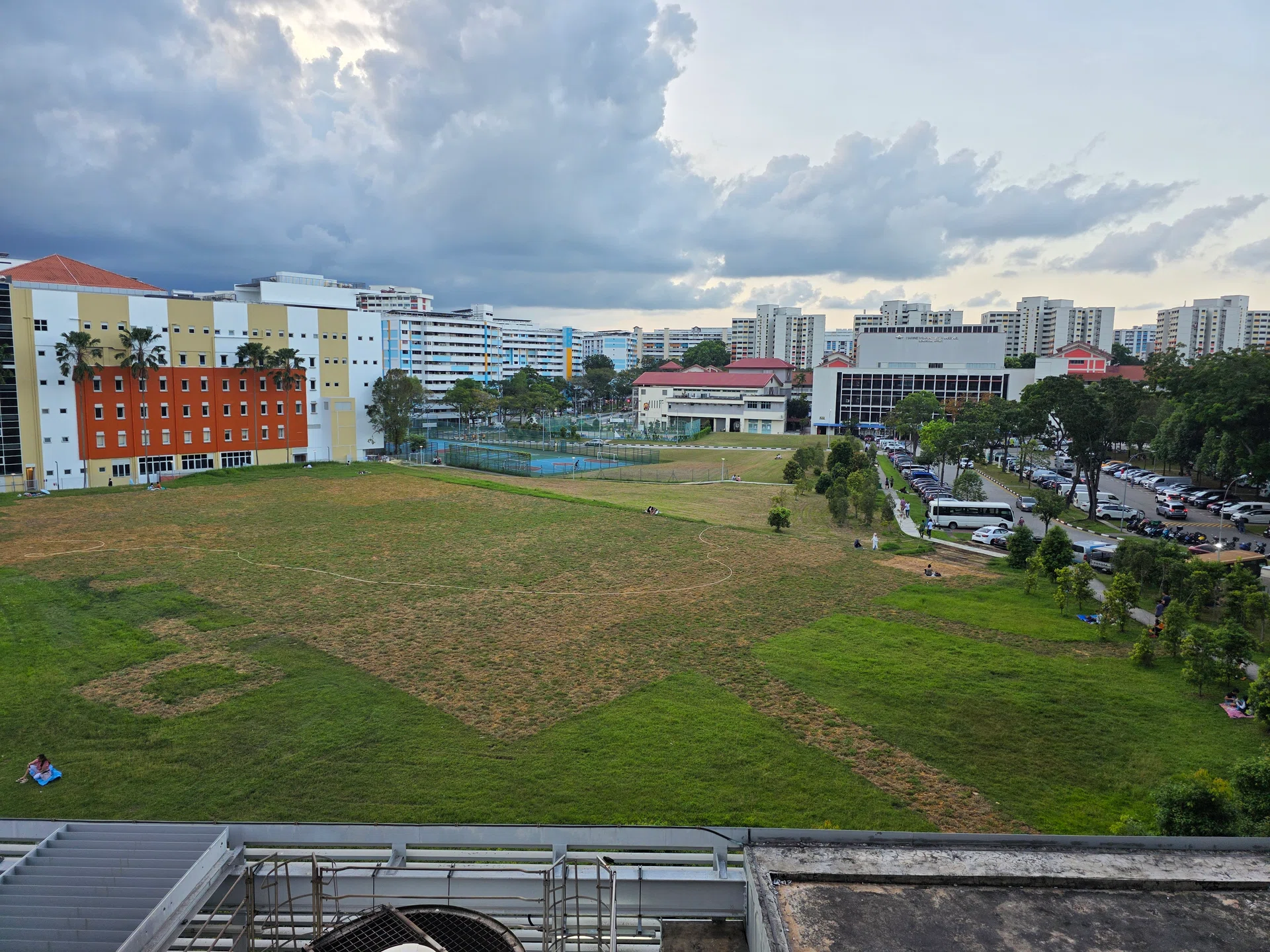
Samsung Galaxy S25 Ultra.
The Galaxy S25 Ultra’s image is noticeably brightened, with boosted greens in the grass and trees. The colours on the buildings in the background are also bright and vibrant, and detail retention isn’t bad.
The biggest issue is the imaging noise on the right side of the photo. However, it’s only noticeable when zooming in.
The photo isn’t entirely accurate to the eye because of its boosted exposure, making the scene appear brighter than it actually was.

Samsung Galaxy S25 Ultra.
The control shot from the Galaxy S25 Ultra is just as good as the one we took for our first shootout.
Some of the smaller issues are also still present, such as the incorrect slight blue hue on the Magic: The Gathering card and more noise present on the wood trim on the left edge of the photo.
In short, it’s virtually unchanged, and qualifies why the phone’s camera made it through to this shootout.
Xiaomi 15 Ultra
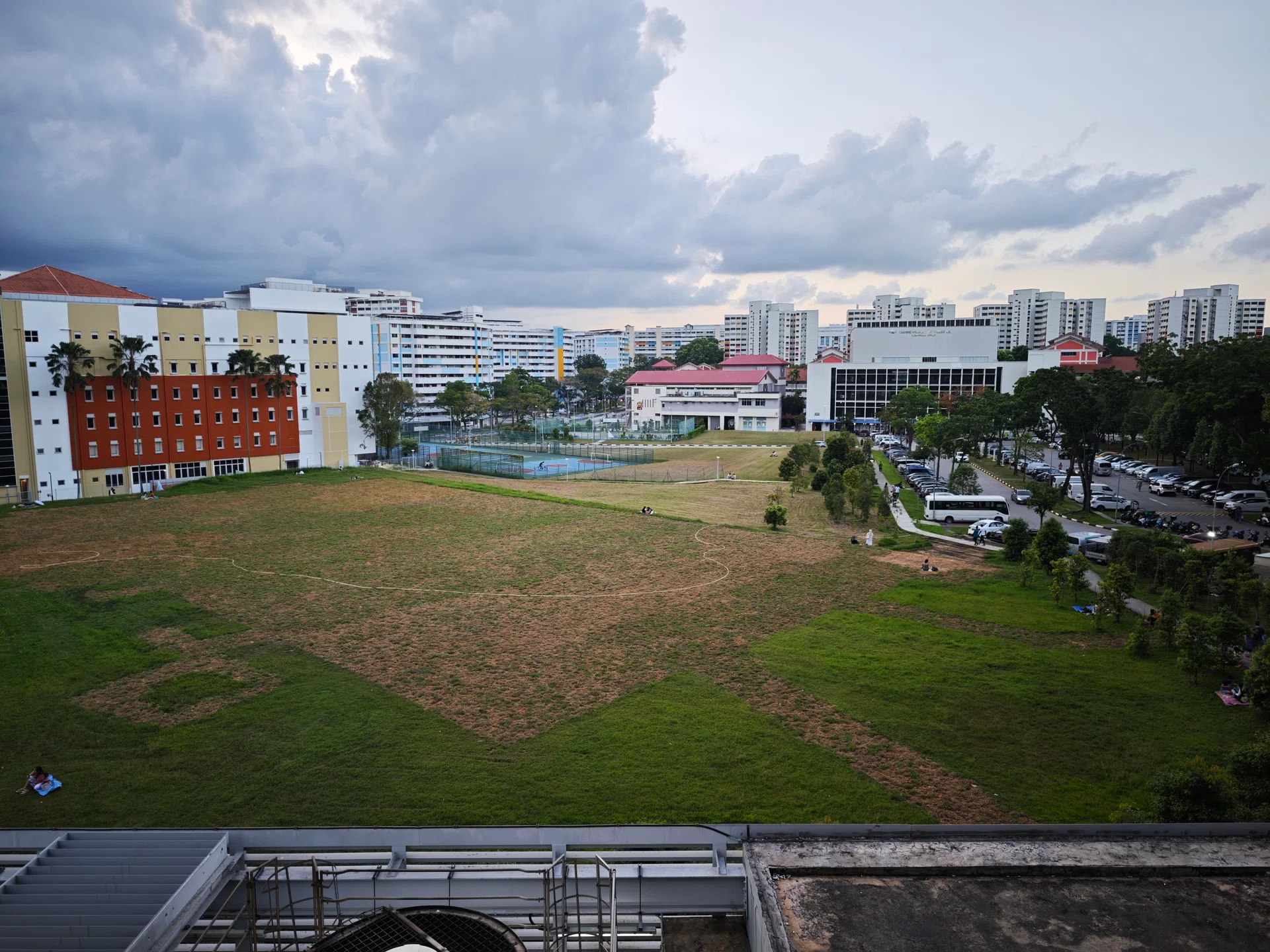
Xiaomi 15 Ultra.
Unlike the Samsung Galaxy S25 Ultra and OPPO Find X8 Pro, the Xiaomi 15 Ultra tends to favour a more saturated, darker image look. Please note that the Xiaomi phone features two compulsory Leica presets, and we used Leica Authentic for this shootout.
Despite the exaggerated vignetting, exposure in this photo is truer to reality than the other two contenders. The overcast skies added a gloomy feel that was more effectively portrayed via the Xiaomi 15 Ultra.
Additionally, zooming in reveals that a significant amount of software processing is at play to help reduce noise. This is evident when zooming in on the roads of the open-air car park. It’s also clear when looking at the glass windows of the buildings at the end of the car park.
The white balance is accurate. You can see it from the crisp white walls of the leftmost building. Overall colours are just as good, thanks to the phone keeping the exposure under control. Detail retention is also more than decent, with the words on the Marine Parade Town Council building still legible after zooming in.

Xiaomi 15 Ultra.
Leica Authentic’s preset could also produce this control image with incredible sharpness and excellent detail retention. We believe it has to do with the massive sensor used for its main camera. To see it in action, zoom in on the Labubu doll on the right side and compare it to the other two contenders. Here, you can see the fur distinctly, along with the stitching threads on the ears.
The text on the glass bottle’s metallic label and the Magic: The Gathering card are also crisper and more legible than that of its competitors. However, the photo is notably more contrasty, with the wood tabletop and the colours of the books darker than they actually are.
If we have to deduct points, it’s only because the preset’s colourisation isn’t life-like. That’s a stylistic choice by Xiaomi’s cameras, which means you’ll need post-processing or other camera apps to achieve its neutral palette.
Best Android Phone for Main Camera performance
All three images are good, and any of these photos can be uploaded to social media without the need for editing.
Using our new scoring method with a maximum of 10 points for main camera performance, we’d award the following scores based on camera fundamentals: colourisation, sharpness, detail, alongside handling of noise and exposure. We end up with:
- OPPO Find X8 Pro: 8 points
- Samsung Galaxy S25 Ultra: 8 points
- Xiaomi 15 Ultra: 7 points
10x zoom comparison
High zoom ranges are situational but no less important. They’re called upon when users are unable to get closer to their subject or scene. From concert-goers, shooting from vistas, to photography across impassable terrain (manmade and natural), these are all common scenarios where you’d wish your telephoto camera was just as good as your main camera.
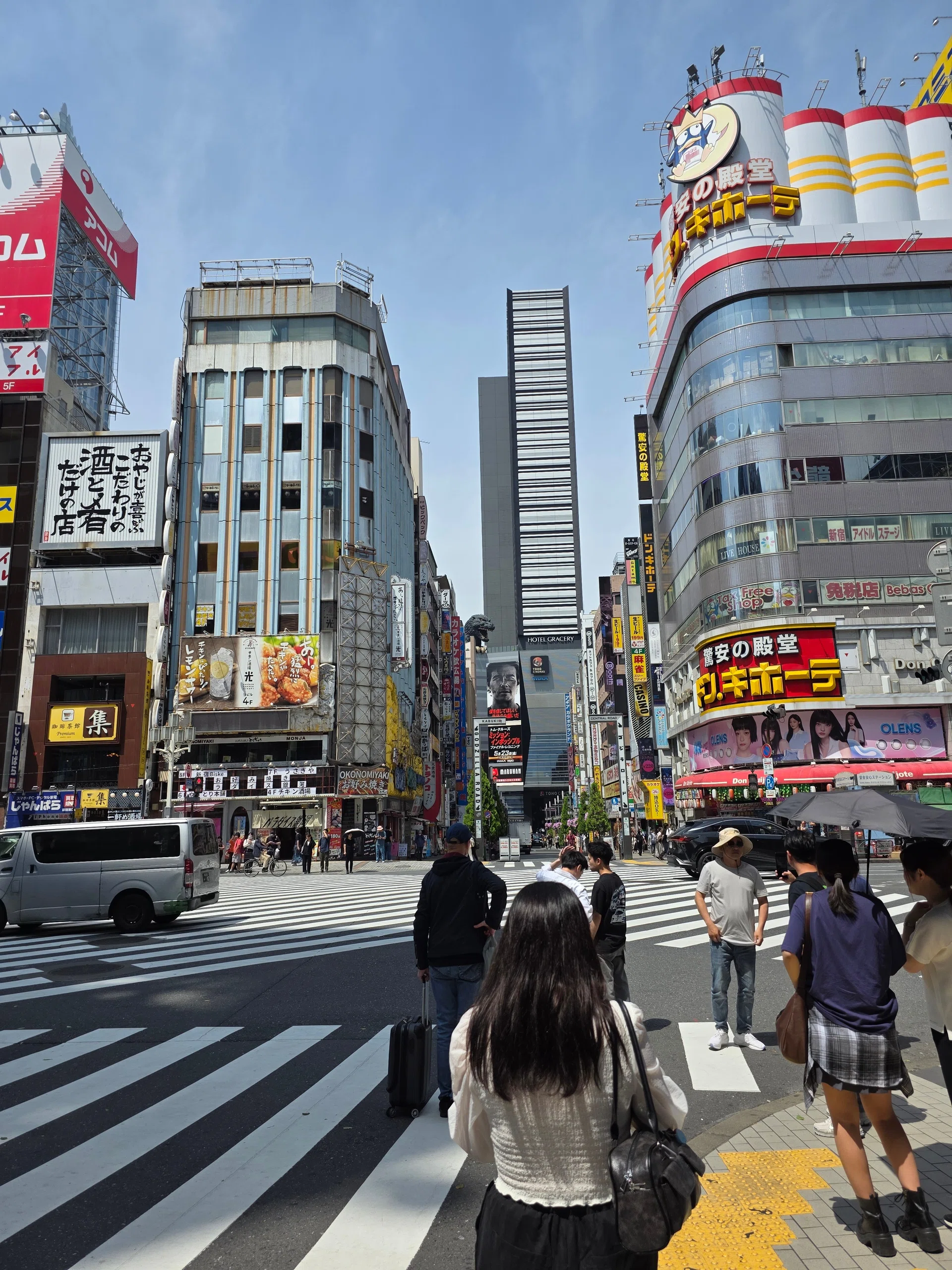
Samsung Galaxy S25 Ultra.
We’ve opted for the 10x zoom option to zoom into the iconic Godzilla head statue on top of Hotel Gracery Shinjuku in Tokyo, Japan. Here, we can assess the camera’s competency by examining the colours, sharpness, and detail retention of both the statue and the signs next to it.
It’s rare to see phones packing a default 10x optical zoom; that’s also true for the three contenders here. More often than not, phone cameras must strike a balance between software and hardware to capture the optimal shot.
OPPO Find X8 Pro | Samsung Galaxy S25 Ultra | Xiaomi 15 Ultra |
50MP 3x optical | 10MP 3x optical | 50MP 3x optical |
f/2.6 | f/2.4 | f/1.8 |
OIS | OIS | OIS |
50MP 6x optical | 50MP 5x optical | 200MP 4.3x optical |
f/4.3 | f/3.4 | f/2.6 |
OIS | OIS | OIS |
OPPO Find X8 Pro

OPPO Find X8 Pro.
The Find X8 Pro uses its 6x optical zoom lens and digital processing to get this 10x zoom shot. The photo looks great on its own, but it actually has a mild purple tinge when compared against competitors, particularly the Samsung Galaxy S25 Ultra.
However, it’s unnoticeable unless you’re really scrutinising the photo. The overall colours are slightly enhanced with deeper saturation, but it’s done tastefully, unlike the result we got in our first shootout.
There’s a bit of fuzziness if you check the sign in the top left corner. Gratefully, the words aren’t smudged by the digital processing and are still legible.
Samsung Galaxy S25 Ultra

Samsung Galaxy S25 Ultra.
The photo from the Samsung Galaxy S25 Ultra is good. While the colour temperature leans towards its cooler profile, the signage is the most accurate out of the bunch. Overall sharpness is good as well, with great detail on the Godzilla head.
Unfortunately, zooming into the signs on the side reveals some problems, like overprocessing and smudging the fine details. Details in Godzilla’s head are visible, although the overall retention is visibly less than OPPO’s. You get very bad fuzziness on the “Darts Cafe” text on the topmost sign. The processing has caused textures to appear where there are none, like on the yellow background of the Torikizoku sign.
Xiaomi 15 Ultra
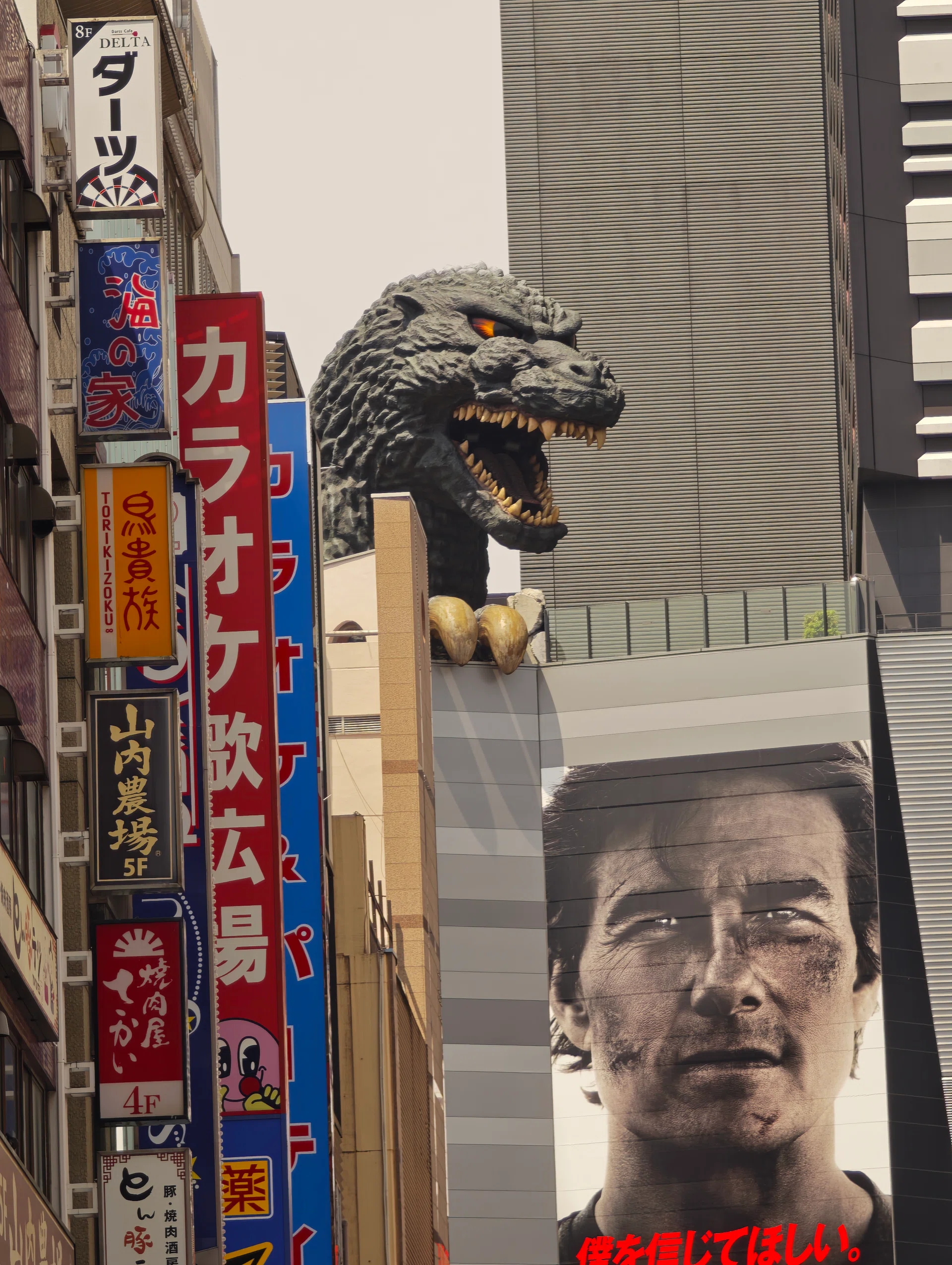
Xiaomi 15 Ultra.
You’ll immediately notice how warm the telephoto shot out of the Xiaomi 15 Ultra is. It’s fixable with basic editing skills, but that means your photo is not accurate enough or ready for sharing after shooting.
There’s enough detail on the Godzilla head, but zooming in, you’ll notice fuzziness creeping into its teeth. However, details are well-preserved when looking at the signs on the side. There’s no noise or artefacts, and there’s enough detail to make out the stains on the signs instead of it being smudged messes.
It’s a pity because Xiaomi 15 Ultra is definitely a great option for high-quality shooting, but colour accuracy is a basic hygiene factor, and it still matters to an average viewer.
Best Android Phone for 10x Zoom performance
This test scenario showcased how integral a phone’s hardware and software come together to achieve the best result and meet users’ real-world demands in real-life situations.
Out of a possible 5 points for this category, we scored based on how each phone rendered our 10x Zoom performance requirement. Clarity and colour were critical to assessing the camera’s ability, while the details like colour dynamics and digital artefacts separate the great from the good.
Therefore, the OPPO Find X8 Pro is at the top of this category.
- OPPO Find X8 Pro: 5 points
- Samsung Galaxy S25 Ultra: 4 points
- Xiaomi 15 Ultra: 2 points
Ultrawide comparison
We usually take ultrawide shots to showcase as much of the subject as possible, such as expansive scenery or conveying an event or venue’s overall mood and ambience. Sometimes, younger users prefer it for selfies, too.

Samsung Galaxy S25 Ultra.
For this category, we opted featuring the Hijiri-bashi bridge in Tokyo, where three different train tracks intersect at different heights. From this photo, we can see how the smartphones handle elements such as foliage, water details, urban structures, commuters, and the high-rise buildings in the background.
OPPO Find X8 Pro | Samsung Galaxy S25 Ultra | Xiaomi 15 Ultra |
50MP | 50MP | 50MP |
f/2.0 aperture | f/1.9 aperture | f/2.2 aperture |
OIS | - | - |
OPPO Find X8 Pro
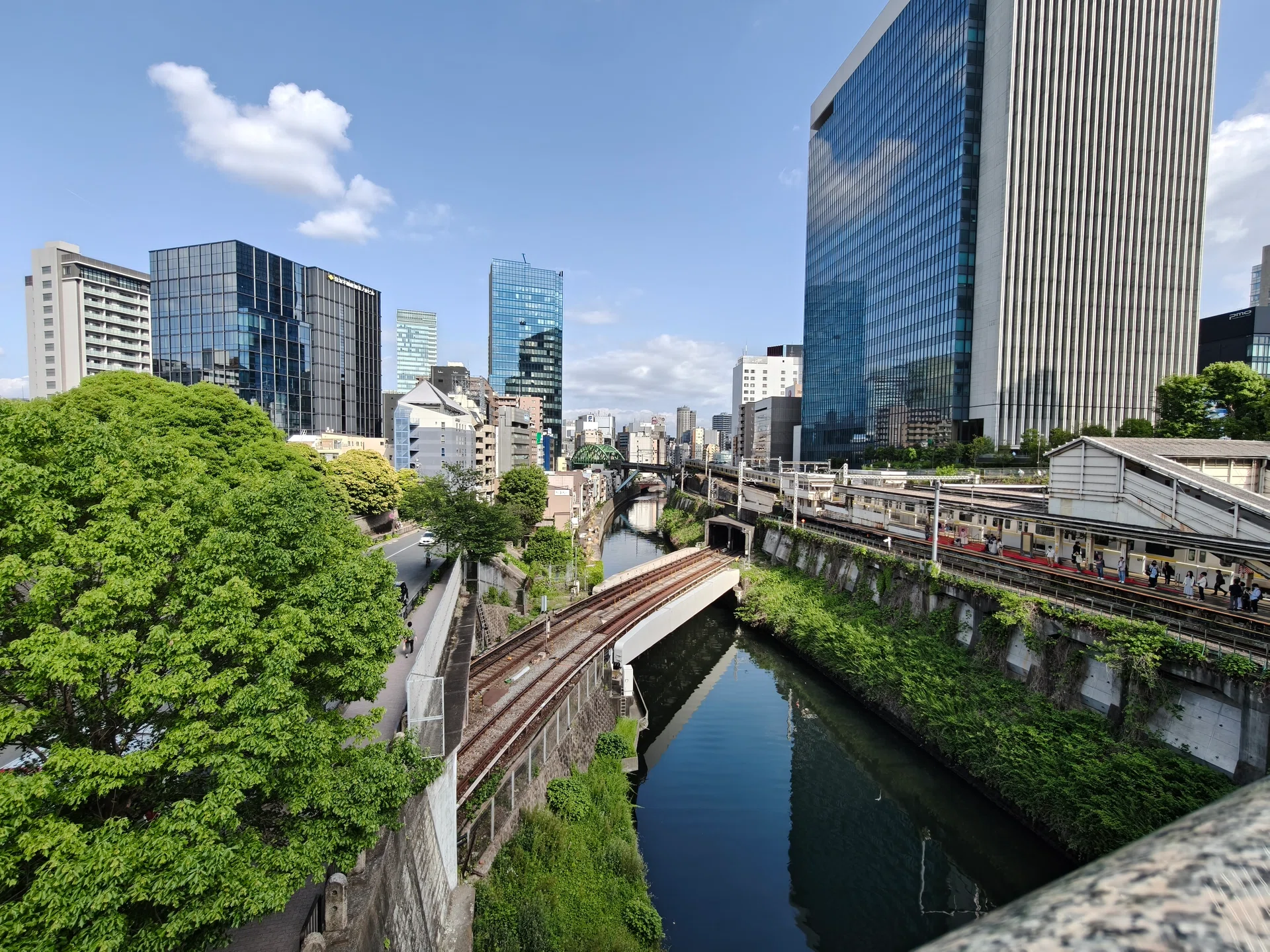
OPPO Find X8 Pro.
The OPPO Find X8 Pro has the narrowest field of view among the three. However, the advantage of a narrow field of view is lower fisheye distortion, and that in turn helps the software keep distortion under better control. We’re not saying a narrower view or more distortion is better; it comes down to your shooting needs and style.
The most notable aspect of this photo is the absence of the shadow cast by the bridge; an automated AI removal beyond our control. Other shadows, such as the one the tree is casting onto the road, it’s also much lighter and without any detail. You can refer to the Xiaomi and Samsung photos for comparison.
Details are quite good, with the warning poles, tracks and rails all distinct and easily visible. The leaves on the trees at the left edge also have plenty of detail.
Samsung Galaxy S25 Ultra
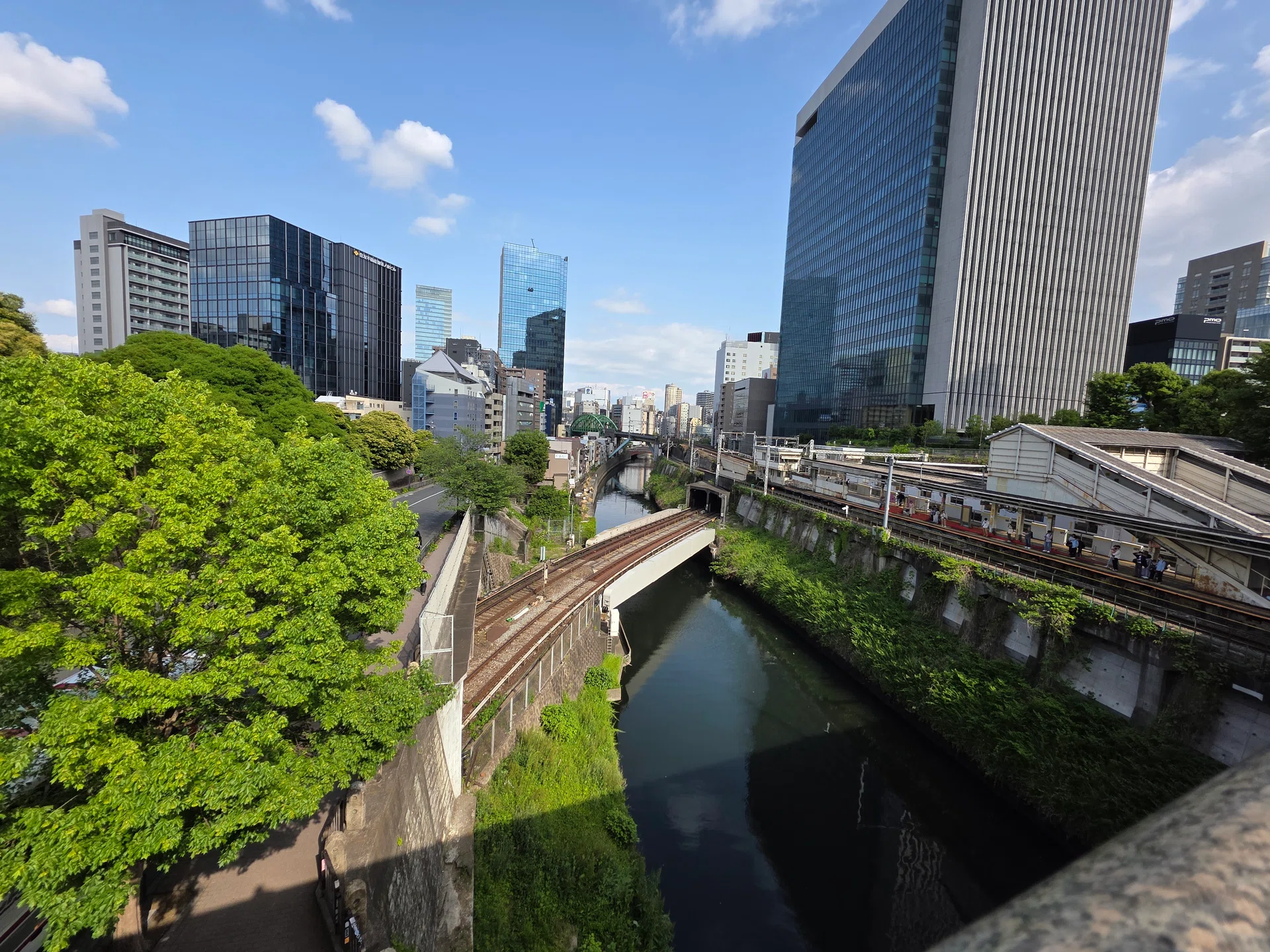
Samsung Galaxy S25 Ultra.
This ultrawide shot from the Galaxy S25 Ultra is the widest of the bunch, and the exposure is spot on. The phone accurately captured the intense sunlight at 2PM.
However, we feel that the phone could have brightened up the shadows slightly while reducing the noise in the dark areas. The greens are boosted, as usual, resulting in greener foliage and grass.
You get mild distortion around the corners but it’s generally quite well controlled. Unfortunately, you’ll notice that the yellow warning poles and the rails and tracks aren’t as sharp or as detailed as the other contenders.
Xiaomi 15 Ultra
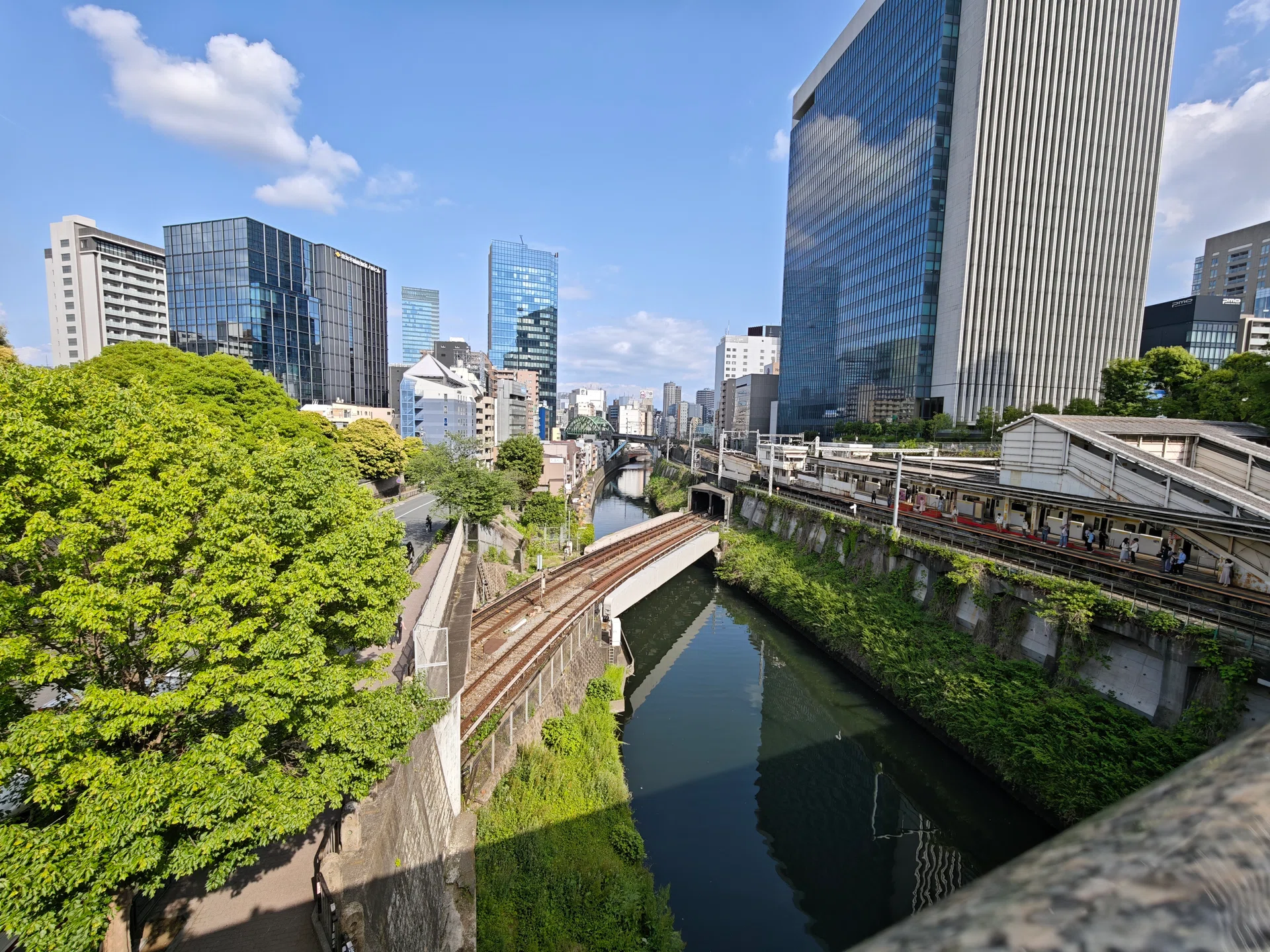
Xiaomi 15 Ultra.
The Xiaomi 15 Ultra has the brightest exposure out of the bunch. The HDR implementation works great here, with shadows being lifted to provide good detail in the darker regions of the photo.
The colours are nice and accurate, with the yellow in the foliage showing. The Xiaomi 15 Ultra is also the only phone to capture the most detail in areas like the tree shadow, the yellow warning poles and the tracks.
Best Android phone for Ultrawide Camera performance
The contenders here all performed well. Naturally, different ultrawide lenses offer different widths and distortion correction, which is only visible when you compare side-to-side, like we did.
Using the points system with Ultrawide getting a maximum of 5 points, the Xiaomi 15 Ultra edges out the competition narrowly thanks to its wider field of view, better handling of shadows and details, and slightly more accurate colours and representation.
- OPPO Find X8 Pro: 4 points
- Samsung Galaxy S25 Ultra: 4 points
- Xiaomi 15 Ultra: 5 points
Low-light camera comparison
Night shots are naturally challenging for tiny mobile camera sensors that struggle to capture the light they need. However, many modern advancements have since improved light-to-data conversion and gauging distances. Add that with top-notch digital correction and compensation, and a phone can enhance hard-to-see details.
For this low-light test, we took a handheld shot from a rooftop bar that faces the famous Tokyo Tower.
The test includes several challenges, such as light sources from illuminated signs and street lamps. We’ll be able to check for noise artefacts (or overly aggressive denoising), potential overexposure issues, and the level of detail retained in the Tokyo Tower’s structure.
OPPO Find X8 Pro | Samsung Galaxy S25 Ultra | Xiaomi 15 Ultra |
50MP | 200MP | 50MP |
1/1.4-inch Sony LYT808 | 1/1.3-inch sensor | 1/1-inch sensor |
f/1.6 aperture | f/1.7 aperture | f/1.63 aperture |
OIS | OIS | OIS |
OPPO Find X8 Pro
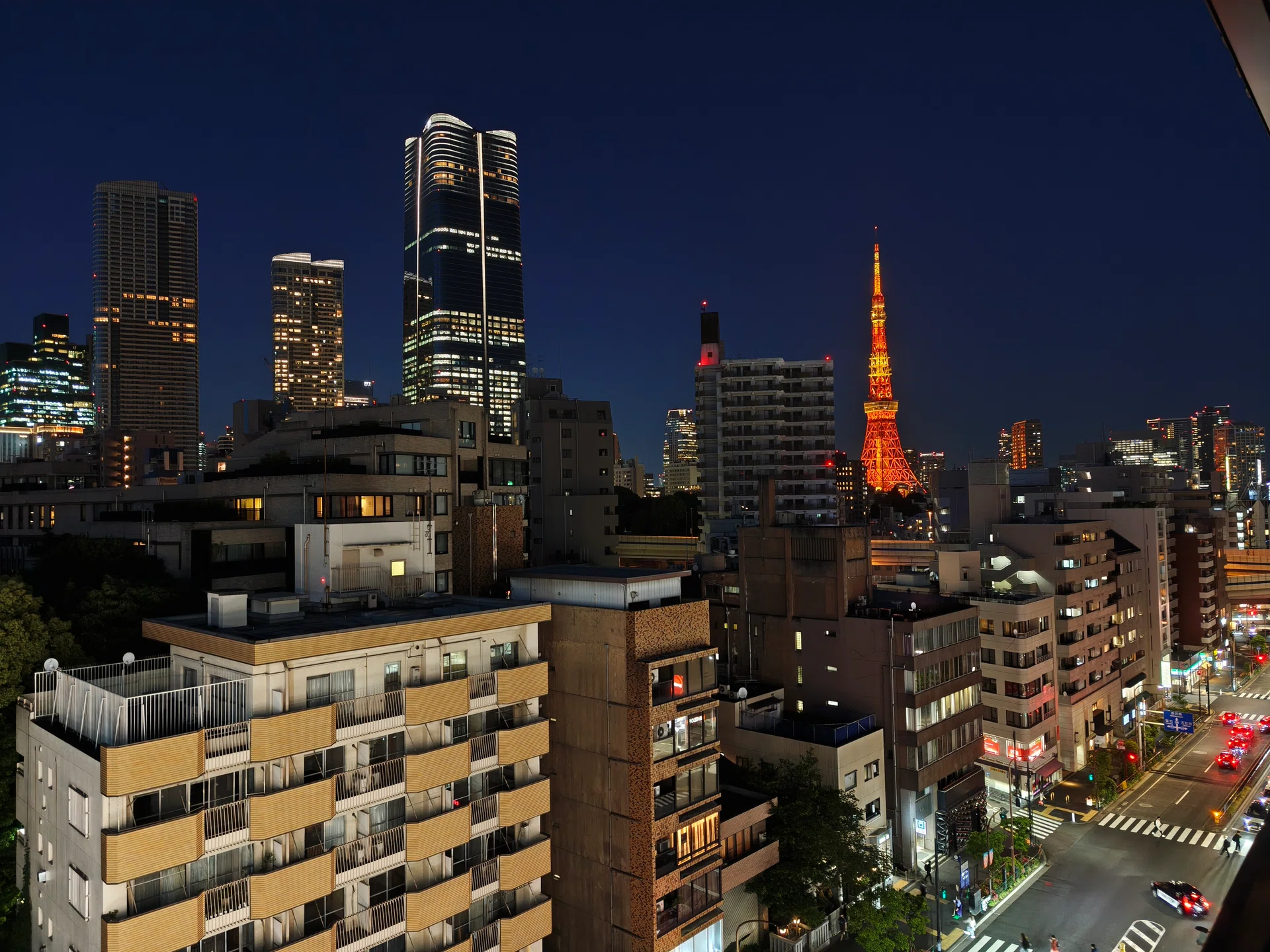
OPPO Find X8 Pro.
The low-light photo from the OPPO Find X8 Pro is fantastic.
Not only did the phone accurately capture the inky dark blue of the sky, but it also managed to avoid any lighting halos around light sources, such as the Tokyo Tower and the tall skyscraper in the back.
The downside is very dark areas, like the trees near the left edge, looking almost like a black blotch. For us, it’s not a huge issue the dark area isn’t the focus of the photo anyway. However, we have to take it into consideration when scoring.
The colours are accurate, with the Tokyo Tower appearing accurately orange. If you zoom in and look down to the street, you can see the distinct FamilyMart colours (green, white and blue) in the illuminated sign and around the building.
If we had to nitpick, finer details like the words on the road sign are smudged, but the major details are all crisp and distinct.
Samsung Galaxy S25 Ultra

Samsung Galaxy S25 Ultra.
The Samsung Galaxy S25 Ultra managed to expose the image nicely, although the sky is rendered brighter than in real life.
The Tokyo Tower also has a bit of an orange light halo around it, and some light sources, like the illuminated signs on ground level, are overexposed and completely blown out. Unfortunately, finer details in some darker parts of the image are also lost.
There’s also a bit of noise in the night sky, although it’s not too noticeable unless you zoom in. Colours aren’t very accurate either, with the Tokyo Tower looking more yellow than orange.
Xiaomi 15 Ultra
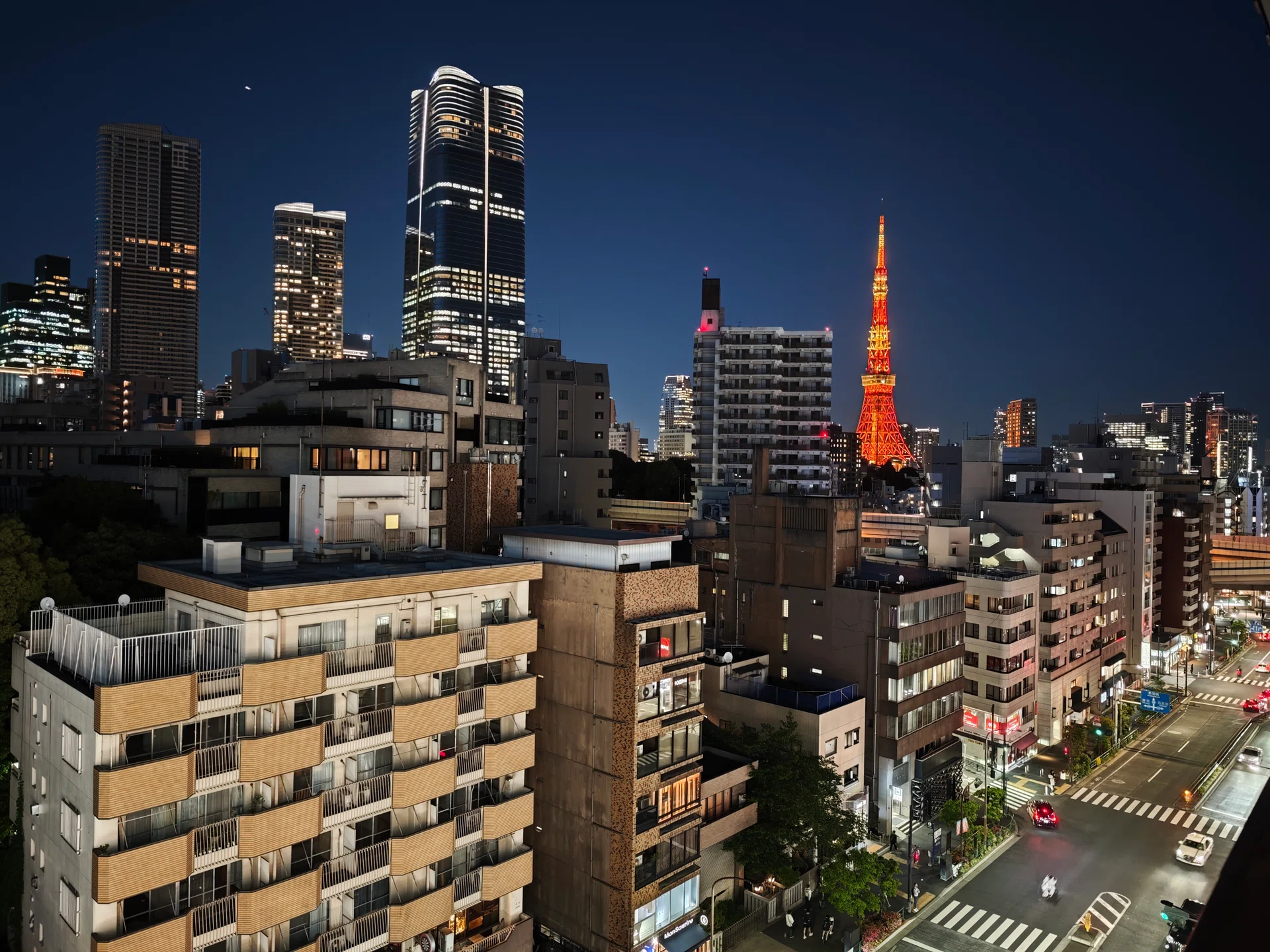
Xiaomi 15 Ultra.
The night shot from the Xiaomi 15 Ultra wasn’t particularly impressive. It does a decent job of brightening up the image, but there are some minor issues, such as a lens flare in the sky and suboptimal shadow lifting.
However, the colours of the Tokyo Tower are accurate.
Even though we can’t see the FamilyMart colours, we can actually somewhat see the characters on the sign next to it.
Additionally, the words on the road sign are actually legible. All things considerd, it’s a decent shot.
Best Android phone for Low-light performance
Low-light photography is one of the more demanding shootout categories. It requires high-quality hardware components and matching software optimisations to make the camera’s initial shot usable for the general public. It’s obvious when either (or both) are lacking.
Our decision had to rely on imaging fundamentals, like representing shadows/highlights, how they handle detail, and the overall accuracy of the scene in person relative to artefacts that appear.
As such, the OPPO Find X8 Pro got the most points in this 10-point category. We mentioned earlier that it feels like the OPPO phone has received significant updates to improve its photography performance, and that’s backed up with the results here.
- OPPO Find X8 Pro: 8 points
- Samsung Galaxy S25 Ultra: 6 points
- Xiaomi 15 Ultra: 7 points
Selfie camera comparison
Whether you’re a daily selfie taker or someone who only takes them once in a blue moon, people photography remains an essential aspect of assessing a phone’s front camera.
We opted for a shot in a nearby park. The lighting was nice and bright since it was a sunny afternoon, and we could test whether the selfie camera can get skin tones right while dealing with multiple bright colours in the background.
We will judge based on the true-to-life reproduction of selfies, exposure accuracy, details, skin tones, and depth of field of the image.
We turned off all beautification features and took the photos in normal Photo mode instead of Portrait to see if the camera could adequately capture what’s around the human subject.
OPPO Find X8 Pro | Samsung Galaxy S25 Ultra | Xiaomi 15 Ultra |
32MP | 12MP | 32MP |
f/2.4 | f/2.2 | f/2.0 |
OPPO Find X8 Pro
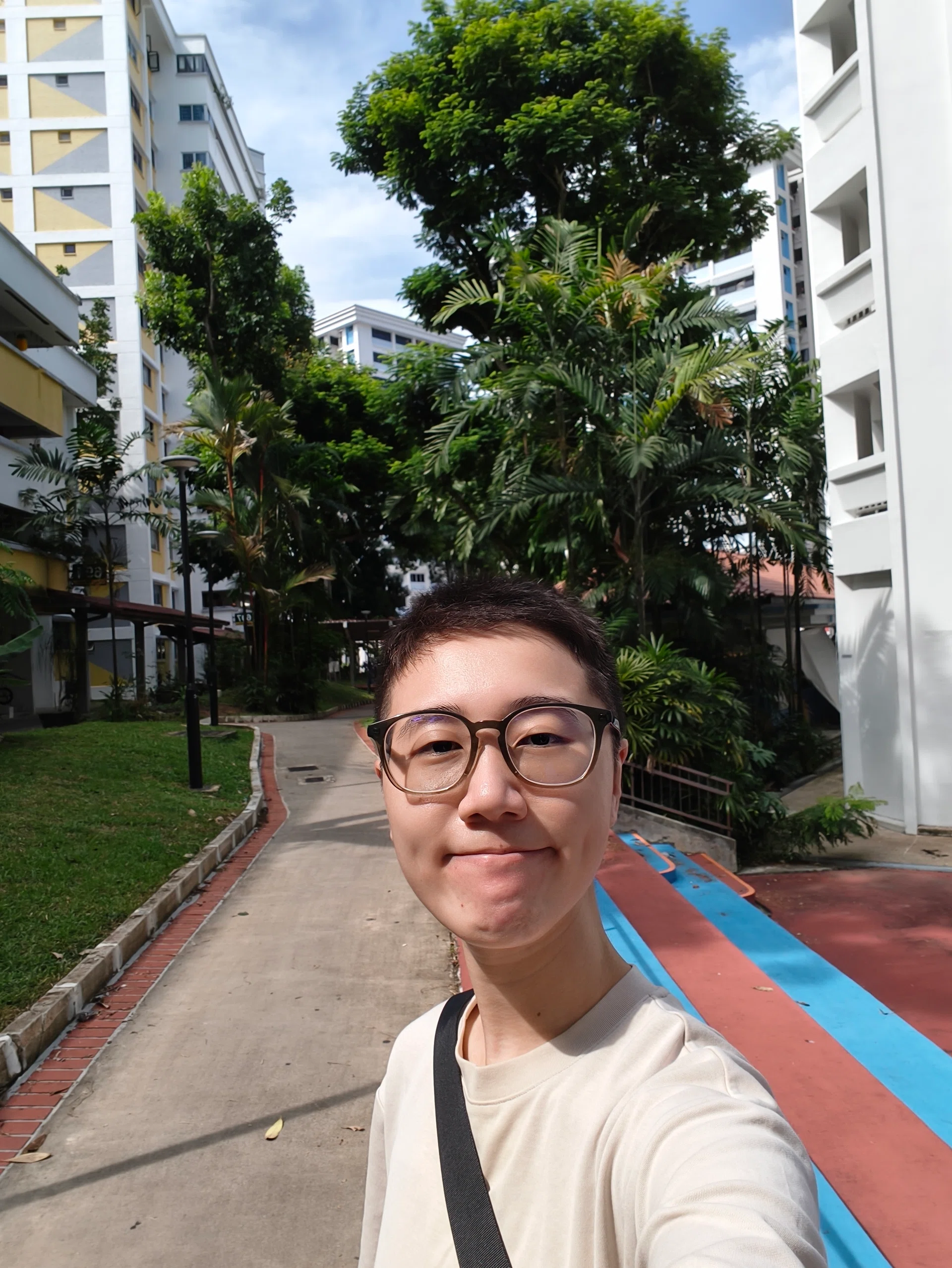
OPPO Find X8 Pro.
The OPPO Find X8 Pro did a decent job with the selfie, but it retains plenty of the same issues from our first shootout. Firstly, the background is blurred out even though we took the photo in the standard Photo mode to try and keep the background in focus.
Even though the beautification feature was turned off, the phone still smoothed out the subject’s skin and reduced redness and blemishes, while lighting the skin tone. The colours aren’t 100% accurate either, with the blue step behind the subject not as saturated and deep as it actually is.
There’s also a little too much contrast, with parts of the image such as the foliage behind basically blending into a dark green blob.
Samsung Galaxy S25 Ultra
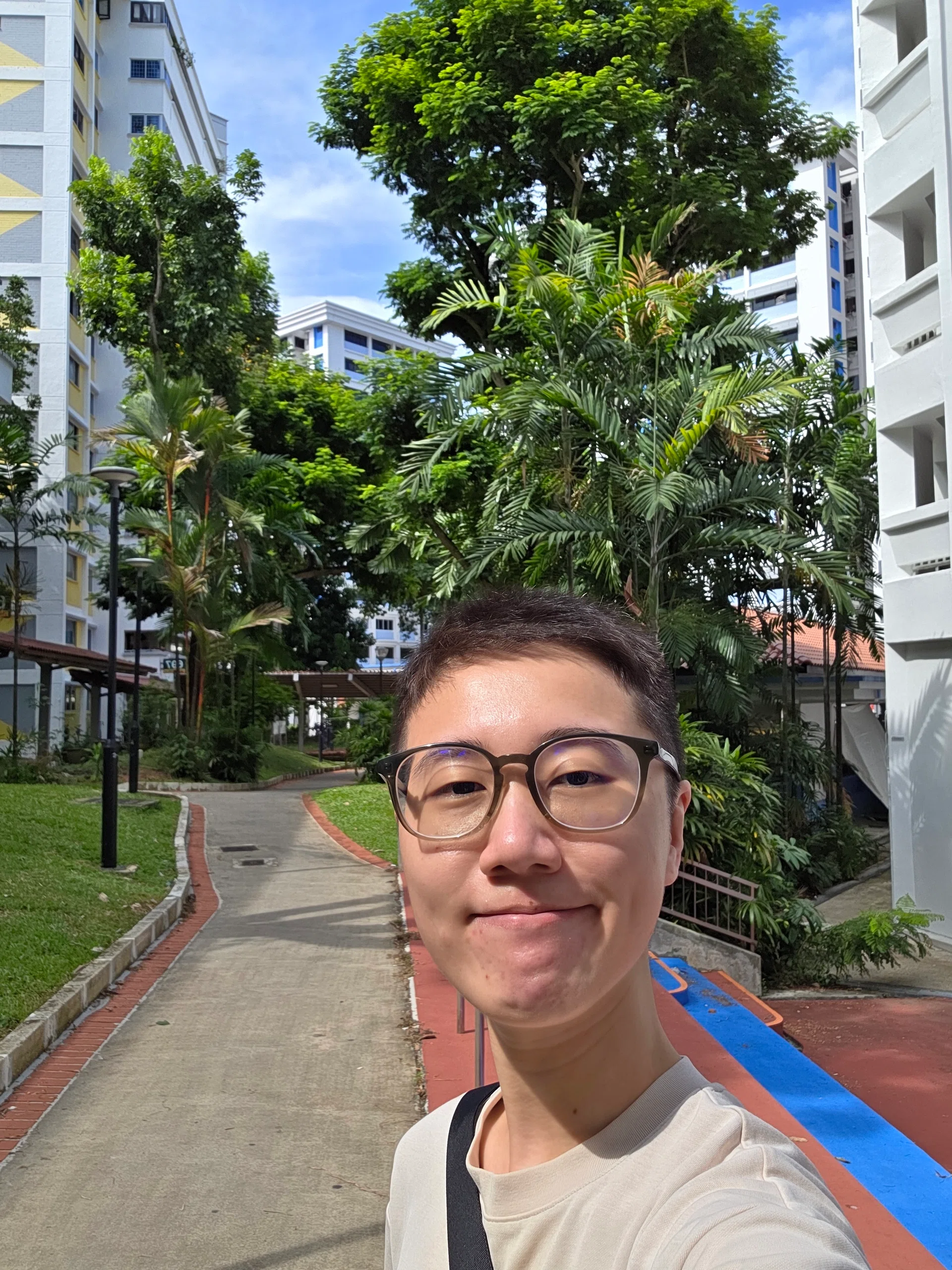
Samsung Galaxy S25 Ultra.
The selfie photo taken with the Galaxy S25 Ultra is the most accurate. From the blue steps to the skin tone, texture and blemishes, everything looks as it should. The photo also retains sharpness and detail in the foliage immediately behind the subject, and this is the only shot that managed to capture the brick texture in the grey and yellow accent wall of the HDB block behind.
Shadows in the foliage are also lifted with slightly boosted colours to give more vibrancy to the image, and all in all, this is a great shot since we’re looking for accuracy and sharpness.
Xiaomi 15 Ultra
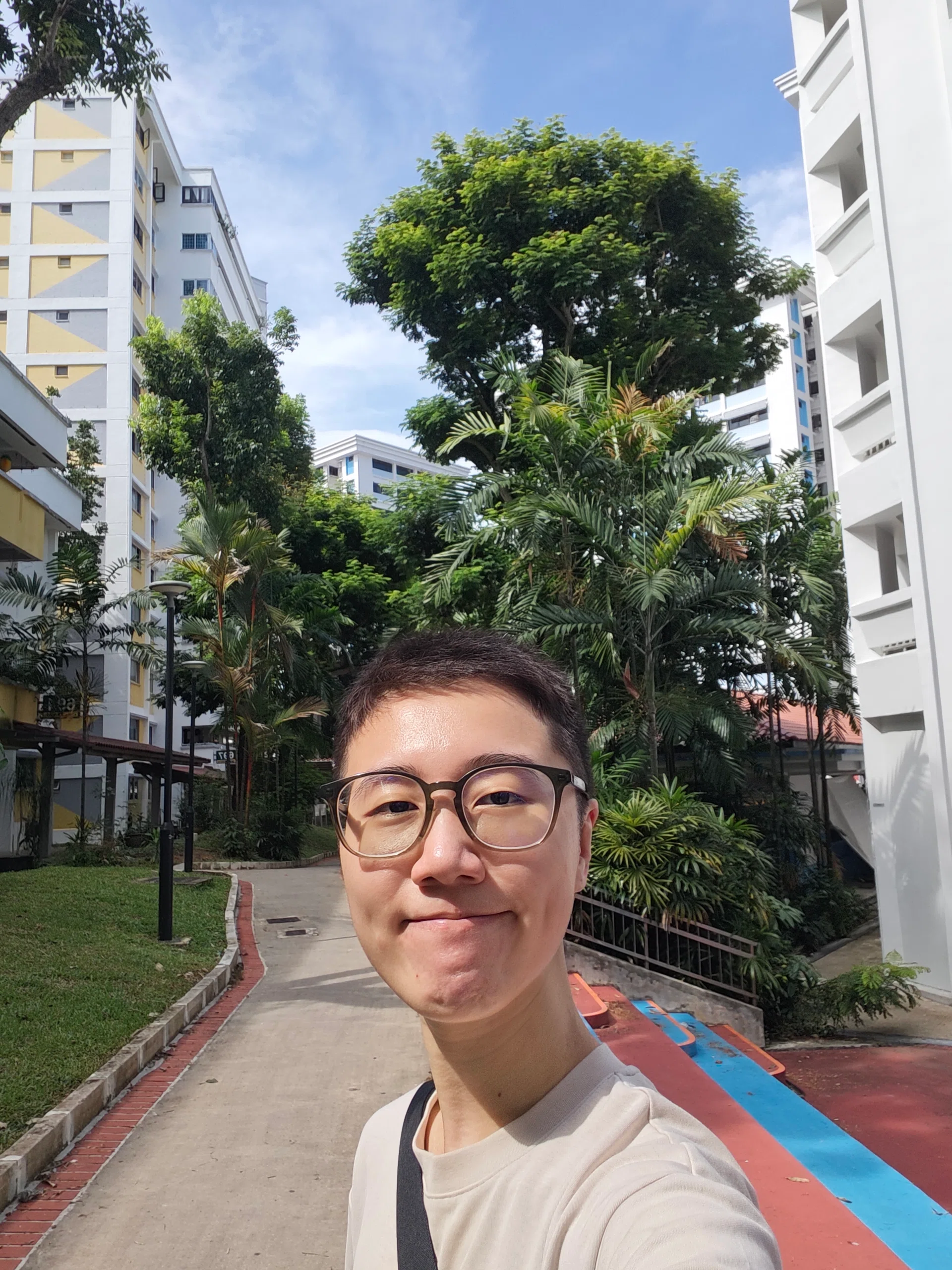
Xiaomi 15 Ultra.
The Xiaomi 15 Ultra suffers from the same colour issues as the OPPO Find X8 Pro, where the blue step is too light. However, it fares better at contrast handling. The skin tone is a little off, resulting in a more yellow complexion for the subject, and the phone also reduces redness and blemishes, even though there’s no beautification feature turned on.
Even though the background is more in focus than the Find X8 Pro’s, it’s still not quite as sharp as the Galaxy S25 Ultra’s shot. The brick texture in the yellow and grey parts of the wall are mostly gone, as a result. However, it’s still a pretty good shot, especially if you don’t mind the slight desaturation of the blues.
Best Android phone for Selfie camera performance
As with many other things in life, selfies are a matter of personal preference. Some people might want maximum beautification, while others want the photo to look as realistic as possible. Background blur is another software-enabled feature that might be nice for some but not for others. All three contenders in this mini-shootout were really great options, and we’re happy with how the photos turned out.
For this test, the cameras can earn a maximum of 5 points. We focused on the quality of the hardware and software tuning to obtain the most natural and accurate image possible.
The Samsung Galaxy S25 Ultra was our pick here, but the other two contenders offered decent alternative options that highlighted the subject well.
- OPPO Find X8 Pro: 3 points
- Samsung Galaxy S25 Ultra: 4 points
- Xiaomi 15 Ultra: 4 points
And our winner is...
As expected of flagship smartphones, all three devices are excellent choices for everyday use and shooting.
The winner in this shootout just happened to accumulate the most points through our extensive tests. Points were earned either because the winner edged out the competition or was the most competent choice for a specific type of shooting. Note that this just means the winner makes it into the next mini-shootout, and we’ll only have a sure winner at the end of 2025’s launches.
We have narrowed down the overall winner that has accumulated the most points in this shootout.
To reiterate, this is how we score now:
- Each tested category is worth a maximum of 5 points.
- The only exceptions are the main camera and low-light testing, which can earn up to 10 points.
- Points are awarded based on the final image output of the test type.
| Main camera (max 10 points) | Low-light (max 10 points) | 10x zoom (max 5 points) | Ultrawide (max 5 points) | Selfie (max 5 points) | Total (max 35 points) | |
|---|---|---|---|---|---|---|
| OPPO Find X8 Pro | 8 | 8 | 5 | 4 | 3 | 28 |
| Samsung Galaxy S25 Ultra | 8 | 6 | 4 | 4 | 4 | 26 |
| Xiaomi 15 Ultra | 7 | 7 | 2 | 5 | 4 | 25 |
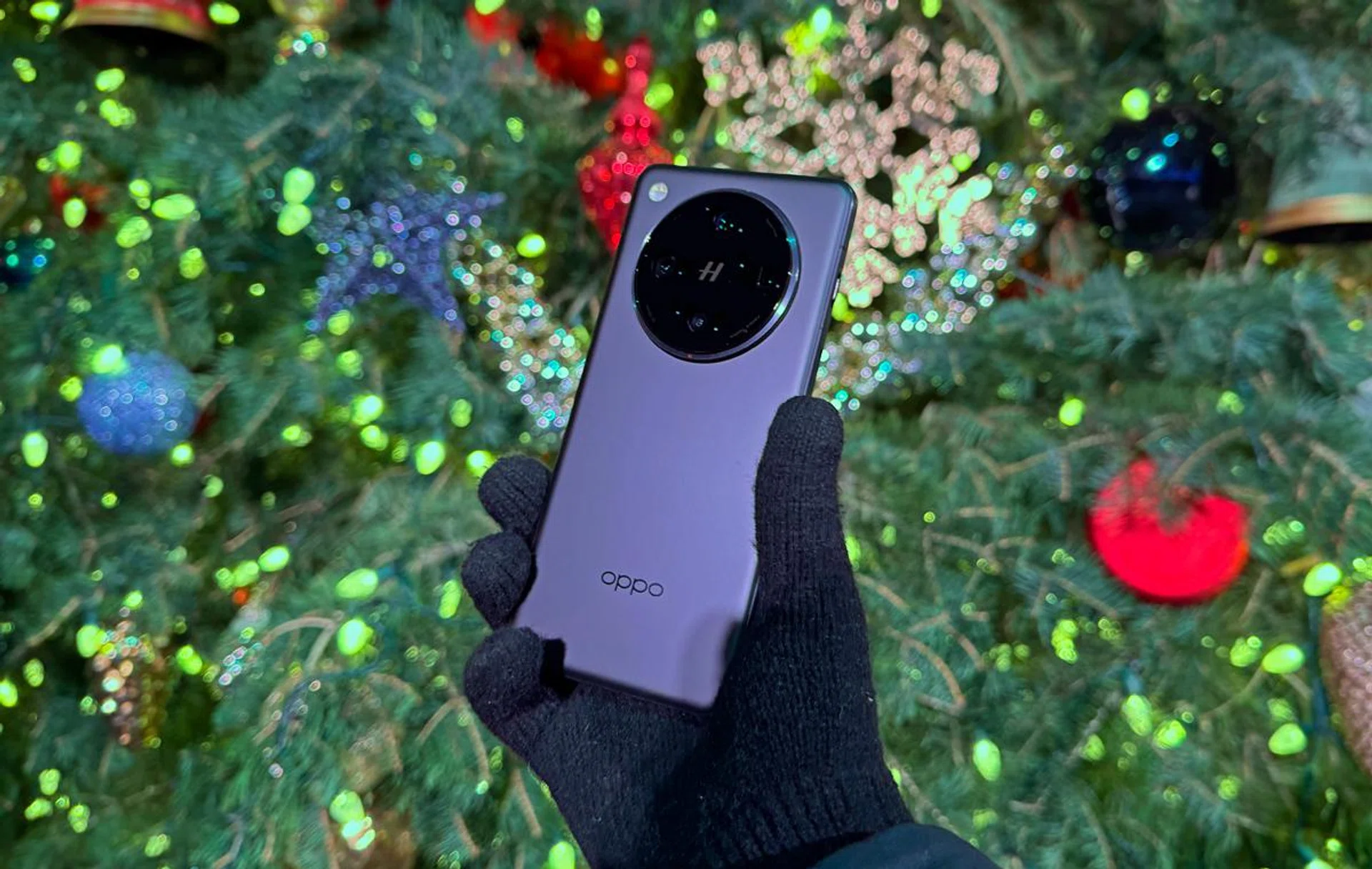
OPPO Find X8 Pro.
It was a very tough decision especially with a tie in the previous round. However, we now have a proper winner, and the OPPO Find X8 Pro has come ahead.
The Samsung Galaxy S25 Ultra remains a fantastic option for mobile photography, but the OPPO Find X8 Pro has just managed to pull ahead with its excellent performance in low-light conditions and 10x zoom capabilities. We believe the improved tuning via software update might have pushed it ahead.
The Xiaomi 15 Ultra is also a strong option, being just one point away from Samsung’s device. Despite the Leica Authentic or Leica Vibrant presets in the stock camera app, it scored nearly as high, thanks to its strong detail retention and noise handling. If you’re a fan of the more stylised look, Xiaomi’s phone might be a better choice for you.
If you’re interested in getting your hands on the OPPO Find X8 Pro, it retails for S$1,649 in Pearl White and Space Black (16GB RAM, 512GB storage). It is available at iShopChangi, KrisShop, Lazada, Shopee, TikTok Shop, Zalora, and major consumer electronics stores.
Choosing an Android phone camera that works best for you
Despite our comparison results, good technical imaging doesn’t necessarily mean it’s best for a specific person. The same camera can produce very different results based on what the photographer values.
That’s even before you factor in the rest of the Android phone, where details like security updates, smart device compatibility, battery life, or even design might affect your final choice.
The photography is only one part of a phone’s sum. We hope our feature article has helped you better understand how these flagship phones perform in different situations and informed your upcoming purchasing preferences. Stay tuned for our next shootout.
Our articles may contain affiliate links. If you buy through these links, we may earn a small commission.