
The next HoloLens will get a dedicated AI coprocessor
This means the next HoloLens will be able to analyze visual data directly on the device, without the need to go through the cloud.

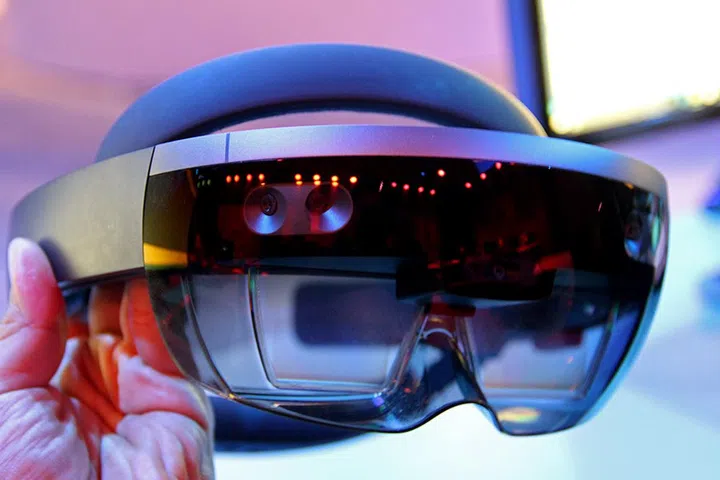
Microsoft has revealed that it’s currently working on the second version of its Holographic Processing Unit (HPU) for use in the second generation HoloLens, and it’ll include an AI coprocessor.
For some background, Microsoft’s HoloLens is a mixed reality headset featuring quite a bit of custom parts, including custom silicon like the aforementioned HPU. The HPU is capable of processing terabytes of data (including mapping data) from its sensors, and is what makes the HoloLens tick.
According to Microsoft, the new AI coprocessor is there to natively and flexibly implement deep neural networks. It will also support a wide variety of layer types that are fully programmable. What all this means is that the next HoloLens will be able to analyze visual data directly on the device, without the need to go through the cloud. Faster performance, better user experience, potential to enable new features not possible otherwise are some of the gains a native coprocessor can bring. This chip will also run off the HoloLens’ battery, which suggests its power saving capabilities when handling neural networks.
There’s no word on when HoloLens 2 would arrive, though rumors have suggested a 2019 release.
Source: Microsoft.
Our articles may contain affiliate links. If you buy through these links, we may earn a small commission.