
Singapore has developed a device that measures a diabetic’s long-term average blood sugar levels in 6 minutes
Without this device, it could take several days.
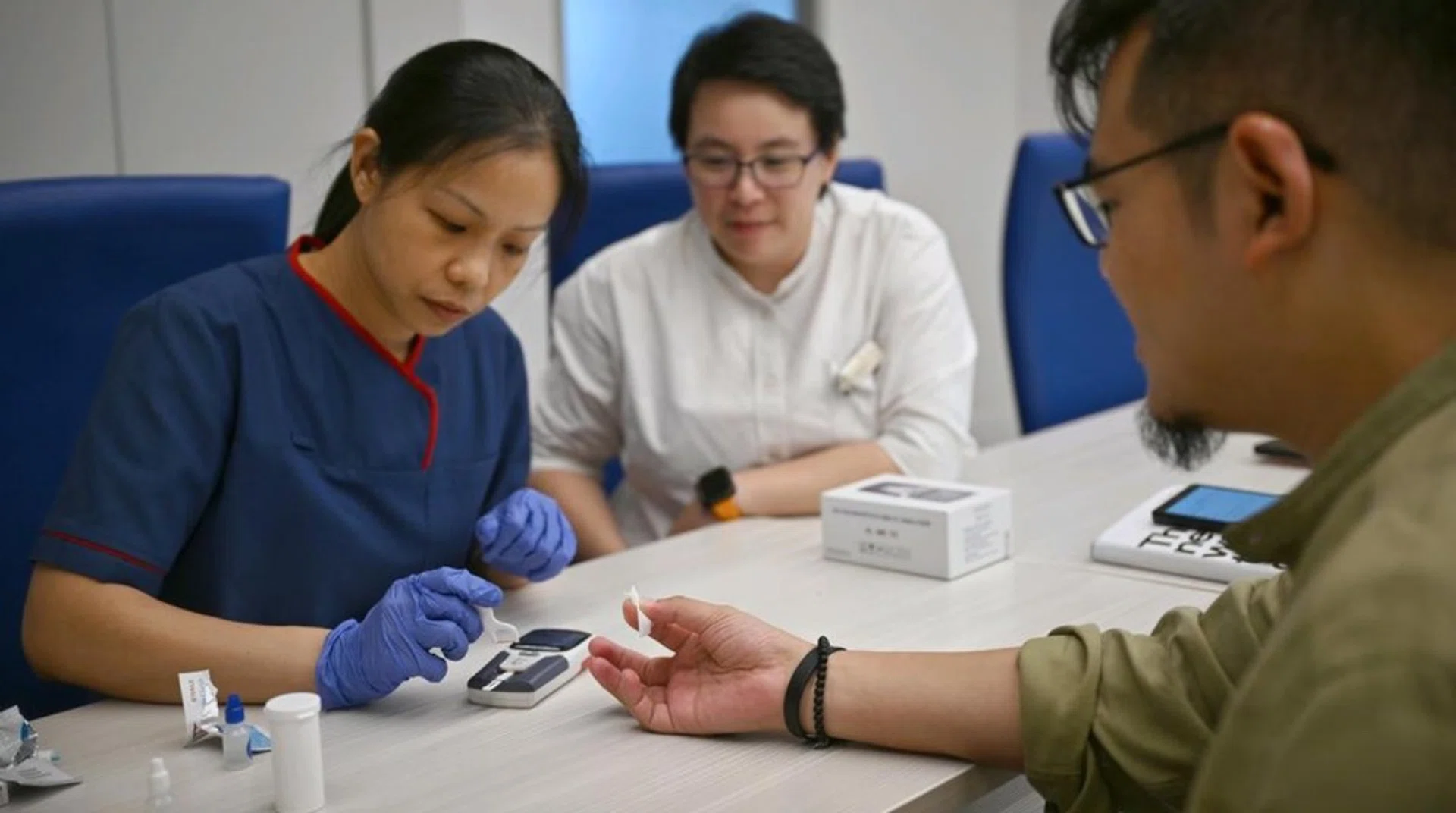
A locally developed device for diabetic patients can measure their three-month average blood sugar levels within six minutes, instead of the few days it could take now.
Unlike daily blood glucose monitoring, which only gives a snapshot of the person’s blood sugar level at the time of testing, this provides a long-term view of average blood glucose levels.
Such information is essential in managing diabetes, as it can help predict the risk of a patient developing complications in organs such as the eyes, kidneys and heart.
NHG Polyclinics, the primary care arm of health cluster NHG Health, and local medical equipment firm SG Diagnostics have developed the Rapid HbA1c Point-Of-Care-Test for Improved Care.
The blood test measures the amount of glucose (sugar) attached to haemoglobin A1c (HbA1c), a protein found in red blood cells.
Users prick their fingers using a lancet and take a drop of blood using a sampler, a small implement similar to a floss pick.
The blood is then placed on a test strip and fed into an analyser. Two buffer solutions are added to maintain the blood’s acidity levels.
Without the rapid test, blood samples typically have to be extracted from a vein and sent to a laboratory. Though polyclinics have such facilities, GPs, particularly those at smaller clinics, may not have the necessary equipment to test such samples and may have to send them out to a lab – a process that could take several days and require patients to make more than one visit to get their results.
The Rapid HbA1c Point-Of-Care-Test for Improved Care will allow patients to receive their results almost instantaneously, said Kallang Polyclinic head Valerie Teo.
“The patient will know their result on the spot before they go home,” said Dr Teo, who led the project to develop the test from 2022.
Its accuracy is similar to those of lab-administered tests, she said.
In July, the test won an Exemplary Innovation Award at the 2025 Public Sector Transformation Awards, one of 10 awards won by NHG Health.
About 300 GP clinics islandwide have already adopted the device, Dr Teo said.
Sold under the name PreciS-A HbA1c Analysis System, the device, which can be self-administered, is available on e-commerce sites such as Shopee and Lazada for $466, compared with around $25 for a lab test.
A trial that saw 30 patients take the system home for use over six months was also conducted with the aim of testing the system’s applicability for home use. The findings from that pilot are now being put together.
The test can also potentially be used during home visits or at community screenings, allowing patients to get their results quickly, said Dr Teo. Such uses are in line with Singapore’s Healthier SG preventive health initiative, she noted.
“We really want to reach our patients in the community to help ensure that patients get the gold standard way of monitoring,” she said.
According to the 2022 National Population Health Survey, about one in 12 Singaporeans had diabetes in 2022.
Separately, in July, NHG Polyclinics began a one-year trial of HealthVector Diabetes, a clinical analysis software that can estimate a patient’s three-year risk of developing chronic kidney disease stage 3A – where there is a mild to moderate loss of kidney function – and beyond.
The prevalence of the disease is about 42.3 per cent among diabetes patients here, four times higher than those without diabetes.
Developed by local healthtech start-up Mesh Bio together with Tan Tock Seng Hospital, and validated by Singapore General Hospital, the software uses clinical data to create a “digital twin”, or virtual model, of a patient’s metabolism.
This allows the risk of chronic kidney disease to be detected up to three years in advance, compared with the traditional method of using blood or urine tests, which often miss early or hidden risks.
Note: This article was written by Zhaki Abdullah and first appeared in The Straits Times on 18 August 2025.
Source: The Straits Times