
Which new Canon vlogging camera is better for you? EOS R50 V and PowerShot V1 compared
Which of these two new Canon vlogging cameras would you pick? We compare them both head-to-head. #canon #eosr50v #powershotv1
Introduction and price
Canon launched two affordable video-centric cameras designed specifically for content creators in April 2025: the Canon EOS R50 V and PowerShot V1. Now you’re probably wondering if these two cameras are “same same but different”? Let’s find out!
Click here if you're familiar with their specs and would like to jump straight into our comparison.
The EOS R50 V is a mirrorless interchangeable-lens camera (ILC) that’s priced at S$1,199, with RF-S 14-30mm f/4-6.3 IS STM PZ lens. The PowerShot V1 on the other hand, is a compact prosumer camera with a fixed 16-50mm f/2.8-4.5 lens, and Canon’s asking for S$1,399. So, while you can change lenses with the R50 V when the need arises, you are stuck with the V1’s fixed 16-50mm f/2.8-4.5 lens.
The R50 V has a larger 24-megapixel APS-C CMOS image sensor, giving it roughly 9% more resolution than the V1’s 22-megapixel 1.4-inch type BSI-CMOS image sensor. While smaller than APS-C, the V1’s sensor is much bigger than Sony’s 1-inch type sensor for compact cameras, and is comparable to Micro Four Thirds.
The V1 might better Sony’s point-and-shoot compact cameras with 1-inch type sensor, but the R50 V’s larger sensor size - about 1.5 times larger surface area than that of V1 - should theoretically give it an edge over V1 in terms of dynamic range, low-light performance and noise management.
Video features
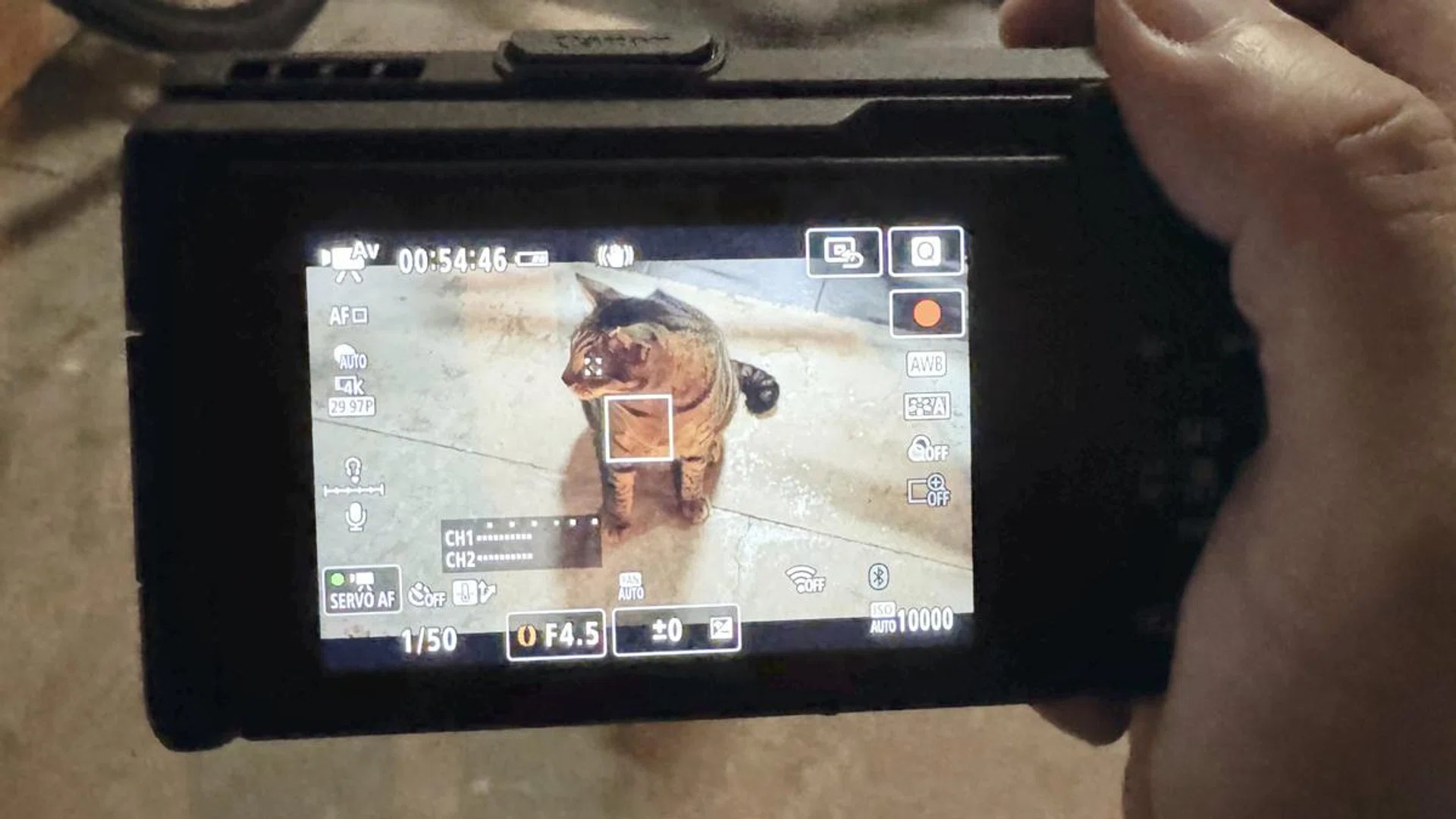
Canon PowerShot V1’s automatic subject tracking is able to track this community cat’s eye easily. Photo: HWZ
When it comes to video, both cameras support 4K video recording at 30 frames per second (fps) using full width of their image sensor, and 120fps high-speed video for slow-motion effects.
For 4K 60fps video recording, the R50 V will take a 1.5x crop while the V1 will take a 1.4x crop. Both supports 10-bit 422 videos in Canon C-Log 3 format. However, the EOS R50 V will be able to deliver higher colour accuracy for professional-grade video editing, as it features Custom Picture. This feature gives you the ability to use presets straight from the camera and the option to upload their own LUTs (Look Up Table) to achieve a distinct look.
On the flip side, the V1 features a built-in neutral density (ND) filter, which allows users to shoot with larger apertures in bright lighting conditions—an essential feature for outdoor videographers. And surprisingly, the V1 offers faster continuous shooting of 30fps (electronic), compared to the R50 V’s 15fps (electronic). The V1 also has a faster 1/16,000s maximum electronic shutter speed, compared to 1/8,000s on the R50 V.
In terms of autofocusing (AF), both cameras include features like eye tracking AF and face detection, but the R50 V has an additional vehicle tracking AF function.
Both cameras share the same ISO range of 100–32,000 (expandable to 51,200), ensuring flexibility for shooting in various lighting environments. Both also use the same Canon LP-E17 battery and has a single UHS-II SD card slot.
Design and handling

Canon PowerShot V1’s mode dial (left) versus R50 V’s video-centric mode dial. Photo: HWZ
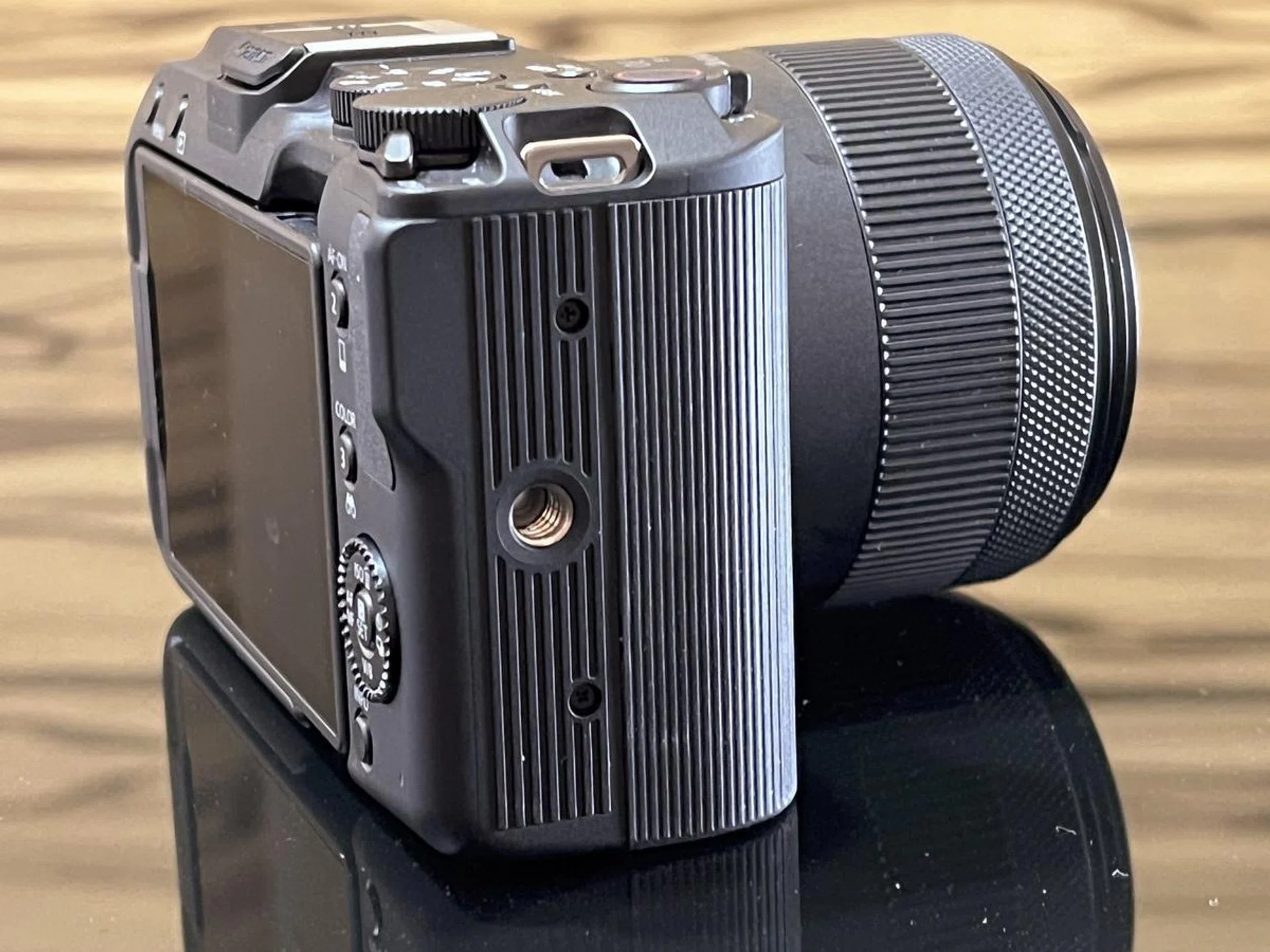
Canon R50 V features an additional tripod mount on its grip for vertical shooting. Photo: HWZ
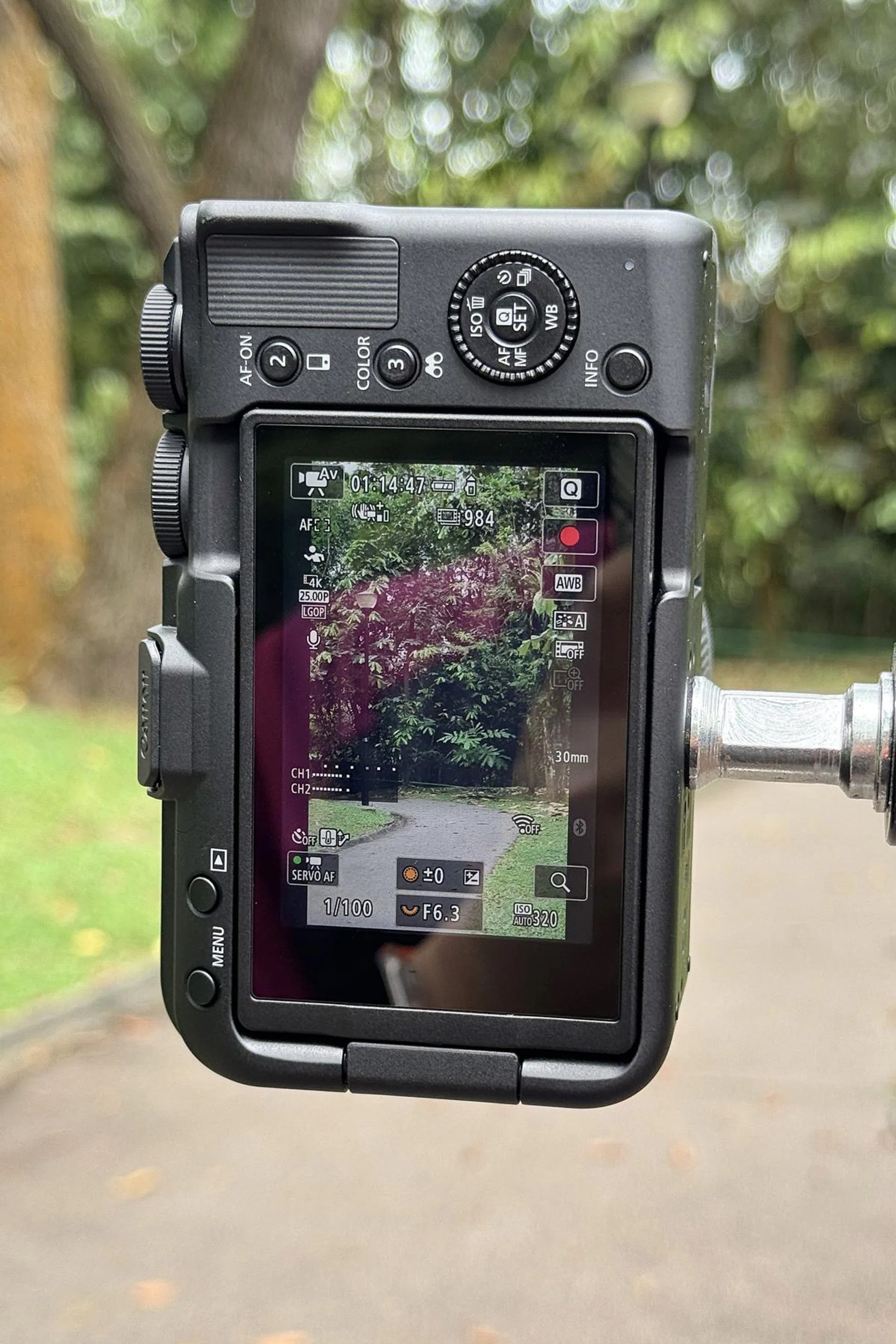
Canon R50 V’s display settings will turn into vertical mode in portrait orientation. Photo: HWZ
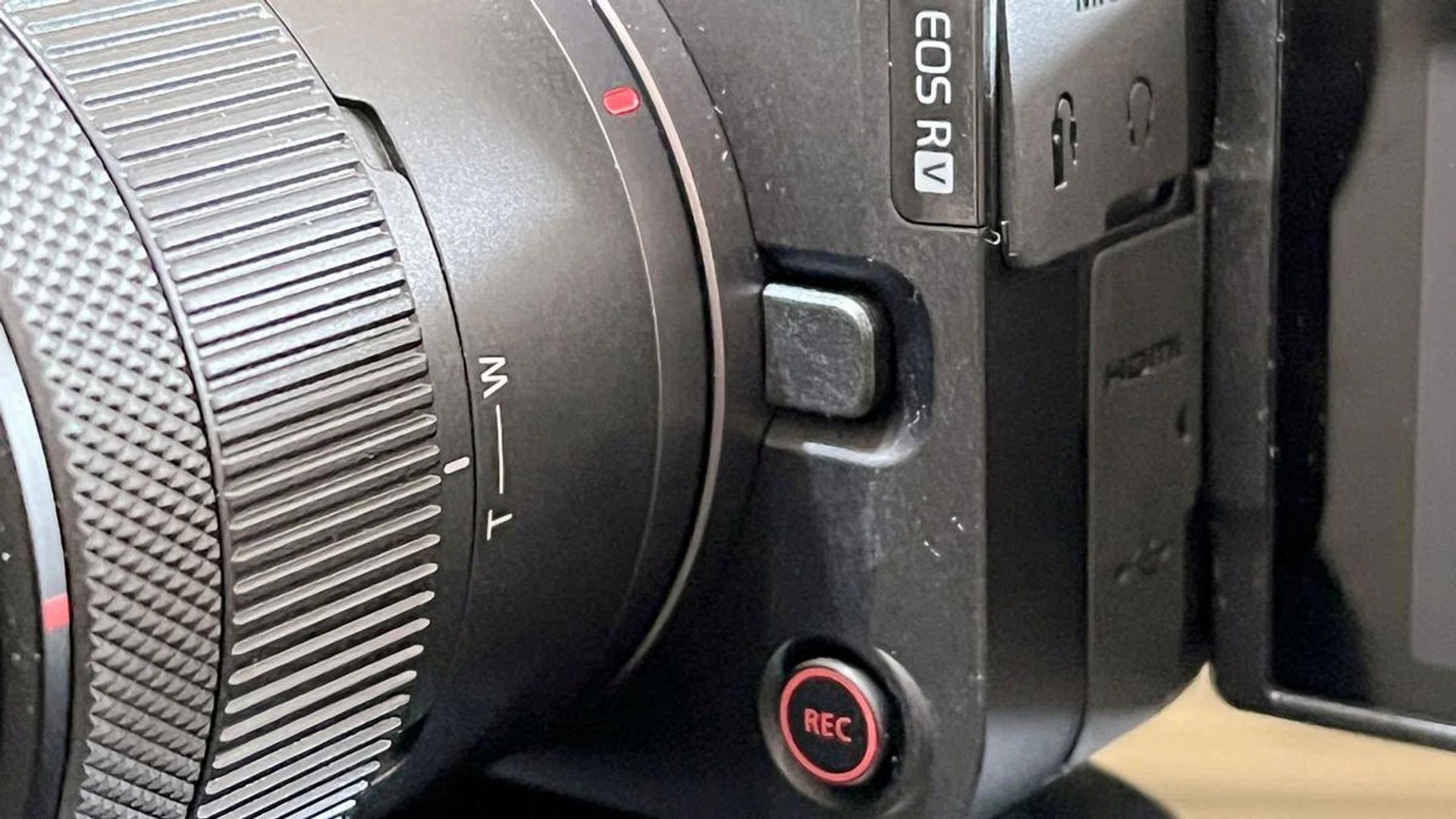
Canon R50 V features a convenient front video recording button. Photo: HWZ
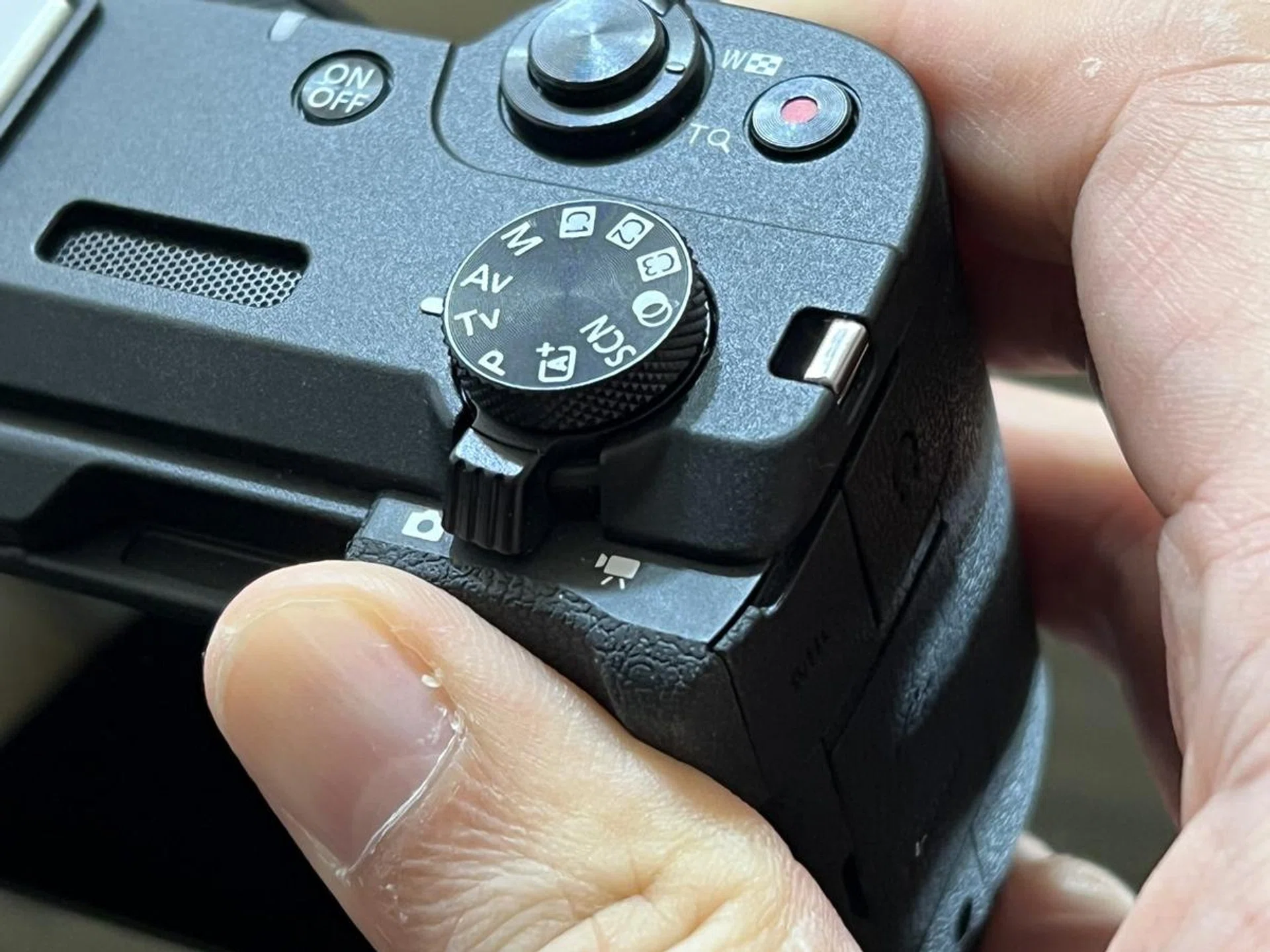
This V1 lever switch lets you easily toggle between video recording and photo shooting. Photo: HWZ
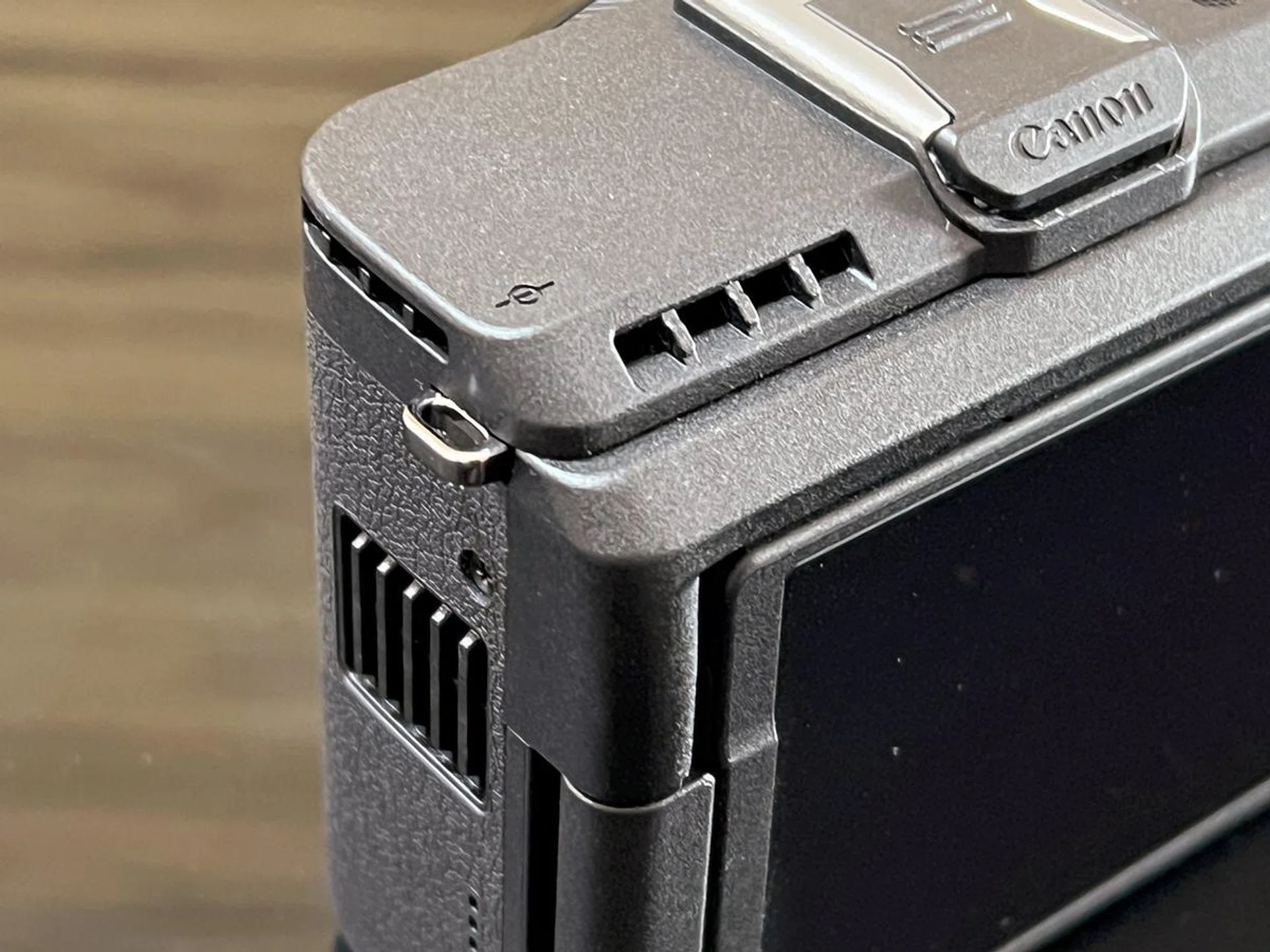
The Canon PowerShot V1 features a cooling fan - not something you find one in a camera. Photo: HWZ
Being a mirrorless ILC, the R50 V has a more SLR-style aesthetic. It comes with a top command dial and a rear command dial for quick changing of settings, found commonly in mirrorless systems. I like that there is a lever switch for quick powering on and both shooting and video recording can be activated by the same shutter release button sited on top.
But if there is any hint that the R50 V is being video-centric, look no further than its mode dial. Sited on top beside the command dial, the mode dial contains all the different video modes with only one photo mode.
Furthermore, the R50 V features an additional tripod mount on its grip, thereby allowing you to mount the camera and shoot in portrait orientation. When in portrait orientation, the display settings will automatically switch to vertical mode as well for easier viewing. This is a nice touch, but it only happens when in video mode.
To further accentuate the selfie video experience, the R50 V has a convenient video recording button in front sited just below the lens release button.
In terms of size and weight, the R50 V is pretty compact, portable and lightweight for a mirrorless system. Without any lens, the R50 V body weighs a mere 370g. Even with the RF-S 14-30mm f/4-6.3 IS STM PZ kit lens, the package is only 551g light.
On the other hand, the V1 may seem heavier at 429g at first glance. But its all-in-one design eliminates the need to carry extra lenses. And since the R50 V isn’t going to work without a lens, the V1 is still lighter. Thus, V1 is definitely more convenient for travel and casual photography.
Looks wise, the V1 certainly follows the compact point-and-shoot design formula. Despite its “V1” moniker, its design does not have the “video-centricity” of R50 V. It comes with a more conventional mode dial on top that features the usual Aperture-priority, Shutter-priority and Program shooting modes for stills.
But what I like the most about V1’s design is its quick lever near the rear thumb rest that lets you easily and quickly switch between video recording and shooting stills.
A bit of a nitpick here, but I wish that the V1 follows the R50 V’s shutter release button that does both video recording and stills shooting. Instead, there is a dedicated button beside V1’s shutter release button to start and stop video recording. Maybe I was using the two cameras at the same time, but I found myself keep pressing the shutter release to shoot video.
However, the V1 has a secret weapon that R50 V lacks - a built-in cooling fan. According to Canon, this cooling fan allows V1 to record video of over two hours at an ambient temperature of 30°C. By comparison, the R50 V can only shoot for an hour. Frankly speaking, I really don’t know if anyone will continuously shoot for that long. But it is certainly a good to have.
Same pros, same cons
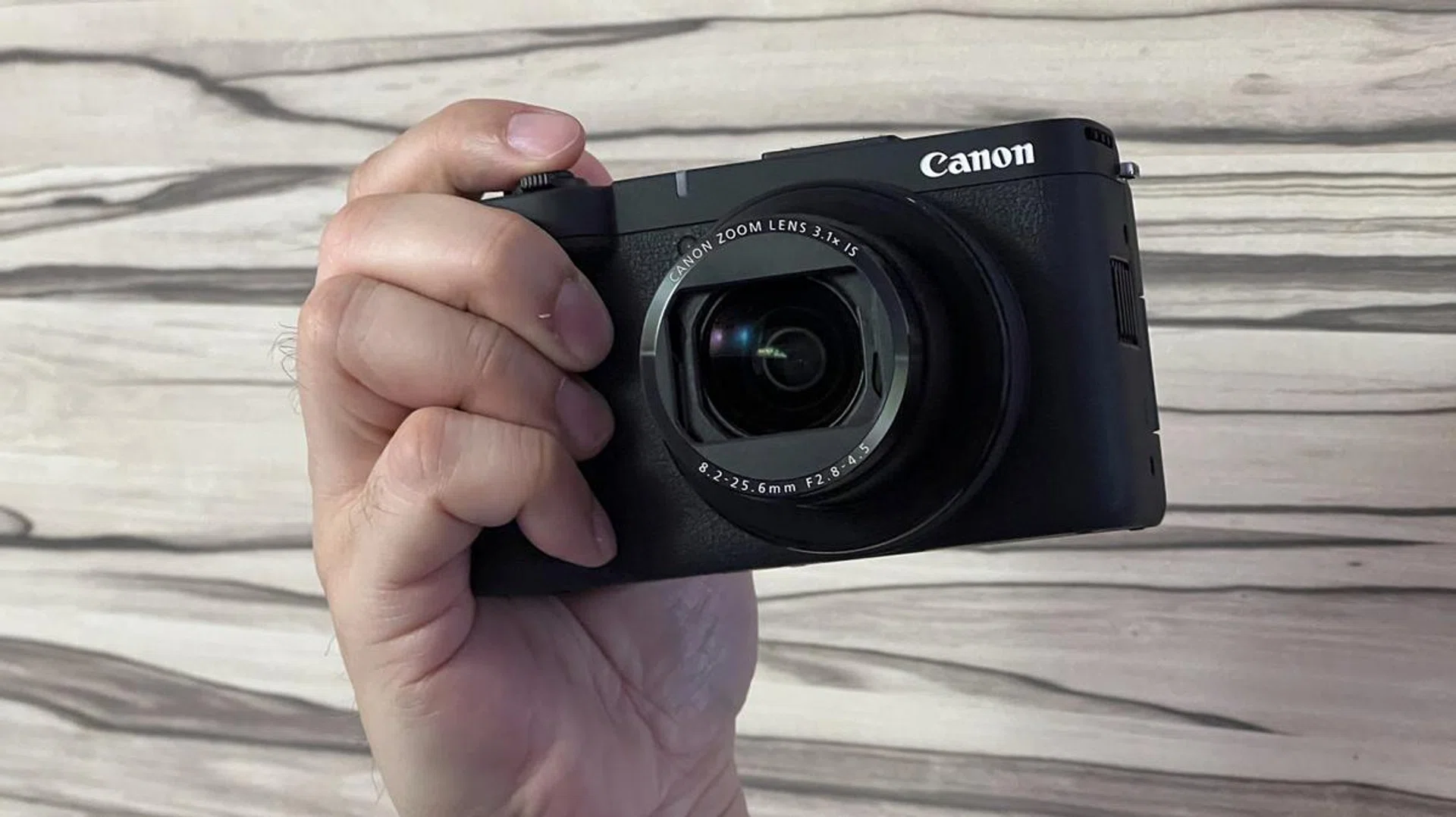
Both Canon EOS R50 V and PowerShot V1 feature a great grip. Photo: HWZ
In truth, both cameras share many similarities: a 3.0-inch fully articulated touchscreen display with a resolution of 1.04 million dots, and I also like that both cameras offer a solid rubberised grip that easily accommodates all my fingers.
On the downside, both cameras lack weather sealing, so you should be careful when shooting outdoors in rain or other challenging conditions. Additionally, both cameras lack an electronic viewfinder (EVF). This is normally the case for cameras with a video-centric design, but it's one of those camera-only features you don't get on smartphones and nice to have when working under bright sunlight outdoors.
Performance comparison
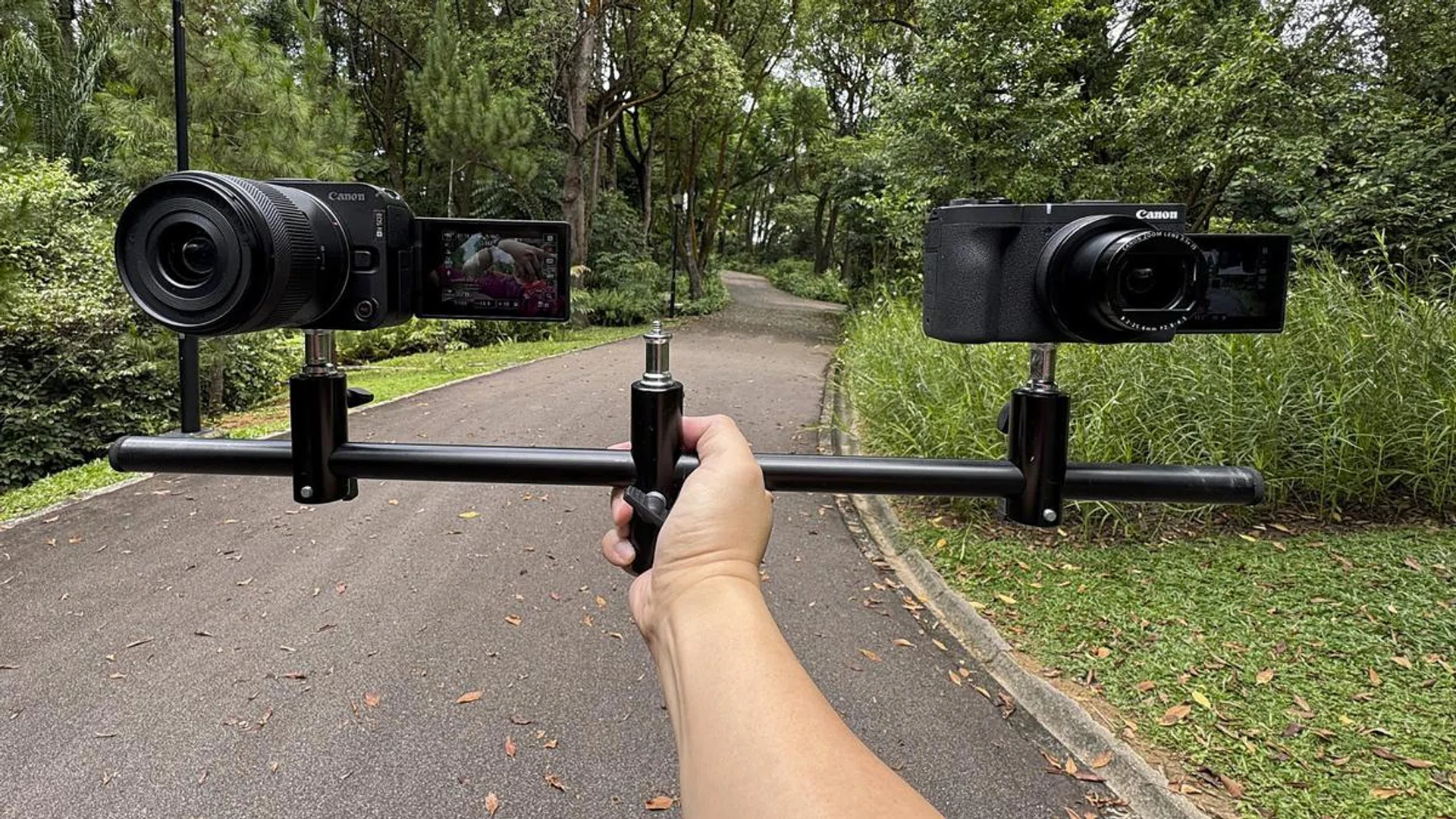
A simple rig to video approximately the same scene with both cameras. Photo: HWZ
For this comparison, I created a simple rig to mount two cameras together so as to compare the videos recorded as close as possible. This rig is used to do the walking and jogging tests during video recording.
With the R50 V’s image sensor 1.6x crop factor, the 14-30mm translates to around 22.4mm to 48mm. Thus, the V1 has a wider focal range of 16mm to 50mm. So, as much as possible, the tests are done using the widest focal length of both cameras. In addition, all videos (4K 30fps) and photos are taken using auto mode as much as possible to ensure fair testing. If not, both will be using same settings, such as aperture-priority, for the same scene.
It’s fair to say both cameras have no issues shooting videos on a tripod or stationary. Thus, I took it for a walk at Kent Ridge Park for some testing. The tests involve selfie video recording - walking, jogging, night - product demo and slow motion.
In all the examples below, the top video is from the R50 V and bottom video is from the V1.
Vlogging
Apart from V1’s wider point of view, I do not see much difference between the two videos in terms of image quality. As you can see below, both videos display great sharpness and accurate colour reproduction as the weather that day. While both in-camera mics do pick up a lot of ambient noise, my voice was still pretty audible. Great for content creators.


Winner: Tie
Image Stabilisation
The image stabilisation for V1 and R50 V’s lens is superb. You can barely see any visible shake from walking about in the examples above. As such, I went for a slow jog to see if there are any difference. Granted that I was not running too fast, videos shot by both cameras only show little jerks. The V1 seem to do a slighter better job in stabilisation here.


Winner: PowerShot V1
Night video
Next, I took both cameras to the rooftop of Vivo City at night for a quick trial. As you can see from below, the R50 V video has more noise compared to the V1. The V1 also seem to render colours more vividly, though the R50 V’s rendition is more accurate to the real-life conditions.


Winner: PowerShot V1
Product Demo
Both cameras offer the close-up demos mode, which automatically focuses on a product when you hold it up and changes focus to you when you put down the product. As you see from the examples, both cameras did a great job in focusing back and forth the product and the presenter. This presenter did not do as great a job as the cameras, but pro content creators will love this feature and no doubt fully utilise it.


Winner: Tie
Slo-mo for the drama
If you want to shoot slow motion videos, both cameras can only do so without audio. Apart from some flickering in V1 slow-motion video and R50 V’s bluish colour (photographer’s accidental press), there is little to separate the two.


Winner: Tie
Zoom
During video recording, you might want to zoom in cinematically to a scene. As evident from the videos below, the R50 V offers a better and more natural zoom, probably due to the kit lens. However, the V1 was unable to offer that smooth zoom. But still, it should good enough for most purposes.


Winner: EOS R50 V
Stills (for the gram?)
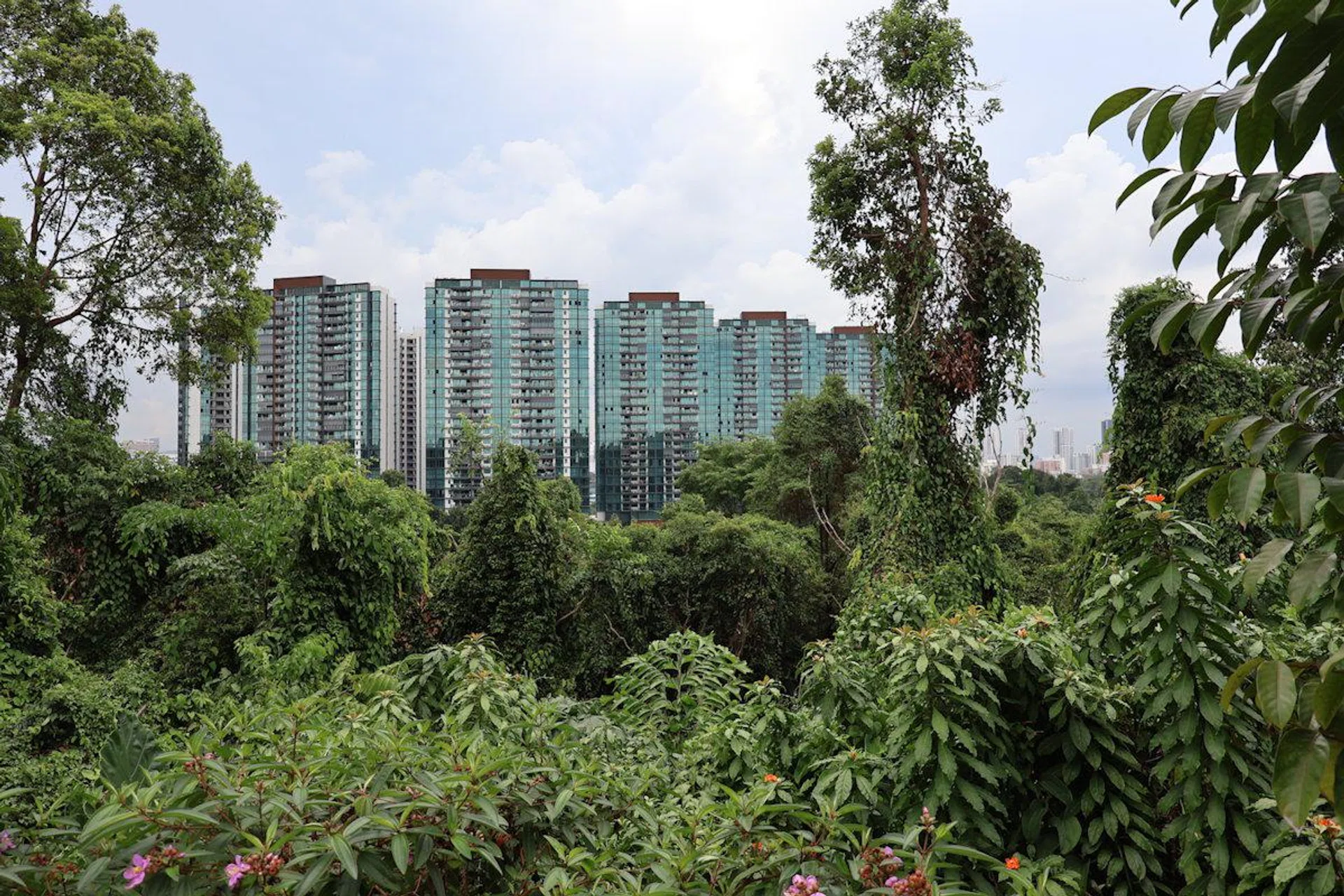
EOS R50 V (Day) - 22.4mm at f/4, 1/640, ISO 100. Photo: HWZ
So far, the differences in video quality between the two cameras have been minimal. What about stills? This is where the R50 V’s larger image sensor finally shines. For day shots, the R50 V’s shot has better dynamic range, where you can clearly see the clouds with the vegetation having great details. But you cannot even make out the clouds in V1’s shot.

PowerShot V1 (Day) - 16mm at f/2.8, 1/640s, ISO 100. Photo: HWZ
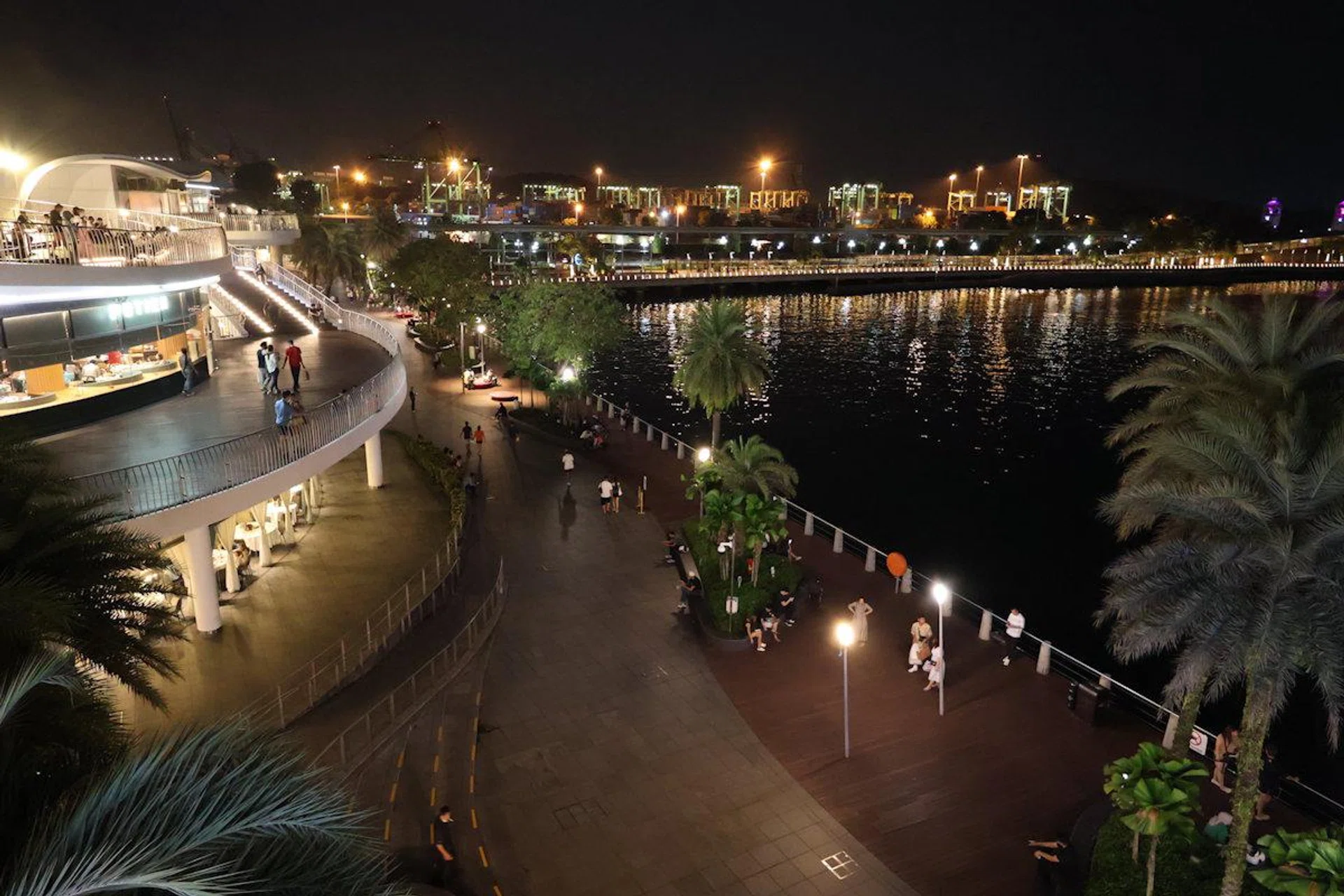
EOS R50 V (Night) - 22.4mm at f/4, 1/20s, ISO 6400. Photo: HWZ
For the night shots, the R50 V also works better with greater retention of details in the coconut trees at the foreground. By comparison, the coconut trees of V1’s shot are losing details and the overall photo is more “noisy”. Nonetheless, both cameras offer good stills for their class.
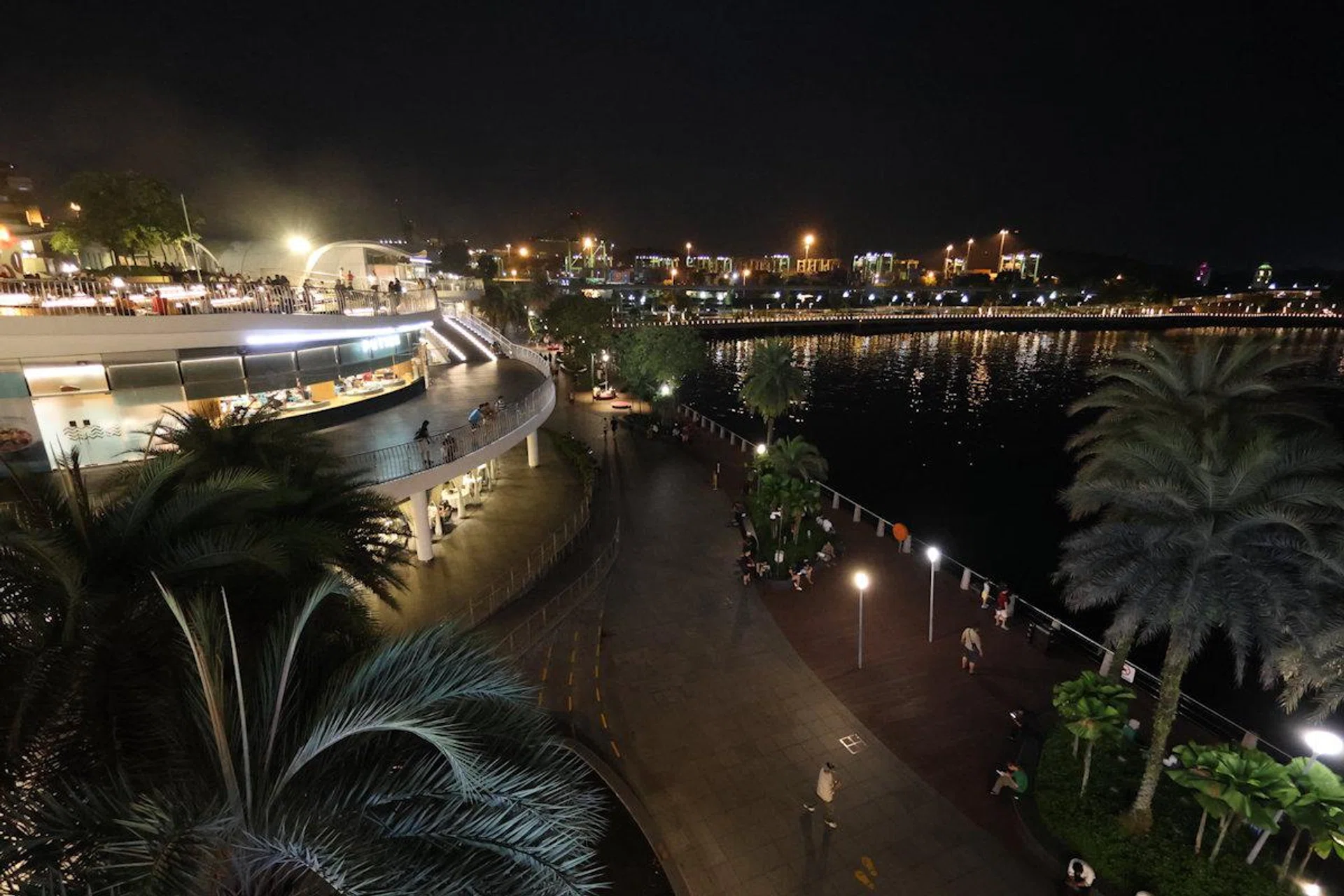
PowerShot V1 (Night) - 16mm at f/2.8, 1/64s, ISO 6400. Photo: HWZ
Winner: EOS R50 V
Battery life
On paper, battery performance is another area where the R50 V should excel, offering a rated 370 stills per charge compared to the PowerShot V1’s 300 stills. However, during my tests, I found that the battery life of both cameras did not differ much. Both dropped to 50% battery level after taking around 30 video clips averaging around 30 to 40 seconds each and about 30 still shots. Mileage will of course differ, as I also spent time looking through the user interface and changing settings via the display of both cameras.
Winner: Tie
So, which is the better Canon?
Comparing R50 V and V1 is like comparing two coffee machines - a manual espresso maker vs a superautomatic- both catered to coffee lovers, but with different workflow requirements.
With its interchangeable Canon RF mount, the EOS R50 V offers access to a wide array of RF lenses, enabling customisation for different shooting scenarios. This flexibility adds a layer of future-proofing, which makes it appealing to enthusiasts looking to grow their gear over time for both video and photography purposes. Not to mention, its larger sensor, an additional tripod mount for shooting in portrait orientation and its lower price tag help to work towards its favour.

The million (or more like thousand-ish) dollar question - Canon R50 V or Canon PowerShot V1?. Photo: HWZ
On the other hand, if you’re a casual vlogger looking to upgrade your videos from a smartphone, but want to maintain a similar ease of use, then the PowerShot V1 is an ideal all-in-one solution that produces great results. Its built-in lens, compact design, and unique cooling feature make it perfect for on-the-go or travel use without the hassle of carrying additional gear. It makes for a great back-up camera too.
Ultimately, we found that for the purpose of content creation, both cameras are pretty much on par and will deliver excellent video performance out of the box for most vlogging situations. You will do well with either camera. The choice ultimately comes down to your required functionality rather than trying to peg down which model is “better”.
Why Canon EOS R50 V?
- Lower price point
- Better quality stills
- Can change lens
- Additional tripod mount for portrait-orientation shoots
- Smoother zoom with RF PZ lens
Why Canon PowerShot V1?
- Lightweight, slim and compact design
- Built-in zoom lens
- Convenient lever switch to toggle between photo and video mode
- Cooling fan feature for longer shoots
- Built-in ND filter for bright light scenarios
Our articles may contain affiliate links. If you buy through these links, we may earn a small commission.