
The Panasonic GH2: A Multi-Layered Camera of Diverse Might
The Panasonic GH1 released in 2009 was the first Micro Four Thirds camera to record full HD video and it was also the first camera with an interchangeable lens to have auto-focus while shooting video. And because it was designed without the classic DSLR mirror, it was small - even smaller than HD DSLR cameras. We check out if the upgraded GH2 has the chops to better its predecessor.

Introduction
The Panasonic GH1 was the second-ever Micro Four Thirds (MFT) camera when it was released early 2009 and the first MFT camera to record full HD video. Amongst Panasonic's MFT stable, the GH series is defined as the flagship line, as well as its star model for shooting video.
Even though the Canon 5D Mark II was already making HD DSLR waves from 2008, the GH1 was remarkable for being the first camera with an interchangeable lens to have auto-focus while shooting video. And because it was designed without the classical DSLR mirror, it was small – smaller than HD DSLR cameras.
Now what's new with the GH2? Under the hood, the biggest changes are its ability to shoot at true 50 frames per second compared to the GH1's 25fps (or 60fps for the NTSC version). A new sensor increases the megapixel count from 12MP to 16MP, and also expands the upper ISO limit from ISO3200 to ISO12800. The LCD screen is now touch-screen, like the before it.
Now that you've an idea of the GH2's positioning and improvements, it's time we take an even closer look at it and scrutinize its performance.
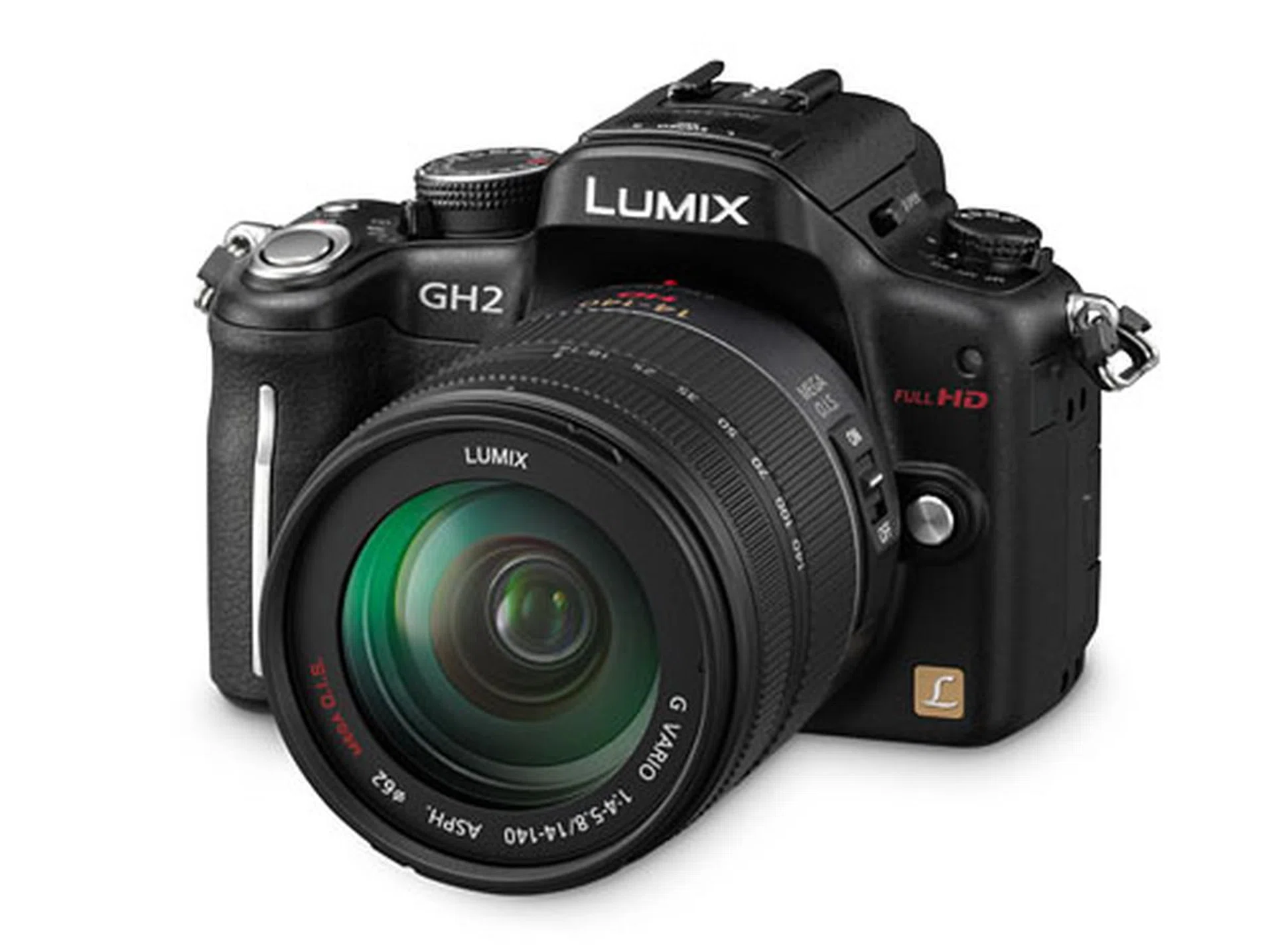
Does the Panasonic GH2 manage to live up to the name established by the GH1 and better it like its specs suggest? Read on for our conclusion in this concise review.
Design & Handling
Outwardly the GH2 looks more 'serious' compared to the GH1. The GH series is Panasonic's MFT top-end line and the GH2 has been redesigned to reflect that. Even though it's still a plastic body, the GH2 has a textured finish which makes it look more like metal, and the professional look is augmented by leather accents which wrap the front and back grips. Its slightly heavier body imparts a solid heft to the camera which makes it not only look but feel more substantial. The control wheel has been moved from the front of the body to the back, a change which feels more comfortable to us.
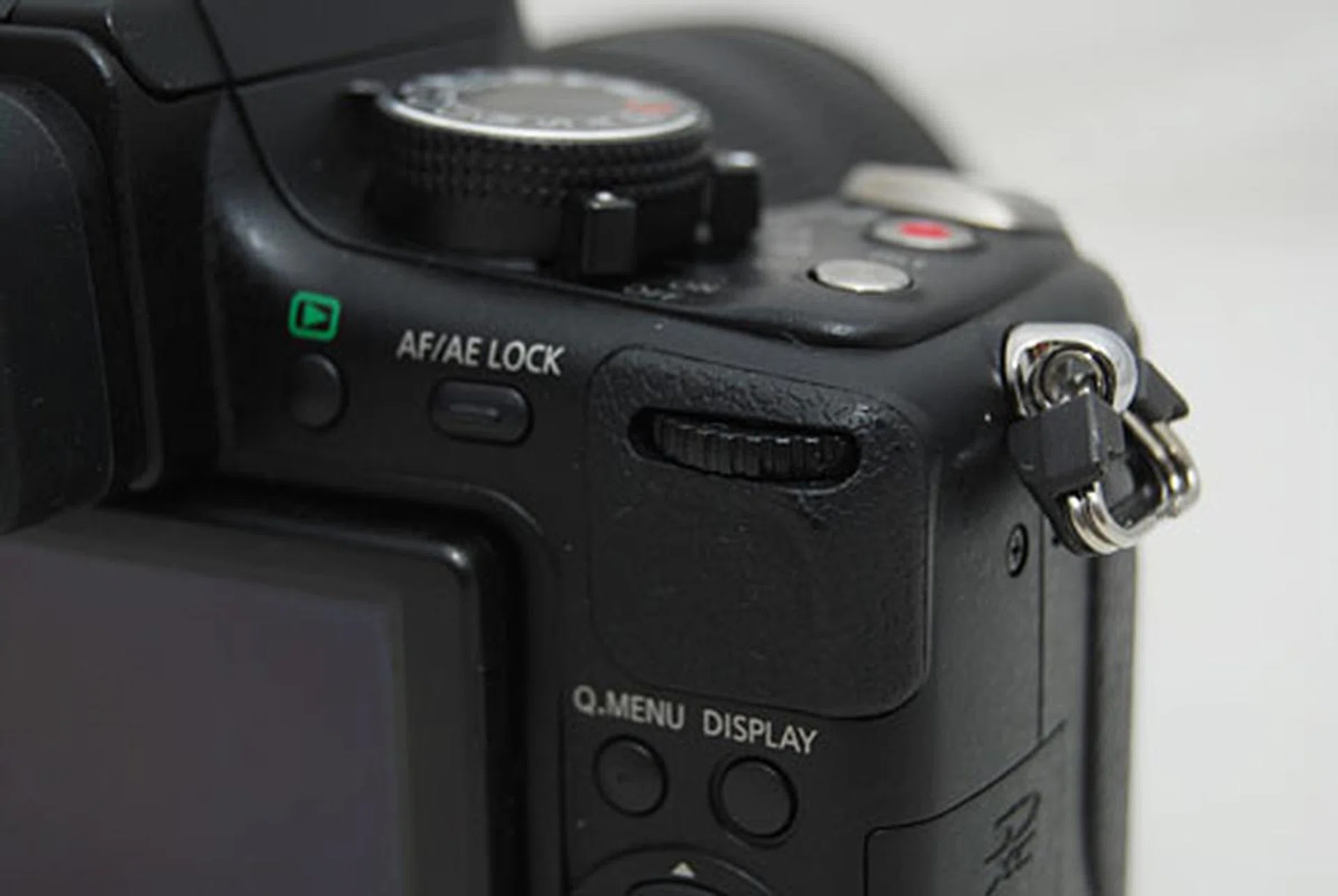
The control wheel has been moved from the front of the body to the back, a change which feels more intuitive.
The GH2 also bolsters its professional status with three savable Custom settings on the Mode dial, and three customizable Function buttons, two on the d-pad and one on top, replacing the dedicated iA (intelligent Auto) button. An additional auto-focus mode dial has been added on top of the focus mode lever. The GH1 was already an easy camera to use, and the GH2 makes it even easier with the new control layout. And of course, there's the new touch screen LCD.
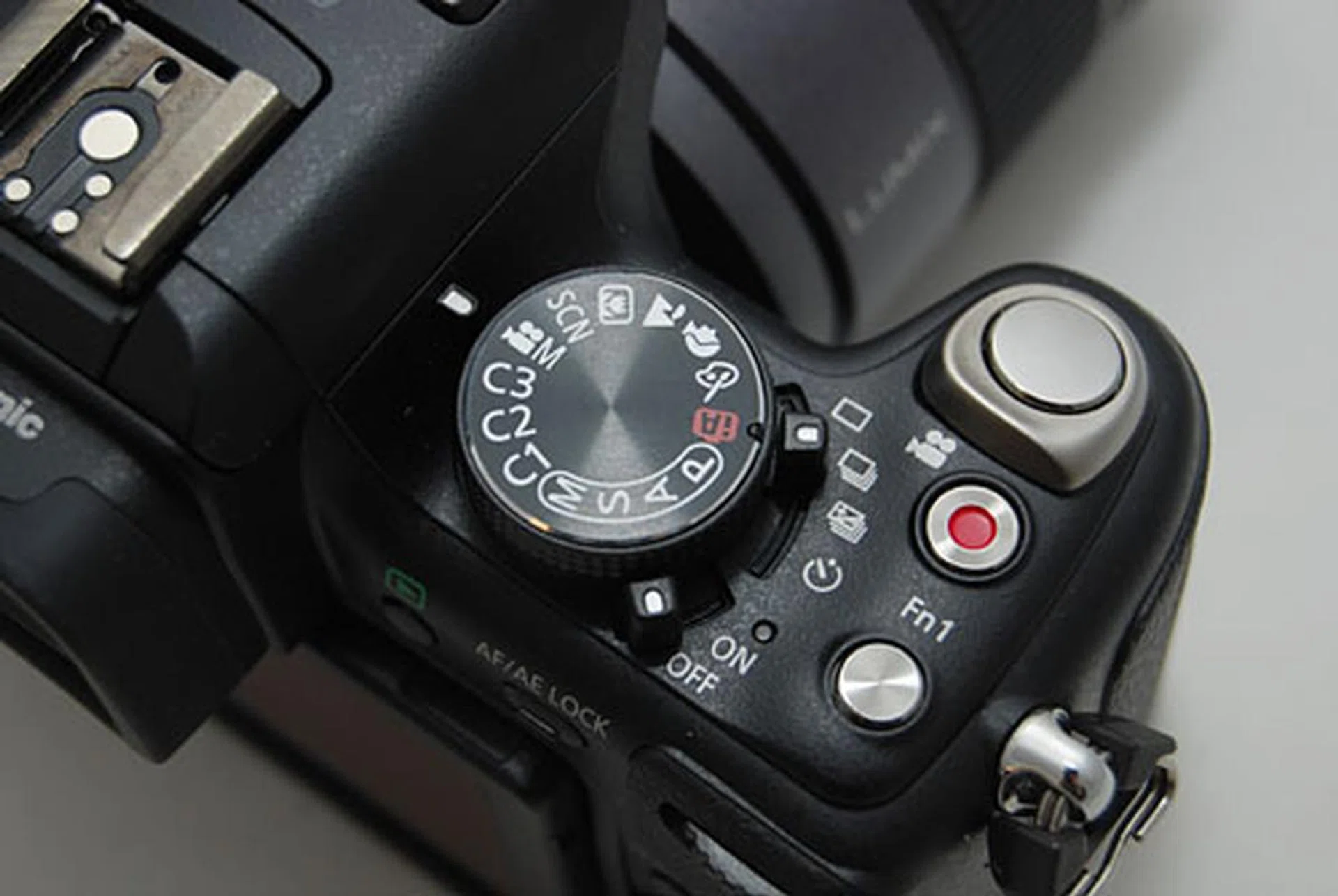
Three custom settings can be saved to C1, C2 and C3.
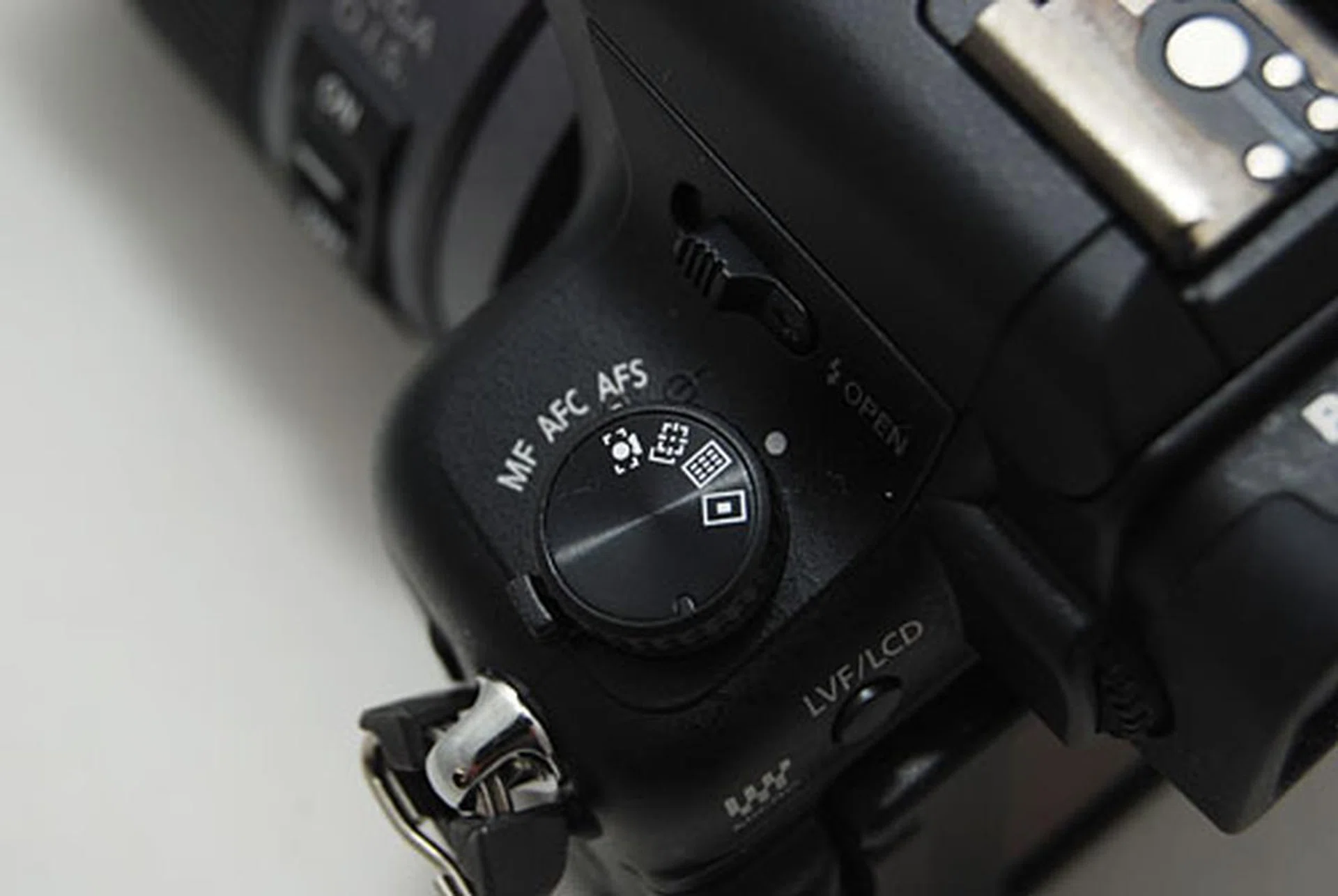
A auto-focus mode dial has been added on top of the focus mode lever. The GH2 gives you quick access to most manual settings.
Like the and the before it, the GH2 does touch right. . You can shoot either with or without using the touch controls and still get the same things done, or you can work both touch and physical controls in tandem for easier and smoother operation. For example, to change settings you can invoke the Quick Menu button and go through options using the d-pad, or tap on the Q. Menu icon on the screen and tap on the screen icons directly.
One of our favorite uses of the touch-screen is to take over focus by tapping on the subject on the screen using Live View, which tells the GH2 to focus its attention on subjects in that area. This works well when shooting either video or photos, and is especially useful when guiding auto-focus during a video shoot. You can't enjoy these new touch features when using the Live Viewfinder (LVF) of course, but even then shooting through the LVF is an enjoyable experience. The GH2 has a bright, responsive digital LVF which will satisfy anyone used to shooting through a DSLR viewfinder.
Image Performance
The GH2 scores a very high resolution of 2000 x 2000LPH on our resolution chart, an impressive result not just from a Micro Four Thirds camera but from any DSLR camera. This rang true also out of the lab, with shots full of minute detail and beautiful pictures with punchy colors especially in the warmer tones. The quick contrast auto-focus Panasonic is known for its stills, shines on the GH2 as the subjects are focused on fast and accurately almost every time.
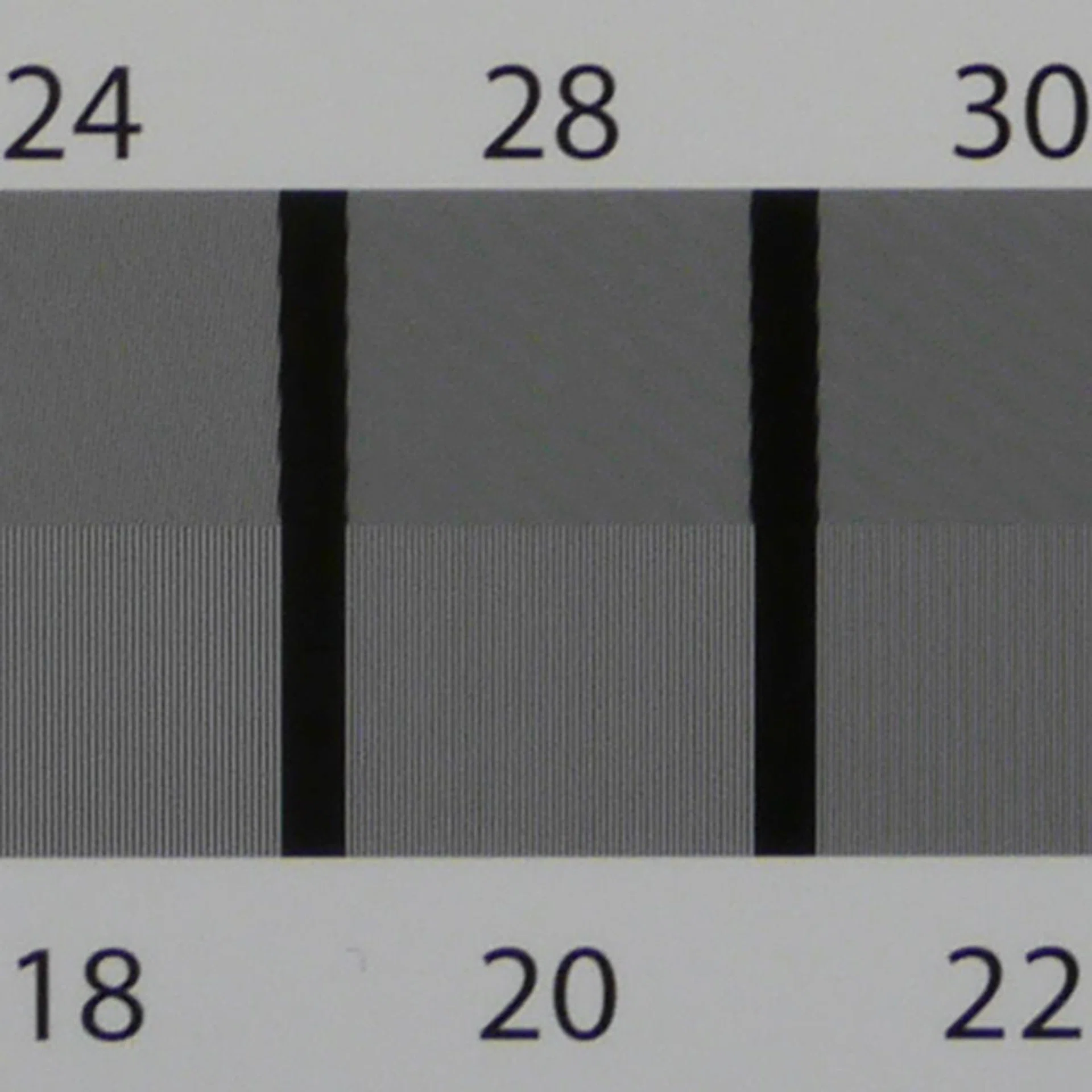
Results from our resolution chart test.
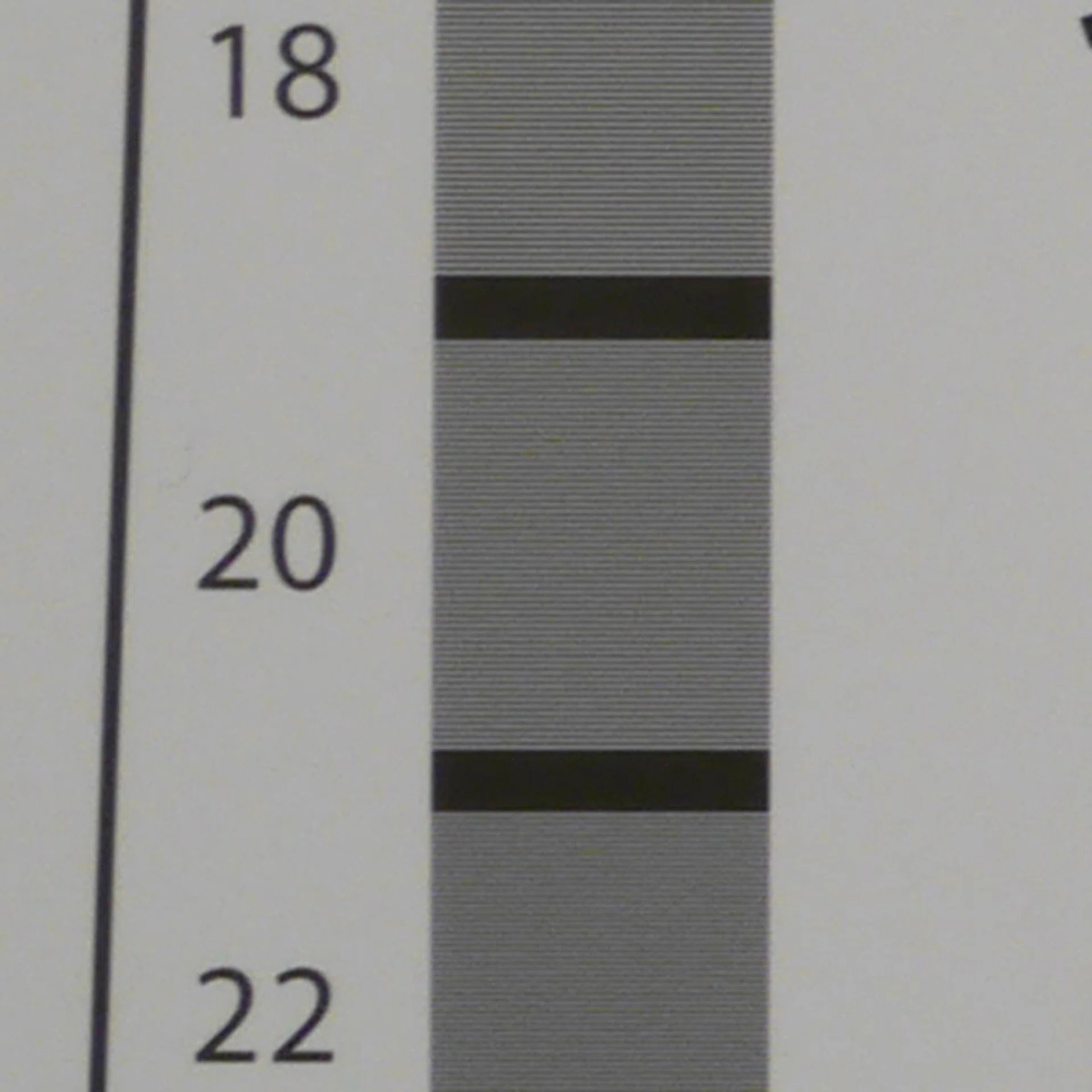
Results from our resolution chart test.
The other side of the coin for image quality is noise performance, and Panasonic's improved sensor delivers less image noise than its predecessor. Whereas older MFT cameras seem to have ISO1600 as an upper usable limit, the GH2 raises the bar to ISO3200, which can still be used with some noise reduction applied in post-production. Even though the GH2 lists ISO12800 as its highest setting, image noise starts to interfere with image detail noticeably beyond ISO3200. Although we still see some slight loss in detail starting from ISO1600, it's imminently better than the GH1's.

ISO160, 100% crop. Click for full resolution image.

ISO400, 100% crop. Click for full resolution image.

ISO800, 100% crop. Click for full resolution image.

ISO1600, 100% crop. Click for full resolution image.

ISO3200, 100% crop. Click for full resolution image.

ISO6400, 100% crop. Click for full resolution image.
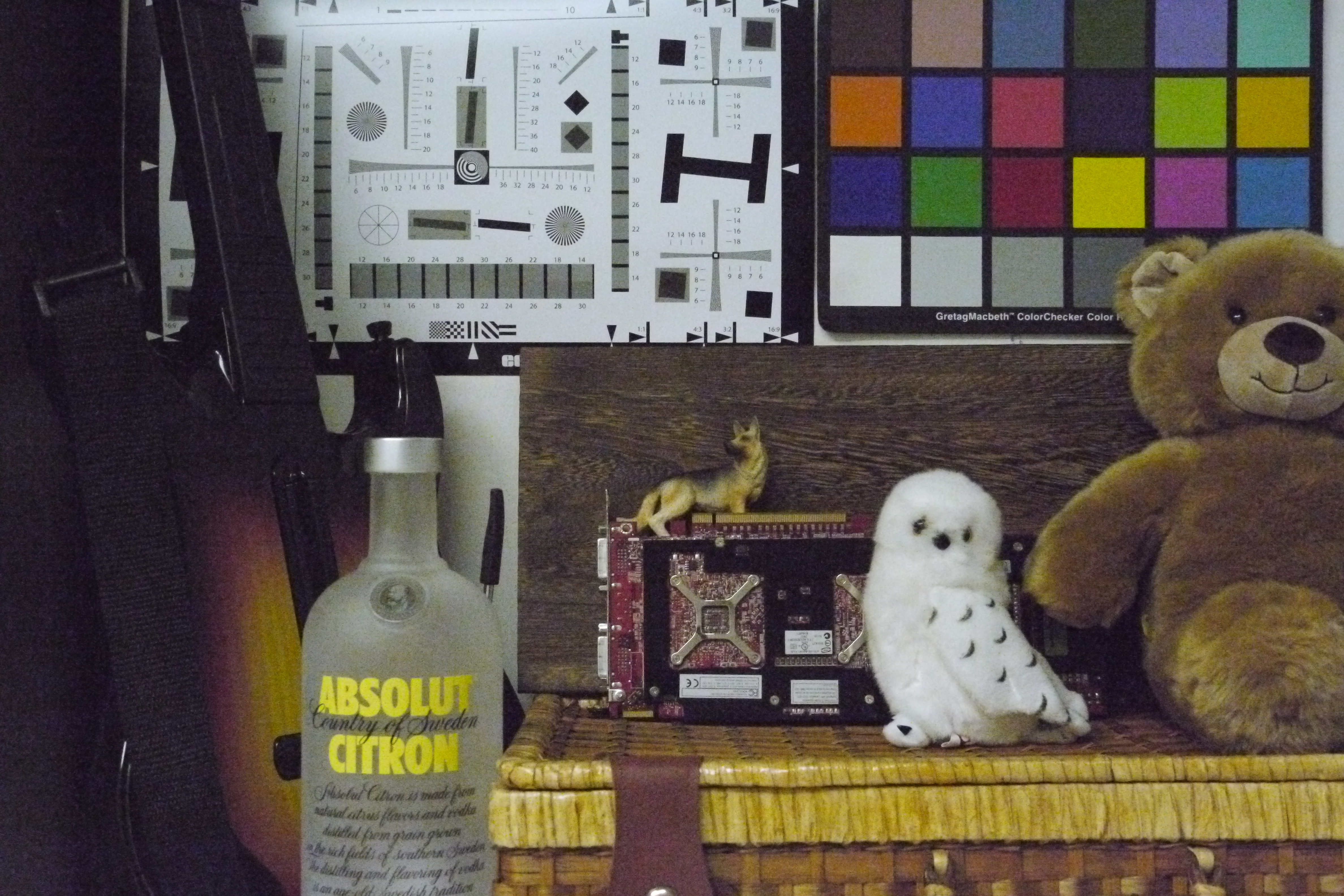
ISO12800, 100% crop. Click for full resolution image.
Video Performance
Video performance is integral to the GH2, since the GH1 has been widely adapted by videographers as a video camera, with some even hacking it to reach a higher bit-rate of 22Mbps. We found that shooting video in good light renders sharp details, with the beautiful depth of field you get from adjusting apertures. The auto-focus works beautifully, the lens is completely silent when focusing and doesn't detract from the sound. Sound pick-up is clear and the GH2 displays helpful sound level indicators when shooting.
The video seems to struggle with lots of tiny movement however, like tiny leaves rustling in the wind or ripples forming out of splashing water, which create compression artifacts. Shooting in low-light, image noise can be apparent, especially in skin tones – this is a camera which needs light or lenses which can shoot wide open. While the GH2 has doubled its sensor frame-rate output, it still limits shooting 1080/50i to a maximum bit-rate of 17Mbps. But it's added a new Cinema mode, which shoots 1080/24p at 24Mbps and gives videographers a 'filmic' look with higher bit-rates. You can also get uncompressed HD video by recording directly to an external device via HDMI.
Check out our HD sample clip of the Panasonic GH2 Video from videoman on Vimeo.
Sample Photographs
These are sample photographs shot with the Panasonic Lumix GH2. The photos have not been post-processed and are copyright to SPH Magazines. We kindly ask that you do not reproduce them elsewhere. Click to see the full-resolution originals.

f/5.8 at 280mm, 1/125 sec, ISO640.

f/5.8 at 168mm, 1/160 sec, ISO400.

f/5.8 at 280mm, 1/200 sec, ISO400.

f/4 at 28mm, 1/8 sec, ISO800.

f/8 at 28mm, 1/20 sec, ISO2500.
Conclusion
The Panasonic GH2 is perhaps the most 'layered' camera we've reviewed. At its most basic level, it works well as an advanced consumer model; switch on iA mode and anybody can use it as both a photo and video camera. Unfold the GH2 however, and you can rig it to shoot professional-grade 1080/24p video with an uncompressed stream. And unlike the GH1, the GH2 launches amongst an established Micro Four Thirds system, with a wide range of lenses from Olympus, Panasonic and other manufacturers.
It offers the best ISO performance we've yet seen from Panasonic's range of Micro Four Thirds camera, and of course its top-class quick and accurate AF system makes shooting a pleasure. The fact that the camera has auto-focus during video shooting makes it easier to capture video, especially since you can now tap to focus using the touch-screen.
Much more than ever, the Micro Four Thirds system is coming under pressure, not just as a photo imaging system but also as a video system, with Canon and Nikon bringing the heat with their HD DSLR cameras, and Sony innovating with their E-mount camcorders, like the NEX-VG10 and the upcoming NEX-FS100. These cameras, unlike the Micro Four Thirds series, all use a bigger APS-C sensor, which help them produce better image quality. Even though Micro Four Thirds has had a head-start, it'll have to face increasing competition, especially from Nikon which has already dropped obvious hints that they're working on a 'new-generation' mirrorless camera.
Still, the Panasonic GH2 manages to hold its own in today's market. There are two ways you can look at this camera really; as a top-of-the-line Micro Four Thirds camera that has been improved beyond its predecessor in almost every way, or as an affordable and portable HD camcorder for the professional. Both users should find the GH2 a satisfying camera to use.
Our articles may contain affiliate links. If you buy through these links, we may earn a small commission.