
Nikon 1 J4 Mirrorless Camera - Small and Speedy
The Nikon 1 system is fairly mature by now, and the Nikon 1 J4 is the latest addition to Nikon's mirrorless line-up. Does an improved AF system, touchscreen and built-in Wi-Fi connectivity make the J4 a worthy upgrade? We cover what else is new with this refresh and more after the jump.

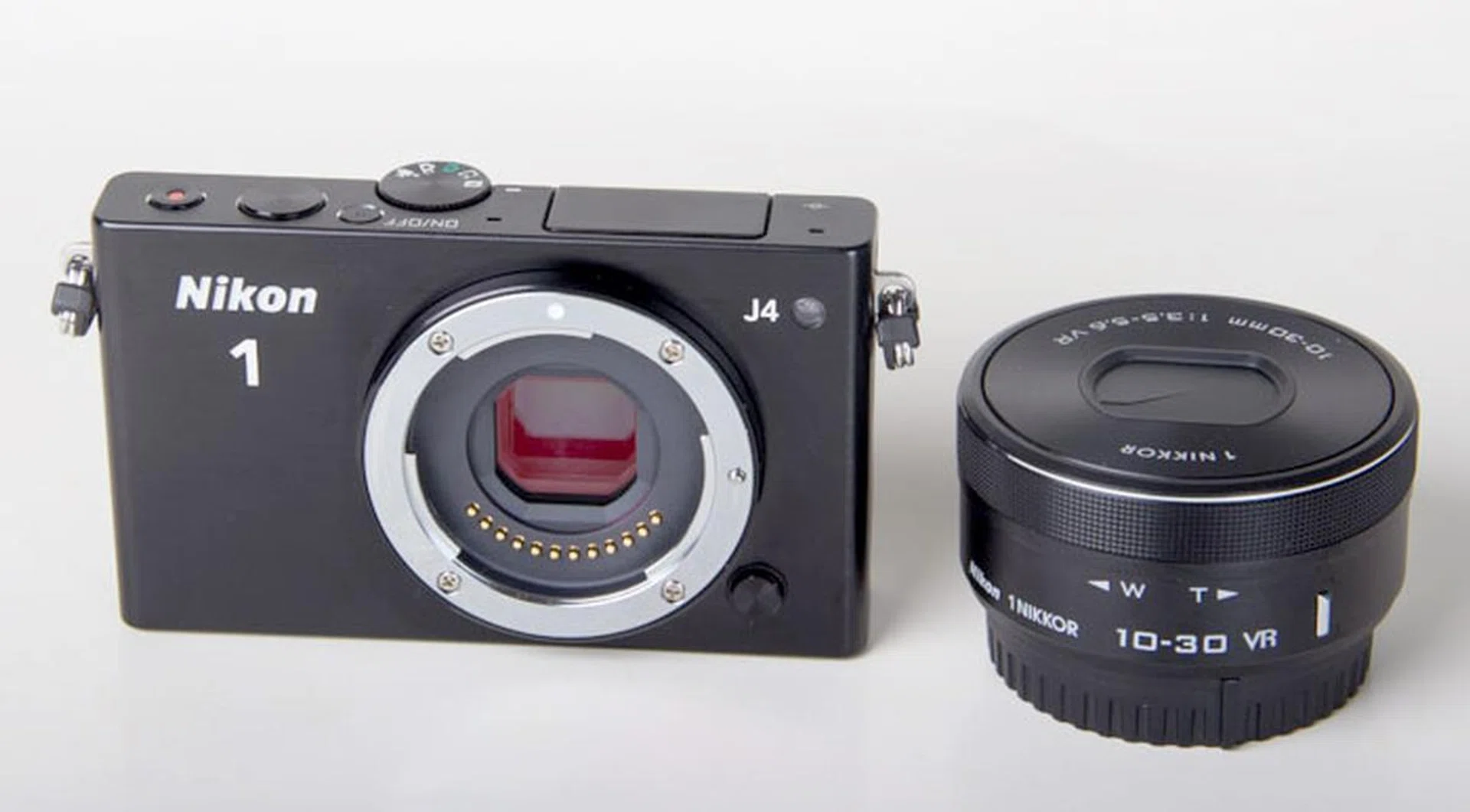
The Nikon 1 J4 and 10-30 f/3.5-5.6 PD-ZOOM kit lens.
Advancing the Nikon 1 Series
We first covered news of the Nikon 1 J4 in our sneak peek here, but we’ve since had a chance to have the retail set in our labs for a proper review, and we do believe the J4 is a worthy upgrade if you’ve been on the J3 or J2.
The Nikon 1 system is fairly mature by now, and with the J4 the focus remains on making key shooting situations easier via the use of presets. With eight filter options like HDR, Creative Palette, Panorama, and Soft focus available under the Creative mode, and Nikon’s own helper functions like Best Moment Capture and Smart Photo Selector (more about how these work in our interview with Nikon), it’s obvious Nikon is trying to bridge the gap between cameras with interchangeable lenses and simple point-and-shoot compacts with this one.
At 100 x 60 x 29mm, the J4 is about the same size as the J3 (which measures 101 x 61 x 29mm), but is surprisingly heavier at 232g with battery and memory card (compared to 201g for the predecessor). The J4 also gains built-in Wi-Fi support and a higher-resolution 1.04-million dot 3-inch monitor with touchscreen capabilities, which compensates for the J4’s minimalistic approach to controls.
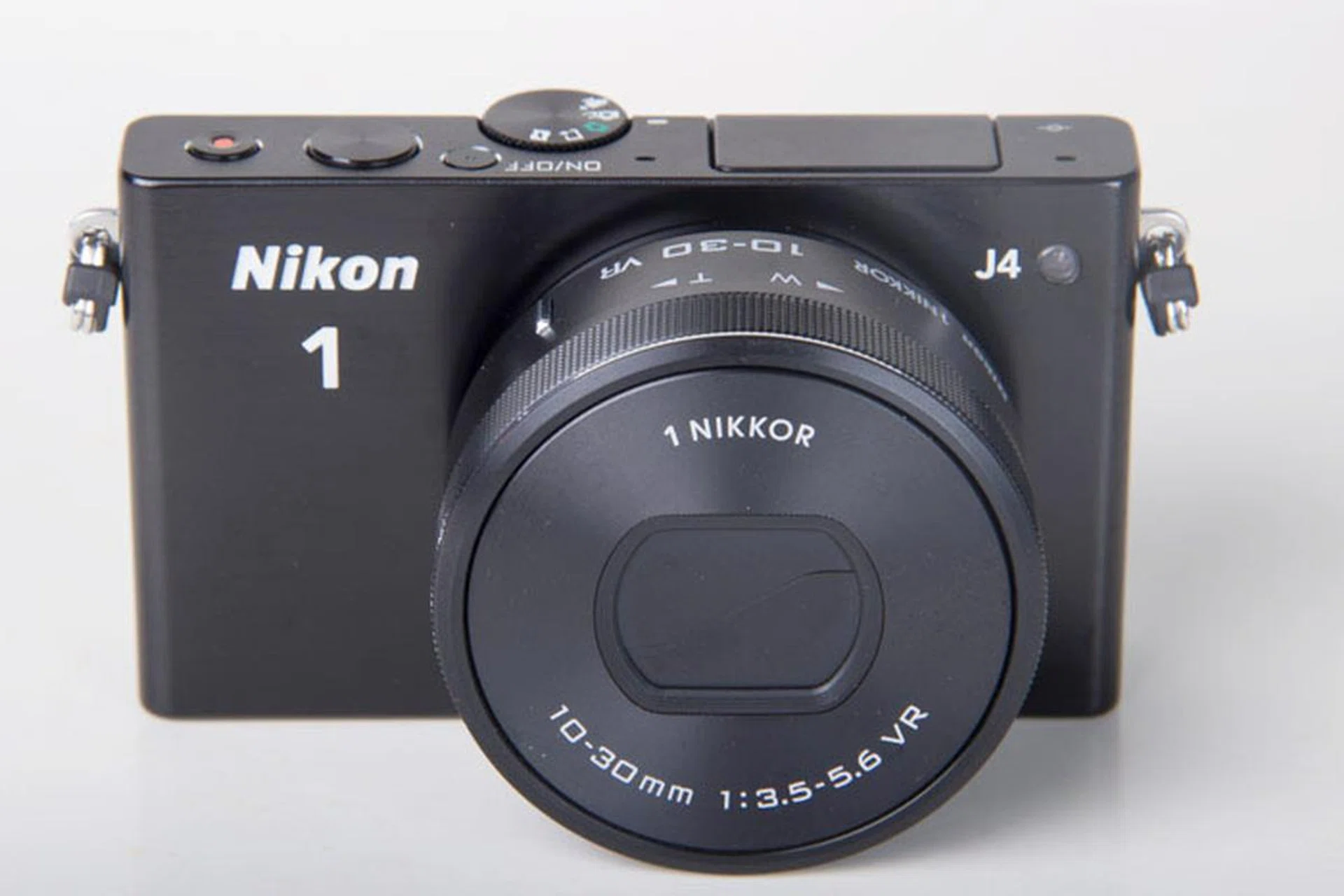
No attempts at hipster retro here, the J4 is unabashedly futuristic.
Design and Key Features
In terms of body design, the J4 is decidedly futuristic, sporting a brushed-metal finish and a more boxy shape compared to the J3. A dedicated record button is placed next to the shutter button, letting you start recording movie with just a press, and we really like that it’s a nice solid ridged button that pops up enough for you to reach by feel.
Also new, is the 10-30 f/3.5-5.6 PD-ZOOM kit lens that comes with the bundle. This features an integrated lens cover, and Nikon’s power drive zoom, which essentially is a zoom-by-wire system, meant to facilitate smooth zooming while recording movies. We must say that we really like the integrated cover, as it cuts down on loose items to be mindful of, and more importantly, reduces the number of steps it takes to start shooting - just turn on the camera and you’re good to go.
Other cameras we tried like the Panasonic Lumix DMC-GM1 and the Samsung NX Mini require you to remove your lens cap, turn on your camera, and then turn the zoom barrel to unlock the lens before you can start taking pictures, so being able to cut that down to one step is definitely refreshing.
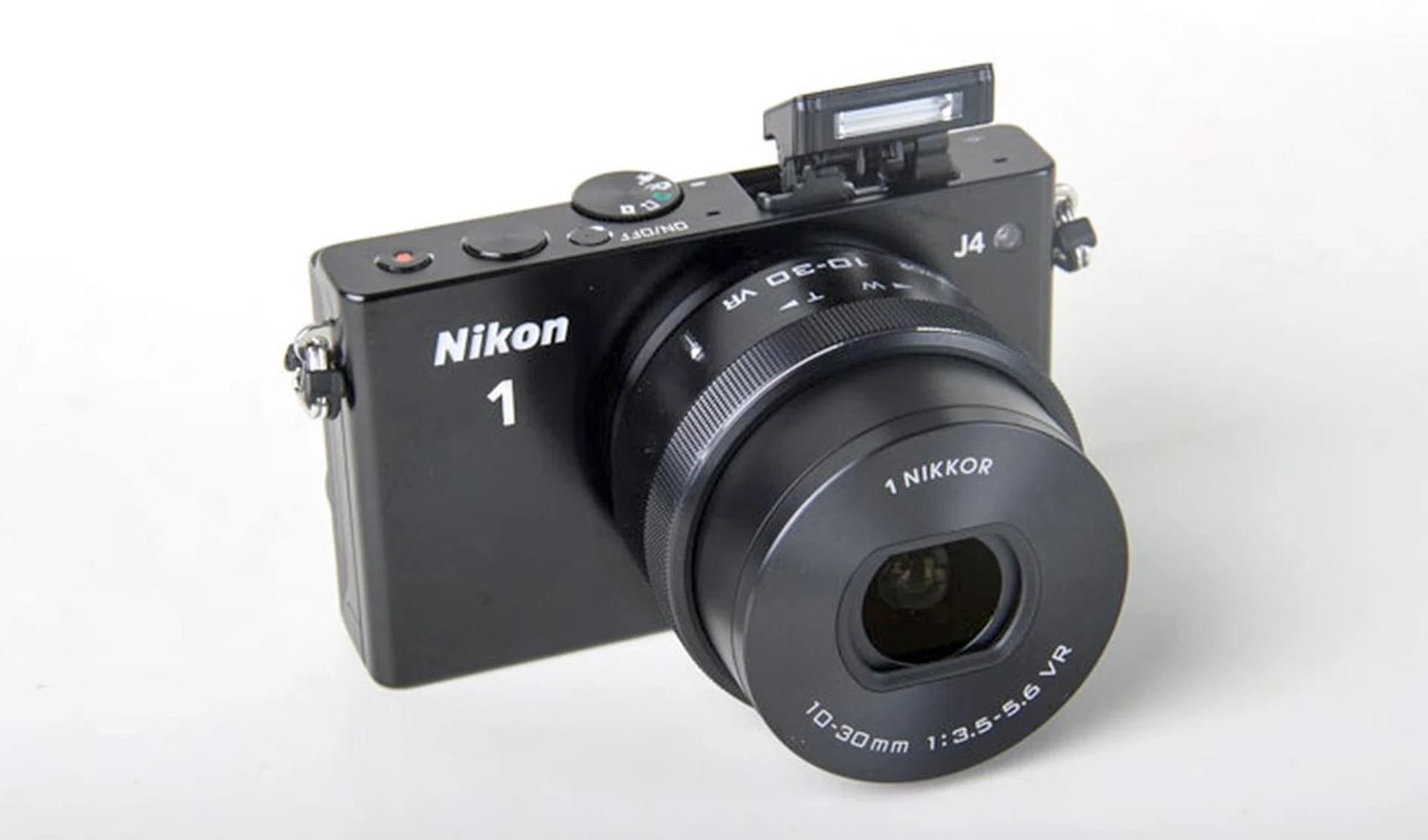
Carried over from the J3 is a pop-up flash that gets far enough away from the lens axis to minimise red-eye occurrence.
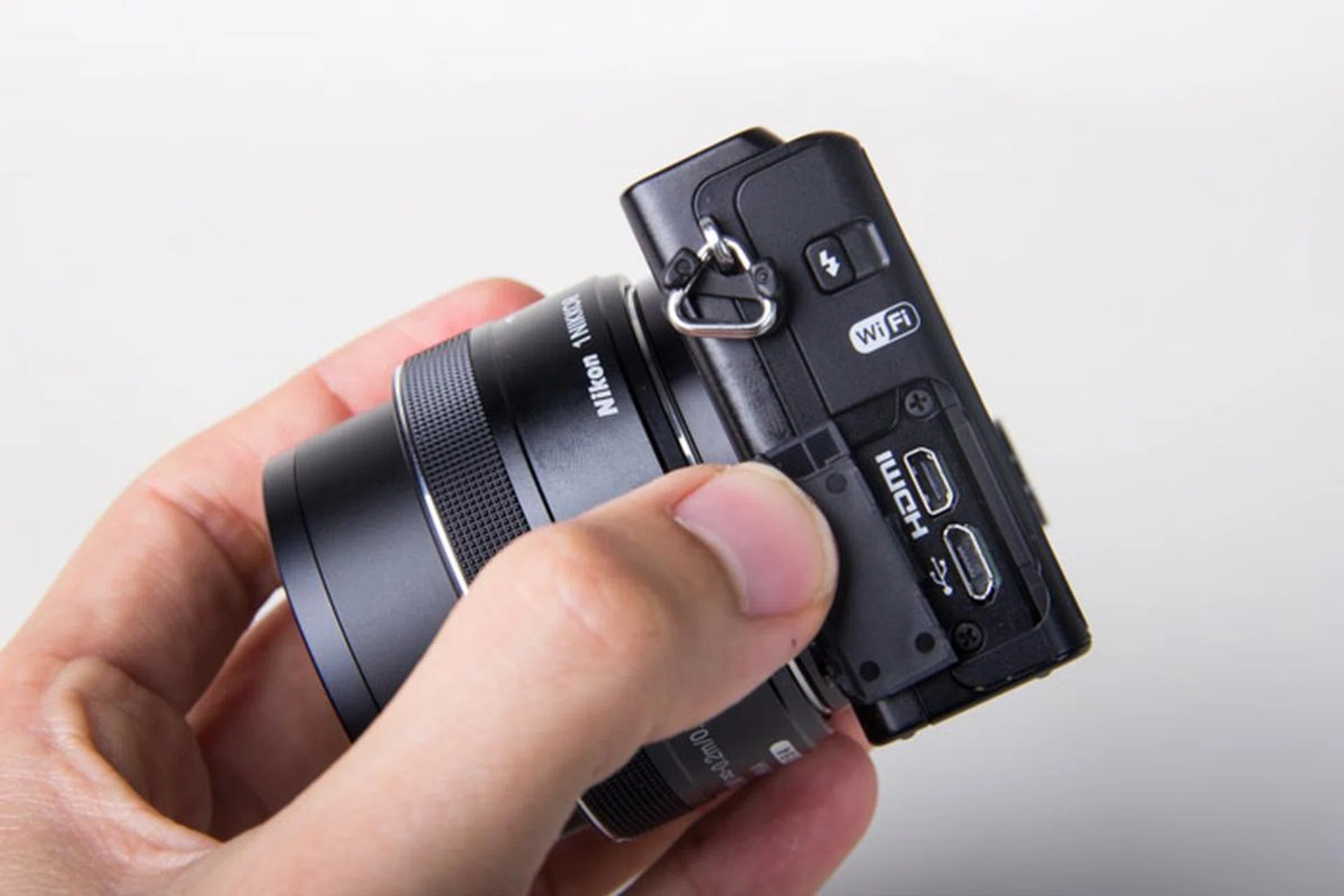
HDMI and USB ports are on the left of the camera.
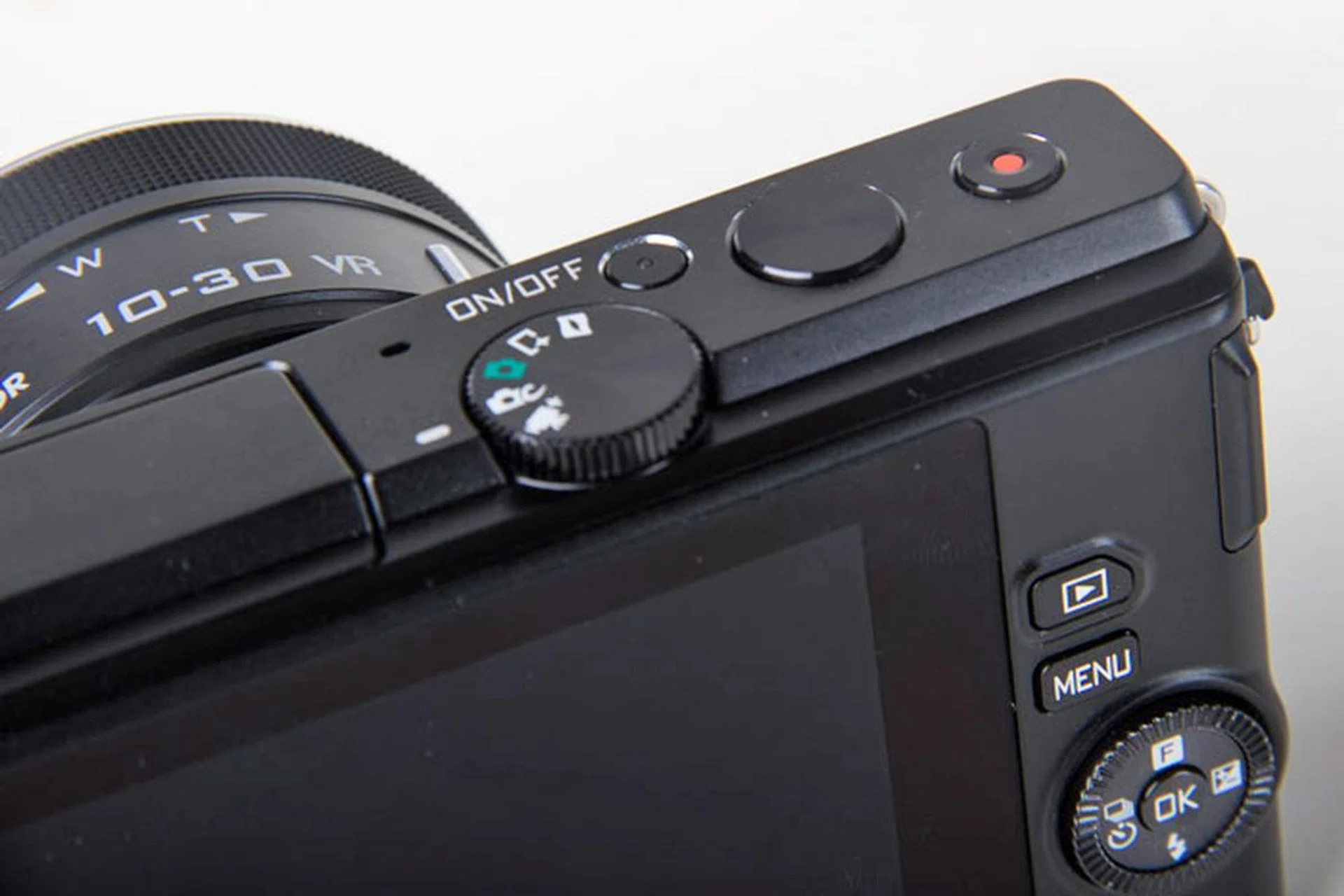
The dedicated record button is easy to feel for.
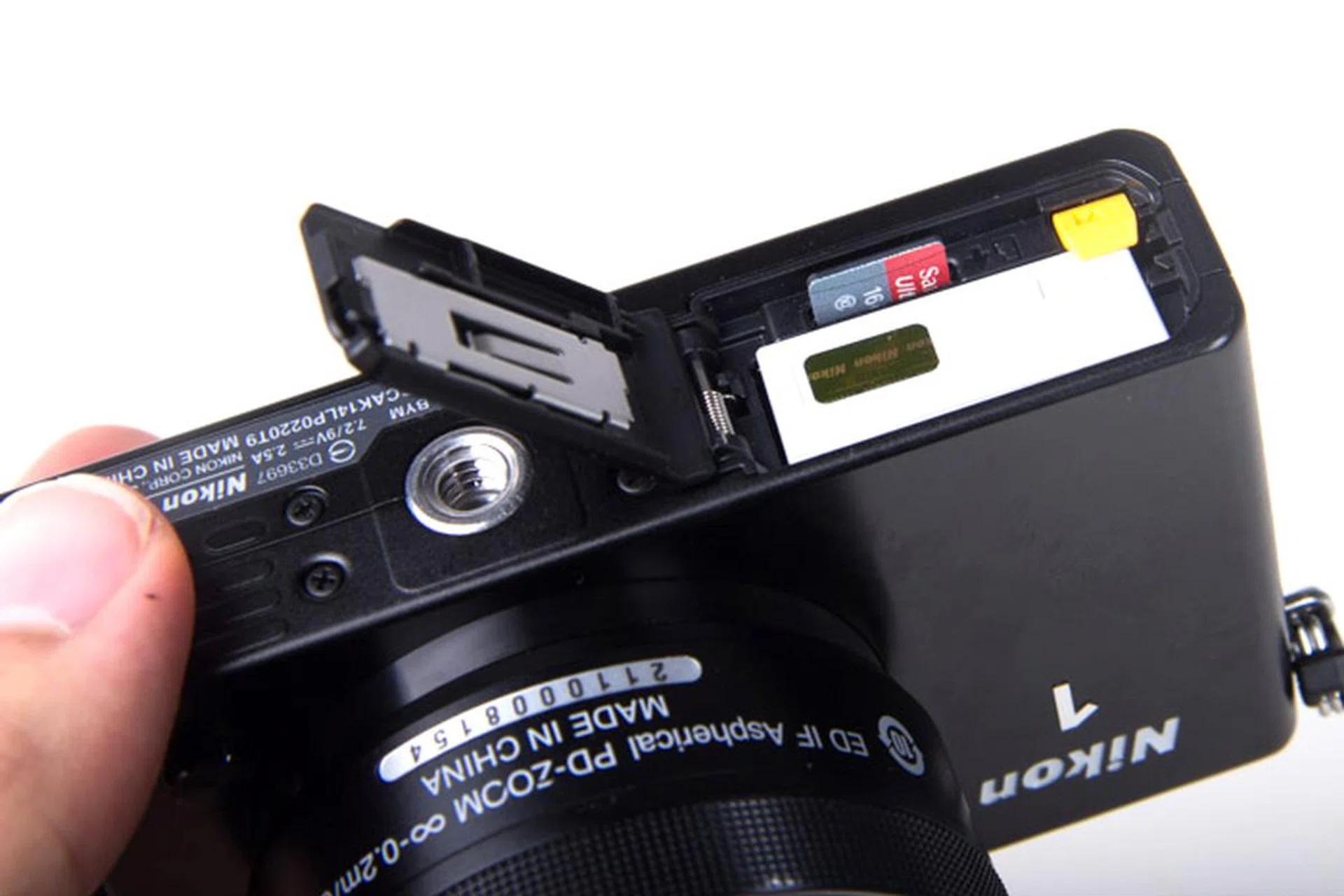
The J4 now shoots to microSD as opposed to standard sized SD cards in previous incarnations.
In terms of handling, the J4 fits nicely into the hand and is one of the smaller cameras out there in its class. We think the touchscreen really adds to its usability as it’s simply a lot easier to tap options on-screen than to go through multiple button presses - especially when it comes to menus that need navigation! A small plastic ridge on the right of the camera acts as a nice thumb grip, and the metallic finish gives the camera a nice, modern feel.
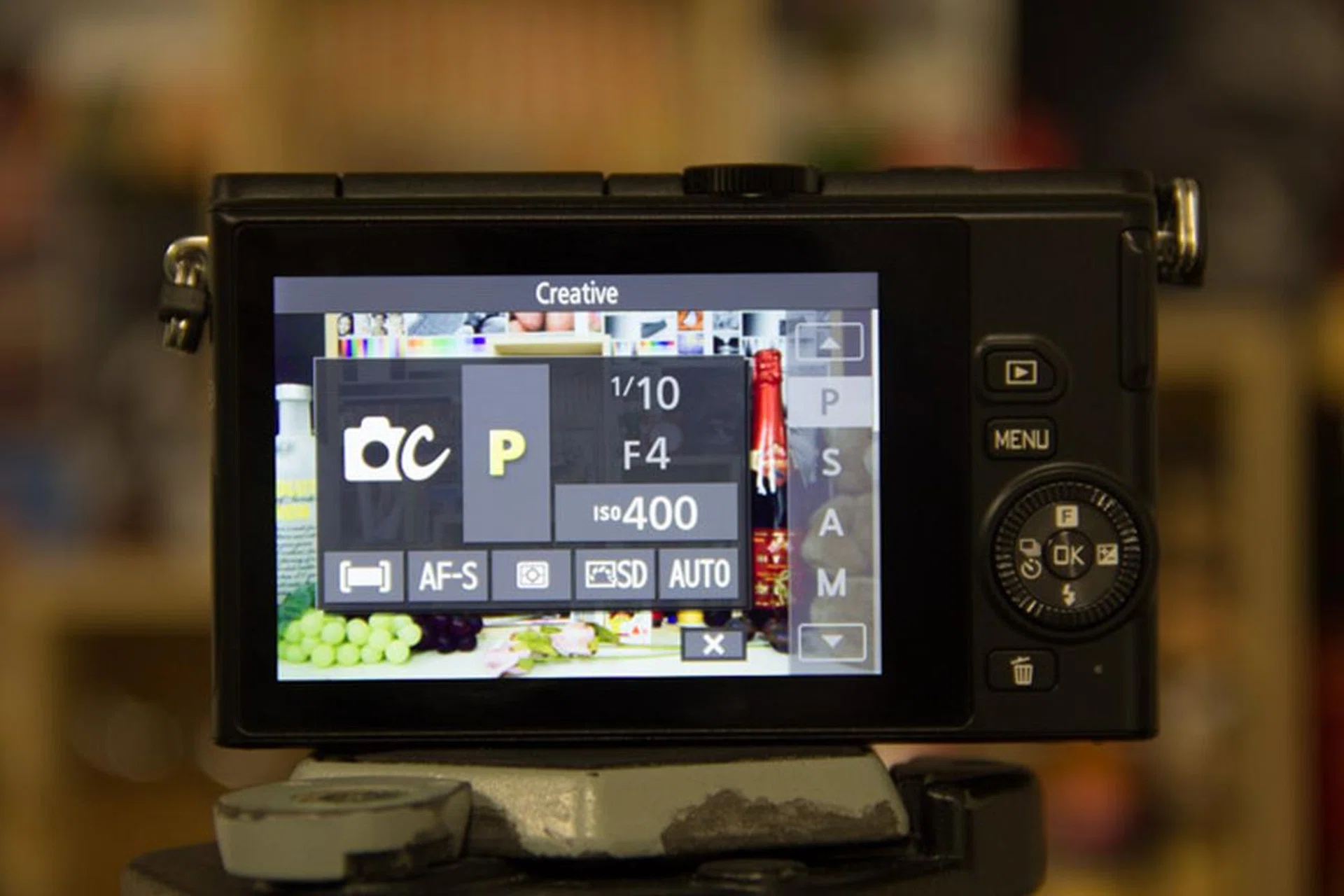
The usual shooting modes - Program, Aperture, Shutter and Manual are now available at a touch.
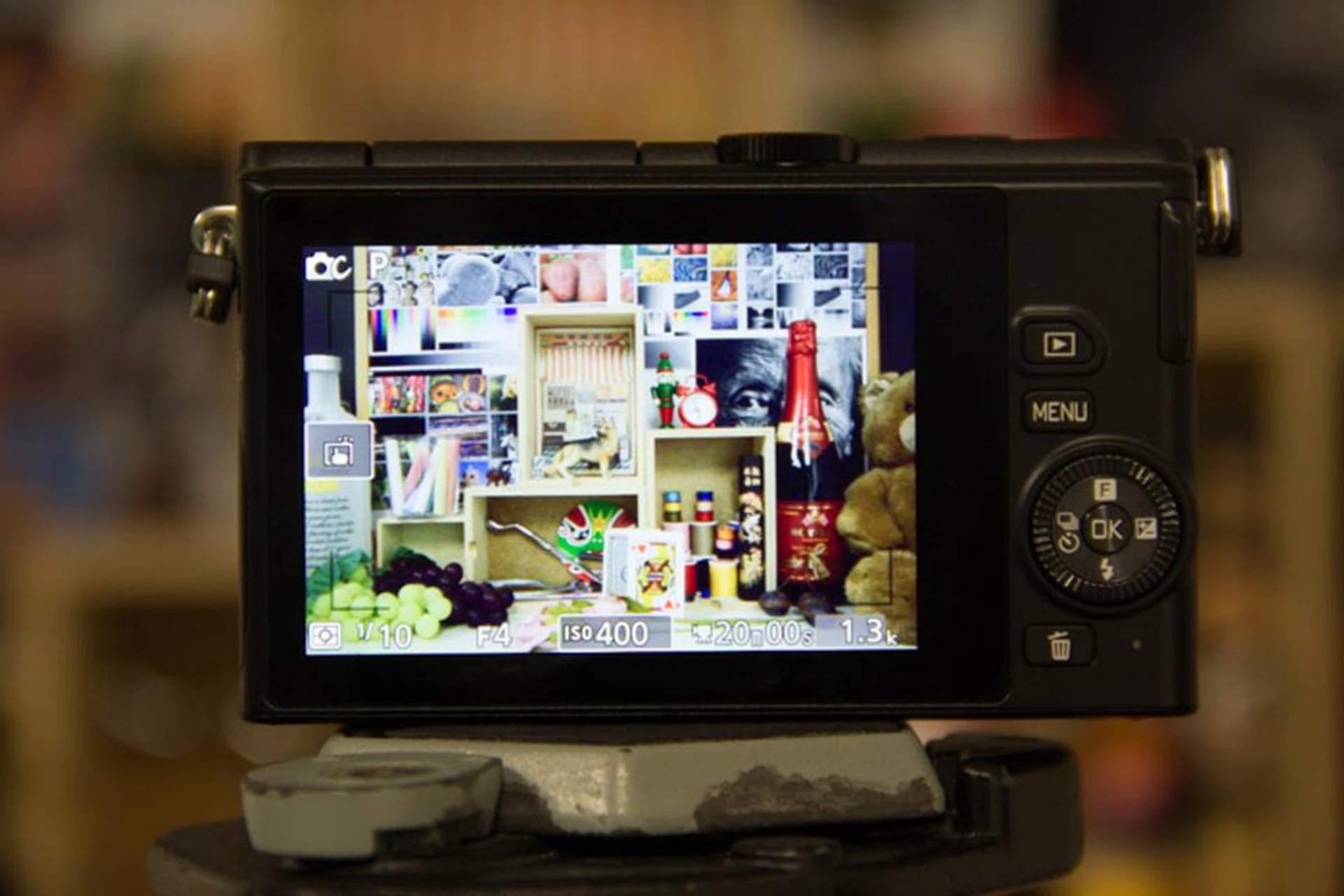
You can now touch to focus with the J4.
Also different from the J3, is the fact that the J4 now has wireless networking built-in, allowing you to take control of the camera using your smart device via the free Nikon app (available for Android and iOS). This also gives you the ability to transfer images to your smartphone or tablet, trigger the shutter remotely, and to save a copy on both the camera and smart device. In this case, the image saved to your device will be a low-res copy, whereas the one on the J4 will be full quality.
Something unique here is the fact that the Nikon app gives you options for setting battery warning levels - for both the smart device and the J4. This helps you prevent the instance where you connect the camera to your smart phone only for it to die on you after five shots for example, but it can be a little annoying if you have the trigger level set too high and don't realize it.
Image performance
With a continuous shooting rate of up to 20 FPS with AF, the J4 is a definitely a speedy camera, and this starts from the fact that it has more autofocus areas than ever - 171 focus points for contrast-detect AF, and 105 focus points for phase-detect AF. Pair that with the 20 frames per second continuous shooting speed, and you have a great camera to take with you into the thick of the action. We tried this with a running dog and several passing cars, and having that extra few frames per second definitely increases your chances of getting a shot when your subject is continuously moving.
We never had any issues with focusing, even at low light. Instead, the issue we found was smudging of details at higher ISOs, which we feel it has to do with an overly aggressive take on noise reduction by the image processing engine. That’s a real pity, because the J4 has actually been designed without an Optical Low Pass Filter (OLPF) sensor, which means you should actually see more detail in your images. (OLPFs help to reduce the effects of moire and false color in images by blocking out the high frequency image information, decreasing image sharpness slightly.) The other thing we did notice, was that the images tend to have a bit of a cyan cast, made more obvious when you compare it to images taken by the Panasonic Lumix DMC-GM1 and the Samsung NX Mini like we do in the July issue of HWM.
Image samples
Below are sample photographs shot with the Nikon 1 J4. The photos have not been post-processed and are copyright to SPH Magazines. They are provided for your reference only and we ask that you do not reproduce them elsewhere. Click for the full-resolution images.

f/4.2 at 14.7mm, 1/60sec, ISO 1000

f/3.5 at 10mm, 1/60s, ISO 5000

f/5.6 at 30mm, 1/60s, ISO 1100
f/5.6 at 30mm, 1/500s, ISO 400

f/3.8 at 12.3mm, 1/125s, ISO 560

f/4.0 at 14.3mm, 1/80s, ISO 800
Conclusion
Overall, the Nikon 1 J4 is a capable performer that offers you quality images (at ISO settings below 3200) in a compact package. It handles well, and the inclusion of a touchscreen has made it a lot easier to get through the menus so experienced users who want more control will feel right at home.
If you’re looking for pure speed, then the J4’s continuous burst rate of 20 frames per second (with autofocus) and 60 frames per second (autofocus only on the first shot) can’t be beat. Combine that with the Nikon FT-1 mount adapter (an additional S$339 purchase) for full access to the entire range of Nikon lenses, and you have an exceptional camera for sports at S$749 (with 10-30mm PD f/4.5-5.6 kit lens) .
However, if you find yourself shooting in low light situations a lot, and you’re starting without any Nikon lenses, you may want to consider the cheaper Samsung NX Mini (which has kits from S$549), or the smaller but pricier Panasonic Lumix DMC-GM1, which retails for S$999 (with 12-32mm f/3.5-5.6 kit lens).
Our articles may contain affiliate links. If you buy through these links, we may earn a small commission.