
Fujifilm X100S - The S Stands for Super
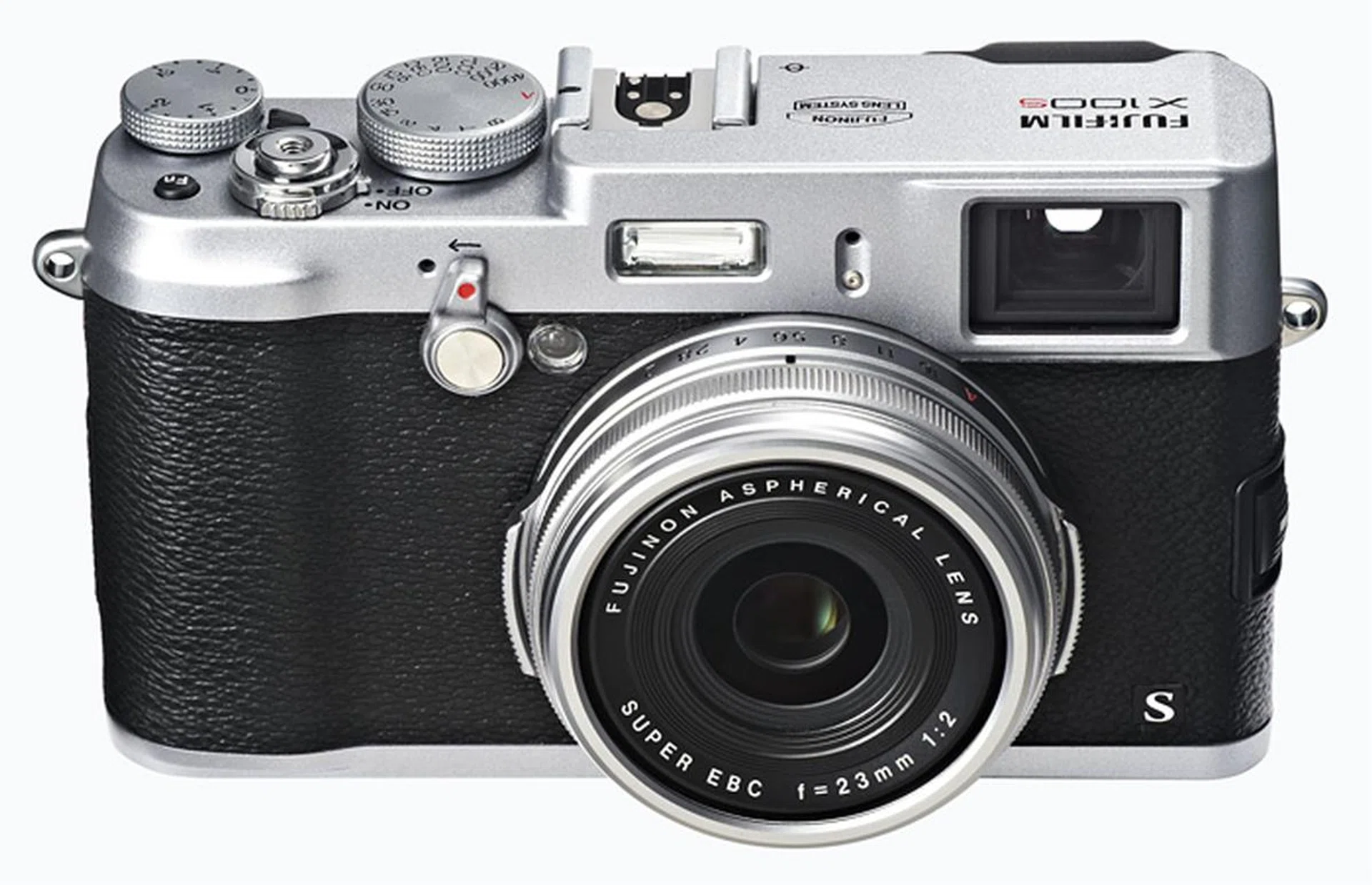
Two years after the introduction of a modern-day classic, Fujifilm is back with an update to the breakthrough X100. The X100S doesn't look very different, but what little has changed on the outside makes all the difference, while the insides are completely new. Check out our review to discover what's new.

Introduction
Released in early 2011, the Fujifilm X100 is as much of a classic as a modern-day camera can get. It changed the game in many ways - it was the first large-sensor, fixed-lens camera to hit the market, and thanks to its success, Sony and Nikon have joined the market with similar models of their own.
The X100 was the first camera to come with a hybrid optical/electronic viewfinder, which marked it as a new kind of digital rangefinder (of sorts). Its hybrid O/EVF has been so revolutionary that even today, no other manufacturer has managed to develop the same feature. It was also a thing of beauty, marrying the looks of yesterday’s film rangefinders with today’s digital technology. Its beauty wasn't only skin-deep, it was also well-made, with solid construction and materials.
But the most important thing about the X100 was its superb image quality. Fujifilm’s APS-C sized image sensor surprised with its low-noise performance and delighted with its rich colors. The fixed 35mm f/2 lens was fast and delivered pleasing bokeh, and showcased Fujinon’s expertise in making quality glass.
The X100 wasn’t perfect of course, it developed a reputation for its dawdling auto-focus speed and muddled accuracy. The read-write speed tended to choke, the menu confound, and don’t get us started on that dedicated ‘Raw’ button...
Mostly Similar on the Outside, Completely Different on the Inside
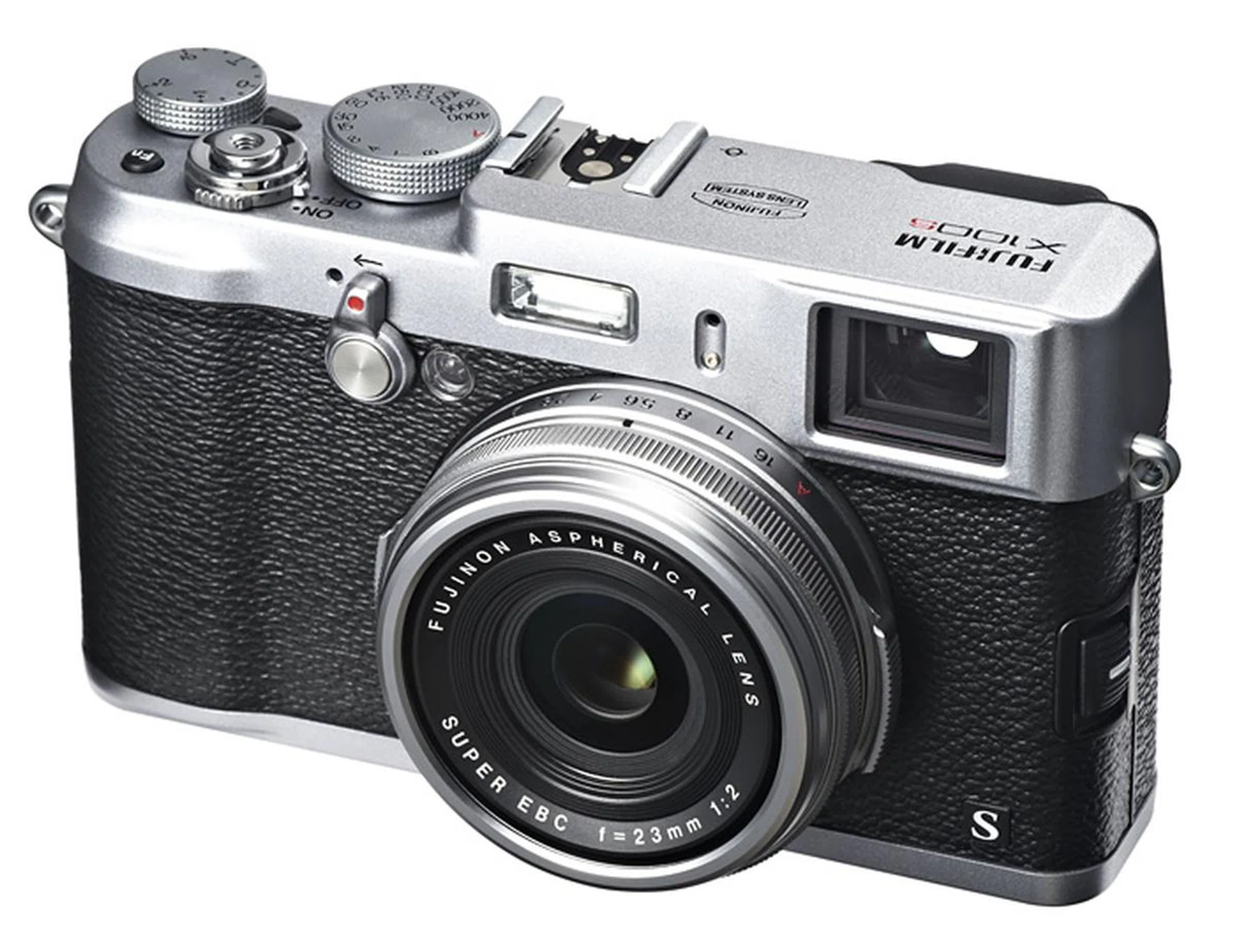
Coming nearly two years after the X100, the X100S is both an incremental improvement on the outside and a complete overhaul of its predecessor on the inside. The body has changed very little, if not for the ‘S’ logo (or is that a 'hope' logo?) you’d be hard pressed to differentiate the two. Inside though, the X100S’ guts have been swapped out; it has a brand new 16MP X-Trans II sensor, which is based on the X-Trans sensor found in the X-Pro and X-E series.
Fujifilm’s X-Trans sensors are unique, most digital camera sensors today come with an optical low-pass filter which removes moire artifacts but also reduce image clarity. The X-Trans sensor does away with the low-pass filter altogether, promising to solve the problem of moiré with its new color filter array. Inspired by the random arrangement of fine film grain, the new array's RGB pixels are arranged in 6 x 6 pixel sets with a high degree of randomness. According to Fujifilm, increasing randomness eliminates the cause of moiré, and results in higher resolution as well as better color reproduction. You can read more about the X-Trans sensor here.
Not only is the sensor brand new technology, the X100S comes with a hybrid AF system, combining the contrast-detection AF method of the X100 with the phase-detection AF found in DSLR cameras. Hybrid AF should help to boost the X100S' AF performance, as will the new EXR processor II which promises twice the processing speed of the previous generation.
Going into this review, we'll be focused on three questions: one, does the new model solve the problems of the previous model, second, are the handling changes for the better, and third, does the X100S’ new X-Trans sensor offer a substantial difference in image quality from the X100? Before we shell out our findings, here's specs comparison between both camera models:-
[hwzcompare]
[products=139868,385032]
[width=250]
[caption=Fujifilm X100/X100S Compared]
[/hwzcompare]
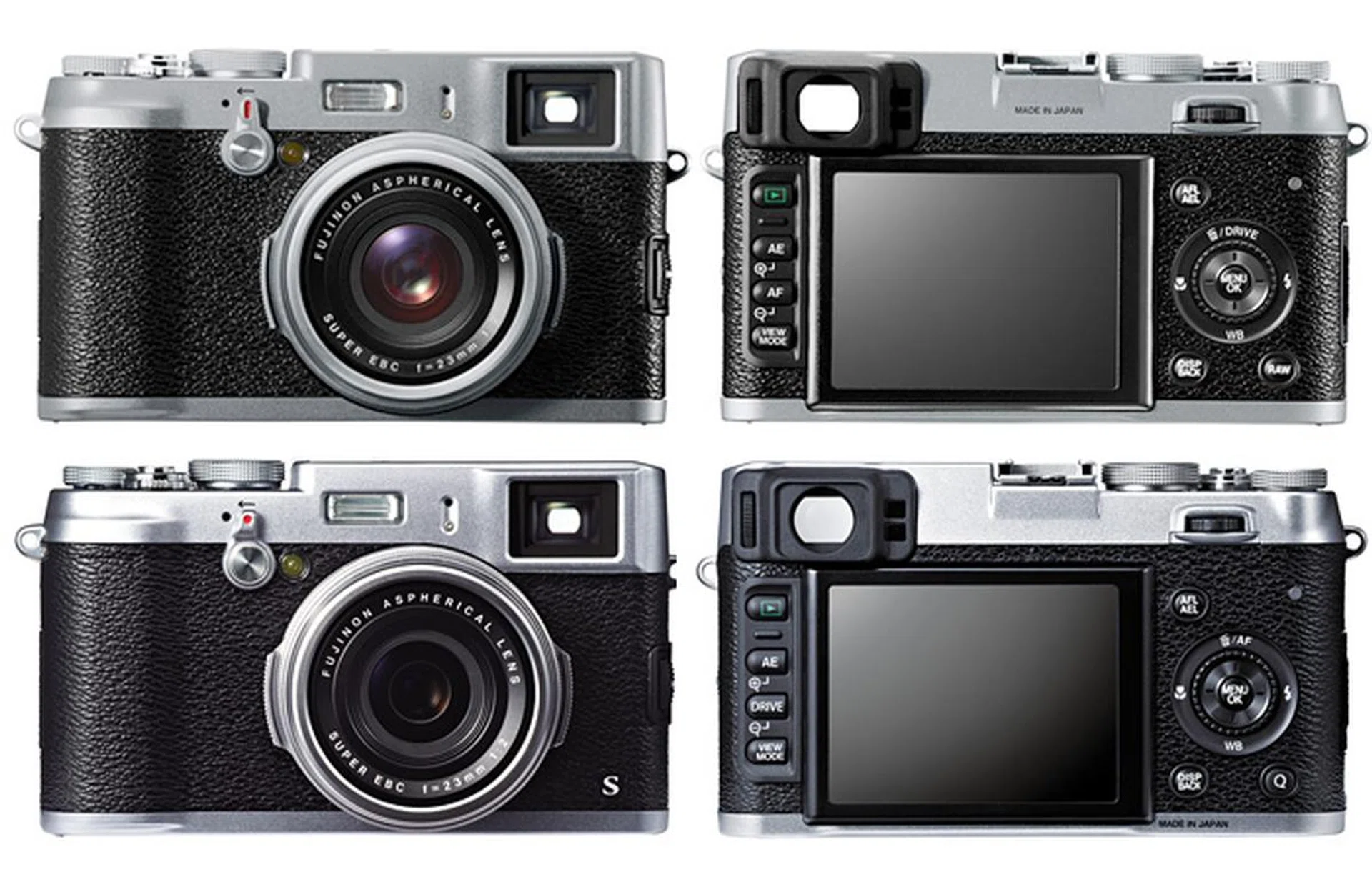
Fujifilm X100 (top) vs. X100S (bottom).
Design & Handling
Outwardly, very little appears to have changed from the X100 to the X100S. But what has changed makes all the difference.
Fujifilm hasn’t changed the way the X100S looks, except for a few notes, like a new ‘S’ on the front of the camera and the shifting of the ‘Made in Japan’ inscription. But otherwise, the original X100 was a handsome camera and the X100S remains so. We’re loving how Fujifilm is keeping its X cameras inconspicuous (except for that loud ‘X-E1’ on the X-E1), which is what photographers want, and we hope Fujifilm never feels the need to slap a big logo on the front, which is what marketers want.
Also, thank goodness that silly Raw button is gone. In its place is a much better Q button, which brings you to a Quick menu where you can access most of the camera’s essential settings. It’s an option first seen on the X-Pro1, and a good change for the X100S.

Gone is the dedicated Raw button. In its place is a much more useful Q button, which will bring you to a Quick Menu with essential settings.
Better Auto-focus (Mostly)
Shifting AF points used to be a two-handed affair on the X100; you had to press and hold the AF button while changing the points using the d-pad. Now the process has been simplified, you simply tap up on the d-pad to activate AF point selection. You need to be in Area AF mode in order for this to work, tapping up on the AF button does nothing in Multi AF mode. While reducing the number of steps needed to switch AF points is a bonus, it’s still not as efficient as the way the Olympus OM-D E-M5 can switch between AF modes by simply moving the d-pad out of the AF frame.
But with the X100S, you might not even need to engage its focus points. Manual focus on the X100S is now very usable, thanks to one improvement and two new features. The focus ring has been refined; it’s more responsive now compared to the X100’s, which was positively glacial.
The two new features are Focus Peak Highlight, which outlines the areas of a frame in focus, and Digital Split Image, which displays a split, black and white image in the center of the frame, when the split images align the subject is in focus. Of the two, we found Focus Peak Highlight to be more useful, as Digital Split Image forces you to put your subject in the middle of the frame.
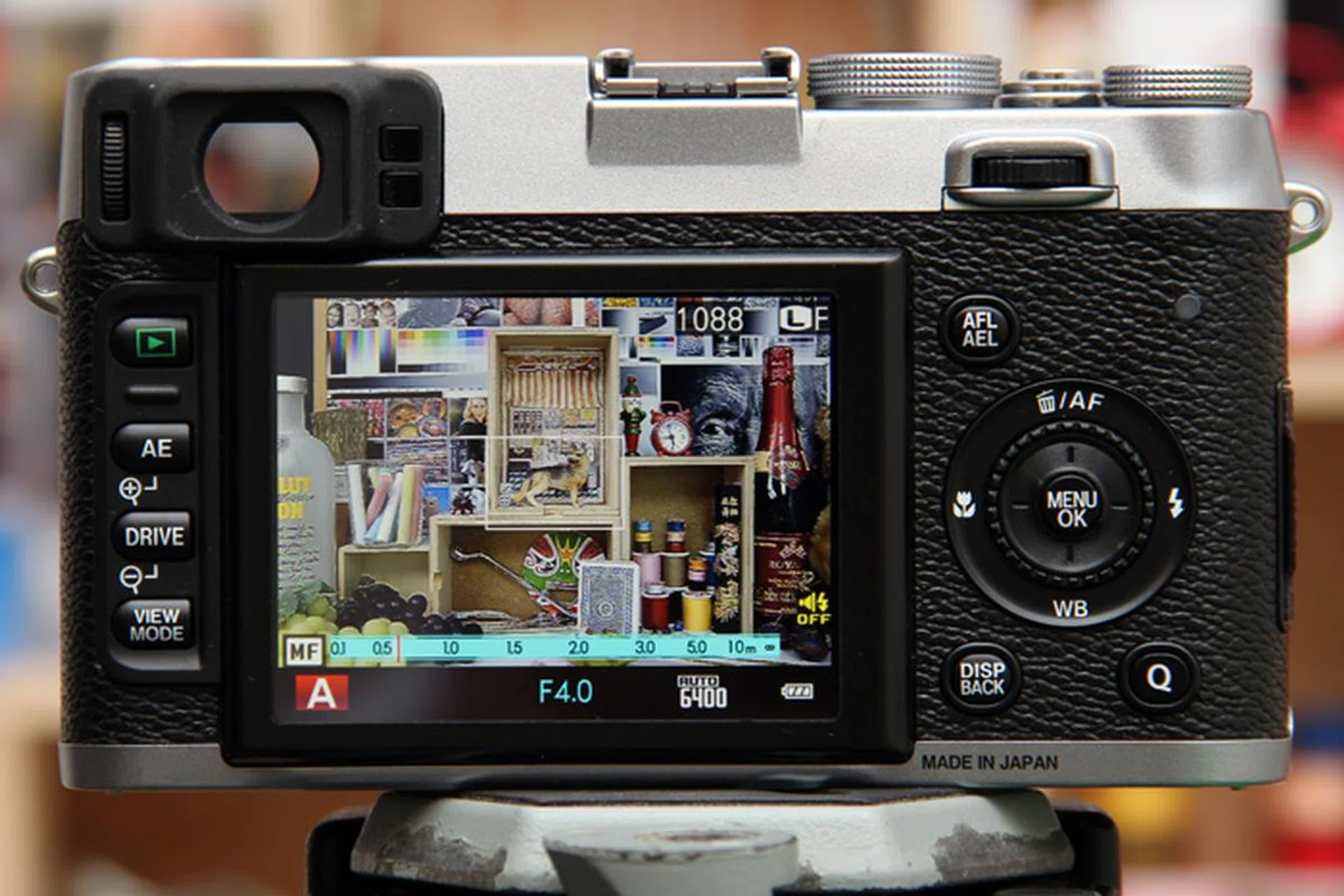
With Focus Peak Highlight, the areas in focus are highlighted in white, the more in focus they are the stronger the outlines become.
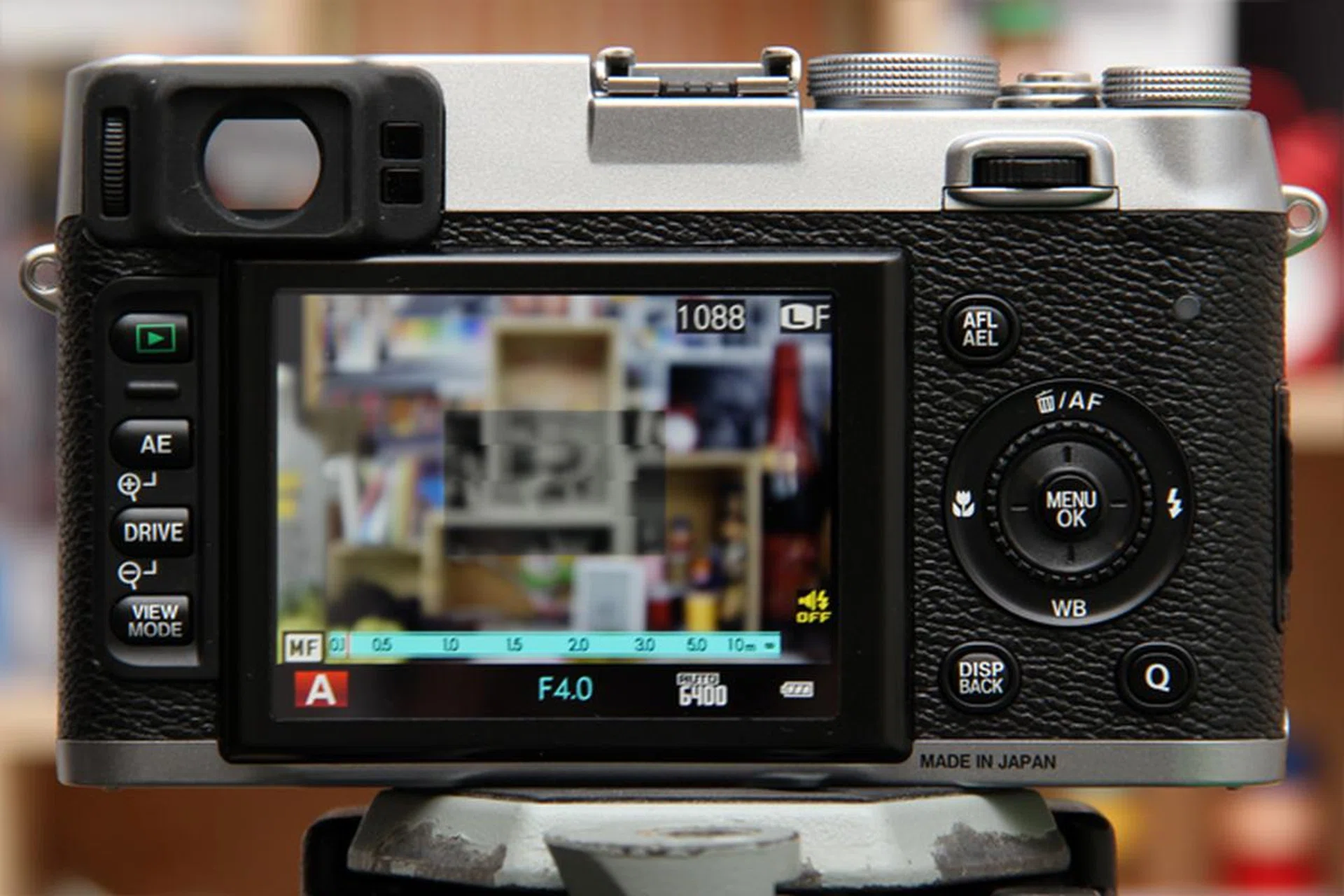
With Digital Split Image, you align the split images in the middle to focus on the subject.
Because they’re digital aids, they’re only available when you’re using the EVF (electronic viewfinder) or back LCD to frame your shot. If you’re using manual focus with the optical viewfinder, pressing the command control on the back of the camera switches to an electronic magnified view where you can fine-tune focus. In case you can’t nail it, pressing the AE/AF Lock button engages auto-focus once.
Speaking of focus, anything at 80cm away used to be a macro shot with the X100. The X100S shaves 30cm off that, now you can photograph your subjects from 50cm away without having to engage Macro mode.
Now, what we really wanted to know is if the X100S’ auto-focus abilities have improved over the X100 - in short; the AF is noticeably faster, but not very much more accurate. While the X100S can get a lock quicker than the X100 did, it doesn’t manage to get the subject right about half the time, and has a tendency to simply center focus. AF performance is somewhere above the Canon EOS M, but not as good as the Olympus E-M5 or Panasonic Lumix GH3 in terms of speed and accuracy.
The Joy of Being Optical
The X100, X100S and X-Pro1 come with a unique hybrid viewfinder, with which you can switch between an optical and electronic viewfinder. Even when you’re using the OVF (optical viewfinder) you can still see shooting information, like shutter speed and aperture setting, overlaid on the frame.
We’ve gone into great detail into how the hybrid viewfinder works in our X100 review so we won’t repeat ourselves here. Suffice to say, it’s a joy to shoot using the bright and large optical viewfinder, which lets you see directly onto the scene and outside of the frame, and the OVF doesn’t black out for a split-second the way the EVF does when you take a shot (all digital cameras do this, even DSLR cameras).
There are disadvantages of course, like how you can’t get precise framing because of parallax and how you can’t see the effects of manual focusing, as well as get an exposure preview. But the OVF is something special of its own, like staring through a full-frame OVF in a small camera body.
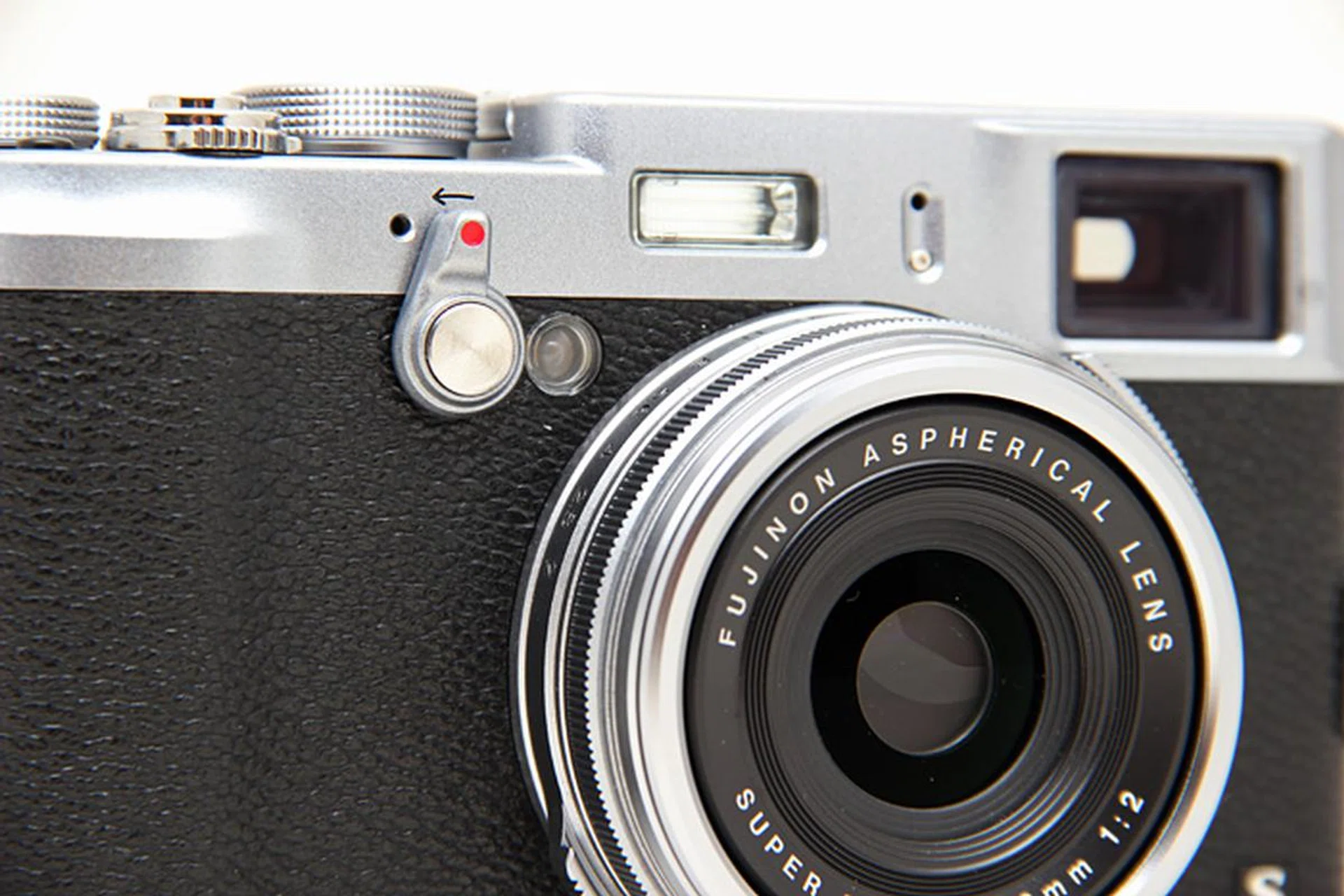
You switch between the optical and electronic viewfinders by flipping the viewfinder selector on the front of the camera.
The Joy of Being Digital
Which isn’t to knock the EVF (electronic viewfinder). Thanks to the two manual focusing aids mentioned previously, there’s a compelling reason to use the EVF, but the real knockout draw of the EVF is how it will render a real-time exposure preview of your actual shot when you half-press the shutter.
A Faster Camera
The X100 had slow write speeds which locked up the camera when you took too many shots at a time. The X100S has a new EXR processor II, which is noticeably faster than the X100’s. Fujifilm says it has twice the processing speed the X100 had, and even when the X100S is writing you can still shoot with the camera.
Using a Sandisk Extreme Class 10 SDHC UHS-I SD card with a write-speed of up to 25MB/s, the Fujifilm X100S beat the X100 in every way. The X100S can shoot up to a maximum of 6 frames per second compared to the X100's maximum speed of 5 frames per second. We found that the X100S can shoot up to an average of 8-9 raw shots in one burst before the frame-rate slows down, while the X100 can do an average of 8 raw frames. The vital difference is that while the X100S slows down, it can keep shooting, even when the camera is writing to memory. Once the X100 hits 8 frames, the entire camera will lock up to write to memory.
When shooting JPEGs, the X100S can just keep going. We shot about 120 frames before we noticed the camera beginning to stutter. The X100 could handle 10. It's a big difference.
While the shooting speeds have been vastly improved, Fujifilm still insists on giving images shot in burst mode a difference naming suffix to the ones shot in non-burst modes. And while we understand the need for a read-write indicator, we'd really love an option to turn off the flashing light when the camera writes to memory.
Quiet, Comfortable & Fun
Like its name suggests, the X100S is a refinement of the X100, and it handles better than its predecessor on most counts, improving certain aspects while preserving the best of the X100. It’s comfortable in the hands and easy to use - well, if you already know your way about a camera’s manual settings.
Besides what’s already been mentioned, like the distinctive hybrid viewfinder, other highlights include the leaf shutter, which closes with a barely there whisper, making the X100S a nearly silent camera. The Function button has remained, it’s a customizable button which you can set up to bring you quickly to change something like ISO or bring down the built-in ND (neutral density) filter. The shutter release feels good and nuanced, the shutter speed and aperture dials let you see and change settings quickly, like the old days when cameras’ controls used to be on their bodies instead of inside an electronic menu.
At 300 images per charge, the X100S doesn’t hold up to the Olympus E-M5’s 360 shots per charge, but it’s a respectable number. And it’s better than the Sony RX1’s 220 to 270 images per charge. But you’d better set the camera to power down automatically after a certain amount of time, as we’ve accidentally tripped the Power switch a few times while carrying the X100S in our bag and drained the battery (this happened with the X100 as well).
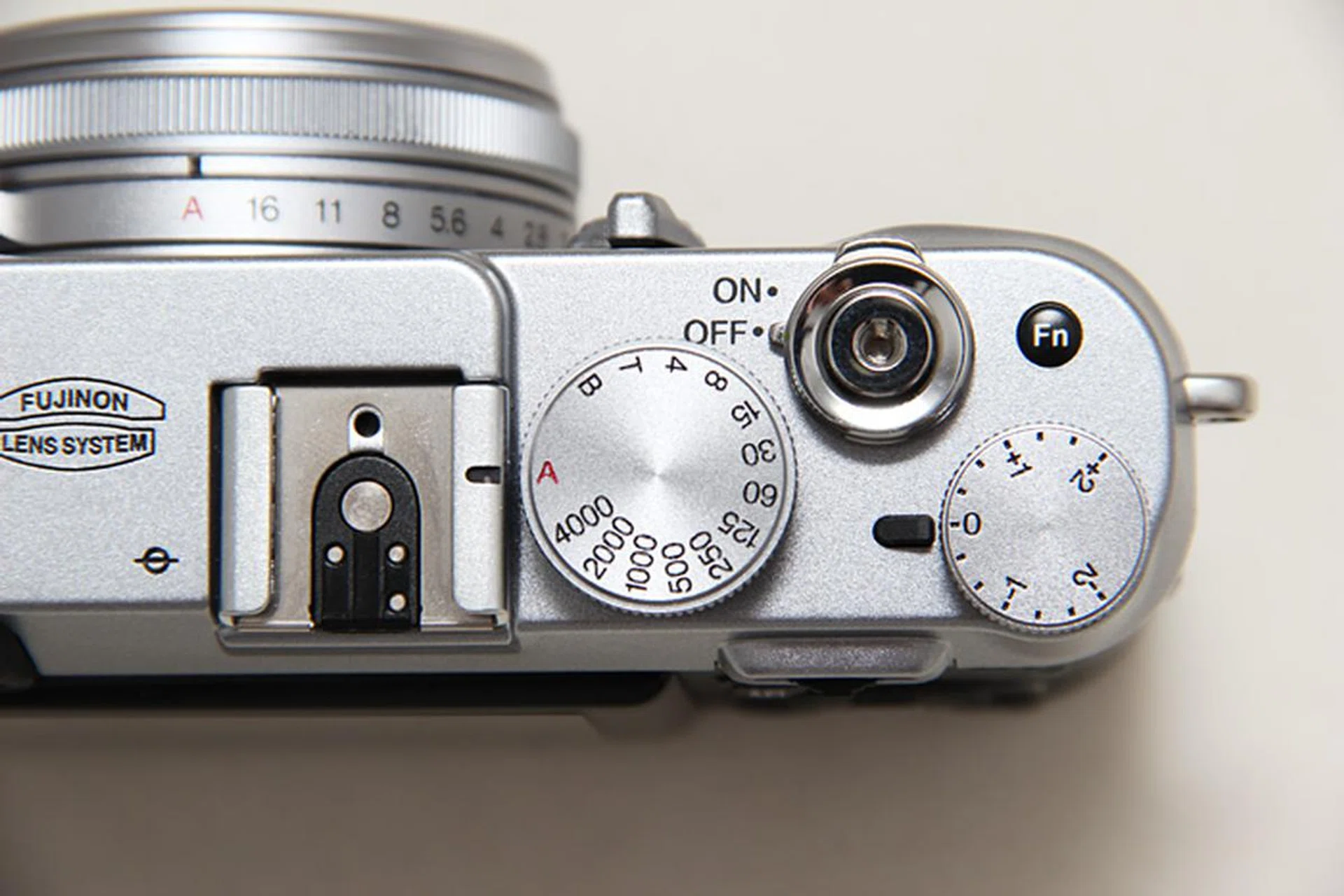
The Power switch seems to catch by accident quite easily.

f/2 at 35mm, 1/80 sec, ISO 800.
Image Performance
Note: The images in this review were shot in raw and processed to taste using Adobe Lightroomm 5 Beta and exported to JPEG. Changes have been made to exposure, highlights, shadows, clarity and vibrance, but no noise reduction has been applied.
Fujifilm’s X-Trans sensor is a unique piece of technology with strengths and weaknesses quite apart from the usual digital sensor, thanks to its lack of an optical low-pass filter, and the novel RGB array designed to mimic the randomness of film grain.
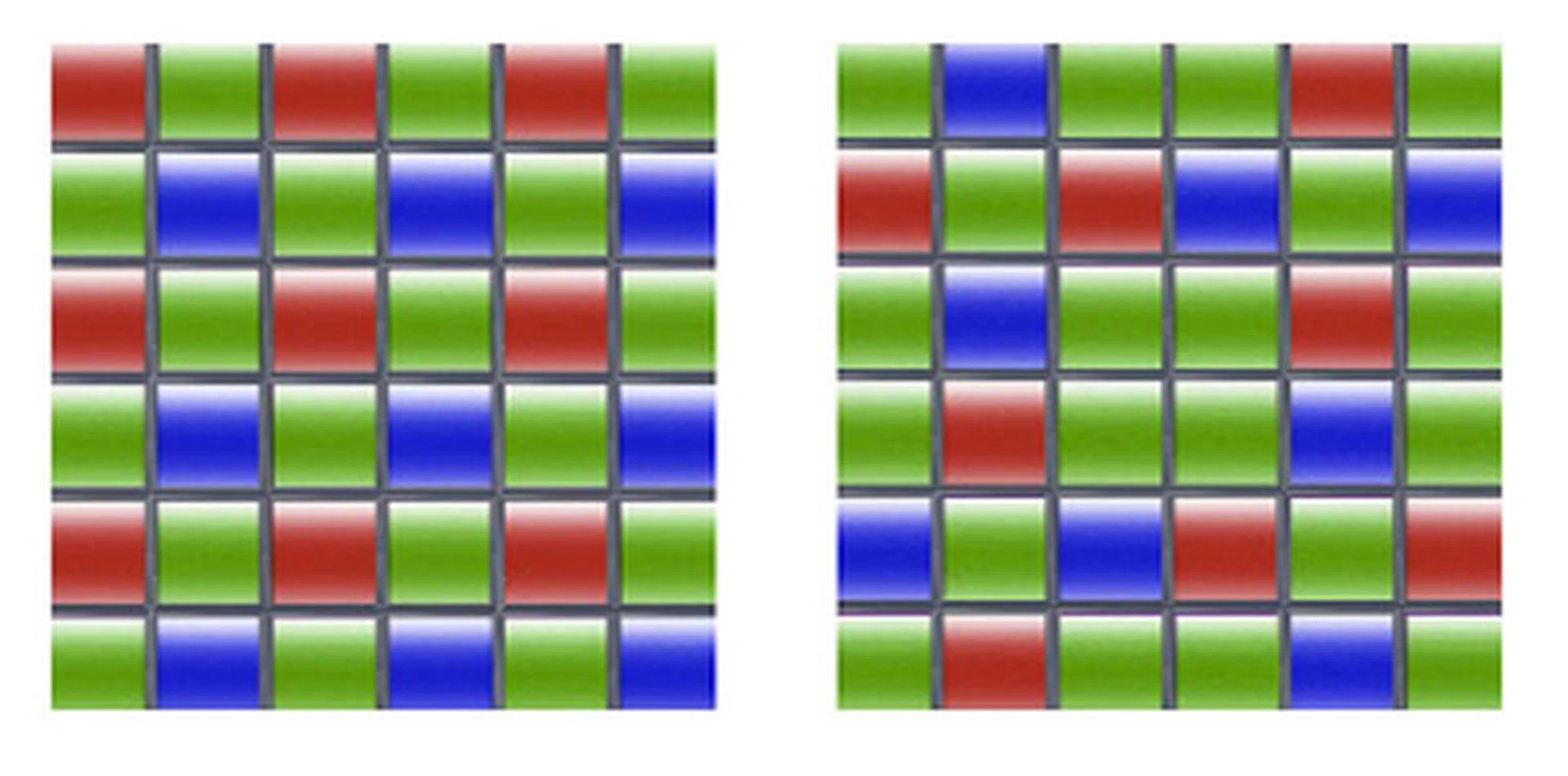
A conventional sensor array (left) compared to the X-Trans sensor (right). Image source: Fujifilm.
The X-Trans sensor first appeared in Fujifilm’s X-Pro1, the company’s first mirrorless system camera and the second camera in the X-series after the X100. Previously, the X100 had a standard APS-C sized CMOS sensor with a conventional optical low-pass filter (although the camera's sharp images had many speculating that it was a weak filter). The X100S’ sensor is labeled X-Trans II, so it should be based on the original X-Trans sensor but not the same one found in the X-Pro1 and X-E1.
Thanks to the X-Trans II sensor, the X100S produces excellent 16MP images, but not without some caveats. First, the good: Colors are rich and deep, and the f/2 lens delivers sharp results with beautiful bokeh. Pictures are full of minute details, more than you'd get from a conventional sensor, thanks to the lack of the optical low-pass filter. ISO performance is exemplary, this little camera produces images at high ISO with less noise than even some APS-C DSLR cameras. You could shoot up to ISO 4000 with very little noticeable noise, and up to the native limit of ISO 6400 if you clean it up later in post.

f/2 at 35mm, 1/60 sec, ISO 4000.
Now, the bad: There’s something odd going on with the X-Trans array. Because of the more random arrangement of RGB pixels and the larger number of green pixels compared to red and blue, the image processing engine has to do more guesswork at determining the exact color of the light hitting the pixels. This has led to a color smearing effect in some images, where the color from one subject smears into an adjacent subject. It can also lead to a watercolor-like effect and edge halos on back-lit subjects, a phenomenal we first observed in our review of the X-E1.

100% crop of an image with the 'white halo' effect. Shot at 1/340 sec. it's quite unlikely the halo was caused by the petal moving.
Because of the X-Trans sensor’s unusual layout, imaging apps like Lightroom also have problems converting the raw data. In our experience, that leads to odd image artifacts, where the subjects sometimes look like they have double outlines, or smudged textures. Apparently, Fujifilm is working directly with Adobe to improve ACR’s (Adobe Camera Raw) ability to read X-Trans files - which is remarkable, as it’s the first Japanese camera company we’ve heard of doing that - but while Lightroom 4.4 handles X-Trans raw images better, it still doesn’t do as well as the camera’s own JPEG engine in reducing the number of artifacts.
To be clear, this is Adobe's challenge, not Fujifilm's, but seeing as how many photographers prefer to shoot raw and use Lightroom, it's also a workflow challenge for potential owners.

A 100% crop of a raw file exported from LR5. Notice how some of the flowers have fuzzy edges.

The exact same image, except that this was saved as a JPEG in-camera. The X100S' JPEG engine doesn't produce the same kind of odd double-edges.
It's a toss up between shooting in JPEG or raw right now, but if it were us we'd still save in raw, because the X100S' raw files shine. The amount of dynamic range captured inside an X-Trans file is amazing, elements we thought were completely blown could still be recovered inside Lightroom. While the X100S' JPEG in-camera noise suppression can be quite aggressive, leading to overly smoothed textures, you can do a much better job yourself with the original raw files. However, another odd quirk we encountered with the raw files is that Lightroom will show that none of the RGB channels are blown, even though there are highlights in the image which are completely devoid of detail.
To be fair, the occasional edge halo, texture mottling and odd fringe artifacts might not bother you if you’re not printing images large or pixel-peeping. At its best, the X100S produces vividly luminescent images which glow with depth, color and detail, you’ll just need to know that the good results come with quirks.

f/2 at 35mm, 1/80 sec, ISO 1250.

X100S, f/11 at 35mm, 1/80 sec, ISO200.
Image Performance - the X100S & X100 Compared
Note: The images in this review were shot in raw and processed to taste using Adobe Lightroomm 5 Beta and exported to JPEG. Changes have been made to exposure, highlights, shadows, clarity and vibrance, but no noise reduction has been applied.
With a completely different sensor that eschews the optical low-pass filter found in the X100, the X100S should - in theory - deliver images with more detail. When comparing images taken with both the X100S and the X100, you might be hard-pressed to find any meaningful differences in the amount of detail captured by either camera if you don't look up close. If you squint, you can tell that the X100S captures more detail without the blurriness that you'd usually see when looking very close at a photo captured with an optical low-pass filter.

X100, 100% crop. f/4 at 35mm, 1/100 sec, ISO 400.

X100S, 100% crop. f/4 at 35mm, 1/100 sec, ISO 400, down-sampled from 16MP to match the X100's 12MP. Can you spot any discernible difference between the two images?
In the two examples above, we see that the X100S' image does indeed capture more fine detail. But in the X100S' image, processed from a raw file within Lightroom 5, you can see how some of the crystals are rendered oddly. Take a look at the two images below, both 100% crops from raw files, with the X100S' 16MP image down-sampled to match the X100's 12MP. Can you tell which image was taken by which camera?

100% crop, f/8 at 35mm, 1/55 sec, ISO 400.

100% crop, f/8 at 35mm, 1/50 sec, ISO 400.
(The first image was taken by the X100, the second by the X100S.) You can see that the X100S captures more fine detail than the X100; the question to ask then is if the increase in clarity is worth the upgrade. If you already own a X100, the difference might be minute, and probably isn't a good enough reason by itself to buy a new X100S. Also, the raw files from the X100's conventional APS-C sensor plays better with raw converters like Lightroom right now, without any of the rendering artifacts that can happen with the X100S' raw files.
When comparing the two cameras' ISO performance, we found them to be on par with each other. Fujifilm seems to have some magic formula for its sensors, as the X100's conventional sensor and the X-Trans sensors have the best high ISO, low noise performance we've seen in any APS-C sensor. Grain is kept to a minimum, what's there has an organic quality to it and it's mostly luminance grain, with little if any color noise. With both cameras you could shoot up ISO 3200 with confidence, and even up to ISO 6400 with some noise reduction.
When shooting our night test scene, we observed something interesting: Moire showed up in a small section of the X100's images (in the fence around the playground), while none showed in the X100S'. We're hesitant to reach for a conclusion with such a small sample set, but it seems to lend weight to the rumors that the X100 ships with a weak optical low-pass filter, explaining its ability to capture so much fine detail. It also gives the X100S' X-Trans II sensor bonus points for its ability to avoid moire artifacts even without an optical low-pass filter.

X100, 100% crop. f/5.6 at 35mm, 1/3 sec, ISO 3200. You can see a trace of moire in the fence around the playground.
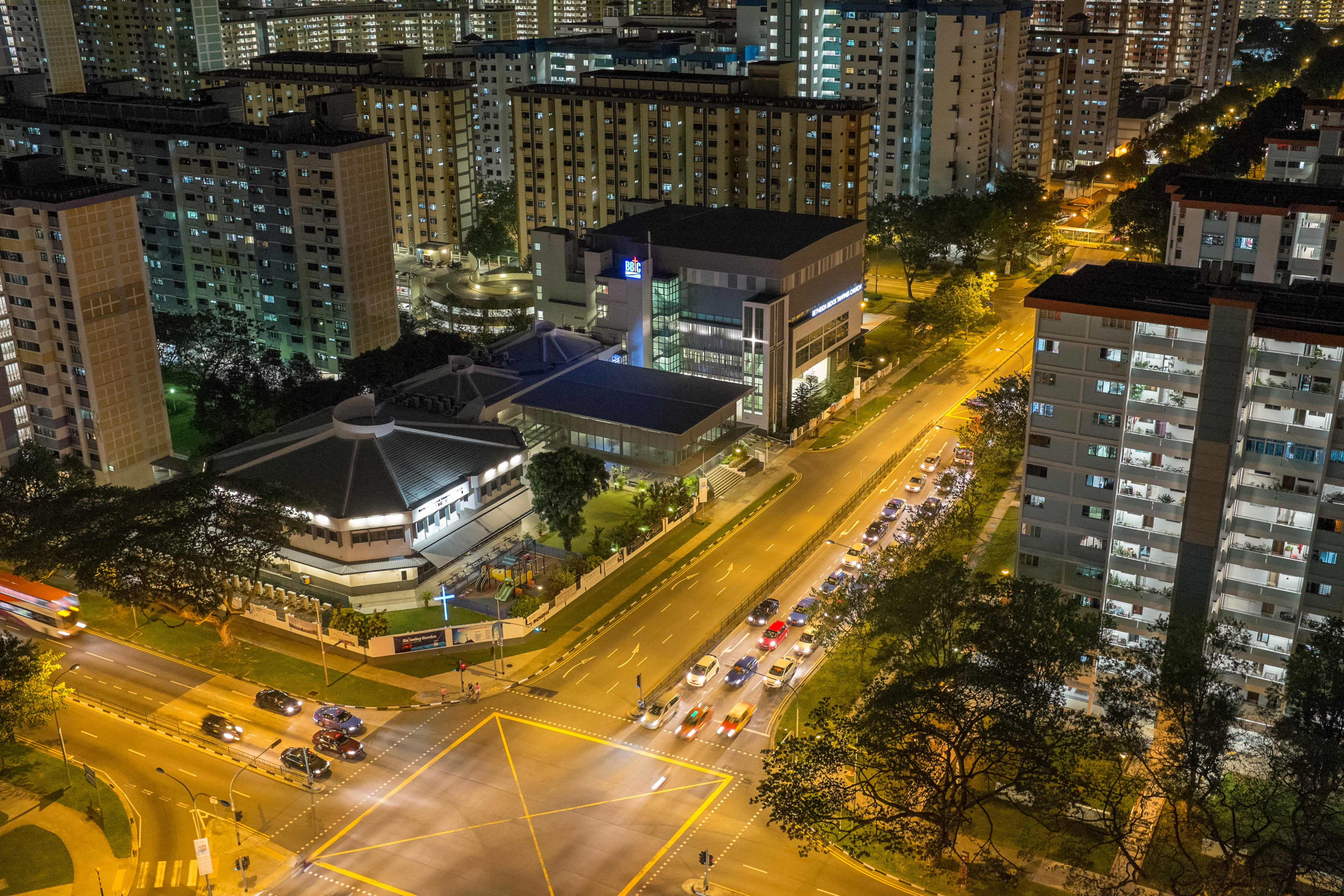
X100S, 100% crop. f/5.6 at 35mm, 1/4 sec, ISO 3200.
Sample Photographs
Note: The images in this review were shot in raw and processed to taste using Adobe Lightroomm 5 Beta and exported to JPEG. Changes have been made to exposure, highlights, shadows, clarity and vibrance, but no noise reduction has been applied.
These are sample photographs shot with the Fujifilm X100S. The photos have not been post-processed and are copyright to SPH Magazines. They are provided for your reference only and we ask that you do not reproduce them elsewhere. Click for full-resolution images.

f/2 at 35mm, 1/1000 sec, ISO 400.

f/5 at 35mm, 1/15 sec, ISO 200.

f/2 at 35mm, 1/210 sec, ISO 200.

f/4 at 35mm, 1/70 sec, ISO 200.
f/2 at 35mm, 1/60 sec, ISO 2500.

f/2 at 35mm, 1/60 sec, ISO 1000.

f/2 at 35mm, 1/125 sec, ISO 640.

f/2 at 35mm, 1/125 sec, ISO 500.

f/2 at 35mm, 1/80 sec, ISO 2000.
Conclusion
The Fujifilm X100S is a romantic camera which offers you much through constrains. Like the X100, it certainly isn't for everyone. We wouldn't recommend it if you can't live without zoom, or if you don't at least know what the exposure triangle is. That's not who the X100S is built for.
Instead, if you, like this reviewer, love the 35mm field of view (if not exactly a 35mm angle of view, this is a cropped sensor after all) and relish shooting within the limits of a f/2 prime while going manual, you just might love the X100S. It's a stunning good-looker and feels well-made. The physical aperture, shutter speed and exposure controls make it easy to shoot manually, and there's nothing else like the hybrid viewfinder, which gives you the option to shoot either through a bright optical viewfinder or a competent electronic viewfinder.
While AF speeds have been increased, AF accuracy is still Fujifilm's Achilles' heel and needs work. However, the X100S makes manual focusing much easier thanks to two new features: Focus Peak Highlight and Digital Split Image. The faster processor means the X100S doesn't lock up the way the X100 used to, and the Raw button has thankfully been retired, replaced with the infinitely more useful Q button for the Quick Menu.
At this moment though, we have to heartily recommend this camera with a caveat. The X100S' X-Trans II sensor is truly remarkable for its ability to capture fine detail, rich color and reach into the high ISOs without introducing much image noise. But if there's one central still unanswered about the X100S' dependability, it's the current crop of raw converters' ability to parse its raw files correctly without introducing the odd edge halos and color smearing we noticed.
It seems like Fujifilm is on it, apparently the company is working directly with Adobe to improve ACR's (Adobe Camera Raw) ability to work with the X-Trans files. Fujifilm deserves to be applauded for this; although it's been a long way coming, this is the first time we've heard a Japanese camera manufacturer working with Adobe to improve raw handling. Most of the time Adobe, and any third-party raw converter, has had to independently reverse-engineer whatever new raw files the Japanese throw their way, delaying the raw workflow for any photographers using Adobe's software.
Even accounting for the odd artifact, we feel the X100S is worth it, because the images are stunningly vivid, full of life and depth. Even though the difference in image quality between the X100 and X100S might look slight when compared up close, it makes a difference - you can feel the richness inherent in images shot with the X100S. It's not a logical conclusion but hey, we did say the X100S is a romantic camera. It's also romantic because we kept picking it up and shooting with it - the camera made us want to shoot more, and that's all you really need to say about any camera.
Fujifilm is a company that seems to be firing on all cylinders. After it came out of left field two years ago and captured photographers' hearts with the X100, it's been coming out with products which align with what photographers want. True, it's a niche segment of the market, which loves viewfinders and prime lenses, but damn if Fujifilm doesn't seem to have a finger on the pulse of this segment better than the bigger companies like Canon and Nikon. Well-known photographers like Zack Arias and David Hobby have been singing the X100S' praises, even talking about ditching their DSLR cameras for the lighter X100S and X-Trans system. They're not the only photographers this reviewer has heard of doing that.
Our articles may contain affiliate links. If you buy through these links, we may earn a small commission.