
Canon IXUS 220HS - Keeping It Plain and Simple
With a CMOS sensor packed into a 19.5mm thin body and the new HS system backing it up, how will the Canon IXUS 220 HS perform despite bringing nothing groundbreaking to the table? We find out how this newcomer fares against its predecessors.

The Compact Solution
Point-and-shoots appeal to the casual shooter due to their compact size and ease of use. While DSLRs are getting all the attention, not everyone demands the functionality of a DSLR, and they probably wouldn’t like to lug around a bulky camera and a bagful of lenses all day. For those less critical of their photos, or those that just want a camera to take snapshots without much fuss or trouble (or much weight for that matter), compacts and prosumer cameras are still the way to go. What better way to just enjoy the scenery or take snapshots without having to worry about which lens to carry along or which settings to use in a DSLR?
With the compact camera market reaching saturation point, manufacturers are pushing the megapixel envelope as well as throwing in full HD video recording. Today we shall take a look at one of Canon's newer compacts, the Canon IXUS 220 HS, to test out its mettle and what would differentiate it in a market flooded by competitors. The 200 series which consists of the now discontinued , the IXUS 210 and the newly released IXUS 220HS, is the mid-range of Canon's compacts.
With a CMOS sensor packed into a 19.5mm thin body and the ability to record full HD (1080p) videos, the Canon IXUS 220 HS also brings the new HS system to the table. Based purely on megapixel count, the 220 HS seems to be below par compared to the older 210 model. Furthermore, both the 200 and 210 featured touchscreens, but the latest IXUS 220 HS forgoes this. Would that hurt its handling? Find out how the IXUS 220 HS fares and if it is a worthy addition to Canon's mid-range compacts over the next few pages.
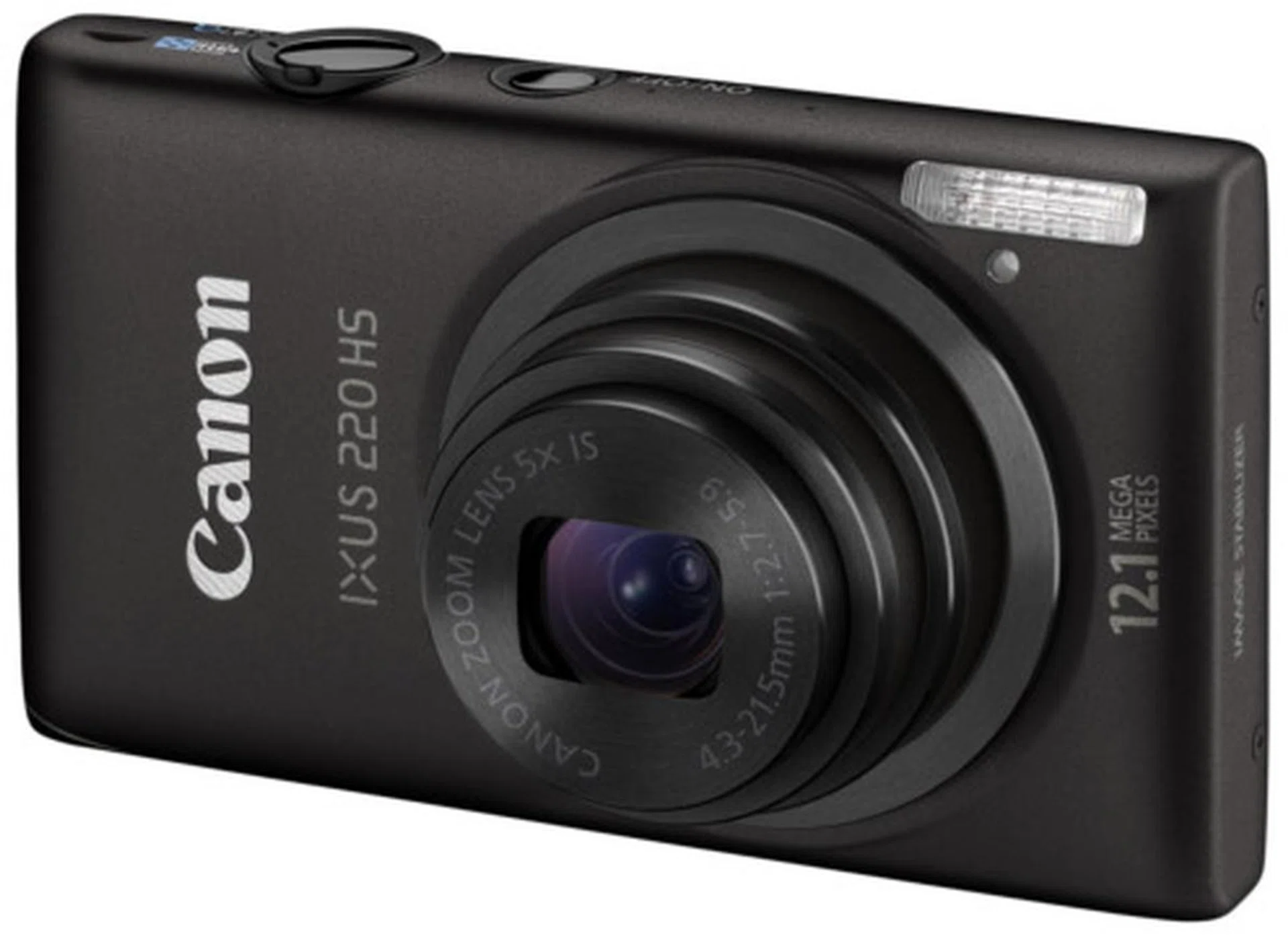
The Canon IXUS 220 HS gets more compact than its predecessors, making it handier than ever. Raw specs seem to have taken a dive, but is bolstered by the new HS system. Find out if Canon made the right choices.
Design and Handling
It isn’t enough to compete on specs alone nowadays, and so manufacturers are releasing compacts in all colors to attract consumers. The IXUS 220 HS comes in three colors: red, silver and black. While others are jumping on the touch screen bandwagon, Canon has opted to stick with having physical buttons on the IXUS 220 HS, which are located to the right of the 2.7 inch LCD screen. With dimensions of 92 x 56 x 20mm, the 220 can fit nicely in your pocket for a day of shooting. It also felt solid in our hands, despite its light weight; which is at 141g with a memory card inserted. On an overall design note, the 220 does not stand out in any way and would feel very familiar to those who have dabbled with other modern compacts.
As we walked around the streets of Melbourne, we noticed that the smooth surface of the 220 made it a bit tricky to get a good grip some times. Therefore be prepared to be wiping the LCD screen quite frequently. Also, as compacts get smaller in size, those with larger hands (that would probably mean the male gender) will have a hard time trying not to drop the camera by accident or block the flash as they steady the camera for a shot. Even though the 220 HS does not feature a touch screen, we barely felt the difference as the buttons did provide tactile feedback for when we wanted to switch or adjust settings in a jiffy. We all know how cranky touch screens can get when you have wet hands, or tend to not hit the right spot on the screen, resulting in a slight delay to adjust your settings.
There’s a slider switch that allows users to switch between the Smart Auto mode and Program Auto. Smart Auto basically lets the camera determine the best settings for the scene and all you have to do for each shot is to just press the shutter button. Program Auto does offer more options with a press of the FUNC.SET button located on the back plate but the 220 is a camera that is aimed at those who just wish to take snapshots without too much fuss.
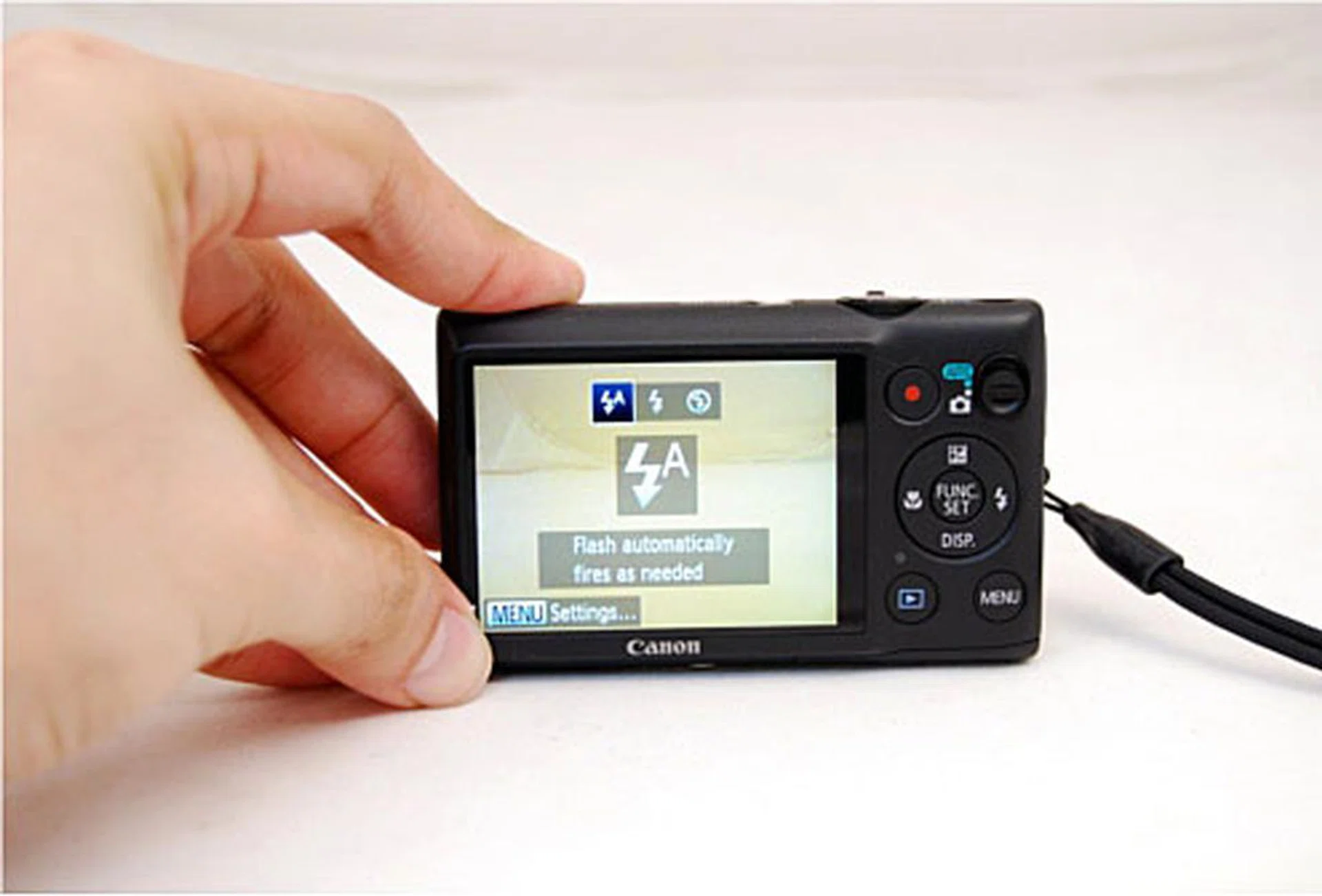
Be careful of blocking the flash by accident as the 220 HS is pretty dainty as seen here with our man-hands.
Navigating the various menus proved to be simple as Canon has very helpfully included brief descriptions for the various options in the menus, such as what does focusing to infinity does, or what does the miniature effect filter do to your picture. Canon has also included many preset shooting modes, throwing in everything but the kitchen sink, from modes like one for specifically shooting foliage to fish-eye effect mode. In fact, there are extra modes and options that the older models like the 210 did not possess, such as the Movie Digest mode or the Poster effect filter. While we were pleased with the camera's high-speed burst mode, we were a wee bit disappointed that the pictures were only at a maximum resolution of three megapixels even though it shot off eight frames per second.
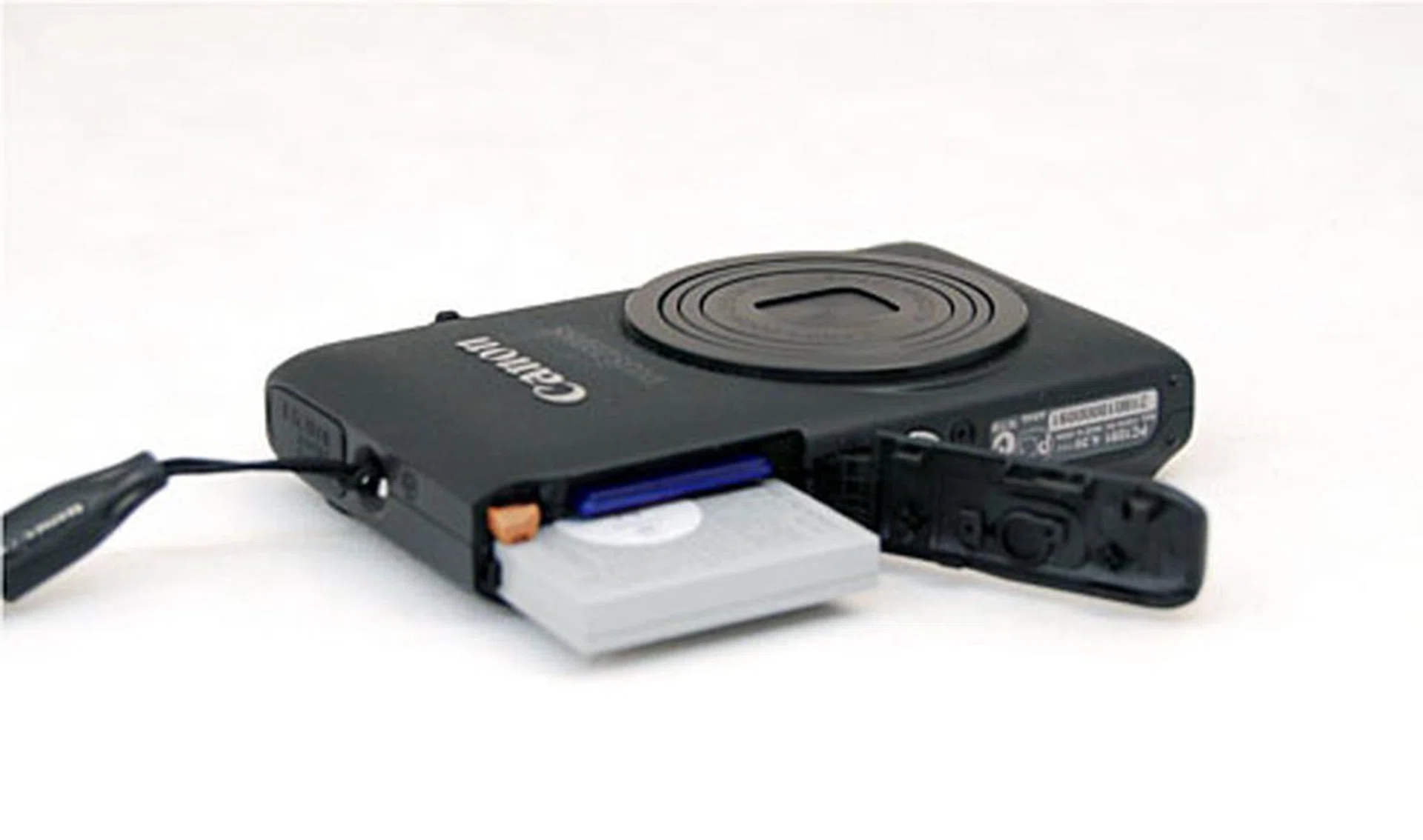
The battery compartment of the Canon IXUS 220 HS.
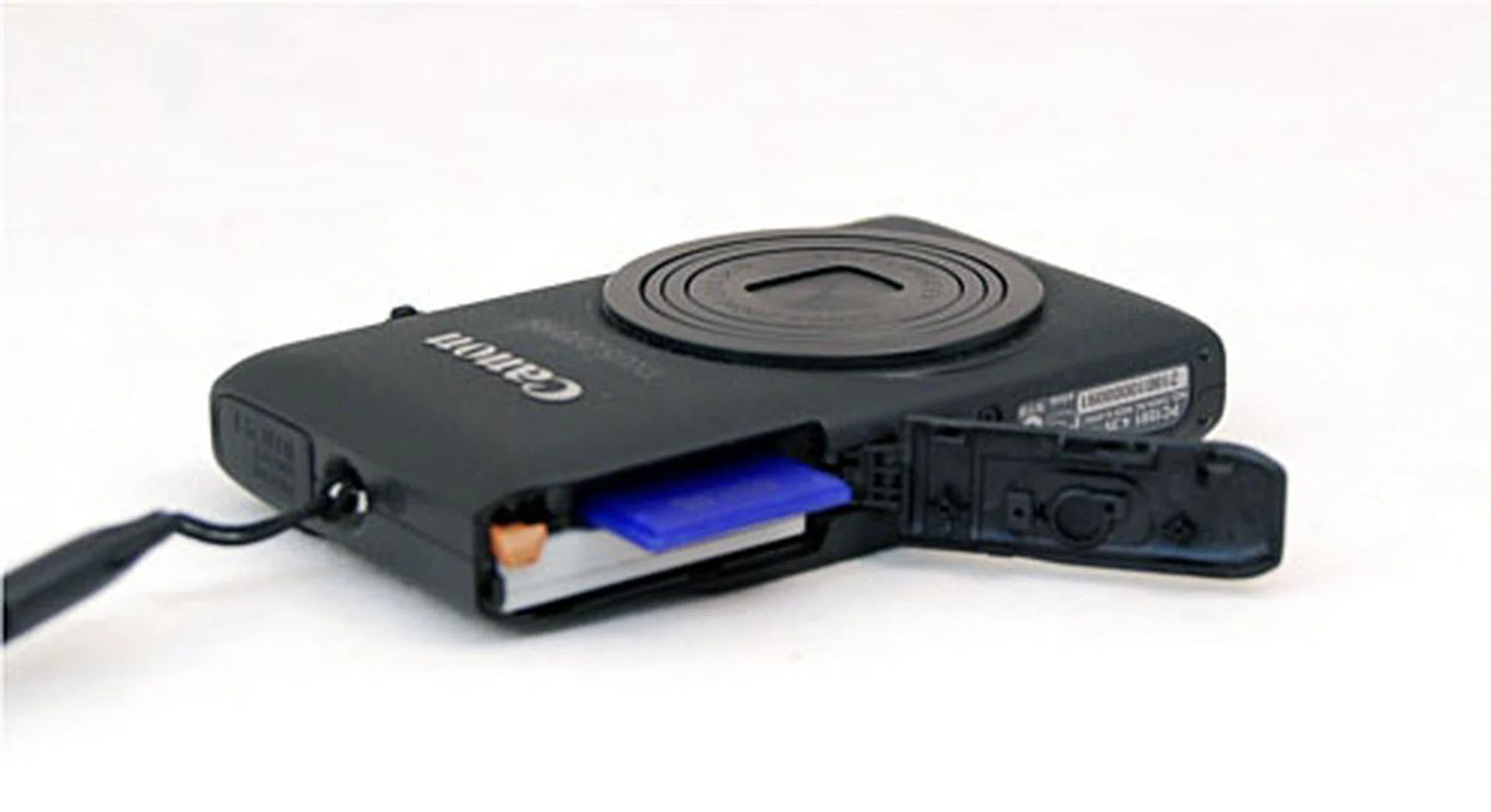
The SD card slot.
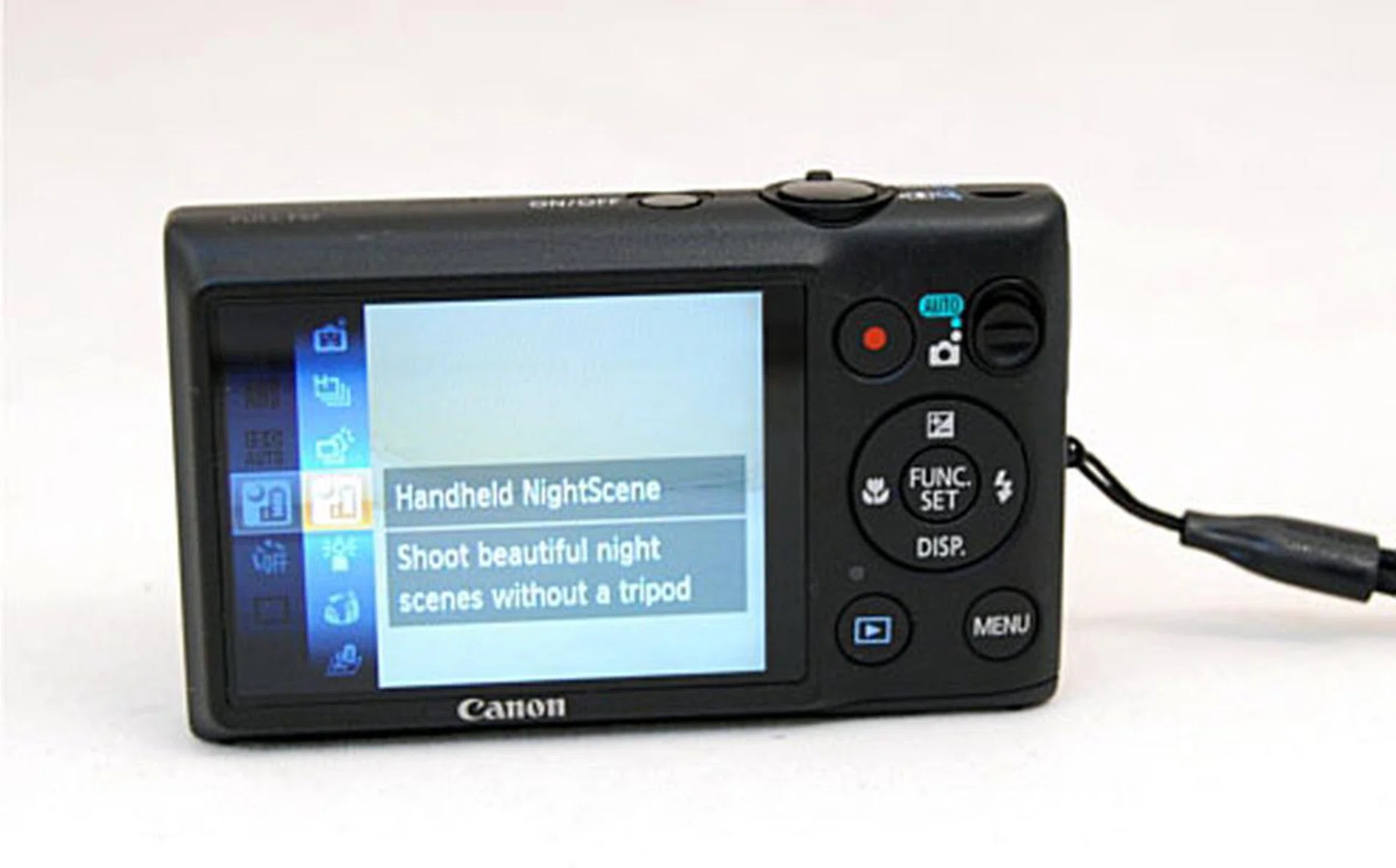
Useful explanations for those less well-versed in photography.
Performance
The "HS" in the Canon IXUS 220 HS' naming refers to Canon's new (HS) system. You may wonder why do Canon's newer models all feature lower resolution as opposed to their older models which boast 14 megapixels resolution? This may not make any sense to many of you, but there's a reason to Canon's apparent downgrade.
Compacts typically take blurry, grainy pictures at night or during low-light situations. Thus Canon worked to solve this problem plaguing compacts. The HS systems depends on two major components to achieve good low-light performance and better overall pictures; so for the IXUS 220 HS, it would its 12.1 megapixels 1/2.3-inch CMOS sensor and the DIGIC 4 image processor. Even though on paper the IXUS 220 HS offers a lower megapixel count than its contemporaries or even older models, it also means each pixel is larger and thus is able to capture more light, something very useful for low-light situations.
The IXUS 220 HS may be a budget compact, but due to its HS system, it still performed admirably well as shown below in our resolution test. As you can see the camera scored 1700 LPH (horizontal) and 1800LPH (vertical) on our resolution chart.

Next we tested the ISO performance of the camera and were surprised that the noise control for the IXUS 220 HS was good despite its affordable price tag. Noise was only prominent from ISO 800 onwards and even at ISO 1600, the images were still of a bearable quality with regards to noise. With the ISO set at 3200, noise was pretty apparent, though the pictures taken at that setting would do in a pinch.

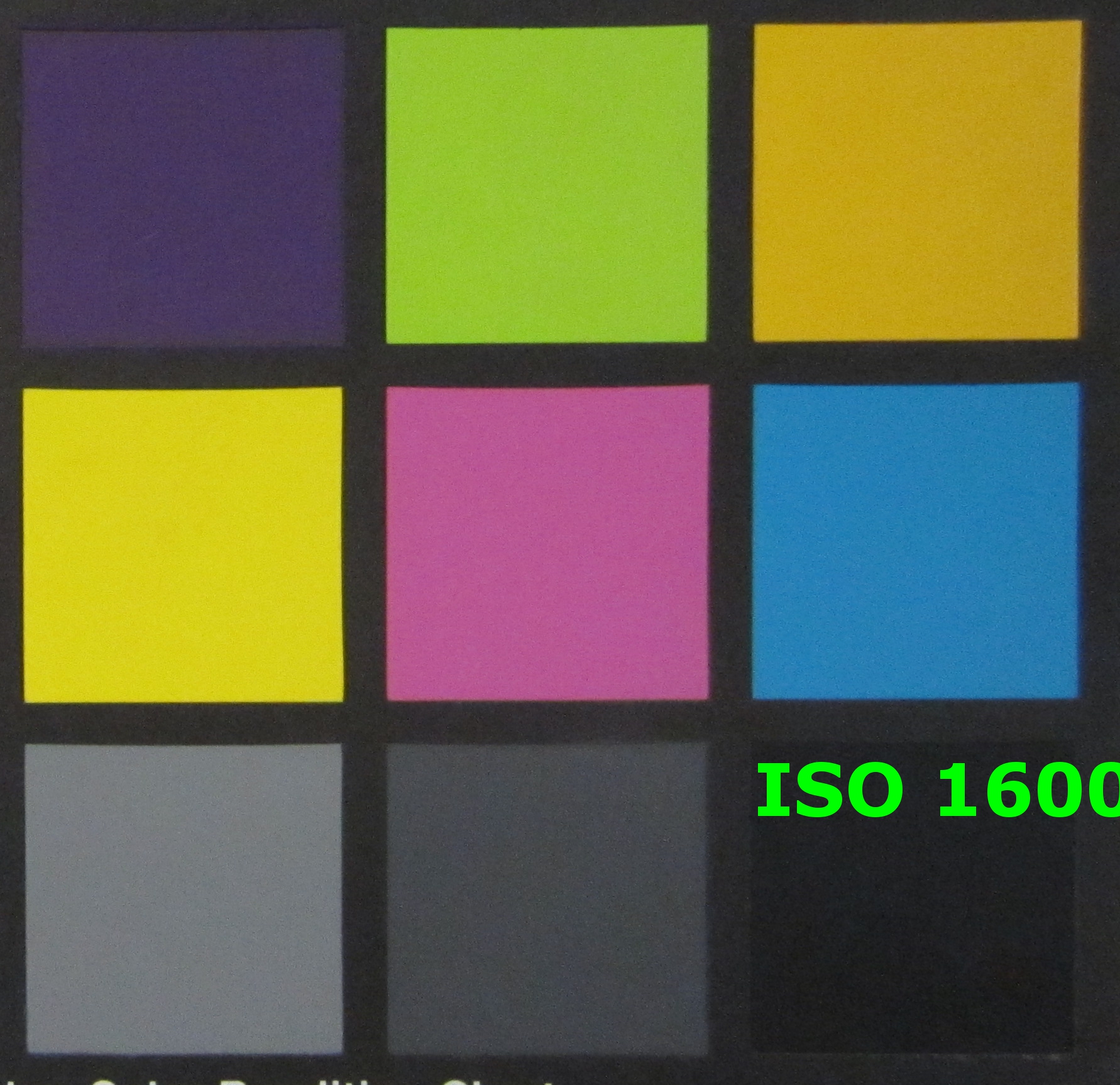
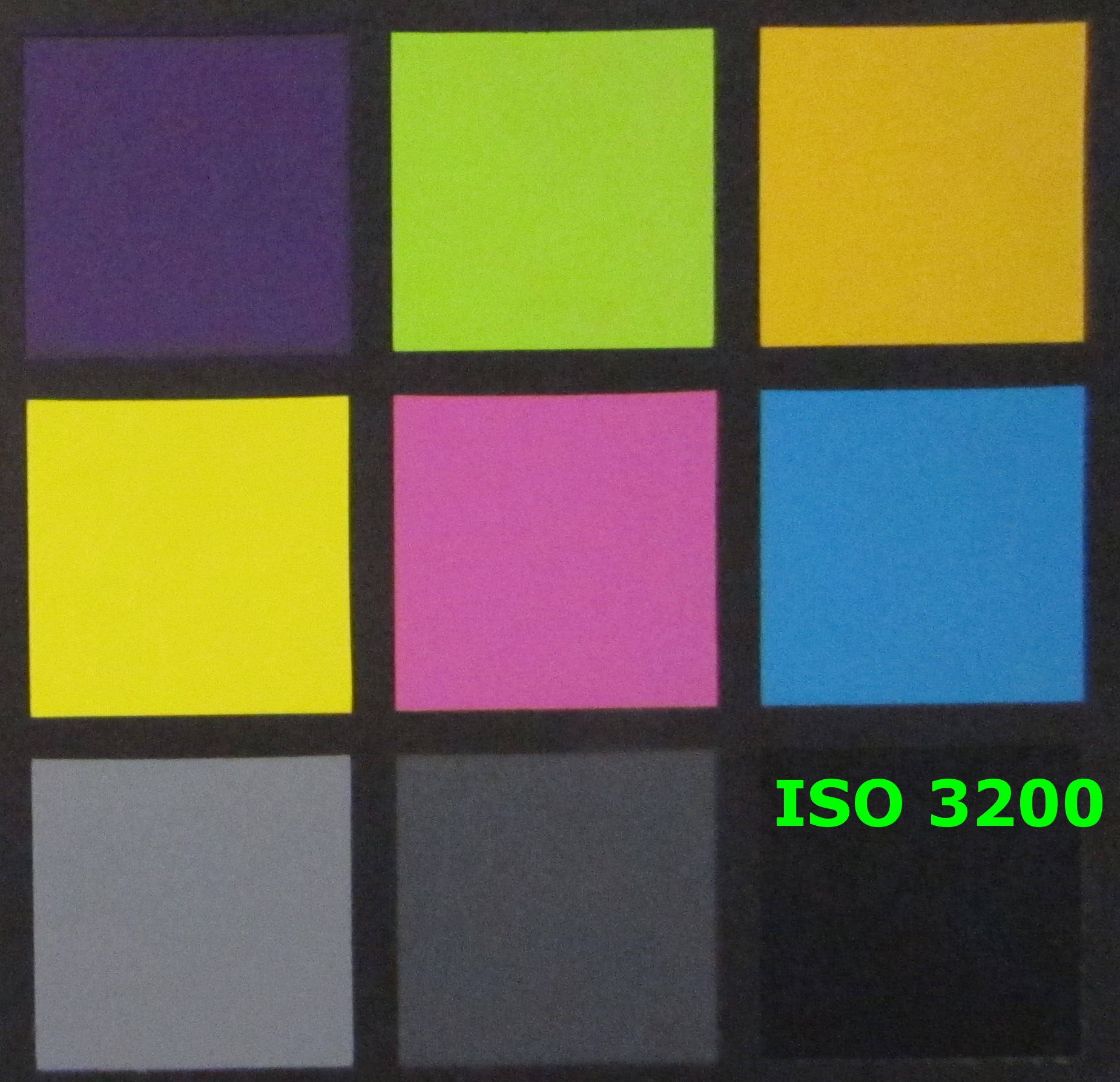
Obviously due to the smaller sensor in compacts, noise is more apparent than in DSLRs so don't be expecting too much of the Canon IXUS 220 HS for casual shooting. The auto-focus was pretty quick and managed to lock on to targets quickly, but do take note that this is a camera that shines when there's a lot of natural light, as most compacts' performance degrade quickly in the absence of abundant natural light.
Sample Images
These are sample images shot with the Canon IXUS 220 HS. The images have not been post-processed and are copyright to SPH Magazines. We kindly ask that you do not reproduce them elsewhere. Click to see the original full resolution images (which are rather large).

f/2.7 at 4.3mm, 1/40 sec, ISO 100

f/2.7 at 4.3mm, 1/640 sec, ISO 100

f/2.7 at 4.3mm, 1/250 sec, ISO 100

f/2.7 at 4.3mm, 1/30 sec, ISO 500
Conclusion
Though looking pretty generic on the outside, the Canon IXUS 220 HS does live up to the IXUS name. With a menu that is easy to navigate and understand, as well as snappy shutter response and a quick auto-focus, the IXUS 220 HS will appeal to casual users looking for nothing more than a simple and effective point-and-shoot camera. Despite its modest S$399 price tag, the IXUS 220 HS performs admirably well, and even has some basic manual controls such as exposure compensation, for those more familiar with cameras.
Even if the Canon IXUS 220 HS won't be winning any awards for its design, one of the camera's best features is part of its design. For those looking to drop a camera into their bag or slip it into their pocket of their pants, the 220 will appeal to them due to its slim form factor and light weight. Sweetening the deal is its performance and ease of use.
If you were to compare the Canon IXUS 220 HS with the 210 (an older model), on paper the 220 HS does look weaker despite being the newer model with a lower megapixel count and the exclusion of a touchscreeen. And the fact that both cameras feature the same SRP doesn't make the IXUS 220 HS seem that much more appealing. However, do not overlook the HS system incorporated into the newcomer as it means that the IXUS 220 HS possesses the most current technology for compacts even though it brings nothing groundbreaking to the table. And most importantly, as a light travel accessory for your snapshots, the Canon IXUS 220 HS is fun to use and best of all, won't bust your budget.
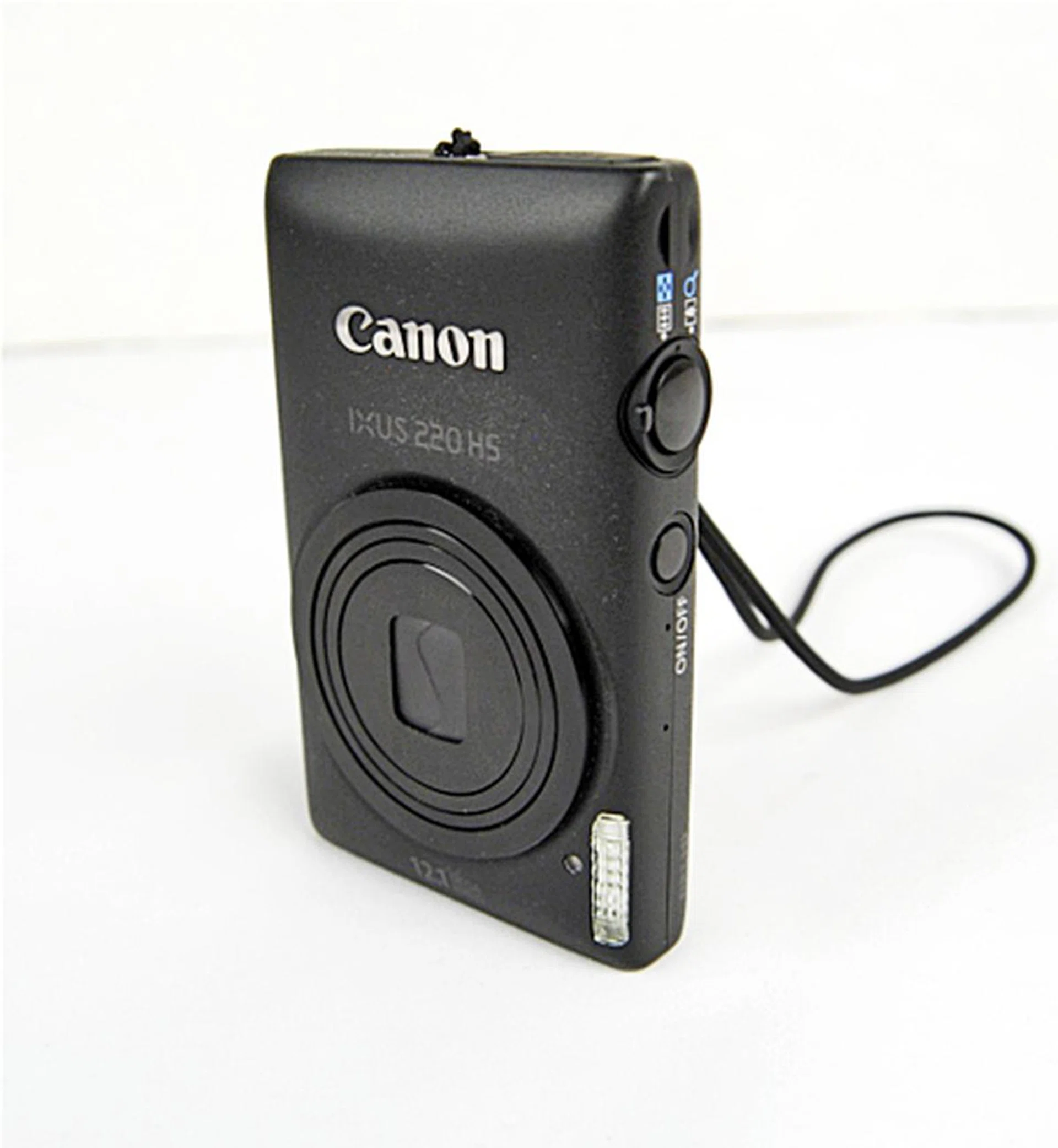
For a compact that's light and affordable without sacrificing performance, the Canon IXUS 220 HS fits the bill.
Our articles may contain affiliate links. If you buy through these links, we may earn a small commission.