
Top 5 sights of CP+ 2015
With Sony, Olympus, and Canon all having major product launches in the very early part of the year, the question of what else would we find at Japan’s annual Camera & Photo Imaging Show (a.k.a. CP+) is always going to be asked. We’ve done our rounds at the show floor, and here are our top five sights at the show.

What's happening at Yokohama?
Japan’s annual Camera & Photo Imaging Show (or CP+) has always been a treat for photography fans, whether it’s because of the abundance of models (both human and photographic), or the plain charm of the Japanese exhibitors who always do their best to accede to our requests despite the difficulties in language. There’s always a large crowd of camera-toting fans, many of them with extremely serious gear. All the talks and presentations are still conducted in Japanese only, making it seems a little more like a domestic trade show, but with companies like Lytro, Manfrotto, and drone builder DJI all making a presence on the show floor, it’s definitely anything but.
1.) Casio Exilim ZR1600
As has been the case for a while, Casio’s focus remains on the selfie (and now the wefie), and so it's looked to improve your options by adding Bluetooth Smart and Wi-Fi connectivity to its new Exilim, the ZR1600. This 16-megapixel camera features an 18x optical zoom (expandable to 36x), a wide 25-81mm lens, and of course, a flip-up LCD screen for selfies and wefies. Bluetooth Smart is Casio’s answer to NFC, which it thinks is a better solution as you won’t even need to tap your phone to your camera each time to activate sharing (after you’ve done an initial set-up). Once paired, just activate the feature from your ZR1600, and it will send images over to your phone - even if it’s in your bag.
Unfortunately the ZR1600 will remain a Japan-only model for now, but we’re told an equivalent for the international market will be released later in the year, so we‘ll be sure to update you when that happens.
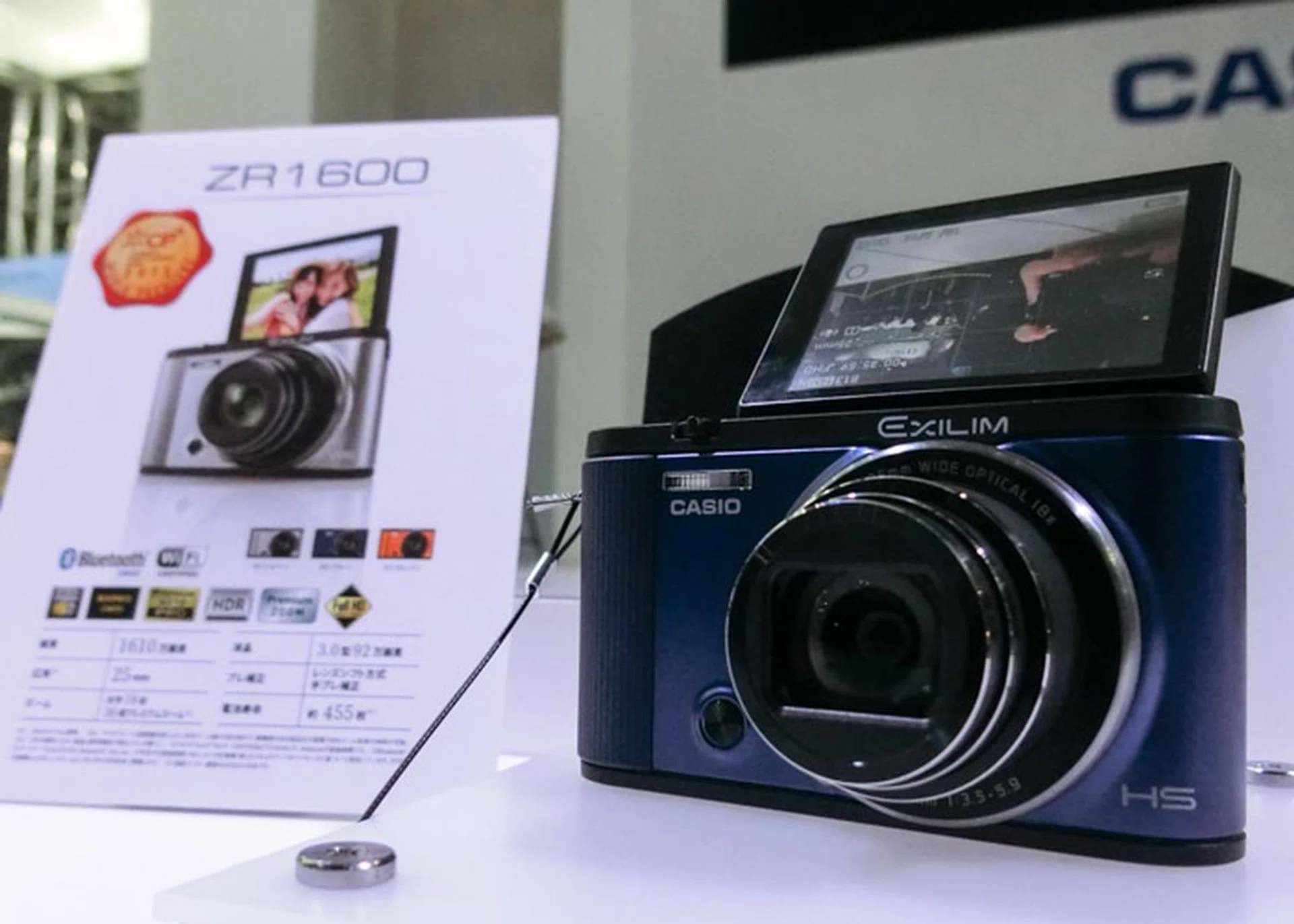
The new ZR1600 looks to provide even better connectivity so you can have selfies without having to hold up the camera.
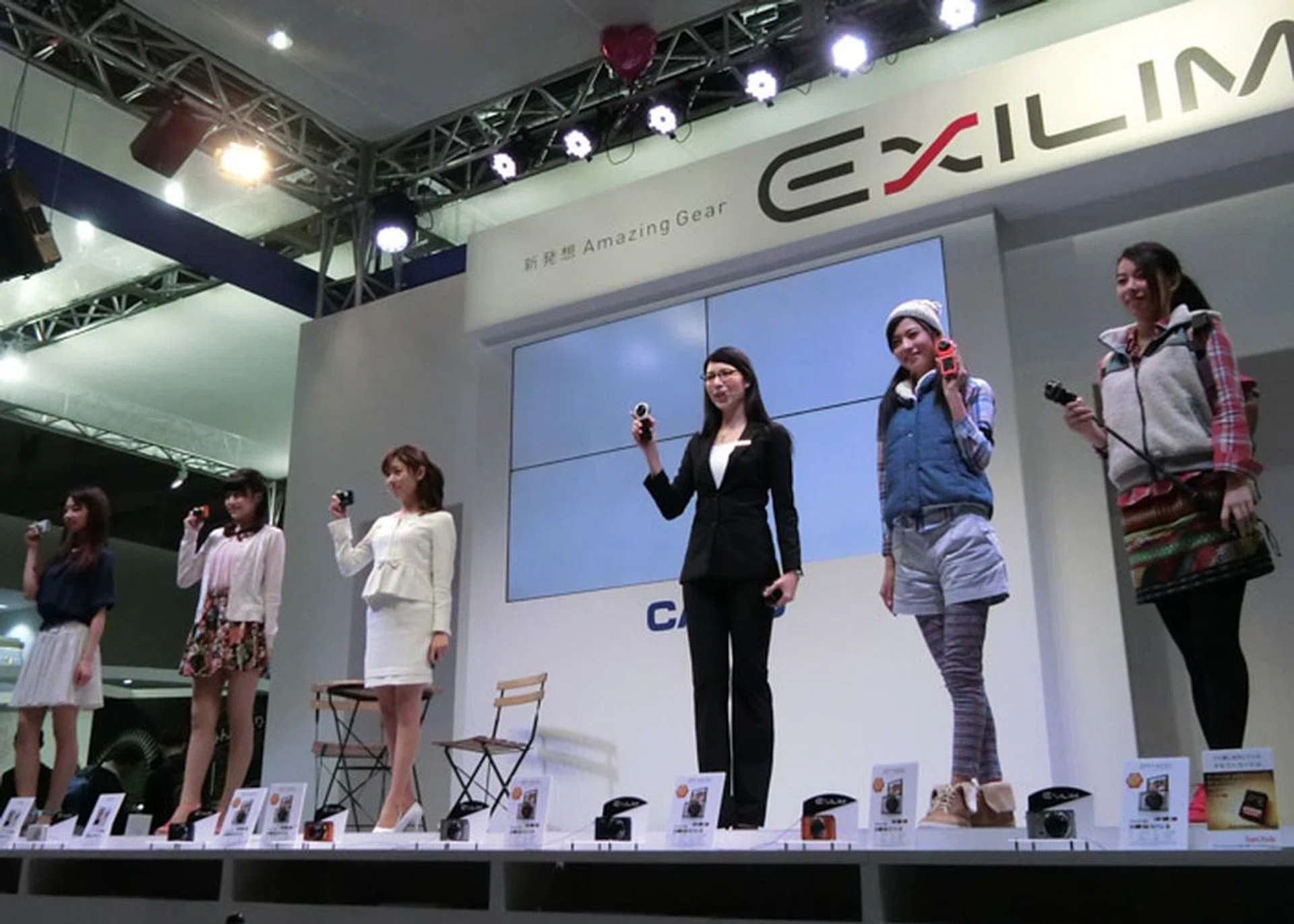
There's a selfie camera for everyone!
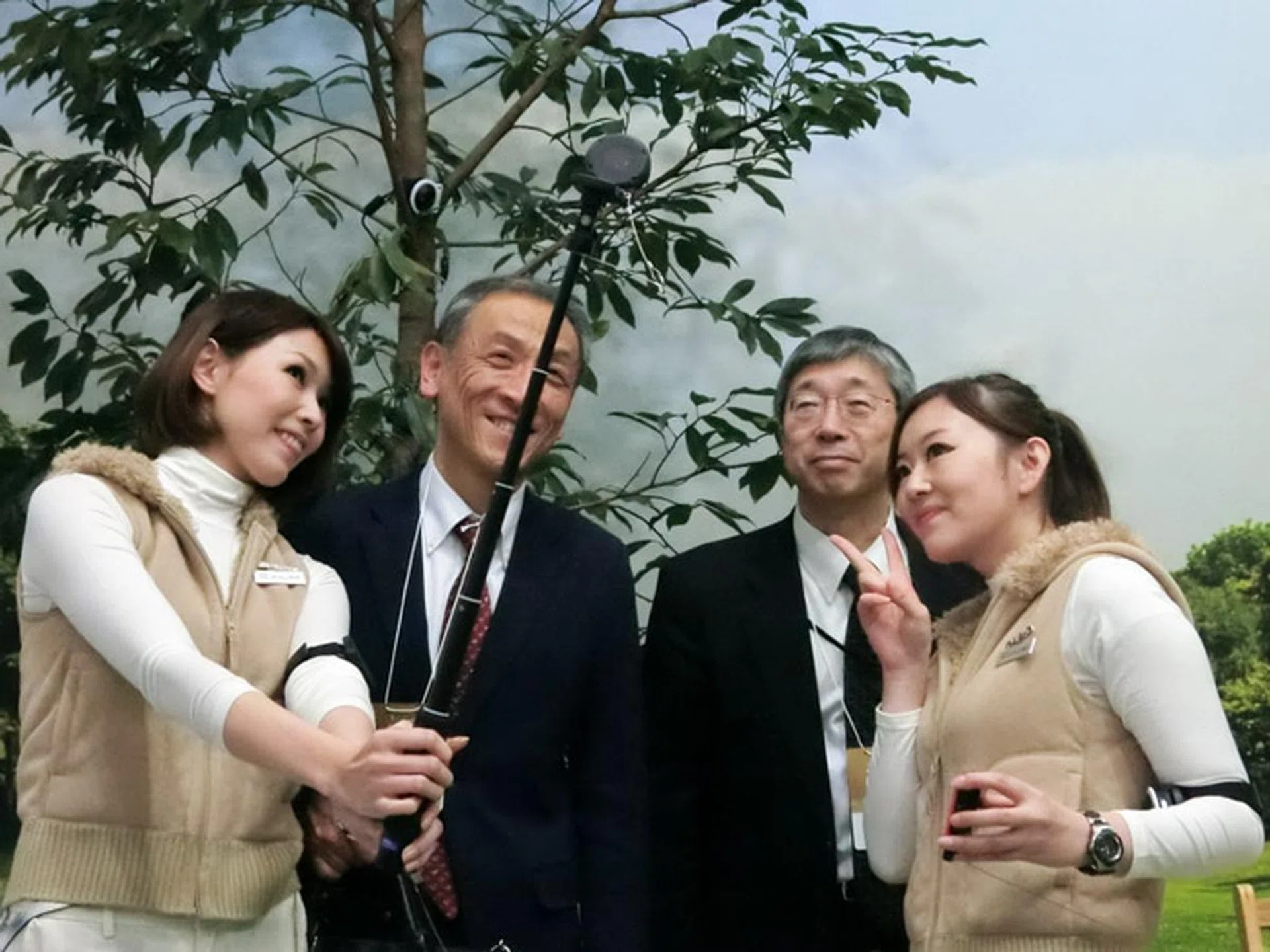
Visitors having a wefie taken with the booth babes.
2.) Panasonic Lumix CM1
It’s not the first camera-phone Panasonic has attempted, but the Lumix CM1 certainly seems like it has potential to go mainstream. For starters, it’s based off Android 4.4 (KitKat), has a Qualcomm Snapdragon 801 2.3Ghz (quad-core) processor, and features a 1-inch, 20-megapixel MOS sensor that has an ISO range of 125-12,800 (expandable to 25,600). It shoots to RAW, does 4K video recording, and supports 4G, 3G, and 2G mobile networks, which means it shouldn’t be too difficult to adapt one for overseas networks. Of course, there’s also a microSD slot for easy expansion.
We do like the control ring on the front, and the fact that it isn’t much larger or thicker than today’s smartphones. The one thing that did stand out to us though, is that despite the fact that focus and capture seem to be fairly speedy, the CM1 takes a fair amount of time processing image data before it's ready for the next shot. Still, the concept does seem to be promising. The Lumix CM1 has been launched in Japan for 120,000 Yen (~S$1,370), but no dates are announced regarding an international launch.
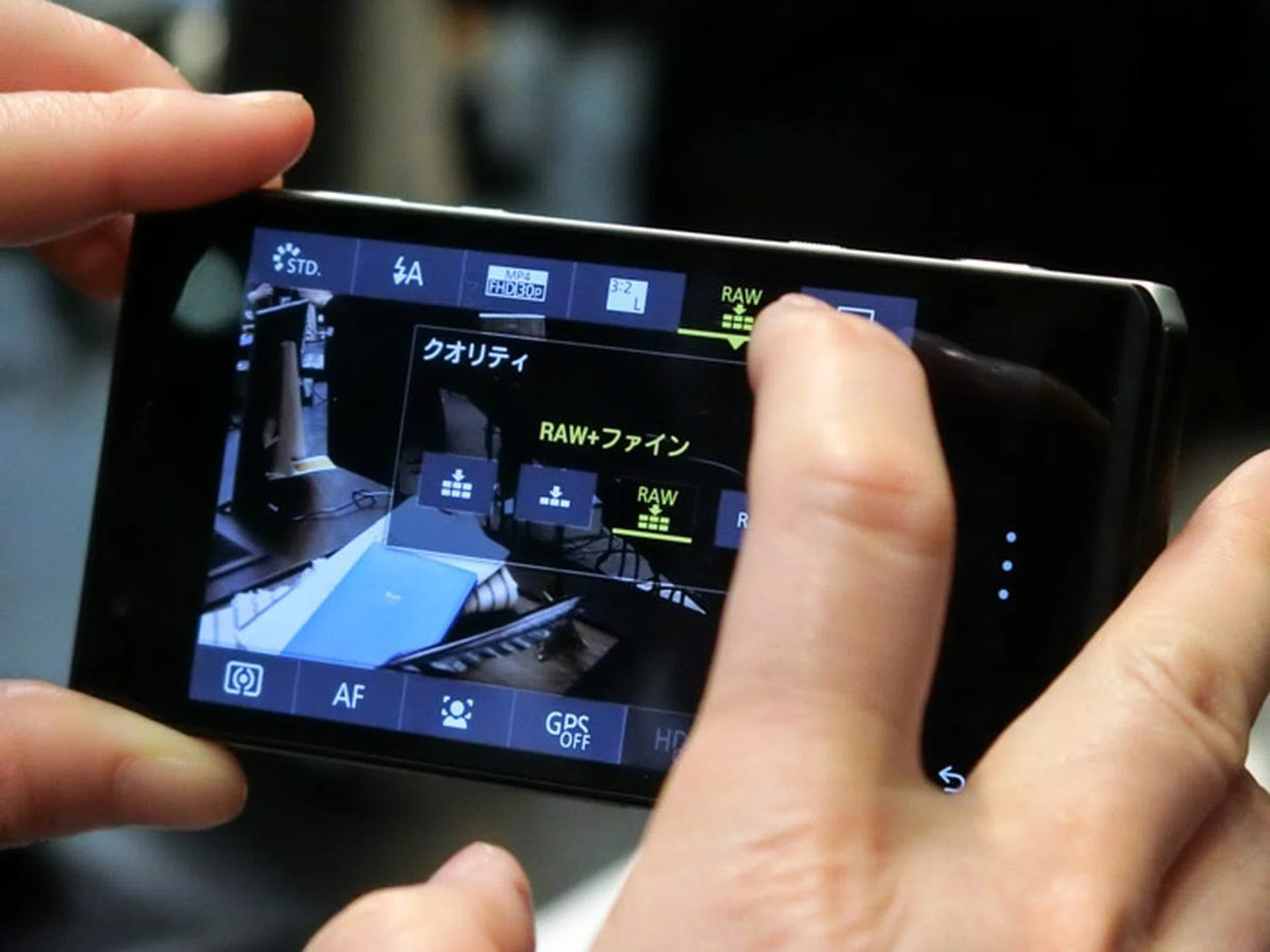
But it shoots to RAW.
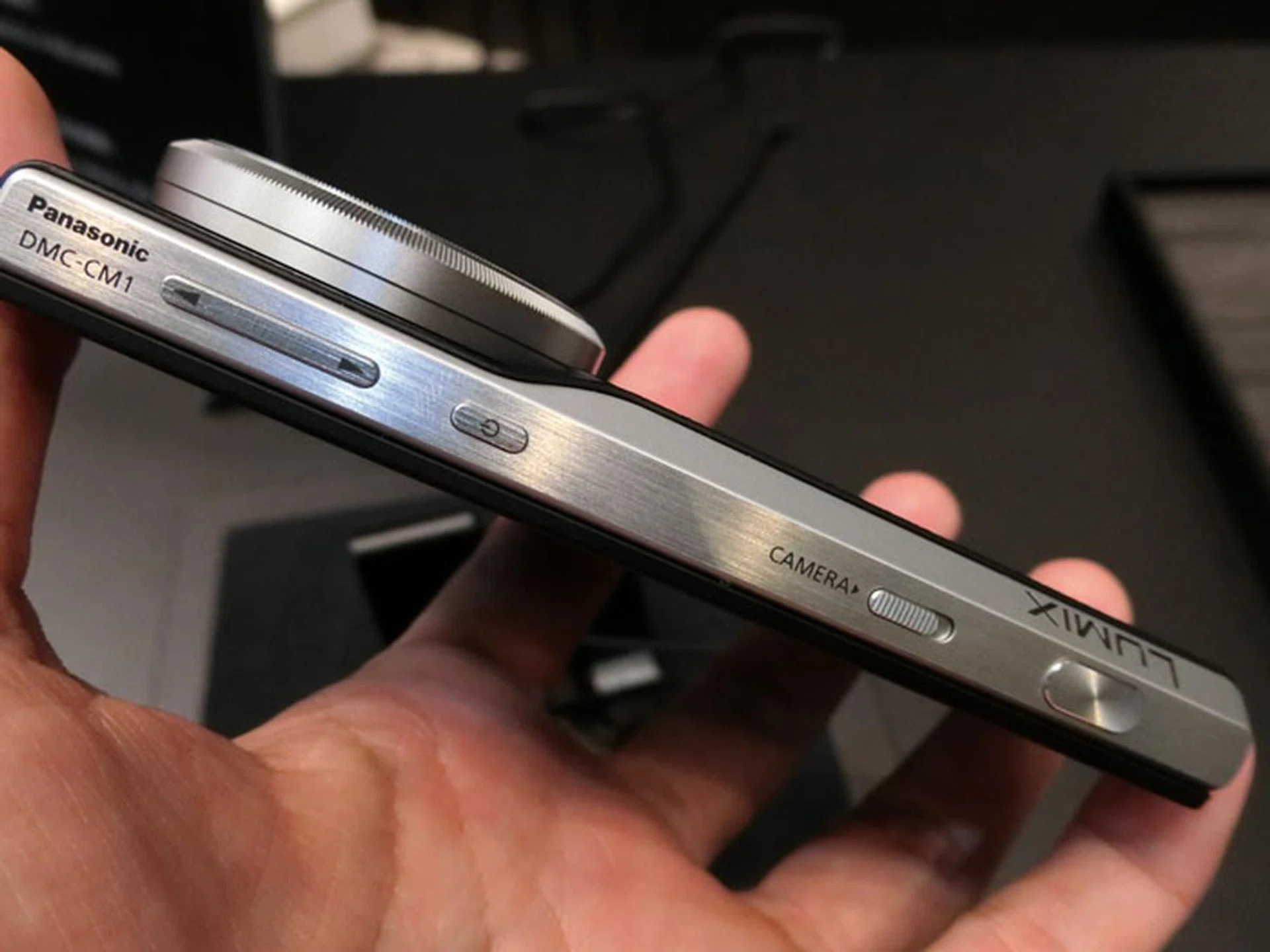
And is actually quite thin.
3.) Pentax K-S2
It’s been barely a year since the K-S1 was launched, and now the K-S2 brings weather sealing and dust resistance to a body that measures about 122.5mm wide and 72.5mm deep. There’s also a flip-out LCD, and the camera now features Wi-Fi and NFC support for easy smart device control. Also new are Shake Reduction and Dust Removal capabilities to the 20-megapixel CMOS sensor, which goes up to a max ISO of 51,200. There’s even a secondary button that can be configured to work as a shutter when you hold the camera in reverse to take those selfies! The LED strip that distinguished the original K-S1 seems to be gone, but the features on this entry-level camera definitely sound attractive. This will be going for about 109,630 Yen (~S$1,251) in Japan, but there isn’t an international release date as yet. It’s definitely something to look out for if you’re a fan of the Pentax system.
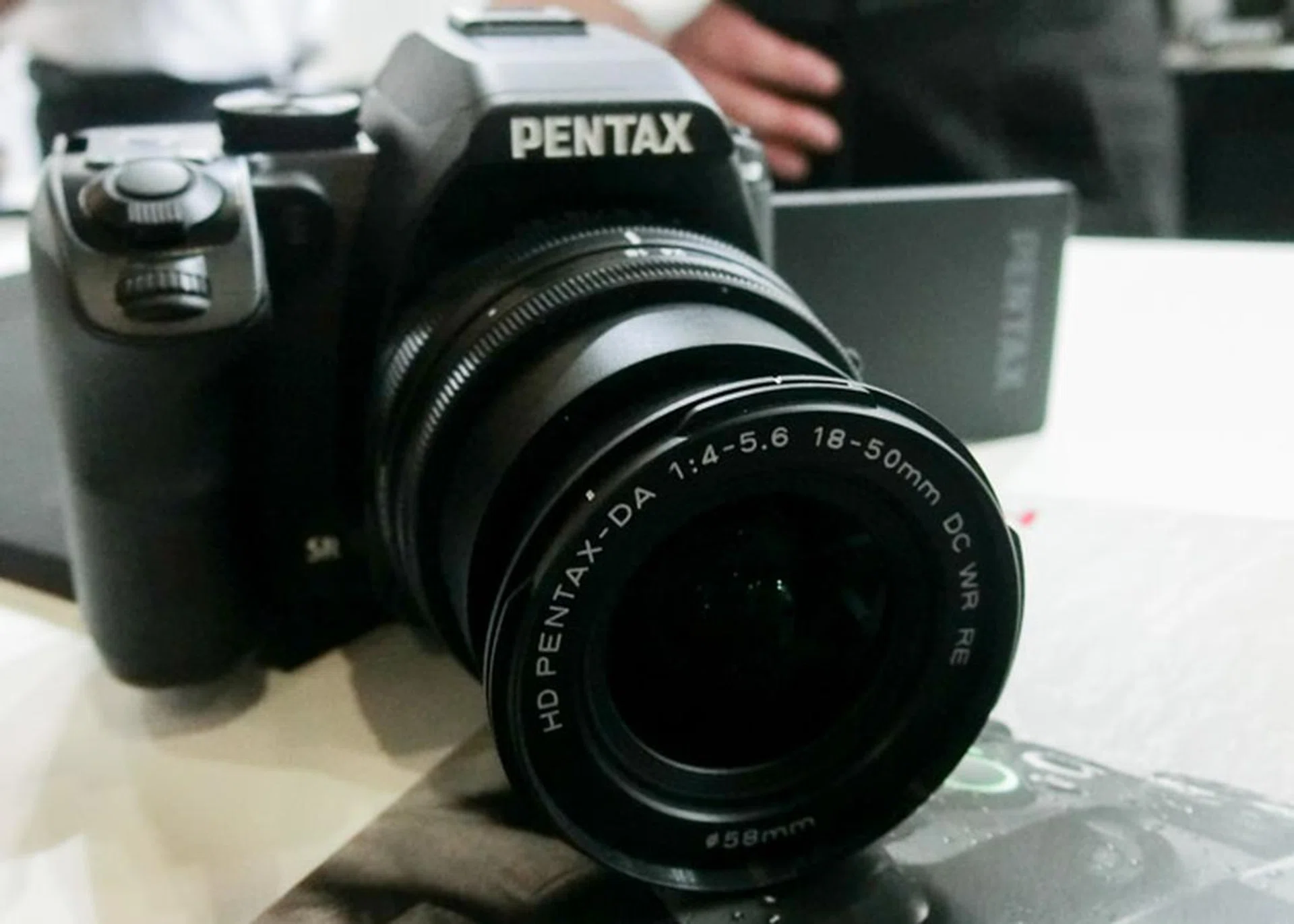
Gone are the funky lights; the KS-2 now features a tough exterior.
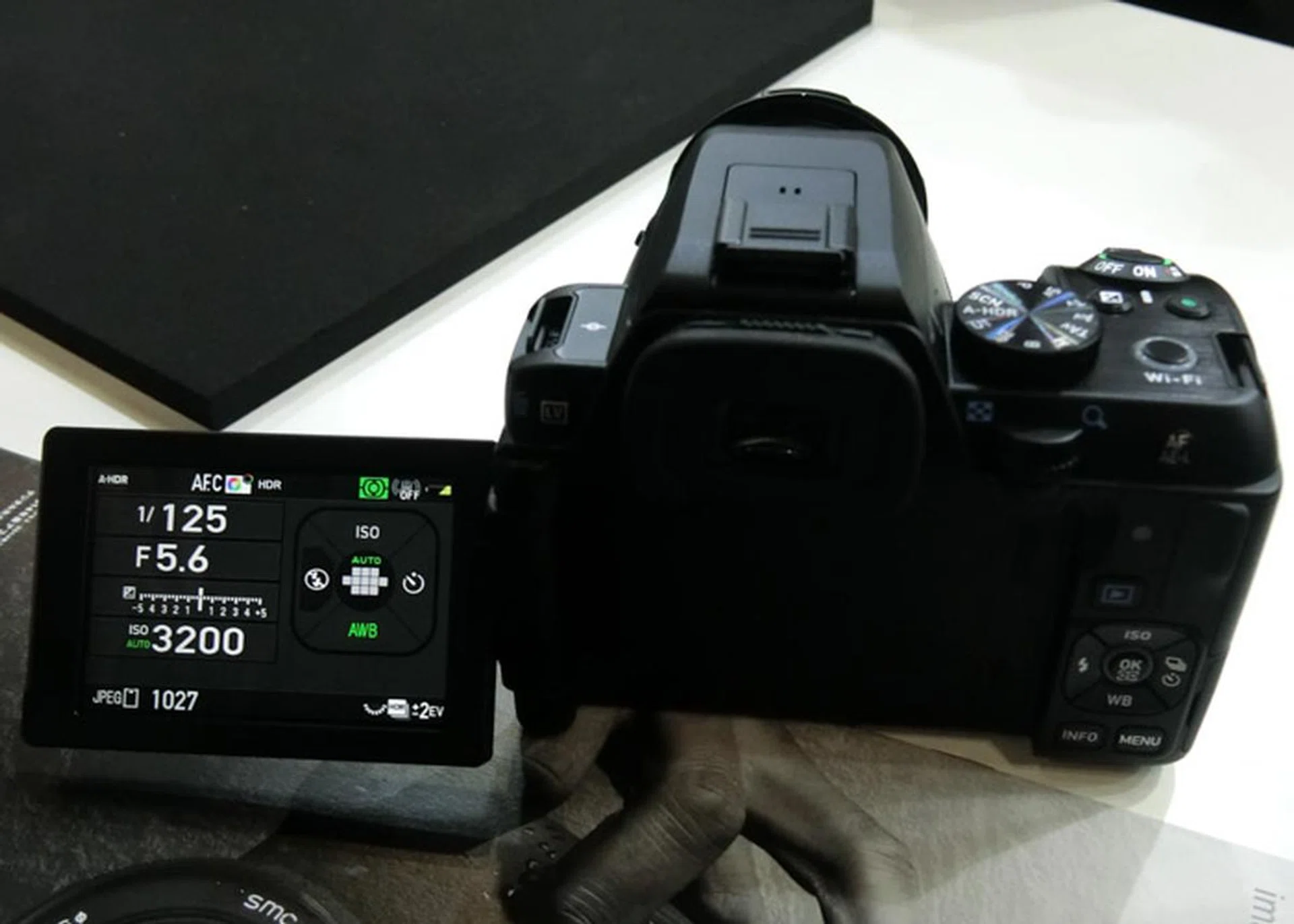
A flip-out viewfinder that's also weatherproof? Yes, please!
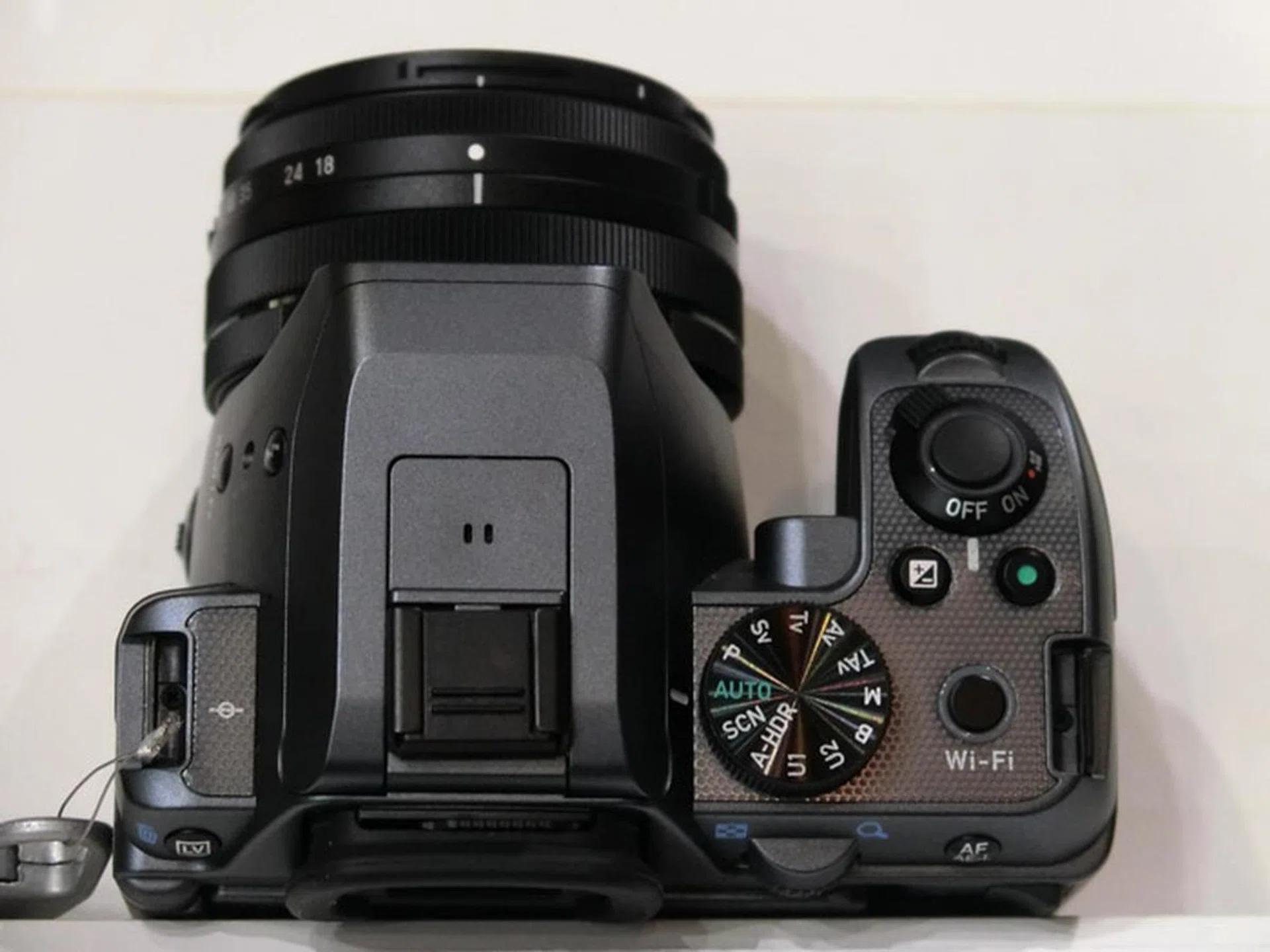
From the top you can see that there remains a sizable handgrip on the K-S2.
4.) Sigma 24mm f/1.4 DG HSM Art
The ART series lenses from Sigma have garnered quite a fair bit of acclaim with each launch, so it was with some excitement that we approached the 24mm Art on the show floor. This mid-sized lens looks equally at home on an APS-C body (giving it the equivalent of a 50mm look), and overall, it looks as well constructed as any of the other ART lenses. Focusing seems to be fast and accurate, and the lens weighs 665g, while measuring 90.2mm long and 85mm wide. It takes 77mm filter rings, which is a good common size. The lens has 3 FLD elements, 4 SLD elements, and 2 aspherical lenses, and is said to be best at dealing with coma flare, so that should prove to be quite interesting to test out.
Unfortunately, neither prints nor pricing and availability information are available for this lens; we'll keep you updated once we've more info.
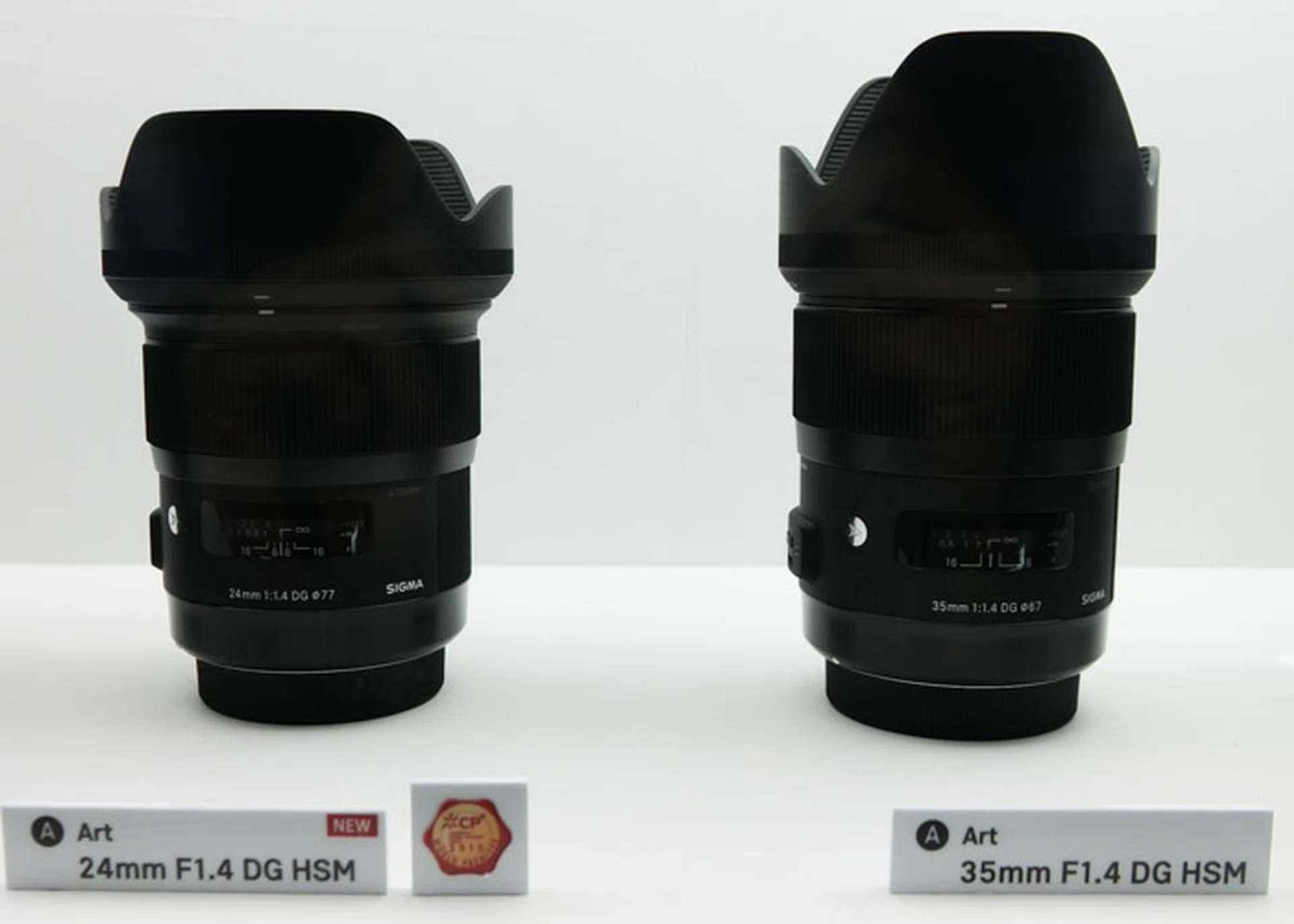
Side by side: The 24mm f/1.4 and the 35mm f/1.4.
5.) Tamron SP 15-30mm f/2.8 Di VC USD
Part of Tamron’s new Di Series, the SP 15-30 f/2.8 Di VC USD is a super wide-angle lens for full-frame cameras that utilizes Tamron’s XGM (eXpanded Glass Molded Aspherical) lens design to create an aspherical lens with a large diameter. It maintains optical performance through the use of multiple LD (Low Dispersion) elements, with an eBand coating ( Extended Bandwidth & Angular-Dependency Coating) on the len’s front element acting like a nanocoat to ensure optimum absorption of light. In addition, USD (Ultrasonic Silent Drive) helps to ensure quick, quiet, and accurate auto-focusing. The lens itself weighs a good 1.1kg, and the XGM design also means that it's unable to take front filters. The Tamron SP 15-30mm comes in Canon and Nikon mounts as a f/2.8 Di VC USD lens, while the Sony version comes without Vibration Control as just the f/2.8 Di USD. Unfortunately, no international pricing and availability information are available, but the domestic pricing is 140,000 Yen after tax (~S$1,597).
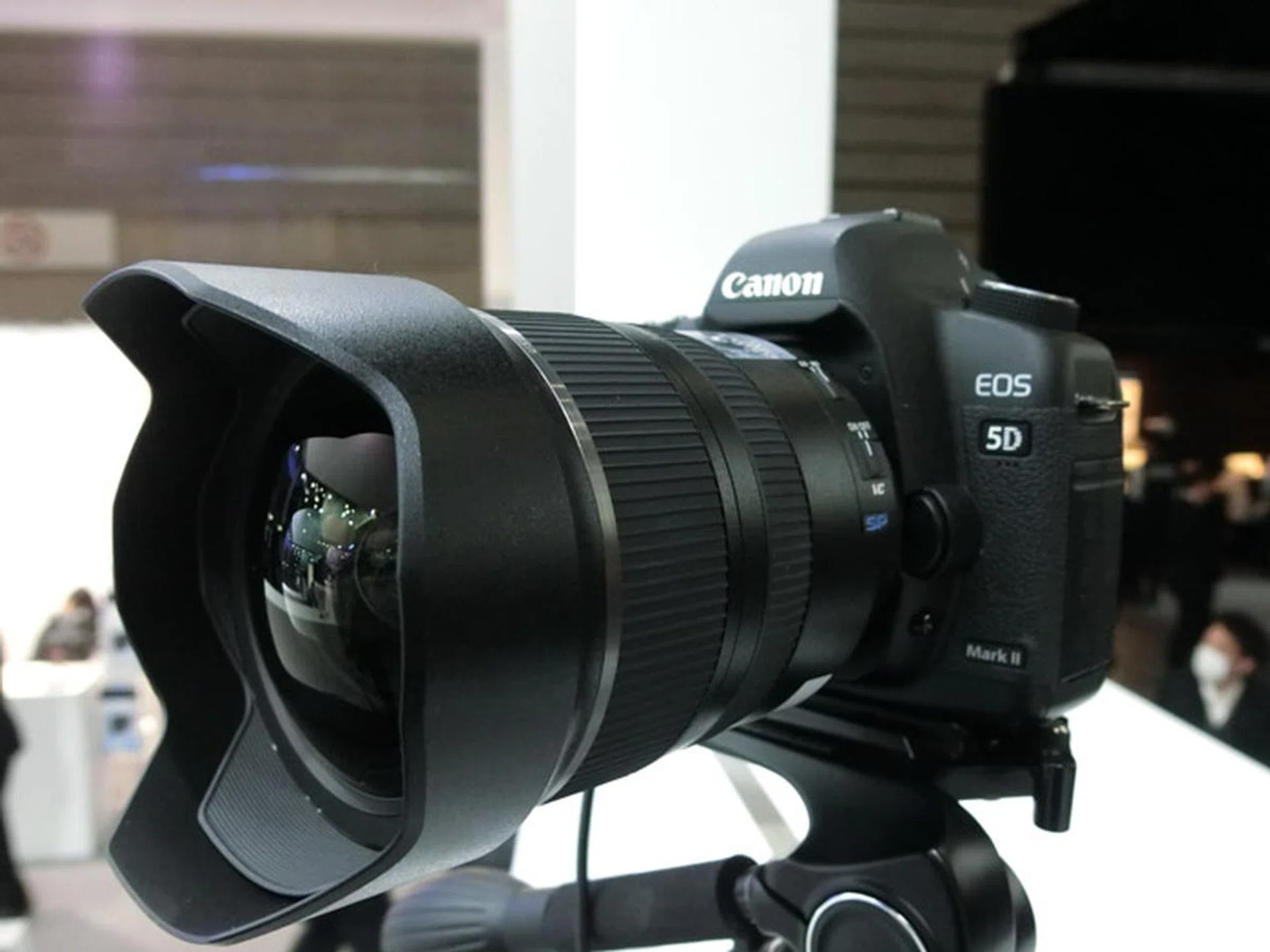
The Tamron SP 15-30 f/2.8 Di VC USD looks and feels professional.
What else did we see?
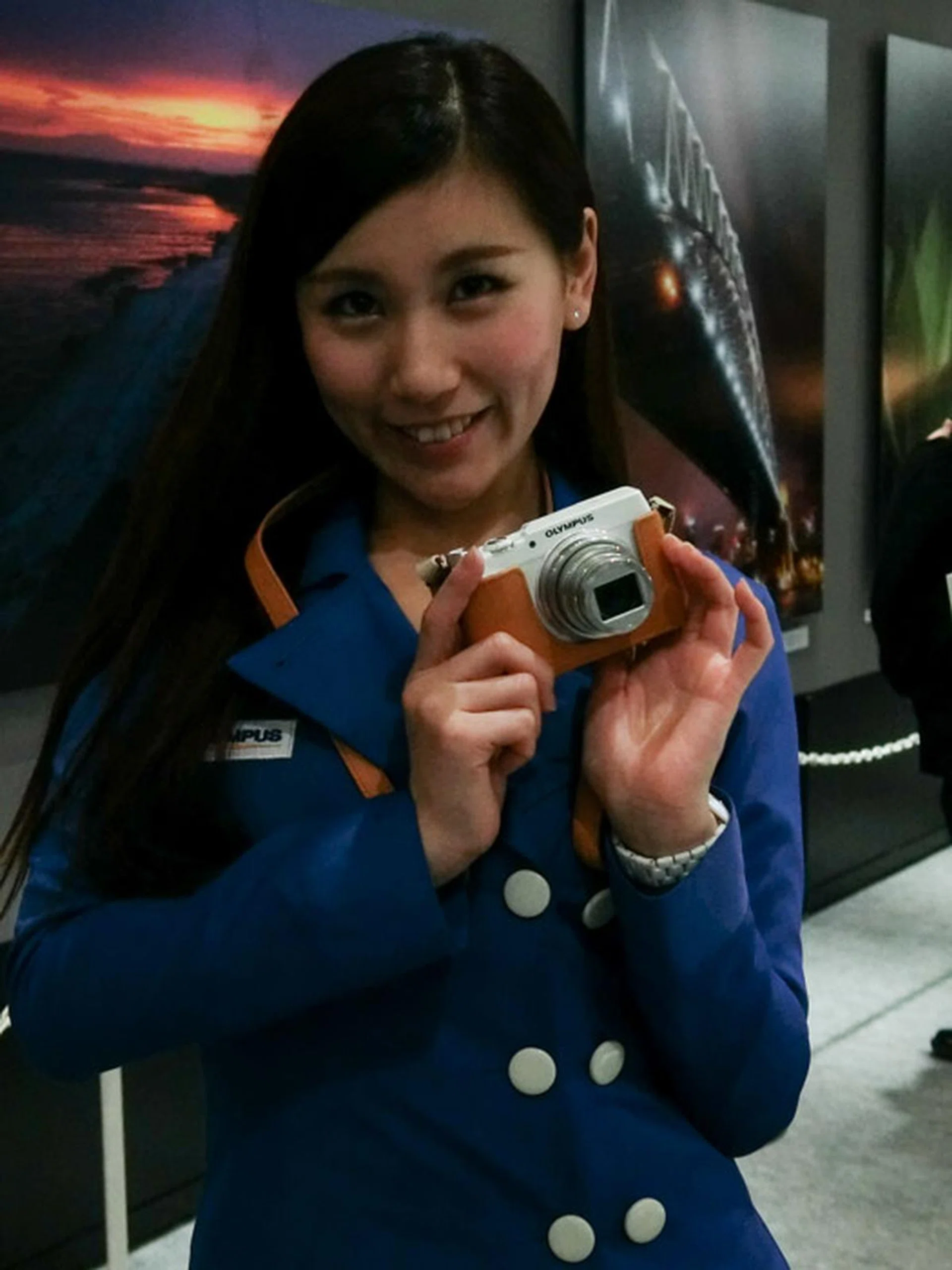
Finally, here are some pictures of booth babes at CP+ 2015:
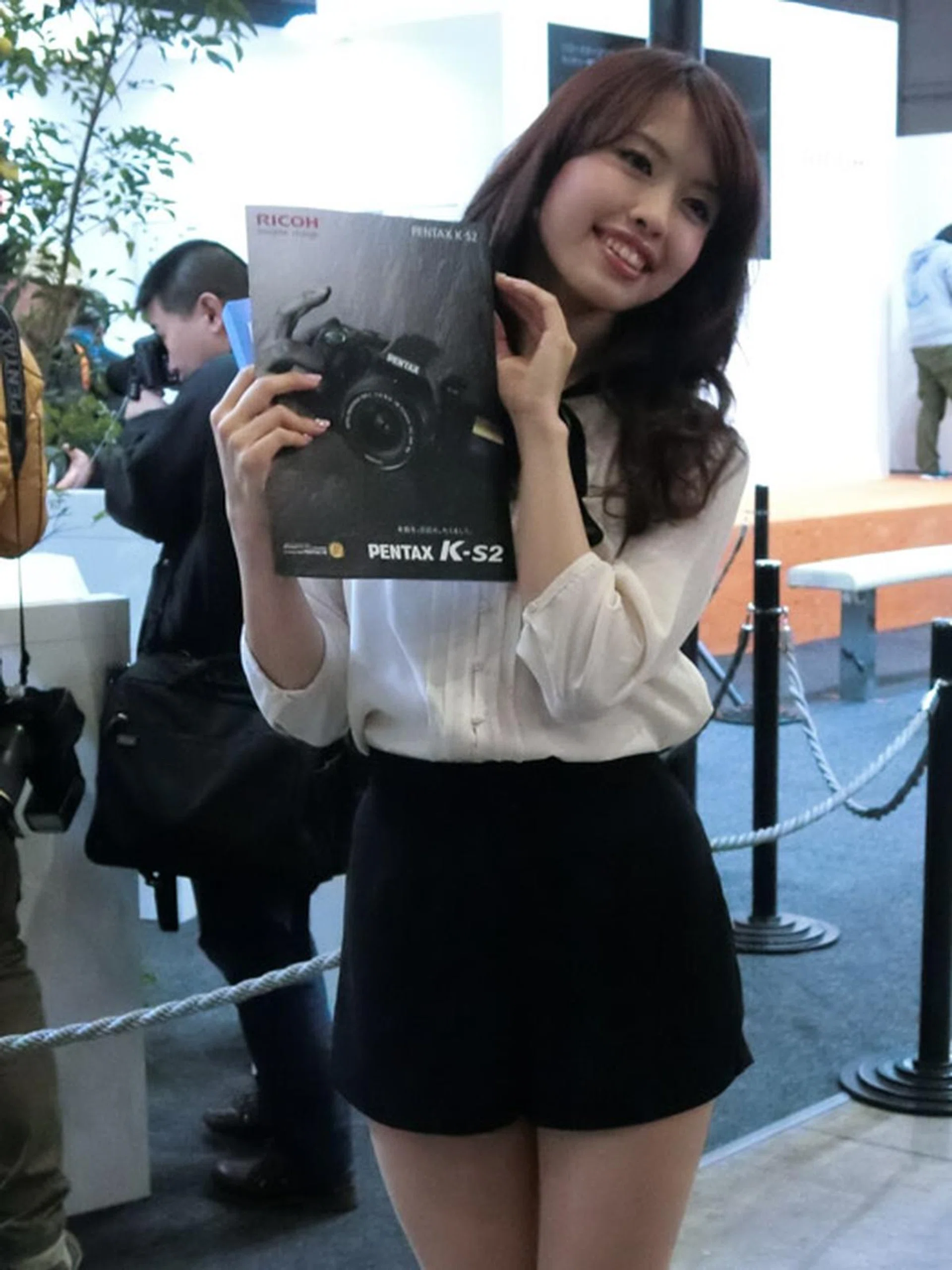

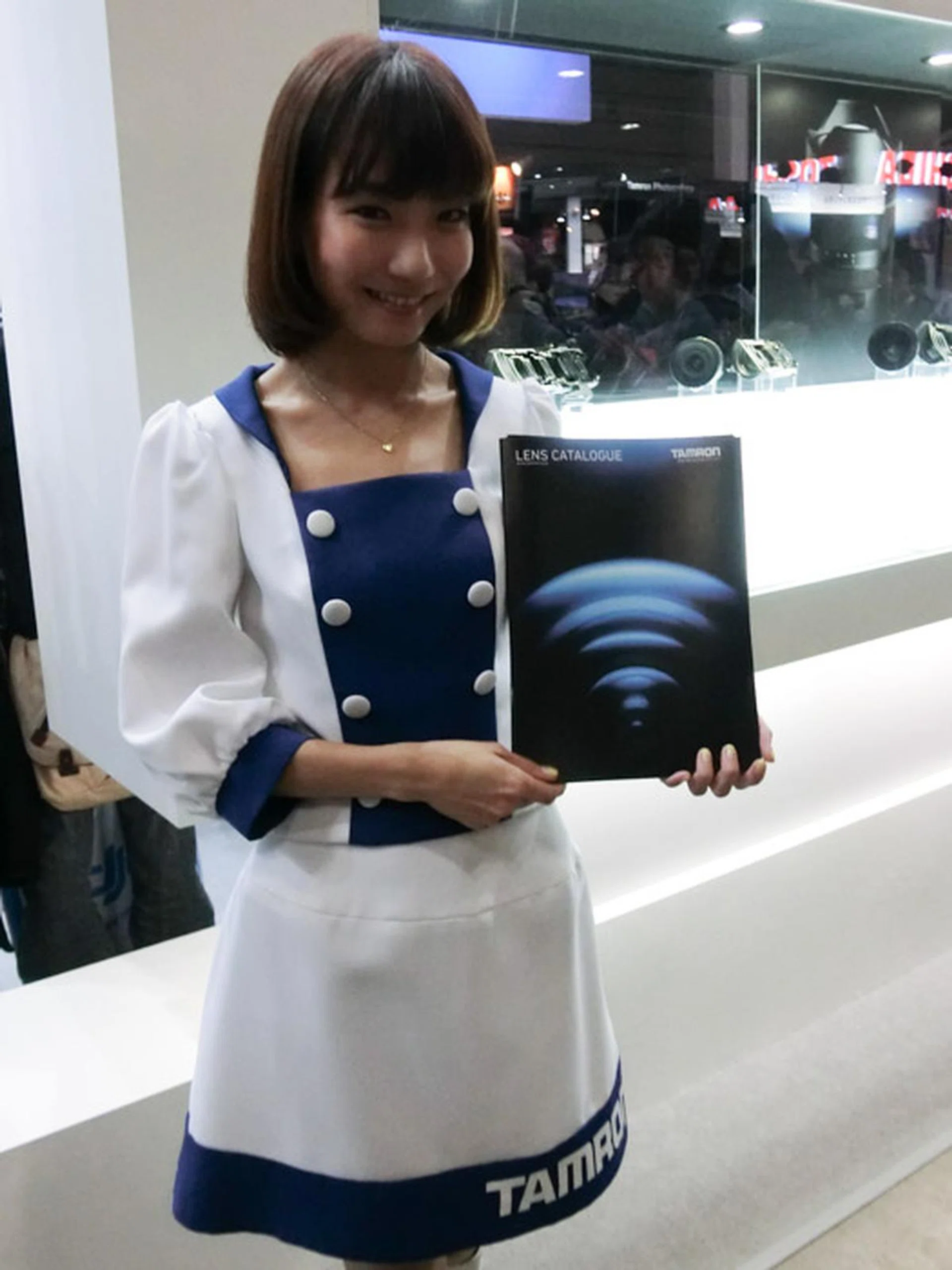

(Images taken by the Casio EX-100.)
Our articles may contain affiliate links. If you buy through these links, we may earn a small commission.